Словари

Словарь английского языка | Значения слов, определения и примеры

adjective
/ˈθrɛdˌbɛr/
потрепанный и тонкий из-за чрезмерного использования (potrepyannyy i tonkiy iz-za chrezmernogho ispol'zovaniya)

Worn out and thin from too much use; shabby.

"His threadbare coat could not keep him warm in winter."

"Его потрепанное пальто не могло согреть его зимой." (Yego potrepyannoye pal'to ne moglo sogret' yego zimoy.)
Threat definition card — visual illustration of the meaning
noun
/θrɛt/
угроза, опасность (ugroza, opasnost)

A statement or action indicating intent to cause harm or danger.

"The letter contained a threat against the company."
"Письмо содержало угрозу против компании." (Pismo soderzhало ugrozu protiv kompanii.)
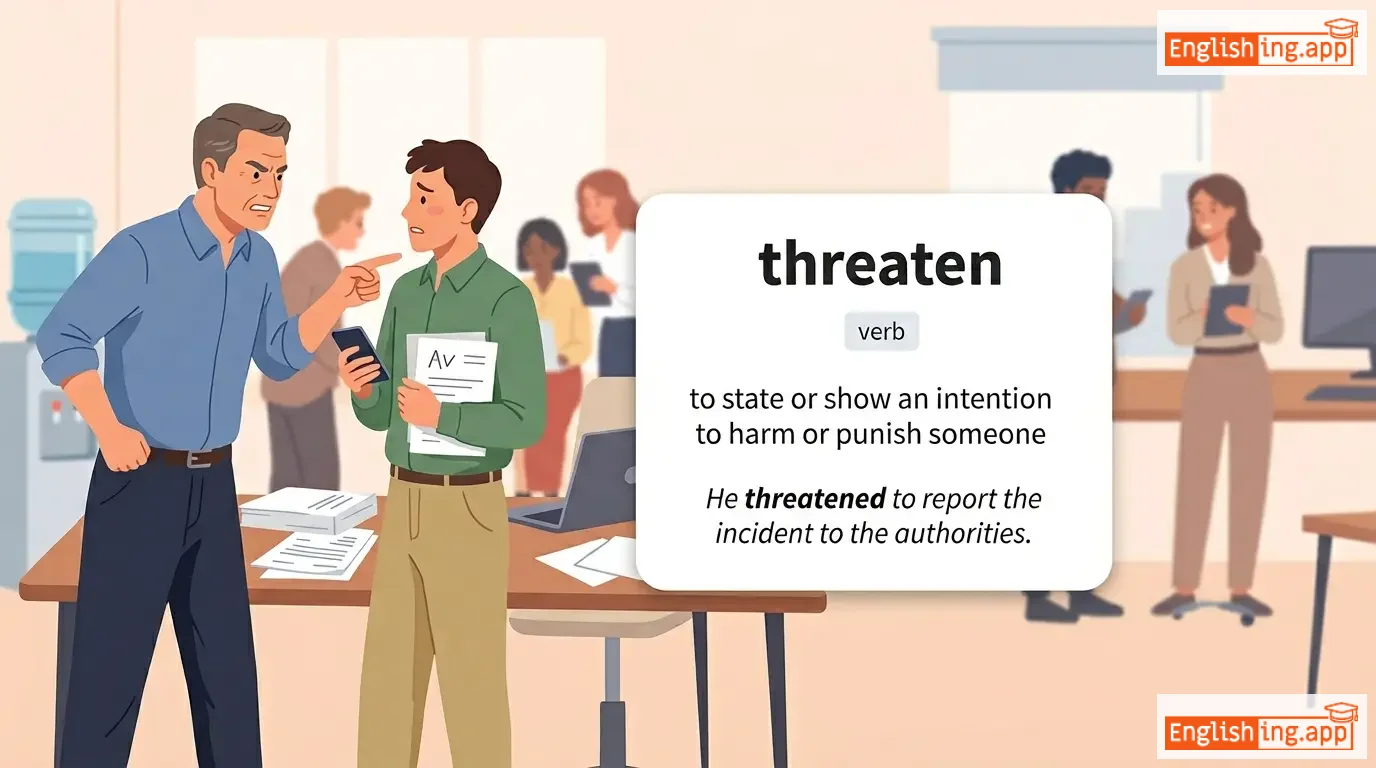
threaten definition card — visual illustration of the meaning
verb
/ˈθrɛtən/
счастье (schastye)

to state or show an intention to harm or punish someone

"He threatened to report the incident to the authorities."

"Она не могла скрыть своего счастья, когда получила награду." (Ona ne mogla skryt' svoego schast'ya, kogda poluchila nagradu.)
adjective
/ˈθret.ən.ɪŋ/
угрожающий; запугивающий (ugrozhayushchiy; zapugivayushchiy)

expressing a threat; menacing; intimidating

"The dark clouds looked threatening before the storm."
"Темные облака выглядели угрожающими перед штормом." (Temnye oblakа vyglyadeli ugrozhayushchimi pered shtormom.)
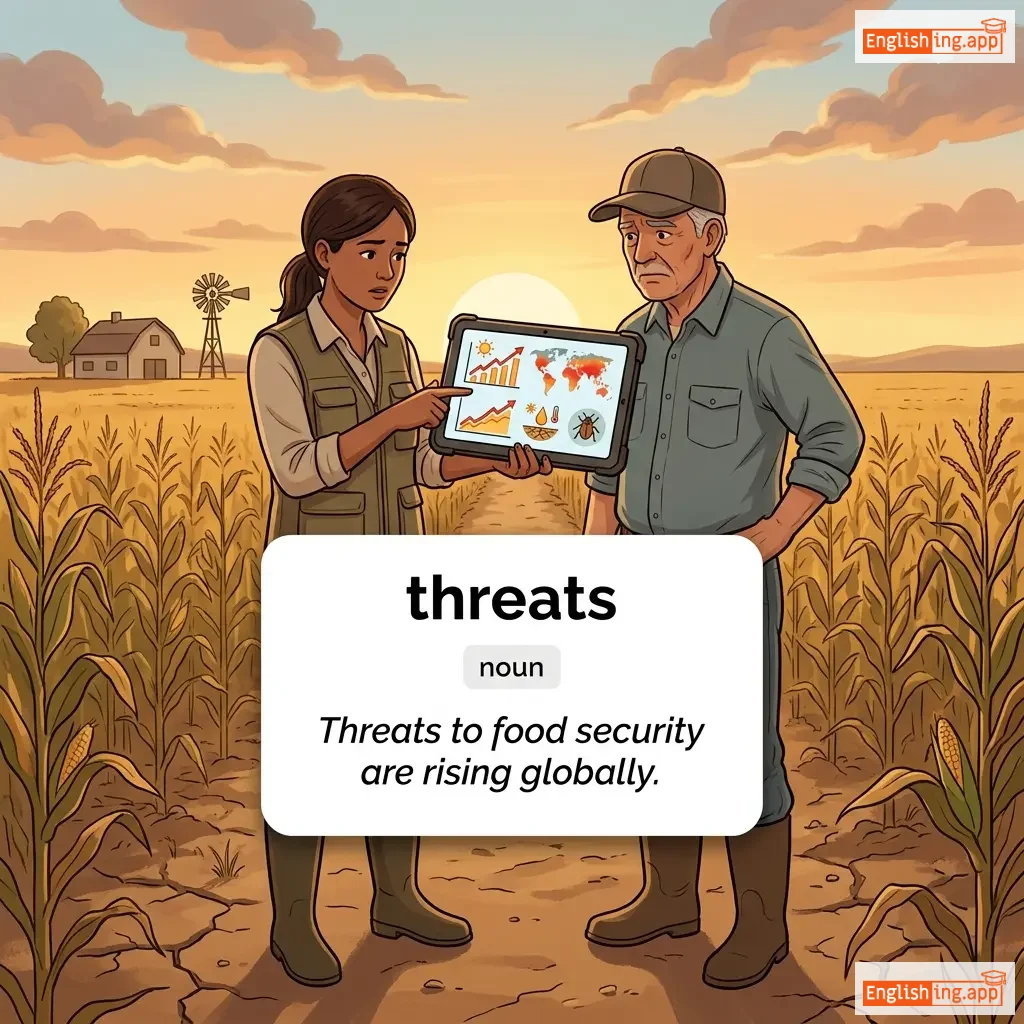
threats definition card — visual illustration of the meaning
noun
θrets
угрозы (ugrozy)

A statement of an intention to inflict pain, injury, damage, or other hostile action.

"Threats to food security are rising globally."

"Угрозы безопасности продовольствия растут по всему миру." (Ugrozy bezopasnosti prodovol'stviya rastut po vsemu miru.)
numeral
/θriː/
три (tri)

the number equivalent to the sum of two and one

"She has three dogs at home."

"У нее три собаки дома." (U nee tree sobaki doma.)
noun
/ˈθrɛnədi/
траверс, жалобная песня (travers, zhalobnaya pesnya)

A song, poem, or speech of mourning for someone who has died; a lament.

"The poet composed a moving threnody for the fallen soldiers."

"Поэт написал трогательную жалобную песню для павших солдат." (Poet napisal trogatelnuyu zhalobnuyu pesnyu dlya pavshikh soldat.)
verb
/θrɛʃ/
молоти (moloti)

to separate grain from the plant by beating or by using a machine

"Farmers used machines to thresh the wheat after harvest."
"Фермеры использовали машины для обмолота пшеницы после урожая." (Fermery ispol'zovali mashiny dlya obmolota pshenitsy posle urozhaya.)
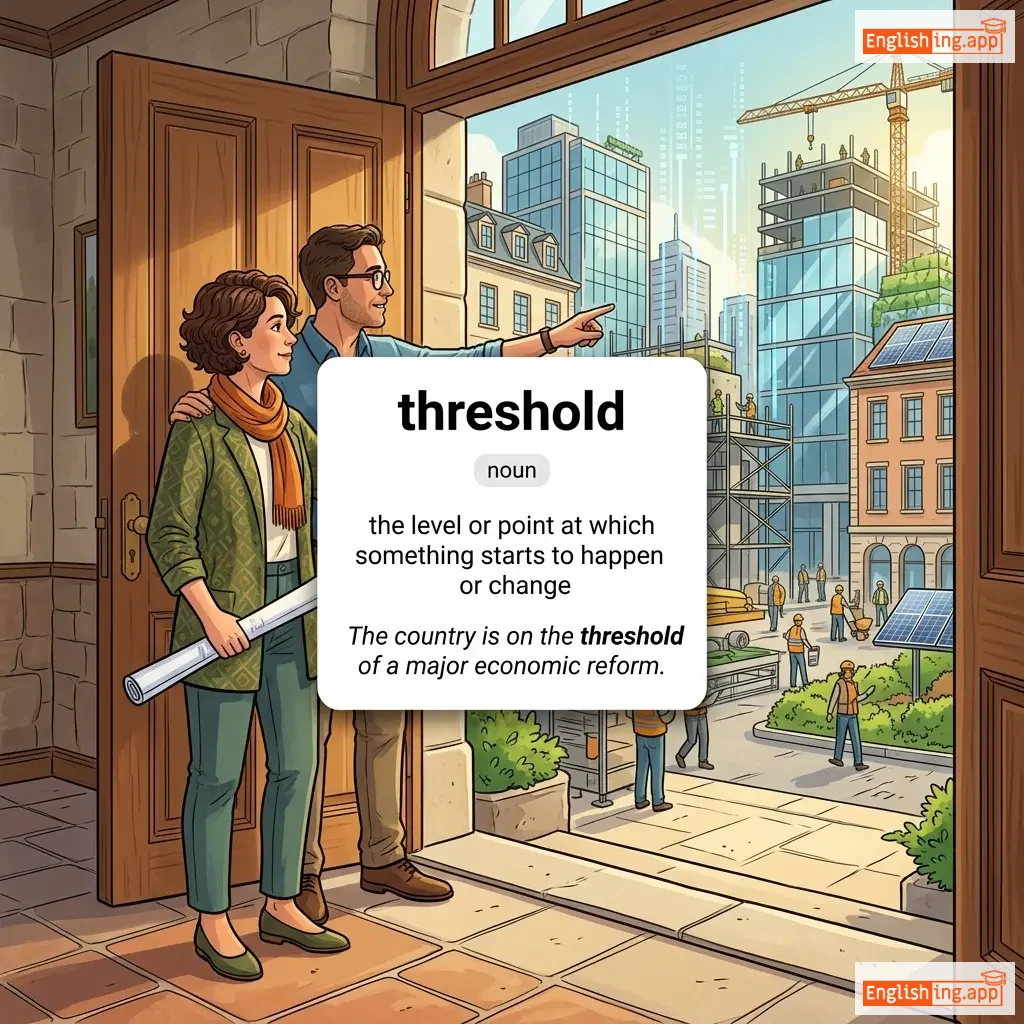
threshold definition card — visual illustration of the meaning
noun
/ˈθreʃ.həʊld/
порог (porog)

the level or point at which something starts to happen or change

"The country is on the threshold of a major economic reform."

"Страна на пороге крупной экономической реформы." (Strana na poroge krupnoy ekonomicheskoy reformy.)
adjective
/ˈθrɪfti/
экономный (ekonomny)

using money and resources carefully and not wastefully

"She is very thrifty and always saves money for the future."

"Она очень экономна и всегда откладывает деньги на будущее." (Ona ochen' ekonomna i vsegda otkladyvayet den'gi na budushchee.)
Thrill definition card — visual illustration of the meaning
verb
/θrɪl/
волнует (volnuet)

to cause someone to feel very excited and pleased

"The roller coaster ride thrills adventure seekers."

"Американские горки волнуют любителей приключений." (Amerikanskie gorki volnuyut lyubiteley priklyucheniy.)
adjective
/θrɪld/
в восторге (v vostorge)

extremely happy or excited

"She was thrilled with the surprise party."

"Она была в восторге от сюрприз-вечеринки." (Ona byla v vostorge ot syurpriz-vecherinki.)
thrive definition card — visual illustration of the meaning
verb
/θraɪv/

to grow, develop, or be successful

"Small businesses can thrive with proper support."

noun
/θroʊt/
горло (gorlo)

the front part of the neck, containing the pharynx and larynx

"He felt a lump in his throat while speaking."

"Он почувствовал комок в горле, когда говорил." (On pochuvstvoval komok v gorle, kogda govoril.)
verb
/θrɒb/
пульсировать (pul'sirovat')

to beat or pulse strongly, often with pain

"His head began to throb after the long day."

"Его голова начала пульсировать после долгого дня." (Ego golova nachala pul'sirovat' posle dolgogo dnya.)
noun
/θroʊz/
сильная боль (sil'naya bol')

intense or violent pain and struggle, often at the beginning or end of something

"The country was in the throes of a political crisis."

"Страна была в сильной боли от политического кризиса." (Strana byla v sil'noy boli ot politicheskogo krizisa.)
noun/verb
/θrɒŋ/

A large, densely packed crowd of people or animals; to fill or be present in a place in large numbers.

"Tourists thronged the streets during the festival."

verb/noun
/ˈθrɒt.əl/
задушить/контролировать скорость (zadushit/kontrol'irovat' skorost')

To choke or strangle; to control the flow of fuel or power in an engine.

"The driver throttled the engine to slow down the car."

"Водитель уменьшил скорость, чтобы замедлить автомобиль." (Voditel' umenshil skorost', chtoby zamedlit' avtomobil'.)
preposition
/θruː/
через (cherez)

moving in one side and out the other side of something

"The train passed through the tunnel."

"Поезд прошел через туннель." (Poezd proshel cherez tunnel.)
preposition
/θruːˈaʊt/
в течение всего (v techenie vsego)

in every part of a place or during the whole time of an event

"She worked throughout the night."
"Она работала всю ночь." (Ona rabotala vsyu noch.)
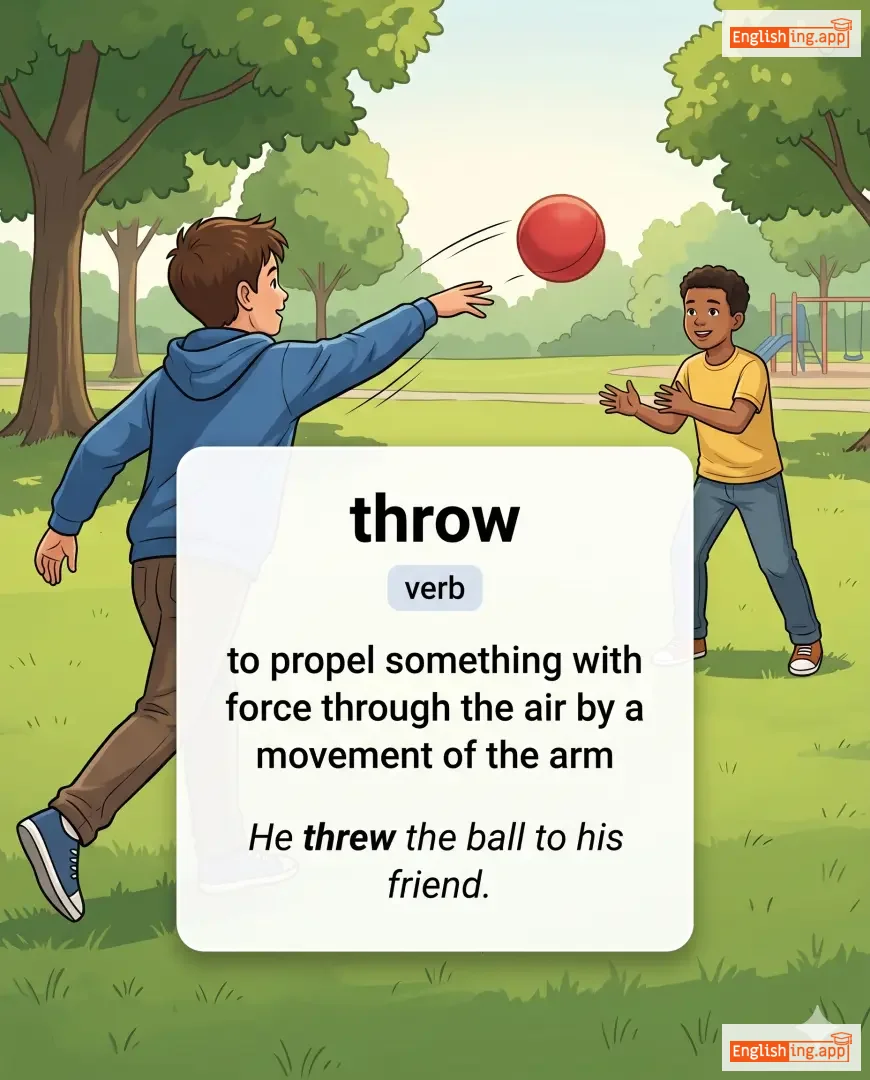
throw definition card — visual illustration of the meaning
verb
/θroʊ/
бросать (brosat)

to propel something with force through the air by a movement of the arm

"He threw the ball to his friend."

"Он бросил мяч своему другу." (On brosil myach svoemu drugu.)
noun
/θʌm/
большой палец (bolshoy palets)

the short, thick finger on the side of the hand, used for gripping and holding things

"He gave a thumbs-up to show his approval."
"Он поднял большой палец, чтобы показать свое одобрение." (On podnyal bol'shoy palets, chtoby pokazat' svoe odobrenie.)
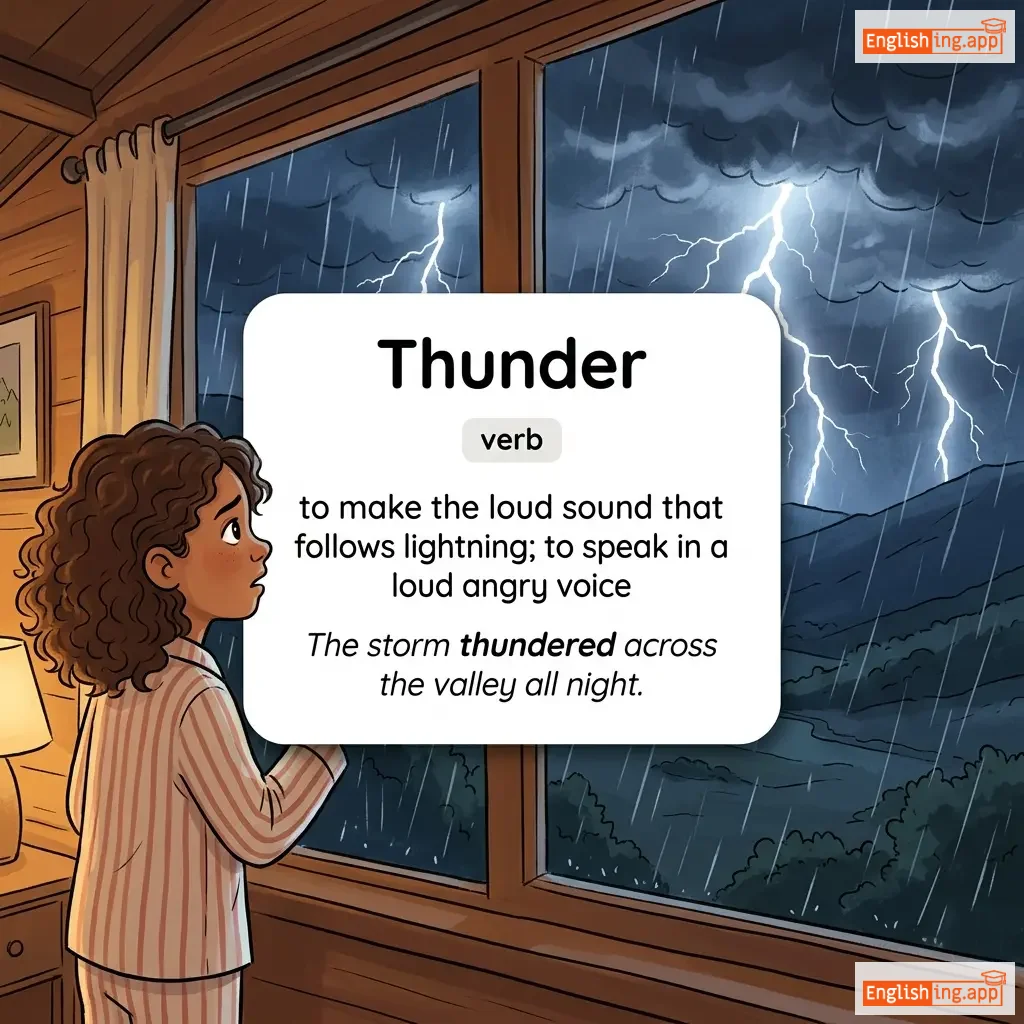
Thunder definition card — visual illustration of the meaning
noun
/ˈθʌn.dər/
гром (grom)

the loud rumbling or crashing noise heard after a lightning flash

"We heard thunder during the storm last night."

"Мы услышали гром во время шторма прошлой ночью." (My uslyshali grom vo vremya shtorma proshloy noch'yu.)
noun
/ˈθɜːrzdeɪ/
четверг (chetverg)

The fifth day of the week, following Wednesday and preceding Friday.

"We have a meeting scheduled for Thursday."

"У нас встреча запланирована на четверг." (U nas vstrecha zaplanirovana na chetverg.)
adverb
/ðʌs/
так (tak)

as a result or consequence of something previously stated

"He was late, thus he missed the meeting."

"Он опоздал, так что пропустил встречу." (On opozdal, tak chto propustil vstrechu.)
verb
/θwɔːrt/
сорвать (sorvat')

To prevent someone from accomplishing something; to oppose successfully.

"The police thwarted the robbery attempt."

"Полиция сорвала попытку ограбления." (Politsiya sorvala popytku ogrableniya.)
noun
/taɪm/
тимьян (tim'yan)

A small aromatic herb used in cooking and medicine.

"She sprinkled thyme on the roasted chicken."

"Она посыпала тимьяном запеченную курицу." (Ona posypala tim'yanom zapechennuyu kuritsu.)
noun
/tiˈɑː.rə/
тиара (tiara)

a jeweled ornamental crown worn on formal occasions

"The princess wore a sparkling diamond tiara at the royal ball."
"Принцесса носила сверкающую бриллиантовую тиару на королевском балу." (Printsessa nosila sverkayushchuyu brilliantovuyu tiaru na korolevskom balu)
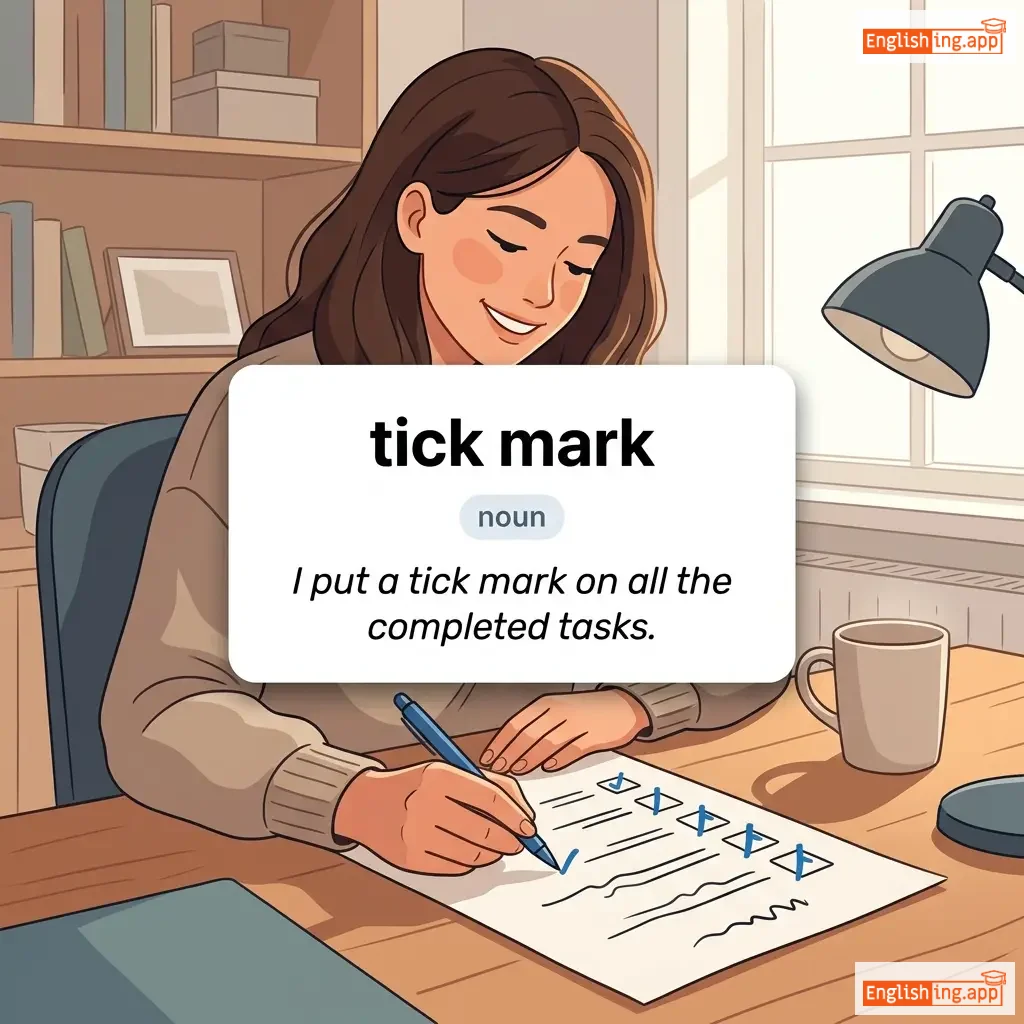
tick mark definition card — visual illustration of the meaning
noun
tɪk mɑːrk
галочка (galochka)

A mark (✓) used to indicate that something is correct or has been chosen, checked, or dealt with.

"I put a tick mark on all the completed tasks."
"Я поставил галочку на всех завершенных задачах." (Ya postavil galochku na vsekh zavershennykh zadachakh.)
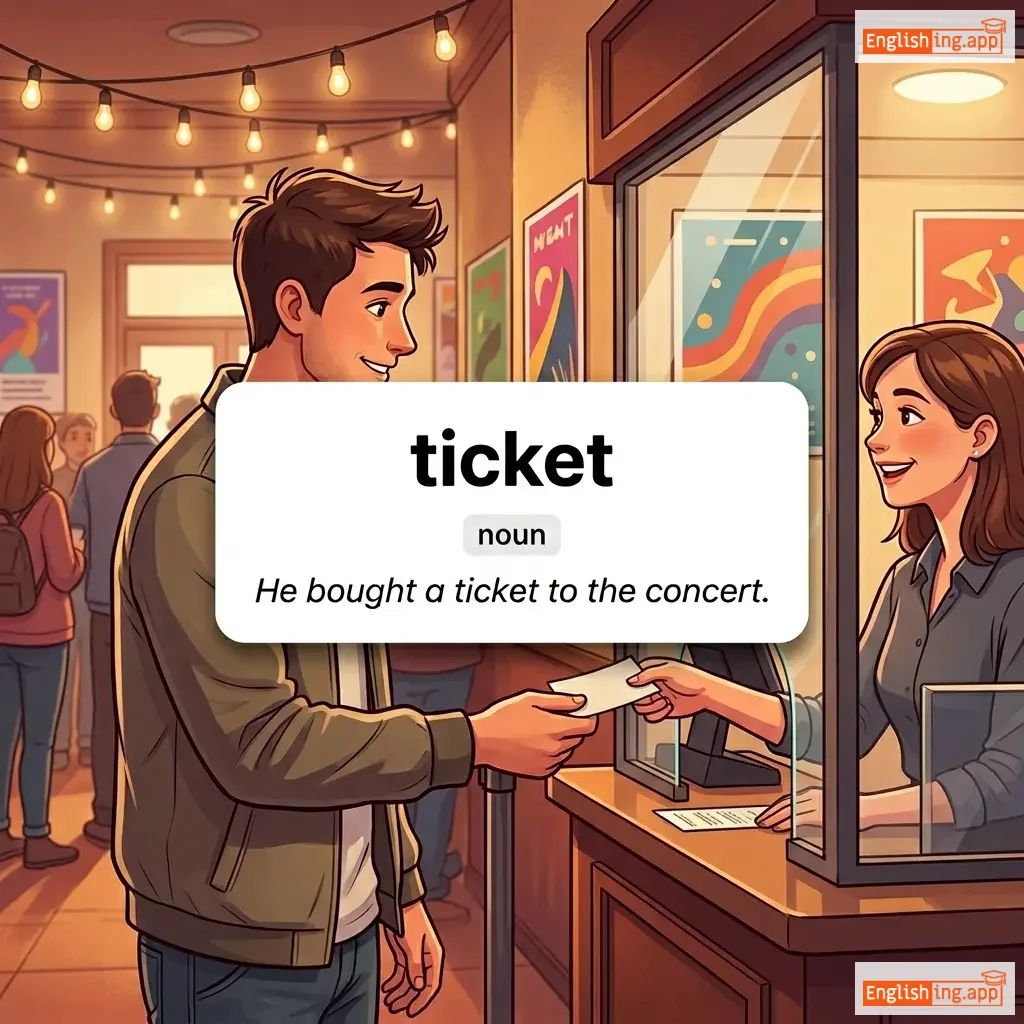
ticket definition card — visual illustration of the meaning
noun
/ˈtɪkɪt/
билет (bilet)

a small piece of paper or card that gives the holder a right to access a service or event

"He bought a ticket to the concert."
"Он купил билет на концерт." (On kupil bilet na kontsert.)
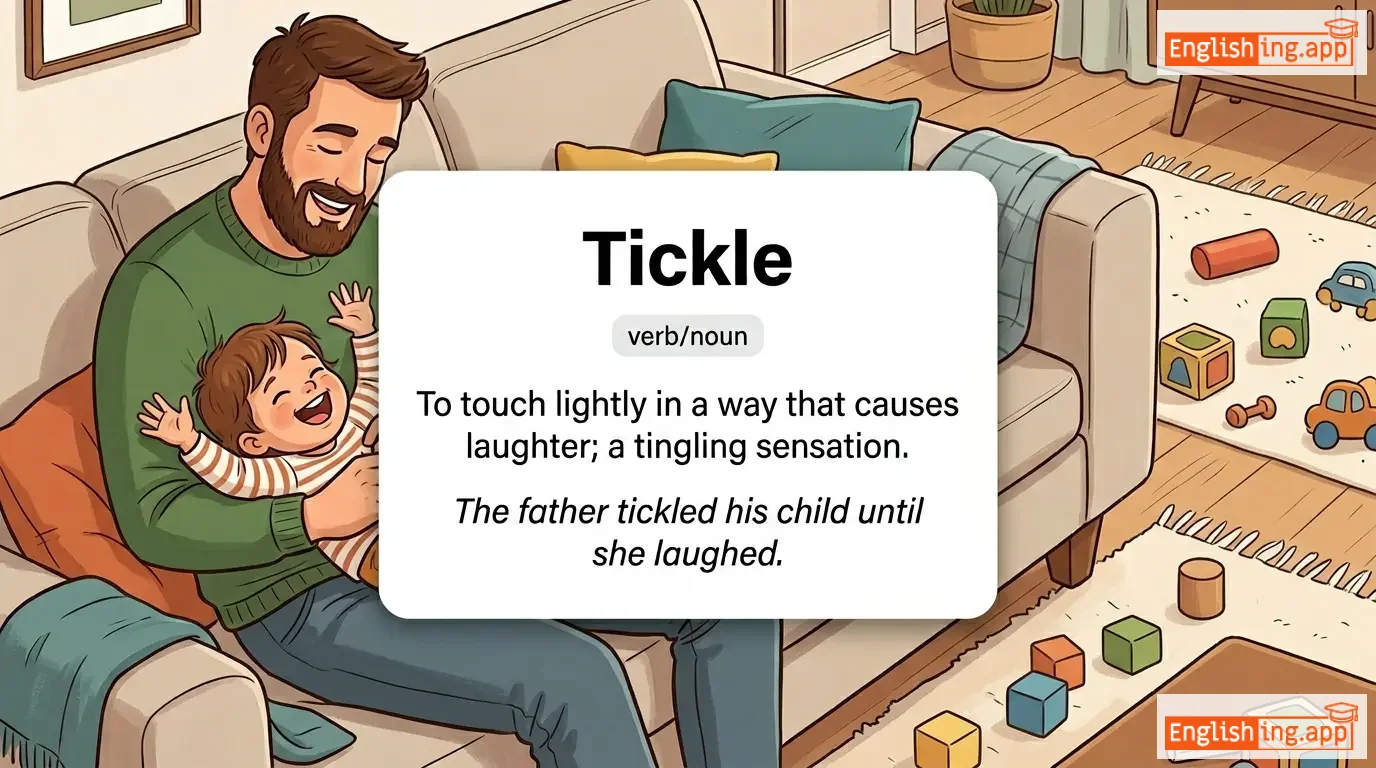
Tickle definition card — visual illustration of the meaning
verb/noun
/ˈtɪk.əl/

To touch lightly in a way that causes laughter; a tingling sensation.

"The father tickled his child until she laughed."

adjective
/ˈtɪklɪʃ/

easily made to laugh by being touched lightly; easily upset or sensitive

"She is very ticklish and bursts into laughter when touched on her feet."

adjective
/ˈtɪd.li/
слегка пьяный; маленький или крошечный (tiddli)

slightly drunk; small or tiny

"After a few drinks, he felt a bit tiddley."

"После нескольких напитков он почувствовал себя немного тидли." (Posle nekotorykh napitkov on pochuvstvoval sebya nemnogo tiddli.)
noun
/taɪd/
прилив и отлив (priliv i otiliv)

the regular rise and fall of the sea caused by the moon and sun's gravity; a powerful flow or movement

"The fisherman waited for the tide to come in."

"Рыбак ждал, когда начнется прилив." (Rybak zhdal, kogda nachnyotsya prilev.)
adjective
/ˈtaɪ.di/
аккуратный; чистый (akkuratny; chisty)

arranged neatly and in order; clean and organized

"She keeps her room very tidy and organized."
"Она держит свою комнату очень аккуратно и чисто." (Ona derzhit svoyu komnatu ochen' akkuratno i chisto.)
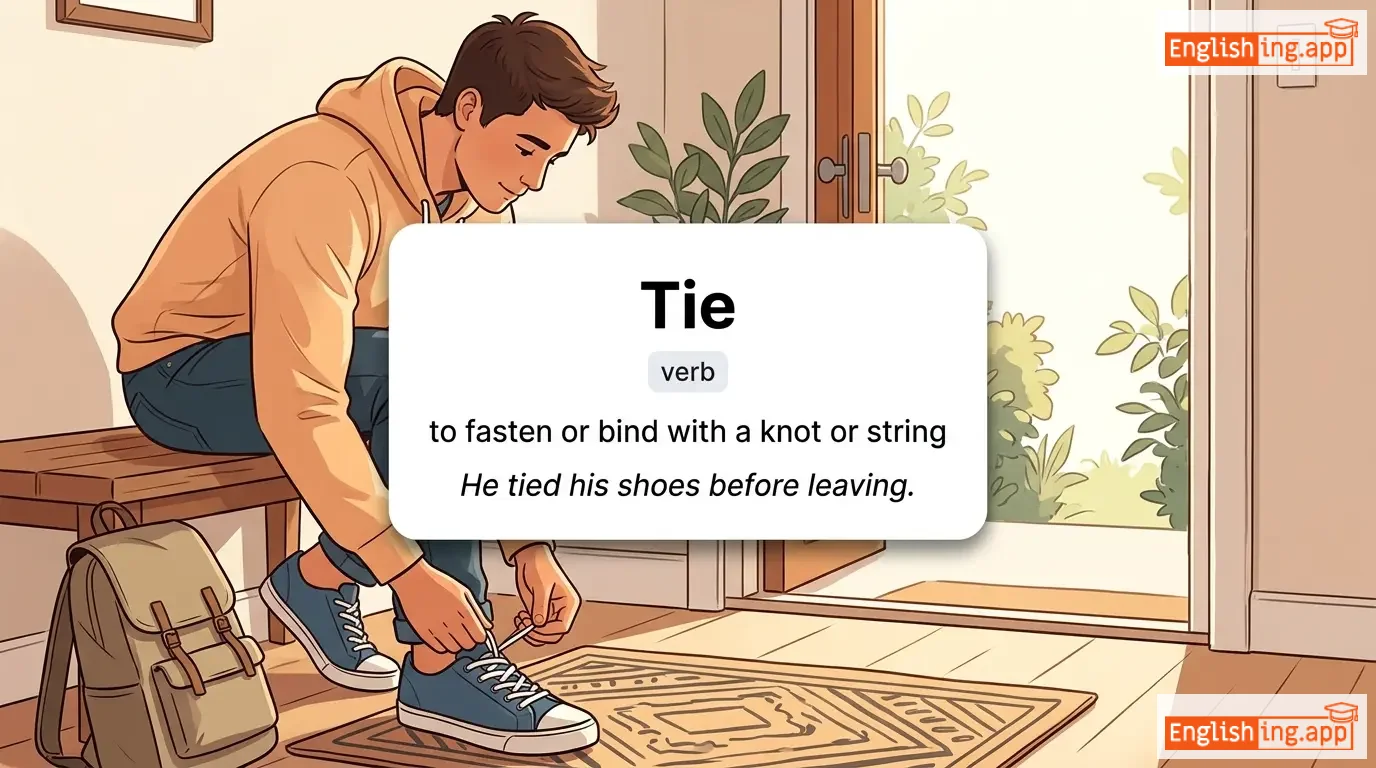
Tie definition card — visual illustration of the meaning
verb
/taɪ/
завязывать (zavyazyvat)

to fasten or bind with a knot or string

"He tied his shoes before leaving."

"он завязал свои туфли перед тем как уйти." (on zavyazal svoi tufli pered tem kak uiti.)
noun
/tɪf/
ссора (ssora)

a small or petty quarrel or argument

"They had a little tiff over what movie to watch."

"Они поссорились из-за того, какой фильм посмотреть." (Oni possorilis' iz-za togo, kakoy film posmotret'.)
noun
/ˈtaɪ.ɡər/
тигр (tigr)

a very large solitary cat with a yellow-brown coat striped with black, native to the forests of Asia

"The tiger hunted silently through the jungle."

"Тигр бесшумно охотился через джунгли." (Tigr beshumnо okhotilsya cherez dzhungli.)
adjective
/ˈtɪp.tɒp/
отличный; высшего качества (otlichnyy; vysshogo kachestva)

of the highest quality; excellent; in perfect condition

"The car is in tiptop condition."

"Машина в отличном состоянии." (Mashina v otlichnom sostoyanii)
noun
/ˈtɪʃ.uː/
платок (platok)

a piece of soft absorbent paper or fabric

"She used a tissue to wipe her nose."

"Она использовала платок, чтобы вытереть нос." (Ona ispol'zovala platok, chtoby vyteret' nos.)
adjective
/ˈtaɪərɪŋ/
утомительный (utomitelnyy)

causing someone to feel exhausted or in need of rest

"The long journey was extremely tiring."

"Долгое путешествие было крайне утомительным." (Dolgoe puteshestvie bylo krayne utomitelnym)
adjective
/ˈtaɪərsəm/
утомительный (utomitel'nyj)

Causing one to feel bored, annoyed, or tired.

"The long meeting became very tiresome."

"Долгая встреча стала очень утомительной." (Dolgaya vstrecha stala ochen' utomitel'noj.)
adjective
/ˈtaɪərləs/
неутомимый (neutomimyj)

Showing great effort or energy without becoming tired.

"She worked tirelessly to complete the project on time."

"Она работала неутомимо, чтобы закончить проект вовремя." (Ona rabotala neutomimo, chtoby zakonchit' proyekt vovremya.)
Tired definition card — visual illustration of the meaning
adjective
/ˈtaɪərd/
усталый (ustaly)

in need of rest or sleep

"I feel so tired after the long journey."

"Я чувствую себя таким усталым после долгого путешествия." (Ya chuvstvuyu sebya takim ustalym posle dolgogo puteshestviya.)
noun
/taɪər/
шина (shina)

a rubber covering around a wheel

"The car’s tire burst on the highway."

"Шина машины лопнула на шоссе." (Shina mashiny lopnula na shosse.)
noun
/taɪˈreɪd/
тирада (tirada)

a long, angry, or critical speech

"The manager launched into a tirade about poor performance."

"Менеджер устроил тираду по поводу плохой работы." (Menedzher ustroil tiradu po povodu plokhoy raboty.)
noun
/tɪnt/
оттенок (ottenok)

a slight shade or variation of a color

"The walls were painted white with a slight blue tint."

"Стены были окрашены в белый цвет с легким синим оттенком." (Steny byli okrasheny v belyy tsvet s legkim sinim otenkom.)
adjective
/ˈtaɪni/
очень маленький (ochen' malen'kiy)

very small

"She held a tiny kitten in her hands."

"Она держала в руках очень маленького котенка." (Ona derzhala v rukakh ochen' malen'kogo kotenka.)
noun
/tɪp/
совет (sovet)

a small but useful piece of advice

"I received a tip on how to improve my presentation."

"Я получил совет, как улучшить свою презентацию." (Ya poluchil sovet, kak uluchshit' svoyu prezentatsiyu.)
verb
/ˈtɪŋkər/
колдовать (koldovat')

to make small adjustments or repairs to something, often experimentally or imperfectly

"He likes to tinker with old radios in his garage."

"Ему нравится колдовать со старыми радиоприемниками в своем гараже." (Emu nravitsya koldovat' so starymi radiopriemnikami v svoem garage.)