Словари

Словарь английского языка | Значения слов, определения и примеры

noun
/ˈθiːsɪs/
тезис (tezis)

A long piece of writing on a particular subject, usually for a degree at a university.

"She spent two years writing her doctoral thesis."
"Она потратила два года на написание своей докторской диссертации." (Ona potratila dva goda na napisanie svoey doktorskoy dissertatsii.)
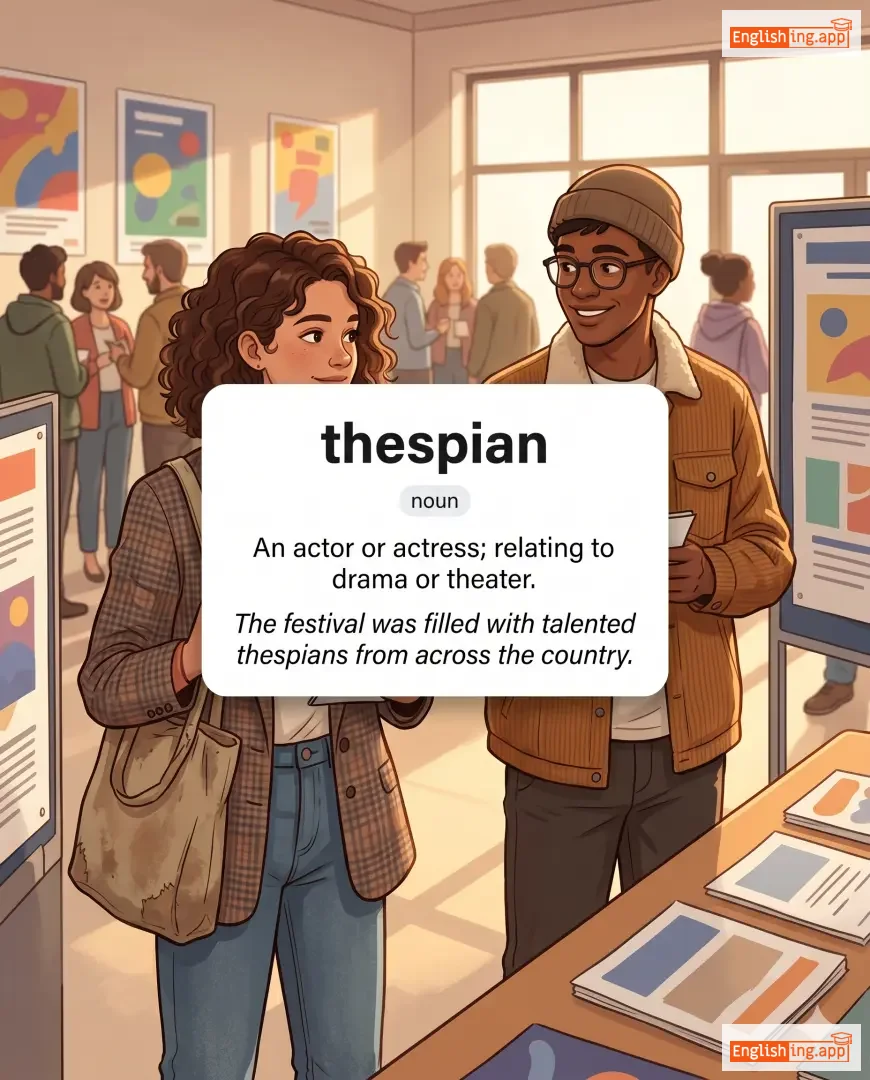
thespian definition card — visual illustration of the meaning
noun
/ˈθɛspiən/
актер (akter)

An actor or actress; relating to drama or theater.

"The festival was filled with talented thespians from across the country."

"Фестиваль был полон талантливых актеров со всей страны." (Festival byl polon talantlivykh akterov so vsei strany.)
pronoun
/ðeɪ/
они (oni)

used to refer to people or things previously mentioned or easily identified

"They are going to the park."

"Они идут в парк." (Oni idut v park.)
adjective
/θɪk/
толстый (tolstyy)

having a large distance between two sides; not thin

"The book was so thick it took weeks to finish."

"Книга была такой толстой, что на её прочтение ушло несколько недель." (Kniga byla takoy tolstoy, chto na yeye prochtenie ushlo neskol'ko nedel')
noun
/ˈθɪk.ɪt/
заросли; кустарниковая чаща (thiket)

a dense group of bushes or trees; a thick growth of shrubs

"The rabbit disappeared into the thicket."

"Кролик исчез в зарослях." (Krolik ischez v zaroslyakh.)
adverb
/ˈθɪkli/
густо (gusto)

in a thick manner; densely; heavily

"The forest was thickly wooded with tall pine trees."

"Лес был густо покрыт высокими соснами." (Les byl gusto pokryt vysokimi sosnami.)
noun
/ˈθɪk.nəs/
толщина (tolschina)

The measure of how thick or dense something is

"The thickness of the book made it hard to carry."

"Толщина книги делала ее трудной для переноски." (Tolschina knigi delala ee trudnoy dlya perenoski.)
🦹‍♂️

Thief (θiːf)

noun
/θiːf/
вор (vor)

a person who steals things from others

"The thief was caught stealing from the jewelry store."

"Вор был пойман при попытке украсть в ювелирном магазине." (Vor byl poyman pri popytke ukrast' v yuvelirnom magazine.)
noun
/θaɪ/
бедро (bedro)

the part of the leg between the hip and the knee

"He felt pain in his right thigh after running for an hour."

"Он почувствовал боль в правом бедре после того, как пробежал час." (On pochuvstvoval bol' v pravom bedre posle togo, kak probeg nal chas.)
adjective
/θɪn/
тонкий (tonkiy)

having little thickness or width

"She wore a thin scarf in the winter."

"Она носила тонкий шарф зимой." (Ona nosila tonkiy sharf zimoy.)
noun
/θɪŋ/
вещь (veshch)

an object, idea, or matter that is being referred to or dealt with

"This is the thing I was looking for."
"Это вещь, которую я искал." (Eto veshch', kotoruyu ya iskal.)
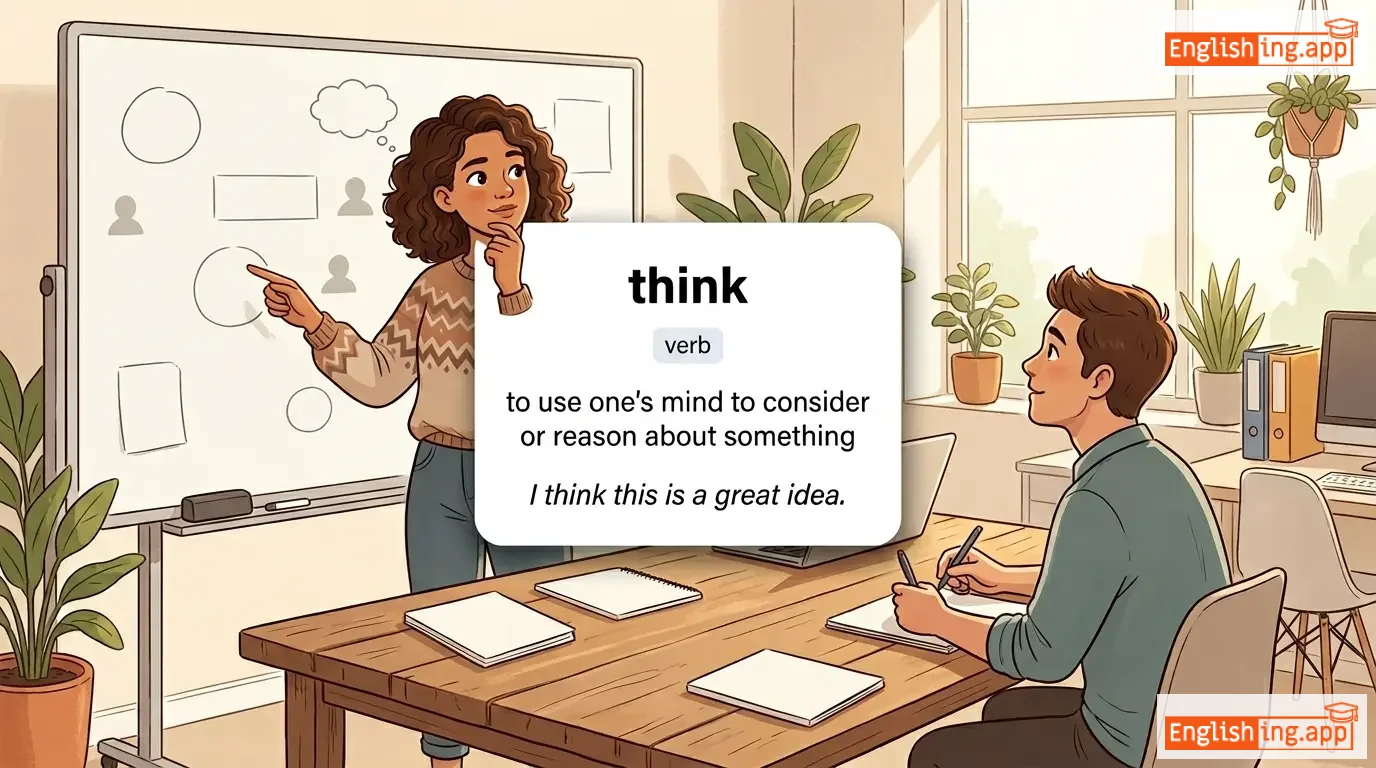
think definition card — visual illustration of the meaning
verb
/θɪŋk/
думать (dumat')

to use one's mind to consider or reason about something

"I think this is a great idea."

"Я думаю, что это отличная идея." (Ya dumayu, chto eto otlichnaya ideya.)
adjective
/ˈθɪŋ.kə.bəl/
мысленный (myslennyy)

Capable of being imagined or conceived; possible to consider or believe

"It is hard to believe that such an outcome is even thinkable."

"Трудно поверить, что такой результат даже мыслим." (Trudno poverit', chto takoy rezul'tat dazhe myslim)
noun
/ˈθɪŋkɪŋ/
мышление (myshleniye)

the process of considering or reasoning about something

"Her thinking was clear and precise."

"Ее мышление было ясным и точным." (Eyo myshleniye bylo yasnym i tochnym.)
adjective
/θɜrd/
третий (tretiy)

constituting number three in a sequence

"She finished in third place."

"Она заняла третье место." (Ona zanyala tretye mesto.)
noun
/tɒp/
вершина (vershina)

the highest or uppermost point, part, or surface of something

"The book is on the top shelf."

"Книга на верхней полке." (Kniga na verkhney polke.)
noun
/ˈtoʊtəm/
священный символ (svyashchennyy simvol)

A natural object, animal, or symbol that is revered as a spiritual emblem by a group or tribe.

"The eagle is considered a sacred totem in many cultures."

"Орел считается священным тотемом во многих культурах." (Orel schitayetsya svyashchennym totemom vo mnogikh kul'turakh.)
adverb
/ˈtoʊtəli/
совершенно (sovershenno)

completely or in an absolute way

"She was totally shocked by the news."

"Она была совершенно потрясена новостью." (Ona byla sovershenno potryasena novost'yu.)
adjective, noun, verb
/ˈtoʊ.təl/
итог (itog)

the whole amount; complete

"The total cost was too high."

"Общая стоимость была слишком высокой." (Obshchaya stoimost' byla slishkom vysokoy.)
verb
/tɔs/
легко бросать (legko brosat')

To throw something lightly or casually; to move or turn suddenly.

"He tossed the keys onto the table."

"Он бросил ключи на стол." (On brosil klyuchi na stol.)
adjective
/ˈtɔːrtʃərəs/
мучительный (muchitelnyy)

Extremely painful or causing great suffering; relating to or involving torture.

"The journey through the desert was long and torturous."

"Путешествие через пустыню было долгим и мучительным." (Puteshestviye cherez pustynyu bylo dolgim i muchitel'nym.)
noun
/ˈtɔːtʃər/
пытка (pytka)

the action or practice of inflicting severe pain on someone as a punishment or to force them to do something

"He was subjected to torture during the interrogation."

"Его подвергли пыткам во время допроса." (Yego podvergli pytkam vo vremya doprosa.)
adjective
/ˈtɔːrtʃuəs/
извилистый, сложный (izvilistyy, slozhnyy)

Full of twists and turns; excessively complex or complicated.

"The tortuous mountain road made driving very difficult."

"Извилистая горная дорога сделала вождение очень трудным." (Izvilistaya gornaya doroga sdelala vozdenie ochen' trudnym.)
noun
/ˈtɔːr.təs/
черепаха (cherepakha)

A slow-moving land reptile with a hard shell.

"The tortoise slowly crossed the garden."

"Черепаха медленно пересекла сад." (Cherepakha medlenno peresekla sad.)
adjective
/ˈtɔːrʃəs/
незаконный поступок (nezakonnyy postupok)

Relating to or involving a wrongful act leading to legal liability.

"The company was found guilty of tortious interference with contracts."

"Компания была признана виновной в незаконном вмешательстве в контракты." (Kompaniya byla priznana vinovnoj v nezakonnoe vmeshatel'stve v kontrakty.)
noun
/tɔːrˈtiːə/
тортилья (tortilla)

A thin round flatbread made from corn or wheat, common in Mexican cuisine.

"She wrapped the vegetables in a warm tortilla."

"Она завернула овощи в теплую тортилью." (Ona zaverнула ovoshchi v tepluyu tortillyu.)
noun
/ˈtɔːrsoʊ/
туловище (tulovishche)

The trunk of the human body, excluding the head and limbs.

"The artist painted the torso of the model in great detail."

"Художник нарисовал туловище модели с большим вниманием к деталям." (Khodzhonik narisoval tulovishche modeli s bol'shim vnimaniem k detal'yam.)
adjective
/ˈtɒrɪd/
очень жаркий и сухой; полный сильных эмоций или страсти (ochen' zharkiy i sukhoy; polnyy sil'nykh emotsiy ili strasti)

Very hot and dry; full of strong emotions or passion.

"The desert heat was torrid during the day."

"Жара в пустыне была торридной в течение дня." (Zhara v pustyne byla torridnoy v techeniye dnya.)
adjective
/təˈrɛnʃəl/
ливневой (livnevoy)

Relating to or resembling a torrent; very heavy and fast flowing.

"The hikers were caught in torrential rain."

"Путешественники оказались в ливне." (Puteshestvenniki okazalis' v livne.)
noun
/ˈtɔːrənt/
поток (potok)

A strong and fast-moving stream of water; a sudden, violent outpouring of something.

"A torrent of rain flooded the streets."
"Поток дождя затопил улицы." (Potok dozhdya zatopil ulitsy.)
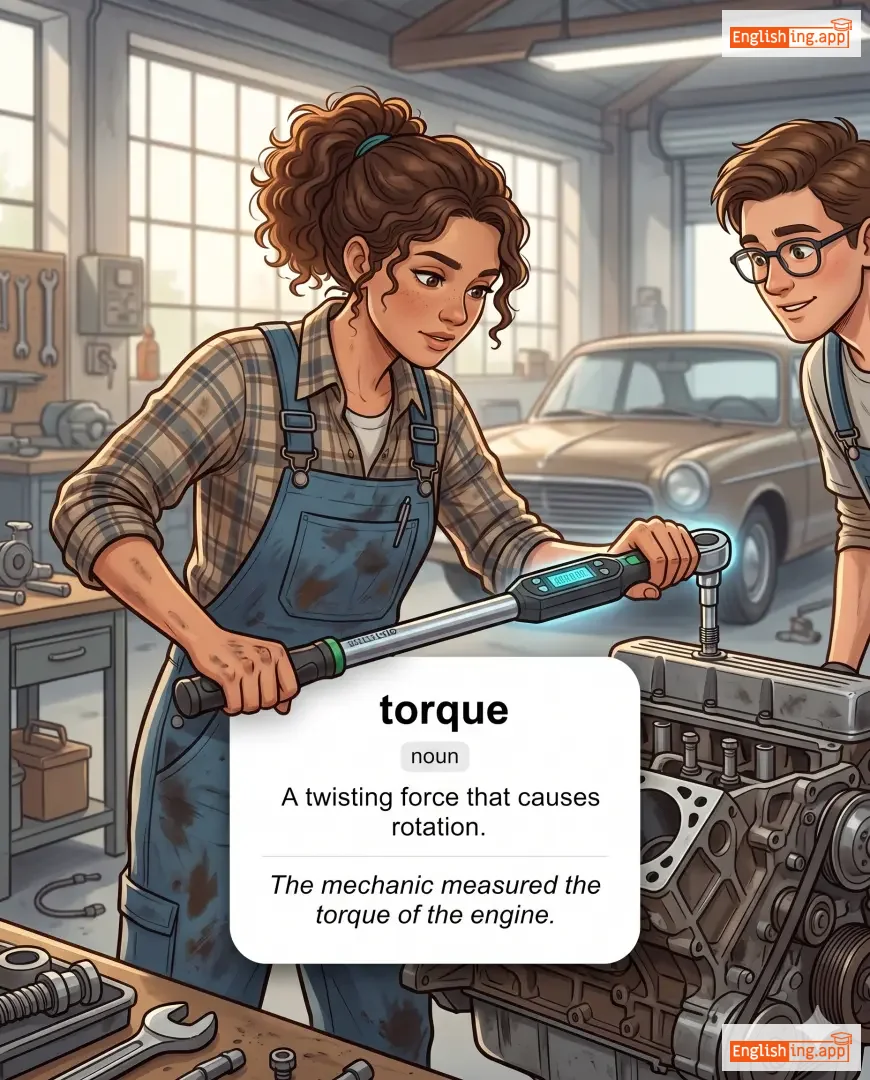
torque definition card — visual illustration of the meaning
noun
/tɔːrk/

A twisting force that causes rotation.

"The mechanic measured the torque of the engine."
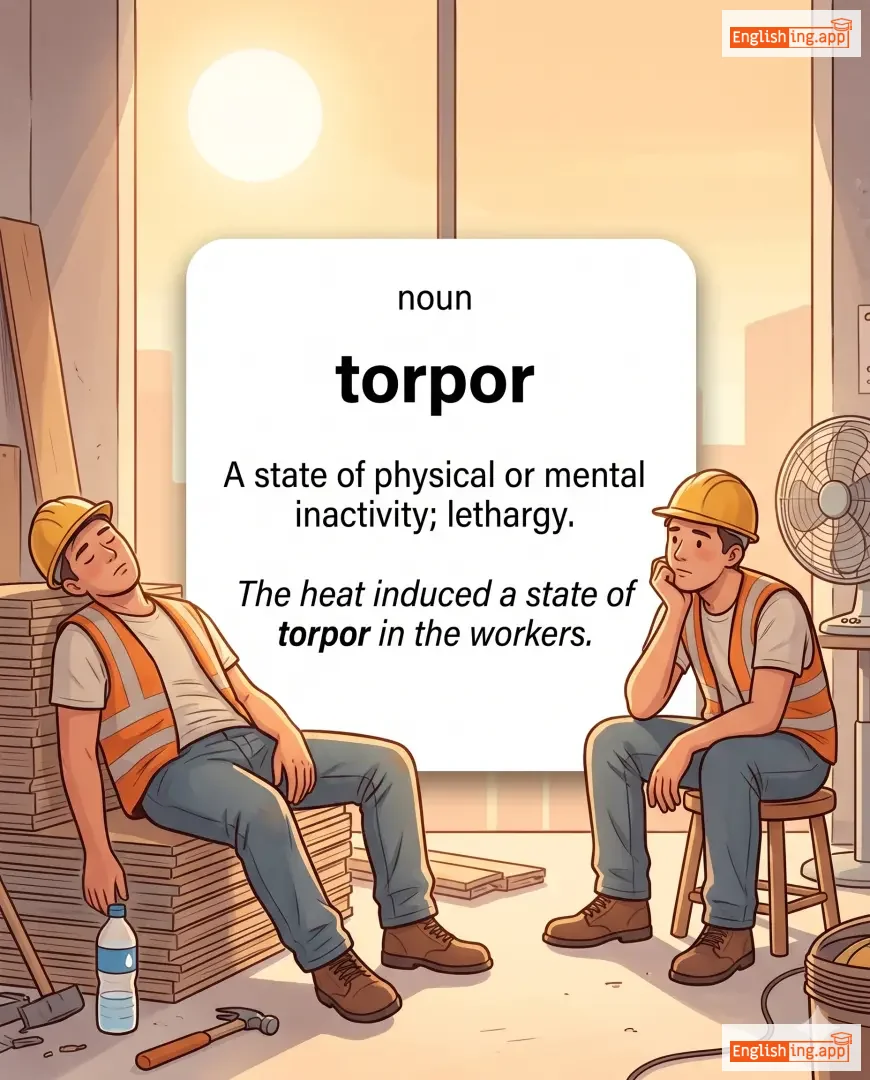
torpor definition card — visual illustration of the meaning
noun
/ˈtɔːrpər/
летаргия (torpor)

A state of physical or mental inactivity; lethargy.

"The heat induced a state of torpor in the workers."

"Жара вызвала состояние летаргии у рабочих." (Zhara vyzvala sostoyanie letargii u rabochikh.)
adjective
/ˈtɔːrpɪd/
вялый (torpid)

Mentally or physically inactive; sluggish or lethargic.

"After the long hike, he felt torpid and unmotivated."

"После долгого похода он почувствовал себя вялым и безмотивационным." (Posle dolgogo pokhoda on pochuvstvoval sebya vyalym i bezmotivatsionnym.)
noun/verb
/tɔːrˈpiːdoʊ/
торпеда (torpeda)

A self-propelled underwater missile; to attack or destroy something suddenly and forcefully.

"The submarine launched a torpedo at the enemy ship."

"Подводная лодка выпустила торпеду по вражескому кораблю." (Podvodnaya lodka vypustila torpedu po vrazheskomu korablyu.)
noun
/tɔːrˈneɪdoʊ/
торнадо (tornado)

a rapidly rotating column of air in contact with the ground and clouds, often destructive

"The tornado destroyed several houses in the village."

"Торнадо разрушило несколько домов в деревне" (Tornado razrushilo neskol'ko domov v derevne)
noun, verb
/ˈtɔːr.ment/
мука (muka)

severe physical or mental suffering; to cause extreme suffering

"The prisoner was in constant torment."

"Заключённый был в постоянных мучениях." (Zaklyuchyonnyy byl v postoyannykh mucheniyakh.)
noun
/tɔːrtʃ/
фонарик (fonarik)

a portable electric lamp powered by batteries; a flaming stick used for light

"Use the torch to find your way in the dark."

"Используйте фонарик, чтобы найти дорогу в темноте." (Ispolzuyte fonarik chtoby nayti dorogu v temnote.)
adjective
/ˌtɒpsi ˈtɜːvi/
хаотичный (khaotichnyy)

in a state of confusion, disorder, or upside down

"The sudden announcement left the office in a topsy-turvy state."

"Внезапное объявление оставило офис в совершенно хаотичном состоянии." (Vnezapnoye ob'yavleniye ostavilo ofis v sovershenno khaotichnom sostoyanii.)
noun
/ˈtɒpˌsɔɪl/
верхний слой почвы (verkhniy sloy pochvy)

the top layer of soil, which is rich in organic matter and nutrients

"Farmers rely on healthy topsoil for good crop yields."

"Фермеры зависят от здорового верхнего слоя почвы для получения хороших урожаев." (Fermery zavisyat ot zdorovogo verkhnego sloya pochvy dlya polucheniya khoroshikh urozhaev.)
verb
/ˈtɒpl/
опрокинуть (oprokinut)

to fall or cause to fall over; to overthrow

"The earthquake caused the old building to topple."

"Землетрясение вызвало падение старого здания." (Zemletryaseniye vyzvalo padenie starogo zdaniya.)
noun
/təˈpɒɡrəfi/
топография (topografiya)

the arrangement of the natural and artificial physical features of an area

"The topography of the region made construction very challenging."

"Топография региона сделала строительство очень сложным." (Topografiya regiona sdelala stroitel'stvo ochen' slozhnym.)
adjective
/ˈtɒp.məʊst/
самый верхний; наивысший (samyy verhniy; naivysshiy)

highest in position or rank

"The flag was placed on the topmost branch of the tree."

"Флаг был размещен на самой верхней ветке дерева." (Flag byl razmeshen na samoy verkhney vetke dereva.)
noun
/ˈtɒpɪk/
тема (tema)

a subject of conversation, discussion, or writing

"The topic of the meeting was company expansion."

"Тема встречи была расширение компании." (Tema vstrechi byla rasshirenie kompanii.)
noun
/ˈtoʊ.pæz/
топаз (topaz)

a precious stone, typically colorless, yellow, or blue, used in jewelry

"The queen's crown was adorned with a magnificent blue topaz."

"Корона королевы была украшена великолепным синим топазом." (Korona korolevy byla ukrashena velikolepnym sinim topazom.)
noun
/ˌtɒləˈreɪʃən/
терпимость (terpimost)

The practice of allowing something that one does not necessarily agree with.

"The government promoted religious toleration."

"Правительство продвигало религиозную терпимость." (Pravitel'stvo prodvigalo religioznuyu terpinost.)
noun
/ˈtɒlərəns/
терпимость (terpimost)

The ability or willingness to accept or endure differences, behaviors, or opinions without hostility.

"Her tolerance for different cultures impressed everyone."

"Её терпимость к разным культурам впечатлила всех." (Yeyo terpimost' k raznym kul'turam vpechatlila vsekh.)
adjective
/ˈtɒlərənt/
терпимый (terpimy)

Showing willingness to allow the existence of opinions or behaviors that one dislikes or disagrees with.

"He is very tolerant of other people's beliefs."
"Он очень терпим к убеждениям других людей." (On ochen' terpim k ubezhdeniyam drugikh lyudey.)
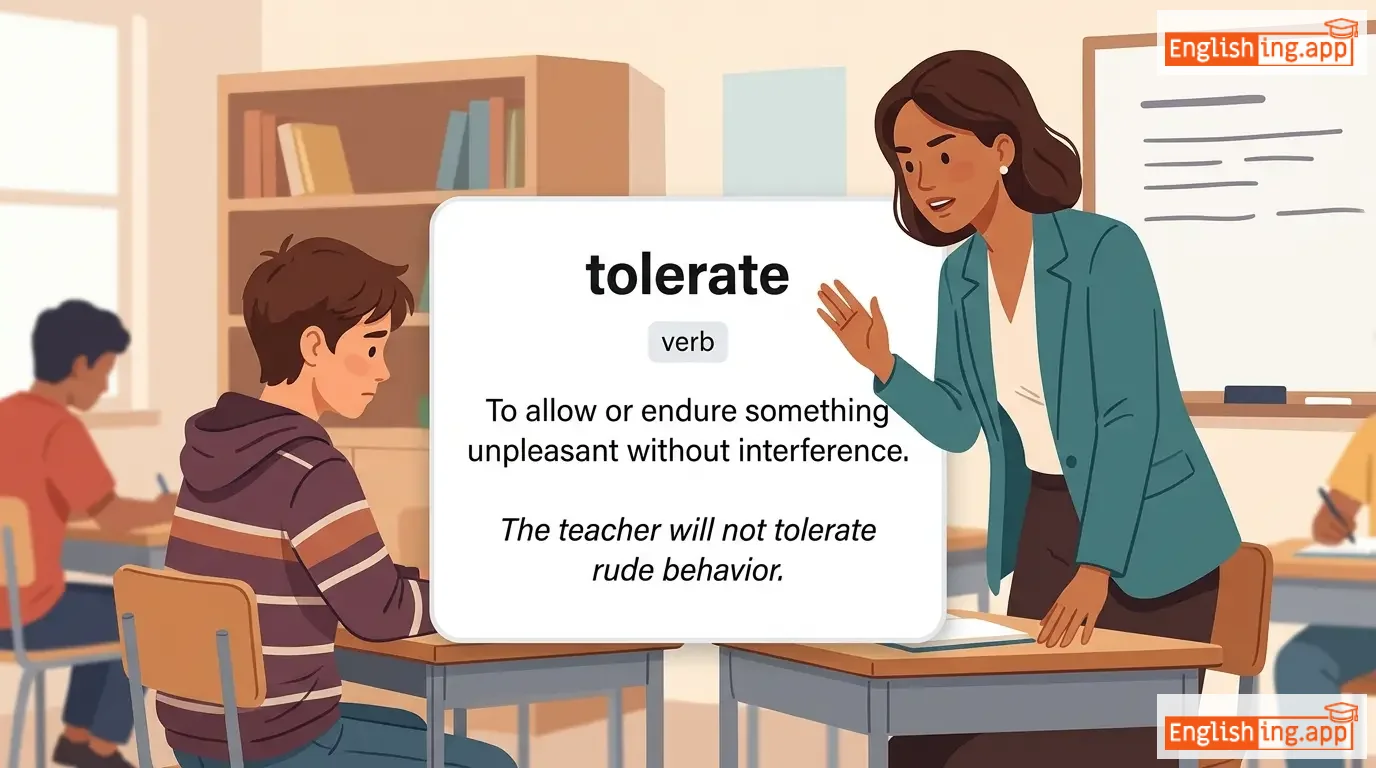
tolerate definition card — visual illustration of the meaning
verb
/ˈtɒləreɪt/
терпеть (terpet')

To allow or endure something unpleasant without interference.

"The teacher will not tolerate rude behavior."

"Учитель не потерпит грубого поведения." (Uchitel' ne poterpit grubogo povedeniya.)
noun
/təˈmeɪtoʊ/
помидор (pomidor)

a red or yellowish fruit that is typically eaten as a vegetable

"I added some tomato to the salad."

"Я добавил немного помидора в салат." (Ya dobavil nemnogo pomidora v salat.)
tome definition card — visual illustration of the meaning
noun
/toʊm/
толстая книга (tolstaya kniga)

a large, heavy book, often scholarly or serious in nature

"She spent the afternoon reading an old tome on medieval history."

"Она провела послеобеденное время, читая старую толстую книгу по средневековой истории." (Ona provela posleobedennoye vremya, chitaya staruyu tolstuyu knigu po srednevekovoy istorii.)