Словари

Словарь английского языка | Значения слов, определения и примеры

noun
/ˈtɒpˌsɔɪl/
верхний слой почвы (verkhniy sloy pochvy)

the top layer of soil, which is rich in organic matter and nutrients

"Farmers rely on healthy topsoil for good crop yields."

"Фермеры зависят от здорового верхнего слоя почвы для получения хороших урожаев." (Fermery zavisyat ot zdorovogo verkhnego sloya pochvy dlya polucheniya khoroshikh urozhaev.)
adjective
/ˌtɒpsi ˈtɜːvi/
хаотичный (khaotichnyy)

in a state of confusion, disorder, or upside down

"The sudden announcement left the office in a topsy-turvy state."

"Внезапное объявление оставило офис в совершенно хаотичном состоянии." (Vnezapnoye ob'yavleniye ostavilo ofis v sovershenno khaotichnom sostoyanii.)
noun
/tɔːrtʃ/
фонарик (fonarik)

a portable electric lamp powered by batteries; a flaming stick used for light

"Use the torch to find your way in the dark."

"Используйте фонарик, чтобы найти дорогу в темноте." (Ispolzuyte fonarik chtoby nayti dorogu v temnote.)
noun, verb
/ˈtɔːr.ment/
мука (muka)

severe physical or mental suffering; to cause extreme suffering

"The prisoner was in constant torment."

"Заключённый был в постоянных мучениях." (Zaklyuchyonnyy byl v postoyannykh mucheniyakh.)
noun
/tɔːrˈneɪdoʊ/
торнадо (tornado)

a rapidly rotating column of air in contact with the ground and clouds, often destructive

"The tornado destroyed several houses in the village."

"Торнадо разрушило несколько домов в деревне" (Tornado razrushilo neskol'ko domov v derevne)
noun/verb
/tɔːrˈpiːdoʊ/
торпеда (torpeda)

A self-propelled underwater missile; to attack or destroy something suddenly and forcefully.

"The submarine launched a torpedo at the enemy ship."

"Подводная лодка выпустила торпеду по вражескому кораблю." (Podvodnaya lodka vypustila torpedu po vrazheskomu korablyu.)
adjective
/ˈtɔːrpɪd/
вялый (torpid)

Mentally or physically inactive; sluggish or lethargic.

"After the long hike, he felt torpid and unmotivated."
"После долгого похода он почувствовал себя вялым и безмотивационным." (Posle dolgogo pokhoda on pochuvstvoval sebya vyalym i bezmotivatsionnym.)
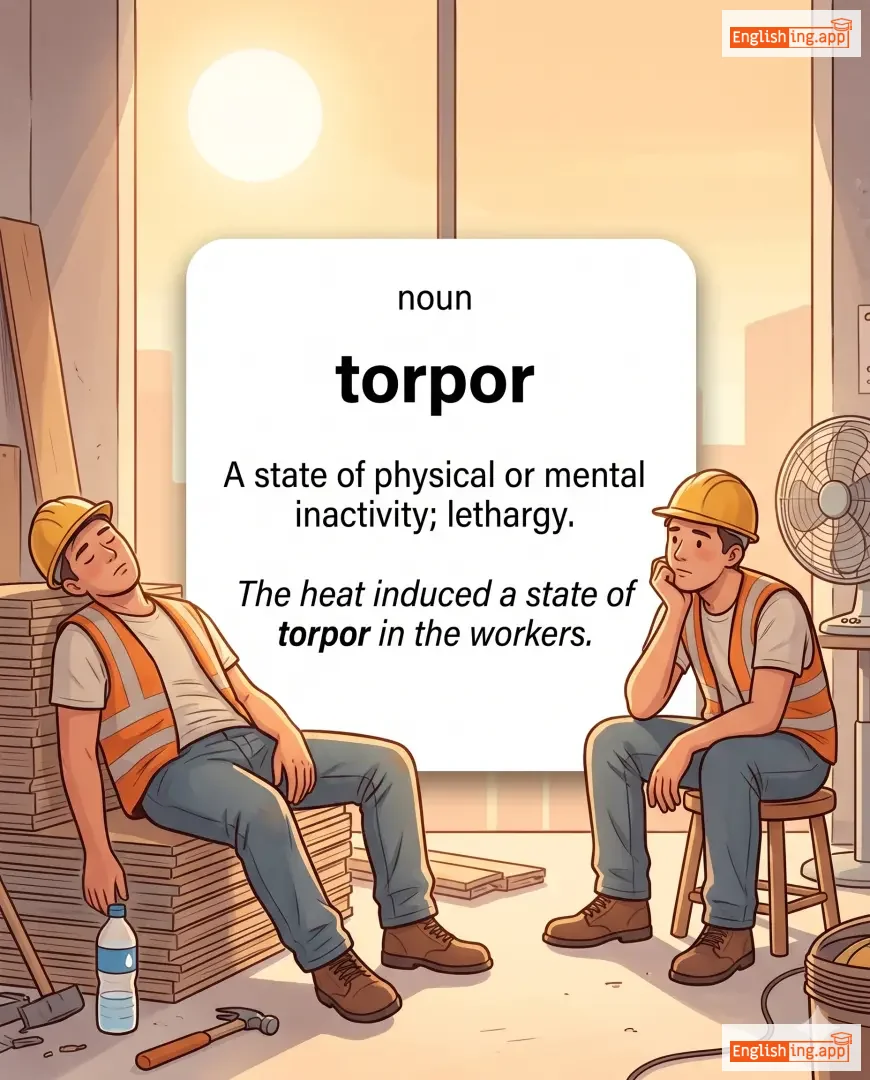
torpor definition card — visual illustration of the meaning
noun
/ˈtɔːrpər/
летаргия (torpor)

A state of physical or mental inactivity; lethargy.

"The heat induced a state of torpor in the workers."
"Жара вызвала состояние летаргии у рабочих." (Zhara vyzvala sostoyanie letargii u rabochikh.)
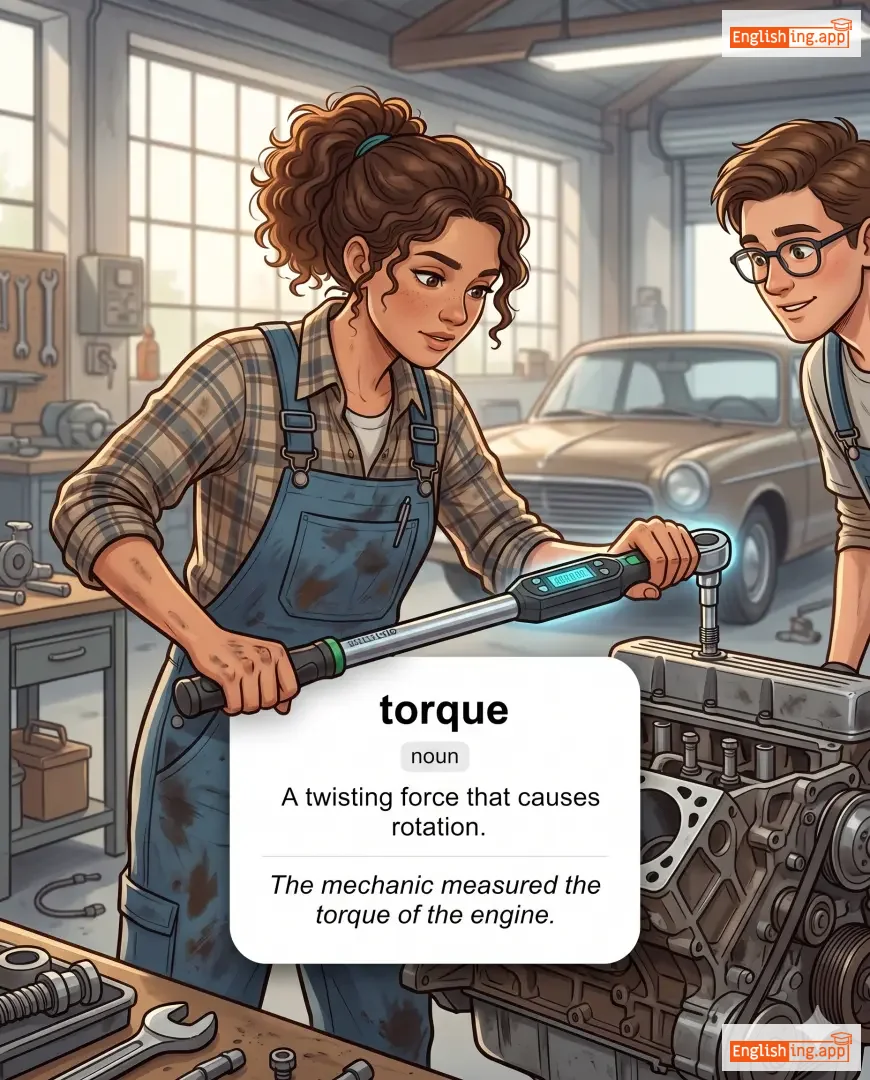
torque definition card — visual illustration of the meaning
noun
/tɔːrk/

A twisting force that causes rotation.

"The mechanic measured the torque of the engine."

noun
/ˈtɔːrənt/
поток (potok)

A strong and fast-moving stream of water; a sudden, violent outpouring of something.

"A torrent of rain flooded the streets."

"Поток дождя затопил улицы." (Potok dozhdya zatopil ulitsy.)
adjective
/təˈrɛnʃəl/
ливневой (livnevoy)

Relating to or resembling a torrent; very heavy and fast flowing.

"The hikers were caught in torrential rain."

"Путешественники оказались в ливне." (Puteshestvenniki okazalis' v livne.)
adjective
/ˈtɒrɪd/
очень жаркий и сухой; полный сильных эмоций или страсти (ochen' zharkiy i sukhoy; polnyy sil'nykh emotsiy ili strasti)

Very hot and dry; full of strong emotions or passion.

"The desert heat was torrid during the day."

"Жара в пустыне была торридной в течение дня." (Zhara v pustyne byla torridnoy v techeniye dnya.)
noun
/ˈtɔːrsoʊ/
туловище (tulovishche)

The trunk of the human body, excluding the head and limbs.

"The artist painted the torso of the model in great detail."

"Художник нарисовал туловище модели с большим вниманием к деталям." (Khodzhonik narisoval tulovishche modeli s bol'shim vnimaniem k detal'yam.)
noun
/tɔːrˈtiːə/
тортилья (tortilla)

A thin round flatbread made from corn or wheat, common in Mexican cuisine.

"She wrapped the vegetables in a warm tortilla."

"Она завернула овощи в теплую тортилью." (Ona zaverнула ovoshchi v tepluyu tortillyu.)
adjective
/ˈtɔːrʃəs/
незаконный поступок (nezakonnyy postupok)

Relating to or involving a wrongful act leading to legal liability.

"The company was found guilty of tortious interference with contracts."

"Компания была признана виновной в незаконном вмешательстве в контракты." (Kompaniya byla priznana vinovnoj v nezakonnoe vmeshatel'stve v kontrakty.)
noun
/ˈtɔːr.təs/
черепаха (cherepakha)

A slow-moving land reptile with a hard shell.

"The tortoise slowly crossed the garden."

"Черепаха медленно пересекла сад." (Cherepakha medlenno peresekla sad.)
adjective
/ˈtɔːrtʃuəs/
извилистый, сложный (izvilistyy, slozhnyy)

Full of twists and turns; excessively complex or complicated.

"The tortuous mountain road made driving very difficult."

"Извилистая горная дорога сделала вождение очень трудным." (Izvilistaya gornaya doroga sdelala vozdenie ochen' trudnym.)
noun
/ˈtɔːtʃər/
пытка (pytka)

the action or practice of inflicting severe pain on someone as a punishment or to force them to do something

"He was subjected to torture during the interrogation."

"Его подвергли пыткам во время допроса." (Yego podvergli pytkam vo vremya doprosa.)
adjective
/ˈtɔːrtʃərəs/
мучительный (muchitelnyy)

Extremely painful or causing great suffering; relating to or involving torture.

"The journey through the desert was long and torturous."

"Путешествие через пустыню было долгим и мучительным." (Puteshestviye cherez pustynyu bylo dolgim i muchitel'nym.)
verb
/tɔs/
легко бросать (legko brosat')

To throw something lightly or casually; to move or turn suddenly.

"He tossed the keys onto the table."

"Он бросил ключи на стол." (On brosil klyuchi na stol.)
adjective, noun, verb
/ˈtoʊ.təl/
итог (itog)

the whole amount; complete

"The total cost was too high."

"Общая стоимость была слишком высокой." (Obshchaya stoimost' byla slishkom vysokoy.)
adverb
/ˈtoʊtəli/
совершенно (sovershenno)

completely or in an absolute way

"She was totally shocked by the news."

"Она была совершенно потрясена новостью." (Ona byla sovershenno potryasena novost'yu.)
noun
/ˈtoʊtəm/
священный символ (svyashchennyy simvol)

A natural object, animal, or symbol that is revered as a spiritual emblem by a group or tribe.

"The eagle is considered a sacred totem in many cultures."

"Орел считается священным тотемом во многих культурах." (Orel schitayetsya svyashchennym totemom vo mnogikh kul'turakh.)
noun
/treɪl/
тропа (tropa)

a path or track left by something that has passed

"The hikers followed the trail through the forest."

"Путники следовали по тропе через лес." (Putniki sleduyut po trope cherez les.)
trade definition card — visual illustration of the meaning
💱

trade

noun, verb
/treɪd/

The action of buying, selling, or exchanging goods and services.

"The company trades in electronic goods worldwide."

trade facilitation definition card — visual illustration of the meaning
noun
/treɪd fəˌsɪl.ɪˈteɪ.ʃən/
содействие торговле (sodeystvie torgovle)

The simplification, modernization and harmonization of export and import processes.

"Trade facilitation boosts economic growth."
"Содействие торговле способствует экономическому росту." (Sodeystvie torgovle sposobstvuyet ekonomicheskomu rostu.)
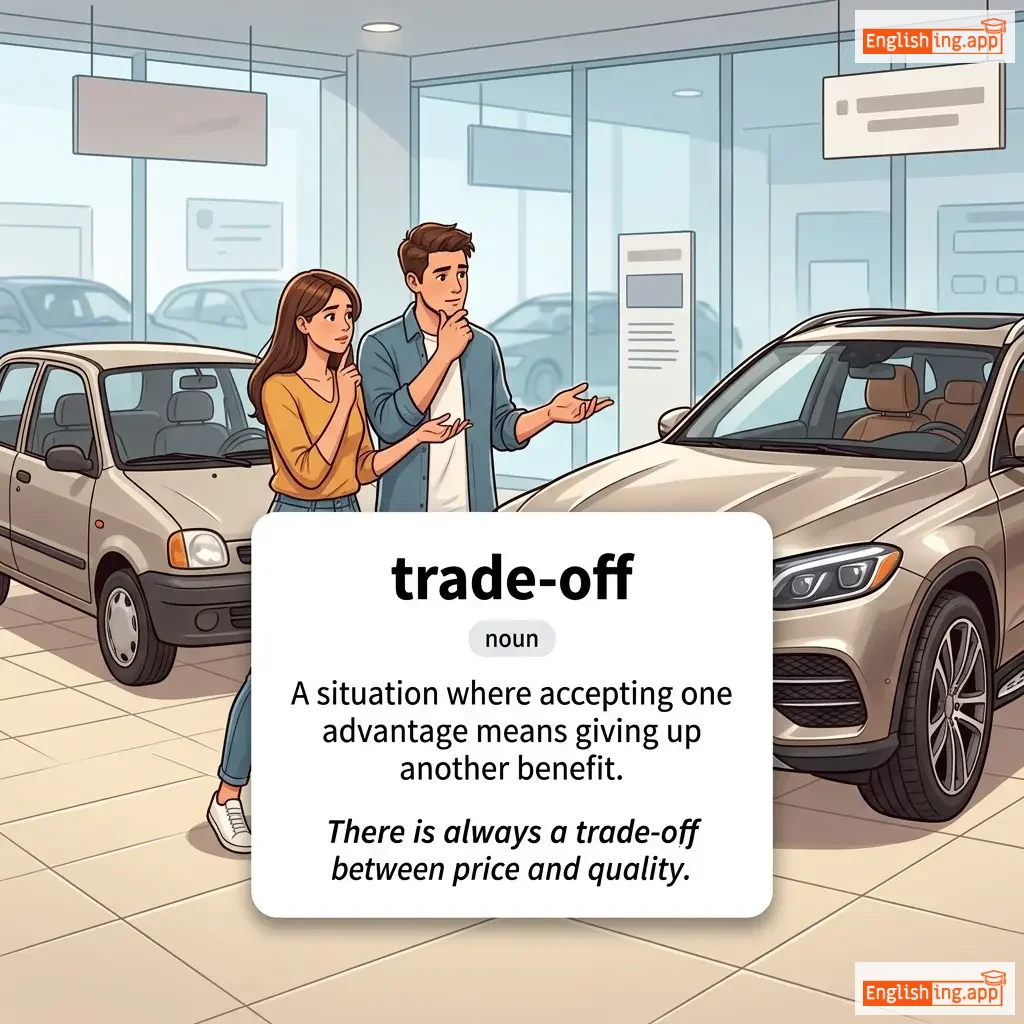
trade-off definition card — visual illustration of the meaning
noun
ˈtreɪd.ɒf
компромисс (kompromiss)

A situation where accepting one advantage means giving up another benefit.

"There is always a trade-off between price and quality."

"Всегда есть компромисс между ценой и качеством." (Vsegda yest' kompromiss mezhdu tsenoy i kachestvom.)
noun
/ˈtreɪdmɑːrk/
торговая марка (torgovaya marka)

a symbol, word, or words legally registered or established by use as representing a company or product

"The company’s logo is its trademark."

"Логотип компании — это её торговая марка." (Logotip kompanii — eto yeye togovaya marka.)
noun
/ˈtreɪ.dər/
торговец (torgovets)

a person who buys and sells goods or financial securities for profit

"The trader made a good profit from selling imported goods."

"Торговец получил хорошую прибыль, продавая импортированные товары." (Torgovets poluchil khoroshuyu pribyl', prodavaya importirovannye tovaru)
noun
/ˈtreɪdɪŋ/
торговля (torgovlya)

the act or business of buying and selling goods or services

"She made a fortune through online trading."
"Она заработала состояние с помощью онлайн-торговли." (Ona zarabotala sostoyanie s pomoshch'yu onlayn-torgovli.)
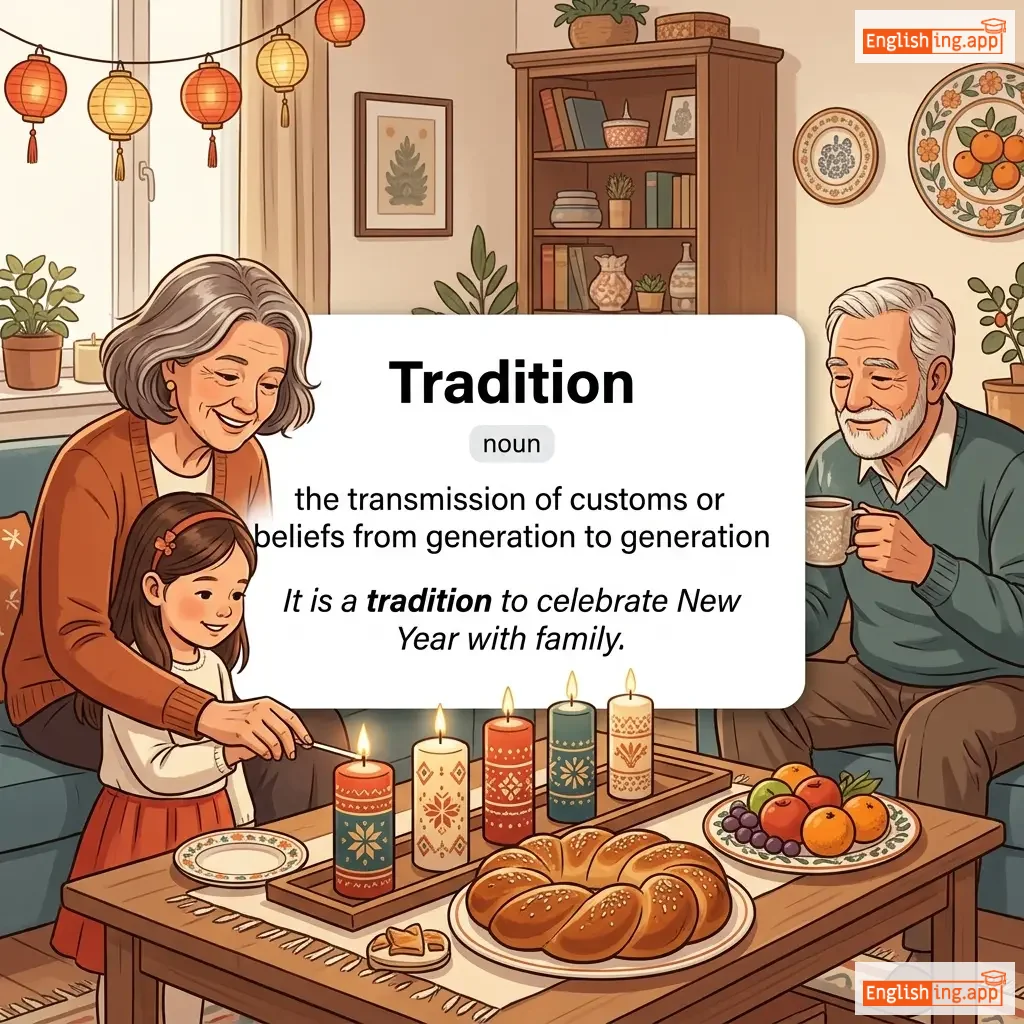
Tradition definition card — visual illustration of the meaning
noun
/trəˈdɪʃən/
традиция (tradicija)

the transmission of customs or beliefs from generation to generation

"It is a tradition to celebrate New Year with family."

"Это традиция — встречать Новый год с семьей." (Eto tradicija – vstrechat' Novyj god s sem'ej.)
adjective
/trəˈdɪʃənəl/
традиционный (traditsionny)

existing in or as part of a tradition

"The traditional dance of this village is performed every year."
"Традиционный танец этой деревни исполняется каждый год." (Traditsionnyy tanets etoy derevni ispolnyayetsya kazhdyy god.)
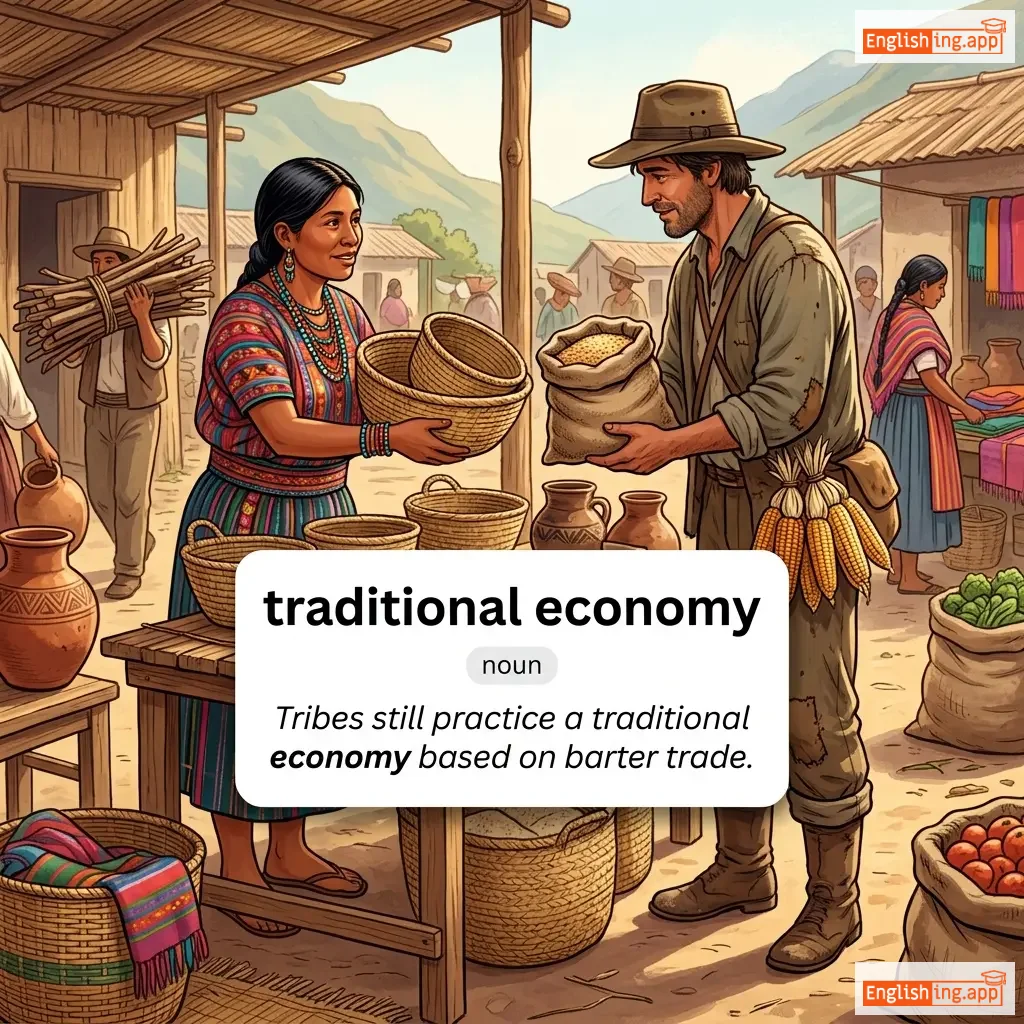
traditional economy definition card — visual illustration of the meaning
noun
/trəˈdɪʃ.ən.əl ɪˈkɒn.ə.mi/
традиционная экономика (traditsionnaya ekonomika)

An economic system based on customs and traditions, often involving barter trade.

"Tribes still practice a traditional economy based on barter trade."

"Племена до сих пор практикуют традиционную экономику, основанную на обмене товарами." (Plemya do sikh por prakticuyut tradicionnuyu ekonomiku, osnovannuyu na obmene tovarami.)
adverb
/trəˈdɪʃənəli/
традиционно (traditsionno)

according to custom or long-established practice

"Bangladesh is traditionally known for its hospitality."

"Бангладеш традиционно известен своим гостеприимством." (Bangladesh traditsionno izvesten svoim gostepriimstvom.)
verb
/trəˈdjuːs/
клеветать (klevetat)

To speak badly of someone or tell lies to damage their reputation.

"He was furious when he found out that his rivals had traduced him."
"Он был в ярости, когда узнал, что его соперники его оклеветали." (On byl v yarosti, kogda uznal, chto ego sooperniki ego oklevetali.)
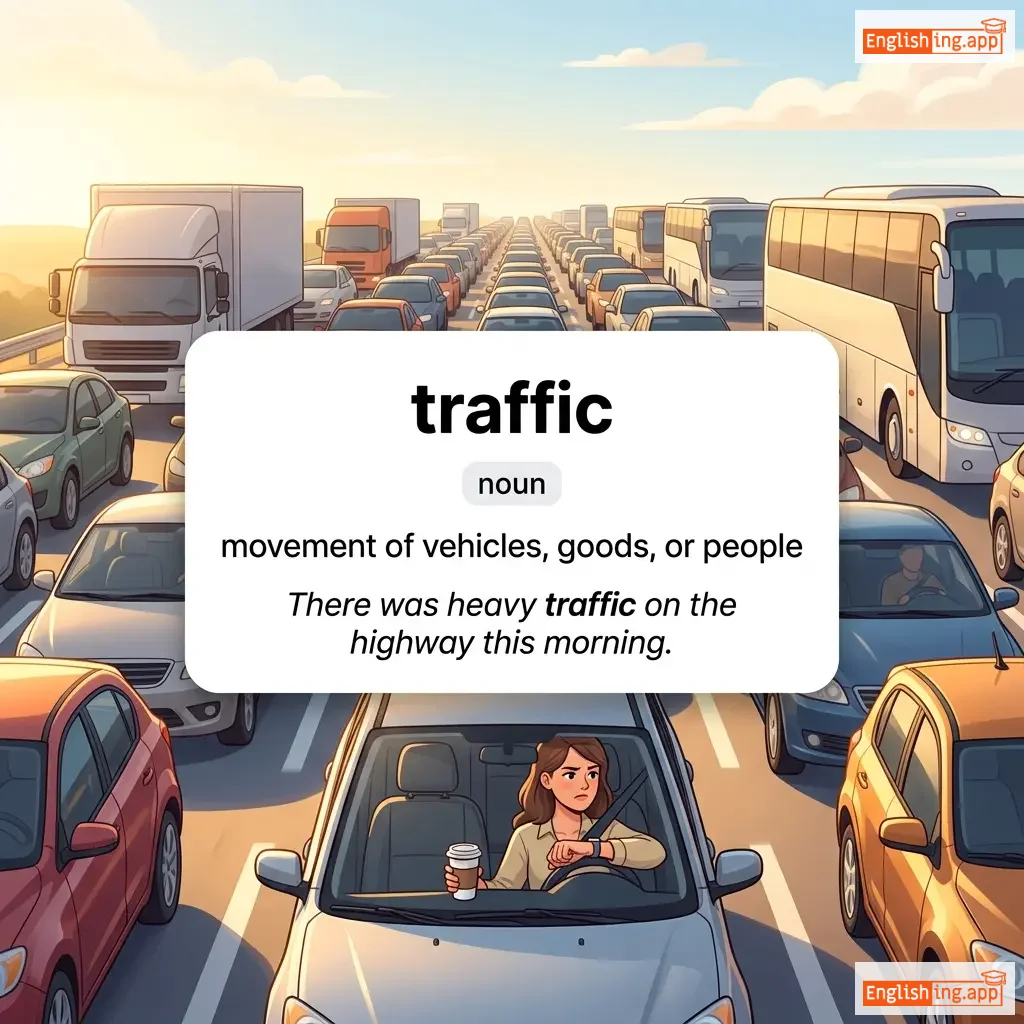
traffic definition card — visual illustration of the meaning
noun
/ˈtræfɪk/
трафик (trafik)

movement of vehicles, goods, or people

"There was heavy traffic on the highway this morning."

"Утром на шоссе был сильный трафик." (Utro na shosse byl sil'nyy trafik.)
noun
/ˈtrædʒədi/
трагедия (tragediya)

an event causing great suffering or distress

"The earthquake was a tragedy for the entire country."

"Землетрясение стало трагедией для всей страны." (Zemletryasenie stalo tragediey dlya vsey strany.)
adjective
/ˈtrædʒɪk/
трагичный (tragičnyj)

causing great sadness or suffering; very unfortunate

"The news of the accident was truly tragic."

"Новость о несчастном случае была действительно трагичной." (Novost' o neschastnom sluchaye byla deystvitel'no tragichnoj.)
noun
/ˈtreɪtər/
предатель (predatel)

A person who betrays their country, friends, or a cause by acting against them.

"The soldier was labeled a traitor for giving secrets to the enemy."

"Солдата назвали предателем за то, что он передал секреты врагу." (Soldata nazvali predatelem za to, chto on peredal sekrety vragu.)
noun
/træns/
транс (trans)

a half-conscious state like dreaming, often with loss of awareness of surroundings

"She stared out of the window as if in a trance."

"Она смотрела в окно, как будто была в трансе." (Ona smotrela v okno, kak budto byla v transe.)
verb
/ˈtræmpəl/
топтать (trempl)

to tread heavily on something and cause damage or injury

"The crowd trampled the flowers in the park."

"Толпа растоптала цветы в парке." (Tolpa rastoptala tsvety v parke)
verb, noun
/træmp/
бездомный / тяжело идти (bezdomnyy / tyazhelo idti)

to walk heavily or noisily; a person who travels from place to place on foot, often homeless

"They tramped through the forest in heavy boots."

"Они шли через лес в тяжелых ботинках." (Oni shli cherez les v tyazhelykh botinkakh.)
noun, verb
/ˈtræməl/
ограничение (ogranichenie)

A restriction or impediment to freedom of action; to restrict.

"The strict rules trammel the creativity of the students."

"Жесткие правила ограничивают креативность студентов." (Zhestkiye pravila ogranichivayut kreativity studentov.)
noun
/træm kɑːr/
трамвай (tramvay)

An electric vehicle that runs on rails along the street

"The tram car stopped at every station in the city center."
"Трамвай остановился на каждой станции в центре города." (Tramvay ostanovilsya na kazhdoy stantsii v tsentre goroda.)
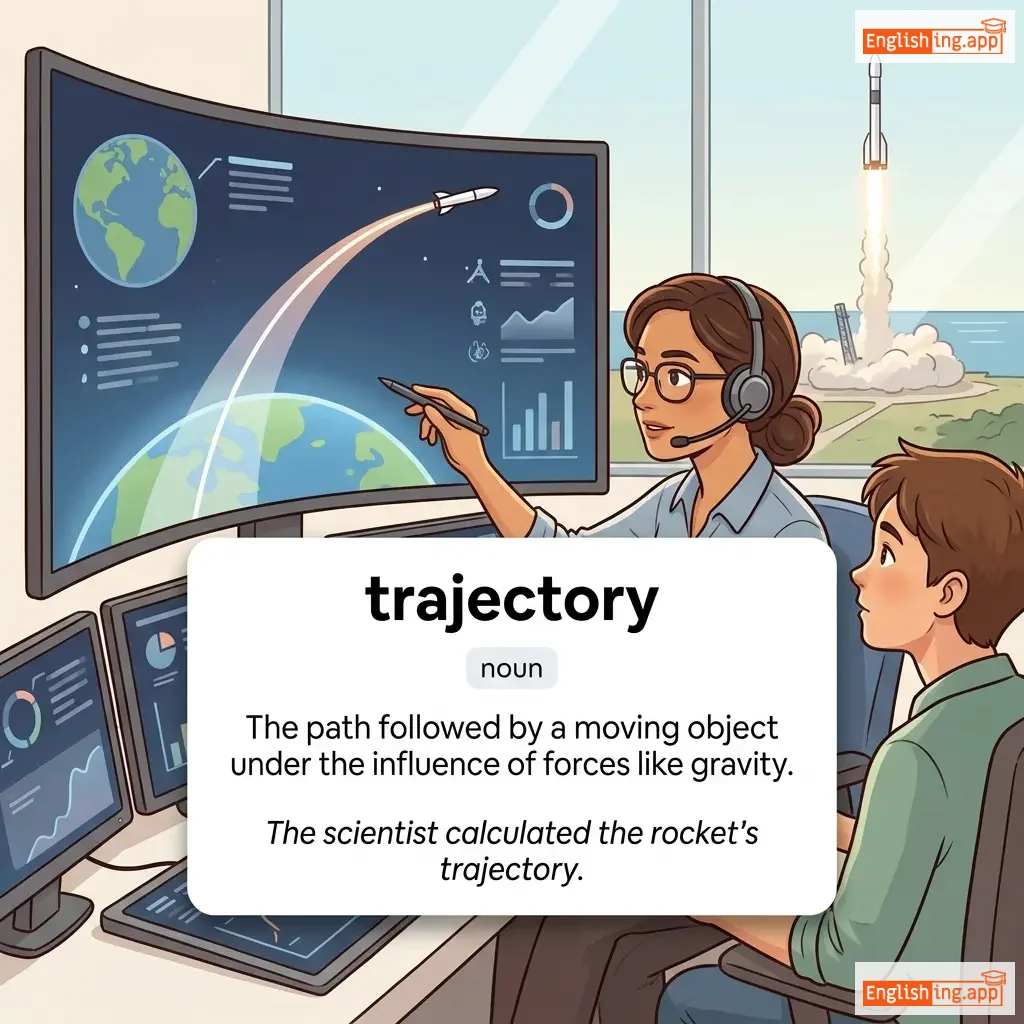
trajectory definition card — visual illustration of the meaning
noun
/trəˈdʒɛktəri/
траектория (traektoriya)

The path followed by a moving object under the influence of forces like gravity.

"The scientist calculated the rocket's trajectory."

"Учёный вычислил траекторию ракеты." (Uchonyy vychislyl traektoriyu rakety.)
noun
/ˈtreɪnər/
тренер (trener)

a person who teaches skills or gives training

"The fitness trainer helped me improve my posture."

"Фитнес тренер помог мне улучшить осанку." (Fitness trener pomog mne uluchshit' osanku.)
noun
/ˈtreɪlər/
трейлер / превью (treyler / preview)

a preview of a movie or a vehicle used for transporting goods

"The movie trailer was released last week."
"Трейлер фильма был выпущен на прошлой неделе." (Trejler fil'ma byl vypushchen na proshloy nedele.)
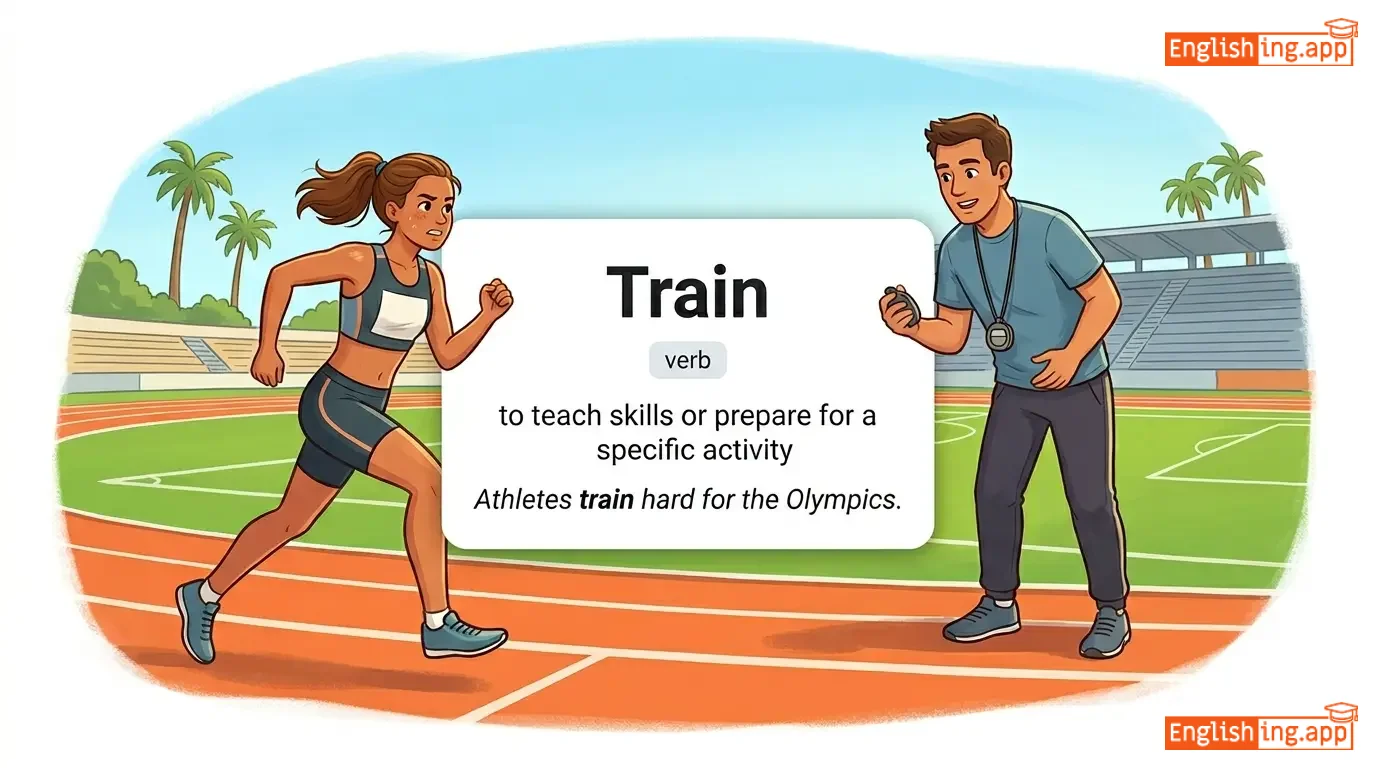
Train definition card — visual illustration of the meaning
noun
/treɪn/
поезд (poezd)

a series of connected vehicles that run on tracks and are used for transporting people or goods

"The train departed from the station on time."

"Поезд отправился со станции вовремя." (Poezd otpravil'sya so stantsii vovremya.)
noun
/treɪˈniː/
стажёр; ученик (trainee)

a person undergoing training for a particular job or profession; a novice learner

"The medical trainee worked long hours to gain practical experience."
"Медицинский стажёр работал долгие часы, чтобы получить практический опыт." (Meditsinskiy stazhyor rabotal dolgye chasy, chtoby poluchit' prakticheskiy opyt.)
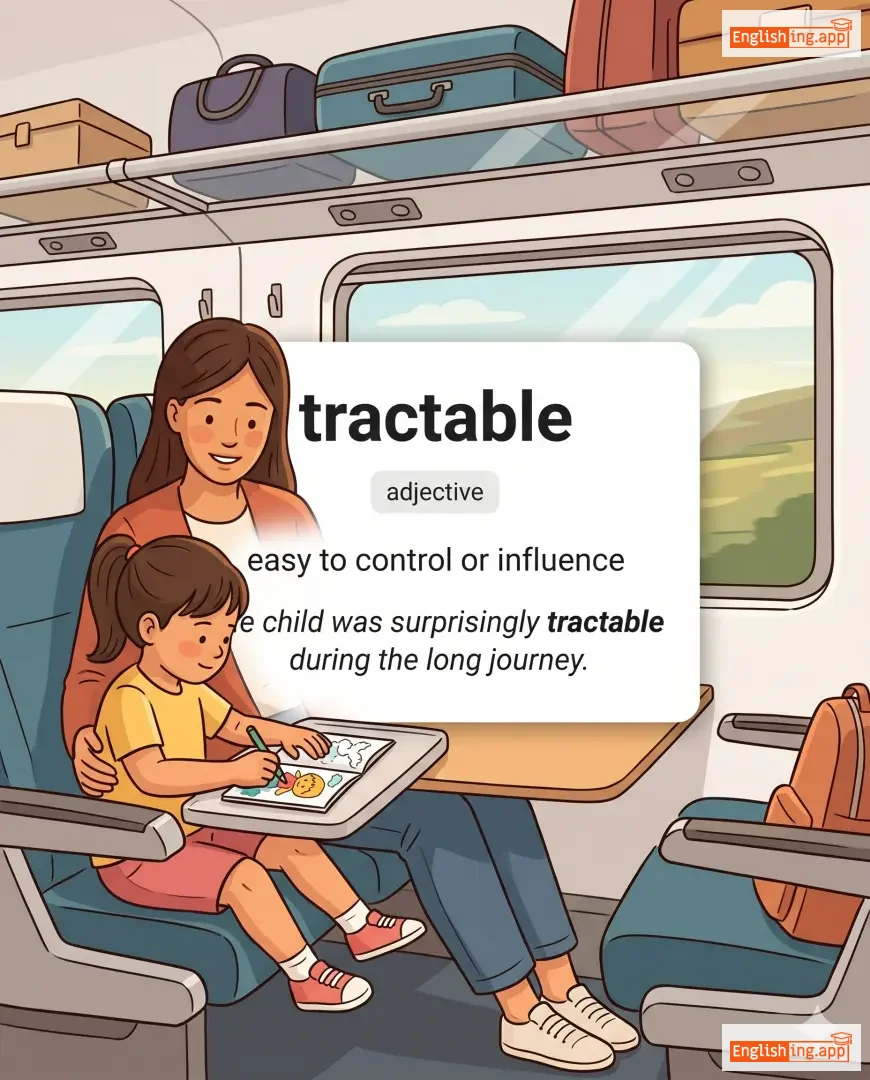
tractable definition card — visual illustration of the meaning
adjective
/ˈtræktəbəl/
легко контролируемый или поддающийся влиянию (legko kontroliruemyy ili poddayushchiesya vliyaniyu)

easy to control or influence

"The child was surprisingly tractable during the long journey."

"Ребёнок был удивительно послушным во время долгого путешествия." (Rebyonok byl udivitel'no poslušnoy vo vremya dolgogo puteshestviya.)