Vocabulaires

Découvrez, apprenez et maîtrisez le vocabulaire anglais

noun
/ˈtɒpˌsɔɪl/
terre arable (terre arable)

the top layer of soil, which is rich in organic matter and nutrients

"Farmers rely on healthy topsoil for good crop yields."

"Les agriculteurs dépendent d'une terre arable saine pour obtenir de bons rendements." (Les agriculteurs dependent d'une terre arable saine pour obtenir de bons rendements.)
adjective
/ˌtɒpsi ˈtɜːvi/
désordonné (désordonné)

in a state of confusion, disorder, or upside down

"The sudden announcement left the office in a topsy-turvy state."

"L'annonce soudaine a laissé le bureau dans un état complètement désordonné." (L'annonce soudaine a laissé le bureau dans un état complètement désordonné.)
noun
/tɔːrtʃ/
torche; lampe de poche (tortch)

a portable electric lamp powered by batteries; a flaming stick used for light

"Use the torch to find your way in the dark."

"Utilisez la torche pour vous reperez dans le noir." (Utilisez la torche pour vous reperez dans le noir)
noun, verb
/ˈtɔːr.ment/
tourment (tourment)

severe physical or mental suffering; to cause extreme suffering

"The prisoner was in constant torment."

"Le prisonnier était en tourment constant." (Le prisonnier était en tourment constant.)
noun
/tɔːrˈneɪdoʊ/
tornade (tornade)

a rapidly rotating column of air in contact with the ground and clouds, often destructive

"The tornado destroyed several houses in the village."

"La tornade a détruit plusieurs maisons dans le village" (La tornade a detruit plusieurs maisons dans le village)
noun/verb
/tɔːrˈpiːdoʊ/
torpille (torpille)

A self-propelled underwater missile; to attack or destroy something suddenly and forcefully.

"The submarine launched a torpedo at the enemy ship."

"Le sous-marin a lancé un torpille contre le navire ennemi." (Le sous-marin a lancé un torpille contre le navire ennemi.)
adjective
/ˈtɔːrpɪd/
léthargique (torpid)

Mentally or physically inactive; sluggish or lethargic.

"After the long hike, he felt torpid and unmotivated."

"Après la longue randonnée, il se sentait léthargique et démotivé." (Apres la longue randonnee, il se sentait lethargique et demotive.)
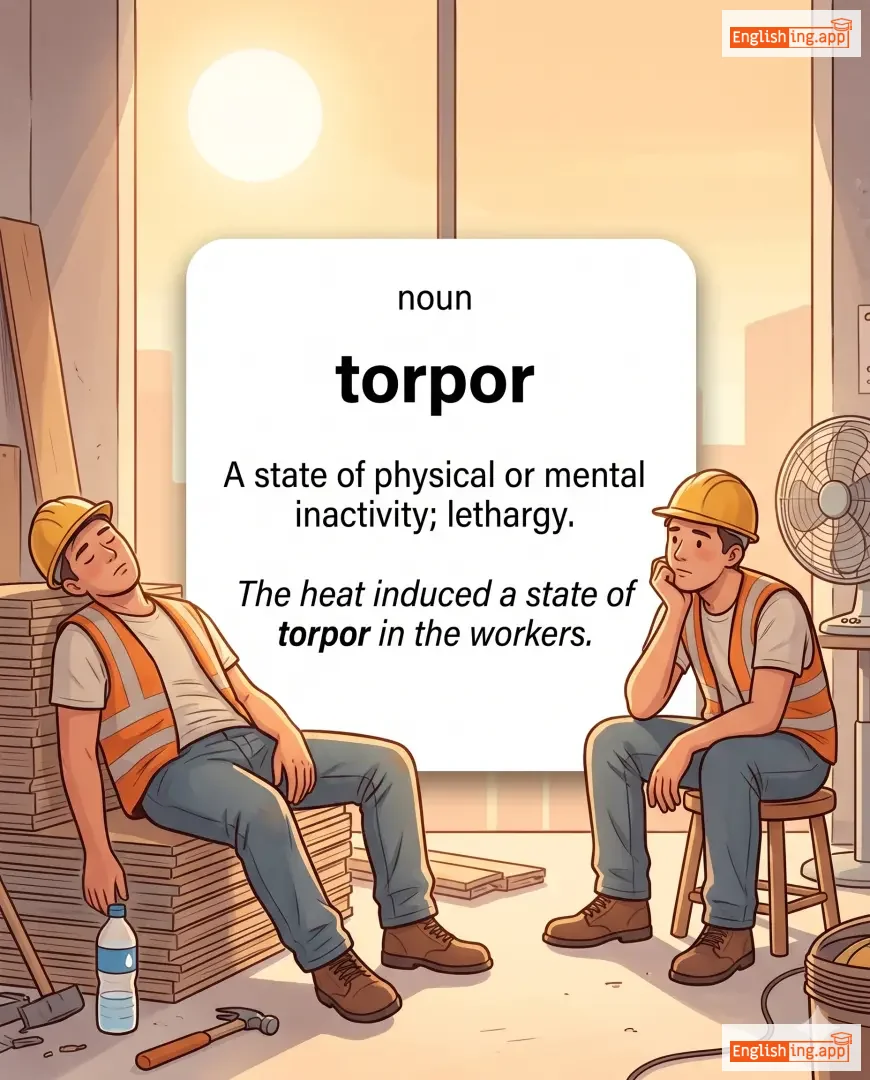
torpor definition card — visual illustration of the meaning
noun
/ˈtɔːrpər/
torpeur (torpor)

A state of physical or mental inactivity; lethargy.

"The heat induced a state of torpor in the workers."

"La chaleur a induit un état de torpeur chez les travailleurs." (La chaleur a induit un etat de torpeur chez les travailleurs.)
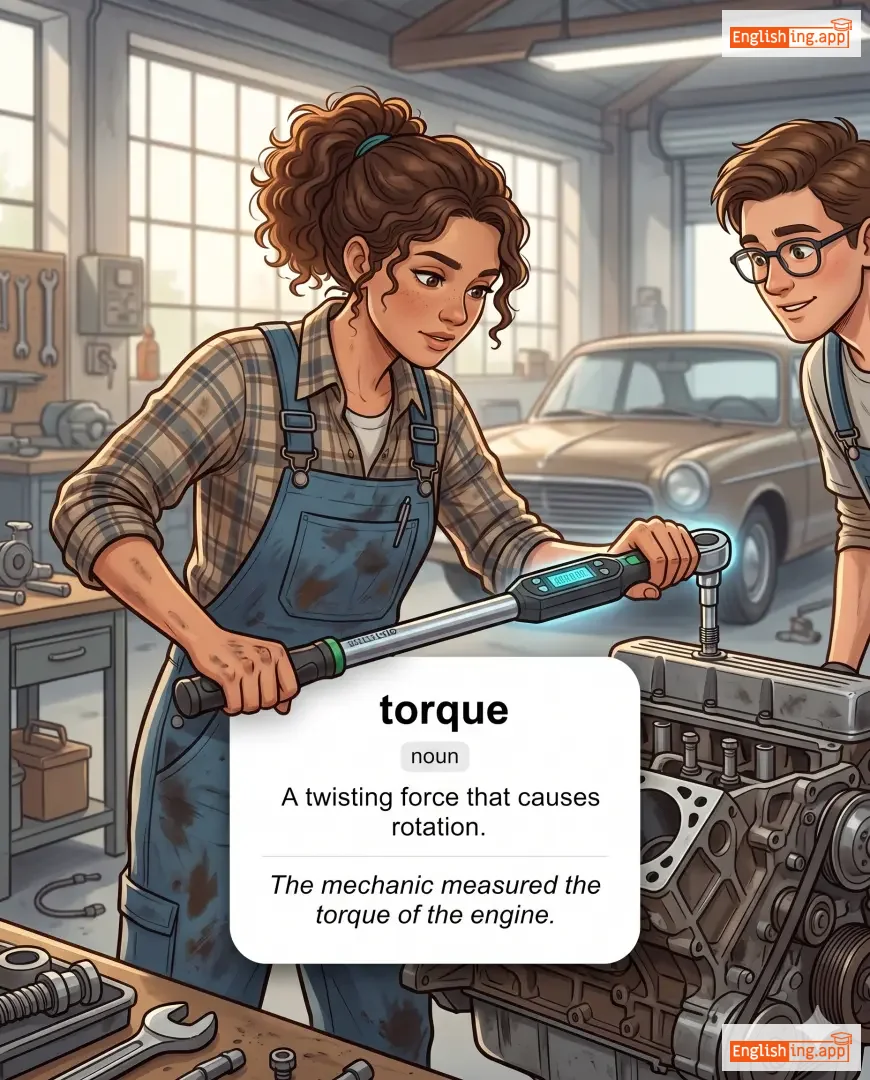
torque definition card — visual illustration of the meaning
noun
/tɔːrk/
couple (tork)

A twisting force that causes rotation.

"The mechanic measured the torque of the engine."

"Le mecanicien a mesure le couple du moteur." (Le mecanicien a mesure le couple du moteur)
noun
/ˈtɔːrənt/
torrent (torrent)

A strong and fast-moving stream of water; a sudden, violent outpouring of something.

"A torrent of rain flooded the streets."

"Un torrent de pluie a inondé les rues." (Un torrent de pluie a inondé les rues.)
adjective
/təˈrɛnʃəl/
torrentiel (torrentiel)

Relating to or resembling a torrent; very heavy and fast flowing.

"The hikers were caught in torrential rain."

"Les randonneurs ont été pris dans une pluie torrentielle." (Les randonneurs ont été pris dans une pluie torrentielle.)
adjective
/ˈtɒrɪd/
très chaud et sec; rempli d'émotions ou de passions fortes (tres chaud et sec; rempli d'emotions ou de passions fortes)

Very hot and dry; full of strong emotions or passion.

"The desert heat was torrid during the day."

"La chaleur du désert était torride pendant la journée." (La chaleur du désert était torride pendant la journée.)
noun
/ˈtɔːrsoʊ/
torse (torse)

The trunk of the human body, excluding the head and limbs.

"The artist painted the torso of the model in great detail."

"L'artiste a peint le torse du modèle en détail." (L'artiste a peint le torse du modèle en détail.)
noun
/tɔːrˈtiːə/
tortilla (tortilla)

A thin round flatbread made from corn or wheat, common in Mexican cuisine.

"She wrapped the vegetables in a warm tortilla."

"Elle a enveloppé les légumes dans une tortilla chaude." (Elle a enveloppé les légumes dans une tortilla chaude.)
adjective
/ˈtɔːrʃəs/
acte illicite (acte illicite)

Relating to or involving a wrongful act leading to legal liability.

"The company was found guilty of tortious interference with contracts."

"L'entreprise a été reconnue coupable d'interférence illicite avec les contrats." (L'entreprise a été reconnue coupable d'interférence illicite avec les contrats.)
noun
/ˈtɔːr.təs/
tortue (tortue)

A slow-moving land reptile with a hard shell.

"The tortoise slowly crossed the garden."

"La tortue a traversé lentement le jardin." (La tortue a traverse lentement le jardin.)
adjective
/ˈtɔːrtʃuəs/
tortueux, complexe (tortueux, complexe)

Full of twists and turns; excessively complex or complicated.

"The tortuous mountain road made driving very difficult."

"La route tortueuse de montagne rendait la conduite très difficile." (La route tortueuse de montagne rendait la conduite très difficile.)
noun
/ˈtɔːtʃər/
torture (torture)

the action or practice of inflicting severe pain on someone as a punishment or to force them to do something

"He was subjected to torture during the interrogation."

"Il a été soumis à la torture pendant l'interrogatoire." (Il a été soumis à la torture pendant l'interrogatoire.)
adjective
/ˈtɔːrtʃərəs/
tortueux (tortueux)

Extremely painful or causing great suffering; relating to or involving torture.

"The journey through the desert was long and torturous."

"Le voyage à travers le désert était long et tortueux." (Le voyage a travers le desert etait long et tortueux.)
verb
/tɔs/
lancer légèrement (lancer legerement)

To throw something lightly or casually; to move or turn suddenly.

"He tossed the keys onto the table."

"Il a lancé les clés sur la table." (Il a lance les cles sur la table.)
adjective, noun, verb
/ˈtoʊ.təl/
total (total)

the whole amount; complete

"The total cost was too high."

"Le coût total était trop élevé." (Le coût total était trop élevé.)
adverb
/ˈtoʊtəli/
totalement (totalement)

completely or in an absolute way

"She was totally shocked by the news."

"Elle était complètement choquée par la nouvelle." (Elle etait completement choquee par la nouvelle.)
noun
/ˈtoʊtəm/
symbole sacré (symbole sacre)

A natural object, animal, or symbol that is revered as a spiritual emblem by a group or tribe.

"The eagle is considered a sacred totem in many cultures."

"L'aigle est considéré comme un totem sacré dans de nombreuses cultures." (L'aigle est considere comme un totem sacre dans de nombreuses cultures.)
noun
/treɪl/
sentier (sentier)

a path or track left by something that has passed

"The hikers followed the trail through the forest."

"Les randonneurs ont suivi le sentier à travers la forêt." (Les randonneurs ont suivi le sentier à travers la forêt.)
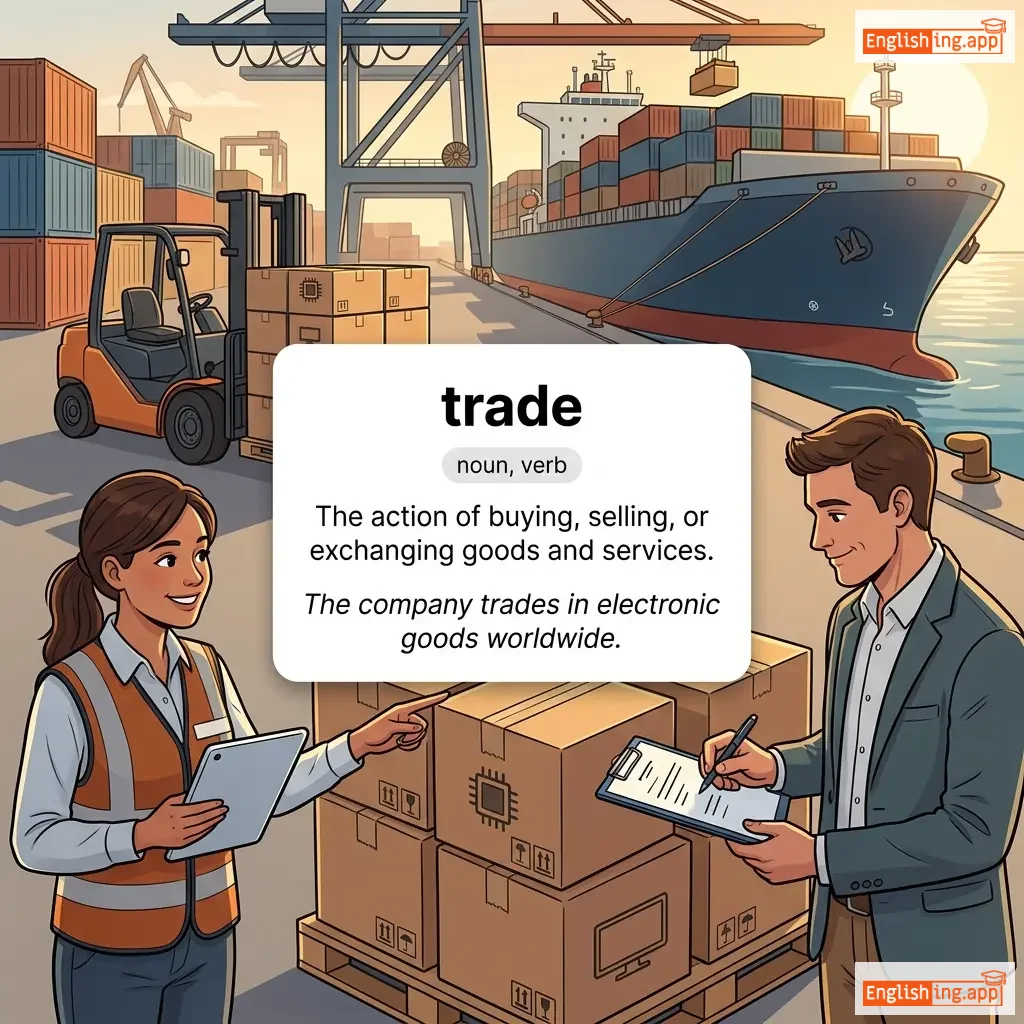
trade definition card — visual illustration of the meaning
noun, verb
/treɪd/
commerce (commerce)

The action of buying, selling, or exchanging goods and services.

"The company trades in electronic goods worldwide."

"L'entreprise échange des biens électroniques à l'échelle mondiale." (L'entreprise échange des biens électroniques à l'échelle mondiale.)
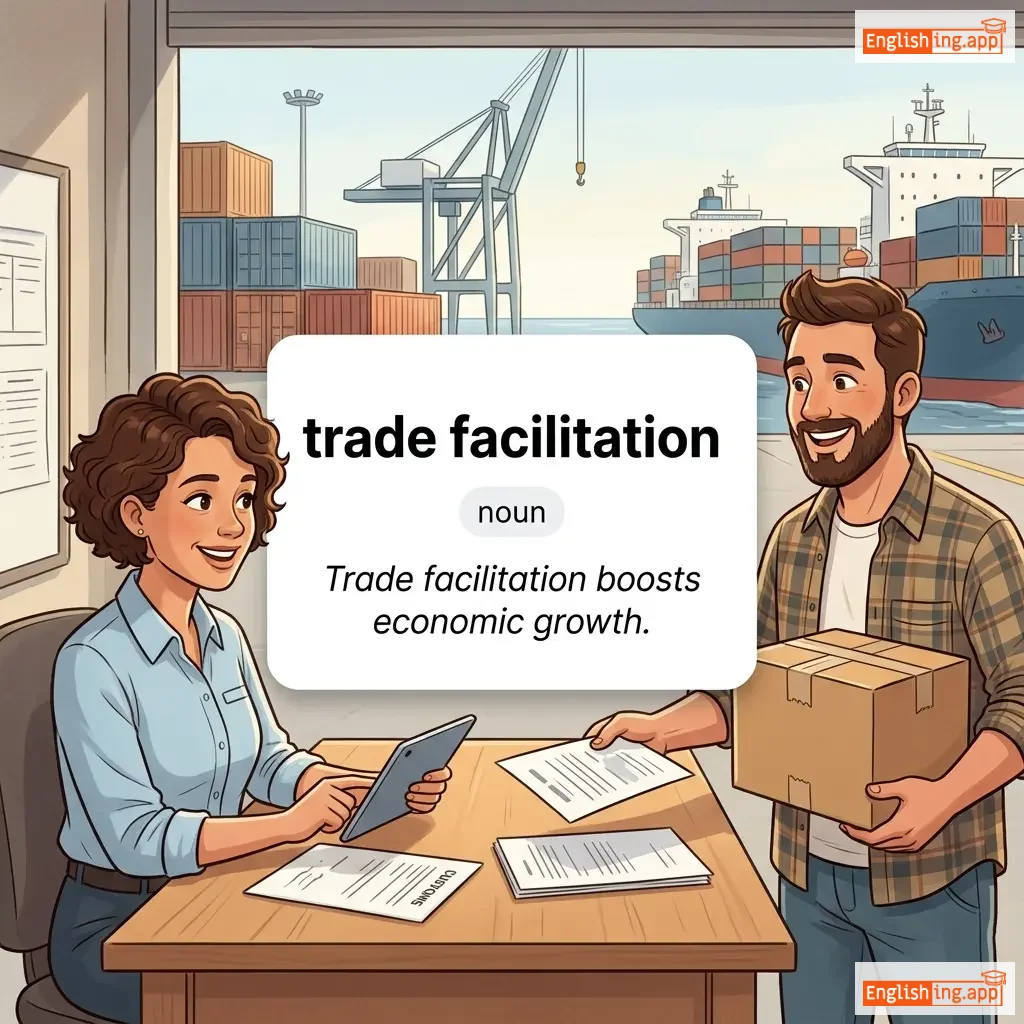
trade facilitation definition card — visual illustration of the meaning
noun
/treɪd fəˌsɪl.ɪˈteɪ.ʃən/
facilitation du commerce (facilitation du commerce)

The simplification, modernization and harmonization of export and import processes.

"Trade facilitation boosts economic growth."

"La facilitation du commerce stimule la croissance économique." (La facilitation du commerce stimule la croissance economique.)
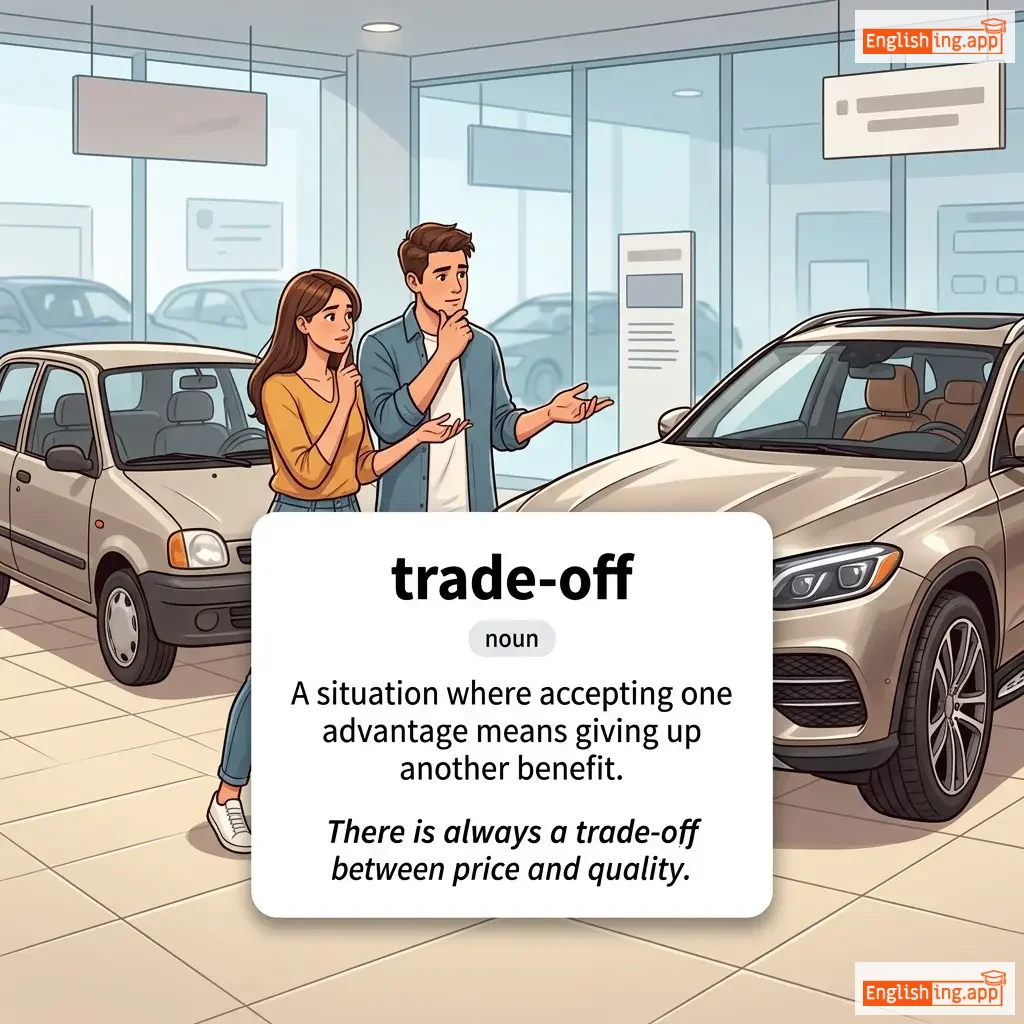
trade-off definition card — visual illustration of the meaning
noun
ˈtreɪd.ɒf
compromis (compromis)

A situation where accepting one advantage means giving up another benefit.

"There is always a trade-off between price and quality."

"Il y a toujours un compromis entre le prix et la qualité." (Il y a toujours un compromis entre le prix et la qualite.)
noun
/ˈtreɪdmɑːrk/
marque déposée (marque deposee)

a symbol, word, or words legally registered or established by use as representing a company or product

"The company’s logo is its trademark."

"Le logo de l'entreprise est sa marque déposée." (Le logo de l'entreprise est sa marque deposée.)
noun
/ˈtreɪ.dər/
commerçant (commercant)

a person who buys and sells goods or financial securities for profit

"The trader made a good profit from selling imported goods."

"Le commerçant a réalisé un bon profit en vendant des biens importés." (Le commerçant a réalisé un bon profit en vendant des biens importés.)
noun
/ˈtreɪdɪŋ/
commerce (commerce)

the act or business of buying and selling goods or services

"She made a fortune through online trading."

"Elle a fait une fortune grâce au commerce en ligne." (Elle a fait une fortune grâce au commerce en ligne.)
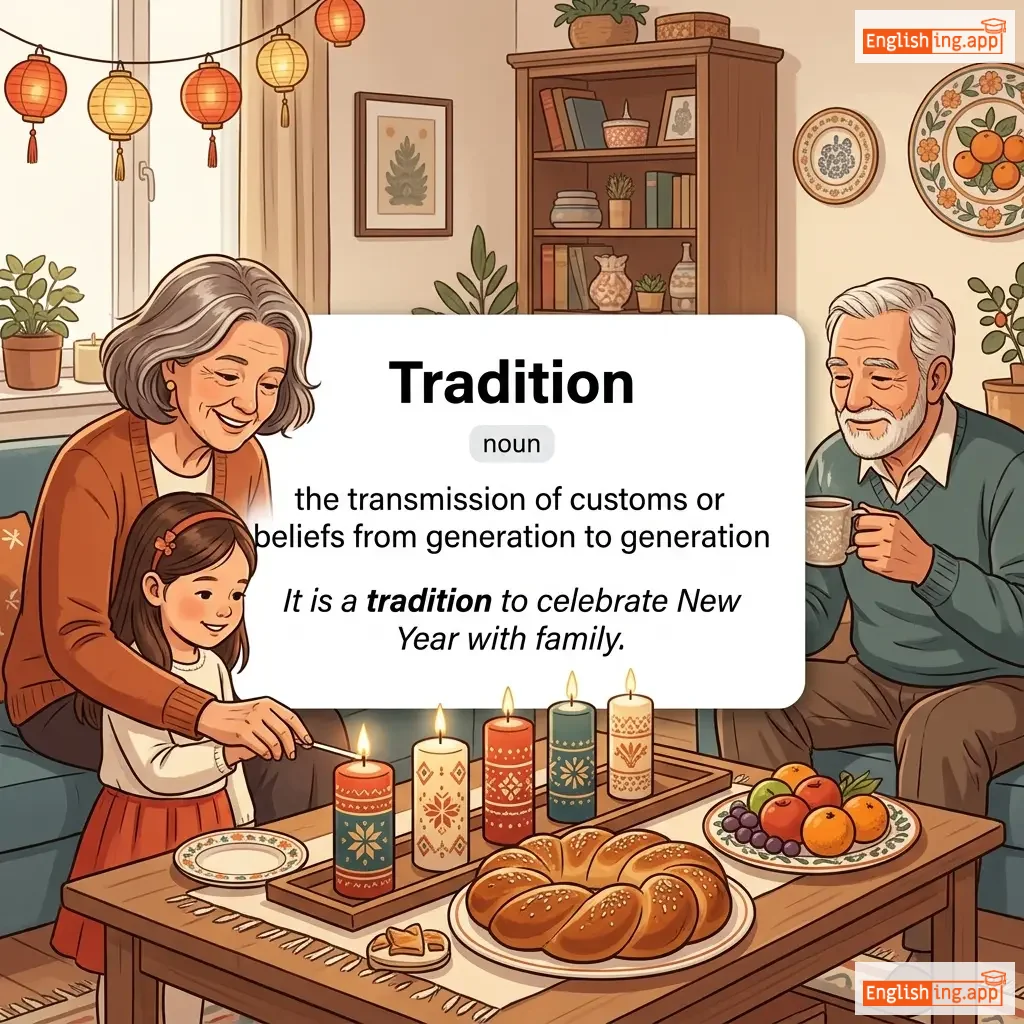
Tradition definition card — visual illustration of the meaning
noun
/trəˈdɪʃən/
tradition (tradition)

the transmission of customs or beliefs from generation to generation

"It is a tradition to celebrate New Year with family."

"C'est une tradition de célébrer le Nouvel An en famille." (C'est une tradition de celebrer le Nouvel An en famille.)
adjective
/trəˈdɪʃənəl/
traditionnel (traditionnel)

existing in or as part of a tradition

"The traditional dance of this village is performed every year."

"La danse traditionnelle de ce village est exécutée chaque année." (La danse traditionnelle de ce village est executee chaque annee.)
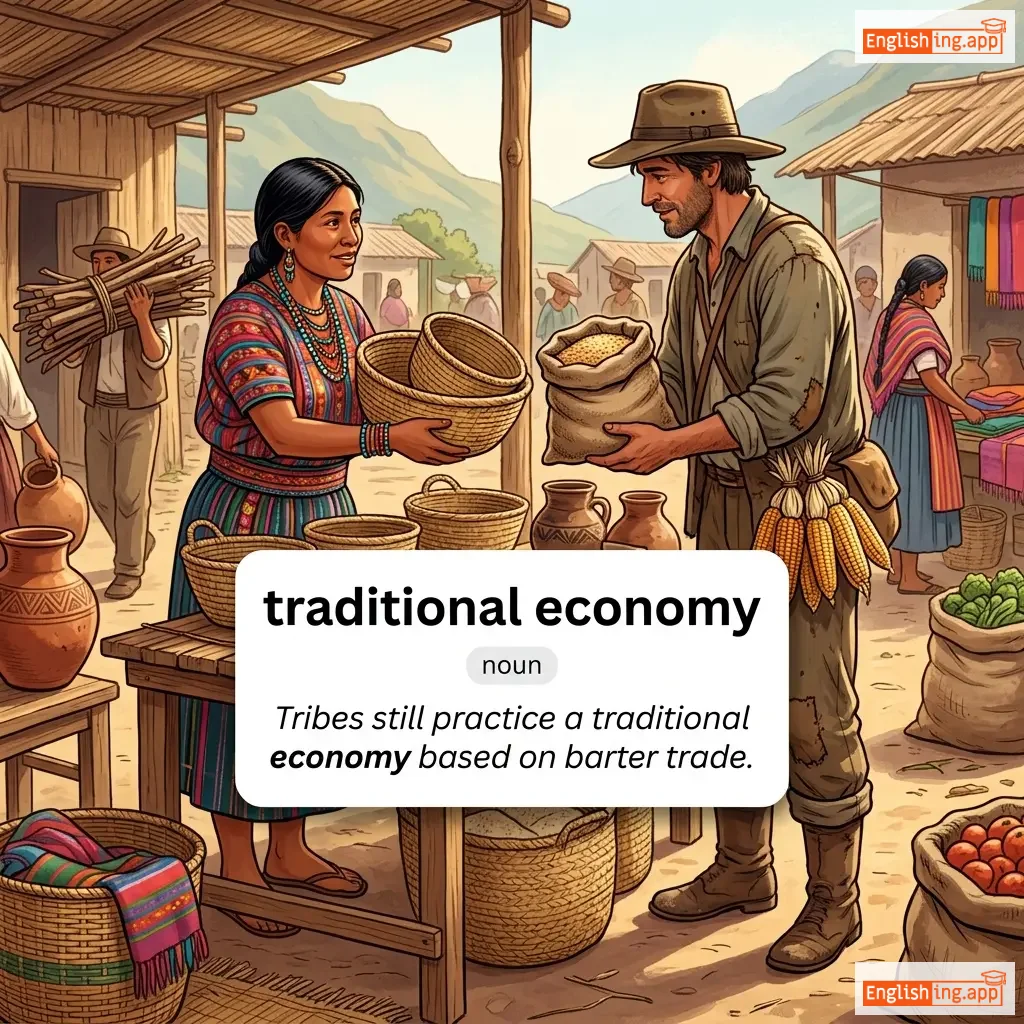
traditional economy definition card — visual illustration of the meaning
noun
/trəˈdɪʃ.ən.əl ɪˈkɒn.ə.mi/
économie traditionnelle (economie traditionnelle)

An economic system based on customs and traditions, often involving barter trade.

"Tribes still practice a traditional economy based on barter trade."

"Les tribus pratiquent encore une économie traditionnelle basée sur le troc." (Les tribus pratiquent encore une economie traditionnelle basee sur le troc.)
adverb
/trəˈdɪʃənəli/
traditionnellement (traditionnellement)

according to custom or long-established practice

"Bangladesh is traditionally known for its hospitality."

"Le Bangladesh est traditionnellement connu pour son hospitalité." (Le Bangladesh est traditionnellement connu pour son hospitalité.)
verb
/trəˈdjuːs/
diffamer (diffamer)

To speak badly of someone or tell lies to damage their reputation.

"He was furious when he found out that his rivals had traduced him."

"Il était furieux quand il a découvert que ses rivaux l'avaient diffamé." (Il était furieux quand il a découvert que ses rivaux l'avaient diffamé.)
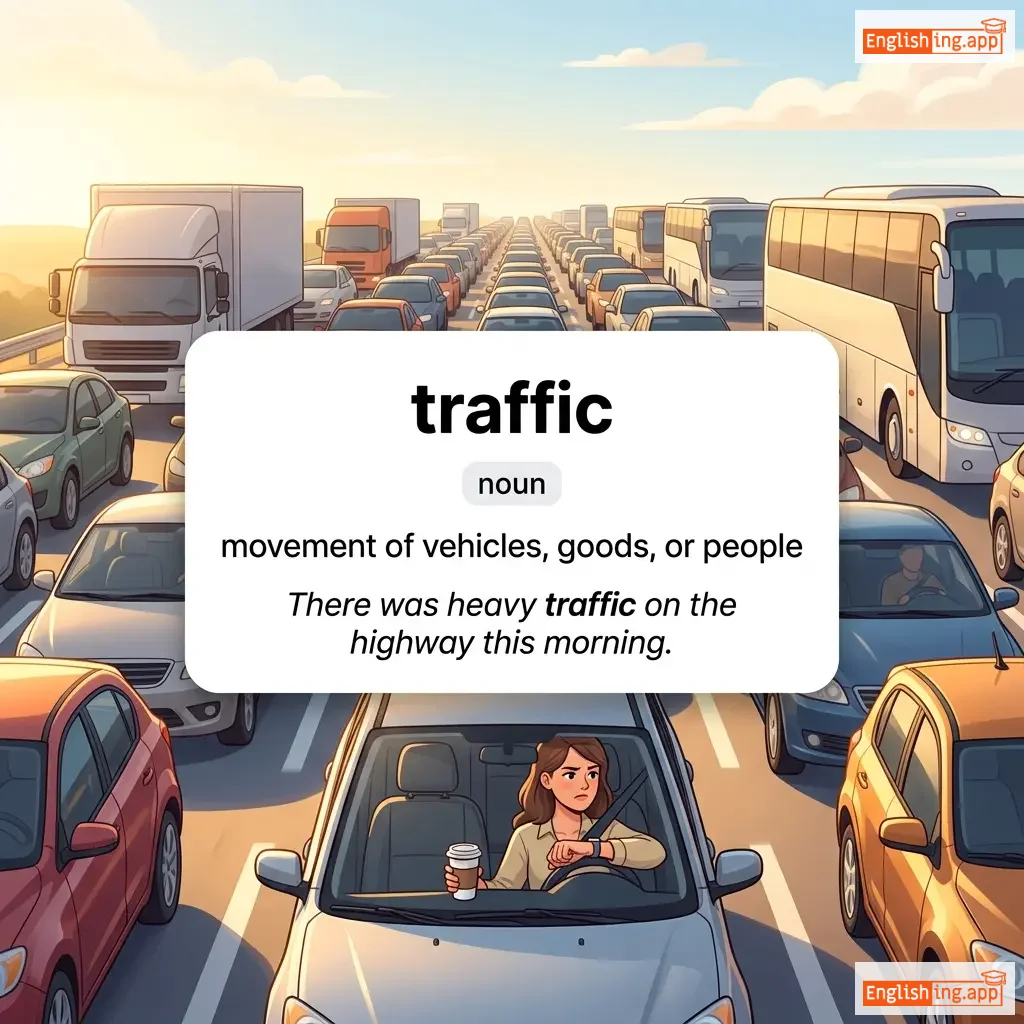
traffic definition card — visual illustration of the meaning
noun
/ˈtræfɪk/
trafic (trafic)

movement of vehicles, goods, or people

"There was heavy traffic on the highway this morning."

"Il y avait beaucoup de trafic sur l'autoroute ce matin." (Il y avait beaucoup de trafic sur l'autoroute ce matin.)
noun
/ˈtrædʒədi/
tragédie (tragedie)

an event causing great suffering or distress

"The earthquake was a tragedy for the entire country."

"Le tremblement de terre a été une tragédie pour tout le pays." (Le tremblement de terre a ete une tragedie pour tout le pays.)
adjective
/ˈtrædʒɪk/
tragique (tragique)

causing great sadness or suffering; very unfortunate

"The news of the accident was truly tragic."

"La nouvelle de l'accident était vraiment tragique." (La nouvelle de l'accident était vraiment tragique.)
noun
/ˈtreɪtər/
traître (traitre)

A person who betrays their country, friends, or a cause by acting against them.

"The soldier was labeled a traitor for giving secrets to the enemy."

"Le soldat a été étiqueté comme un traître pour avoir donné des secrets à l'ennemi." (Le soldat a été étiqueté comme un traître pour avoir donné des secrets à l'ennemi.)
noun
/træns/
transe (transe)

a half-conscious state like dreaming, often with loss of awareness of surroundings

"She stared out of the window as if in a trance."

"Elle regardait par la fenêtre comme si elle était en transe." (Elle regardait par la fenêtre comme si elle était en transe.)
verb
/ˈtræmpəl/
piétiner (pietiner)

to tread heavily on something and cause damage or injury

"The crowd trampled the flowers in the park."

"La foule a piétiné les fleurs dans le parc." (La foule a piétiné les fleurs dans le parc.)
verb, noun
/træmp/
vagabond / marcher lourdement (vagabond / marcher lourdement)

to walk heavily or noisily; a person who travels from place to place on foot, often homeless

"They tramped through the forest in heavy boots."

"Ils ont marché à travers la forêt avec des bottes épaisses." (Ils ont marché à travers la forêt avec des bottes épaisses.)
noun, verb
/ˈtræməl/
entrave (entrave)

A restriction or impediment to freedom of action; to restrict.

"The strict rules trammel the creativity of the students."

"Les règles strictes entravent la créativité des étudiants." (Les regles strictes entravent la creativite des etudiants.)
noun
/træm kɑːr/
tramway (tramway)

An electric vehicle that runs on rails along the street

"The tram car stopped at every station in the city center."

"Le tramway s'est arrêté à chaque station du centre-ville." (Le tramway s'est arrete a chaque station du centre-ville.)
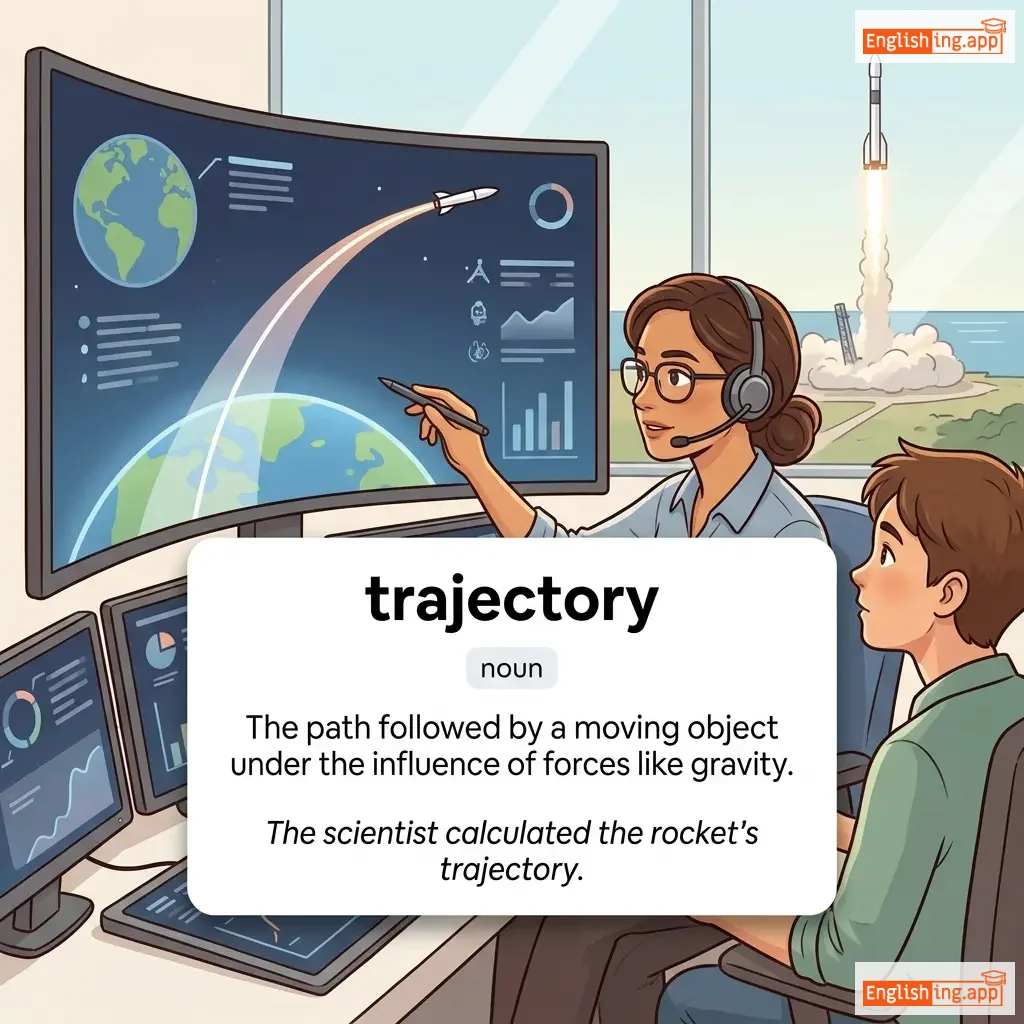
trajectory definition card — visual illustration of the meaning
noun
/trəˈdʒɛktəri/
trajectoire (trajectoire)

The path followed by a moving object under the influence of forces like gravity.

"The scientist calculated the rocket's trajectory."

"Le scientifique a calculé la trajectoire de la fusée." (Le scientifique a calculé la trajectoire de la fusée.)
noun
/ˈtreɪnər/
entraîneur (entraîneur)

a person who teaches skills or gives training

"The fitness trainer helped me improve my posture."

"L'entraîneur de fitness m'a aidé à améliorer ma posture." (L'entraîneur de fitness m'a aidé à améliorer ma posture.)
noun
/ˈtreɪlər/
bande-annonce / remorque (bande-annonce / remorque)

a preview of a movie or a vehicle used for transporting goods

"The movie trailer was released last week."

"La bande-annonce du film a été publiée la semaine dernière." (La bande-annonce du film a ete publiee la semaine derniere.)
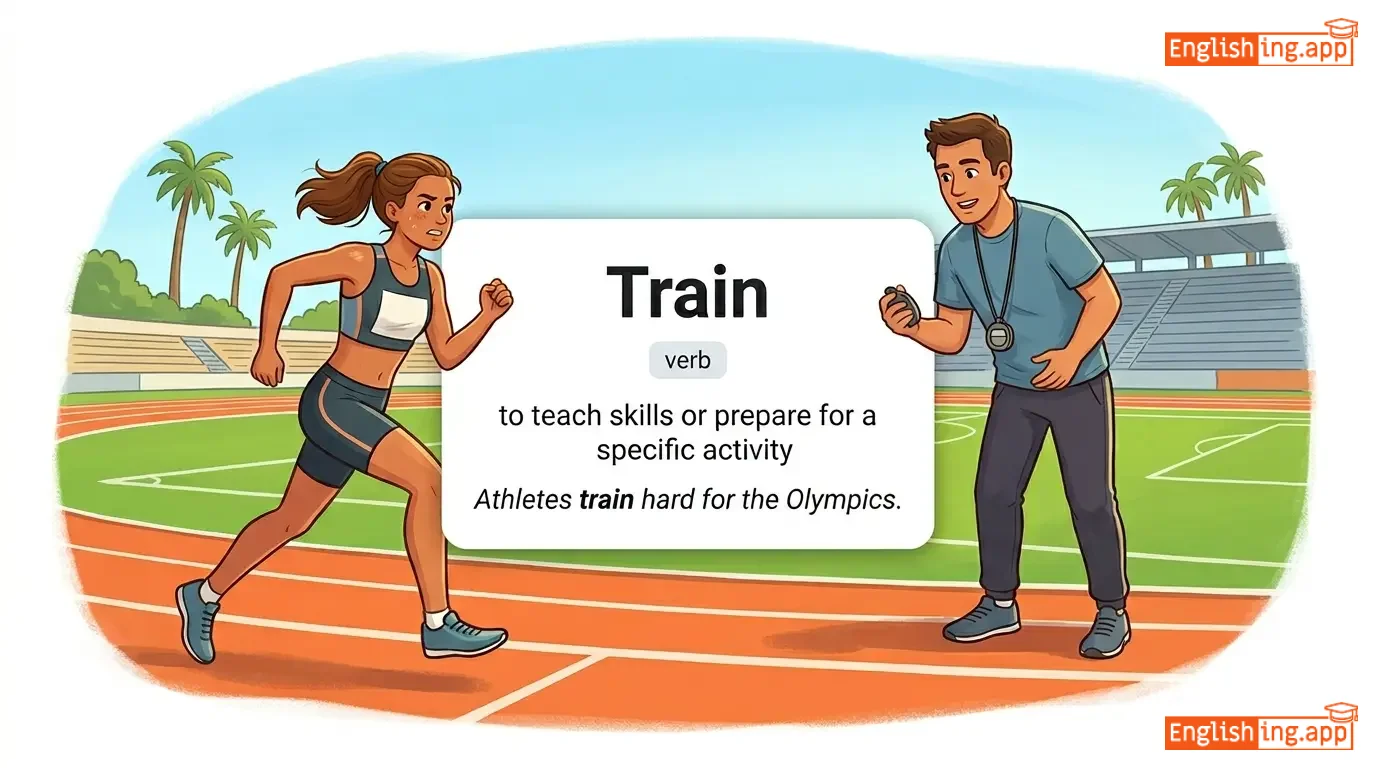
Train definition card — visual illustration of the meaning
noun
/treɪn/
train (train)

a series of connected vehicles that run on tracks and are used for transporting people or goods

"The train departed from the station on time."

"Le train est parti de la gare à l'heure." (Le train est parti de la gare à l'heure.)
noun
/treɪˈniː/
stagiaire; apprenti (trainee)

a person undergoing training for a particular job or profession; a novice learner

"The medical trainee worked long hours to gain practical experience."

"Le stagiaire médical a travaillé de longues heures pour acquérir de l'expérience pratique." (Le stagiaire medical a travaille de longues heures pour acquerir de l'experience pratique.)
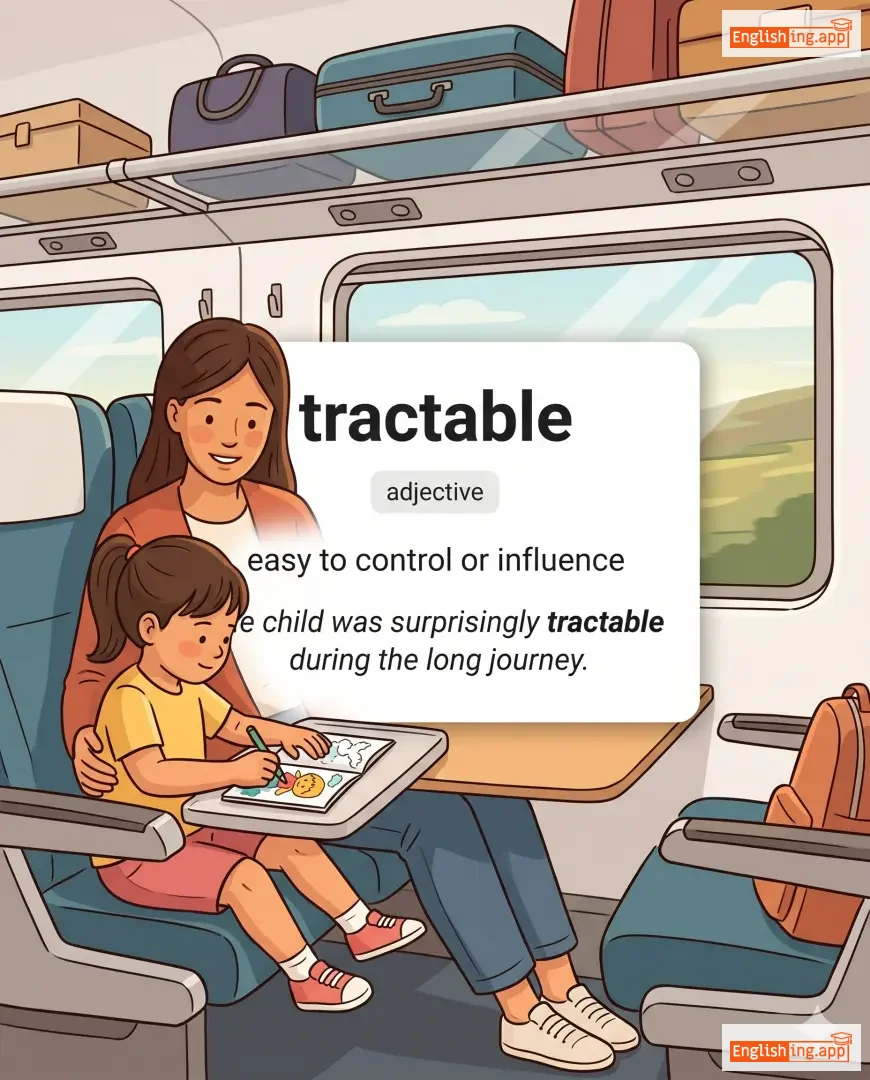
tractable definition card — visual illustration of the meaning
adjective
/ˈtræktəbəl/
facile à contrôler ou influencer (facile a controler ou influencer)

easy to control or influence

"The child was surprisingly tractable during the long journey."

"L'enfant était étonnamment facile à contrôler pendant le long voyage." (L'enfant était étonnamment facile à contrôler pendant le long voyage.)