語彙集

英単語辞書 | 単語の意味、定義、例文

noun
/ˈtɒpˌsɔɪl/
表土 (hyōdo)

the top layer of soil, which is rich in organic matter and nutrients

"Farmers rely on healthy topsoil for good crop yields."

"農家は良い作物の収穫のために健康な表土に依存しています。" (Nōka wa yoi sakumotsu no shūkaku no tame ni kenkōna hyōdo ni izon shiteimasu.)
adjective
/ˌtɒpsi ˈtɜːvi/
混乱した (konran shita)

in a state of confusion, disorder, or upside down

"The sudden announcement left the office in a topsy-turvy state."

"突然の発表でオフィスは完全に混乱した状態になった。" (Totsuzen no happyou de ofisu wa kanzen ni konran shita joutai ni natta.)
noun
/tɔːrtʃ/
懐中電灯/松明 (kaichu dento taimatsu)

a portable electric lamp powered by batteries; a flaming stick used for light

"Use the torch to find your way in the dark."

"暗闇の中で道を見つけるには、トーチを使いましょう。" (kurayami no naka de michi o mitsukeru ni wa, tochi o tsukaimashou.)
noun, verb
/ˈtɔːr.ment/
苦痛 (kutsuu)

severe physical or mental suffering; to cause extreme suffering

"The prisoner was in constant torment."

"囚人は絶え間ない苦しみに苦しんでいた。" (Shuujin wa taemanai kurushimi ni kurushinde ita.)
noun
/tɔːrˈneɪdoʊ/
竜巻 (tatsumaki)

a rapidly rotating column of air in contact with the ground and clouds, often destructive

"The tornado destroyed several houses in the village."

"竜巻は村のいくつかの家を破壊した" (Tatsumaki wa mura no ikutsu ka no ie o hakai shita)
noun/verb
/tɔːrˈpiːdoʊ/
魚雷 (gyorai)

A self-propelled underwater missile; to attack or destroy something suddenly and forcefully.

"The submarine launched a torpedo at the enemy ship."

"潜水艦は敵艦に向けてトーピードを発射した。" (Sensuikan wa teki kan ni mukete tōpīdo o hassha shita.)
adjective
/ˈtɔːrpɪd/
無気力 (torpid)

Mentally or physically inactive; sluggish or lethargic.

"After the long hike, he felt torpid and unmotivated."
"長いハイキングの後、彼は無気力でやる気が出なかった。" (Nagai haikingu no ato, kare wa mukiryoku de yaruki ga denakatta.)
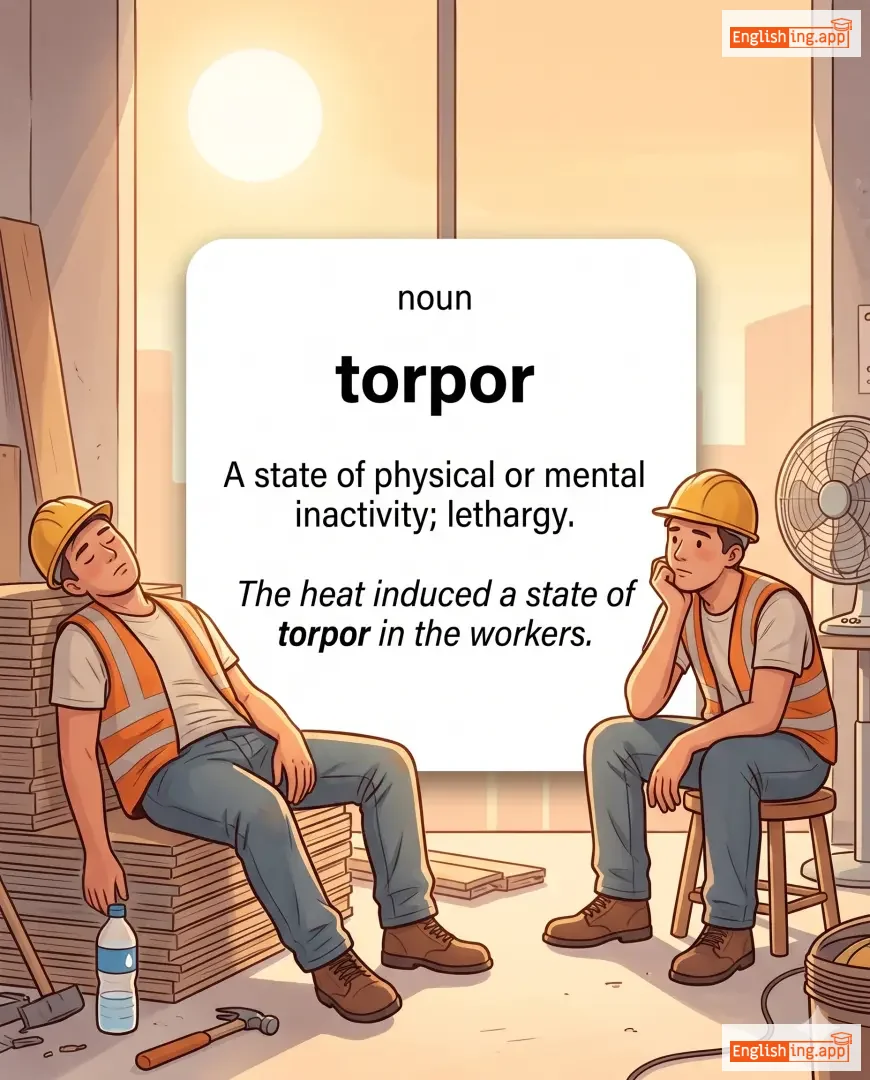
torpor definition card — visual illustration of the meaning
noun
/ˈtɔːrpər/
昏睡 (torpor)

A state of physical or mental inactivity; lethargy.

"The heat induced a state of torpor in the workers."

"暑さは労働者に昏睡状態を引き起こした。" (Atsusa wa roudousha ni konsui joutai wo hikiokoshita.)
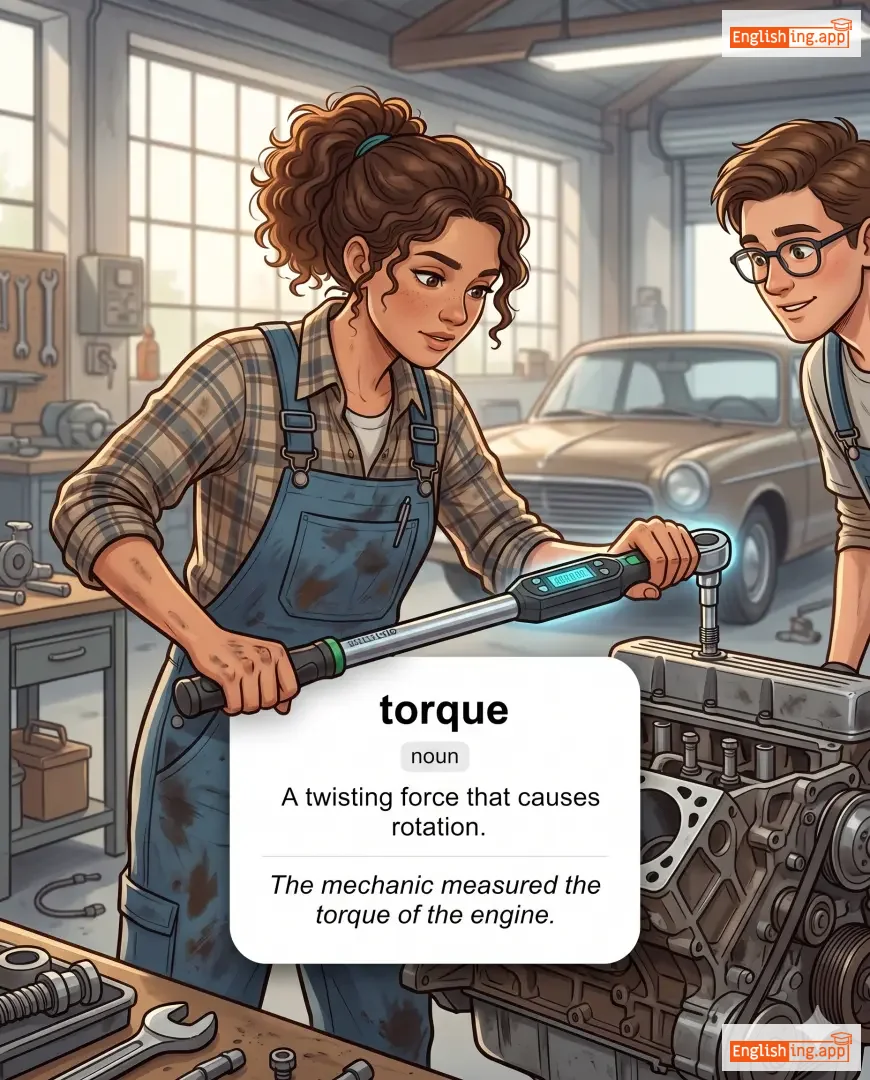
torque definition card — visual illustration of the meaning
noun
/tɔːrk/

A twisting force that causes rotation.

"The mechanic measured the torque of the engine."

noun
/ˈtɔːrənt/
洪水 (kōzui)

A strong and fast-moving stream of water; a sudden, violent outpouring of something.

"A torrent of rain flooded the streets."

"雨の洪水が通りを浸水させた。" (Ame no kōzui ga tōri o shinsui saseta.)
adjective
/təˈrɛnʃəl/
豪雨 (gouu)

Relating to or resembling a torrent; very heavy and fast flowing.

"The hikers were caught in torrential rain."

"ハイカーたちは豪雨に捕まった。" (Haikaa tachi wa gouu ni tsukamatta.)
adjective
/ˈtɒrɪd/
非常に暑く乾燥している; 強い感情や情熱に満ちている (hijou ni atsuku kansou shite iru; tsuyoi kanjou ya jounetsu ni michite iru)

Very hot and dry; full of strong emotions or passion.

"The desert heat was torrid during the day."

"砂漠の熱は昼間非常に暑かった。" (sabaku no netsu wa hiruma hijou ni atsukatta.)
noun
/ˈtɔːrsoʊ/
胴体 (doutai)

The trunk of the human body, excluding the head and limbs.

"The artist painted the torso of the model in great detail."

"芸術家はモデルの胴体を詳細に描きました。" (Geijutsuka wa moderu no doutai o shousai ni kakimashita.)
noun
/tɔːrˈtiːə/
トルティーヤ (torutiya)

A thin round flatbread made from corn or wheat, common in Mexican cuisine.

"She wrapped the vegetables in a warm tortilla."

"彼女は温かいトルティーヤに野菜を包みました。" (Kanojo wa atatakai torutiya ni yasai o tsumimashita.)
adjective
/ˈtɔːrʃəs/
不法行為 (fuhou koui)

Relating to or involving a wrongful act leading to legal liability.

"The company was found guilty of tortious interference with contracts."

"その企業は契約への不法干渉で有罪判決を受けた。" (Sono kigyou wa keiyaku e no fuhou kanshou de yuuzen hanketsu wo uketa.)
noun
/ˈtɔːr.təs/
カメ (kame)

A slow-moving land reptile with a hard shell.

"The tortoise slowly crossed the garden."

"カメはゆっくり庭を横切った。" (Kame wa yukkuri niwa o yokotta.)
adjective
/ˈtɔːrtʃuəs/
曲がりくねった, 複雑 (magarikunetta, fukuzatsu)

Full of twists and turns; excessively complex or complicated.

"The tortuous mountain road made driving very difficult."

"曲がりくねった山道が運転を非常に難しくした。" (Magarikunetta yamamichi ga unten o hijō ni muzukashiku shita.)
noun
/ˈtɔːtʃər/
拷問 (goumon)

the action or practice of inflicting severe pain on someone as a punishment or to force them to do something

"He was subjected to torture during the interrogation."

"彼は尋問中に拷問を受けました。" (Kare wa shinmon-chuu ni goumon o ukemashita.)
adjective
/ˈtɔːrtʃərəs/
痛ましい (itamashii)

Extremely painful or causing great suffering; relating to or involving torture.

"The journey through the desert was long and torturous."

"砂漠を横断する旅は長くて痛ましいものでした。" (Sabaku o ōdan suru tabi wa nagakute itamashī mono deshita.)
verb
/tɔs/
軽く投げる (karuku nageru)

To throw something lightly or casually; to move or turn suddenly.

"He tossed the keys onto the table."

"彼は鍵をテーブルに投げた。" (Kare wa kagi wo teeburu ni nageta.)
adjective, noun, verb
/ˈtoʊ.təl/
合計 (goukei)

the whole amount; complete

"The total cost was too high."

"合計費用は高すぎました。" (Goukei hiyou wa takasugimashita.)
adverb
/ˈtoʊtəli/
完全に (kanzen ni)

completely or in an absolute way

"She was totally shocked by the news."

"彼女はそのニュースに完全にショックを受けていました。" (Kanojo wa sono nyūsu ni kanzen ni shokku o uketeimashita.)
noun
/ˈtoʊtəm/
聖なる象徴 (seinaru shōchō)

A natural object, animal, or symbol that is revered as a spiritual emblem by a group or tribe.

"The eagle is considered a sacred totem in many cultures."

"イーグルは多くの文化で神聖なトーテムと見なされています。" (Iiguru wa ōku no bunka de seinaru tōtemu to minasareteimasu.)
noun
/treɪl/
小道 (shodō)

a path or track left by something that has passed

"The hikers followed the trail through the forest."

"ハイカーたちは森の中の小道を辿った。" (Haikā-tachi wa mori no naka no shodō o tadotta.)
trade definition card — visual illustration of the meaning
💱

trade

noun, verb
/treɪd/

The action of buying, selling, or exchanging goods and services.

"The company trades in electronic goods worldwide."

trade facilitation definition card — visual illustration of the meaning
noun
/treɪd fəˌsɪl.ɪˈteɪ.ʃən/
貿易促進 (bōeki sokushin)

The simplification, modernization and harmonization of export and import processes.

"Trade facilitation boosts economic growth."
"貿易促進は経済成長を促進します。" (Bōeki sokushin wa keizai seichō o sokushin shimasu.)
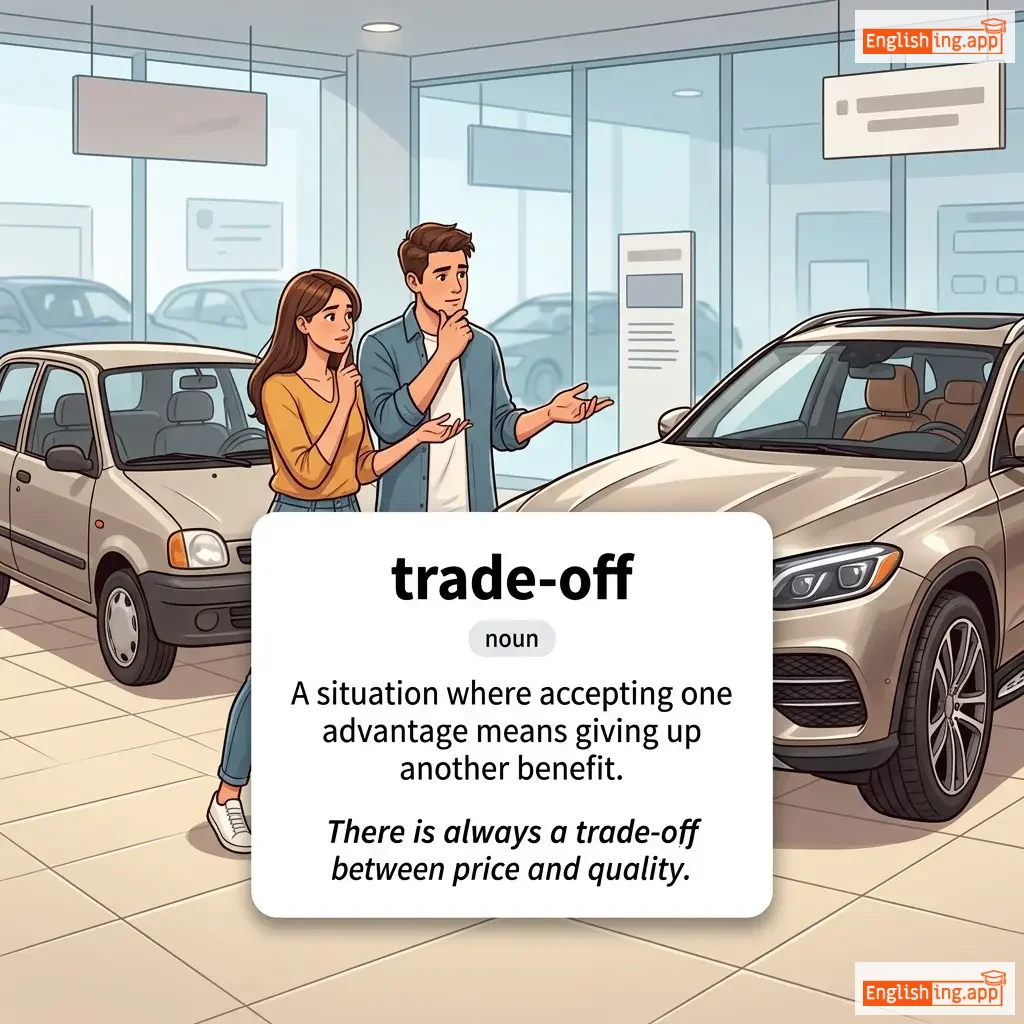
trade-off definition card — visual illustration of the meaning
noun
ˈtreɪd.ɒf
トレードオフ (toreedoofu)

A situation where accepting one advantage means giving up another benefit.

"There is always a trade-off between price and quality."

"価格と品質の間には常にトレードオフがあります。" (kakaku to hinshitsu no aida ni wa itsumo toreedoofu ga arimasu.)
noun
/ˈtreɪdmɑːrk/
商標 (shōhyō)

a symbol, word, or words legally registered or established by use as representing a company or product

"The company’s logo is its trademark."

"その会社のロゴはその商標です。" (Sono kaisha no rogo wa sono shōhyō desu.)
noun
/ˈtreɪ.dər/
商人 (shounin)

a person who buys and sells goods or financial securities for profit

"The trader made a good profit from selling imported goods."

"商人は輸入品を売ることで良い利益を得ました。" (Shounin wa yunyuuhin o uru koto de yoi rieki o emashita)
noun
/ˈtreɪdɪŋ/
取引 (torihiki)

the act or business of buying and selling goods or services

"She made a fortune through online trading."
"彼女はオンライン取引で大金を稼ぎました。" (Kanojo wa onrain torihiki de taikin wo kasegimashita.)
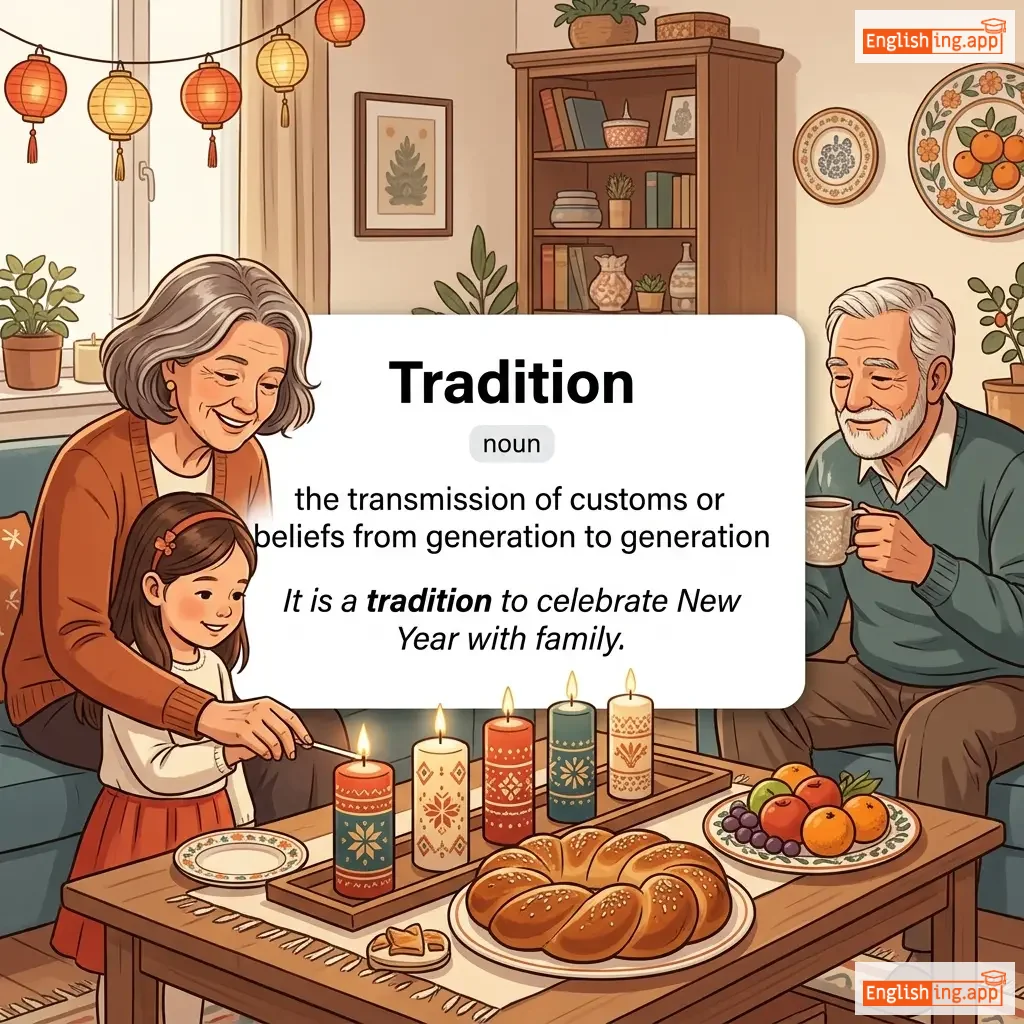
Tradition definition card — visual illustration of the meaning
noun
/trəˈdɪʃən/
伝統 (dentou)

the transmission of customs or beliefs from generation to generation

"It is a tradition to celebrate New Year with family."

"新年を家族と祝うことは伝統です。" (Shinnen o kazoku to iwau koto wa dentou desu.)
adjective
/trəˈdɪʃənəl/
伝統的 (dentō-teki)

existing in or as part of a tradition

"The traditional dance of this village is performed every year."
"この村の伝統的な踊りは毎年行われます。" (Kono mura no dentō-teki na odori wa mainen okonawaremasu.)
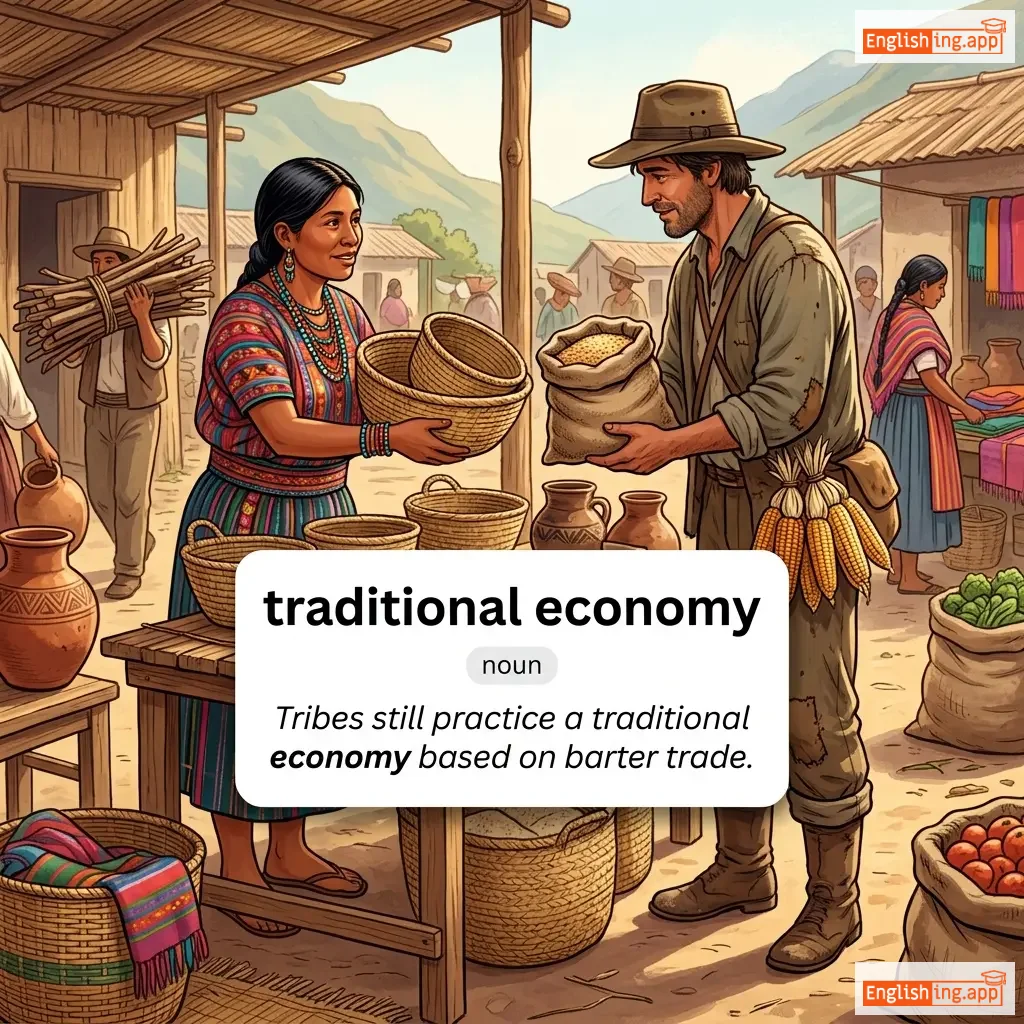
traditional economy definition card — visual illustration of the meaning
noun
/trəˈdɪʃ.ən.əl ɪˈkɒn.ə.mi/
伝統経済 (dentō keizai)

An economic system based on customs and traditions, often involving barter trade.

"Tribes still practice a traditional economy based on barter trade."

"部族はまだ物々交換に基づいた伝統経済を実践しています。" (Buzoku wa mada monomono kōkan ni motozuita dentō keizai o jissen shiteimasu.)
adverb
/trəˈdɪʃənəli/
伝統的に (dentōteki ni)

according to custom or long-established practice

"Bangladesh is traditionally known for its hospitality."

"バングラデシュは伝統的にそのおもてなしで知られています。" (Banguradeshu wa dentōteki ni sono omotenashi de shirareteimasu.)
verb
/trəˈdjuːs/
中傷する (chuushou suru)

To speak badly of someone or tell lies to damage their reputation.

"He was furious when he found out that his rivals had traduced him."
"彼は自分のライバルが彼を中傷したことを知って怒っていた。" (Kare wa jibun no raibaru ga kare wo chuushou shita koto wo shitte okotte ita.)
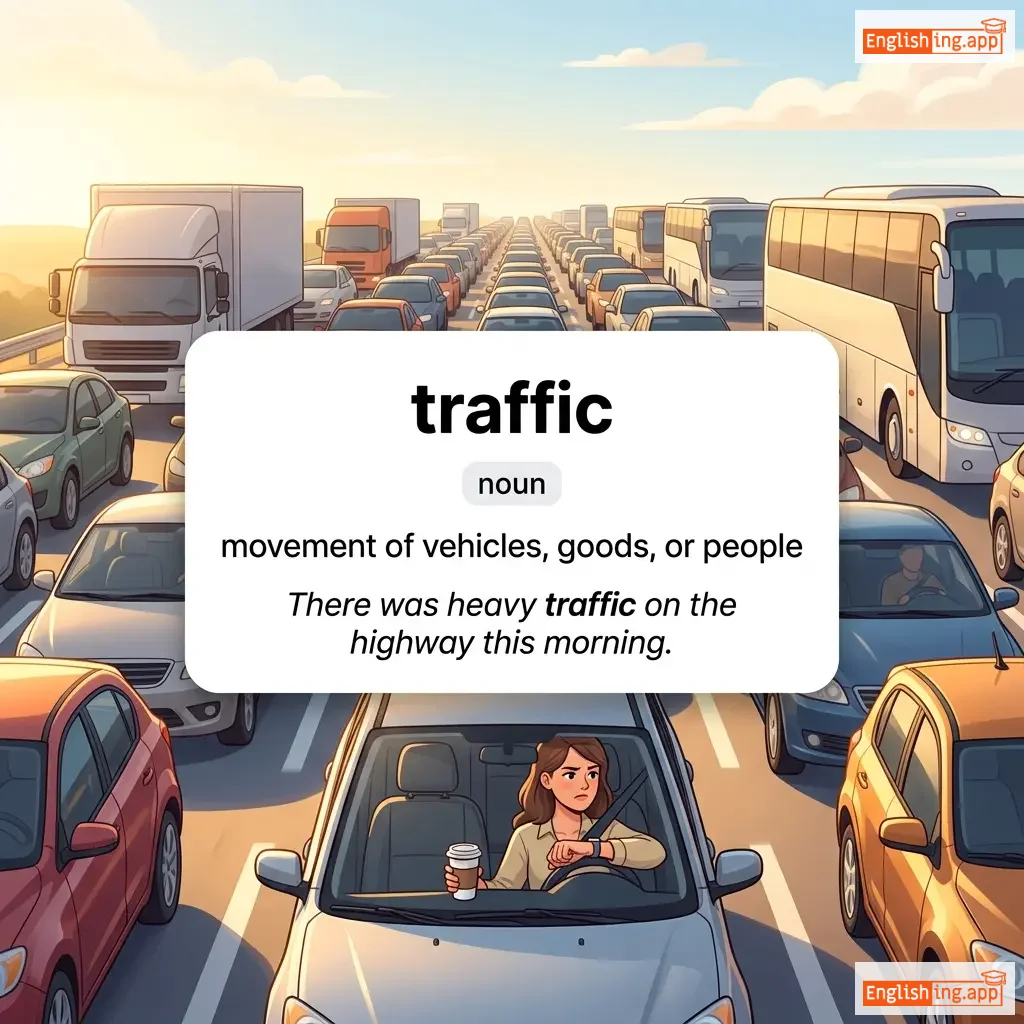
traffic definition card — visual illustration of the meaning
noun
/ˈtræfɪk/
交通 (kōtsū)

movement of vehicles, goods, or people

"There was heavy traffic on the highway this morning."

"今朝、高速道路には多くの交通がありました。" (Kesa, kōsokudōro ni wa ōku no kōtsū ga arimashita.)
noun
/ˈtrædʒədi/
悲劇 (higeki)

an event causing great suffering or distress

"The earthquake was a tragedy for the entire country."

"地震は国全体にとって悲劇でした。" (Jishin wa kuni zentai ni totte higeki deshita.)
adjective
/ˈtrædʒɪk/
悲劇的な (higekiteki na)

causing great sadness or suffering; very unfortunate

"The news of the accident was truly tragic."

"事故のニュースは本当に悲劇的だった。" (Jiko no nyu-su wa hontou ni higekiteki datta.)
noun
/ˈtreɪtər/
裏切り者 (uragirimono)

A person who betrays their country, friends, or a cause by acting against them.

"The soldier was labeled a traitor for giving secrets to the enemy."

"その兵士は敵に秘密を漏らしたため、裏切り者と呼ばれました。" (Sono heishi wa teki ni himitsu o morashita tame, uragirimono to yobaremashita.)
noun
/træns/
トランス (toransu)

a half-conscious state like dreaming, often with loss of awareness of surroundings

"She stared out of the window as if in a trance."

"彼女は窓の外を見つめていた、まるでトランス状態にあるかのように。" (Kanojo wa mado no soto o mitsumete ita, marude toransu jōtai ni aru ka no yō ni.)
verb
/ˈtræmpəl/

to tread heavily on something and cause damage or injury

"The crowd trampled the flowers in the park."

verb, noun
/træmp/
放浪者 / 重い足取りで歩く (hōrōsha / omoi ashidori de aruku)

to walk heavily or noisily; a person who travels from place to place on foot, often homeless

"They tramped through the forest in heavy boots."

"彼らは重いブーツを履いて森の中を歩きました。" (Karera wa omoi būtsu o haite mori no naka o arukimashita.)
noun, verb
/ˈtræməl/
制限 (seigen)

A restriction or impediment to freedom of action; to restrict.

"The strict rules trammel the creativity of the students."

"厳格な規則は学生の創造性を制限しています。" (Gengaku na kisoku wa gakusei no sōzō-sei o seigen shiteimasu.)
noun
/træm kɑːr/
トラムカー (toramukaa)

An electric vehicle that runs on rails along the street

"The tram car stopped at every station in the city center."
"トラムカーは市中心の各駅に停車しました。" (Toramukaa wa shi chushin no kaku eki ni teisha shimashita.)
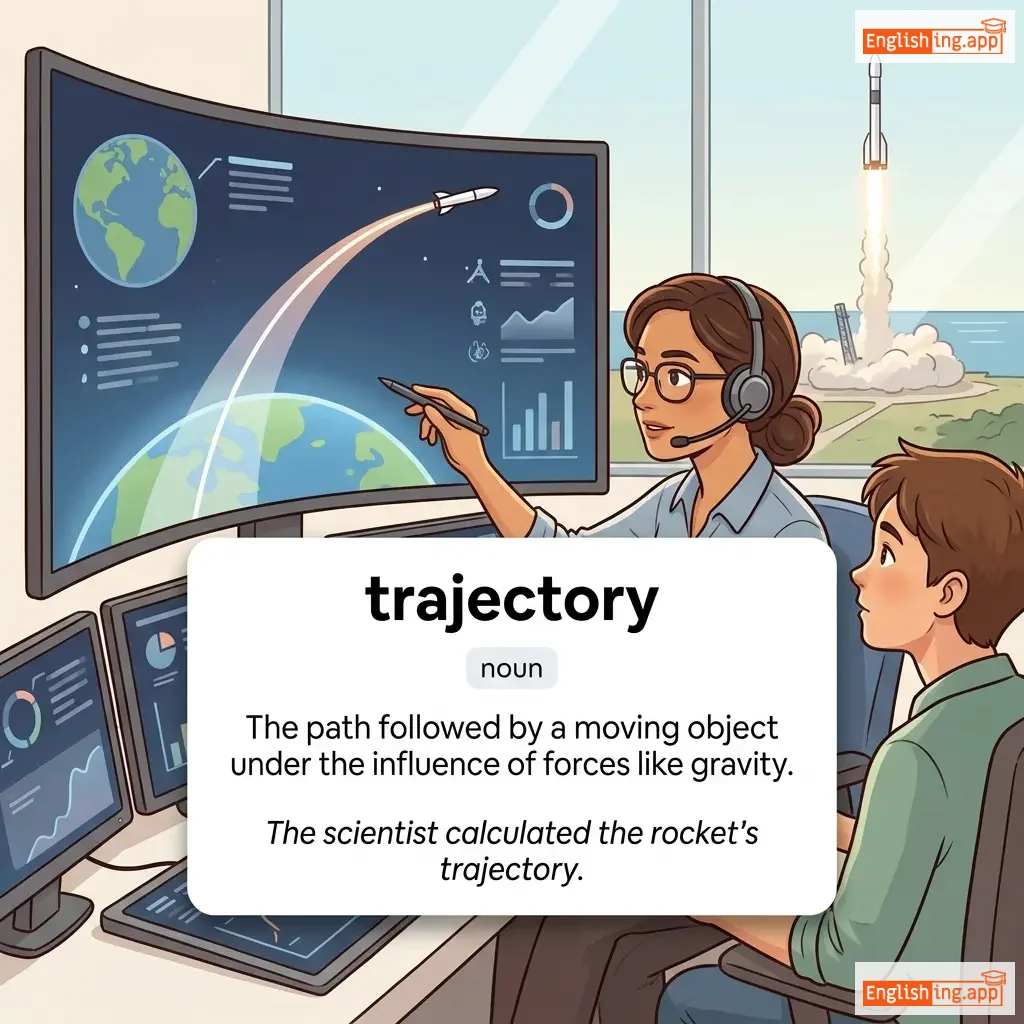
trajectory definition card — visual illustration of the meaning
noun
/trəˈdʒɛktəri/
軌道 (kidou)

The path followed by a moving object under the influence of forces like gravity.

"The scientist calculated the rocket's trajectory."

"科学者はロケットの軌道を計算した。" (Kagakusha wa roketto no kidou o keisan shita.)
noun
/ˈtreɪnər/
トレーナー (torēnā)

a person who teaches skills or gives training

"The fitness trainer helped me improve my posture."

"フィットネストレーナーは私の姿勢を改善するのを手伝ってくれました。" (Fitnesu torēnā wa watashi no shisei o kaizen suru no o tetsudatte kuremashita.)
noun
/ˈtreɪlər/
予告編 / トレーラー (yokokuhen / torērā)

a preview of a movie or a vehicle used for transporting goods

"The movie trailer was released last week."
"映画の予告編は先週公開されました。" (Eiga no yokokuhen wa senshū kōkai saremashita.)
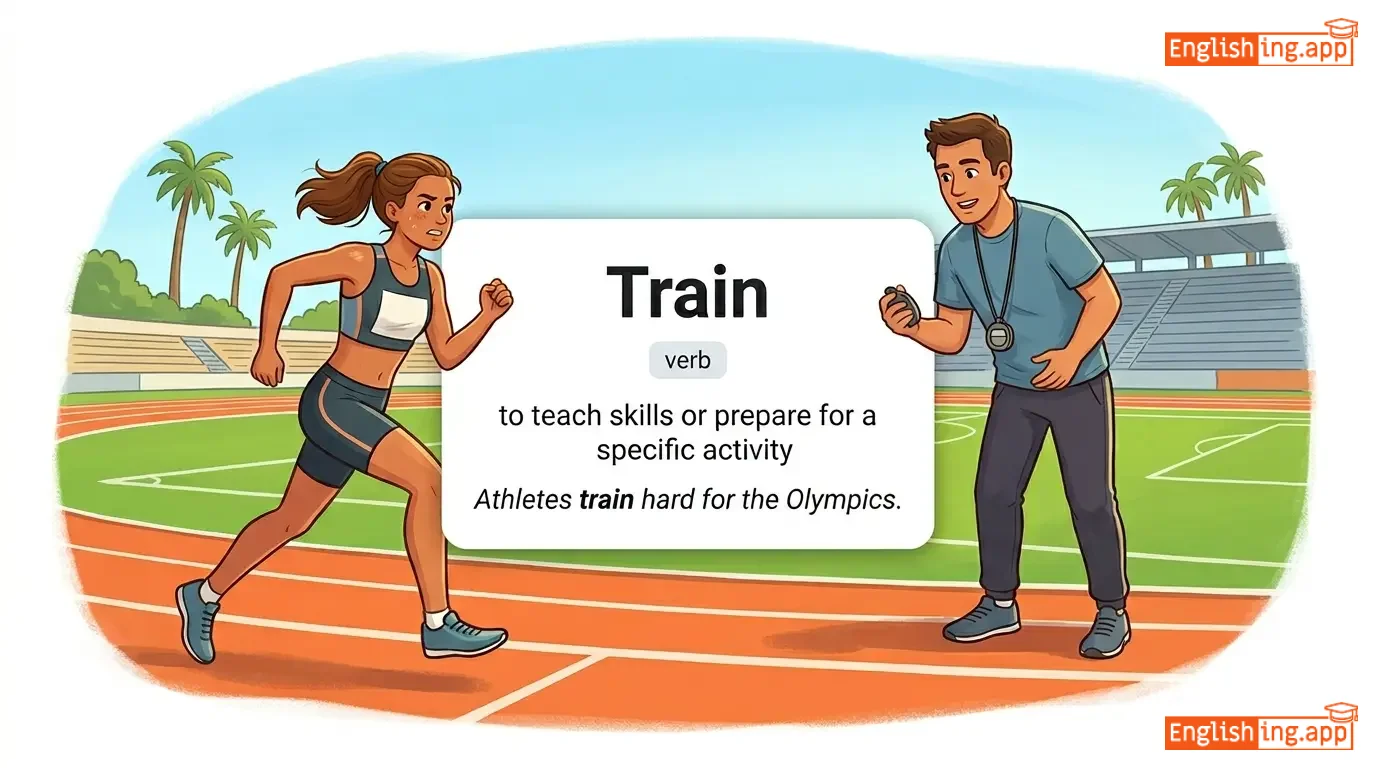
Train definition card — visual illustration of the meaning
noun
/treɪn/
列車 (ressha)

a series of connected vehicles that run on tracks and are used for transporting people or goods

"The train departed from the station on time."

"列車は時間通りに駅を出発しました。" (Ressha wa jikan dōri ni eki o shuppatsu shimashita.)
noun
/treɪˈniː/
研修生; 見習い (trainee)

a person undergoing training for a particular job or profession; a novice learner

"The medical trainee worked long hours to gain practical experience."
"医学研修生は実務経験を積むために長時間働きました。" (Igaku kenshūsei wa jitsumu keiken o tsumu tame ni chōjikan hatarakimashita.)
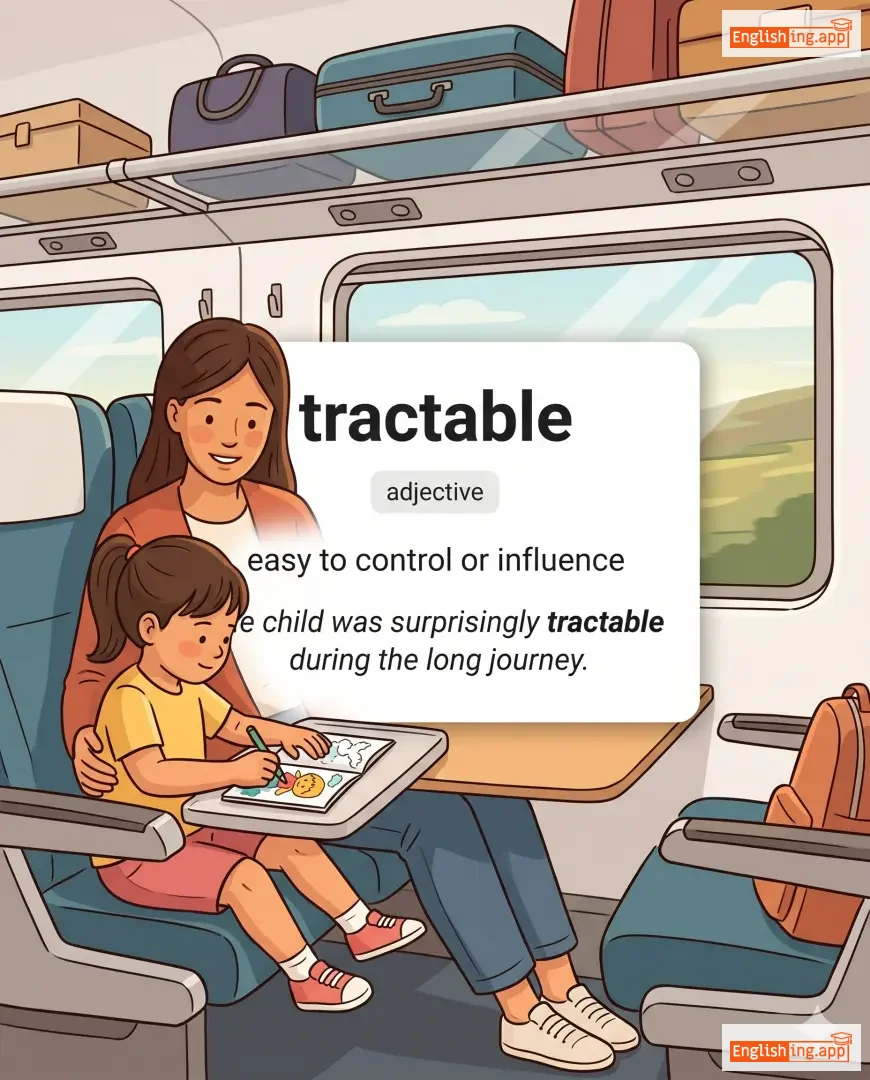
tractable definition card — visual illustration of the meaning
adjective
/ˈtræktəbəl/
制御可能または影響を与えることができる (seigyo kanou mata wa eikyou wo ataeru koto ga dekiru)

easy to control or influence

"The child was surprisingly tractable during the long journey."

"その子供は長い旅の間、驚くほど制御可能だった。" (Sono kodomo wa nagai tabi no aida, odoroku hodo seigyo kanou datta.)