語彙集

英単語辞書 | 単語の意味、定義、例文

noun
/ˈtoʊ.pæz/
トパーズ (topazu)

a precious stone, typically colorless, yellow, or blue, used in jewelry

"The queen's crown was adorned with a magnificent blue topaz."

"女王の王冠は素晴らしい青いトパーズで飾られていました。" (Joō no ōkan wa subarashī aoi topazu de kazara rete imashita.)
noun
/tɒp/
頂上 (choujou)

the highest or uppermost point, part, or surface of something

"The book is on the top shelf."

"その本は上の棚にあります。" (Sono hon wa ue no tana ni arimasu.)
noun
/tuːθ/
(ha)

each of the hard, pointed structures in the mouth used for biting and chewing food

"He has a toothache and needs to see the dentist."
"彼は歯が痛いので、歯医者に行かなければならない。" (Kare wa ha ga itai node, haisha ni ikanakereba naranai.)
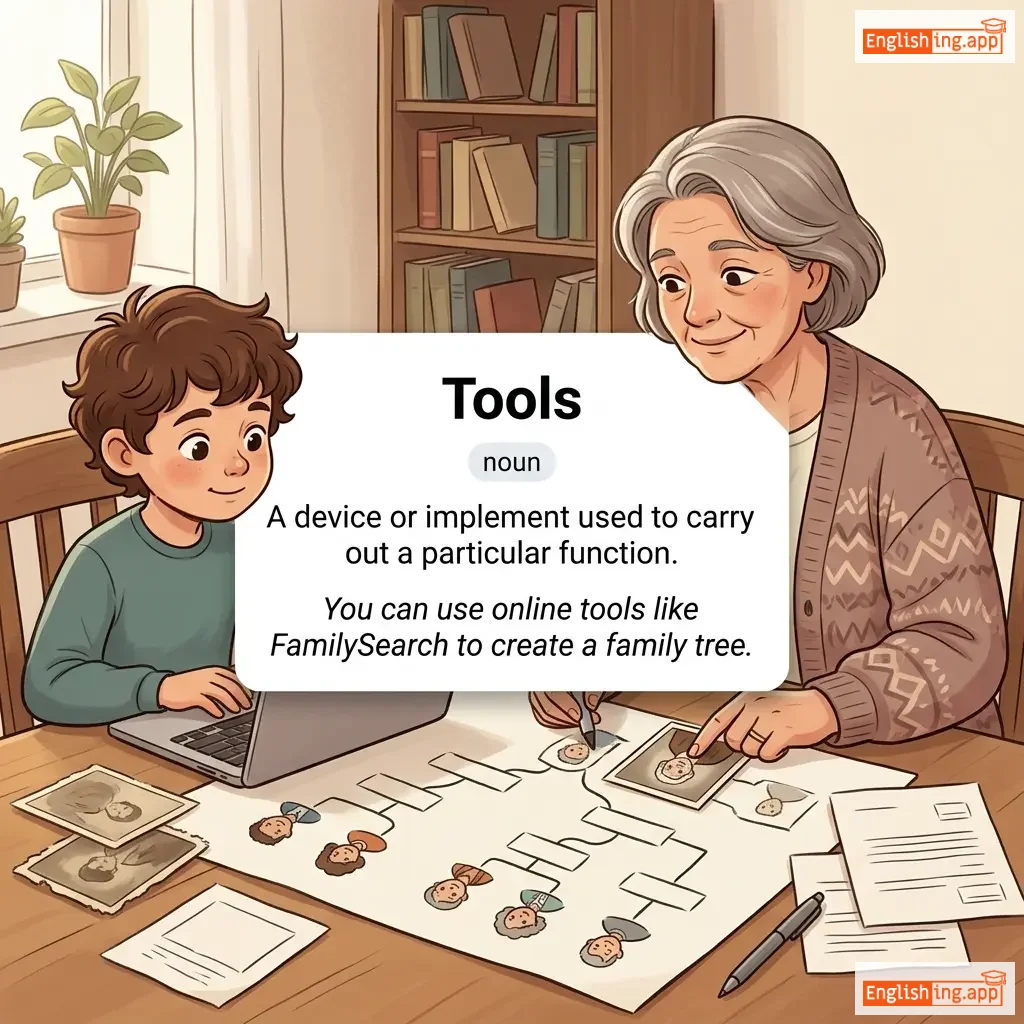
Tools definition card — visual illustration of the meaning
noun
tuːlz
道具 (dōgu)

A device or implement used to carry out a particular function.

"You can use online tools like FamilySearch to create a family tree."
"オンラインツールを使用して、FamilySearchのような家系図を作成できます。" (Onrain tsūru o shiyō shite, FamilySearch no yōna kakeizu o sakusei dekimasu.)
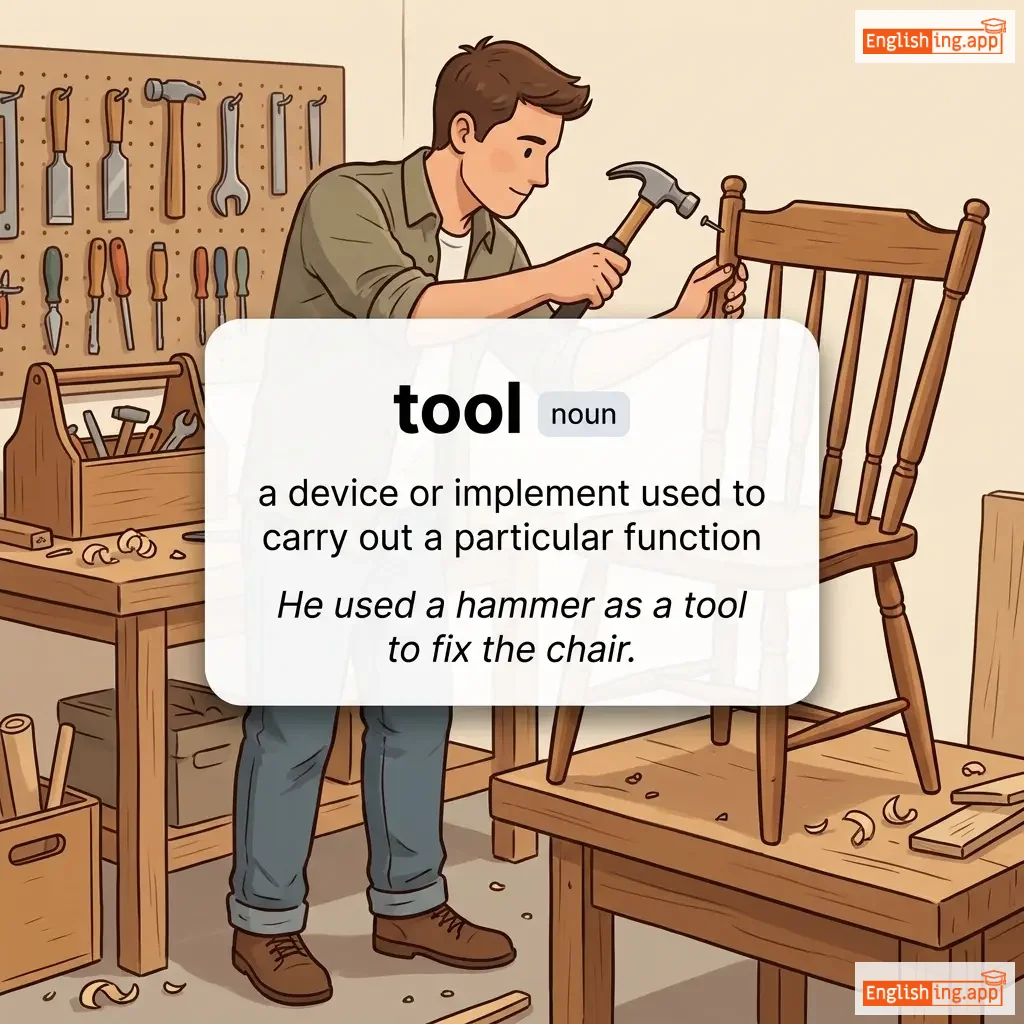
tool definition card — visual illustration of the meaning
noun
/tuːl/
道具 (dōgu)

a device or implement used to carry out a particular function

"He used a hammer as a tool to fix the chair."

"彼は椅子を修理するためにハンマーを道具として使いました。" (Kare wa isu o shūri suru tame ni hanmā o dōgu toshite tsukaimashita.)
adverb
/tuː/
過ぎる (sugiru)

to a higher degree than is desirable, permissible, or possible

"She is too tired to continue working."

"彼女は働き続けるには疲れすぎている。" (Kanojo wa hatarakitsuzukeru ni wa tsukaresugite iru.)
noun
/ˈtɒnʃər/
托恩修亞 (toenshua)

the practice of shaving or cutting the hair on the scalp, especially in a religious context

"The monk received his tonsure as part of his religious initiation."

"修道士は宗教的な入門儀式の一環としてトンシュアを受けました。" (Shūdōshi wa shūkyō-teki na nyūmon gishiki no ikkanshite tonshua o ukemashita.)
adjective
/tɒnˈsɔːriəl/
理髪師に関連する (rihatsushi ni kanren suru)

relating to barbers or hairdressing

"The town's new barber offered a wide range of tonsorial services."

"町の新しい理髪師は、幅広いトンソリアルサービスを提供しました。" (Machi no atarashii rihatsushi wa, habahiroi tonsorial sābisu o teikyō shimashita.)
adverb, noun
/təˈnaɪt/
今夜 (konya)

on or during the night of the current day

"We're going to the party tonight."

"私たちは今夜パーティーに行きます。" (Watashitachi wa konya paatii ni ikimasu.)
noun
/ˈtɒnɪk/
トニック (tonikku)

a medicine or drink that restores or refreshes health and energy

"A glass of lemonade was the perfect tonic on a hot day."

"暑い日には、レモネードが完璧なトニックでした。" (Atsui hi ni wa, remonēdo ga kanpeki na tonikku deshita.)
noun
/tʌŋ/
(shita)

a fleshy muscular organ in the mouth used for tasting, swallowing, and speaking

"She stuck out her tongue playfully."

"彼女は遊び心で舌を出しました。" (Kanojo wa asobigokoro de shita o dashimashita.)
noun
/tɒŋz/
トング (tongu)

a tool consisting of two movable arms that are joined at one end, used for picking up and holding things

"Use the tongs to pick up the hot pieces of meat from the grill."

"グリルから熱い肉片をつかむためにトングを使います。" (Guriru kara atsui niku hen o tsukamu tame ni tongu o tsukaimasu.)
noun
/tɒŋ/
トング (tongu)

a tool with two movable arms used to pick up and hold objects

"He used the tong to pick up the hot coal."

"彼は熱い石炭を拾うためにトングを使った。" (Kare wa atsui sekitan o hirou tame ni tongu o tsukatta.)
noun, verb
/toʊn/
トーン (tōn)

the general character or attitude of a place, piece of writing, situation, etc.

"The tone of the letter was very formal."

"手紙のトーンは非常にフォーマルでした。" (Tegami no tōn wa hijō ni fōmaru deshita.)
noun
/tʌn/
トン (ton)

A unit of weight equal to 2,000 pounds (US) or 1,000 kilograms (metric); a large amount of something

"The truck carried a ton of apples to the market."

"トラックは市場に1トンのリンゴを運んだ。" (Torakku wa ichiton no ringo wo hakonda.)
noun, adverb
/təˈmɒroʊ/
明日 (ashita)

the day after today

"We are meeting tomorrow for the project discussion."
"私たちは明日、プロジェクトの議論のために会います。" (Watashitachi wa ashita, purojekuto no giron no tame ni aimasu.)
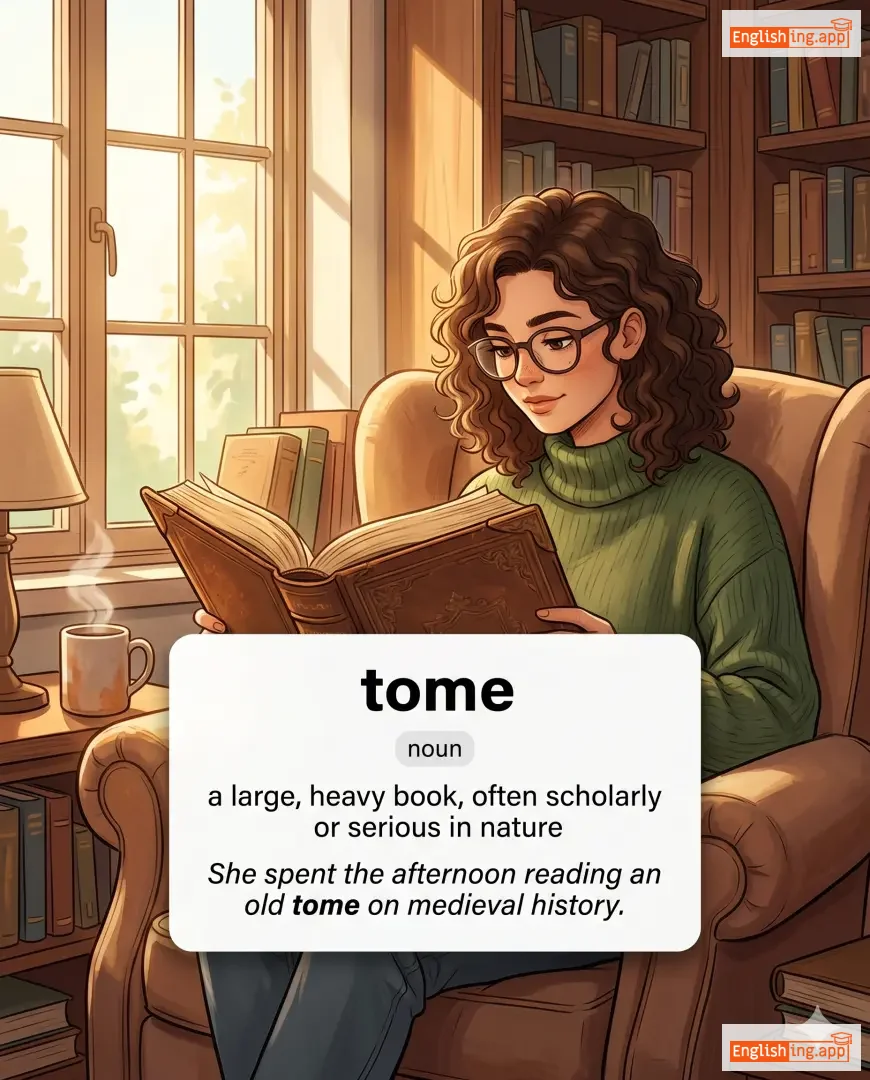
tome definition card — visual illustration of the meaning
noun
/toʊm/
重い本 (omoi hon)

a large, heavy book, often scholarly or serious in nature

"She spent the afternoon reading an old tome on medieval history."

"彼女は午後の時間を中世の歴史に関する古い重い本を読んで過ごしました。" (Kanojo wa gogo no jikan o chūsei no rekishi ni kansuru furui omoi hon o yonde sugoshimashita.)
noun
/təˈmeɪtoʊ/
トマト (tomato)

a red or yellowish fruit that is typically eaten as a vegetable

"I added some tomato to the salad."

"サラダにトマトを少し加えました。" (Sarada ni tomato o sukoshi kuwaemashita.)
noun
/toʊl/
通行料 / 損害 (tsūkō-ryō / songai)

A charge payable for using a road or bridge; also the extent of damage or suffering caused by something.

"The flood took a heavy toll on the village."

"洪水は村に大きな損害を与えました。" (kōzui wa mura ni ōkina songai o ataemashita.)
noun
/ˌtɒləˈreɪʃən/
寛容 (kanyou)

The practice of allowing something that one does not necessarily agree with.

"The government promoted religious toleration."
"政府は宗教的寛容を促進した。" (Seifu wa shūkyō-teki kanyō o sokushin shita.)
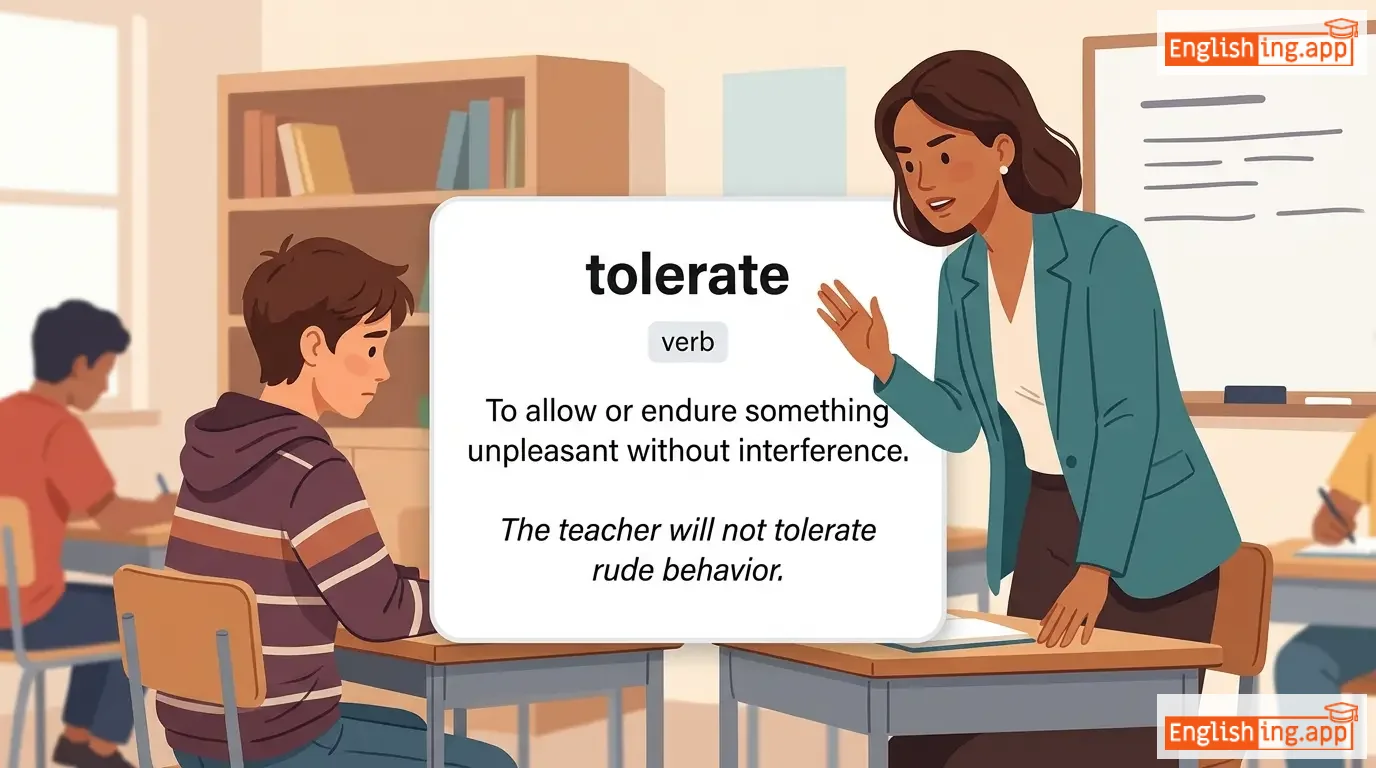
tolerate definition card — visual illustration of the meaning
verb
/ˈtɒləreɪt/
容認する (yōnin suru)

To allow or endure something unpleasant without interference.

"The teacher will not tolerate rude behavior."

"教師は失礼な行動を許容しません。" (Kyōshi wa shitsurei na kōdō o kyoyō shimasen.)
adjective
/ˈtɒlərənt/
寛容 (kan'you)

Showing willingness to allow the existence of opinions or behaviors that one dislikes or disagrees with.

"He is very tolerant of other people's beliefs."

"彼は他の人々の信念にとても寛容です。" (Kare wa hoka no hitobito no shin'nen ni totemo kan'you desu.)
noun
/ˈtɒlərəns/
寛容 (kan'yō)

The ability or willingness to accept or endure differences, behaviors, or opinions without hostility.

"Her tolerance for different cultures impressed everyone."

"彼女の異文化への寛容さは、皆を感心させました。" (Kanojo no ibunka e no kan'yō-sa wa, mina o kanshin sasemashita.)
adjective
/ˈtɒl.ər.ə.bəl/
耐えられる (taerareru)

Able to be endured or put up with; fairly acceptable.

"The pain was tolerable after the medicine."
"薬を飲んだ後、痛みは耐えられる程度だった。" (Kusuri wo nonda ato, itami wa taerareru teido datta.)
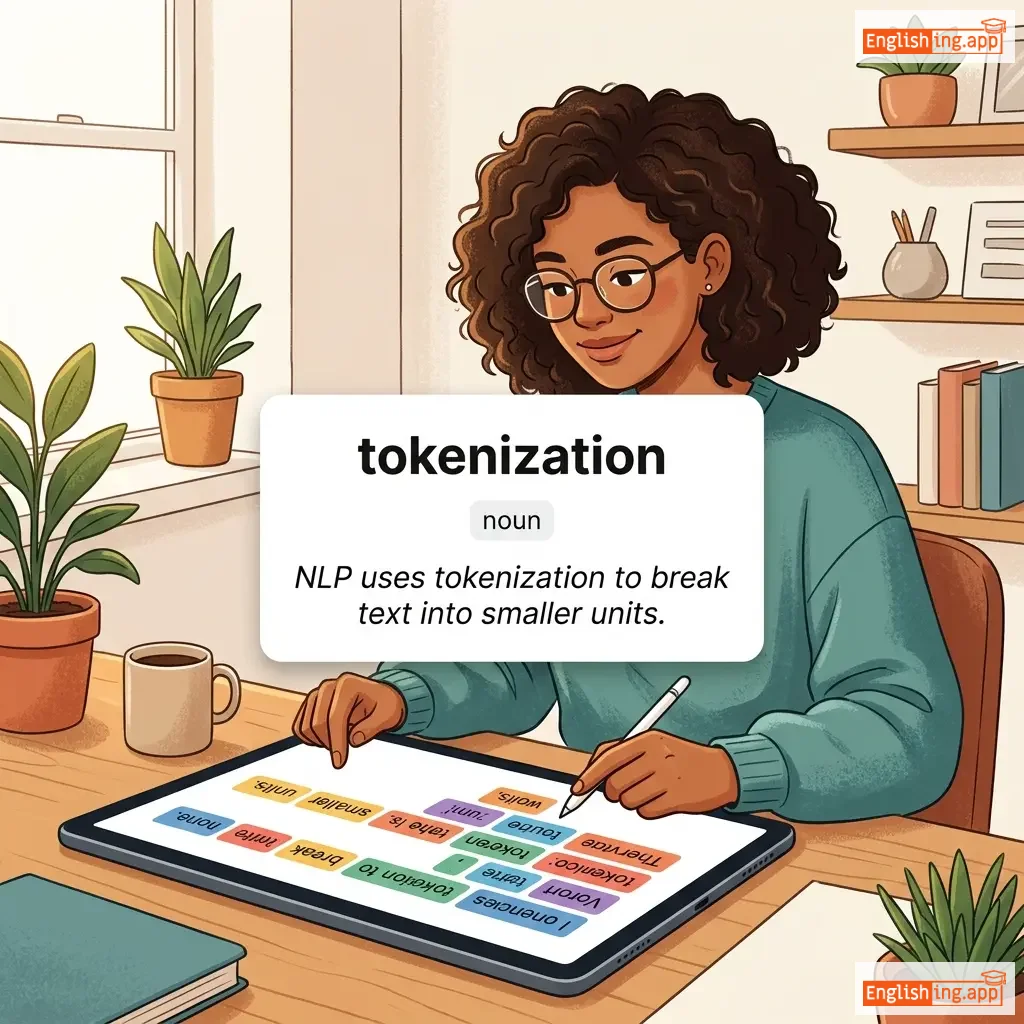
tokenization definition card — visual illustration of the meaning
noun
ˌtoʊ.kə.nɪˈzeɪ.ʃən
テキストを分析するために、単語、フレーズ、または記号などの小さな単位に分割するプロセス。 (tokenization)

The process of breaking text into smaller units like words, phrases, or symbols for analysis.

"NLP uses tokenization to break text into smaller units."

"NLPはテキストを小さな単位に分割するためにトークン化を使用します。" (NLP wa tekisuto o chiisana tan'i ni bunkatsu suru tame ni tōkunka o shiyō shimasu.)
noun
/ˈtoʊ.kən/
記号 / トークン (kigou / tooken)

A symbol or object that represents something, often given as a sign of appreciation or as a substitute for money.

"She gave him a small gift as a token of gratitude."

"彼女は感謝のしるしとして、小さな贈り物を彼に渡しました。" (Kanojo wa kansha no shirushi toshite, chiisana okurimono wo kare ni watashimashita.)
adjective
/ˈtɔɪl.səm/
骨の折れる (hone no oreru)

Involving hard or exhausting work; laborious.

"The workers had a toilsome day in the hot sun."

"作業員たちは暑い太陽の下で骨の折れる一日を過ごした。" (Sagyouin-tachi wa atsui taiyou no shita de hone no oreru ichinichi o sugoshita.)
noun
/ˈtɔɪlət/
トイレ (toire)

a fixture used for the disposal of human waste

"The public toilet was clean and well maintained."

"公衆トイレは清潔でよく手入れされていました。" (Koushu toire wa seiketsu de yoku teire sarete imashita.)
Toil definition card — visual illustration of the meaning
verb
/tɔɪl/
一生懸命働く (isshokenmei hataraku)

To work extremely hard and continuously, often with difficulty.

"He had to toil for years to achieve success."

"彼は成功を収めるために何年も働かなければならなかった。" (Kare wa seikō o osameru tame ni nannen mo hatarakanakereba naranakatta.)
Together definition card — visual illustration of the meaning
adverb
/təˈɡɛðər/
一緒に (issho ni)

with each other; in a group or combined form

"They worked together to solve the problem."

"彼らは問題を解決するために一緒に働いた。" (Karera wa mondai o kaiketsu suru tame ni issho ni hataraita.)
adverb
/ðʌs/
このように (kono you ni)

as a result or consequence of something previously stated

"He was late, thus he missed the meeting."

"彼は遅れたので、このように会議を欠席しました。" (Kare wa okureta node, kono you ni kaigi o kesseki shimashita.)
Thrill definition card — visual illustration of the meaning
verb
/θrɪl/
スリルを与える (suiru o ataeru)

to cause someone to feel very excited and pleased

"The roller coaster ride thrills adventure seekers."

"ローラーコースターのライドは冒険を求める人々をスリルさせます。" (Rōrā kōsutā no raido wa bōken o motomeru hitobito o suirusa semasu.)
adjective
/θrɪld/
興奮した (koufun shita)

extremely happy or excited

"She was thrilled with the surprise party."

"彼女はサプライズパーティーに興奮していた。" (Kanojo wa sapuraizu pātii ni koufun shite ita.)
thrive definition card — visual illustration of the meaning
verb
/θraɪv/

to grow, develop, or be successful

"Small businesses can thrive with proper support."

noun
/θroʊt/
(koro)

the front part of the neck, containing the pharynx and larynx

"He felt a lump in his throat while speaking."

"彼は話しているときに喉にしこりを感じました。" (Kare wa hanashite iru toki ni nodo ni shikori o kanjimashita.)
verb
/θrɒb/
脈打つ (myakuutsu)

to beat or pulse strongly, often with pain

"His head began to throb after the long day."

"長い一日の後、彼の頭が脈打ち始めた。" (Nagai ichinichi no ato, kare no atama ga myakuuchi hajimeta.)
noun
/θroʊz/
激痛 (gekitou)

intense or violent pain and struggle, often at the beginning or end of something

"The country was in the throes of a political crisis."

"その国は政治的危機の激痛の中にあった。" (Sono kuni wa seijiteki kiki no gekitou no naka ni atta.)
noun/verb
/θrɒŋ/

A large, densely packed crowd of people or animals; to fill or be present in a place in large numbers.

"Tourists thronged the streets during the festival."

verb/noun
/ˈθrɒt.əl/
絞める/速度を制御する (shimeru/sokudo wo seigyo suru)

To choke or strangle; to control the flow of fuel or power in an engine.

"The driver throttled the engine to slow down the car."

"運転手は車を減速させるためにエンジンのスロットルを調整した。" (Untenshu wa kuruma wo gensoku saseru tame ni enjin no surotoru wo chōsei shita.)
preposition
/θruː/
通過 (tsuuka)

moving in one side and out the other side of something

"The train passed through the tunnel."

"列車はトンネルを通過しました。" (Ressha wa tonneru o tsuuka shimashita.)
preposition
/θruːˈaʊt/
通して (tōshite)

in every part of a place or during the whole time of an event

"She worked throughout the night."
"彼女は一晩中働き続けた。" (Kanojo wa hitobanjuu hatarakitsudzuketa.)
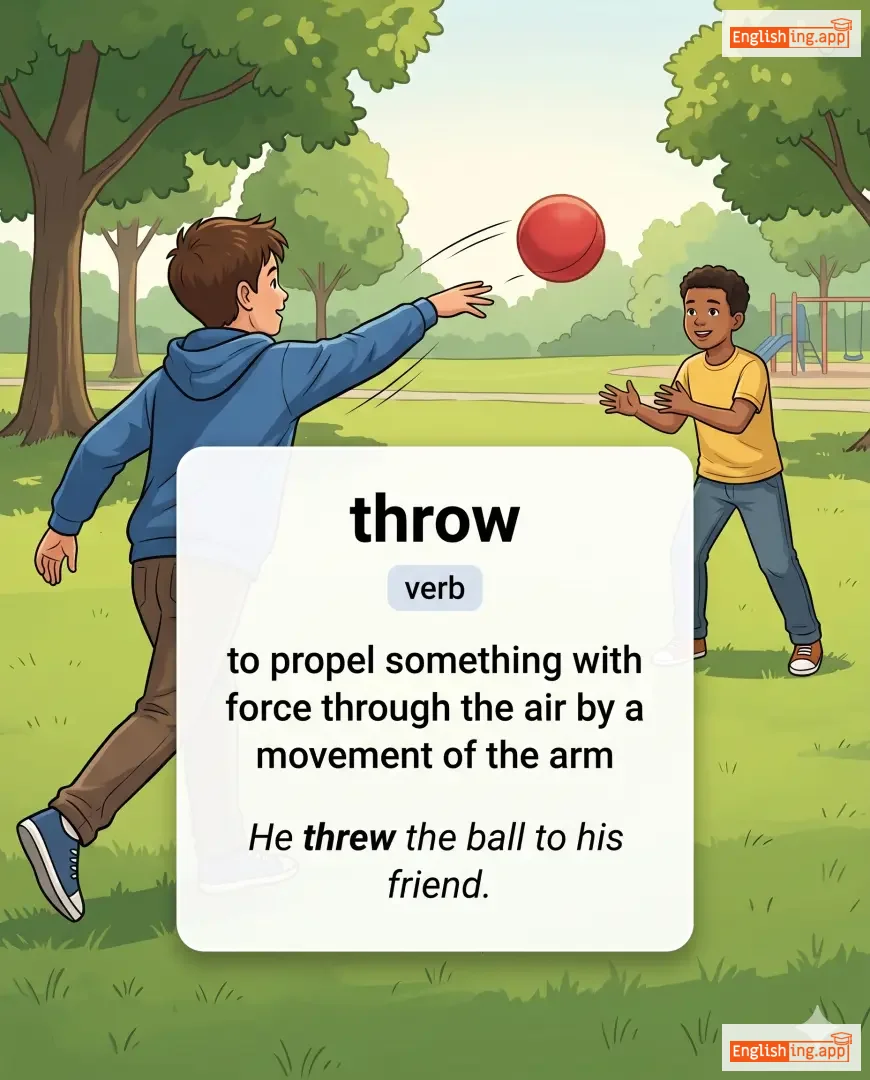
throw definition card — visual illustration of the meaning
verb
/θroʊ/
投げる (nageru)

to propel something with force through the air by a movement of the arm

"He threw the ball to his friend."

"彼は友達にボールを投げました。" (Kare wa tomodachi ni bōru o nage mashita.)
noun
/θʌm/
親指 (oyayubi)

the short, thick finger on the side of the hand, used for gripping and holding things

"He gave a thumbs-up to show his approval."
"彼は承認を示すために親指を上げました。" (Kare wa shounin o shimesu tame ni oyayubi o agemashita.)
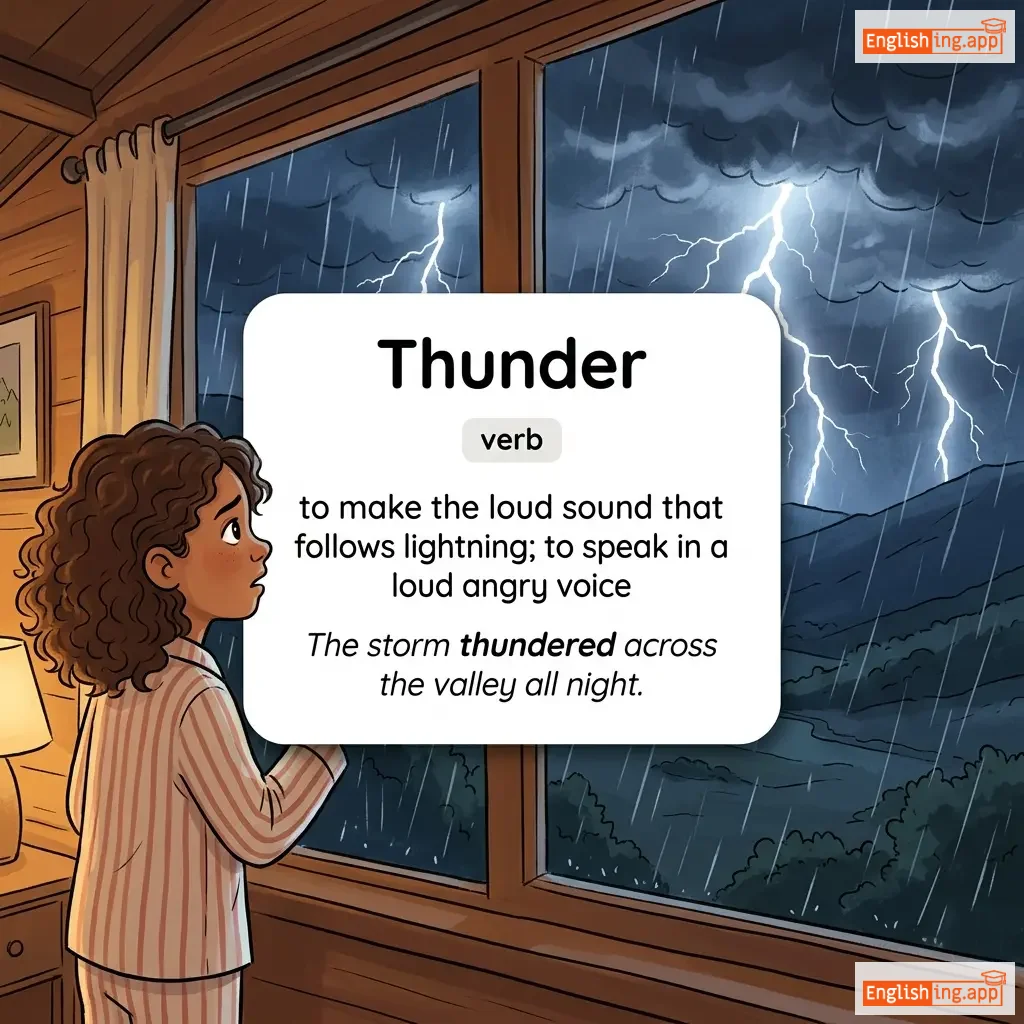
Thunder definition card — visual illustration of the meaning
noun
/ˈθʌn.dər/
(kaminari)

the loud rumbling or crashing noise heard after a lightning flash

"We heard thunder during the storm last night."

"昨夜の嵐の中で雷を聞きました。" (Sakuya no arashi no naka de kaminari wo kikimashita.)
noun
/ˈθɜːrzdeɪ/
木曜日 (mokuyoubi)

The fifth day of the week, following Wednesday and preceding Friday.

"We have a meeting scheduled for Thursday."

"木曜日に会議が予定されています。" (mokuyoubi ni kaigi ga yotei sareteimasu.)
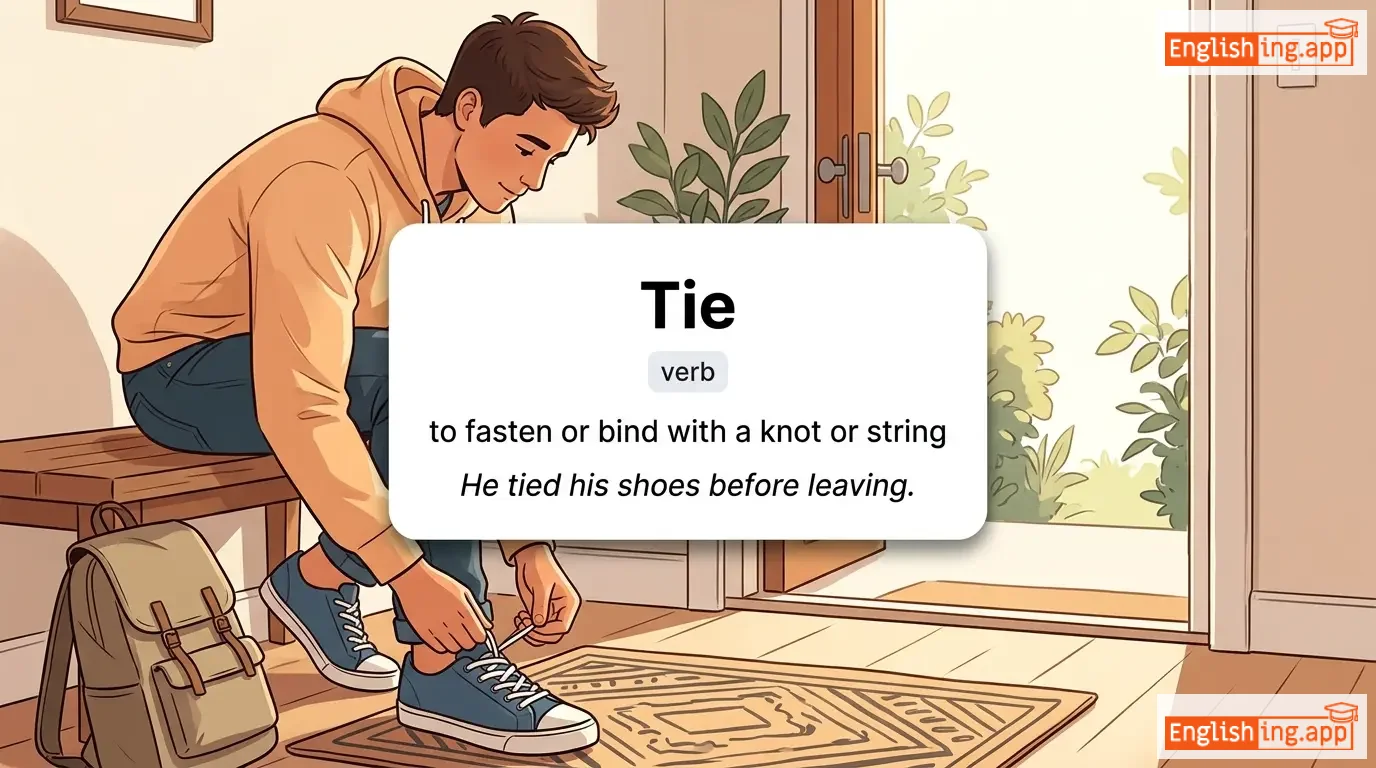
Tie definition card — visual illustration of the meaning
verb
/taɪ/
結ぶ (musubu)

to fasten or bind with a knot or string

"He tied his shoes before leaving."

"彼は出かける前に靴を結びました。" (Kare wa dekakeru mae ni kutsu o musubimashita.)
adjective
/ˈtɪd.li/
軽く酔った; 小さいまたは微小 (tiddli)

slightly drunk; small or tiny

"After a few drinks, he felt a bit tiddley."

"いくつかの飲み物を飲んだ後、彼は少しtiddliに感じた。" (Ikutsuka no nomimono o nonda ato, kare wa sukoshi tiddli ni kanjita.)
noun
/taɪd/
潮の干満 (shio no kanman)

the regular rise and fall of the sea caused by the moon and sun's gravity; a powerful flow or movement

"The fisherman waited for the tide to come in."

"漁師は潮の干満が来るのを待っていました。" (Gyoshi wa shio no kanman ga kuru no o matte imashita.)
adjective
/ˈtaɪ.di/
整頓された; 清潔な (seiton sareta; seiketsu na)

arranged neatly and in order; clean and organized

"She keeps her room very tidy and organized."

"彼女は自分の部屋を非常に整頓されていて清潔に保っています。" (Kanojo wa jibun no heya o hijō ni seiton sarete ite seiketsu ni tamotsutteimasu.)
adjective
/ˈtɪklɪʃ/

easily made to laugh by being touched lightly; easily upset or sensitive

"She is very ticklish and bursts into laughter when touched on her feet."