Vocabularios

Descubra, aprenda y domine el vocabulario en inglés

noun
/ˈtoʊ.pæz/
topacio (topacio)

a precious stone, typically colorless, yellow, or blue, used in jewelry

"The queen's crown was adorned with a magnificent blue topaz."

"La corona de la reina estaba adornada con un magnífico topacio azul." (La corona de la reina estaba adornada con un magnifico topacio azul.)
noun
/tɒp/
cima (seema)

the highest or uppermost point, part, or surface of something

"The book is on the top shelf."

"El libro está en la estantería superior." (El libro esta en la estanteria superior.)
noun
/tuːθ/
diente (diente)

each of the hard, pointed structures in the mouth used for biting and chewing food

"He has a toothache and needs to see the dentist."

"Él tiene dolor de muelas y necesita ir al dentista." (Él tiene dolor de muelas y necesita ir al dentista.)
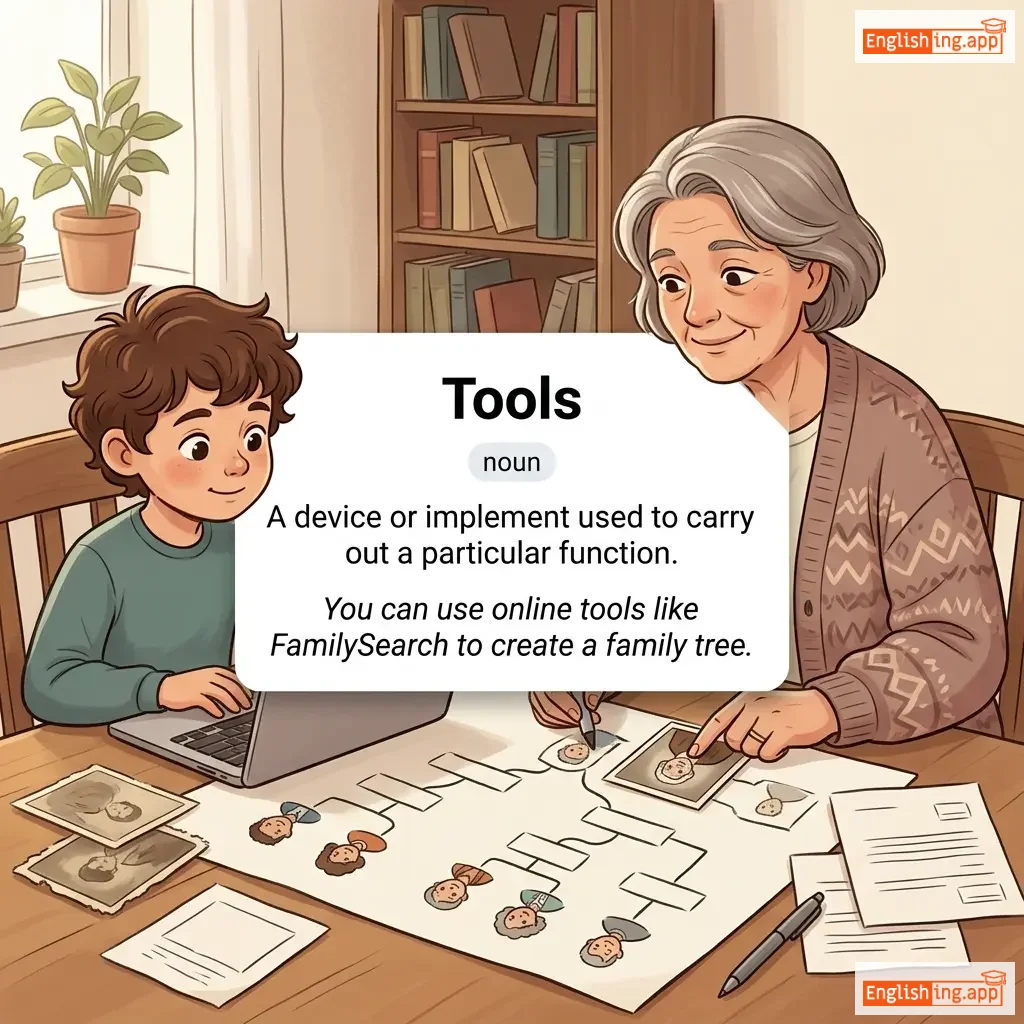
Tools definition card — visual illustration of the meaning
noun
tuːlz
herramientas (herramientas)

A device or implement used to carry out a particular function.

"You can use online tools like FamilySearch to create a family tree."

"Puedes usar herramientas en línea como FamilySearch para crear un árbol genealógico." (Puedes usar herramientas en línea como FamilySearch para crear un árbol genealógico.)
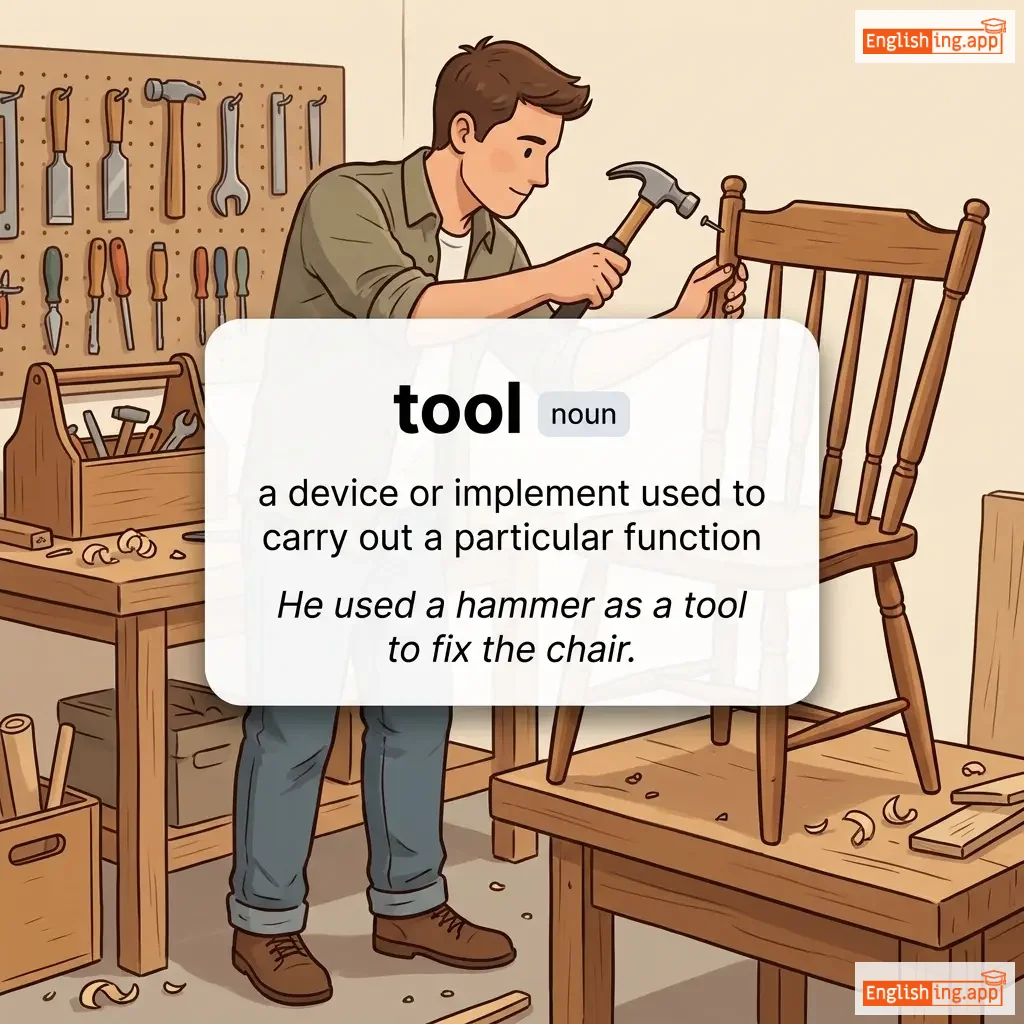
tool definition card — visual illustration of the meaning
noun
/tuːl/
herramienta (herramienta)

a device or implement used to carry out a particular function

"He used a hammer as a tool to fix the chair."

"Usó un martillo como herramienta para arreglar la silla." (Uso un martillo como herramienta para arreglar la silla.)
adverb
/tuː/
demasiado (demasiado)

to a higher degree than is desirable, permissible, or possible

"She is too tired to continue working."

"Está demasiado cansada para continuar trabajando." (Está demasiado cansada para continuar trabajando.)
noun
/ˈtɒnʃər/
tonsura (tonsura)

the practice of shaving or cutting the hair on the scalp, especially in a religious context

"The monk received his tonsure as part of his religious initiation."

"El monje recibió su tonsura como parte de su iniciación religiosa." (El monje recibio su tonsura como parte de su iniciacion religiosa.)
adjective
/tɒnˈsɔːriəl/
relacionado con el barbero (relacionado con el barbero)

relating to barbers or hairdressing

"The town's new barber offered a wide range of tonsorial services."

"El nuevo barbero de la ciudad ofreció una amplia gama de servicios tonsoriales." (El nuevo barbero de la ciudad ofreció una amplia gama de servicios tonsoriales.)
adverb, noun
/təˈnaɪt/
esta noche (esta noche)

on or during the night of the current day

"We're going to the party tonight."

"Vamos a la fiesta esta noche." (Vamos a la fiesta esta noche.)
noun
/ˈtɒnɪk/
tónico (tonico)

a medicine or drink that restores or refreshes health and energy

"A glass of lemonade was the perfect tonic on a hot day."

"Un vaso de limonada fue el tónico perfecto en un día caluroso." (Un vaso de limonada fue el tonico perfecto en un dia caluroso.)
noun
/tʌŋ/
lengua (lengua)

a fleshy muscular organ in the mouth used for tasting, swallowing, and speaking

"She stuck out her tongue playfully."

"Ella sacó su lengua juguetonamente." (Ella saco su lengua juguetonamente.)
noun
/tɒŋz/
tenazas (tenazas)

a tool consisting of two movable arms that are joined at one end, used for picking up and holding things

"Use the tongs to pick up the hot pieces of meat from the grill."

"Usa las tenazas para recoger los trozos calientes de carne de la parrilla." (Usa las tenazas para recoger los trozos calientes de carne de la parrilla.)
noun
/tɒŋ/
tenaza (tenaza)

a tool with two movable arms used to pick up and hold objects

"He used the tong to pick up the hot coal."

"Él usó la tenaza para levantar el carbón caliente." (El uso la tenaza para levantar el carbon caliente.)
noun, verb
/toʊn/
tono (tono)

the general character or attitude of a place, piece of writing, situation, etc.

"The tone of the letter was very formal."

"El tono de la carta era muy formal." (El tono de la carta era muy formal.)
noun
/tʌn/
tonelada (tonelada)

A unit of weight equal to 2,000 pounds (US) or 1,000 kilograms (metric); a large amount of something

"The truck carried a ton of apples to the market."

"El camión transportó una tonelada de manzanas al mercado." (El camion transporto una tonelada de manzanas al mercado.)
noun, adverb
/təˈmɒroʊ/
mañana (manana)

the day after today

"We are meeting tomorrow for the project discussion."

"Nos reuniremos mañana para discutir el proyecto." (Nos reuniremos manana para discutir el proyecto.)
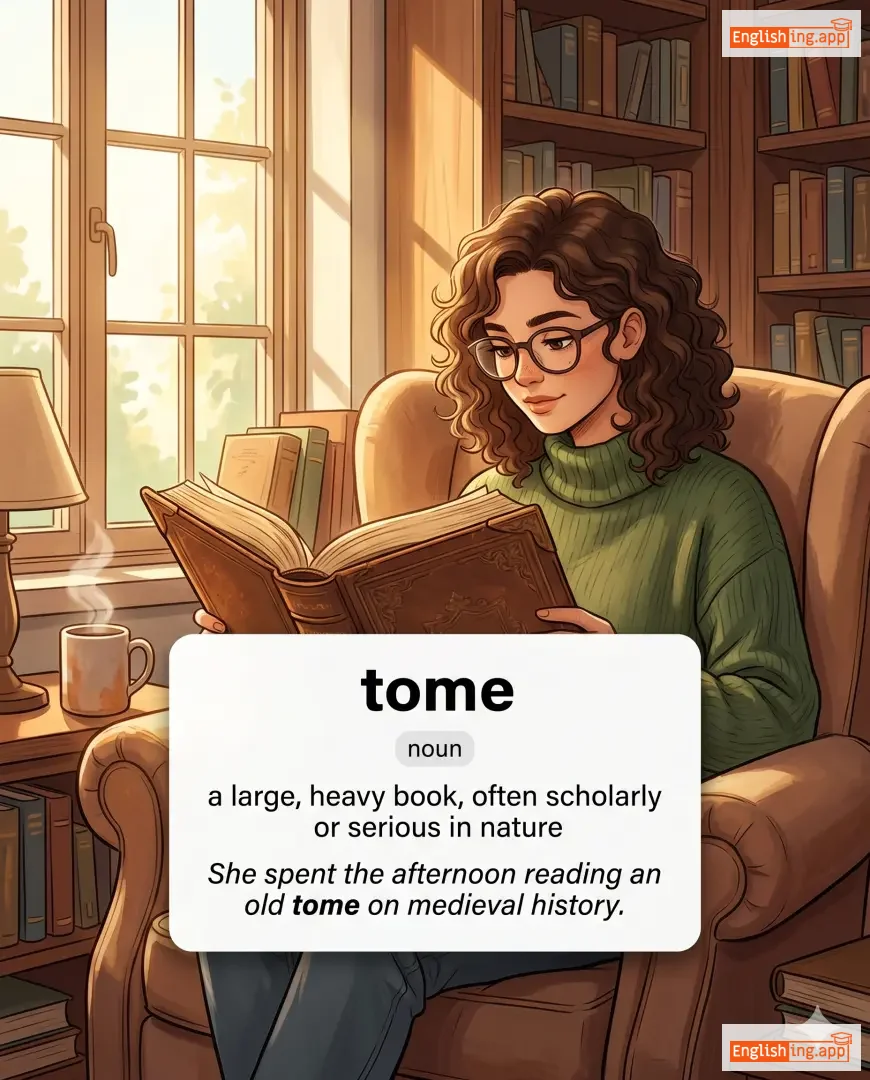
tome definition card — visual illustration of the meaning
noun
/toʊm/
gran libro (gran libro)

a large, heavy book, often scholarly or serious in nature

"She spent the afternoon reading an old tome on medieval history."

"Pasó la tarde leyendo un viejo gran libro sobre historia medieval." (Pasó la tarde leyendo un viejo gran libro sobre historia medieval.)
noun
/təˈmeɪtoʊ/
tomate (tomate)

a red or yellowish fruit that is typically eaten as a vegetable

"I added some tomato to the salad."

"Añadí un poco de tomate a la ensalada." (Añadí un poco de tomate a la ensalada.)
noun
/toʊl/
peaje / daño (peaje / dano)

A charge payable for using a road or bridge; also the extent of damage or suffering caused by something.

"The flood took a heavy toll on the village."

"La inundación causó un gran daño en el pueblo." (La inundacion causo un gran dano en el pueblo.)
noun
/ˌtɒləˈreɪʃən/
tolerancia (tolerancia)

The practice of allowing something that one does not necessarily agree with.

"The government promoted religious toleration."

"El gobierno promovió la tolerancia religiosa." (El gobierno promovió la tolerancia religiosa.)
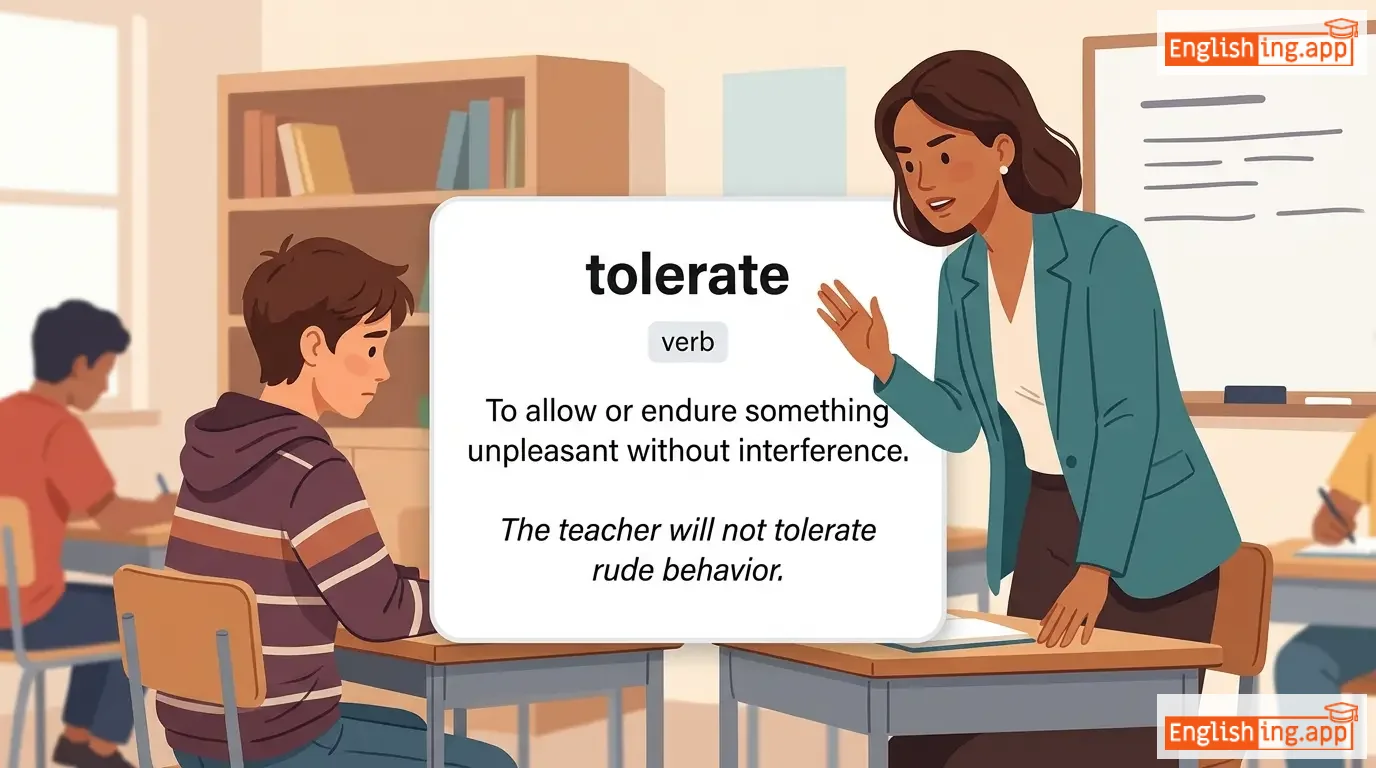
tolerate definition card — visual illustration of the meaning
verb
/ˈtɒləreɪt/
tolerar (tolerar)

To allow or endure something unpleasant without interference.

"The teacher will not tolerate rude behavior."

"La maestra no tolerará un comportamiento grosero." (La maestra no tolerará un comportamiento grosero.)
adjective
/ˈtɒlərənt/
tolerante (tolerante)

Showing willingness to allow the existence of opinions or behaviors that one dislikes or disagrees with.

"He is very tolerant of other people's beliefs."

"Él es muy tolerante con las creencias de los demás." (El es muy tolerante con las creencias de los demas.)
noun
/ˈtɒlərəns/
tolerancia (tolerancia)

The ability or willingness to accept or endure differences, behaviors, or opinions without hostility.

"Her tolerance for different cultures impressed everyone."

"Su tolerancia hacia las diferentes culturas impresionó a todos." (Su tolerancia hacia las diferentes culturas impresiono a todos.)
adjective
/ˈtɒl.ər.ə.bəl/
tolerable (tolerable)

Able to be endured or put up with; fairly acceptable.

"The pain was tolerable after the medicine."

"El dolor era tolerable después de la medicina." (El dolor era tolerable después de la medicina.)
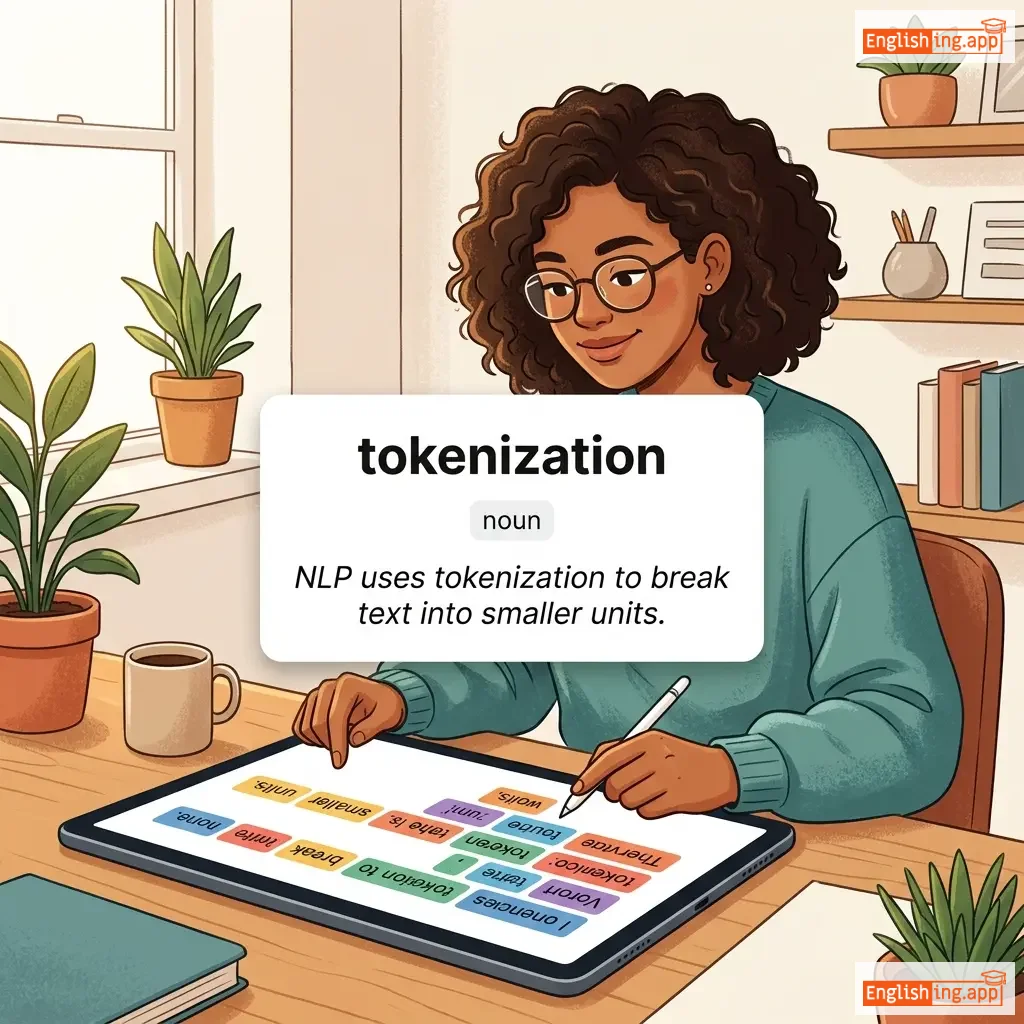
tokenization definition card — visual illustration of the meaning
noun
ˌtoʊ.kə.nɪˈzeɪ.ʃən
El proceso de dividir el texto en unidades más pequeñas como palabras, frases o símbolos para su análisis. (tokenization)

The process of breaking text into smaller units like words, phrases, or symbols for analysis.

"NLP uses tokenization to break text into smaller units."

"NLP utiliza la tokenización para dividir el texto en unidades más pequeñas." (NLP utiliza la tokenización para dividir el texto en unidades más pequeñas.)
noun
/ˈtoʊ.kən/
símbolo / ficha (simbolo / ficha)

A symbol or object that represents something, often given as a sign of appreciation or as a substitute for money.

"She gave him a small gift as a token of gratitude."

"Ella le dio un pequeño regalo como un token de gratitud." (Ella le dio un pequeno regalo como un token de gratitud.)
adjective
/ˈtɔɪl.səm/
agotador (agotador)

Involving hard or exhausting work; laborious.

"The workers had a toilsome day in the hot sun."

"Los trabajadores tuvieron un día agotador bajo el sol caliente." (Los trabajadores tuvieron un día agotador bajo el sol caliente.)
noun
/ˈtɔɪlət/
inodoro (inodoro)

a fixture used for the disposal of human waste

"The public toilet was clean and well maintained."

"El inodoro público estaba limpio y bien mantenido." (El inodoro publico estaba limpio y bien mantenido.)
Toil definition card — visual illustration of the meaning
verb
/tɔɪl/
trabajar duro (trabajar duro)

To work extremely hard and continuously, often with difficulty.

"He had to toil for years to achieve success."

"Tuvo que trabajar duro durante años para lograr el éxito." (Tuvo que trabajar duro durante años para lograr el éxito.)
Together definition card — visual illustration of the meaning
adverb
/təˈɡɛðər/
juntos (juntos)

with each other; in a group or combined form

"They worked together to solve the problem."

"Trabajaron juntos para resolver el problema." (Trabajaron juntos para resolver el problema.)
adverb
/ðʌs/
así (asi)

as a result or consequence of something previously stated

"He was late, thus he missed the meeting."

"Llegó tarde, así que se perdió la reunión." (Llego tarde, asi que se perdio la reunion.)
Thrill definition card — visual illustration of the meaning
verb
/θrɪl/
emocionar (emocionar)

to cause someone to feel very excited and pleased

"The roller coaster ride thrills adventure seekers."

"La montaña rusa emociona a los buscadores de aventuras." (La montana rusa emociona a los buscadores de aventuras.)
adjective
/θrɪld/
emocionado (emocionado)

extremely happy or excited

"She was thrilled with the surprise party."

"Ella estaba emocionada con la fiesta sorpresa." (Ella estaba emocionada con la fiesta sorpresa.)
thrive definition card — visual illustration of the meaning
verb
/θraɪv/
prosperar (prosperar)

to grow, develop, or be successful

"Small businesses can thrive with proper support."

"Las pequeñas empresas pueden prosperar con el apoyo adecuado." (Las pequenas empresas pueden prosperar con el apoyo adecuado.)
noun
/θroʊt/
garganta (garganta)

the front part of the neck, containing the pharynx and larynx

"He felt a lump in his throat while speaking."

"Sintió un bulto en su garganta mientras hablaba." (Sintió un bulto en su garganta mientras hablaba.)
verb
/θrɒb/
latir (latir)

to beat or pulse strongly, often with pain

"His head began to throb after the long day."

"Su cabeza comenzó a latir después de todo el día." (Su cabeza comenzó a latir después de todo el día.)
noun
/θroʊz/
dolor intenso (dolor intenso)

intense or violent pain and struggle, often at the beginning or end of something

"The country was in the throes of a political crisis."

"El país estaba en el dolor intenso de una crisis política." (El pais estaba en el dolor intenso de una crisis politica.)
noun/verb
/θrɒŋ/
multitud (multitud)

A large, densely packed crowd of people or animals; to fill or be present in a place in large numbers.

"Tourists thronged the streets during the festival."

"Los turistas abarrotaron las calles durante el festival." (Los turistas abarrotaron las calles durante el festival.)
verb/noun
/ˈθrɒt.əl/
ahogar/controlar velocidad (ahogar/controlar velocidad)

To choke or strangle; to control the flow of fuel or power in an engine.

"The driver throttled the engine to slow down the car."

"El conductor redujo la velocidad del motor para frenar el coche." (El conductor redujo la velocidad del motor para frenar el coche.)
preposition
/θruː/
a través de (a traves de)

moving in one side and out the other side of something

"The train passed through the tunnel."

"El tren pasó a través del túnel." (El tren paso a traves del tunel.)
preposition
/θruːˈaʊt/
a lo largo (a lo largo)

in every part of a place or during the whole time of an event

"She worked throughout the night."

"Ella trabajó toda la noche." (Ella trabajó toda la noche.)
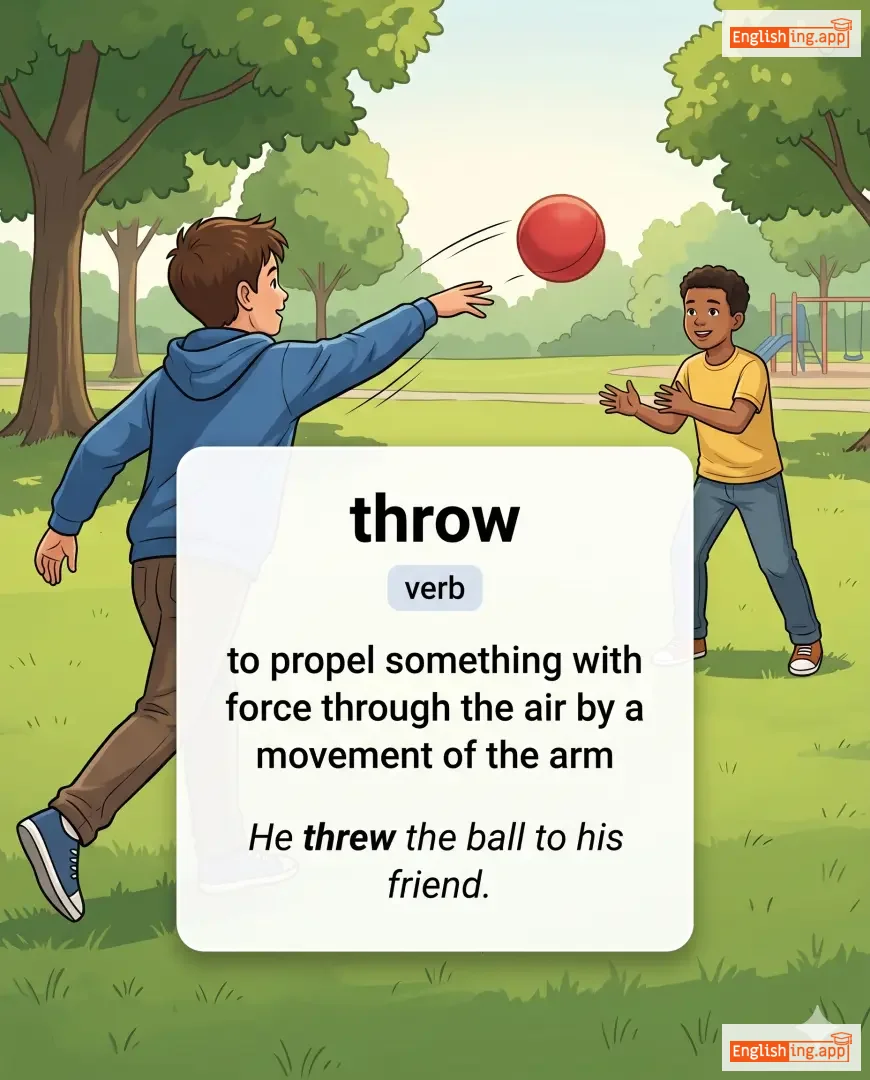
throw definition card — visual illustration of the meaning
verb
/θroʊ/
lanzar (lanzar)

to propel something with force through the air by a movement of the arm

"He threw the ball to his friend."

"Él lanzó la pelota a su amigo." (Él lanzó la pelota a su amigo.)
noun
/θʌm/
dedo (dedo)

the short, thick finger on the side of the hand, used for gripping and holding things

"He gave a thumbs-up to show his approval."

"Él levantó el dedo pulgar para mostrar su aprobación." (El levantó el dedo pulgar para mostrar su aprobación.)
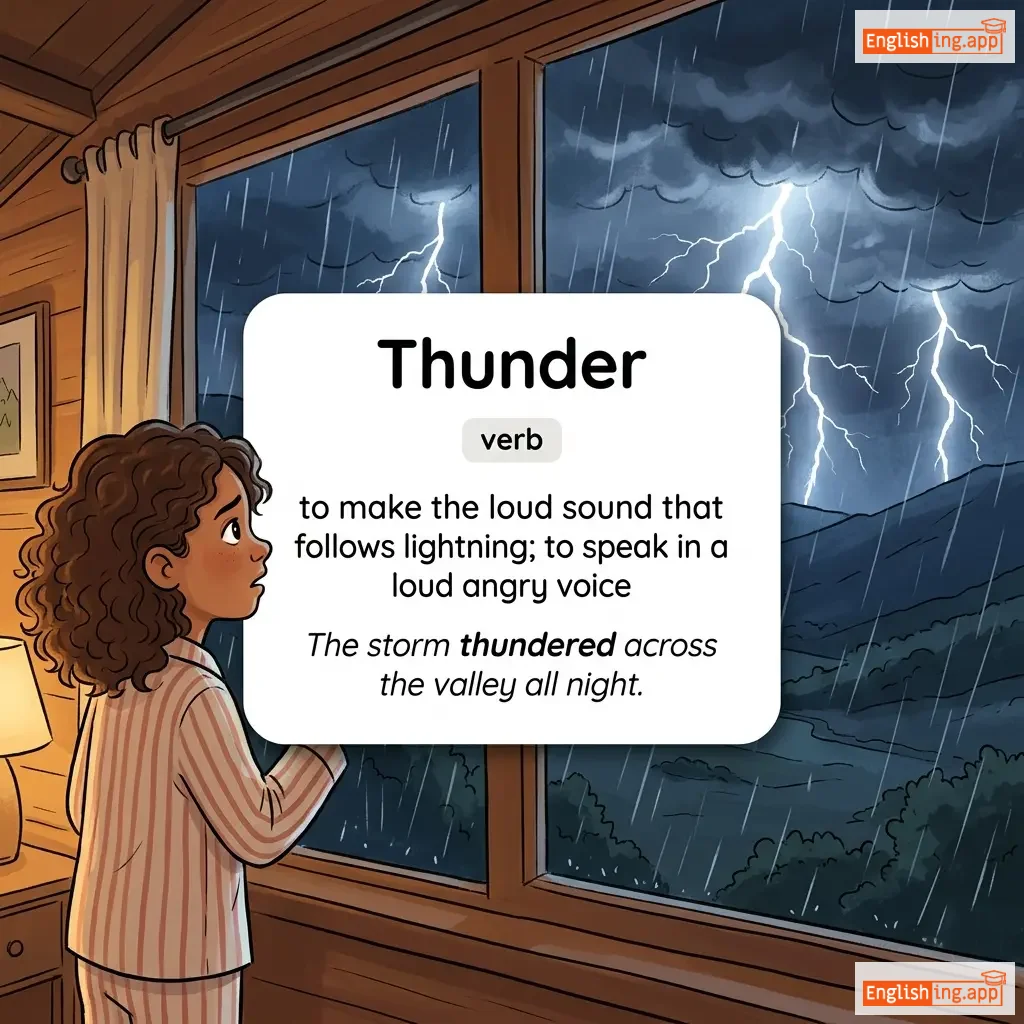
Thunder definition card — visual illustration of the meaning
noun
/ˈθʌn.dər/
trueno (trueno)

the loud rumbling or crashing noise heard after a lightning flash

"We heard thunder during the storm last night."

"Oímos el trueno durante la tormenta anoche." (Oimos el trueno durante la tormenta anoche.)
noun
/ˈθɜːrzdeɪ/
jueves (jueves)

The fifth day of the week, following Wednesday and preceding Friday.

"We have a meeting scheduled for Thursday."

"Tenemos una reunión programada para el jueves." (Tenemos una reunion programada para el jueves.)
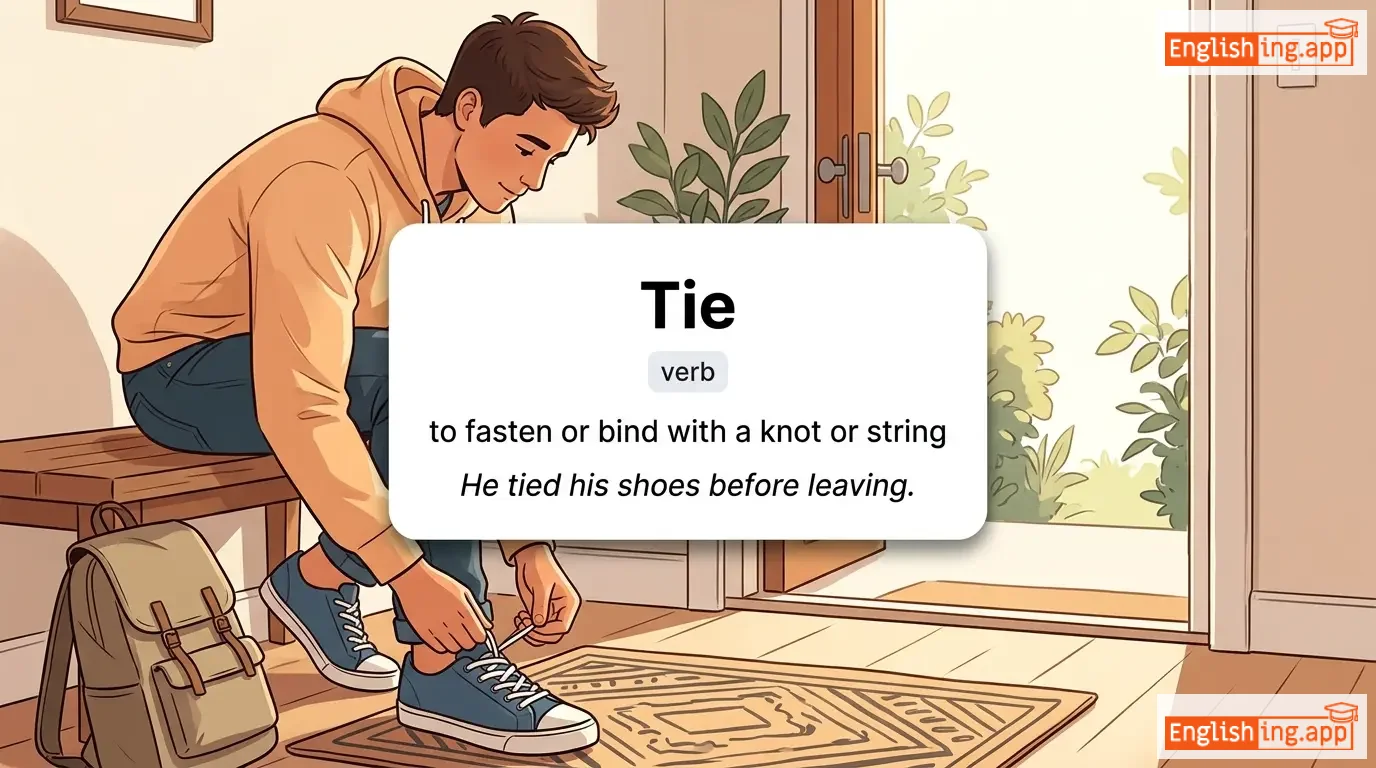
Tie definition card — visual illustration of the meaning
verb
/taɪ/
atar (atar)

to fasten or bind with a knot or string

"He tied his shoes before leaving."

"él ató sus zapatos antes de irse." (él ató sus zapatos antes de irse.)
adjective
/ˈtɪd.li/
ligeramente borracho; pequeño o diminuto (tiddli)

slightly drunk; small or tiny

"After a few drinks, he felt a bit tiddley."

"Después de unas copas, se sintió un poco tiddley." (Despues de unas copas, se sintió un poco tiddley.)
noun
/taɪd/
marea (marea)

the regular rise and fall of the sea caused by the moon and sun's gravity; a powerful flow or movement

"The fisherman waited for the tide to come in."

"El pescador esperó a que llegara la marea." (El pescador esperó a que llegara la marea.)
adjective
/ˈtaɪ.di/
ordenado; limpio (ordenado; limpio)

arranged neatly and in order; clean and organized

"She keeps her room very tidy and organized."

"Ella mantiene su habitación muy ordenada y limpia." (Ella mantiene su habitación muy ordenada y limpia.)
adjective
/ˈtɪklɪʃ/
cosquilloso, sensible (cosquilloso, sensible)

easily made to laugh by being touched lightly; easily upset or sensitive

"She is very ticklish and bursts into laughter when touched on her feet."

"Ella es muy cosquillosa y se echa a reír cuando la tocan en los pies." (Ella es muy cosquillosa y se echa a reír cuando la tocan en los pies.)