Vocabularios

Descubra, aprenda y domine el vocabulario en inglés

noun
/ˈθiːsɪs/
tesis (tesis)

A long piece of writing on a particular subject, usually for a degree at a university.

"She spent two years writing her doctoral thesis."

"Pasó dos años escribiendo su tesis doctoral." (Pasó dos años escribiendo su tesis doctoral.)
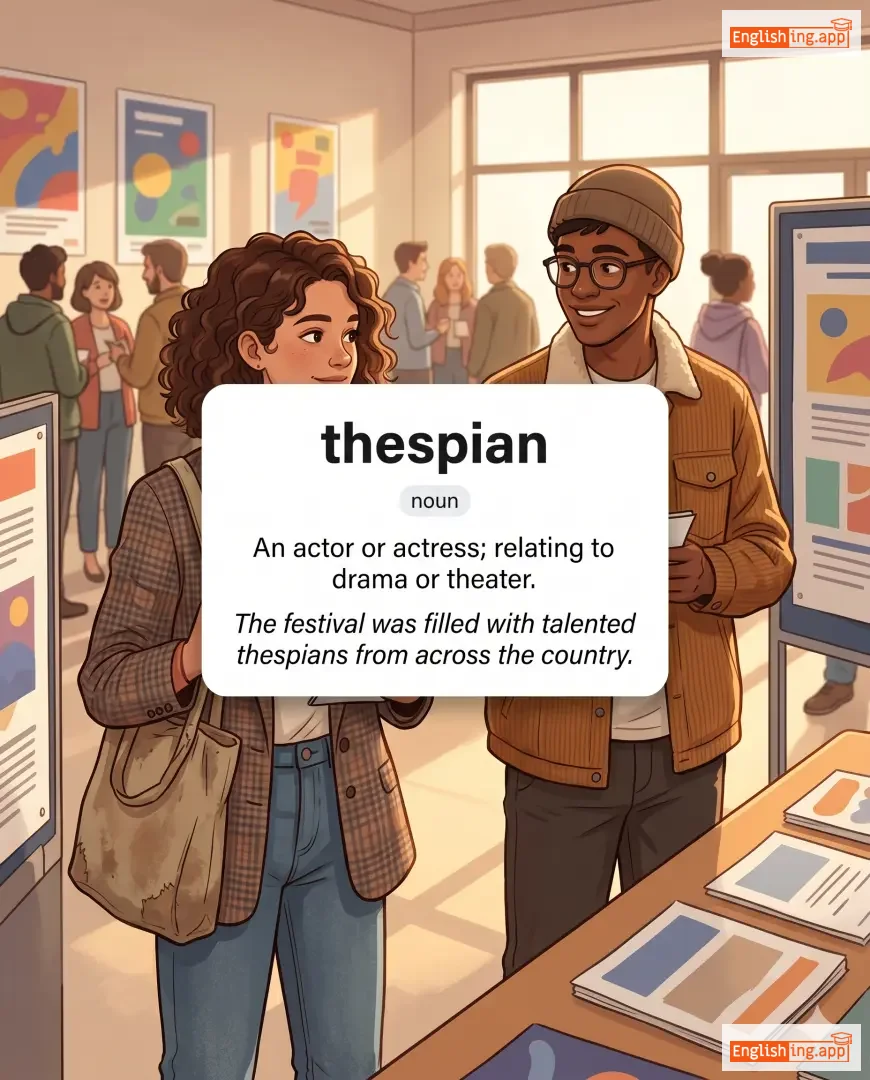
thespian definition card — visual illustration of the meaning
noun
/ˈθɛspiən/
actor (actor)

An actor or actress; relating to drama or theater.

"The festival was filled with talented thespians from across the country."

"El festival estuvo lleno de actores talentosos de todo el país." (El festival estuvo lleno de actores talentosos de todo el pais.)
pronoun
/ðeɪ/
ellos (ellos)

used to refer to people or things previously mentioned or easily identified

"They are going to the park."

"Ellos van al parque." (Ellos van al parque.)
adjective
/θɪk/
grueso (grueso)

having a large distance between two sides; not thin

"The book was so thick it took weeks to finish."

"El libro era tan grueso que tardó semanas en terminarse." (El libro era tan grueso que tardó semanas en terminarse.)
noun
/ˈθɪk.ɪt/
matorral; espesura de arbustos (thiket)

a dense group of bushes or trees; a thick growth of shrubs

"The rabbit disappeared into the thicket."

"El conejo desapareció en el matorral." (El conejo desapareció en el matorral.)
adverb
/ˈθɪkli/
densamente (densamente)

in a thick manner; densely; heavily

"The forest was thickly wooded with tall pine trees."

"El bosque estaba densamente cubierto de altos pinos." (El bosque estaba densamente cubierto de altos pinos.)
noun
/ˈθɪk.nəs/
grosor (grosor)

The measure of how thick or dense something is

"The thickness of the book made it hard to carry."

"El grosor del libro lo hacía difícil de llevar." (El grosor del libro lo hacia dificil de llevar.)
🦹‍♂️

Thief (θiːf)

noun
/θiːf/
ladrón (ladron)

a person who steals things from others

"The thief was caught stealing from the jewelry store."

"El ladrón fue atrapado robando en la joyería." (El ladron fue atrapado robando en la joyeria.)
noun
/θaɪ/
muslo (muslo)

the part of the leg between the hip and the knee

"He felt pain in his right thigh after running for an hour."

"Sintió dolor en su muslo derecho después de correr durante una hora." (Sintió dolor en su muslo derecho después de correr durante una hora.)
adjective
/θɪn/
delgado (delgado)

having little thickness or width

"She wore a thin scarf in the winter."

"Ella llevaba una bufanda delgada en el invierno." (Ella llevaba una bufanda delgada en el invierno.)
noun
/θɪŋ/
cosa (cosa)

an object, idea, or matter that is being referred to or dealt with

"This is the thing I was looking for."

"Esta es la cosa que estaba buscando." (Esta es la cosa que estaba buscando.)
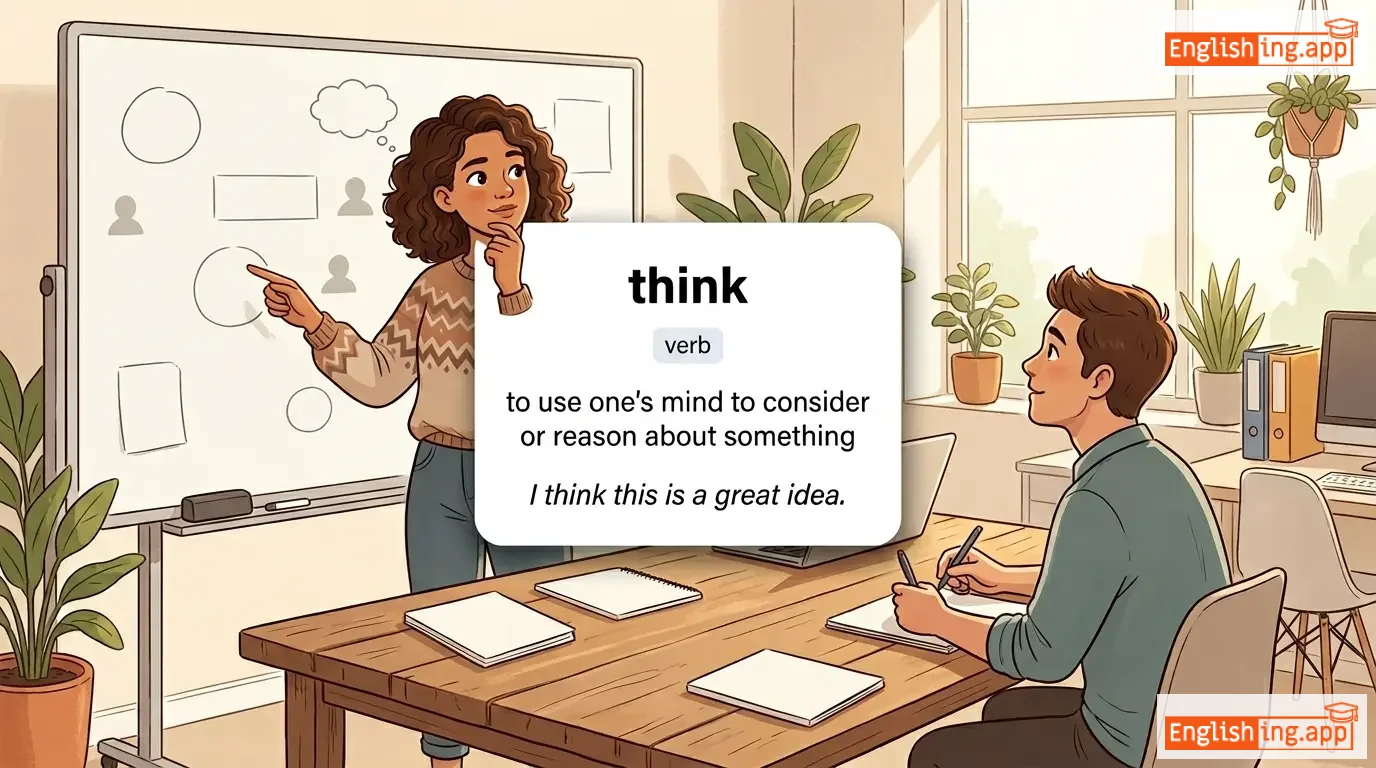
think definition card — visual illustration of the meaning
verb
/θɪŋk/
pensar (pensar)

to use one's mind to consider or reason about something

"I think this is a great idea."

"Creo que esta es una gran idea." (Creo que esta es una gran idea.)
adjective
/ˈθɪŋ.kə.bəl/
pensable (pensable)

Capable of being imagined or conceived; possible to consider or believe

"It is hard to believe that such an outcome is even thinkable."

"Es difícil creer que tal resultado sea siquiera imaginable." (Es dificil creer que tal resultado sea siquiera imaginable)
noun
/ˈθɪŋkɪŋ/
pensamiento (pensamiento)

the process of considering or reasoning about something

"Her thinking was clear and precise."

"Su pensamiento era claro y preciso." (Su pensamiento era claro y preciso.)
adjective
/θɜrd/
tercero (terthero)

constituting number three in a sequence

"She finished in third place."

"Ella terminó en tercer lugar." (Ella termino en tercer lugar.)
noun
/tɒp/
cima (seema)

the highest or uppermost point, part, or surface of something

"The book is on the top shelf."

"El libro está en la estantería superior." (El libro esta en la estanteria superior.)
noun
/ˈtoʊtəm/
símbolo sagrado (simbolo sagrado)

A natural object, animal, or symbol that is revered as a spiritual emblem by a group or tribe.

"The eagle is considered a sacred totem in many cultures."

"El águila es considerada un tótem sagrado en muchas culturas." (El aguila es considerada un totem sagrado en muchas culturas.)
adverb
/ˈtoʊtəli/
totalmente (totalmente)

completely or in an absolute way

"She was totally shocked by the news."

"Ella estaba completamente sorprendida por la noticia." (Ella estaba completamente sorprendida por la noticia.)
adjective, noun, verb
/ˈtoʊ.təl/
total (total)

the whole amount; complete

"The total cost was too high."

"El costo total fue demasiado alto." (El costo total fue demasiado alto.)
verb
/tɔs/
tirar ligeramente (tirar ligeramente)

To throw something lightly or casually; to move or turn suddenly.

"He tossed the keys onto the table."

"Él tiró las llaves sobre la mesa." (El tiro las llaves sobre la mesa.)
adjective
/ˈtɔːrtʃərəs/
tortuoso (tortuoso)

Extremely painful or causing great suffering; relating to or involving torture.

"The journey through the desert was long and torturous."

"El viaje a través del desierto fue largo y tortuoso." (El viaje a través del desierto fue largo y tortuoso.)
noun
/ˈtɔːtʃər/
tortura (tortura)

the action or practice of inflicting severe pain on someone as a punishment or to force them to do something

"He was subjected to torture during the interrogation."

"Fue sometido a tortura durante el interrogatorio." (Fue sometido a tortura durante el interrogatorio.)
adjective
/ˈtɔːrtʃuəs/
tortuoso, complicado (tortuoso, complicado)

Full of twists and turns; excessively complex or complicated.

"The tortuous mountain road made driving very difficult."

"La tortuosa carretera de montaña hizo que conducir fuera muy difícil." (La tortuosa carretera de montaña hizo que conducir fuera muy difícil.)
noun
/ˈtɔːr.təs/
tortuga (tortuga)

A slow-moving land reptile with a hard shell.

"The tortoise slowly crossed the garden."

"La tortuga cruzó lentamente el jardín." (La tortuga cruzo lentamente el jardin.)
adjective
/ˈtɔːrʃəs/
acto ilícito (acto ilicito)

Relating to or involving a wrongful act leading to legal liability.

"The company was found guilty of tortious interference with contracts."

"La empresa fue declarada culpable de interferencia ilícita con contratos." (La empresa fue declarada culpable de interferencia ilícita con contratos.)
noun
/tɔːrˈtiːə/
tortilla (tortilla)

A thin round flatbread made from corn or wheat, common in Mexican cuisine.

"She wrapped the vegetables in a warm tortilla."

"Ella envolvió las verduras en una tortilla caliente." (Ella envolvió las verduras en una tortilla caliente.)
noun
/ˈtɔːrsoʊ/
torso (torso)

The trunk of the human body, excluding the head and limbs.

"The artist painted the torso of the model in great detail."

"El artista pintó el torso del modelo con gran detalle." (El artista pintó el torso del modelo con gran detalle.)
adjective
/ˈtɒrɪd/
muy caliente y seco; lleno de emociones o pasiones intensas (muy caliente y seco; lleno de emociones o pasiones intensas)

Very hot and dry; full of strong emotions or passion.

"The desert heat was torrid during the day."

"El calor del desierto era torrido durante el día." (El calor del desierto era torrido durante el día.)
adjective
/təˈrɛnʃəl/
torrencial (torrencial)

Relating to or resembling a torrent; very heavy and fast flowing.

"The hikers were caught in torrential rain."

"Los excursionistas fueron atrapados en lluvia torrencial." (Los excursionistas fueron atrapados en lluvia torrencial.)
noun
/ˈtɔːrənt/
tormenta (tormenta)

A strong and fast-moving stream of water; a sudden, violent outpouring of something.

"A torrent of rain flooded the streets."

"Una tormenta de lluvia inundó las calles." (Una tormenta de lluvia inundo las calles.)
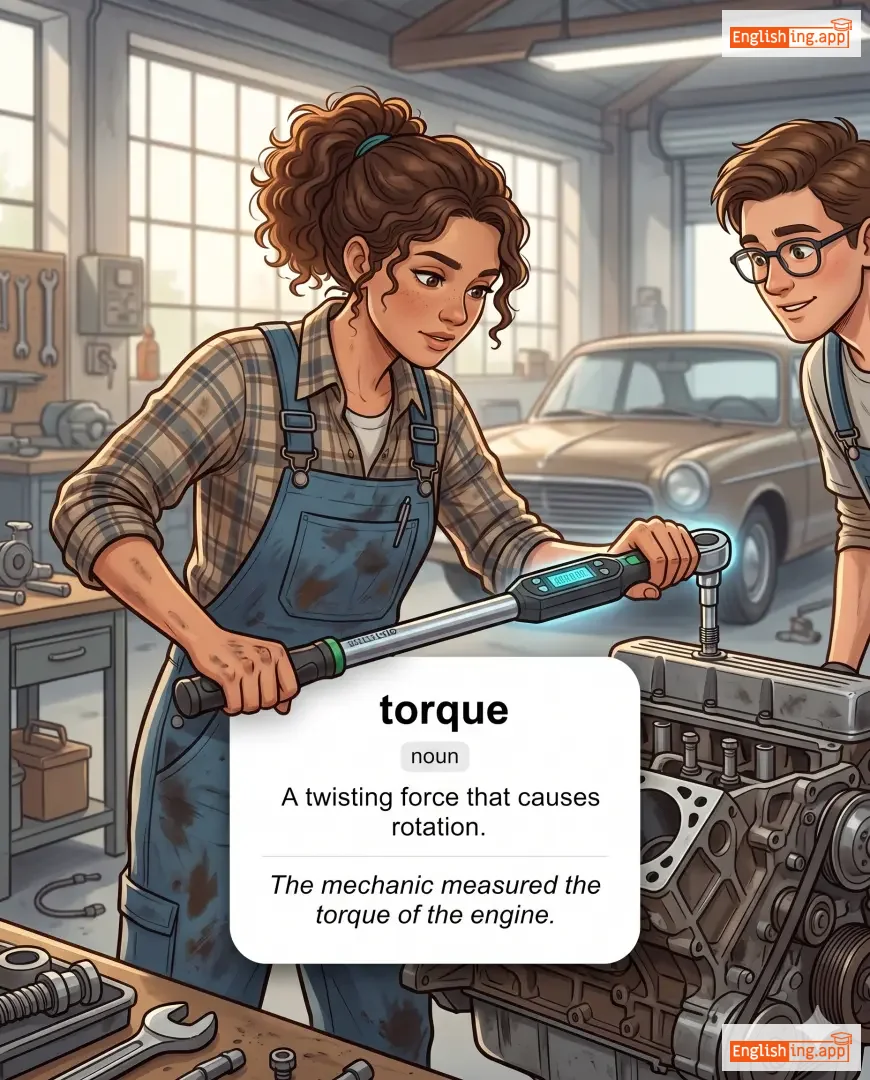
torque definition card — visual illustration of the meaning
noun
/tɔːrk/
torque (torque)

A twisting force that causes rotation.

"The mechanic measured the torque of the engine."

"El mecánico midió el torque del motor." (El mecanico midio el torque del motor.)
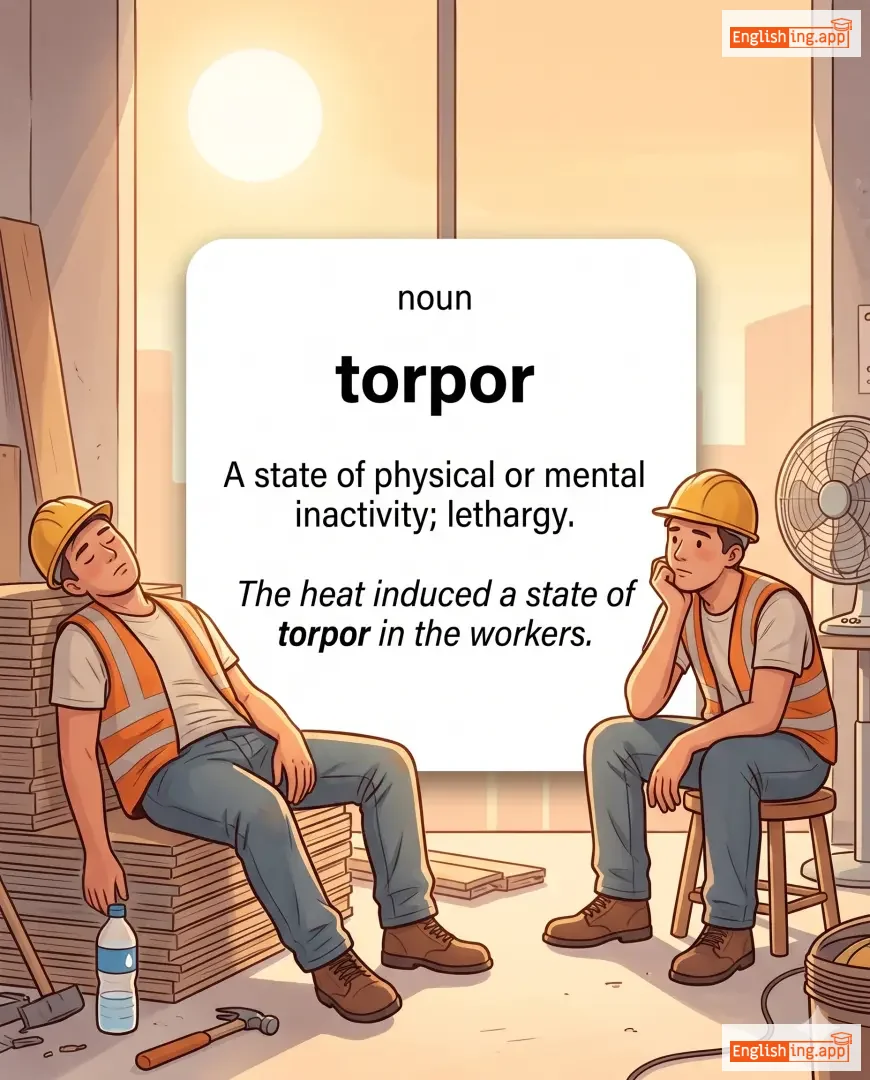
torpor definition card — visual illustration of the meaning
noun
/ˈtɔːrpər/
letargo (torpor)

A state of physical or mental inactivity; lethargy.

"The heat induced a state of torpor in the workers."

"El calor indujo un estado de letargo en los trabajadores." (El calor indujo un estado de letargo en los trabajadores.)
adjective
/ˈtɔːrpɪd/
lento (torpid)

Mentally or physically inactive; sluggish or lethargic.

"After the long hike, he felt torpid and unmotivated."

"Después de la larga caminata, se sintió lento y desmotivado." (Despues de la larga caminata, se sintió lento y desmotivado.)
noun/verb
/tɔːrˈpiːdoʊ/
torpedo (torpedo)

A self-propelled underwater missile; to attack or destroy something suddenly and forcefully.

"The submarine launched a torpedo at the enemy ship."

"El submarino lanzó un torpedo al barco enemigo." (El submarino lanzo un torpedo al barco enemigo.)
noun
/tɔːrˈneɪdoʊ/
tornado (tornado)

a rapidly rotating column of air in contact with the ground and clouds, often destructive

"The tornado destroyed several houses in the village."

"El tornado destruyó varias casas en el pueblo" (El tornado destruyo varias casas en el pueblo)
noun, verb
/ˈtɔːr.ment/
tormento (tormento)

severe physical or mental suffering; to cause extreme suffering

"The prisoner was in constant torment."

"El prisionero estaba en constante tormento." (El prisionero estaba en constante tormento.)
noun
/tɔːrtʃ/
linterna (torch)

a portable electric lamp powered by batteries; a flaming stick used for light

"Use the torch to find your way in the dark."

"Usa la linterna para encontrar tu camino en la oscuridad." (Usa la linterna para encontrar tu camino en la oscuridad.)
adjective
/ˌtɒpsi ˈtɜːvi/
desordenado (desordenado)

in a state of confusion, disorder, or upside down

"The sudden announcement left the office in a topsy-turvy state."

"El anuncio repentino dejó la oficina en un estado completamente desordenado." (El anuncio repentino dejó la oficina en un estado completamente desordenado.)
noun
/ˈtɒpˌsɔɪl/
capa superficial del suelo (capa superficial del suelo)

the top layer of soil, which is rich in organic matter and nutrients

"Farmers rely on healthy topsoil for good crop yields."

"Los agricultores dependen de un suelo superficial saludable para obtener buenos rendimientos de cosecha." (Los agricultores dependen de un suelo superficial saludable para obtener buenos rendimientos de cosecha.)
verb
/ˈtɒpl/
caer (kaer)

to fall or cause to fall over; to overthrow

"The earthquake caused the old building to topple."

"El terremoto causó que el viejo edificio se cayera." (El terremoto causó que el viejo edificio se cayera.)
noun
/təˈpɒɡrəfi/
topografía (topografia)

the arrangement of the natural and artificial physical features of an area

"The topography of the region made construction very challenging."

"La topografía de la región hizo que la construcción fuera muy desafiante." (La topografia de la region hizo que la construccion fuera muy desafiante.)
adjective
/ˈtɒp.məʊst/
más alto; superior (mas alto; superior)

highest in position or rank

"The flag was placed on the topmost branch of the tree."

"La bandera fue colocada en la rama más alta del árbol." (La bandera fue colocada en la rama más alta del árbol.)
noun
/ˈtɒpɪk/
tema (tema)

a subject of conversation, discussion, or writing

"The topic of the meeting was company expansion."

"El tema de la reunión fue la expansión de la empresa." (El tema de la reunion fue la expansion de la empresa.)
noun
/ˈtoʊ.pæz/
topacio (topacio)

a precious stone, typically colorless, yellow, or blue, used in jewelry

"The queen's crown was adorned with a magnificent blue topaz."

"La corona de la reina estaba adornada con un magnífico topacio azul." (La corona de la reina estaba adornada con un magnifico topacio azul.)
noun
/ˌtɒləˈreɪʃən/
tolerancia (tolerancia)

The practice of allowing something that one does not necessarily agree with.

"The government promoted religious toleration."

"El gobierno promovió la tolerancia religiosa." (El gobierno promovió la tolerancia religiosa.)
noun
/ˈtɒlərəns/
tolerancia (tolerancia)

The ability or willingness to accept or endure differences, behaviors, or opinions without hostility.

"Her tolerance for different cultures impressed everyone."

"Su tolerancia hacia las diferentes culturas impresionó a todos." (Su tolerancia hacia las diferentes culturas impresiono a todos.)
adjective
/ˈtɒlərənt/
tolerante (tolerante)

Showing willingness to allow the existence of opinions or behaviors that one dislikes or disagrees with.

"He is very tolerant of other people's beliefs."

"Él es muy tolerante con las creencias de los demás." (El es muy tolerante con las creencias de los demas.)
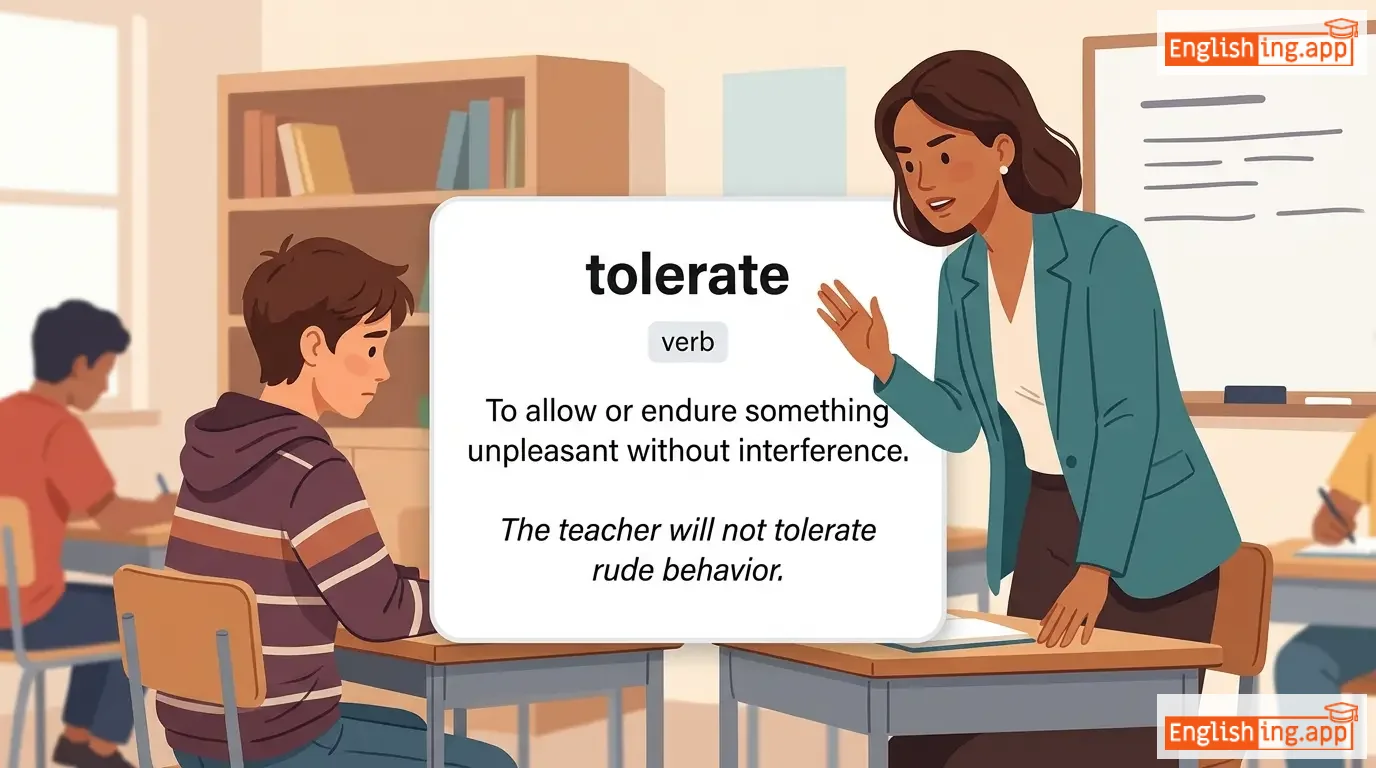
tolerate definition card — visual illustration of the meaning
verb
/ˈtɒləreɪt/
tolerar (tolerar)

To allow or endure something unpleasant without interference.

"The teacher will not tolerate rude behavior."

"La maestra no tolerará un comportamiento grosero." (La maestra no tolerará un comportamiento grosero.)
noun
/təˈmeɪtoʊ/
tomate (tomate)

a red or yellowish fruit that is typically eaten as a vegetable

"I added some tomato to the salad."

"Añadí un poco de tomate a la ensalada." (Añadí un poco de tomate a la ensalada.)
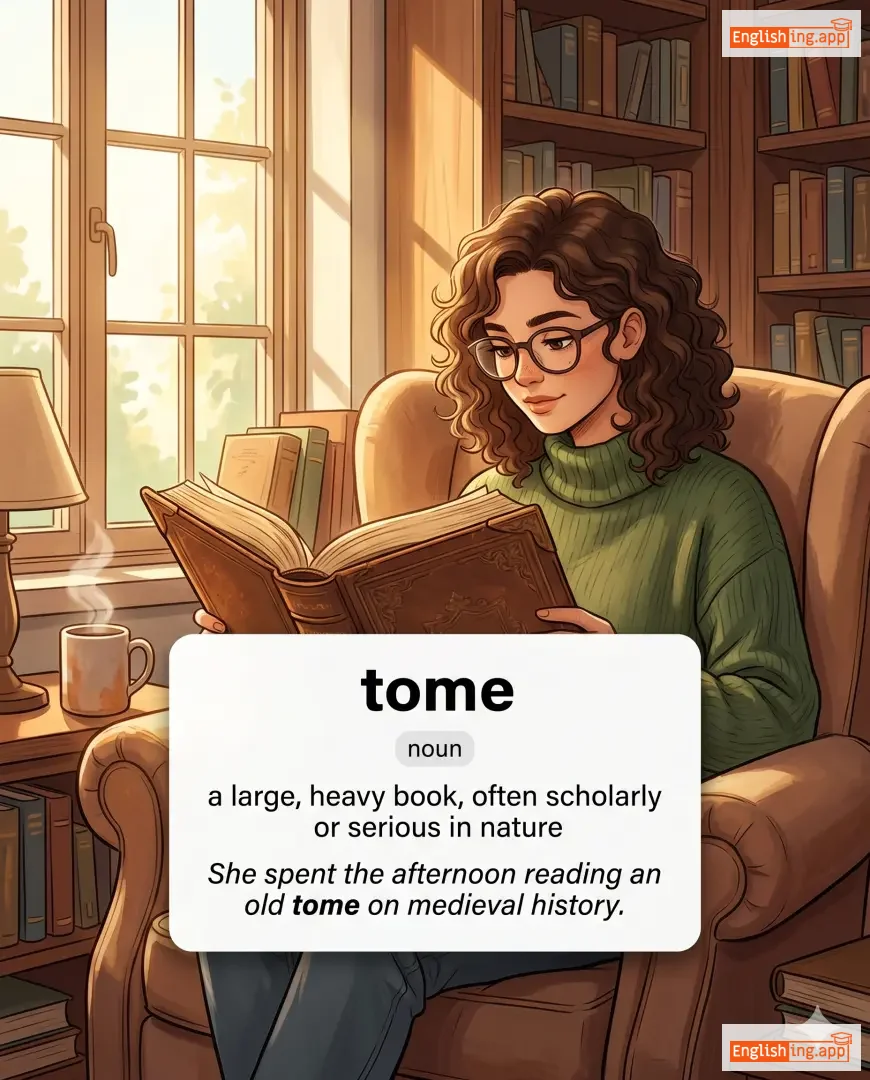
tome definition card — visual illustration of the meaning
noun
/toʊm/
gran libro (gran libro)

a large, heavy book, often scholarly or serious in nature

"She spent the afternoon reading an old tome on medieval history."

"Pasó la tarde leyendo un viejo gran libro sobre historia medieval." (Pasó la tarde leyendo un viejo gran libro sobre historia medieval.)