Vocabularios

Descubra, aprenda y domine el vocabulario en inglés

conjunction
/ðæn/
que (que)

used to introduce the second element in a comparison

"She is taller than her brother."

"Ella es más alta que su hermano." (Ella es más alta que su hermano.)
noun
/ˈtɛkstʃər/
textura (textura)

the way something feels when you touch it; the quality of a surface or substance

"The fabric has a soft and smooth texture."

"La tela tiene una textura suave y lisa." (La tela tiene una textura suave y lisa.)
noun
/ˈtek.staɪl/
textil (textil)

a type of cloth or woven fabric made by knitting or weaving fibers

"Bangladesh is famous for its high-quality textile industry."

"Bangladesh es famoso por su industria textil de alta calidad." (Bangladesh es famoso por su industria textil de alta calidad.)
noun
/ˈtɛkstbʊk/
libro de texto (libro de texto)

a book used for studying a subject in school or college

"She bought a new biology textbook for her class."

"Ella compró un nuevo libro de biología para su clase." (Ella compró un nuevo libro de biología para su clase.)
noun
/tɛkst/
texto (texto)

a written or printed work or passage, especially a book or document

"The teacher asked us to read the text on page 50."

"El maestro nos pidió leer el texto en la página 50." (El maestro nos pidió leer el texto en la página 50.)
verb
/ˈtɛðər/
atar (atar)

To tie an animal with a rope or chain so it cannot move far.

"The farmer tethered the goat to a post."

"El granjero ató la cabra a un poste." (El granjero ató la cabra a un poste.)
adjective
/ˈtɛsti/
irritable (irritable)

Easily irritated or annoyed.

"He became testy when asked the same question repeatedly."

"Se puso irritable cuando le hicieron la misma pregunta repetidamente." (Se puso irritable cuando le hicieron la misma pregunta repetidamente.)
noun
/ˈtɛstɪŋ/
prueba (prueba)

the process of assessing or evaluating something, often by trying it out

"The testing of the new software is still ongoing."

"La prueba del nuevo software aún está en curso." (La prueba del nuevo software aún está en curso.)
noun
/ˈtɛstəˌmoʊni/
testimonio (testimonio)

A formal statement given in a court of law or evidence supporting a fact.

"Her testimony in court helped convict the criminal."

"Su testimonio en el juicio ayudó a condenar al criminal." (Su testimonio en el juicio ayudo a condenar al criminal.)
testimonials definition card — visual illustration of the meaning
noun
/ˌtɛstɪˈməʊnɪəlz/
testimonios, cartas de recomendación (testimonios, cartas de recomendacion)

Written or spoken statements of praise or recommendation from clients or customers.

"Positive testimonials can enhance a company's reputation."

"Los testimonios positivos pueden mejorar la reputación de una empresa." (Los testimonios positivos pueden mejorar la reputación de una empresa.)
noun
/ˌtɛstɪˈmoʊniəl/
testimonio (testimonio)

A formal statement testifying to someone's character, qualifications, or the quality of a product or service.

"The company shared a glowing testimonial from a satisfied customer."

"La compañía compartió un testimonio brillante de un cliente satisfecho." (La compania compartio un testimonio brillante de un cliente satisfecho.)
verb
/ˈtɛstəfaɪ/
testificar (testificar)

to make a statement or declaration under oath or to give evidence

"She was called to testify in court about the accident."

"Fue llamada a testificar en el tribunal sobre el accidente." (Fue llamada a testificar en el tribunal sobre el accidente.)
noun
/ˈtɛsteɪtər/
testador (testador)

a person who has made a will

"The lawyer read the will of the deceased testator."

"El abogado leyó el testamento del testador fallecido." (El abogado leyó el testamento del testador fallecido.)
noun
/ˈtɛstəmənt/
testamento / prueba (testamento / prueba)

a person's will; or strong evidence of something

"His success is a testament to his hard work and dedication."

"Su éxito es un testamento de su trabajo arduo y dedicación." (Su éxito es un testamento de su trabajo arduo y dedicación.)
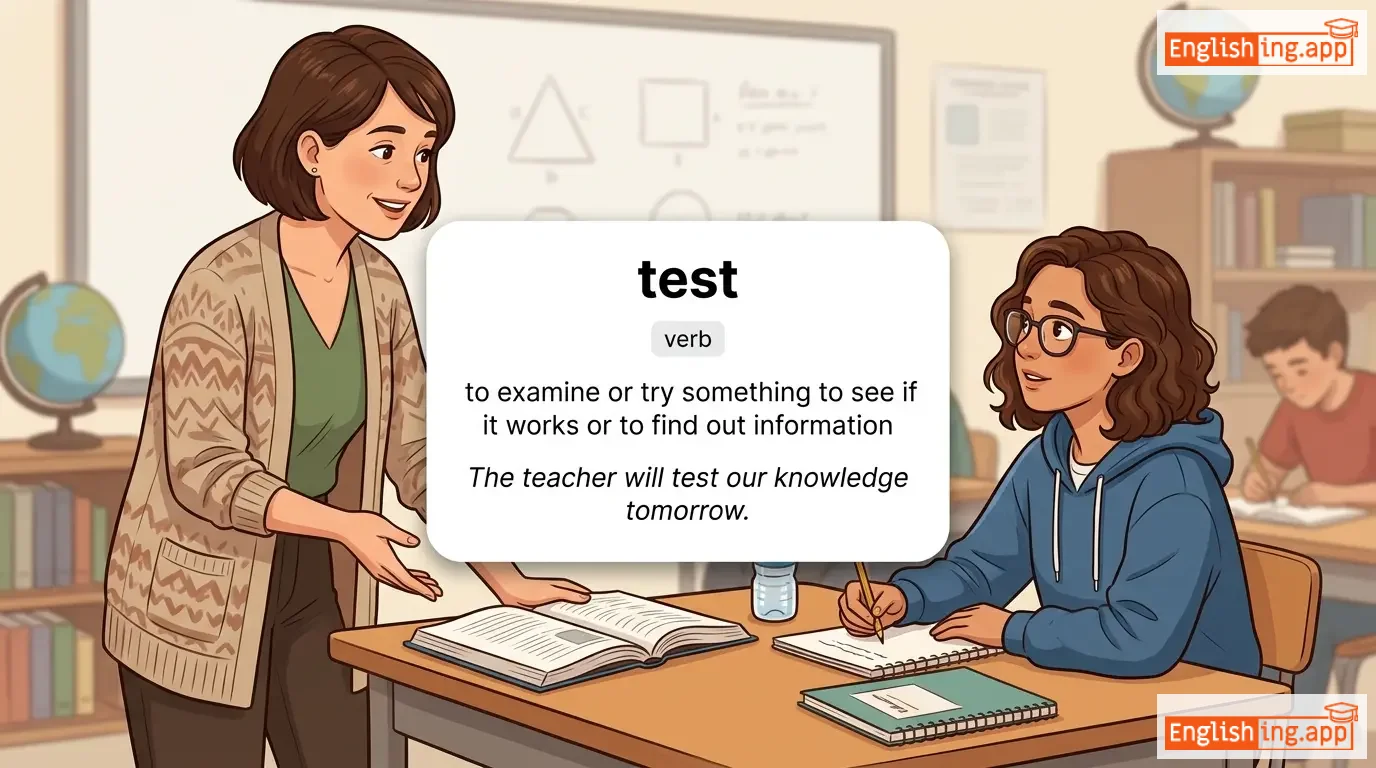
test definition card — visual illustration of the meaning
noun
/tɛst/
prueba (prueba)

a procedure intended to establish the quality, performance, or reliability of something

"The test results will determine whether the treatment is effective."

"Los resultados de la prueba determinarán si el tratamiento es efectivo." (Los resultados de la prueba determinarán si el tratamiento es efectivo.)
adjective
/ˈtɛsəleɪtɪd/
enlazado (enlazado)

arranged in a pattern of repeated shapes fitting together without gaps

"The tessellated floor was made of colorful tiles arranged in perfect symmetry."

"El piso enlazado estaba hecho de baldosas coloridas dispuestas en simetría perfecta." (El piso enlazado estaba hecho de baldosas coloridas dispuestas en simetría perfecta.)
adjective
/ˈtɜːrʃieri/
terciario (tertiary)

third in order, rank, or level

"He is pursuing his tertiary education at the university."

"El esta cursando su educacion terciaria en la universidad." (El esta cursando su educacion terciaria en la universidad.)
adjective
/tɜːrs/
conciso (conciso)

brief and to the point; sparing in the use of words

"His reply was terse and ended the conversation quickly."

"Su respuesta fue concisa y terminó rápidamente la conversación." (su respuesta fue concisa y termino rapidamente la conversacion.)
noun
/ˈtɛrərɪst/
terrorista (terrorista)

a person who uses violence or threats to intimidate or coerce, especially for political purposes

"The terrorist was arrested by the police after the attack."

"El terrorista fue arrestado por la policía después del ataque." (El terrorista fue arrestado por la policía después del ataque.)
noun
/ˈtɛrərɪzəm/
terrorismo (terrorismo)

the use of violence or threats to intimidate or coerce, especially for political purposes

"Terrorism is a serious threat to global peace and security."

"El terrorismo es una amenaza seria para la paz y seguridad global." (El terrorismo es una amenaza seria para la paz y seguridad global.)
noun
/ˈtɛrər/
terror (terror)

Extreme fear or dread.

"The villagers fled in terror during the attack."

"Los aldeanos huyeron aterrados durante el ataque." (Los aldeanos huyeron aterrados durante el ataque.)
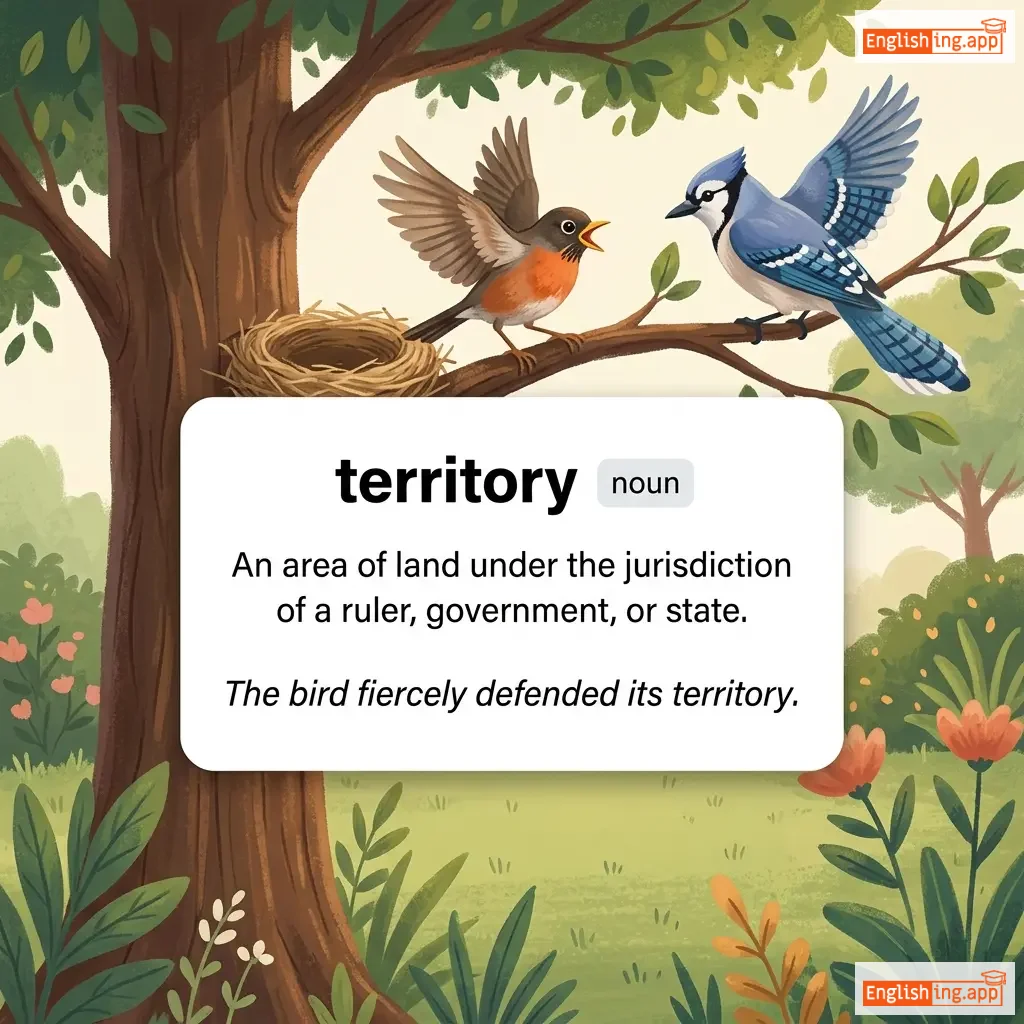
territory definition card — visual illustration of the meaning
noun
/ˈtɛrɪˌtɔːri/
territorio (territorio)

An area of land under the jurisdiction of a ruler, government, or state.

"The bird fiercely defended its territory."

"El pájaro defendió ferozmente su territorio." (El pajaro defendio ferozmente su territorio.)
adjective
/ˌtɛrɪˈtɔːriəl/
territorial (territorial)

Relating to the ownership or control of land or territory.

"The two countries had a territorial dispute over the island."

"Los dos países tuvieron una disputa territorial sobre la isla." (Los dos paises tuvieron una disputa territorial sobre la isla.)
verb
/ˈtɛrəˌfaɪ/
aterrorizar (aterrorizar)

To cause someone to feel extreme fear.

"The loud thunder terrified the children."

"El fuerte trueno aterrorizó a los niños." (El fuerte trueno aterrorizó a los niños.)
adjective
/təˈrɪfɪk/
fantástico (fantastico)

extremely good or excellent; very great or intense

"The concert last night was absolutely terrific."

"El concierto de anoche fue absolutamente fantástico." (El concierto de anoche fue absolutamente fantastico.)
adverb
/ˈtɛrəbli/
terriblemente (terriblemente)

to a very great or extreme degree; very badly or unpleasantly

"He felt terribly sad after hearing the news."

"Se sintió terriblemente triste después de escuchar la noticia." (Se sintió terriblemente triste después de escuchar la noticia.)
adjective
/ˈtɛrɪbəl/
terrible (terrible)

extremely bad or unpleasant

"The food at that restaurant was terrible."

"La comida en ese restaurante fue terrible." (La comida en ese restaurante fue terrible)
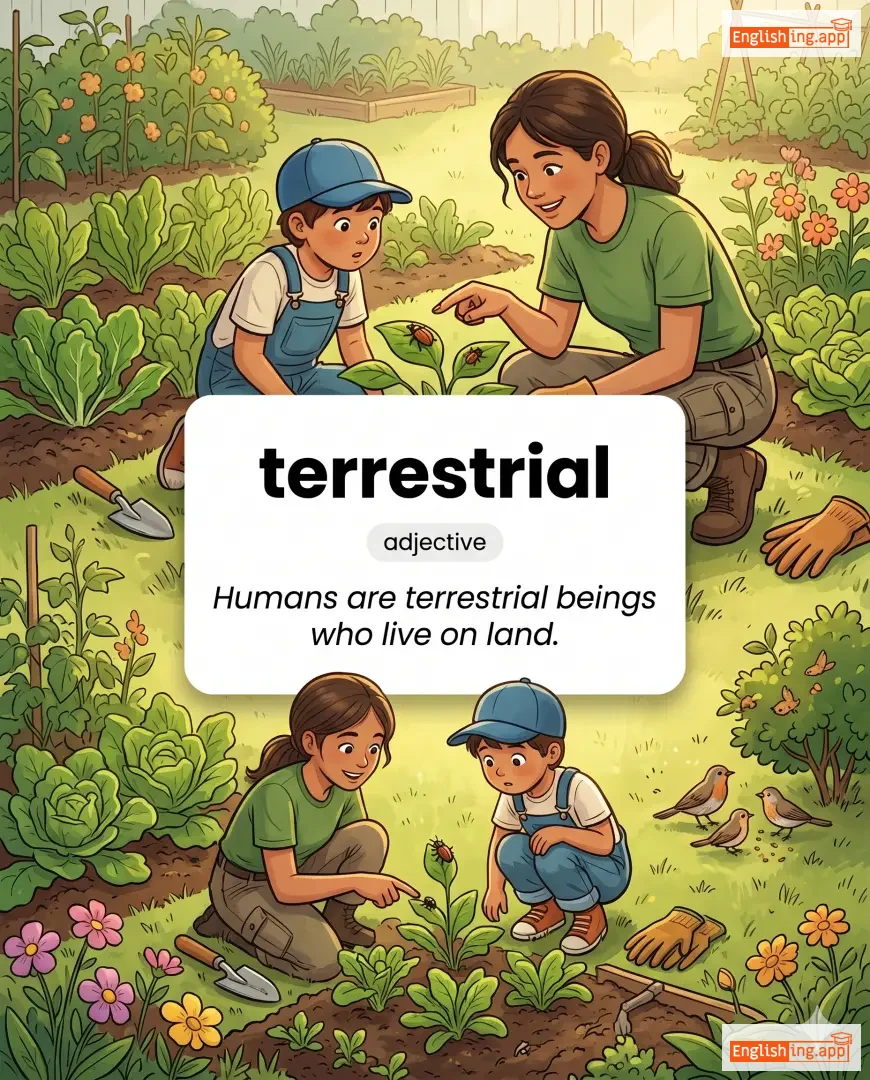
terrestrial definition card — visual illustration of the meaning
adjective
/təˈrɛstriəl/
terrestre (terrestre)

Relating to the Earth or land as opposed to the sea or air; living or growing on land.

"Humans are terrestrial beings who live on land."

"Los humanos son seres terrestres que viven en la tierra." (Los humanos son seres terrestres que viven en la tierra.)
noun
/ˈterəpɪn/
una pequeña tortuga de agua dulce (una pequena tortuga de agua dulce)

a small freshwater turtle, especially one found in North America

"The terrapin slowly crawled into the pond."

"El terrapin se arrastró lentamente hacia el estanque." (El terrapin se arrastro lentamente hacia el estanque.)
noun
/təˈreɪn/
terreno (terreno)

a stretch of land, especially with regard to its physical features

"The soldiers had to cross rough terrain during the mission."

"Los soldados tuvieron que cruzar un terreno difícil durante la misión." (Los soldados tuvieron que cruzar un terreno dificil durante la mision.)
noun
/tɜːmz/
términos (terminos)

plural of term; conditions or rules in a contract or agreement

"The terms of the agreement are clearly outlined in the contract."

"Los términos del acuerdo están claramente delineados en el contrato." (Los terminos del acuerdo estan claramente delineados en el contrato.)
noun
/ˈtɜːrmɪnəs/
punto final (punto final)

the final point or end of something, especially the final station on a railway line

"The train finally arrived at the terminus after a long journey."

"El tren finalmente llegó al terminus después de un largo viaje." (El tren finalmente llegó al terminus después de un largo viaje.)
noun
/ˌtɜːrməˈnɑːlədʒi/
terminología (terminologia)

the set of technical or special words used in a particular subject

"Medical terminology can be difficult for new students to understand."

"La terminología médica puede ser difícil de entender para los nuevos estudiantes." (La terminologia medica puede ser dificil de entender para los nuevos estudiantes.)
noun
/ˌtɜːrmɪˈneɪʃən/
terminación (terminacion)

the act of ending something or the state of being ended

"The termination of the contract caused financial loss."

"La terminación del contrato causó una pérdida financiera." (La terminacion del contrato causo una perdida financiera.)
verb
/ˈtɜːrmɪˌneɪt/
terminar (terminar)

to bring something to an end or to stop something from continuing

"The company decided to terminate his contract."

"La compañía decidió terminar su contrato." (La compañia decidió terminar su contrato.)
noun/adjective
/ˈtɜːrmɪnəl/
terminal, final, enfermedad terminal (terminal, final, enfermedad terminal)

As a noun: A place where transport routes begin or end. As an adjective: Relating to the end or final stage of something, often an illness.

"He waited for the bus at the central terminal."

"Él esperó el autobús en la terminal central." (Él esperó el autobús en la terminal central.)
noun
/ˈtɜːrməɡənt/
mujer dominante y temperamental (mujer dominante y temperamental)

A harsh-tempered or overbearing woman.

"The character was portrayed as a loud and domineering termagant."

"El personaje fue retratado como una mujer ruidosa y dominante." (El personaje fue retratado como una mujer ruidosa y dominante.)
noun
/tɜːm/
término (termino)

a word or phrase used to describe a thing or to express a concept

"The term 'machine learning' is commonly used in technology."

"El término 'aprendizaje automático' se usa comúnmente en la tecnología." (El termino 'aprendizaje automatico' se usa comunmente en la tecnologia.)
noun
/ˌtɜːdʒɪvərˈseɪʃən/
evasión, indecisión (evasión, indecision)

Evasion of straightforward action or speech; changing sides or being inconsistent.

"The politician’s tergiversation frustrated his supporters."

"La tergiversación del político frustró a sus seguidores." (La tergiversacion del politico frustro a sus seguidores.)
noun
/ˌtɜːsənˈtɛnəri/
tercentenario (tercentenario)

The 300th anniversary of an event.

"The city celebrated its tercentenary with a grand festival."

"La ciudad celebró su tercentenario con un gran festival." (La ciudad celebró su tercentenario con un gran festival.)
adjective
/ˈtɛpɪd/
tibio, indiferente (tibio, indiferente)

Lukewarm; showing little enthusiasm or force.

"His speech received only a tepid response from the audience."

"Su discurso recibió solo una respuesta tibia del público." (Su discurso recibió solo una respuesta tibia del público.)
noun
/ˈtɛnjər/
mandato (mandato)

The period of time during which someone holds a position, office, or land.

"His tenure as president lasted for five years."

"Su mandato como presidente duró cinco años." (Su mandato como presidente duro cinco anos.)
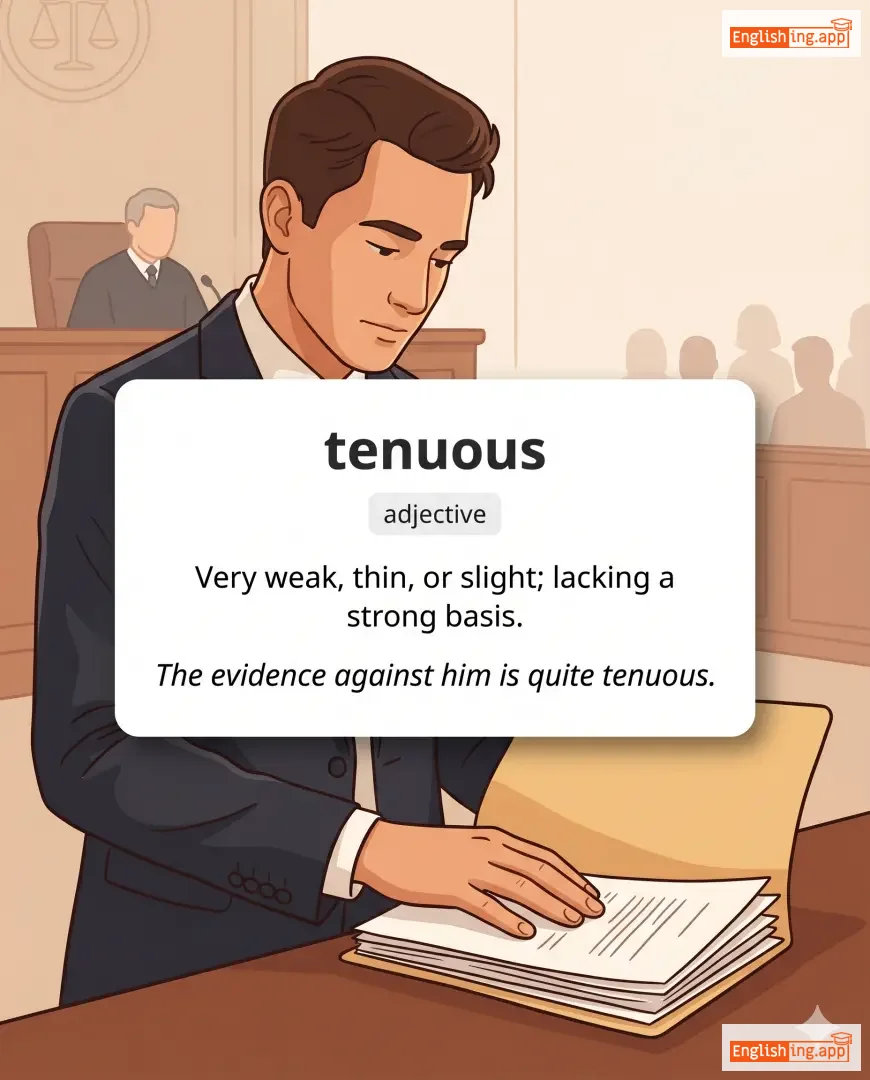
tenuous definition card — visual illustration of the meaning
adjective
/ˈtɛn.ju.əs/
débil / delgado (debil / delgado)

Very weak, thin, or slight; lacking a strong basis.

"The evidence against him is quite tenuous."

"La evidencia contra él es bastante débil." (La evidencia contra él es bastante débil.)
adjective
/ˈtɛn.tə.tɪv/
tentativo (tentativo)

Not certain or fixed; done without confidence.

"She gave a tentative smile before agreeing."

"Ella dio una sonrisa tentativa antes de aceptar." (Ella dio una sonrisa tentativa antes de aceptar.)
noun
/tɛnt/
tienda (tienda)

a portable shelter made of fabric, supported by poles and ropes

"We set up a tent for the camping trip."

"Montamos una tienda para el viaje de camping." (Montamos una tienda para el viaje de camping.)
noun
/ˈtɛn.ʃən/
tensión (tension)

A state of being stretched tight; mental or emotional strain.

"There was a lot of tension in the room before the exam results were announced."

"Había mucha tensión en la sala antes de que se anunciaran los resultados del examen." (Había mucha tensión en la sala antes de que se anunciaran los resultados del examen.)
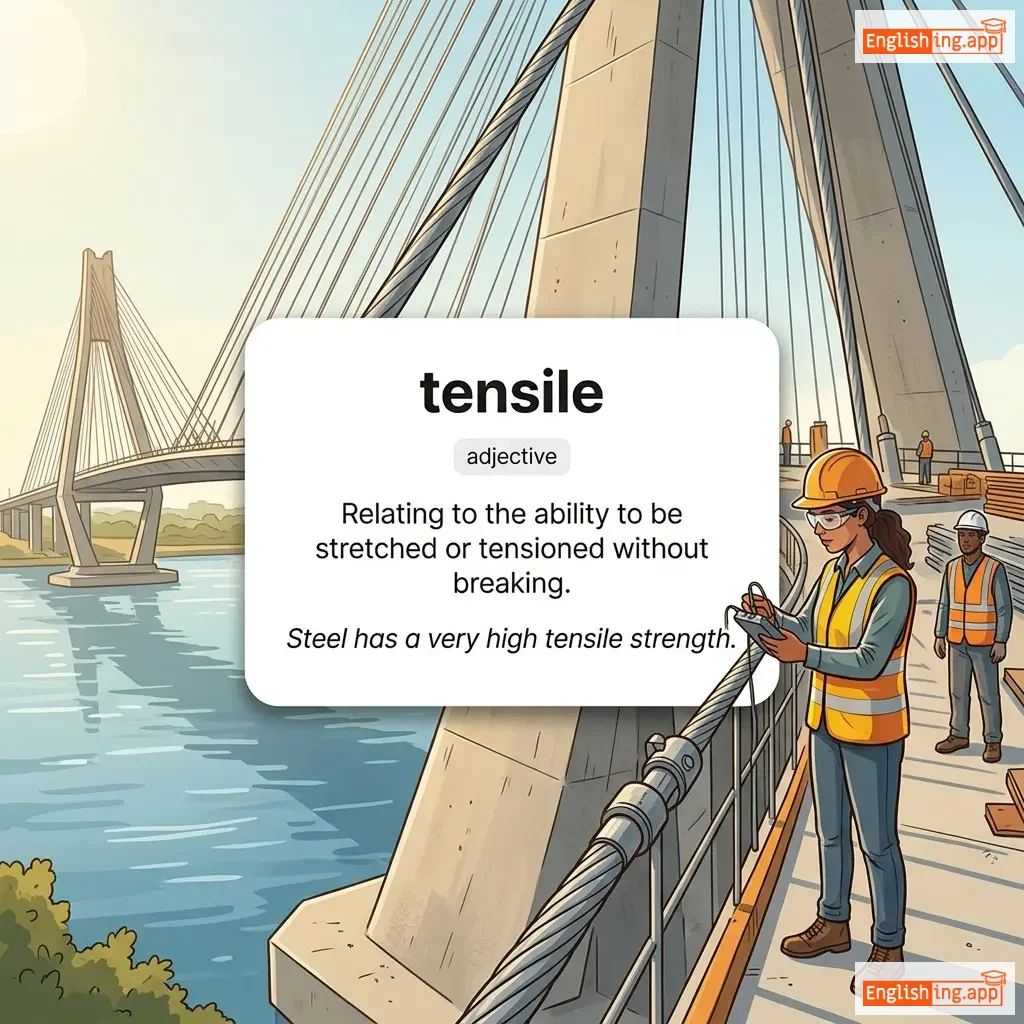
tensile definition card — visual illustration of the meaning
adjective
/ˈtɛn.saɪl/
tenaz (tenaz)

Relating to the ability to be stretched or tensioned without breaking.

"Steel has a very high tensile strength."

"El acero tiene una resistencia tenaz muy alta." (El acero tiene una resistencia tenaz muy alta.)
noun, adjective, verb
/tɛns/
tenso / tiempo verbal (tenso / tiempo verbal)

a grammatical category showing time reference; stretched tight or anxious

"She felt tense before the interview."

"Ella se sintió tensa antes de la entrevista." (Ella se sintió tensa antes de la entrevista.)
noun
/ˈtɛnər/
tenor / tono general (tenor / tono general)

the general meaning, drift, or character of something; a male singing voice between baritone and alto

"The overall tenor of his speech was hopeful and reassuring."

"El tenor general de su discurso era esperanzador y tranquilizador." (El tenor general de su discurso era esperanzador y tranquilizador.)
noun
/tiː/
(te)

a hot drink made by infusing the dried, crushed leaves of the tea plant in boiling water

"I drink tea every morning to start my day."

"Bebo té cada mañana para comenzar mi día." (Bebo té cada mañana para comenzar mi día.)