ভোকাবুলারিসমূহ

ইংরেজি শব্দের বাংলা অর্থ | English to Bangla Word Meaning Dictionary

conjunction
/ðæn/
এর চেয়ে (er cheye)

used to introduce the second element in a comparison

"She is taller than her brother."

"সে তার ভাইয়ের চেয়ে লম্বা।" (Se tar bhaiyer cheye lomba.)
noun
/ˈtɛkstʃər/
বুনন বা স্পর্শগুণ (bunan ba sporshagun)

the way something feels when you touch it; the quality of a surface or substance

"The fabric has a soft and smooth texture."

"কাপড়টির একটি নরম ও মসৃণ বুনন রয়েছে।" (Kaporti ekta norom o mosrin bunan royeche.)
noun
/ˈtek.staɪl/
বস্ত্র (bostro)

a type of cloth or woven fabric made by knitting or weaving fibers

"Bangladesh is famous for its high-quality textile industry."

"বাংলাদেশ তার উচ্চমানের বস্ত্র শিল্পের জন্য বিখ্যাত।" (Bangladesh tar uchchomaner bostro shilper jonno bikhyato.)
noun
/ˈtɛkstbʊk/
পাঠ্যপুস্তক (pathyopustok)

a book used for studying a subject in school or college

"She bought a new biology textbook for her class."

"সে তার ক্লাসের জন্য একটি নতুন জীববিজ্ঞানের পাঠ্যপুস্তক কিনেছিল।" (Se tar class er jonno ekti notun jibbigganer pathyopustok kinchhilo.)
noun
/tɛkst/
লেখা (lekha)

a written or printed work or passage, especially a book or document

"The teacher asked us to read the text on page 50."

"শিক্ষক আমাদের পৃষ্ঠা ৫০-এ টেক্সটটি পড়তে বলেছিলেন।" (Shikkhok amader pusta 50-e teksti porte bolechhilen.)
verb
/ˈtɛðər/
বেঁধে রাখা (bende rakha)

To tie an animal with a rope or chain so it cannot move far.

"The farmer tethered the goat to a post."

"কৃষক ছাগলটিকে খুঁটিতে বেঁধে রেখেছিল।" (Krishok chagoltike khuti te bende rekhechilo.)
adjective
/ˈtɛsti/
রাগী (ragi)

Easily irritated or annoyed.

"He became testy when asked the same question repeatedly."

"তাকে একই প্রশ্ন বারবার জিজ্ঞেস করলে তিনি রাগী হয়ে উঠলেন।" (Take eki proshno bar bar jiggesh korle tini ragi hoye uthlen.)
noun
/ˈtɛstɪŋ/
পরীক্ষা (porikkha)

the process of assessing or evaluating something, often by trying it out

"The testing of the new software is still ongoing."

"নতুন সফটওয়্যারটির পরীক্ষণ এখনও চলমান।" (Notun software-tir porikkha ekhono choloman.)
noun
/ˈtɛstəˌmoʊni/
সাক্ষ্য (sakkha)

A formal statement given in a court of law or evidence supporting a fact.

"Her testimony in court helped convict the criminal."

"তার সাক্ষ্য আদালতে অপরাধীকে দোষী সাব্যস্ত করতে সাহায্য করেছে।" (Tar sakkha adalote oprodheke doshi sabbosto korte sahajyo koreche.)
testimonials definition card — visual illustration of the meaning
noun
/ˌtɛstɪˈməʊnɪəlz/
প্রশংসাপত্র, অভিজ্ঞতার বিবরণ (proshongshapotra, obhiggotar biboron)

Written or spoken statements of praise or recommendation from clients or customers.

"Positive testimonials can enhance a company's reputation."

"ইতিবাচক টেস্টিমোনিয়ালগুলি একটি কোম্পানির খ্যাতি বাড়াতে সাহায্য করতে পারে।" (Itibachok testimonialgulik ekti companir khyati barate shahajyo korte pare.)
noun
/ˌtɛstɪˈmoʊniəl/
প্রশংসাপত্র (proshongshapatro)

A formal statement testifying to someone's character, qualifications, or the quality of a product or service.

"The company shared a glowing testimonial from a satisfied customer."

"কোম্পানিটি একজন সন্তুষ্ট গ্রাহকের কাছ থেকে একটি প্রশংসাপত্র শেয়ার করেছে।" (Companyti ekjon shontushto grahoker kach theke ekti proshongshapatro share koreche.)
verb
/ˈtɛstəfaɪ/
সাক্ষ্য প্রদান করা (sakhyo prodan kora)

to make a statement or declaration under oath or to give evidence

"She was called to testify in court about the accident."

"সে আদালতে দুর্ঘটনা সম্পর্কে সাক্ষ্য দেওয়ার জন্য ডাকা হয়েছিল।" (Se adalote durghotona somporke sakhyo deowar jonyo daka hoyechilo.)
noun
/ˈtɛsteɪtər/
উইলদাতা (wildaata)

a person who has made a will

"The lawyer read the will of the deceased testator."

"আইনজীবী মৃত উইলদাতার উইল পড়ে শোনালেন।" (ainjibi mrityo wildatar wil pore shonalenn.)
noun
/ˈtɛstəmənt/
উইল / প্রমাণ (wil / proman)

a person's will; or strong evidence of something

"His success is a testament to his hard work and dedication."

"তার সাফল্য তার কঠোর পরিশ্রম এবং নিষ্ঠার প্রমাণ।" (tar safollo tar kothor porishrom ebong nisthar proman.)
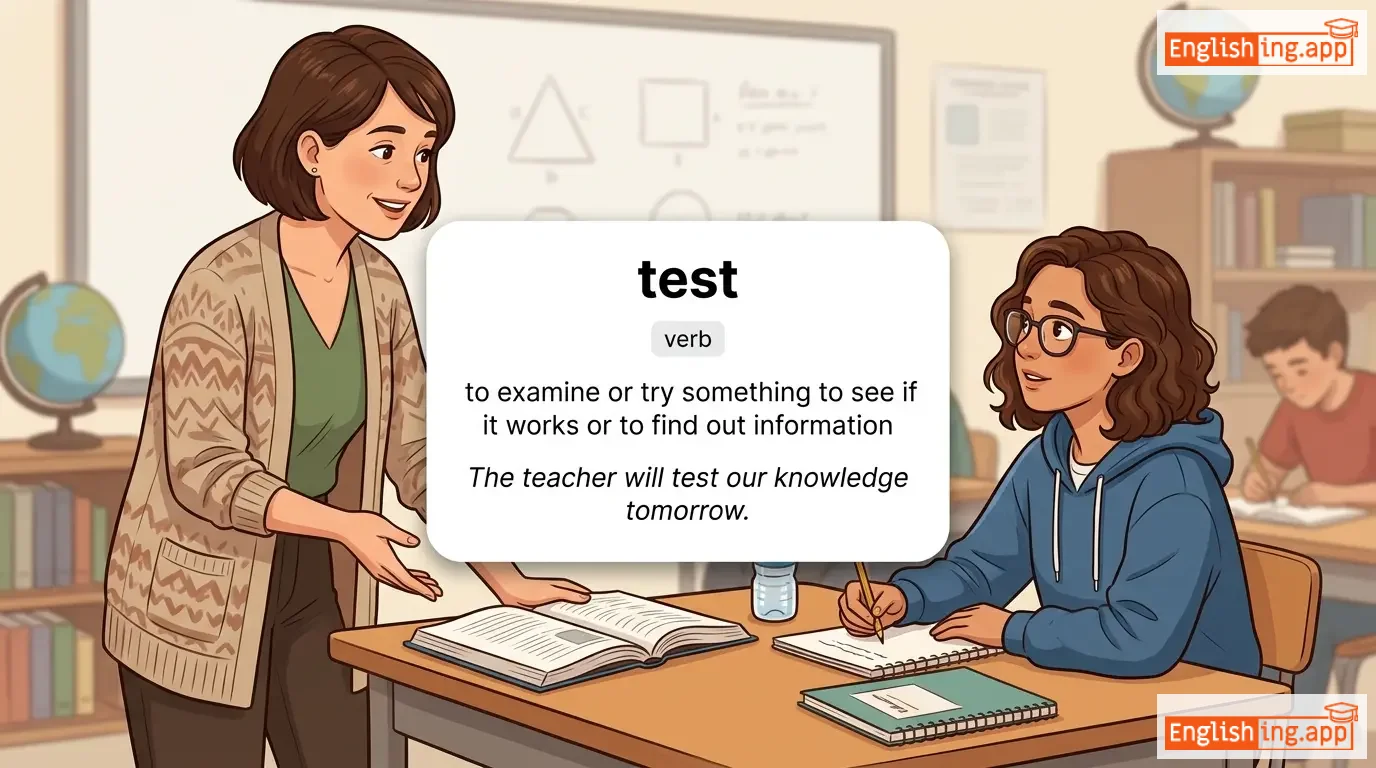
test definition card — visual illustration of the meaning
noun
/tɛst/
পরীক্ষা (porikkha)

a procedure intended to establish the quality, performance, or reliability of something

"The test results will determine whether the treatment is effective."

"পরীক্ষার ফলাফল নির্ধারণ করবে যে চিকিৎসাটি কার্যকর কিনা।" (Porikkhar folafol nirdharon korbe je chikitsati karyokor kina.)
adjective
/ˈtɛsəleɪtɪd/
জ্যামিতিক নকশাযুক্ত (jyamitik nokshayukto)

arranged in a pattern of repeated shapes fitting together without gaps

"The tessellated floor was made of colorful tiles arranged in perfect symmetry."

"টেসেলেটেড মেঝে রঙিন টাইলস দিয়ে নিখুঁতভাবে সাজানো ছিল।" (tessellated mejhe rongin tiles diye nikhutvabe sajano chilo.)
adjective
/ˈtɜːrʃieri/
তৃতীয় স্তর (tritiyo star)

third in order, rank, or level

"He is pursuing his tertiary education at the university."

"সে বিশ্ববিদ্যালয়ে তার তৃতীয় স্তরের শিক্ষা অর্জন করছে।" (se bishwobidyaloye tar tritiyo starer shikkha arjon korche.)
adjective
/tɜːrs/
সংক্ষিপ্ত (songkhipto)

brief and to the point; sparing in the use of words

"His reply was terse and ended the conversation quickly."

"তার উত্তরটি ছিল সংক্ষিপ্ত এবং দ্রুত কথোপকথন শেষ করে দেয়।" (tar uttorti chilo songkhipto ebong druto kothopokothon shesh kore deya.)
noun
/ˈtɛrərɪst/
সন্ত্রাসী (sontrashi)

a person who uses violence or threats to intimidate or coerce, especially for political purposes

"The terrorist was arrested by the police after the attack."

"সন্ত্রাসী আক্রমণের পর পুলিশ দ্বারা গ্রেপ্তার হয়েছিল।" (Sontrashi akromoner por pulish dvara greptar hoyechilo.)
noun
/ˈtɛrərɪzəm/
সন্ত্রাসবাদ (sontrashbad)

the use of violence or threats to intimidate or coerce, especially for political purposes

"Terrorism is a serious threat to global peace and security."

"সন্ত্রাসবাদ হল বৈশ্বিক শান্তি এবং নিরাপত্তার জন্য একটি গুরুতর হুমকি।" (Sontrashbad holo boishwik shanti ebong nirapottar jonno akti gurutor humki.)
noun
/ˈtɛrər/
ভয় (voy)

Extreme fear or dread.

"The villagers fled in terror during the attack."

"গ্রামবাসীরা আক্রমণের সময় আতঙ্কে পালিয়ে গিয়েছিল।" (Grambasira akromoner somoy atonke paliye giyechhilo.)
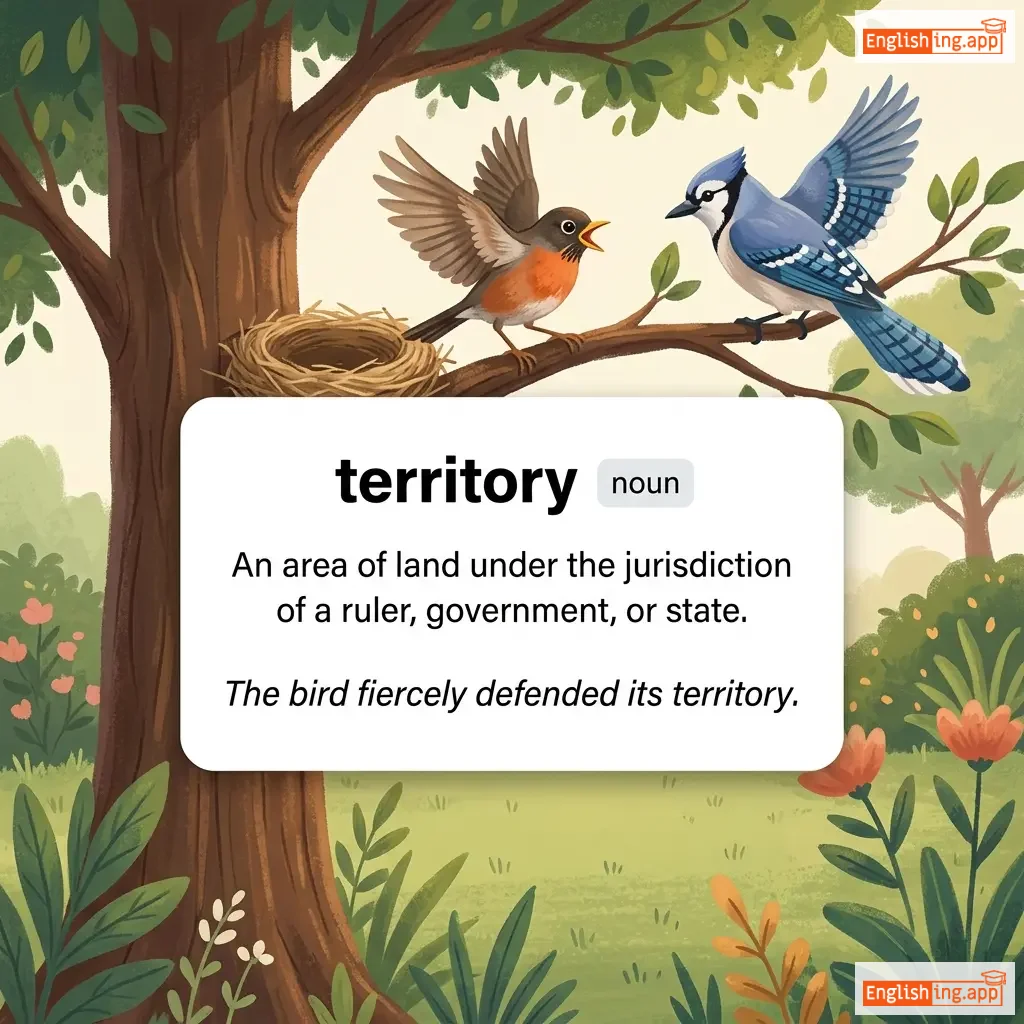
territory definition card — visual illustration of the meaning
noun
/ˈtɛrɪˌtɔːri/
অঞ্চল (onchol)

An area of land under the jurisdiction of a ruler, government, or state.

"The bird fiercely defended its territory."

"পাখিটি তার এলাকা তীব্রভাবে রক্ষা করছিল।" (Pakhiti tar elaka tibrobhabe rokha korchhilo.)
adjective
/ˌtɛrɪˈtɔːriəl/
সীমান্ত সংক্রান্ত (simanto songkranto)

Relating to the ownership or control of land or territory.

"The two countries had a territorial dispute over the island."

"দুই দেশের দ্বীপ নিয়ে সীমান্ত সংক্রান্ত বিরোধ ছিল।" (Dui desher dip niye simanto songkranto birodh chilo.)
verb
/ˈtɛrəˌfaɪ/
ভয় দেখানো (voy dekhano)

To cause someone to feel extreme fear.

"The loud thunder terrified the children."

"ভয়ঙ্কর বজ্রপাত শিশুদের ভয় পাইয়ে দিল।" (Voyonkor bojorpot shishuder voy paiye dilo.)
adjective
/təˈrɪfɪk/
চমৎকার (chomotkar)

extremely good or excellent; very great or intense

"The concert last night was absolutely terrific."

"গত রাতের কনসার্টটি ছিল একদম চমৎকার।" (Gato rater concertti chilo ekdom chomotkar.)
adverb
/ˈtɛrəbli/
ভয়ানকভাবে (bhoyankobhabe)

to a very great or extreme degree; very badly or unpleasantly

"He felt terribly sad after hearing the news."

"সংবাদটি শোনার পর সে ভয়ানকভাবে দুঃখিত বোধ করেছিল।" (Songbadti shonar por se bhoyankobhabe dukhito bodh korechhilo.)
adjective
/ˈtɛrɪbəl/
ভয়াবহ (bhoyaboh)

extremely bad or unpleasant

"The food at that restaurant was terrible."

"ওই রেস্টুরেন্টের খাবার ভয়াবহ ছিল।" (Oi restauranter khabar bhoyaboh chilo.)
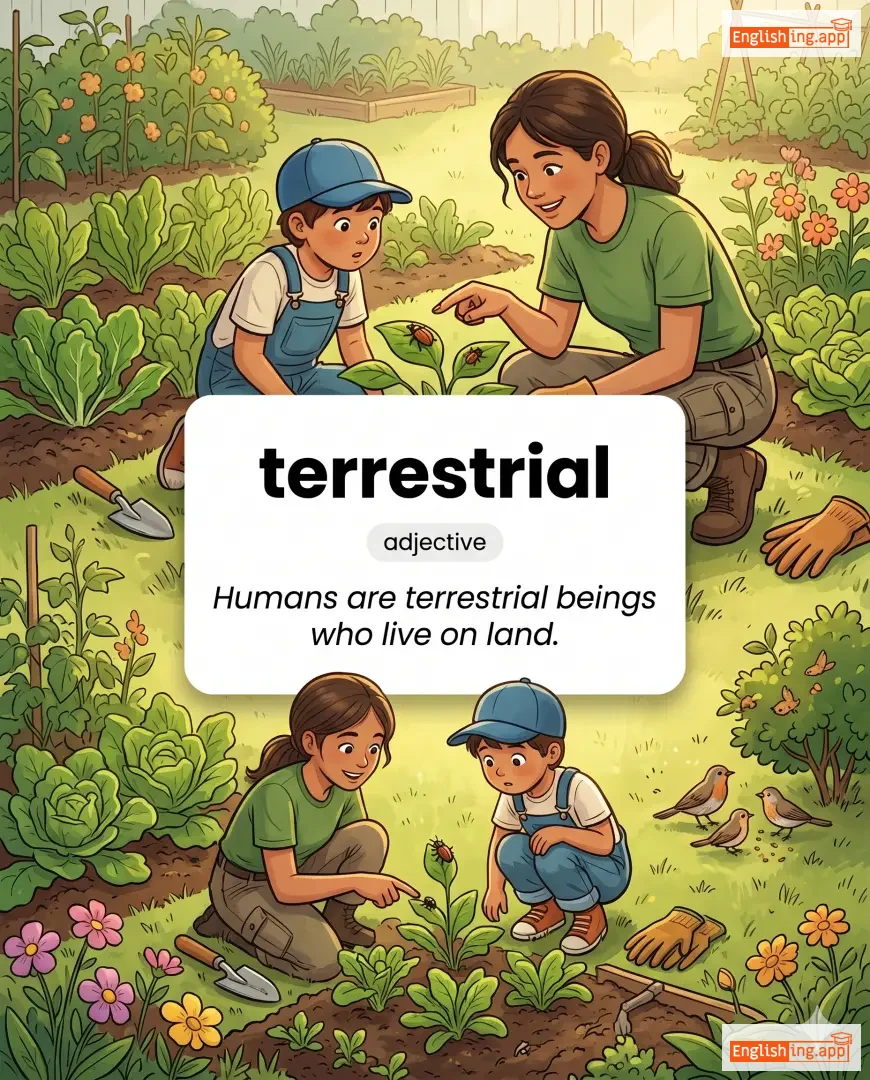
terrestrial definition card — visual illustration of the meaning
adjective
/təˈrɛstriəl/
স্থলজ (stholoj)

Relating to the Earth or land as opposed to the sea or air; living or growing on land.

"Humans are terrestrial beings who live on land."

"মানুষ স্থলজ প্রাণী যারা ভূমিতে বাস করে।" (Manush stholaj prani jara bhumite bas kore.)
noun
/ˈterəpɪn/
এক ধরনের ছোট কচ্ছপ (ek dhoroner choto kochchop)

a small freshwater turtle, especially one found in North America

"The terrapin slowly crawled into the pond."

"টেরাপিন ধীরে ধীরে পুকুরে ঢুকলো।" (Terrapin dhire dhire pukure dhuklo.)
noun
/təˈreɪn/
ভূপ্রকৃতি (bhuprokrity)

a stretch of land, especially with regard to its physical features

"The soldiers had to cross rough terrain during the mission."

"সেনাদের মিশনের সময় কঠিন ভূপ্রকৃতি অতিক্রম করতে হয়েছিল।" (Senader mission er somoy kothin bhuprokrity otikrom korte hoyechhilo.)
noun
/tɜːmz/
শর্ত (shorthho)

plural of term; conditions or rules in a contract or agreement

"The terms of the agreement are clearly outlined in the contract."

"চুক্তির শর্তগুলি স্পষ্টভাবে চুক্তিপত্রে বর্ণিত হয়েছে।" (Chuktir shorthoguli spostobhabe chuktipotre bornito hoyeche.)
noun
/ˈtɜːrmɪnəs/
চূড়ান্ত স্থান (churanto sthan)

the final point or end of something, especially the final station on a railway line

"The train finally arrived at the terminus after a long journey."

"দীর্ঘ ভ্রমণের পর ট্রেনটি অবশেষে টারমিনাসে পৌঁছালো।" (Dirgho vromoner por trenti obosheshe terminase pouchhalo.)
noun
/ˌtɜːrməˈnɑːlədʒi/
বিশেষ পরিভাষা (bishesh poribhasha)

the set of technical or special words used in a particular subject

"Medical terminology can be difficult for new students to understand."

"চিকিৎসা বিজ্ঞানের পরিভাষা নতুন ছাত্রদের জন্য কঠিন হতে পারে।" (Chikitsa bigganer poribhasha notun chatroder jonno kothin hote pare.)
noun
/ˌtɜːrmɪˈneɪʃən/
সমাপ্তি (shomapti)

the act of ending something or the state of being ended

"The termination of the contract caused financial loss."

"চুক্তির সমাপ্তি আর্থিক ক্ষতি ডেকে এনেছিল।" (Chuktir shomapti arthik khoti deke enechilo.)
verb
/ˈtɜːrmɪˌneɪt/
শেষ করা (shesh kora)

to bring something to an end or to stop something from continuing

"The company decided to terminate his contract."

"কোম্পানিটি তার চুক্তি বাতিল করার সিদ্ধান্ত নিল।" (Companiti tar chukti batil korar siddhanto nilo.)
noun/adjective
/ˈtɜːrmɪnəl/
টার্মিনাল, চূড়ান্ত, রোগের শেষ পর্যায় (terminal, churanto, roger shesh porjay)

As a noun: A place where transport routes begin or end. As an adjective: Relating to the end or final stage of something, often an illness.

"He waited for the bus at the central terminal."

"সে কেন্দ্রীয় টার্মিনালে বাসের জন্য অপেক্ষা করছিল।" (se kendrio terminale baser jonno opekkha korchhilo.)
noun
/ˈtɜːrməɡənt/
ঝগড়াটে মহিলা (jhograte mohila)

A harsh-tempered or overbearing woman.

"The character was portrayed as a loud and domineering termagant."

"চরিত্রটিকে একজন উচ্চস্বরে ও কর্তৃত্বপরায়ণ ঝগড়াটে মহিলা হিসেবে দেখানো হয়েছিল।" (choritrotike ekjon uchchoswore o kortitwoporayon jhograte mohila hisebe dekhanohoyechhilo.)
noun
/tɜːm/
শব্দ (shobdo)

a word or phrase used to describe a thing or to express a concept

"The term 'machine learning' is commonly used in technology."

"‘মেশিন লার্নিং’ শব্দটি প্রযুক্তিতে সাধারণভাবে ব্যবহৃত হয়।" (‘Machine learning’ shobdoti projuktite sadharonvabe bebohrito hoy.)
noun
/ˌtɜːdʒɪvərˈseɪʃən/
অসংগতি, পাশ কাটানো (asonggoti, pash katano)

Evasion of straightforward action or speech; changing sides or being inconsistent.

"The politician’s tergiversation frustrated his supporters."

"রাজনীতিবিদের অসঙ্গতি তার সমর্থকদের হতাশ করেছিল।" (rajnitibider asonggoti tar somorthokder hotash korechhilo.)
noun
/ˌtɜːsənˈtɛnəri/
ত্রিশতবার্ষিকী (trishotobarshiki)

The 300th anniversary of an event.

"The city celebrated its tercentenary with a grand festival."

"শহরটি তার ত্রিশতবার্ষিকী একটি মহা উৎসবের মাধ্যমে উদযাপন করেছিল।" (shohorti tar trishotobarshiki ekti moha utsober madhyome udjapon korechhilo.)
adjective
/ˈtɛpɪd/
কুসুম গরম, নিরাসক্ত (kusum gorom, nirasokto)

Lukewarm; showing little enthusiasm or force.

"His speech received only a tepid response from the audience."

"তার বক্তৃতা শ্রোতাদের কাছ থেকে শুধু একটি কুসুম গরম প্রতিক্রিয়া পেয়েছিল।" (tar boktrita shrotader kach theke shudhu ekti kusum gorom protikria peyechhilo.)
noun
/ˈtɛnjər/
পদধারণের মেয়াদ / দখল (poddharoner meyad / dokhol)

The period of time during which someone holds a position, office, or land.

"His tenure as president lasted for five years."

"তার রাষ্ট্রপতি হিসেবে পদধারণের মেয়াদ পাঁচ বছর স্থায়ী হয়েছিল।" (Tar rastropoti hisebe poddharoner meyad panch bochor sthayi hoyechhilo.)
tenuous definition card — visual illustration of the meaning
adjective
/ˈtɛn.ju.əs/
দুর্বল / ক্ষীণ (durbol / khin)

Very weak, thin, or slight; lacking a strong basis.

"The evidence against him is quite tenuous."

"তার বিরুদ্ধে প্রমাণ বেশ দুর্বল।" (Tar biruddhe proman besh durbol.)
adjective
/ˈtɛn.tə.tɪv/
অস্থায়ী / অনিশ্চিত (osthai / onishchit)

Not certain or fixed; done without confidence.

"She gave a tentative smile before agreeing."

"সে সম্মত হওয়ার আগে একটি অনিশ্চিত হাসি দিয়েছিল।" (Se sommot howar age ekti onishchit hasi diyechhilo.)
noun
/tɛnt/
টেন্ট (ṭenṭ)

a portable shelter made of fabric, supported by poles and ropes

"We set up a tent for the camping trip."

"আমরা ক্যাম্পিং ট্রিপের জন্য একটি টেন্ট বসিয়েছি।" (Āmrā kyāmpiṅg ṭripēra jan'ya ēkti ṭenṭ basiyēchi.)
noun
/ˈtɛn.ʃən/
চাপ / মানসিক দুশ্চিন্তা (chap / manoshik dushchinta)

A state of being stretched tight; mental or emotional strain.

"There was a lot of tension in the room before the exam results were announced."

"পরীক্ষার ফলাফল ঘোষণার আগে ঘরে অনেক টেনশন ছিল।" (Porikhar folafol ghosonar age ghore onek tension chhilo.)
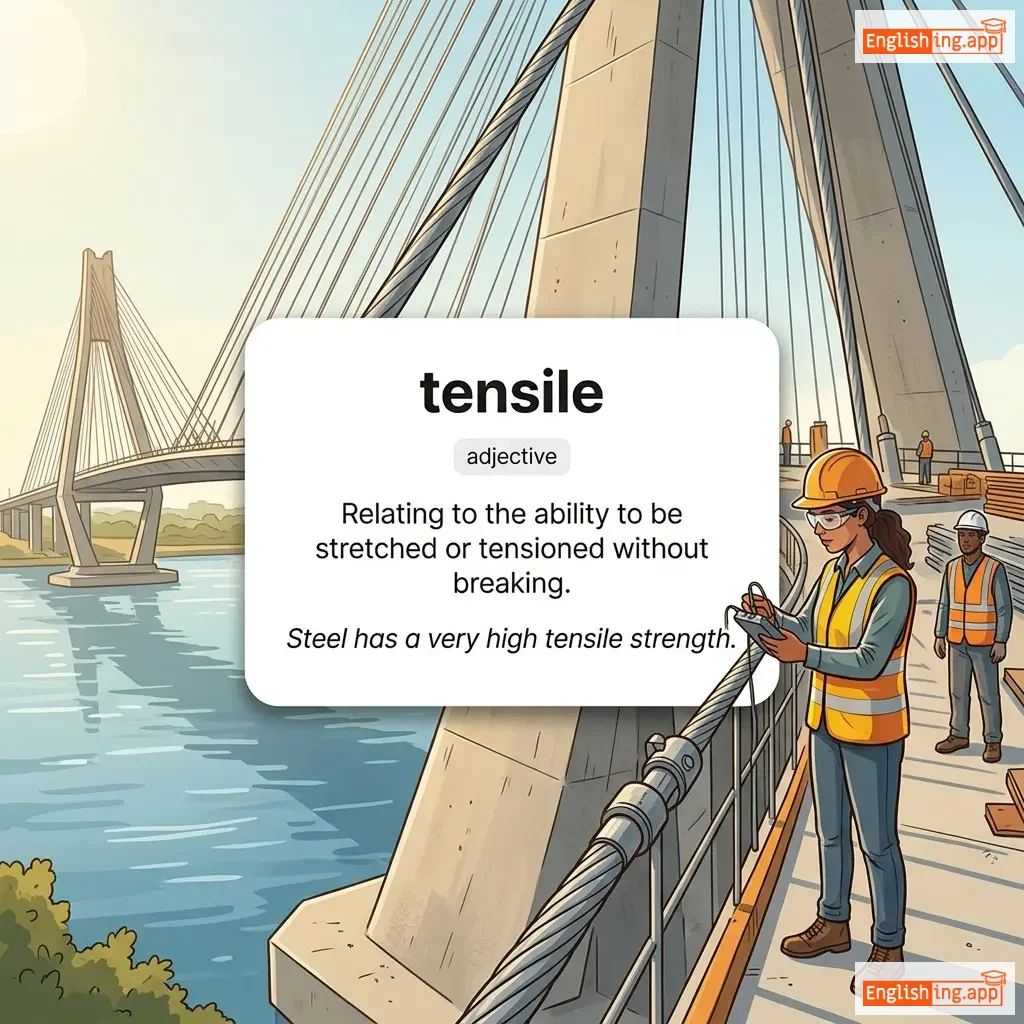
tensile definition card — visual illustration of the meaning
adjective
/ˈtɛn.saɪl/
প্রসারণযোগ্য (prosharonggoyo)

Relating to the ability to be stretched or tensioned without breaking.

"Steel has a very high tensile strength."

"ইস্পাতের টেনসাইল স্ট্রেংথ খুব বেশি।" (Ispater tensile strength khub beshi.)
noun, adjective, verb
/tɛns/
কাল / টানটান (kal / tantan)

a grammatical category showing time reference; stretched tight or anxious

"She felt tense before the interview."

"সে সাক্ষাৎকারের আগে উদ্বিগ্ন বোধ করেছিল।" (Se sakhhatkarer age udbigno bodh korechhilo.)
noun
/ˈtɛnər/
স্বর / মূল বক্তব্য (swar / mul boktobbo)

the general meaning, drift, or character of something; a male singing voice between baritone and alto

"The overall tenor of his speech was hopeful and reassuring."

"তার বক্তৃতার সামগ্রিক বক্তব্য ছিল আশাবাদী এবং আশ্বস্তকারী।" (Tar boktritar samogrik boktobbo chhilo ashabadi ebong ashbostokari.)
noun
/tiː/
চা (cha)

a hot drink made by infusing the dried, crushed leaves of the tea plant in boiling water

"I drink tea every morning to start my day."

"আমি প্রতিদিন সকালে চা পান করি দিন শুরু করতে।" (Āmi prôtidin śokālē chā pān kori din śuru kortē.)