वोकैबुलरीज

इंग्लिश वोकैबुलरी डिस्कवर, लर्न और मास्टर करें

noun
/ˈθiːsɪs/
थीसिस (thesis)

A long piece of writing on a particular subject, usually for a degree at a university.

"She spent two years writing her doctoral thesis."

"उसने अपनी डॉक्टोरल थीसिस लिखने में दो साल बिताए।" (Usne apni doctoral thesis likhne mein do saal bitaye.)
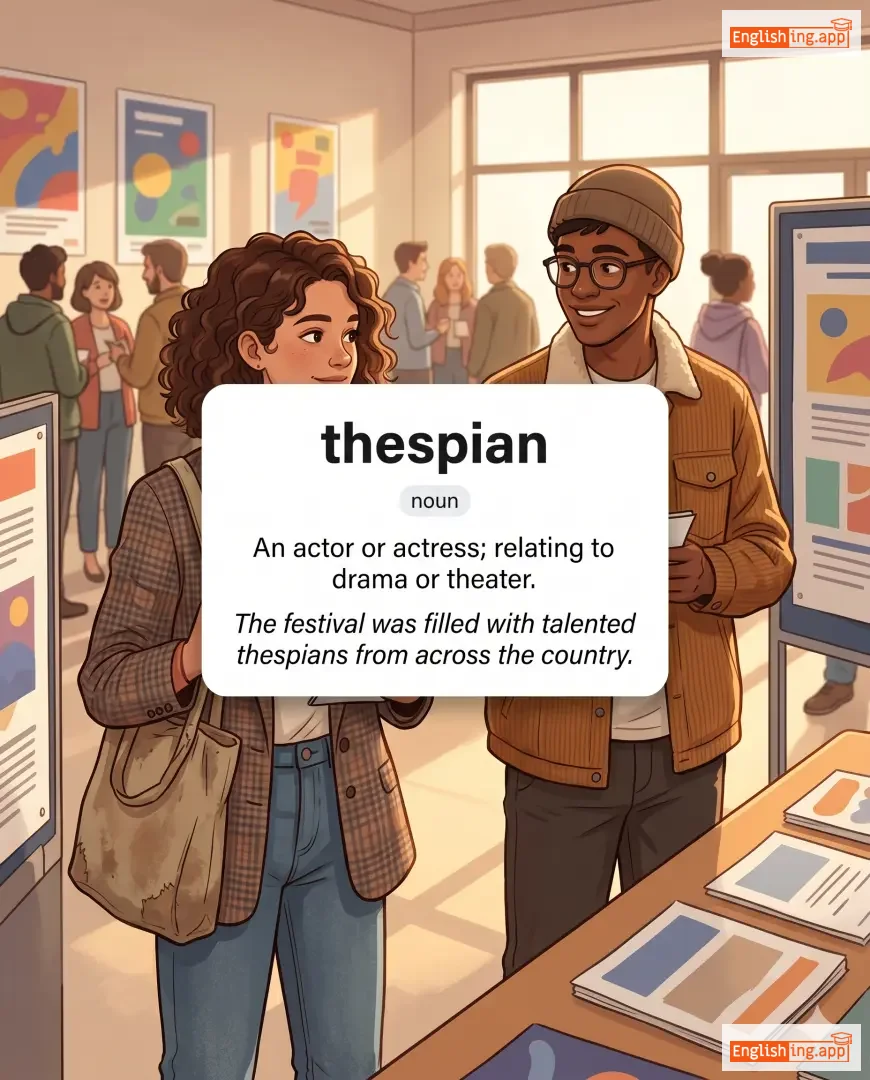
thespian definition card — visual illustration of the meaning
noun
/ˈθɛspiən/
अभिनेता (abhineta)

An actor or actress; relating to drama or theater.

"The festival was filled with talented thespians from across the country."

"त्योहार में देशभर से प्रतिभाशाली अभिनेता आए थे।" (Tyohar mein deshbhar se pratibhashali abhineta aaye the.)
pronoun
/ðeɪ/
वे (ve)

used to refer to people or things previously mentioned or easily identified

"They are going to the park."

"वे पार्क जा रहे हैं।" (Ve park ja rahe hain.)
adjective
/θɪk/
मोटा (mota)

having a large distance between two sides; not thin

"The book was so thick it took weeks to finish."

"किताब इतनी मोटी थी कि उसे खत्म करने में हफ्ते लग गए थे।" (Kitaab itni mota thi ki use khatam karne mein hafte lag gaye the.)
noun
/ˈθɪk.ɪt/
झाड़ी; घना झरबेर (thiket)

a dense group of bushes or trees; a thick growth of shrubs

"The rabbit disappeared into the thicket."

"खरगोश झाड़ी में गायब हो गया।" (khargosh jhaadi mein gayab ho gaya)
adverb
/ˈθɪkli/
गहनता से (gahanata se)

in a thick manner; densely; heavily

"The forest was thickly wooded with tall pine trees."

"जंगल घनी तरह से ऊँचे पाइन के पेड़ों से घिरा हुआ था।" (jangal ghani tareeke se unche pain ke pedon se ghira hua tha.)
noun
/ˈθɪk.nəs/
मोटाई (motai)

The measure of how thick or dense something is

"The thickness of the book made it hard to carry."

"किताब की मोटाई इसे उठाना मुश्किल बना रही थी।" (kitab ki motai ise uthana mushkil bana rahi thi.)
🦹‍♂️

Thief (थीफ)

noun
/θiːf/
चोर (chor)

a person who steals things from others

"The thief was caught stealing from the jewelry store."

"चोर को गहनों की दुकान से चोरी करते हुए पकड़ लिया गया था।" (Chor ko gehno ki dukaan se chori karte hue pakad liya gaya tha.)
noun
/θaɪ/
जंघा (jangha)

the part of the leg between the hip and the knee

"He felt pain in his right thigh after running for an hour."

"एक घंटे दौड़ने के बाद उसे अपनी दाईं जंघा में दर्द महसूस हुआ।" (Ek ghante daudne ke baad use apni daayi jangha mein dard mahsus hua.)
adjective
/θɪn/
पतला (patla)

having little thickness or width

"She wore a thin scarf in the winter."

"उसने सर्दी में एक पतला स्कार्फ पहना।" (Usne sardi mein ek patla scarf pehna.)
noun
/θɪŋ/
चीज (cheez)

an object, idea, or matter that is being referred to or dealt with

"This is the thing I was looking for."

"यह वह चीज है जिसे मैं खोज रहा था।" (Yeh vah cheez hai jise main khoj raha tha.)
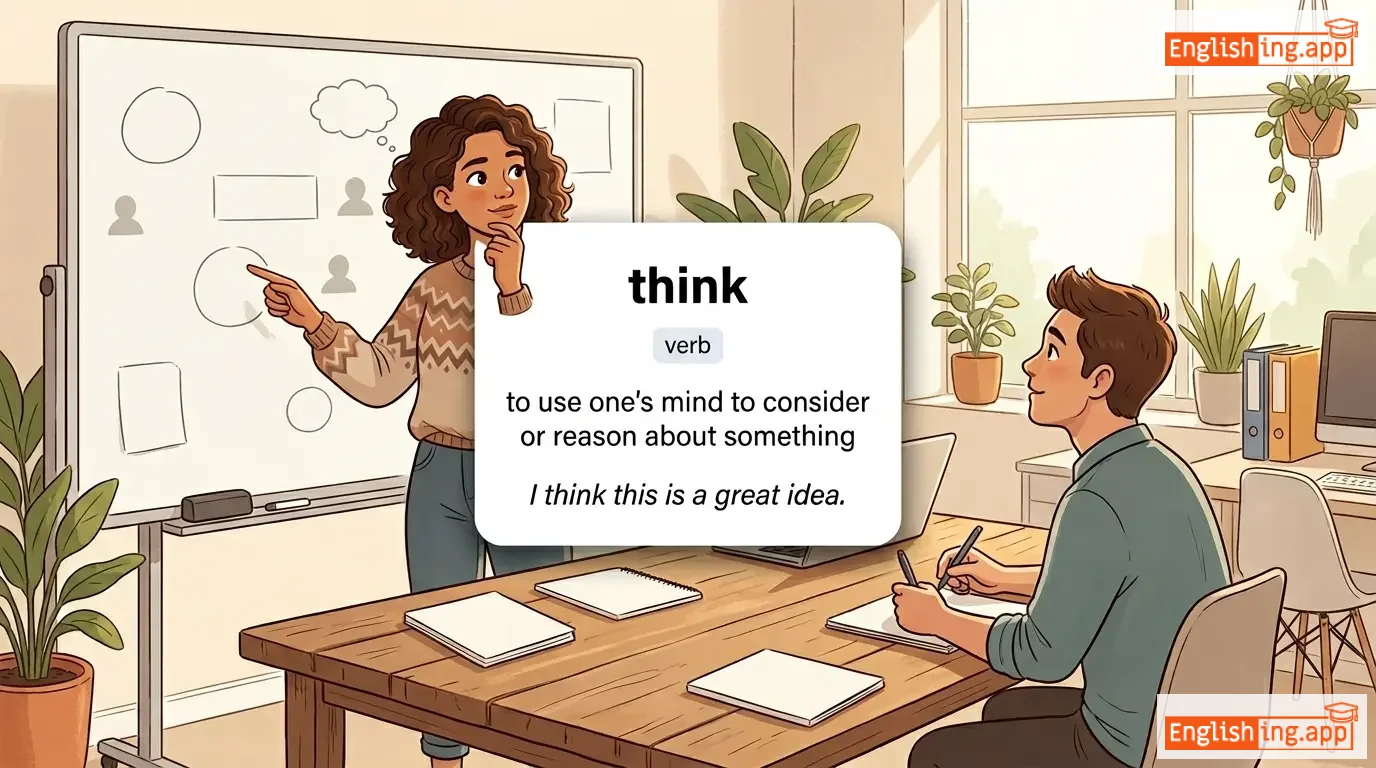
think definition card — visual illustration of the meaning
verb
/θɪŋk/
सोचना (sochna)

to use one's mind to consider or reason about something

"I think this is a great idea."

"मुझे लगता है कि यह एक महान विचार है।" (Mujhe lagta hai ki yah ek mahaan vichaar hai.)
adjective
/ˈθɪŋ.kə.bəl/
सोचने योग्य (sochne yogya)

Capable of being imagined or conceived; possible to consider or believe

"It is hard to believe that such an outcome is even thinkable."

"यह विश्वास करना मुश्किल है कि ऐसा परिणाम सोचने योग्य भी हो सकता है।" (yah vishwas karna mushkil hai ki aisa parinaam sochne yogya bhi ho sakta hai)
noun
/ˈθɪŋkɪŋ/
सोच (soch)

the process of considering or reasoning about something

"Her thinking was clear and precise."

"उसका सोच स्पष्ट और सटीक था।" (Uska soch spashṭ aur saṭīk thā.)
adjective
/θɜrd/
तीसरा (teesra)

constituting number three in a sequence

"She finished in third place."

"वह तीसरे स्थान पर finish हुई।" (Wah teesre sthaan par finish hui.)
noun
/tɒp/
शीर्ष (sheersh)

the highest or uppermost point, part, or surface of something

"The book is on the top shelf."

"किताब ऊपरी शेल्फ पर है।" (Kitaab oopari shelf par hai.)
noun
/ˈtoʊtəm/
पूज्य प्रतीक (poojya prateek)

A natural object, animal, or symbol that is revered as a spiritual emblem by a group or tribe.

"The eagle is considered a sacred totem in many cultures."

"ईगल को कई संस्कृतियों में एक पूज्य प्रतीक माना जाता है।" (Eagle ko kai sanskritiyon mein ek poojya prateek maana jaata hai.)
adverb
/ˈtoʊtəli/
पूरी तरह से (puri tarah se)

completely or in an absolute way

"She was totally shocked by the news."

"वह खबर सुनकर पूरी तरह से चौंक गई थी।" (Vah khabar sunkar puri tarah se chaunk gayi thi.)
adjective, noun, verb
/ˈtoʊ.təl/
कुल (kul)

the whole amount; complete

"The total cost was too high."

"कुल खर्च बहुत अधिक था।" (Kul kharch bahut adhik tha.)
verb
/tɔs/
हलके से फेंकना (halke se phenkna)

To throw something lightly or casually; to move or turn suddenly.

"He tossed the keys onto the table."

"उसने चाबियाँ मेज पर फेंक दीं।" (Usne chabiyan mej par phenk di.)
adjective
/ˈtɔːrtʃərəs/
यातनादायक (yatanadayak)

Extremely painful or causing great suffering; relating to or involving torture.

"The journey through the desert was long and torturous."

"रेगिस्तान के बीच यात्रा लंबी और यातनादायक थी।" (Registan ke beech yatra lambi aur yatanadayak thi.)
noun
/ˈtɔːtʃər/
यातना (yaatna)

the action or practice of inflicting severe pain on someone as a punishment or to force them to do something

"He was subjected to torture during the interrogation."

"उसे पूछताछ के दौरान दर्दनाक यातना दी गई।" (Use poochtaach ke dauraan dardnaak yaatna dee gayi.)
adjective
/ˈtɔːrtʃuəs/
जटिल, घुमावदार (jatil, ghumavdar)

Full of twists and turns; excessively complex or complicated.

"The tortuous mountain road made driving very difficult."

"जटिल पहाड़ी सड़क ने गाड़ी चलाना बहुत मुश्किल बना दिया।" (Jatil pahaadi sadak ne gaadi chalana bahut mushkil bana diya.)
noun
/ˈtɔːr.təs/
कछुआ (kachhua)

A slow-moving land reptile with a hard shell.

"The tortoise slowly crossed the garden."

"कछुआ धीरे से बगीचे में चला।" (Kachhua dheere se bageeche mein chala.)
adjective
/ˈtɔːrʃəs/
गलत कृत्य (galat kritya)

Relating to or involving a wrongful act leading to legal liability.

"The company was found guilty of tortious interference with contracts."

"कंपनी को अनुबंधों में गलत हस्तक्षेप करने के लिए दोषी पाया गया था।" (Company ko anubandhon mein galat hastakshep karne ke liye doshi paya gaya tha.)
noun
/tɔːrˈtiːə/
टॉरटिला (tortilla)

A thin round flatbread made from corn or wheat, common in Mexican cuisine.

"She wrapped the vegetables in a warm tortilla."

"उसने सब्ज़ियों को एक गर्म टॉरटिला में लपेटा।" (Usne sabziyon ko ek garm tortilla mein lapeta.)
noun
/ˈtɔːrsoʊ/
धड़ (dhar)

The trunk of the human body, excluding the head and limbs.

"The artist painted the torso of the model in great detail."

"कलाकार ने मॉडल के धड़ को बड़ी बारीकी से चित्रित किया।" (Kalakar ne model ke dhad ko badi bareeki se chitrait kiya.)
adjective
/ˈtɒrɪd/
काफी गर्म और शुष्क; तीव्र भावनाओं या पैशन से भरा हुआ (kaafi garm aur shushk; teevr bhavanao ya passion se bhara hua)

Very hot and dry; full of strong emotions or passion.

"The desert heat was torrid during the day."

"रेगिस्तान की गर्मी दिन के दौरान काफी तंग थी।" (registan ki garmi din ke dauran kaafi tang thi.)
adjective
/təˈrɛnʃəl/
मूसलधार (musaldhaar)

Relating to or resembling a torrent; very heavy and fast flowing.

"The hikers were caught in torrential rain."

"हाइकर मूसलधार बारिश में फंस गए थे।" (Haikar musaldhaar baarish mein fans gaye the.)
noun
/ˈtɔːrənt/
सैलाब (sailab)

A strong and fast-moving stream of water; a sudden, violent outpouring of something.

"A torrent of rain flooded the streets."

"बारिश की एक सैलाब ने सड़कों को बहा दिया।" (baarish ki ek sailab ne sadkon ko baha diya.)
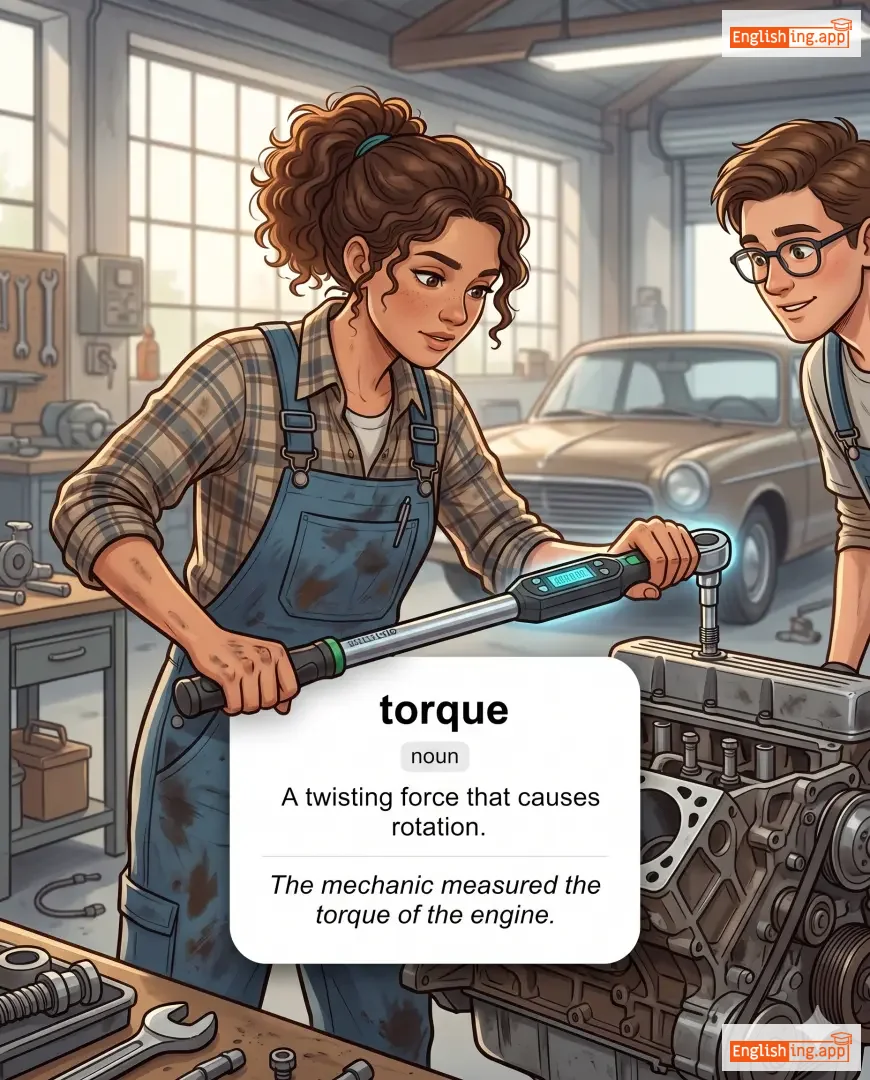
torque definition card — visual illustration of the meaning
noun
/tɔːrk/
घूर्ण बल (tork)

A twisting force that causes rotation.

"The mechanic measured the torque of the engine."

"मैकेनिक ने इंजन के टॉर्क को मापा।" (mekaanikneinjanketorqkomaapa)
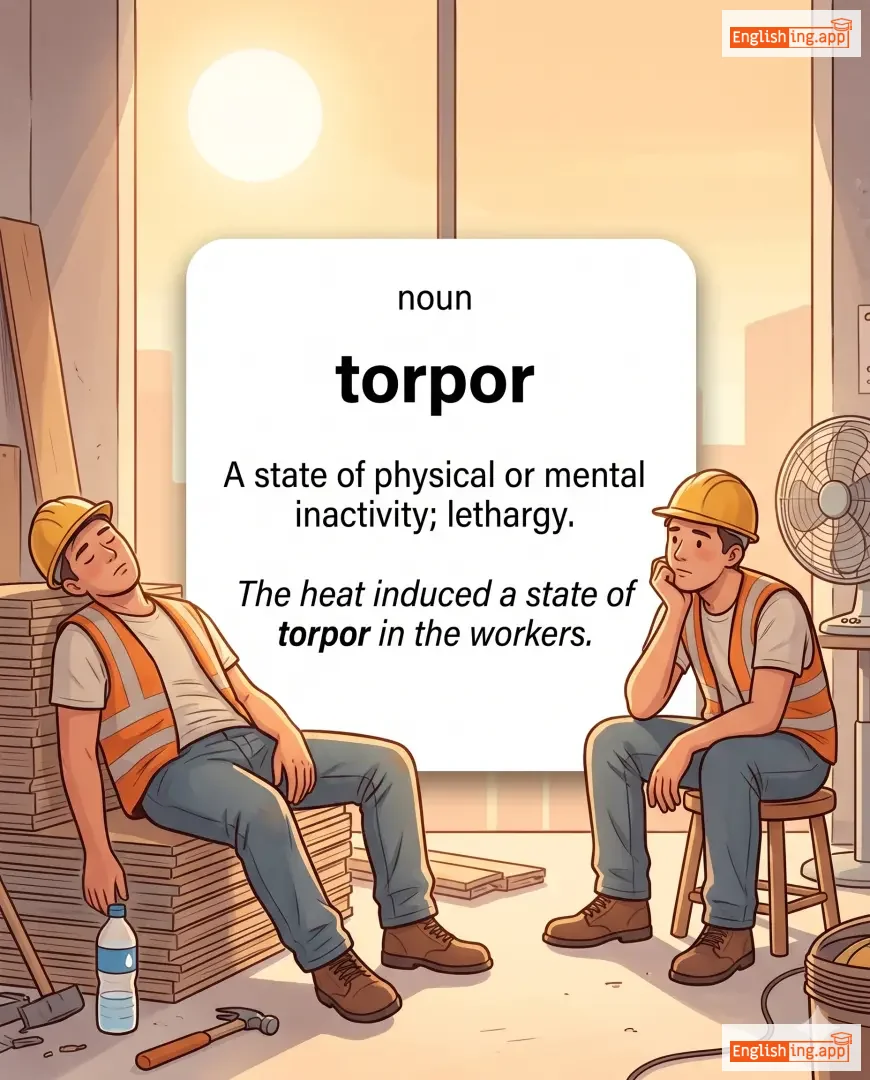
torpor definition card — visual illustration of the meaning
noun
/ˈtɔːrpər/
निःसक्रियता (torpor)

A state of physical or mental inactivity; lethargy.

"The heat induced a state of torpor in the workers."

"गर्मी ने श्रमिकों में निःसक्रियता की स्थिति उत्पन्न कर दी थी।" (Garmi ne shramikon mein nishkriyata ki stithi utpann kar di thi.)
adjective
/ˈtɔːrpɪd/
सुस्त (torpid)

Mentally or physically inactive; sluggish or lethargic.

"After the long hike, he felt torpid and unmotivated."

"लंबी सैर के बाद, वह सुस्त और प्रेरणाहीन महसूस कर रहा था।" (Lambi sair ke baad, wah sust aur preranahin mehsoos kar raha tha.)
noun/verb
/tɔːrˈpiːdoʊ/
टॉरपीडो (torpedo)

A self-propelled underwater missile; to attack or destroy something suddenly and forcefully.

"The submarine launched a torpedo at the enemy ship."

"द सबमरीन ने शत्रु जहाज पर एक टॉरपीडो दागा।" (Da submarin ne shatrul jahaz par ek torpedo daaga.)
noun
/tɔːrˈneɪdoʊ/
बवंडर (bavandar)

a rapidly rotating column of air in contact with the ground and clouds, often destructive

"The tornado destroyed several houses in the village."

"बवंडर ने गांव में कई घरों को नष्ट कर दिया" (Bavandar ne gaon mein kai gharon ko nasht kar diya)
noun, verb
/ˈtɔːr.ment/
यातना (yatna)

severe physical or mental suffering; to cause extreme suffering

"The prisoner was in constant torment."

"कैदी निरंतर यातना में था।" (Kaidi nirantar yatna mein tha.)
noun
/tɔːrtʃ/
टॉर्च (torch)

a portable electric lamp powered by batteries; a flaming stick used for light

"Use the torch to find your way in the dark."

"अंधेरे में अपना रास्ता खोजने के लिए टॉर्च का इस्तेमाल करें." (Andhere mein apna raasta khojne ke liye torch ka istemal karein)
adjective
/ˌtɒpsi ˈtɜːvi/
अव्यवस्थित (avyavasthit)

in a state of confusion, disorder, or upside down

"The sudden announcement left the office in a topsy-turvy state."

"अचानक घोषणा ने कार्यालय को पूरी तरह से अव्यवस्थित स्थिति में डाल दिया।" (Achanak ghoshna ne karyalaya ko poori tarah se avyavasthit sthiti mein daal diya.)
noun
/ˈtɒpˌsɔɪl/
ऊपरी मिट्टी (upari mitti)

the top layer of soil, which is rich in organic matter and nutrients

"Farmers rely on healthy topsoil for good crop yields."

"किसान अच्छे फसल उगाने के लिए स्वस्थ ऊपरी मिट्टी पर निर्भर करते हैं।" (Kisan achhe fasal ugane ke liye swasth upari mitti par nirbhar karte hain.)
verb
/ˈtɒpl/
उलटना (ultana)

to fall or cause to fall over; to overthrow

"The earthquake caused the old building to topple."

"भूकंप ने पुराने भवन को पलटने का कारण बना दिया।" (Bhookamp ne purane bhavan ko palatne ka karan bana diya.)
noun
/təˈpɒɡrəfi/
भू-रचना (bhoo-rachna)

the arrangement of the natural and artificial physical features of an area

"The topography of the region made construction very challenging."

"क्षेत्र की भू-रचना ने निर्माण को बहुत चुनौतीपूर्ण बना दिया था।" (Kshetra ki bho-rachna ne nirmaan ko bahut chunautipurn bana diya tha.)
adjective
/ˈtɒp.məʊst/
सबसे ऊपर; शीर्षस्थ (sabse upar; sheersh-sth)

highest in position or rank

"The flag was placed on the topmost branch of the tree."

"ध्वज को पेड़ की सबसे ऊँची शाखा पर रखा गया था।" (dhwaj ko ped ki sabse unchi shakha par rakha gaya tha.)
noun
/ˈtɒpɪk/
विषय (vishay)

a subject of conversation, discussion, or writing

"The topic of the meeting was company expansion."

"बैठक का विषय कंपनी के विस्तार पर था।" (Baithak ka vishay company ke vistaar par tha.)
noun
/ˈtoʊ.pæz/
टोपाज (topaz)

a precious stone, typically colorless, yellow, or blue, used in jewelry

"The queen's crown was adorned with a magnificent blue topaz."

"रानी का मुकुट शानदार नीले टोपाज से सजाया गया था।" (rani ka mukut shandaar neeley topaz se sajaya gaya tha.)
noun
/ˌtɒləˈreɪʃən/
सहिष्णुता (sahishnuta)

The practice of allowing something that one does not necessarily agree with.

"The government promoted religious toleration."

"सरकार ने धार्मिक सहिष्णुता को बढ़ावा दिया।" (sarkar ne dharmik sahishnuta ko badhava diya.)
noun
/ˈtɒlərəns/
सहिष्णुता (sahishnuta)

The ability or willingness to accept or endure differences, behaviors, or opinions without hostility.

"Her tolerance for different cultures impressed everyone."

"विभिन्न संस्कृतियों के प्रति उसकी सहिष्णुता ने सभी को प्रभावित किया।" (vibhinn sanskrityon ke prati uski sahishnuta ne sabhi ko prabhavit kiya.)
adjective
/ˈtɒlərənt/
सहिष्णु (sahishnu)

Showing willingness to allow the existence of opinions or behaviors that one dislikes or disagrees with.

"He is very tolerant of other people's beliefs."

"वह दूसरों के विश्वासों के प्रति बहुत सहिष्णु है।" (vah doosron ke vishwason ke prati bahut sahishnu hai.)
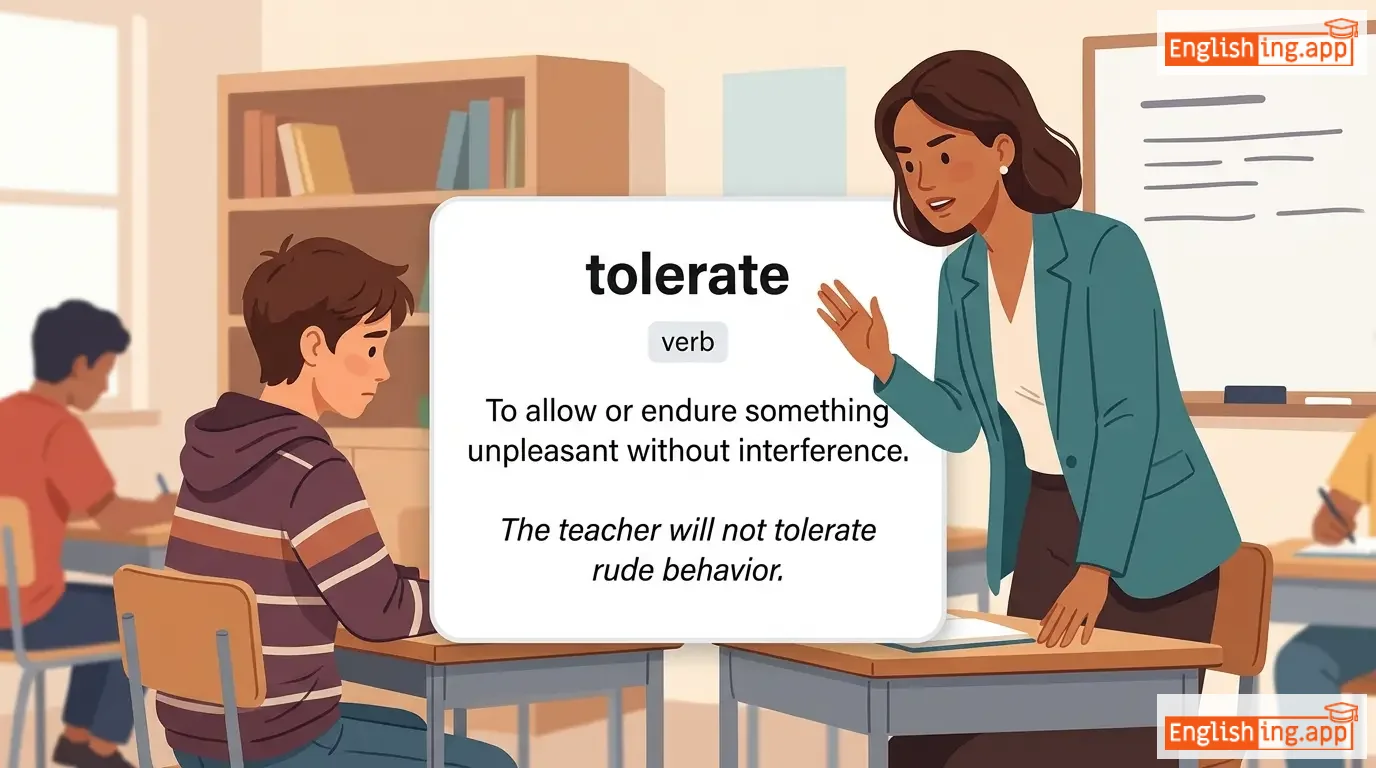
tolerate definition card — visual illustration of the meaning
verb
/ˈtɒləreɪt/
सहना (sahna)

To allow or endure something unpleasant without interference.

"The teacher will not tolerate rude behavior."

"शिक्षक रूड बहेवियर सहन नहीं करेंगे।" (shikshak rud behavior sahan nahi karenge.)
noun
/təˈmeɪtoʊ/
टमाटर (tamatar)

a red or yellowish fruit that is typically eaten as a vegetable

"I added some tomato to the salad."

"मैंने सलाद में कुछ टमाटर डाले।" (Maine salad mein kuch tamatar daale.)
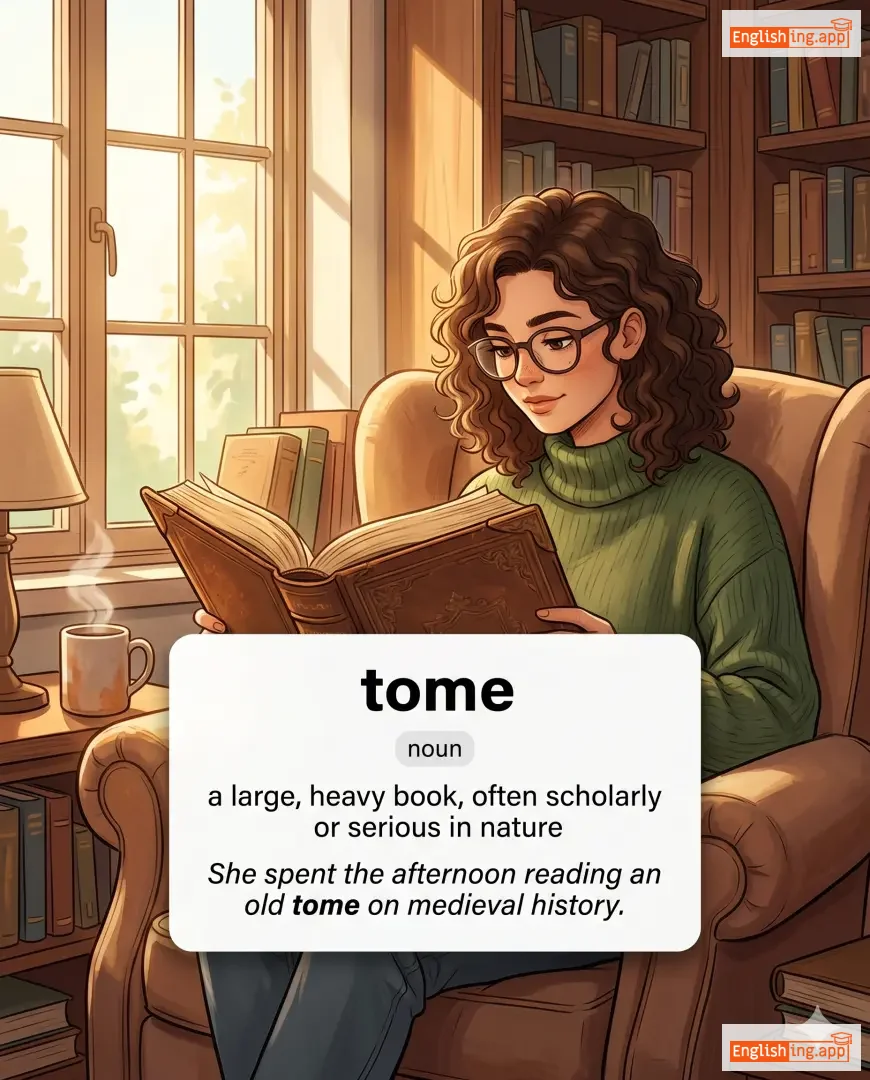
tome definition card — visual illustration of the meaning
noun
/toʊm/
वह किताब (vah kitaab)

a large, heavy book, often scholarly or serious in nature

"She spent the afternoon reading an old tome on medieval history."

"उसने मध्यकालीन इतिहास पर एक पुरानी किताब पढ़ी।" (Usne madhyakalīn itihās par ek purānī kitāb paṛhī.)