词汇表

英语词汇词典 | 单词含义、定义和示例

noun
/ˈθiːsɪs/
论文 (lunwen)

A long piece of writing on a particular subject, usually for a degree at a university.

"She spent two years writing her doctoral thesis."

"她花了两年时间写她的博士论文。" (Tā huāle liǎng nián shíjiān xiě tā de bóshì lùnwén.)
thespian definition card — visual illustration of the meaning
noun
/ˈθɛspiən/
演员 (yǎnyuán)

An actor or actress; relating to drama or theater.

"The festival was filled with talented thespians from across the country."

"这个节日充满了来自全国各地的才华横溢的演员。" (Zhège jiérì chōngmǎnle láizì quánguó gèdì de cáihuá héngyì de yǎnyuán.)
pronoun
/ðeɪ/
他们 (tāmen)

used to refer to people or things previously mentioned or easily identified

"They are going to the park."

"他们去公园。" (Tāmen qù gōngyuán.)
adjective
/θɪk/
(hou)

having a large distance between two sides; not thin

"The book was so thick it took weeks to finish."

"这本书很厚,需要几周才能读完。" (Zhe ben shu hen hou, xuyao ji zhou cai neng du wan.)
noun
/ˈθɪk.ɪt/
灌木丛; 茂密的灌木生长 (thiket)

a dense group of bushes or trees; a thick growth of shrubs

"The rabbit disappeared into the thicket."

"兔子消失在灌木丛中。" (Tùzǐ xiāoshī zài guànmù cóng zhōng.)
adverb
/ˈθɪkli/
密集地 (mìjí dì)

in a thick manner; densely; heavily

"The forest was thickly wooded with tall pine trees."

"森林被高大的松树密集覆盖。" (Sēnlín bèi gāodà de sōngshù mìjí fùgài.)
noun
/ˈθɪk.nəs/
厚度 (houdù)

The measure of how thick or dense something is

"The thickness of the book made it hard to carry."

"这本书的厚度使它难以携带。" (Zhe ben shu de houdù shi ta nanyi xiedai.)
🦹‍♂️

Thief (θiːf)

noun
/θiːf/
小偷 (xiaotou)

a person who steals things from others

"The thief was caught stealing from the jewelry store."

"小偷在珠宝店偷东西时被抓住了。" (Xiaotou zai zhubao dian tou dongxi shi bei zhuazhu le.)
noun
/θaɪ/
大腿 (daitui)

the part of the leg between the hip and the knee

"He felt pain in his right thigh after running for an hour."

"他在跑了一个小时后感到右大腿疼痛。" (Ta zai pao le yi ge xiaoshi hou gandao you daitui tengtong.)
adjective
/θɪn/
(bo)

having little thickness or width

"She wore a thin scarf in the winter."

"她冬天戴着一条薄围巾。" (Tā dōngtiān dàizhe yītiáo bó wéijīn.)
noun
/θɪŋ/
东西 (dongxi)

an object, idea, or matter that is being referred to or dealt with

"This is the thing I was looking for."

"这是我在找的东西。" (Zhe shi wo zai zhao de dongxi.)
think definition card — visual illustration of the meaning
verb
/θɪŋk/
思考 (sikao)

to use one's mind to consider or reason about something

"I think this is a great idea."

"我觉得这是一个好主意。" (Wǒ juéde zhè shì yīgè hǎo zhǔyì.)
adjective
/ˈθɪŋ.kə.bəl/
可想的 (kexiang de)

Capable of being imagined or conceived; possible to consider or believe

"It is hard to believe that such an outcome is even thinkable."

"很难相信这样的结果甚至是可以想象的。" (Hen nan xiangxin zheyang de jieguo shenzhi shi keyi xiangxiang de)
noun
/ˈθɪŋkɪŋ/
思考 (sī kǎo)

the process of considering or reasoning about something

"Her thinking was clear and precise."

"她的思考清晰而准确。" (Tā de sīkǎo qīngxī ér zhǔnquè.)
adjective
/θɜrd/
第三 (di san)

constituting number three in a sequence

"She finished in third place."

"她得了第三名。" (Ta de le di san ming.)
noun
/tɒp/
顶端 (dingduan)

the highest or uppermost point, part, or surface of something

"The book is on the top shelf."

"书本在顶层书架上。" (Shuben zai dingceng shujia shang.)
noun
/ˈtoʊtəm/
神圣象征 (shensheng xiangzheng)

A natural object, animal, or symbol that is revered as a spiritual emblem by a group or tribe.

"The eagle is considered a sacred totem in many cultures."

"老鹰在许多文化中被视为神圣的图腾。" (Laoying zai xu duo wenhua zhong bei shi wei shensheng de tuteng.)
adverb
/ˈtoʊtəli/
完全地 (wánquán de)

completely or in an absolute way

"She was totally shocked by the news."

"她听到消息时完全震惊了。" (Tā tīng dào xiāoxi shí wánquán zhènjīngle.)
adjective, noun, verb
/ˈtoʊ.təl/
总计 (zongji)

the whole amount; complete

"The total cost was too high."

"总成本太高了。" (Zong chengben tai gao le.)
verb
/tɔs/
轻轻投掷 (qing qing tou zhi)

To throw something lightly or casually; to move or turn suddenly.

"He tossed the keys onto the table."

"他把钥匙扔到了桌子上。" (Ta ba yaoshi reng dao le zhuozi shang.)
adjective
/ˈtɔːrtʃərəs/
痛苦的 (tòngkǔ de)

Extremely painful or causing great suffering; relating to or involving torture.

"The journey through the desert was long and torturous."

"穿越沙漠的旅程漫长且痛苦。" (Chuānyuè shāmò de lǚchéng màncháng qiě tòngkǔ.)
noun
/ˈtɔːtʃər/
折磨 (zhémó)

the action or practice of inflicting severe pain on someone as a punishment or to force them to do something

"He was subjected to torture during the interrogation."

"他在审问中遭受了折磨。" (Tā zài shěnwèn zhōng zāoshòule zhémó.)
adjective
/ˈtɔːrtʃuəs/
曲折,复杂 (quzhe, fuzā)

Full of twists and turns; excessively complex or complicated.

"The tortuous mountain road made driving very difficult."

"曲折的山路让驾驶变得非常困难。" (Qūzhé de shānlù ràng jiàshǐ biàn dé fēicháng kùnnán.)
noun
/ˈtɔːr.təs/
乌龟 (wugui)

A slow-moving land reptile with a hard shell.

"The tortoise slowly crossed the garden."

"乌龟慢慢地穿过花园。" (Wugui manman de chuanguo huayuan.)
adjective
/ˈtɔːrʃəs/
非法行为 (feifa xingwei)

Relating to or involving a wrongful act leading to legal liability.

"The company was found guilty of tortious interference with contracts."

"该公司因非法干预合同而被判有罪。" (Gai gongsi yin feifa ganyu hetong er bei pan youzui.)
noun
/tɔːrˈtiːə/
玉米饼 (yumi bing)

A thin round flatbread made from corn or wheat, common in Mexican cuisine.

"She wrapped the vegetables in a warm tortilla."

"她把蔬菜包裹在一个温暖的玉米饼中。" (Ta ba shucai baoguo zai yige wennuan de yumi bing zhong.)
noun
/ˈtɔːrsoʊ/
躯干 (qugan)

The trunk of the human body, excluding the head and limbs.

"The artist painted the torso of the model in great detail."

"艺术家详细地画了模特的躯干。" (Yishu jia xiangxi de hua le mote de qugan.)
adjective
/ˈtɒrɪd/
非常炎热和干燥;充满强烈情感或激情 (fēicháng yánrè hé gānzào; chōngmǎn qiángliè qínggǎn huò jīqíng)

Very hot and dry; full of strong emotions or passion.

"The desert heat was torrid during the day."

"沙漠的热量白天非常炎热。" (shāmò de rèliàng báitiān fēicháng yánrè.)
adjective
/təˈrɛnʃəl/
暴雨 (baoyu)

Relating to or resembling a torrent; very heavy and fast flowing.

"The hikers were caught in torrential rain."

"徒步旅行者被暴雨困住。" (Tubule lüxingzhe bei baoyu kunzhu.)
noun
/ˈtɔːrənt/
洪流 (hongliu)

A strong and fast-moving stream of water; a sudden, violent outpouring of something.

"A torrent of rain flooded the streets."
"一阵暴雨的洪流淹没了街道。" (yī zhèn bàoyǔ de hóngliú yānmò le jiēdào.)
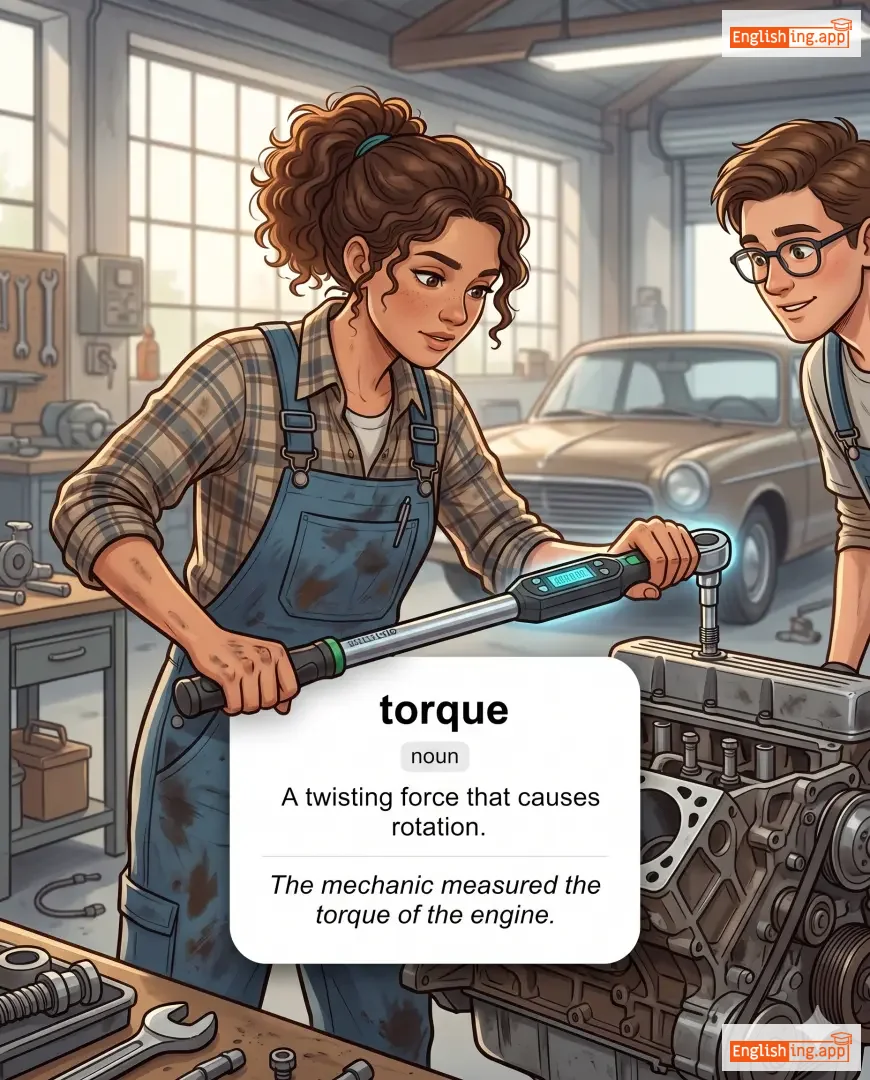
torque definition card — visual illustration of the meaning
noun
/tɔːrk/

A twisting force that causes rotation.

"The mechanic measured the torque of the engine."

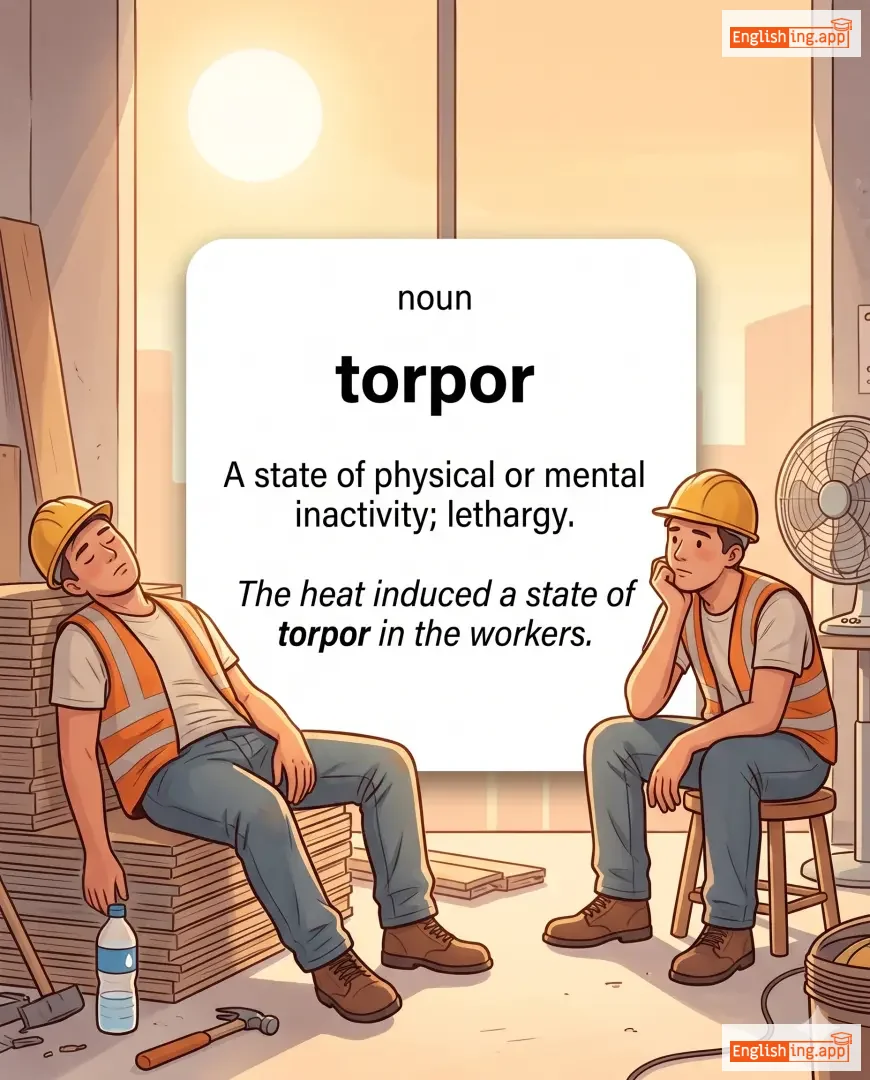
torpor definition card — visual illustration of the meaning
noun
/ˈtɔːrpər/
昏睡 (torpor)

A state of physical or mental inactivity; lethargy.

"The heat induced a state of torpor in the workers."

"高温使工人们陷入了昏睡状态。" (Gaowen shi gongrenmen xianru le hunshui zhuangtai.)
adjective
/ˈtɔːrpɪd/
迟缓 (torpid)

Mentally or physically inactive; sluggish or lethargic.

"After the long hike, he felt torpid and unmotivated."

"长时间徒步后,他感到迟缓且缺乏动力。" (Chang shijian tubu hou, ta gandao chi huan qie quefa dongli.)
noun/verb
/tɔːrˈpiːdoʊ/
鱼雷 (yulei)

A self-propelled underwater missile; to attack or destroy something suddenly and forcefully.

"The submarine launched a torpedo at the enemy ship."

"潜艇向敌舰发射了鱼雷。" (Qian ting xiang di jian fa she le yulei.)
noun
/tɔːrˈneɪdoʊ/
龙卷风 (long juan feng)

a rapidly rotating column of air in contact with the ground and clouds, often destructive

"The tornado destroyed several houses in the village."

"龙卷风摧毁了村子里的几座房子" (Long juan feng cui huai le cun zi li de ji zuo fang zi)
noun, verb
/ˈtɔːr.ment/
折磨 (zhémó)

severe physical or mental suffering; to cause extreme suffering

"The prisoner was in constant torment."

"囚犯正在承受着持续的痛苦。" (Qiúfàn zhèngzài chéngshòu zhe chíxù de tòngkǔ.)
noun
/tɔːrtʃ/
手电筒 / 火炬 (tuoqi)

a portable electric lamp powered by batteries; a flaming stick used for light

"Use the torch to find your way in the dark."

"在黑暗中用手电筒来照路。" (zaiheianzhongyongshoudiantonglaizhaolu)
adjective
/ˌtɒpsi ˈtɜːvi/
混乱的 (hùnluàn de)

in a state of confusion, disorder, or upside down

"The sudden announcement left the office in a topsy-turvy state."

"突如其来的公告让办公室陷入了完全混乱的状态。" (Tū rú qí lái de gōnggào ràng bàngōngshì xiànrùle wánquán hùnluàn de zhuàngtài.)
noun
/ˈtɒpˌsɔɪl/
表土 (biaotu)

the top layer of soil, which is rich in organic matter and nutrients

"Farmers rely on healthy topsoil for good crop yields."

"农民依赖健康的表土来获得丰收。" (Nóngmín yīlài jiànkāng de biǎotǔ lái huòqǔ fēngshōu.)
verb
/ˈtɒpl/
倒塌 (dǎotā)

to fall or cause to fall over; to overthrow

"The earthquake caused the old building to topple."

"地震导致了旧建筑的倒塌。" (Dìzhèn dǎozhìle jiù jiànzhú de dǎotā.)
noun
/təˈpɒɡrəfi/
地形 (dixing)

the arrangement of the natural and artificial physical features of an area

"The topography of the region made construction very challenging."

"该地区的地形使得施工非常具有挑战性。" (Gai diqu de dixing shidede shigong feichang juyou tiaozhanxing.)
adjective
/ˈtɒp.məʊst/
最上; 顶端 (zui shang; dingduan)

highest in position or rank

"The flag was placed on the topmost branch of the tree."

"旗帜被放置在树的最高分支上。" (qizhi bei fangzhi zai shu de zuishang fenzhi shang.)
noun
/ˈtɒpɪk/
主题 (zhuti)

a subject of conversation, discussion, or writing

"The topic of the meeting was company expansion."

"会议的主题是公司扩展。" (Huiyi de zhuti shi gongsi kuozhan.)
noun
/ˈtoʊ.pæz/
托帕石 (tuōpàshí)

a precious stone, typically colorless, yellow, or blue, used in jewelry

"The queen's crown was adorned with a magnificent blue topaz."

"女王的王冠装饰着一颗美丽的蓝色托帕石。" (nǚwáng de wángguān zhuāngshì zhe yī kē měilì de lánsè tuōpàshí.)
noun
/ˌtɒləˈreɪʃən/
宽容 (kuan rong)

The practice of allowing something that one does not necessarily agree with.

"The government promoted religious toleration."

"政府促进了宗教宽容。" (Zhèngfǔ cùjìnle zōngjiào kuānróng.)
noun
/ˈtɒlərəns/
宽容 (kuanrong)

The ability or willingness to accept or endure differences, behaviors, or opinions without hostility.

"Her tolerance for different cultures impressed everyone."

"她对不同文化的宽容给每个人留下了深刻印象。" (Ta dui butong wenhua de kuanrong gei meige ren liuxiala shenke yinxiang.)
adjective
/ˈtɒlərənt/
宽容 (kuanrong)

Showing willingness to allow the existence of opinions or behaviors that one dislikes or disagrees with.

"He is very tolerant of other people's beliefs."
"他对其他人的信仰非常宽容。" (Ta dui qita ren de xinyang feichang kuanrong.)
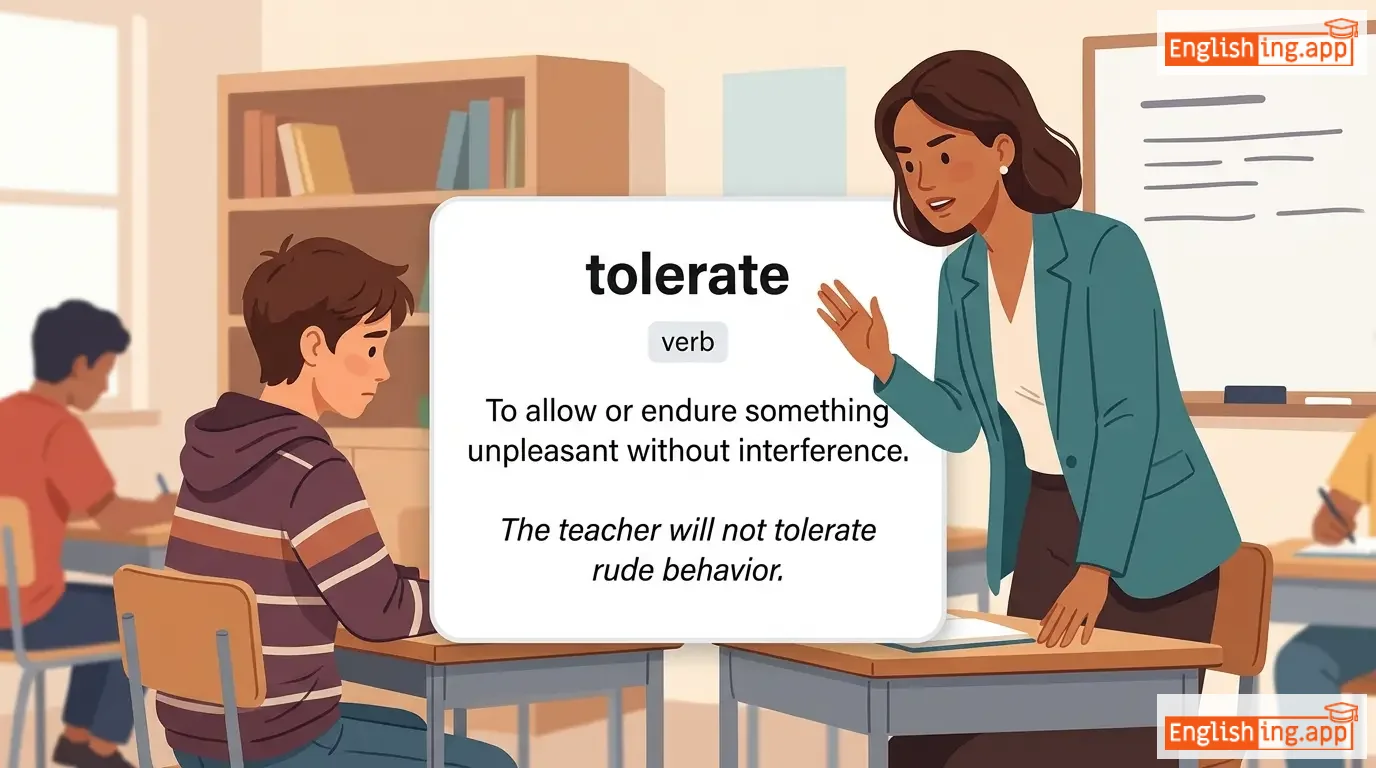
tolerate definition card — visual illustration of the meaning
verb
/ˈtɒləreɪt/
容忍 (róngrěn)

To allow or endure something unpleasant without interference.

"The teacher will not tolerate rude behavior."

"老师不会容忍粗鲁的行为。" (lǎoshī bù huì róngrěn cūlǔ de xíngwéi.)
noun
/təˈmeɪtoʊ/
番茄 (fānqié)

a red or yellowish fruit that is typically eaten as a vegetable

"I added some tomato to the salad."

"我在沙拉里加了一些番茄。" (Wǒ zài shālā lǐ jiāle yīxiē fānqié.)
tome definition card — visual illustration of the meaning
noun
/toʊm/
厚书 (hou shu)

a large, heavy book, often scholarly or serious in nature

"She spent the afternoon reading an old tome on medieval history."

"她花了整个下午阅读一本关于中世纪历史的厚书。" (Tā huāle zhěnggè xiàwǔ yuèdú yī běn guānyú zhōng shìjì lìshǐ de hòu shū.)