词汇表

英语词汇词典 | 单词含义、定义和示例

adjective
/ˈθrɛdˌbɛr/
因过度使用而变薄和破旧 (yin guodu shiyong er bian bao he pojiu)

Worn out and thin from too much use; shabby.

"His threadbare coat could not keep him warm in winter."

"他的破旧外套冬天无法让他保持温暖。" (Tā de pòjiù wàitào dōngtiān wúfǎ ràng tā bǎochí wēnnuǎn.)
Threat definition card — visual illustration of the meaning
noun
/θrɛt/
威胁, 危险 (wēixié, wēixiǎn)

A statement or action indicating intent to cause harm or danger.

"The letter contained a threat against the company."
"信中包含了对公司的一种威胁。" (Xìn zhōng bāohánle duì gōngsī de yī zhǒng wēixié.)
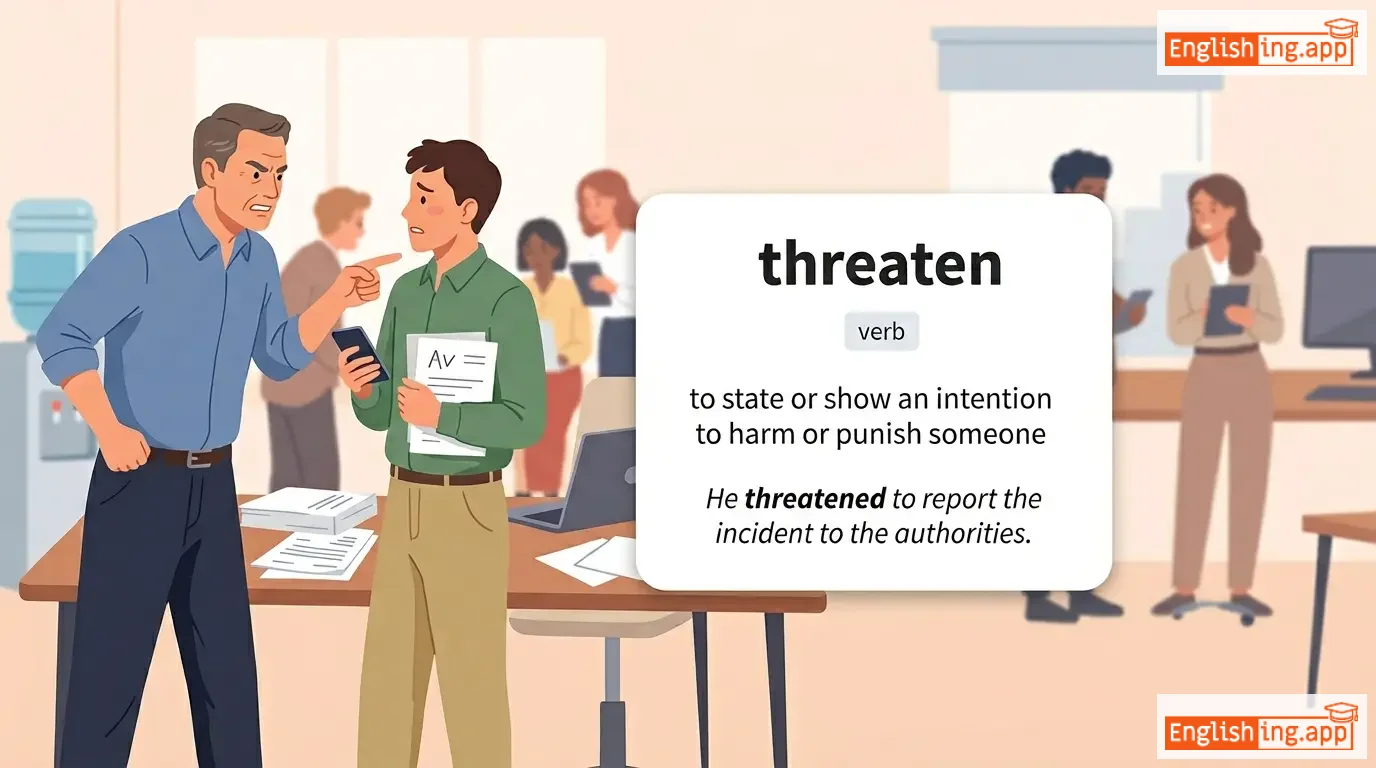
threaten definition card — visual illustration of the meaning
verb
/ˈθrɛtən/
幸福 (xìngfú)

to state or show an intention to harm or punish someone

"He threatened to report the incident to the authorities."

"当她收到奖项时,她无法掩饰她的幸福。" (Dāng tā shōu dào jiǎngxiàng shí, tā wúfǎ yǎnshì tā de xìngfú.)
adjective
/ˈθret.ən.ɪŋ/
威胁的; 恐吓的 (wēixié de; kǒnghè de)

expressing a threat; menacing; intimidating

"The dark clouds looked threatening before the storm."
"暴风雨来临前,黑暗的云看起来威胁重重。" (Bàofēngyǔ láilín qián, hēi'àn de yún kàn qǐlái wēixié zhòngzhòng.)
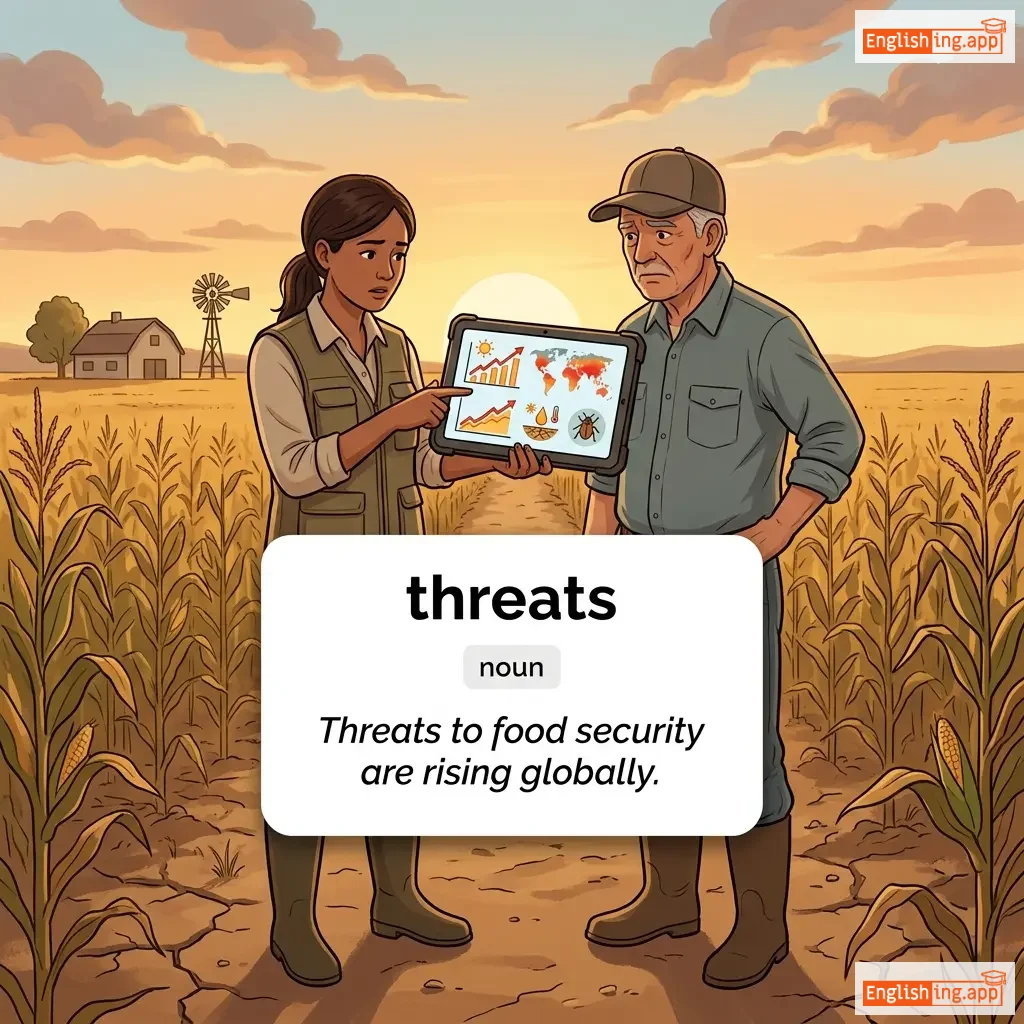
threats definition card — visual illustration of the meaning
noun
θrets
威胁 (wei xie)

A statement of an intention to inflict pain, injury, damage, or other hostile action.

"Threats to food security are rising globally."

"全球食品安全面临威胁。" (Quanqiu shipin anquan mianlin weixie.)
numeral
/θriː/
(san)

the number equivalent to the sum of two and one

"She has three dogs at home."

"她家里有三只狗。" (Tā jiālǐ yǒu sān zhī gǒu.)
noun
/ˈθrɛnədi/
哀歌,悼歌 (āi gē, dào gē)

A song, poem, or speech of mourning for someone who has died; a lament.

"The poet composed a moving threnody for the fallen soldiers."
"诗人为阵亡的士兵创作了一首感人的悼歌。" (Shīrén wèi zhènwáng de shìbīng chuàngzuòle yī shǒu gǎnrén de dào gē.)
verb
/θrɛʃ/

to separate grain from the plant by beating or by using a machine

"Farmers used machines to thresh the wheat after harvest."

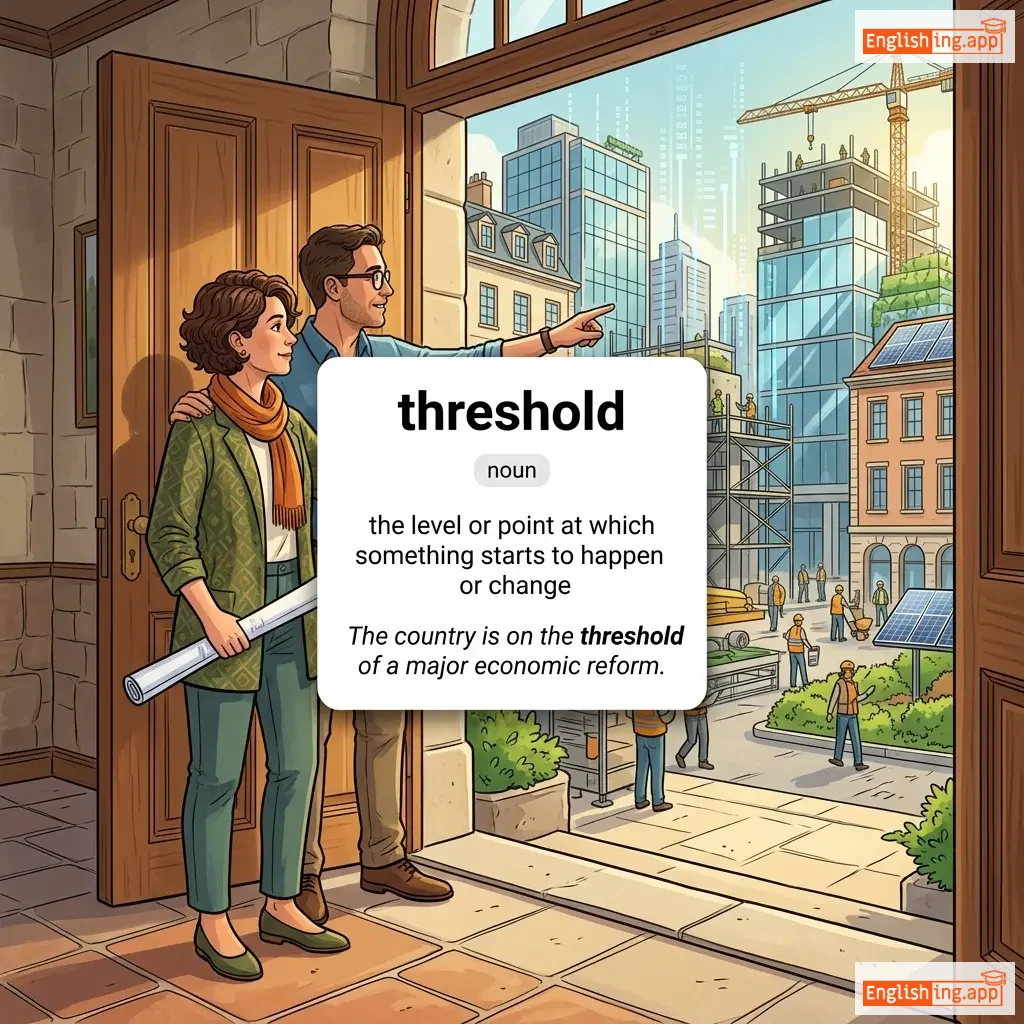
threshold definition card — visual illustration of the meaning
noun
/ˈθreʃ.həʊld/
临界点 (linjiadian)

the level or point at which something starts to happen or change

"The country is on the threshold of a major economic reform."

"这个国家正处于一次重大的经济改革的临界点。" (Zhege guojia zheng chuyu yici zhongda de jingji gaige de linjiadian.)
adjective
/ˈθrɪfti/
节俭 (jie jian)

using money and resources carefully and not wastefully

"She is very thrifty and always saves money for the future."

"她非常节俭,总是为未来存钱。" (Ta feichang jie jian, zong shi wei weilai cun qian.)
Thrill definition card — visual illustration of the meaning
verb
/θrɪl/
激动 (jīdòng)

to cause someone to feel very excited and pleased

"The roller coaster ride thrills adventure seekers."

"过山车之旅让冒险爱好者感到兴奋。" (Guòshānchē zhī lǚ ràng màoxiǎn àihào zhě gǎndào xīngfèn.)
adjective
/θrɪld/
兴奋 (xīngfèn)

extremely happy or excited

"She was thrilled with the surprise party."

"她对惊喜派对感到兴奋。" (Tā duì jīngxǐ pàiduì gǎndào xīngfèn.)
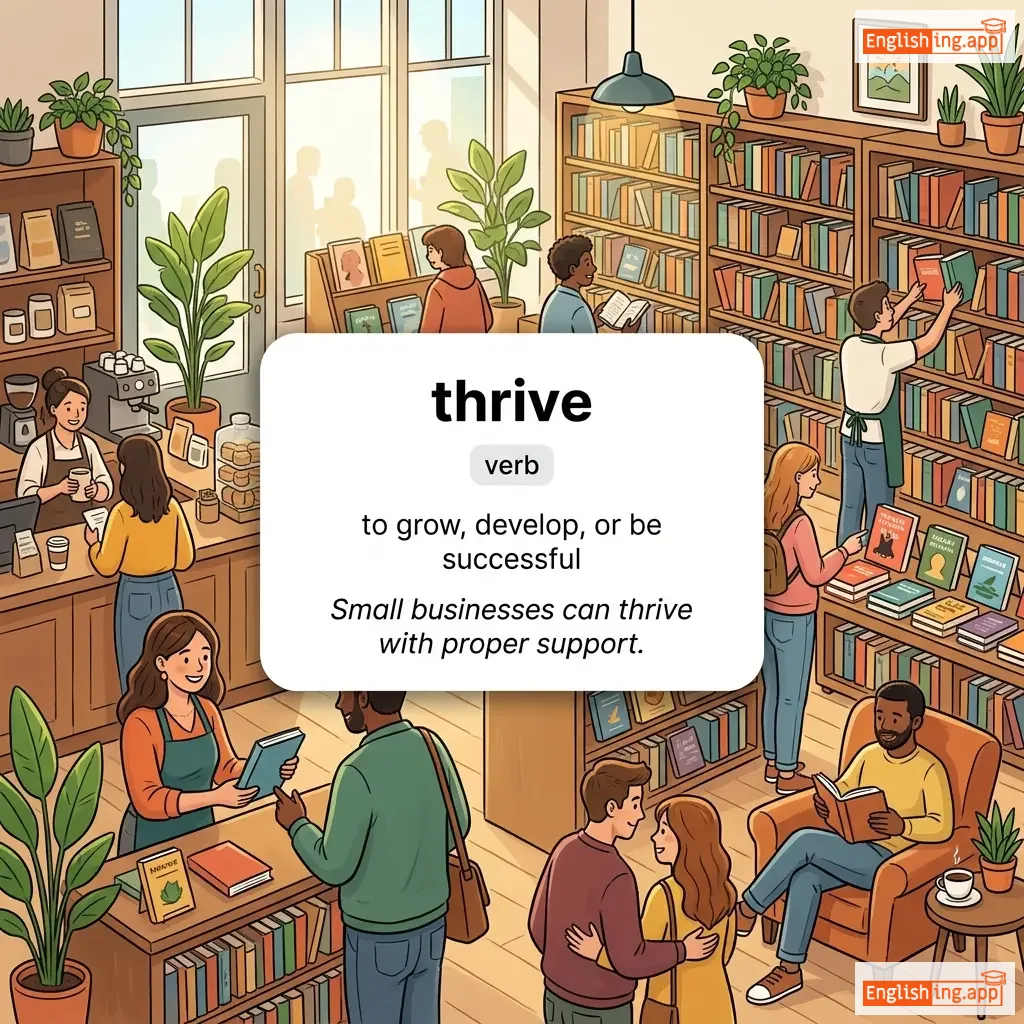
thrive definition card — visual illustration of the meaning
verb
/θraɪv/

to grow, develop, or be successful

"Small businesses can thrive with proper support."

noun
/θroʊt/
喉咙 (hóulóng)

the front part of the neck, containing the pharynx and larynx

"He felt a lump in his throat while speaking."

"他说话时感到喉咙里有个肿块。" (Tā shuōhuà shí gǎndào hóulóng lǐ yǒu gè zhǒngkuài.)
verb
/θrɒb/
跳动 (tiaodong)

to beat or pulse strongly, often with pain

"His head began to throb after the long day."

"他的一天结束后,头开始跳动。" (Ta de yitian jie shu hou, tou kaishi tiaodong.)
noun
/θroʊz/
剧痛 (jutong)

intense or violent pain and struggle, often at the beginning or end of something

"The country was in the throes of a political crisis."

"该国正处于政治危机的剧痛之中。" (Gai guo zheng chu yu zhengzhi weiji de jutong zhi zhong.)
noun/verb
/θrɒŋ/

A large, densely packed crowd of people or animals; to fill or be present in a place in large numbers.

"Tourists thronged the streets during the festival."

verb/noun
/ˈθrɒt.əl/
限制/控制速度 (xian zhi/kong zhi su du)

To choke or strangle; to control the flow of fuel or power in an engine.

"The driver throttled the engine to slow down the car."

"司机将发动机调速以减慢汽车速度。" (Si ji jiang fa dong ji tiao su yi jian man qi che su du.)
preposition
/θruː/
通过 (tong guo)

moving in one side and out the other side of something

"The train passed through the tunnel."

"火车通过了隧道。" (Huo che tong guo le sui dao.)
preposition
/θruːˈaʊt/
贯穿 (guan chuan)

in every part of a place or during the whole time of an event

"She worked throughout the night."
"她整夜工作。" (Ta zheng ye gongzuo.)
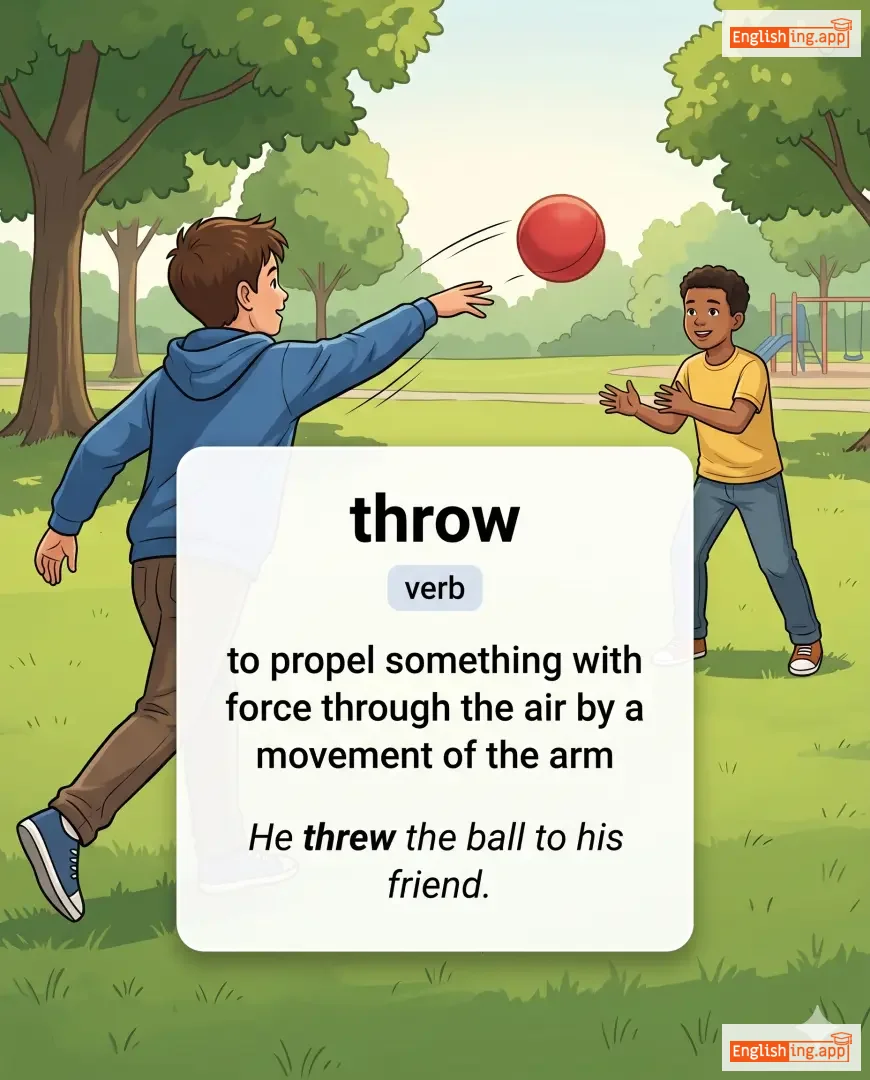
throw definition card — visual illustration of the meaning
verb
/θroʊ/
投掷 (tóu zhì)

to propel something with force through the air by a movement of the arm

"He threw the ball to his friend."

"他把球扔给了他的朋友。" (Tā bǎ qiú rēng gěi le tā de péngyǒu.)
noun
/θʌm/
大拇指 (da mǔ zhǐ)

the short, thick finger on the side of the hand, used for gripping and holding things

"He gave a thumbs-up to show his approval."
"他竖起大拇指表示赞同。" (Tā shù qǐ dà mǔ zhǐ biǎo shì zàn tóng.)
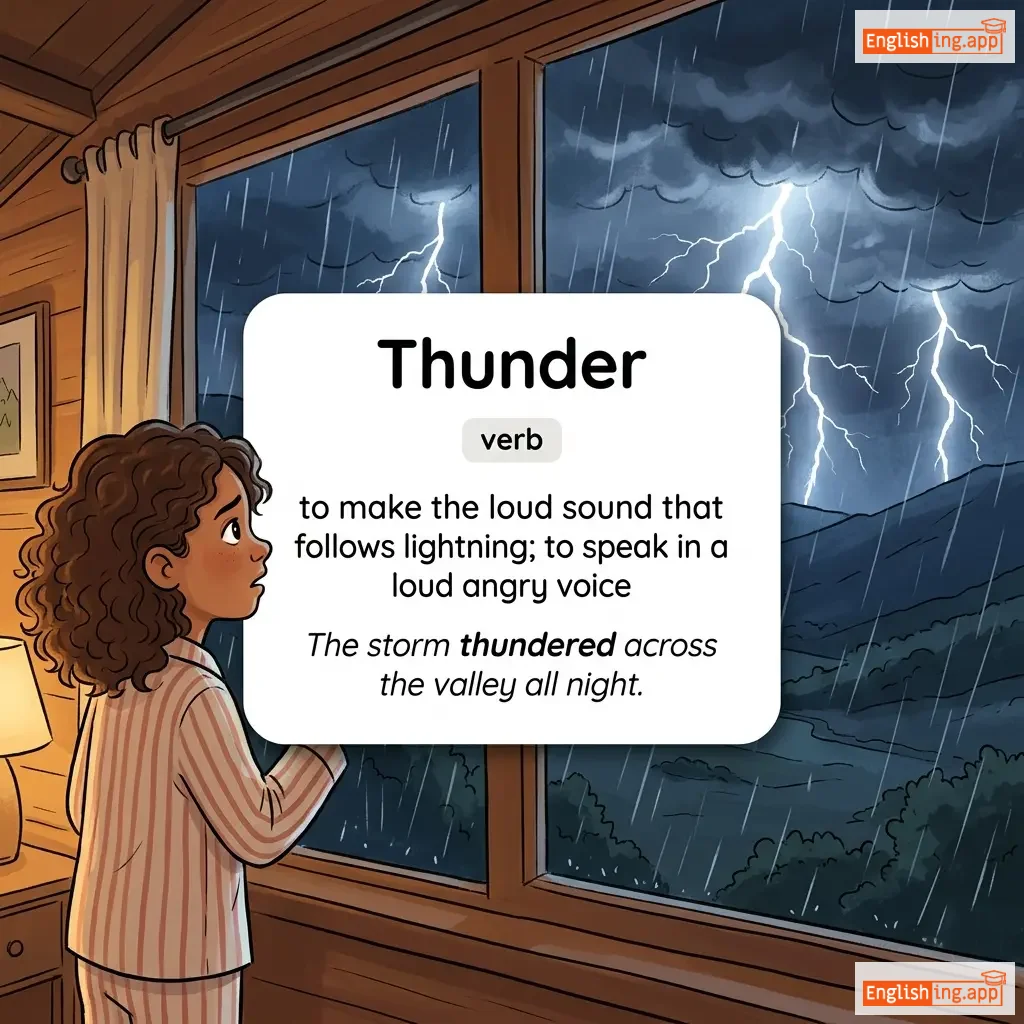
Thunder definition card — visual illustration of the meaning
noun
/ˈθʌn.dər/
雷声 (léi shēng)

the loud rumbling or crashing noise heard after a lightning flash

"We heard thunder during the storm last night."

"昨晚我们在暴风雨中听到了雷声。" (zuó wǎn wǒmen zài bàofēngyǔ zhōng tīngdàole léi shēng.)
noun
/ˈθɜːrzdeɪ/
星期四 (xingqi si)

The fifth day of the week, following Wednesday and preceding Friday.

"We have a meeting scheduled for Thursday."

"我们安排了星期四的会议。" (Wo men an pai le xingqi si de huiyi.)
adverb
/ðʌs/
因此 (yin ci)

as a result or consequence of something previously stated

"He was late, thus he missed the meeting."

"他迟到了,因此错过了会议。" (Ta chi dao le, yin ci cuo guo le hui yi.)
verb
/θwɔːrt/
阻止 (zǔzhǐ)

To prevent someone from accomplishing something; to oppose successfully.

"The police thwarted the robbery attempt."

"警方阻止了抢劫企图。" (Jǐngfāng zǔzhǐle qiǎngjié qìtú.)
noun
/taɪm/
百里香 (bǎilǐxiāng)

A small aromatic herb used in cooking and medicine.

"She sprinkled thyme on the roasted chicken."

"她撒上百里香在烤鸡上。" (Tā sā shàng bǎilǐxiāng zài kǎo jī shàng.)
noun
/tiˈɑː.rə/
头冠 (tou guan)

a jeweled ornamental crown worn on formal occasions

"The princess wore a sparkling diamond tiara at the royal ball."
"公主在皇家舞会上戴着一顶闪亮的钻石头冠。" (Gōngzhǔ zài huángjiā wǔ huì shàng dàizhe yī dǐng shǎn liàng de zuànshí tóu guān)
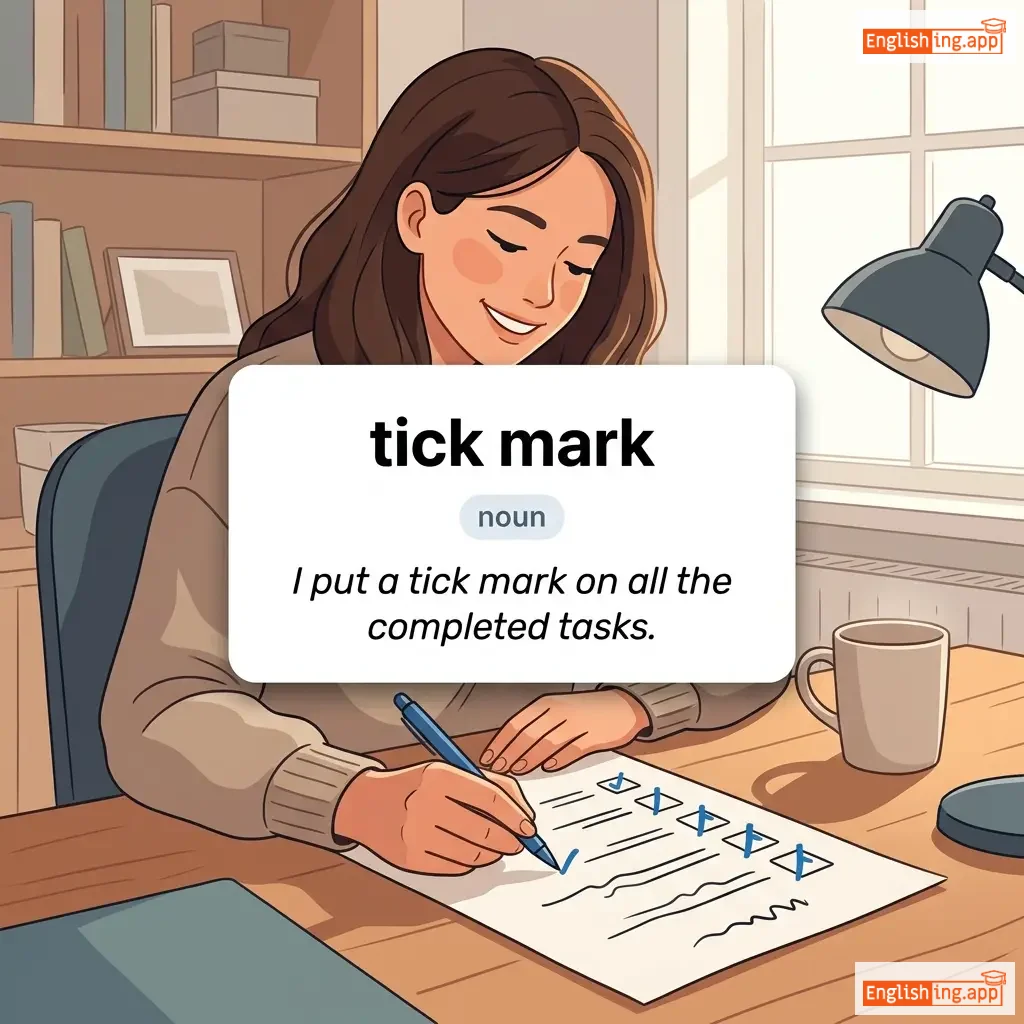
tick mark definition card — visual illustration of the meaning
noun
tɪk mɑːrk
勾选框 (gouxuan kuang)

A mark (✓) used to indicate that something is correct or has been chosen, checked, or dealt with.

"I put a tick mark on all the completed tasks."

"我在所有已完成的任务上打上了勾选框。" (Wo zai suoyou yi wancheng de renwu shang dasha le gouxuan kuang.)
ticket definition card — visual illustration of the meaning
noun
/ˈtɪkɪt/
(piào)

a small piece of paper or card that gives the holder a right to access a service or event

"He bought a ticket to the concert."

"他买了一个音乐会的票。" (Tā mǎi le yī gè yīn yuè huì de piào.)
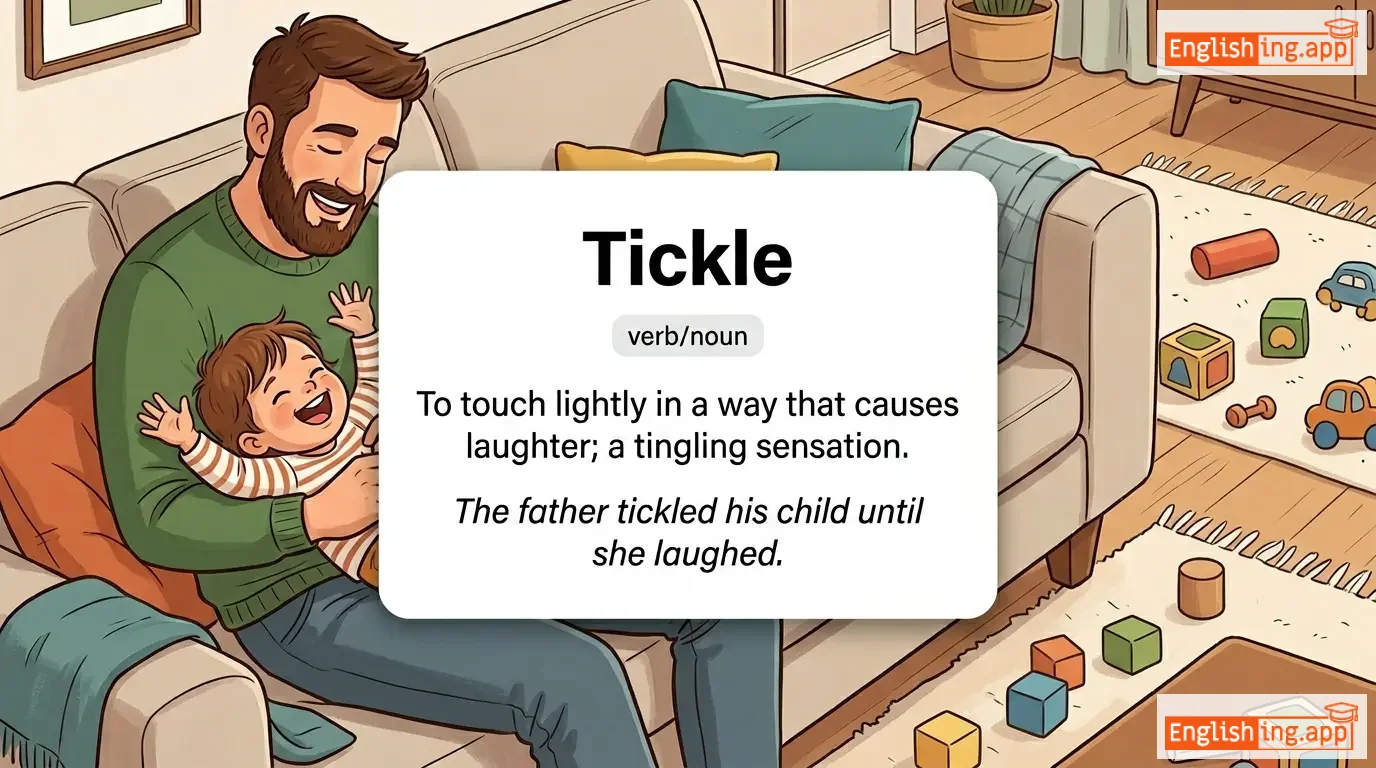
Tickle definition card — visual illustration of the meaning
verb/noun
/ˈtɪk.əl/

To touch lightly in a way that causes laughter; a tingling sensation.

"The father tickled his child until she laughed."

adjective
/ˈtɪklɪʃ/

easily made to laugh by being touched lightly; easily upset or sensitive

"She is very ticklish and bursts into laughter when touched on her feet."

adjective
/ˈtɪd.li/
微醉; 小或微小 (tiddli)

slightly drunk; small or tiny

"After a few drinks, he felt a bit tiddley."

"喝了几杯后,他觉得有点儿tiddli。" (He le ji bei hou, ta juede you dian'er tiddli.)
noun
/taɪd/
潮汐 (chaoxi)

the regular rise and fall of the sea caused by the moon and sun's gravity; a powerful flow or movement

"The fisherman waited for the tide to come in."

"渔夫在等待潮汐的到来。" (Yufu zai dengdai chaoxi de daolai.)
adjective
/ˈtaɪ.di/
整洁; 干净 (zhěngjié; gānjìng)

arranged neatly and in order; clean and organized

"She keeps her room very tidy and organized."

"她保持房间非常整洁和干净。" (Tā bǎochí fángjiān fēicháng zhěngjié hé gānjìng.)
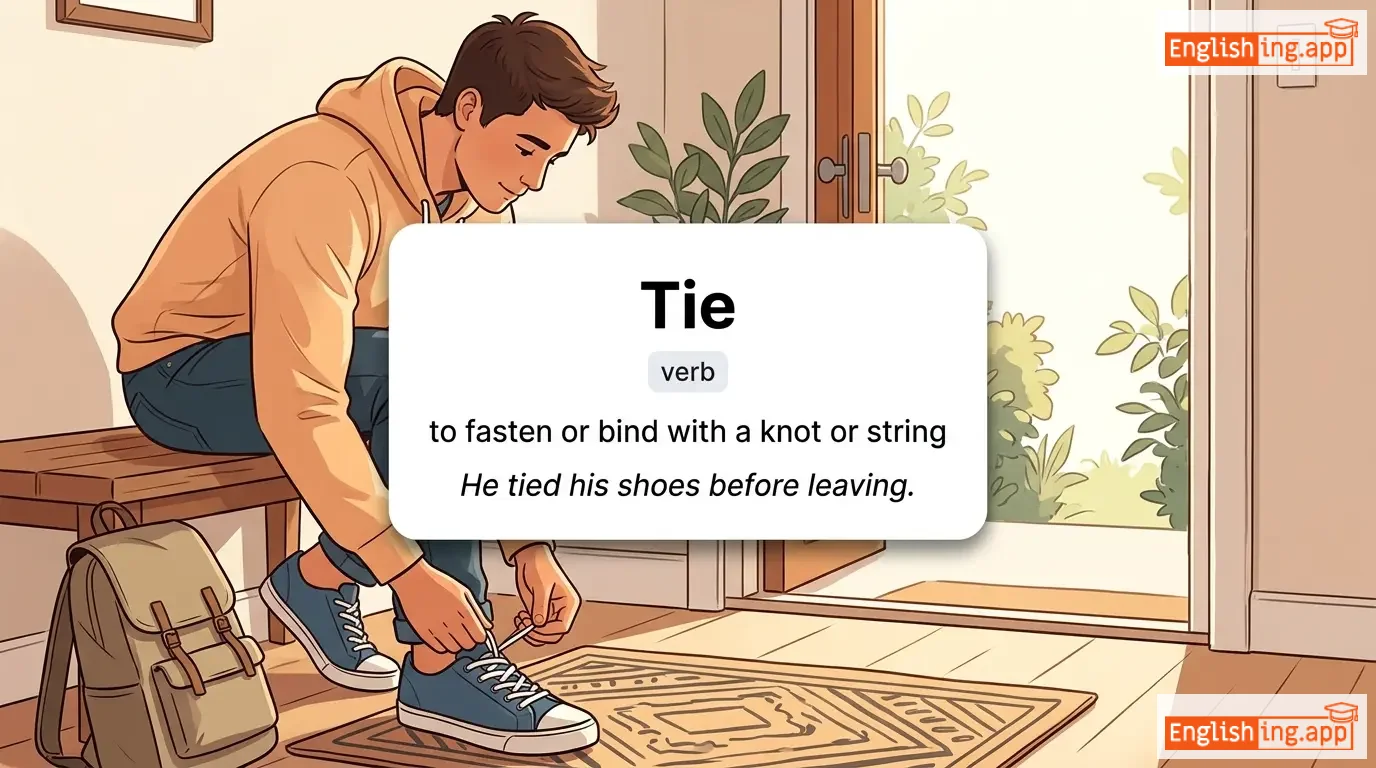
Tie definition card — visual illustration of the meaning
verb
/taɪ/
(xì)

to fasten or bind with a knot or string

"He tied his shoes before leaving."

"他在离开之前系好了鞋带。" (tā zài líkāi zhīqián xì hǎo le xiédài.)
noun
/tɪf/
争执 (zhēngzhí)

a small or petty quarrel or argument

"They had a little tiff over what movie to watch."

"他们因为选哪部电影而发生了小争执。" (Tāmen yīnwèi xuǎn nǎ bù diànyǐng ér fāshēngle xiǎo zhēngzhí.)
noun
/ˈtaɪ.ɡər/
老虎 (lǎohǔ)

a very large solitary cat with a yellow-brown coat striped with black, native to the forests of Asia

"The tiger hunted silently through the jungle."

"老虎悄无声息地穿过丛林。" (Lǎohǔ qiāo wú shēngxī de chuānguò cónglín.)
adjective
/ˈtɪp.tɒp/
极好的;一流的 (jí hǎo de; yī liú de)

of the highest quality; excellent; in perfect condition

"The car is in tiptop condition."

"这辆车处于极好的状态。" (Zhè liàng chē chǔ yú jí hǎo de zhuàng tài)
noun
/ˈtɪʃ.uː/
纸巾 (zhǐjīn)

a piece of soft absorbent paper or fabric

"She used a tissue to wipe her nose."

"她用纸巾擦了擦鼻子。" (Tā yòng zhǐjīn cāle cā bízi.)
adjective
/ˈtaɪərɪŋ/
累人的 (leiren de)

causing someone to feel exhausted or in need of rest

"The long journey was extremely tiring."

"长途旅行非常累人。" (Changtu luxing feichang leiren)
adjective
/ˈtaɪərsəm/
令人疲倦 (lìng rén píbèi)

Causing one to feel bored, annoyed, or tired.

"The long meeting became very tiresome."

"漫长的会议变得非常令人疲倦。" (Màncháng de huìyì biàn dé fēicháng lìng rén píbèi.)
adjective
/ˈtaɪərləs/
不知疲倦 (bù zhī pí juàn)

Showing great effort or energy without becoming tired.

"She worked tirelessly to complete the project on time."

"她不知疲倦地工作,按时完成了项目。" (Tā bù zhī pí juàn de gōngzuò, àn shí wánchéngle xiàngmù.)
Tired definition card — visual illustration of the meaning
adjective
/ˈtaɪərd/
疲劳的 (pilao de)

in need of rest or sleep

"I feel so tired after the long journey."

"长途旅行后我感到非常疲劳。" (Chángtú lǚxíng hòu wǒ gǎndào fēicháng píláo.)
noun
/taɪər/
轮胎 (luntai)

a rubber covering around a wheel

"The car’s tire burst on the highway."

"汽车的轮胎在高速公路上爆裂了。" (Qiche de luntai zai gaosu gonglu shang baolie le.)
noun
/taɪˈreɪd/
长篇怒斥 (chángpiān nùchì)

a long, angry, or critical speech

"The manager launched into a tirade about poor performance."

"经理对糟糕的表现进行了长篇的愤怒演讲。" (Jīnglǐ duì zāogāo de biǎoxiàn jìnxíngle chángpiān de fènnù yǎnjiǎng.)
noun
/tɪnt/
色调 (sètiáo)

a slight shade or variation of a color

"The walls were painted white with a slight blue tint."

"墙壁被涂成了白色,并带有一抹淡蓝色。" (Qiángbì bèi tú chéngle báisè, bìng dàiyǒu yī mǒ dàn lán sè.)
adjective
/ˈtaɪni/
非常小 (fei chang xiao)

very small

"She held a tiny kitten in her hands."

"她手里拿着一只非常小的小猫。" (Ta shou li nazhe yi zhi fei chang xiao de xiao mao.)
noun
/tɪp/
建议 (jianyi)

a small but useful piece of advice

"I received a tip on how to improve my presentation."

"我收到了关于如何改进我的演示的建议。" (Wo shoudao le guanyu ruhe gaijin wo de yanshi de jianyi.)
verb
/ˈtɪŋkər/
修修补补 (xiū xiū bǔ bǔ)

to make small adjustments or repairs to something, often experimentally or imperfectly

"He likes to tinker with old radios in his garage."

"他喜欢在他的车库里修修补补旧收音机。" (Tā xǐhuān zài tā de chēkù lǐ xiū xiū bǔ bǔ jiù shōuyīnjī.)