Vocabulaires

Découvrez, apprenez et maîtrisez le vocabulaire anglais

adjective
/ˈθrɛdˌbɛr/
usé et mince à cause d'une utilisation excessive (use et mince a cause d'une utilisation excessive)

Worn out and thin from too much use; shabby.

"His threadbare coat could not keep him warm in winter."

"Son manteau usé ne pouvait pas le garder au chaud en hiver." (Son manteau usé ne pouvait pas le garder au chaud en hiver.)
Threat definition card — visual illustration of the meaning
noun
/θrɛt/
menace, danger (menas, danjé)

A statement or action indicating intent to cause harm or danger.

"The letter contained a threat against the company."

"La lettre contenait une menace contre l'entreprise." (La lettre contenait une menace contre l'entreprise.)
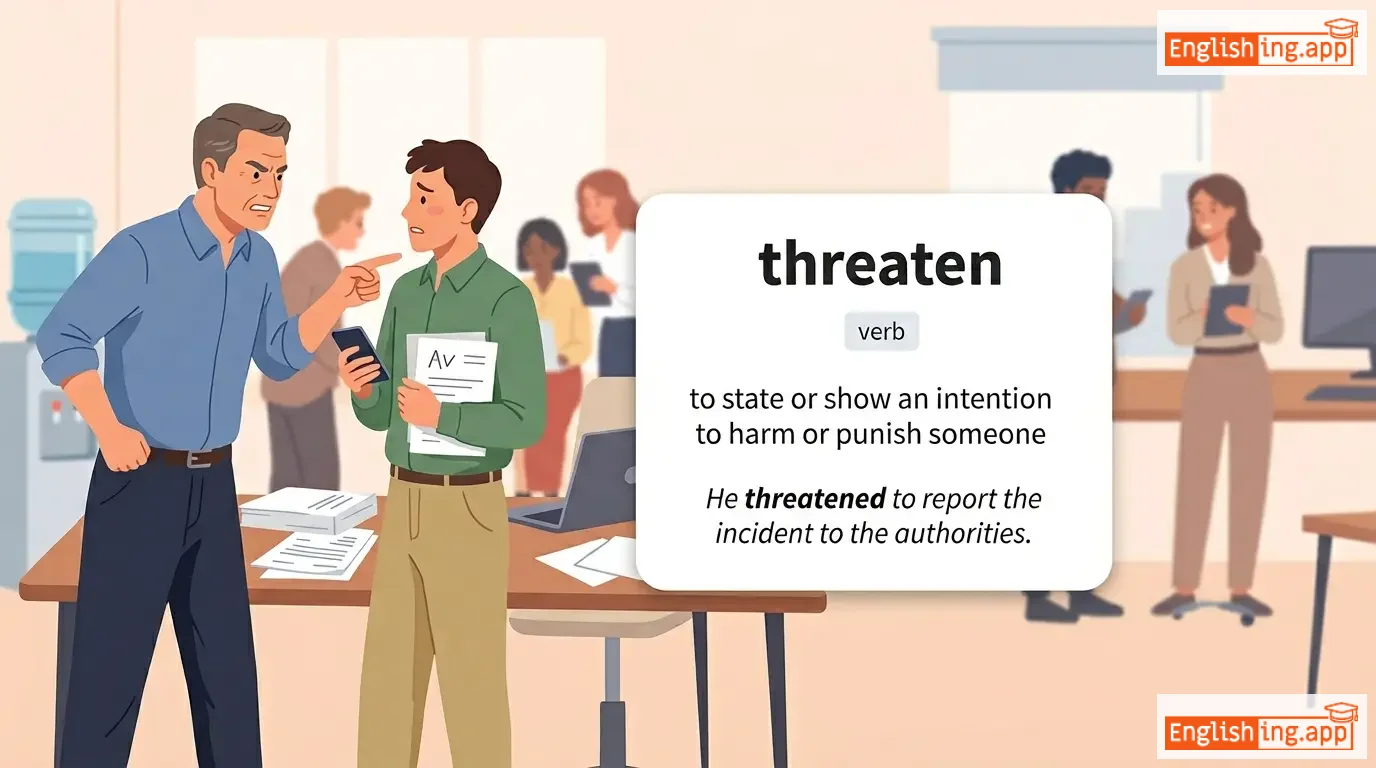
threaten definition card — visual illustration of the meaning
verb
/ˈθrɛtən/
bonheur (bonheur)

to state or show an intention to harm or punish someone

"He threatened to report the incident to the authorities."

"Elle n'a pas pu cacher son bonheur lorsqu'elle a reçu le prix." (Elle n'a pas pu cacher son bonheur lorsqu'elle a reçu le prix.)
adjective
/ˈθret.ən.ɪŋ/
menaçant; intimidant (menasant; intimidant)

expressing a threat; menacing; intimidating

"The dark clouds looked threatening before the storm."

"Les nuages sombres semblaient menaçants avant la tempête." (Les nuages sombres semblaient menaçants avant la tempête.)
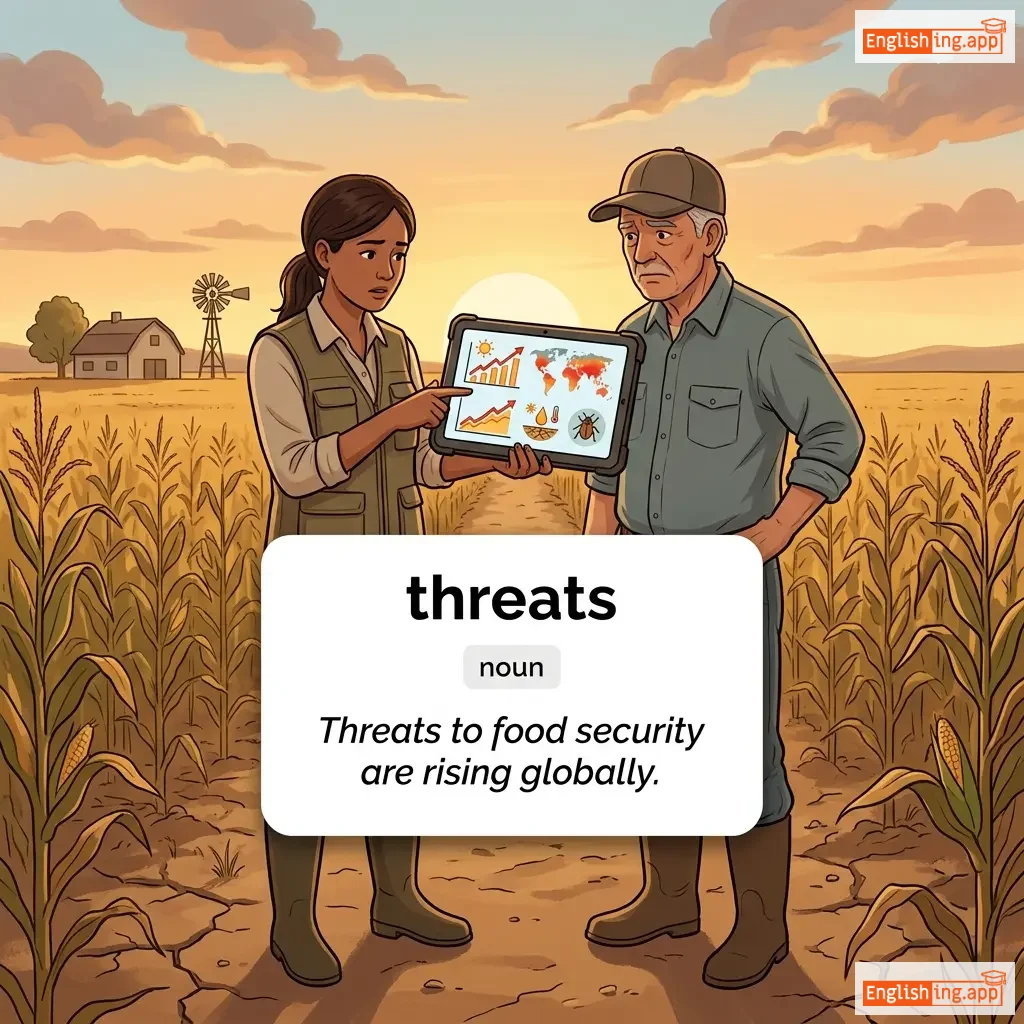
threats definition card — visual illustration of the meaning
noun
θrets
menaces (menaces)

A statement of an intention to inflict pain, injury, damage, or other hostile action.

"Threats to food security are rising globally."

"Les menaces à la sécurité alimentaire augmentent à l'échelle mondiale." (Les menaces a la securite alimentaire augmentent a l'echelle mondiale.)
numeral
/θriː/
trois (trois)

the number equivalent to the sum of two and one

"She has three dogs at home."

"Elle a trois chiens à la maison." (Elle a trois chiens à la maison.)
noun
/ˈθrɛnədi/
threnodie, chant funèbre (threnodie, chant funebre)

A song, poem, or speech of mourning for someone who has died; a lament.

"The poet composed a moving threnody for the fallen soldiers."

"Le poète a composé une threnodie émouvante pour les soldats tombés." (Le poete a compose une threnodie emouvante pour les soldats tombes.)
verb
/θrɛʃ/
battre (battre)

to separate grain from the plant by beating or by using a machine

"Farmers used machines to thresh the wheat after harvest."

"Les agriculteurs ont utilisé des machines pour battre le blé après la récolte." (Les agriculteurs ont utilisé des machines pour battre le blé après la récolte.)
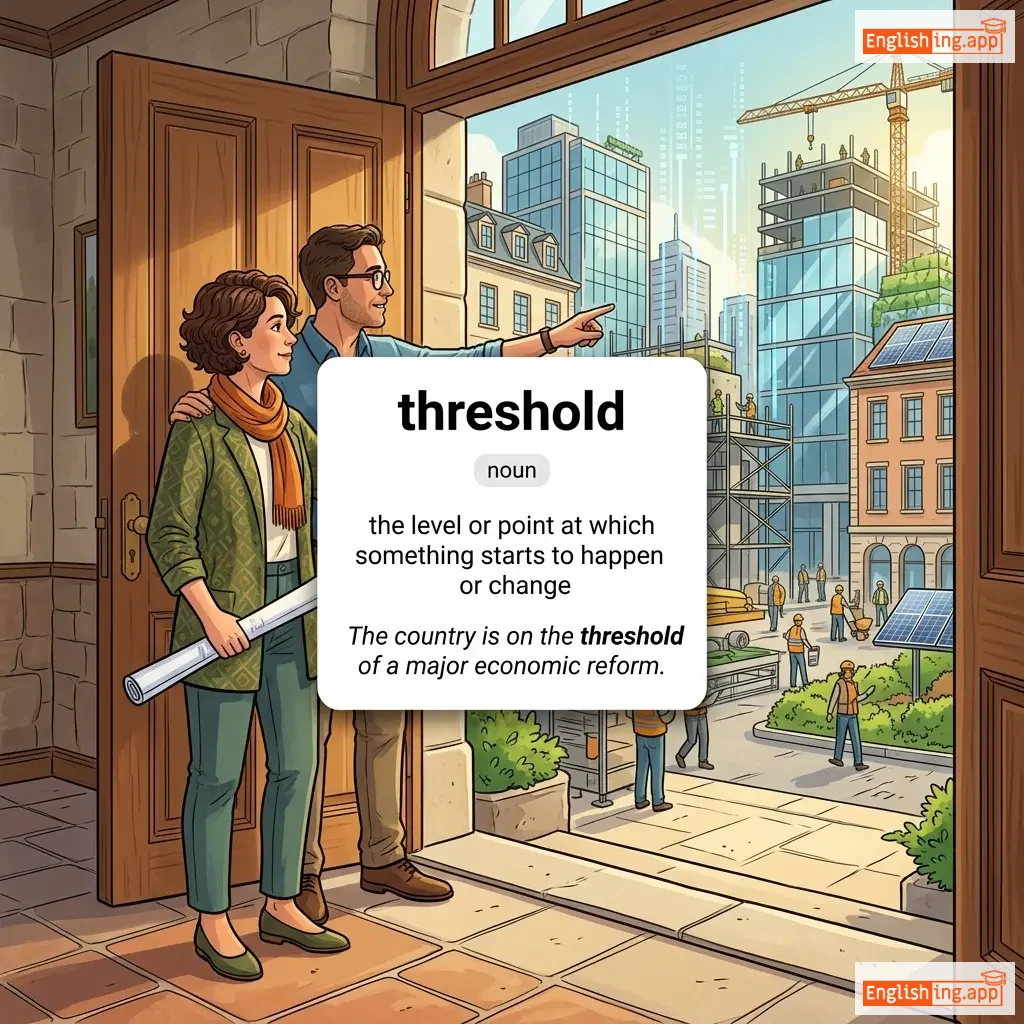
threshold definition card — visual illustration of the meaning
noun
/ˈθreʃ.həʊld/
seuil (seuil)

the level or point at which something starts to happen or change

"The country is on the threshold of a major economic reform."

"Le pays est au seuil d'une réforme économique majeure." (Le pays est au seuil d'une réforme économique majeure.)
adjective
/ˈθrɪfti/
économe (économe)

using money and resources carefully and not wastefully

"She is very thrifty and always saves money for the future."

"Elle est très économe et économise toujours de l'argent pour l'avenir." (Elle est très économe et économise toujours de l'argent pour l'avenir.)
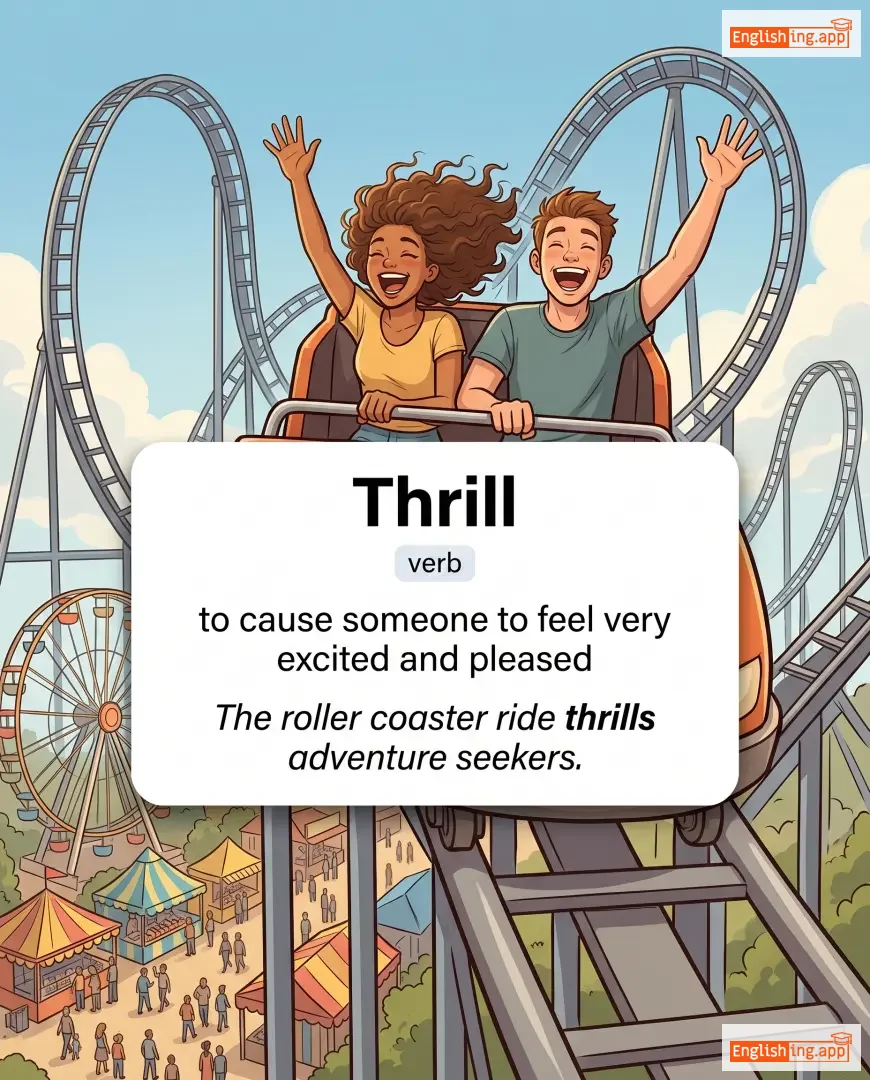
Thrill definition card — visual illustration of the meaning
verb
/θrɪl/
exciter (exciter)

to cause someone to feel very excited and pleased

"The roller coaster ride thrills adventure seekers."

"Les montagnes russes excitent les amateurs d'aventure." (Les montagnes russes excitent les amateurs d'aventure.)
adjective
/θrɪld/
ravi (ravi)

extremely happy or excited

"She was thrilled with the surprise party."

"Elle était ravie de la fête surprise." (Elle était ravie de la fête surprise.)
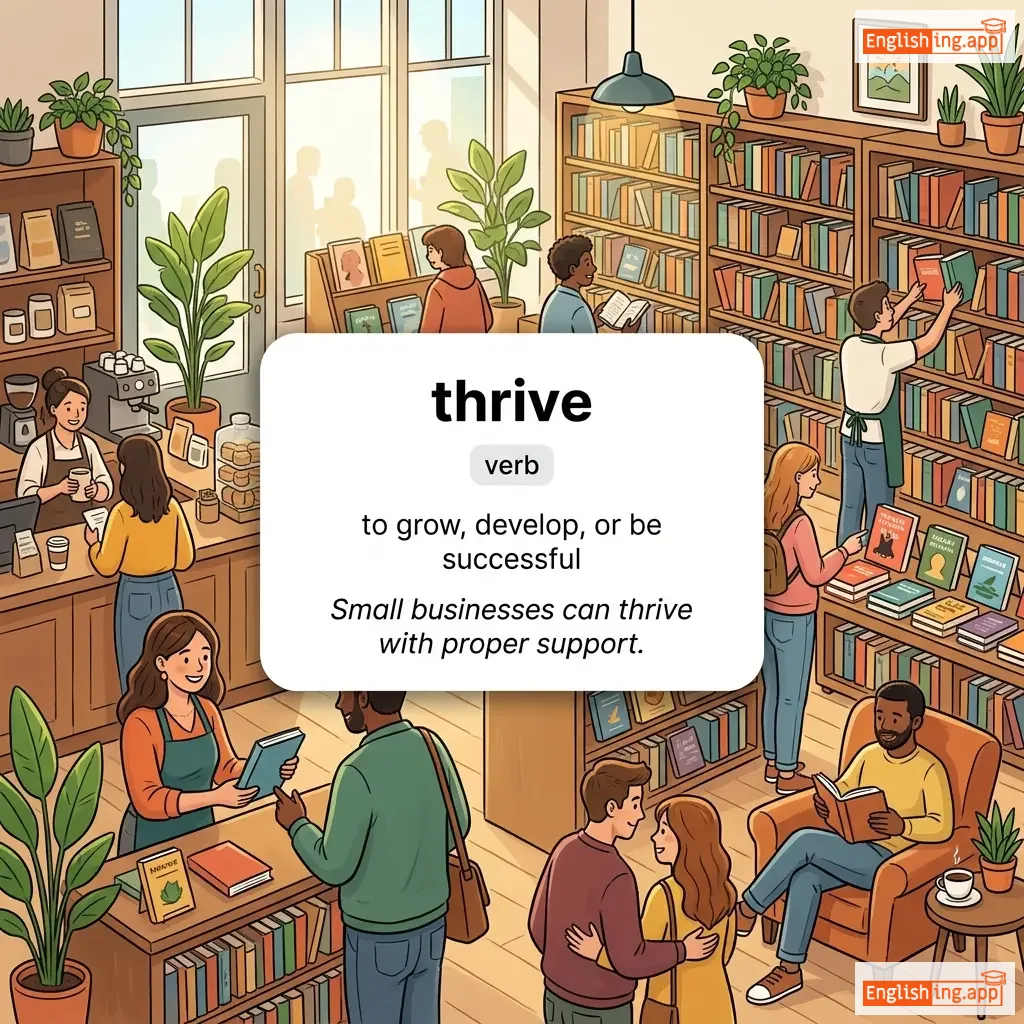
thrive definition card — visual illustration of the meaning
verb
/θraɪv/
prospérer (prosperer)

to grow, develop, or be successful

"Small businesses can thrive with proper support."

"Les petites entreprises peuvent prospérer avec un soutien approprié." (Les petites entreprises peuvent prosperer avec un soutien approprie.)
noun
/θroʊt/
gorge (gorge)

the front part of the neck, containing the pharynx and larynx

"He felt a lump in his throat while speaking."

"Il a ressenti une boule dans sa gorge en parlant." (Il a ressenti une boule dans sa gorge en parlant.)
verb
/θrɒb/
battre (battre)

to beat or pulse strongly, often with pain

"His head began to throb after the long day."

"Sa tête a commencé à battre après la longue journée." (Sa tête a commencé à battre après la longue journée.)
noun
/θroʊz/
agonie intense (agonie intense)

intense or violent pain and struggle, often at the beginning or end of something

"The country was in the throes of a political crisis."

"Le pays était dans l'agonie intense d'une crise politique." (Le pays était dans l'agonie intense d'une crise politique.)
noun/verb
/θrɒŋ/
foule (foule)

A large, densely packed crowd of people or animals; to fill or be present in a place in large numbers.

"Tourists thronged the streets during the festival."

"Les touristes ont envahi les rues pendant le festival." (Les touristes ont envahi les rues pendant le festival.)
verb/noun
/ˈθrɒt.əl/
étrangler/contrôler la vitesse (etrangler/controle vitesse)

To choke or strangle; to control the flow of fuel or power in an engine.

"The driver throttled the engine to slow down the car."

"Le conducteur a ralenti la voiture en réduisant la puissance du moteur." (Le conducteur a ralenti la voiture en réduisant la puissance du moteur.)
preposition
/θruː/
à travers de (a travers de)

moving in one side and out the other side of something

"The train passed through the tunnel."

"Le train est passé à travers le tunnel." (Le train est passe a travers le tunnel.)
preposition
/θruːˈaʊt/
tout au long (tou o lon)

in every part of a place or during the whole time of an event

"She worked throughout the night."

"Elle a travaillé toute la nuit." (Elle a travaillé toute la nuit.)
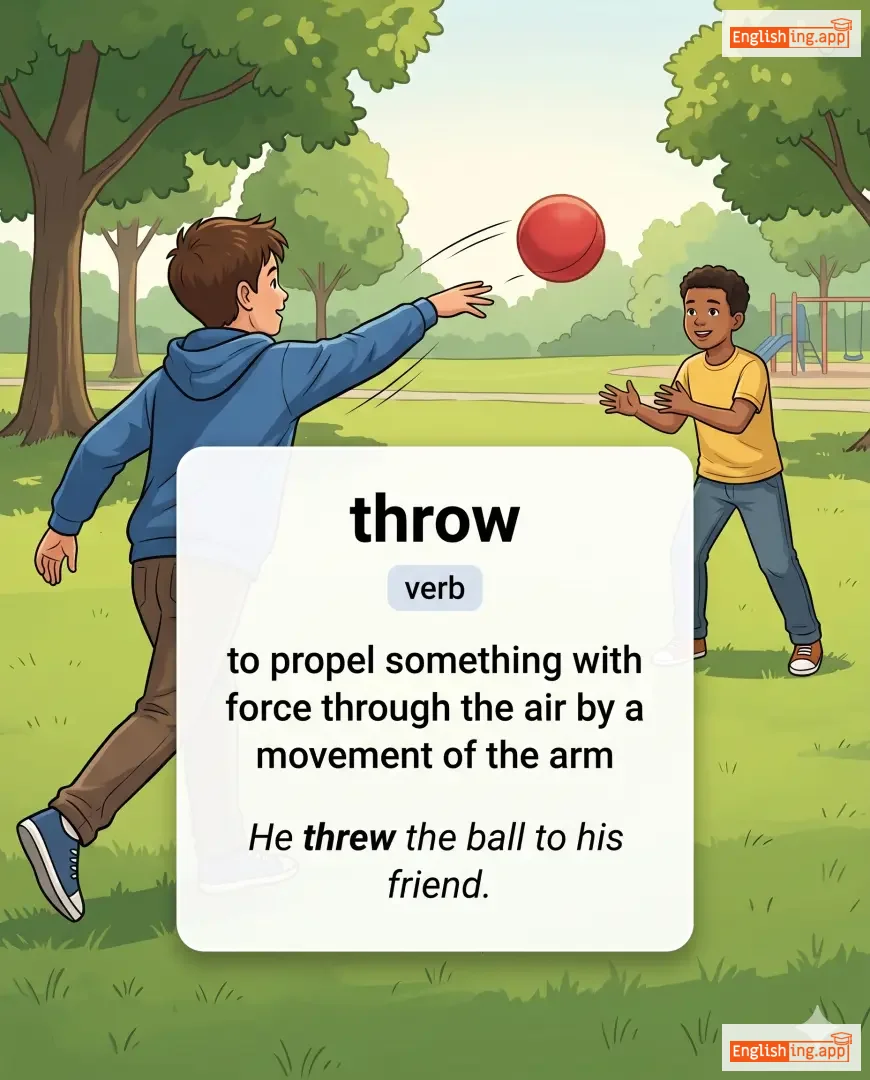
throw definition card — visual illustration of the meaning
verb
/θroʊ/
lancer (lancer)

to propel something with force through the air by a movement of the arm

"He threw the ball to his friend."

"Il a lancé la balle à son ami." (Il a lancé la balle à son ami.)
noun
/θʌm/
pouce (pous)

the short, thick finger on the side of the hand, used for gripping and holding things

"He gave a thumbs-up to show his approval."

"Il a levé son pouce pour montrer son approbation." (Il a levé son pouce pour montrer son approbation.)
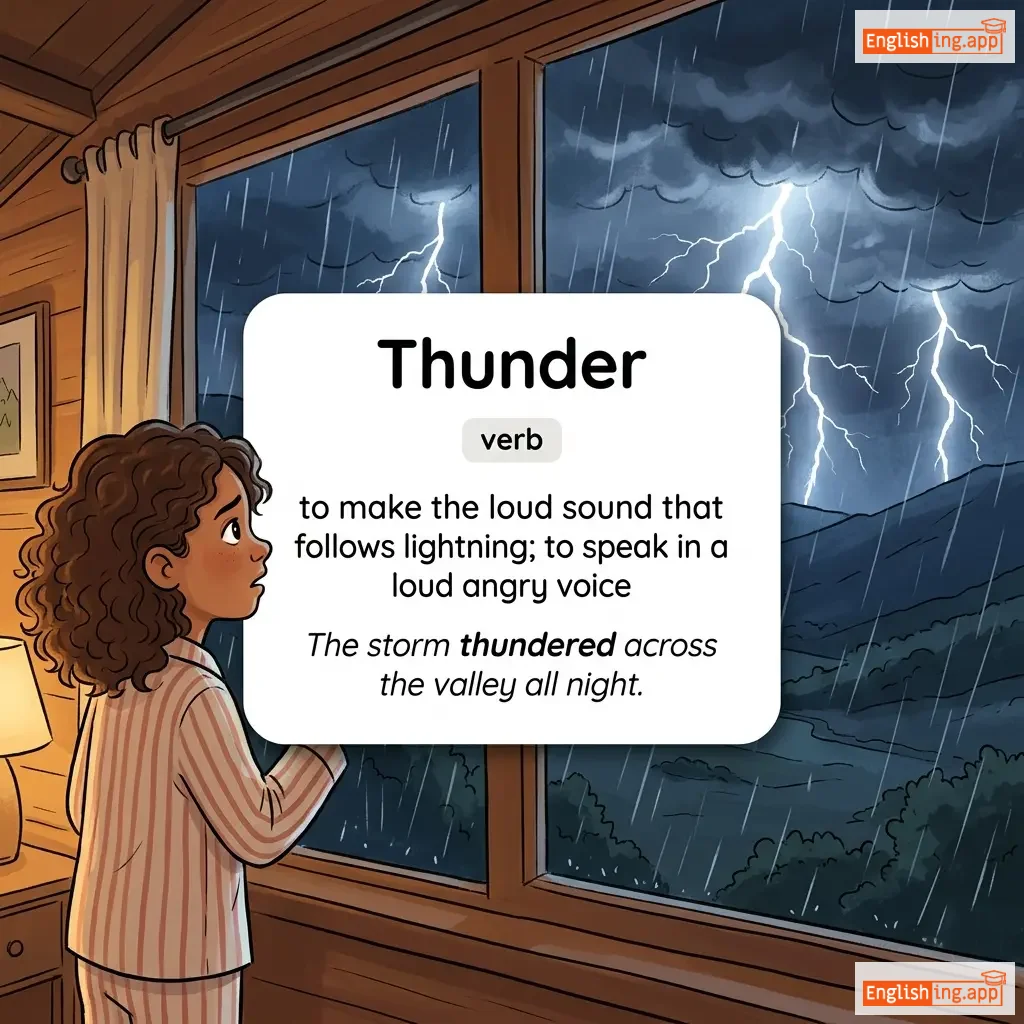
Thunder definition card — visual illustration of the meaning
noun
/ˈθʌn.dər/
tonnerre (tonnerre)

the loud rumbling or crashing noise heard after a lightning flash

"We heard thunder during the storm last night."

"Nous avons entendu le tonnerre pendant la tempête de la nuit dernière." (Nous avons entendu le tonnerre pendant la tempete de la nuit derniere.)
noun
/ˈθɜːrzdeɪ/
jeudi (jeudi)

The fifth day of the week, following Wednesday and preceding Friday.

"We have a meeting scheduled for Thursday."

"Nous avons une réunion prévue jeudi." (Nous avons une reunion prevue jeudi.)
adverb
/ðʌs/
ainsi (ainsi)

as a result or consequence of something previously stated

"He was late, thus he missed the meeting."

"Il est arrivé en retard, ainsi il a manqué la réunion." (Il est arrive en retard, ainsi il a manque la reunion.)
verb
/θwɔːrt/
contrecarrer (contrecarrer)

To prevent someone from accomplishing something; to oppose successfully.

"The police thwarted the robbery attempt."

"La police a contrecarré la tentative de vol." (La police a contrecarré la tentative de vol.)
noun
/taɪm/
thym (thym)

A small aromatic herb used in cooking and medicine.

"She sprinkled thyme on the roasted chicken."

"Elle a saupoudré du thym sur le poulet rôti." (Elle a saupoudré du thym sur le poulet rôti.)
noun
/tiˈɑː.rə/
tiara (tiara)

a jeweled ornamental crown worn on formal occasions

"The princess wore a sparkling diamond tiara at the royal ball."

"La princesse a porté une tiara en diamant étincelant lors du bal royal." (La princesse a porté une tiara en diamant étincelant lors du bal royal)
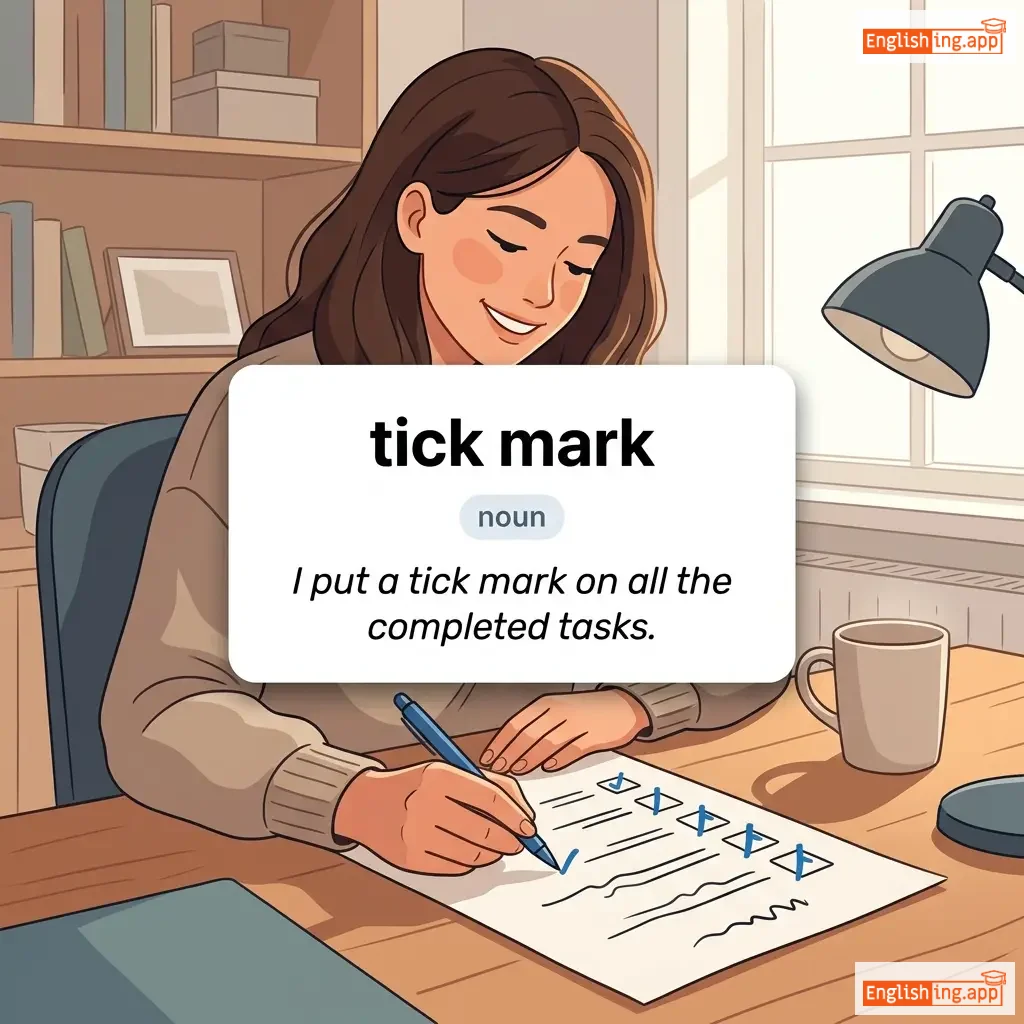
tick mark definition card — visual illustration of the meaning
noun
tɪk mɑːrk
coche de vérification (coche de verification)

A mark (✓) used to indicate that something is correct or has been chosen, checked, or dealt with.

"I put a tick mark on all the completed tasks."

"J'ai mis un coche de vérification sur toutes les tâches terminées." (J'ai mis un coche de vérification sur toutes les tâches terminées.)
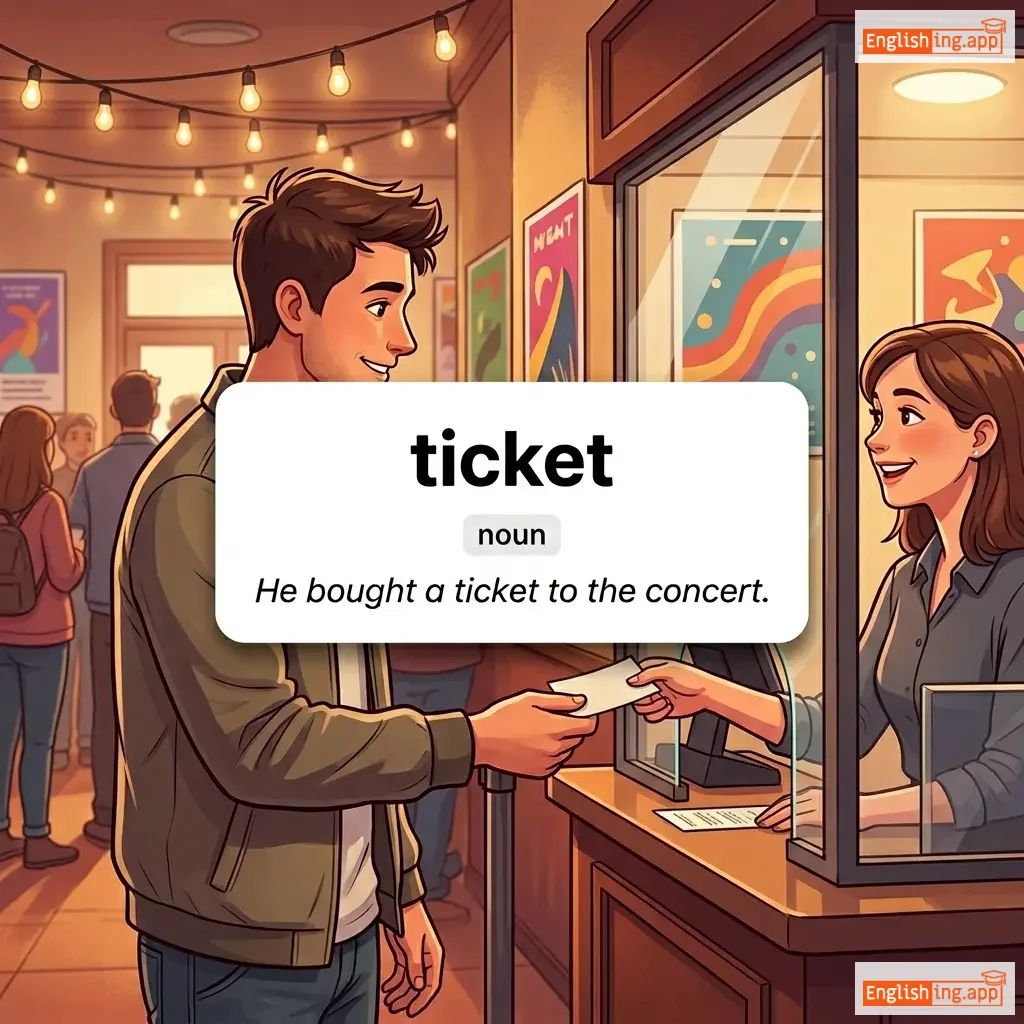
ticket definition card — visual illustration of the meaning
noun
/ˈtɪkɪt/
billet (billet)

a small piece of paper or card that gives the holder a right to access a service or event

"He bought a ticket to the concert."

"Il a acheté un billet pour le concert." (Il a acheté un billet pour le concert.)
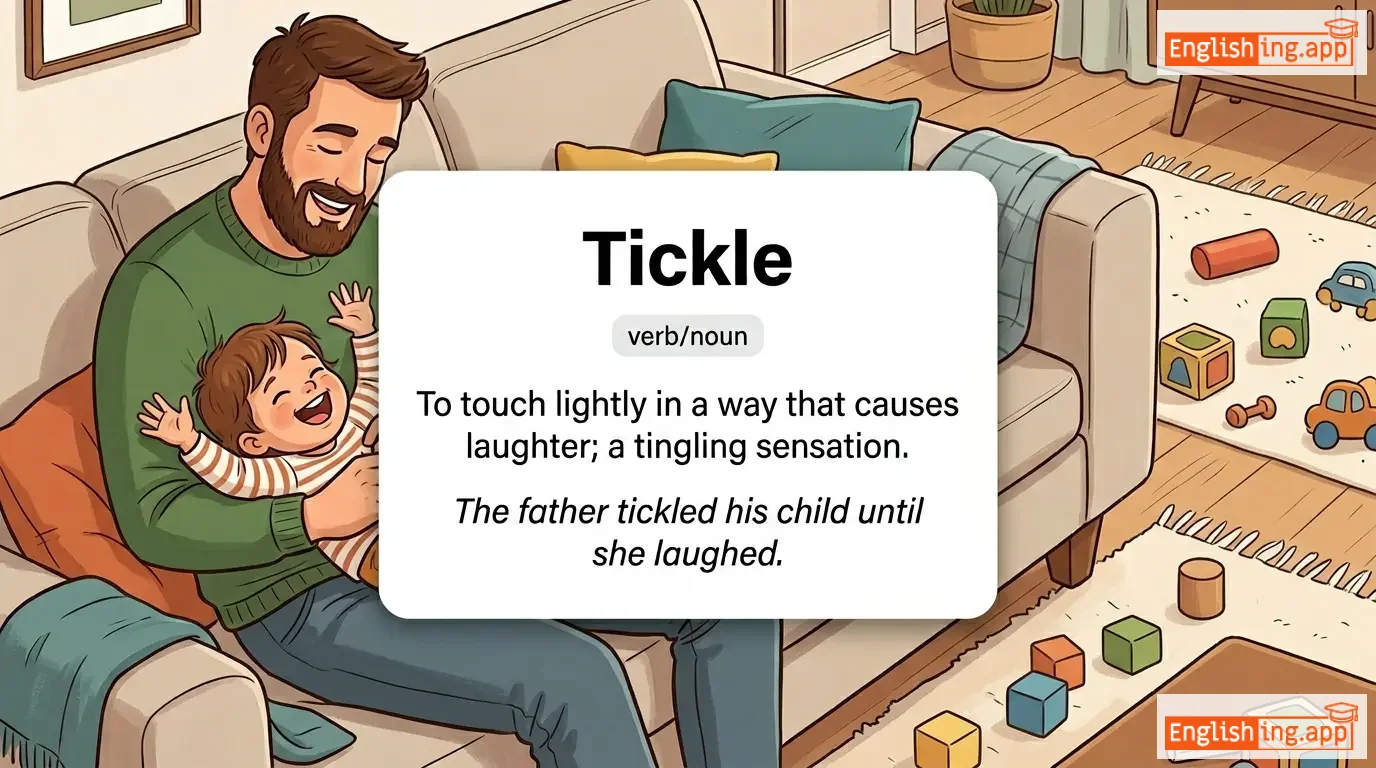
Tickle definition card — visual illustration of the meaning
verb/noun
/ˈtɪk.əl/
chatouiller (chatouiller)

To touch lightly in a way that causes laughter; a tingling sensation.

"The father tickled his child until she laughed."

"Le père a chatouillé son enfant jusqu'à ce qu'elle rie." (Le père a chatouillé son enfant jusqu'à ce qu'elle rie.)
adjective
/ˈtɪklɪʃ/
chatouilleuse, sensible (chatouilleuse, sensible)

easily made to laugh by being touched lightly; easily upset or sensitive

"She is very ticklish and bursts into laughter when touched on her feet."

"Elle est très chatouilleuse et éclate de rire lorsqu'on lui touche les pieds." (Elle est très chatouilleuse et éclate de rire lorsqu'on lui touche les pieds.)
adjective
/ˈtɪd.li/
légèrement ivre; petit ou minuscule (tiddli)

slightly drunk; small or tiny

"After a few drinks, he felt a bit tiddley."

"Après quelques verres, il se sentit un peu tiddley." (Apres quelques verres, il se sentit un peu tiddley.)
noun
/taɪd/
marée (maree)

the regular rise and fall of the sea caused by the moon and sun's gravity; a powerful flow or movement

"The fisherman waited for the tide to come in."

"Le pêcheur attendait que la marée monte." (Le pecheur attendait que la maree monte.)
adjective
/ˈtaɪ.di/
ordonné; propre (ordonne; propre)

arranged neatly and in order; clean and organized

"She keeps her room very tidy and organized."

"Elle garde sa chambre très ordonnée et propre." (Elle garde sa chambre très ordonnée et propre.)
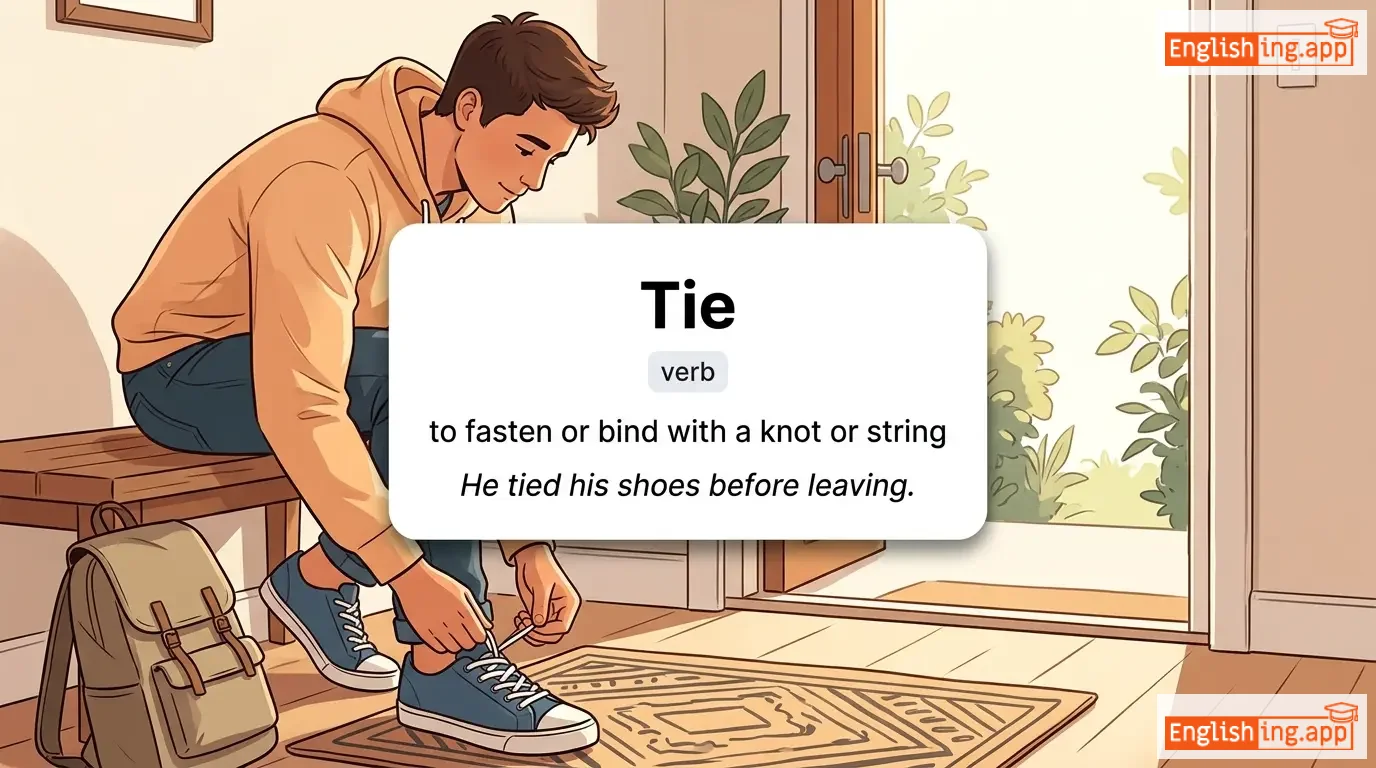
Tie definition card — visual illustration of the meaning
verb
/taɪ/
attacher (attacher)

to fasten or bind with a knot or string

"He tied his shoes before leaving."

"il a attaché ses chaussures avant de partir." (il a attaché ses chaussures avant de partir.)
noun
/tɪf/
dispute (dispute)

a small or petty quarrel or argument

"They had a little tiff over what movie to watch."

"Ils ont eu une petite dispute sur quel film regarder." (Ils ont eu une petite dispute sur quel film regarder.)
noun
/ˈtaɪ.ɡər/
tigre (tigre)

a very large solitary cat with a yellow-brown coat striped with black, native to the forests of Asia

"The tiger hunted silently through the jungle."

"Le tigre chassait silencieusement à travers la jungle." (Le tigre chassait silencieusement à travers la jungle.)
adjective
/ˈtɪp.tɒp/
excellente; de première qualité (excellente; de premiere qualite)

of the highest quality; excellent; in perfect condition

"The car is in tiptop condition."

"La voiture est en excellent état." (La voiture est en excellent etat)
noun
/ˈtɪʃ.uː/
mouchoir (mouchoir)

a piece of soft absorbent paper or fabric

"She used a tissue to wipe her nose."

"Elle a utilisé un mouchoir pour se moucher." (Elle a utilise un mouchoir pour se moucher.)
adjective
/ˈtaɪərɪŋ/
fatigant (fatigant)

causing someone to feel exhausted or in need of rest

"The long journey was extremely tiring."

"Le long voyage était extrêmement fatigant." (Le long voyage etait extremement fatigant)
adjective
/ˈtaɪərsəm/
pénible (penible)

Causing one to feel bored, annoyed, or tired.

"The long meeting became very tiresome."

"La longue réunion est devenue très pénible." (La longue réunion est devenue très pénible.)
adjective
/ˈtaɪərləs/
inlassable (inlassable)

Showing great effort or energy without becoming tired.

"She worked tirelessly to complete the project on time."

"Elle a travaillé sans relâche pour terminer le projet à temps." (Elle a travaillé sans relâche pour terminer le projet à temps.)
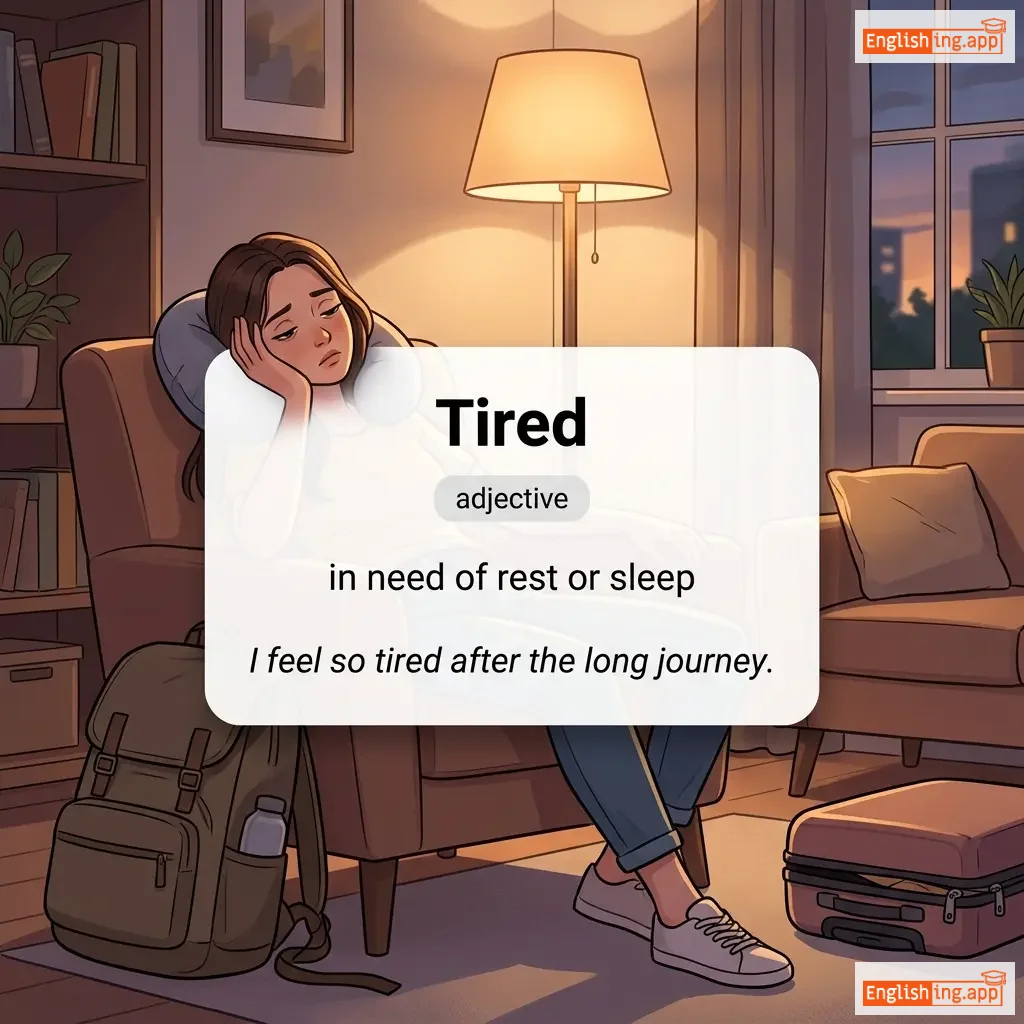
Tired definition card — visual illustration of the meaning
adjective
/ˈtaɪərd/
fatigué (fatigue)

in need of rest or sleep

"I feel so tired after the long journey."

"Je me sens tellement fatigué après le long voyage." (Je me sens tellement fatigue apres le long voyage.)
noun
/taɪər/
pneu (pneu)

a rubber covering around a wheel

"The car’s tire burst on the highway."

"Le pneu de la voiture a éclaté sur l'autoroute." (Le pneu de la voiture a éclaté sur l'autoroute.)
noun
/taɪˈreɪd/
diatribe (diatribe)

a long, angry, or critical speech

"The manager launched into a tirade about poor performance."

"Le responsable a lancé une diatribe sur la mauvaise performance." (Le responsable a lancé une diatribe sur la mauvaise performance.)
noun
/tɪnt/
teinte (teinte)

a slight shade or variation of a color

"The walls were painted white with a slight blue tint."

"Les murs ont été peints en blanc avec une légère teinte bleue." (Les murs ont été peints en blanc avec une légère teinte bleue.)
adjective
/ˈtaɪni/
très petit (tres petit)

very small

"She held a tiny kitten in her hands."

"Elle a tenu un petit chat dans ses mains." (Elle a tenu un petit chat dans ses mains.)
noun
/tɪp/
conseil (conseil)

a small but useful piece of advice

"I received a tip on how to improve my presentation."

"J'ai reçu un conseil sur la façon d'améliorer ma présentation." (J'ai recu un conseil sur la facon d'ameliorer ma presentation.)
verb
/ˈtɪŋkər/
bricoler (bricoler)

to make small adjustments or repairs to something, often experimentally or imperfectly

"He likes to tinker with old radios in his garage."

"Il aime bricoler avec des vieilles radios dans son garage." (Il aime bricoler avec des vieilles radios dans son garage.)