Vocabularios

Descubra, aprenda y domine el vocabulario en inglés

adjective
/ˈθrɛdˌbɛr/
desgastado y fino debido al uso excesivo (desgastado y fino debido al uso excesivo)

Worn out and thin from too much use; shabby.

"His threadbare coat could not keep him warm in winter."

"Su abrigo desgastado no pudo mantenerlo caliente en invierno." (Su abrigo desgastado no pudo mantenerlo caliente en invierno.)
Threat definition card — visual illustration of the meaning
noun
/θrɛt/
amenaza, peligro (amenaza, peligro)

A statement or action indicating intent to cause harm or danger.

"The letter contained a threat against the company."

"La carta contenía una amenaza contra la empresa." (La carta contenía una amenaza contra la empresa.)
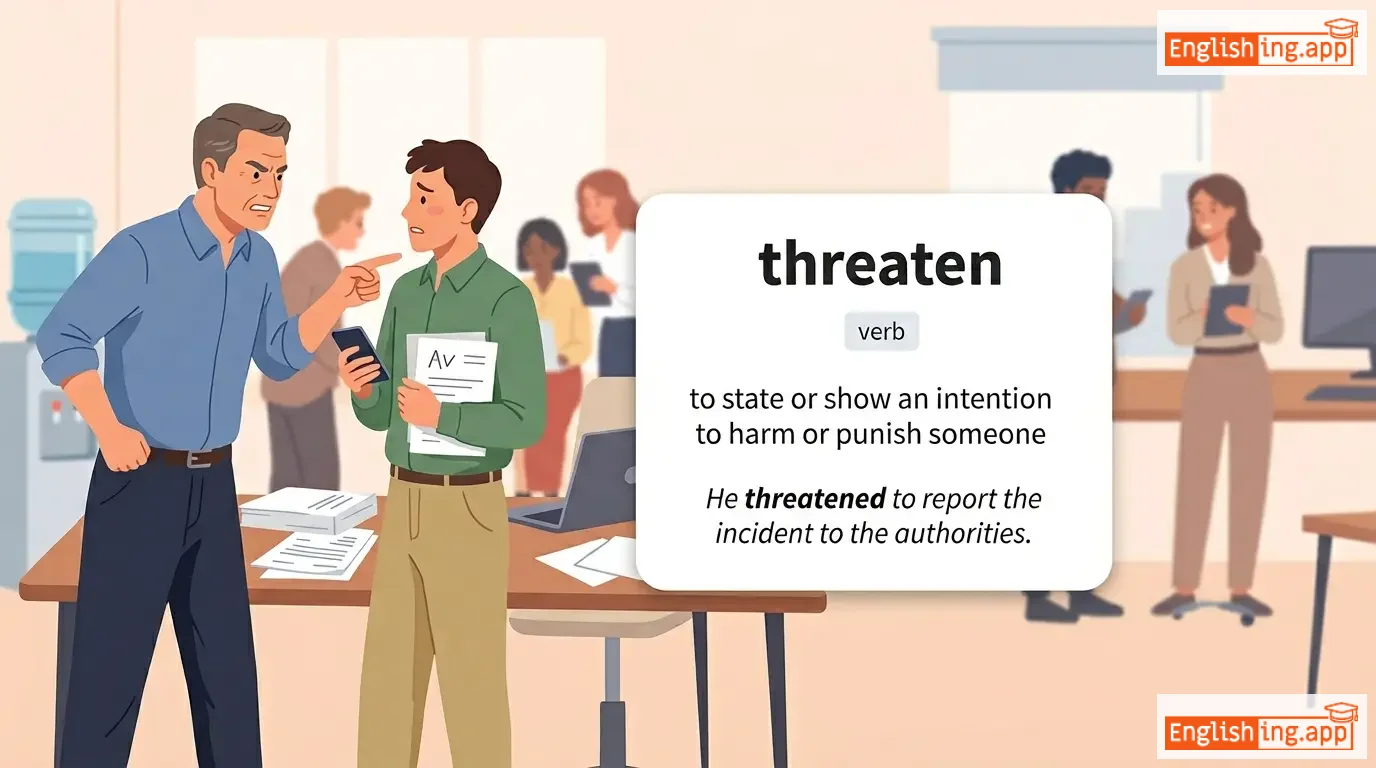
threaten definition card — visual illustration of the meaning
verb
/ˈθrɛtən/
felicidad (felicidad)

to state or show an intention to harm or punish someone

"He threatened to report the incident to the authorities."

"No pudo esconder su felicidad cuando recibió el premio." (No pudo esconder su felicidad cuando recibió el premio.)
adjective
/ˈθret.ən.ɪŋ/
amenazante; intimidante (amenazante; intimidante)

expressing a threat; menacing; intimidating

"The dark clouds looked threatening before the storm."

"Las nubes oscuras se veían amenazantes antes de la tormenta." (Las nubes oscuras se veian amenazantes antes de la tormenta.)
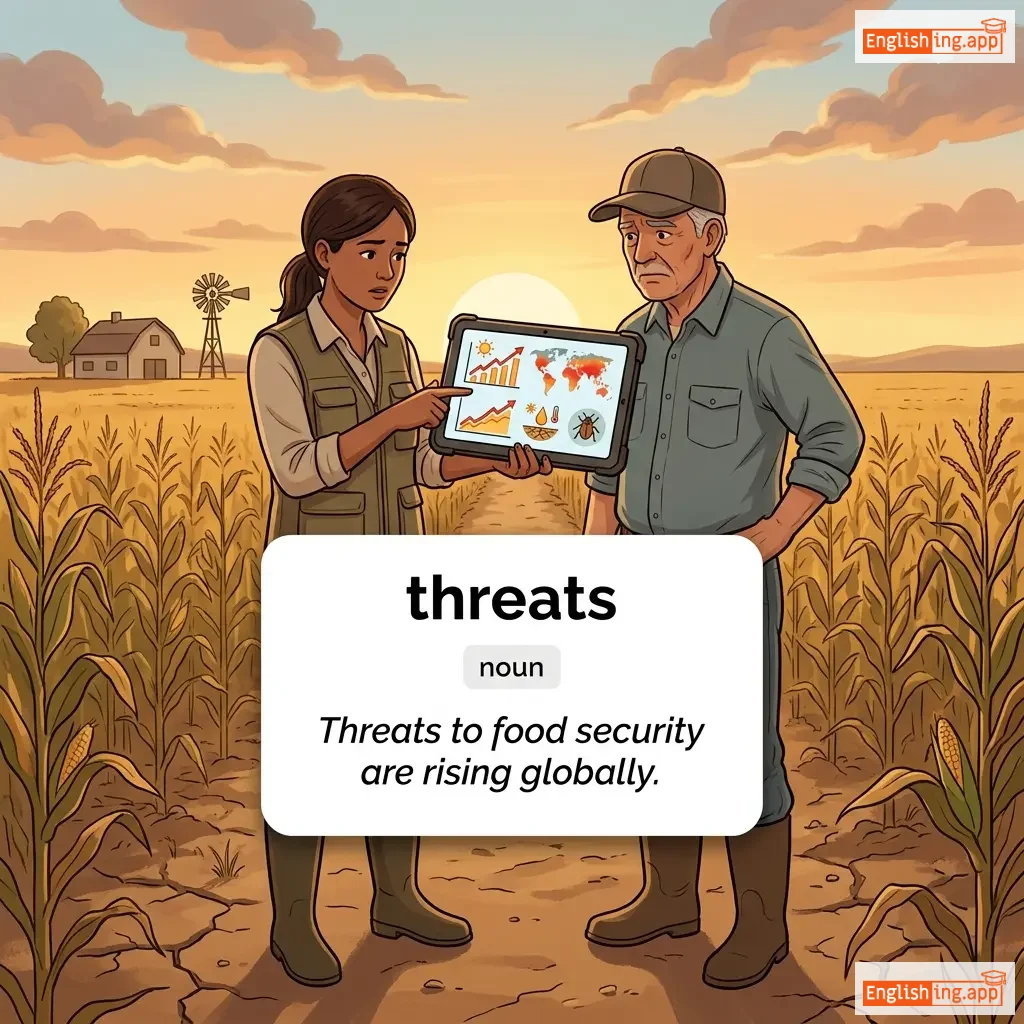
threats definition card — visual illustration of the meaning
noun
θrets
amenazas (amenazas)

A statement of an intention to inflict pain, injury, damage, or other hostile action.

"Threats to food security are rising globally."

"Las amenazas a la seguridad alimentaria están aumentando a nivel mundial." (Las amenazas a la seguridad alimentaria estan aumentando a nivel mundial.)
numeral
/θriː/
tres (tres)

the number equivalent to the sum of two and one

"She has three dogs at home."

"Ella tiene tres perros en casa." (Ella tiene tres perros en casa.)
noun
/ˈθrɛnədi/
canto fúnebre, elegía (canto funebre, elegia)

A song, poem, or speech of mourning for someone who has died; a lament.

"The poet composed a moving threnody for the fallen soldiers."

"El poeta compuso una conmovedora elegía para los soldados caídos." (El poeta compuso una conmovedora elegia para los soldados caidos.)
verb
/θrɛʃ/
trillar (trillar)

to separate grain from the plant by beating or by using a machine

"Farmers used machines to thresh the wheat after harvest."

"Los agricultores usaron máquinas para trillar el trigo después de la cosecha." (Los agricultores usaron máquinas para trillar el trigo después de la cosecha.)
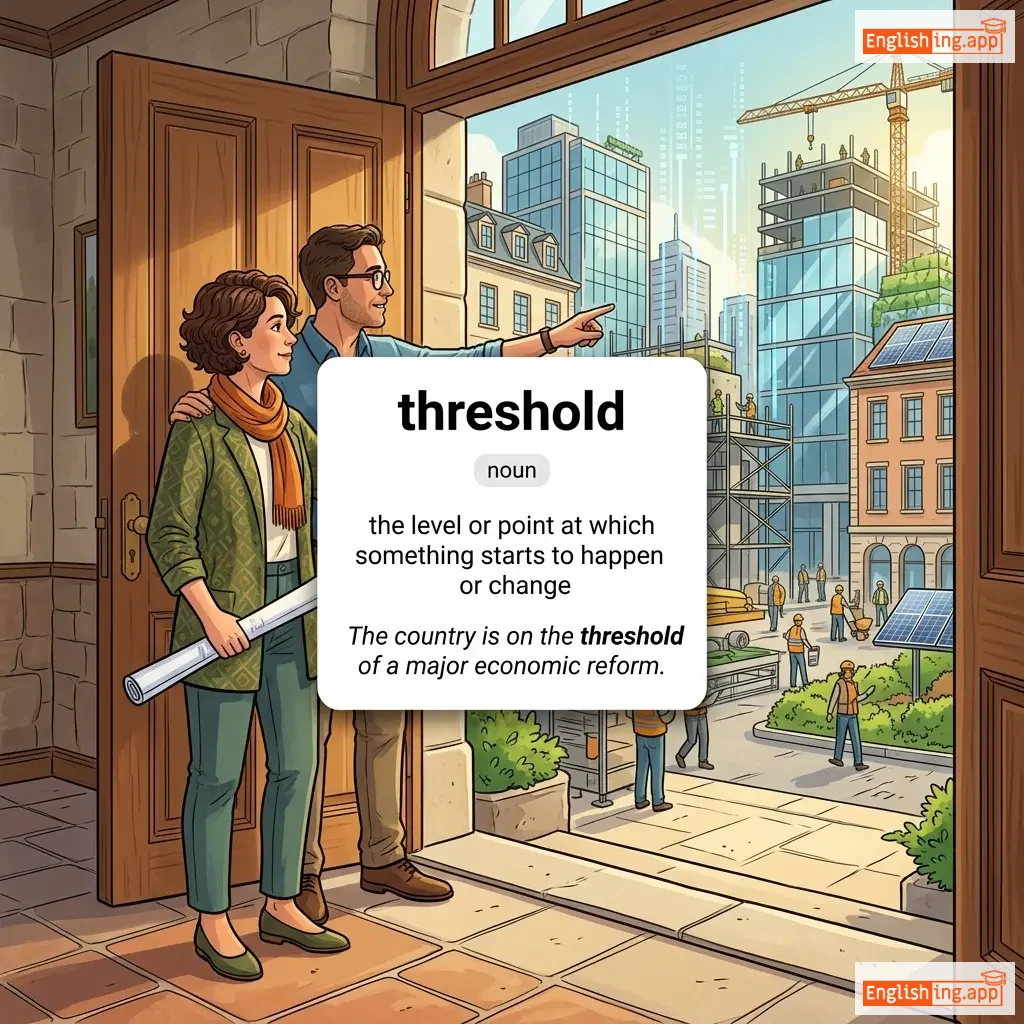
threshold definition card — visual illustration of the meaning
noun
/ˈθreʃ.həʊld/
umbral (umbral)

the level or point at which something starts to happen or change

"The country is on the threshold of a major economic reform."

"El país está en el umbral de una importante reforma económica." (El pais esta en el umbral de una importante reforma economica.)
adjective
/ˈθrɪfti/
ahorrador (ahorrador)

using money and resources carefully and not wastefully

"She is very thrifty and always saves money for the future."

"Ella es muy ahorradora y siempre ahorra dinero para el futuro." (Ella es muy ahorradora y siempre ahorra dinero para el futuro.)
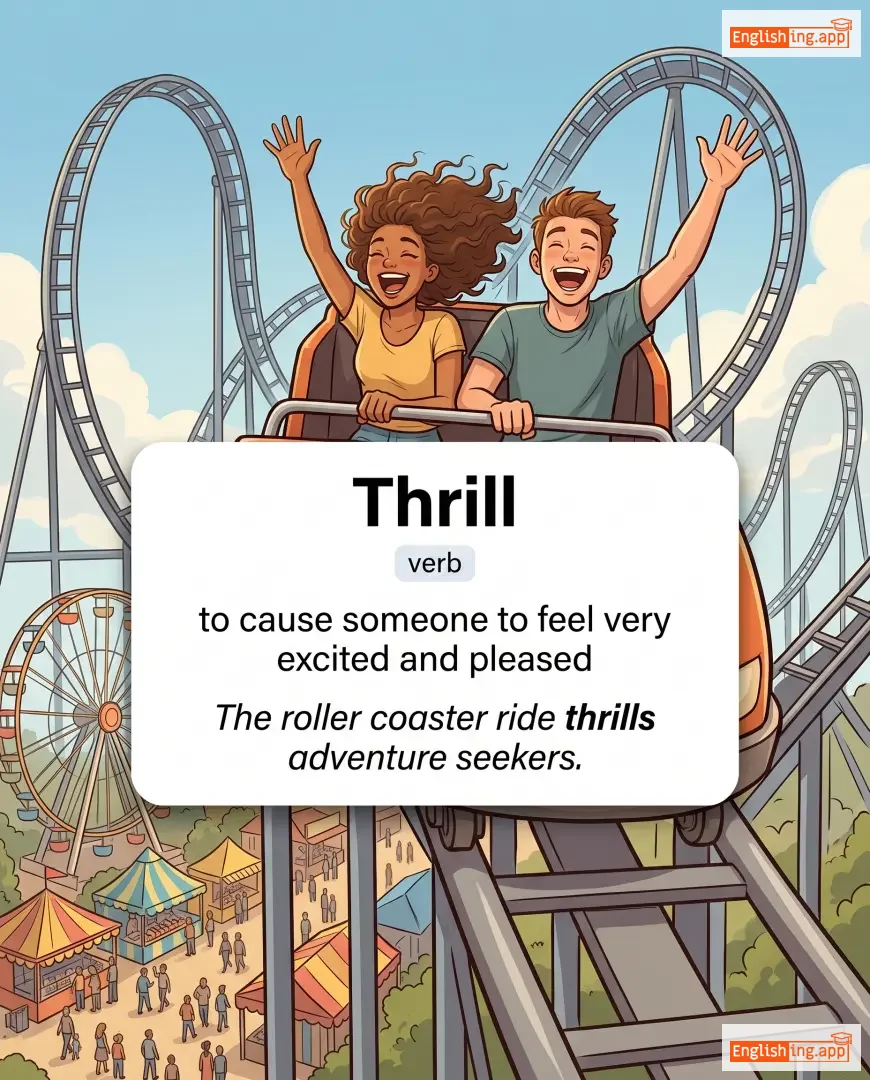
Thrill definition card — visual illustration of the meaning
verb
/θrɪl/
emocionar (emocionar)

to cause someone to feel very excited and pleased

"The roller coaster ride thrills adventure seekers."

"La montaña rusa emociona a los buscadores de aventuras." (La montana rusa emociona a los buscadores de aventuras.)
adjective
/θrɪld/
emocionado (emocionado)

extremely happy or excited

"She was thrilled with the surprise party."

"Ella estaba emocionada con la fiesta sorpresa." (Ella estaba emocionada con la fiesta sorpresa.)
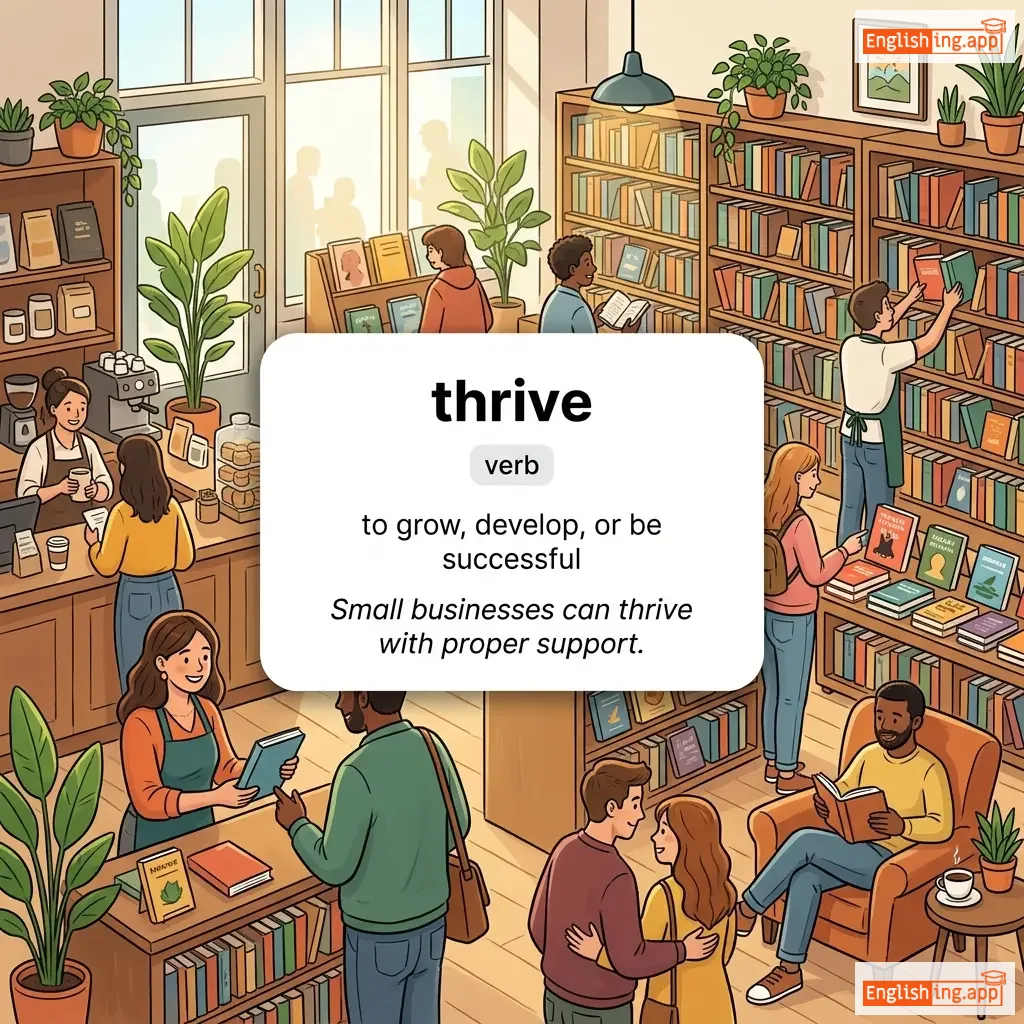
thrive definition card — visual illustration of the meaning
verb
/θraɪv/
prosperar (prosperar)

to grow, develop, or be successful

"Small businesses can thrive with proper support."

"Las pequeñas empresas pueden prosperar con el apoyo adecuado." (Las pequenas empresas pueden prosperar con el apoyo adecuado.)
noun
/θroʊt/
garganta (garganta)

the front part of the neck, containing the pharynx and larynx

"He felt a lump in his throat while speaking."

"Sintió un bulto en su garganta mientras hablaba." (Sintió un bulto en su garganta mientras hablaba.)
verb
/θrɒb/
latir (latir)

to beat or pulse strongly, often with pain

"His head began to throb after the long day."

"Su cabeza comenzó a latir después de todo el día." (Su cabeza comenzó a latir después de todo el día.)
noun
/θroʊz/
dolor intenso (dolor intenso)

intense or violent pain and struggle, often at the beginning or end of something

"The country was in the throes of a political crisis."

"El país estaba en el dolor intenso de una crisis política." (El pais estaba en el dolor intenso de una crisis politica.)
noun/verb
/θrɒŋ/
multitud (multitud)

A large, densely packed crowd of people or animals; to fill or be present in a place in large numbers.

"Tourists thronged the streets during the festival."

"Los turistas abarrotaron las calles durante el festival." (Los turistas abarrotaron las calles durante el festival.)
verb/noun
/ˈθrɒt.əl/
ahogar/controlar velocidad (ahogar/controlar velocidad)

To choke or strangle; to control the flow of fuel or power in an engine.

"The driver throttled the engine to slow down the car."

"El conductor redujo la velocidad del motor para frenar el coche." (El conductor redujo la velocidad del motor para frenar el coche.)
preposition
/θruː/
a través de (a traves de)

moving in one side and out the other side of something

"The train passed through the tunnel."

"El tren pasó a través del túnel." (El tren paso a traves del tunel.)
preposition
/θruːˈaʊt/
a lo largo (a lo largo)

in every part of a place or during the whole time of an event

"She worked throughout the night."

"Ella trabajó toda la noche." (Ella trabajó toda la noche.)
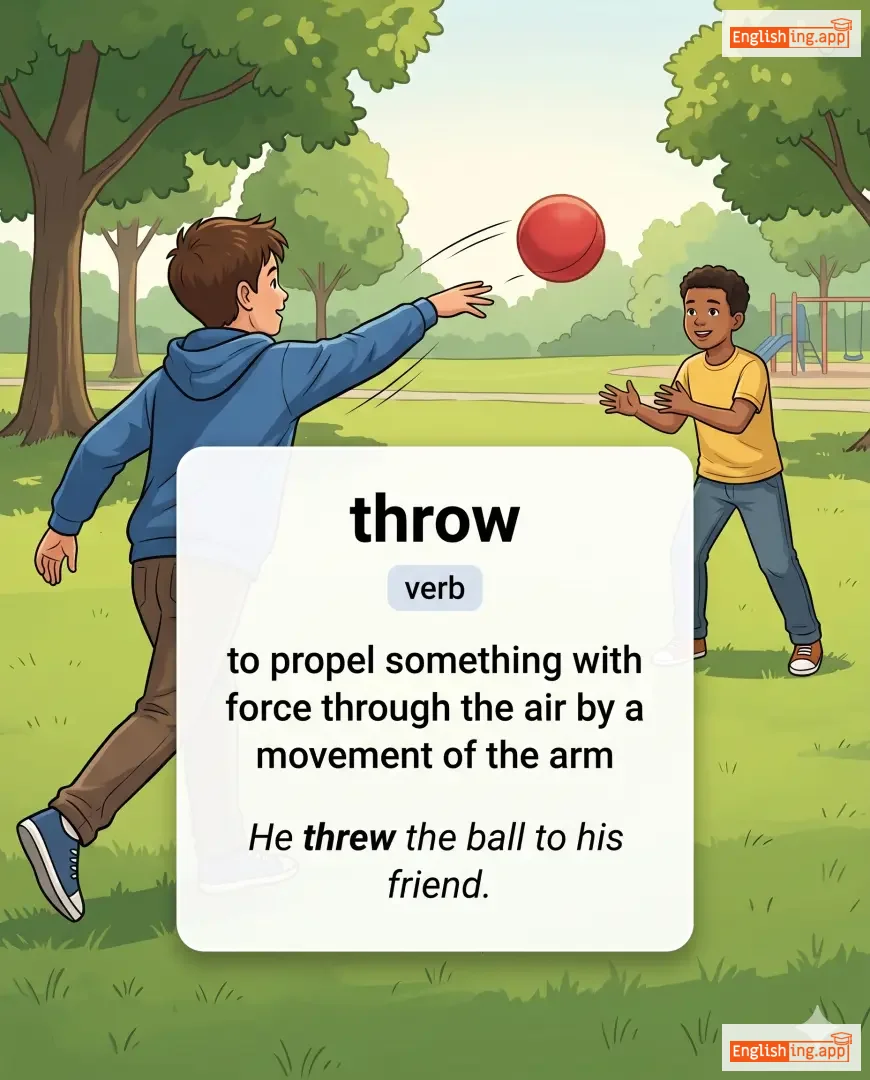
throw definition card — visual illustration of the meaning
verb
/θroʊ/
lanzar (lanzar)

to propel something with force through the air by a movement of the arm

"He threw the ball to his friend."

"Él lanzó la pelota a su amigo." (Él lanzó la pelota a su amigo.)
noun
/θʌm/
dedo (dedo)

the short, thick finger on the side of the hand, used for gripping and holding things

"He gave a thumbs-up to show his approval."

"Él levantó el dedo pulgar para mostrar su aprobación." (El levantó el dedo pulgar para mostrar su aprobación.)
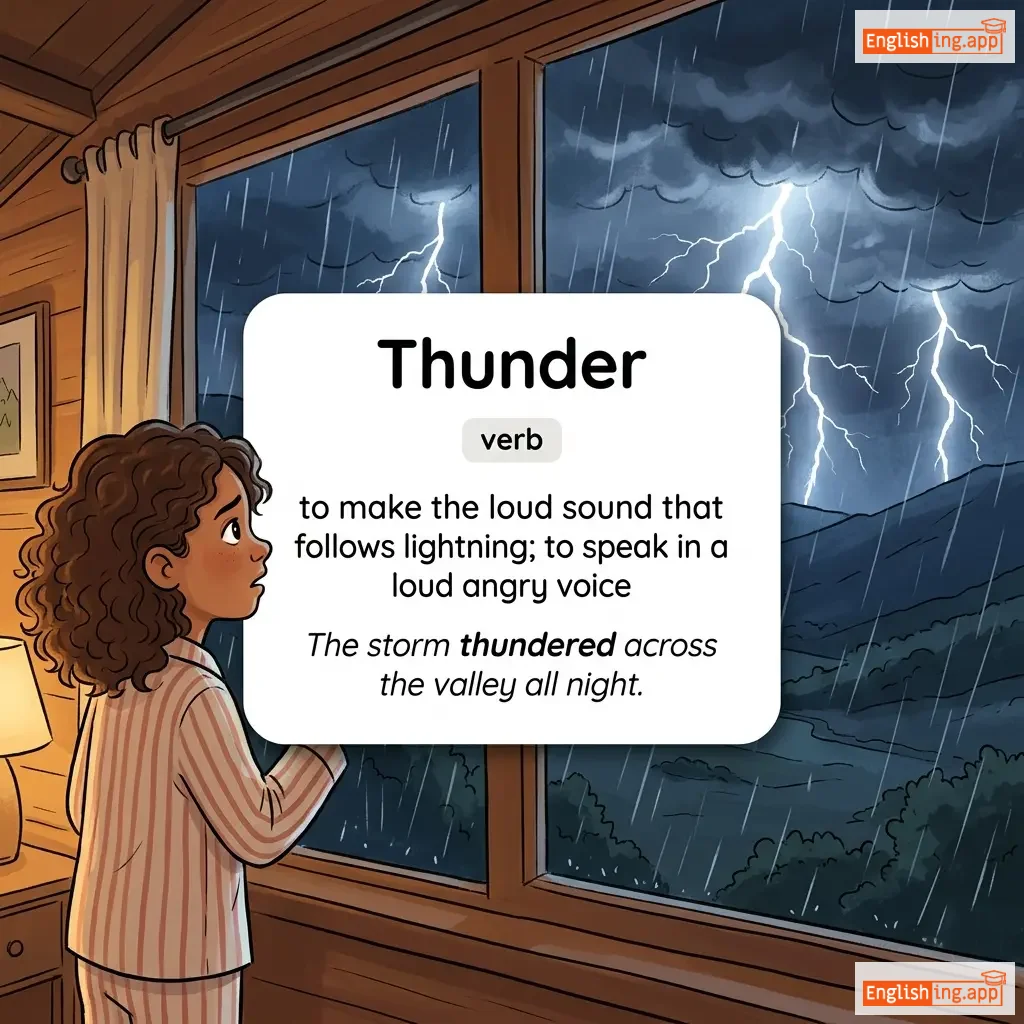
Thunder definition card — visual illustration of the meaning
noun
/ˈθʌn.dər/
trueno (trueno)

the loud rumbling or crashing noise heard after a lightning flash

"We heard thunder during the storm last night."

"Oímos el trueno durante la tormenta anoche." (Oimos el trueno durante la tormenta anoche.)
noun
/ˈθɜːrzdeɪ/
jueves (jueves)

The fifth day of the week, following Wednesday and preceding Friday.

"We have a meeting scheduled for Thursday."

"Tenemos una reunión programada para el jueves." (Tenemos una reunion programada para el jueves.)
adverb
/ðʌs/
así (asi)

as a result or consequence of something previously stated

"He was late, thus he missed the meeting."

"Llegó tarde, así que se perdió la reunión." (Llego tarde, asi que se perdio la reunion.)
verb
/θwɔːrt/
frustrar (frustrar)

To prevent someone from accomplishing something; to oppose successfully.

"The police thwarted the robbery attempt."

"La policía frustró el intento de robo." (La policia frustro el intento de robo.)
noun
/taɪm/
tomillo (tomillo)

A small aromatic herb used in cooking and medicine.

"She sprinkled thyme on the roasted chicken."

"Ella espolvoreó tomillo sobre el pollo asado." (Ella espolvoreó tomillo sobre el pollo asado.)
noun
/tiˈɑː.rə/
tiara (tiara)

a jeweled ornamental crown worn on formal occasions

"The princess wore a sparkling diamond tiara at the royal ball."

"La princesa llevó una tiara de diamantes brillantes en el baile real." (La princesa llevo una tiara de diamantes brillantes en el baile real)
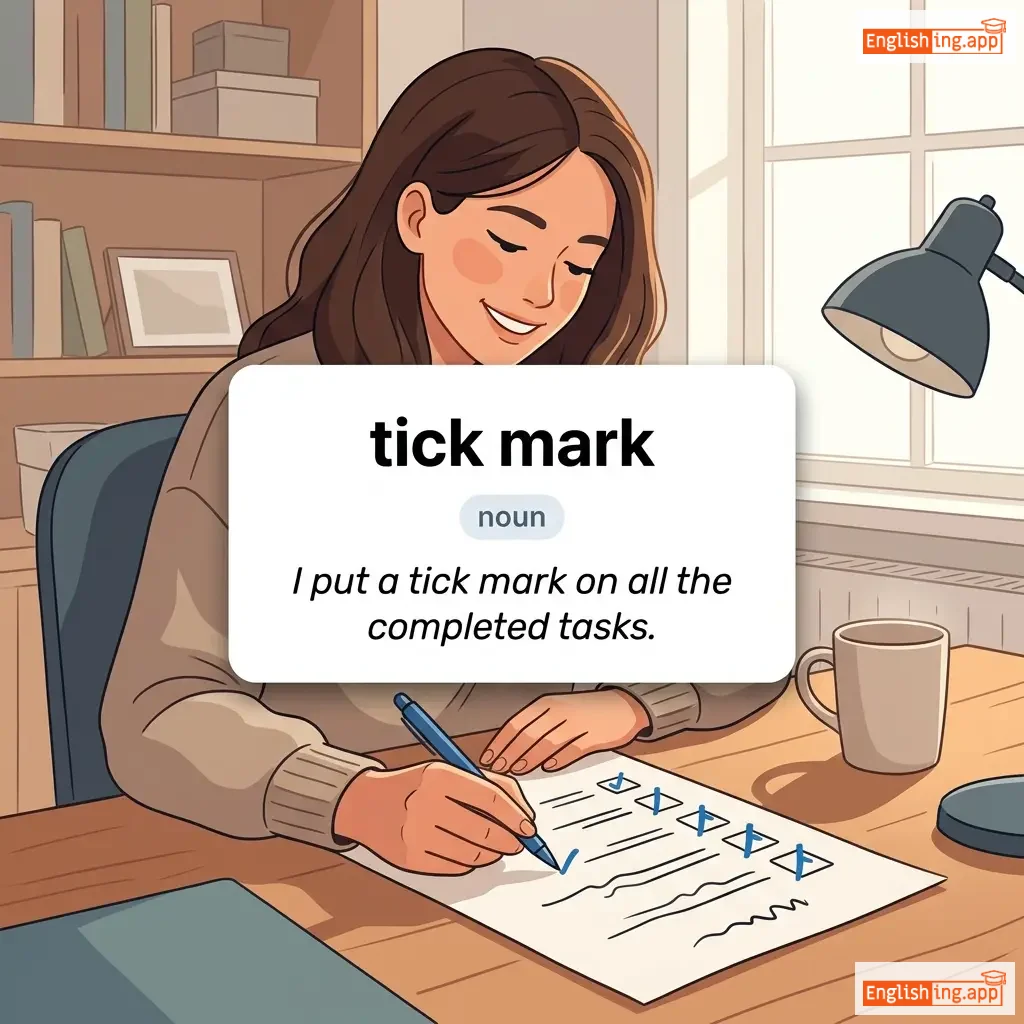
tick mark definition card — visual illustration of the meaning
noun
tɪk mɑːrk
marca de verificación (marca de verificacion)

A mark (✓) used to indicate that something is correct or has been chosen, checked, or dealt with.

"I put a tick mark on all the completed tasks."

"Puse una marca de verificación en todas las tareas completadas." (Puse una marca de verificación en todas las tareas completadas.)
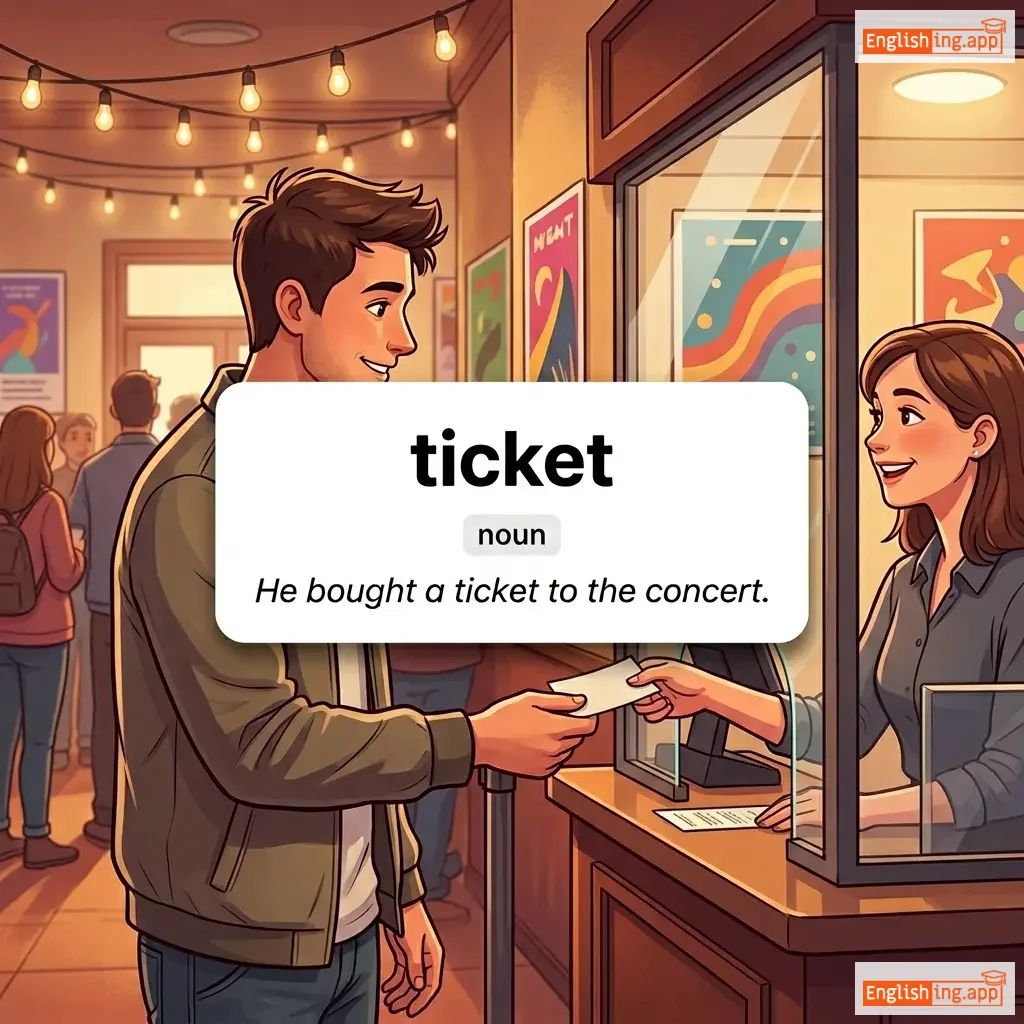
ticket definition card — visual illustration of the meaning
noun
/ˈtɪkɪt/
boleto (boleto)

a small piece of paper or card that gives the holder a right to access a service or event

"He bought a ticket to the concert."

"Compró un boleto para el concierto." (Compró un boleto para el concierto.)
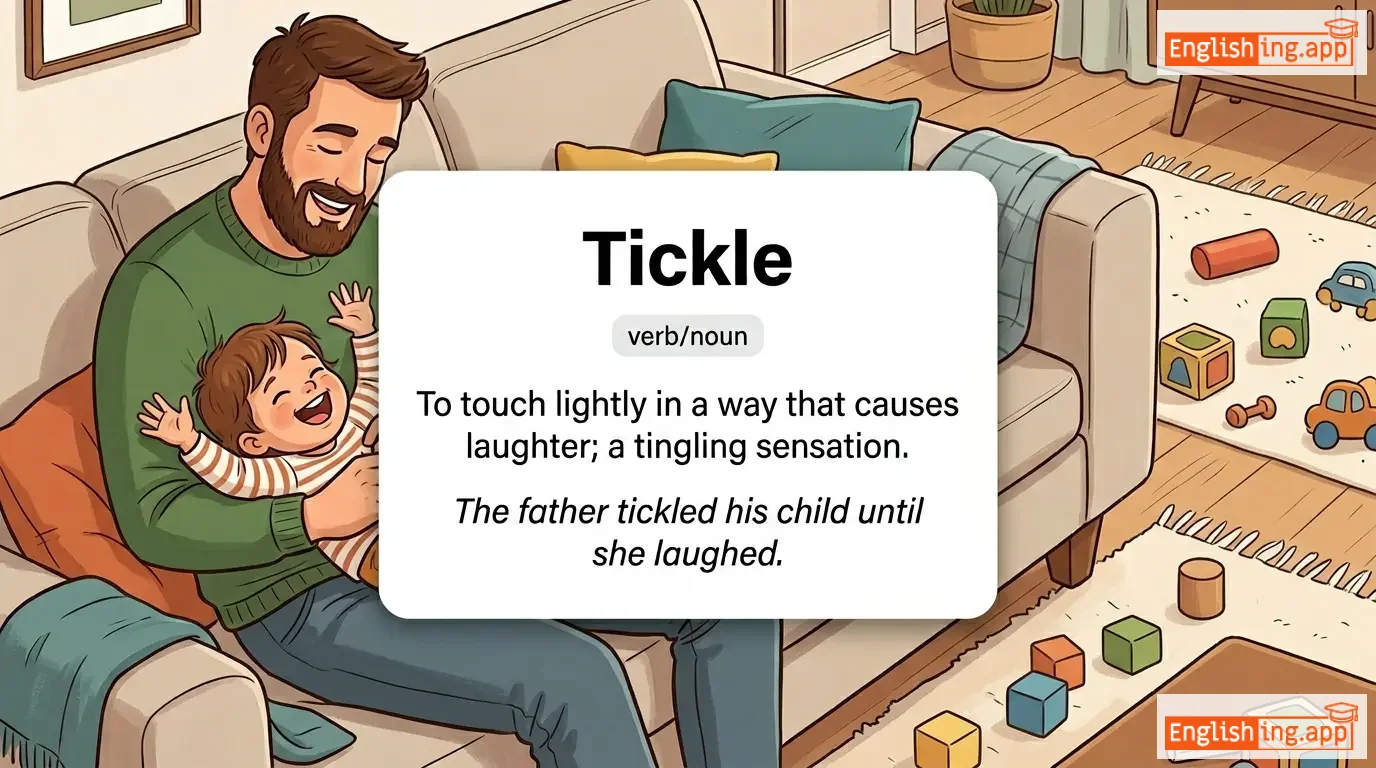
Tickle definition card — visual illustration of the meaning
verb/noun
/ˈtɪk.əl/
hacer cosquillas (hacer cosquillas)

To touch lightly in a way that causes laughter; a tingling sensation.

"The father tickled his child until she laughed."

"El padre hizo cosquillas a su hija hasta que se rió." (El padre hizo cosquillas a su hija hasta que se rió.)
adjective
/ˈtɪklɪʃ/
cosquilloso, sensible (cosquilloso, sensible)

easily made to laugh by being touched lightly; easily upset or sensitive

"She is very ticklish and bursts into laughter when touched on her feet."

"Ella es muy cosquillosa y se echa a reír cuando la tocan en los pies." (Ella es muy cosquillosa y se echa a reír cuando la tocan en los pies.)
adjective
/ˈtɪd.li/
ligeramente borracho; pequeño o diminuto (tiddli)

slightly drunk; small or tiny

"After a few drinks, he felt a bit tiddley."

"Después de unas copas, se sintió un poco tiddley." (Despues de unas copas, se sintió un poco tiddley.)
noun
/taɪd/
marea (marea)

the regular rise and fall of the sea caused by the moon and sun's gravity; a powerful flow or movement

"The fisherman waited for the tide to come in."

"El pescador esperó a que llegara la marea." (El pescador esperó a que llegara la marea.)
adjective
/ˈtaɪ.di/
ordenado; limpio (ordenado; limpio)

arranged neatly and in order; clean and organized

"She keeps her room very tidy and organized."

"Ella mantiene su habitación muy ordenada y limpia." (Ella mantiene su habitación muy ordenada y limpia.)
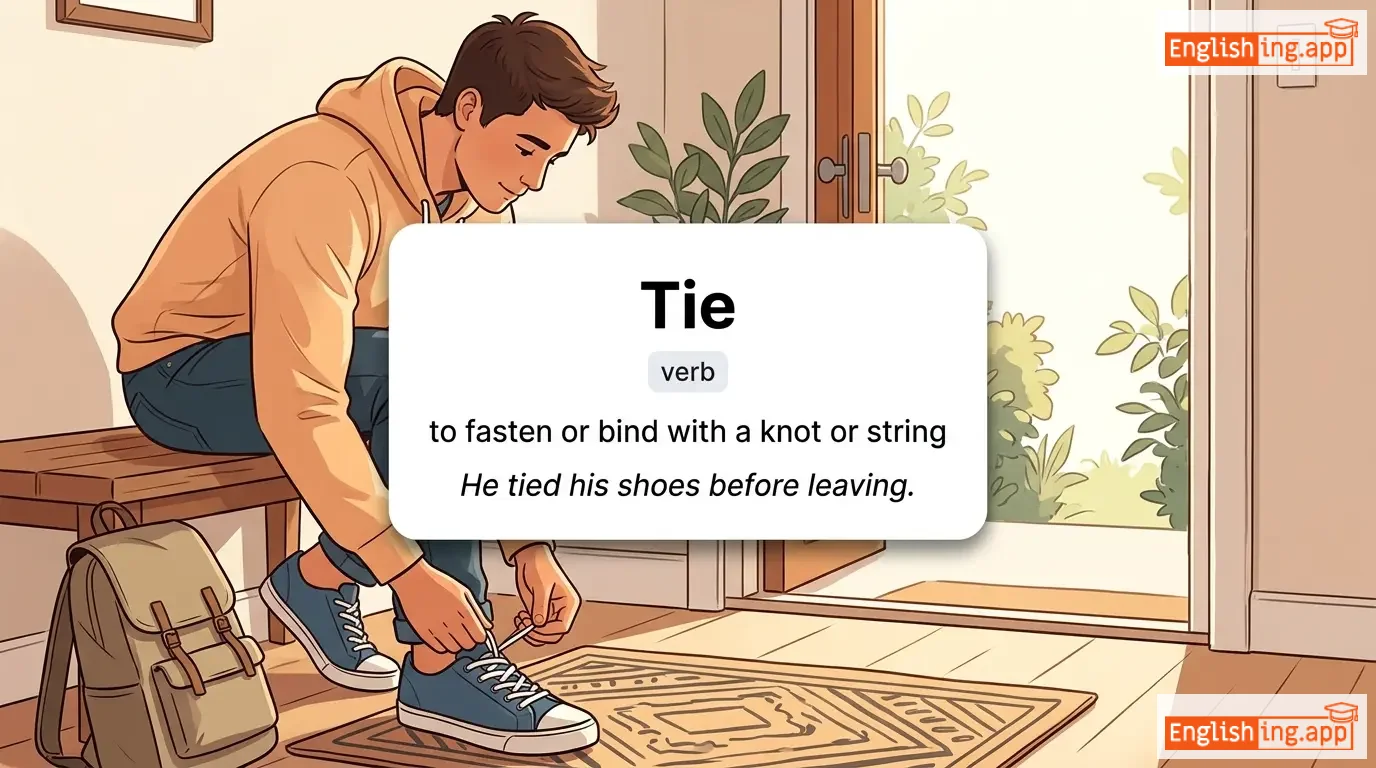
Tie definition card — visual illustration of the meaning
verb
/taɪ/
atar (atar)

to fasten or bind with a knot or string

"He tied his shoes before leaving."

"él ató sus zapatos antes de irse." (él ató sus zapatos antes de irse.)
noun
/tɪf/
disputa (disputa)

a small or petty quarrel or argument

"They had a little tiff over what movie to watch."

"Tuvieron una pequeña disputa sobre qué película ver." (Tuvieron una pequena disputa sobre que pelicula ver.)
noun
/ˈtaɪ.ɡər/
tigre (tigre)

a very large solitary cat with a yellow-brown coat striped with black, native to the forests of Asia

"The tiger hunted silently through the jungle."

"El tigre cazó silenciosamente a través de la jungla." (El tigre cazó silenciosamente a través de la jungla.)
adjective
/ˈtɪp.tɒp/
excelente; de primera calidad (excelente; de primera calidad)

of the highest quality; excellent; in perfect condition

"The car is in tiptop condition."

"El coche está en excelente estado." (El coche esta en excelente estado)
noun
/ˈtɪʃ.uː/
pañuelo (panuelo)

a piece of soft absorbent paper or fabric

"She used a tissue to wipe her nose."

"Ella usó un pañuelo para limpiarse la nariz." (Ella uso un panuelo para limpiarse la nariz.)
adjective
/ˈtaɪərɪŋ/
agotador (agotador)

causing someone to feel exhausted or in need of rest

"The long journey was extremely tiring."

"El largo viaje fue extremadamente agotador." (El largo viaje fue extremadamente agotador)
adjective
/ˈtaɪərsəm/
tedioso (tedioso)

Causing one to feel bored, annoyed, or tired.

"The long meeting became very tiresome."

"La larga reunión se volvió muy tediosa." (La larga reunión se volvió muy tediosa.)
adjective
/ˈtaɪərləs/
incansable (incansable)

Showing great effort or energy without becoming tired.

"She worked tirelessly to complete the project on time."

"Trabajó incansablemente para completar el proyecto a tiempo." (Trabajo incansablemente para completar el proyecto a tiempo.)
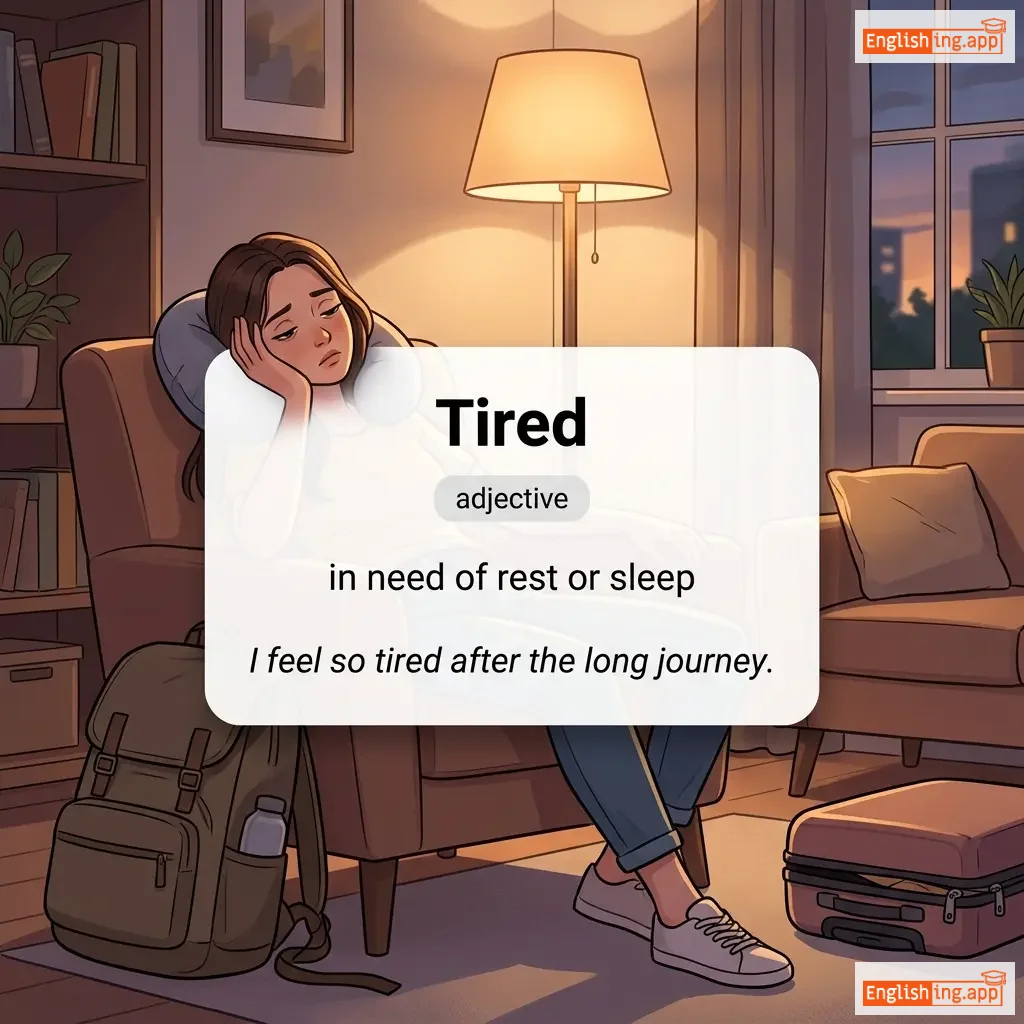
Tired definition card — visual illustration of the meaning
adjective
/ˈtaɪərd/
cansado (cansado)

in need of rest or sleep

"I feel so tired after the long journey."

"Me siento tan cansado después del largo viaje." (Me siento tan cansado despues del largo viaje.)
noun
/taɪər/
llanta (llanta)

a rubber covering around a wheel

"The car’s tire burst on the highway."

"La llanta del coche explotó en la carretera." (La llanta del coche explotó en la carretera.)
noun
/taɪˈreɪd/
diatriba (diatriba)

a long, angry, or critical speech

"The manager launched into a tirade about poor performance."

"El gerente lanzó una diatriba sobre el bajo rendimiento." (El gerente lanzó una diatriba sobre el bajo rendimiento.)
noun
/tɪnt/
matiz (matiz)

a slight shade or variation of a color

"The walls were painted white with a slight blue tint."

"Las paredes fueron pintadas de blanco con un ligero tinte azul." (Las paredes fueron pintadas de blanco con un ligero tinte azul.)
adjective
/ˈtaɪni/
muy pequeño (muy pequeno)

very small

"She held a tiny kitten in her hands."

"Ella sostuvo un pequeño gatito en sus manos." (Ella sostuvo un pequeno gatito en sus manos.)
noun
/tɪp/
consejo (consejo)

a small but useful piece of advice

"I received a tip on how to improve my presentation."

"Recibí un consejo sobre cómo mejorar mi presentación." (Recibi un consejo sobre como mejorar mi presentacion.)
verb
/ˈtɪŋkər/
ajustar (ajustar)

to make small adjustments or repairs to something, often experimentally or imperfectly

"He likes to tinker with old radios in his garage."

"A él le gusta ajustar radios viejos en su garaje." (A él le gusta ajustar radios viejos en su garaje.)