Vocabularios

Descubra, aprenda y domine el vocabulario en inglés

noun
/ˈtɒpˌsɔɪl/
capa superficial del suelo (capa superficial del suelo)

the top layer of soil, which is rich in organic matter and nutrients

"Farmers rely on healthy topsoil for good crop yields."

"Los agricultores dependen de un suelo superficial saludable para obtener buenos rendimientos de cosecha." (Los agricultores dependen de un suelo superficial saludable para obtener buenos rendimientos de cosecha.)
adjective
/ˌtɒpsi ˈtɜːvi/
desordenado (desordenado)

in a state of confusion, disorder, or upside down

"The sudden announcement left the office in a topsy-turvy state."

"El anuncio repentino dejó la oficina en un estado completamente desordenado." (El anuncio repentino dejó la oficina en un estado completamente desordenado.)
noun
/tɔːrtʃ/
linterna (torch)

a portable electric lamp powered by batteries; a flaming stick used for light

"Use the torch to find your way in the dark."

"Usa la linterna para encontrar tu camino en la oscuridad." (Usa la linterna para encontrar tu camino en la oscuridad.)
noun, verb
/ˈtɔːr.ment/
tormento (tormento)

severe physical or mental suffering; to cause extreme suffering

"The prisoner was in constant torment."

"El prisionero estaba en constante tormento." (El prisionero estaba en constante tormento.)
noun
/tɔːrˈneɪdoʊ/
tornado (tornado)

a rapidly rotating column of air in contact with the ground and clouds, often destructive

"The tornado destroyed several houses in the village."

"El tornado destruyó varias casas en el pueblo" (El tornado destruyo varias casas en el pueblo)
noun/verb
/tɔːrˈpiːdoʊ/
torpedo (torpedo)

A self-propelled underwater missile; to attack or destroy something suddenly and forcefully.

"The submarine launched a torpedo at the enemy ship."

"El submarino lanzó un torpedo al barco enemigo." (El submarino lanzo un torpedo al barco enemigo.)
adjective
/ˈtɔːrpɪd/
lento (torpid)

Mentally or physically inactive; sluggish or lethargic.

"After the long hike, he felt torpid and unmotivated."

"Después de la larga caminata, se sintió lento y desmotivado." (Despues de la larga caminata, se sintió lento y desmotivado.)
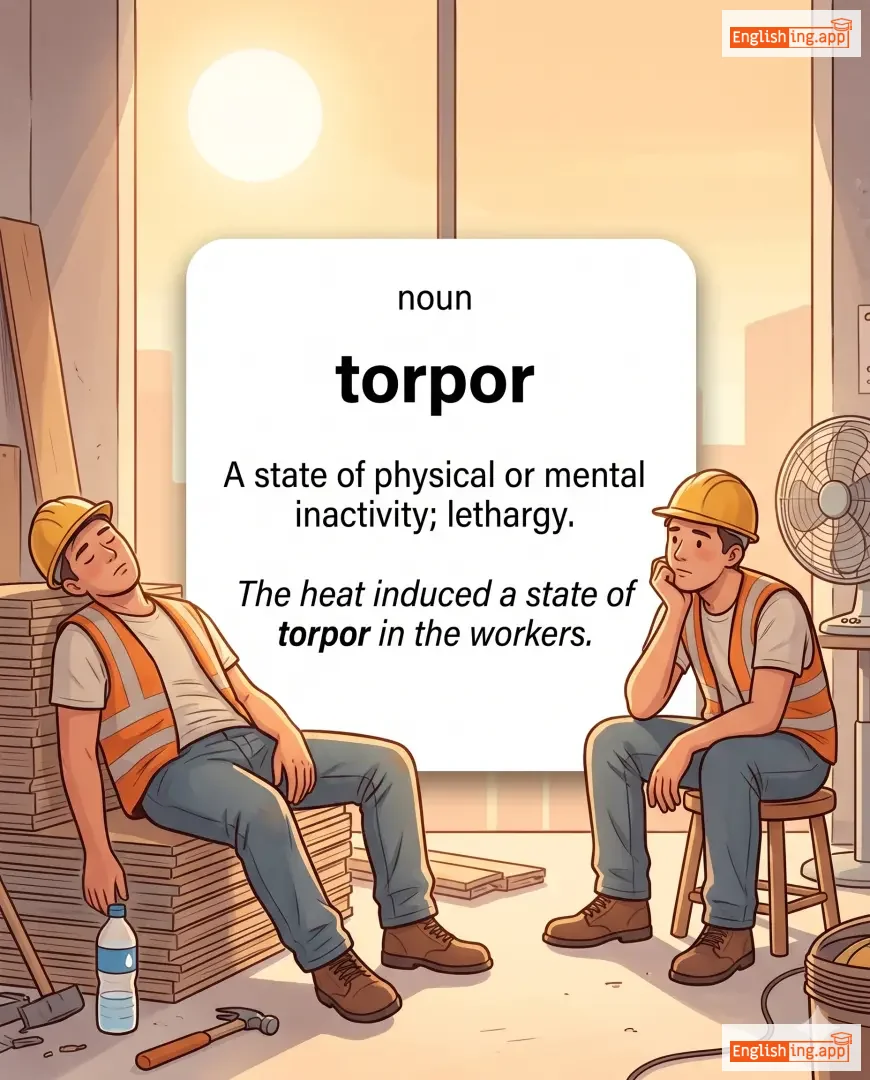
torpor definition card — visual illustration of the meaning
noun
/ˈtɔːrpər/
letargo (torpor)

A state of physical or mental inactivity; lethargy.

"The heat induced a state of torpor in the workers."

"El calor indujo un estado de letargo en los trabajadores." (El calor indujo un estado de letargo en los trabajadores.)
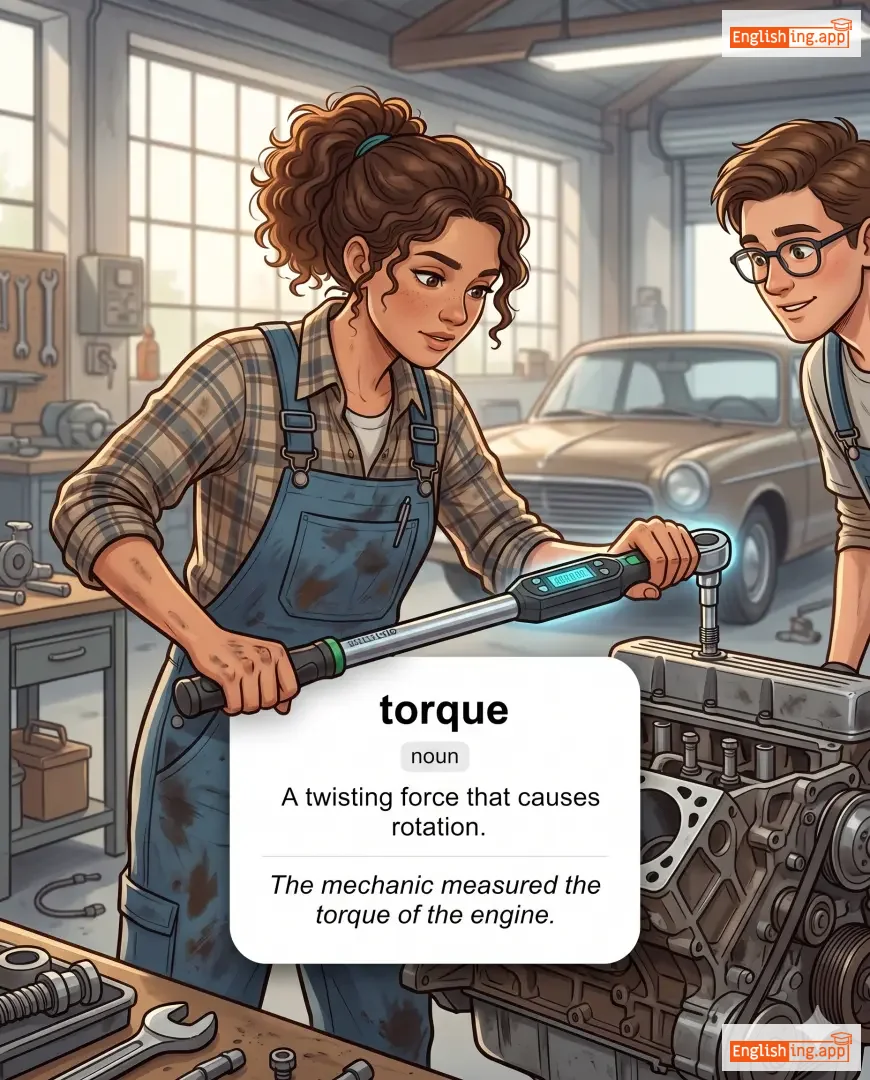
torque definition card — visual illustration of the meaning
noun
/tɔːrk/
torque (torque)

A twisting force that causes rotation.

"The mechanic measured the torque of the engine."

"El mecánico midió el torque del motor." (El mecanico midio el torque del motor.)
noun
/ˈtɔːrənt/
tormenta (tormenta)

A strong and fast-moving stream of water; a sudden, violent outpouring of something.

"A torrent of rain flooded the streets."

"Una tormenta de lluvia inundó las calles." (Una tormenta de lluvia inundo las calles.)
adjective
/təˈrɛnʃəl/
torrencial (torrencial)

Relating to or resembling a torrent; very heavy and fast flowing.

"The hikers were caught in torrential rain."

"Los excursionistas fueron atrapados en lluvia torrencial." (Los excursionistas fueron atrapados en lluvia torrencial.)
adjective
/ˈtɒrɪd/
muy caliente y seco; lleno de emociones o pasiones intensas (muy caliente y seco; lleno de emociones o pasiones intensas)

Very hot and dry; full of strong emotions or passion.

"The desert heat was torrid during the day."

"El calor del desierto era torrido durante el día." (El calor del desierto era torrido durante el día.)
noun
/ˈtɔːrsoʊ/
torso (torso)

The trunk of the human body, excluding the head and limbs.

"The artist painted the torso of the model in great detail."

"El artista pintó el torso del modelo con gran detalle." (El artista pintó el torso del modelo con gran detalle.)
noun
/tɔːrˈtiːə/
tortilla (tortilla)

A thin round flatbread made from corn or wheat, common in Mexican cuisine.

"She wrapped the vegetables in a warm tortilla."

"Ella envolvió las verduras en una tortilla caliente." (Ella envolvió las verduras en una tortilla caliente.)
adjective
/ˈtɔːrʃəs/
acto ilícito (acto ilicito)

Relating to or involving a wrongful act leading to legal liability.

"The company was found guilty of tortious interference with contracts."

"La empresa fue declarada culpable de interferencia ilícita con contratos." (La empresa fue declarada culpable de interferencia ilícita con contratos.)
noun
/ˈtɔːr.təs/
tortuga (tortuga)

A slow-moving land reptile with a hard shell.

"The tortoise slowly crossed the garden."

"La tortuga cruzó lentamente el jardín." (La tortuga cruzo lentamente el jardin.)
adjective
/ˈtɔːrtʃuəs/
tortuoso, complicado (tortuoso, complicado)

Full of twists and turns; excessively complex or complicated.

"The tortuous mountain road made driving very difficult."

"La tortuosa carretera de montaña hizo que conducir fuera muy difícil." (La tortuosa carretera de montaña hizo que conducir fuera muy difícil.)
noun
/ˈtɔːtʃər/
tortura (tortura)

the action or practice of inflicting severe pain on someone as a punishment or to force them to do something

"He was subjected to torture during the interrogation."

"Fue sometido a tortura durante el interrogatorio." (Fue sometido a tortura durante el interrogatorio.)
adjective
/ˈtɔːrtʃərəs/
tortuoso (tortuoso)

Extremely painful or causing great suffering; relating to or involving torture.

"The journey through the desert was long and torturous."

"El viaje a través del desierto fue largo y tortuoso." (El viaje a través del desierto fue largo y tortuoso.)
verb
/tɔs/
tirar ligeramente (tirar ligeramente)

To throw something lightly or casually; to move or turn suddenly.

"He tossed the keys onto the table."

"Él tiró las llaves sobre la mesa." (El tiro las llaves sobre la mesa.)
adjective, noun, verb
/ˈtoʊ.təl/
total (total)

the whole amount; complete

"The total cost was too high."

"El costo total fue demasiado alto." (El costo total fue demasiado alto.)
adverb
/ˈtoʊtəli/
totalmente (totalmente)

completely or in an absolute way

"She was totally shocked by the news."

"Ella estaba completamente sorprendida por la noticia." (Ella estaba completamente sorprendida por la noticia.)
noun
/ˈtoʊtəm/
símbolo sagrado (simbolo sagrado)

A natural object, animal, or symbol that is revered as a spiritual emblem by a group or tribe.

"The eagle is considered a sacred totem in many cultures."

"El águila es considerada un tótem sagrado en muchas culturas." (El aguila es considerada un totem sagrado en muchas culturas.)
noun
/treɪl/
sendero (sendero)

a path or track left by something that has passed

"The hikers followed the trail through the forest."

"Los excursionistas siguieron el sendero a través del bosque." (Los excursionistas siguieron el sendero a través del bosque.)
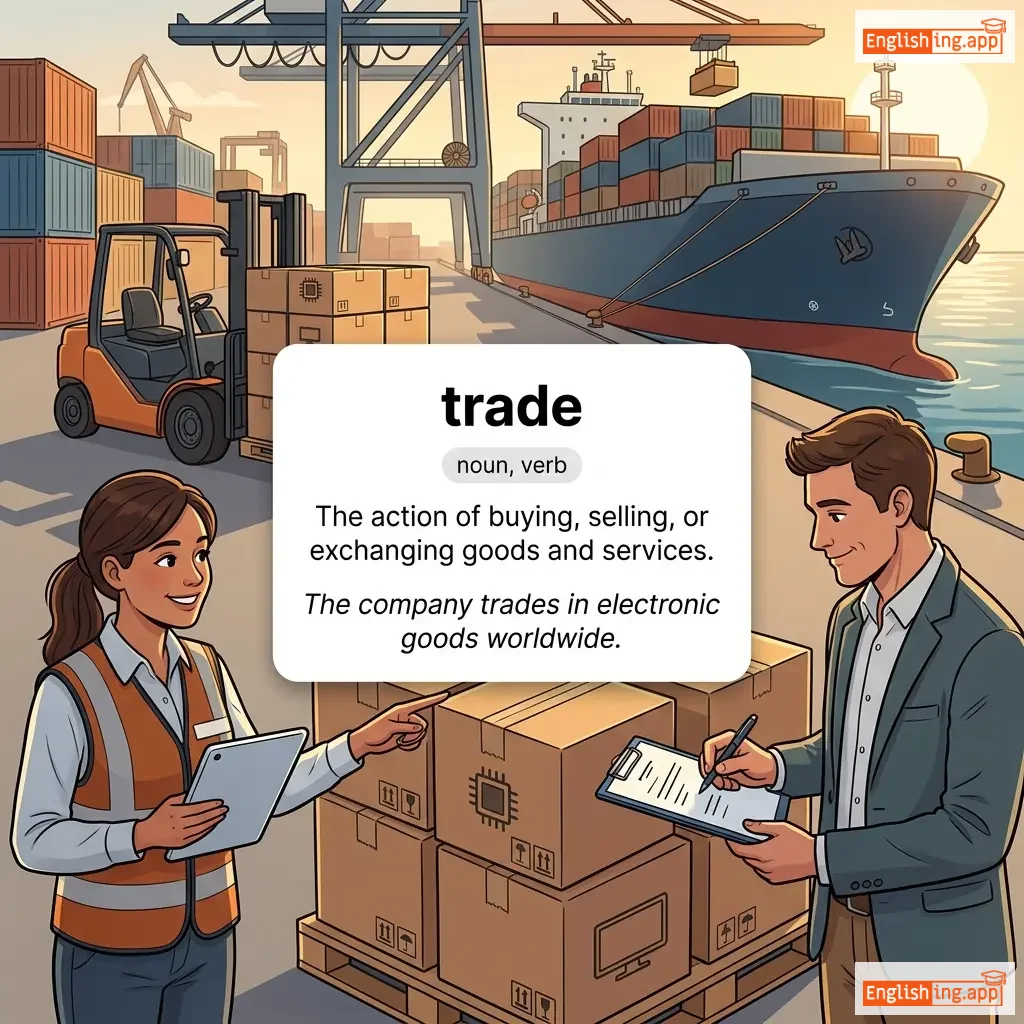
trade definition card — visual illustration of the meaning
noun, verb
/treɪd/
comercio (comercio)

The action of buying, selling, or exchanging goods and services.

"The company trades in electronic goods worldwide."

"La compañía comercializa bienes electrónicos en todo el mundo." (La compañia comercializa bienes electronicos en todo el mundo.)
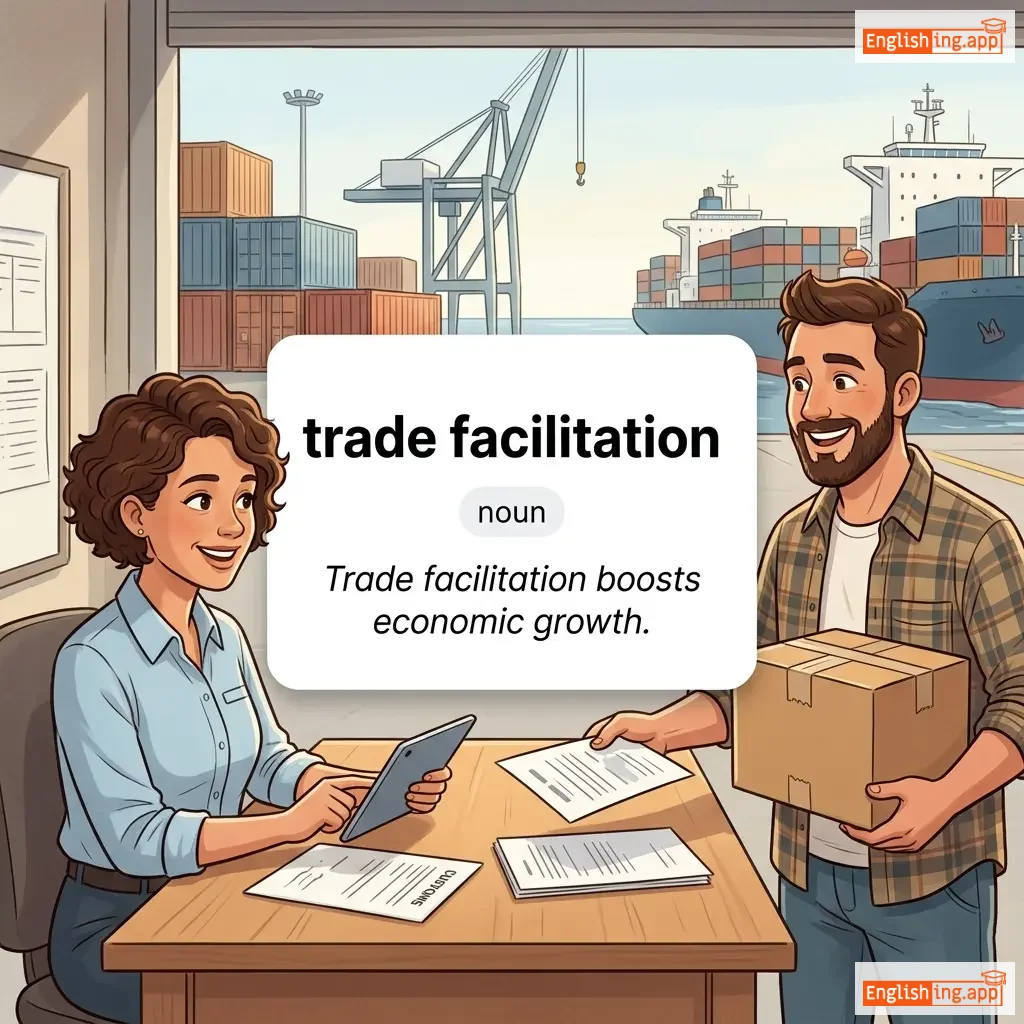
trade facilitation definition card — visual illustration of the meaning
noun
/treɪd fəˌsɪl.ɪˈteɪ.ʃən/
facilitación del comercio (facilitacion del comercio)

The simplification, modernization and harmonization of export and import processes.

"Trade facilitation boosts economic growth."

"La facilitación del comercio impulsa el crecimiento económico." (La facilitacion del comercio impulsa el crecimiento economico.)
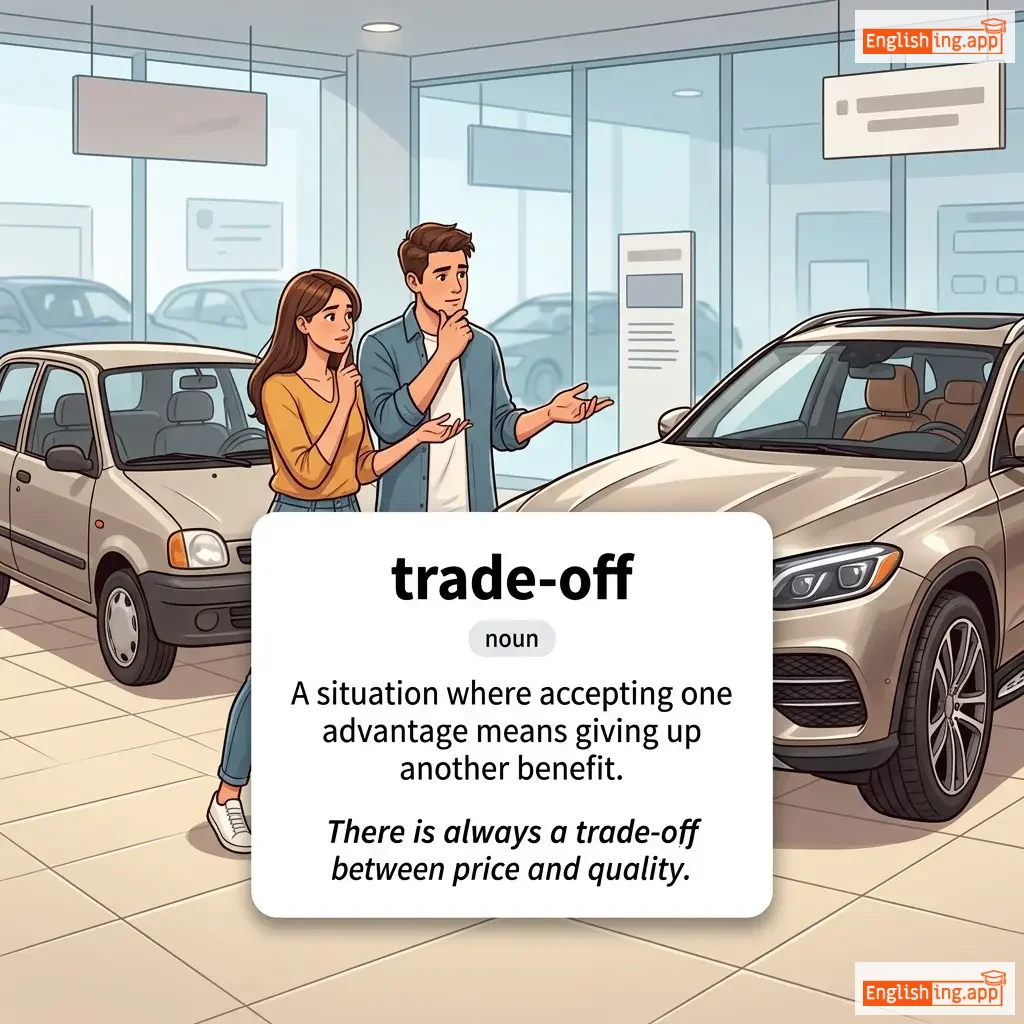
trade-off definition card — visual illustration of the meaning
noun
ˈtreɪd.ɒf
compensación (compensacion)

A situation where accepting one advantage means giving up another benefit.

"There is always a trade-off between price and quality."

"Siempre hay una compensación entre el precio y la calidad." (siempre hay una compensacion entre el precio y la calidad.)
noun
/ˈtreɪdmɑːrk/
marca registrada (marca registrada)

a symbol, word, or words legally registered or established by use as representing a company or product

"The company’s logo is its trademark."

"El logo de la empresa es su marca registrada." (El logo de la empresa es su marca registrada.)
noun
/ˈtreɪ.dər/
comerciante (comerciante)

a person who buys and sells goods or financial securities for profit

"The trader made a good profit from selling imported goods."

"El comerciante hizo una buena ganancia al vender bienes importados." (El comerciante hizo una buena ganancia al vender bienes importados.)
noun
/ˈtreɪdɪŋ/
comercio (comercio)

the act or business of buying and selling goods or services

"She made a fortune through online trading."

"Ella hizo una fortuna a través del comercio en línea." (Ella hizo una fortuna a través del comercio en línea.)
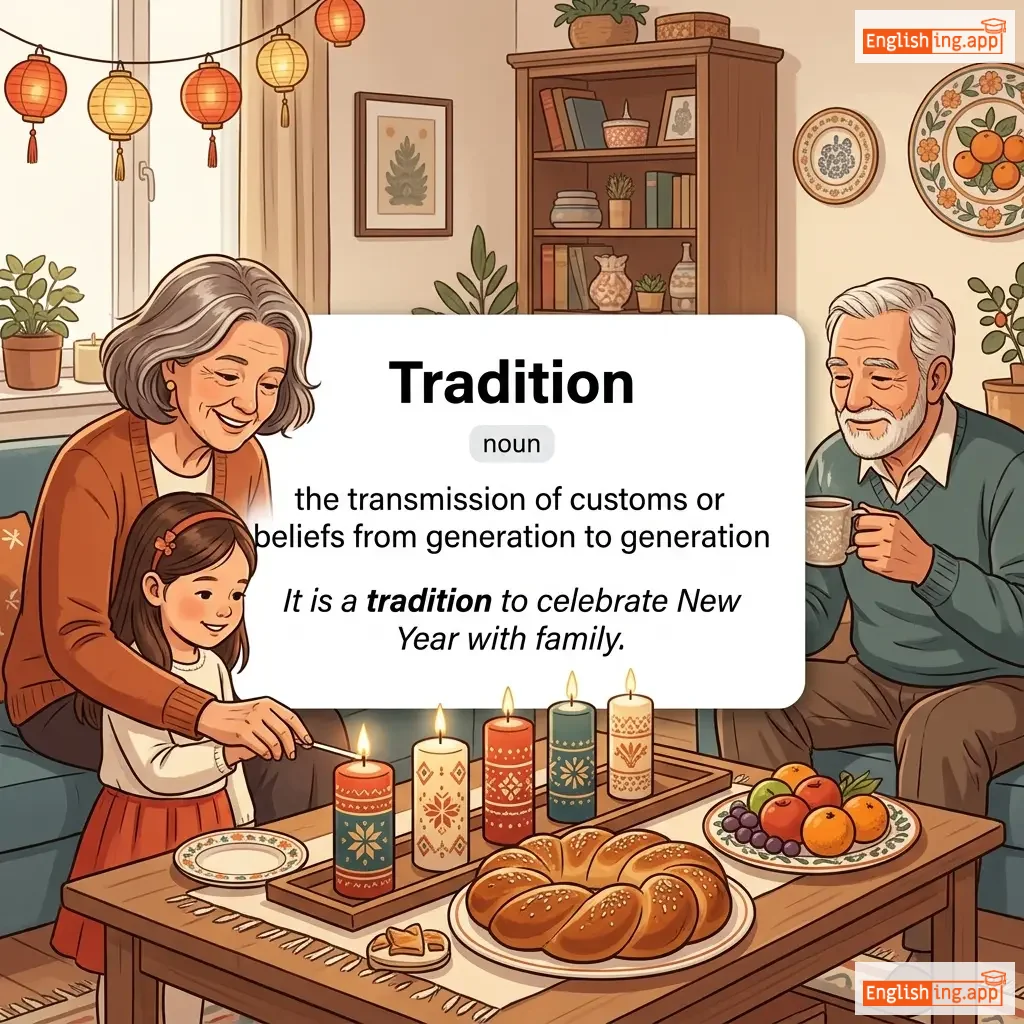
Tradition definition card — visual illustration of the meaning
noun
/trəˈdɪʃən/
tradición (tradicion)

the transmission of customs or beliefs from generation to generation

"It is a tradition to celebrate New Year with family."

"Es una tradición celebrar el Año Nuevo con la familia." (Es una tradicion celebrar el Ano Nuevo con la familia.)
adjective
/trəˈdɪʃənəl/
tradicional (tradicional)

existing in or as part of a tradition

"The traditional dance of this village is performed every year."

"La danza tradicional de este pueblo se realiza cada año." (La danza tradicional de este pueblo se realiza cada ano.)
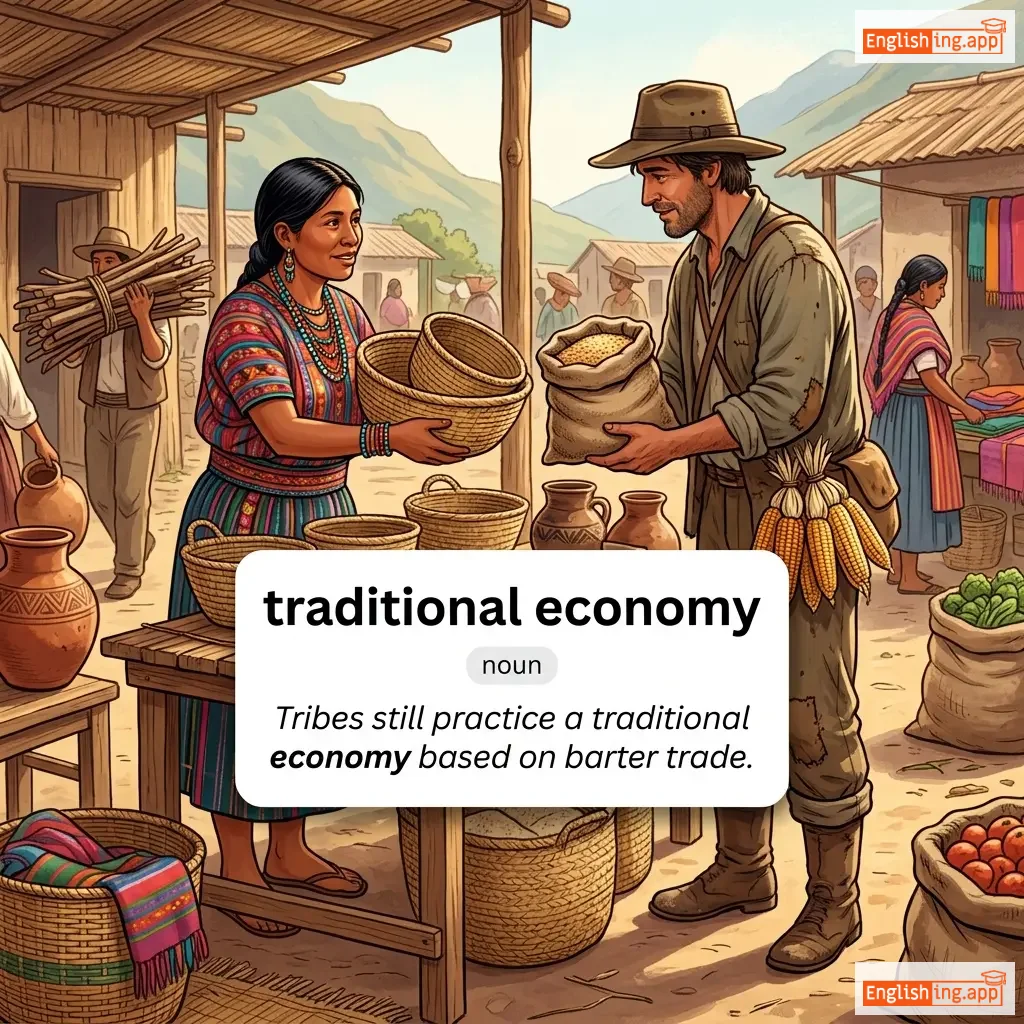
traditional economy definition card — visual illustration of the meaning
noun
/trəˈdɪʃ.ən.əl ɪˈkɒn.ə.mi/
economía tradicional (economia tradicional)

An economic system based on customs and traditions, often involving barter trade.

"Tribes still practice a traditional economy based on barter trade."

"Las tribus todavía practican una economía tradicional basada en el trueque." (Las tribus todavia practican una economia tradicional basada en el trueque.)
adverb
/trəˈdɪʃənəli/
tradicionalmente (tradicionalmente)

according to custom or long-established practice

"Bangladesh is traditionally known for its hospitality."

"Bangladesh es tradicionalmente conocido por su hospitalidad." (Bangladesh es tradicionalmente conocido por su hospitalidad.)
verb
/trəˈdjuːs/
difamar (difamar)

To speak badly of someone or tell lies to damage their reputation.

"He was furious when he found out that his rivals had traduced him."

"Estaba furioso cuando descubrió que sus rivales lo habían difamado." (Estaba furioso cuando descubrió que sus rivales lo habían difamado.)
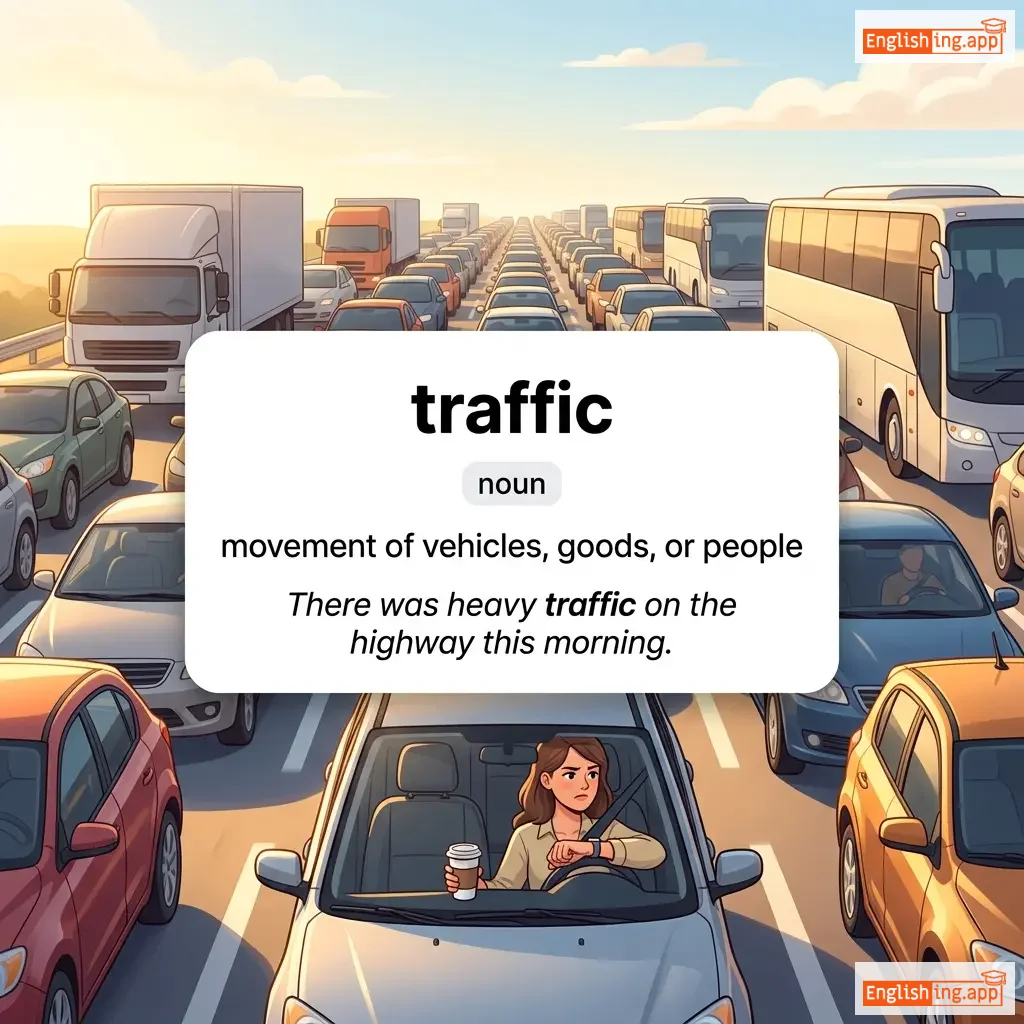
traffic definition card — visual illustration of the meaning
noun
/ˈtræfɪk/
tráfico (trafico)

movement of vehicles, goods, or people

"There was heavy traffic on the highway this morning."

"Había mucho tráfico en la carretera esta mañana." (Había mucho tráfico en la carretera esta mañana.)
noun
/ˈtrædʒədi/
tragedia (tragedia)

an event causing great suffering or distress

"The earthquake was a tragedy for the entire country."

"El terremoto fue una tragedia para todo el país." (El terremoto fue una tragedia para todo el país.)
adjective
/ˈtrædʒɪk/
trágico (tragico)

causing great sadness or suffering; very unfortunate

"The news of the accident was truly tragic."

"La noticia del accidente fue realmente trágica." (La noticia del accidente fue realmente tragica.)
noun
/ˈtreɪtər/
traidor (traidor)

A person who betrays their country, friends, or a cause by acting against them.

"The soldier was labeled a traitor for giving secrets to the enemy."

"El soldado fue etiquetado como traidor por dar secretos al enemigo." (El soldado fue etiquetado como traidor por dar secretos al enemigo.)
noun
/træns/
trance (trance)

a half-conscious state like dreaming, often with loss of awareness of surroundings

"She stared out of the window as if in a trance."

"Ella miraba por la ventana como si estuviera en trance." (Ella miraba por la ventana como si estuviera en trance.)
verb
/ˈtræmpəl/
pisotear (pisotear)

to tread heavily on something and cause damage or injury

"The crowd trampled the flowers in the park."

"La multitud pisoteó las flores en el parque." (La multitud pisoteó las flores en el parque.)
verb, noun
/træmp/
vagabundo / caminar pesadamente (vagabundo / caminar pesadamente)

to walk heavily or noisily; a person who travels from place to place on foot, often homeless

"They tramped through the forest in heavy boots."

"Ellos caminaron a través del bosque con botas gruesas." (Ellos caminaron a través del bosque con botas gruesas.)
noun, verb
/ˈtræməl/
restricción (restriccion)

A restriction or impediment to freedom of action; to restrict.

"The strict rules trammel the creativity of the students."

"Las estrictas reglas truncan la creatividad de los estudiantes." (Las estrictas reglas truncan la creatividad de los estudiantes.)
noun
/træm kɑːr/
tranvía (tranvia)

An electric vehicle that runs on rails along the street

"The tram car stopped at every station in the city center."

"El tranvía se detuvo en cada estación en el centro de la ciudad." (El tranvia se detuvo en cada estacion en el centro de la ciudad.)
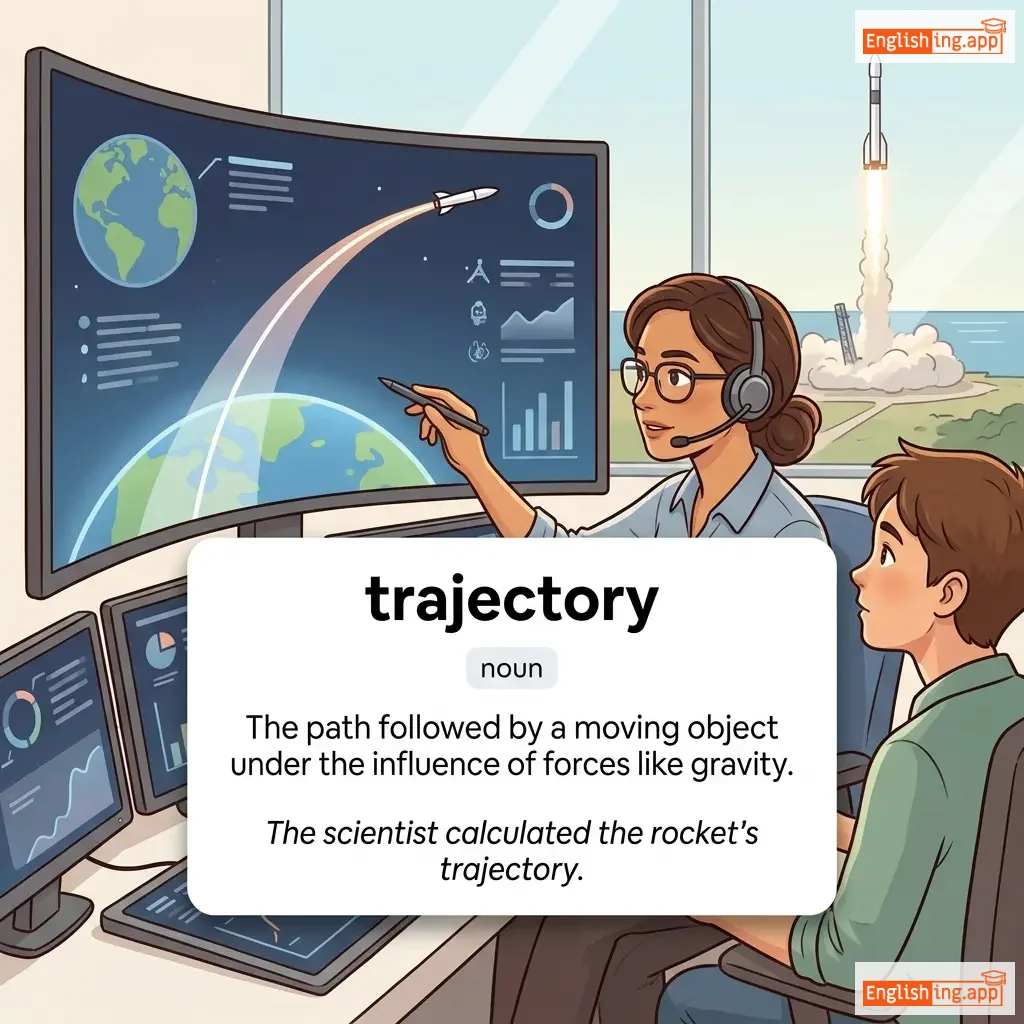
trajectory definition card — visual illustration of the meaning
noun
/trəˈdʒɛktəri/
trayectoria (trayectoria)

The path followed by a moving object under the influence of forces like gravity.

"The scientist calculated the rocket's trajectory."

"El científico calculó la trayectoria del cohete." (El científico calculó la trayectoria del cohete.)
noun
/ˈtreɪnər/
entrenador (entrenador)

a person who teaches skills or gives training

"The fitness trainer helped me improve my posture."

"El entrenador de fitness me ayudó a mejorar mi postura." (El entrenador de fitness me ayudo a mejorar mi postura.)
noun
/ˈtreɪlər/
tráiler / avance (trailer / avance)

a preview of a movie or a vehicle used for transporting goods

"The movie trailer was released last week."

"El tráiler de la película fue lanzado la semana pasada." (El trailer de la pelicula fue lanzado la semana pasada.)
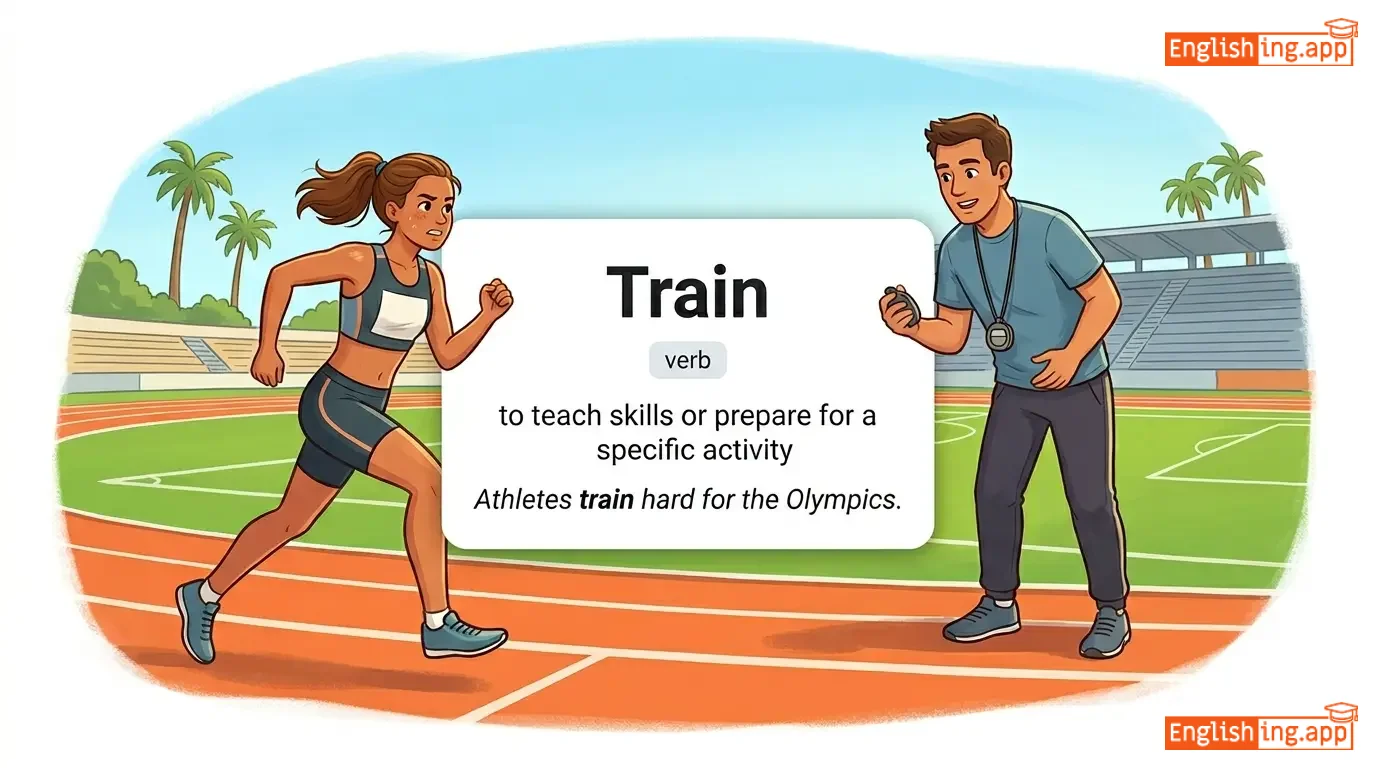
Train definition card — visual illustration of the meaning
noun
/treɪn/
tren (tren)

a series of connected vehicles that run on tracks and are used for transporting people or goods

"The train departed from the station on time."

"El tren partió de la estación a tiempo." (El tren partió de la estación a tiempo.)
noun
/treɪˈniː/
aprendiz; pasante (trainee)

a person undergoing training for a particular job or profession; a novice learner

"The medical trainee worked long hours to gain practical experience."

"El aprendiz médico trabajó largas horas para adquirir experiencia práctica." (El aprendiz medico trabajo largas horas para adquirir experiencia practica.)
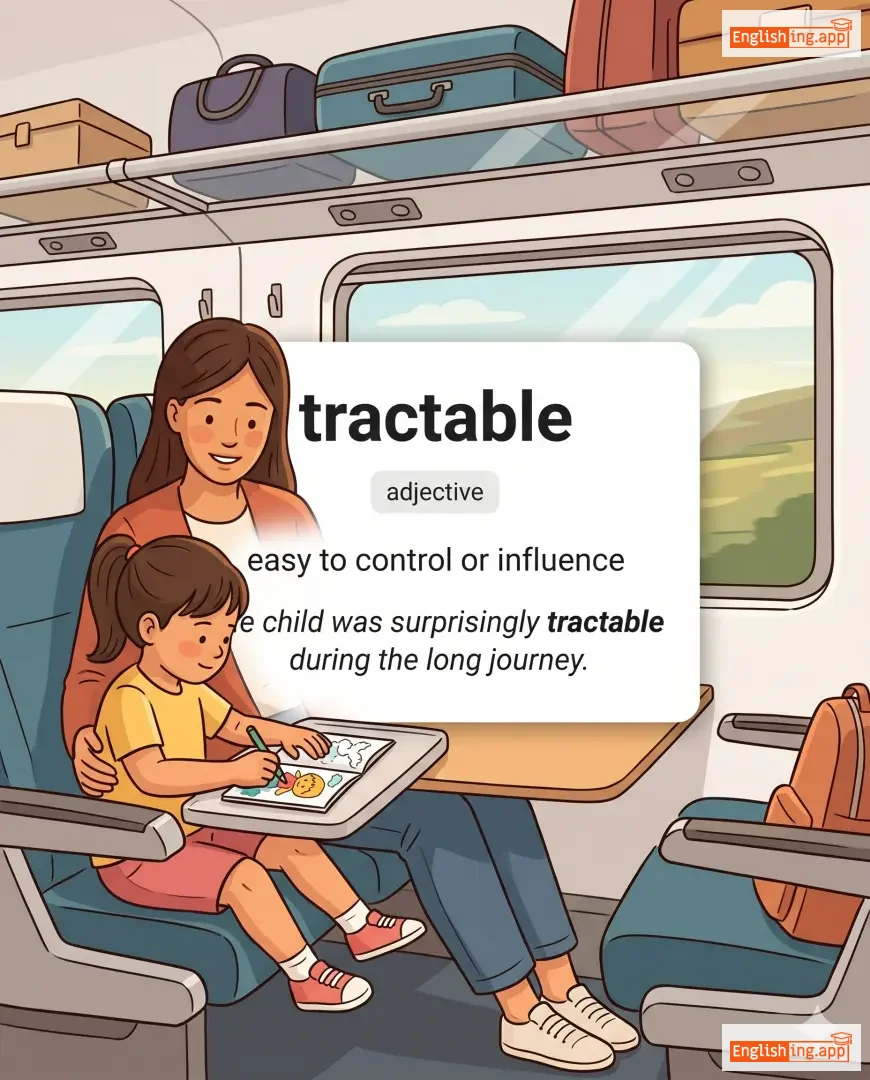
tractable definition card — visual illustration of the meaning
adjective
/ˈtræktəbəl/
fácil de controlar o influir (facil de controlar o influir)

easy to control or influence

"The child was surprisingly tractable during the long journey."

"El niño fue sorprendentemente fácil de controlar durante el largo viaje." (El niño fue sorprendentemente fácil de controlar durante el largo viaje.)