词汇表

英语词汇词典 | 单词含义、定义和示例

adjective
/ˌsʌplɪˈmɛntəri/
补充的 (buchong de)

Additional, completing, or enhancing something else.

"The teacher gave supplementary materials to help the students prepare for exams."

"老师提供了补充材料,帮助学生准备考试。" (Lǎoshī tígōngle bǔchōng cáiliào, bāngzhù xuéshēng zhǔnbèi kǎoshì.)
suppliant definition card — visual illustration of the meaning
adjective
/ˈsʌpliənt/
恳求者 (kěnqiú zhě)

Humbly or earnestly asking for something, especially from a person in authority.

"The suppliant man begged for mercy at the king's feet."
"恳求者在国王的脚下乞求怜悯。" (Kěnqiú zhě zài guówáng de jiǎoxià qǐqiú liánmǐn.)
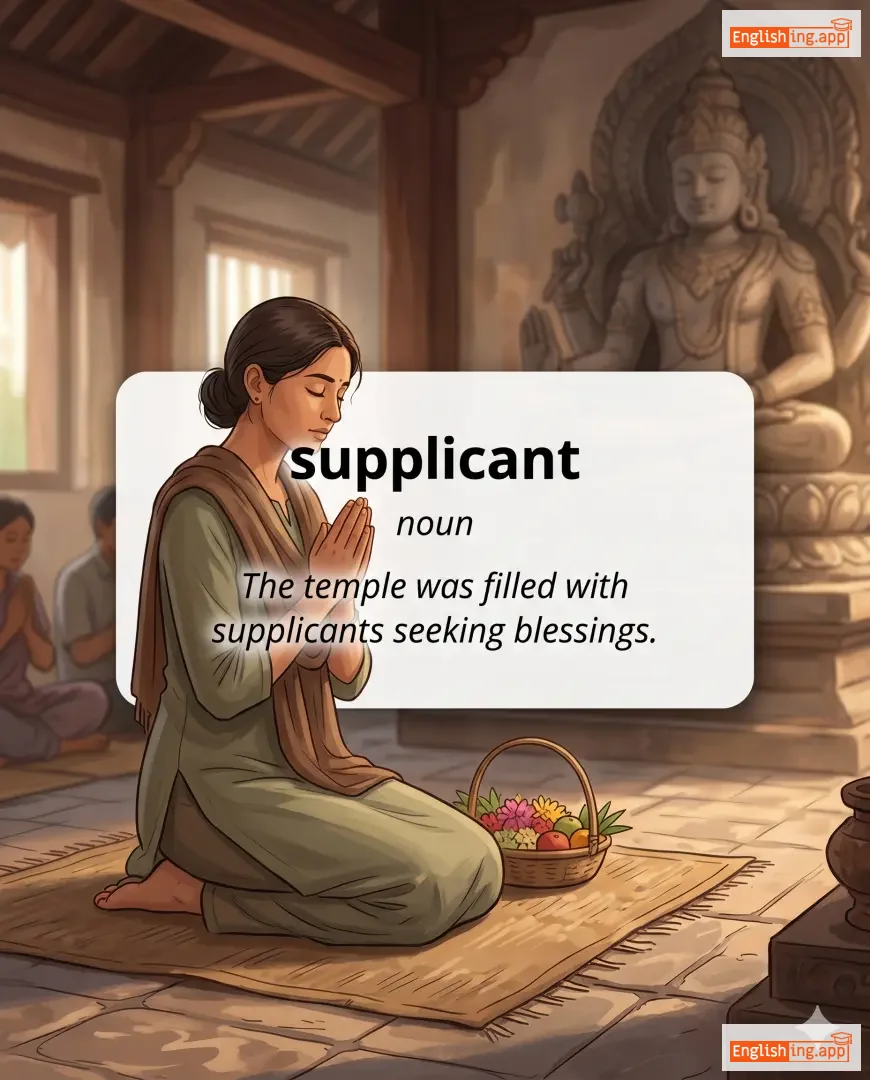
supplicant definition card — visual illustration of the meaning
noun
/ˈsʌplɪkənt/
恳求者 (kěnqiú zhě)

A person who humbly or earnestly asks for something, usually from a person of authority.

"The temple was filled with supplicants seeking blessings."

"寺庙里充满了恳求者,寻找祝福。" (Sìmiào lǐ chōngmǎn le kěnqiú zhě, xúnzhǎo zhùfú.)
verb
/ˈsʌplɪˌkeɪt/
恳求 (kěnqiú)

To ask for something earnestly or humbly, often in a religious context.

"The villagers supplicated the gods for rain during the drought."

"村民们在干旱期间恳求神灵降雨。" (Cūnmínmen zài gānhàn qījiān kěnqiú shénlíng jiàng yǔ.)
noun
/səˈplaɪə(r)/
供应商 (gongyingshang)

a person or company that provides goods or services

"The supplier delivered the products on time."

"供应商按时交付了产品。" (Gongyingshang anshi jiaofu le chanpin.)
supply definition card — visual illustration of the meaning
noun
/səˈplaɪ/

the amount of something that is available to be used or consumed

"The store has a limited supply of electronics."

support definition card — visual illustration of the meaning
verb
/səˈpɔːrt/
支持 (zhīchí)

to give assistance or help to someone or something

"They always support each other during difficult times."

"他们总是在困难时互相支持。" (Tāmen zǒng shì zài kùnnán shí hùxiāng zhīchí.)
noun
/səˈpɔːtər/
支持者 (zhīchí zhě)

a person who supports someone or something

"She is a strong supporter of the local animal shelter."
"她是当地动物收容所的强大支持者。" (Tā shì dāngdì dòngwù shōuróngsuǒ de qiángdà zhīchí zhě.)
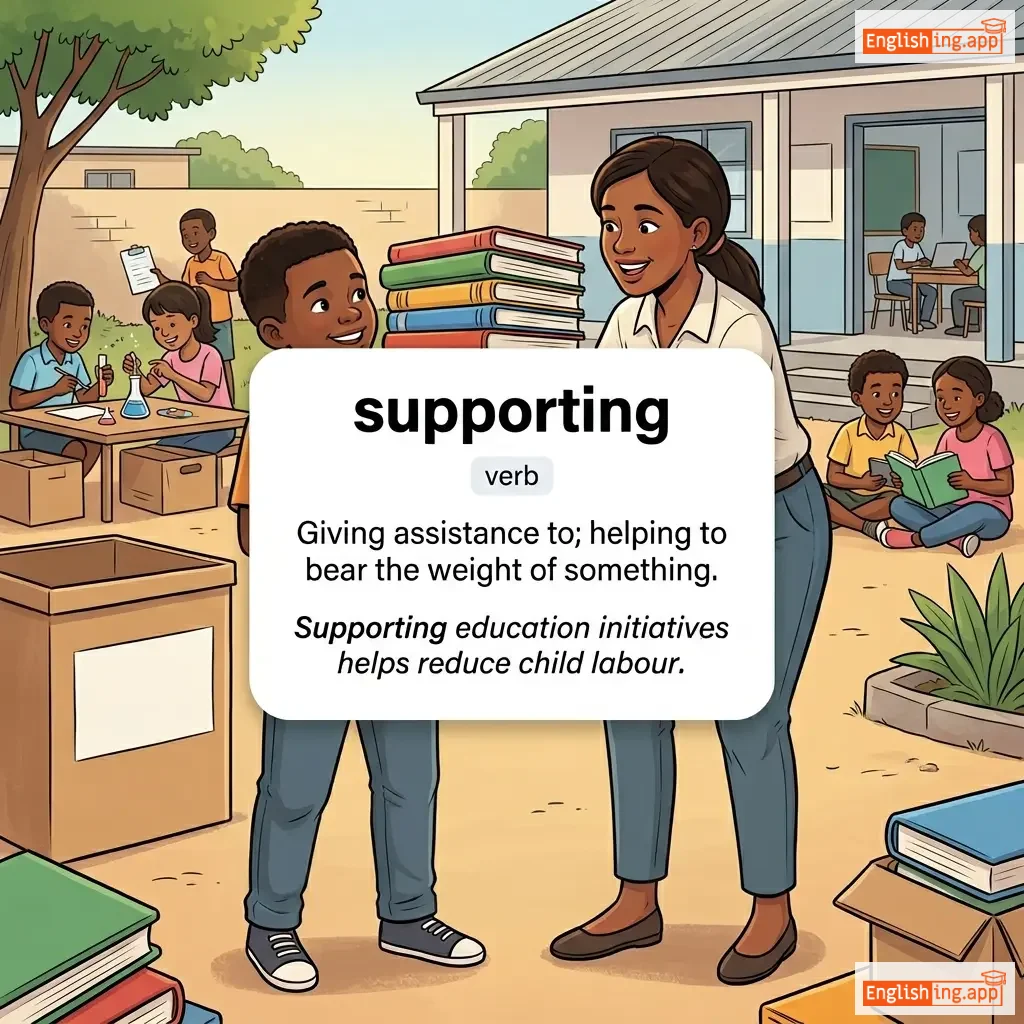
supporting definition card — visual illustration of the meaning
verb
səˈpɔːrtɪŋ
支持 (zhīchí)

Giving assistance to; helping to bear the weight of something.

"Supporting education initiatives helps reduce child labour."

"支持教育倡议有助于减少童工。" (Zhīchí jiàoyù chàngyì yǒu zhù yú jiǎnshǎo tónggōng.)
adjective
/səˈpɔːtɪv/
支持的 (zhīchí de)

providing encouragement or emotional help to someone

"She was very supportive during my difficult times."

"在我困难的时刻,她非常支持我。" (Zài wǒ kùnnán de shíkè, tā fēicháng zhīchí wǒ.)
verb
/səˈpəʊz/
假设 (jiǎshè)

to assume or believe something is true without proof

"I suppose she will be here soon."

"我猜你很快会到这里。" (Wǒ cāi nǐ hěn kuài huì dào zhèlǐ.)
adjective
/səˈpəʊzd/
假定的 (jiading de)

generally believed or assumed, but not necessarily true

"This is the supposed solution to the problem."

"这是问题的假定解决方案。" (Zhe shi wenti de jiading jiejue fang'an.)
adverb
/səˈpəʊzɪdli/
据说 (jùshuō)

used to show that something is believed or claimed to be true, though it may not be

"He is supposedly the best player on the team."
"据说他是队里最好的球员。" (Jùshuō tā shì duì lǐ zuì hǎo de qiúyuán.)
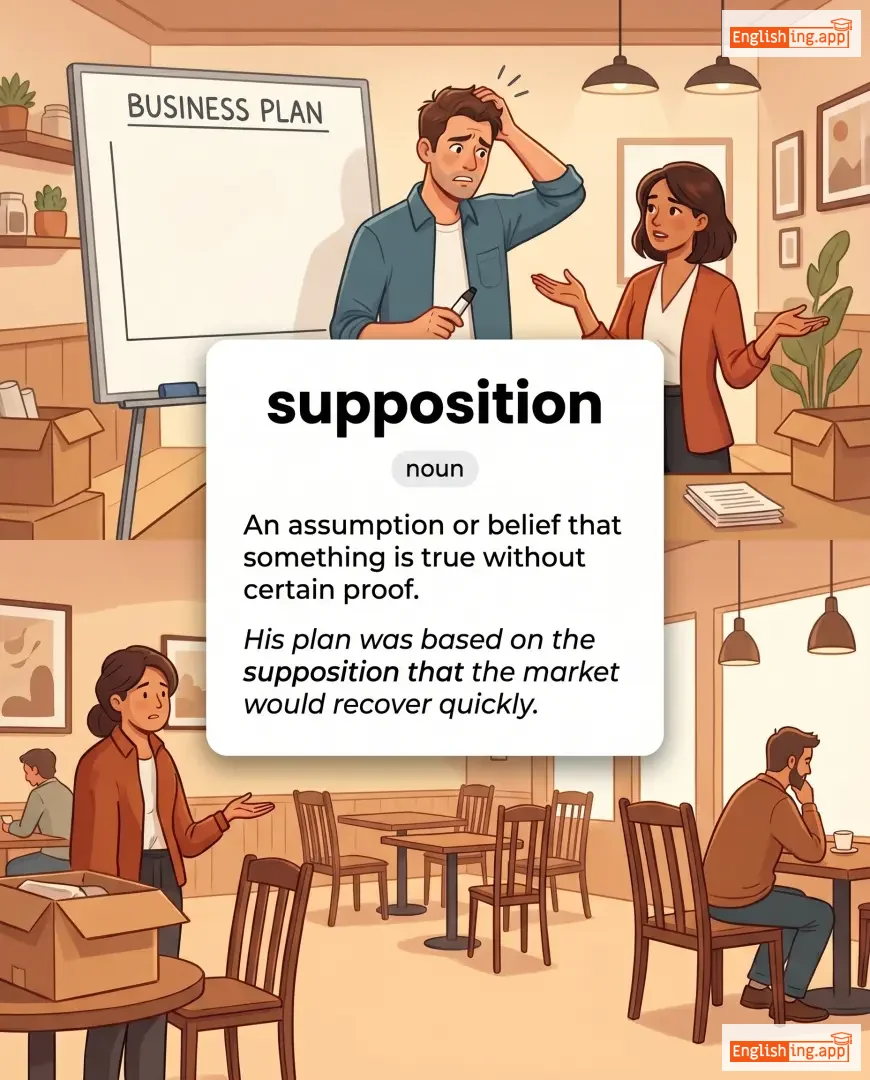
supposition definition card — visual illustration of the meaning
noun
/ˌsʌpəˈzɪʃən/
假设 (jiǎshè)

An assumption or belief that something is true without certain proof.

"His plan was based on the supposition that the market would recover quickly."

"他的计划是基于市场将迅速恢复的假设。" (tā de jìhuà shì jīyú shìchǎng jiāng xùnsù huīfù de jiǎshè.)
adjective
/ˌsʌpəzɪˈtɪʃəs/
假设的 (jiǎshè de)

Based on assumption rather than fact; not genuine or authentic.

"The story turned out to be supposititious, with no evidence to support it."
"这个故事证明是假的,没有证据支持它。" (Zhège gùshì zhèngmíng shì jiǎ de, méiyǒu zhèngjù zhīchí tā.)
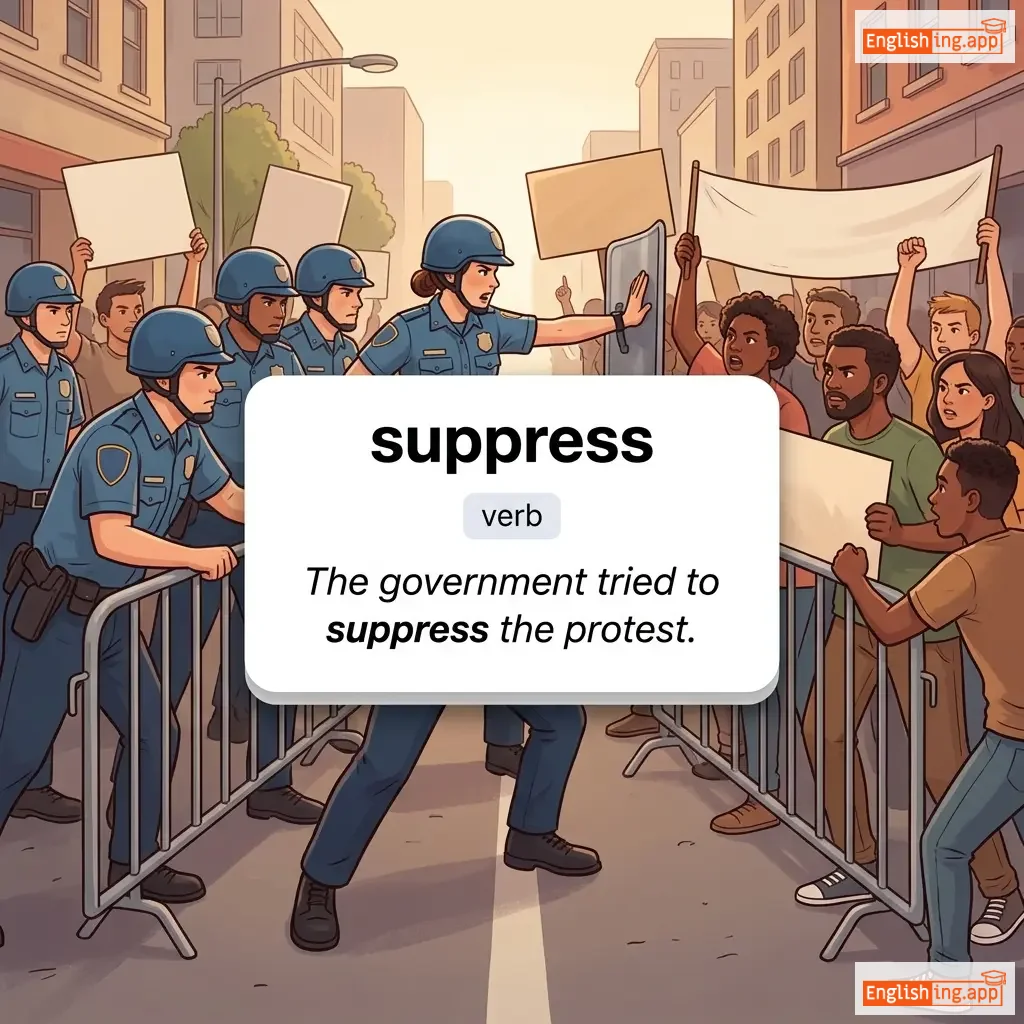
suppress definition card — visual illustration of the meaning
verb
/səˈprɛs/
压制 (yāzhì)

to forcibly put an end to something; to restrain or hold back an action, feeling, or development

"The government tried to suppress the protest."

"政府试图压制抗议。" (Zhèngfǔ shìtú yāzhì kàngyì.)
adjective
/səˈprɛsəbl̩/
可抑制的 (ke yizhi de)

capable of being restrained, controlled, or prevented

"The symptoms of the disease are suppressible with medication."

"疾病的症状可以通过药物抑制。" (Jíbìng de zhèngzhuàng kěyǐ tōngguò yàowù yìzhì.)
noun
/səˈprɛʃən/
压制 (yāzhì)

the act of forcibly stopping something or holding back feelings or actions

"The suppression of free speech led to protests."

"言论自由的压制导致了抗议。" (Yánlùn zìyóu de yāzhì dǎozhìle kàngyì.)
verb
/ˈsʌpjʊˌreɪt/
化脓 (huà nóng)

to form or discharge pus, usually as a result of infection

"The wound began to suppurate after a few days."

"伤口在几天后开始脓液化。" (Shāngkǒu zài jǐ tiān hòu kāishǐ nóng yè huà.)
adjective
/ˌsuːprəˈmʌndeɪn/
超世俗 (chāo shìsú)

beyond the physical or ordinary world; transcendent

"The monk spoke of supramundane peace beyond material life."

"和尚讲述了超越物质生活的超世俗的平静。" (Héshàng jiǎngshùle chāoyuè wùzhì shēnghuó de chāo shìsú de píngjìng.)
noun
/suˈpriː.mə.si/
至高无上;最高权力或权威 (zhì gāo wú shàng)

the state of being supreme; highest authority or power

"The country established naval supremacy in the region."

"该国在该地区建立了海军至高无上的地位。" (Gāi guó zài gāi dìqū jiànlìle hǎijūn zhìgāo wú shàng de dìwèi.)
adjective
/suˈpriːm/
至高无上 (zhì gāo wú shàng)

highest in rank or authority

"He is the supreme leader of the country."

"他是这个国家的最高领导人。" (Tā shì zhège guójiā de zuìgāo lǐngdǎo rén.)
noun
/sɜːrˈsiːs/
停止 (tingzhi)

a temporary or final ending or stopping of something

"The noise finally came to a surcease after midnight."

"噪音在午夜后终于停止了。" (Zaoyin zai wuyan hou zhongyu tingzhile.)
noun
/ˈsɜːrtʃɑːrdʒ/
附加费 (fùjiā fèi)

an additional charge or payment added to the usual cost

"The airline ticket had a fuel surcharge added to it."

"机票上加收了燃油附加费。" (Jīpiào shàng jiā shōu le rányóu fùjiā fèi.)
adjective
/ʃʊər/ or /ʃɔːr/
确定 (queding)

Confident about something; without doubt.

"I am sure that he will succeed."

"我确定他会成功。" (Wo queding ta hui chenggong.)
adverb
/ˈʃʊəli/
肯定 (kěndìng)

used to emphasize that something is definitely true or certain

"Surely, he must know about the meeting."

"肯定他一定知道关于会议的事情。" (Kěndìng tā yīdìng zhīdào guānyú huìyì de shìqíng.)
noun
/ˈʃʊərəti/
担保人 (danbaoren)

a person who takes responsibility for another's performance of an undertaking, such as appearing in court or paying a debt

"The landlord required a surety before renting the apartment."

"房东在出租公寓之前要求提供保证人。" (Fangdong zai chuzu gongyu zhiqian yaoqiu tigong baozhengren.)
noun
/ˈsɜːfɪs/
表面 (biaomian)

the outermost layer or boundary of something

"The surface of the water was calm."

"水的表面很平静。" (Shui de biaomian hen pingjing.)
noun
/ˈsɜːrfɪt/
过量 (guòliàng)

an excessive amount of something

"There was a surfeit of food at the festival."

"节日上食物过量。" (Jiérì shàng shíwù guòliàng.)
verb
/sɜːrdʒ/
激增 (jizeng)

to move suddenly and powerfully forward or upward

"The crowd surged forward when the gates opened."

"当大门打开时,人群向前涌动。" (Dang damen dakaishi, renqun xiang qian yongdong.)
noun
/ˈsɜːdʒən/
外科医生 (waike yisheng)

a doctor who performs medical operations

"The surgeon performed a complex heart operation."

"外科医生进行了复杂的心脏手术。" (Waike yisheng jinxing le fuza de xinzang shoushu.)
surgery definition card — visual illustration of the meaning
noun
/ˈsɜːdʒəri/

a medical procedure involving the cutting of the body to treat a condition

"She underwent surgery to remove the tumor."

adjective
/ˈsɜːdʒɪkəl/
与外科手术相关 (yu wàikē shǒushù xiāngguān)

relating to or involving surgery

"She underwent surgical treatment to repair the damage."

"她接受了外科治疗来修复损伤。" (Tā jiēshòu le wàikē zhìliáo lái xiūfù sǔnshāng.)
noun
/səˈspɛnʃən/
停赛 (tingsai)

The act of temporarily stopping something; also refers to a system in vehicles that absorbs shock.

"The player received a three-game suspension for misconduct."

"该球员因不当行为被禁赛三场。" (Gai qiu yuan yin budang xingwei bei jinsai san chang.)
noun
/səˈvaɪvl/
生存 (shengcun)

the state of continuing to live or exist, typically in difficult conditions

"Survival in the wild can be a challenging experience."

"在野外生存可能是一次充满挑战的经历。" (Zai ye wai shengcun keneng shi yici chongman tiaozhan de jingli.)
survive definition card — visual illustration of the meaning
verb
/sərˈvaɪv/
生还 (shenghuan)

To continue to live or exist after a difficult event or situation.

"He managed to survive the storm."

"他成功地生还了风暴。" (Ta chenggong de shenghuan le fengbao.)
noun
/sərˈvaɪvə/
幸存者 (xingcun zhe)

a person who survives, especially in difficult conditions

"The survivors of the shipwreck were rescued after several days."
"海难幸存者在几天后被救出。" (Hainan xingcun zhe zai ji tian hou bei jiuchu.)
susceptibility definition card — visual illustration of the meaning
noun
/səˌsɛptəˈbɪləti/
易感性 (yiganxing)

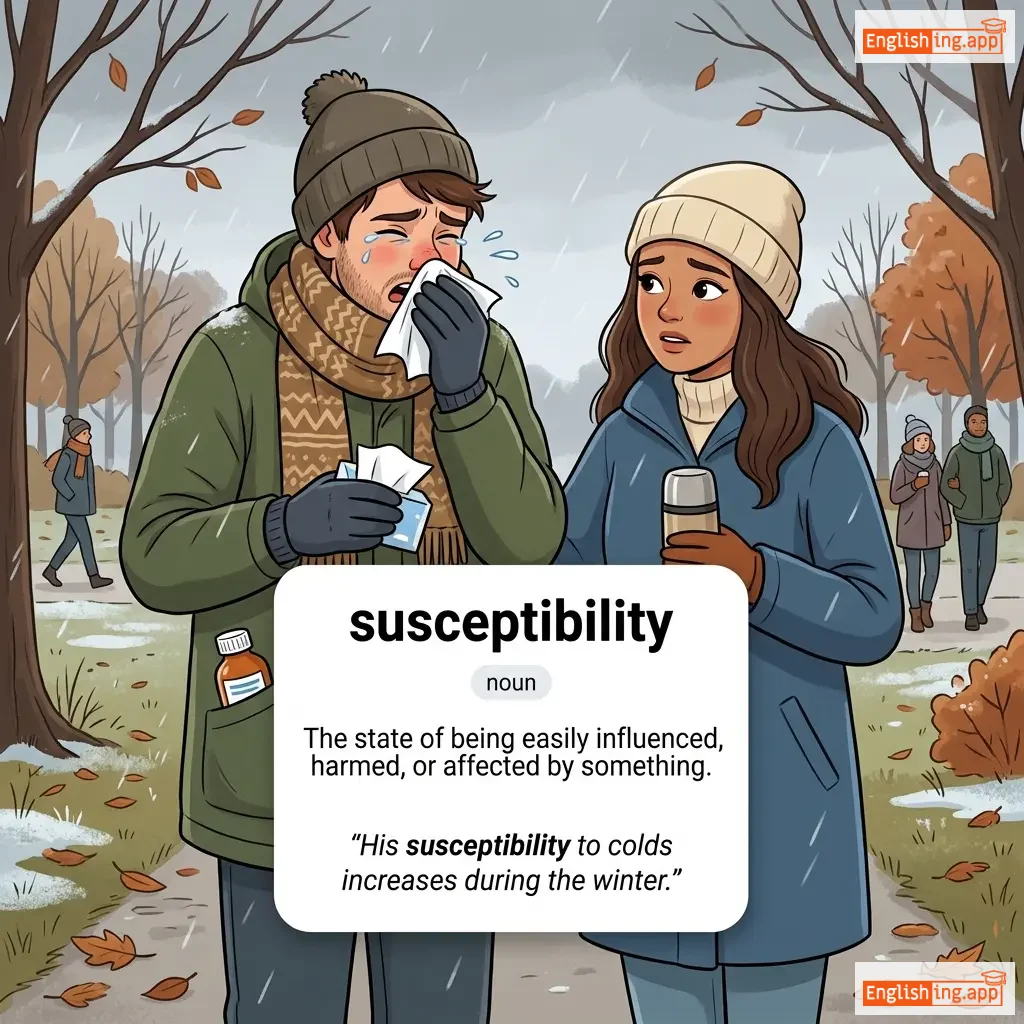
The state of being easily influenced, harmed, or affected by something.

"His susceptibility to colds increases during the winter."

"他对感冒的易感性在冬季增加。" (Ta dui ganmao de yiganxing zai dongji zengjia.)
susceptible definition card — visual illustration of the meaning
adjective
/səˈsɛptəbl/
易感的 (yigan de)

Likely or liable to be influenced or harmed by a particular thing.

"Children are more susceptible to infections."

"孩子们更容易感染。" (Haizimen geng rongyi ganran.)
suspect definition card — visual illustration of the meaning
🕵️

suspect

verb, noun, adjective
/səˈspɛkt/ (noun, adj) | /səˈspɛkt/ (verb)

To believe something to be true, likely, or guilty without certain proof.

"The police suspect him of stealing the car."

verb
/səˈspɛnd/
暂停 (zanting)

To temporarily stop something from being active or valid.

"The company decided to suspend his membership."

"公司决定暂停他的会员资格。" (Gongsi jueding zanting tade huiyuan zige.)
adjective, verb (past)
/səˈspɛndɪd/
暂停 (zanting)

Temporarily not allowed, stopped, or hanging.

"He was suspended from school for a week."

"他因为一周被暂停上学。" (Tā yīnwèi yī zhōu bèi zàntíng shàngxué.)
noun
/səˈspɛns/
悬念 (xuánniàn)

A state of mental uncertainty, anxiety, or excitement about what may happen next.

"The movie kept the audience in suspense until the very end."
"电影直到最后让观众保持悬念。" (Diànyǐng zhídào zuìhòu ràng guānzhòng bǎochí xuánniàn.)
sustainable definition card — visual illustration of the meaning
adjective
/səˈsteɪnəbəl/
可持续 (kěchíxù)

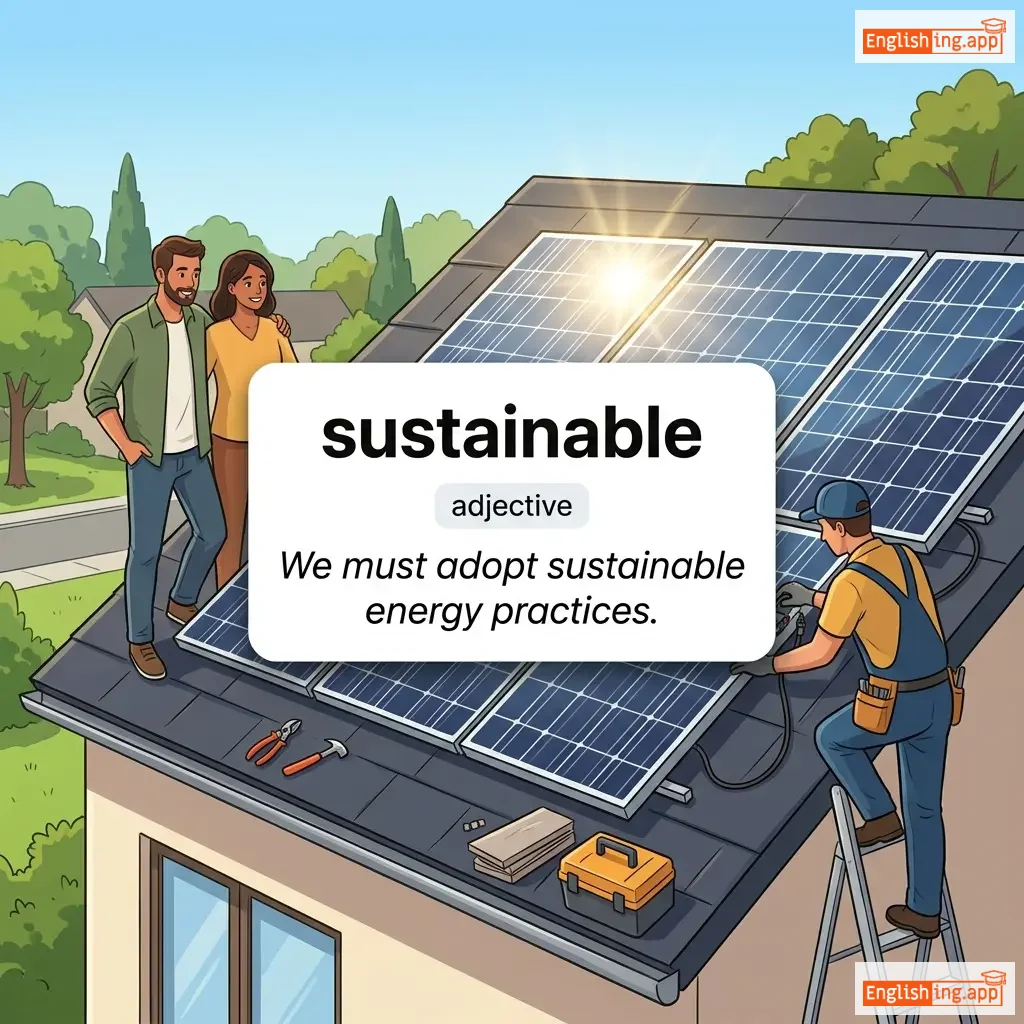
able to continue over a long period without causing harm to the environment or using up resources

"We must adopt sustainable energy practices."
"我们必须采用可持续的能源实践。" (Wǒmen bìxū cǎiyòng kěchíxù de nényuán shíjiàn.)
sustainable practices definition card — visual illustration of the meaning
noun
səˈsteɪnəbl ˈpræktɪsɪz
可持续做法 (ke chixu zuofa)

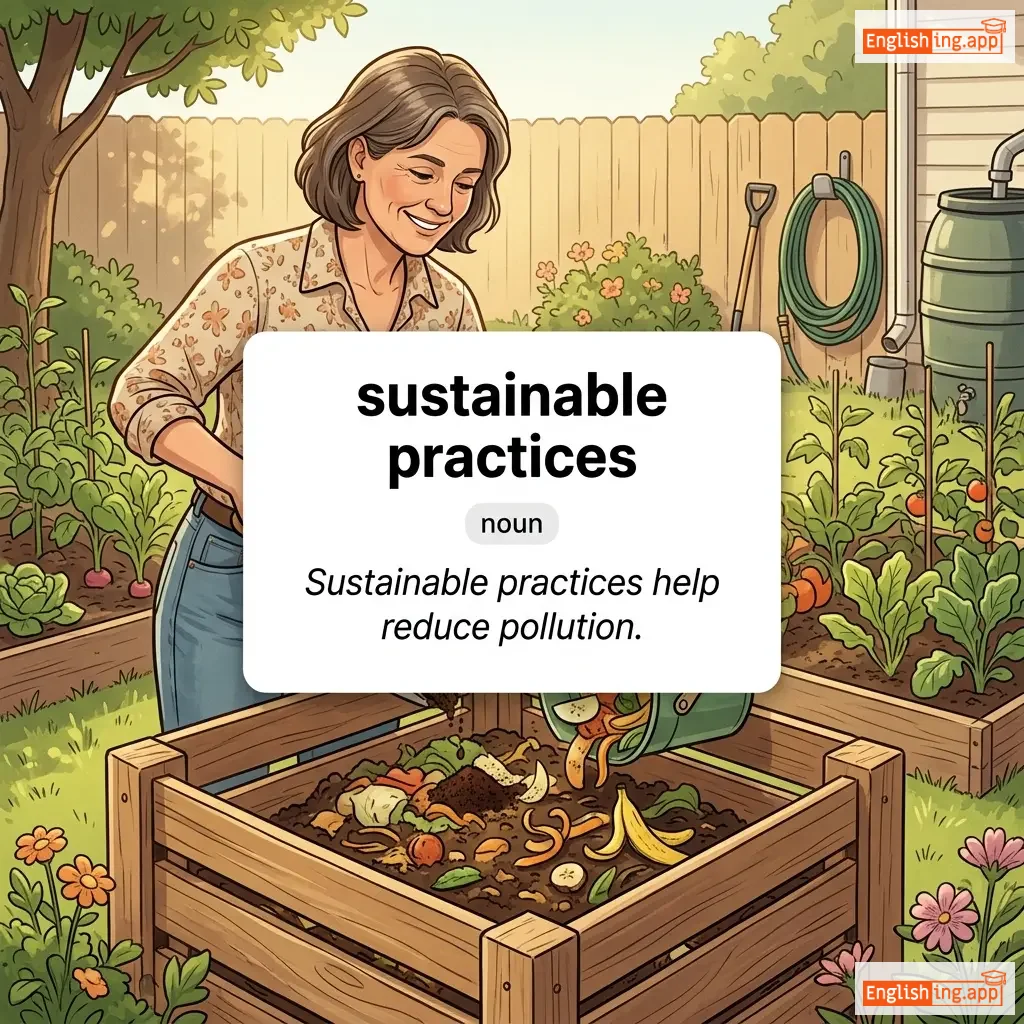
Methods or actions that can be maintained long-term without depleting resources or causing environmental harm

"Sustainable practices help reduce pollution."
"可持续的做法有助于减少污染。" (ke chixu de zuofa you zhu yu jian shao wuran)
Sustainable Development definition card — visual illustration of the meaning
noun
səˈsteɪnəbl dɪˈvɛləpmənt
可持续发展 (kechixu fazhan)

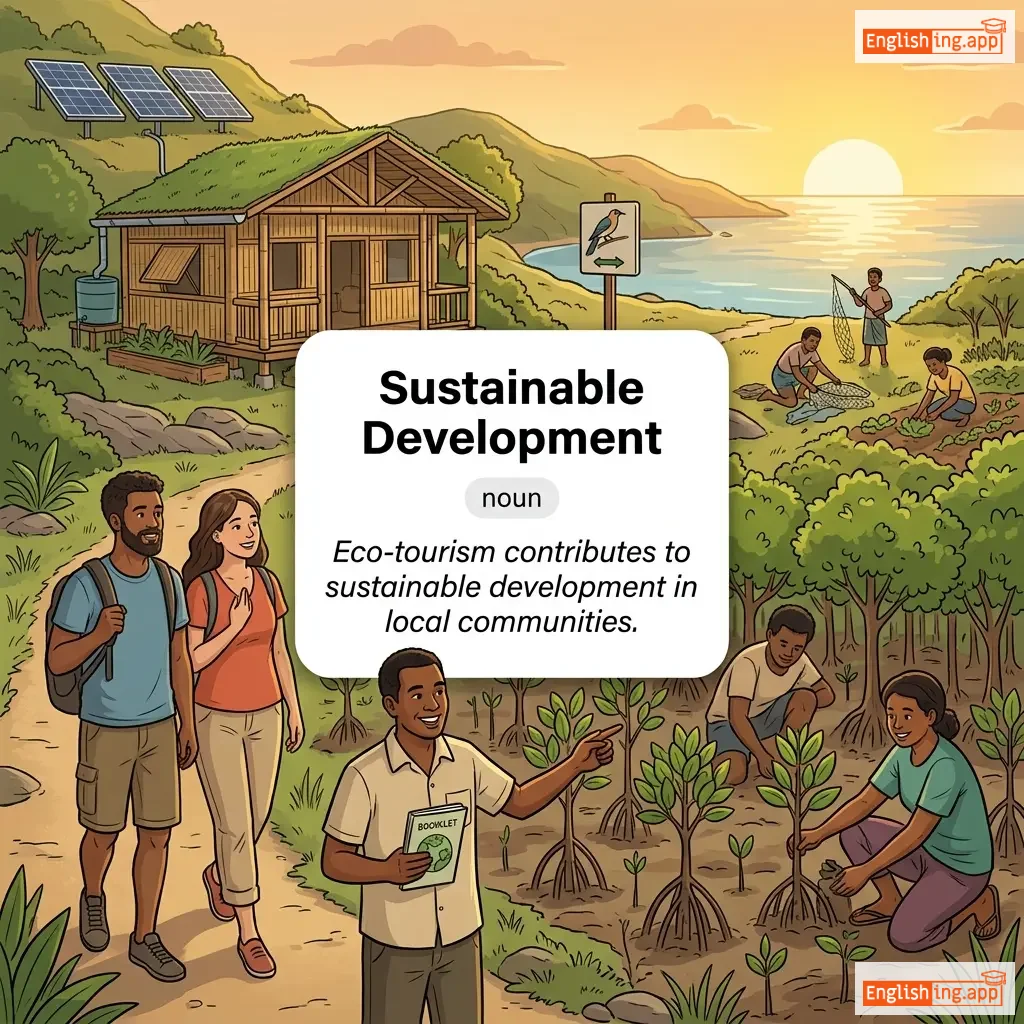
Development that meets present needs without compromising the ability of future generations to meet their own needs.

"Eco-tourism contributes to sustainable development in local communities."
"生态旅游有助于当地社区的可持续发展。" (Shengtai luyou youzhu yu dangdi shequ de kechixu fazhan.)
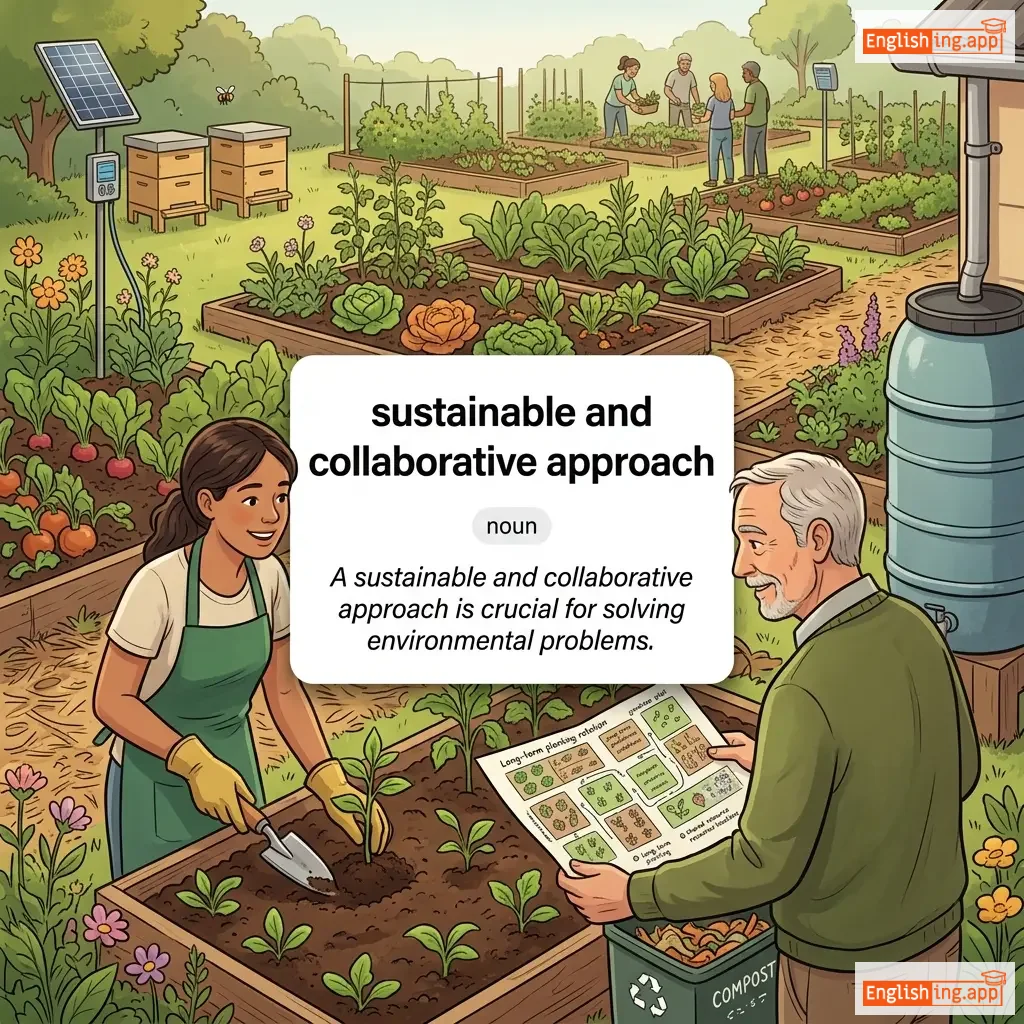
sustainable and collaborative approach definition card — visual illustration of the meaning
noun
səˈsteɪnəbəl ænd kəˈlæbərətɪv əˈproʊtʃ
可持续和协作的方法 (kěchíxù hé xiézuò de fāngfǎ)

A method of working together that can be maintained over time without depleting resources or causing harm.

"A sustainable and collaborative approach is crucial for solving environmental problems."
"可持续和协作的方法对于解决环境问题至关重要。" (Kěchíxù hé xiézuò de fāngfǎ duìyú jiějué huánjìng wèntí zhìguān zhòngyào.)
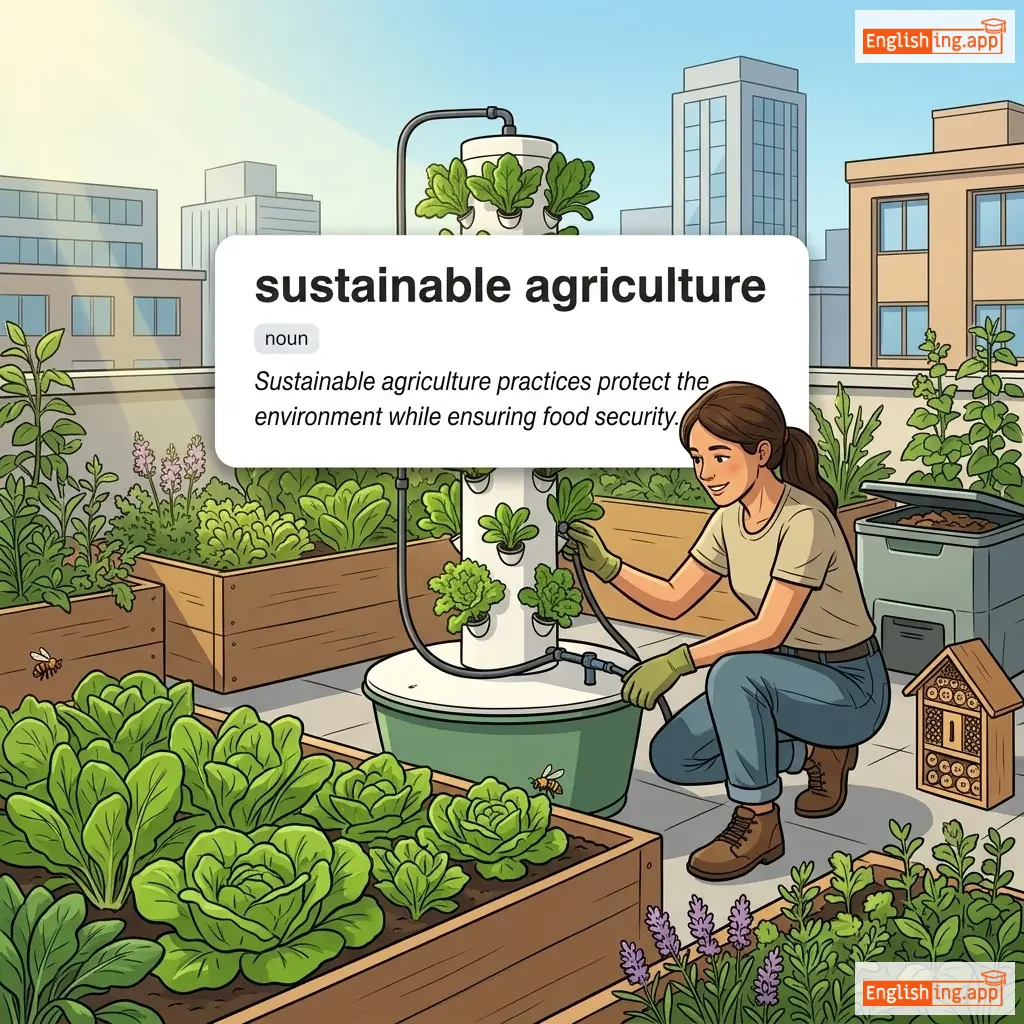
sustainable agriculture definition card — visual illustration of the meaning
noun
/səˈsteɪnəbl ˈæɡrɪkʌltʃər/
可持续农业 (kě chíxù nóngyè)

Farming practices that meet current food needs while preserving environmental resources and maintaining the ability to produce food for future generations through ecologically sound methods.

"Sustainable agriculture practices protect the environment while ensuring food security."

"可持续农业实践在保护环境的同时确保粮食安全。" (Kě chíxù nóngyè shíjiàn zài bǎohù huánjìng de tóngshí quèbǎo liángshí ānquán.)
verb
/səˈsteɪn/
维持 (wèichí)

To support, maintain, or keep something going over time.

"The team worked hard to sustain their success."

"团队努力工作以维持他们的成功。" (Tuánduì nǔlì gōngzuò yǐ wéichí tāmen de chénggōng.)
noun
/səˈspɪʃən/
怀疑 (huái yí)

a feeling or belief that someone has done something wrong or illegal

"He was arrested on suspicion of theft."

"他因涉嫌盗窃被逮捕。" (Tā yīn shèxián dàoqiè bèi dàibǔ.)