Словари

Словарь английского языка | Значения слов, определения и примеры

adjective
/ˌsʌplɪˈmɛntəri/
дополнительный (dopolnitel'nyj)

Additional, completing, or enhancing something else.

"The teacher gave supplementary materials to help the students prepare for exams."

"Учитель дал дополнительные материалы, чтобы помочь студентам подготовиться к экзаменам." (Uchitel' dal dopolnitel'nye materialy, chtoby pomoch' studentam podgotovit'sya k ekzamenam.)
suppliant definition card — visual illustration of the meaning
adjective
/ˈsʌpliənt/
молящийся (molyashchiesya)

Humbly or earnestly asking for something, especially from a person in authority.

"The suppliant man begged for mercy at the king's feet."
"Молящийся человек просил милосердия у ног короля." (Molyashchiesya chelovek prosil miloserdia u nog korolya.)
supplicant definition card — visual illustration of the meaning
noun
/ˈsʌplɪkənt/
молящийся (molyashchiesya)

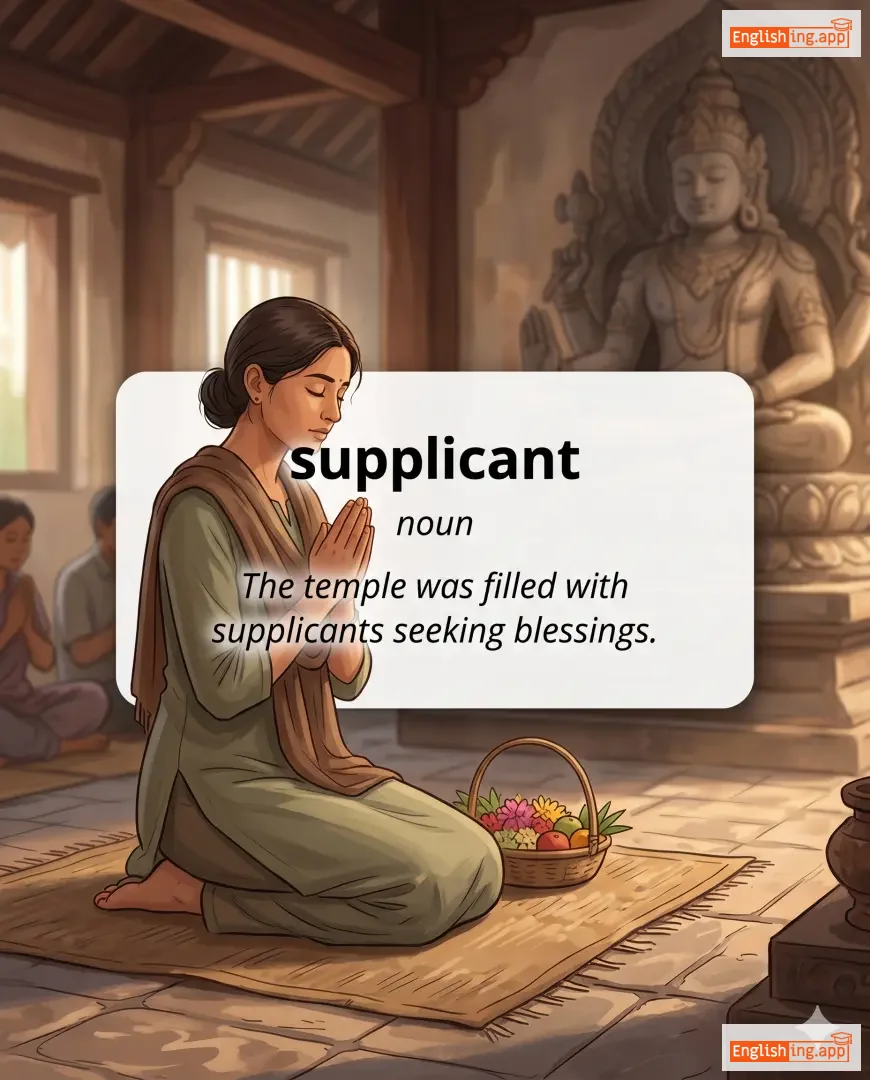
A person who humbly or earnestly asks for something, usually from a person of authority.

"The temple was filled with supplicants seeking blessings."

"Храм был полон молящихся, которые искали благословения." (Khram byl polon molyashchikhsya, kotorye iskali blagosloveniya.)
verb
/ˈsʌplɪˌkeɪt/
умолять (umolyat')

To ask for something earnestly or humbly, often in a religious context.

"The villagers supplicated the gods for rain during the drought."

"Жители деревни умоляли богов о дожде во время засухи." (Zhiteli derevni umolyali bogov o dozhde vo vremya zasukhi.)
noun
/səˈplaɪə(r)/
поставщик (postavshchik)

a person or company that provides goods or services

"The supplier delivered the products on time."

"Поставщик доставил продукцию вовремя." (Postavshchik dostavil produktsiyu vovremya.)
supply definition card — visual illustration of the meaning
noun
/səˈplaɪ/

the amount of something that is available to be used or consumed

"The store has a limited supply of electronics."

support definition card — visual illustration of the meaning
verb
/səˈpɔːrt/
поддержка (podderzhka)

to give assistance or help to someone or something

"They always support each other during difficult times."

"Они всегда поддерживают друг друга в трудные времена." (Oni vsegda podderzhivayut drug druga v trudnye vremya.)
noun
/səˈpɔːtər/
сторонник (storonnik)

a person who supports someone or something

"She is a strong supporter of the local animal shelter."

"Она является сильным сторонником местного приюта для животных." (Ona yavyayetsya sil'nym storonnikom mestnogo priyuta dlya zhivotnykh.)
supporting definition card — visual illustration of the meaning
verb
səˈpɔːrtɪŋ
поддерживать (podderzhivat')

Giving assistance to; helping to bear the weight of something.

"Supporting education initiatives helps reduce child labour."

"Поддержка образовательных инициатив помогает сократить детский труд." (Podderzhka obrazovatel'nykh initsiativ pomogaet sokratit' detskiy trud.)
adjective
/səˈpɔːtɪv/
поддерживающий (podderzhivayushchiy)

providing encouragement or emotional help to someone

"She was very supportive during my difficult times."

"Она была очень поддерживающей в мои трудные времена." (Ona byla ochen' podderzhivayushchей v moi trudnye vremena.)
verb
/səˈpəʊz/
предполагать (predpolagat')

to assume or believe something is true without proof

"I suppose she will be here soon."

"Я предполагаю, что она скоро будет здесь." (Ya predpolagayoo, chto ona skoro budet zdes'.)
adjective
/səˈpəʊzd/
предположительный (predpolozhitel'nyy)

generally believed or assumed, but not necessarily true

"This is the supposed solution to the problem."

"Это предполагаемое решение проблемы." (Eto predpolozhitel'noe reshenie problemy.)
adverb
/səˈpəʊzɪdli/
якобы (yakoby)

used to show that something is believed or claimed to be true, though it may not be

"He is supposedly the best player on the team."
"Якобы он лучший игрок в команде." (Yakoby on luchshiy igrok v komande.)
supposition definition card — visual illustration of the meaning
noun
/ˌsʌpəˈzɪʃən/
предположение (predpolozhenie)

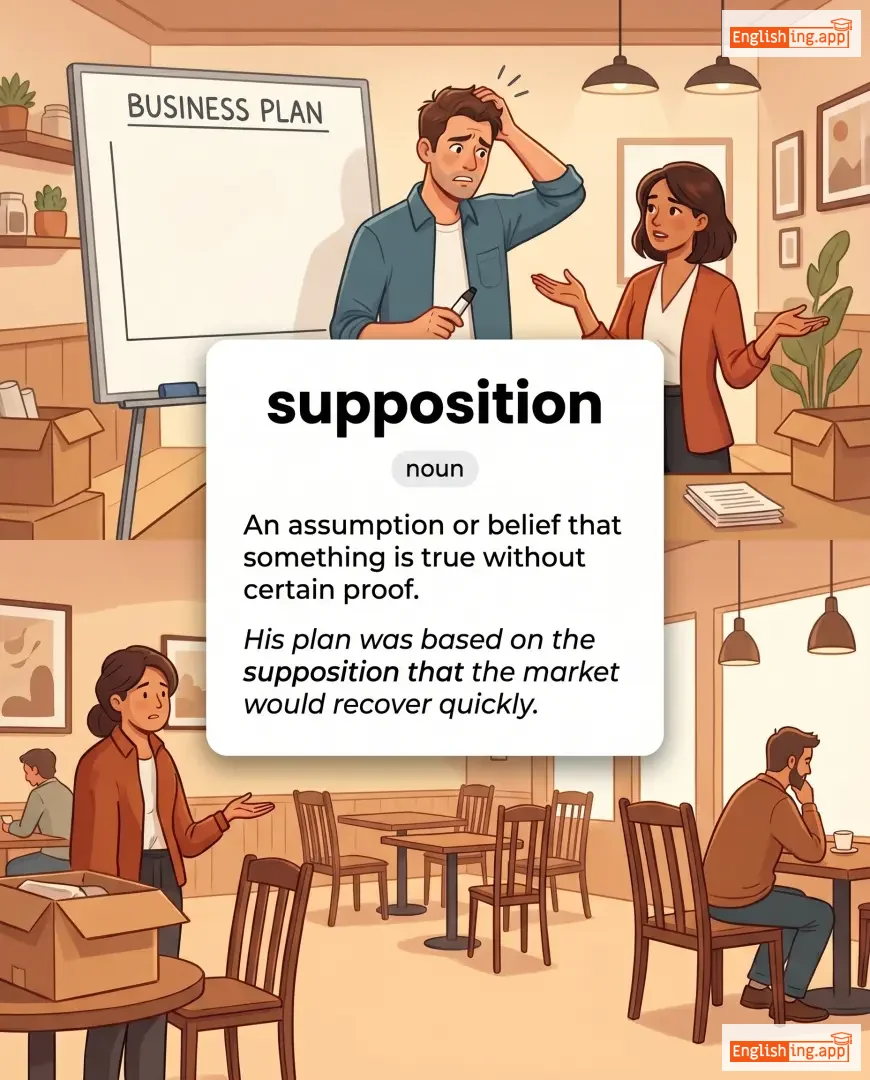
An assumption or belief that something is true without certain proof.

"His plan was based on the supposition that the market would recover quickly."

"Его план был основан на предположении, что рынок быстро восстановится." (Ego plan byl osnovan na predpolozhenii, chto rynok bystro vosstanovitsya.)
adjective
/ˌsʌpəzɪˈtɪʃəs/
предположительный (predpolozhitel'nyy)

Based on assumption rather than fact; not genuine or authentic.

"The story turned out to be supposititious, with no evidence to support it."
"История оказалась предположительной, без доказательств, которые бы её поддерживали." (Istoriya okazalas' predpolozhitel'noy, bez dokazatel'stv, kotorye by yeyo podderzhivali.)
suppress definition card — visual illustration of the meaning
verb
/səˈprɛs/
подавить (podavit')

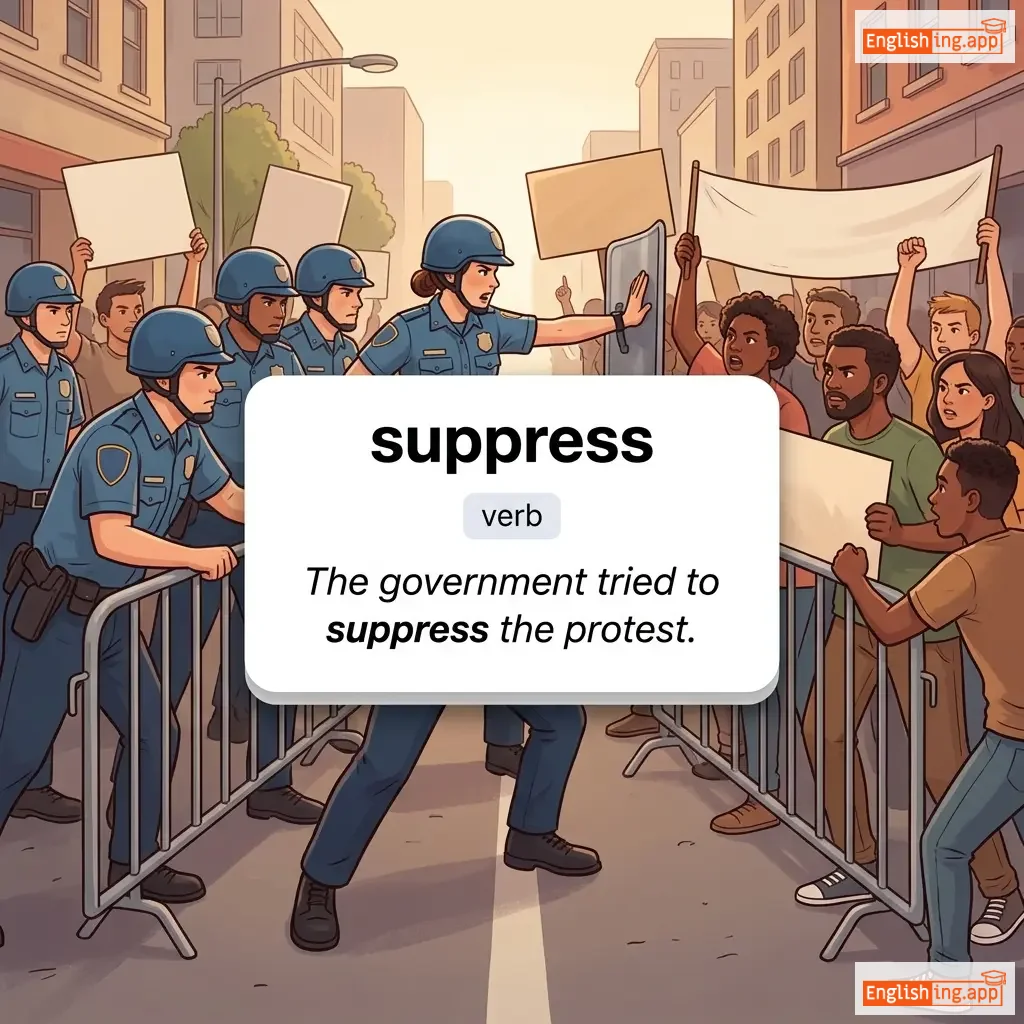
to forcibly put an end to something; to restrain or hold back an action, feeling, or development

"The government tried to suppress the protest."

"Правительство пыталось подавить протест." (Pravitel'stvo pytalos' podavit' protest.)
adjective
/səˈprɛsəbl̩/
подавляемый (podyemlyayemyj)

capable of being restrained, controlled, or prevented

"The symptoms of the disease are suppressible with medication."

"Симптомы болезни могут быть подавлены с помощью медикаментов." (Simptomy bolezni mogut byt' podavleny s pomoshch'yu medikamentov.)
noun
/səˈprɛʃən/
подавление (podavlenie)

the act of forcibly stopping something or holding back feelings or actions

"The suppression of free speech led to protests."

"Подавление свободы слова привело к протестам." (Podavlenie svobody slova privelo k protestam.)
verb
/ˈsʌpjʊˌreɪt/
гноиться (gnoitsya)

to form or discharge pus, usually as a result of infection

"The wound began to suppurate after a few days."

"Рана начала гноиться через несколько дней." (Rana nachala gnoitsya cherez neskol'ko dney.)
adjective
/ˌsuːprəˈmʌndeɪn/
супрамунданный (supramundanniy)

beyond the physical or ordinary world; transcendent

"The monk spoke of supramundane peace beyond material life."

"Монах говорил о супрамунданном мире, который за пределами материальной жизни." (Monakh govorit o supramundannom mire, kotoryy za predelami material'noy zhizni.)
noun
/suˈpriː.mə.si/
превосходство; высший авторитет или власть (prevoskhodstvo)

the state of being supreme; highest authority or power

"The country established naval supremacy in the region."

"Страна установила морское превосходство в регионе." (Strana ustanovila morskoe prevoskhodstvo v regione.)
adjective
/suˈpriːm/
высший (vysshiy)

highest in rank or authority

"He is the supreme leader of the country."

"Он высший лидер страны." (On vysshiy lider strany.)
noun
/sɜːrˈsiːs/
прекращение (prekrashchenie)

a temporary or final ending or stopping of something

"The noise finally came to a surcease after midnight."

"Шум наконец прекратился после полуночи." (Shum nakonec prekratilsya posle polunochi.)
noun
/ˈsɜːrtʃɑːrdʒ/
дополнительная плата (dopolnitel'naya plata)

an additional charge or payment added to the usual cost

"The airline ticket had a fuel surcharge added to it."

"Билет на самолет имел дополнительный топливный сбор." (Bilet na samolyot imel dopolnitel'nyy toplivnyy sbor.)
adjective
/ʃʊər/ or /ʃɔːr/
уверенный (uverenniy)

Confident about something; without doubt.

"I am sure that he will succeed."

"Я уверен, что он добьется успеха." (Ya uveren, chto on dobyotsya uspekha.)
adverb
/ˈʃʊəli/
наверное (navernoe)

used to emphasize that something is definitely true or certain

"Surely, he must know about the meeting."

"Наверное, он должен знать о встрече." (Navernoe, on dolzhen znat' o vstreche.)
noun
/ˈʃʊərəti/
поручительство (poruchitel'stvo)

a person who takes responsibility for another's performance of an undertaking, such as appearing in court or paying a debt

"The landlord required a surety before renting the apartment."

"Арендодатель потребовал поручительство перед сдачей квартиры." (Arendodatel' potreboval poruchitel'stvo pered sdachey kvartiry.)
noun
/ˈsɜːfɪs/
поверхность (poverkhnost)

the outermost layer or boundary of something

"The surface of the water was calm."

"Поверхность воды была спокойной." (Poverkhnost' vody byla spokoynoy.)
noun
/ˈsɜːrfɪt/
избыток (izbytok)

an excessive amount of something

"There was a surfeit of food at the festival."

"На фестивале было изобилие еды." (Na festivale bylo izobiliye yedy.)
verb
/sɜːrdʒ/
порыв (poryv)

to move suddenly and powerfully forward or upward

"The crowd surged forward when the gates opened."

"Толпа устремилась вперед, когда ворота открылись." (Tolpa ustremilas' vpered, kogda vorota otkrylis'.)
noun
/ˈsɜːdʒən/
хирург (khirurg)

a doctor who performs medical operations

"The surgeon performed a complex heart operation."

"Хирург выполнил сложную операцию на сердце." (Khirurg vypolnil slozhnuyu operaciyu na serdtse.)
surgery definition card — visual illustration of the meaning
noun
/ˈsɜːdʒəri/

a medical procedure involving the cutting of the body to treat a condition

"She underwent surgery to remove the tumor."

adjective
/ˈsɜːdʒɪkəl/
связанный с хирургией (svyazannyy s khirurgiyey)

relating to or involving surgery

"She underwent surgical treatment to repair the damage."

"Она прошла хирургическое лечение для восстановления повреждений." (Ona proshla khirurgicheskoye lecheniye dlya vosstanovleniya povrezhdeniy.)
noun
/səˈspɛnʃən/
приостановка (pristojanovka)

The act of temporarily stopping something; also refers to a system in vehicles that absorbs shock.

"The player received a three-game suspension for misconduct."

"Игрок получил трехматчевую приостановку за плохое поведение." (Igrok poluchil tryokhmatchevuyu priyostanovku za plokhoye povedeniye.)
noun
/səˈvaɪvl/
выживание (vyzhivanie)

the state of continuing to live or exist, typically in difficult conditions

"Survival in the wild can be a challenging experience."
"Выживание в дикой природе может быть сложным испытанием." (Vyzhivanie v dikoy prirode mozhet byt' slozhnym ispytaniem.)
survive definition card — visual illustration of the meaning
verb
/sərˈvaɪv/
выжить (vyzhit)

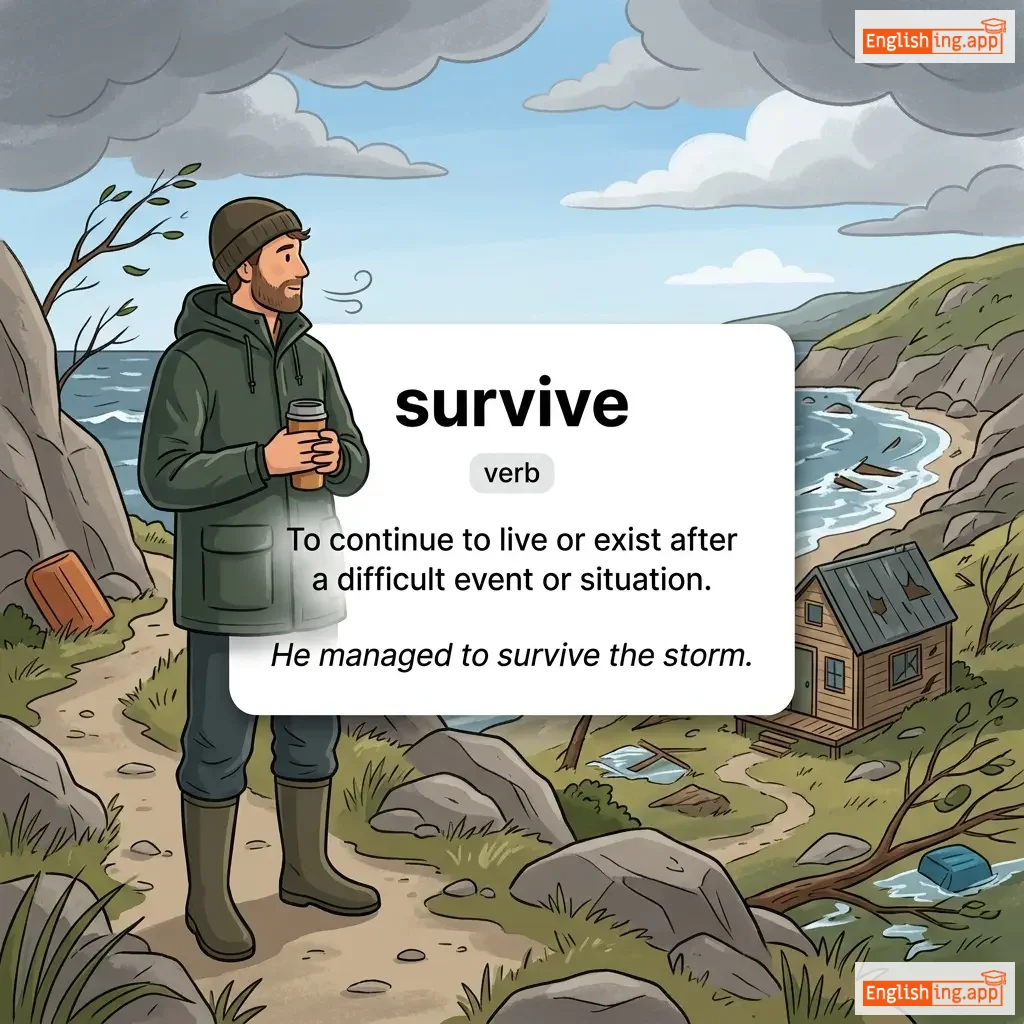
To continue to live or exist after a difficult event or situation.

"He managed to survive the storm."

"Он смог выжить во время шторма." (On smog vyzhit' vo vremya shtorma.)
noun
/sərˈvaɪvə/
выживший (vyzhivshiy)

a person who survives, especially in difficult conditions

"The survivors of the shipwreck were rescued after several days."
"Выжившие после кораблекрушения были спасены через несколько дней." (Vyzhivshie posle korablekrusheniya byli spaseny cherez neskol'ko dney.)
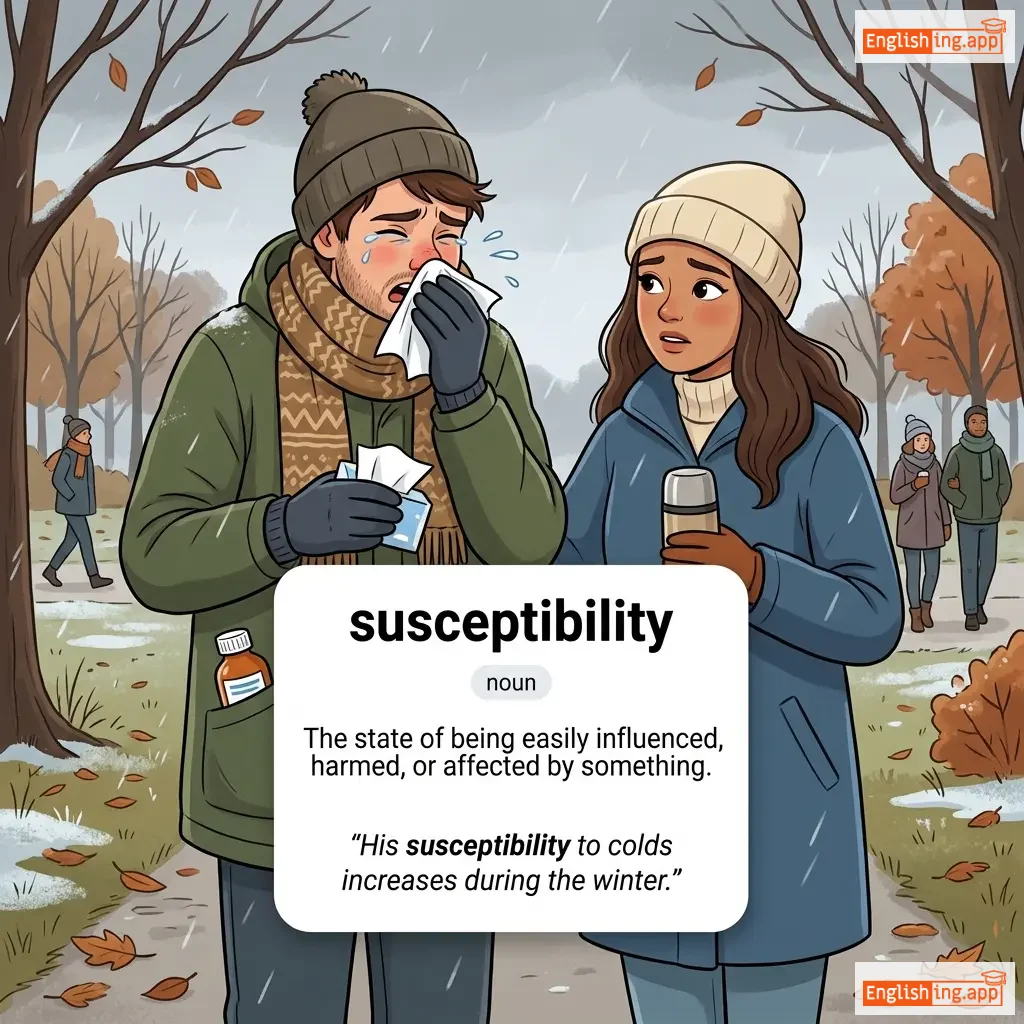
susceptibility definition card — visual illustration of the meaning
noun
/səˌsɛptəˈbɪləti/
восприимчивость (vospriimchivost)

The state of being easily influenced, harmed, or affected by something.

"His susceptibility to colds increases during the winter."
"Его восприимчивость к простудам увеличивается зимой." (Ego vospriimchivost k prostudam uvelichivaetsya zimoy.)
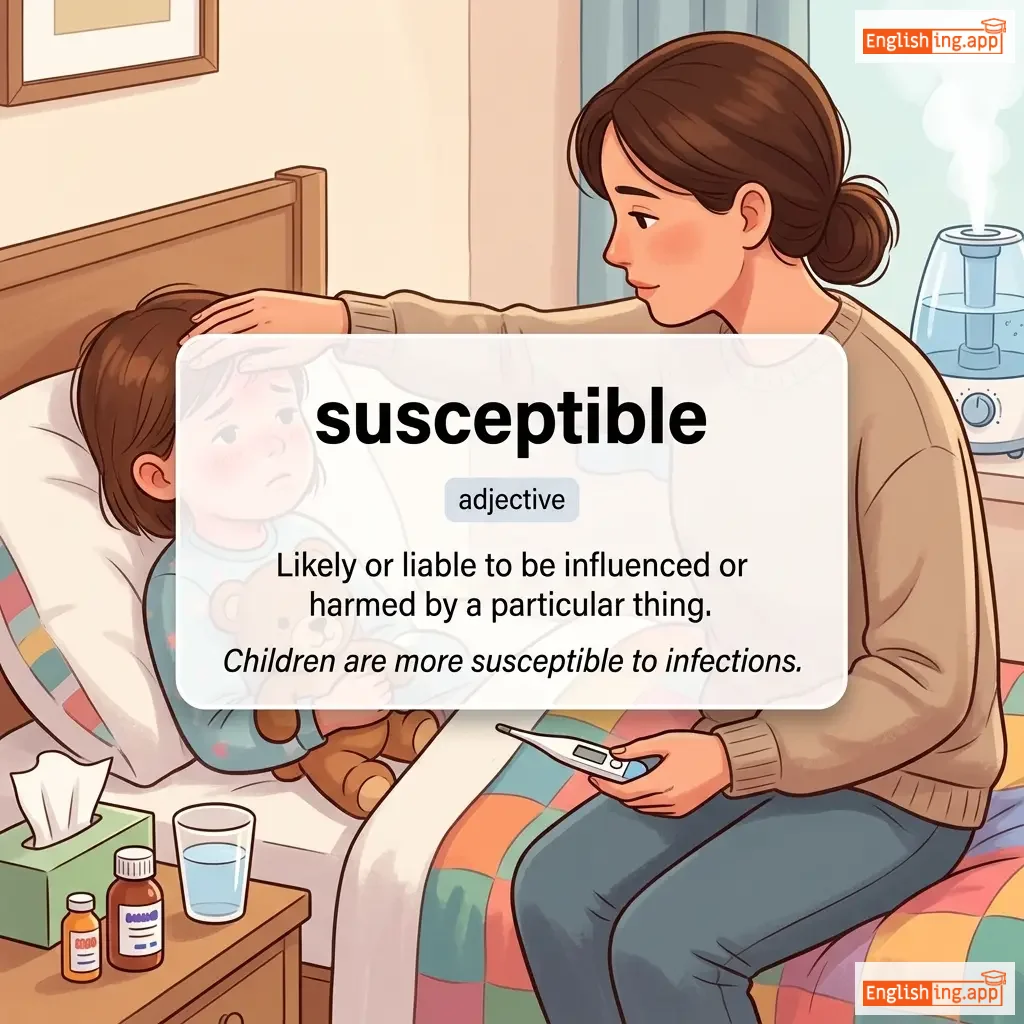
susceptible definition card — visual illustration of the meaning
adjective
/səˈsɛptəbl/
восприимчивый (vospriimchivyi)

Likely or liable to be influenced or harmed by a particular thing.

"Children are more susceptible to infections."

"Дети более восприимчивы к инфекциям." (Deti bolee vospriimchivy k infektsiyam.)
suspect definition card — visual illustration of the meaning
verb, noun, adjective
/səˈspɛkt/ (noun, adj) | /səˈspɛkt/ (verb)
подозревать (podozrevat)

To believe something to be true, likely, or guilty without certain proof.

"The police suspect him of stealing the car."

"Полиция подозревает его в краже машины." (Politsiya podozrevaet ego v krazhe mashiny.)
verb
/səˈspɛnd/
приостановить (priestanovit)

To temporarily stop something from being active or valid.

"The company decided to suspend his membership."

"Компания решила приостановить его членство." (Kompaniya reshila priostanovit' ego chlenstvo.)
adjective, verb (past)
/səˈspɛndɪd/
приостановлено (priestanovleno)

Temporarily not allowed, stopped, or hanging.

"He was suspended from school for a week."

"Он был приостановлен в школе на неделю." (On byl priestanovlen v shkole na nedelyu.)
noun
/səˈspɛns/
напряжение (napryazhenie)

A state of mental uncertainty, anxiety, or excitement about what may happen next.

"The movie kept the audience in suspense until the very end."
"Фильм держал аудиторию в напряжении до самого конца." (Film derzhal auditoriyu v napryazhenii do samogo kontsa.)
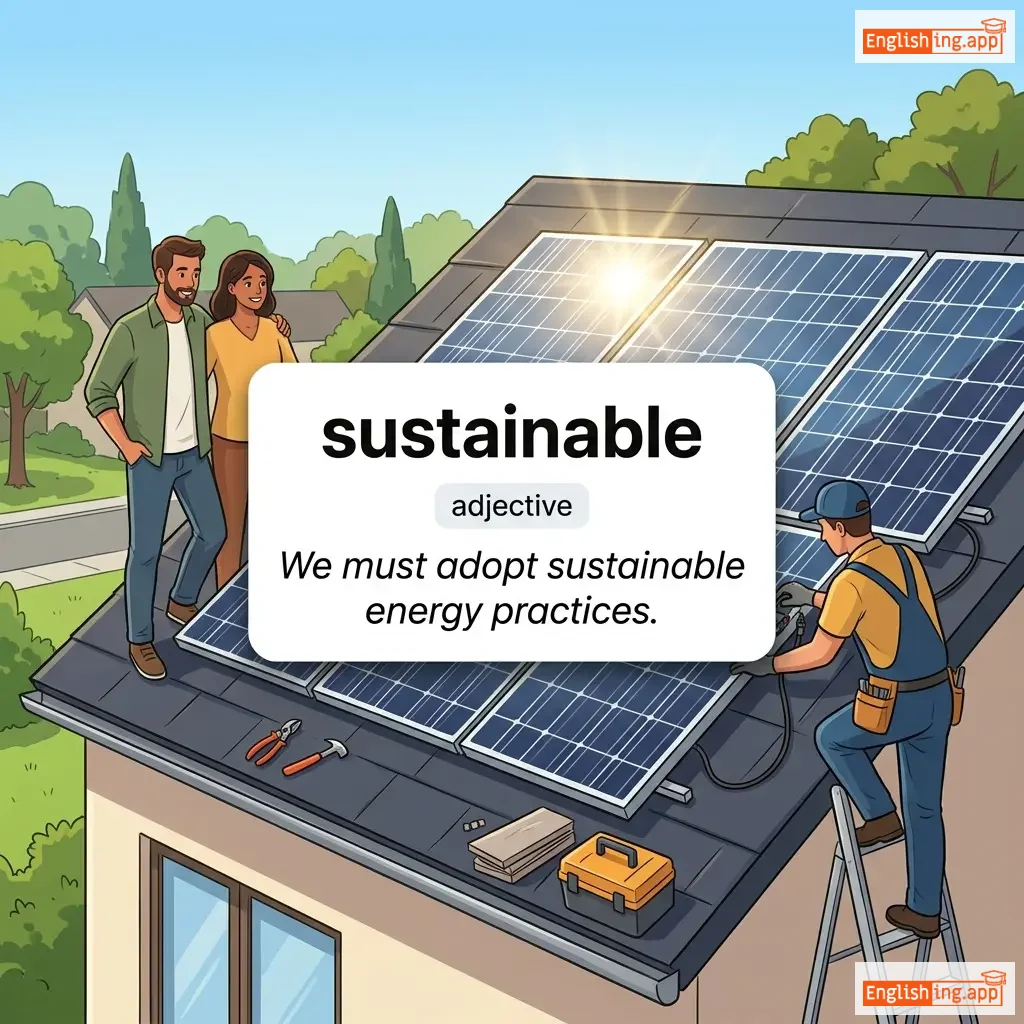
sustainable definition card — visual illustration of the meaning
adjective
/səˈsteɪnəbəl/
устойчивый (ustoychivyy)

able to continue over a long period without causing harm to the environment or using up resources

"We must adopt sustainable energy practices."
"Мы должны принять устойчивые энергетические практики." (My dolzhny prinyat' ustoychivye energeticheskie praktiki.)
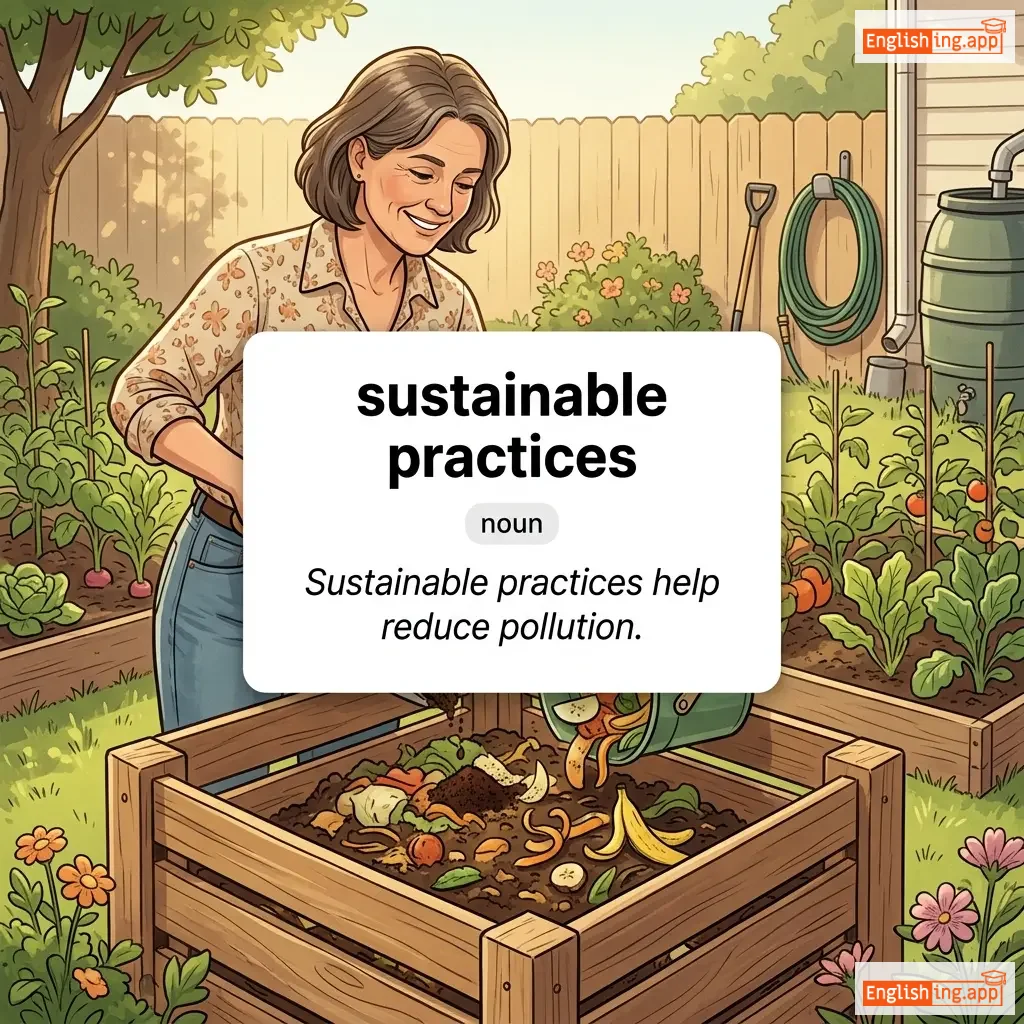
sustainable practices definition card — visual illustration of the meaning
noun
səˈsteɪnəbl ˈpræktɪsɪz
устойчивые практики (susteinuhbul praktiziz)

Methods or actions that can be maintained long-term without depleting resources or causing environmental harm

"Sustainable practices help reduce pollution."
"Устойчивые практики помогают снизить загрязнение." (Ustoychivye praktiki pomogayut snizit zagryaznenie.)
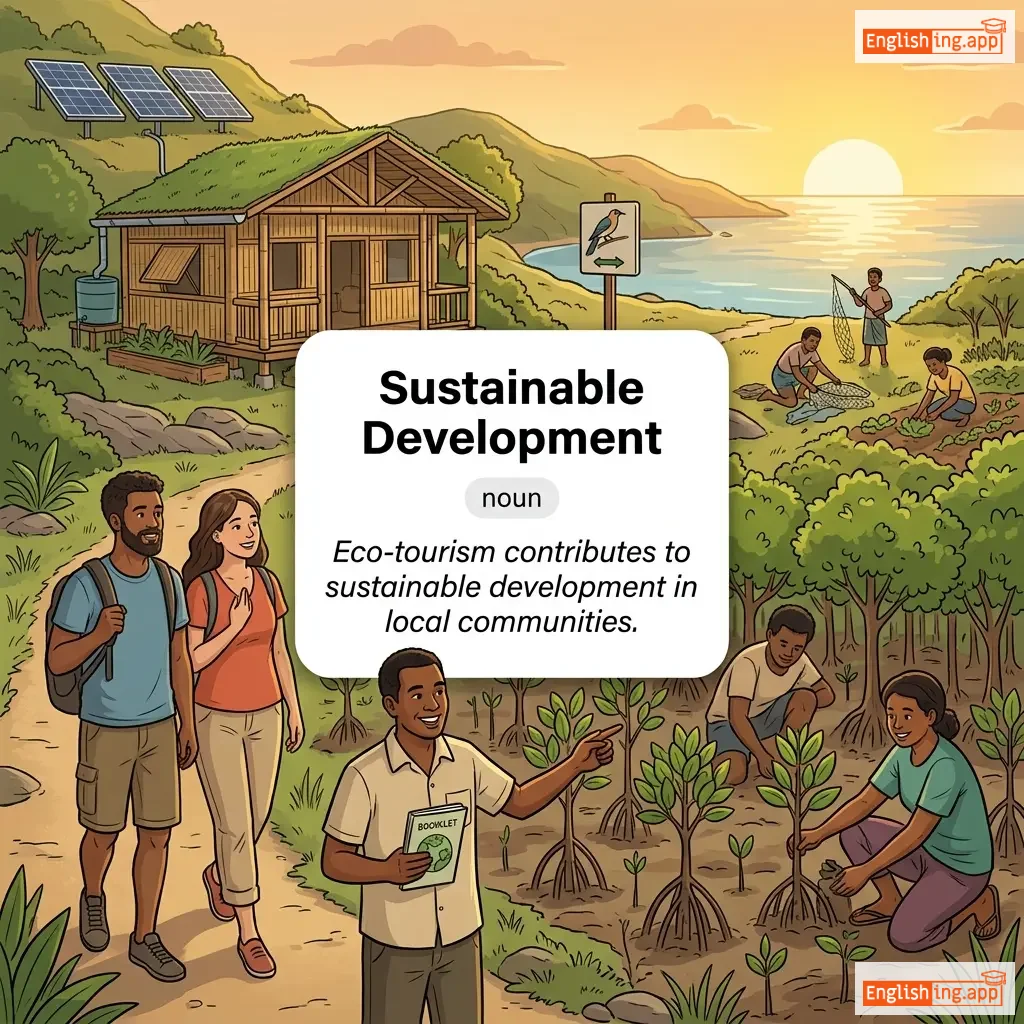
Sustainable Development definition card — visual illustration of the meaning
noun
səˈsteɪnəbl dɪˈvɛləpmənt
устойчивое развитие (ustoychivoye razvitie)

Development that meets present needs without compromising the ability of future generations to meet their own needs.

"Eco-tourism contributes to sustainable development in local communities."

"Экотуризм способствует устойчивому развитию в местных сообществах." (Ekoturizm sposobstvuet ustoychivomu razvitiyu v mestnykh soobshchestvakh.)
sustainable and collaborative approach definition card — visual illustration of the meaning
noun
səˈsteɪnəbəl ænd kəˈlæbərətɪv əˈproʊtʃ
устойчивый и совместный подход (ustoichivyy i sovmestnyy podkhod)

A method of working together that can be maintained over time without depleting resources or causing harm.

"A sustainable and collaborative approach is crucial for solving environmental problems."
"Устойчивый и совместный подход имеет решающее значение для решения экологических проблем." (Ustoichivyy i sovmestnyy podkhod imeyet reshayushchee znacheniye dlya resheniya ekologicheskikh problem.)
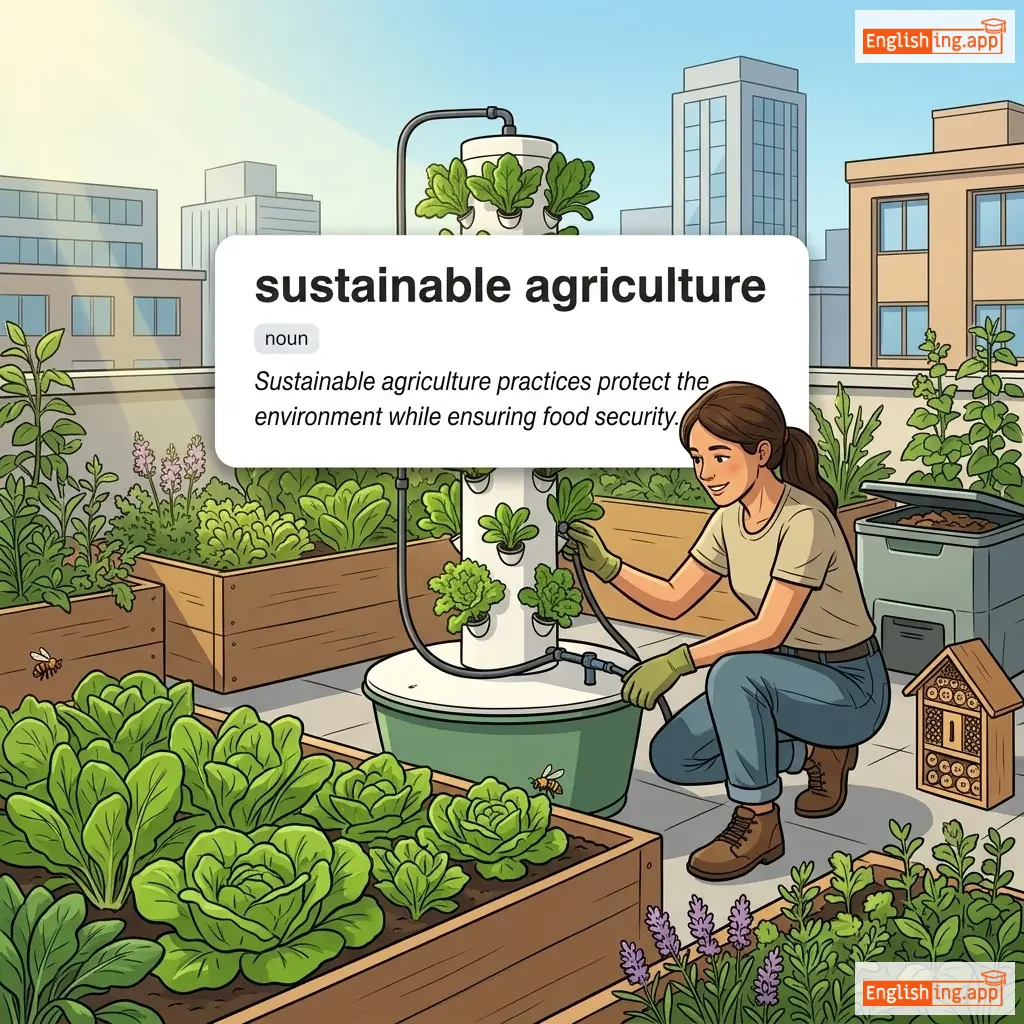
sustainable agriculture definition card — visual illustration of the meaning
noun
/səˈsteɪnəbl ˈæɡrɪkʌltʃər/
устойчивая сельскохозяйственная практика (ustoychivaya selskokhozyaystvennaya praktika)

Farming practices that meet current food needs while preserving environmental resources and maintaining the ability to produce food for future generations through ecologically sound methods.

"Sustainable agriculture practices protect the environment while ensuring food security."

"Устойчивые сельскохозяйственные практики защищают окружающую среду, обеспечивая продовольственную безопасность." (Ustoychivye selskokhozyaystvennye praktiki zashchishchayut okruzhayushchuyu sredu, obespechivaya prodovol'stviennuyu bezopasnost'.)
verb
/səˈsteɪn/
поддерживать (podderzhivat)

To support, maintain, or keep something going over time.

"The team worked hard to sustain their success."

"Команда усердно работала, чтобы поддерживать их успех." (Komanda usyerodno rabotala, chtoby podderzhivat ykh usyekh.)
noun
/səˈspɪʃən/
подозрение (podozreniye)

a feeling or belief that someone has done something wrong or illegal

"He was arrested on suspicion of theft."

"Он был арестован по подозрению в краже." (On byl arestovan po podozreniyu v krazhe.)