Словари

Словарь английского языка | Значения слов, определения и примеры

noun
/ˈsʌməri/
резюме (rezume)

A brief statement of the main points of something.

"She wrote a summary of the book for her class."

"Она написала резюме книги для своего класса." (Ona napisała rezyume knigi dlya svoego klassa.)
noun
/sʌˈmeɪʃən/
сумма, резюме (summa, rezyume)

The process of adding things together; a summary of points.

"The lawyer gave a powerful summation of the case."
"Адвокат дал мощное резюме дела." (Advokat dal moshchnoe rezyume dela.)
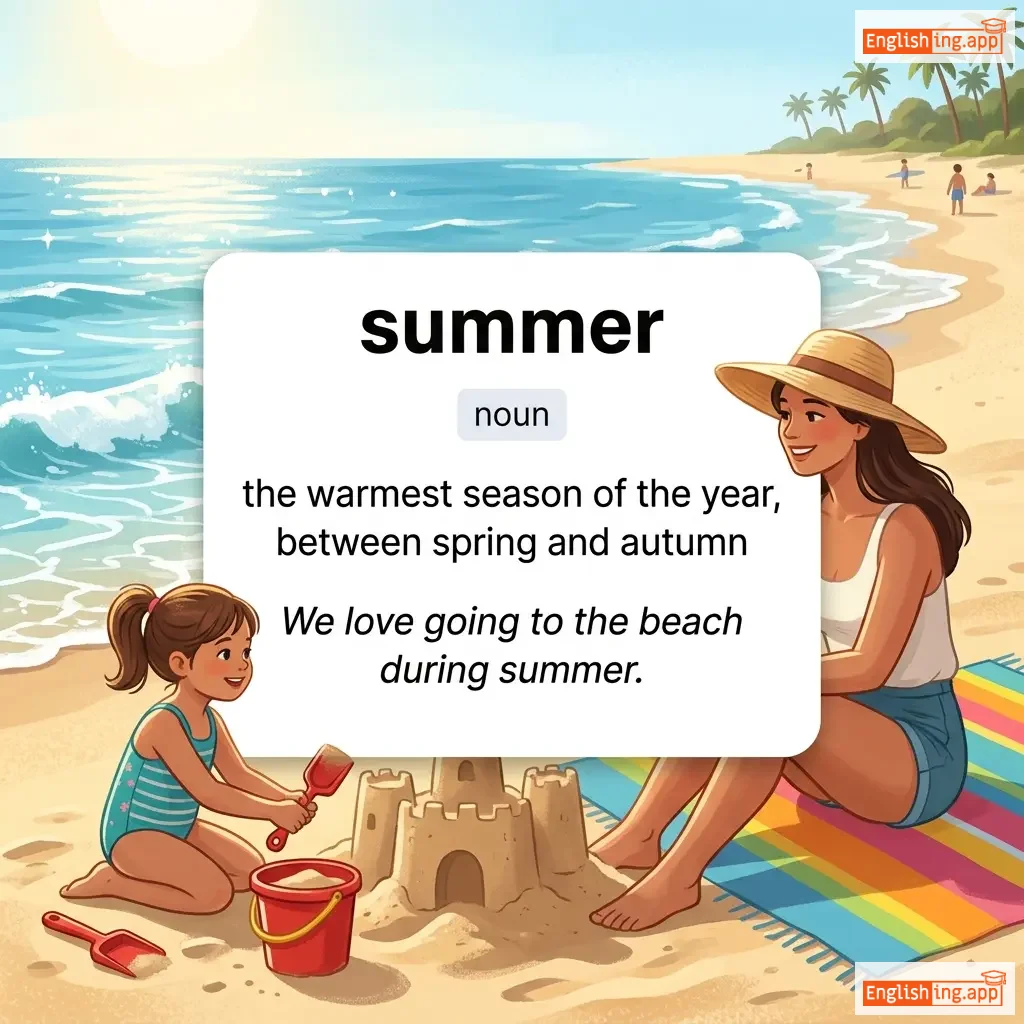
summer definition card — visual illustration of the meaning
noun
/ˈsʌmər/
лето (leto)

the warmest season of the year, between spring and autumn

"We love going to the beach during summer."

"Нам нравится ходить на пляж летом." (Nam nravitsya khodit' na plyazh letom.)
summit definition card — visual illustration of the meaning
noun
/ˈsʌmɪt/
пик, вершина (pik, vershina)

The highest point of a hill or mountain; a meeting between heads of state or leaders.

"The leaders met at the summit to discuss global issues."

"Лидеры встретились на вершине, чтобы обсудить мировые проблемы." (Lidery vstretilis' na vershine, chtoby obsudit' mirovye problemy.)
Summit of the Future definition card — visual illustration of the meaning
noun
/ˈsʌm.ɪt əv ðə ˈfjuː.tʃər/
Саммит будущего (Sammit budushchego)

A high-level conference focused on addressing future challenges and opportunities.

"The Summit of the Future addressed global challenges."

"Саммит будущего рассмотрел глобальные проблемы." (Sammit budushchego rassmotrel global'nye problemy.)
verb
/ˈsʌmən/
призывать, вызывать (prizyvat, vykhodyt)

To order someone to come or to gather courage or strength.

"The king summoned his advisors to the court."

"Король призвал своих советников в суд." (Korol prizval svoikh sovetnikov v sud.)
adjective
/ˈsʌmp.tʃuˌɛr.i/
относящийся к законам или регламентам, ограничивающим личные расходы на предметы роскоши (otnosyashchiesya k zakonam ili reglamentam, ogranichivayushchim lichnye raskhody na predmety roskoshi)

Relating to laws or regulations intended to limit personal spending on luxury goods.

"In medieval Europe, sumptuary laws restricted the wearing of expensive fabrics to the nobility."

"В средневековой Европе законы по ограничению расходов ограничивали ношение дорогих тканей только аристократией." (V srednevekovoy Yevrope zakony po ogranicheniyu raskhodov ogranichivali nosheniye dorogikh tkanej tol'ko aristokratiey.)
adjective
/ˈsʌmp.tʃu.əs/
роскошный (roskoshnyy)

Splendid and expensive-looking; luxurious.

"The guests were treated to a sumptuous banquet."
"Гостям подали роскошный банкет." (Gostyam podali roskoshnyy banket.)
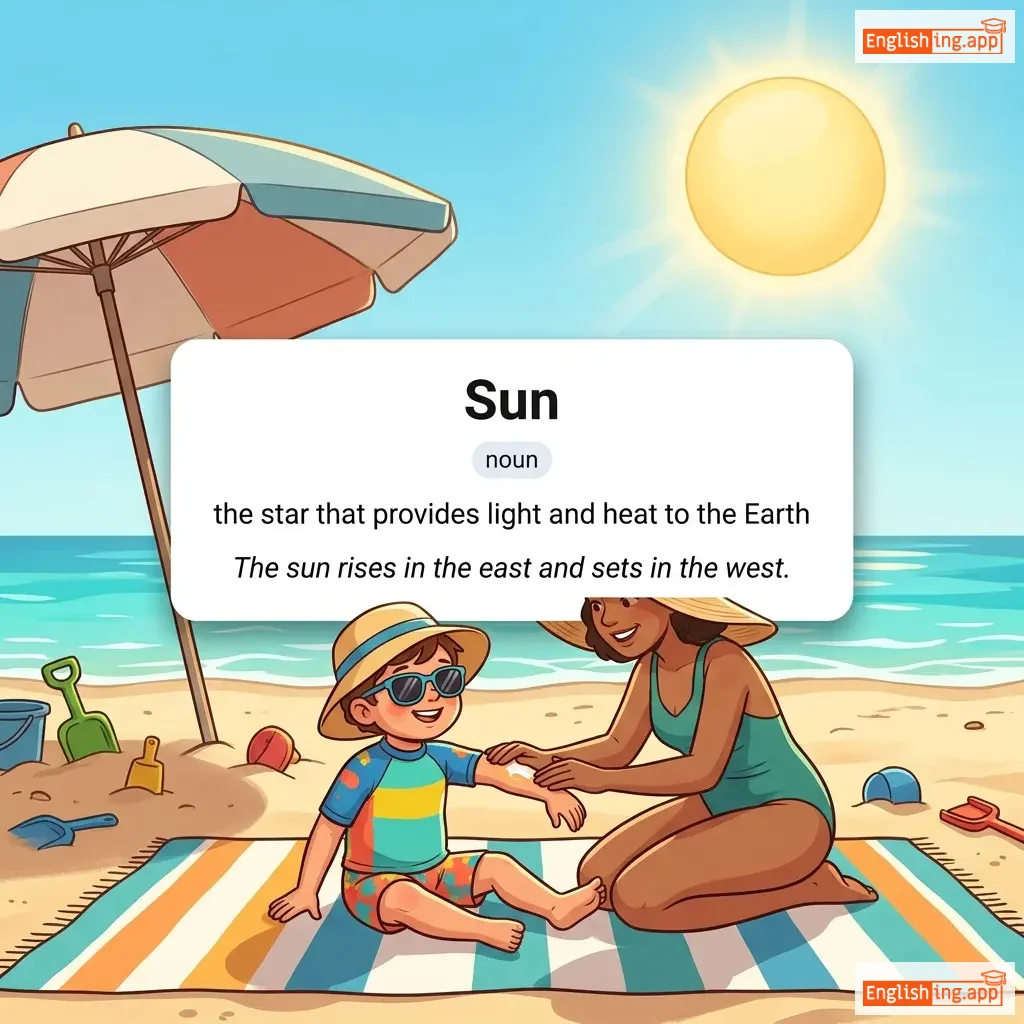
Sun definition card — visual illustration of the meaning
noun
/sʌn/
солнце (solntse)

the star that provides light and heat to the Earth

"The sun rises in the east and sets in the west."

"Солнце восходит на востоке и садится на западе." (Solntse voskhodit na vostoke i saditsya na zapade.)
noun
/ˈsʌn.flaʊər/
подсолнух (podsolnukh)

a large yellow flower that turns to face the sun

"The sunflower field looked amazing in the bright sunlight."

"Поле подсолнечников выглядело потрясающе на ярком солнце." (pole podsolnechnikov vyglyadelo potryasayushche na yarkom solntse)
noun
/ˈsʌn.deɪ/
воскресенье (voskresen'ye)

The day of the week between Saturday and Monday; often considered a day of rest or worship.

"We usually relax at home on Sunday."

"Мы обычно отдыхаем дома в воскресенье." (My obychno otdykhaem doma v voskresen'e.)
noun
/ˌsuː.pɚˈfluː.ə.t̬i/
избыточность (izbytochnost)

An excessive amount of something; more than what is needed.

"The room was filled with a superfluity of decorations."

"Комната была наполнена избыточностью украшений." (Komnata byla napolnena izbytochnost'yu ukrasheny.)
noun
/ˌsuːpərˈvɪʒən/
надзор (nadzor)

the action or process of overseeing or managing something or someone

"The project was completed under the supervision of an experienced manager."

"Проект был завершен под наблюдением опытного менеджера." (Proyekt byl zavershen pod nablyudeniye opytnogo menedzhera.)
supervise definition card — visual illustration of the meaning
verb
/ˈsuːpərvaɪz/
руководить (rukovodit')

to oversee or manage the work or activities of others

"She was hired to supervise the new team."

"Ее наняли для того, чтобы она руководила новой командой." (Eyo nanyali dlya togo, chtoby ona rukovodila novoy komandoy.)
noun
/ˌsuː.pərˈstɪʃ.ən/
суеверие (sueverie)

a belief or practice considered irrational or supernatural

"Breaking a mirror brings seven years of bad luck is a common superstition."

"Разбить зеркало приносит семь лет неудачи, это обычное суеверие." (razbit' zerkalo prinosit sem' let neudachi, eto obychnoye sueverie)
adjective
/ˌsuː.pəˈsɒn.ɪk/
быстрее скорости звука; относящийся к скоростям, превышающим скорость звука (bystree skorosti zvuka; otnosyashchiesya k skorostyam, prevyshayushchim skorost' zvuka)

faster than the speed of sound; relating to speeds greater than the speed of sound

"The supersonic jet broke the sound barrier."

"Сверхзвуковой самолет преодолел звуковой барьер." (Sverkhzvukovoy samolet preodolel zvukovoy bar'er)
supersede definition card — visual illustration of the meaning
verb
/ˌsuːpərˈsiːd/
заменить (zamenit')

To replace or take the place of something because it is more modern or effective.

"This new law will supersede the old regulations."

"Этот новый закон заменит старые правила." (Etot novyy zakon zamenit starye pravyla.)
adjective
/ˌsuːpərˈnuːmərɛri/
дополнительный (dopolnitel'nyy)

Exceeding the usual number; extra or unnecessary.

"The play included several supernumerary actors to fill the background scenes."

"В пьесе были несколько дополнительных актеров, чтобы заполнить фоновые сцены." (V p'yesye byli neskol'ko dopolnitel'nykh akterov, chtoby zapolnit' fonovyye stseny.)
adjective
/ˌsuːpərˈnætʃrəl/
сверхъестественный (sverkh'jestestvennyy)

Attributed to some force beyond scientific understanding or the laws of nature.

"They claimed to have witnessed supernatural events in the old house."

"Они утверждали, что стали свидетелями сверхъестественных событий в старом доме." (Oni utverzhdali, chto stali svidetelyami sverkh'yestestvennykh sobytiy v starom dome.)
adjective
/suːˈpɜːrnəl/
небесный (nebesny)

Relating to the heavens; celestial or divine.

"The painting captured a supernal beauty that felt otherworldly."

"Картина запечатлела небесную красоту, которая казалась из другого мира." (Kartina zapechatlela nebesnuyu krasotu, kotoraya kazalas' iz drugogo mira.)
noun
/ˈsuː.pəˌmɑː.kɪt/
супермаркет (supermarket)

a large self-service store selling food and household goods

"She went to the supermarket to buy groceries."

"Она пошла в супермаркет, чтобы купить продукты." (Ona poshla v supermarket, chtoby kupit' produkty.)
adjective
/suːˈpɜːrlətɪv/
суперлатив (superlatif)

Of the highest quality or degree; expressing the extreme form of an adjective or adverb.

"Her performance was superlative, earning her a standing ovation."

"Её выступление было суперлативным, она получила стоячие овации." (Eyo vystuplenie bylo superlativnym, ona poluchila stoyachie ovatsii.)
noun
/suː.pɪər.iˈɔːr.ə.ti/
превосходство (prevoskhodstvo)

the quality or state of being superior; higher rank or quality

"His superiority in mathematics was evident from his test scores."

"Его превосходство в математике было очевидно по его баллам на тестах." (Yego prevoskhodstvo v matematike bylo ochevidno po yego ballam na testakh.)
adjective
/suːˈpɪə.ri.ər/
превосходящий (prevoskhodyashchiy)

better in quality, rank, or importance than others

"This product is superior to its competitors in quality."

"Этот продукт превосходит своих конкурентов по качеству." (Etot produkt prevoshodit svoikh konkurentov po kachestvu.)
noun
/ˌsuːpərɪnˈtɛndənt/
директор (direktor)

a person who oversees, manages, or directs an organization, building, or project

"The superintendent visited the classrooms to check on progress."

"Директор посетил классы, чтобы проверить прогресс." (Direktor posetil klassy, chtoby proverit' progress.)
noun
/ˌsuːpərɪnˈtɛndəns/
наблюдение (nablyudeniye)

the act of overseeing, supervising, or managing

"The superintendence of the school is the principal’s duty."

"Наблюдение за школой является обязанностью директора." (Nablyudeniye za shkoloy yavyayetsya obyazannost'yu direktora.)
verb
/ˌsuːpərɪnˈtɛnd/
курировать (kurirovat)

to oversee and direct the work or operation of something

"She was hired to superintend the construction project."

"Её наняли для того, чтобы она курировала строительный проект." (Eyo nanyali dlya togo, chtoby ona kurirovala stroitel'nyy proyekt.)
verb
/ˌsuːpərɪmˈpoʊz/
накладывать (nakladyvat)

to place one thing on top of another so that both can be seen

"The editor superimposed text over the image."

"Редактор суперимпозировал текст на изображении." (Redaktor superimpoziviral tekst na izobrazhenii.)
verb
/ˌsuːpərˈhiːt/
перегревать (peregrevat')

to heat a substance beyond its normal boiling point without it becoming vapor

"Engineers superheat the steam to increase the efficiency of the turbine."

"Инженеры перегревают пар, чтобы повысить эффективность турбины." (Inzhienery peregrevayut par, chtoby povysit' effektivnost' turbiny.)
superfoods definition card — visual illustration of the meaning
noun
ˈsuː.pər.fuːdz
суперфуды (superfudy)

Nutrient-dense foods that are particularly beneficial for health and well-being.

"Blueberries and spinach are superfoods rich in vitamins."
"Черника и шпинат - это суперфуды, богатые витаминами." (Chernika i shpinat - eto superfudy, bogatye vitaminami.)
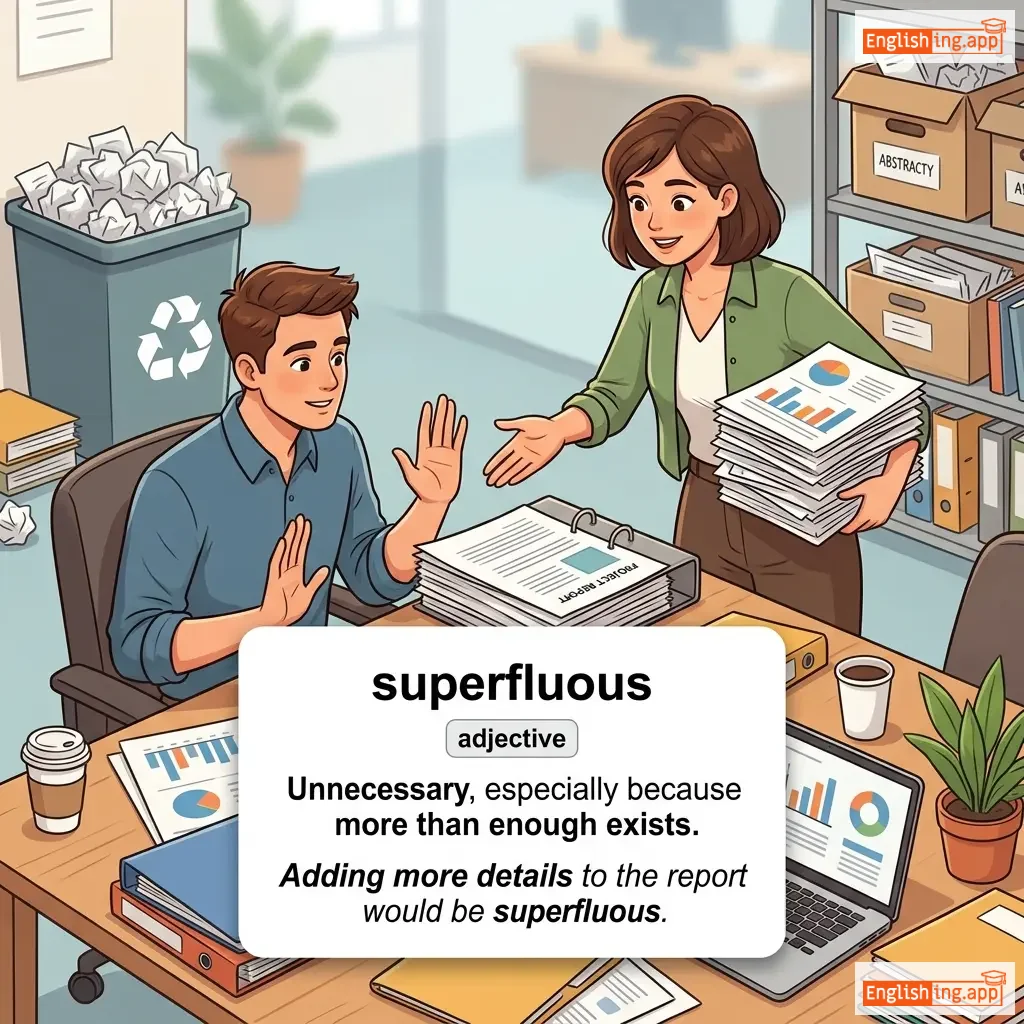
superfluous definition card — visual illustration of the meaning
adjective
/suːˈpɝː.fluː.əs/
излишний (izlishniy)

Unnecessary, especially because more than enough exists.

"Adding more details to the report would be superfluous."

"Добавление дополнительных деталей в отчет будет излишним." (Dobavlenie dopolnitel'nykh detaley v otchet budet izlishnim.)
noun
/ˌsuː.pər.əˈbʌn.dəns/
сверхизбыток (sverkhizbytok)

An excessive or overflowing amount of something.

"The garden was filled with a superabundance of flowers."

"Сад был заполнен сверхизбыточным количеством цветов." (Sad byl zapolnen sverkhizbytochnym kolichestvom tsvetov.)
noun
/ˈsʌnˌdaʊn/
закат солнца (zakat solntsa)

the time in the evening when the sun goes below the horizon

"We planned to reach the village before sundown."
"Мы планировали добраться до деревни до заката солнца." (My planirovali dobrat'sya do derevni do zakata solntsa.)
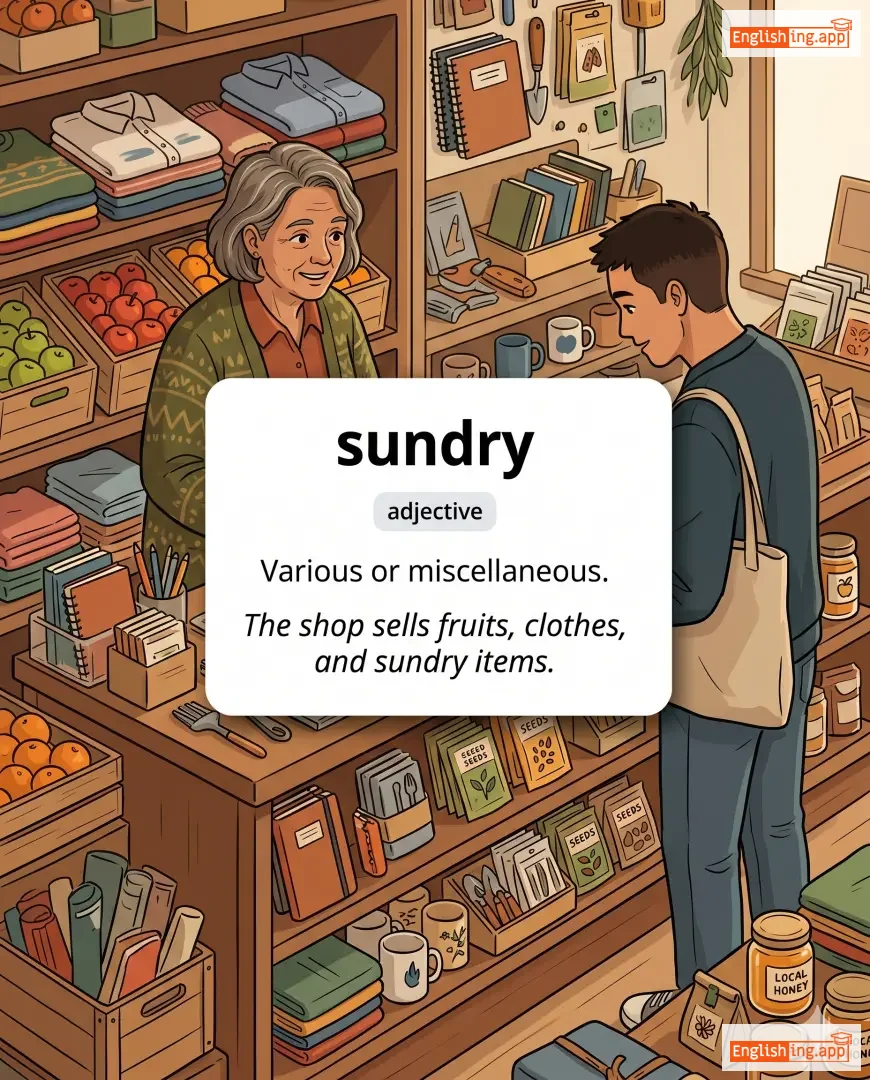
sundry definition card — visual illustration of the meaning
adjective
/ˈsʌn.dri/
разнообразный (razoobraznyy)

Various or miscellaneous.

"The shop sells fruits, clothes, and sundry items."
"Магазин продает фрукты, одежду и разнообразные товары." (Magazin prodayot frukty, odezhdu i razoobraznye tovarы.)
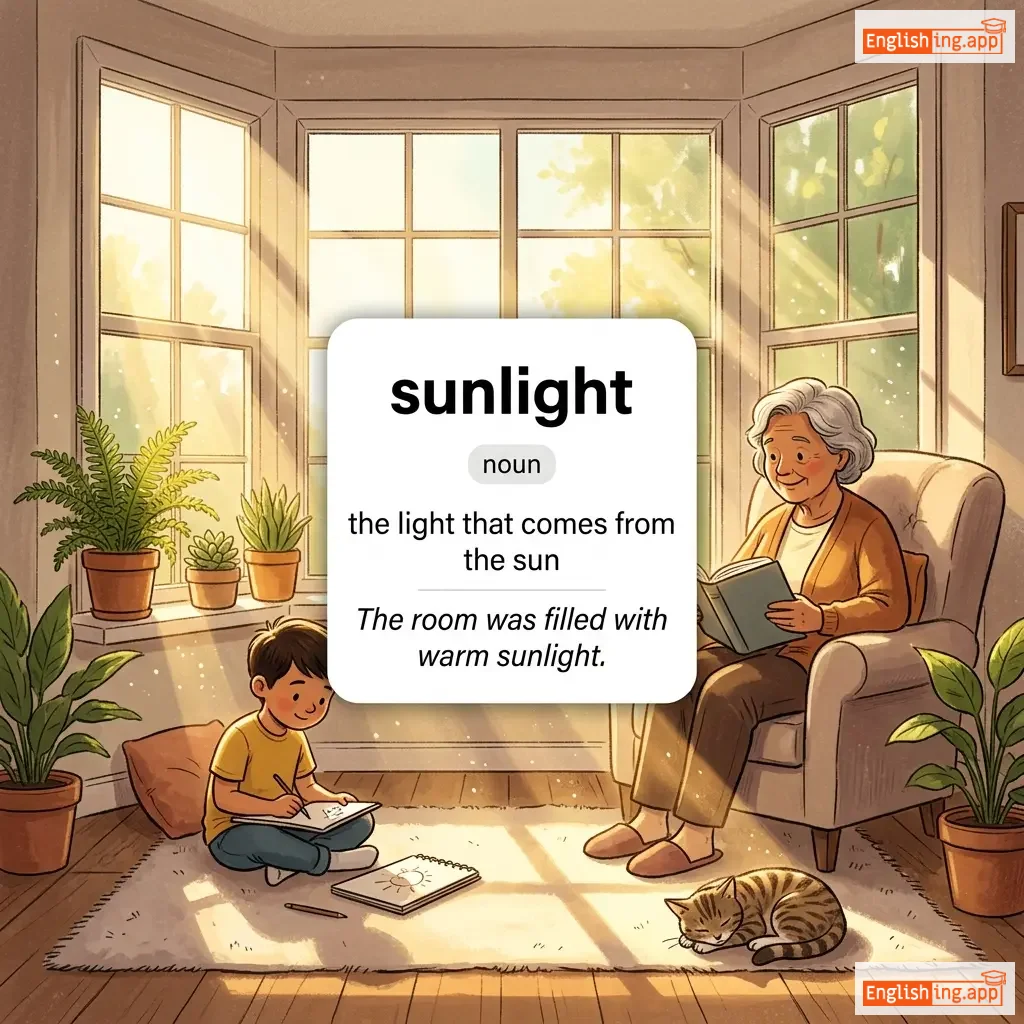
sunlight definition card — visual illustration of the meaning
noun
/ˈsʌn.laɪt/

the light that comes from the sun

"The room was filled with warm sunlight."

noun
/sʌnd raɪs/
рис, высушенный на солнце (ris, vyssushennyy na solntse)

Rice that has been dried in the sun; parched rice

"The farmers spread the sunned rice on mats to dry completely."
"Фермеры разложили рис, высушенный на солнце, на коврах, чтобы он полностью высох." (Fermery razlozhili ris, vyssushennyy na solntse, na kovrakh, chtoby on polnost'yu vysokh.)
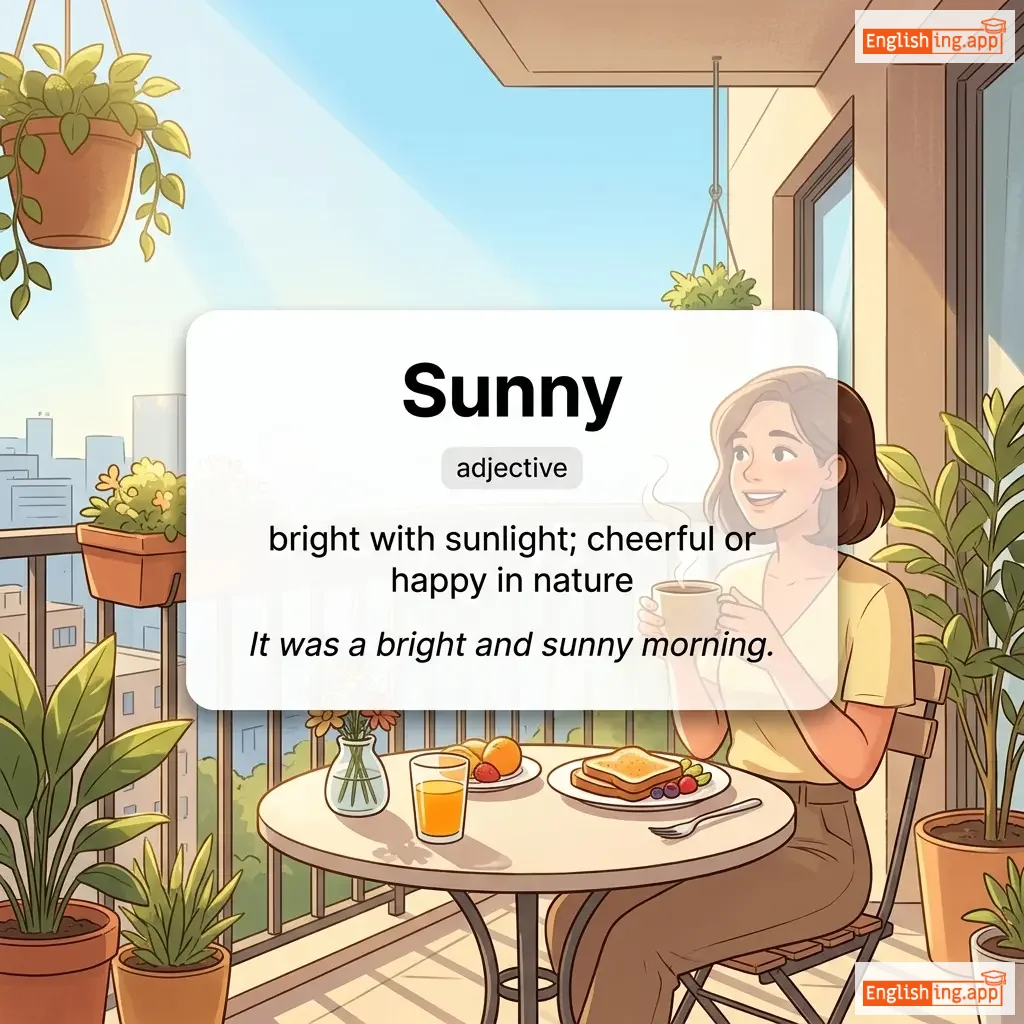
Sunny definition card — visual illustration of the meaning
adjective
/ˈsʌ.ni/
солнечный (solnechnyy)

bright with sunlight; cheerful or happy in nature

"It was a bright and sunny morning."

"Это было яркое и солнечное утро." (Eto bylo yarkoye i solnechnoye utro.)
noun
/ˈsʌn.raɪz/
восход солнца (voskhod solntsa)

The time in the morning when the sun appears over the horizon.

"We woke up early to watch the sunrise over the mountains."

"Мы встали рано, чтобы увидеть восход солнца над горами." (My vstali rano, chtoby uvidet' voskhod solntsa nad gorami.)
noun
/ˈsʌn.set/
закат солнца (zakat solntsa)

the time in the evening when the sun disappears below the horizon

"The romantic sunset painted the sky in golden colors."

"Романтический закат раскрасил небо в золотые цвета." (Romanticheskiy zakat raskrasil nebo v zolotye tsveta.)
noun
/ˈsʌn.stroʊk/
солнечный удар (solnechnyy udar)

a serious condition caused by overheating from prolonged exposure to high temperatures

"The worker suffered from sunstroke after working outside all day."

"Рабочий пострадал от солнечного удара после работы на улице весь день." (Rabochiy postradal ot solnechnogo udara posle raboty na ulitse ves den.)
adjective
/ˈsuːpər/
супер (super)

excellent; very good

"She did a super job on the project."

"Она сделала супер работу над проектом." (Ona sdelala super rabotu nad proyektom.)
adjective
/suːˈpɜːrb/
превосходный (prevoskhodnyy)

extremely good; excellent

"The hotel provided superb service during our stay."
"Отель предоставил превосходное обслуживание во время нашего пребывания." (Otel' predostavil prevoskhodnoe obsluzhivanie vo vremya nashego prebyvaniya.)
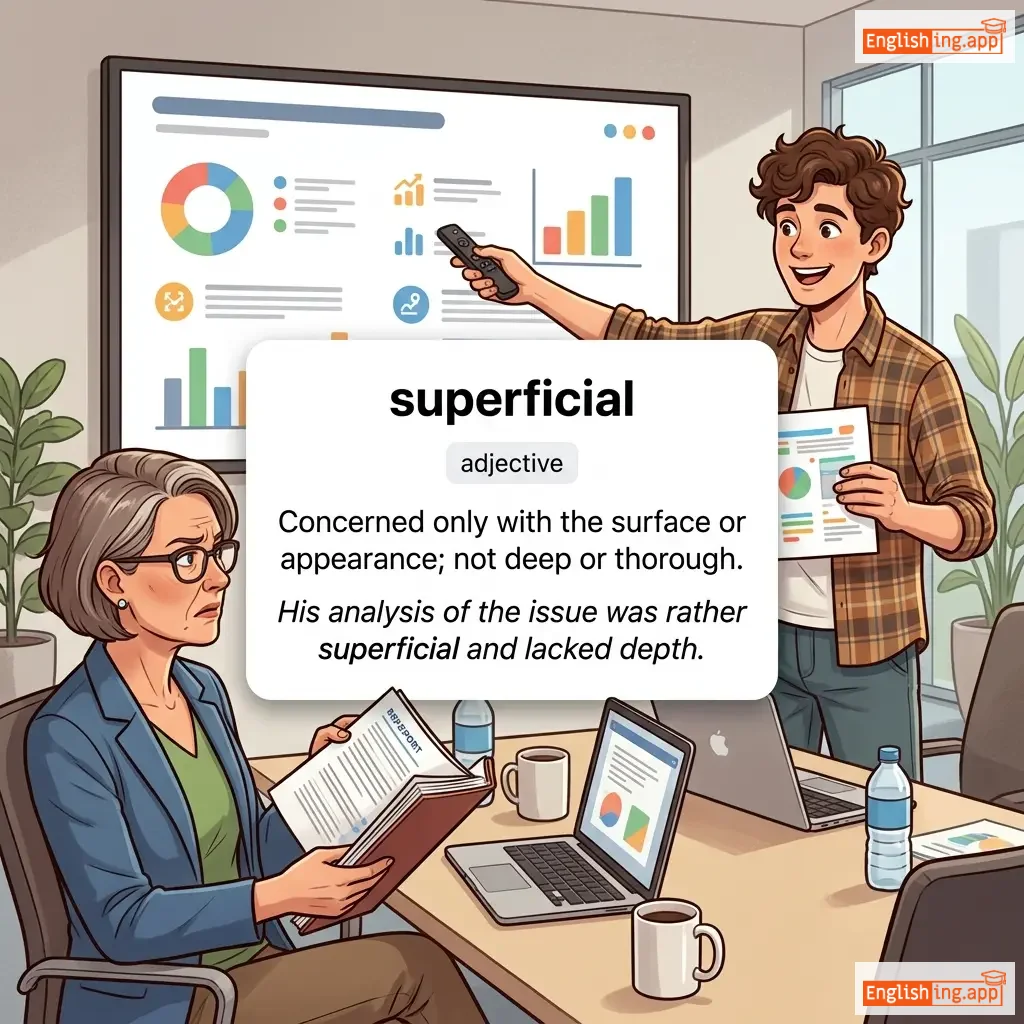
superficial definition card — visual illustration of the meaning
adjective
/ˌsuː.pɚˈfɪʃ.əl/
поверхностный (poverkhnostny)

Concerned only with the surface or appearance; not deep or thorough.

"His analysis of the issue was rather superficial and lacked depth."

"Его анализ проблемы был довольно поверхностным и не хватало глубины." (Yego analiz problemy byl dovol'no poverkhnostnym i ne khvatilo glubiny.)
adjective
/ˌsuː.pər.ɪˈrɑː.ɡə.tɔːr.i/
лишний (lishniy)

Going beyond what is required or expected; more than necessary.

"His donation was supererogatory, far beyond what anyone had asked for."

"Его пожертвование было лишним, намного больше, чем кто-либо просил." (Ego pozhertvovanie bylo lishnim, namnoho bolshe, chem kto-libo prosil.)
adjective
/ˌsuː.pɚˈsɪl.i.əs/
высокомерный (vysokomernyy)

Behaving or looking as though one thinks one is superior to others; arrogant and disdainful.

"She gave him a supercilious smile as if he was beneath her."

"Она подарила ему высокомерную улыбку, как будто он был ниже её." (Ona podarila emu vysokomernuyu ulybku, kak budto on byl nizhe yeye.)
adverb
/suːˈpɜːrbli/
превосходно (prevoskhodno)

in an excellent or impressive manner

"She performed superbly in the final match."

"Она сыграла превосходно в последнем матче." (Ona sygrala prevoskhodno v poslednem matche.)
verb
/ˌsuːpərˈæn.ju.eɪt/
выход на пенсию с пенсией (vikhod na pensiyu s pensiyey)

to retire someone with a pension, usually due to age or long service

"The company decided to superannuate its senior employees after thirty years of service."

"Компания решила суперпенсионерить своих старших сотрудников после тридцати лет службы." (Kompaniya reshilа superpensionerit' svoikh starshikh sotrudnikov posle tritsati let sluzhby.)
verb
/ˌsuːpərˈæd/
добавить сверх (dobavit' sverkh)

to add something to what has already been added

"The author chose to superadd a new chapter to the revised edition."

"Автор решил добавить новую главу в переработанное издание." (Avtor reshil dobavit' novuyu glavu v pererabotannoye izdaniye.)
noun
/ˈsuːpəvaɪzə(r)/
руководитель (rukovoditel)

a person who manages or directs the work of others

"The supervisor checked the progress of each employee."

"Супервайзер проверил прогресс каждого сотрудника." (Supervayzer proveril progress kazhdogo sotrudnika.)
adjective
/ˌsuːpərˈæn.ju.eɪ.tɪd/
устаревший (ustarevshiy)

old and no longer useful or valid; retired due to age

"The factory was filled with superannuated machines that slowed production."

"Фабрика была наполнена устаревшими машинами, которые замедляли производство." (Fabrika byla napolnena ustarevshimi mashinami, kotorye zamedlyali proizvodstvo.)