Словари

Словарь английского языка | Значения слов, определения и примеры

noun
/swiːt.laɪm/
сладкий лайм (sladkiy laym)

a citrus fruit that is sweeter and less acidic than regular lime

"The sweetlime juice was refreshing on a hot day."

"Сок сладкого лайма был освежающим в жаркий день." (Sok sladkogo layma byl osvezhayushchim v zharkiy den.)
noun
/ˈswiːt.miːt/
сладости (sladosti)

a small piece of confectionery or candy; a sweet delicacy

"The children enjoyed the traditional sweetmeats during the festival."

"Дети наслаждались традиционными сладостями во время фестиваля." (Deti naslazhdalis' traditsionnymi sladostyami vo vremya festivala.)
verb
/swɛl/
опухать (opukhat)

to increase in size or volume, often due to internal pressure or emotional intensity

"Her ankle began to swell after the injury."

"Её лодыжка начала опухать после травмы." (Yeyo lodyzhka nachala opukhatsya posle travmy.)
verb
/ˈswɛltər/
страдать от сильной жары (stradaty ot sil'noy zhary)

to suffer from intense heat

"We began to swelter in the midday sun."

"Мы начали мучиться от жары в полуденное солнце." (My nachali muchitsya ot zhary v poludennoe solntse.)
adjective
/ˈswɛltərɪŋ/
пекло (peklo)

uncomfortably hot

"The sweltering heat made it hard to work."

"Пекельная жара затрудняла работу." (Pekelnaya zhara zatrudnyala rabotu.)
verb
/swɜːrv/
резко изменить направление (rezko izmenit' napravlenie)

to change direction suddenly, especially to avoid hitting something

"The car swerved to avoid the dog."

"Машина резко изменила направление, чтобы избежать собаки." (Mashina rezko izmenila napravlenie, chtoby izbezhat' sobaki.)
adjective
/swɪft/
быстрый (svift)

moving very quickly; happening promptly

"The river current was swift after the heavy rain."

"Течение реки было быстрым после сильного дождя." (Techenie reki bylo bystrym posle silnogo dozhdya.)
verb
/swɪl/
пить жадно (pit' zhadhno)

to drink something greedily or in large amounts

"He swilled down the beer in seconds."
"Он выпил пиво за секунды." (On vypil pivo za sekundy.)
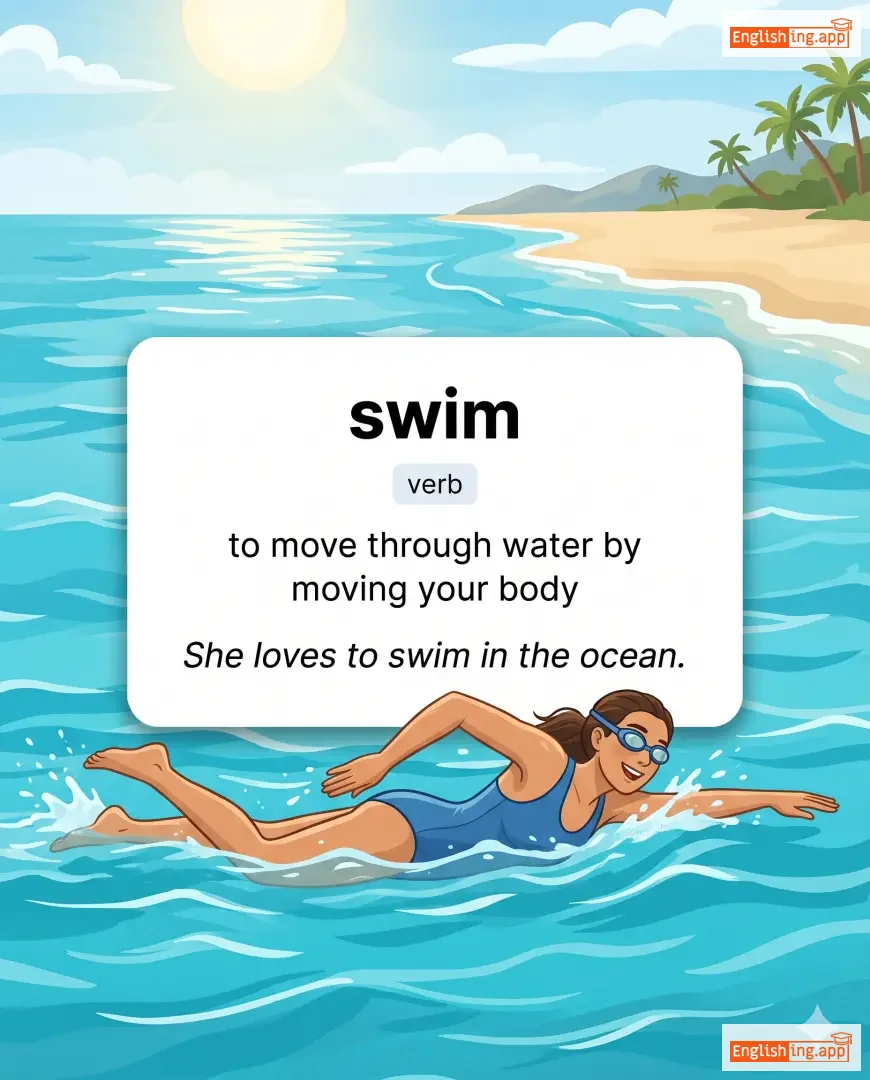
swim definition card — visual illustration of the meaning
verb
/swɪm/
плавать (plavat)

to move through water by moving your body

"She loves to swim in the ocean."

"Она любит плавать в океане." (Ona lyubit plavat v okeane.)
sustainable technology definition card — visual illustration of the meaning
noun
səˈsteɪ.nə.bəl tekˈnɒl.ə.dʒi
устойчивая технология (ustoychivaya tekhnologiya)

Technology designed to meet present needs without compromising future generations' ability to meet their needs.

"Sustainable technology ensures a cleaner future."

"Устойчивая технология обеспечивает более чистое будущее." (Ustoychivaya tekhnologiya obespechivayet boleye chistoye budushcheye.)
noun
/ˈswɪmɪŋ/
плавание (plavanie)

the activity or sport of moving through water using the limbs

"Swimming is a great way to stay fit and healthy."

"Плавание — отличный способ оставаться в форме и здоровым." (Plavanie — otlichnyj sposob ostavat'sya v forme i zdorovym.)
verb
/ˈswɪndl/
обманывать (obmanyvat)

to cheat someone out of money or possessions by deceit

"The con artist tried to swindle the old man out of his savings."

"Мошенник попытался обмануть старика, чтобы забрать его сбережения." (Moshennik popytalsya obmanut' starika, chtoby zabrat' ego sberezheniya.)
noun
/ˈswɪndlɚ/
мошенник (moshennik)

a person who cheats or deceives others for money or gain

"The police finally caught the notorious swindler."
"Полиция наконец поймала известного мошенника." (Politsiya nakonechno poymala izvestnogo moshennika.)
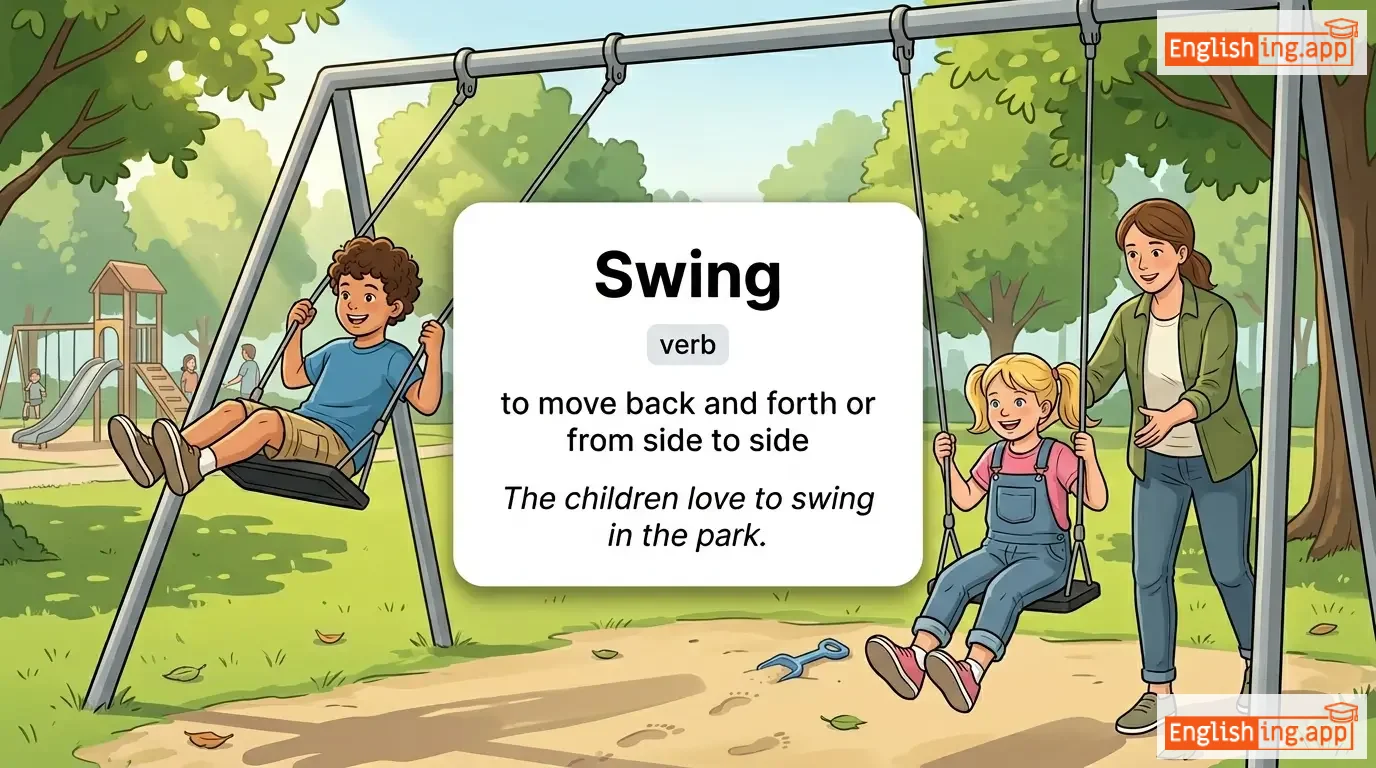
Swing definition card — visual illustration of the meaning
verb
/swɪŋ/
качаться (kachatsya)

to move back and forth or from side to side

"The children love to swing in the park."

"Дети любят качаться в парке." (Deti lyubyat kachatsya v parke.)
verb
/swaɪp/
свайпать (svaypat')

to move your finger across a touch screen or to hit with a sweeping motion

"He swiped left on the photo."
"Он свайпнул влево на фото." (On svaypnul vlevo na foto.)
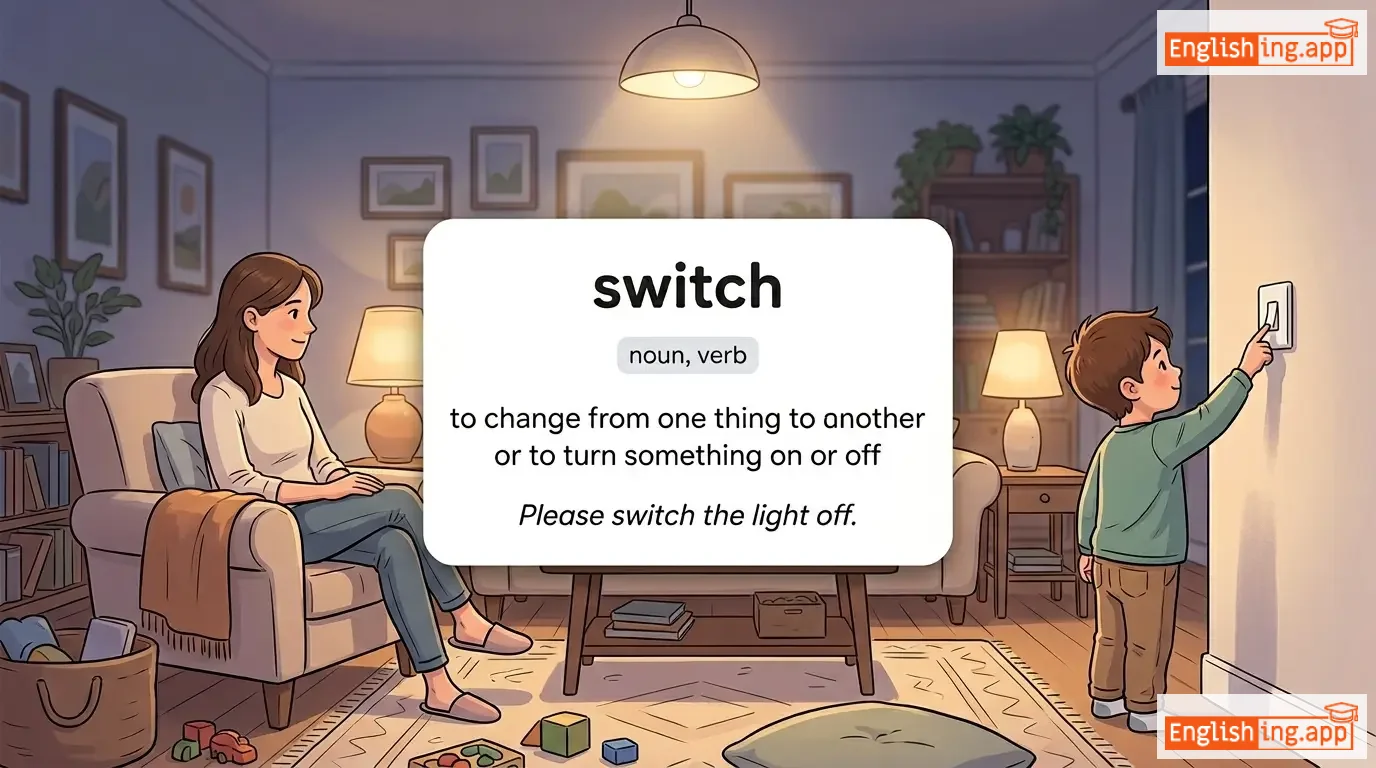
switch definition card — visual illustration of the meaning
noun, verb
/swɪtʃ/
выключатель (vkljuchatel')

to change from one thing to another or to turn something on or off

"Please switch the light off."

"Пожалуйста, выключите свет." (Pozhaluysta, vyklyuchite svet.)
adjective
/ˈswoʊlən/
опухший (opuhshiy)

Enlarged or puffed up, usually due to injury, inflammation, or fluid accumulation

"Her ankle was swollen after she twisted it during the hike."

"Ее лодыжка была опухшей после того, как она подвернула ее во время похода." (Eye lodyzhka byla opukhshey posle togo, kak ona podvernula eye vo vremya pokhoda.)
noun
/sɔːd fɪʃ/
рыба-меч (ryba mech)

A large marine fish with an elongated bill resembling a sword

"The swordfish can swim at speeds up to 60 mph."

"Рыба-меч может плавать со скоростью до 60 миль в час." (ryba mech mozhet plavat so skorostyu do shestdesyati mil v chas)
noun
/sɔːrd/
меч (mech)

a weapon with a long metal blade used for fighting

"The knight drew his sword to defend the castle."

"Рыцарь вытащил свой меч, чтобы защитить замок." (Ritsar' vytashchil svoi mech, chtoby zashchitit' zamok.)
noun
/sɪˈnɛrəsɪs/
синерезис (syneresis)

The contraction of two adjacent vowels into a single syllable or the separation of liquid from a gel.

"The yogurt showed syneresis when liquid separated on top."

"Йогурт показал синерезис, когда жидкость отделилась сверху." (Yogurt pokazal sinerezis, kogda zhidkost otdelilas' sverkhu.)
noun
/ˈsɪnˌdroʊm/
синдром (sindrom)

a group of symptoms that occur together and characterize a condition or disease

"Down syndrome affects a person's physical and mental development."

"Синдром Дауна влияет на физическое и умственное развитие человека." (Sindrom Dauna vliyayet na fizicheskoe i umstvennoe razvitie cheloveka.)
noun
/ˈsɪndɪkət/
синдикат (sindikat)

A group of individuals or organizations combined to promote a common interest or carry out a business venture.

"A syndicate of investors bought the struggling company."

"Синдикат инвесторов купил struggling компанию." (Sindikat investirov kupil struggling kompaniyu.)
adjective
/ˈsɪŋkəˌpeɪtɪd/
синкопированный (sinkopirovannyy)

Characterized by displaced beats or rhythms, especially in music.

"The jazz piece had a syncopated rhythm that energized the crowd."
"Джазовый номер имел синкопированный ритм, который воодушевил толпу." (Dzhazovyy nomer imel sinkopirovannyy ritm, kotoryy voodushhevil tolpu.)
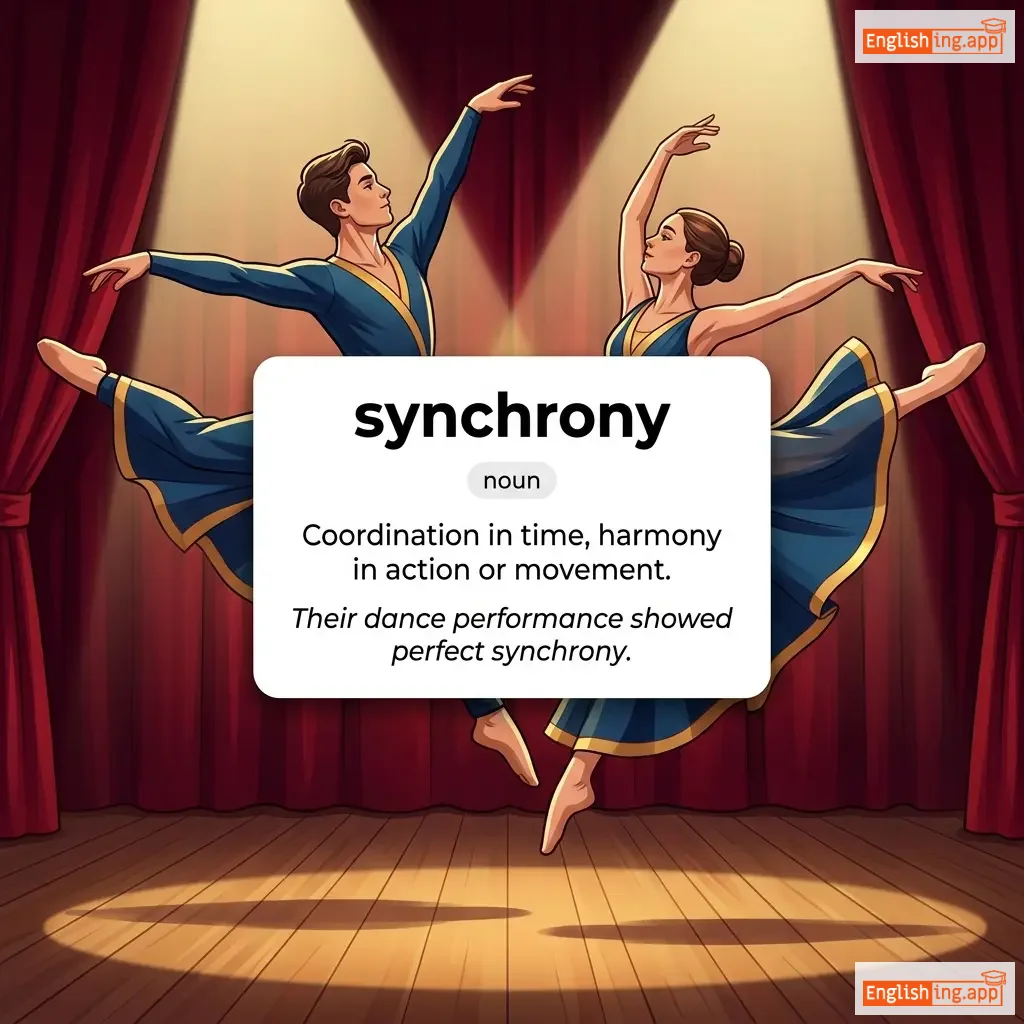
synchrony definition card — visual illustration of the meaning
noun
/ˈsɪŋ.krə.ni/
синхрония (sinhroniya)

Coordination in time, harmony in action or movement.

"Their dance performance showed perfect synchrony."
"Их танцевальное выступление показало идеальную синхронию." (Ikh tantseval'noye vystupleniye pokazalo ideal'nuyu sinkhroniyu.)
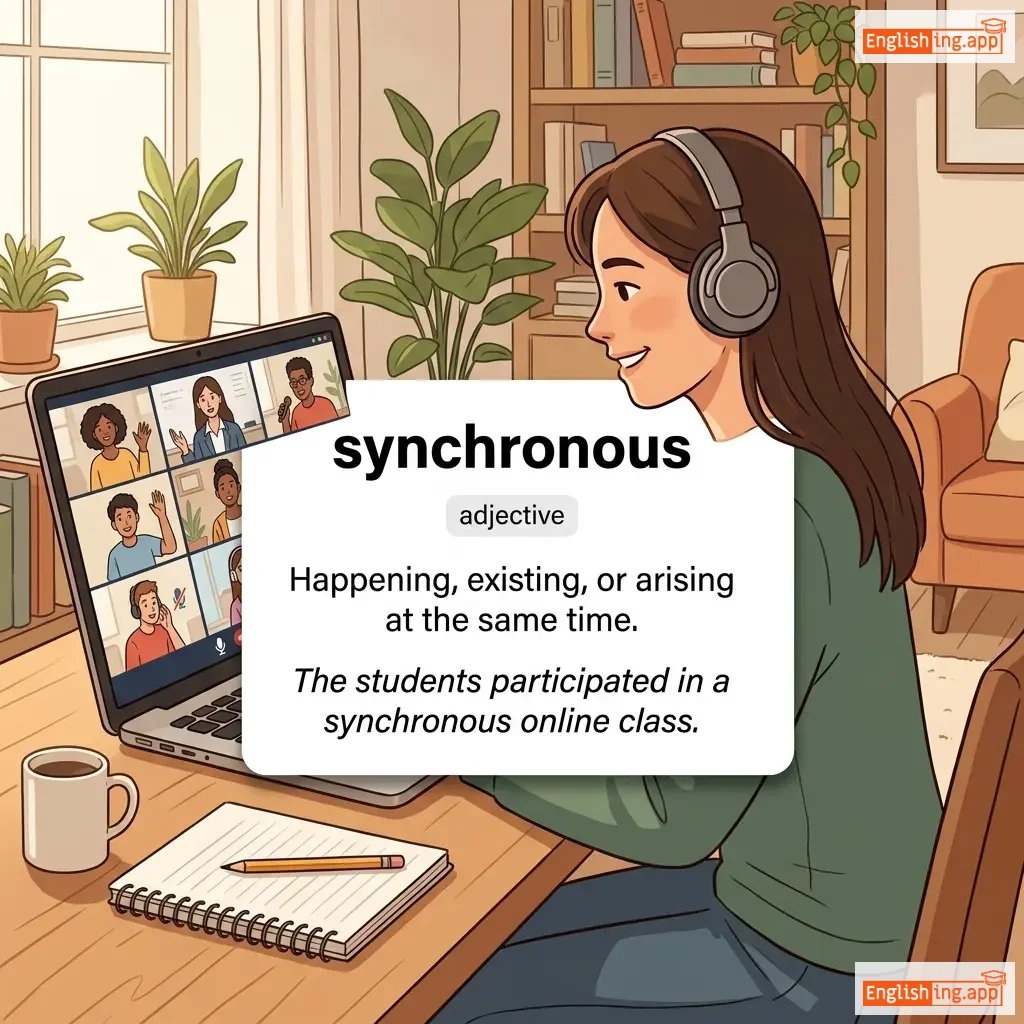
synchronous definition card — visual illustration of the meaning
adjective
/ˈsɪŋkrənəs/
синхронный (sinkhronny)

Happening, existing, or arising at the same time.

"The students participated in a synchronous online class."
"Студенты участвовали в синхронном онлайн-курсе." (Studenty uchastvovali v sinkhronnom onlayn-kurse.)
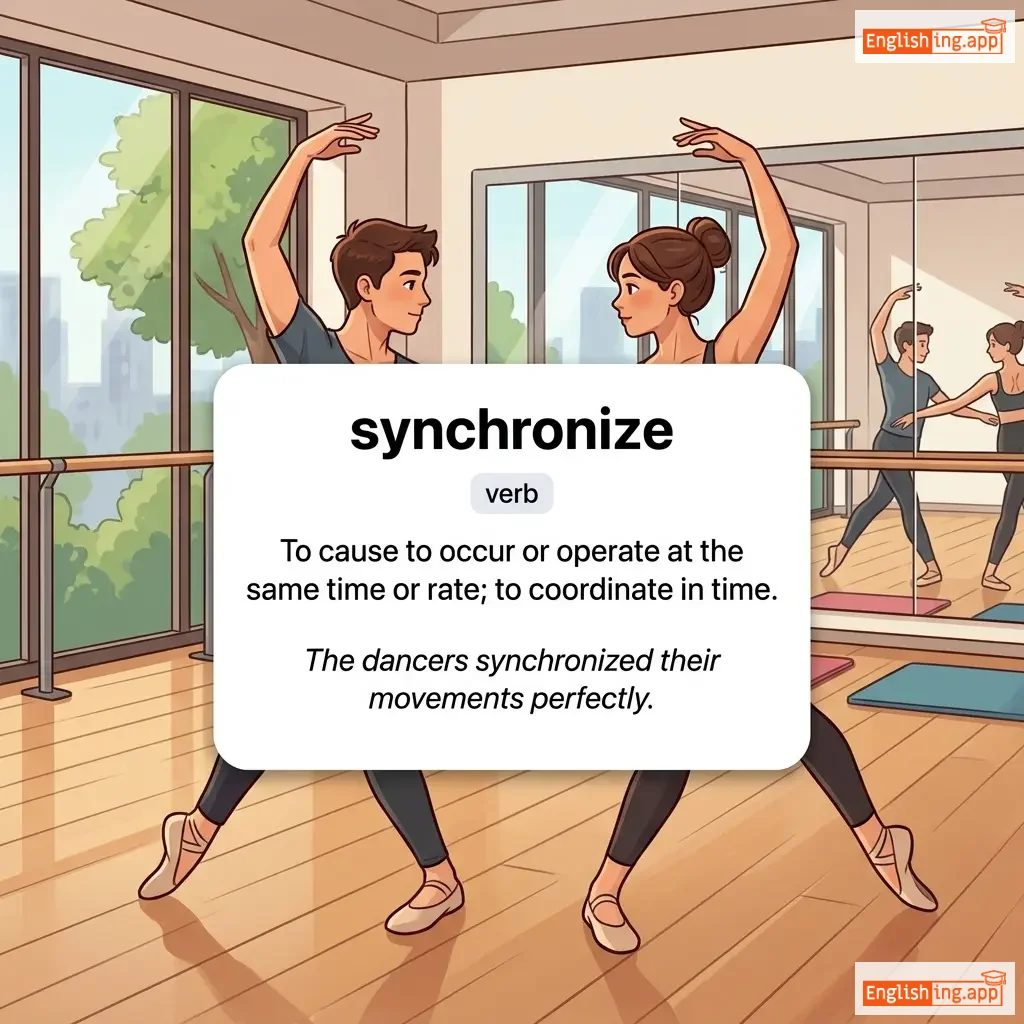
synchronize definition card — visual illustration of the meaning
verb
/ˈsɪŋ.krə.naɪz/
синхронизировать (sinkhronizirovat')

To cause to occur or operate at the same time or rate; to coordinate in time.

"The dancers synchronized their movements perfectly."

"Танцоры синхронизировали свои движения идеально." (Tantsory sinkhronizirovali svoi dvizhiniya ideal'no.)
noun
/ˈsɪŋkrəˌnɪzəm/
синхронизация (sinkhronizatsiya)

The simultaneous occurrence of events or actions.

"The synchronism of the dancers' movements amazed the audience."
"Синхронизация движений танцоров поразила зрителей." (Sinkhronizatsiya dvizhheniy tantsorov porazila zriteley.)
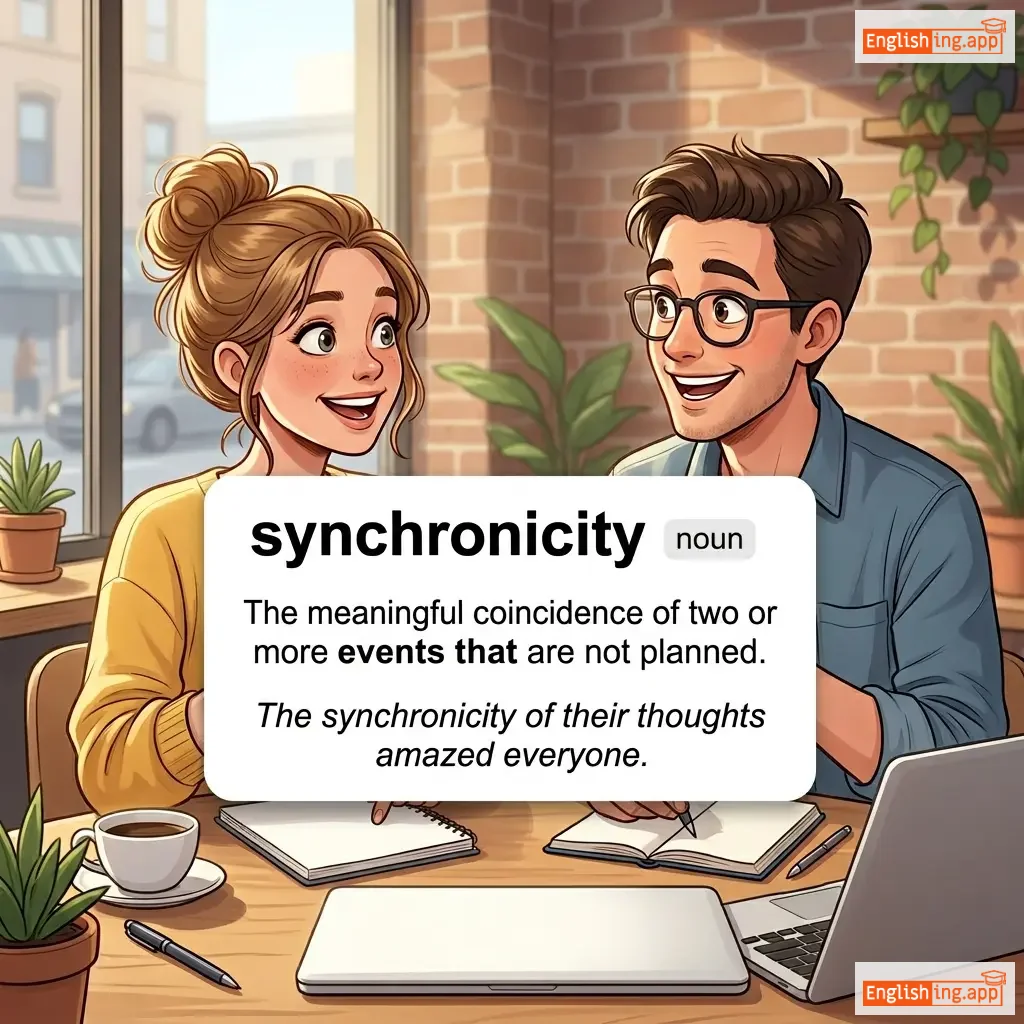
synchronicity definition card — visual illustration of the meaning
noun
/ˌsɪŋ.krəˈnɪs.ɪ.ti/
синхроничность (sinhronichnost')

The meaningful coincidence of two or more events that are not planned.

"The synchronicity of their thoughts amazed everyone."
"Синхроничность их мыслей удивила всех." (Sinkhronichnost' ikh mysley udivila vsekh.)
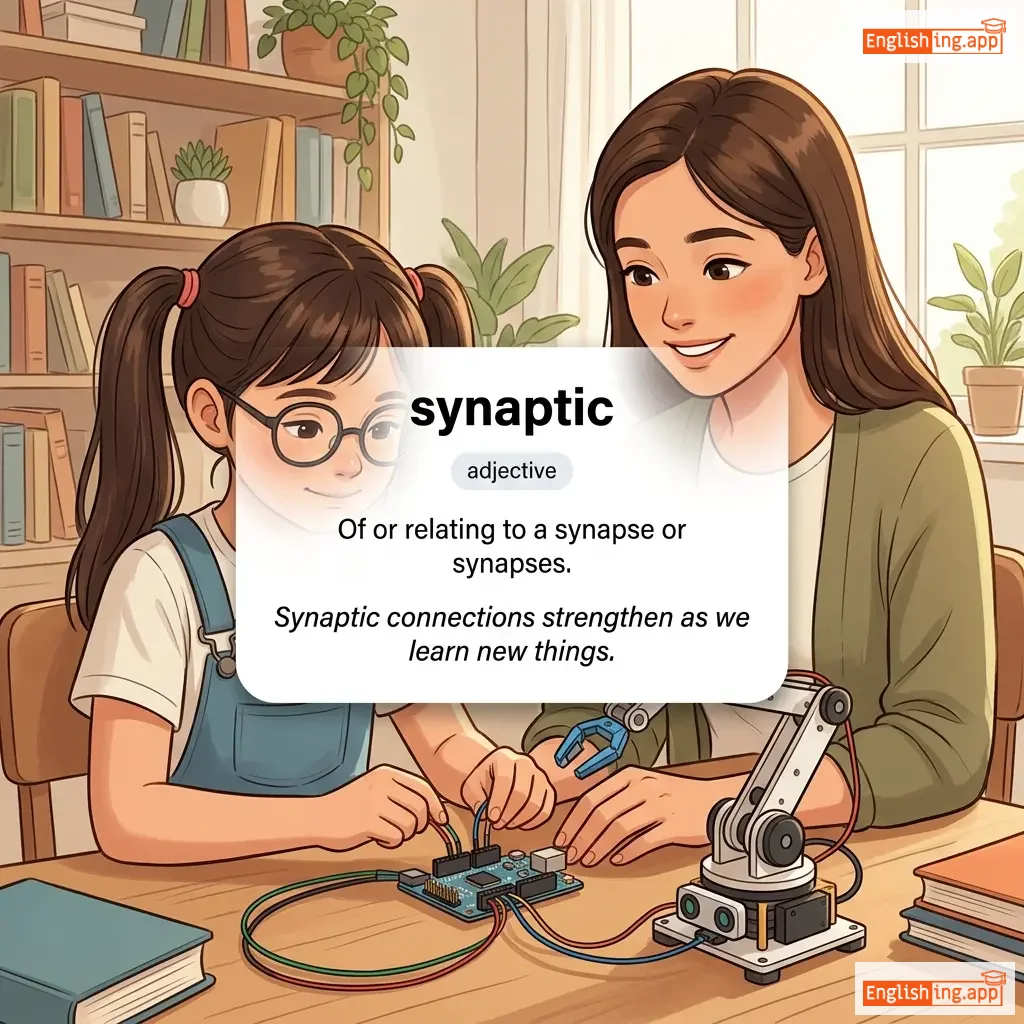
synaptic definition card — visual illustration of the meaning
adjective
sɪˈnæp.tɪk
относящийся к синапсу или синапсам (sinapticheskiy)

Of or relating to a synapse or synapses.

"Synaptic connections strengthen as we learn new things."
"Синаптические соединения укрепляются, когда мы учим новые вещи." (Sinapticheskie soedineniya ukreplyayutsya, kogda my uchim novye veshchi.)
symptoms definition card — visual illustration of the meaning
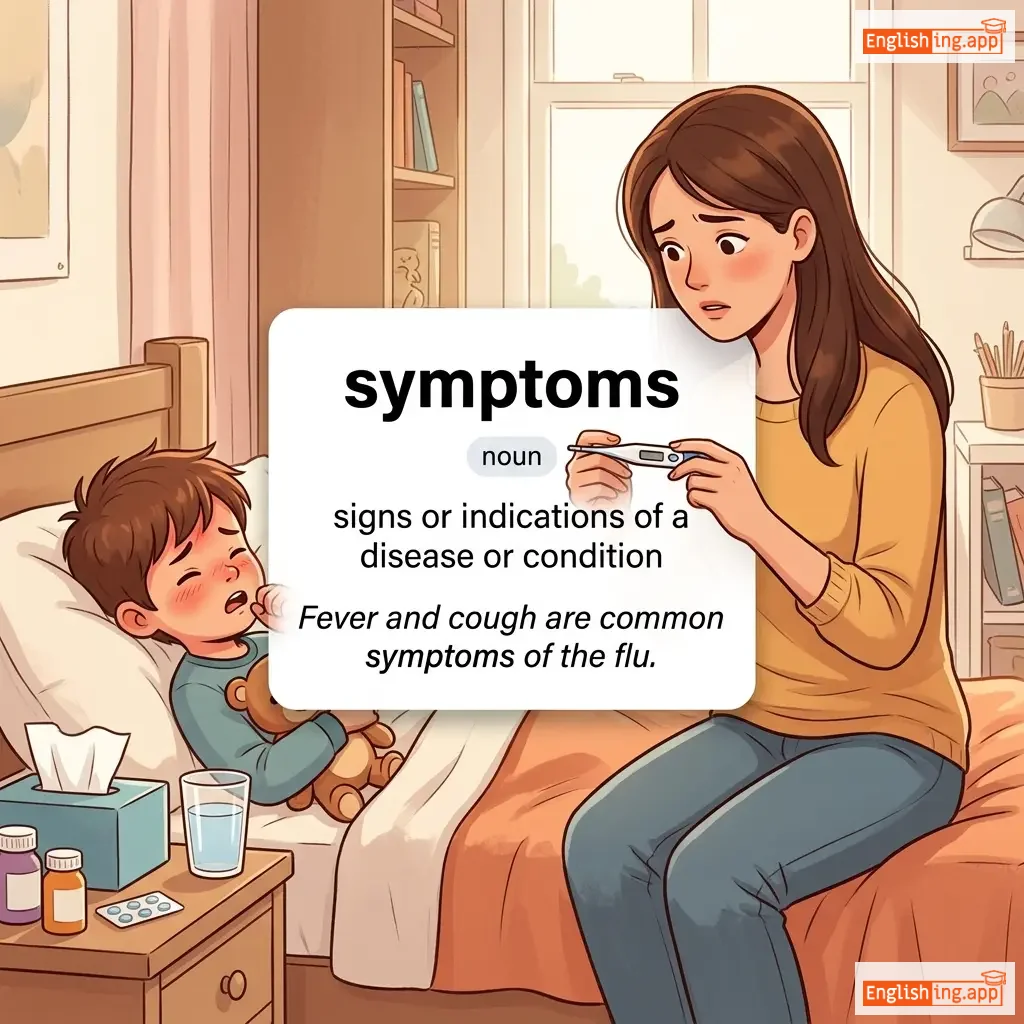
noun
/ˈsɪmp.təmz/
симптомы (simptomy)

signs or indications of a disease or condition

"Fever and cough are common symptoms of the flu."

"Жар и кашель - это обычные симптомы гриппа." (Zhar i kashel' - eto obychnye symptomy grippa.)
noun
/ˈsɪmptəm/
симптом (simptom)

a sign or indication of something, especially of an illness

"Fever is a common symptom of the flu."

"Лихорадка — это обычный симптом гриппа." (Likhoreadka – eto obychnyy simptom grippa.)
noun
/ˈsɪmfəni/
симфония, сложная музыкальная композиция (simfoniya, slozhnaya muzykal'naya kompozitsiya)

An elaborate musical composition for a full orchestra, typically in four movements.

"Beethoven's Fifth Symphony is one of the most famous works in classical music."

"Пятая симфония Бетховена — одно из самых известных произведений классической музыки." (Pyataya simfoniya Bethovena — odno iz samykh izvestnykh proizvedeniy klassicheskoy muzyki.)
adjective
/sɪmˈfoʊniəs/

Harmonious; producing a pleasant sound or agreement of sound.

"The choir's voices were symphonious and filled the hall with beauty."

adjective
/sɪmˈfɒnɪk/
симфонический (simfonicheskiy)

relating to or having the character of a symphony or symphony orchestra

"The concert featured a symphonic masterpiece."

"Концерт представил симфоническое произведение." (Kontsert predstavil simfonicheskoe proyizvedenie.)
noun
/ˈsɪmpəθi/
симпатия (simpatiya)

feelings of pity and compassion for someone else's suffering

"She expressed her sympathy for the grieving family."
"Она выразила свои соболезнования семье, переживающей утрату." (Ona vyrazilasvoi soboleznovaniya sem'e, perezhivayushchey utratu.)
sympathize definition card — visual illustration of the meaning
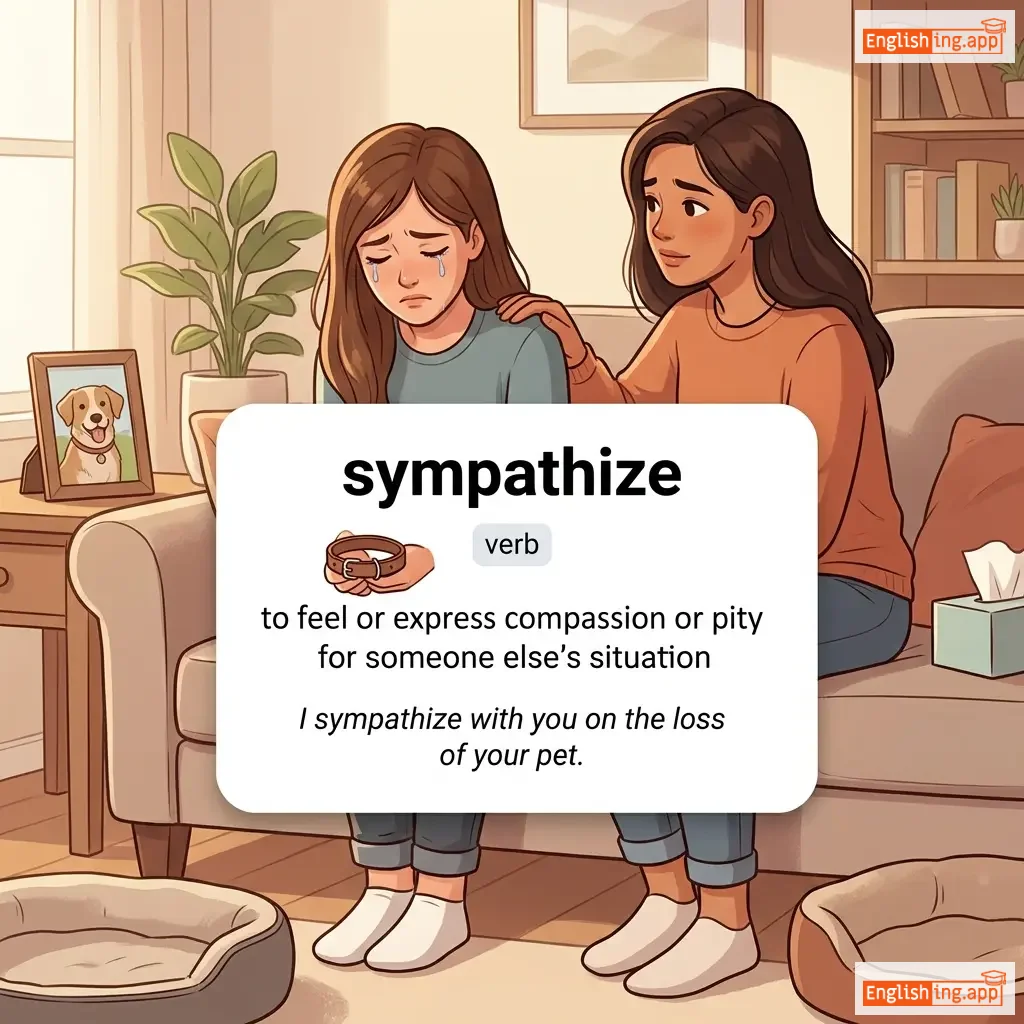
verb
/ˈsɪmpəˌθaɪz/
сочувствовать (sochuvstvovat')

to feel or express compassion or pity for someone else’s situation

"I sympathize with you on the loss of your pet."

"Я сочувствую тебе из-за потери твоего питомца." (Ya sochuvstvuyu tebe iz-za poteri tvoyego pitomtsa.)
adjective
/ˌsɪmpəˈθɛtɪk/
симпатичный (simpatichnyy)

showing understanding or compassion for someone’s feelings or situation

"She was very sympathetic when he lost his job."

"Она была очень симпатичной, когда он потерял свою работу." (Ona byla ochen' simpatichnoy, kogda on poteryal svoyu rabotu.)
adjective
/sɪˈmɛtrɪkəl/
симметричный (simmetrichny)

having parts on either side that match or are the same in shape, size, or arrangement

"The artist designed a symmetrical pattern on the floor."

"Художник разработал симметричный узор на полу." (Khudozhnik razrabotal simmetrichny uzor na polu.)
noun
/ˈsɪmətri/
симметрия (simmetriya)

the quality of having balanced proportions or identical parts facing each other

"The building’s symmetry impressed the visitors."

"Симметрия здания произвела впечатление на посетителей." (Simmetriya zdaniya proizvela vpechatlenie na posetiteley.)
noun
/ˈsɪbəraɪt/
сибарит (sibarit)

a person who loves luxury and pleasure

"The millionaire was a true sybarite who lived only for comfort and enjoyment."

"Миллионер был настоящим сибаритом, который жил только ради комфорта и удовольствия." (Millioner byl nastoyashchim sibaritom, kotoryy zhil tol'ko radi komforta i udovol'stviya.)
noun
/ˈsɪkəfənt/
льстец (l'stets)

A person who acts obsequiously toward someone important in order to gain advantage.

"The manager was surrounded by sycophants who agreed with everything he said."

"Менеджер был окружён льстецами, которые соглашались со всем, что он говорил." (Menedzher byl okruzhen l'stetsami, kotorye soglashalis' so vsem, chto on govoril.)
adjective
/ˌsɪkəˈfæntɪk/
подлиза (podliza)

Behaving in a way that is excessively obedient or servile to gain favor.

"His sycophantic behavior annoyed his colleagues."

"Его подлизывательское поведение раздражало его коллег." (Yego podlizyvatelskoe povedeniye razdrazhalo yego kolleg.)
adjective
/sɪˈlæbɪk/
слоговой (slogovoy)

Relating to or based on syllables.

"The teacher explained the syllabic structure of the word."

"Учитель объяснил слоговую структуру слова." (Uchitel obyasnil slogovuyu strukturu slova.)
noun
/ˌsɪləbɪˈkeɪʃən/
слоговая разбивка (slogovaya razbivka)

The division of words into syllables.

"Proper syllabication helps in correct pronunciation."

"Правильная слоговая разбивка помогает в правильном произношении." (Pravil'naya slogovaya razbivka pomogaet v pravil'nom proznoshenii.)
noun
/ˈsɪləbəl/
слог (slog)

A unit of pronunciation having one vowel sound, with or without surrounding consonants, forming the whole or part of a word.

"The word 'computer' has three syllables."

"Слово 'компьютер' состоит из трех слогов." (Slovo 'kompyuter' sostoyit iz tryokh slogov.)
noun
/ˈsɪləbəs/
учебный план (uchebnyy plan)

An outline or summary of topics to be covered in a course of study.

"The professor handed out the syllabus on the first day of class."
"Профессор выдал учебный план в первый день занятий." (Professor vydal uchebnyy plan v pervyy den' zanyatiy.)
syllogism definition card — visual illustration of the meaning
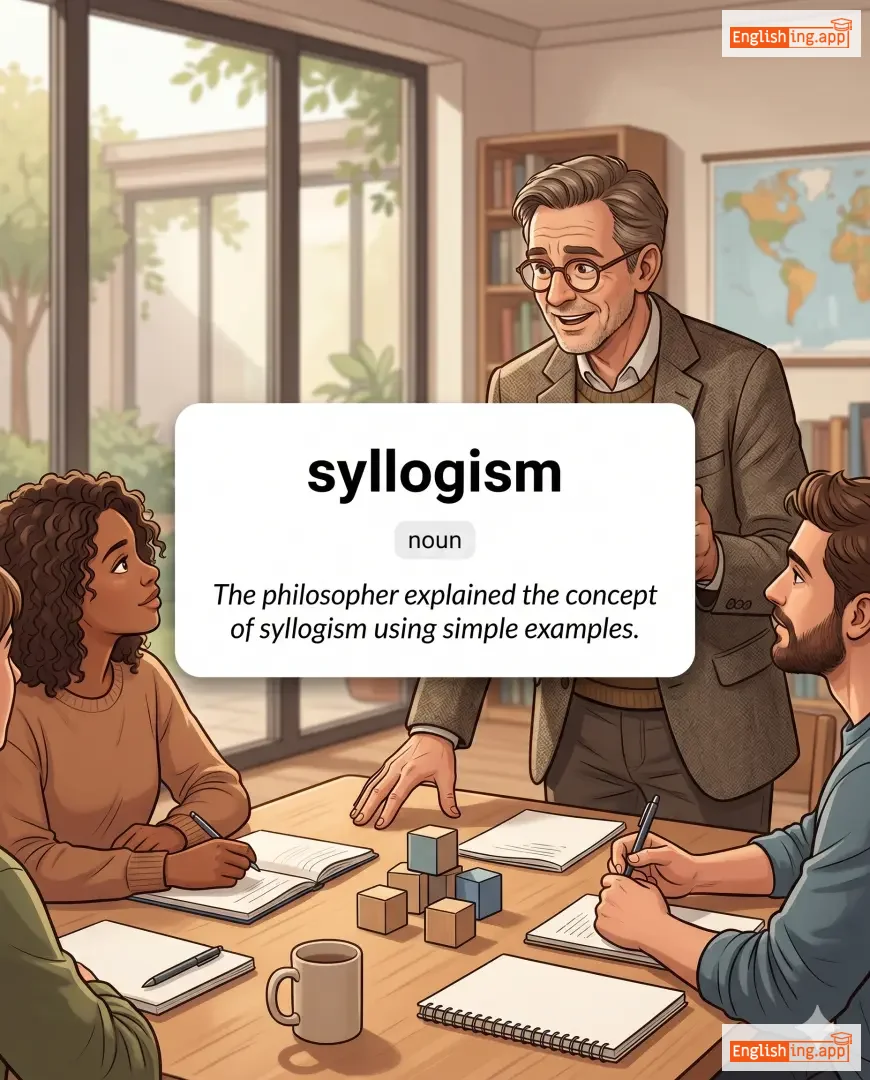
noun
/ˈsɪlədʒɪzəm/
силлогизм (sillogizm)

A form of reasoning in which a conclusion is drawn from two given or assumed premises.

"The philosopher explained the concept of syllogism using simple examples."

"Философ объяснил концепцию силлогизма с помощью простых примеров." (Filosof obyasnil kontseptsiyu sillogizma s pomoshch'yu prostykh primerov.)
verb
/ˈsɪmbəlaɪz/
символизировать (simvolizirovat')

to represent or stand for something else

"The dove symbolizes peace across cultures."

"Голубь символизирует мир в разных культурах." (Golub' simvoliziruet mir v raznykh kulturakh.)
adjective
/sɪmˈbɒlɪk/
символический (simvolicheskiy)

serving as a symbol or representing something else

"The dove is symbolic of peace and freedom."
"Голубь символизирует мир и свободу." (Golub' simvoliziruet mir i svobodu.)
symbolism definition card — visual illustration of the meaning
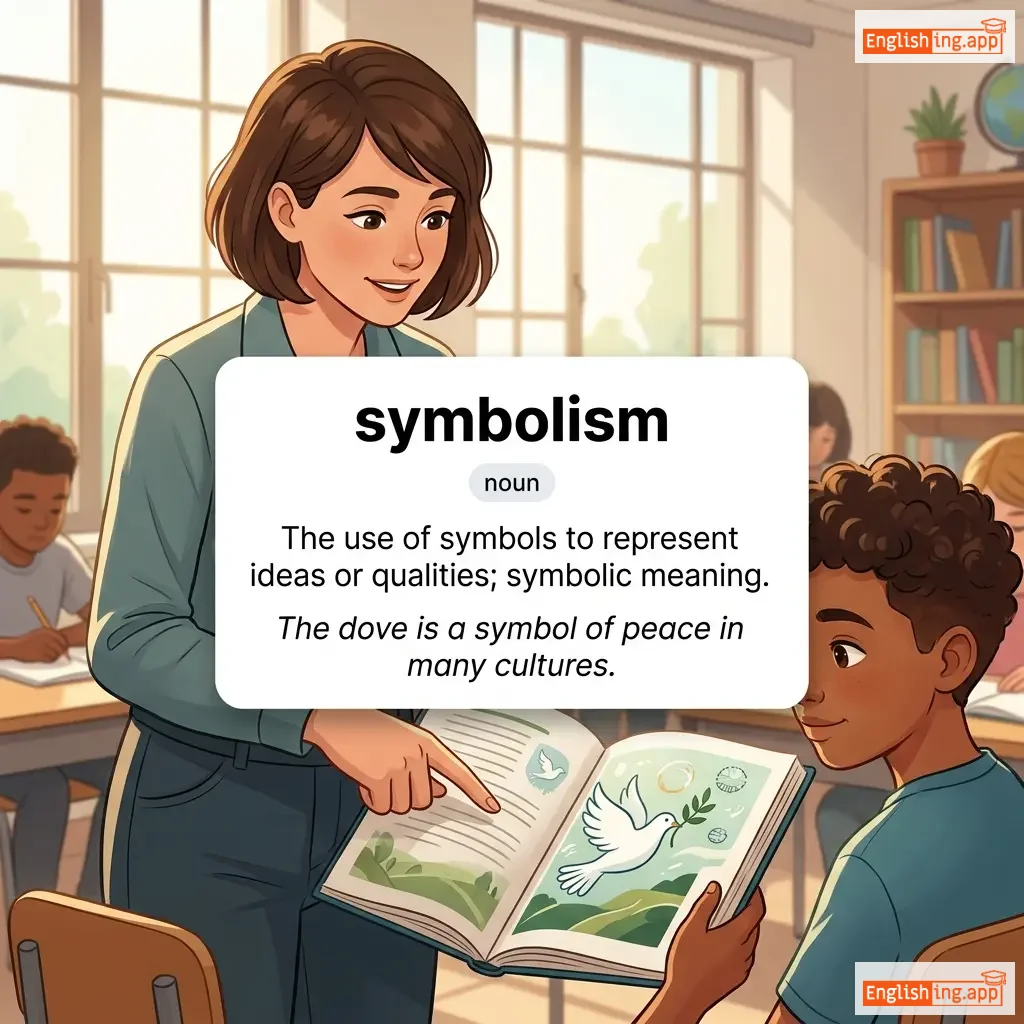
noun
ˈsɪmbəlɪzəm
символизм (simvolizm)

The use of symbols to represent ideas or qualities; symbolic meaning.

"The dove is a symbol of peace in many cultures."

"Голубь — это символ мира в многих культурах." (Golub' — eto simvol mira v mnogikh kulturakh.)