वोकैबुलरीज

इंग्लिश वोकैबुलरी डिस्कवर, लर्न और मास्टर करें

noun
/swiːt.laɪm/
मीठा नींबू (meetha neemboo)

a citrus fruit that is sweeter and less acidic than regular lime

"The sweetlime juice was refreshing on a hot day."

"गर्म दिन में मीठा नींबू का रस ताजगी देने वाला था।" (garm din mein meetha neemboo ka ras taazgi dene wala tha)
noun
/ˈswiːt.miːt/
मिठाई (mithaai)

a small piece of confectionery or candy; a sweet delicacy

"The children enjoyed the traditional sweetmeats during the festival."

"बच्चों ने त्योहार के दौरान पारंपरिक मिठाई का आनंद लिया।" (bachcho ne tyohaar ke dauraan paaramparik mithai ka anand liya.)
verb
/swɛl/
सूजन आना (soojan aana)

to increase in size or volume, often due to internal pressure or emotional intensity

"Her ankle began to swell after the injury."

"उसके टखने में चोट लगने के बाद सूजन आ गई।" (Uske takhane mein chot lagne ke baad soojan aa gayi.)
verb
/ˈswɛltər/
अत्यधिक गर्मी में पीड़ित होना (atyadhik garmi mein peedit hona)

to suffer from intense heat

"We began to swelter in the midday sun."

"हम दोपहर की धूप में स्वेल्टर होने लगे।" (Ham dopahar ki dhoop mein swelter hone lage.)
adjective
/ˈswɛltərɪŋ/
अत्यधिक गर्म (atyadhik garm)

uncomfortably hot

"The sweltering heat made it hard to work."

"स्वेल्टरिंग गर्मी ने काम करना मुश्किल बना दिया।" (Sweltering garmi ne kaam karna mushkil bana diya.)
verb
/swɜːrv/
अचानक दिशा बदलना (achanak disha badalna)

to change direction suddenly, especially to avoid hitting something

"The car swerved to avoid the dog."

"गाड़ी ने कुत्ते से टकराने से बचने के लिए अचानक दिशा बदल ली।" (Gaadi ne kutte se takrane se bachne ke liye achanak disha badal li.)
adjective
/swɪft/

moving very quickly; happening promptly

"The river current was swift after the heavy rain."

verb
/swɪl/
लालच से या बड़ी मात्रा में पीना (lalach se ya badi matra mein peena)

to drink something greedily or in large amounts

"He swilled down the beer in seconds."

"उसने कुछ सेकंड्स में बीयर गटागट पी ली।" (Usne kuch seconds mein beer ghatagat pee li.)
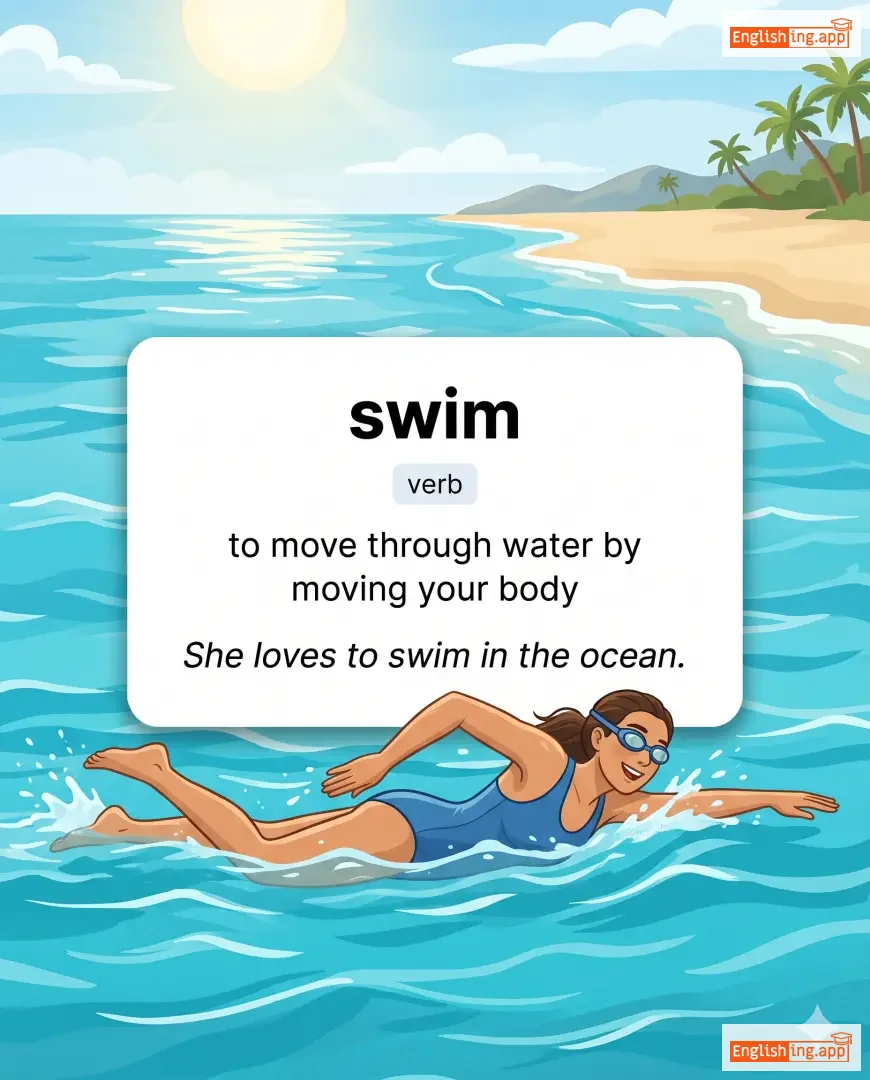
swim definition card — visual illustration of the meaning
verb
/swɪm/
तैरना (tairna)

to move through water by moving your body

"She loves to swim in the ocean."

"वह महासागर में तैरना पसंद करती है।" (Woh mahaasagar mein tairna pasand karti hai.)
sustainable technology definition card — visual illustration of the meaning
noun
səˈsteɪ.nə.bəl tekˈnɒl.ə.dʒi
सतत प्रौद्योगिकी (satat praudyogiki)

Technology designed to meet present needs without compromising future generations' ability to meet their needs.

"Sustainable technology ensures a cleaner future."

"सतत प्रौद्योगिकी एक स्वच्छ भविष्य सुनिश्चित करती है।" (Satat praudyogiki ek swachh bhavishya sunishchit karti hai.)
noun
/ˈswɪmɪŋ/
तैराकी (tairaki)

the activity or sport of moving through water using the limbs

"Swimming is a great way to stay fit and healthy."

"तैराकी फिट और स्वस्थ रहने का एक बेहतरीन तरीका है।" (Tairaki fit aur swasth rehne ka ek behatarin tareeka hai.)
verb
/ˈswɪndl/
धोखा देना (dhokha dena)

to cheat someone out of money or possessions by deceit

"The con artist tried to swindle the old man out of his savings."

"कॉन आर्टिस्ट ने वृद्ध व्यक्ति को उसकी बचत धोखाधड़ी से छीनने की कोशिश की।" (kon artist ne vruddh vyakti ko uski bachhat dhokhadhadi se cheenne ki koshish ki.)
noun
/ˈswɪndlɚ/
ठग (thag)

a person who cheats or deceives others for money or gain

"The police finally caught the notorious swindler."

"पुलिस ने आखिरकार कुख्यात ठग को पकड़ लिया।" (pulis ne aakhirkar kukhyat thag ko pakad liya.)
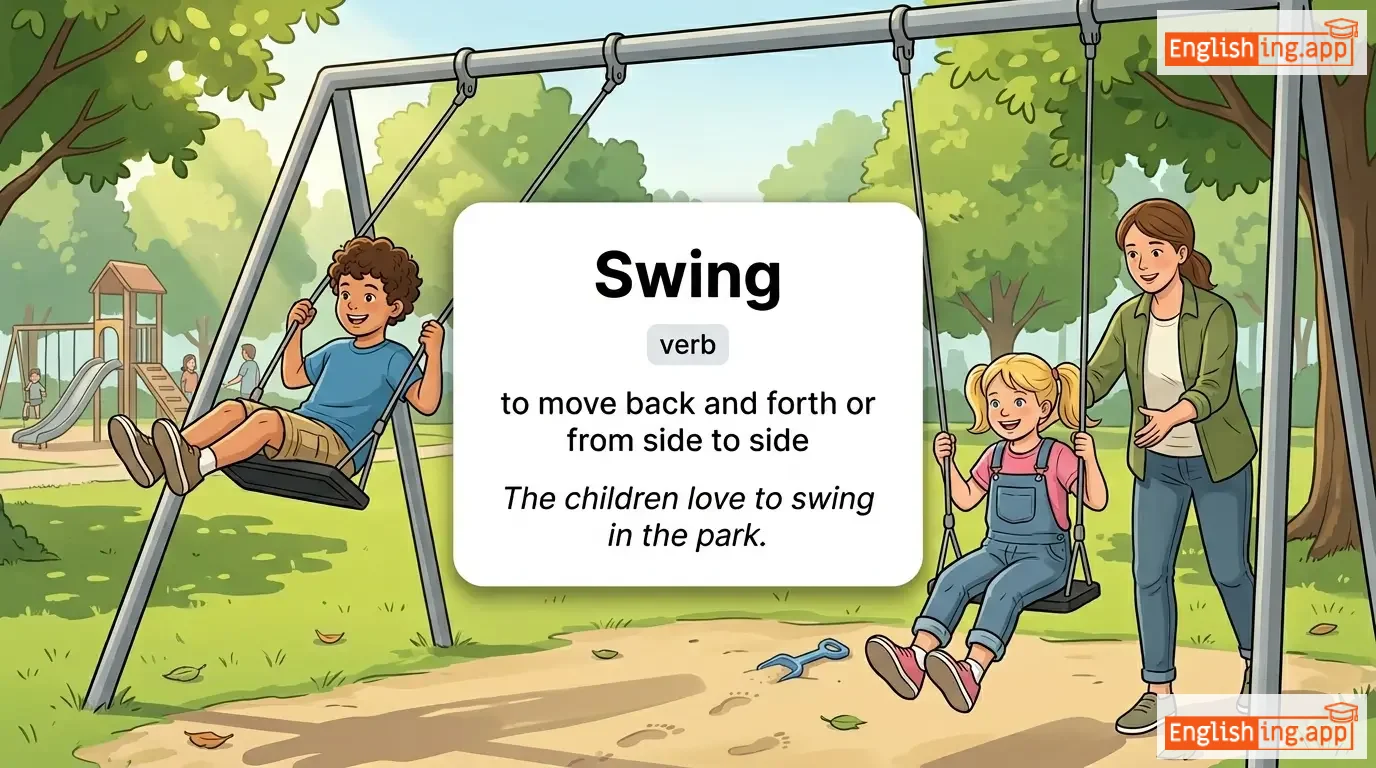
Swing definition card — visual illustration of the meaning
verb
/swɪŋ/
झूलना (jhoolna)

to move back and forth or from side to side

"The children love to swing in the park."

"बच्चों को पार्क में झूलना बहुत पसंद है।" (bachon ko park mein jhoolna bahut pasand hai.)
verb
/swaɪp/
स्वाइप करना (swipe karna)

to move your finger across a touch screen or to hit with a sweeping motion

"He swiped left on the photo."

"उसने फोटो पर बाएं स्वाइप किया।" (usne photo par baaye swipe kiya.)
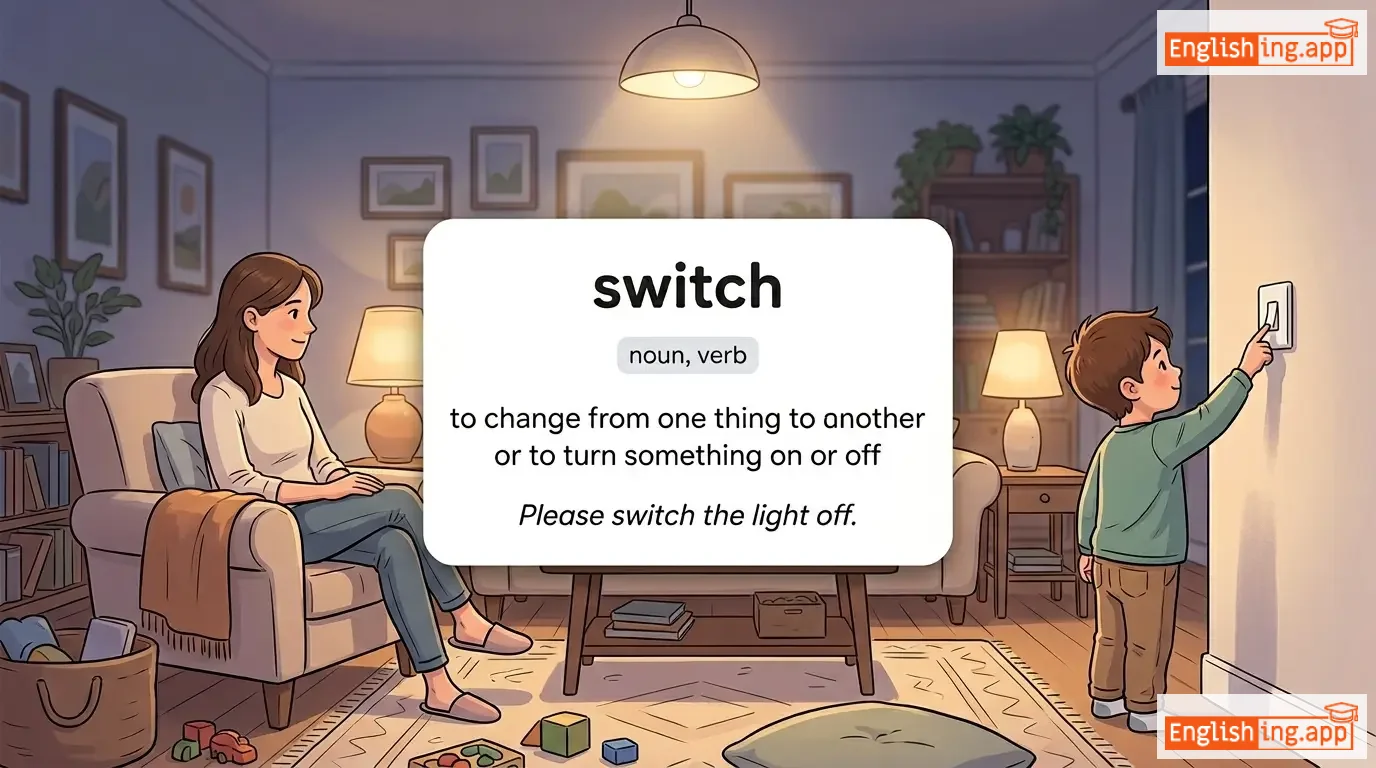
switch definition card — visual illustration of the meaning
noun, verb
/swɪtʃ/
स्विच (switch)

to change from one thing to another or to turn something on or off

"Please switch the light off."

"कृपया बत्तियां बंद करें।" (kripya battiyan band karein.)
adjective
/ˈswoʊlən/
सूजा हुआ (sooja hua)

Enlarged or puffed up, usually due to injury, inflammation, or fluid accumulation

"Her ankle was swollen after she twisted it during the hike."

"हाइकिंग के दौरान उसके टखने में सूजन आ गई थी।" (haiking ke dauran uske takhne mein soojan aa gayi thi.)
noun
/sɔːd fɪʃ/
तलवार मछली (talwar machhli)

A large marine fish with an elongated bill resembling a sword

"The swordfish can swim at speeds up to 60 mph."

"स्वोर्डफिश प्रति घंटे 60 मील की गति से तैर सकती है।" (swordfish prati ghante 60 meel ki gati se tair sakti hai)
noun
/sɔːrd/
तलवार (talwar)

a weapon with a long metal blade used for fighting

"The knight drew his sword to defend the castle."

"रायट ने किले की रक्षा करने के लिए अपनी तलवार निकाली।" (Knight ne kile ki raksha karne ke liye apni talwar nikali.)
noun
/sɪˈnɛrəsɪs/
सिनेरसिस (syneresis)

The contraction of two adjacent vowels into a single syllable or the separation of liquid from a gel.

"The yogurt showed syneresis when liquid separated on top."

"जब दही के ऊपर तरल अलग हुआ तो यह सिनेरसिस दिखा।" (jab dahi ke upar taral alag hua to yah syneresis dikha.)
noun
/ˈsɪnˌdroʊm/
सिंड्रोम (sindrom)

a group of symptoms that occur together and characterize a condition or disease

"Down syndrome affects a person's physical and mental development."

"डाउन सिंड्रोम एक व्यक्ति के शारीरिक और मानसिक विकास को प्रभावित करता है।" (Down syndrome ek vyakti ke sharirik aur mansik vikas ko prabhavit karta hai.)
noun
/ˈsɪndɪkət/
संघ (sangh)

A group of individuals or organizations combined to promote a common interest or carry out a business venture.

"A syndicate of investors bought the struggling company."

"एक समूह के निवेशकों ने संघर्षरत कंपनी को खरीदा।" (ek samuh ke niveshako ne sangharshrat kompani ko kharida.)
adjective
/ˈsɪŋkəˌpeɪtɪd/
सिंकॉपेटेड (sinkopated)

Characterized by displaced beats or rhythms, especially in music.

"The jazz piece had a syncopated rhythm that energized the crowd."

"जैज़ संगीत में एक सिंकॉपेटेड रिदम था जिसने भीड़ को उत्साहित किया।" (Jazz sangeet mein ek sinkopated rhythm tha jisne bheed ko utsahit kiya.)
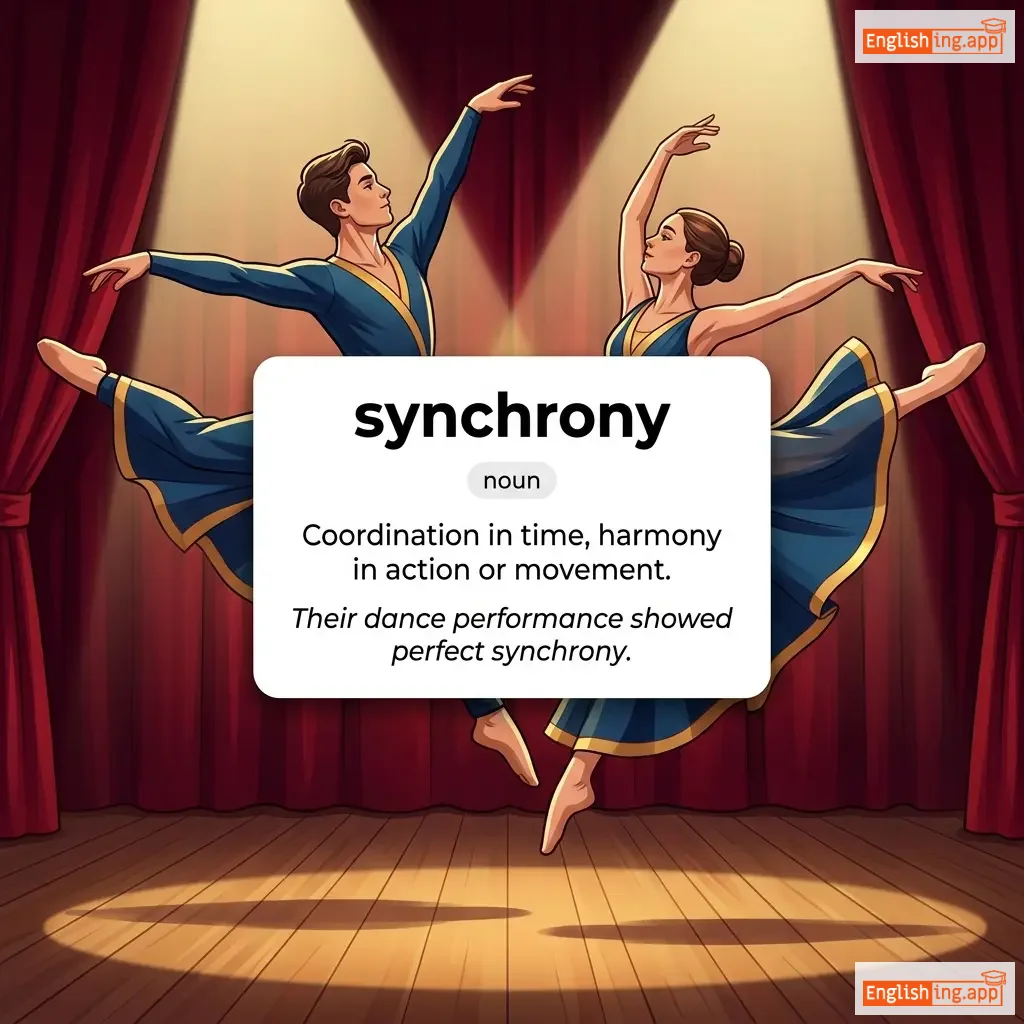
synchrony definition card — visual illustration of the meaning
noun
/ˈsɪŋ.krə.ni/
सिंकनरी (sanknari)

Coordination in time, harmony in action or movement.

"Their dance performance showed perfect synchrony."

"उनकी नृत्य प्रस्तुति ने उत्तम सिंकनरी का प्रदर्शन किया।" (Unki nritya prastuti ne uttam sinknari ka pradarshan kiya.)
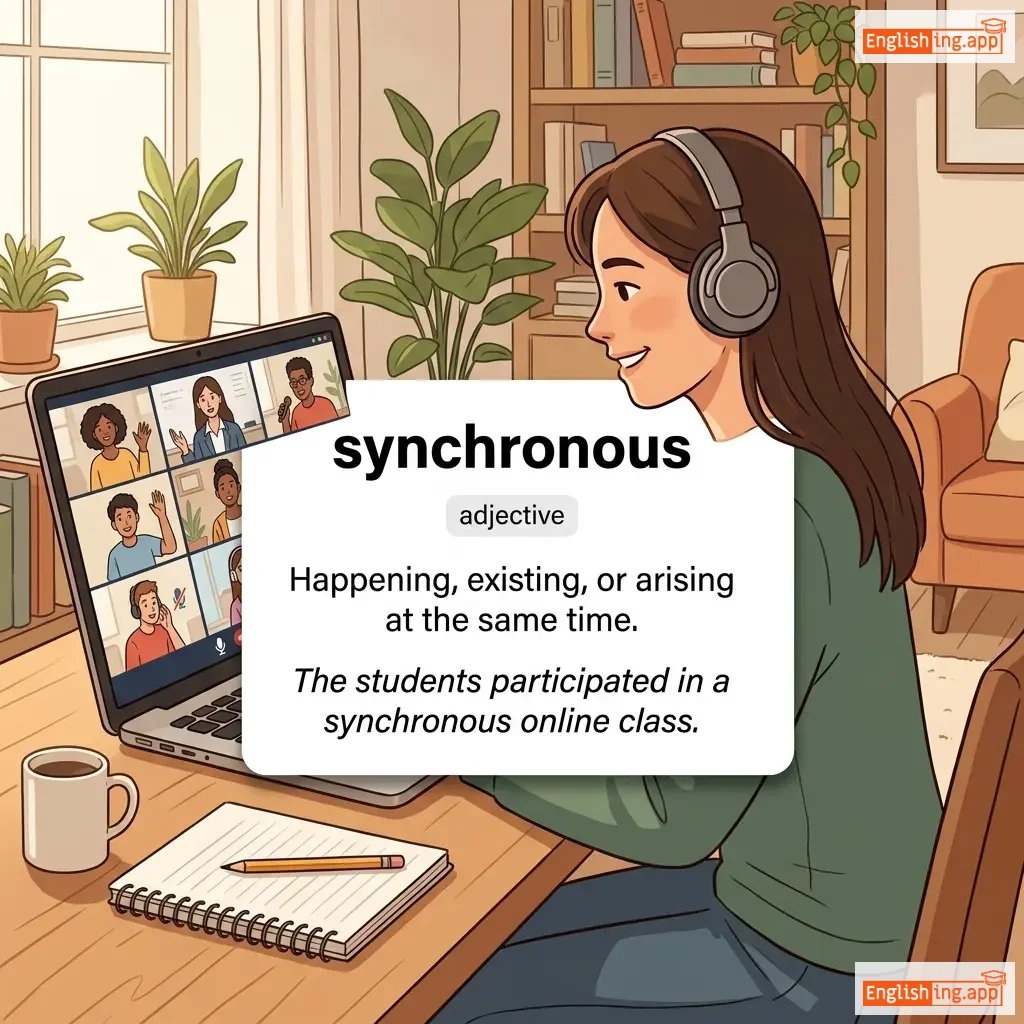
synchronous definition card — visual illustration of the meaning
adjective
/ˈsɪŋkrənəs/
समकालीन (samaakaaleen)

Happening, existing, or arising at the same time.

"The students participated in a synchronous online class."

"छात्रों ने एक समकालीन ऑनलाइन क्लास में भाग लिया।" (chhaatron ne ek samaakaaleen online class mein bhaag liya.)
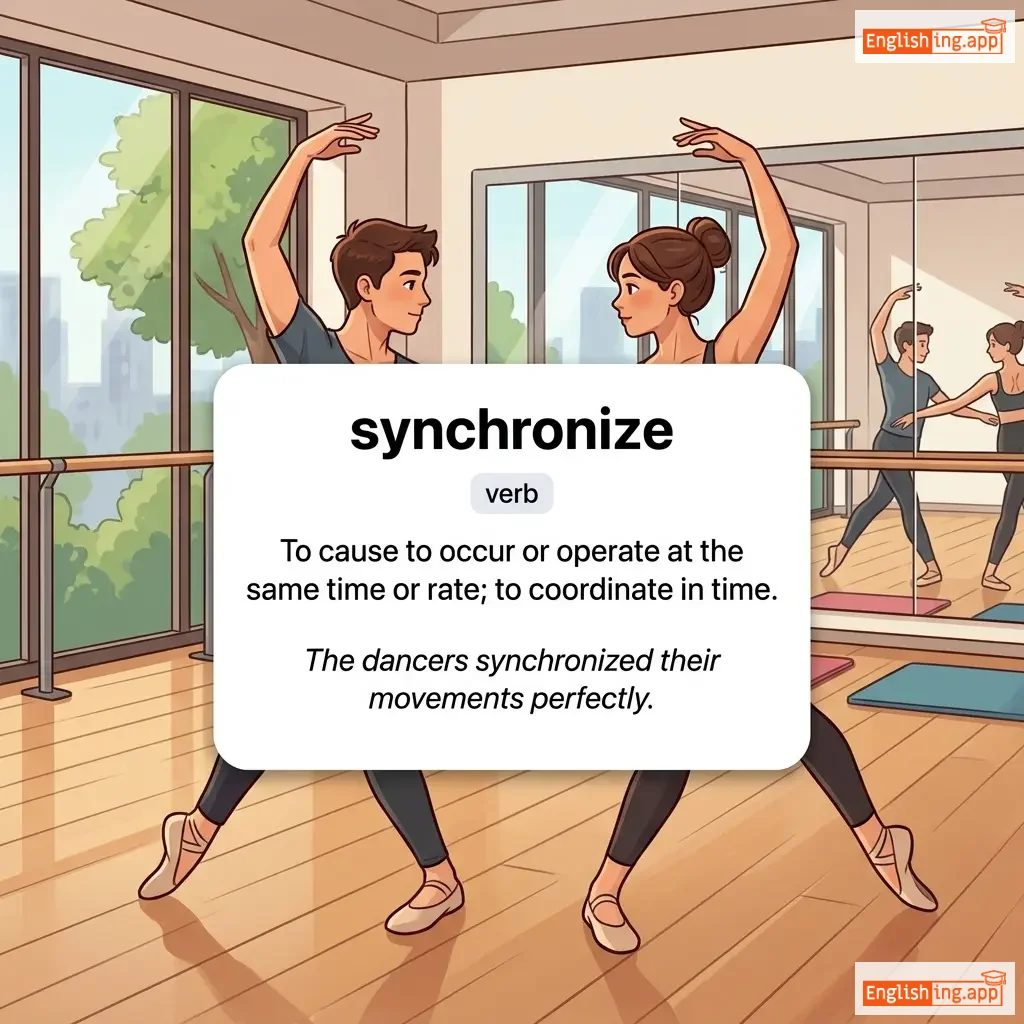
synchronize definition card — visual illustration of the meaning
verb
/ˈsɪŋ.krə.naɪz/
संगठित करना (sangathit karna)

To cause to occur or operate at the same time or rate; to coordinate in time.

"The dancers synchronized their movements perfectly."

"नर्तक अपने आंदोलनों को पूरी तरह से समकालिक रूप से समन्वित करते थे।" (Nartak apne aandolon ko puri tarah se samkalik roop se samanvit karte the.)
noun
/ˈsɪŋkrəˌnɪzəm/
समकालिकता (samakalikta)

The simultaneous occurrence of events or actions.

"The synchronism of the dancers' movements amazed the audience."

"नर्तकियों की चालों की समकालिकता ने दर्शकों को चकित कर दिया।" (Nartakiyon ki chalon ki samakalikta ne darshako ko chakit kar diya.)
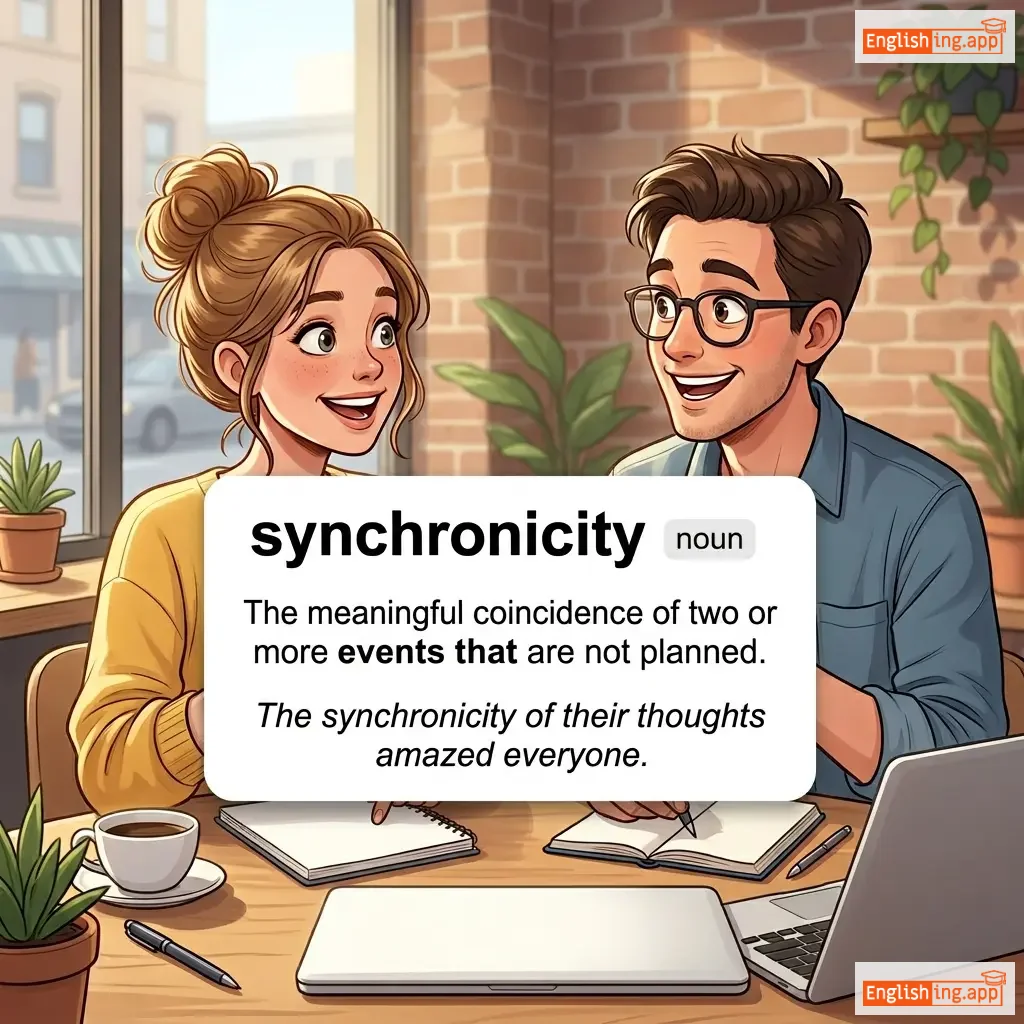
synchronicity definition card — visual illustration of the meaning
noun
/ˌsɪŋ.krəˈnɪs.ɪ.ti/
सिंक्रोनिटी (synchronity)

The meaningful coincidence of two or more events that are not planned.

"The synchronicity of their thoughts amazed everyone."

"उनके विचारों का सिंक्रोनिटी सभी को हैरान कर गया।" (Unke vicharon ka synchronity sabhi ko hairan kar gaya.)
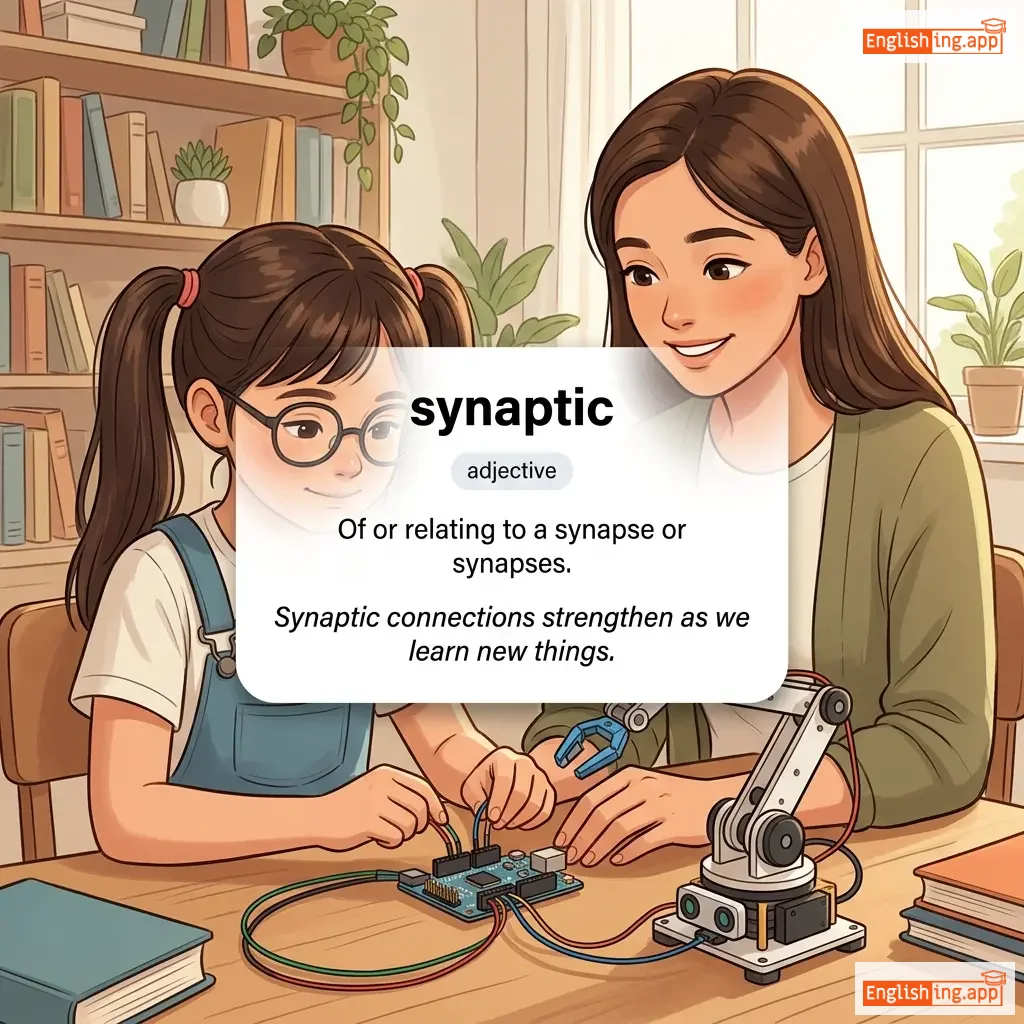
synaptic definition card — visual illustration of the meaning
adjective
sɪˈnæp.tɪk
सिनैप्स या सिनैप्स से संबंधित (sinaptik)

Of or relating to a synapse or synapses.

"Synaptic connections strengthen as we learn new things."

"सिनैप्टिक कनेक्शन तब मजबूत होते हैं जब हम नई चीजें सीखते हैं।" (sinaptik konekshan tab majboot hote hain jab hum nai cheezen seekhte hain.)
symptoms definition card — visual illustration of the meaning
noun
/ˈsɪmp.təmz/
लक्षण (lakshan)

signs or indications of a disease or condition

"Fever and cough are common symptoms of the flu."

"बुखार और खांसी फ्लू के सामान्य लक्षण हैं।" (Bukhaar aur khaansi flu ke saamaanya lakshan hain.)
noun
/ˈsɪmptəm/
लक्षण (lakshan)

a sign or indication of something, especially of an illness

"Fever is a common symptom of the flu."

"बुखार फ्लू का एक सामान्य लक्षण है।" (Bukhar flu ka ek saman lakshan hai.)
noun
/ˈsɪmfəni/
सिंफनी, एक विस्तृत संगीत रचना (symphony, ek vistarit sangeet rachna)

An elaborate musical composition for a full orchestra, typically in four movements.

"Beethoven's Fifth Symphony is one of the most famous works in classical music."

"बीथोवेन की पांचवीं सिंफनी शास्त्रीय संगीत के सबसे प्रसिद्ध कामों में से एक है।" (Beethoven ki paanchvi symphony shastriya sangeet ke sabse prasiddh kamon mein se ek hai.)
adjective
/sɪmˈfoʊniəs/
सुरमय (symphonious)

Harmonious; producing a pleasant sound or agreement of sound.

"The choir's voices were symphonious and filled the hall with beauty."

"गायन मंडली की आवाज़ें सुरमय थीं और सभागार को सुंदरता से भर दीं।" (gaayan mandali ki aavaazen surmay theen aur sabhaagar ko sundarta se bhar deen)
adjective
/sɪmˈfɒnɪk/
संगीतबद्ध (sangeetbadh)

relating to or having the character of a symphony or symphony orchestra

"The concert featured a symphonic masterpiece."

"कॉन्सर्ट में एक संगीतबद्ध कृति प्रदर्शित की गई थी।" (Concert mein ek sangeetbadh kruti pradarshit ki gayi thi.)
noun
/ˈsɪmpəθi/
सहानुभूति (sahanubhuti)

feelings of pity and compassion for someone else's suffering

"She expressed her sympathy for the grieving family."

"उसने शोकाकुल परिवार के लिए अपनी सहानुभूति व्यक्त की।" (Usne shokakul parivar ke liye apni sahanubhuti vyakt ki.)
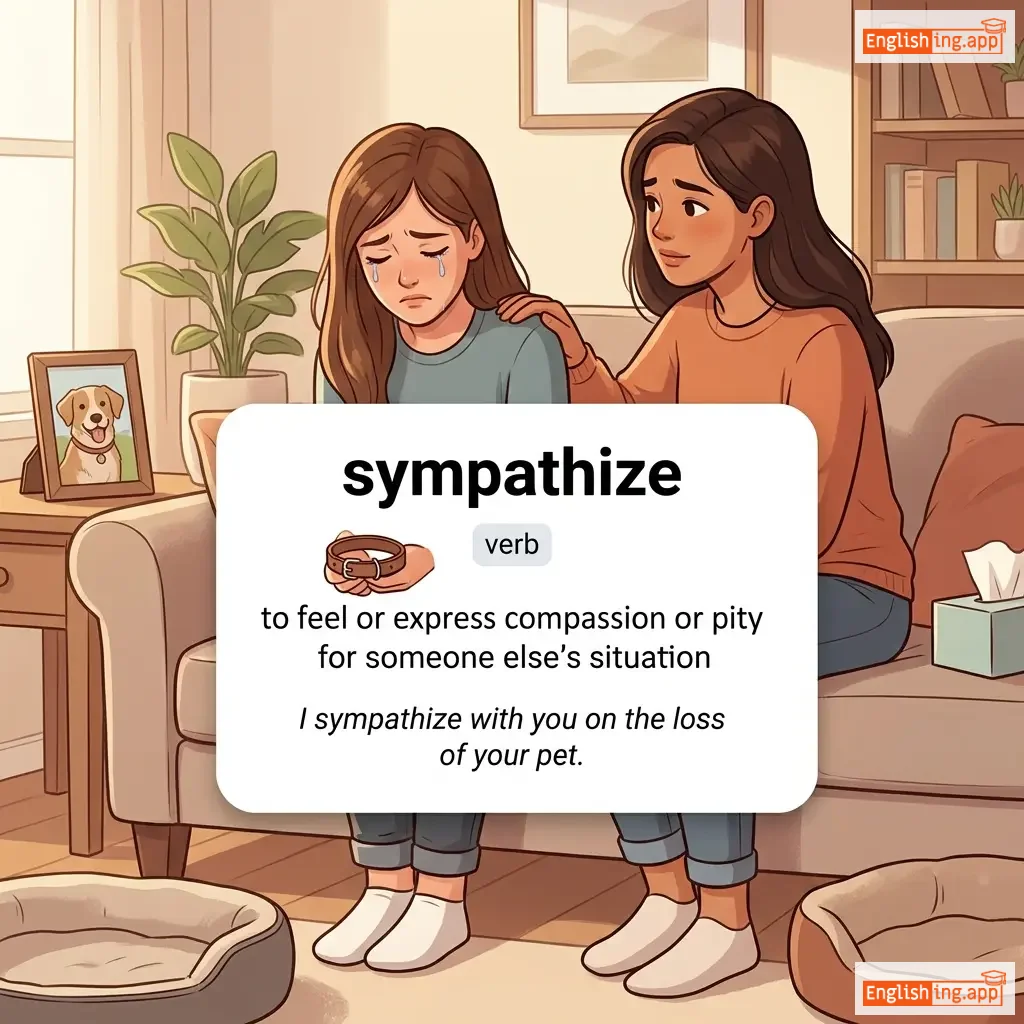
sympathize definition card — visual illustration of the meaning
verb
/ˈsɪmpəˌθaɪz/
सहानुभूति जताना (sahanubhuti jatana)

to feel or express compassion or pity for someone else’s situation

"I sympathize with you on the loss of your pet."

"मैं आपके पालतू जानवर के खोने पर आपके साथ सहानुभूति रखता हूँ।" (Main aapke paaltu jaanwar ke khone par aapke saath sahanubhuti rakhta hoon.)
adjective
/ˌsɪmpəˈθɛtɪk/
सहानुभूतिपूर्ण (sahanubhootipoorn)

showing understanding or compassion for someone’s feelings or situation

"She was very sympathetic when he lost his job."

"वह जब उसकी नौकरी चली गई तो बहुत सहानुभूतिपूर्ण थी।" (Wah jab uski naukri chali gayi to bahut sahanubhootipurn thi.)
adjective
/sɪˈmɛtrɪkəl/
संतुलित (santulit)

having parts on either side that match or are the same in shape, size, or arrangement

"The artist designed a symmetrical pattern on the floor."

"कलाकार ने मंजिल पर एक संतुलित पैटर्न डिज़ाइन किया।" (Kalakar ne manzil par ek santulit pattern design kiya.)
noun
/ˈsɪmətri/
सामंजस्य (samanjasya)

the quality of having balanced proportions or identical parts facing each other

"The building’s symmetry impressed the visitors."

"भवन की सामंजस्य ने आगंतुकों को प्रभावित किया।" (Bhavan ki samanjasya ne aagantukon ko prabhavit kiya.)
noun
/ˈsɪbəraɪt/
विलासितावादी (vilasitavadi)

a person who loves luxury and pleasure

"The millionaire was a true sybarite who lived only for comfort and enjoyment."

"मिलियनेयर एक सच्चे विलासितावादी थे जो केवल आराम और आनंद के लिए जीते थे।" (millionaire ek sachche vilasitavadi the jo keval aaram aur anand ke liye jeete the.)
noun
/ˈsɪkəfənt/
चाटुकार (chatukar)

A person who acts obsequiously toward someone important in order to gain advantage.

"The manager was surrounded by sycophants who agreed with everything he said."

"मैनेजर के चारों ओर चाटुकार थे जो उसकी हर बात से सहमत थे।" (Manager ke chaaron or chatukar the jo uski har baat se sahmat the.)
adjective
/ˌsɪkəˈfæntɪk/
चाटुकारिता (chatukarita)

Behaving in a way that is excessively obedient or servile to gain favor.

"His sycophantic behavior annoyed his colleagues."

"उसका चाटुकारिता व्यवहार उसके सहकर्मियों को परेशान करता था।" (Uska chatukarita vyavhaar uske sahkarmiyon ko pareshan karta tha.)
adjective
/sɪˈlæbɪk/
अक्षरात्मक (aksharatmak)

Relating to or based on syllables.

"The teacher explained the syllabic structure of the word."

"शिक्षक ने शब्द के अक्षरात्मक ढांचे की व्याख्या की।" (Shikshak ne shabd ke aksharatmak dhancha ki vyakhya ki.)
noun
/ˌsɪləbɪˈkeɪʃən/
अक्षर विभाजन (akshar vibhajan)

The division of words into syllables.

"Proper syllabication helps in correct pronunciation."

"सही अक्षर विभाजन सही उच्चारण में मदद करता है।" (Sahi akshar vibhajan sahi uchcharan mein madad karta hai.)
noun
/ˈsɪləbəl/
ध्वन्यांश (dhvanyansh)

A unit of pronunciation having one vowel sound, with or without surrounding consonants, forming the whole or part of a word.

"The word 'computer' has three syllables."

"शब्द 'कंप्यूटर' में तीन ध्वन्यांश होते हैं।" (Shabd 'computer' mein teen dhvanyansh hote hain.)
noun
/ˈsɪləbəs/
पाठ्यक्रम (pathyakram)

An outline or summary of topics to be covered in a course of study.

"The professor handed out the syllabus on the first day of class."

"प्रोफेसर ने पहले दिन क्लास में सिलेबस दिया।" (Professor ne pehle din class mein syllabus diya.)
syllogism definition card — visual illustration of the meaning
noun
/ˈsɪlədʒɪzəm/
सिलोजिज़म (silojeezm)

A form of reasoning in which a conclusion is drawn from two given or assumed premises.

"The philosopher explained the concept of syllogism using simple examples."

"दर्शनशास्त्री ने सरल उदाहरणों का उपयोग करके सिलोजिज़म की अवधारणा समझाई।" (Darshanshastri ne saral udaharon ka upyog karke syllogism ki avdhana samjhayi.)
verb
/ˈsɪmbəlaɪz/
प्रतीक बनाना (prateek banana)

to represent or stand for something else

"The dove symbolizes peace across cultures."

"क़बूतर विभिन्न संस्कृतियों में शांति का प्रतीक बनता है।" (Kabootar vibhinn sanskritiyon mein shanti ka prateek banta hai.)
adjective
/sɪmˈbɒlɪk/
प्रतीकात्मक (pratikatmak)

serving as a symbol or representing something else

"The dove is symbolic of peace and freedom."

"दुग्गा शांति और स्वतंत्रता का प्रतीक है।" (Dugga shanti aur svatantrata ka pratik hai.)
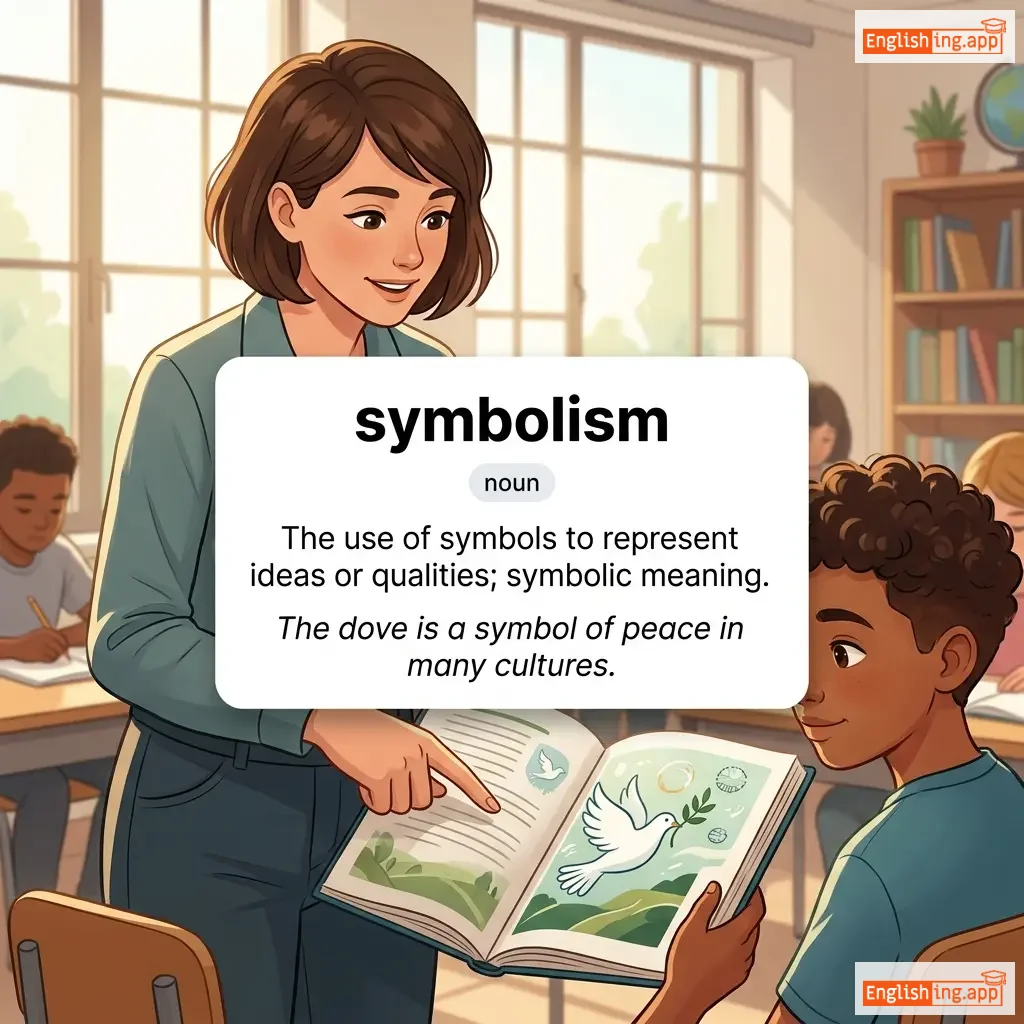
symbolism definition card — visual illustration of the meaning
noun
ˈsɪmbəlɪzəm
प्रतीकवाद (pratikvaad)

The use of symbols to represent ideas or qualities; symbolic meaning.

"The dove is a symbol of peace in many cultures."

"कई संस्कृतियों में शांति का प्रतीक है कबूतर।" (Kai sanskrtiyon mein shanti ka pratik hai kabootar.)