वोकैबुलरीज

इंग्लिश वोकैबुलरी डिस्कवर, लर्न और मास्टर करें

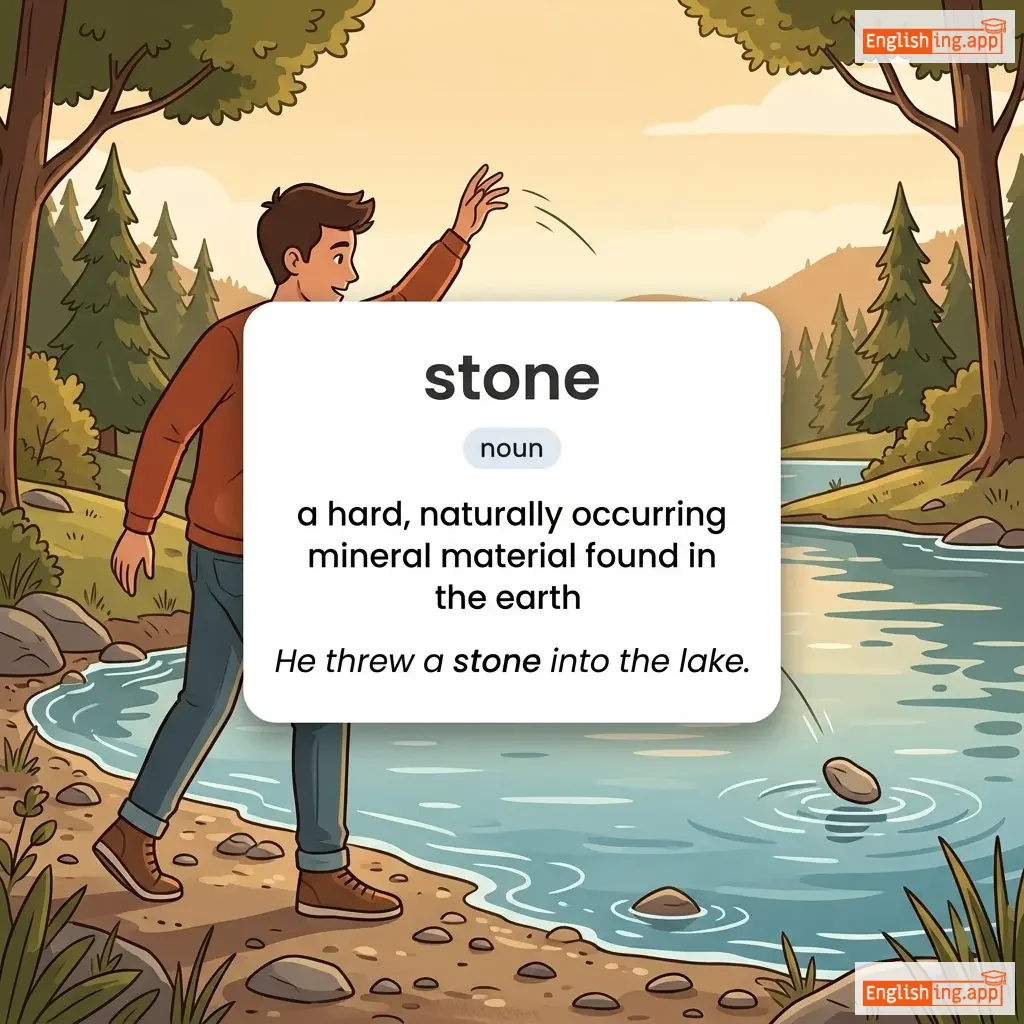
stone definition card — visual illustration of the meaning
noun
/stoʊn/
पत्थर (patthar)

a hard, naturally occurring mineral material found in the earth

"He threw a stone into the lake."

"उसने झील में एक पत्थर फेंका।" (Usne jheel mein ek patthar phenka.)
noun
/ˈstʌmək eɪk/
पेट दर्द (pet dard)

Pain in the stomach or abdominal area

"I have a stomach ache after eating too much."

"मैंने बहुत खाने के बाद पेट दर्द महसूस किया।" (maine bahut khane ke baad pet dard mahsus kiya)
noun/verb
/ˈstʌmək/
पेट / सहन करना (pet / sahan karna)

The internal organ in which food is digested; also to tolerate or endure something

"She couldn’t stomach the sight of violence."

"वह हिंसा के दृश्य को सहन नहीं कर पाई।" (vah hinsa ke drishya ko sahan nahi kar paayi.)
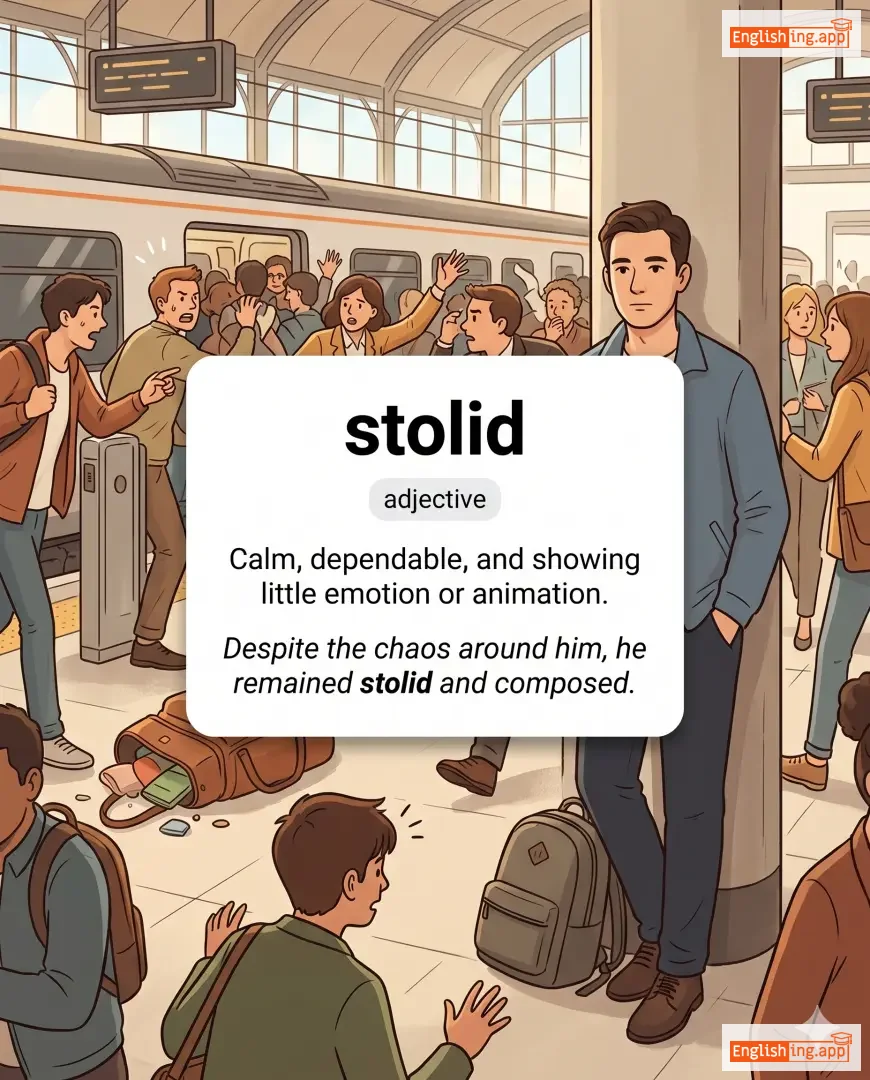
stolid definition card — visual illustration of the meaning
adjective
/ˈstɒlɪd/
शांत, भावहीन (shant, bhavheen)

Calm, dependable, and showing little emotion or animation.

"Despite the chaos around him, he remained stolid and composed."

"चारों ओर की अफरातफरी के बावजूद, वह शांत और संयमित रहा।" (Chaaron or ki afratfari ke bawajood, wah shant aur sanyamit raha.)
verb
/stoʊk/
आग में ईंधन डालना; गुस्सा या भावना को बढ़ावा देना (aag mein indhan dalna; gussa ya bhavna ko badhava dena)

To add fuel to a fire; to encourage or increase a strong feeling or activity.

"The politician’s speech stoked anger among the crowd."

"राजनेता का भाषण भीड़ के बीच गुस्सा बढ़ा दिया।" (Rajneeta ka bhashan bheed ke beech gussa badha diya.)
stoicism definition card — visual illustration of the meaning
noun
/ˈstoʊɪˌsɪzəm/
धैर्य, सहिष्णुता (dhairya, sahishnuta)

The endurance of pain or hardship without showing feelings or complaining.

"He faced the loss of his job with remarkable stoicism."

"उसने अपनी नौकरी खोने को असाधारण धैर्य के साथ सहा।" (Usne apni naukri khone ko asadharan dhairya ke saath saha.)
adjective
/ˈstoʊɪk/
निष्कलंक, भावनाहीन (nishkalaṅk, bhāvanāhīn)

Showing little or no emotion, even in difficult situations.

"She remained stoic during the crisis, never showing fear or panic."

"वह संकट के दौरान निष्कलंक रही, कभी भी डर या घबराहट नहीं दिखाई।" (vah saṅkaṭ ke daurān nishkalaṅk rahī, kabhī bhī ḍar yā ghabarāhaṭ nahīṁ dikhāī.)
adjective
/ˈstɒdʒi/
नीरस, उबाऊ (neeras, ubaoo)

Dull, uninspired, or old-fashioned; also heavy and hard to digest when referring to food.

"The lecture was so stodgy that many students struggled to stay awake."

"व्याख्यान इतना नीरस था कि कई छात्रों को जगते रहना मुश्किल हो रहा था।" (Vyakhyan itna neeras tha ki kai chhatron ko jagte rehna mushkil ho raha tha.)
noun
/stɒˈkeɪd/
लकड़ी की दीवार (lakdi ki deewaar)

a defensive barrier made of strong posts or timbers, often around a fort or prison

"The prisoners were kept inside the wooden stockade."

"कैदी लकड़ी की दीवार के अंदर रखे गए थे।" (Kaidi lakdi ki deewaar ke andar rakhe gaye the.)
noun, verb
/stɒk/
स्टॉक (stok)

a supply of goods kept for sale or use; to keep or fill with goods

"The shop stocks a wide variety of products."

"दुकान में उत्पादों का विस्तृत संग्रह है।" (Dukan mein utpadon ka vistreet sangrah hai.)
stitch definition card — visual illustration of the meaning
noun, verb
/stɪtʃ/
खुशी (khushi)

to sew fabric together using a needle and thread; also a single loop of thread in sewing

"She stitched the torn dress carefully."

"उसने फटी हुई ड्रेस को ध्यान से सिल दिया।" (Usne phati hui dress ko dhyan se sil diya.)
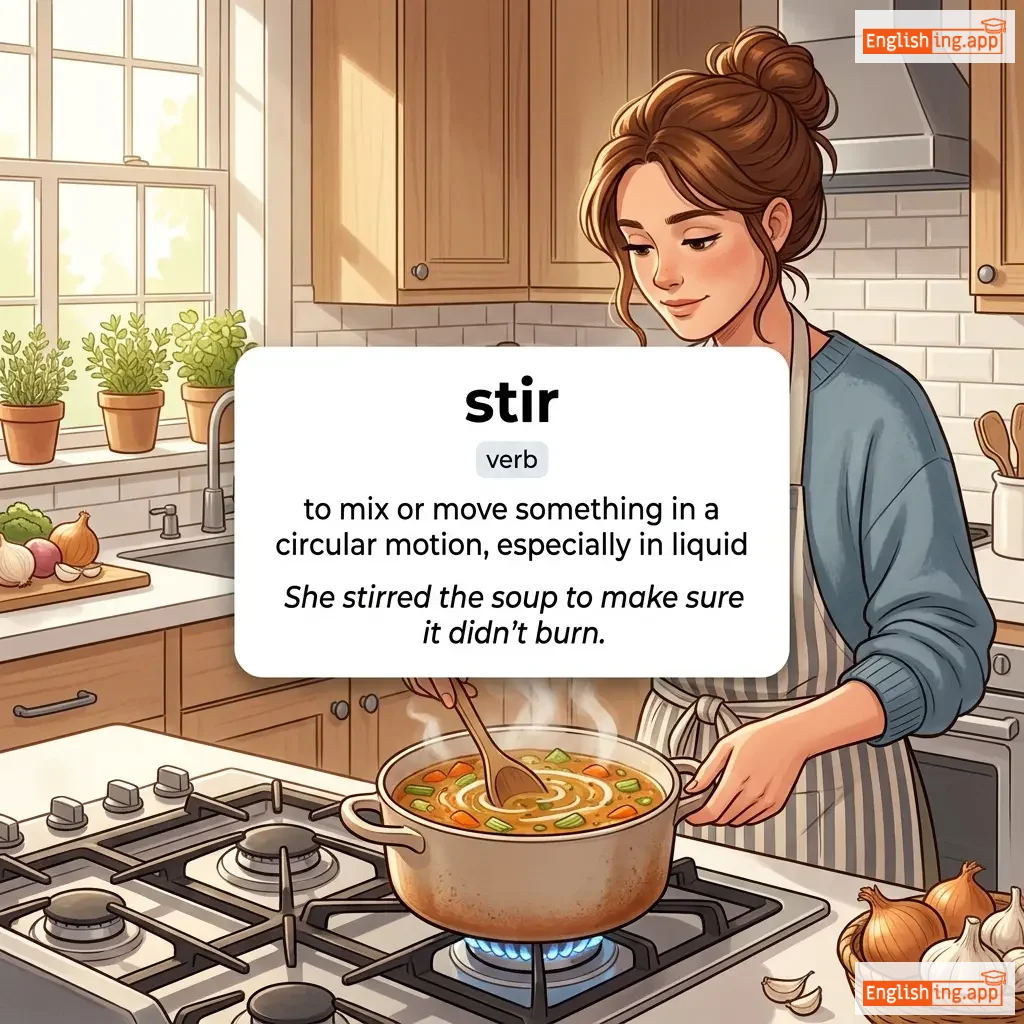
stir definition card — visual illustration of the meaning
verb
/stɜːr/
घुमाना (ghumana)

to mix or move something in a circular motion, especially in liquid

"She stirred the soup to make sure it didn't burn."

"उसने सूप को जलने से बचाने के लिए घुमाया।" (Usne soup ko jalne se bachane ke liye ghumaya.)
stipulate definition card — visual illustration of the meaning
verb
/ˈstɪp.jʊ.leɪt/
शर्त निर्धारित करना (short nirdharit karna)

to demand or specify a condition in an agreement or contract

"The contract stipulates that payment must be made within 30 days."

"कंट्रैक्ट में कहा गया है कि भुगतान 30 दिनों के भीतर किया जाना चाहिए।" (contract mein kaha gaya hai ki bhugtan 30 dino ke bheetar kiya jana chahiye.)
verb
/ˈstɪp.əl/
छोटे छोटे डॉट्स से भरना (chhote chhote dots se bharna)

to cover a surface with numerous small dots or specks, often in drawing or painting

"The artist stippled the canvas to create a textured effect."

"कला कारी ने टेक्सचर बनाने के लिए कैनवास पर छोटे छोटे डॉट्स बनाए।" (Kala kaari ne texture banane ke liye canvas par chhote chhote dots banaye.)
noun
/ˈstaɪpɛnd/
भत्ता (bhatta)

a fixed regular payment, usually for services or to cover living expenses

"The university provides a monthly stipend to its research students."

"विश्वविद्यालय अपने शोध छात्रों को मासिक भत्ता प्रदान करता है।" (Vishwavidyalay apne shodh chatron ko masik bhatta pradan karta hai.)
verb
/ˈstɪntɪŋ/
कंजूसी से देना (kanjoosi se dena)

to supply sparingly or with restrictions

"He never stinting his efforts to help the poor."

"वह गरीबों की मदद करने में कभी भी कंजूसी नहीं करता।" (Wah gareebon ki madad karne mein kabhi bhi kanjoosi nahi karta.)
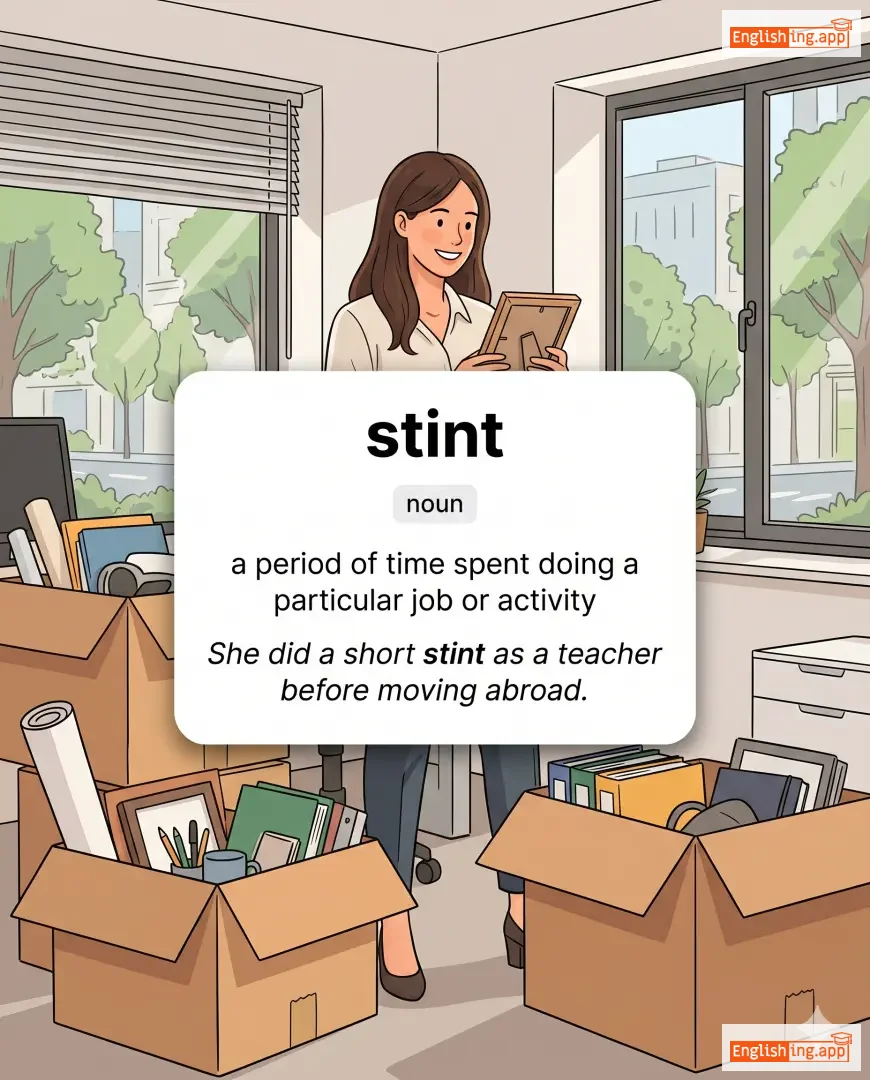
stint definition card — visual illustration of the meaning
noun
/stɪnt/
अल्पकालिक कार्य (alpkalik kary)

a period of time spent doing a particular job or activity

"She did a short stint as a teacher before moving abroad."

"उसने विदेश जाने से पहले एक छोटी सी शिक्षिका की नौकरी की।" (Usne videsh jane se pehle ek chhoti si shikshika ki naukri ki.)
verb
/stɪŋk/
बुरा गंध फैलाना (bura gandh phailana)

to smell very unpleasant

"The garbage bin stinks in the hot sun."

"गर्म धूप में कचरा डिब्बा बुरी तरह से सड़ रहा है।" (Garm dhoop mein kachra dibba buri tarah se sad raha hai.)
adjective
/ˈstɪndʒi/
कंजूस (kanjoos)

unwilling to spend or give; miserly

"He is too stingy to buy a gift for his friend."

"वह अपने दोस्त के लिए तोहफा खरीदने के लिए बहुत कंजूस है।" (Vah apne dost ke liye tohfah kharidne ke liye bahut kanjoos hai.)
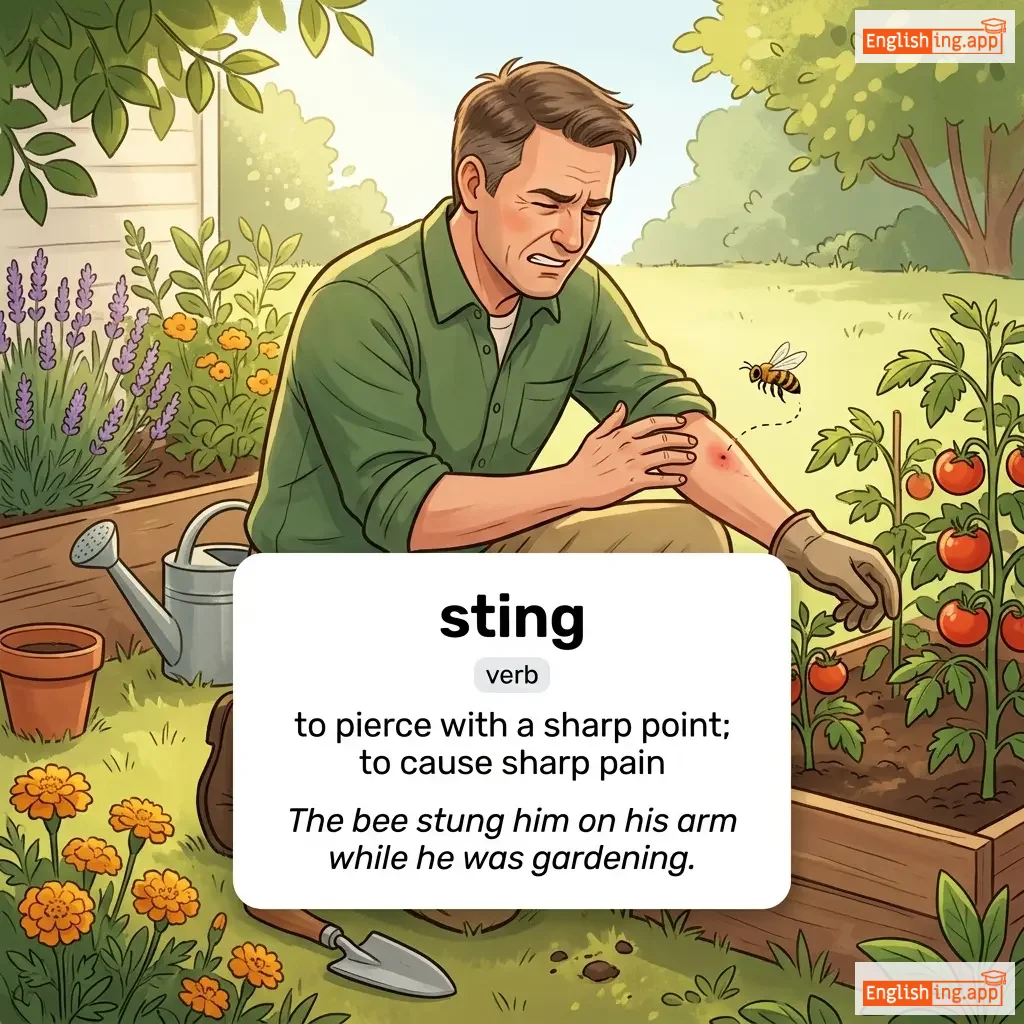
sting definition card — visual illustration of the meaning
verb
/stɪŋ/
चुभाना (chubhna)

to pierce with a sharp point; to cause sharp pain

"The bee stung him on his arm while he was gardening."

"मधुमक्खी ने उसे उसके हाथ पर चुभा लिया जब वह बागवानी कर रहा था।" (Madhumakkhi ne use uske haath par chubha liya jab vah baagwani kar raha tha)
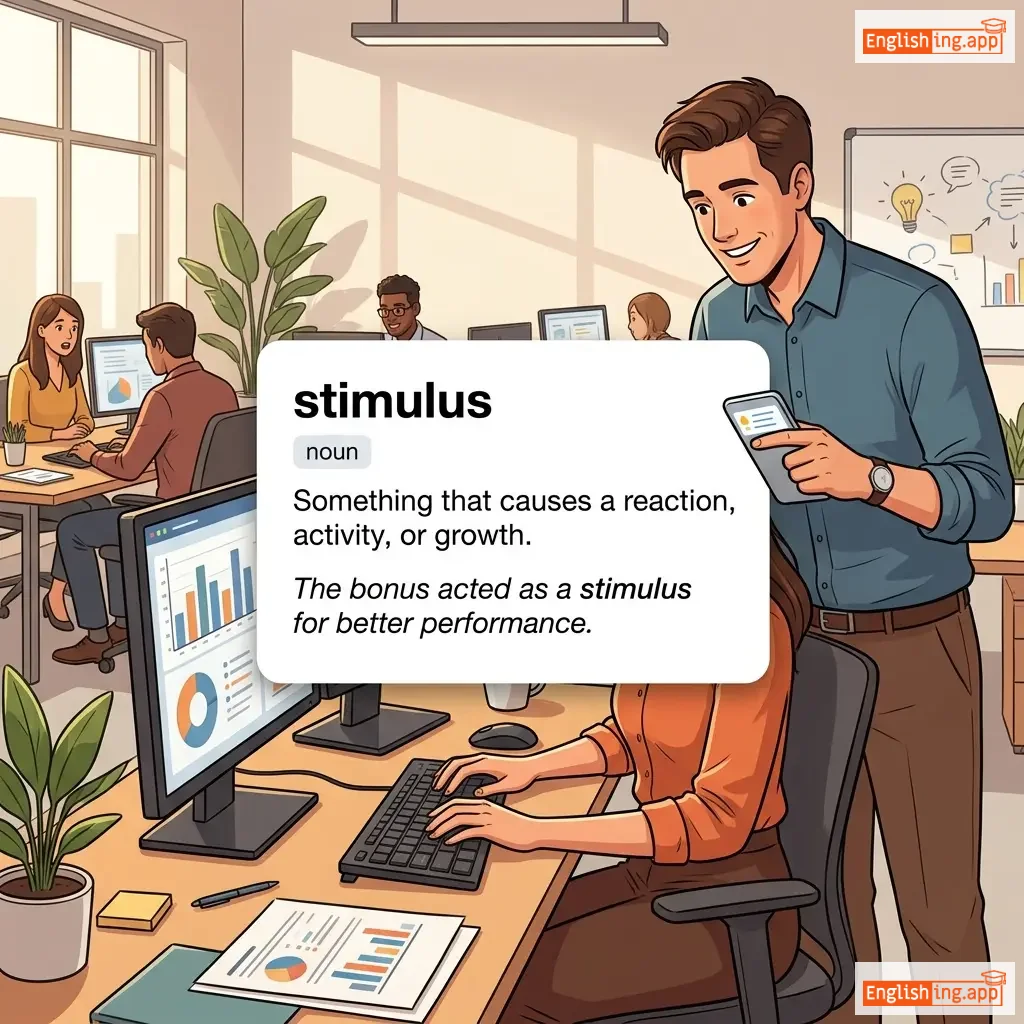
stimulus definition card — visual illustration of the meaning
noun
/ˈstɪmjʊləs/
उत्तेजक कारण, प्रेरणा (uttejak karan, prerana)

Something that causes a reaction, activity, or growth.

"The bonus acted as a stimulus for better performance."

"बोनस ने बेहतर प्रदर्शन के लिए एक प्रोत्साहन के रूप में कार्य किया।" (Bonus ne behtar pradarshan ke liye ek protsahan ke roop mein kary kiya.)
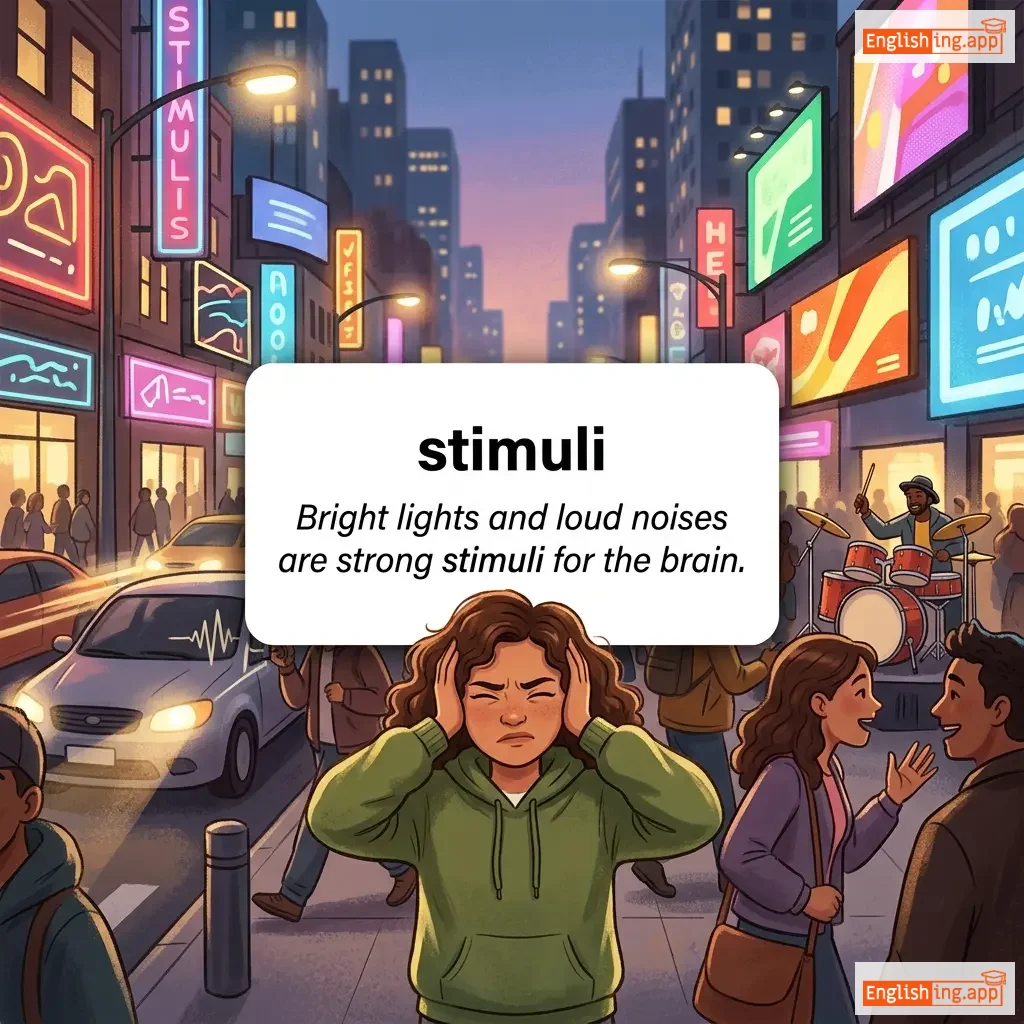
stimuli definition card — visual illustration of the meaning
noun (plural of stimulus)
/ˈstɪm.jʊ.laɪ/
प्रेरक (prerak)

Things or events that evoke a specific functional reaction in an organ or tissue.

"Bright lights and loud noises are strong stimuli for the brain."

"चमकीली रोशनी और तेज आवाज़ें मस्तिष्क के लिए शक्तिशाली प्रेरक हैं।" (Chamkili roshni aur tez aawazein mastishk ke liye shaktishali prerak hain.)
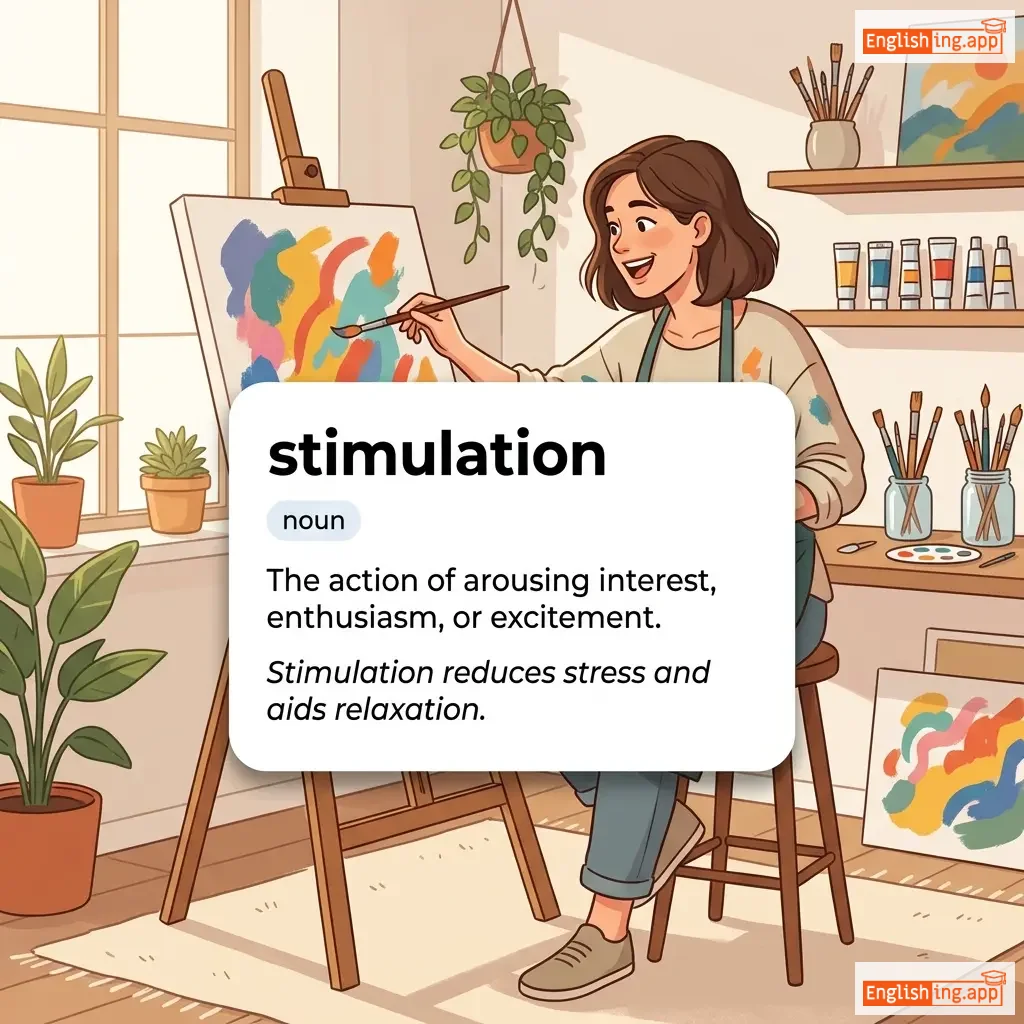
stimulation definition card — visual illustration of the meaning
noun
/ˌstɪm.jəˈleɪ.ʃən/
उत्तेजना (uttejana)

The action of arousing interest, enthusiasm, or excitement.

"Stimulation reduces stress and aids relaxation."

"उत्तेजना तनाव को कम करती है और विश्राम में मदद करती है।" (Uttejana tanav ko kam karti hai aur vishraam mein madad karti hai.)
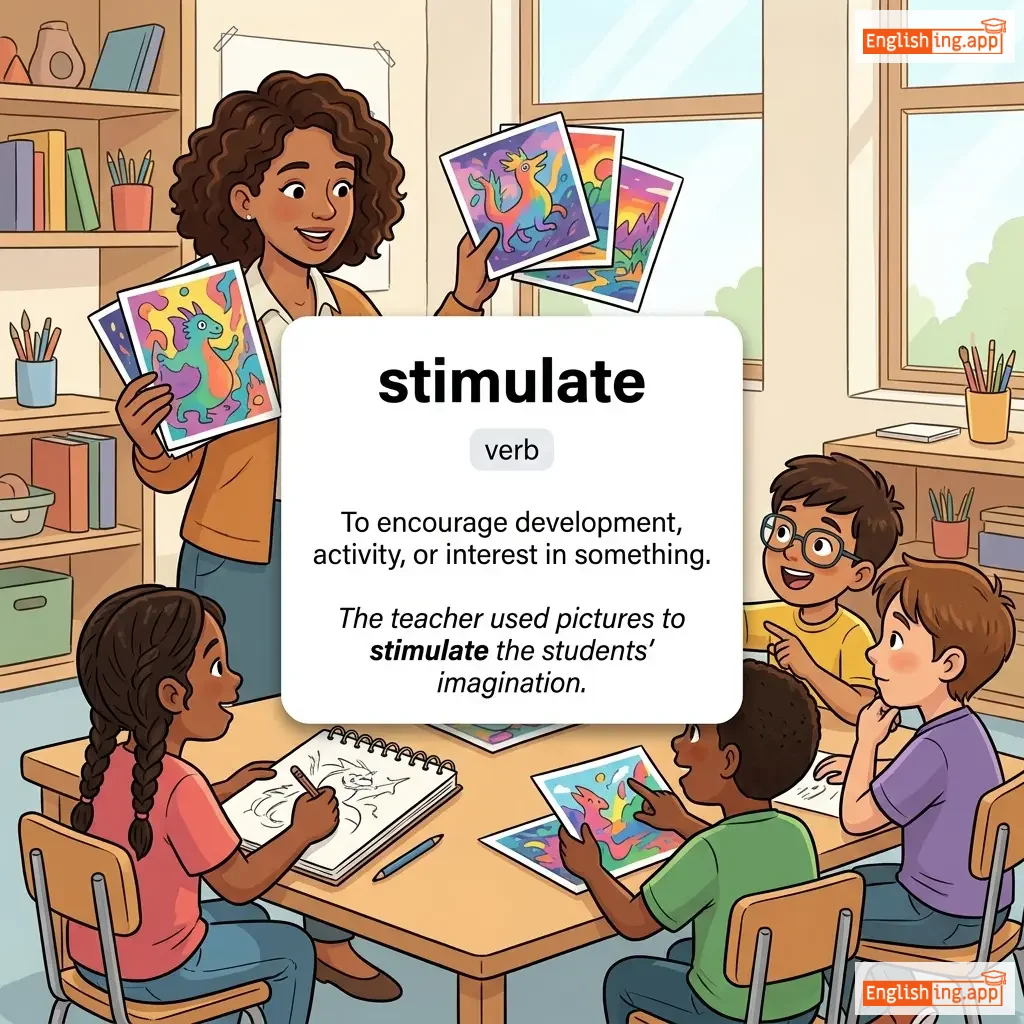
stimulate definition card — visual illustration of the meaning
verb
/ˈstɪmjʊˌleɪt/
उत्तेजित करना, प्रेरित करना (uttejit karna, prerith karna)

To encourage development, activity, or interest in something.

"The teacher used pictures to stimulate the students' imagination."

"शिक्षक ने चित्रों का उपयोग छात्रों की कल्पना को उत्तेजित करने के लिए किया।" (Shikshak ne chitron ka upyog chhatron ki kalpana ko uttejit karne ke liye kiya.)
noun
/ˈstɪmjʊlənt/
उत्तेजक पदार्थ (uttejak padarth)

A substance that raises levels of physiological or nervous activity in the body.

"Coffee is a common stimulant that helps people stay awake."

"कॉफ़ी एक सामान्य उत्तेजक पदार्थ है जो लोगों को जागते रहने में मदद करता है" (Coffee ek samanya uttejak padarth hai jo logon ko jagte rehne mein madad karta hai)
adjective
/ˈstɪltɪd/
कृत्रिम, अस्वाभाविक (kritrim, asvabhavik)

Speech or writing that is stiff, unnatural, or overly formal.

"His speech sounded stilted and rehearsed."

"उसका भाषण कृत्रिम और तैयार किया हुआ लग रहा था।" (Uska bhashan kritrim aur tayar kiya hua lag raha tha.)
adjective
/stɪl/
स्थिर (sthir)

not moving or making a sound

"The water was still, reflecting the sky."

"पानी स्थिर था, आकाश को प्रतिबिंबित कर रहा था।" (Pani sthir tha, aakash ko pratibimbhit kar raha tha.)
noun
/stɪˈlɛtoʊ/
पतला हिल जूता / छोटा छुरा (patla hil joota / chhota chhura)

A small, thin, high-heeled shoe or a dagger with a slender blade.

"She wore elegant stiletto heels to the party."

"उसने पार्टी में शानदार स्टिलेटो हील्स पहने थे।" (Usne party mein shandaar stiletto heels pehne the.)
verb
/ˈstɪɡmətaɪz/
कलंकित करना (kalankit karna)

to describe or regard someone as worthy of disgrace or disapproval

"People with certain illnesses are often unfairly stigmatized."

"कुछ बिमारियों से ग्रसित लोगों को अक्सर अनुचित तरीके से कलंकित किया जाता है।" (Kuch bimariyon se grasit logon ko aksar anuchit tareeke se kalankit kiya jata hai.)
stigma definition card — visual illustration of the meaning
noun
/ˈstɪɡmə/
कलंक (kalank)

a mark of shame or disgrace associated with a particular circumstance or quality

"There is still a stigma around mental health issues in many societies."

"कई समाजों में मानसिक स्वास्थ्य समस्याओं के चारों ओर कलंक है।" (Kai samajon mein mansik swasthya samasyaon ke charon or kalank hai.)
verb
/ˈstaɪfəld/
दबाना (dabaana)

to suppress, hold back, or prevent something from happening

"He stifled a laugh during the serious meeting."

"उसने गंभीर बैठक के दौरान हंसी को दबा लिया।" (Usne gambhir baithak ke dauran hansi ko daba liya.)
verb
/ˈstaɪfl/
दबाना (dabana)

to prevent or restrain an action, idea, or emotion; to suffocate

"She tried to stifle a laugh during the serious meeting."

"वह गंभीर बैठक के दौरान हंसी दबाने की कोशिश कर रही थी।" (Vah gambhir baithak ke dauran hansi dabane ki koshish kar rahi thi.)
noun
/ˈsteɪ.ʃən.ər/
स्टेशनरी विक्रेता (stationery vikreta)

a person who sells paper, pens, pencils, and other office supplies

"The stationer recommended the best pens for writing exams."

"द स्टेशनर ने परीक्षा के लिए सबसे अच्छे पेन की सिफारिश की।" (d stationer ne pariksha ke liye sabse achhe pen ki sifaarish ki)
noun
/ˈsteɪsɪs/ or /ˈstæsɪs/
स्थिरता (sthirata)

A state of inactivity or equilibrium; a situation where nothing changes.

"The negotiations reached a state of stasis with no progress made."

"सहमति की स्थिति में कोई प्रगति नहीं हुई।" (Sahamati ki sthiti mein koi pragati nahi hui.)
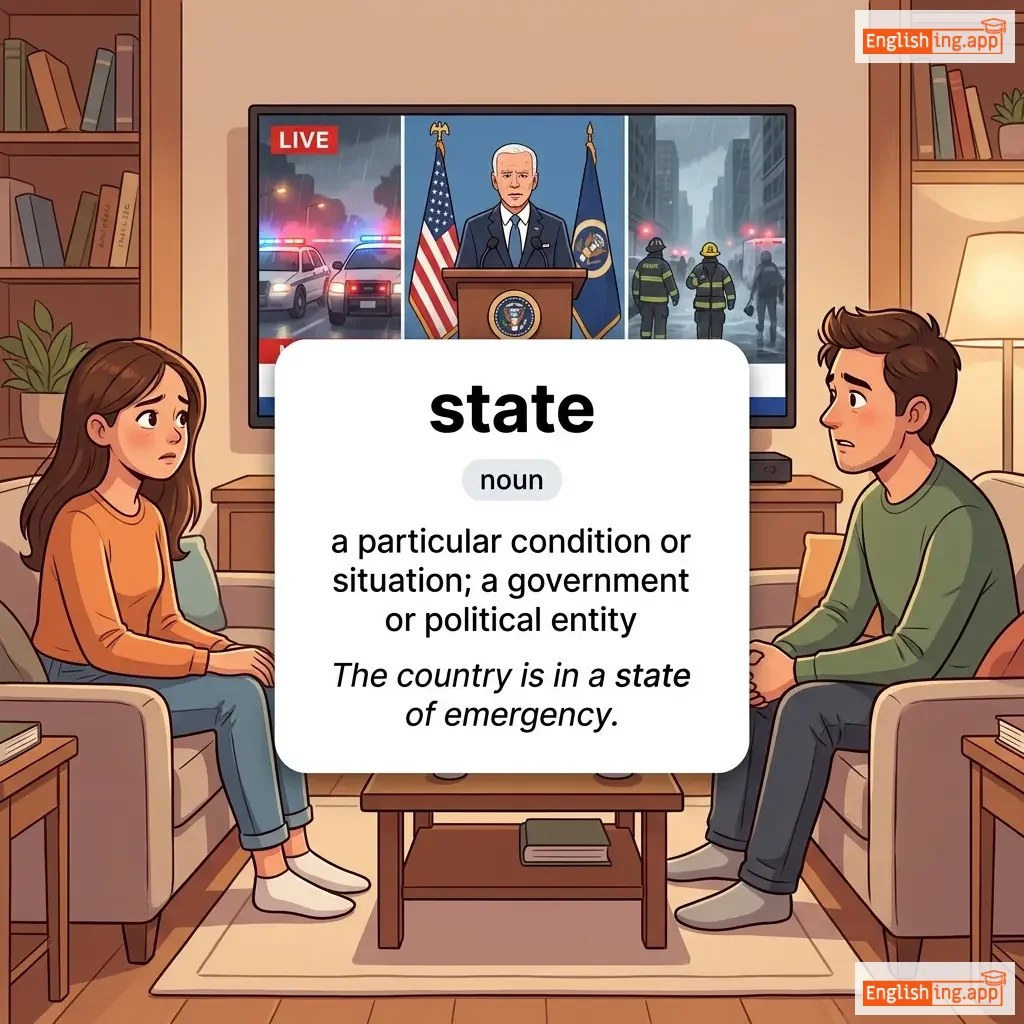
state definition card — visual illustration of the meaning
noun
/steɪt/
राज्य (rājya)

a particular condition or situation; a government or political entity

"The country is in a state of emergency."

"देश आपातकाल की स्थिति में है।" (Deś āpātakāl kī sthiti meṁ hai.)
noun
/ˈsteɪtkraft/
राज्यशास्त्र (rajyashastra)

The art of governing and managing state affairs effectively.

"The leader was praised for his exceptional statecraft in handling international relations."

"नेता को अंतरराष्ट्रीय संबंधों को संभालने में अपनी असाधारण राज्यशास्त्र के लिए सराहा गया।" (Neta ko antarraashtreey sambandhon ko sambhalne mein apni asaadharan rajyashastra ke liye saraha gaya.)
adjective
/ˈsteɪtli/
गंभीर और भव्य (gambhir aur bhavya)

Having a dignified, majestic, and impressive appearance or manner.

"The stately mansion stood at the end of the long driveway."

"गंभीर हवेली लंबी ड्राइववे के अंत में खड़ी थी।" (Gambhir haveli lambi driveway ke ant mein khadi thi.)
noun
/ˈsteɪtmənt/
बयान (bayan)

a clear expression of something in speech or writing

"She made a statement about the company's new policies."

"उसने कंपनी की नई नीतियों के बारे में एक बयान दिया।" (Usne company ki nai neetiyon ke baare mein ek bayan diya.)
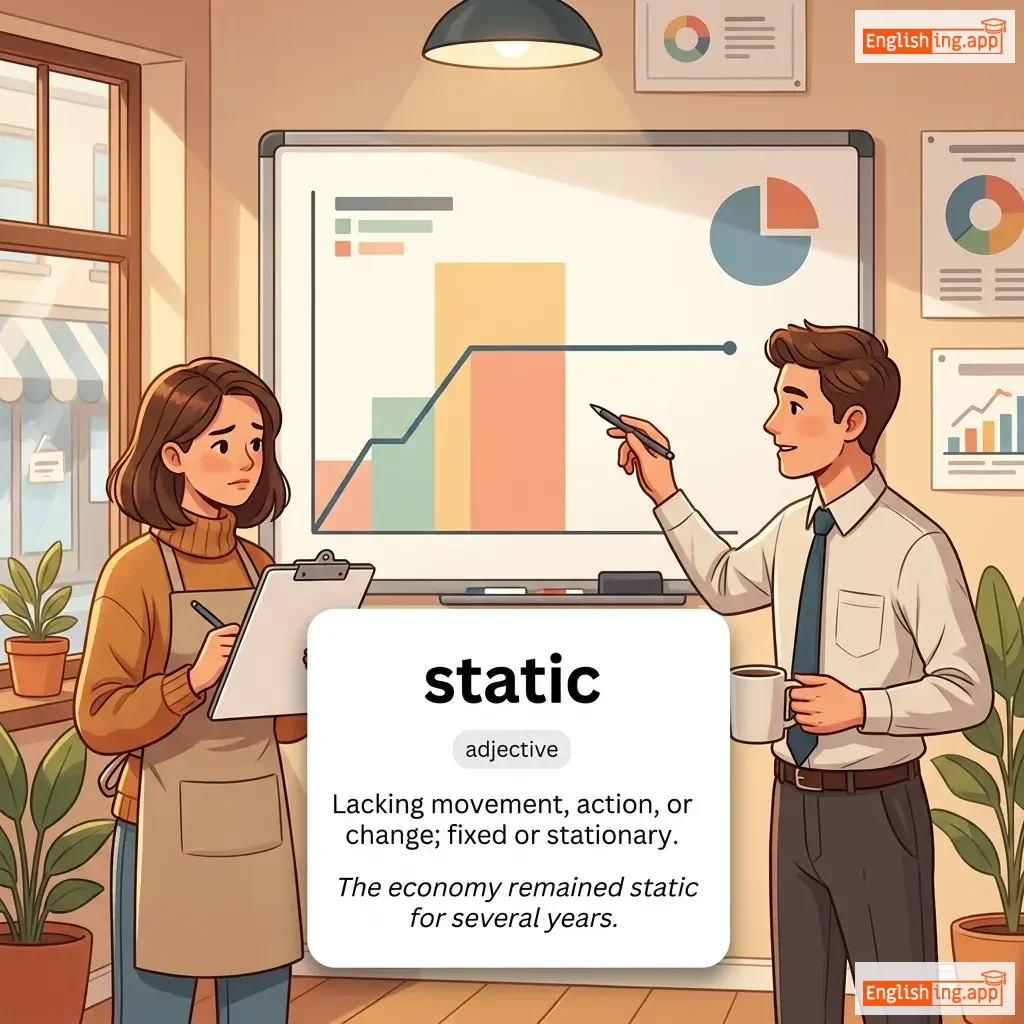
static definition card — visual illustration of the meaning
adjective
/ˈstætɪk/
स्थिर (sthir)

Lacking movement, action, or change; fixed or stationary.

"The economy remained static for several years."

"अर्थव्यवस्था कई वर्षों तक स्थिर रही।" (Arthvyavastha kai varsho tak sthir rahi.)
noun
/ˈstætɪks/
स्थैतिकी (sthaetikī)

The branch of mechanics dealing with bodies at rest and forces in equilibrium.

"She is studying statics as part of her engineering course."

"वह अपने इंजीनियरिंग पाठ्यक्रम का हिस्सा के रूप में स्थैतिकी पढ़ रही है।" (vah apne injiniyaring pathyakram kā hissa ke rūp mein sthāetiki paṛh rahī hai.)
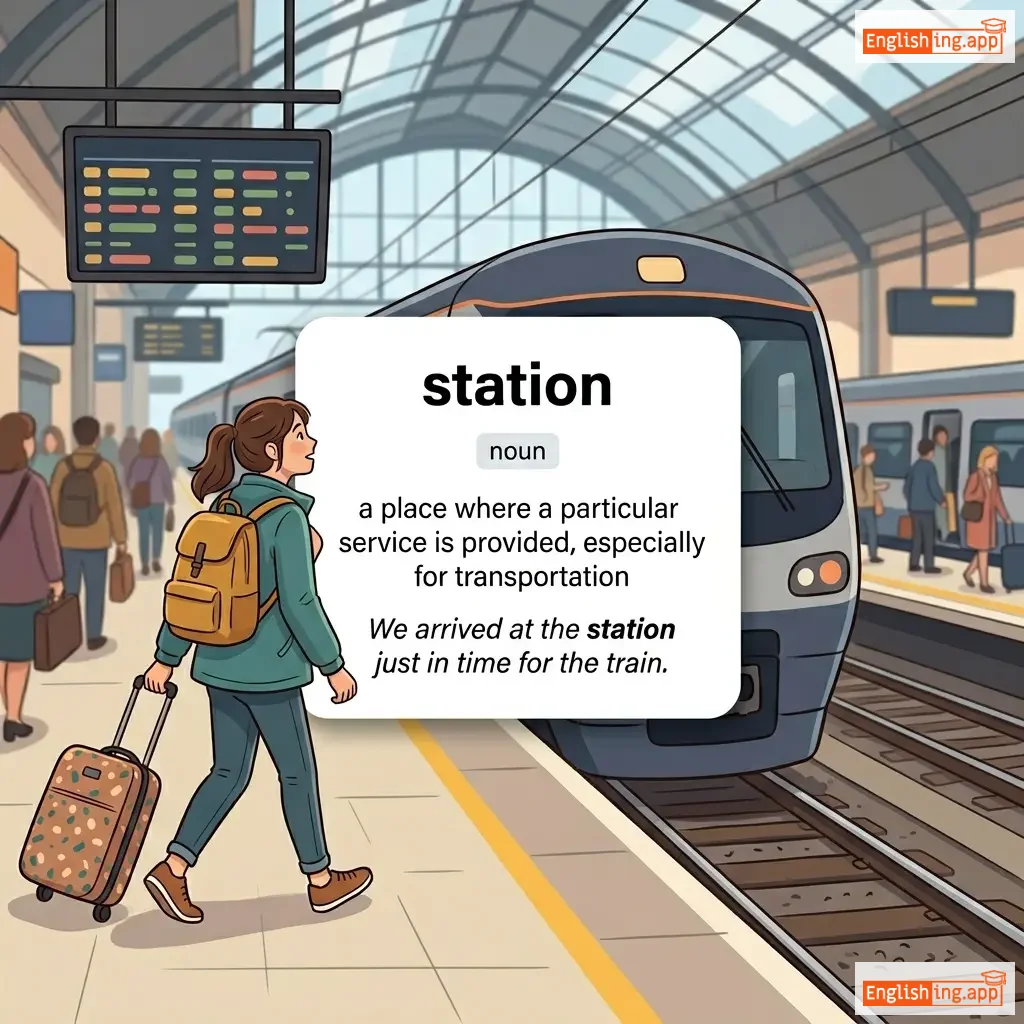
station definition card — visual illustration of the meaning
noun
/ˈsteɪʃən/
स्टेशन (station)

a place where a particular service is provided, especially for transportation

"We arrived at the station just in time for the train."

"हम ट्रेन के लिए स्टेशन ठीक समय पर पहुँच गए।" (ham train ke liye steshan theek samay par pahunch gaye)
adjective
/ˈsteɪʃəˌneri/
स्थिर (sthir)

Not moving or not intended to be moved.

"The car remained stationary at the red light."

"कार लाल बत्ती पर स्थिर रही।" (kaar laal batti par sthir rahi.)
adjective
/ˌstætʃuˈɛsk/
प्रतिमा जैसी (pratima jaisi)

Having the grace, beauty, or dignity of a statue; tall and attractively proportioned.

"She had a statuesque figure that turned heads wherever she went."

"उसका प्रतिमा जैसी शरीर था जो हर जगह सिर घुमा देता था।" (uska pratima jaisi sharir tha jo har jagah sir ghuma deta tha.)
noun
/ˈsteɪtəs kwoʊ/
स्थिति quo (stithi quo)

The existing state of affairs, especially regarding social or political issues.

"The government decided to maintain the status quo until further review."

"सरकार ने आगे की समीक्षा तक स्थिति quo बनाए रखने का निर्णय लिया।" (sarkar ne aage ki samiksha tak sthiti quo banaye rakhne ka nirnay liya.)
noun
/ˈsteɪtəs/
स्थिति (stithi)

the social or professional position or condition of someone or something

"His social status improved after the promotion."

"उसकी सामाजिक स्थिति पदोन्नति के बाद सुधरी।" (Uski samajik sthiti padonnati ke baad sudhri.)
noun
/ˈstætʃər/
प्रतिष्ठा, कद (pratishtha, kad)

A person's natural height or their reputation and importance.

"Her intellectual stature made her a respected figure in academia."

"उनकी बौद्धिक प्रतिष्ठा ने उन्हें शिक्षा जगत में सम्मानित व्यक्तित्व बनाया।" (unki bauddhik pratishtha ne unhe shiksha jagat mein sammannit vyaktitv banaya.)
noun
/ˌstætʃuˈɛt/
छोटी मूर्ति (chhoti moorti)

A small statue, usually decorative or artistic.

"The artist won a gold statuette for his work."

"कलाकार ने अपने काम के लिए एक स्वर्णिम छोटी मूर्ति जीती।" (kalakaar ne apne kaam ke liye ek swarnim chhoti moorti jeeti.)
noun
/stəˈtɪstɪks/
सांख्यिकी (sāṅkhyikī)

the practice or science of collecting and analyzing numerical data

"The statistics showed an increase in the number of users last year."

"आखिरी साल में उपयोगकर्ताओं की संख्या में वृद्धि को दिखाने वाले आँकड़े।" (Ākhirī sāl meṁ upayogkartāoṁ kī sankhyā meṁ vr̥ddhi ko dikhāne vāle āṅkṛe.)
adjective
/stəˈtɪstɪkəl/
सांख्यिकीय (sankhyikiya)

relating to the use or analysis of numerical data

"The report provides statistical data about population growth."

"रिपोर्ट में जनसंख्या वृद्धि के बारे में सांख्यिकीय डेटा प्रदान किया गया है।" (Report mein jansankhya vruddhi ke baare mein sankhyikiya data pradan kiya gaya hai.)
noun
/ˌstætɪˈstɪʃən/
सांख्यिकी विशेषज्ञ (sankhyiki visheshagya)

A person who specializes in collecting, analyzing, and interpreting numerical data.

"The statistician presented the survey results with great clarity."

"सांख्यिकी विशेषज्ञ ने सर्वेक्षण के परिणामों को स्पष्टता से प्रस्तुत किया।" (Sankhyiki visheshagya ne survey ke parinaamon ko spashtata se prastut kiya.)