Vocabularios

Descubra, aprenda y domine el vocabulario en inglés

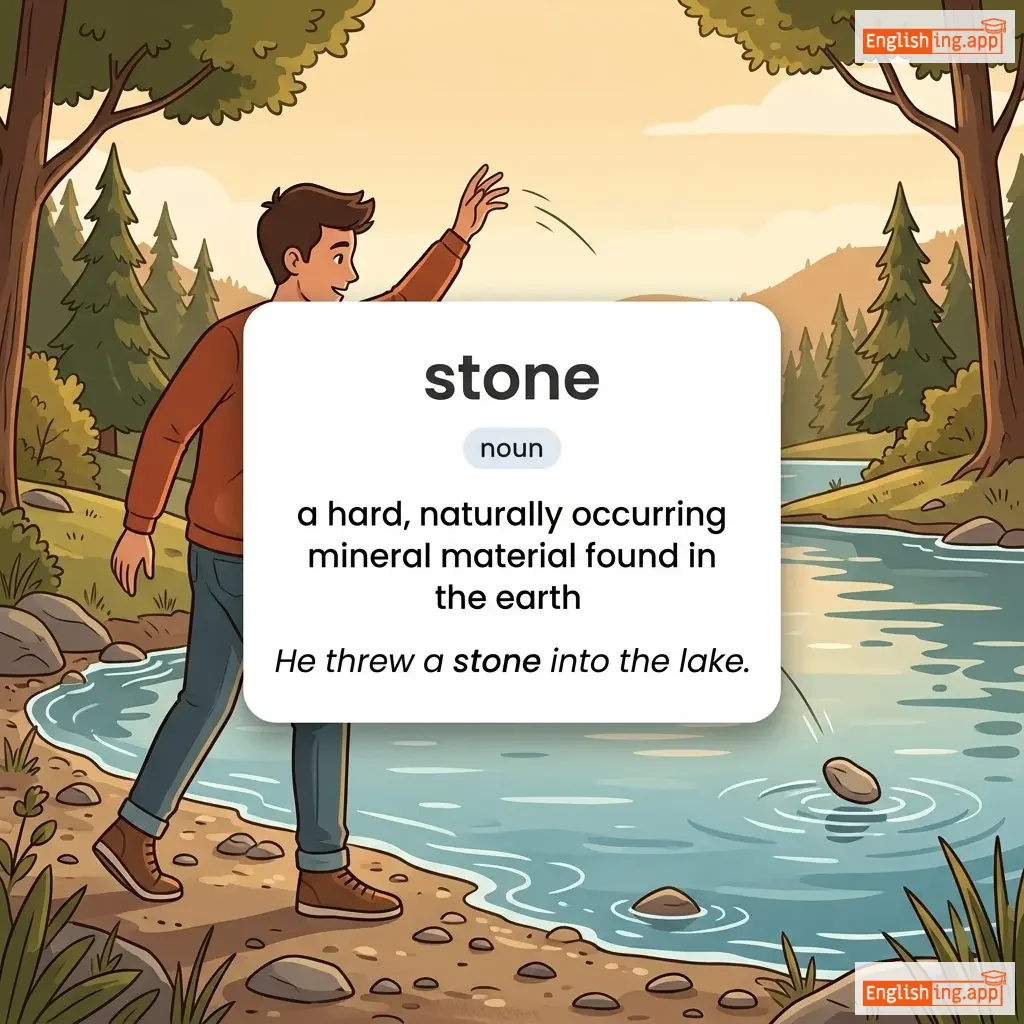
stone definition card — visual illustration of the meaning
noun
/stoʊn/
piedra (piedra)

a hard, naturally occurring mineral material found in the earth

"He threw a stone into the lake."

"Lanzó una piedra al lago." (Lanzo una piedra al lago.)
noun
/ˈstʌmək eɪk/
dolor de estómago (dolor de estomago)

Pain in the stomach or abdominal area

"I have a stomach ache after eating too much."

"Tengo un dolor de estómago después de comer demasiado." (Tengo un dolor de estomago despues de comer demasiado)
noun/verb
/ˈstʌmək/
estómago / soportar (estomago / soportar)

The internal organ in which food is digested; also to tolerate or endure something

"She couldn’t stomach the sight of violence."

"Ella no pudo soportar la visión de la violencia." (Ella no pudo soportar la visión de la violencia.)
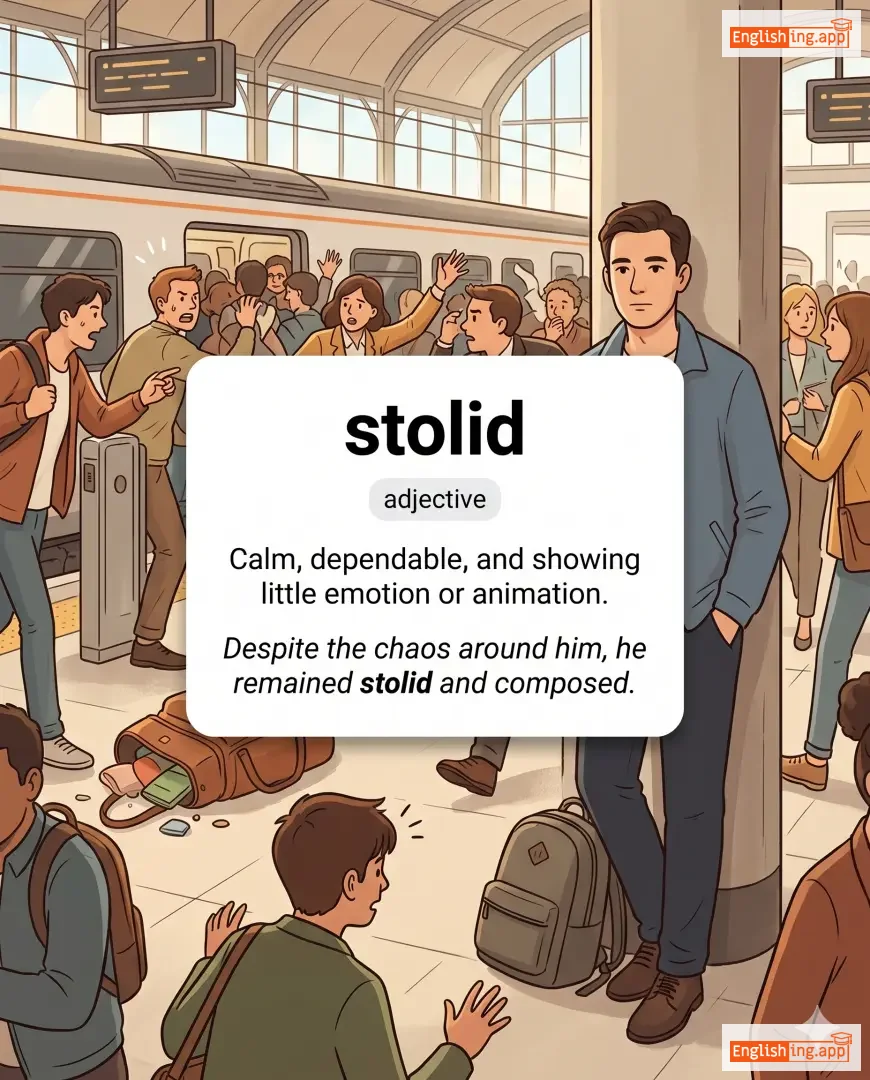
stolid definition card — visual illustration of the meaning
adjective
/ˈstɒlɪd/
calmo, imperturbable (calmo, imperturbable)

Calm, dependable, and showing little emotion or animation.

"Despite the chaos around him, he remained stolid and composed."

"A pesar del caos a su alrededor, permaneció tranquilo y sereno." (A pesar del caos a su alrededor, permaneció tranquilo y sereno.)
verb
/stoʊk/
avivar el fuego; fomentar o aumentar un sentimiento o actividad fuerte (avivar el fuego; fomentar o aumentar un sentimiento o actividad fuerte)

To add fuel to a fire; to encourage or increase a strong feeling or activity.

"The politician’s speech stoked anger among the crowd."

"El discurso del político encendió la ira entre la multitud." (El discurso del politico encendio la ira entre la multitud.)
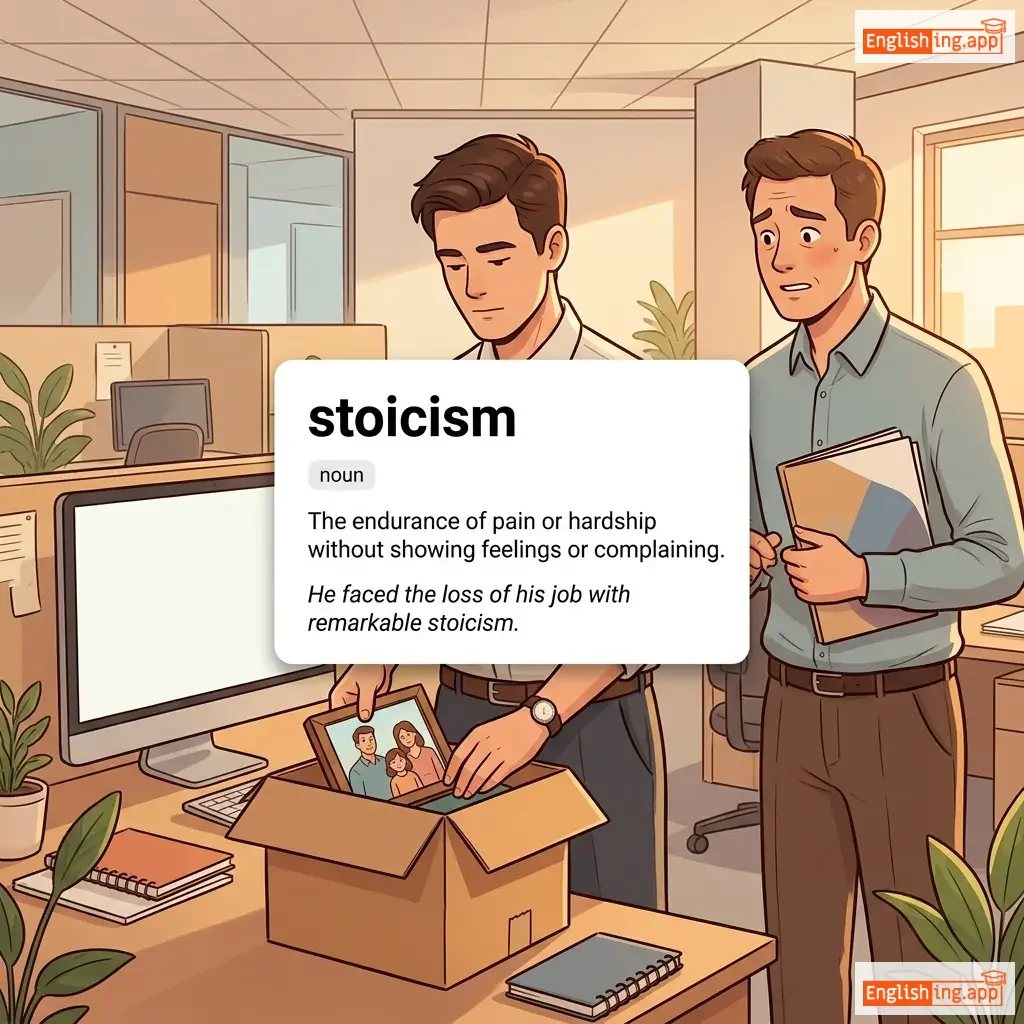
stoicism definition card — visual illustration of the meaning
noun
/ˈstoʊɪˌsɪzəm/
estoicismo (estoicismo)

The endurance of pain or hardship without showing feelings or complaining.

"He faced the loss of his job with remarkable stoicism."

"Enfrentó la pérdida de su trabajo con un estoicismo notable." (Enfrentó la pérdida de su trabajo con un estoicismo notable.)
adjective
/ˈstoʊɪk/
estoico, imperturbable (estoiko, imperturbable)

Showing little or no emotion, even in difficult situations.

"She remained stoic during the crisis, never showing fear or panic."

"Ella permaneció estoica durante la crisis, sin mostrar miedo ni pánico." (Ella permaneció estoica durante la crisis, sin mostrar miedo ni panico.)
adjective
/ˈstɒdʒi/
pesado, anticuado (pesado, anticuado)

Dull, uninspired, or old-fashioned; also heavy and hard to digest when referring to food.

"The lecture was so stodgy that many students struggled to stay awake."

"La conferencia fue tan pesada que muchos estudiantes tuvieron dificultades para mantenerse despiertos." (La conferencia fue tan pesada que muchos estudiantes tuvieron dificultades para mantenerse despiertos.)
noun
/stɒˈkeɪd/
murallas de madera (murallas de madera)

a defensive barrier made of strong posts or timbers, often around a fort or prison

"The prisoners were kept inside the wooden stockade."

"Los prisioneros fueron mantenidos dentro de las murallas de madera." (Los prisioneros fueron mantenidos dentro de las murallas de madera.)
noun, verb
/stɒk/
inventario (inventario)

a supply of goods kept for sale or use; to keep or fill with goods

"The shop stocks a wide variety of products."

"La tienda tiene una amplia variedad de productos." (La tienda tiene una amplia variedad de productos.)
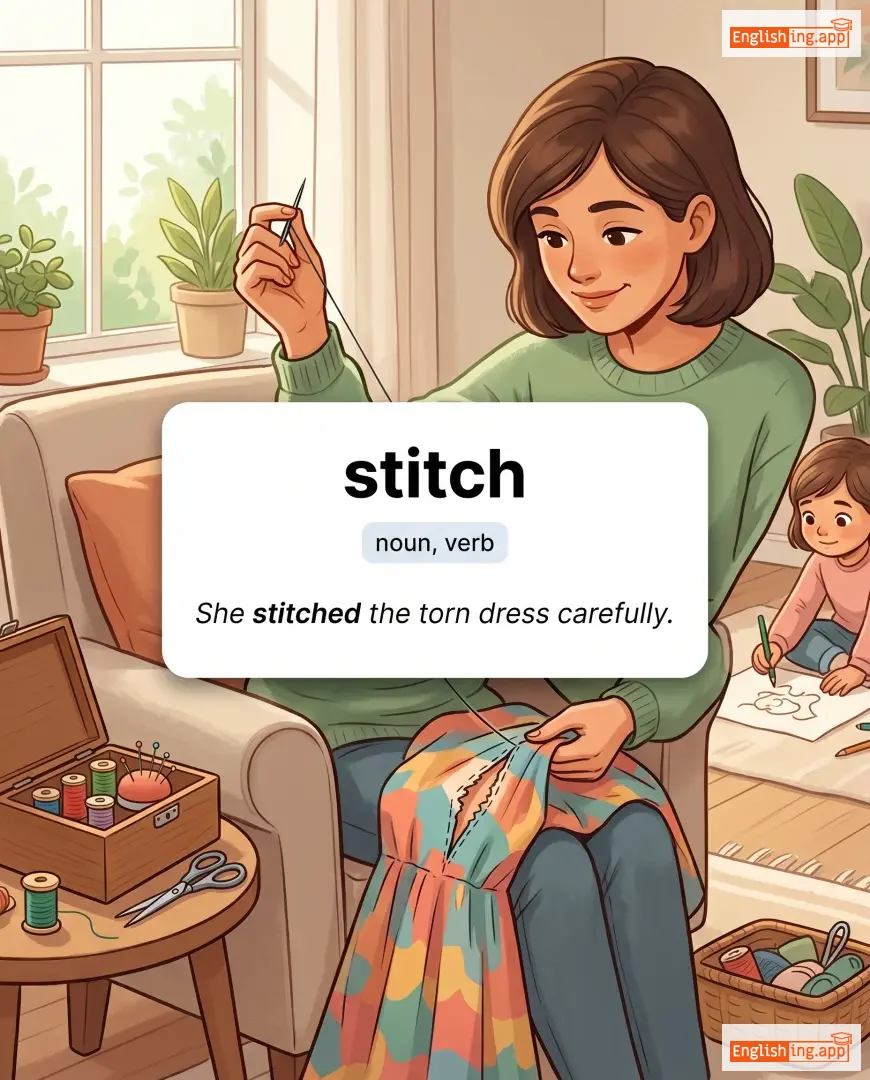
stitch definition card — visual illustration of the meaning
noun, verb
/stɪtʃ/
felicidad (felicidad)

to sew fabric together using a needle and thread; also a single loop of thread in sewing

"She stitched the torn dress carefully."

"Ella cosió el vestido roto con cuidado." (Ella cosió el vestido roto con cuidado.)
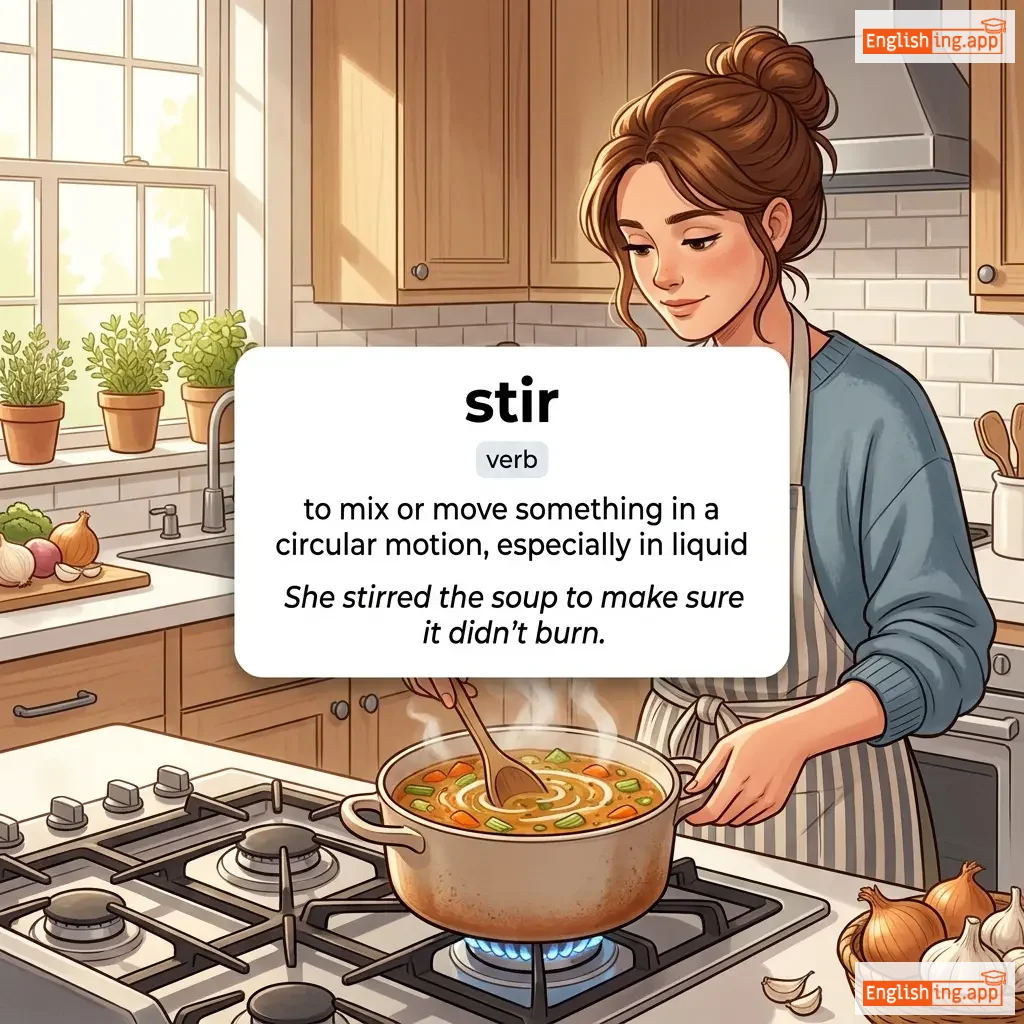
stir definition card — visual illustration of the meaning
verb
/stɜːr/
revolver (revolver)

to mix or move something in a circular motion, especially in liquid

"She stirred the soup to make sure it didn't burn."

"Ella revolvió la sopa para asegurarse de que no se quemara." (Ella revolvió la sopa para asegurarse de que no se quemara.)
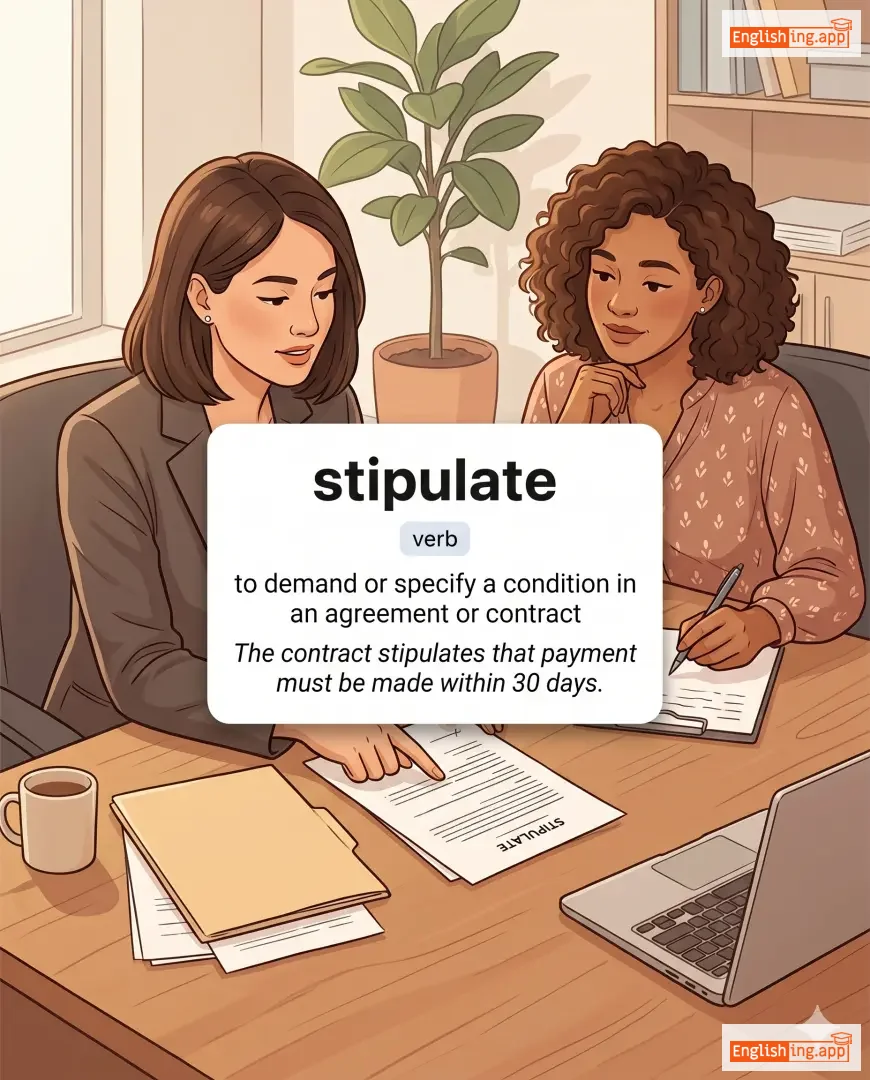
stipulate definition card — visual illustration of the meaning
verb
/ˈstɪp.jʊ.leɪt/
establecer (establecer)

to demand or specify a condition in an agreement or contract

"The contract stipulates that payment must be made within 30 days."

"El contrato estipula que el pago debe realizarse dentro de 30 días." (El contrato estipula que el pago debe realizarse dentro de 30 días.)
verb
/ˈstɪp.əl/
cubrir con pequeños puntos (cubrir con pequenos puntos)

to cover a surface with numerous small dots or specks, often in drawing or painting

"The artist stippled the canvas to create a textured effect."

"El artista cubrió el lienzo con pequeños puntos para crear un efecto texturizado." (El artista cubrió el lienzo con pequeños puntos para crear un efecto texturizado.)
noun
/ˈstaɪpɛnd/
estipendio (estipendio)

a fixed regular payment, usually for services or to cover living expenses

"The university provides a monthly stipend to its research students."

"La universidad proporciona un estipendio mensual a sus estudiantes de investigación." (La universidad proporciona un estipendio mensual a sus estudiantes de investigación.)
verb
/ˈstɪntɪŋ/
dar con tacañería (dar con tacañería)

to supply sparingly or with restrictions

"He never stinting his efforts to help the poor."

"Él nunca escatima esfuerzos para ayudar a los pobres." (Él nunca escatima esfuerzos para ayudar a los pobres.)
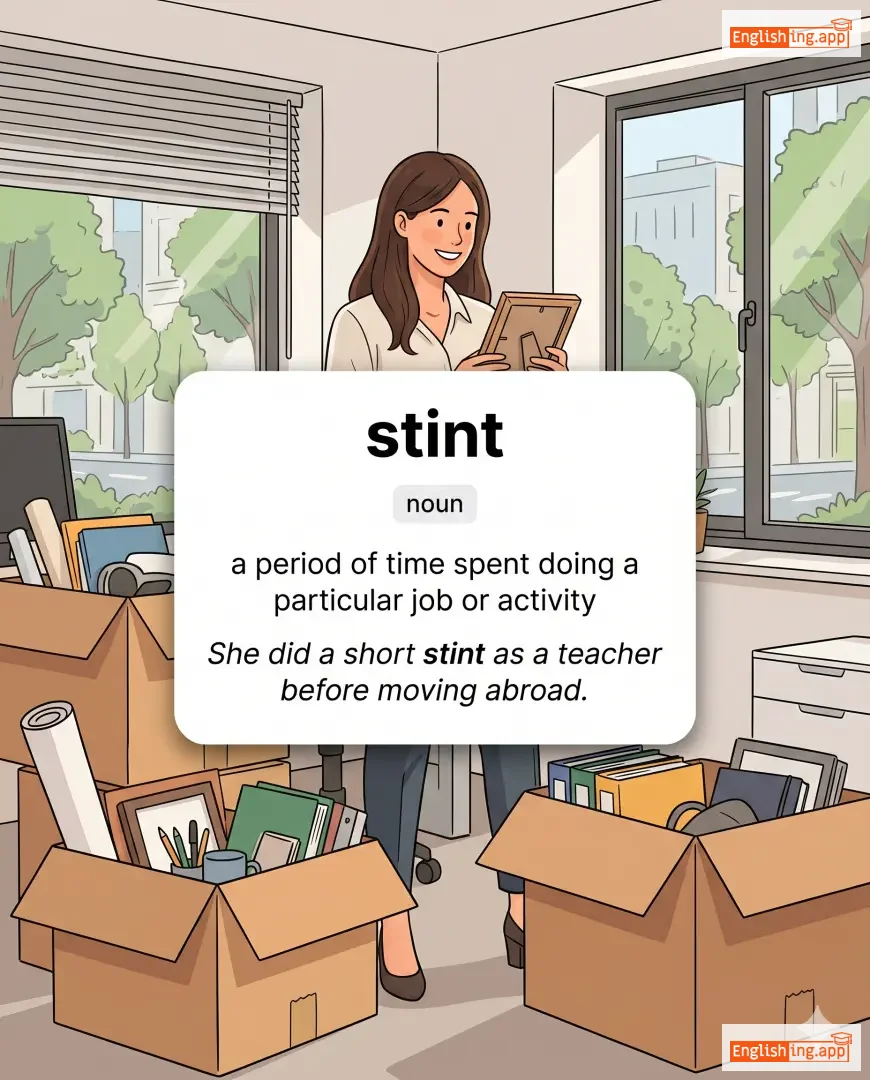
stint definition card — visual illustration of the meaning
noun
/stɪnt/
trabajo temporal (trabajo temporal)

a period of time spent doing a particular job or activity

"She did a short stint as a teacher before moving abroad."

"Ella hizo un corto trabajo como profesora antes de mudarse al extranjero." (Ella hizo un corto trabajo como profesora antes de mudarse al extranjero.)
verb
/stɪŋk/
oler mal (oler mal)

to smell very unpleasant

"The garbage bin stinks in the hot sun."

"El bote de basura huele mal bajo el sol caliente." (El bote de basura huele mal bajo el sol caliente.)
adjective
/ˈstɪndʒi/
tacaño (tacano)

unwilling to spend or give; miserly

"He is too stingy to buy a gift for his friend."

"Es demasiado tacaño para comprar un regalo para su amigo." (Es demasiado tacano para comprar un regalo para su amigo.)
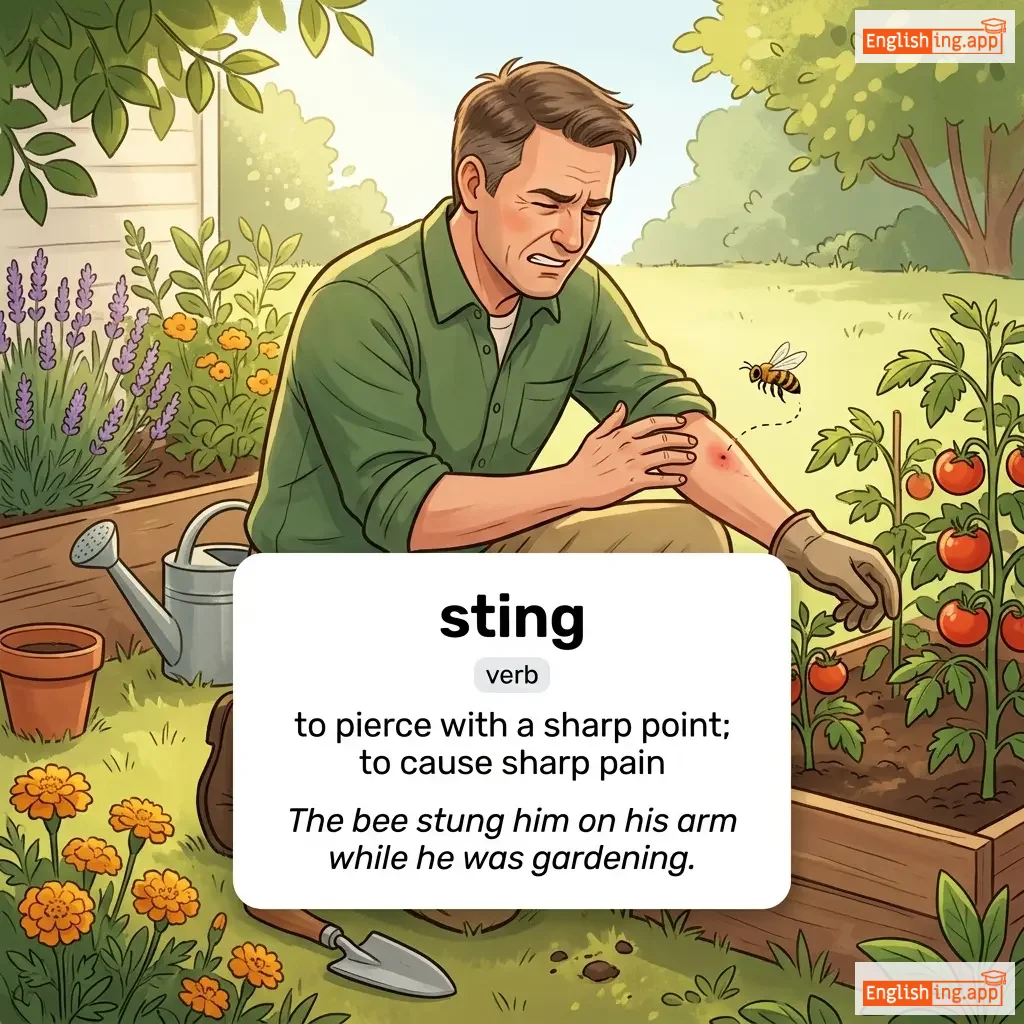
sting definition card — visual illustration of the meaning
verb
/stɪŋ/
picar (pikar)

to pierce with a sharp point; to cause sharp pain

"The bee stung him on his arm while he was gardening."

"La abeja lo picó en el brazo mientras él estaba jardineando." (La abeya lo pico en el brazo mientras el estaba jardineando)
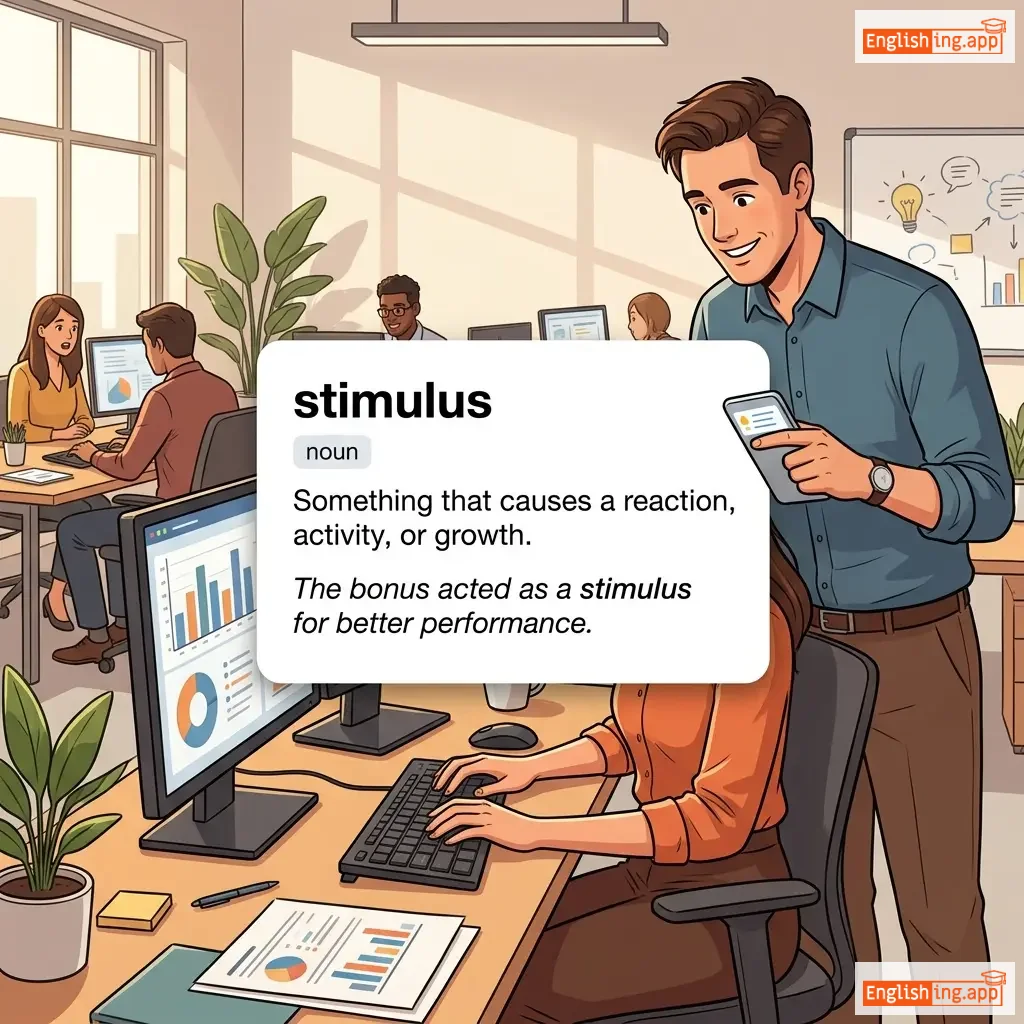
stimulus definition card — visual illustration of the meaning
noun
/ˈstɪmjʊləs/
factor que causa una reacción, estímulo (factor que causa una reaccion, estimulo)

Something that causes a reaction, activity, or growth.

"The bonus acted as a stimulus for better performance."

"El bono actuó como un estímulo para un mejor rendimiento." (El bono actuó como un estímulo para un mejor rendimiento.)
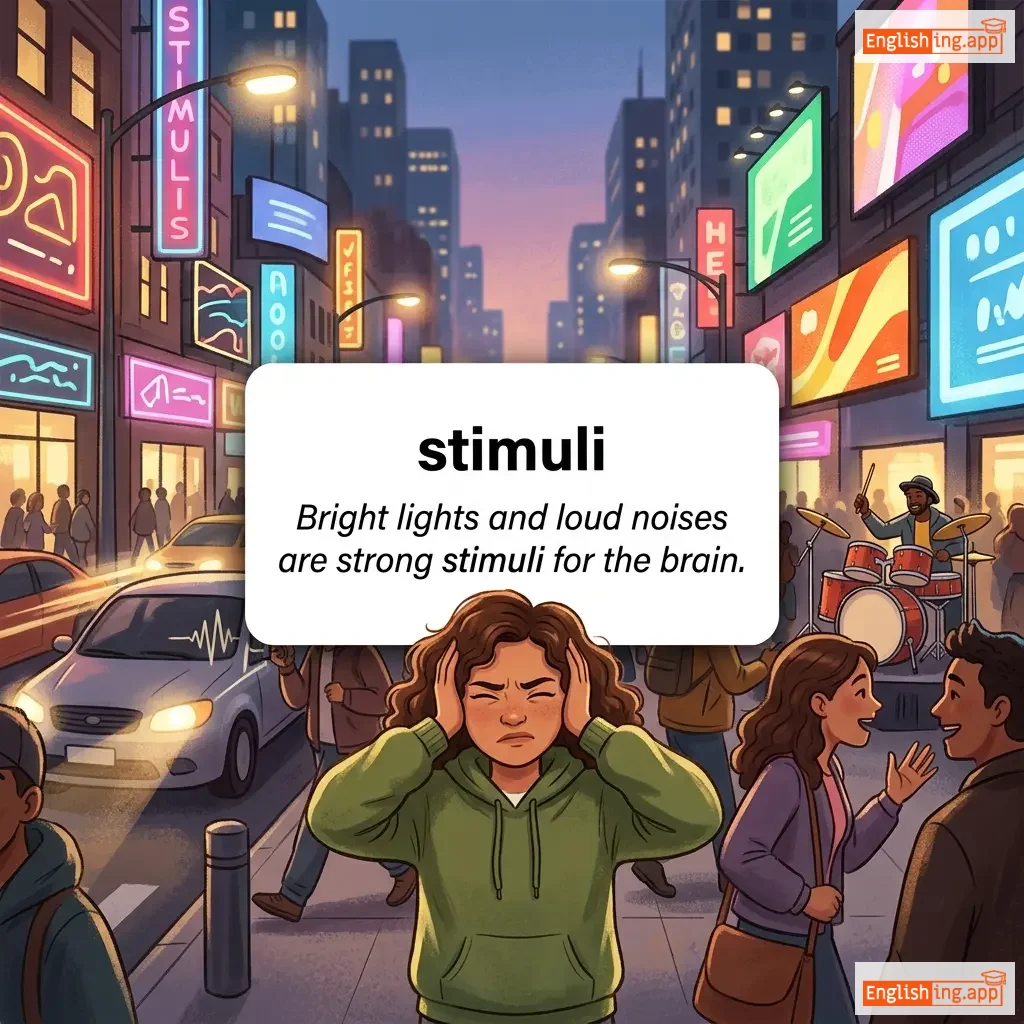
stimuli definition card — visual illustration of the meaning
noun (plural of stimulus)
/ˈstɪm.jʊ.laɪ/
estímulo (estímulo)

Things or events that evoke a specific functional reaction in an organ or tissue.

"Bright lights and loud noises are strong stimuli for the brain."

"Luces brillantes y ruidos fuertes son estímulos fuertes para el cerebro." (Luces brillantes y ruidos fuertes son estimulos fuertes para el cerebro.)
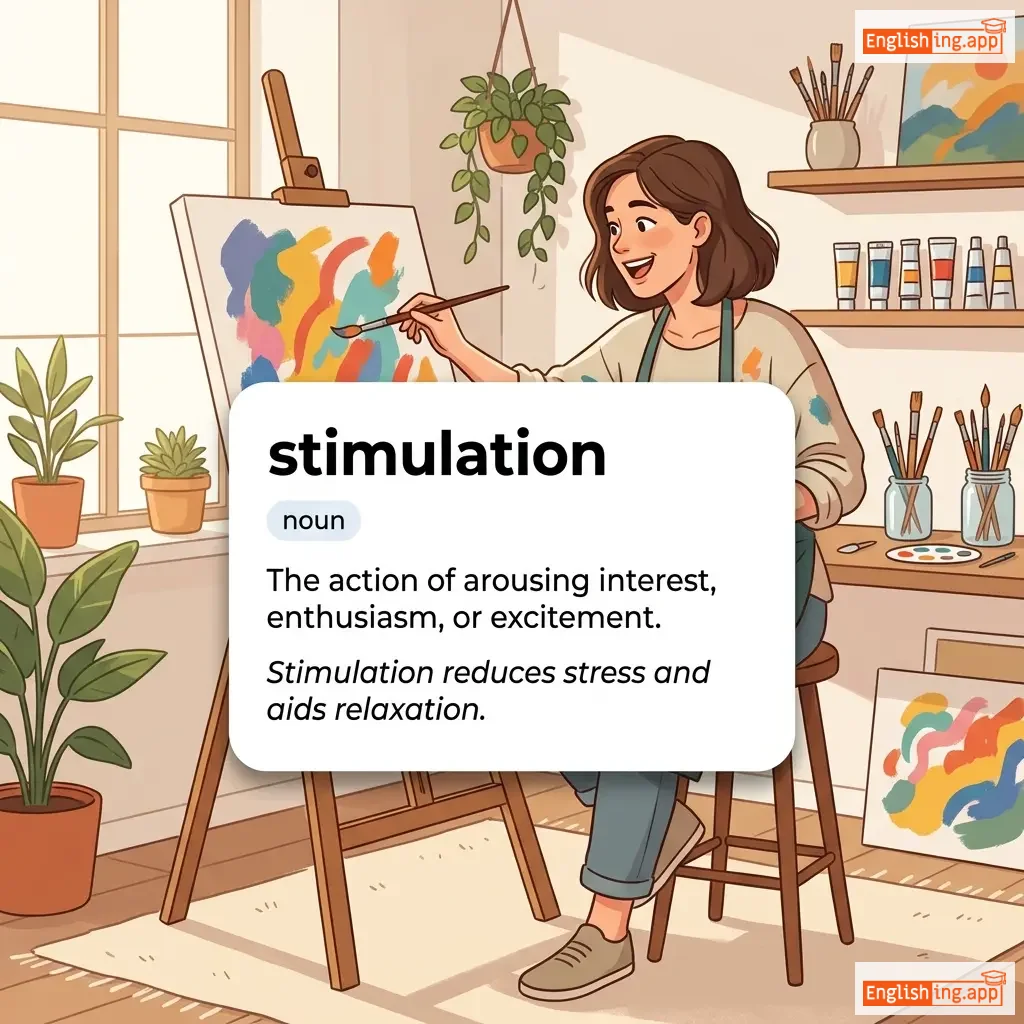
stimulation definition card — visual illustration of the meaning
noun
/ˌstɪm.jəˈleɪ.ʃən/
estimulación (estimulación)

The action of arousing interest, enthusiasm, or excitement.

"Stimulation reduces stress and aids relaxation."

"La estimulación reduce el estrés y ayuda a la relajación." (La estimulación reduce el estrés y ayuda a la relajación.)
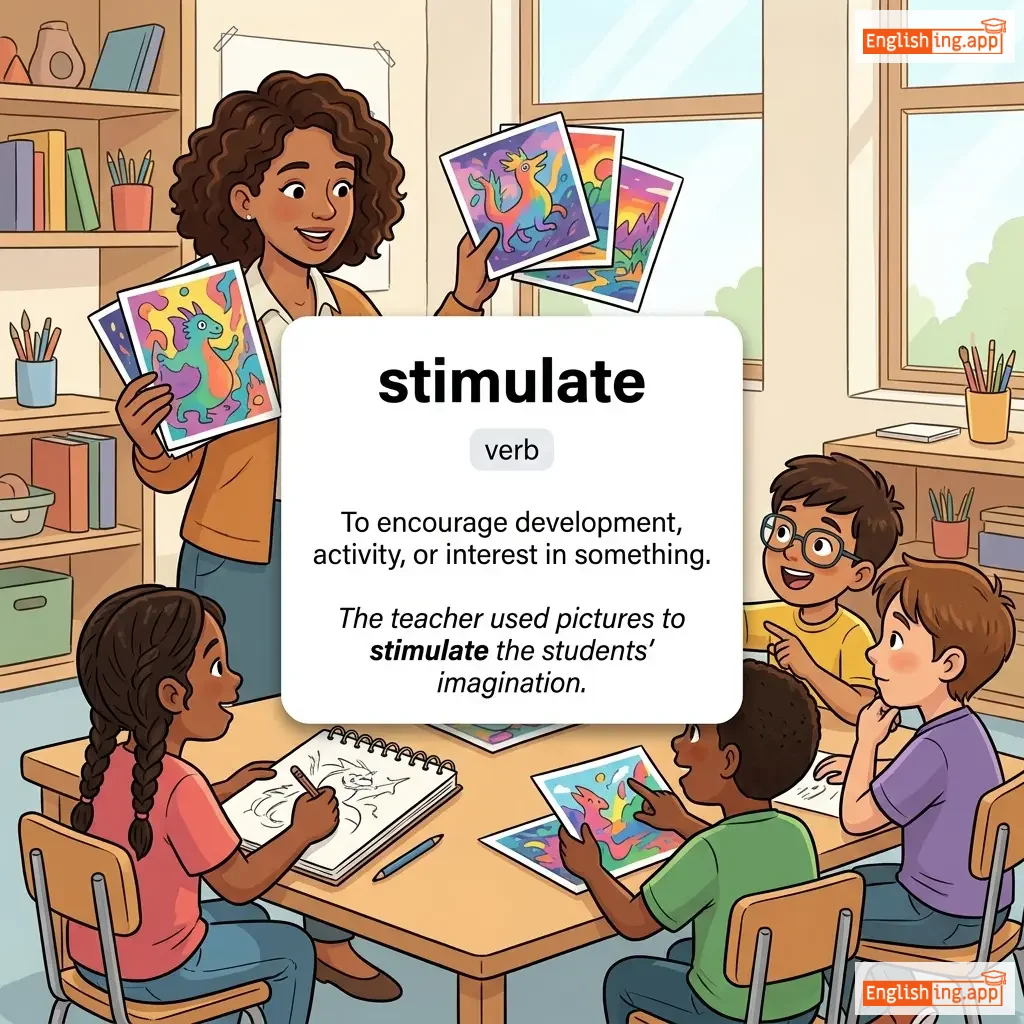
stimulate definition card — visual illustration of the meaning
verb
/ˈstɪmjʊˌleɪt/
estimular, fomentar (estimular, fomentar)

To encourage development, activity, or interest in something.

"The teacher used pictures to stimulate the students' imagination."

"El maestro usó imágenes para estimular la imaginación de los estudiantes." (El maestro usó imágenes para estimular la imaginación de los estudiantes.)
noun
/ˈstɪmjʊlənt/
estimulante (estimulante)

A substance that raises levels of physiological or nervous activity in the body.

"Coffee is a common stimulant that helps people stay awake."

"El café es un estimulante común que ayuda a las personas a mantenerse despiertas" (El café es un estimulante común que ayuda a las personas a mantenerse despiertas)
adjective
/ˈstɪltɪd/
artificial, forzado (artificial, forzado)

Speech or writing that is stiff, unnatural, or overly formal.

"His speech sounded stilted and rehearsed."

"Su discurso sonaba forzado y ensayado." (Su discurso sonaba forzado y ensayado.)
adjective
/stɪl/
tranquilo (tranquilo)

not moving or making a sound

"The water was still, reflecting the sky."

"El agua estaba tranquila, reflejando el cielo." (El agua estaba tranquila, reflejando el cielo.)
noun
/stɪˈlɛtoʊ/
zapato de tacón delgado / daga (zapato de tacon delgado / daga)

A small, thin, high-heeled shoe or a dagger with a slender blade.

"She wore elegant stiletto heels to the party."

"Ella llevaba unos elegantes tacones stilettos a la fiesta." (Ella llevaba unos elegantes tacones stilettos a la fiesta.)
verb
/ˈstɪɡmətaɪz/
estigmatizar (estigmatizar)

to describe or regard someone as worthy of disgrace or disapproval

"People with certain illnesses are often unfairly stigmatized."

"Las personas con ciertas enfermedades a menudo son estigmatizadas de manera injusta." (Las personas con ciertas enfermedades a menudo son estigmatizadas de manera injusta.)
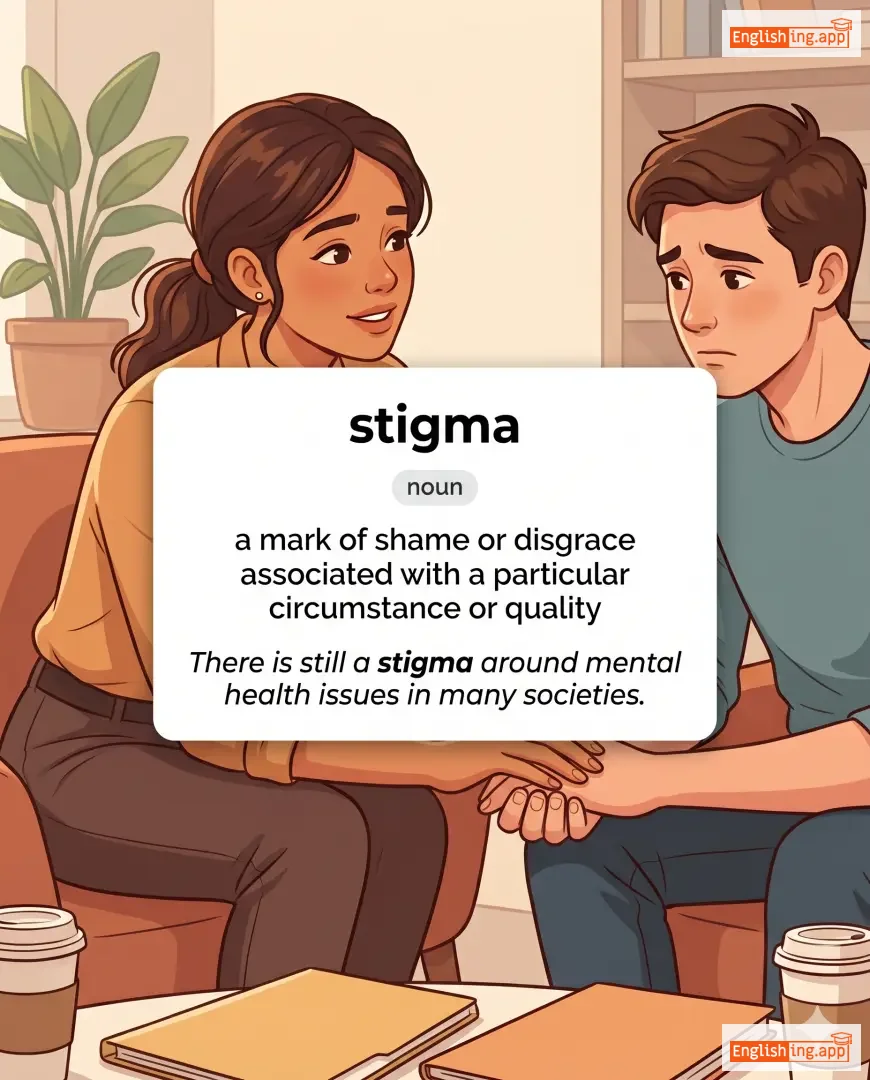
stigma definition card — visual illustration of the meaning
noun
/ˈstɪɡmə/
estigma (estigma)

a mark of shame or disgrace associated with a particular circumstance or quality

"There is still a stigma around mental health issues in many societies."

"Todavía existe un estigma en torno a los problemas de salud mental en muchas sociedades." (Todavía existe un estigma en torno a los problemas de salud mental en muchas sociedades.)
verb
/ˈstaɪfəld/
sofocar (sofocar)

to suppress, hold back, or prevent something from happening

"He stifled a laugh during the serious meeting."

"Él sofocó una risa durante la reunión seria." (Él sofocó una risa durante la reunión seria.)
verb
/ˈstaɪfl/
sofocar (sofo-kar)

to prevent or restrain an action, idea, or emotion; to suffocate

"She tried to stifle a laugh during the serious meeting."

"Ella intentó sofocar una risa durante la reunión seria." (Ella intento sofocar una risa durante la reunion seria.)
noun
/ˈsteɪ.ʃən.ər/
papelería (papeleria)

a person who sells paper, pens, pencils, and other office supplies

"The stationer recommended the best pens for writing exams."

"El estacionista recomendó los mejores bolígrafos para los exámenes." (El estacionista recomendó los mejores bolígrafos para los exámenes.)
noun
/ˈsteɪsɪs/ or /ˈstæsɪs/
estasis (estasis)

A state of inactivity or equilibrium; a situation where nothing changes.

"The negotiations reached a state of stasis with no progress made."

"Las negociaciones llegaron a un estado de estasis sin avances." (Las negociaciones llegaron a un estado de estasis sin avances.)
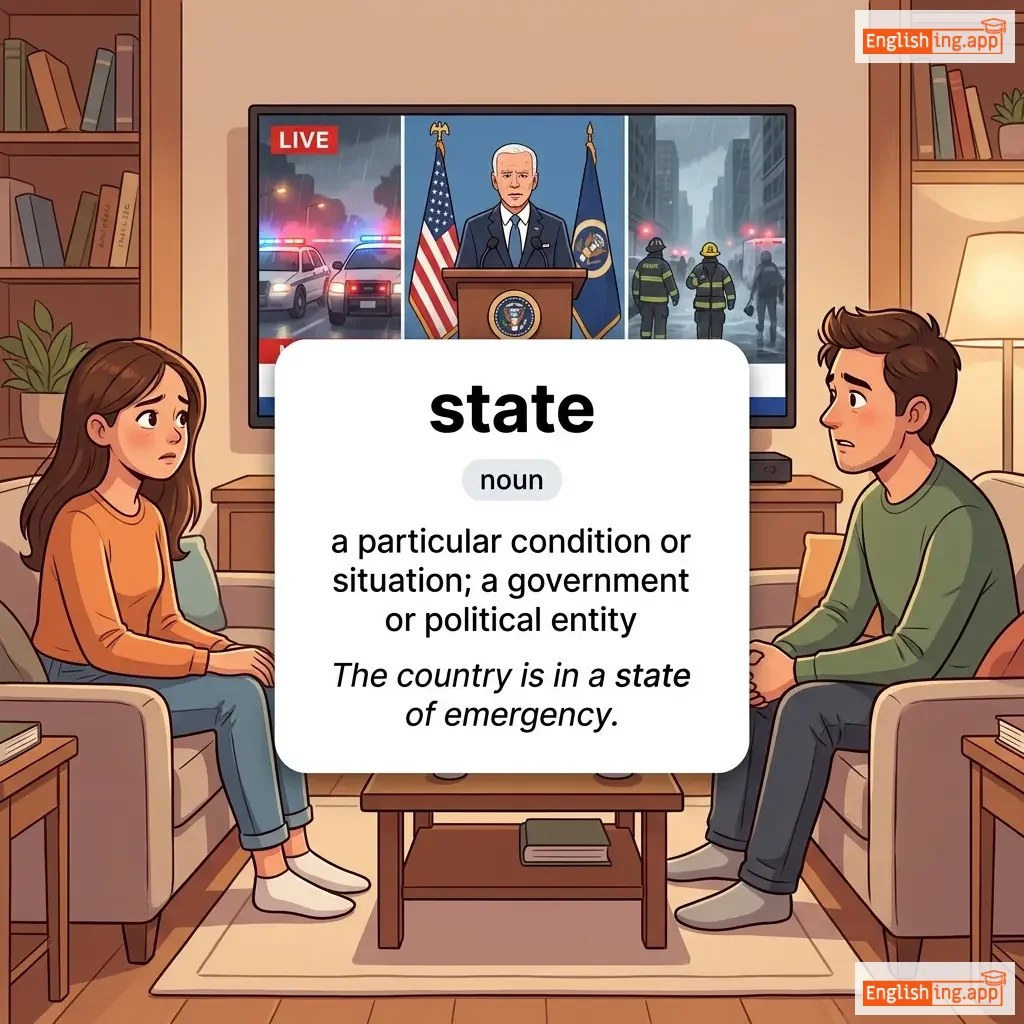
state definition card — visual illustration of the meaning
noun
/steɪt/
estado (estado)

a particular condition or situation; a government or political entity

"The country is in a state of emergency."

"El país está en estado de emergencia." (El pais esta en estado de emergencia.)
noun
/ˈsteɪtkraft/
arte del gobierno (arte del gobierno)

The art of governing and managing state affairs effectively.

"The leader was praised for his exceptional statecraft in handling international relations."

"El líder fue elogiado por su excepcional arte del gobierno en el manejo de relaciones internacionales." (El líder fue elogiado por su excepcional arte del gobierno en el manejo de relaciones internacionales.)
adjective
/ˈsteɪtli/
majestuoso y digno (majestuoso y digno)

Having a dignified, majestic, and impressive appearance or manner.

"The stately mansion stood at the end of the long driveway."

"La majestuosa mansión se encontraba al final del largo camino de entrada." (La majestuosa mansión se encontraba al final del largo camino de entrada.)
noun
/ˈsteɪtmənt/
declaración (declaracion)

a clear expression of something in speech or writing

"She made a statement about the company's new policies."

"Ella hizo una declaración sobre las nuevas políticas de la empresa." (Ella hizo una declaracion sobre las nuevas politicas de la empresa.)
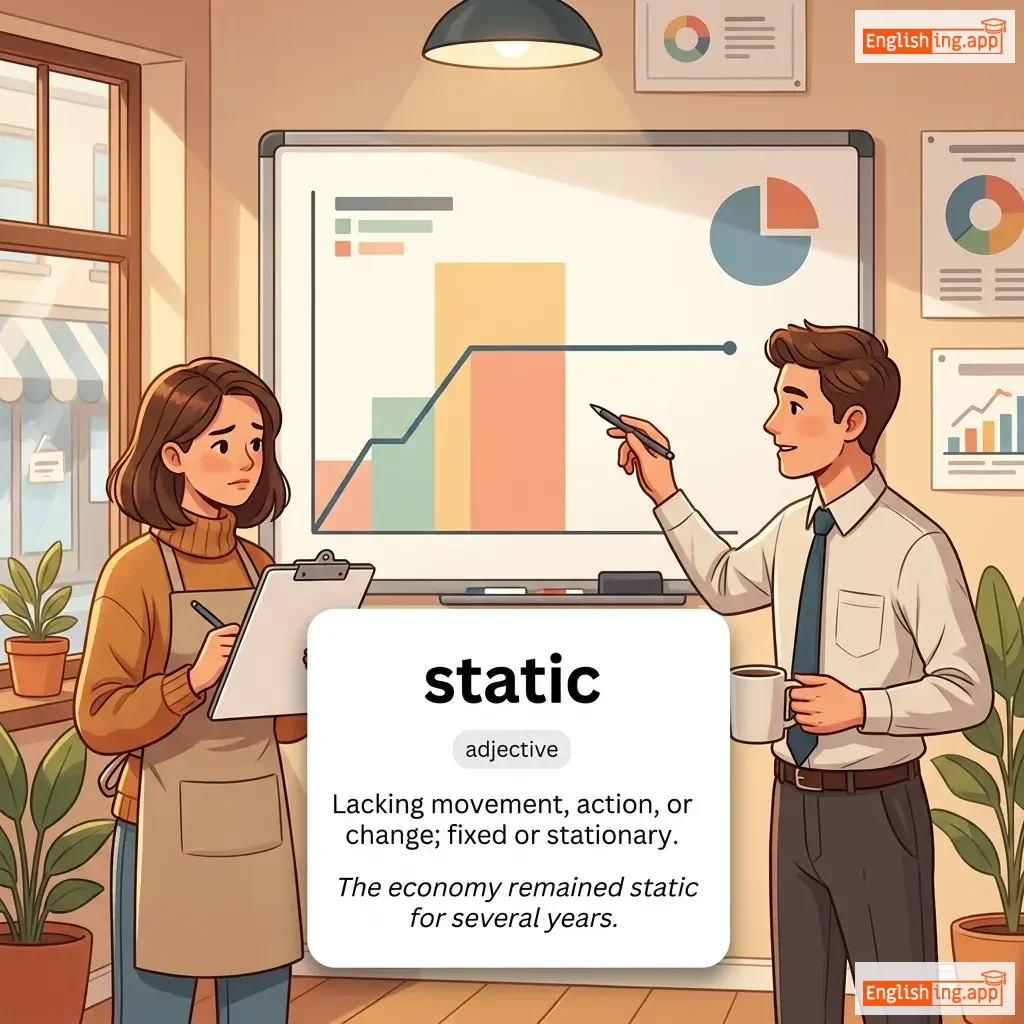
static definition card — visual illustration of the meaning
adjective
/ˈstætɪk/
estático (estatico)

Lacking movement, action, or change; fixed or stationary.

"The economy remained static for several years."

"La economía permaneció estática durante varios años." (La economia permanecio estatica durante varios anos.)
noun
/ˈstætɪks/
estática (estática)

The branch of mechanics dealing with bodies at rest and forces in equilibrium.

"She is studying statics as part of her engineering course."

"Ella está estudiando estática como parte de su curso de ingeniería." (Ella está estudiando estática como parte de su curso de ingeniería.)
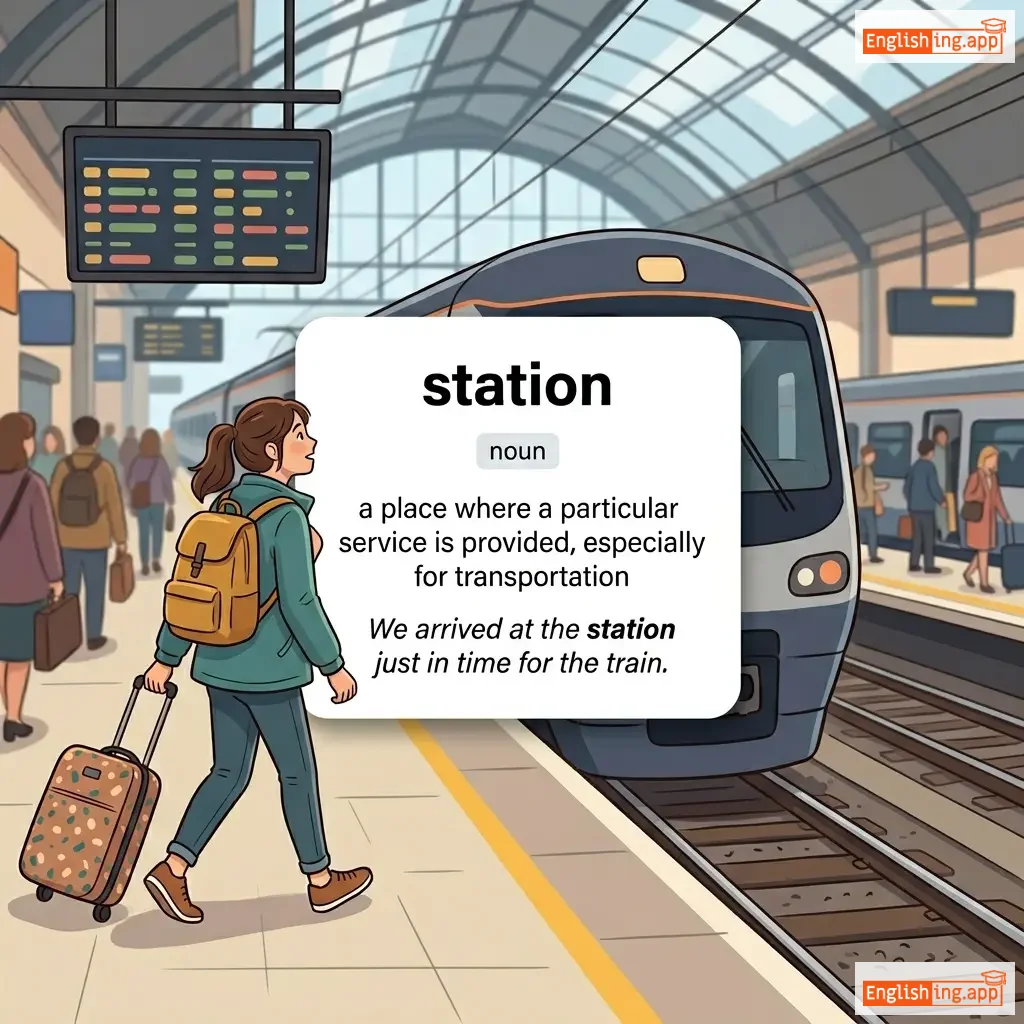
station definition card — visual illustration of the meaning
noun
/ˈsteɪʃən/
estación (estacion)

a place where a particular service is provided, especially for transportation

"We arrived at the station just in time for the train."

"Llegamos a la estación justo a tiempo para el tren." (Llegamos a la estacion justo a tiempo para el tren.)
adjective
/ˈsteɪʃəˌneri/
estático (estatico)

Not moving or not intended to be moved.

"The car remained stationary at the red light."

"El coche permaneció estacionario en el semáforo rojo." (El coche permaneció estacionario en el semáforo rojo.)
adjective
/ˌstætʃuˈɛsk/
de estatua (de estatua)

Having the grace, beauty, or dignity of a statue; tall and attractively proportioned.

"She had a statuesque figure that turned heads wherever she went."

"Ella tenía una figura de estatua que hacía que todos se giraran donde quiera que fuera." (Ella tenía una figura de estatua que hacía que todos se giraran donde quiera que fuera.)
noun
/ˈsteɪtəs kwoʊ/
status quo (status quo)

The existing state of affairs, especially regarding social or political issues.

"The government decided to maintain the status quo until further review."

"El gobierno decidió mantener el status quo hasta una revisión posterior." (El gobierno decidió mantener el status quo hasta una revisión posterior.)
noun
/ˈsteɪtəs/
estado (estado)

the social or professional position or condition of someone or something

"His social status improved after the promotion."

"Su estado social mejoró después de la promoción." (Su estado social mejoró después de la promoción.)
noun
/ˈstætʃər/
estatura, prestigio (estatura, prestigio)

A person's natural height or their reputation and importance.

"Her intellectual stature made her a respected figure in academia."

"Su estatura intelectual la convirtió en una figura respetada en el mundo académico." (Su estatura intelectual la convirtio en una figura respetada en el mundo academico.)
noun
/ˌstætʃuˈɛt/
estatuilla (estatuilla)

A small statue, usually decorative or artistic.

"The artist won a gold statuette for his work."

"El artista ganó una estatuilla de oro por su trabajo." (El artista gano una estatuilla de oro por su trabajo.)
noun
/stəˈtɪstɪks/
estadísticas (estadísticas)

the practice or science of collecting and analyzing numerical data

"The statistics showed an increase in the number of users last year."

"Las estadísticas mostraron un aumento en el número de usuarios el año pasado." (Las estadísticas mostraron un aumento en el número de usuarios el año pasado.)
adjective
/stəˈtɪstɪkəl/
estadístico (estadistico)

relating to the use or analysis of numerical data

"The report provides statistical data about population growth."

"El informe proporciona datos estadísticos sobre el crecimiento de la población." (El informe proporciona datos estadisticos sobre el crecimiento de la poblacion.)
noun
/ˌstætɪˈstɪʃən/
estadístico (estadistico)

A person who specializes in collecting, analyzing, and interpreting numerical data.

"The statistician presented the survey results with great clarity."

"El estadístico presentó los resultados de la encuesta con gran claridad." (El estadistico presento los resultados de la encuesta con gran claridad.)