語彙集

英単語辞書 | 単語の意味、定義、例文

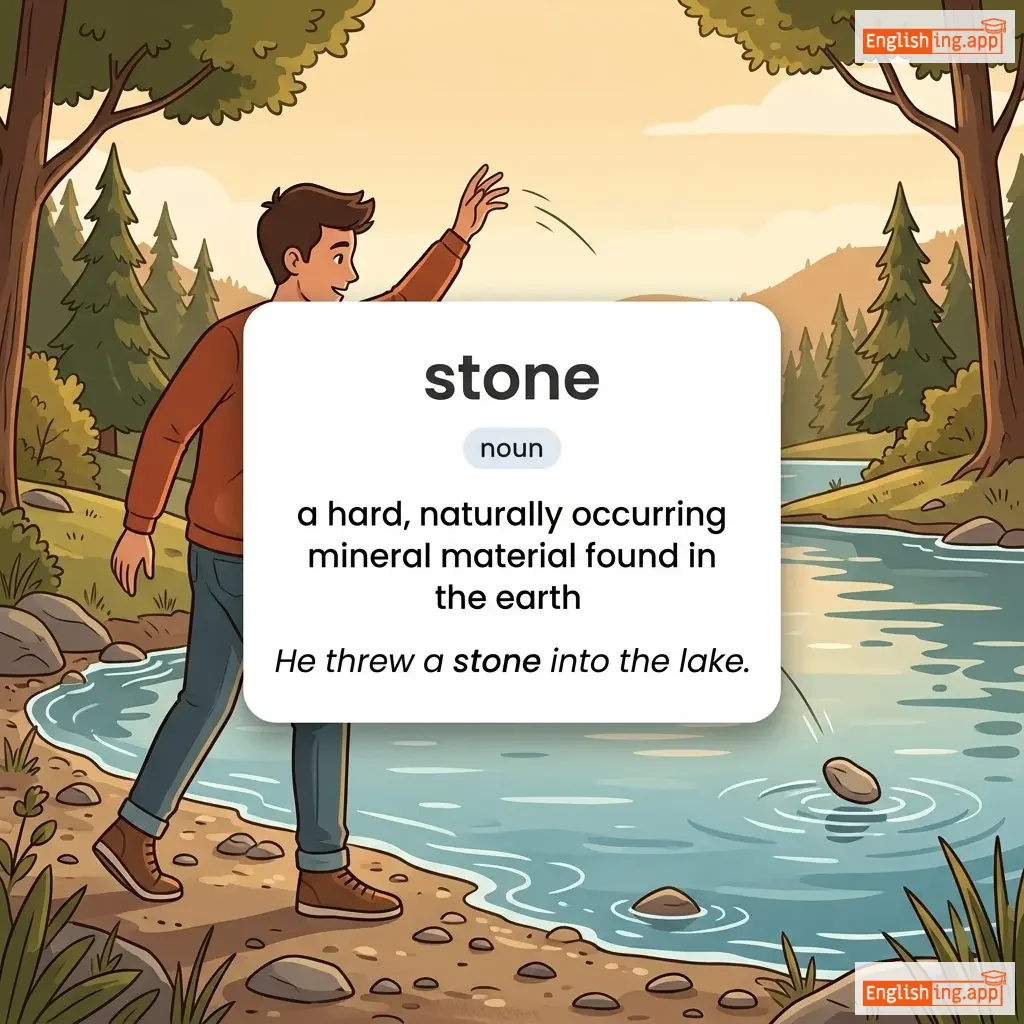
stone definition card — visual illustration of the meaning
noun
/stoʊn/
(ishi)

a hard, naturally occurring mineral material found in the earth

"He threw a stone into the lake."

"彼は湖に石を投げました。" (Kare wa mizūmi ni ishi o nagemashita.)
noun
/ˈstʌmək eɪk/
腹痛 (fukutsuu)

Pain in the stomach or abdominal area

"I have a stomach ache after eating too much."

"食べ過ぎた後、腹痛があります。" (Tabesugita ato, fukutsuu ga arimasu)
noun/verb
/ˈstʌmək/
胃 / 耐える (i / taeru)

The internal organ in which food is digested; also to tolerate or endure something

"She couldn’t stomach the sight of violence."
"彼女は暴力の光景に耐えられなかった。" (Kanojo wa bōryoku no kōkei ni taerarenakatta.)
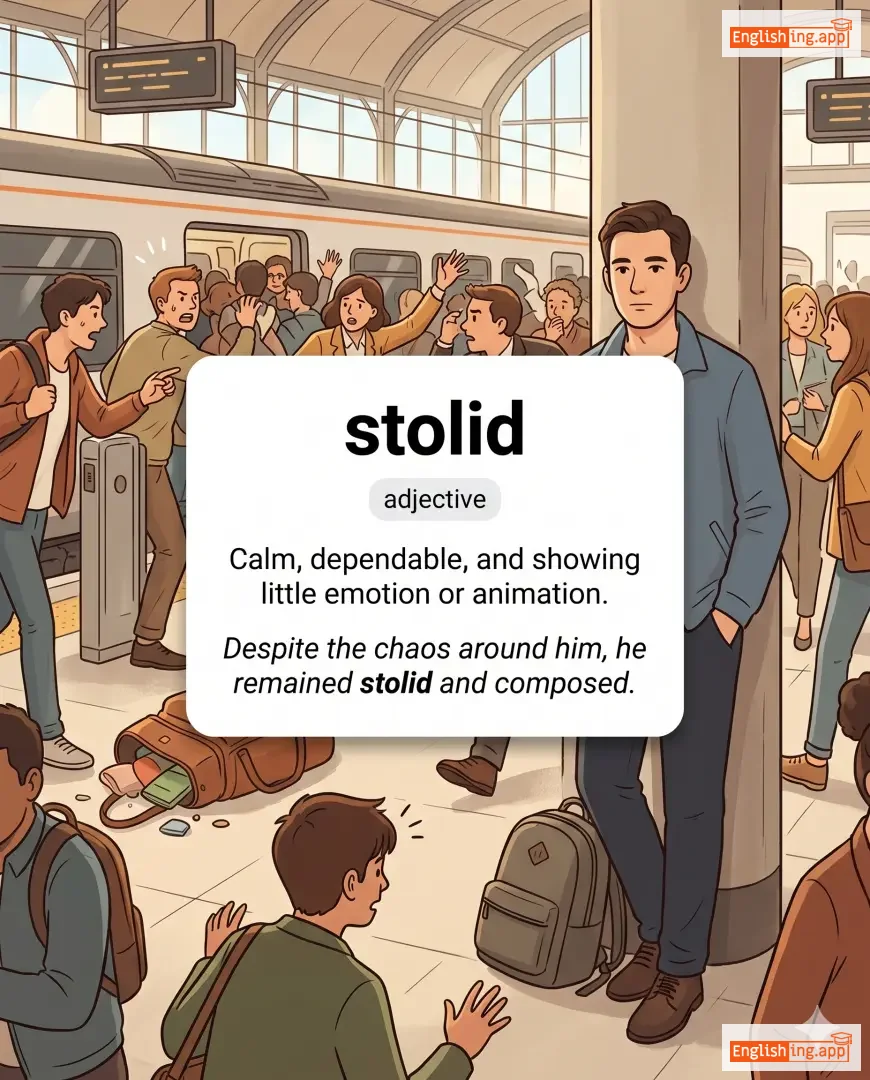
stolid definition card — visual illustration of the meaning
adjective
/ˈstɒlɪd/
冷静な、無表情な (reisei na, muhyoujou na)

Calm, dependable, and showing little emotion or animation.

"Despite the chaos around him, he remained stolid and composed."
"周りの混乱にもかかわらず、彼は冷静で落ち着いていました。" (Mawari no konran ni mo kakawarazu, kare wa reisei de ochitsuite imashita.)
🔥

stoke

verb
/stoʊk/

To add fuel to a fire; to encourage or increase a strong feeling or activity.

"The politician’s speech stoked anger among the crowd."

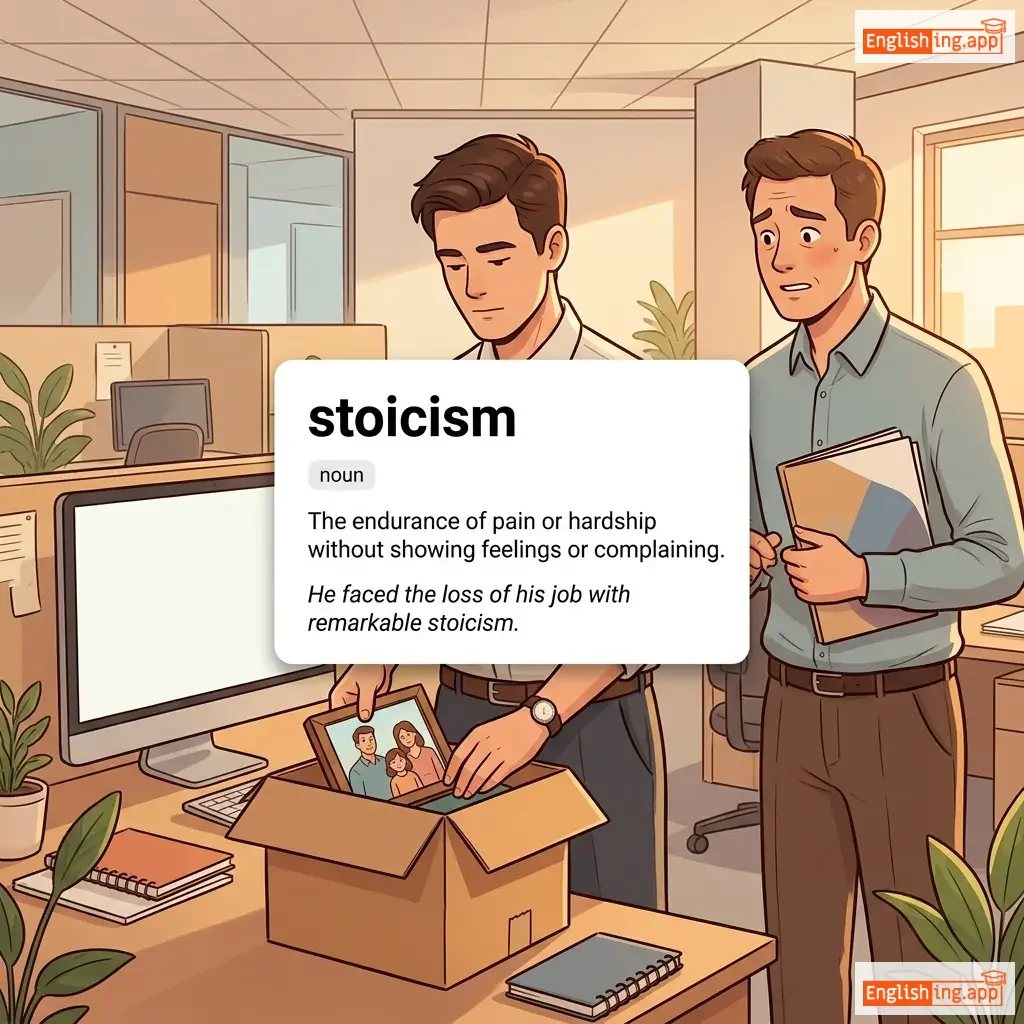
stoicism definition card — visual illustration of the meaning
noun
/ˈstoʊɪˌsɪzəm/
ストイック主義 (sutoikku shugi)

The endurance of pain or hardship without showing feelings or complaining.

"He faced the loss of his job with remarkable stoicism."

"彼は仕事を失ったことを並外れたストイック主義で乗り越えた。" (Kare wa shigoto o ushinatta koto o namihazureta sutoikku shugi de norikoeta.)
adjective
/ˈstoʊɪk/
冷静な, 無感情な (reiseina, mugannōna)

Showing little or no emotion, even in difficult situations.

"She remained stoic during the crisis, never showing fear or panic."

"彼女は危機の間、冷静で恐怖やパニックを示さなかった。" (Kanojo wa kiki no aida, reisei de kyōfu ya panikku o shimesanakatta.)
adjective
/ˈstɒdʒi/
退屈な、時代遅れな (taikutsu na, jidaiokure na)

Dull, uninspired, or old-fashioned; also heavy and hard to digest when referring to food.

"The lecture was so stodgy that many students struggled to stay awake."

"その講義はあまりにも退屈で、多くの学生が目を覚ますのに苦労しました。" (Sono kōgi wa amari ni mo taikutsu de, ōku no gakusei ga me o samasu no ni kurō shimashita.)
noun
/stɒˈkeɪd/
木製の塀 (mokusei no hei)

a defensive barrier made of strong posts or timbers, often around a fort or prison

"The prisoners were kept inside the wooden stockade."

"囚人は木製の塀の中に閉じ込められていました。" (Shūjin wa mokusei no hei no naka ni tojikomere rarete imashita.)
noun, verb
/stɒk/
在庫 (zaiko)

a supply of goods kept for sale or use; to keep or fill with goods

"The shop stocks a wide variety of products."
"その店はさまざまな製品を在庫しています。" (Sono mise wa samazama na seihin o zaiko shiteimasu.)
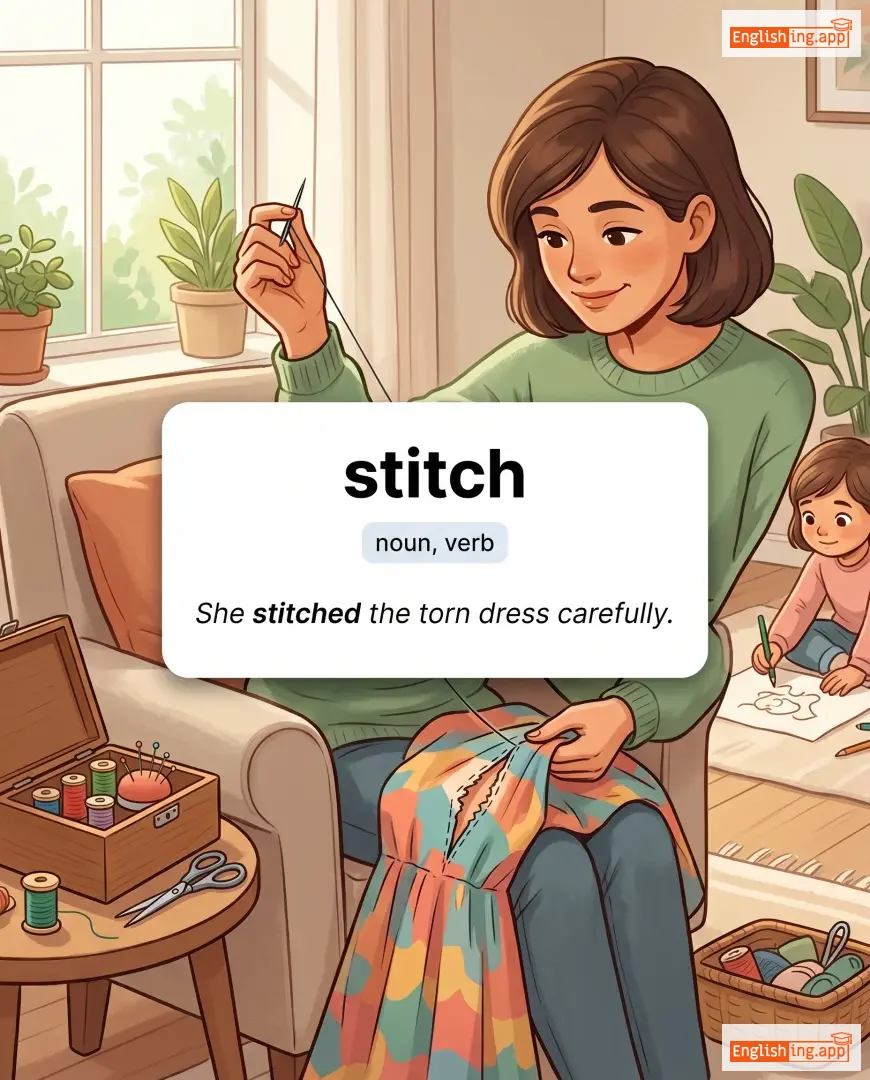
stitch definition card — visual illustration of the meaning
noun, verb
/stɪtʃ/

to sew fabric together using a needle and thread; also a single loop of thread in sewing

"She stitched the torn dress carefully."

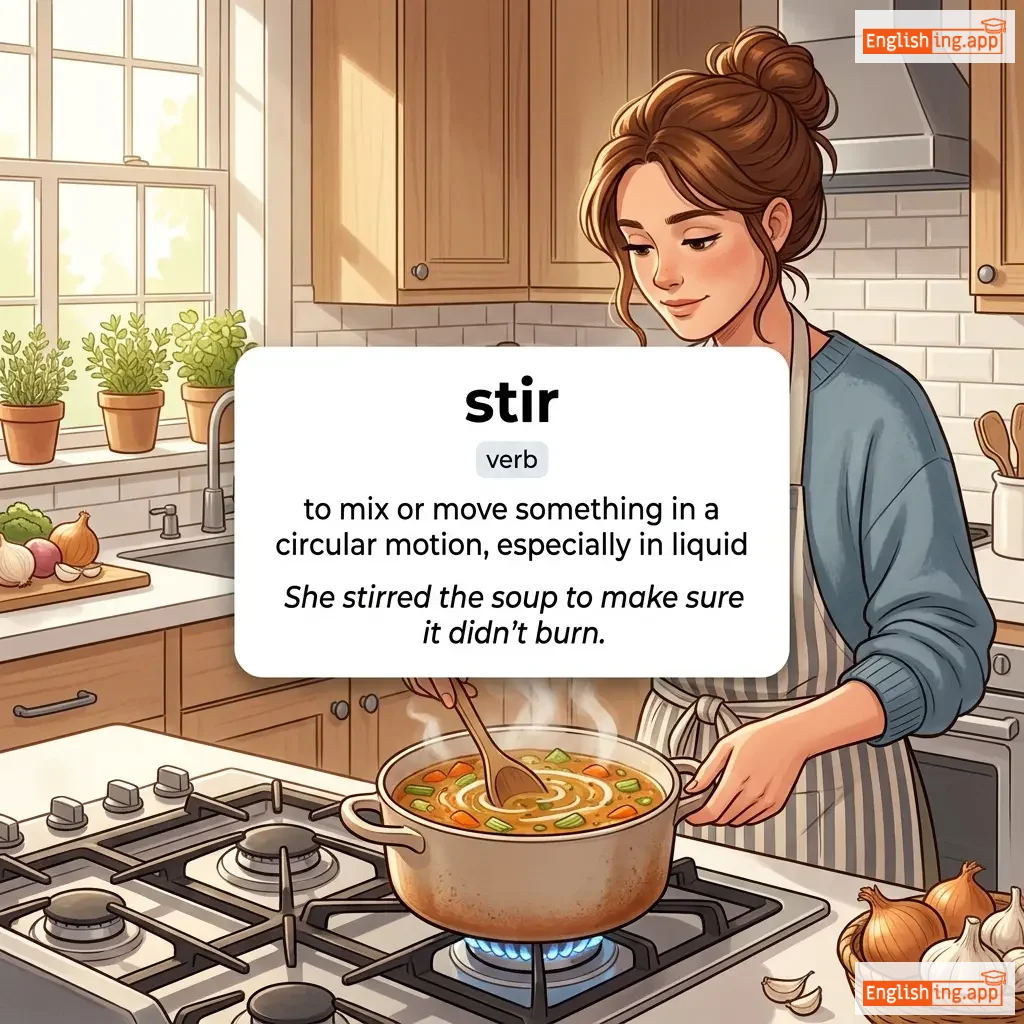
stir definition card — visual illustration of the meaning
verb
/stɜːr/
かき混ぜる (kakimazeru)

to mix or move something in a circular motion, especially in liquid

"She stirred the soup to make sure it didn't burn."

"彼女はスープをかき混ぜて、焦げないようにした。" (Kanojo wa suupu o kakimazete, kogenai you ni shita.)
stipulate definition card — visual illustration of the meaning
verb
/ˈstɪp.jʊ.leɪt/
規定する (kitei suru)

to demand or specify a condition in an agreement or contract

"The contract stipulates that payment must be made within 30 days."

"契約書には、支払いは30日以内に行われるべきであると明記されています。" (Keiyakusho ni wa, shiharai wa 30 nichi inai ni okonawareru beki de aru to meiki sareteimasu.)
verb
/ˈstɪp.əl/
小さな点で覆う (chiisana ten de oou)

to cover a surface with numerous small dots or specks, often in drawing or painting

"The artist stippled the canvas to create a textured effect."

"アーティストはキャンバスに小さな点をつけて、テクスチャ効果を作り出しました。" (Aatisuto wa kyanbasu ni chiisana ten o tsukete, tekusuchā kōka o tsukuridashimashita.)
noun
/ˈstaɪpɛnd/
奨学金 (shougakukin)

a fixed regular payment, usually for services or to cover living expenses

"The university provides a monthly stipend to its research students."

"大学は研究学生に毎月のスタイペンドを提供しています。" (Daigaku wa kenkyu gakusei ni maitsuki no suteipendo o teikyō shiteimasu.)
verb
/ˈstɪntɪŋ/
けちけちと与える (kechiketo ataeru)

to supply sparingly or with restrictions

"He never stinting his efforts to help the poor."
"彼は貧しい人々を助けるために決して手を抜きません。" (Kare wa mazushī hitobito o tasukeru tame ni kesshite te o nukimasen.)
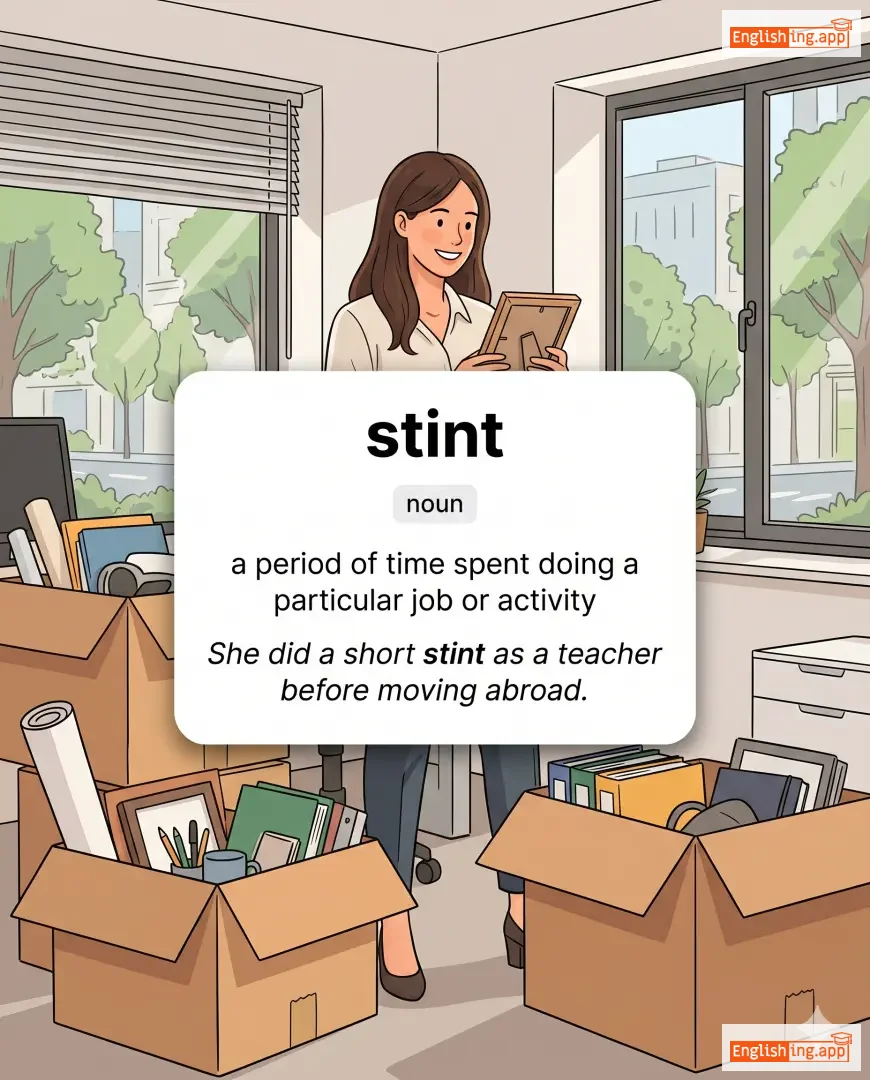
stint definition card — visual illustration of the meaning
noun
/stɪnt/
短期の仕事 (tanki no shigoto)

a period of time spent doing a particular job or activity

"She did a short stint as a teacher before moving abroad."

"彼女は海外に移住する前に短期間の教師として働きました。" (Kanojo wa kaigai ni ijū suru mae ni tanki no kyōshi toshite hatarakimashita.)
verb
/stɪŋk/
臭い (kusai)

to smell very unpleasant

"The garbage bin stinks in the hot sun."

"ゴミ箱は暑い太陽の下で臭いです。" (Gomibako wa atsui taiyou no shita de kusai desu.)
adjective
/ˈstɪndʒi/
けち (kechi)

unwilling to spend or give; miserly

"He is too stingy to buy a gift for his friend."
"彼は友達へのプレゼントを買うにはあまりにけちだ。" (Kare wa tomodachi e no purezento o kau ni wa amari ni kechi da.)
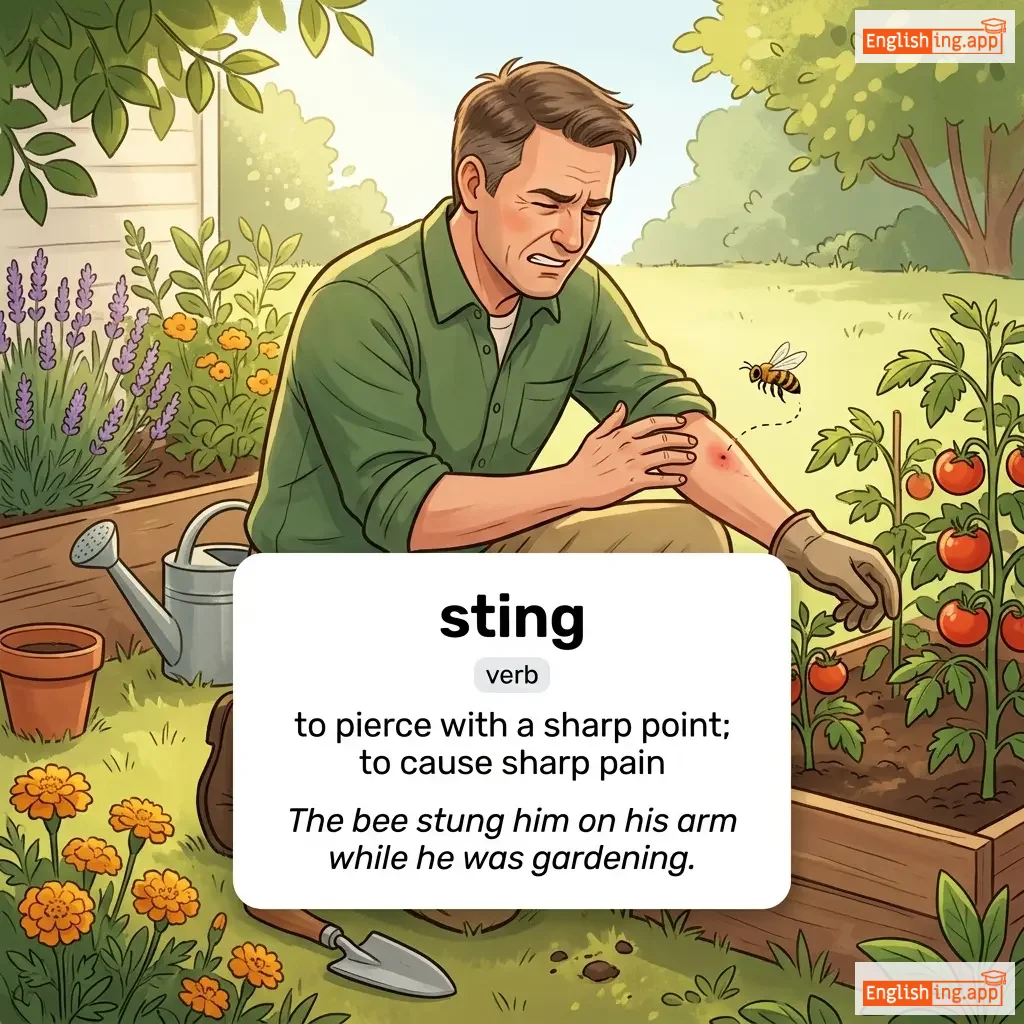
sting definition card — visual illustration of the meaning
verb
/stɪŋ/
刺す (sasu)

to pierce with a sharp point; to cause sharp pain

"The bee stung him on his arm while he was gardening."
"蜂は彼が庭仕事をしているときに彼の腕を刺しました。" (Hachi wa kare ga niwashigoto o shite iru toki ni kare no ude o sashimashita)
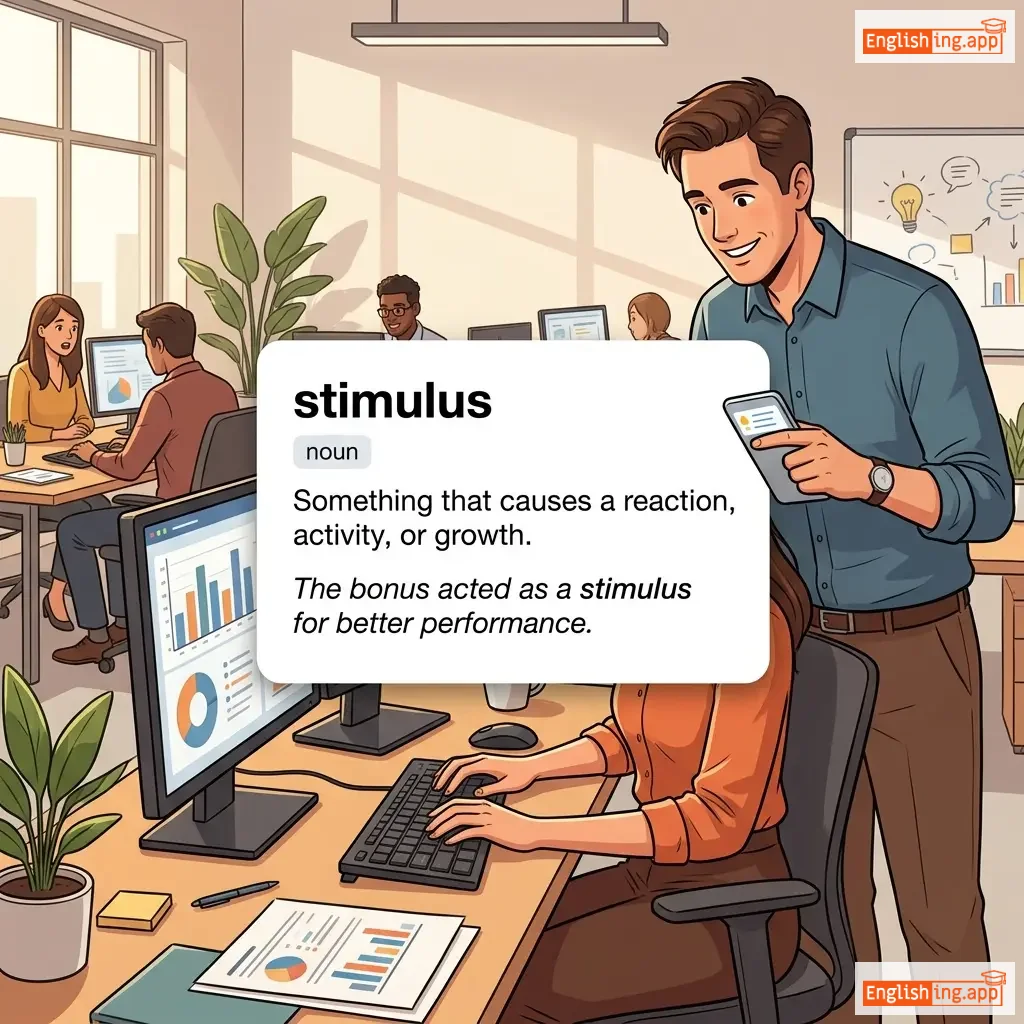
stimulus definition card — visual illustration of the meaning
noun
/ˈstɪmjʊləs/
反応、活動、または成長を引き起こすもの、刺激 (hannou, katsudou, matawa seichou wo hikiokosu mono, shigeki)

Something that causes a reaction, activity, or growth.

"The bonus acted as a stimulus for better performance."
"ボーナスはより良いパフォーマンスのための刺激となった。" (Bōnasu wa yori yoi pafōmansu no tame no shigeki to natta.)
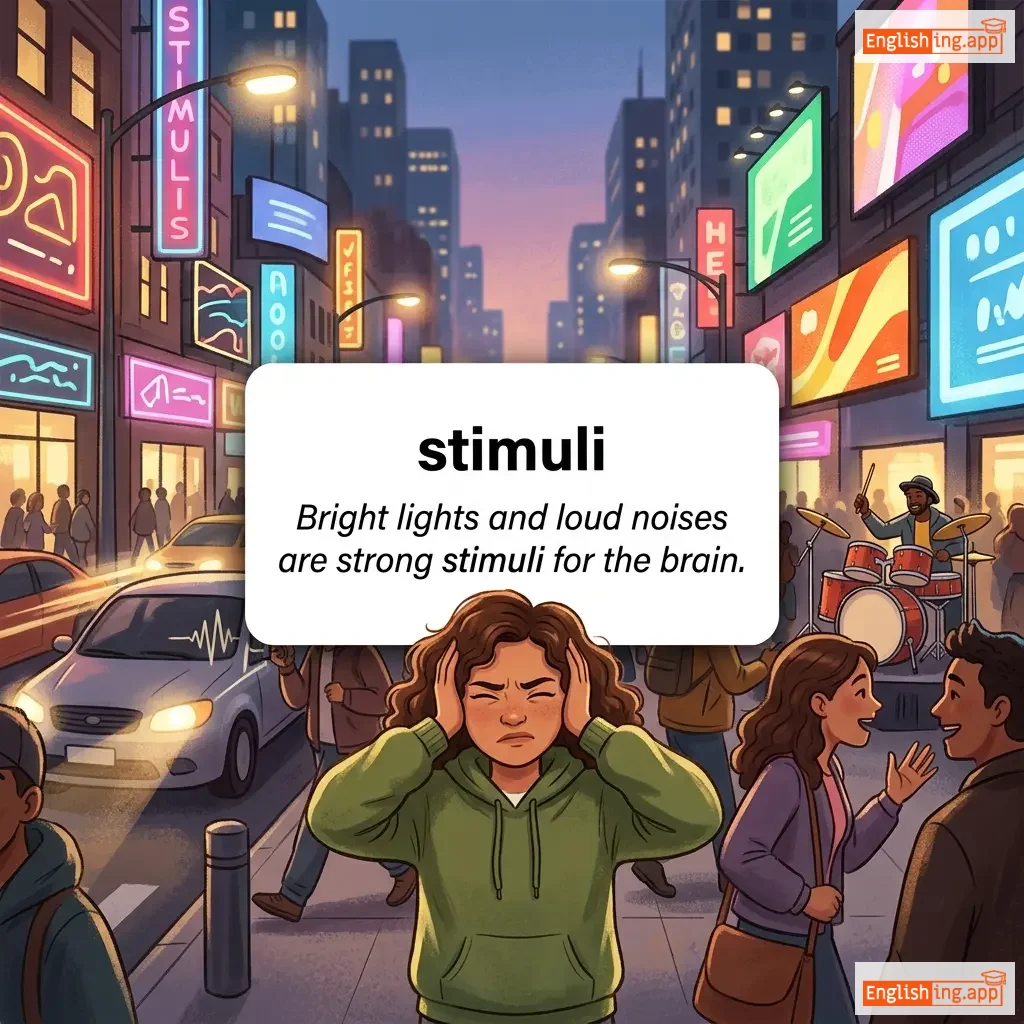
stimuli definition card — visual illustration of the meaning
noun (plural of stimulus)
/ˈstɪm.jʊ.laɪ/
刺激 (shigeki)

Things or events that evoke a specific functional reaction in an organ or tissue.

"Bright lights and loud noises are strong stimuli for the brain."
"明るい光と大きな音は、脳にとって強力な刺激です。" (Akarui hikari to ōkina oto wa, nō ni totte kyōryoku na shigeki desu.)
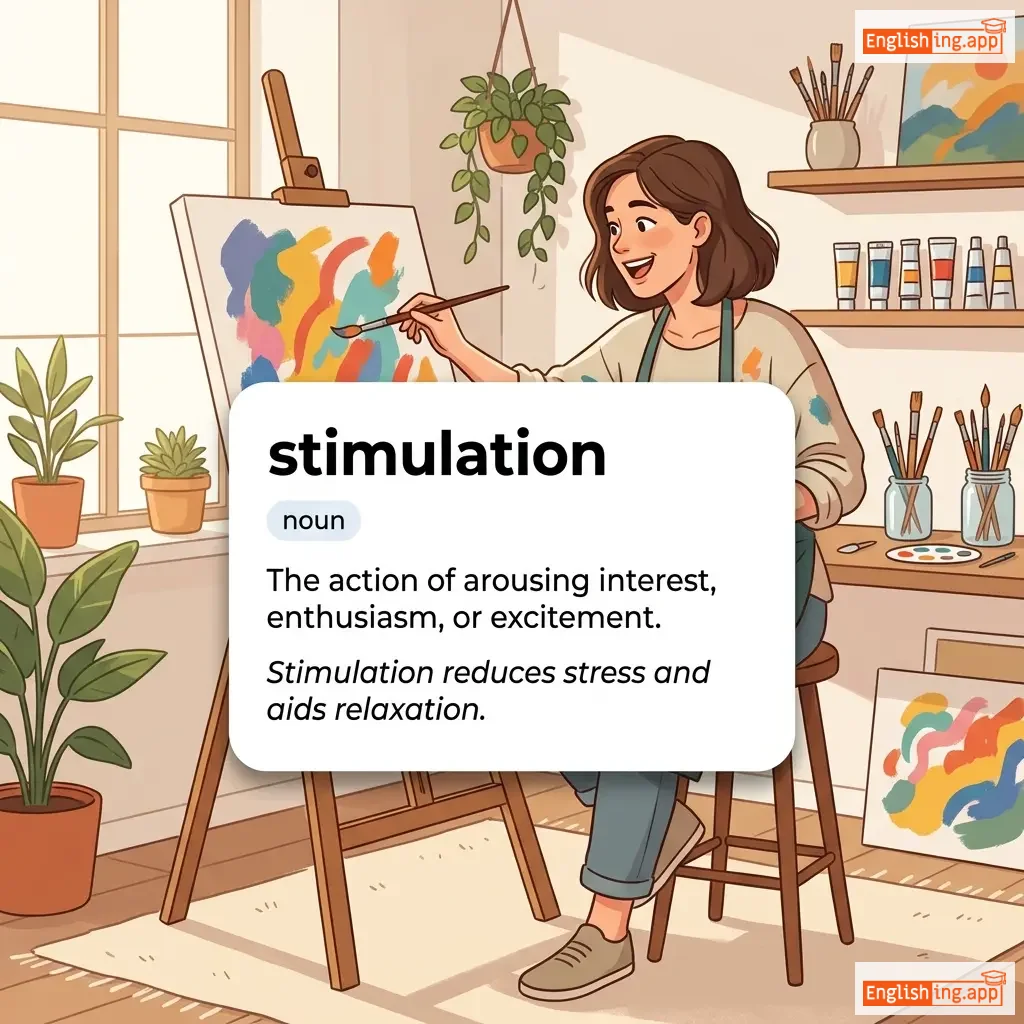
stimulation definition card — visual illustration of the meaning
noun
/ˌstɪm.jəˈleɪ.ʃən/
刺激 (shigeki)

The action of arousing interest, enthusiasm, or excitement.

"Stimulation reduces stress and aids relaxation."
"刺激はストレスを減らし、リラックスを助けます。" (Shigeki wa sutoresu wo herashi, rirakkusu wo tasukemasu.)
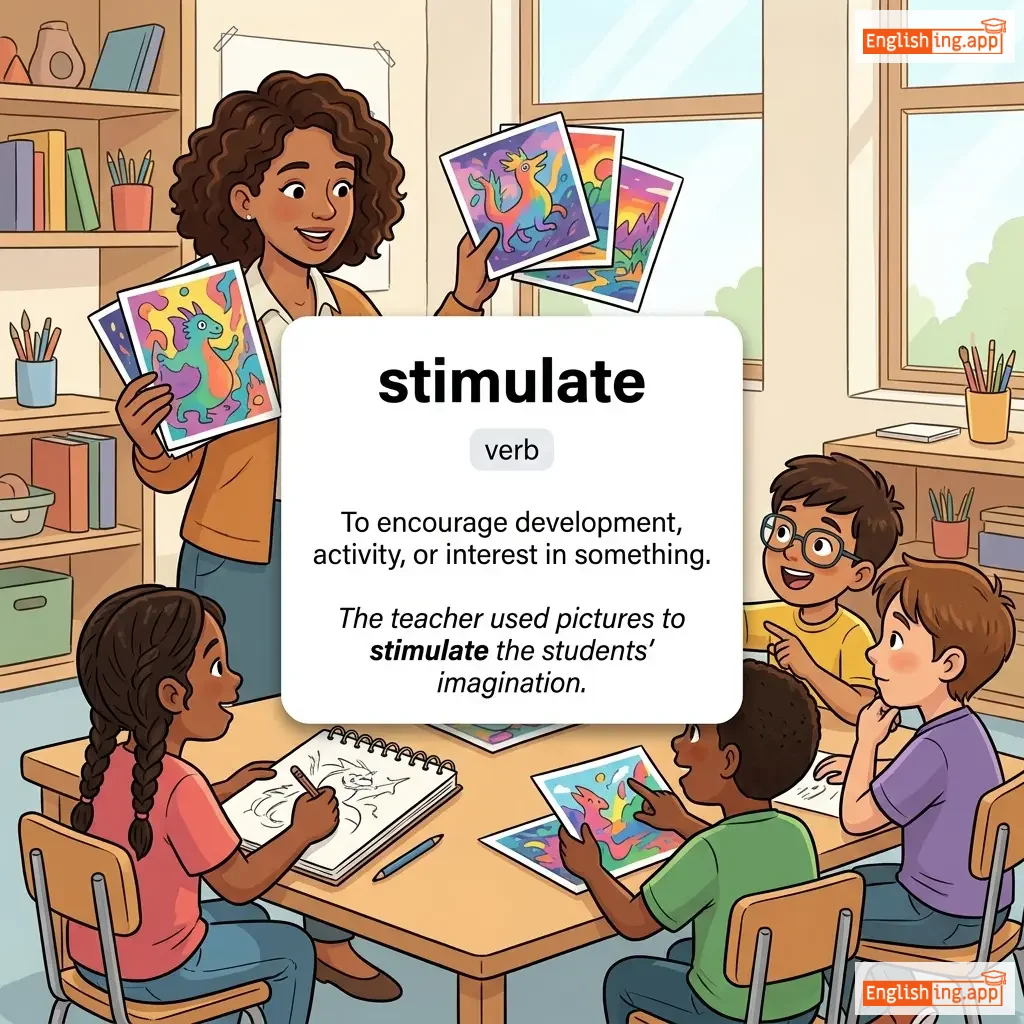
stimulate definition card — visual illustration of the meaning
verb
/ˈstɪmjʊˌleɪt/
刺激する, 活性化する (shigeki suru, katsusei suru)

To encourage development, activity, or interest in something.

"The teacher used pictures to stimulate the students' imagination."

"先生は絵を使って生徒の想像力を刺激しました。" (Sensei wa e o tsukatte seito no sōzōryoku o shigeki shimashita.)
noun
/ˈstɪmjʊlənt/
興奮剤 (koufun zai)

A substance that raises levels of physiological or nervous activity in the body.

"Coffee is a common stimulant that helps people stay awake."

"コーヒーは一般的な興奮剤で、人々が目を覚ますのを助けます" (Kōhī wa ippantekina kōfunzai de, hitobito ga me wo samasu no wo tasukemasu)
adjective
/ˈstɪltɪd/
不自然な、堅苦しい (fushizen na, katakurushii)

Speech or writing that is stiff, unnatural, or overly formal.

"His speech sounded stilted and rehearsed."

"彼のスピーチは不自然で練習されたように聞こえた。" (Kare no supīchi wa fushizen de renshū sareta yō ni kikoeta.)
adjective
/stɪl/
静かな (shizukana)

not moving or making a sound

"The water was still, reflecting the sky."

"水は静かで、空を反射していた。" (Mizu wa shizuka de, sora wo hansha shiteita.)
noun
/stɪˈlɛtoʊ/
細いヒールの靴 / ダガー (hosoi hīru no kutsu / dagā)

A small, thin, high-heeled shoe or a dagger with a slender blade.

"She wore elegant stiletto heels to the party."

"彼女はパーティーにエレガントなスティレットヒールを履いて行きました。" (Kanojo wa pātii ni ereganto na sutiretto hīru o haite ikimashita.)
verb
/ˈstɪɡmətaɪz/
スティグマタイズする (sutigumataizu suru)

to describe or regard someone as worthy of disgrace or disapproval

"People with certain illnesses are often unfairly stigmatized."

"特定の病気の人々はしばしば不当な方法でスティグマタイズされる。" (Tokutei no byōki no hitobito wa shibashiba futō na hōhō de sutigumataizu sareru.)
stigma definition card — visual illustration of the meaning
noun
/ˈstɪɡmə/
汚名 (omei)

a mark of shame or disgrace associated with a particular circumstance or quality

"There is still a stigma around mental health issues in many societies."

"多くの社会では、精神的な健康問題に関して未だに汚名がついています。" (Ōku no shakai de wa, seishinteki na kenkō mondai ni kanshite imada ni omei ga tsuiteimasu.)
verb
/ˈstaɪfəld/
抑える (osaeru)

to suppress, hold back, or prevent something from happening

"He stifled a laugh during the serious meeting."

"彼は真面目な会議中に笑いを抑えた。" (Kare wa majimena kaigichuu ni warai o osaeta.)
verb
/ˈstaɪfl/
抑える (osaeru)

to prevent or restrain an action, idea, or emotion; to suffocate

"She tried to stifle a laugh during the serious meeting."

"彼女は真剣な会議中に笑いを抑えようとしました。" (Kanojo wa shinken na kaigi-chū ni warai o osaeyō to shimashita.)
noun
/ˈsteɪ.ʃən.ər/
文房具店 (bunbouguten)

a person who sells paper, pens, pencils, and other office supplies

"The stationer recommended the best pens for writing exams."

"文房具屋は試験のための最適なペンを推薦しました。" (Bunbouguten wa shiken no tame no saiteki na pen wo suisen shimashita.)
noun
/ˈsteɪsɪs/ or /ˈstæsɪs/
停滞 (teitai)

A state of inactivity or equilibrium; a situation where nothing changes.

"The negotiations reached a state of stasis with no progress made."
"交渉は停滞状態に達し、進展はありませんでした。" (Kōshō wa teitai jōtai ni tasshi, shinten wa arimasen deshita.)
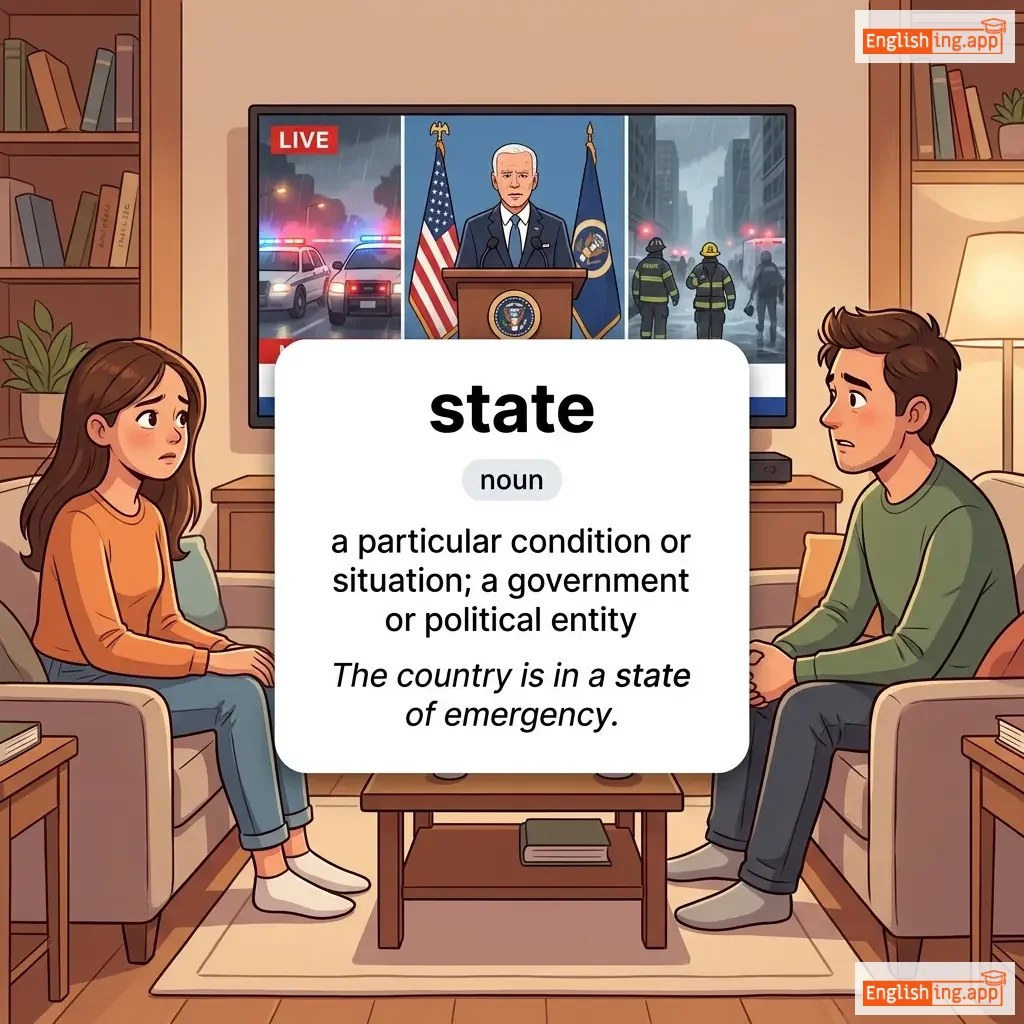
state definition card — visual illustration of the meaning
noun
/steɪt/
状態 (joutai)

a particular condition or situation; a government or political entity

"The country is in a state of emergency."

"その国は非常事態にあります。" (Sono kuni wa hijoujitai ni arimasu.)
noun
/ˈsteɪtkraft/
国政術 (kokusetsu)

The art of governing and managing state affairs effectively.

"The leader was praised for his exceptional statecraft in handling international relations."

"リーダーは国際関係を扱う際の卓越した国政術に対して称賛されました。" (Rīdā wa kokusai kankei o atsukau sai no takuetsu shita kokusetsu ni taishite shōsan saremashita.)
adjective
/ˈsteɪtli/
威厳と壮大 (igen to soudai)

Having a dignified, majestic, and impressive appearance or manner.

"The stately mansion stood at the end of the long driveway."

"その威厳ある邸宅は長いドライブウェイの終わりに立っていました。" (Sono igen aru teitaku wa nagai doraibuwei no owari ni tatte imashita.)
noun
/ˈsteɪtmənt/
声明 (seimei)

a clear expression of something in speech or writing

"She made a statement about the company's new policies."
"彼女は会社の新しい方針について声明を発表しました。" (Kanojo wa kaisha no atarashii houshin ni tsuite seimei o happyou shimashita.)
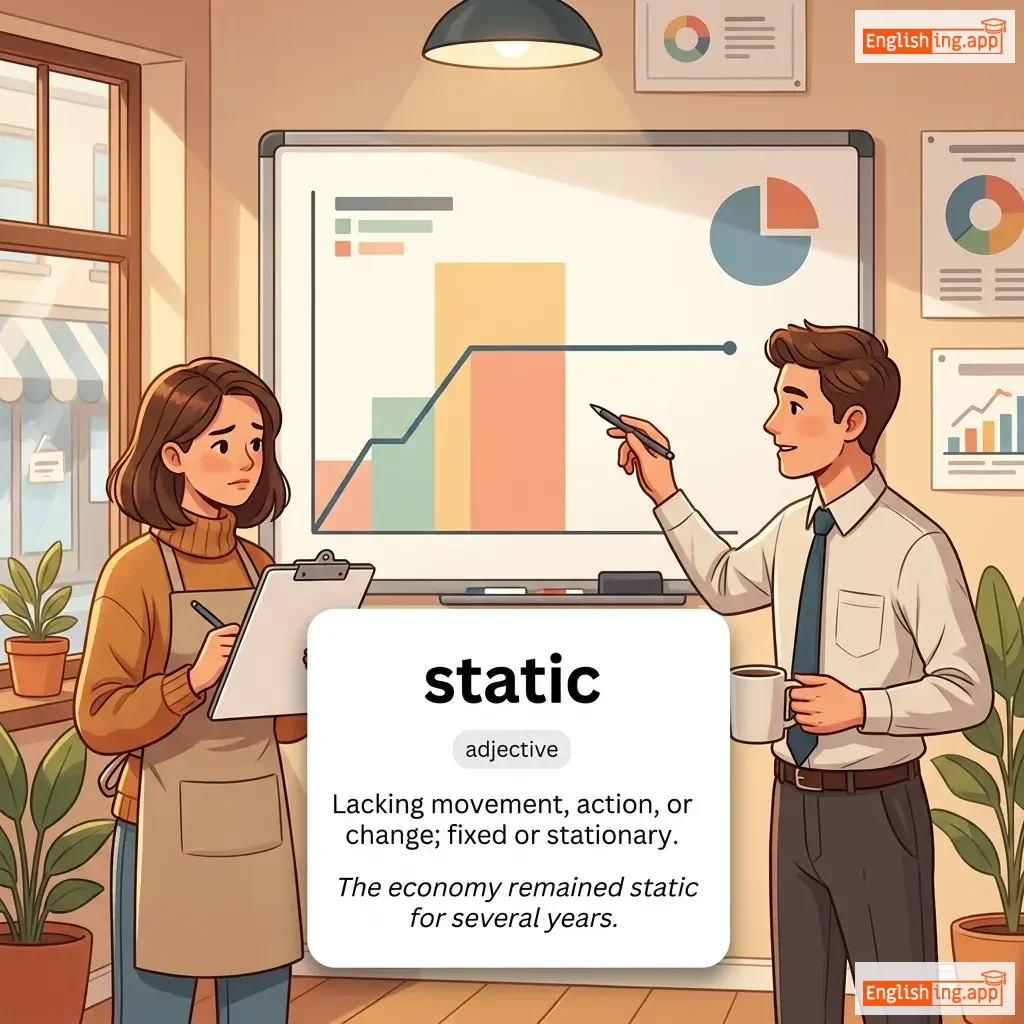
static definition card — visual illustration of the meaning
adjective
/ˈstætɪk/
静的 (seiteki)

Lacking movement, action, or change; fixed or stationary.

"The economy remained static for several years."

"経済は数年間静的でした。" (Keizai wa suunenkan seiteki deshita.)
noun
/ˈstætɪks/
静力学 (seiryokugaku)

The branch of mechanics dealing with bodies at rest and forces in equilibrium.

"She is studying statics as part of her engineering course."

"彼女は工学のコースの一環として静力学を学んでいます。" (Kanojo wa kōgaku no kōsu no ikkan toshite seiryokugaku o manandeimasu.)
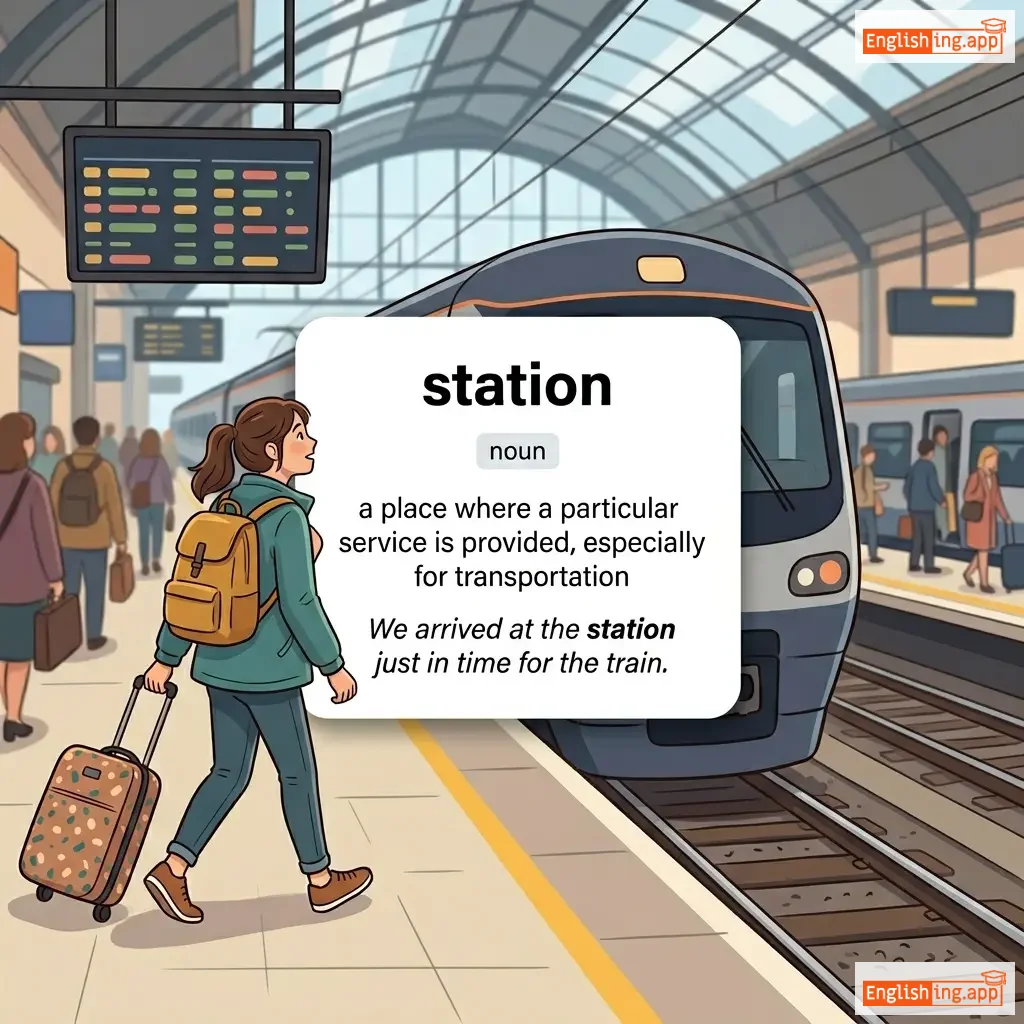
station definition card — visual illustration of the meaning
noun
/ˈsteɪʃən/

a place where a particular service is provided, especially for transportation

"We arrived at the station just in time for the train."

adjective
/ˈsteɪʃəˌneri/
静止 (seishi)

Not moving or not intended to be moved.

"The car remained stationary at the red light."

"車は赤信号で静止したままでした。" (Kuruma wa akashingou de seishi shita mamade shita.)
adjective
/ˌstætʃuˈɛsk/
彫像のような (chouza no youna)

Having the grace, beauty, or dignity of a statue; tall and attractively proportioned.

"She had a statuesque figure that turned heads wherever she went."

"彼女は彫像のような体型をしていて、どこに行っても人々の視線を引きつけていた。" (Kanojo wa chouza no youna taikei o shite ite, doko ni itte mo hitobito no shisen o hikitsukete ita.)
noun
/ˈsteɪtəs kwoʊ/
現状 (genjō)

The existing state of affairs, especially regarding social or political issues.

"The government decided to maintain the status quo until further review."

"政府はさらなるレビューまで現状を維持することを決定しました。" (seifu wa sarana ru byū made genjō o iji suru koto o kettei shimashita.)
noun
/ˈsteɪtəs/
地位 (chii)

the social or professional position or condition of someone or something

"His social status improved after the promotion."

"昇進後、彼の社会的地位は向上しました。" (Shoushingo, kare no shakaiteki chii wa koujou shimashita.)
noun
/ˈstætʃər/
名声、身長 (meisei, shinchou)

A person's natural height or their reputation and importance.

"Her intellectual stature made her a respected figure in academia."

"彼女の知的名声は、彼女を学界で尊敬される人物にしました。" (kanojo no chiteki meisei wa, kanojo o gakkai de sonkei sareru jinbutsu ni shimashita.)
noun
/ˌstætʃuˈɛt/
小さな像 (chiisana zou)

A small statue, usually decorative or artistic.

"The artist won a gold statuette for his work."

"アーティストは彼の作品で金の小さな像を受賞しました。" (Aatisuto wa kare no sakuhin de kin no chiisana zou wo jushou shimashita.)
noun
/stəˈtɪstɪks/
統計 (tōkei)

the practice or science of collecting and analyzing numerical data

"The statistics showed an increase in the number of users last year."

"統計は昨年のユーザー数の増加を示しました。" (Tōkei wa sakunen no yūzā-sū no zōka o shimeshimashita.)
adjective
/stəˈtɪstɪkəl/
統計的 (tokeiteki)

relating to the use or analysis of numerical data

"The report provides statistical data about population growth."

"報告書は人口増加に関する統計データを提供しています。" (Hōkokusho wa jinkō zōka ni kansuru tōkei dēta o teikyō shiteimasu.)
noun
/ˌstætɪˈstɪʃən/
統計学者 (tōkeigakusha)

A person who specializes in collecting, analyzing, and interpreting numerical data.

"The statistician presented the survey results with great clarity."

"統計学者は調査結果を明確に示しました。" (Tōkeigakusha wa chōsa kekka o meikaku ni shimeshimashita.)