stimuli (スティミュリ)

noun
/ˈstɪm.jʊ.laɪ/
刺激 (shigeki)

意味

Things that create reactions or provide motivation.
Things or events that evoke a specific functional reaction in an organ or tissue.
意味の翻訳
反応を引き起こしたり、動機を提供するもの。
Hannou o hikiokoshitari, douki o teikyō suru mono.

例文

Bright light and loud sounds are common stimuli for alertness.

明るい光と大きな音は、警戒のための一般的な刺激です。
Akarui hikari to ōkina oto wa, keikai no tame no ippanteki na shigeki desu.

Visual stimuli enhance learning efficiency.

視覚的なスティミュライは学習効率を高める。
Shikakuteki na stimuli wa gakushū kōritsu o takameru.

Bright lights and loud noises are strong stimuli for the brain.
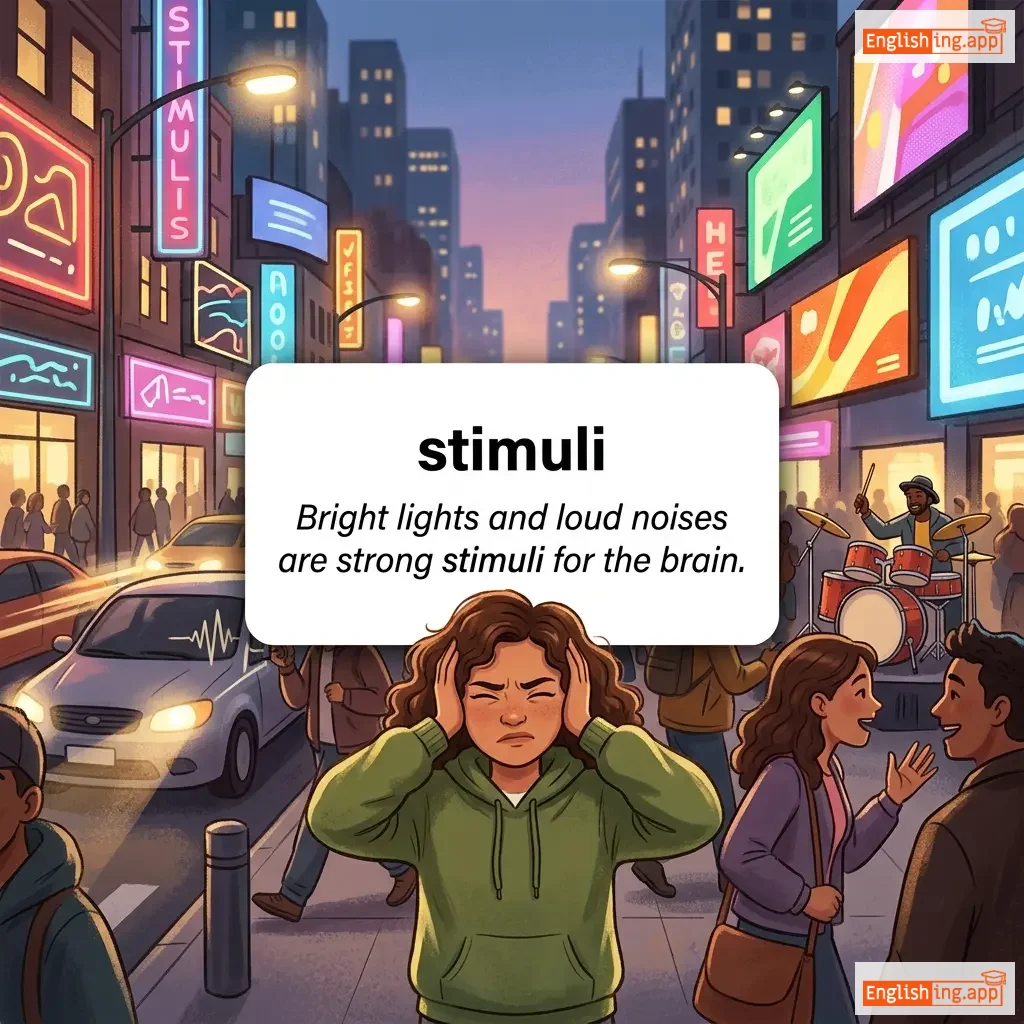
明るい光と大きな音は、脳にとって強力な刺激です。
Akarui hikari to ōkina oto wa, nō ni totte kyōryoku na shigeki desu.

同義語

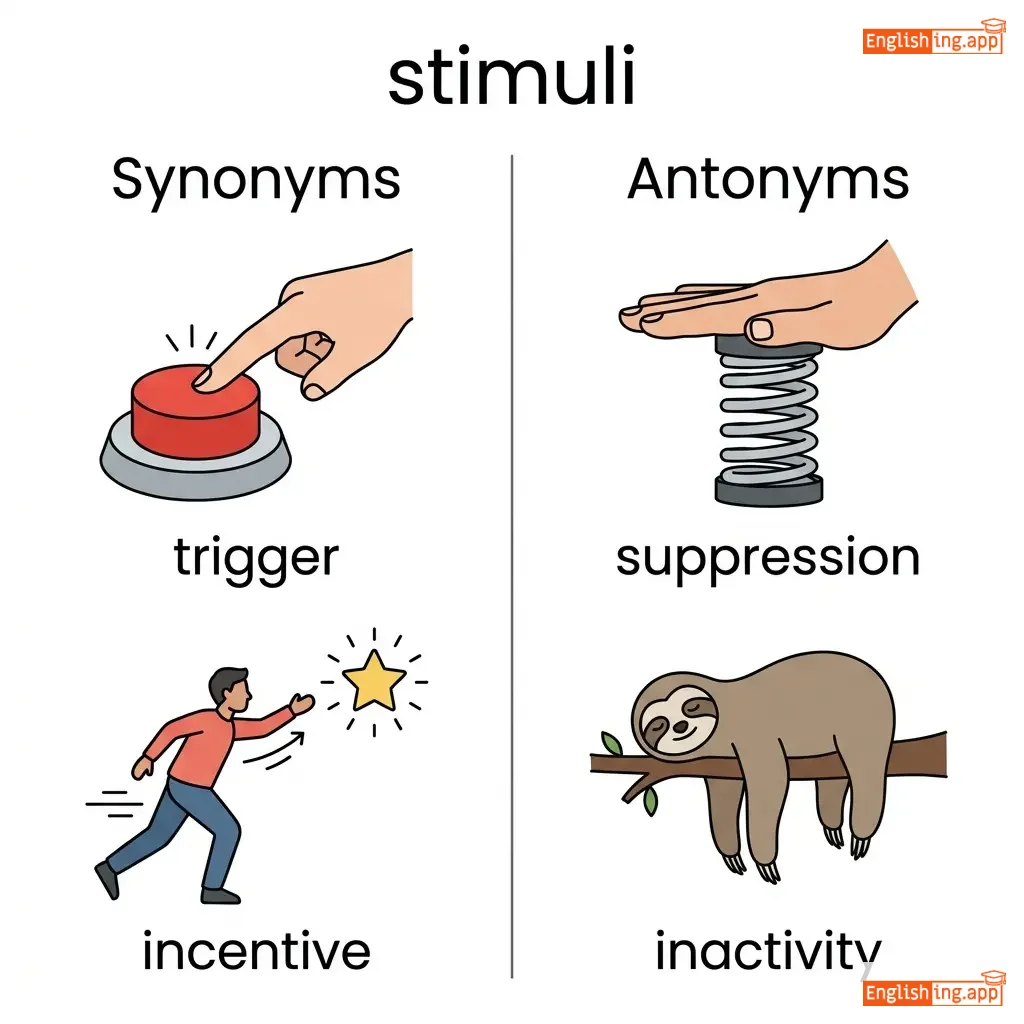
triggers, incentives, impulses, inducements, catalysts, trigger, incentive, motivation
エントリー 1
triggers, incentives, impulses
エントリー 2
triggers, inducements, catalysts
エントリー 3
trigger, incentive, motivation

対義語

suppressors, inhibitors, deterrents, suppression, insensitivity, stagnation, inactivity, numbness
エントリー 1
suppressors, inhibitors, deterrents
エントリー 2
suppression, insensitivity, stagnation
エントリー 3
suppression, inactivity, numbness

関連語彙

the act of changing the order or position of something
A person who replies to something, especially in a survey or legal case
move or cause to move back and forth or from side to side while suspended or on an axis
a powerful stroke with a hand, weapon, or hard object
A firm that acts as an intermediary between buyers and sellers, often charging a fee.
a small brown fruit with green flesh and black seeds; a flightless bird from New Zealand

さらに探索