語彙集

英単語辞書 | 単語の意味、定義、例文

adjective
/ˈsɪŋkəˌpeɪtɪd/
シンコペイテッド (shinkopeiteddo)

Characterized by displaced beats or rhythms, especially in music.

"The jazz piece had a syncopated rhythm that energized the crowd."

"ジャズの曲には、群衆を元気づけたシンコペイテッドのリズムがありました。" (Jazu no kyoku ni wa, gunshū o genki zuketa shinkopeiteddo no rizumu ga arimashita.)
noun
/ˈsɪndɪkət/
シンジケート (shinjikēto)

A group of individuals or organizations combined to promote a common interest or carry out a business venture.

"A syndicate of investors bought the struggling company."

"投資家のシンジケートが困難な会社を買収しました。" (Tōshika no shinjikēto ga konnan na kaisha o baishū shimashita.)
noun
/ˈsɪnˌdroʊm/
症候群 (shōkōgun)

a group of symptoms that occur together and characterize a condition or disease

"Down syndrome affects a person's physical and mental development."

"ダウン症は、個人の身体的および精神的な発達に影響を与えます。" (Daun-shō wa, kojin no shintai-teki oyobi seishin-teki na hattatsu ni eikyō o ataemasu.)
noun
/sɪˈnɛrəsɪs/
シネレシス (syneresis)

The contraction of two adjacent vowels into a single syllable or the separation of liquid from a gel.

"The yogurt showed syneresis when liquid separated on top."

"ヨーグルトは液体が上に分離するとシネレシスを示しました。" (Yooguruto wa ekitai ga ue ni bunri suru to shinereshi su wo shimeshimashita.)
noun
/sɔːrd/
(ken)

a weapon with a long metal blade used for fighting

"The knight drew his sword to defend the castle."

"騎士は城を守るために剣を抜いた。" (Kishi wa shiro o mamoru tame ni ken o nuīta.)
verb
/ˈstaɪfl/
抑える (osaeru)

to prevent or restrain an action, idea, or emotion; to suffocate

"She tried to stifle a laugh during the serious meeting."

"彼女は真剣な会議中に笑いを抑えようとしました。" (Kanojo wa shinken na kaigi-chū ni warai o osaeyō to shimashita.)
verb
/ˈstaɪfəld/
抑える (osaeru)

to suppress, hold back, or prevent something from happening

"He stifled a laugh during the serious meeting."
"彼は真面目な会議中に笑いを抑えた。" (Kare wa majimena kaigichuu ni warai o osaeta.)
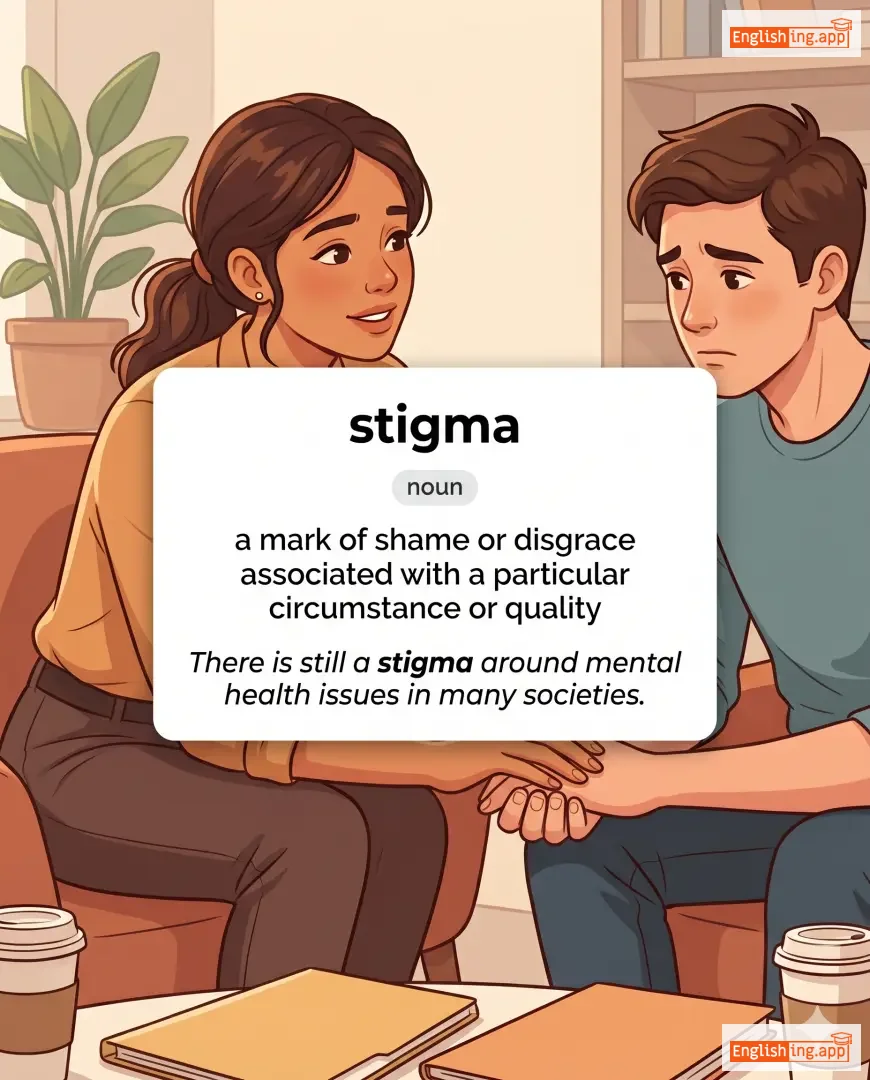
stigma definition card — visual illustration of the meaning
noun
/ˈstɪɡmə/
汚名 (omei)

a mark of shame or disgrace associated with a particular circumstance or quality

"There is still a stigma around mental health issues in many societies."

"多くの社会では、精神的な健康問題に関して未だに汚名がついています。" (Ōku no shakai de wa, seishinteki na kenkō mondai ni kanshite imada ni omei ga tsuiteimasu.)
verb
/ˈstɪɡmətaɪz/
スティグマタイズする (sutigumataizu suru)

to describe or regard someone as worthy of disgrace or disapproval

"People with certain illnesses are often unfairly stigmatized."

"特定の病気の人々はしばしば不当な方法でスティグマタイズされる。" (Tokutei no byōki no hitobito wa shibashiba futō na hōhō de sutigumataizu sareru.)
noun
/stɪˈlɛtoʊ/
細いヒールの靴 / ダガー (hosoi hīru no kutsu / dagā)

A small, thin, high-heeled shoe or a dagger with a slender blade.

"She wore elegant stiletto heels to the party."

"彼女はパーティーにエレガントなスティレットヒールを履いて行きました。" (Kanojo wa pātii ni ereganto na sutiretto hīru o haite ikimashita.)
adjective
/stɪl/
静かな (shizukana)

not moving or making a sound

"The water was still, reflecting the sky."

"水は静かで、空を反射していた。" (Mizu wa shizuka de, sora wo hansha shiteita.)
adjective
/ˈstɪltɪd/
不自然な、堅苦しい (fushizen na, katakurushii)

Speech or writing that is stiff, unnatural, or overly formal.

"His speech sounded stilted and rehearsed."

"彼のスピーチは不自然で練習されたように聞こえた。" (Kare no supīchi wa fushizen de renshū sareta yō ni kikoeta.)
noun
/ˈstɪmjʊlənt/
興奮剤 (koufun zai)

A substance that raises levels of physiological or nervous activity in the body.

"Coffee is a common stimulant that helps people stay awake."
"コーヒーは一般的な興奮剤で、人々が目を覚ますのを助けます" (Kōhī wa ippantekina kōfunzai de, hitobito ga me wo samasu no wo tasukemasu)
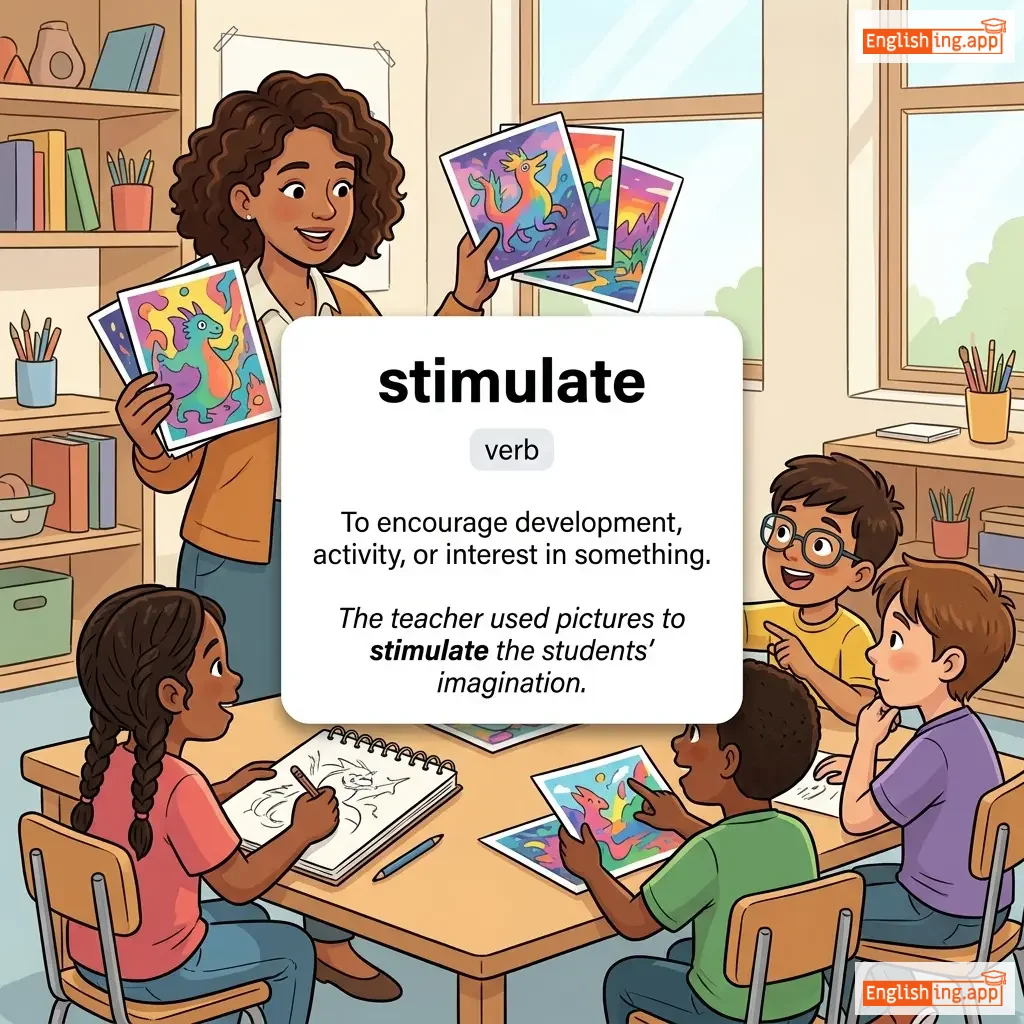
stimulate definition card — visual illustration of the meaning
verb
/ˈstɪmjʊˌleɪt/
刺激する, 活性化する (shigeki suru, katsusei suru)

To encourage development, activity, or interest in something.

"The teacher used pictures to stimulate the students' imagination."
"先生は絵を使って生徒の想像力を刺激しました。" (Sensei wa e o tsukatte seito no sōzōryoku o shigeki shimashita.)
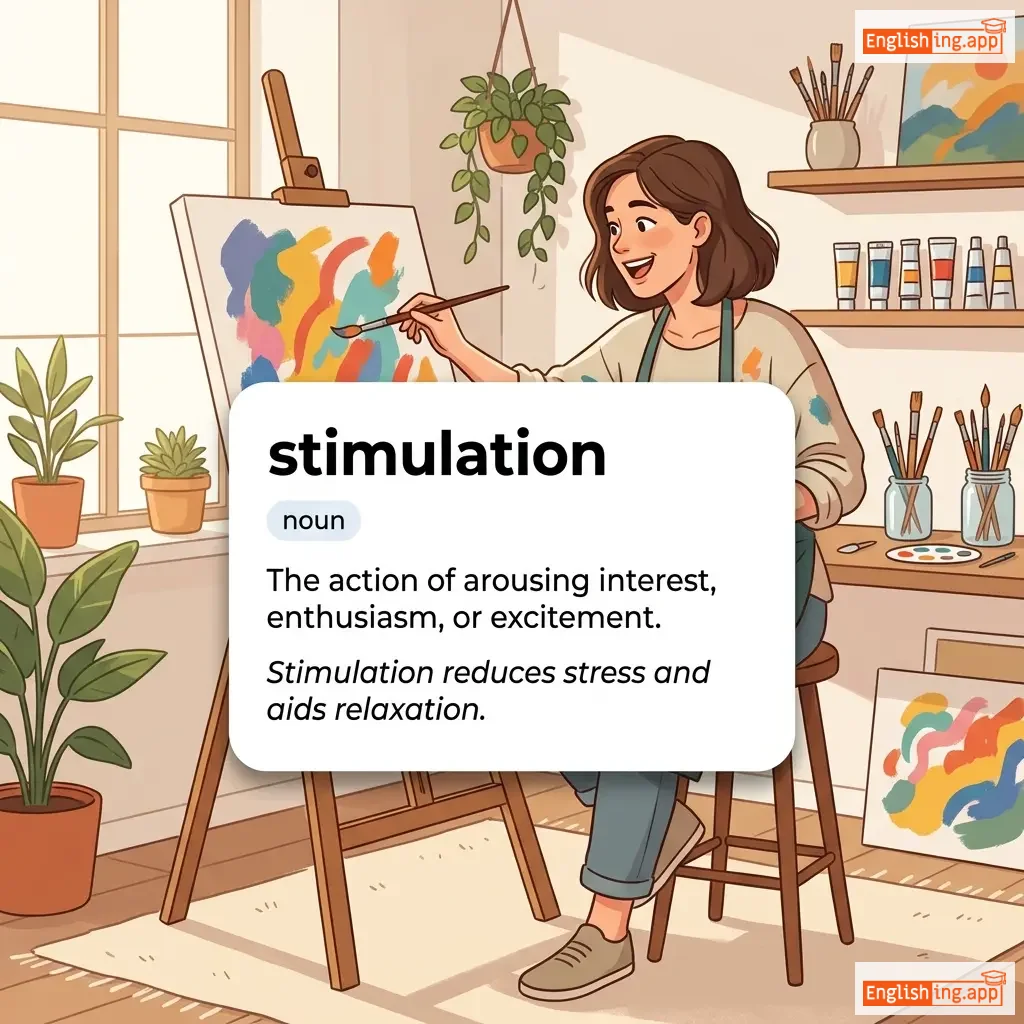
stimulation definition card — visual illustration of the meaning
noun
/ˌstɪm.jəˈleɪ.ʃən/
刺激 (shigeki)

The action of arousing interest, enthusiasm, or excitement.

"Stimulation reduces stress and aids relaxation."
"刺激はストレスを減らし、リラックスを助けます。" (Shigeki wa sutoresu wo herashi, rirakkusu wo tasukemasu.)
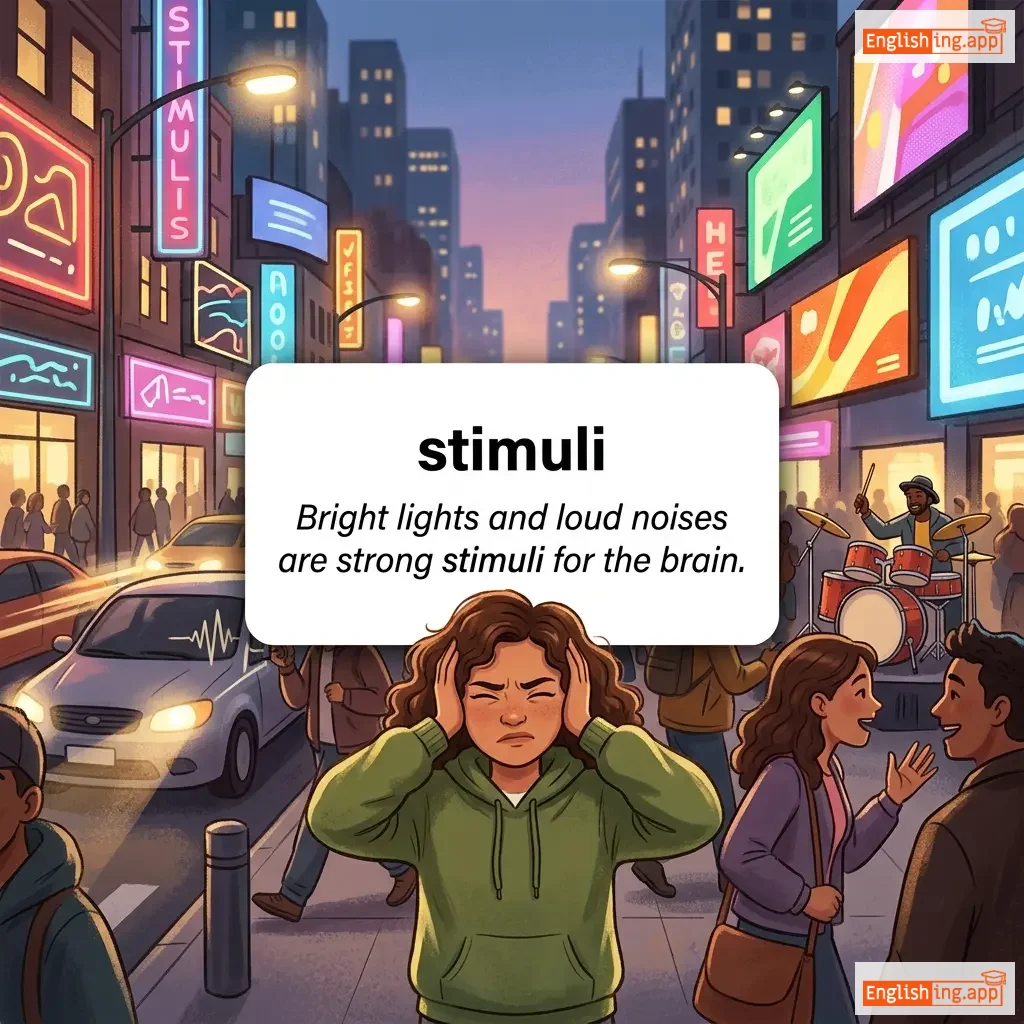
stimuli definition card — visual illustration of the meaning
noun (plural of stimulus)
/ˈstɪm.jʊ.laɪ/
刺激 (shigeki)

Things or events that evoke a specific functional reaction in an organ or tissue.

"Bright lights and loud noises are strong stimuli for the brain."
"明るい光と大きな音は、脳にとって強力な刺激です。" (Akarui hikari to ōkina oto wa, nō ni totte kyōryoku na shigeki desu.)
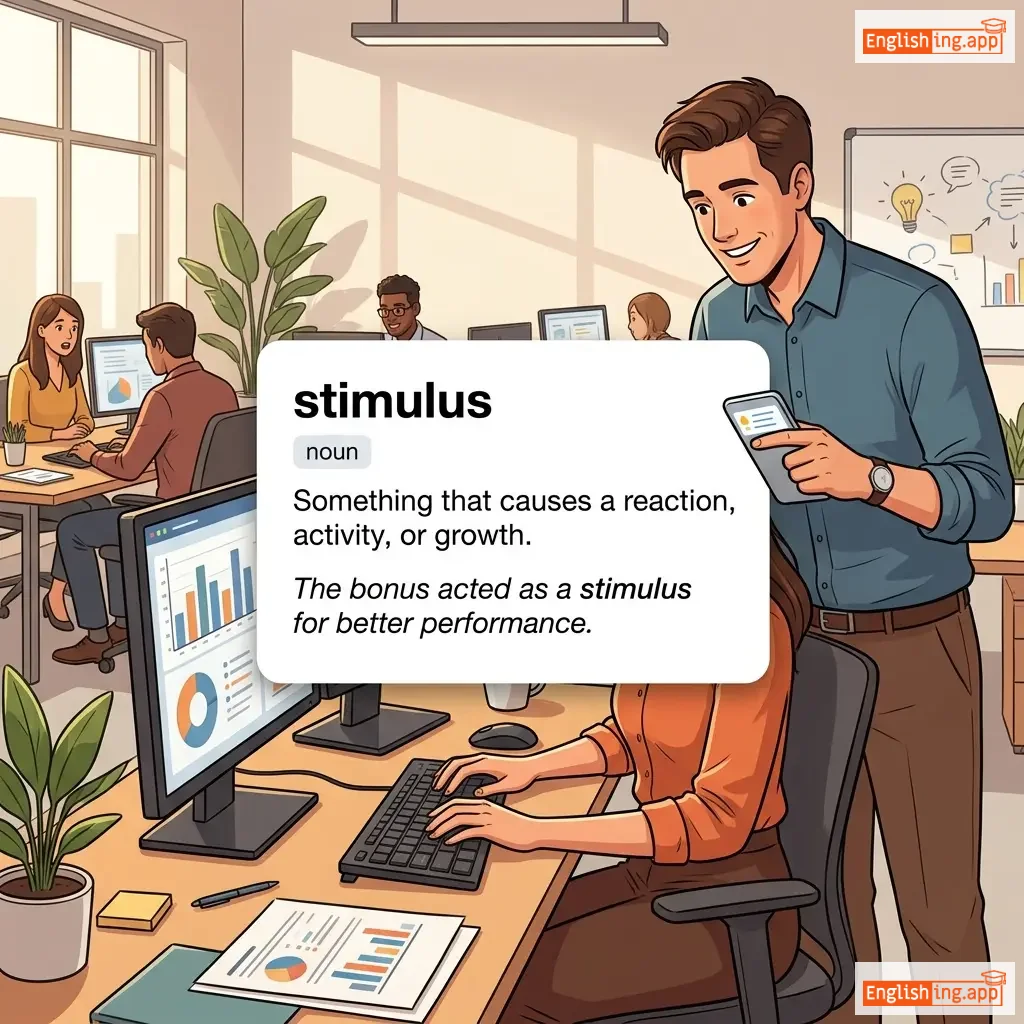
stimulus definition card — visual illustration of the meaning
noun
/ˈstɪmjʊləs/
反応、活動、または成長を引き起こすもの、刺激 (hannou, katsudou, matawa seichou wo hikiokosu mono, shigeki)

Something that causes a reaction, activity, or growth.

"The bonus acted as a stimulus for better performance."
"ボーナスはより良いパフォーマンスのための刺激となった。" (Bōnasu wa yori yoi pafōmansu no tame no shigeki to natta.)
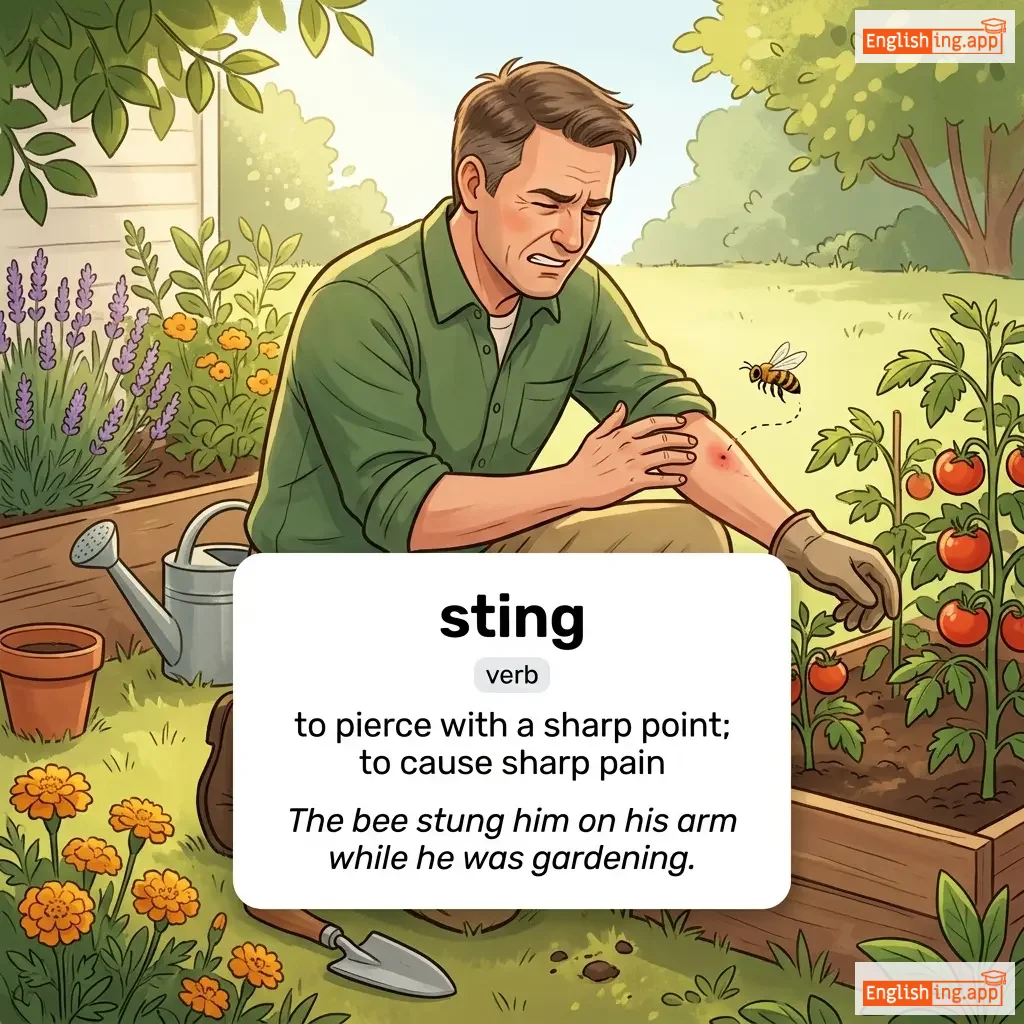
sting definition card — visual illustration of the meaning
verb
/stɪŋ/
刺す (sasu)

to pierce with a sharp point; to cause sharp pain

"The bee stung him on his arm while he was gardening."

"蜂は彼が庭仕事をしているときに彼の腕を刺しました。" (Hachi wa kare ga niwashigoto o shite iru toki ni kare no ude o sashimashita)
adjective
/ˈstɪndʒi/
けち (kechi)

unwilling to spend or give; miserly

"He is too stingy to buy a gift for his friend."

"彼は友達へのプレゼントを買うにはあまりにけちだ。" (Kare wa tomodachi e no purezento o kau ni wa amari ni kechi da.)
verb
/stɪŋk/
臭い (kusai)

to smell very unpleasant

"The garbage bin stinks in the hot sun."
"ゴミ箱は暑い太陽の下で臭いです。" (Gomibako wa atsui taiyou no shita de kusai desu.)
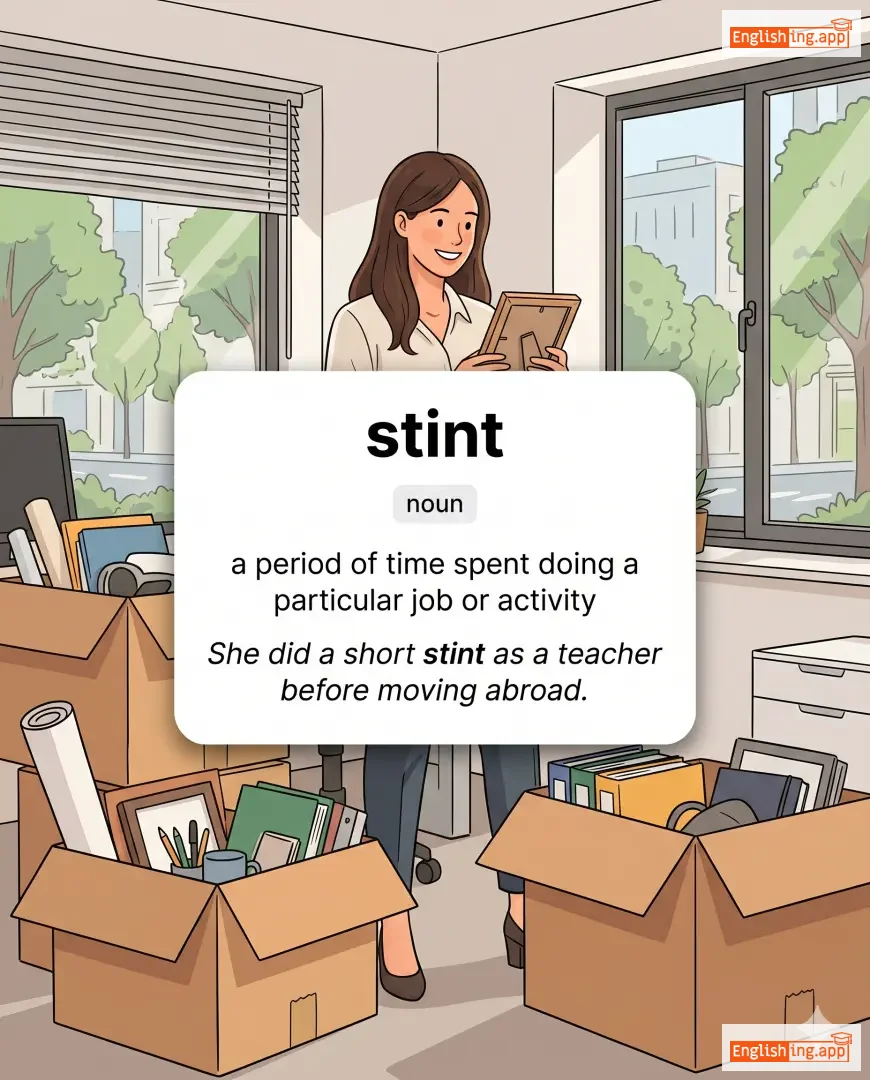
stint definition card — visual illustration of the meaning
noun
/stɪnt/
短期の仕事 (tanki no shigoto)

a period of time spent doing a particular job or activity

"She did a short stint as a teacher before moving abroad."

"彼女は海外に移住する前に短期間の教師として働きました。" (Kanojo wa kaigai ni ijū suru mae ni tanki no kyōshi toshite hatarakimashita.)
verb
/ˈstɪntɪŋ/
けちけちと与える (kechiketo ataeru)

to supply sparingly or with restrictions

"He never stinting his efforts to help the poor."

"彼は貧しい人々を助けるために決して手を抜きません。" (Kare wa mazushī hitobito o tasukeru tame ni kesshite te o nukimasen.)
noun
/ˈstaɪpɛnd/
奨学金 (shougakukin)

a fixed regular payment, usually for services or to cover living expenses

"The university provides a monthly stipend to its research students."

"大学は研究学生に毎月のスタイペンドを提供しています。" (Daigaku wa kenkyu gakusei ni maitsuki no suteipendo o teikyō shiteimasu.)
verb
/ˈstɪp.əl/
小さな点で覆う (chiisana ten de oou)

to cover a surface with numerous small dots or specks, often in drawing or painting

"The artist stippled the canvas to create a textured effect."
"アーティストはキャンバスに小さな点をつけて、テクスチャ効果を作り出しました。" (Aatisuto wa kyanbasu ni chiisana ten o tsukete, tekusuchā kōka o tsukuridashimashita.)
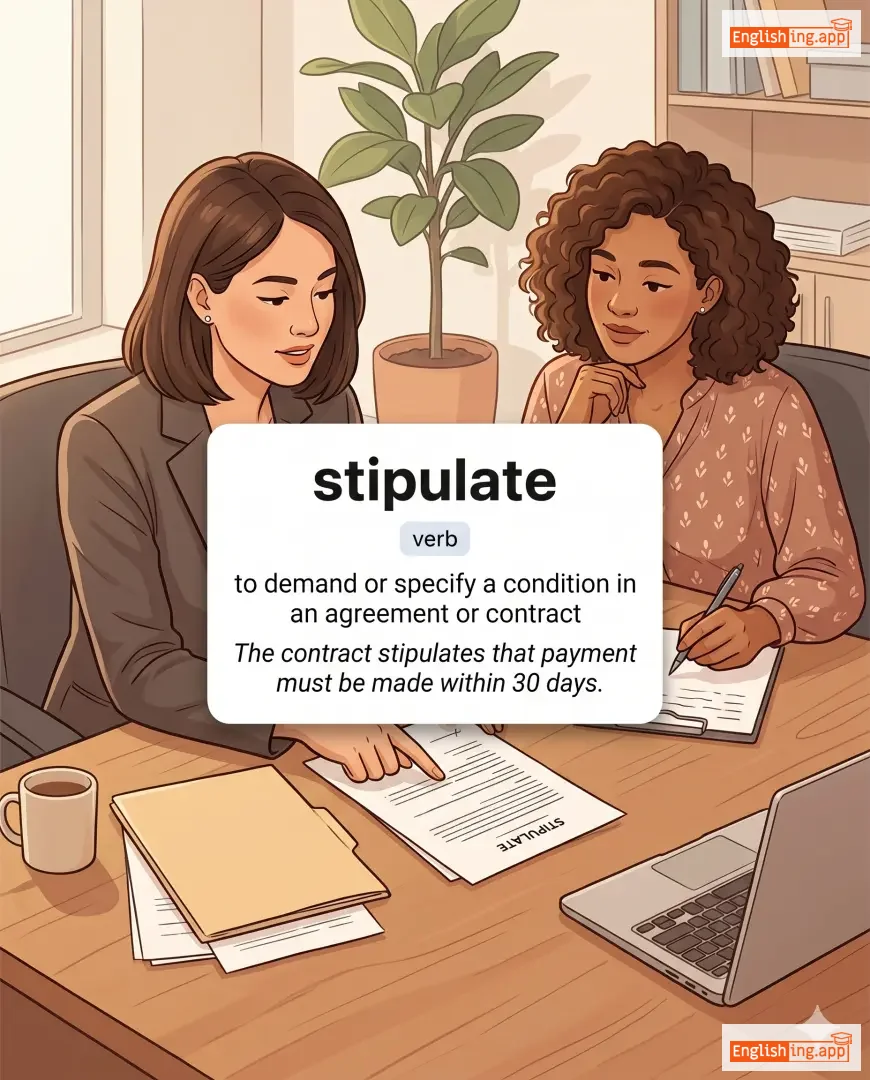
stipulate definition card — visual illustration of the meaning
verb
/ˈstɪp.jʊ.leɪt/
規定する (kitei suru)

to demand or specify a condition in an agreement or contract

"The contract stipulates that payment must be made within 30 days."
"契約書には、支払いは30日以内に行われるべきであると明記されています。" (Keiyakusho ni wa, shiharai wa 30 nichi inai ni okonawareru beki de aru to meiki sareteimasu.)
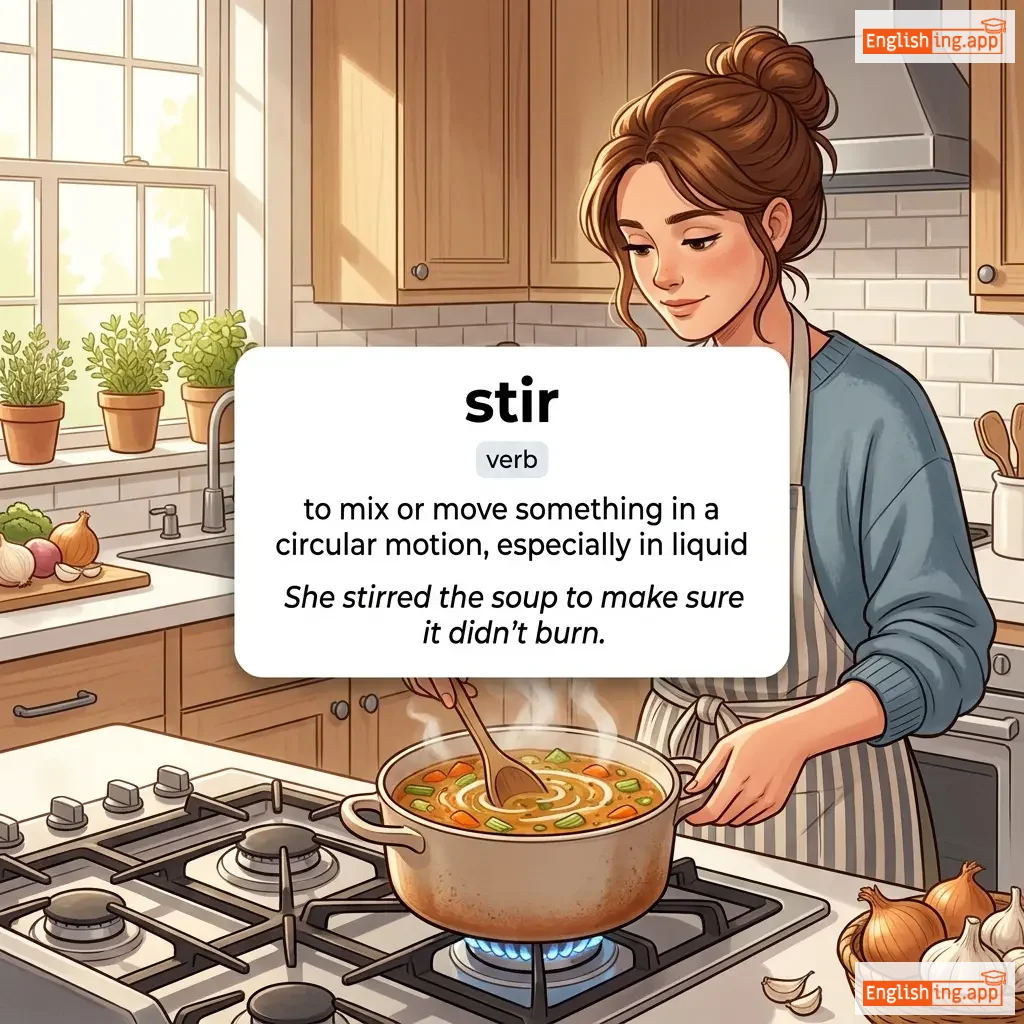
stir definition card — visual illustration of the meaning
verb
/stɜːr/
かき混ぜる (kakimazeru)

to mix or move something in a circular motion, especially in liquid

"She stirred the soup to make sure it didn't burn."

"彼女はスープをかき混ぜて、焦げないようにした。" (Kanojo wa suupu o kakimazete, kogenai you ni shita.)
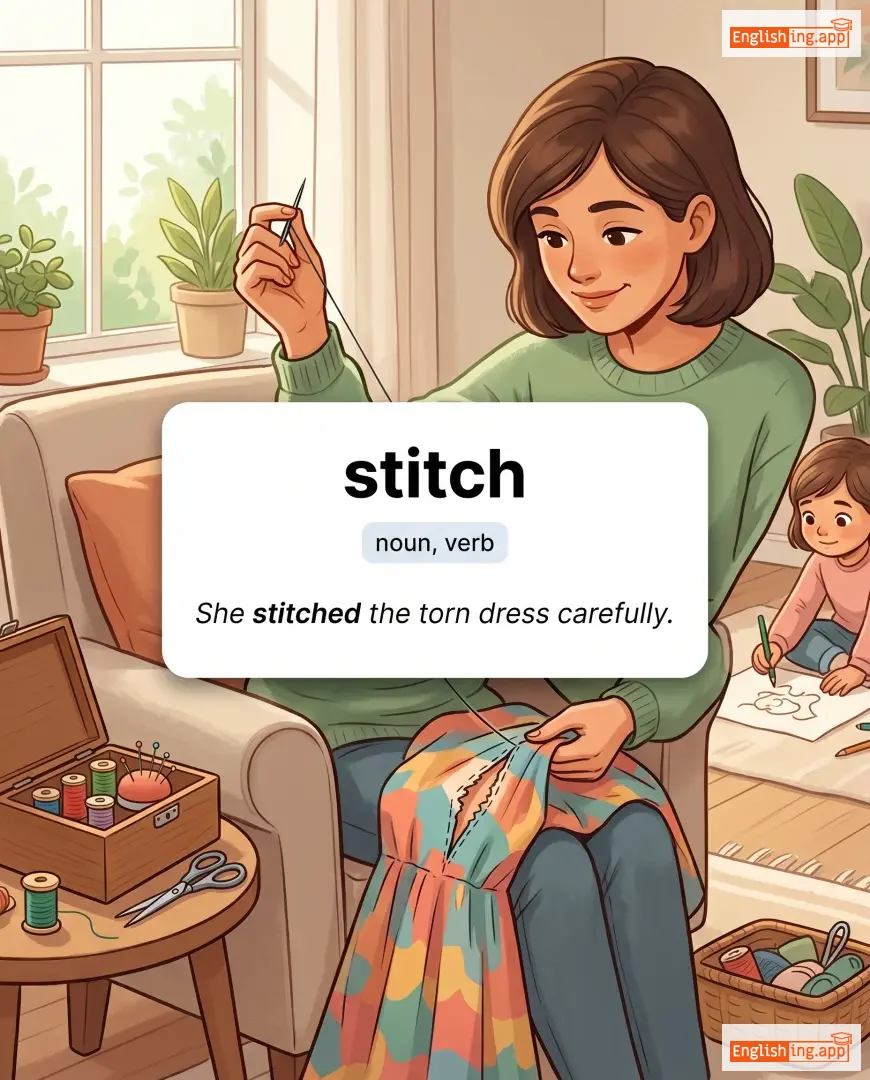
stitch definition card — visual illustration of the meaning
noun, verb
/stɪtʃ/

to sew fabric together using a needle and thread; also a single loop of thread in sewing

"She stitched the torn dress carefully."

noun, verb
/stɒk/
在庫 (zaiko)

a supply of goods kept for sale or use; to keep or fill with goods

"The shop stocks a wide variety of products."

"その店はさまざまな製品を在庫しています。" (Sono mise wa samazama na seihin o zaiko shiteimasu.)
noun
/stɒˈkeɪd/
木製の塀 (mokusei no hei)

a defensive barrier made of strong posts or timbers, often around a fort or prison

"The prisoners were kept inside the wooden stockade."

"囚人は木製の塀の中に閉じ込められていました。" (Shūjin wa mokusei no hei no naka ni tojikomere rarete imashita.)
adjective
/ˈstɒdʒi/
退屈な、時代遅れな (taikutsu na, jidaiokure na)

Dull, uninspired, or old-fashioned; also heavy and hard to digest when referring to food.

"The lecture was so stodgy that many students struggled to stay awake."

"その講義はあまりにも退屈で、多くの学生が目を覚ますのに苦労しました。" (Sono kōgi wa amari ni mo taikutsu de, ōku no gakusei ga me o samasu no ni kurō shimashita.)
adjective
/ˈstoʊɪk/
冷静な, 無感情な (reiseina, mugannōna)

Showing little or no emotion, even in difficult situations.

"She remained stoic during the crisis, never showing fear or panic."
"彼女は危機の間、冷静で恐怖やパニックを示さなかった。" (Kanojo wa kiki no aida, reisei de kyōfu ya panikku o shimesanakatta.)
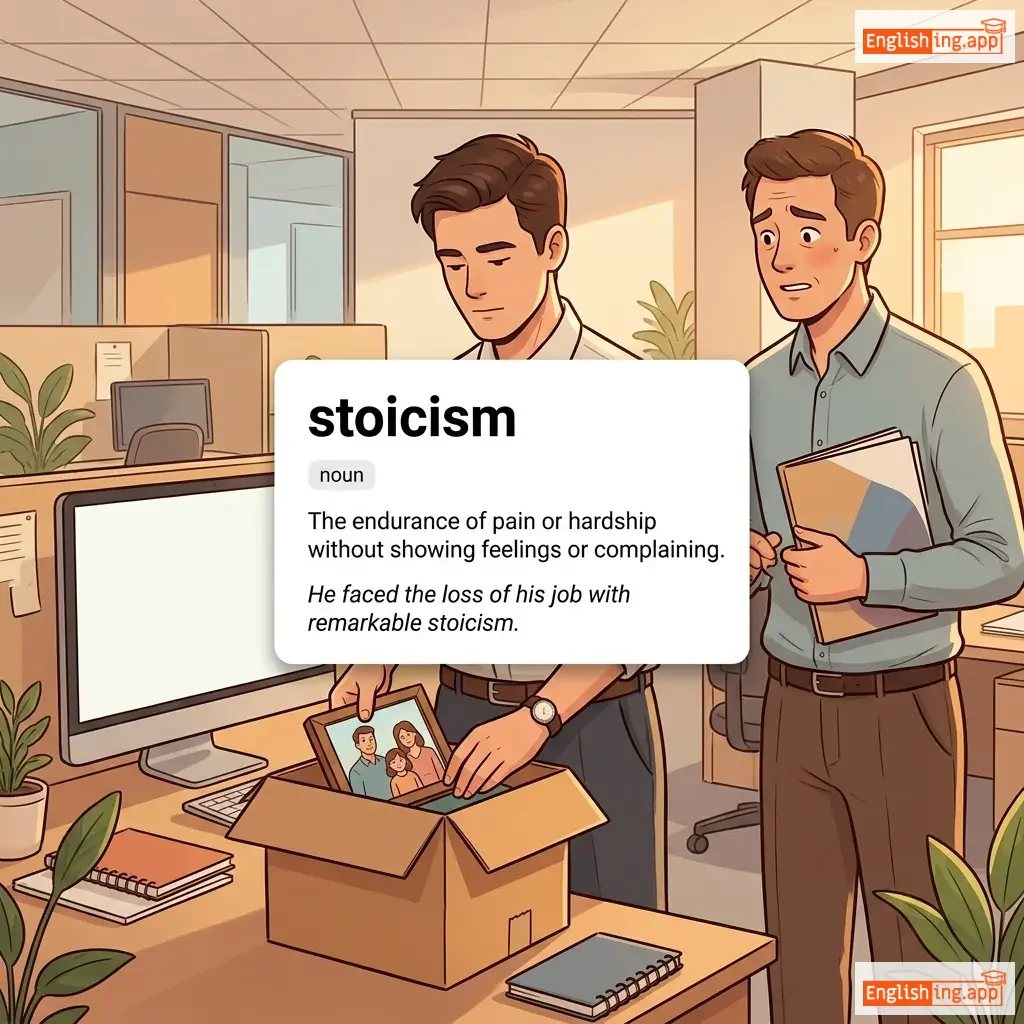
stoicism definition card — visual illustration of the meaning
noun
/ˈstoʊɪˌsɪzəm/
ストイック主義 (sutoikku shugi)

The endurance of pain or hardship without showing feelings or complaining.

"He faced the loss of his job with remarkable stoicism."
"彼は仕事を失ったことを並外れたストイック主義で乗り越えた。" (Kare wa shigoto o ushinatta koto o namihazureta sutoikku shugi de norikoeta.)
🔥

stoke

verb
/stoʊk/

To add fuel to a fire; to encourage or increase a strong feeling or activity.

"The politician’s speech stoked anger among the crowd."

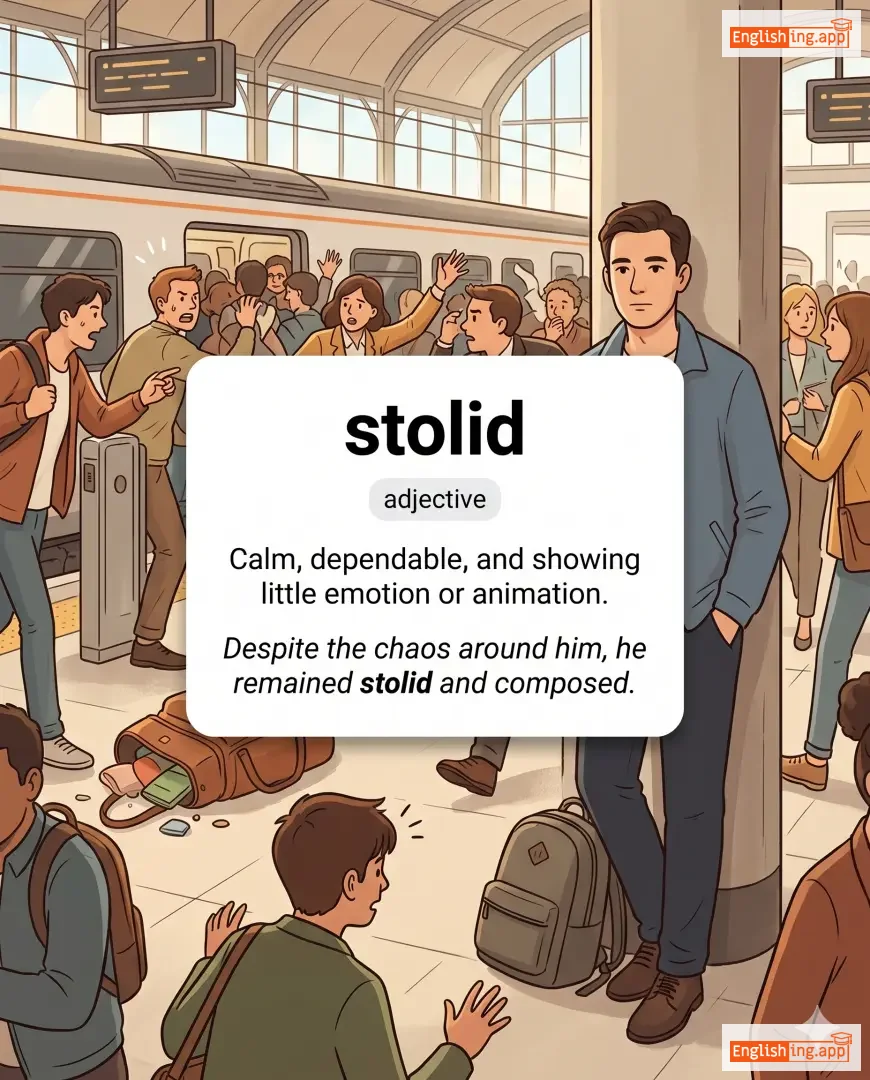
stolid definition card — visual illustration of the meaning
adjective
/ˈstɒlɪd/
冷静な、無表情な (reisei na, muhyoujou na)

Calm, dependable, and showing little emotion or animation.

"Despite the chaos around him, he remained stolid and composed."

"周りの混乱にもかかわらず、彼は冷静で落ち着いていました。" (Mawari no konran ni mo kakawarazu, kare wa reisei de ochitsuite imashita.)
noun/verb
/ˈstʌmək/
胃 / 耐える (i / taeru)

The internal organ in which food is digested; also to tolerate or endure something

"She couldn’t stomach the sight of violence."

"彼女は暴力の光景に耐えられなかった。" (Kanojo wa bōryoku no kōkei ni taerarenakatta.)
noun
/ˈstʌmək eɪk/
腹痛 (fukutsuu)

Pain in the stomach or abdominal area

"I have a stomach ache after eating too much."
"食べ過ぎた後、腹痛があります。" (Tabesugita ato, fukutsuu ga arimasu)
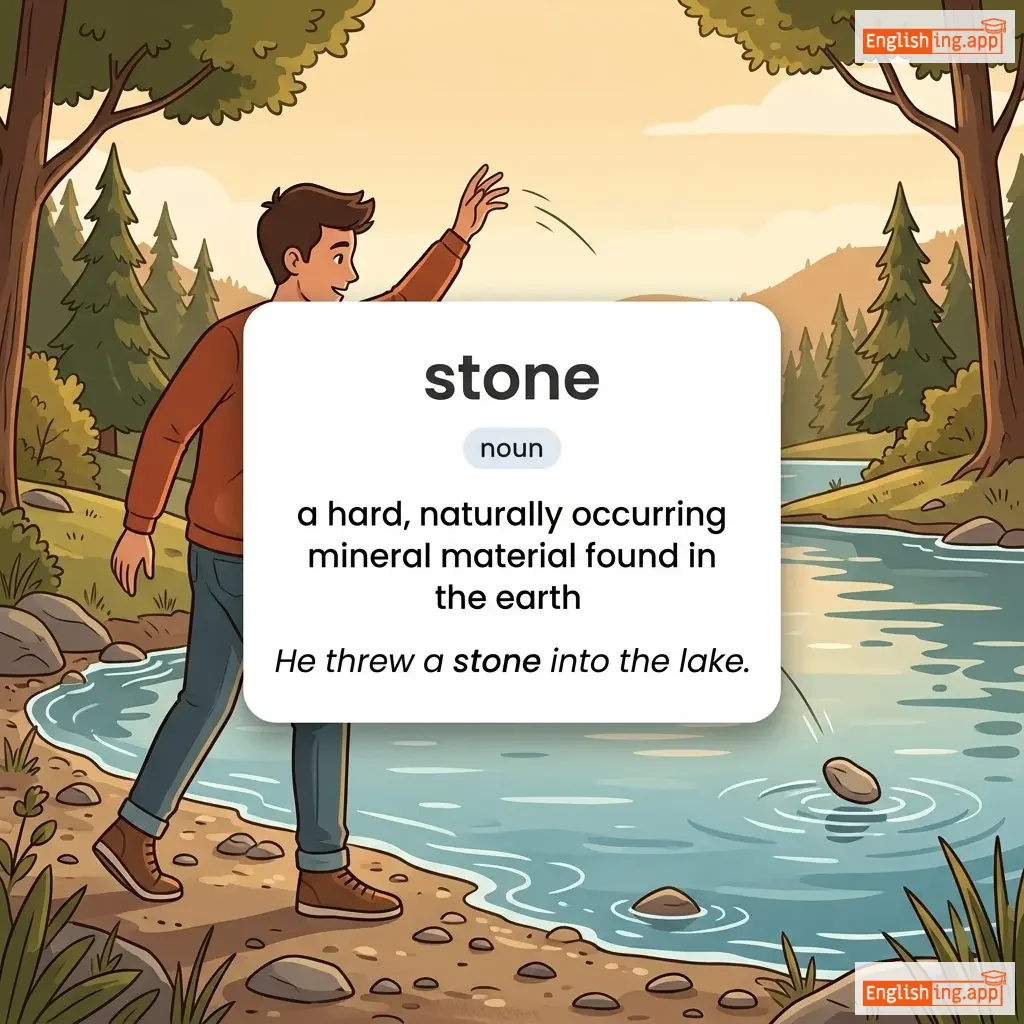
stone definition card — visual illustration of the meaning
noun
/stoʊn/
(ishi)

a hard, naturally occurring mineral material found in the earth

"He threw a stone into the lake."

"彼は湖に石を投げました。" (Kare wa mizūmi ni ishi o nagemashita.)
verb
/ˈstoʊnwɔːl/
妨害する (bōgai suru)

To delay or block progress by refusing to cooperate or answer

"The witness tried to stonewall during the investigation."

"証人は調査中にストーンウォールしようとしました。" (Shōnin wa chōsa-chū ni sutōn wōru shiyō to shimashita.)
verb/noun
/stuːp/
幸福 (kōfuku)

To bend one's body forward and downward; also a small porch or staircase at the entrance of a house

"He had to stoop to pick up the coin."
"彼女は賞を受け取ったとき、自分の幸福を隠すことができませんでした。" (Kanojo wa shō o uketotta toki, jibun no kōfuku o kakusu koto ga dekimasen deshita.)
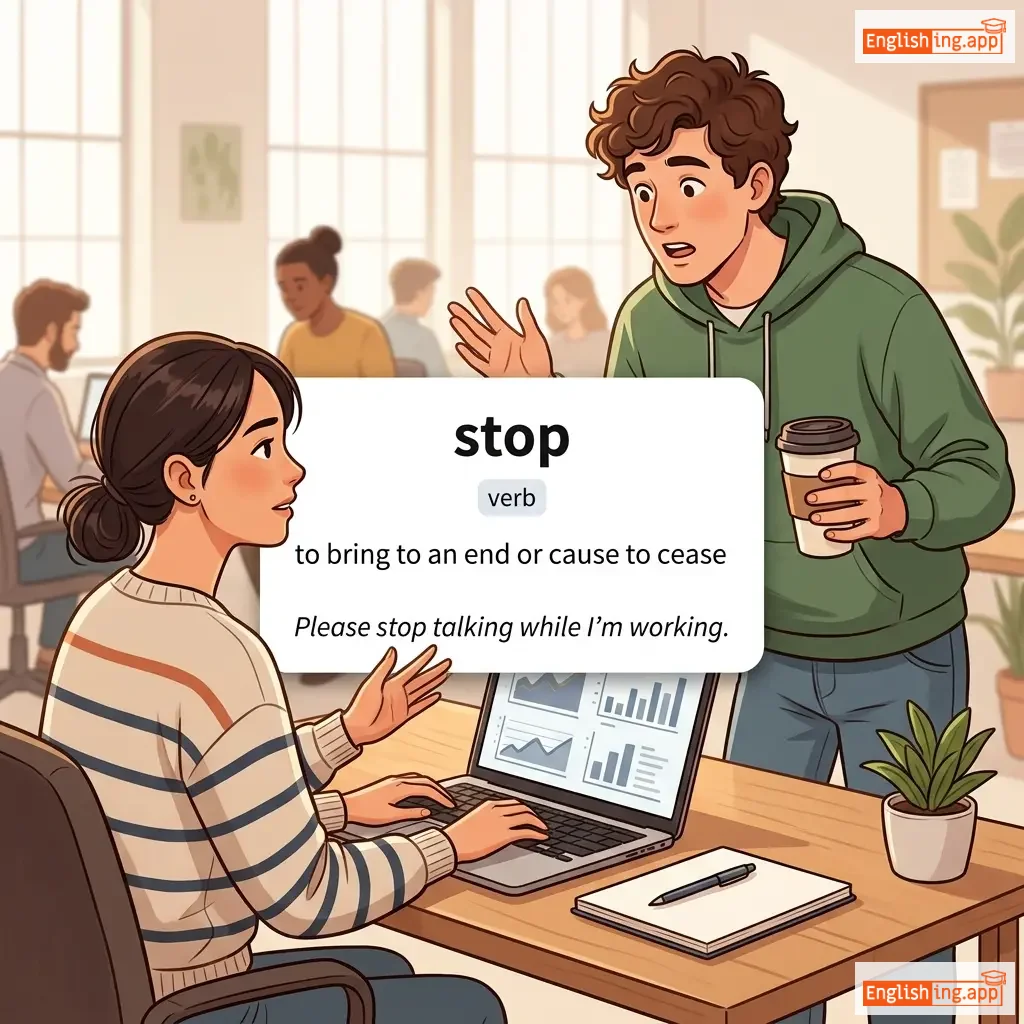
stop definition card — visual illustration of the meaning
verb
/stɑːp/
止める (tomeru)

to bring to an end or cause to cease

"Please stop talking while I’m working."

"私が作業している間、話すのをやめてください。" (Watashi ga sagyo shite iru aida, hanasu no wo yamete kudasai.)
noun
/ˈstɒpɪdʒ/
停止; 中断 (teishi; chudan)

The act of stopping or ceasing; a halt in operation or activity

"The sudden stoppage of the train caused delays for all passengers."
"電車の突然の停止で、すべての乗客に遅れが生じた。" (Densha no totsuzen no teishi de, subete no jokyaku ni okure ga shojita.)
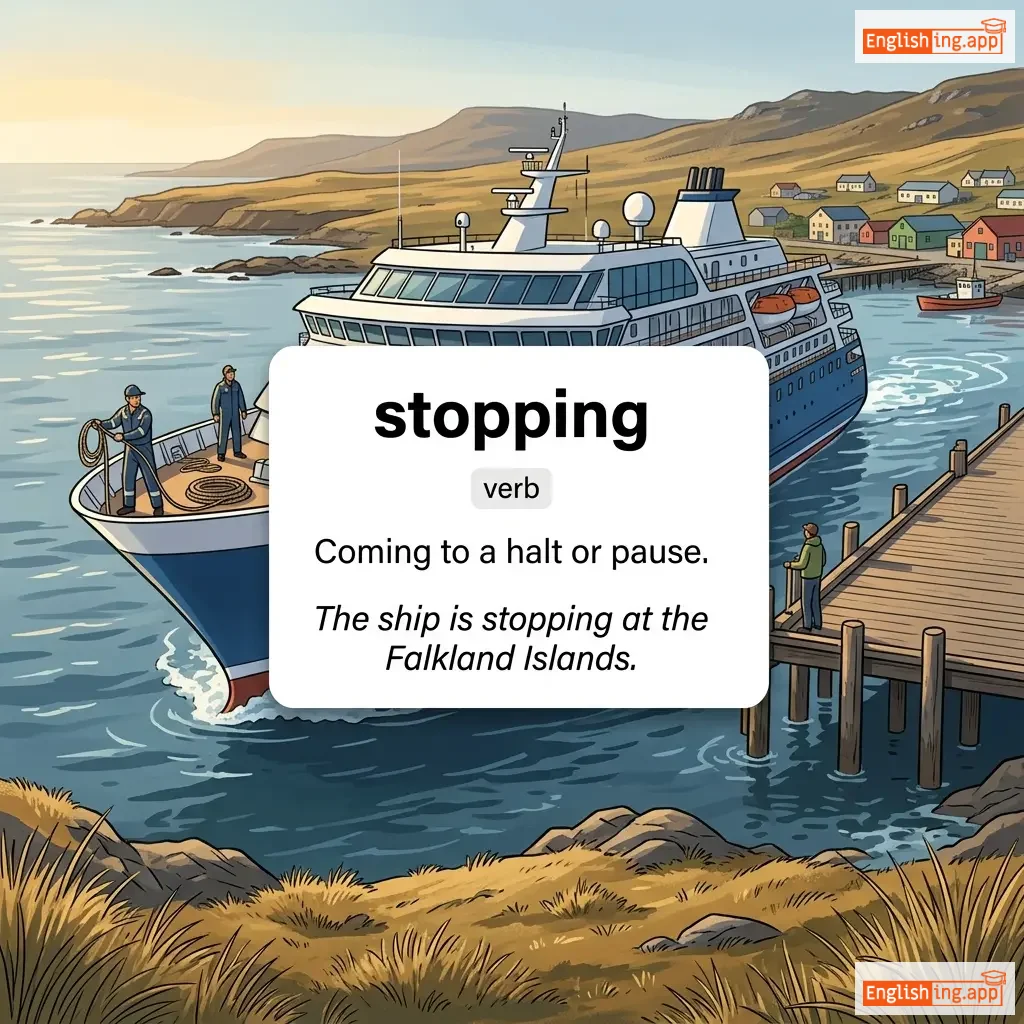
stopping definition card — visual illustration of the meaning
verb
/ˈstɒpɪŋ/
停止 (teishi)

Coming to a halt or pause.

"The ship is stopping at the Falkland Islands."

"船はフォークランド諸島で停泊しています。" (Fune wa Fōkurando shotō de teihaku shiteimasu.)
noun
/ˈstɔːrɪdʒ/
保存 (hozon)

the action or method of storing something for future use

"The warehouse offers plenty of storage space."

"倉庫にはたくさんの保存スペースがあります。" (Sōko ni wa takusan no hozon supēsu ga arimasu.)
strategic definition card — visual illustration of the meaning
adjective
/strəˈtiːdʒɪk/
戦略的 (senryakuteki)

relating to the identification of long-term or overall aims and interests and the means of achieving them

"His strategic thinking helped the company grow."
"彼の戦略的思考は会社の成長に役立ちました。" (Kare no senryakuteki shikō wa kaisha no seichō ni yakudachimashita.)
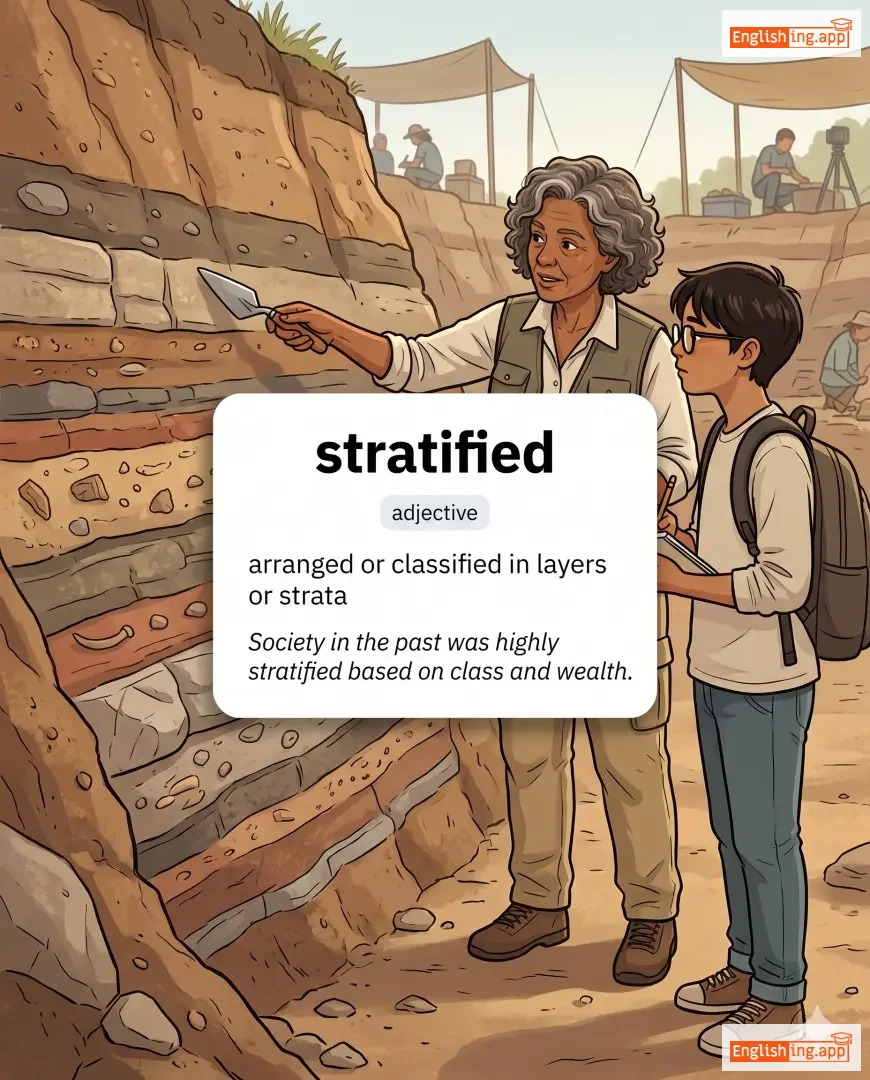
stratified definition card — visual illustration of the meaning
adjective
/ˈstrætɪfaɪd/

arranged or classified in layers or strata

"Society in the past was highly stratified based on class and wealth."

strategy definition card — visual illustration of the meaning
noun
/ˈstrætədʒi/
戦略 (senryaku)

a plan of action designed to achieve a long-term or overall aim

"They developed a new strategy to increase sales."

"彼らは売上を増加させるために新しい戦略を開発しました。" (Karera wa uriage o zōka saseru tame ni atarashī senryaku o kaihatsu shimashita.)
strategies definition card — visual illustration of the meaning
noun
ˈstræt.ə.dʒiz
戦略 (senryaku)

A plan of action designed to achieve a long-term or overall aim.

"Effective strategies ensure success."

"効果的な戦略は成功を保証する。" (Kōkateki na senryaku wa seikō o hoshō suru.)
strategic insights definition card — visual illustration of the meaning
noun
/strəˈtiː.dʒɪk ˈɪn.saɪts/
戦略的洞察 (senryakuteki dōsatsu)

Deep understanding and wisdom gained through careful analysis for planning purposes.

"Strategic insights guide policymaking."

"戦略的洞察は政策立案を導く。" (Senryakuteki dōsatsu wa seisaku ritsuan o michibiku.)
verb
/ˈstræŋɡəl/

to kill or stop someone or something by squeezing the throat or restricting flow

"The villain tried to strangle his opponent in the dark alley."

adjective
/streɪndʒ/
奇妙 (kimyō)

unusual or not normal

"It was strange to see him at the party after so long."

"そんなに長い時間後にパーティーで彼を見るのは奇妙だった。" (Sonnani nagai jikan go ni pātī de kare o miru no wa kimyō datta.)