词汇表

英语词汇词典 | 单词含义、定义和示例

adjective
/ˈsɪŋkəˌpeɪtɪd/
切分节奏 (qiēfēn jiézòu)

Characterized by displaced beats or rhythms, especially in music.

"The jazz piece had a syncopated rhythm that energized the crowd."

"这段爵士乐有一个切分节奏,激励了人群。" (Zhè duàn juéshì yuè yǒu yīgè qiēfēn jiézòu, jīlìle rénqún.)
noun
/ˈsɪndɪkət/
辛迪加 (xīndíjiā)

A group of individuals or organizations combined to promote a common interest or carry out a business venture.

"A syndicate of investors bought the struggling company."

"一个投资者辛迪加买下了这家困难的公司。" (Yī gè tóuzī zhě xīndíjiā mǎi xià le zhè jiā kùnnán de gōngsī.)
noun
/ˈsɪnˌdroʊm/
综合症 (zonghezheng)

a group of symptoms that occur together and characterize a condition or disease

"Down syndrome affects a person's physical and mental development."

"唐氏综合症影响一个人的身体和智力发展。" (Tangshi zonghezheng yingxiang yige ren de shenti he zhili fazhan.)
noun
/sɪˈnɛrəsɪs/
协同作用 (xie tong zuo yong)

The contraction of two adjacent vowels into a single syllable or the separation of liquid from a gel.

"The yogurt showed syneresis when liquid separated on top."

"当液体在上面分离时,酸奶表现出协同作用。" (Dang ye ti zai shangmian fenli shi, suannai biaoxian chu xietong zuoyong.)
noun
/sɔːrd/
(jian)

a weapon with a long metal blade used for fighting

"The knight drew his sword to defend the castle."

"骑士拔出他的剑来保卫城堡。" (qíshì bá chū tā de jiàn lái bǎowèi chéngbǎo.)
verb
/ˈstaɪfl/
抑制 (yìzhì)

to prevent or restrain an action, idea, or emotion; to suffocate

"She tried to stifle a laugh during the serious meeting."

"她试图在严肃的会议中抑制笑声。" (Tā shìtú zài yánsù de huìyì zhōng yìzhì xiàoshēng.)
verb
/ˈstaɪfəld/
压制 (yazhì)

to suppress, hold back, or prevent something from happening

"He stifled a laugh during the serious meeting."
"他在严肃的会议中压制了笑声。" (Tā zài yánsù de huìyì zhōng yāzhìle xiàoshēng.)
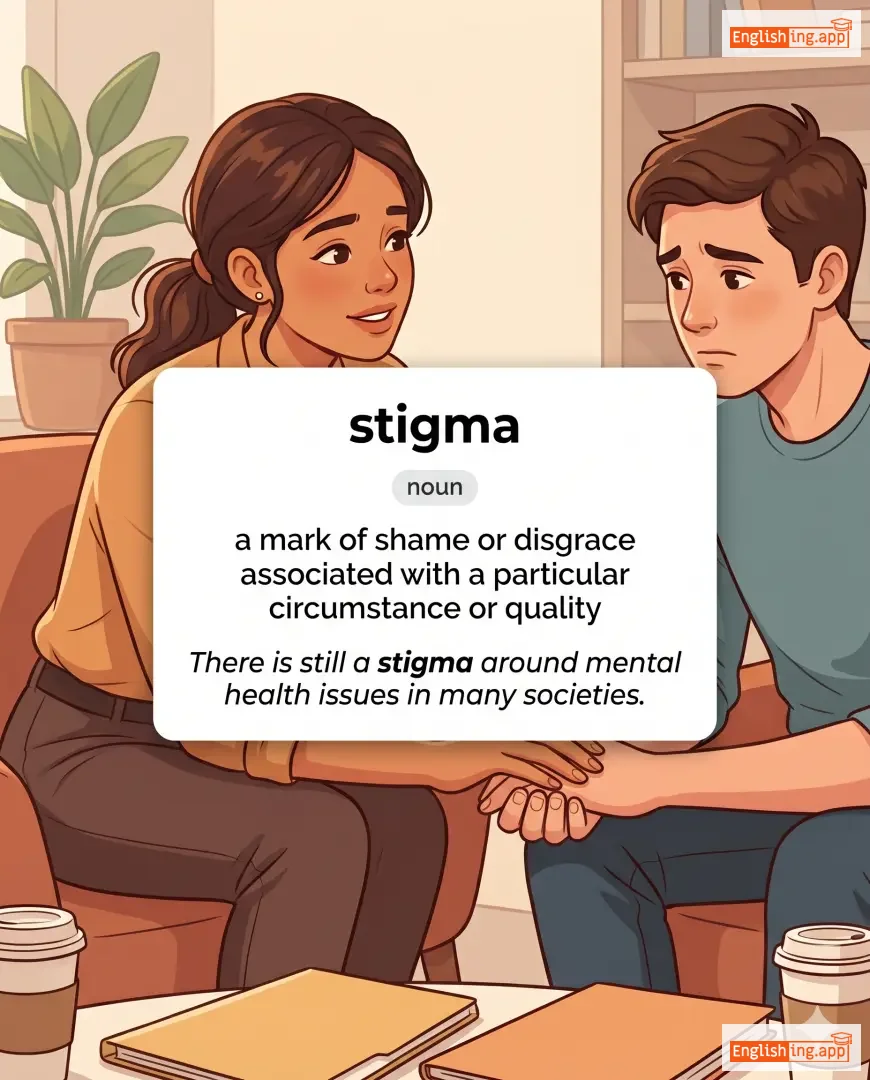
stigma definition card — visual illustration of the meaning
noun
/ˈstɪɡmə/
污名 (wūmíng)

a mark of shame or disgrace associated with a particular circumstance or quality

"There is still a stigma around mental health issues in many societies."

"许多社会中,心理健康问题仍然存在污名化现象。" (Xǔduō shèhuì zhōng, xīnlǐ jiànkāng wèntí réngrán cúnzài wūmínghuà xiànxiàng.)
verb
/ˈstɪɡmətaɪz/
污名化 (wūmíng huà)

to describe or regard someone as worthy of disgrace or disapproval

"People with certain illnesses are often unfairly stigmatized."

"患有某些疾病的人常常被不公正地污名化。" (Huàn yǒu mǒu xiē jíbìng de rén chángcháng bèi bù gōngzhèng de wūmíng huà.)
noun
/stɪˈlɛtoʊ/
细高跟鞋 / 匕首 (xì gāo gēn xié / bǐ shǒu)

A small, thin, high-heeled shoe or a dagger with a slender blade.

"She wore elegant stiletto heels to the party."

"她穿着优雅的细高跟鞋去参加派对。" (Tā chuānzhuó yōuyǎ de xì gāo gēn xié qù cānjiā pàiduì.)
adjective
/stɪl/
静止 (jingzhi)

not moving or making a sound

"The water was still, reflecting the sky."

"水面静止,反射着天空。" (Shuǐmiàn jìngzhǐ, fǎnshè zhe tiānkōng.)
adjective
/ˈstɪltɪd/
做作的, 不自然的 (zuòzuò de, bù zìrán de)

Speech or writing that is stiff, unnatural, or overly formal.

"His speech sounded stilted and rehearsed."

"他的演讲听起来做作且预先排练过。" (Tā de yǎnjiǎng tīng qǐlái zuòzuò qiě yùxiān páiliàn guò.)
noun
/ˈstɪmjʊlənt/
兴奋剂 (xīngfèn jì)

A substance that raises levels of physiological or nervous activity in the body.

"Coffee is a common stimulant that helps people stay awake."
"咖啡是一种常见的兴奋剂,帮助人们保持清醒" (Kāfēi shì yī zhǒng chángjiàn de xīngfèn jì, bāngzhù rénmen bǎochí qīngxǐng)
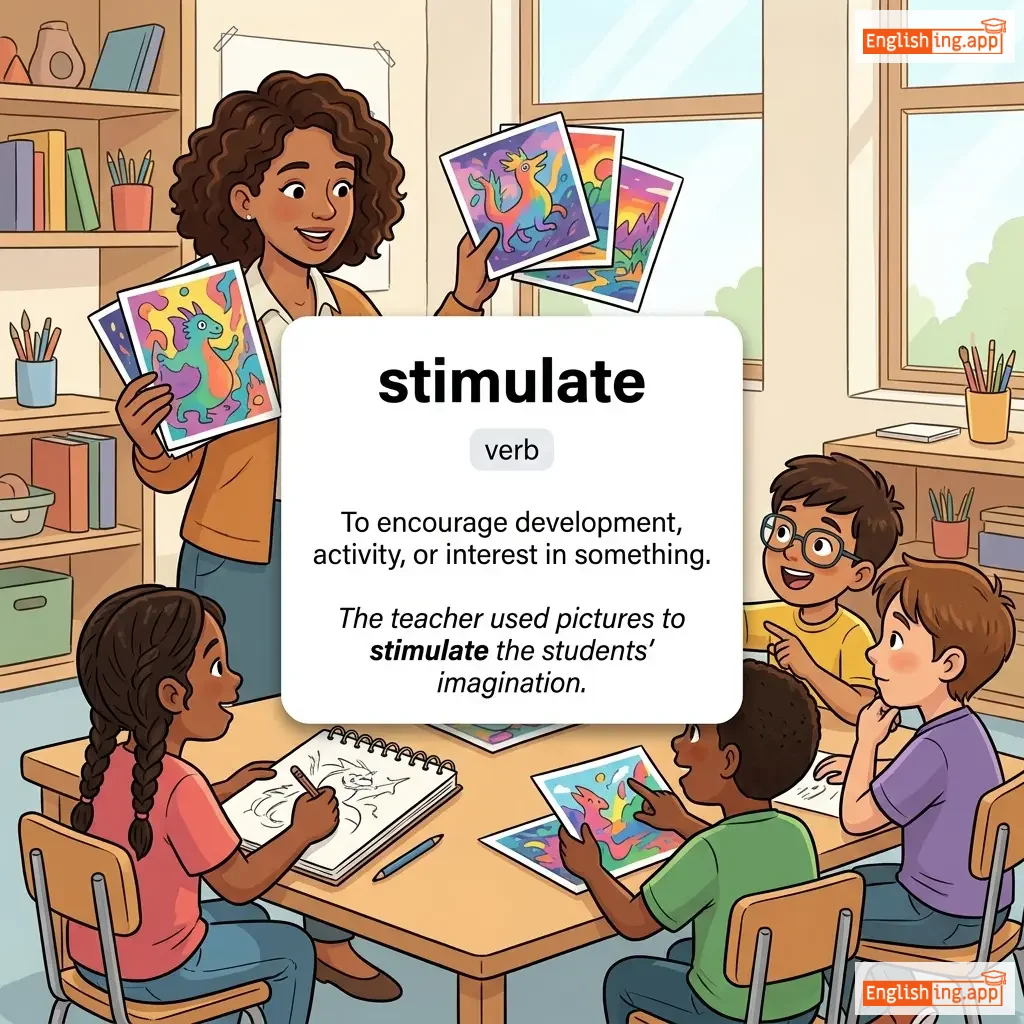
stimulate definition card — visual illustration of the meaning
verb
/ˈstɪmjʊˌleɪt/
刺激, 激励 (cìjī, jīlì)

To encourage development, activity, or interest in something.

"The teacher used pictures to stimulate the students' imagination."
"老师用图片刺激了学生的想象力。" (Lǎoshī yòng túpiàn cìjīle xuéshēng de xiǎngxiànglì.)
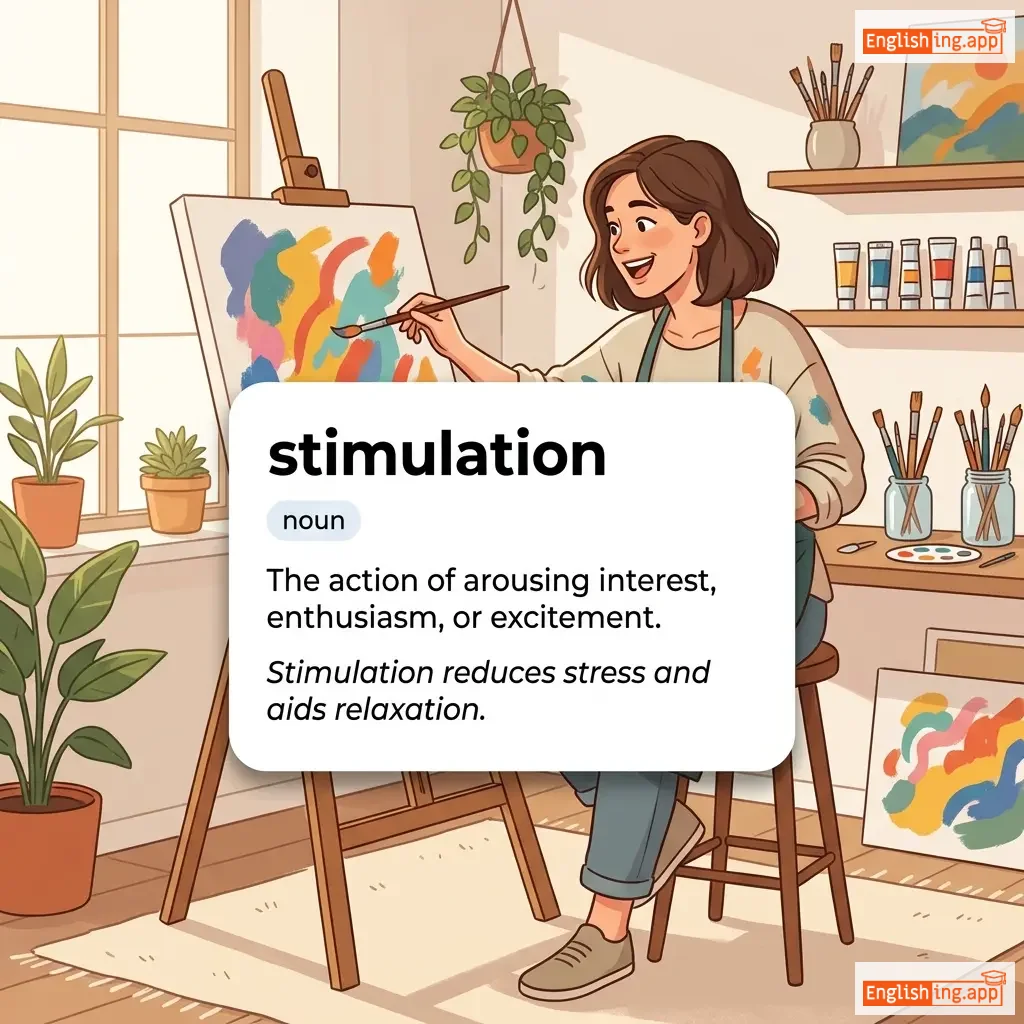
stimulation definition card — visual illustration of the meaning
noun
/ˌstɪm.jəˈleɪ.ʃən/
刺激 (cìjī)

The action of arousing interest, enthusiasm, or excitement.

"Stimulation reduces stress and aids relaxation."
"刺激减少压力并有助于放松。" (Cìjī jiǎnshǎo yālì bìng yǒuzhù yú fàngsōng.)
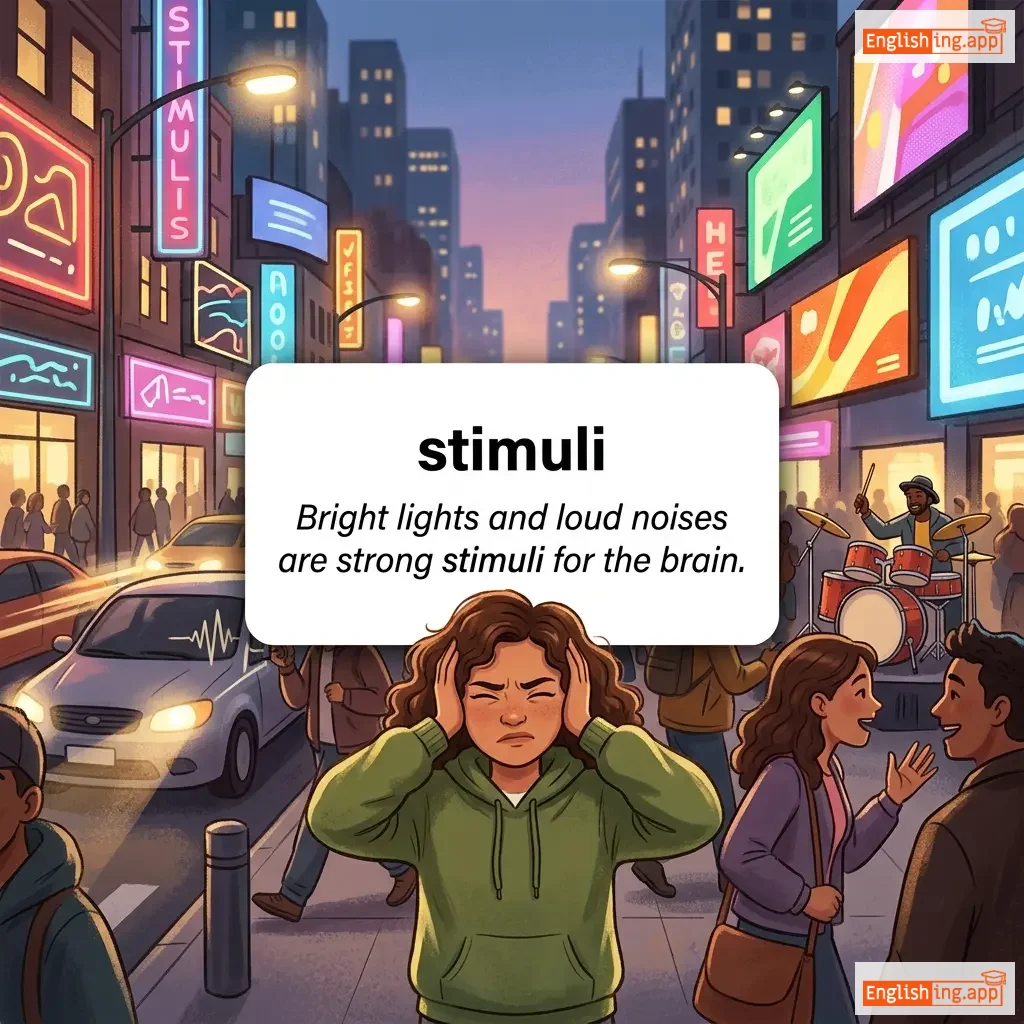
stimuli definition card — visual illustration of the meaning
noun (plural of stimulus)
/ˈstɪm.jʊ.laɪ/
刺激 (cìjī)

Things or events that evoke a specific functional reaction in an organ or tissue.

"Bright lights and loud noises are strong stimuli for the brain."
"明亮的光线和响亮的噪音是对大脑的强烈刺激。" (Míngliàng de guāngxiàn hé xiǎngliàng de zàoyīn shì duì dànǎo de qiángliè cìjī.)
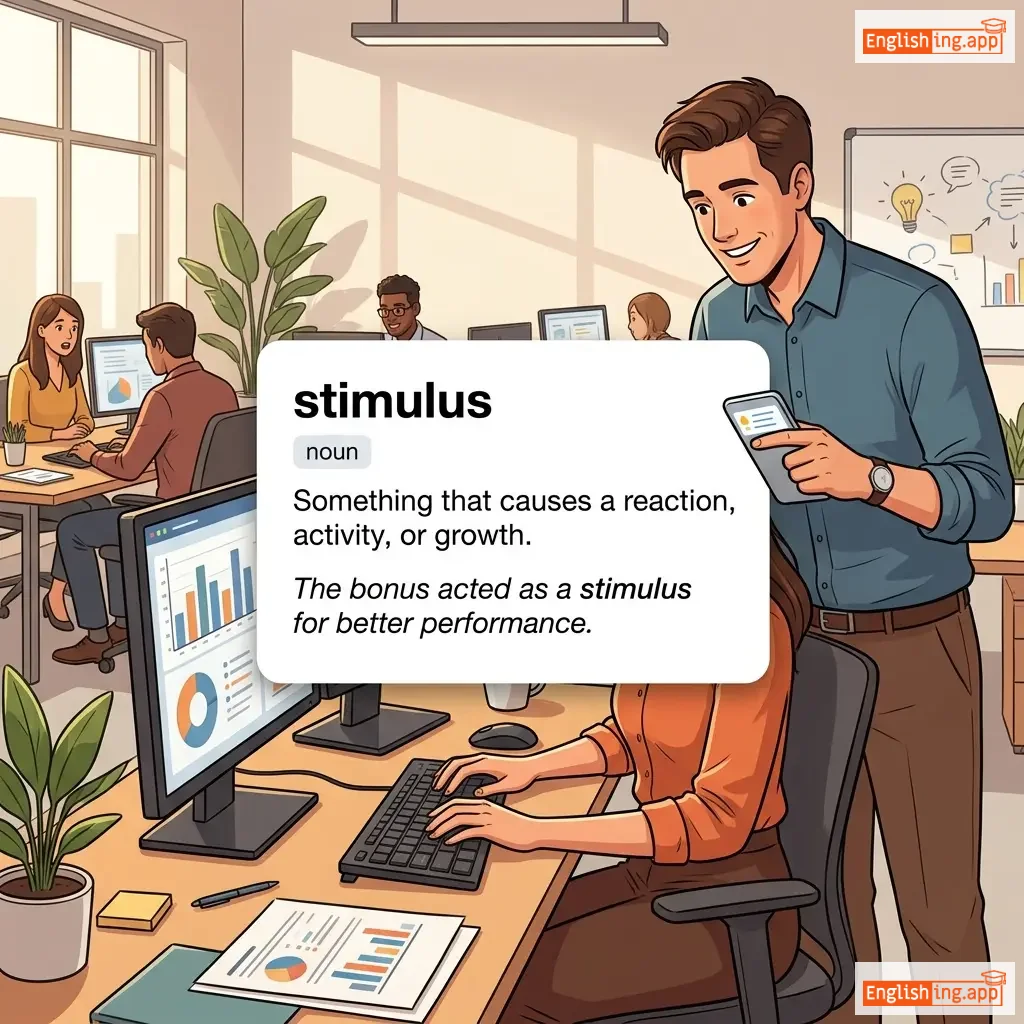
stimulus definition card — visual illustration of the meaning
noun
/ˈstɪmjʊləs/
引起反应、活动或增长的事物,刺激 (yǐnqǐ fǎnyìng, huódòng huò zēngzhǎng de shìwù, cìjī)

Something that causes a reaction, activity, or growth.

"The bonus acted as a stimulus for better performance."
"奖金成为了促进更好表现的刺激。" (Jiǎngjīn chéngwéi le cùjìn gèng hǎo biǎoxiàn de cìjī.)
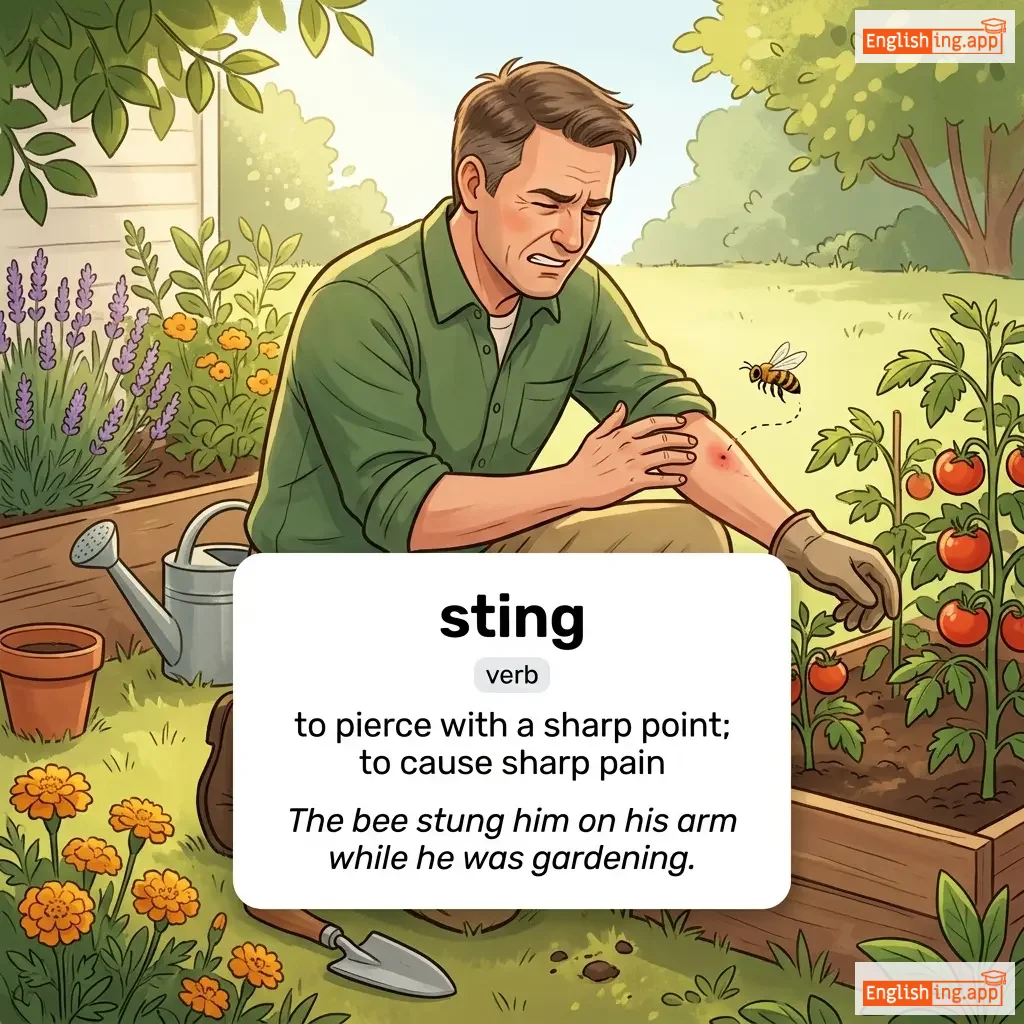
sting definition card — visual illustration of the meaning
verb
/stɪŋ/
刺痛 (cì tòng)

to pierce with a sharp point; to cause sharp pain

"The bee stung him on his arm while he was gardening."

"蜜蜂在他园艺时刺伤了他的手臂。" (Mìfēng zài tā yuányì shí cì shāng le tā de shǒubì)
adjective
/ˈstɪndʒi/
吝啬 (lìn sè)

unwilling to spend or give; miserly

"He is too stingy to buy a gift for his friend."

"他太吝啬了,连给朋友买礼物都不愿意。" (Tā tài lìnsè le, lián gěi péngyǒu mǎi lǐwù dōu bù yuànyì.)
verb
/stɪŋk/
发臭 (fa chou)

to smell very unpleasant

"The garbage bin stinks in the hot sun."
"垃圾桶在烈日下发臭。" (La ji tong zai lie ri xia fa chou.)
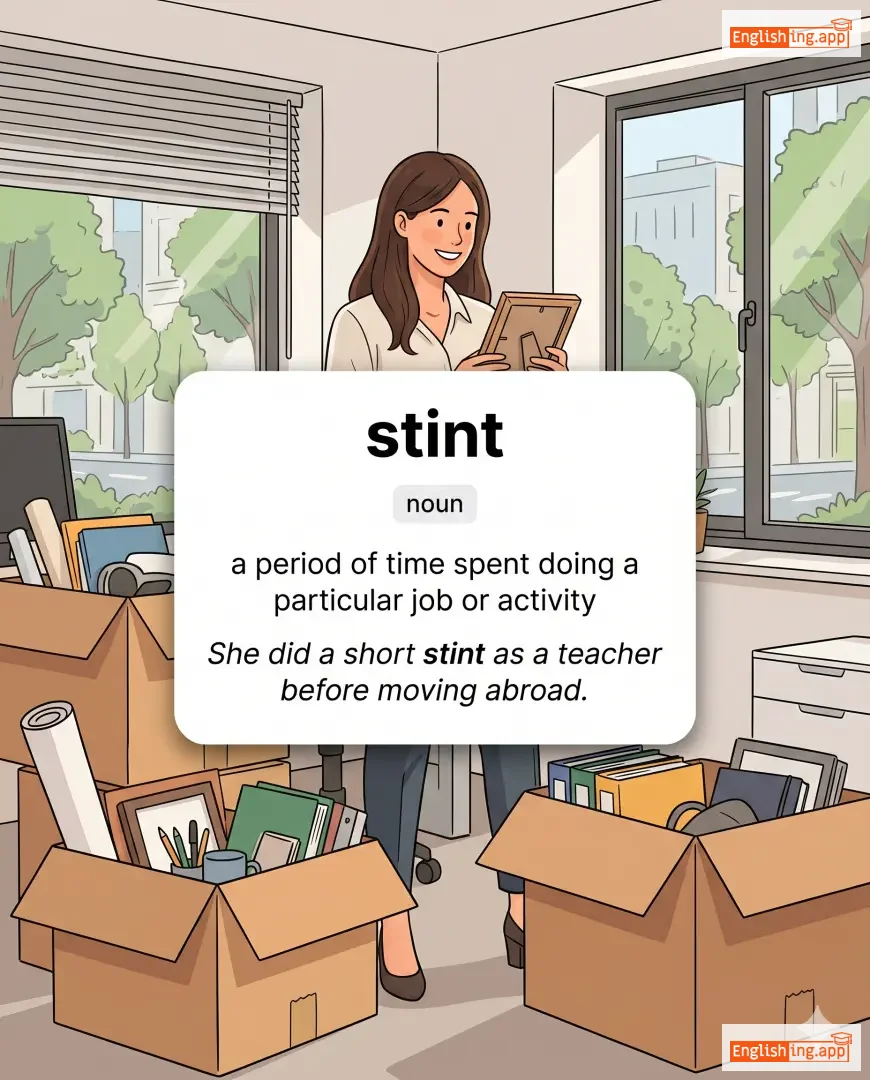
stint definition card — visual illustration of the meaning
noun
/stɪnt/
短期工作 (duǎnqī gōngzuò)

a period of time spent doing a particular job or activity

"She did a short stint as a teacher before moving abroad."

"她在搬到国外之前做了一段短时间的教师工作。" (Tā zài bān dào guówài zhīqián zuòle yī duàn duǎn shíjiān de jiàoshī gōngzuò.)
verb
/ˈstɪntɪŋ/
吝啬地给 (lìn sè de gěi)

to supply sparingly or with restrictions

"He never stinting his efforts to help the poor."

"他从不吝啬自己的努力来帮助穷人。" (Tā cóng bù lìnsè zìjǐ de nǔlì lái bāngzhù qióngrén.)
noun
/ˈstaɪpɛnd/
津贴 (jintie)

a fixed regular payment, usually for services or to cover living expenses

"The university provides a monthly stipend to its research students."

"大学为其研究生提供每月津贴。" (Dàxué wèi qí yánjiūshēng tígōng měi yuè jīntiē.)
verb
/ˈstɪp.əl/
用小点覆盖 (yòng xiǎo diǎn fùgài)

to cover a surface with numerous small dots or specks, often in drawing or painting

"The artist stippled the canvas to create a textured effect."
"艺术家在画布上用小点覆盖,创造了一个纹理效果。" (Yìshùjiā zài huàbù shàng yòng xiǎo diǎn fùgài, chuàngzàole yīgè wénlǐ xiàoguǒ.)
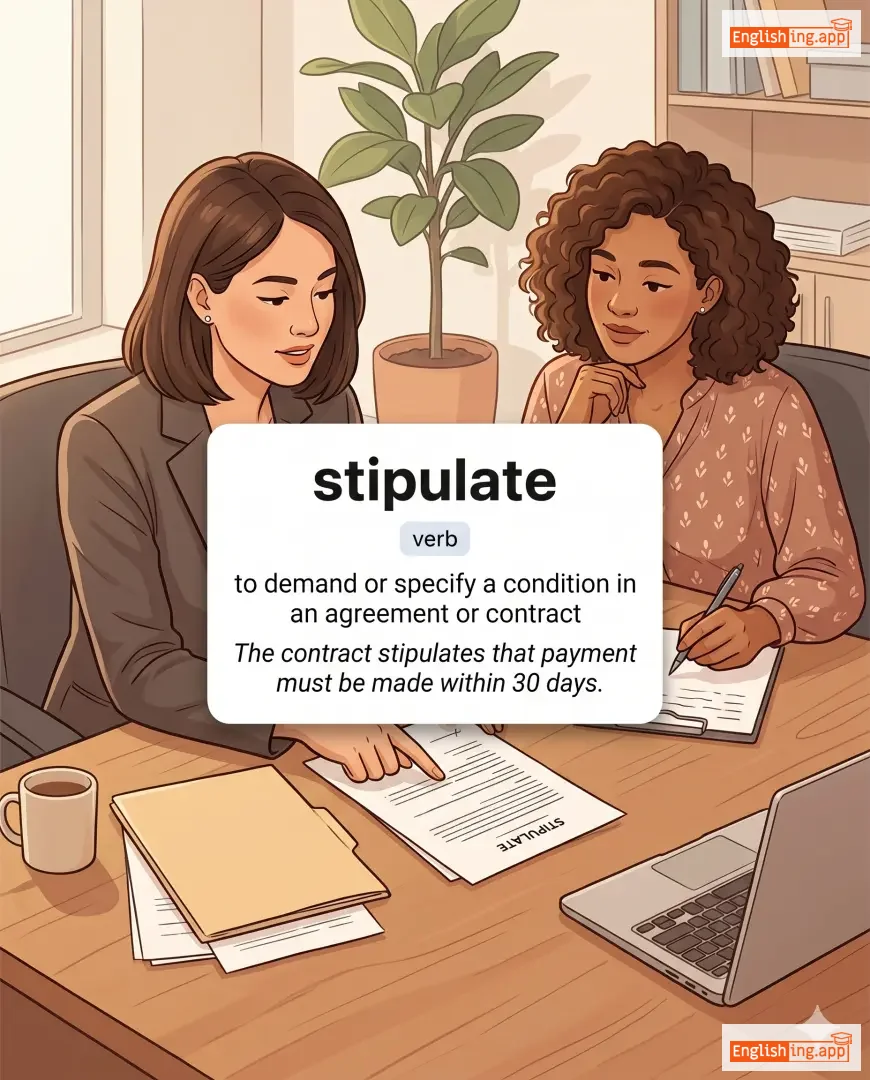
stipulate definition card — visual illustration of the meaning
verb
/ˈstɪp.jʊ.leɪt/
规定 (guīdìng)

to demand or specify a condition in an agreement or contract

"The contract stipulates that payment must be made within 30 days."
"合同规定付款必须在30天内完成。" (Hetong guīdìng fùkuǎn bìxū zài 30 tiān nèi wánchéng.)
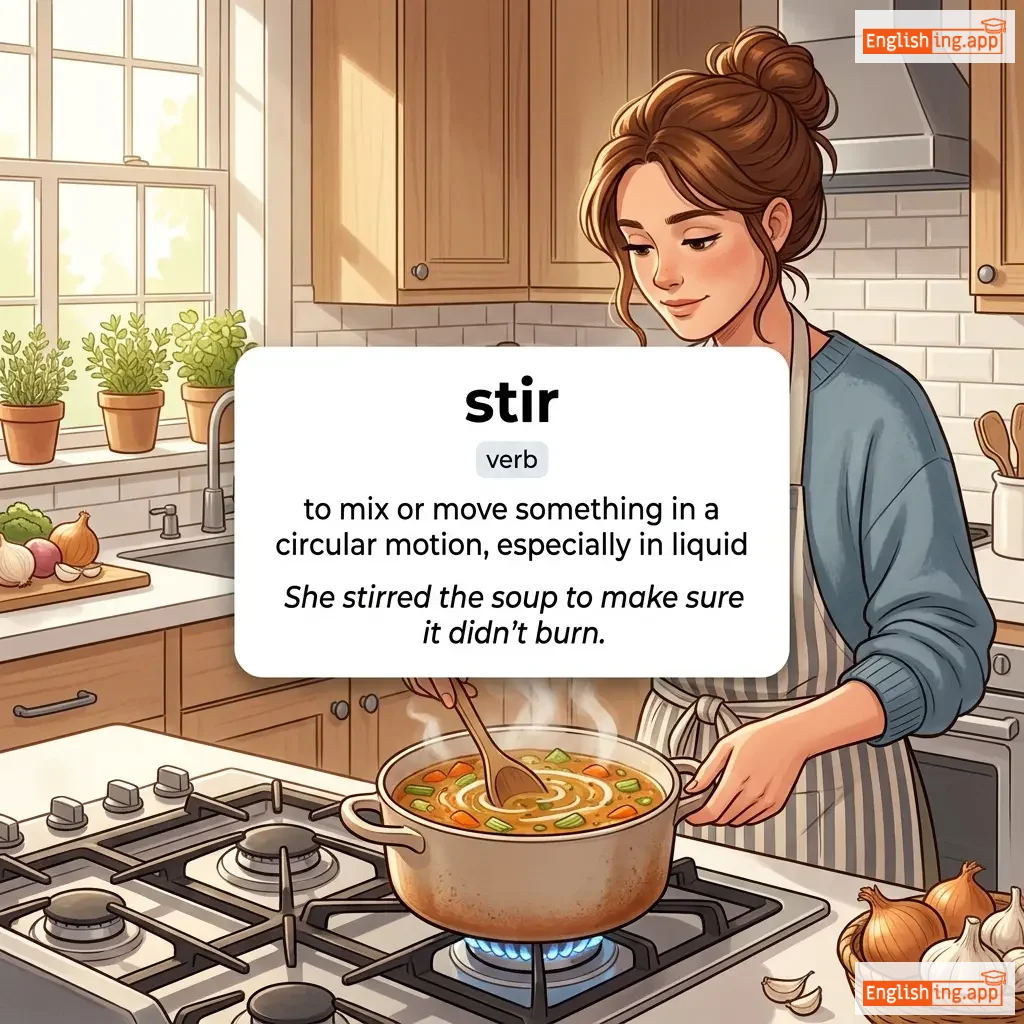
stir definition card — visual illustration of the meaning
verb
/stɜːr/
搅拌 (jiaoban)

to mix or move something in a circular motion, especially in liquid

"She stirred the soup to make sure it didn't burn."

"她搅拌汤,以确保它不会烧焦。" (Ta jiaoban tang, yi quebao ta buhui shaojiao.)
stitch definition card — visual illustration of the meaning
noun, verb
/stɪtʃ/

to sew fabric together using a needle and thread; also a single loop of thread in sewing

"She stitched the torn dress carefully."

noun, verb
/stɒk/
库存 (kù cún)

a supply of goods kept for sale or use; to keep or fill with goods

"The shop stocks a wide variety of products."

"商店储存大量的商品。" (Shāng diàn chǔ cún dà liàng de shāng pǐn.)
noun
/stɒˈkeɪd/
木栅栏 (mù zhàlán)

a defensive barrier made of strong posts or timbers, often around a fort or prison

"The prisoners were kept inside the wooden stockade."

"囚犯被关在木栅栏内。" (Qiúfàn bèi guān zài mù zhàlán nèi.)
adjective
/ˈstɒdʒi/
沉闷的,老式的 (chénmèn de, lǎoshì de)

Dull, uninspired, or old-fashioned; also heavy and hard to digest when referring to food.

"The lecture was so stodgy that many students struggled to stay awake."

"讲座太沉闷了,以至于许多学生难以保持清醒。" (Jiǎngzuò tài chénmèn le, yǐzhì yú xǔduō xuéshēng nán yǐ bǎochí qīngxǐng.)
adjective
/ˈstoʊɪk/
冷静的, 无动于衷的 (lěngjìng de, wú dòng yú zhōng de)

Showing little or no emotion, even in difficult situations.

"She remained stoic during the crisis, never showing fear or panic."

"她在危机中保持冷静,毫无恐惧或恐慌。" (Tā zài wēijī zhōng bǎochí lěngjìng, háo wú kǒngjù huò kǒnghuāng.)
stoicism definition card — visual illustration of the meaning
noun
/ˈstoʊɪˌsɪzəm/
坚忍主义 (jiānrěn zhǔyì)

The endurance of pain or hardship without showing feelings or complaining.

"He faced the loss of his job with remarkable stoicism."
"他以非凡的坚忍主义面对失业的痛苦。" (Tā yǐ fēifán de jiānrěn zhǔyì miànduì shīyè de tòngkǔ.)
🔥

stoke

verb
/stoʊk/

To add fuel to a fire; to encourage or increase a strong feeling or activity.

"The politician’s speech stoked anger among the crowd."

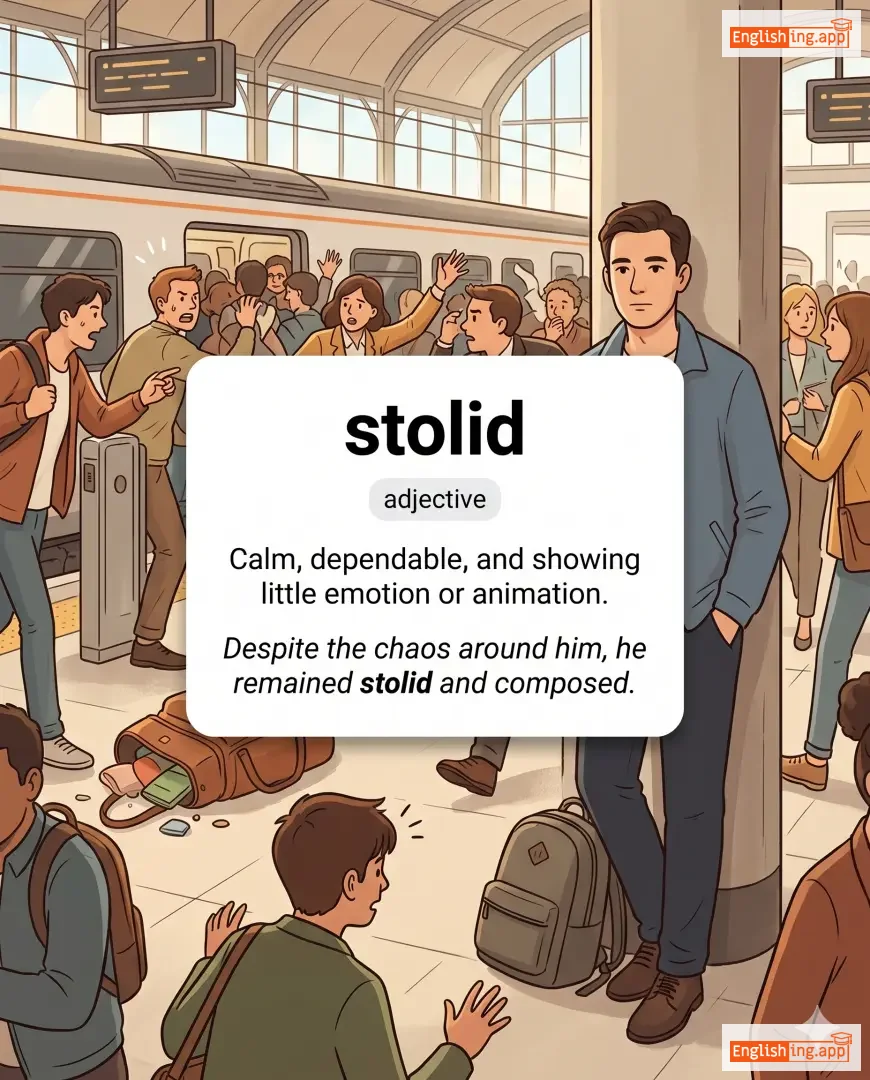
stolid definition card — visual illustration of the meaning
adjective
/ˈstɒlɪd/
冷静的,沉默的 (lěngjìng de, chénmò de)

Calm, dependable, and showing little emotion or animation.

"Despite the chaos around him, he remained stolid and composed."

"尽管周围混乱,他依然冷静沉着。" (Jǐnguǎn zhōuwéi hùnluàn, tā yīrán lěngjìng chénzhuó.)
noun/verb
/ˈstʌmək/
胃 / 忍耐 (wèi / rěnnài)

The internal organ in which food is digested; also to tolerate or endure something

"She couldn’t stomach the sight of violence."

"她无法忍受暴力的场景。" (Tā wúfǎ rěnshòu bàolì de chǎngjǐng.)
noun
/ˈstʌmək eɪk/
胃痛 (weitong)

Pain in the stomach or abdominal area

"I have a stomach ache after eating too much."
"我吃得太多后感到胃痛。" (Wo chi de tai duo hou gandao weitong)
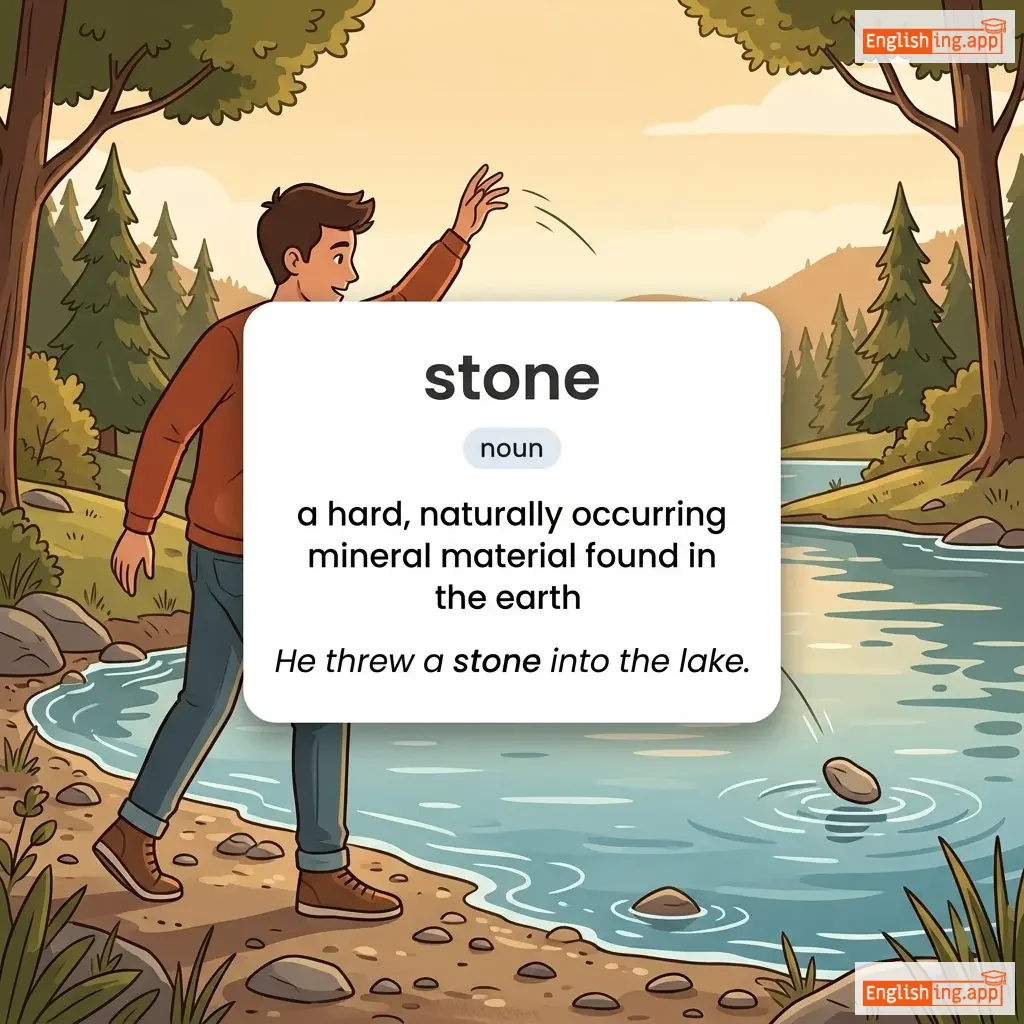
stone definition card — visual illustration of the meaning
noun
/stoʊn/
石头 (shítou)

a hard, naturally occurring mineral material found in the earth

"He threw a stone into the lake."

"他把一块石头扔进湖里。" (Tā bǎ yī kuài shítou rēng jìn hú lǐ.)
verb
/ˈstoʊnwɔːl/
阻挡 (zudang)

To delay or block progress by refusing to cooperate or answer

"The witness tried to stonewall during the investigation."

"证人试图在调查期间做stonewall。" (Zhèngrén shìtú zài diàochá qījiān zuò stonewall.)
verb/noun
/stuːp/
幸福 (xingfu)

To bend one's body forward and downward; also a small porch or staircase at the entrance of a house

"He had to stoop to pick up the coin."

"当她收到奖项时,她无法隐藏自己的幸福。" (Dāng tā shōu dào jiǎngxiàng shí, tā wúfǎ yǐncáng zìjǐ de xìngfú.)
stop definition card — visual illustration of the meaning
verb
/stɑːp/
停止 (tingzhi)

to bring to an end or cause to cease

"Please stop talking while I’m working."

"请在我工作时停止讲话。" (Qing zai wo gongzuo shi tingzhi jianghua.)
noun
/ˈstɒpɪdʒ/
停顿; 停止 (tingdun; tingzhi)

The act of stopping or ceasing; a halt in operation or activity

"The sudden stoppage of the train caused delays for all passengers."
"火车的突然停运导致所有乘客延误。" (Huoche de turan tingyun daozhi suoyou chengke yanwu.)
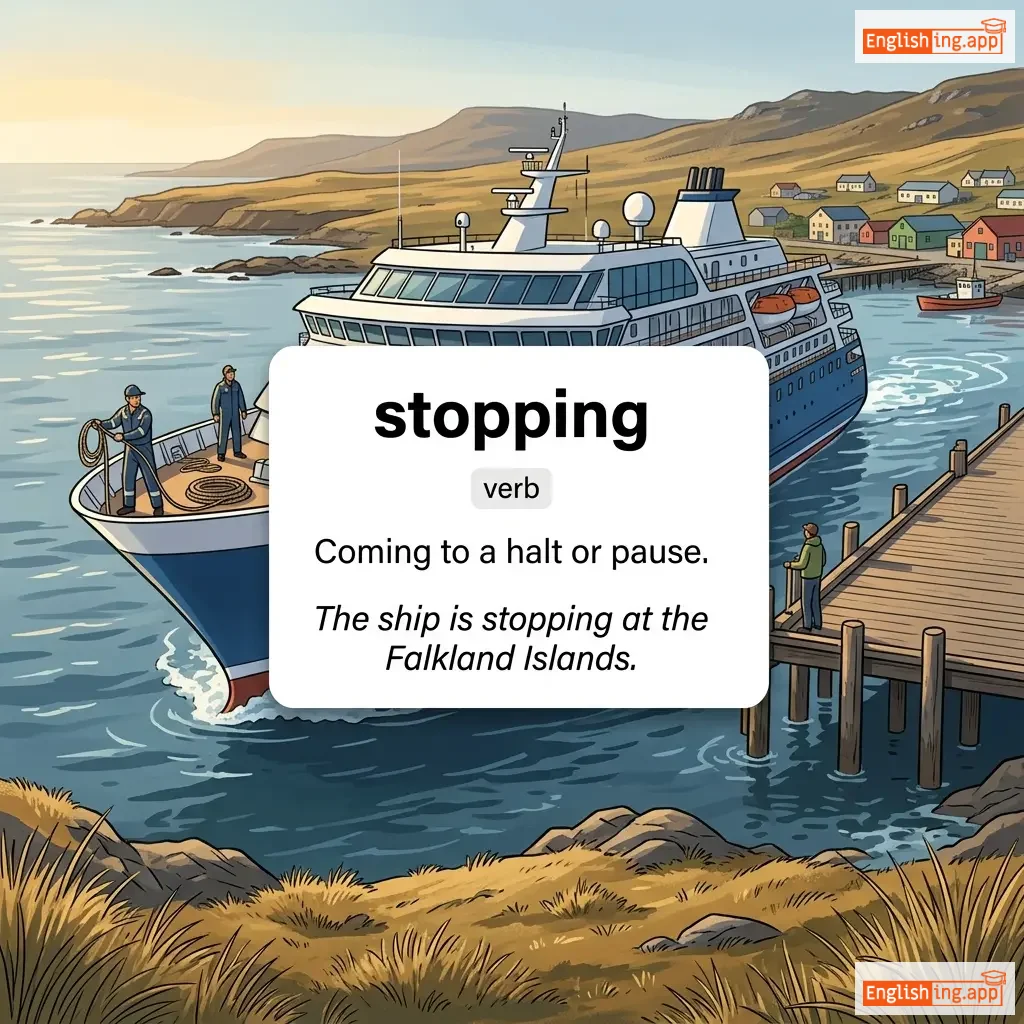
stopping definition card — visual illustration of the meaning
verb
/ˈstɒpɪŋ/
停止 (tingzhi)

Coming to a halt or pause.

"The ship is stopping at the Falkland Islands."

"船只正在福克兰群岛停靠。" (Chuán zhī zhèngzài Fú kè lán qún dǎo tíngkào.)
noun
/ˈstɔːrɪdʒ/
存储 (cunchu)

the action or method of storing something for future use

"The warehouse offers plenty of storage space."

"仓库提供了大量的存储空间。" (Cāngkù tígōngle dàliàng de cúnchú kōngjiān.)
strategic definition card — visual illustration of the meaning
adjective
/strəˈtiːdʒɪk/
战略的 (zhànlüè de)

relating to the identification of long-term or overall aims and interests and the means of achieving them

"His strategic thinking helped the company grow."
"他的战略性思维帮助公司成长。" (Tā de zhànlüè xìng sīwéi bāngzhù gōngsī chéngzhǎng.)
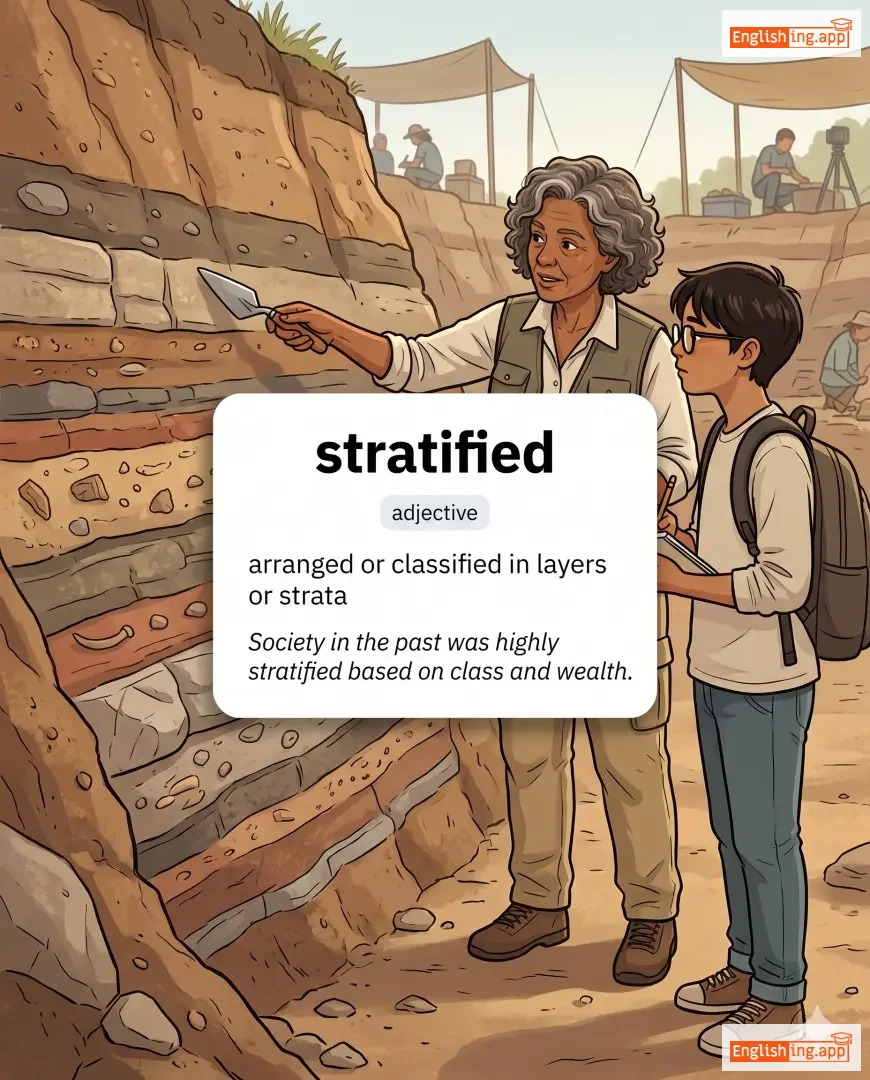
stratified definition card — visual illustration of the meaning
adjective
/ˈstrætɪfaɪd/

arranged or classified in layers or strata

"Society in the past was highly stratified based on class and wealth."

strategy definition card — visual illustration of the meaning
noun
/ˈstrætədʒi/
策略 (celue)

a plan of action designed to achieve a long-term or overall aim

"They developed a new strategy to increase sales."

"他们制定了一个新的策略来增加销售。" (Tāmen zhìdìngle yīgè xīn de cèlüè lái zēngjiā xiāoshòu.)
strategies definition card — visual illustration of the meaning
noun
ˈstræt.ə.dʒiz
策略 (cèlüè)

A plan of action designed to achieve a long-term or overall aim.

"Effective strategies ensure success."

"有效的策略确保成功。" (Yǒuxiào de cèlüè quèbǎo chénggōng.)
strategic insights definition card — visual illustration of the meaning
noun
/strəˈtiː.dʒɪk ˈɪn.saɪts/
战略洞察力 (zhànlüè dòngchá lì)

Deep understanding and wisdom gained through careful analysis for planning purposes.

"Strategic insights guide policymaking."

"战略洞察力引导政策制定。" (Zhànlüè dòngchá lì yǐndǎo zhèngcè zhìdìng.)
verb
/ˈstræŋɡəl/

to kill or stop someone or something by squeezing the throat or restricting flow

"The villain tried to strangle his opponent in the dark alley."

adjective
/streɪndʒ/
奇怪 (qiguai)

unusual or not normal

"It was strange to see him at the party after so long."

"在这么久之后在派对上看到他真奇怪。" (Zài zhème jiǔ zhīhòu zài pàiduì shàng kàn dào tā zhēn qíguài.)