Словари

Словарь английского языка | Значения слов, определения и примеры

adjective
/ˈsɪŋkəˌpeɪtɪd/
синкопированный (sinkopirovannyy)

Characterized by displaced beats or rhythms, especially in music.

"The jazz piece had a syncopated rhythm that energized the crowd."

"Джазовый номер имел синкопированный ритм, который воодушевил толпу." (Dzhazovyy nomer imel sinkopirovannyy ritm, kotoryy voodushhevil tolpu.)
noun
/ˈsɪndɪkət/
синдикат (sindikat)

A group of individuals or organizations combined to promote a common interest or carry out a business venture.

"A syndicate of investors bought the struggling company."

"Синдикат инвесторов купил struggling компанию." (Sindikat investirov kupil struggling kompaniyu.)
noun
/ˈsɪnˌdroʊm/
синдром (sindrom)

a group of symptoms that occur together and characterize a condition or disease

"Down syndrome affects a person's physical and mental development."

"Синдром Дауна влияет на физическое и умственное развитие человека." (Sindrom Dauna vliyayet na fizicheskoe i umstvennoe razvitie cheloveka.)
noun
/sɪˈnɛrəsɪs/
синерезис (syneresis)

The contraction of two adjacent vowels into a single syllable or the separation of liquid from a gel.

"The yogurt showed syneresis when liquid separated on top."

"Йогурт показал синерезис, когда жидкость отделилась сверху." (Yogurt pokazal sinerezis, kogda zhidkost otdelilas' sverkhu.)
noun
/sɔːrd/
меч (mech)

a weapon with a long metal blade used for fighting

"The knight drew his sword to defend the castle."

"Рыцарь вытащил свой меч, чтобы защитить замок." (Ritsar' vytashchil svoi mech, chtoby zashchitit' zamok.)
verb
/ˈstaɪfl/
подавить (podavit)

to prevent or restrain an action, idea, or emotion; to suffocate

"She tried to stifle a laugh during the serious meeting."

"Она попыталась подавить смех во время серьезной встречи." (Ona popytalas podavit smekh vo vremya seryoznoj vstrechi.)
verb
/ˈstaɪfəld/
подавлять (podavlyat)

to suppress, hold back, or prevent something from happening

"He stifled a laugh during the serious meeting."
"Он подавил смех во время серьезной встречи." (On podavil smekh vo vremya seryoznoj vstrechi.)
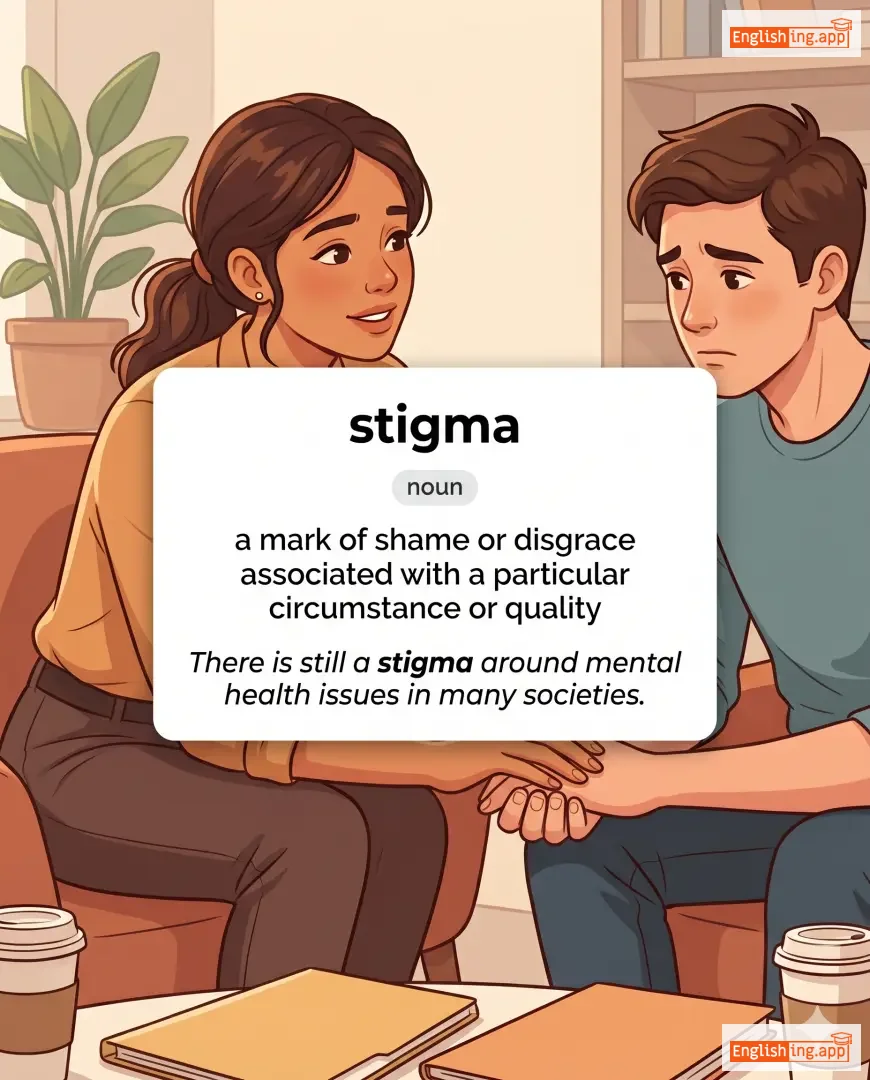
stigma definition card — visual illustration of the meaning
noun
/ˈstɪɡmə/
стигма (stigma)

a mark of shame or disgrace associated with a particular circumstance or quality

"There is still a stigma around mental health issues in many societies."

"В некоторых обществах до сих пор существует стигма, связанная с проблемами психического здоровья." (V nekotorykh obshchestvakh do sikh por sushchestvuet stigma, svyazannaya s problemami psikhicheskogo zdorov'ya.)
verb
/ˈstɪɡmətaɪz/
стигматизировать (stigmatizirovat)

to describe or regard someone as worthy of disgrace or disapproval

"People with certain illnesses are often unfairly stigmatized."

"Люди с определенными заболеваниями часто несправедливо стигматизируются." (Lyudi s opredelennymi zabolevaniyami chasto nespravedlivo stigmatiziruyutsya.)
noun
/stɪˈlɛtoʊ/
обувь на высоком тонком каблуке / кинжал (obuv' na vysokom tonkom kabluke / kinzhal)

A small, thin, high-heeled shoe or a dagger with a slender blade.

"She wore elegant stiletto heels to the party."

"Она носила элегантные туфли на каблуке-стилето на вечеринку." (Ona nosila elegantnye tufli na kabluke-stileto na vecherinku.)
adjective
/stɪl/
тихий (tikhiy)

not moving or making a sound

"The water was still, reflecting the sky."

"Вода была тихой, отражая небо." (Voda byla tikhoi, otrazhaya nebo.)
adjective
/ˈstɪltɪd/
искусственный, натянутый (iskusstvennyy, natyazhennyy)

Speech or writing that is stiff, unnatural, or overly formal.

"His speech sounded stilted and rehearsed."

"Его речь звучала натянуто и заученно." (Ego rech' zvuchala natyazhennо i zauchennо.)
noun
/ˈstɪmjʊlənt/
стимулянт (stimulant)

A substance that raises levels of physiological or nervous activity in the body.

"Coffee is a common stimulant that helps people stay awake."
"Кофе - это обычный стимулянт, который помогает людям оставаться бодрыми" (Kofe - eto obychny stimul', kotoryi pomogayet liudyam ostavatsya bodrymi)
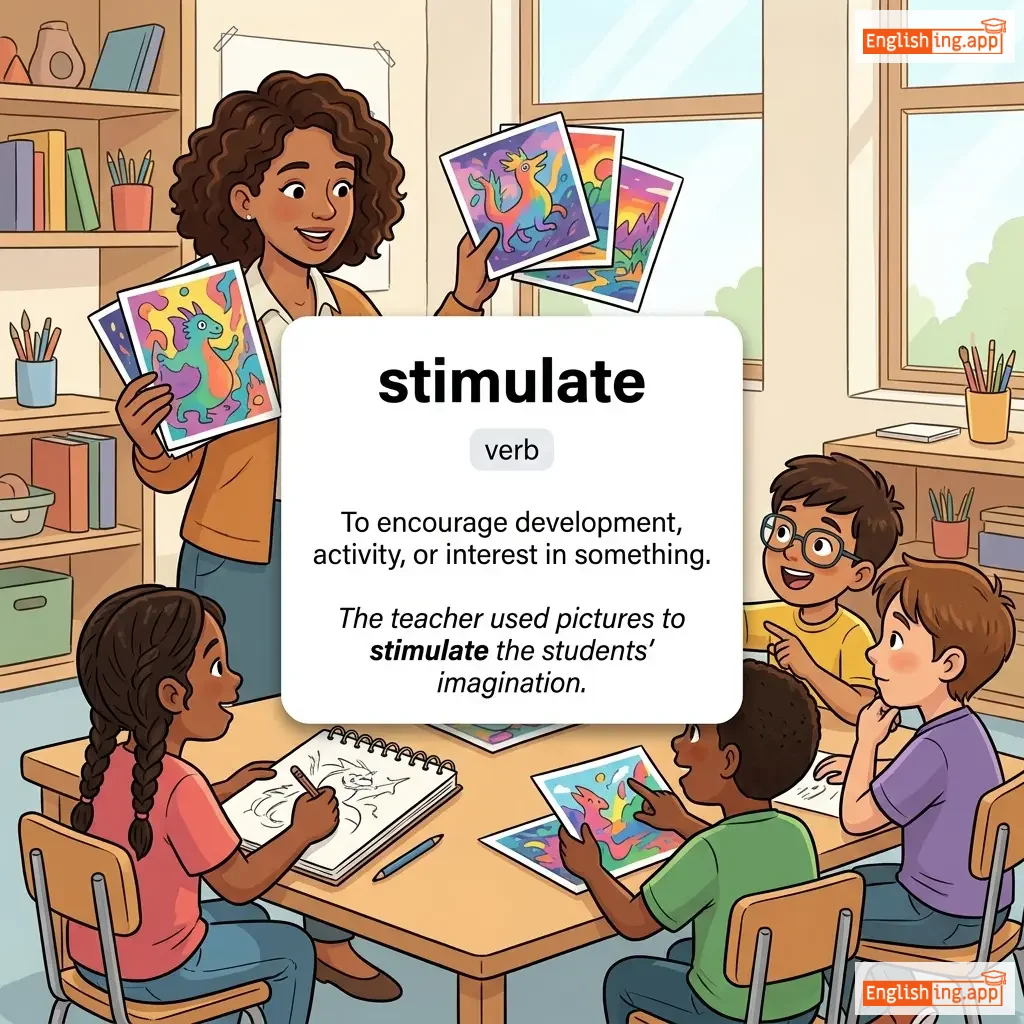
stimulate definition card — visual illustration of the meaning
verb
/ˈstɪmjʊˌleɪt/
стимулировать, побуждать (stimulirovat', pobuzhdat')

To encourage development, activity, or interest in something.

"The teacher used pictures to stimulate the students' imagination."
"Учитель использовал картинки, чтобы стимулировать воображение студентов." (Uchitel' ispol'zoval kartinki, chtoby stimulirovat' voobrazhenie studentov.)
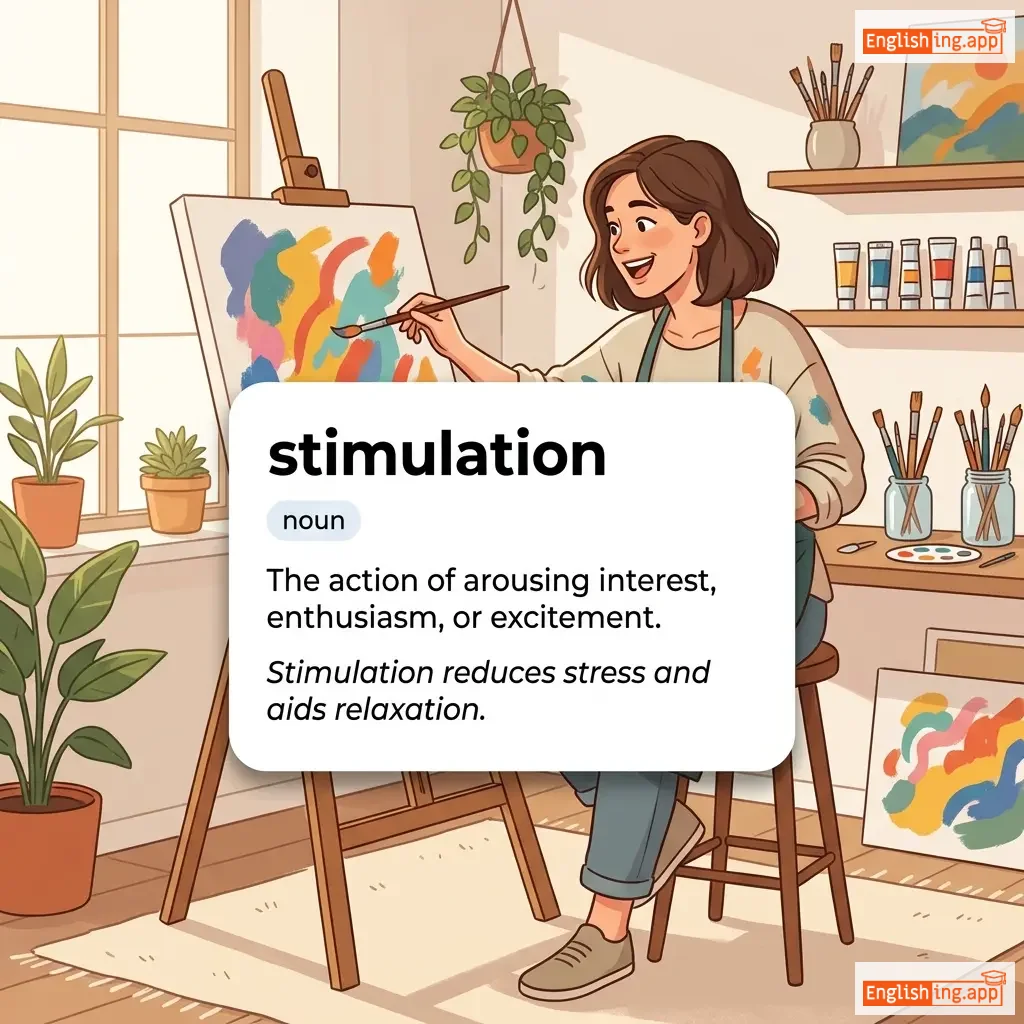
stimulation definition card — visual illustration of the meaning
noun
/ˌstɪm.jəˈleɪ.ʃən/
стимуляция (stimulatsiya)

The action of arousing interest, enthusiasm, or excitement.

"Stimulation reduces stress and aids relaxation."
"Стимуляция снижает стресс и способствует расслаблению." (Stimulatsiya snizhayet stress i sposobstvuet rasslablyeniyu.)
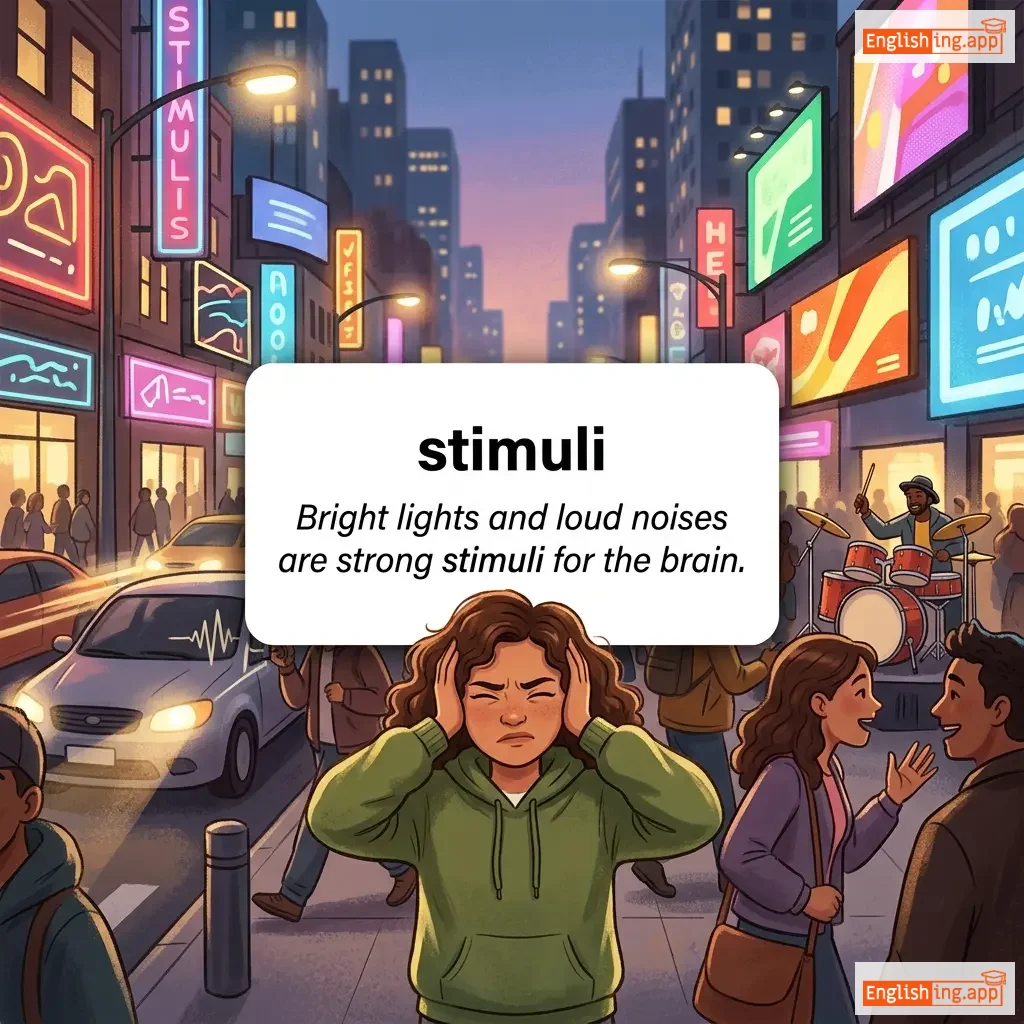
stimuli definition card — visual illustration of the meaning
noun (plural of stimulus)
/ˈstɪm.jʊ.laɪ/
стимул (stimul)

Things or events that evoke a specific functional reaction in an organ or tissue.

"Bright lights and loud noises are strong stimuli for the brain."
"Яркий свет и громкие звуки — сильные стимулы для мозга." (Yarkiy svet i gromkie zvuki — sil'nye stimuly dlya mozga.)
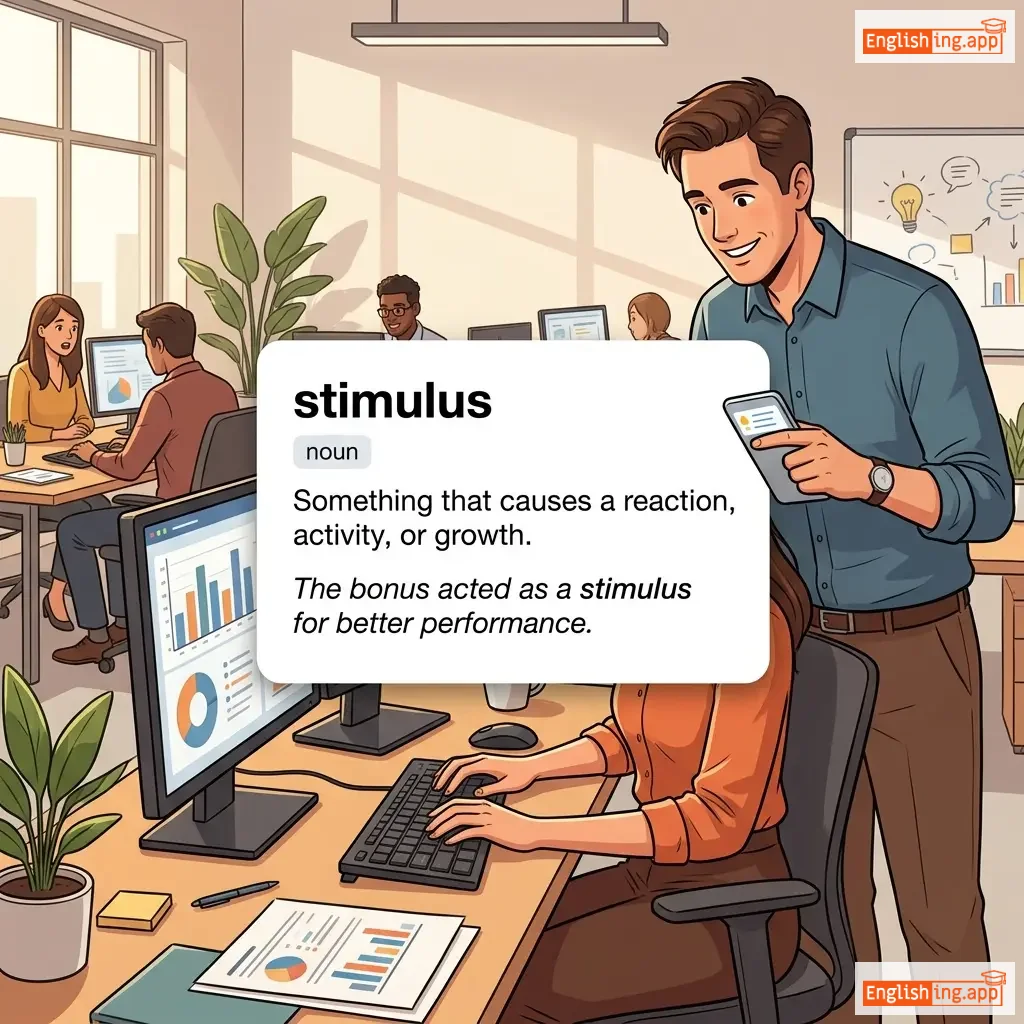
stimulus definition card — visual illustration of the meaning
noun
/ˈstɪmjʊləs/
что-то, вызывающее реакцию, стимул (chto-to, vyzyvayushchee reaktsiyu, stimul)

Something that causes a reaction, activity, or growth.

"The bonus acted as a stimulus for better performance."
"Бонус стал стимулом для лучшей производительности." (Bonus stal stimulom dlya luchshey proizvoditel'nosti.)
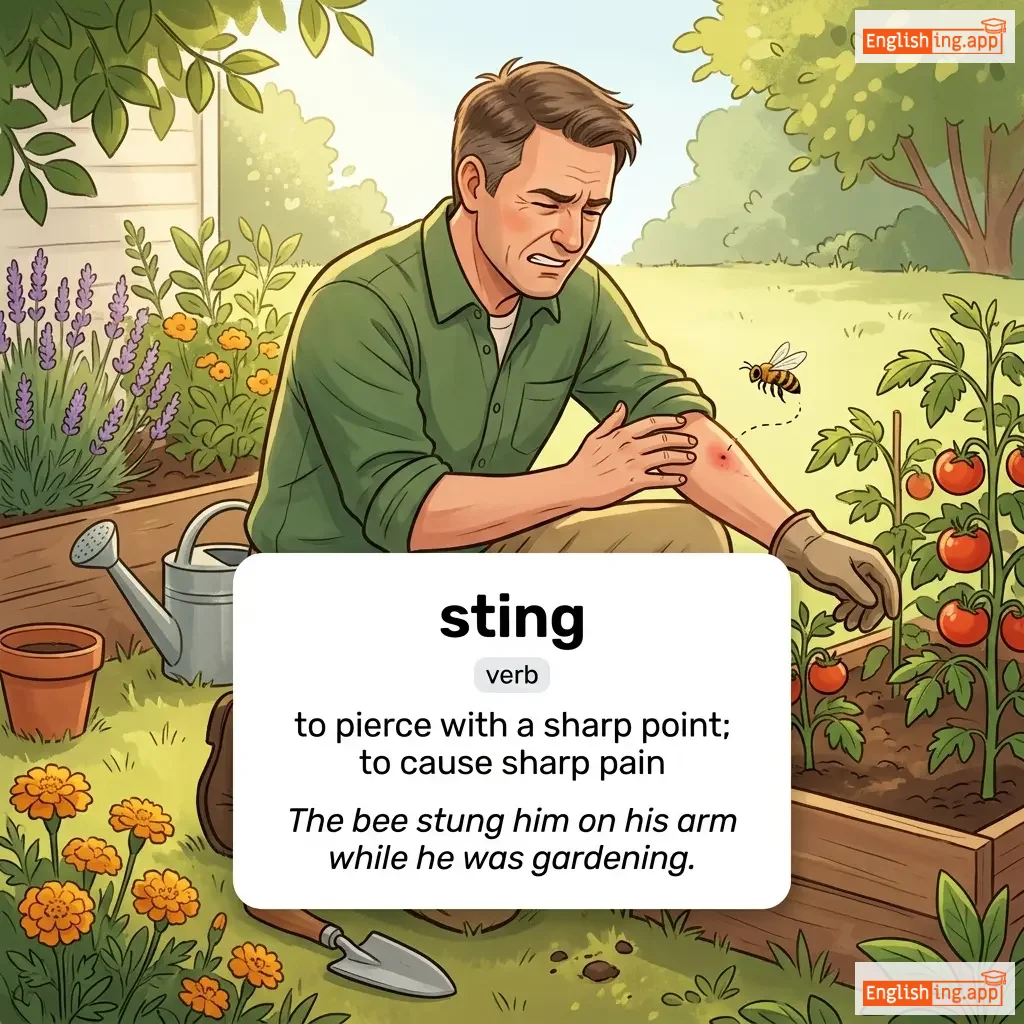
sting definition card — visual illustration of the meaning
verb
/stɪŋ/
ужалить (uzhalit)

to pierce with a sharp point; to cause sharp pain

"The bee stung him on his arm while he was gardening."

"Пчела ужалила его в руку, пока он занимался садоводством." (Pchela uzhalila ego v ruku, poka on zanimalsya sadovodstvom)
adjective
/ˈstɪndʒi/
жадный (zhadnyy)

unwilling to spend or give; miserly

"He is too stingy to buy a gift for his friend."

"Он слишком жадный, чтобы купить подарок для своего друга." (On slishkom zhadnyy, chtoby kupit' podarok dlya svoego druga.)
verb
/stɪŋk/
вонять (vonyat)

to smell very unpleasant

"The garbage bin stinks in the hot sun."
"Мусорное ведро воняет на жарком солнце." (Musornoe vedro vonyaet na zharkom solntse.)
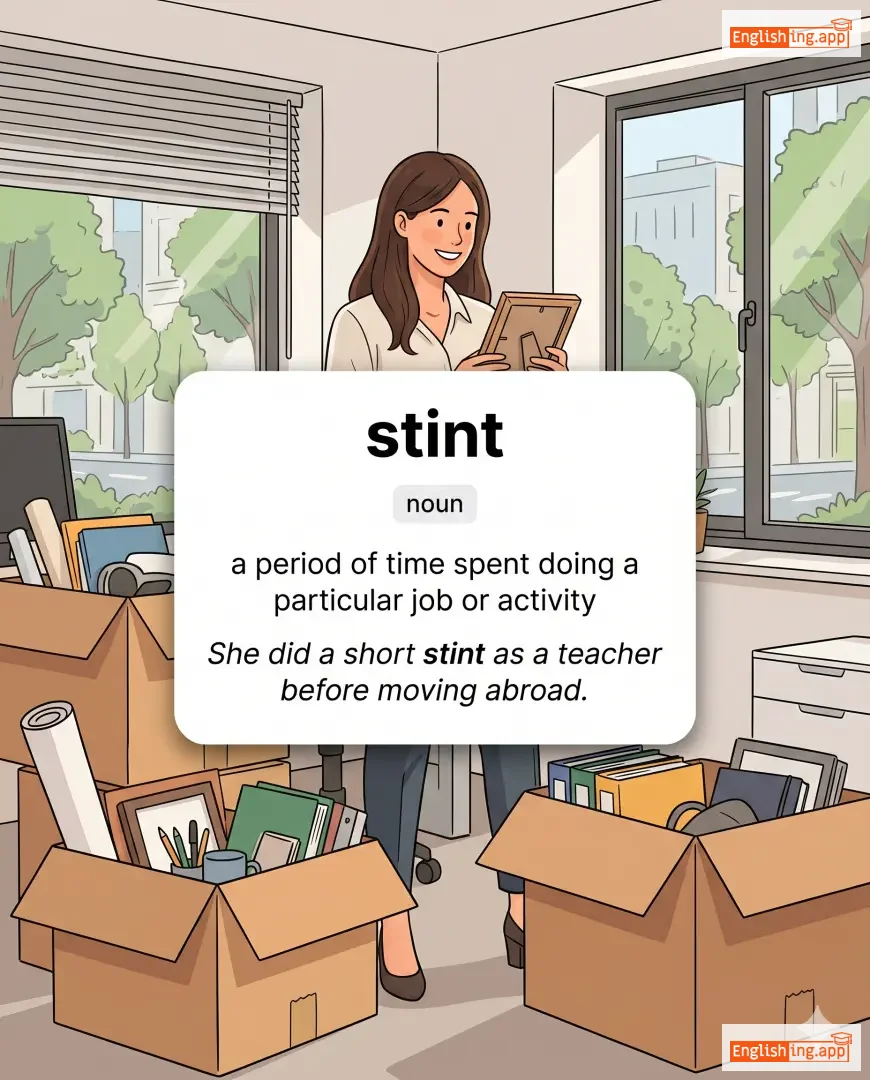
stint definition card — visual illustration of the meaning
noun
/stɪnt/
временная работа (vremennaya rabota)

a period of time spent doing a particular job or activity

"She did a short stint as a teacher before moving abroad."

"Она работала учителем в течение короткого времени, прежде чем уехать за границу." (Ona rabotala uchitelem v techeniye korotkogo vremeni, prezhde chem uezzhat' za granitsu.)
verb
/ˈstɪntɪŋ/
давать скупо (davat' skupо)

to supply sparingly or with restrictions

"He never stinting his efforts to help the poor."

"Он никогда не скупится в своих усилиях помочь бедным." (On nikogda ne skupitsya v svoikh usiliyakh pomoch' bednym.)
noun
/ˈstaɪpɛnd/
стипендия (stipendiya)

a fixed regular payment, usually for services or to cover living expenses

"The university provides a monthly stipend to its research students."

"Университет предоставляет своим исследовательским студентам ежемесячную стипендию." (Universitet predostavlyaet svoim issledovatelskimi studentami ezhemesyachnuyu stipendiyu.)
verb
/ˈstɪp.əl/
покрывать маленькими точками (pokryvat' malenkimi tochkami)

to cover a surface with numerous small dots or specks, often in drawing or painting

"The artist stippled the canvas to create a textured effect."
"Художник покрыл холст маленькими точками, чтобы создать текстурный эффект." (Khudozhnik pokryl kholst malenkimi tochkami, chtoby sozdats' teksturnyy effekt.)
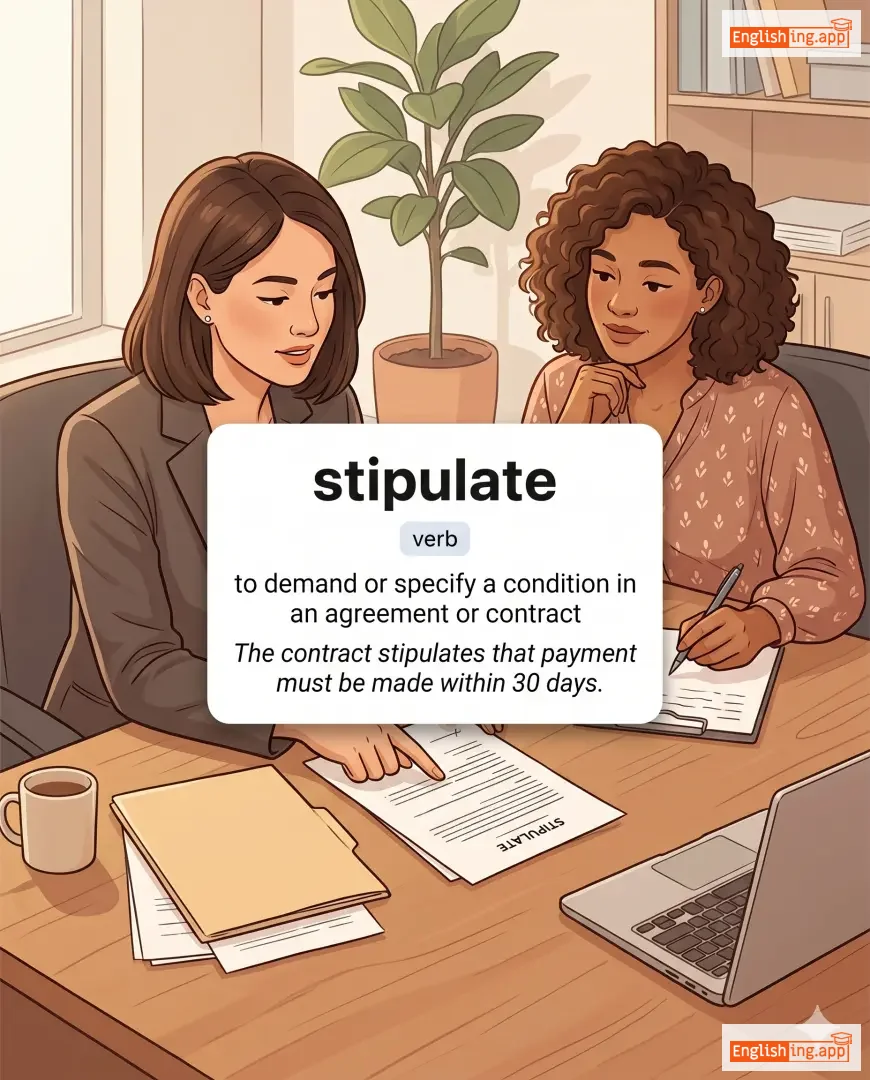
stipulate definition card — visual illustration of the meaning
verb
/ˈstɪp.jʊ.leɪt/
установить (ustanovit)

to demand or specify a condition in an agreement or contract

"The contract stipulates that payment must be made within 30 days."
"Контракт стыпулирует, что оплата должна быть произведена в течение 30 дней." (Kontrakt stypuliruet, chto oplata dolzhna byt' proizvedena v techeniye 30 dney.)
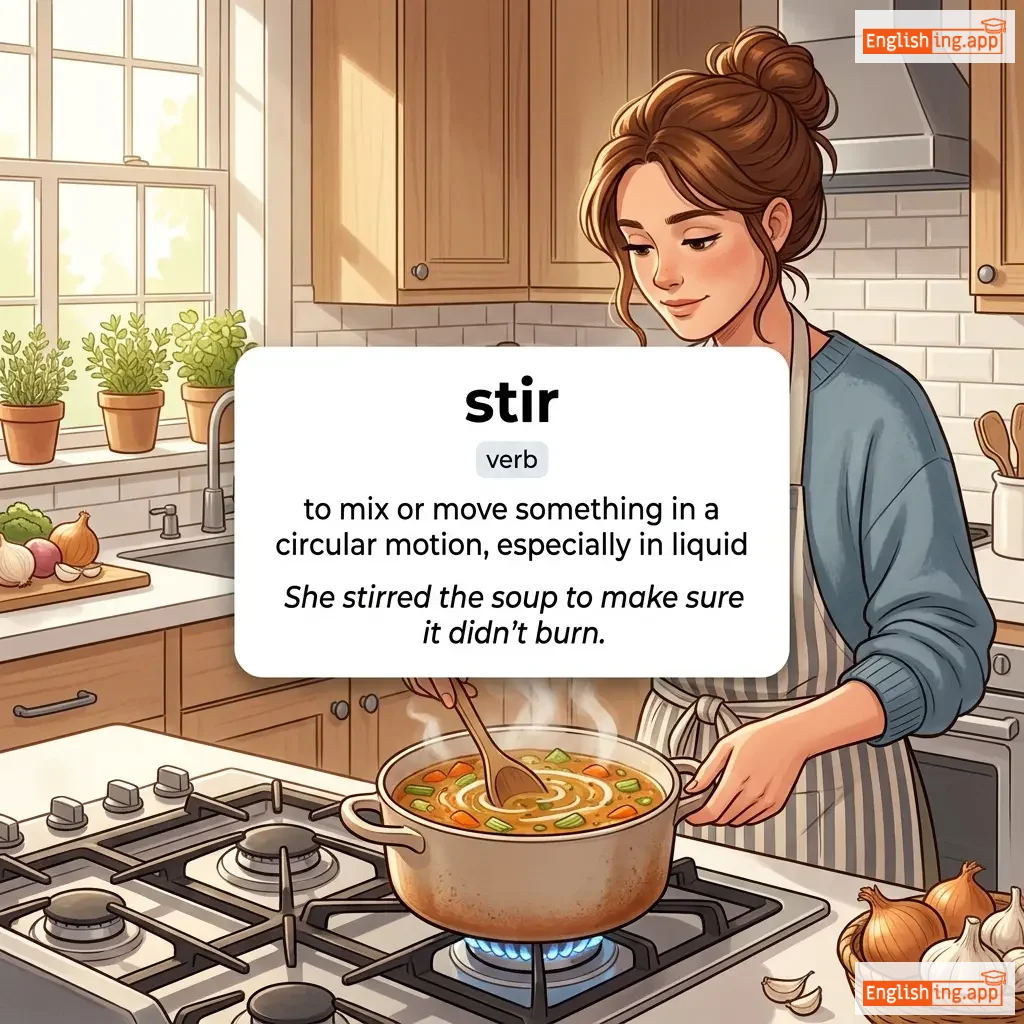
stir definition card — visual illustration of the meaning
verb
/stɜːr/
перемешивать (peremeshivat)

to mix or move something in a circular motion, especially in liquid

"She stirred the soup to make sure it didn't burn."
"Она перемешала суп, чтобы убедиться, что он не сгорит." (Ona peremeshala sup, chtoby ubeditsya, chto on ne sgorit.)
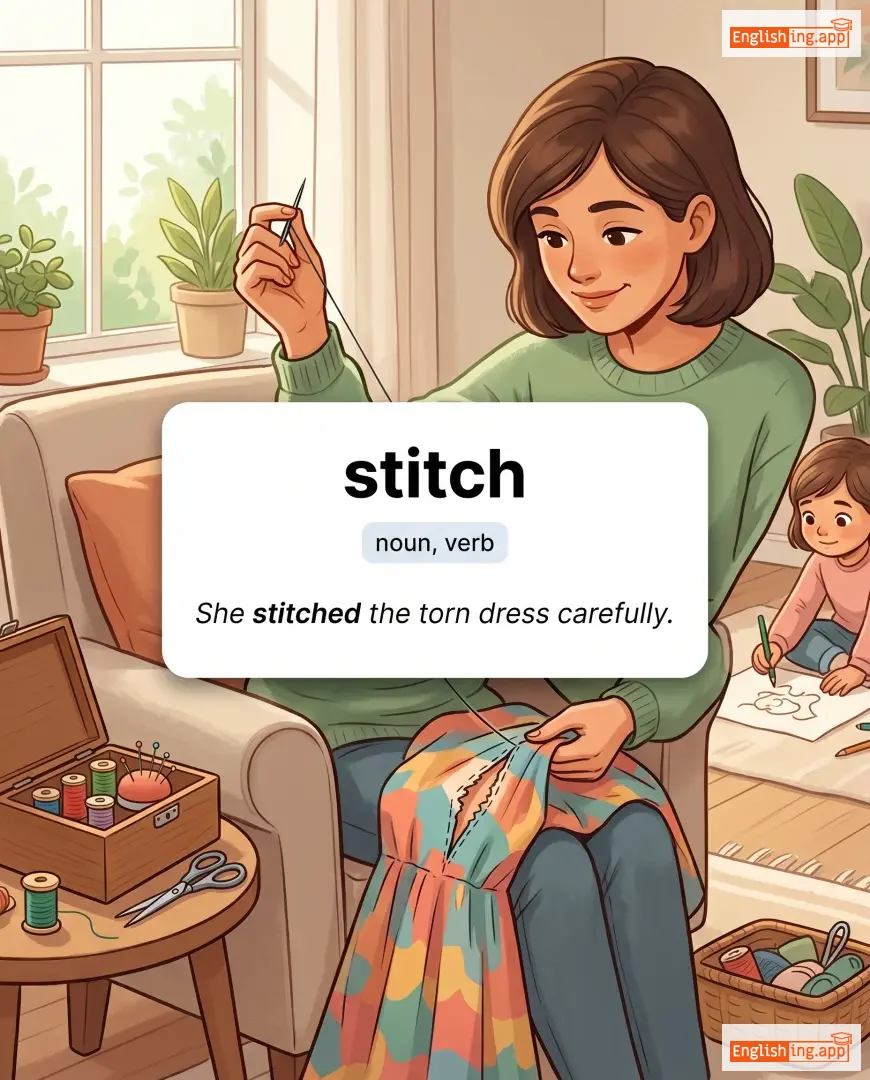
stitch definition card — visual illustration of the meaning
noun, verb
/stɪtʃ/

to sew fabric together using a needle and thread; also a single loop of thread in sewing

"She stitched the torn dress carefully."

noun, verb
/stɒk/
запас (zapas)

a supply of goods kept for sale or use; to keep or fill with goods

"The shop stocks a wide variety of products."

"Магазин имеет широкий ассортимент продуктов." (Magazin imeet shirokij assoriment produktov.)
noun
/stɒˈkeɪd/
деревянный забор (derevyannyy zabor)

a defensive barrier made of strong posts or timbers, often around a fort or prison

"The prisoners were kept inside the wooden stockade."

"Заключенные были помещены внутрь деревянного забора." (Zaklyuchennyye byli pomeshcheny vnutr' derevyannogo zabora.)
adjective
/ˈstɒdʒi/
тяжелый, старомодный (tyazhely, staromodny)

Dull, uninspired, or old-fashioned; also heavy and hard to digest when referring to food.

"The lecture was so stodgy that many students struggled to stay awake."

"Лекция была настолько тяжелой, что многим студентам было трудно оставаться бодрыми." (Lektsiya byla nastol'ko tyazhel'oy, chto mnogim studentam bylo trudno ostavatsya bodrymi.)
adjective
/ˈstoʊɪk/
стоический, невозмутимый (stoicheskiy, nevozmutimyy)

Showing little or no emotion, even in difficult situations.

"She remained stoic during the crisis, never showing fear or panic."

"Она оставалась стоической во время кризиса, не показывая страха или паники." (Ona ostavalas' stoicheskoj vo vremya krizisa, ne pokazyvaya strakha ili paniki.)
stoicism definition card — visual illustration of the meaning
noun
/ˈstoʊɪˌsɪzəm/
стоицизм (stoitsizm)

The endurance of pain or hardship without showing feelings or complaining.

"He faced the loss of his job with remarkable stoicism."

"Он столкнулся с потерей работы с замечательным стоицизмом." (On stolknulsya s poterey raboty s zamechatel'nym stoitsizmom.)
verb
/stoʊk/
разжигать огонь; поощрять или усиливать сильное чувство или активность (razzhigat ogon; pooshcheryat ili usilivat' sil'noe chuvstvo ili aktivnost')

To add fuel to a fire; to encourage or increase a strong feeling or activity.

"The politician’s speech stoked anger among the crowd."
"Речь политика разожгла гнев среди толпы." (Rech' politika razozhglá gnev sredi tolpy.)
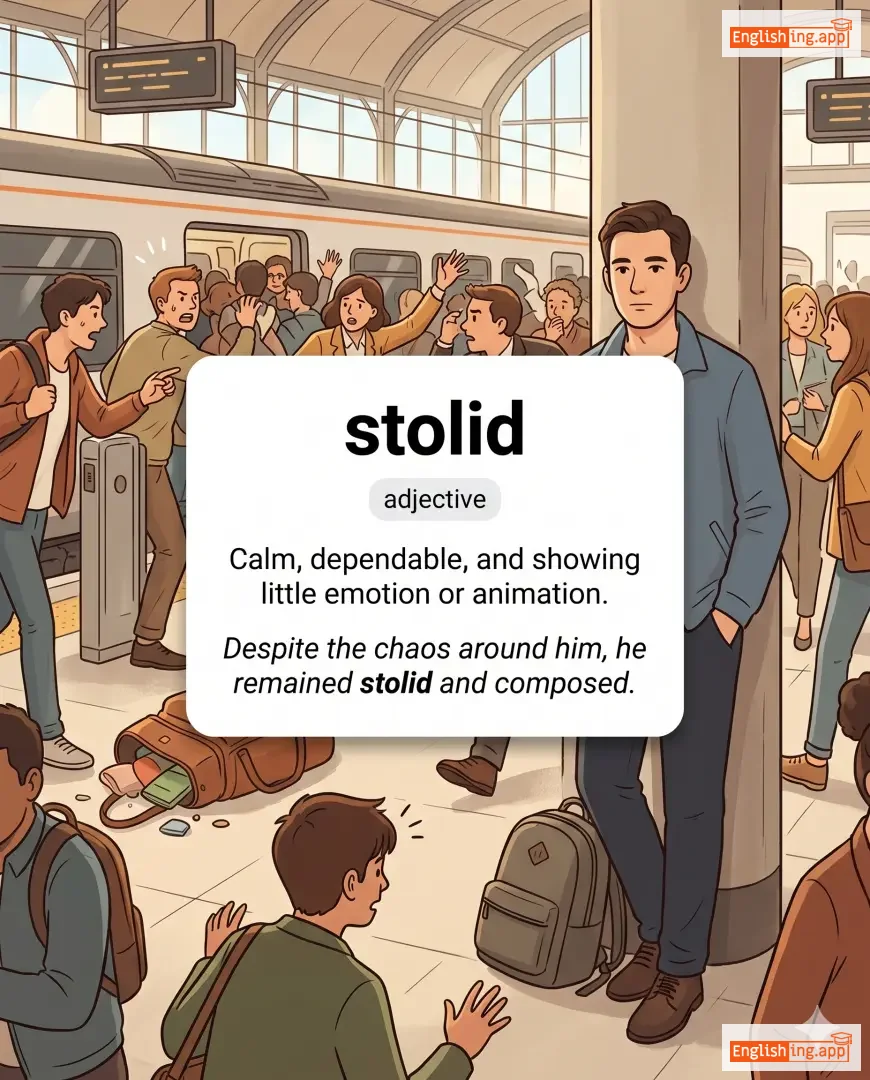
stolid definition card — visual illustration of the meaning
adjective
/ˈstɒlɪd/
невозмутимый, стойкий (nevozmutimyi, stoiki)

Calm, dependable, and showing little emotion or animation.

"Despite the chaos around him, he remained stolid and composed."

"Несмотря на хаос вокруг него, он оставался спокойным и собранным." (Nesmotrya na khaos vokrug nego, on ostavalsya spokoinym i sobrannym.)
noun/verb
/ˈstʌmək/
желудок / терпеть (zheludok / terpet)

The internal organ in which food is digested; also to tolerate or endure something

"She couldn’t stomach the sight of violence."

"Она не могла вынести вида насилия." (Ona ne mogla vynesti vida nasilija.)
noun
/ˈstʌmək eɪk/
боль в животе (bol v zhivote)

Pain in the stomach or abdominal area

"I have a stomach ache after eating too much."
"У меня болит живот после того, как я переел." (U menya bolit zhivot posle togo, kak ya pereel)
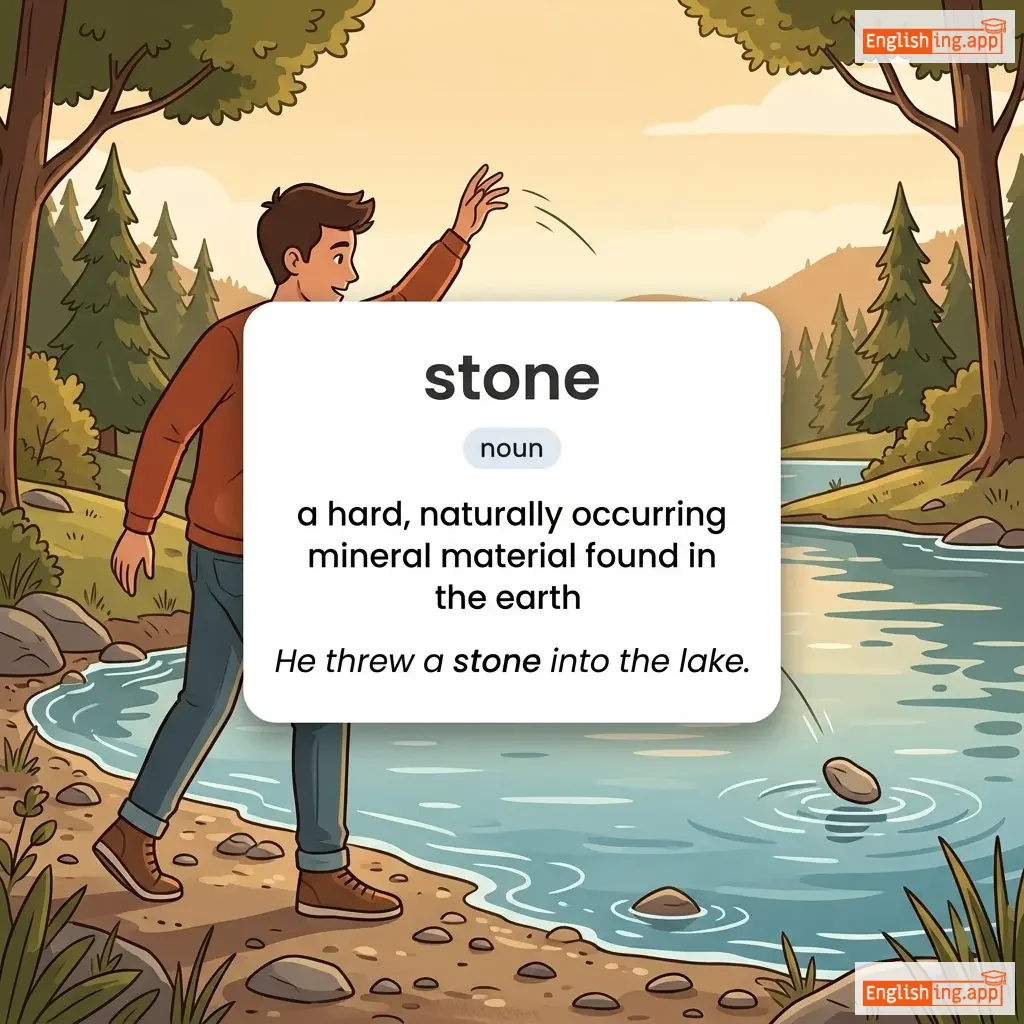
stone definition card — visual illustration of the meaning
noun
/stoʊn/
камень (kamen)

a hard, naturally occurring mineral material found in the earth

"He threw a stone into the lake."

"Он бросил камень в озеро." (On brosil kamen' v ozero.)
verb
/ˈstoʊnwɔːl/
блокировать (blokirovat)

To delay or block progress by refusing to cooperate or answer

"The witness tried to stonewall during the investigation."

"Свидетель пытался заблокировать процесс во время расследования." (Svidetel' pytalsya zablokirovat' protsess vo vremya rassledovaniya.)
verb/noun
/stuːp/
счастье (schast'ye)

To bend one's body forward and downward; also a small porch or staircase at the entrance of a house

"He had to stoop to pick up the coin."
"Она не смогла скрыть своего счастья, когда получила награду." (Ona ne smogla skryt' svoego schast'ya, kogda poluchila nagradu.)
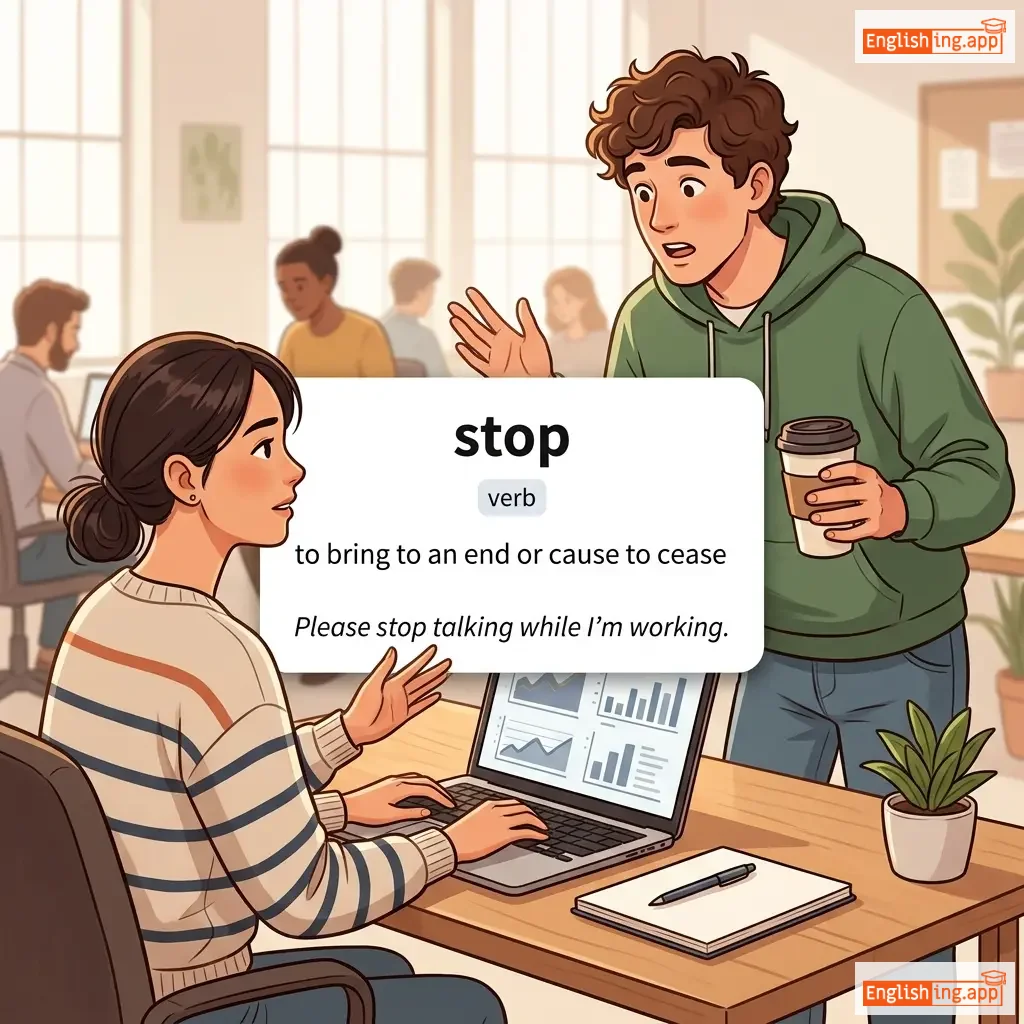
stop definition card — visual illustration of the meaning
verb
/stɑːp/
остановить (ostanovit)

to bring to an end or cause to cease

"Please stop talking while I’m working."

"Пожалуйста, прекрати говорить, пока я работаю." (Pozhaluysta, prekrati govorit', poka ya rabotayu.)
noun
/ˈstɒpɪdʒ/
остановка; прекращение (ostanovka; prekrashchenie)

The act of stopping or ceasing; a halt in operation or activity

"The sudden stoppage of the train caused delays for all passengers."
"Внезапная остановка поезда вызвала задержки у всех пассажиров." (Vnezapnaya ostanovka poezda vyzvala zaderzhki u vsekh passazhirov.)
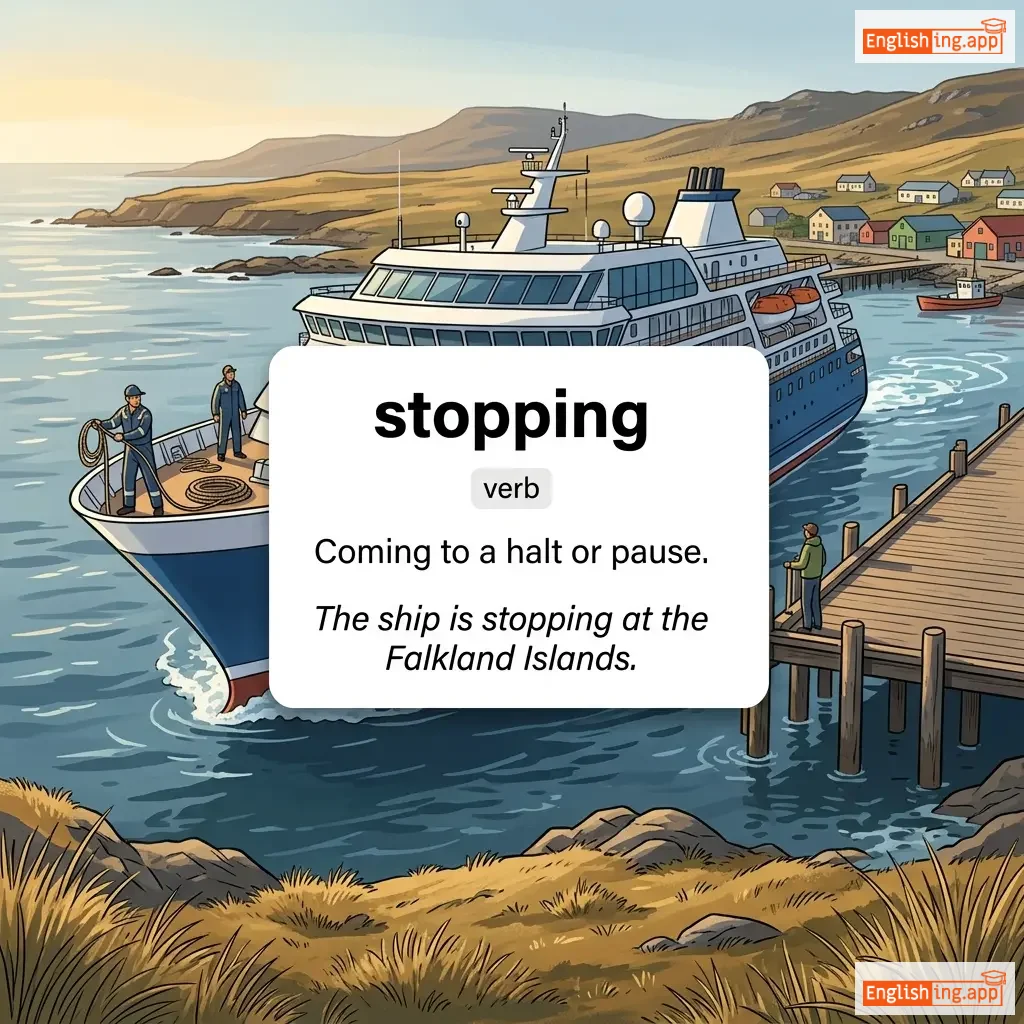
stopping definition card — visual illustration of the meaning
verb
/ˈstɒpɪŋ/
остановка (ostanovka)

Coming to a halt or pause.

"The ship is stopping at the Falkland Islands."

"Корабль останавливается на Фолклендских островах." (Korabl' ostanavlivaetsya na Falklandskikh ostrovakh.)
noun
/ˈstɔːrɪdʒ/
хранение (khraneniye)

the action or method of storing something for future use

"The warehouse offers plenty of storage space."

"Склад предлагает много места для хранения." (Sklad predlagaet mnogo mesta dlya khraneniya.)
strategic definition card — visual illustration of the meaning
adjective
/strəˈtiːdʒɪk/
стратегический (strategicheskiy)

relating to the identification of long-term or overall aims and interests and the means of achieving them

"His strategic thinking helped the company grow."
"Его стратегическое мышление помогло компании расти." (Ego strategicheskoe myshlenie pomoglo kompanii rasti.)
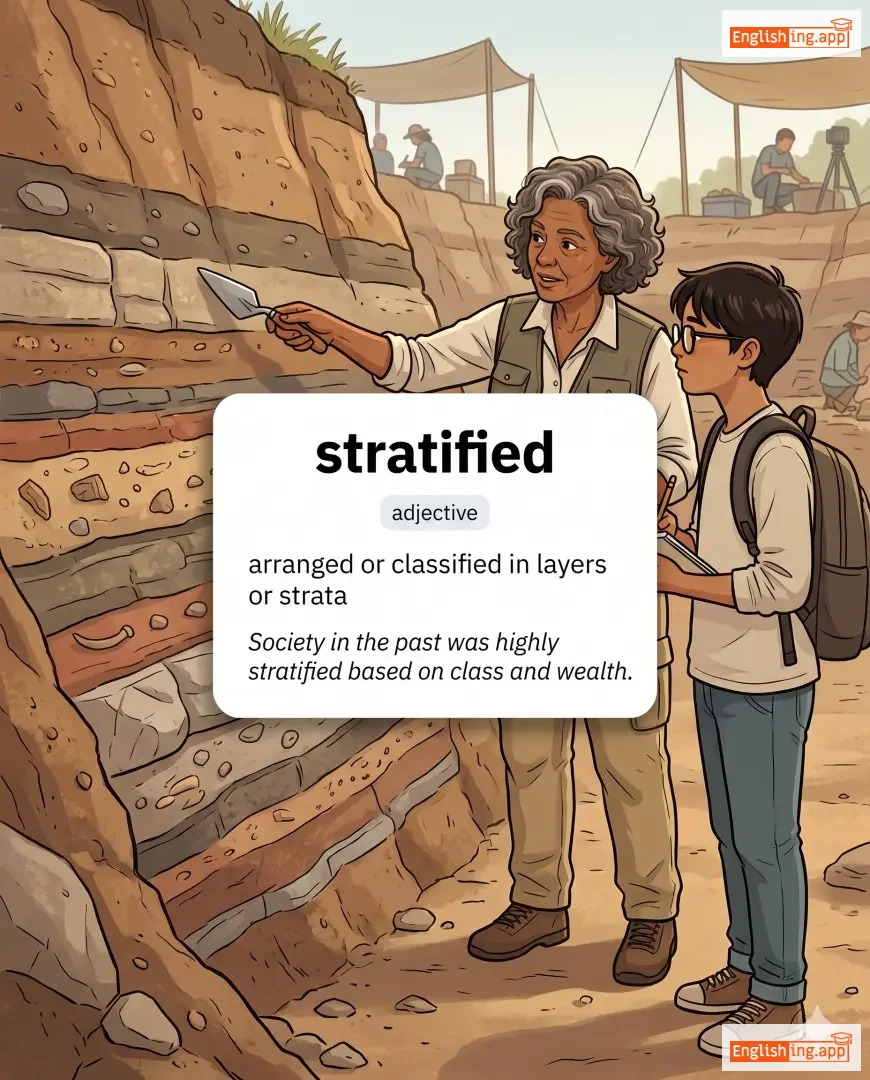
stratified definition card — visual illustration of the meaning
adjective
/ˈstrætɪfaɪd/

arranged or classified in layers or strata

"Society in the past was highly stratified based on class and wealth."

strategy definition card — visual illustration of the meaning
noun
/ˈstrætədʒi/
стратегия (strategiya)

a plan of action designed to achieve a long-term or overall aim

"They developed a new strategy to increase sales."

"Они разработали новую стратегию для увеличения продаж." (Oni razrabotali novuyu strategiyu dlya uvelicheniya prodazh.)
strategies definition card — visual illustration of the meaning
noun
ˈstræt.ə.dʒiz
стратегии (strategii)

A plan of action designed to achieve a long-term or overall aim.

"Effective strategies ensure success."

"Эффективные стратегии обеспечивают успех." (Effektivnye strategii obespechivayut uspek.)
strategic insights definition card — visual illustration of the meaning
noun
/strəˈtiː.dʒɪk ˈɪn.saɪts/
стратегические инсайты (strategicheskie insayty)

Deep understanding and wisdom gained through careful analysis for planning purposes.

"Strategic insights guide policymaking."

"Стратегические инсайты направляют политику." (Strategicheskie insayty napravlyayut politiku.)
verb
/ˈstræŋɡəl/

to kill or stop someone or something by squeezing the throat or restricting flow

"The villain tried to strangle his opponent in the dark alley."

adjective
/streɪndʒ/
странный (strannyy)

unusual or not normal

"It was strange to see him at the party after so long."

"Было странно видеть его на вечеринке после такого долгого времени." (Bylo stranno videt' ego na vecherinke posle takogo dolgogo vremeni.)