Vocabularios

Descubra, aprenda y domine el vocabulario en inglés

adjective
/ˈsɪŋkəˌpeɪtɪd/
sincopado (sincopado)

Characterized by displaced beats or rhythms, especially in music.

"The jazz piece had a syncopated rhythm that energized the crowd."

"La pieza de jazz tenía un ritmo sincopado que energizó a la multitud." (La pieza de jazz tenía un ritmo sincopado que energizó a la multitud.)
noun
/ˈsɪndɪkət/
sindicato (sindicato)

A group of individuals or organizations combined to promote a common interest or carry out a business venture.

"A syndicate of investors bought the struggling company."

"Un sindicato de inversores compró la empresa en apuros." (Un sindicato de inversores compró la empresa en apuros.)
noun
/ˈsɪnˌdroʊm/
síndrome (sindrome)

a group of symptoms that occur together and characterize a condition or disease

"Down syndrome affects a person's physical and mental development."

"El síndrome de Down afecta el desarrollo físico y mental de una persona." (El sindrome de Down afecta el desarrollo fisico y mental de una persona.)
noun
/sɪˈnɛrəsɪs/
sineresis (syneresis)

The contraction of two adjacent vowels into a single syllable or the separation of liquid from a gel.

"The yogurt showed syneresis when liquid separated on top."

"El yogur mostró sinéresis cuando el líquido se separó en la parte superior." (El yogur mostro sineresis cuando el liquido se separo en la parte superior.)
noun
/sɔːrd/
espada (espada)

a weapon with a long metal blade used for fighting

"The knight drew his sword to defend the castle."

"El caballero sacó su espada para defender el castillo." (El caballero saco su espada para defender el castillo.)
verb
/ˈstaɪfl/
sofocar (sofo-kar)

to prevent or restrain an action, idea, or emotion; to suffocate

"She tried to stifle a laugh during the serious meeting."

"Ella intentó sofocar una risa durante la reunión seria." (Ella intento sofocar una risa durante la reunion seria.)
verb
/ˈstaɪfəld/
sofocar (sofocar)

to suppress, hold back, or prevent something from happening

"He stifled a laugh during the serious meeting."

"Él sofocó una risa durante la reunión seria." (Él sofocó una risa durante la reunión seria.)
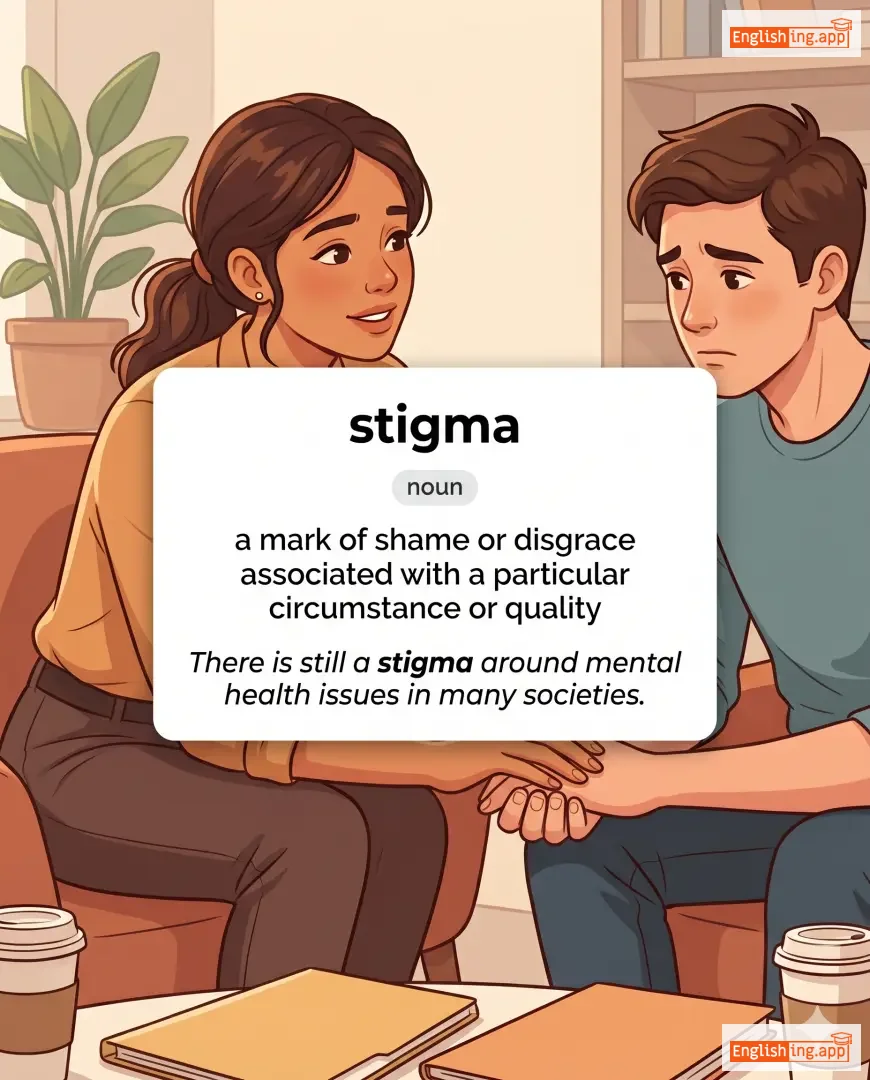
stigma definition card — visual illustration of the meaning
noun
/ˈstɪɡmə/
estigma (estigma)

a mark of shame or disgrace associated with a particular circumstance or quality

"There is still a stigma around mental health issues in many societies."

"Todavía existe un estigma en torno a los problemas de salud mental en muchas sociedades." (Todavía existe un estigma en torno a los problemas de salud mental en muchas sociedades.)
verb
/ˈstɪɡmətaɪz/
estigmatizar (estigmatizar)

to describe or regard someone as worthy of disgrace or disapproval

"People with certain illnesses are often unfairly stigmatized."

"Las personas con ciertas enfermedades a menudo son estigmatizadas de manera injusta." (Las personas con ciertas enfermedades a menudo son estigmatizadas de manera injusta.)
noun
/stɪˈlɛtoʊ/
zapato de tacón delgado / daga (zapato de tacon delgado / daga)

A small, thin, high-heeled shoe or a dagger with a slender blade.

"She wore elegant stiletto heels to the party."

"Ella llevaba unos elegantes tacones stilettos a la fiesta." (Ella llevaba unos elegantes tacones stilettos a la fiesta.)
adjective
/stɪl/
tranquilo (tranquilo)

not moving or making a sound

"The water was still, reflecting the sky."

"El agua estaba tranquila, reflejando el cielo." (El agua estaba tranquila, reflejando el cielo.)
adjective
/ˈstɪltɪd/
artificial, forzado (artificial, forzado)

Speech or writing that is stiff, unnatural, or overly formal.

"His speech sounded stilted and rehearsed."

"Su discurso sonaba forzado y ensayado." (Su discurso sonaba forzado y ensayado.)
noun
/ˈstɪmjʊlənt/
estimulante (estimulante)

A substance that raises levels of physiological or nervous activity in the body.

"Coffee is a common stimulant that helps people stay awake."

"El café es un estimulante común que ayuda a las personas a mantenerse despiertas" (El café es un estimulante común que ayuda a las personas a mantenerse despiertas)
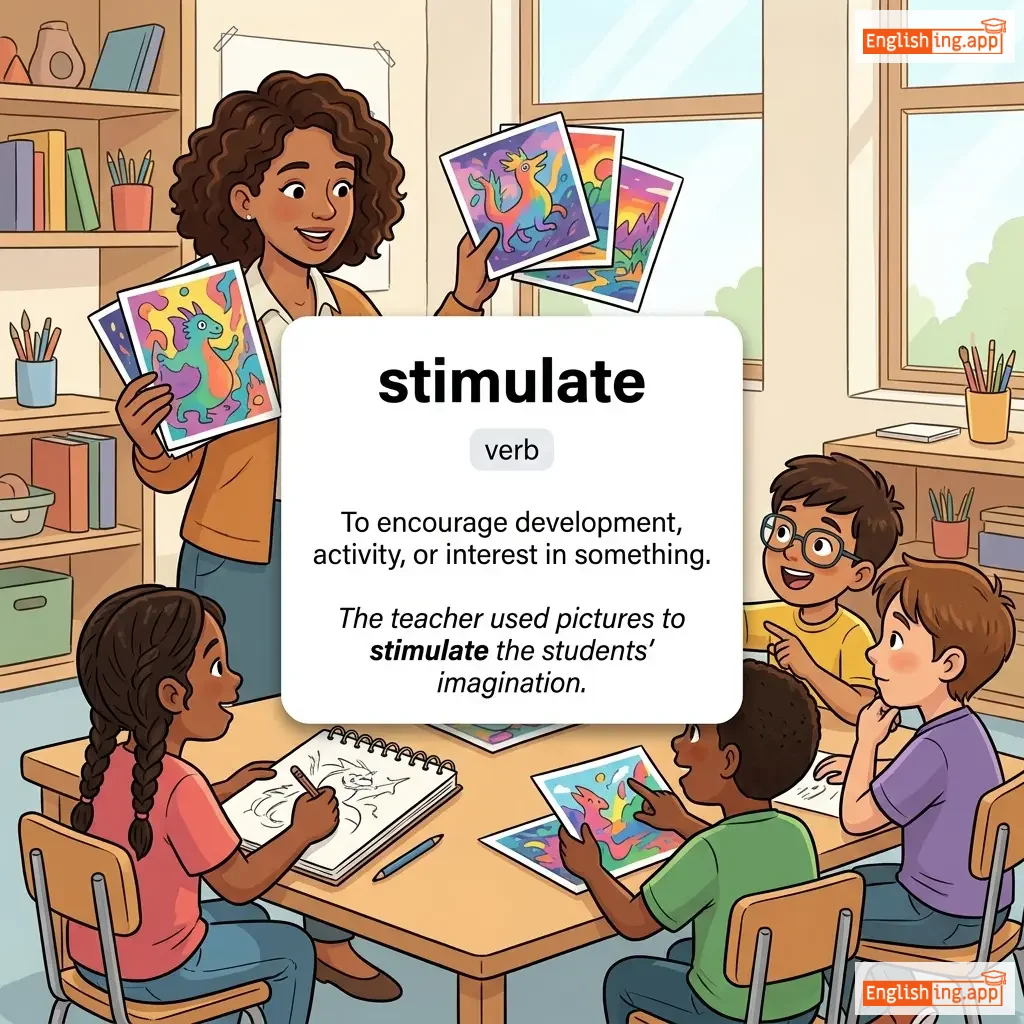
stimulate definition card — visual illustration of the meaning
verb
/ˈstɪmjʊˌleɪt/
estimular, fomentar (estimular, fomentar)

To encourage development, activity, or interest in something.

"The teacher used pictures to stimulate the students' imagination."

"El maestro usó imágenes para estimular la imaginación de los estudiantes." (El maestro usó imágenes para estimular la imaginación de los estudiantes.)
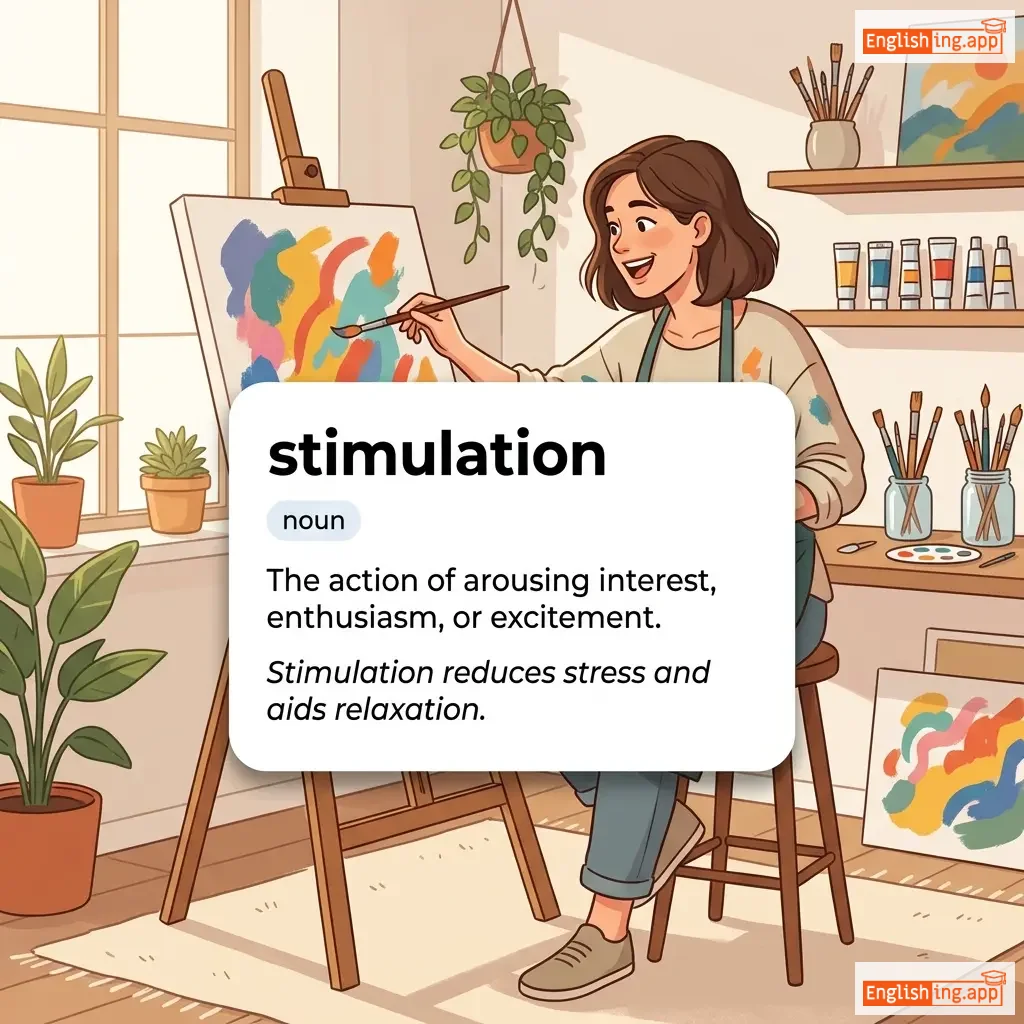
stimulation definition card — visual illustration of the meaning
noun
/ˌstɪm.jəˈleɪ.ʃən/
estimulación (estimulación)

The action of arousing interest, enthusiasm, or excitement.

"Stimulation reduces stress and aids relaxation."

"La estimulación reduce el estrés y ayuda a la relajación." (La estimulación reduce el estrés y ayuda a la relajación.)
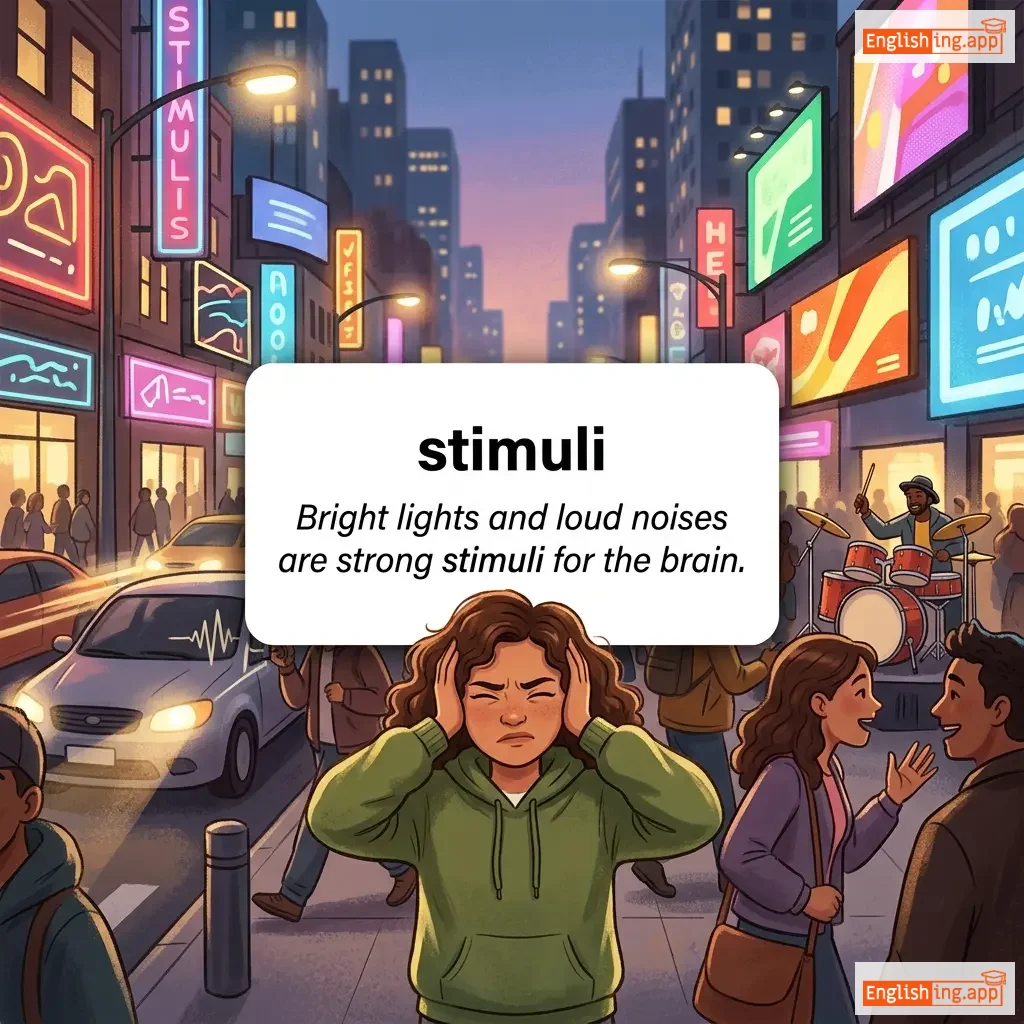
stimuli definition card — visual illustration of the meaning
noun (plural of stimulus)
/ˈstɪm.jʊ.laɪ/
estímulo (estímulo)

Things or events that evoke a specific functional reaction in an organ or tissue.

"Bright lights and loud noises are strong stimuli for the brain."

"Luces brillantes y ruidos fuertes son estímulos fuertes para el cerebro." (Luces brillantes y ruidos fuertes son estimulos fuertes para el cerebro.)
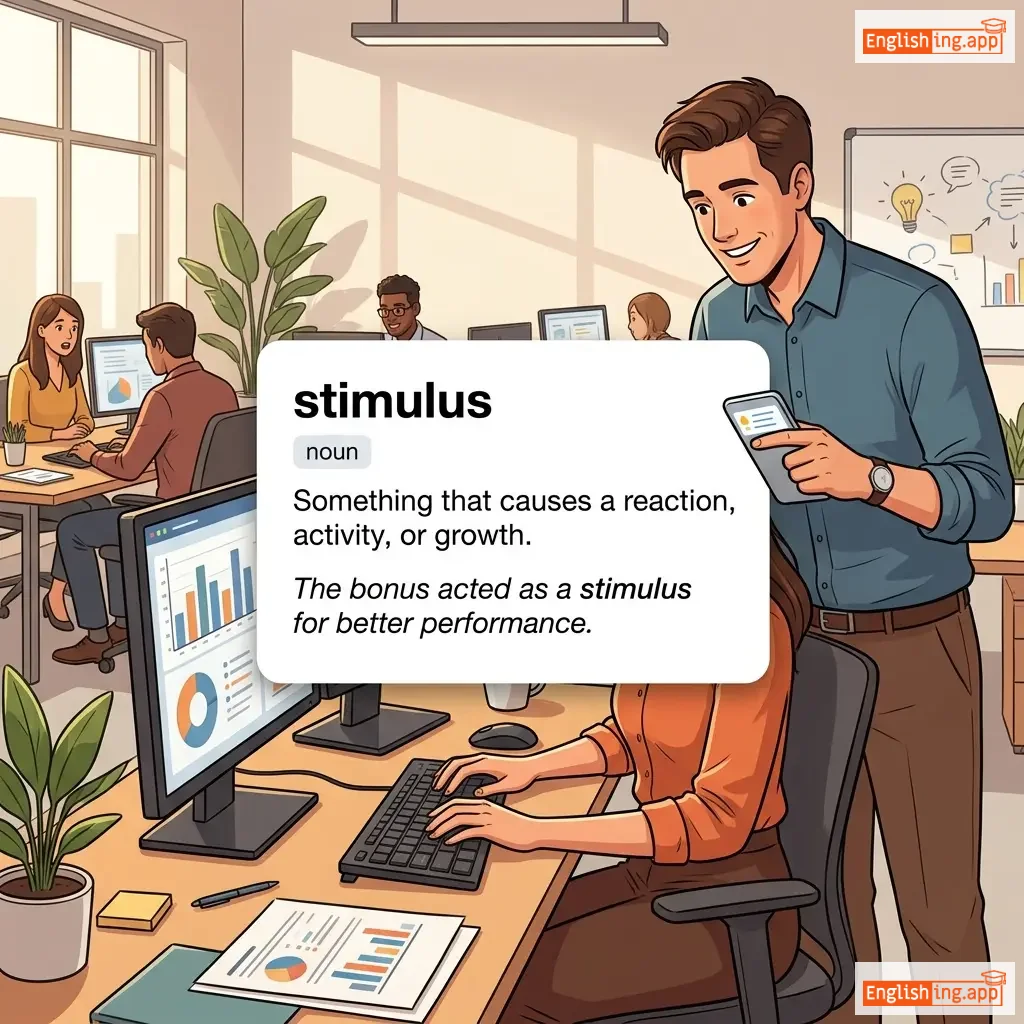
stimulus definition card — visual illustration of the meaning
noun
/ˈstɪmjʊləs/
factor que causa una reacción, estímulo (factor que causa una reaccion, estimulo)

Something that causes a reaction, activity, or growth.

"The bonus acted as a stimulus for better performance."

"El bono actuó como un estímulo para un mejor rendimiento." (El bono actuó como un estímulo para un mejor rendimiento.)
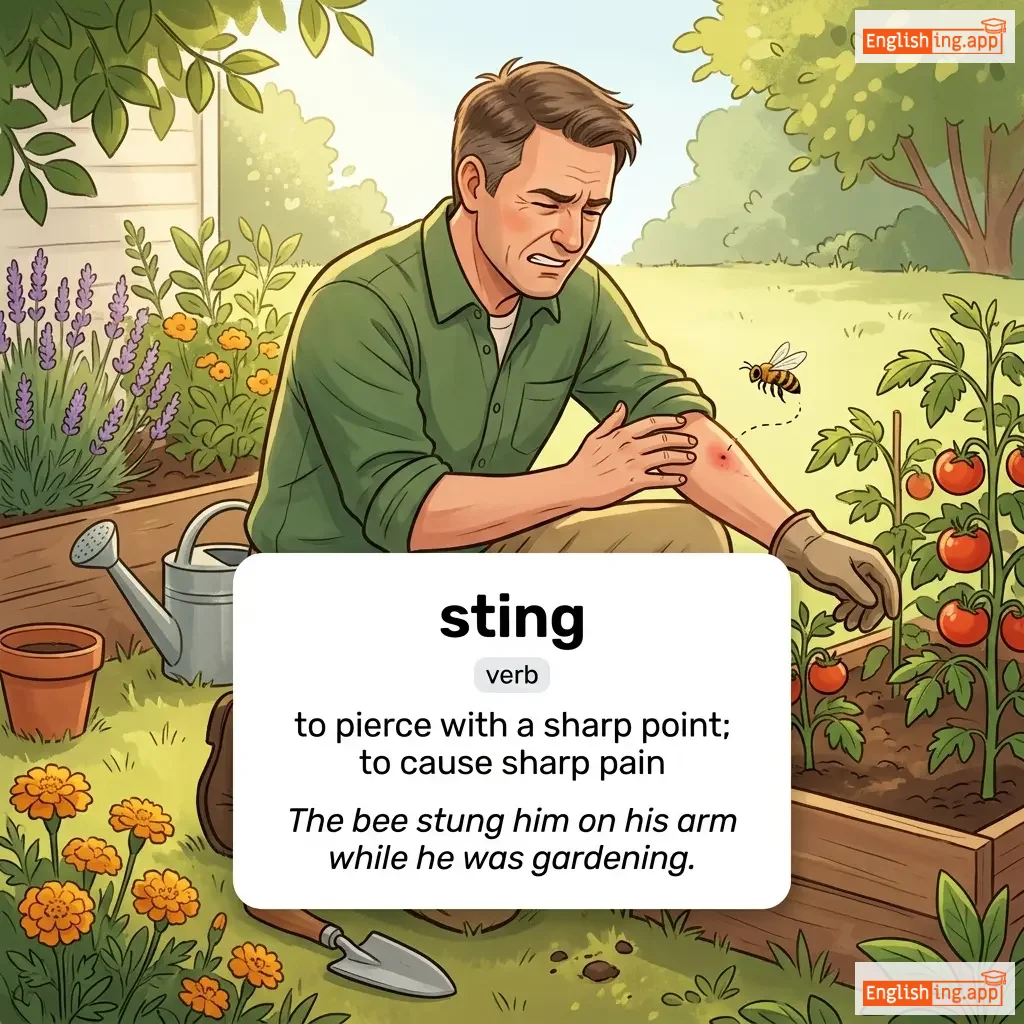
sting definition card — visual illustration of the meaning
verb
/stɪŋ/
picar (pikar)

to pierce with a sharp point; to cause sharp pain

"The bee stung him on his arm while he was gardening."

"La abeja lo picó en el brazo mientras él estaba jardineando." (La abeya lo pico en el brazo mientras el estaba jardineando)
adjective
/ˈstɪndʒi/
tacaño (tacano)

unwilling to spend or give; miserly

"He is too stingy to buy a gift for his friend."

"Es demasiado tacaño para comprar un regalo para su amigo." (Es demasiado tacano para comprar un regalo para su amigo.)
verb
/stɪŋk/
oler mal (oler mal)

to smell very unpleasant

"The garbage bin stinks in the hot sun."

"El bote de basura huele mal bajo el sol caliente." (El bote de basura huele mal bajo el sol caliente.)
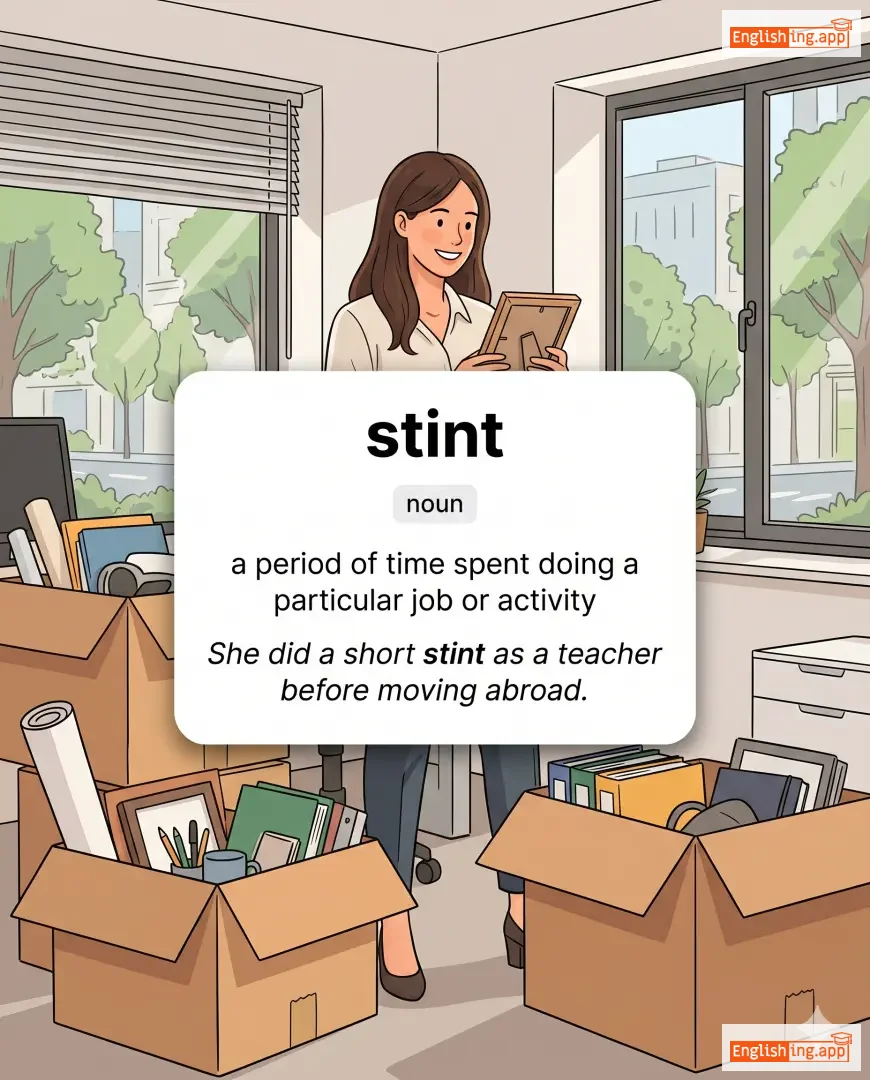
stint definition card — visual illustration of the meaning
noun
/stɪnt/
trabajo temporal (trabajo temporal)

a period of time spent doing a particular job or activity

"She did a short stint as a teacher before moving abroad."

"Ella hizo un corto trabajo como profesora antes de mudarse al extranjero." (Ella hizo un corto trabajo como profesora antes de mudarse al extranjero.)
verb
/ˈstɪntɪŋ/
dar con tacañería (dar con tacañería)

to supply sparingly or with restrictions

"He never stinting his efforts to help the poor."

"Él nunca escatima esfuerzos para ayudar a los pobres." (Él nunca escatima esfuerzos para ayudar a los pobres.)
noun
/ˈstaɪpɛnd/
estipendio (estipendio)

a fixed regular payment, usually for services or to cover living expenses

"The university provides a monthly stipend to its research students."

"La universidad proporciona un estipendio mensual a sus estudiantes de investigación." (La universidad proporciona un estipendio mensual a sus estudiantes de investigación.)
verb
/ˈstɪp.əl/
cubrir con pequeños puntos (cubrir con pequenos puntos)

to cover a surface with numerous small dots or specks, often in drawing or painting

"The artist stippled the canvas to create a textured effect."

"El artista cubrió el lienzo con pequeños puntos para crear un efecto texturizado." (El artista cubrió el lienzo con pequeños puntos para crear un efecto texturizado.)
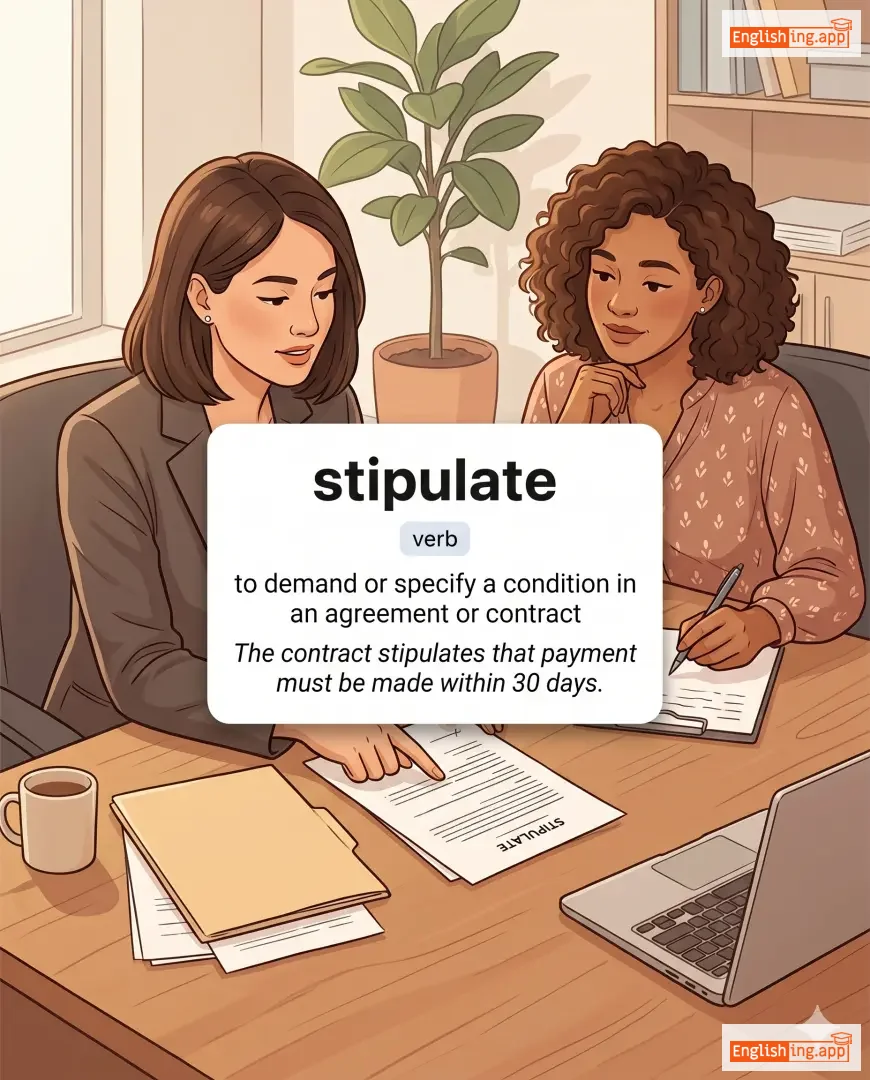
stipulate definition card — visual illustration of the meaning
verb
/ˈstɪp.jʊ.leɪt/
establecer (establecer)

to demand or specify a condition in an agreement or contract

"The contract stipulates that payment must be made within 30 days."

"El contrato estipula que el pago debe realizarse dentro de 30 días." (El contrato estipula que el pago debe realizarse dentro de 30 días.)
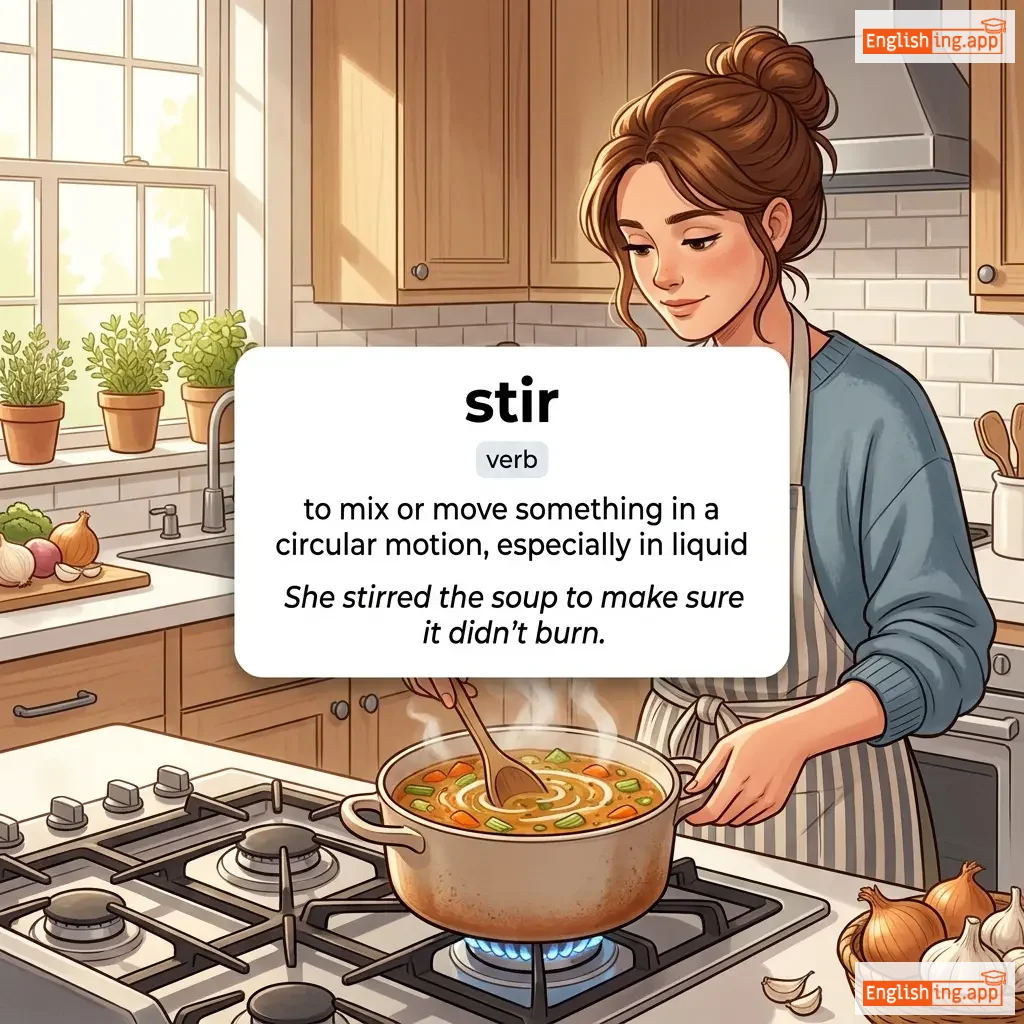
stir definition card — visual illustration of the meaning
verb
/stɜːr/
revolver (revolver)

to mix or move something in a circular motion, especially in liquid

"She stirred the soup to make sure it didn't burn."

"Ella revolvió la sopa para asegurarse de que no se quemara." (Ella revolvió la sopa para asegurarse de que no se quemara.)
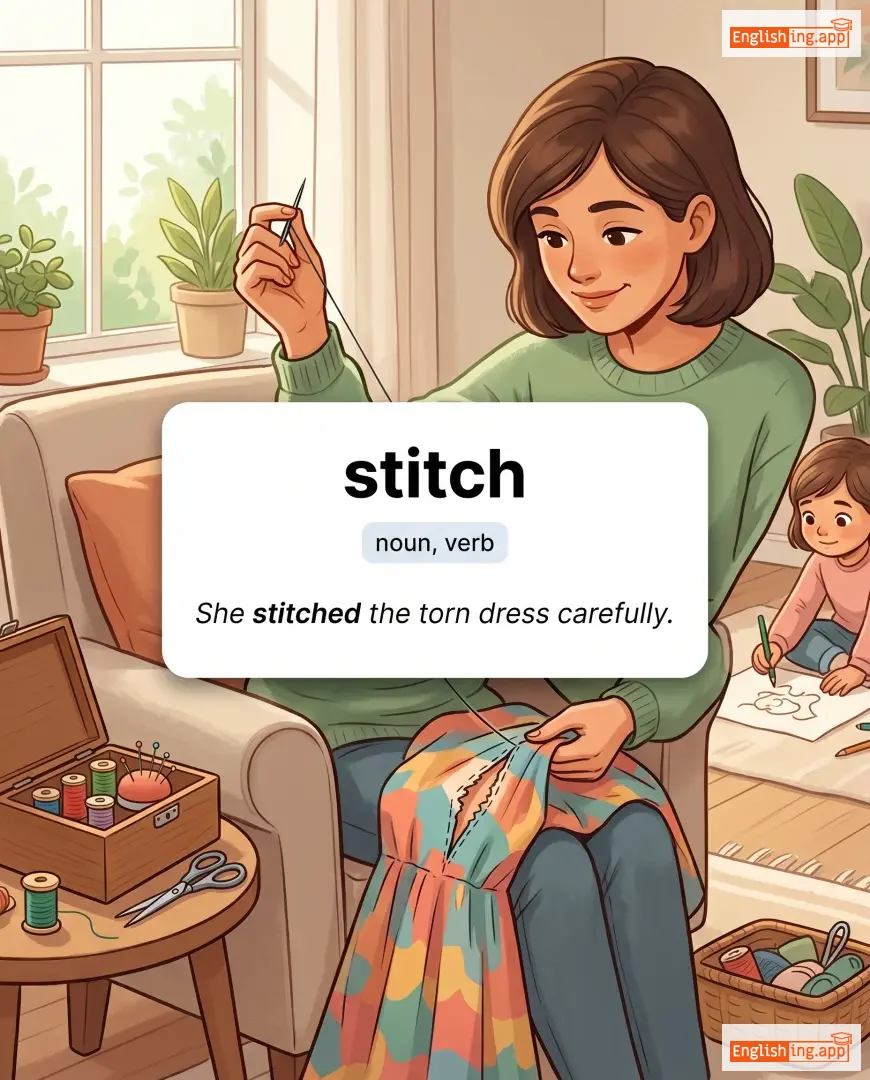
stitch definition card — visual illustration of the meaning
noun, verb
/stɪtʃ/
felicidad (felicidad)

to sew fabric together using a needle and thread; also a single loop of thread in sewing

"She stitched the torn dress carefully."

"Ella cosió el vestido roto con cuidado." (Ella cosió el vestido roto con cuidado.)
noun, verb
/stɒk/
inventario (inventario)

a supply of goods kept for sale or use; to keep or fill with goods

"The shop stocks a wide variety of products."

"La tienda tiene una amplia variedad de productos." (La tienda tiene una amplia variedad de productos.)
noun
/stɒˈkeɪd/
murallas de madera (murallas de madera)

a defensive barrier made of strong posts or timbers, often around a fort or prison

"The prisoners were kept inside the wooden stockade."

"Los prisioneros fueron mantenidos dentro de las murallas de madera." (Los prisioneros fueron mantenidos dentro de las murallas de madera.)
adjective
/ˈstɒdʒi/
pesado, anticuado (pesado, anticuado)

Dull, uninspired, or old-fashioned; also heavy and hard to digest when referring to food.

"The lecture was so stodgy that many students struggled to stay awake."

"La conferencia fue tan pesada que muchos estudiantes tuvieron dificultades para mantenerse despiertos." (La conferencia fue tan pesada que muchos estudiantes tuvieron dificultades para mantenerse despiertos.)
adjective
/ˈstoʊɪk/
estoico, imperturbable (estoiko, imperturbable)

Showing little or no emotion, even in difficult situations.

"She remained stoic during the crisis, never showing fear or panic."

"Ella permaneció estoica durante la crisis, sin mostrar miedo ni pánico." (Ella permaneció estoica durante la crisis, sin mostrar miedo ni panico.)
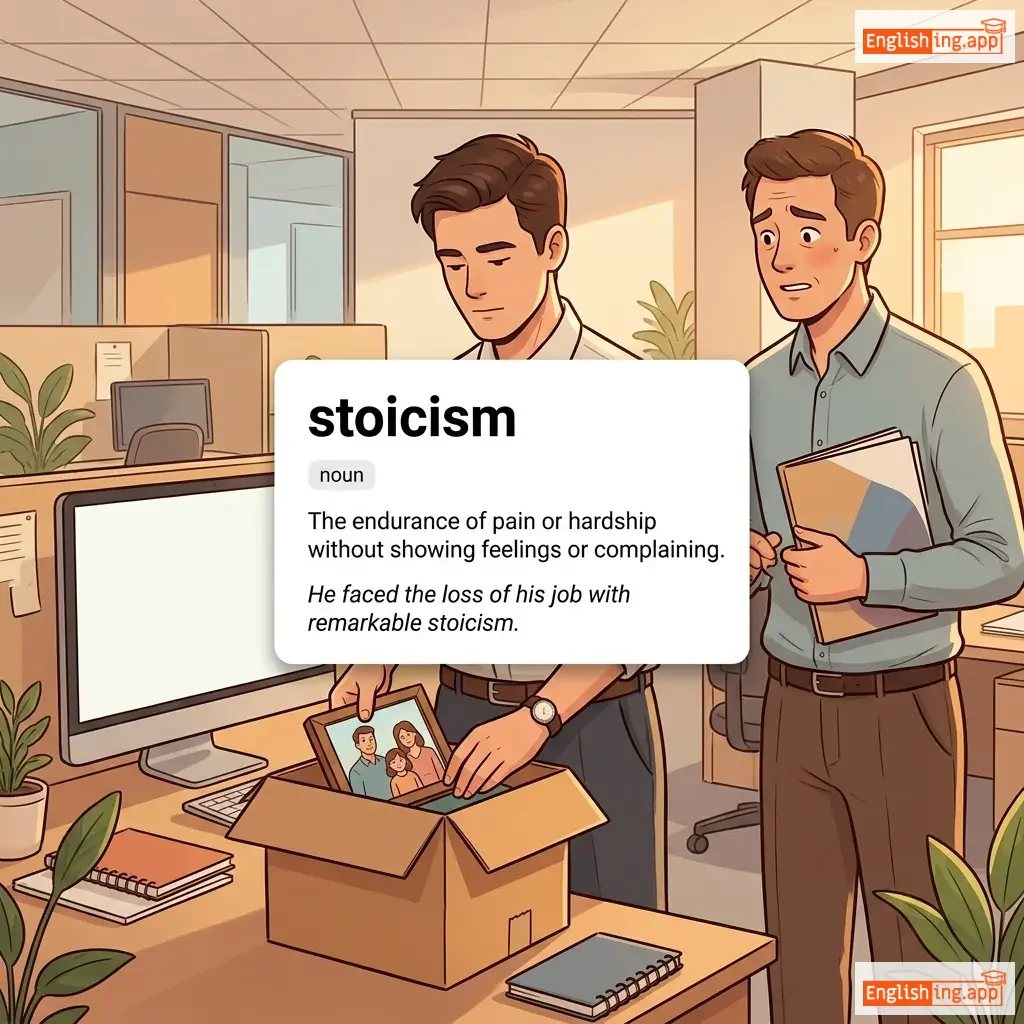
stoicism definition card — visual illustration of the meaning
noun
/ˈstoʊɪˌsɪzəm/
estoicismo (estoicismo)

The endurance of pain or hardship without showing feelings or complaining.

"He faced the loss of his job with remarkable stoicism."

"Enfrentó la pérdida de su trabajo con un estoicismo notable." (Enfrentó la pérdida de su trabajo con un estoicismo notable.)
verb
/stoʊk/
avivar el fuego; fomentar o aumentar un sentimiento o actividad fuerte (avivar el fuego; fomentar o aumentar un sentimiento o actividad fuerte)

To add fuel to a fire; to encourage or increase a strong feeling or activity.

"The politician’s speech stoked anger among the crowd."

"El discurso del político encendió la ira entre la multitud." (El discurso del politico encendio la ira entre la multitud.)
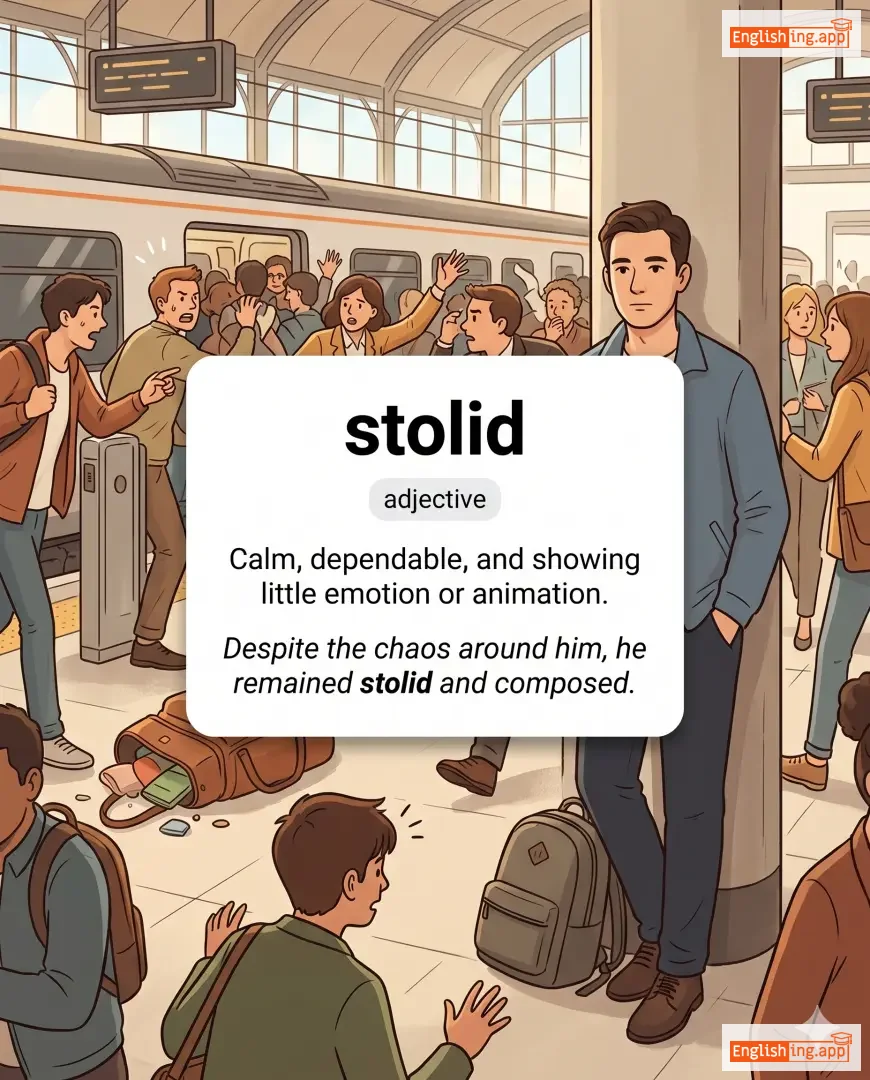
stolid definition card — visual illustration of the meaning
adjective
/ˈstɒlɪd/
calmo, imperturbable (calmo, imperturbable)

Calm, dependable, and showing little emotion or animation.

"Despite the chaos around him, he remained stolid and composed."

"A pesar del caos a su alrededor, permaneció tranquilo y sereno." (A pesar del caos a su alrededor, permaneció tranquilo y sereno.)
noun/verb
/ˈstʌmək/
estómago / soportar (estomago / soportar)

The internal organ in which food is digested; also to tolerate or endure something

"She couldn’t stomach the sight of violence."

"Ella no pudo soportar la visión de la violencia." (Ella no pudo soportar la visión de la violencia.)
noun
/ˈstʌmək eɪk/
dolor de estómago (dolor de estomago)

Pain in the stomach or abdominal area

"I have a stomach ache after eating too much."

"Tengo un dolor de estómago después de comer demasiado." (Tengo un dolor de estomago despues de comer demasiado)
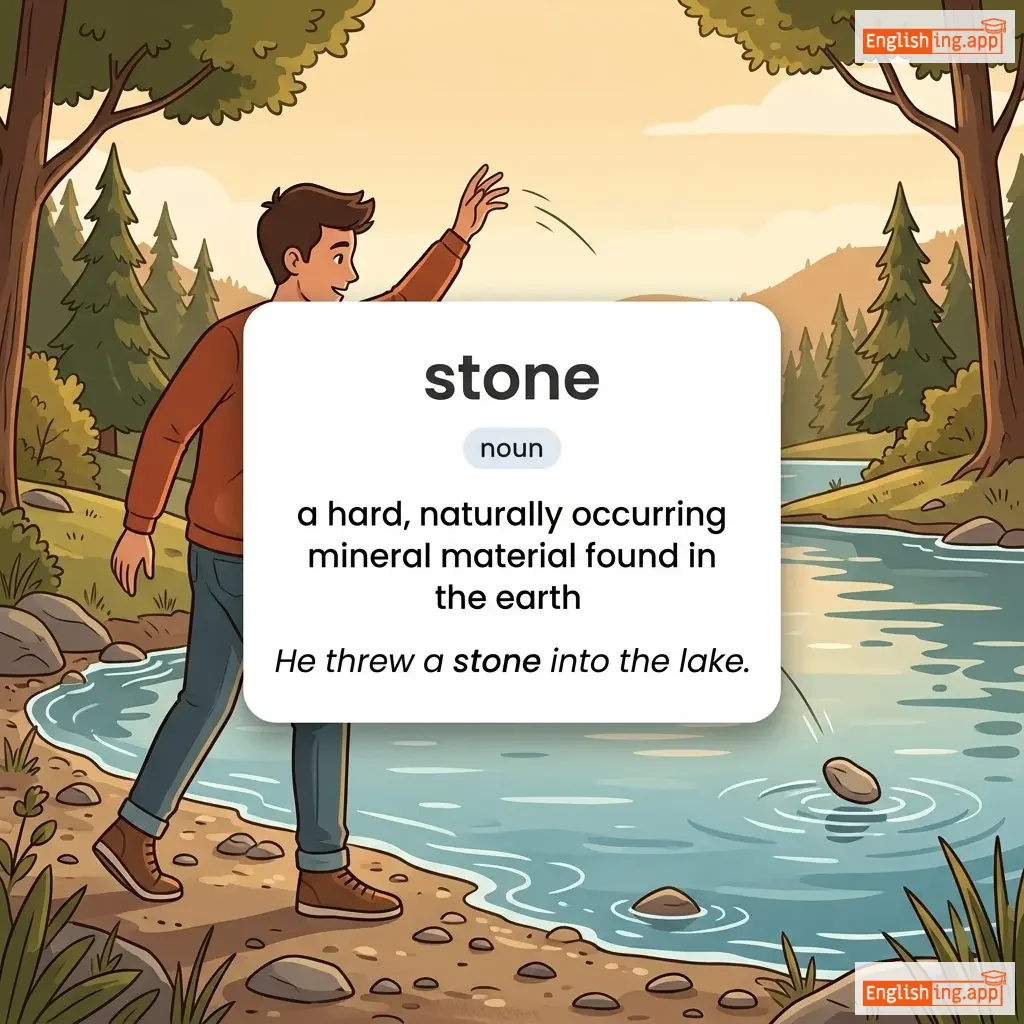
stone definition card — visual illustration of the meaning
noun
/stoʊn/
piedra (piedra)

a hard, naturally occurring mineral material found in the earth

"He threw a stone into the lake."

"Lanzó una piedra al lago." (Lanzo una piedra al lago.)
verb
/ˈstoʊnwɔːl/
bloquear (bloquear)

To delay or block progress by refusing to cooperate or answer

"The witness tried to stonewall during the investigation."

"El testigo intentó hacer stonewall durante la investigación." (El testigo intentó hacer stonewall durante la investigación.)
verb/noun
/stuːp/
felicidad (felicidad)

To bend one's body forward and downward; also a small porch or staircase at the entrance of a house

"He had to stoop to pick up the coin."

"No pudo esconder su felicidad cuando recibió el premio." (No pudo esconder su felicidad cuando recibió el premio.)
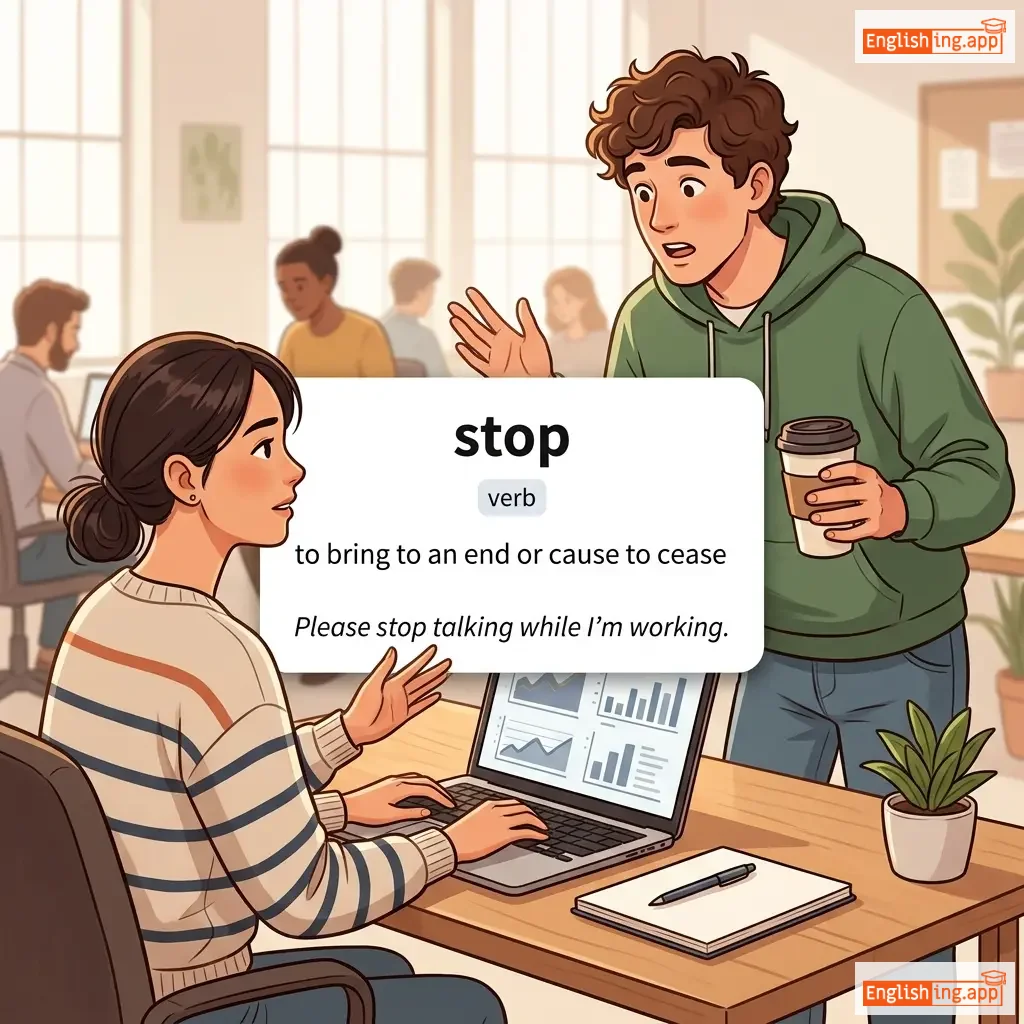
stop definition card — visual illustration of the meaning
verb
/stɑːp/
detener (detener)

to bring to an end or cause to cease

"Please stop talking while I’m working."

"Por favor, deja de hablar mientras estoy trabajando." (Por favor, deja de hablar mientras estoy trabajando.)
noun
/ˈstɒpɪdʒ/
parada; detención (parada; detencion)

The act of stopping or ceasing; a halt in operation or activity

"The sudden stoppage of the train caused delays for all passengers."

"La parada repentina del tren causó retrasos a todos los pasajeros." (La parada repentina del tren causo retrasos a todos los pasajeros.)
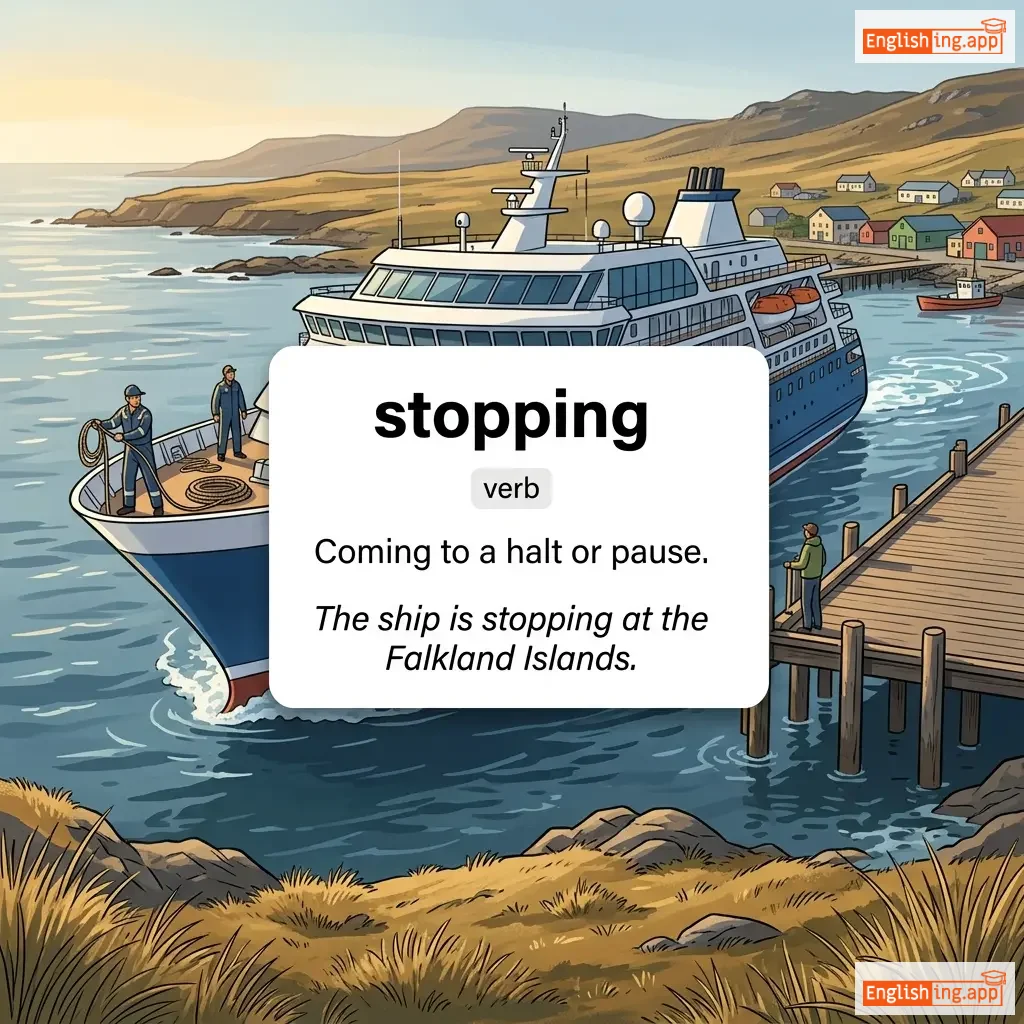
stopping definition card — visual illustration of the meaning
verb
/ˈstɒpɪŋ/
detener (detener)

Coming to a halt or pause.

"The ship is stopping at the Falkland Islands."

"El barco está deteniéndose en las Islas Malvinas." (El barco está deteniéndose en las Islas Malvinas.)
noun
/ˈstɔːrɪdʒ/
almacenamiento (almacenamiento)

the action or method of storing something for future use

"The warehouse offers plenty of storage space."

"El almacén ofrece mucho espacio de almacenamiento." (El almacén ofrece mucho espacio de almacenamiento.)
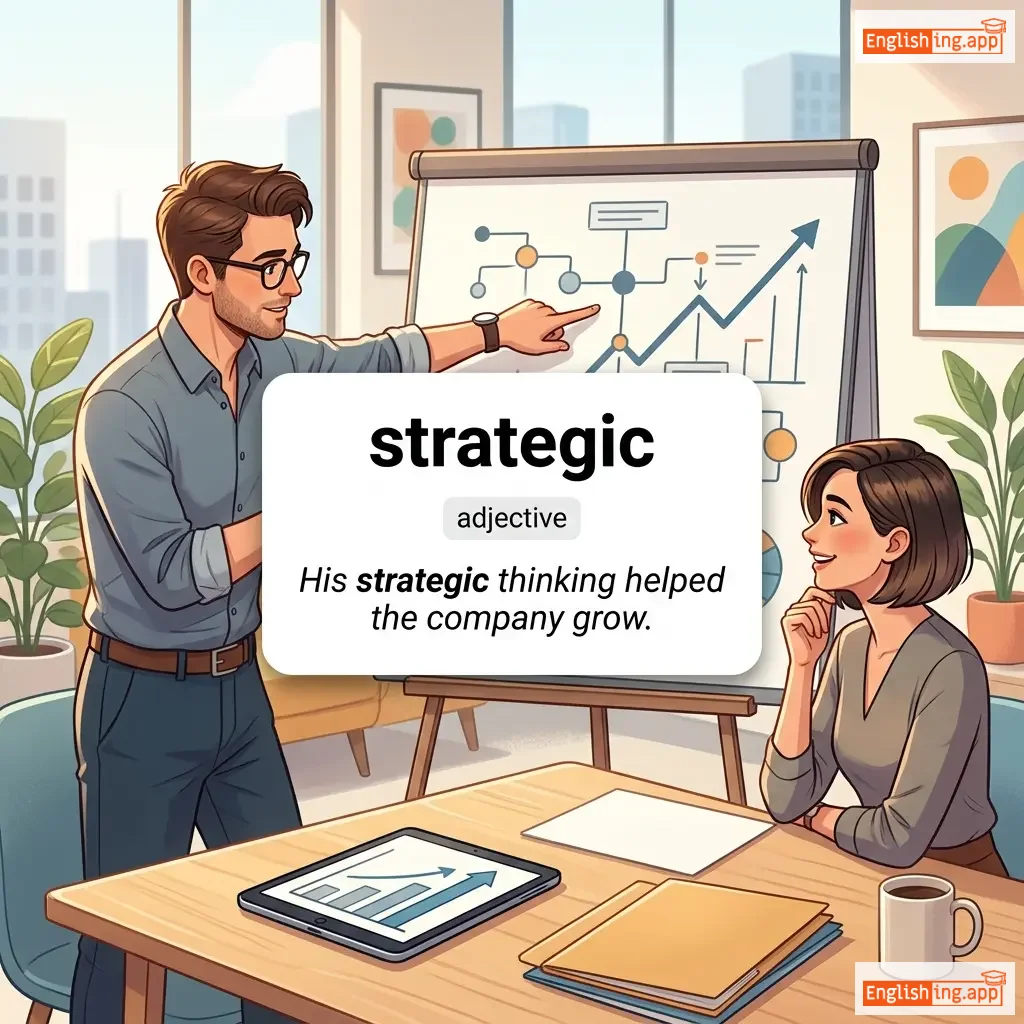
strategic definition card — visual illustration of the meaning
adjective
/strəˈtiːdʒɪk/
estratégico (estrategico)

relating to the identification of long-term or overall aims and interests and the means of achieving them

"His strategic thinking helped the company grow."

"Su pensamiento estratégico ayudó a la empresa a crecer." (Su pensamiento estrategico ayudo a la empresa a crecer.)
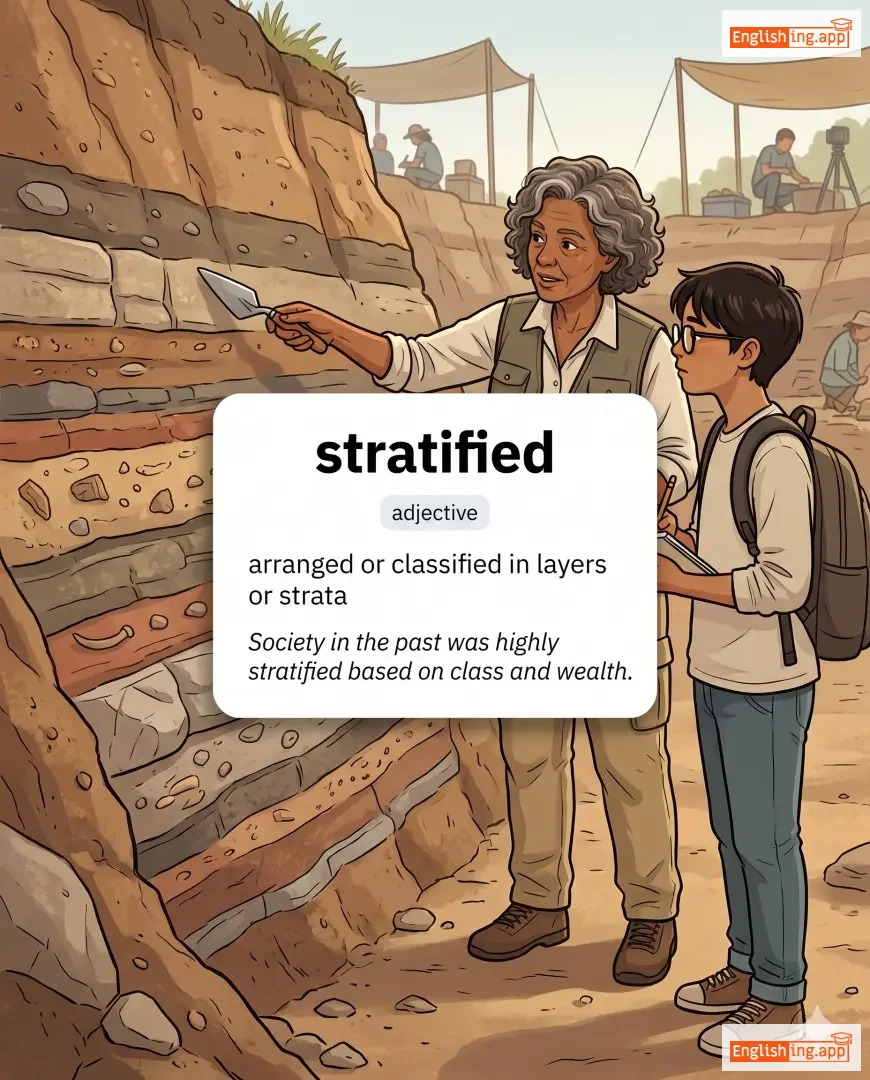
stratified definition card — visual illustration of the meaning
adjective
/ˈstrætɪfaɪd/
estratificado (stratifaid)

arranged or classified in layers or strata

"Society in the past was highly stratified based on class and wealth."

"La sociedad en el pasado estaba altamente estratificada según la clase y la riqueza." (La sociedad en el pasado estaba altamente estratificada segun la clase y la riqueza.)
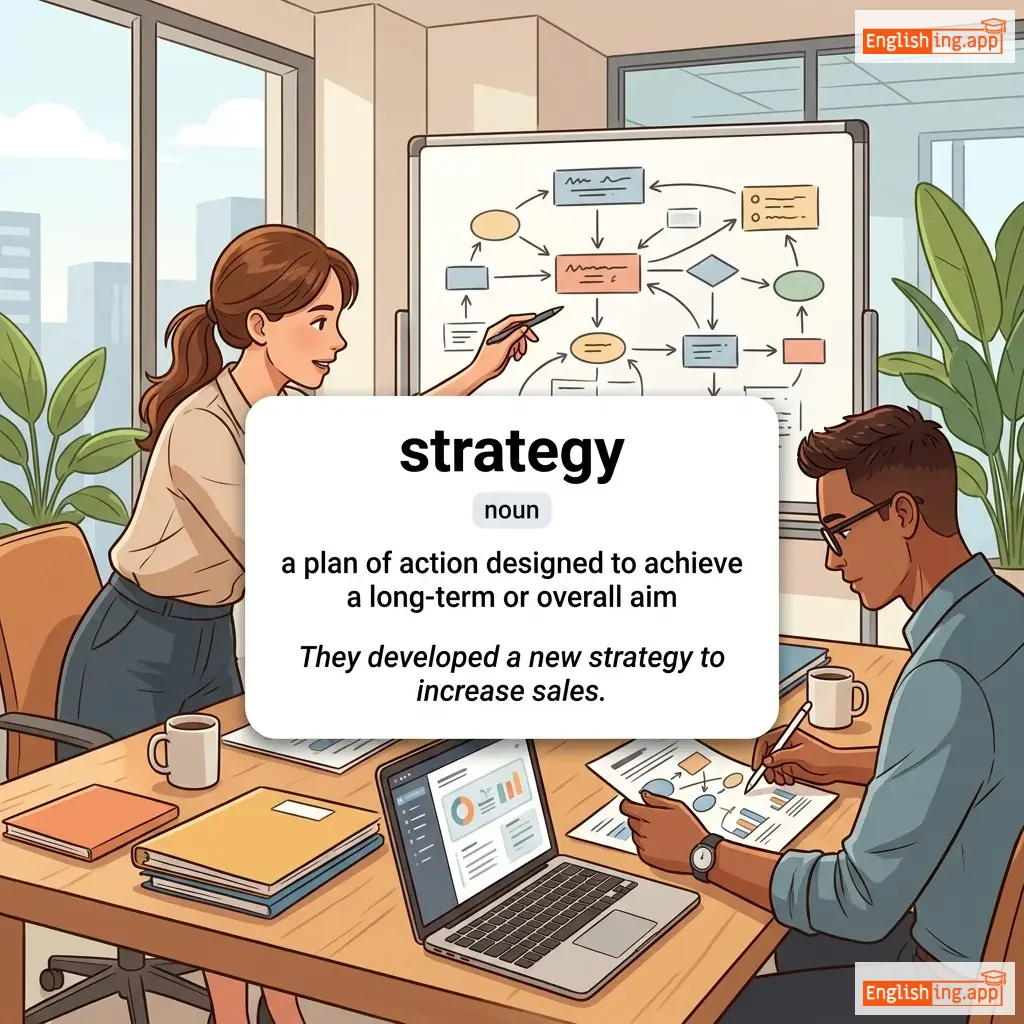
strategy definition card — visual illustration of the meaning
noun
/ˈstrætədʒi/
estrategia (estrategia)

a plan of action designed to achieve a long-term or overall aim

"They developed a new strategy to increase sales."

"Desarrollaron una nueva estrategia para aumentar las ventas." (Desarrollaron una nueva estrategia para aumentar las ventas.)
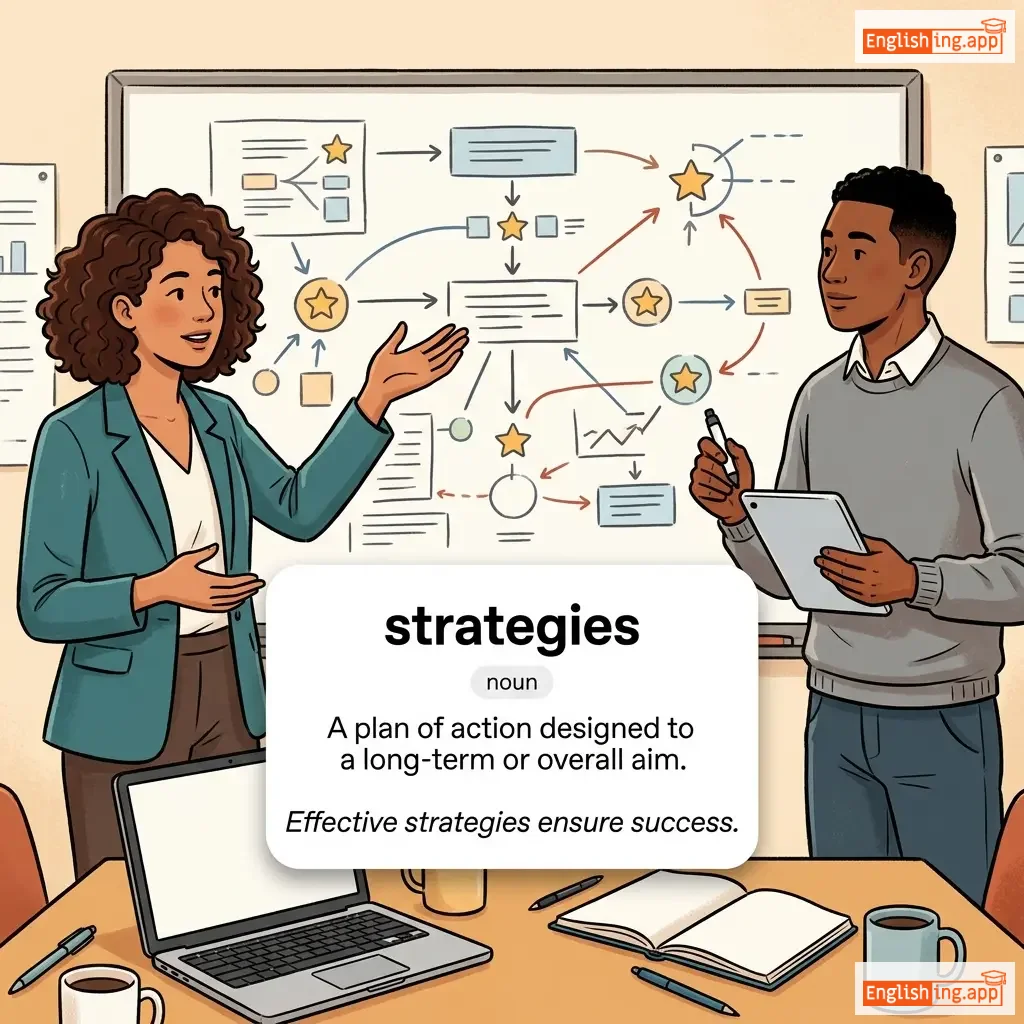
strategies definition card — visual illustration of the meaning
noun
ˈstræt.ə.dʒiz
estrategias (estrategias)

A plan of action designed to achieve a long-term or overall aim.

"Effective strategies ensure success."

"Las estrategias efectivas aseguran el éxito." (Las estrategias efectivas aseguran el exito.)
strategic insights definition card — visual illustration of the meaning
noun
/strəˈtiː.dʒɪk ˈɪn.saɪts/
perspectivas estratégicas (perspectivas estrategicas)

Deep understanding and wisdom gained through careful analysis for planning purposes.

"Strategic insights guide policymaking."

"Las perspectivas estratégicas guían la toma de decisiones políticas." (Las perspectivas estratégicas guían la toma de decisiones políticas.)
verb
/ˈstræŋɡəl/
estrangular (estrangular)

to kill or stop someone or something by squeezing the throat or restricting flow

"The villain tried to strangle his opponent in the dark alley."

"El villano intentó estrangular a su oponente en el callejón oscuro." (El villano intentó estrangular a su oponente en el callejón oscuro.)
adjective
/streɪndʒ/
extraño (extrano)

unusual or not normal

"It was strange to see him at the party after so long."

"Era extraño verlo en la fiesta después de tanto tiempo." (Era extrano verlo en la fiesta despues de tanto tiempo.)