Vocabulaires

Découvrez, apprenez et maîtrisez le vocabulaire anglais

adjective
/ˈsɪŋkəˌpeɪtɪd/
syncopé (syncopé)

Characterized by displaced beats or rhythms, especially in music.

"The jazz piece had a syncopated rhythm that energized the crowd."

"Le morceau de jazz avait un rythme syncopé qui a énergisé la foule." (Le morceau de jazz avait un rythme syncopé qui a énergisé la foule.)
noun
/ˈsɪndɪkət/
syndicat (syndicat)

A group of individuals or organizations combined to promote a common interest or carry out a business venture.

"A syndicate of investors bought the struggling company."

"Un syndicat d'investisseurs a acheté l'entreprise en difficulté." (Un syndicat d'investisseurs a acheté l'entreprise en difficulté.)
noun
/ˈsɪnˌdroʊm/
syndrome (syndrome)

a group of symptoms that occur together and characterize a condition or disease

"Down syndrome affects a person's physical and mental development."

"Le syndrome de Down affecte le développement physique et mental d'une personne." (Le syndrome de Down affecte le developpement physique et mental d'une personne.)
noun
/sɪˈnɛrəsɪs/
synthérèse (syneresis)

The contraction of two adjacent vowels into a single syllable or the separation of liquid from a gel.

"The yogurt showed syneresis when liquid separated on top."

"Le yaourt a montré une synthérèse lorsque le liquide s'est séparé sur le dessus." (Le yaourt a montre une syntherese lorsque le liquide sest separe sur le dessus.)
noun
/sɔːrd/
épée (epée)

a weapon with a long metal blade used for fighting

"The knight drew his sword to defend the castle."

"Le chevalier a sorti son épée pour défendre le château." (Le chevalier a sorti son epee pour defendre le chateau.)
verb
/ˈstaɪfl/
réprimer (reprimer)

to prevent or restrain an action, idea, or emotion; to suffocate

"She tried to stifle a laugh during the serious meeting."

"Elle a essayé de réprimer un rire pendant la réunion sérieuse." (Elle a essaye de reprimier un rire pendant la reunion serieuse.)
verb
/ˈstaɪfəld/
étouffer (etouffer)

to suppress, hold back, or prevent something from happening

"He stifled a laugh during the serious meeting."

"Il a étouffé un rire pendant la réunion sérieuse." (Il a étouffé un rire pendant la réunion sérieuse.)
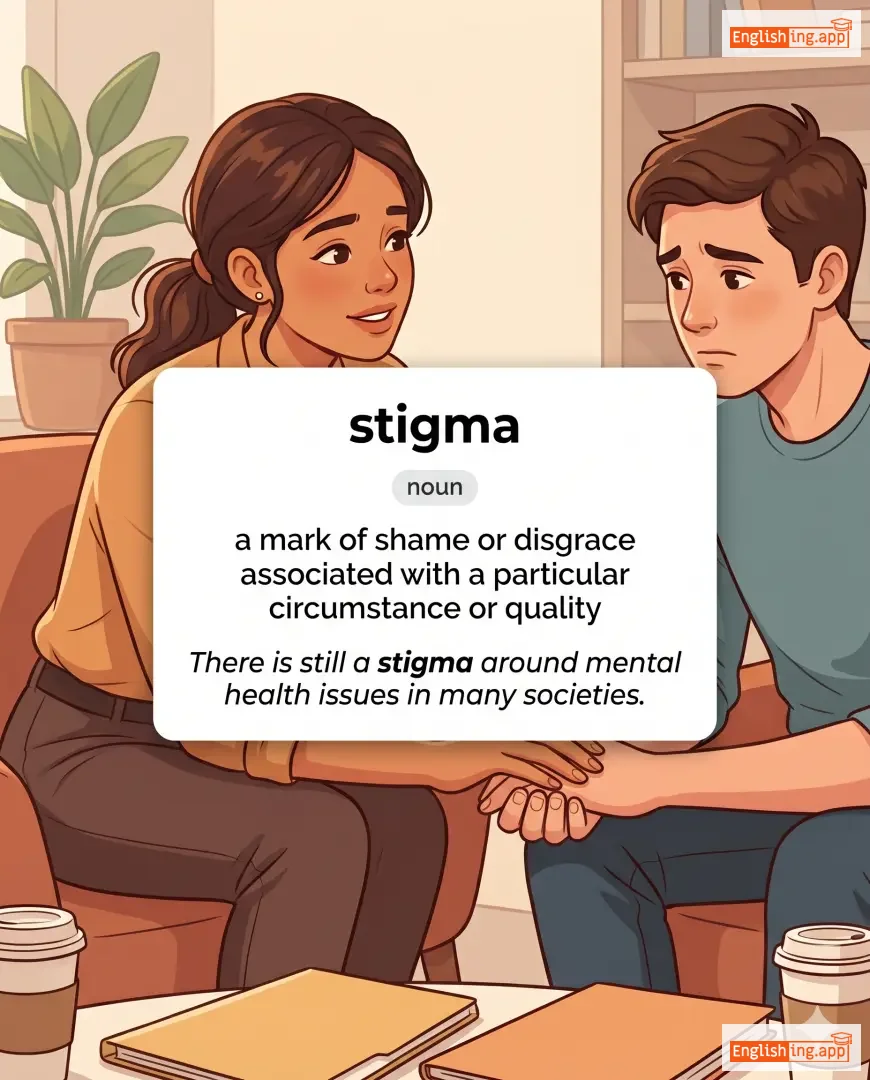
stigma definition card — visual illustration of the meaning
noun
/ˈstɪɡmə/
stigmatisme (stigmatisme)

a mark of shame or disgrace associated with a particular circumstance or quality

"There is still a stigma around mental health issues in many societies."

"Il existe encore un stigmate autour des problèmes de santé mentale dans de nombreuses sociétés." (Il existe encore un stigmate autour des problemes de sante mentale dans de nombreuses societes.)
verb
/ˈstɪɡmətaɪz/
stigmatiser (stigmatiser)

to describe or regard someone as worthy of disgrace or disapproval

"People with certain illnesses are often unfairly stigmatized."

"Les personnes atteintes de certaines maladies sont souvent stigmatisées de manière injuste." (Les personnes atteintes de certaines maladies sont souvent stigmatisées de manière injuste.)
noun
/stɪˈlɛtoʊ/
chaussure à talon aigu / poignard (chaussure a talon aigu / poignard)

A small, thin, high-heeled shoe or a dagger with a slender blade.

"She wore elegant stiletto heels to the party."

"Elle portait des talons stiletto élégants à la fête." (Elle portait des talons stiletto élégants à la fête.)
adjective
/stɪl/
calme (calme)

not moving or making a sound

"The water was still, reflecting the sky."

"L'eau était calme, reflétant le ciel." (L'eau était calme, reflétant le ciel.)
adjective
/ˈstɪltɪd/
artificiel, forcé (artificiel, force)

Speech or writing that is stiff, unnatural, or overly formal.

"His speech sounded stilted and rehearsed."

"Son discours semblait forcé et préparé." (Son discours semblait forcé et préparé.)
noun
/ˈstɪmjʊlənt/
stimulant (stimulant)

A substance that raises levels of physiological or nervous activity in the body.

"Coffee is a common stimulant that helps people stay awake."

"Le café est un stimulant courant qui aide les gens à rester éveillés" (Le café est un stimulant courant qui aide les gens à rester éveillés)
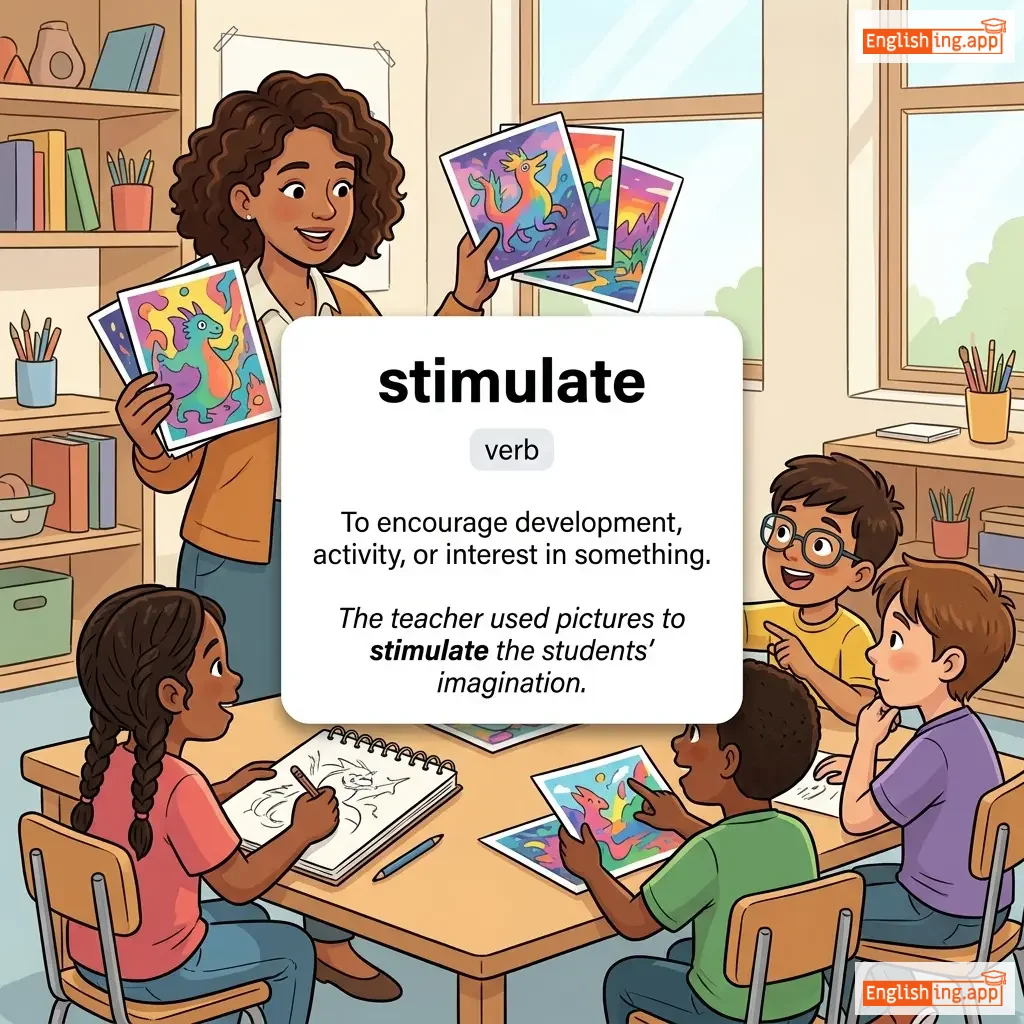
stimulate definition card — visual illustration of the meaning
verb
/ˈstɪmjʊˌleɪt/
stimuler, encourager (stimuler, encourager)

To encourage development, activity, or interest in something.

"The teacher used pictures to stimulate the students' imagination."

"Le professeur a utilisé des images pour stimuler l'imagination des élèves." (Le professeur a utilisé des images pour stimuler l'imagination des élèves.)
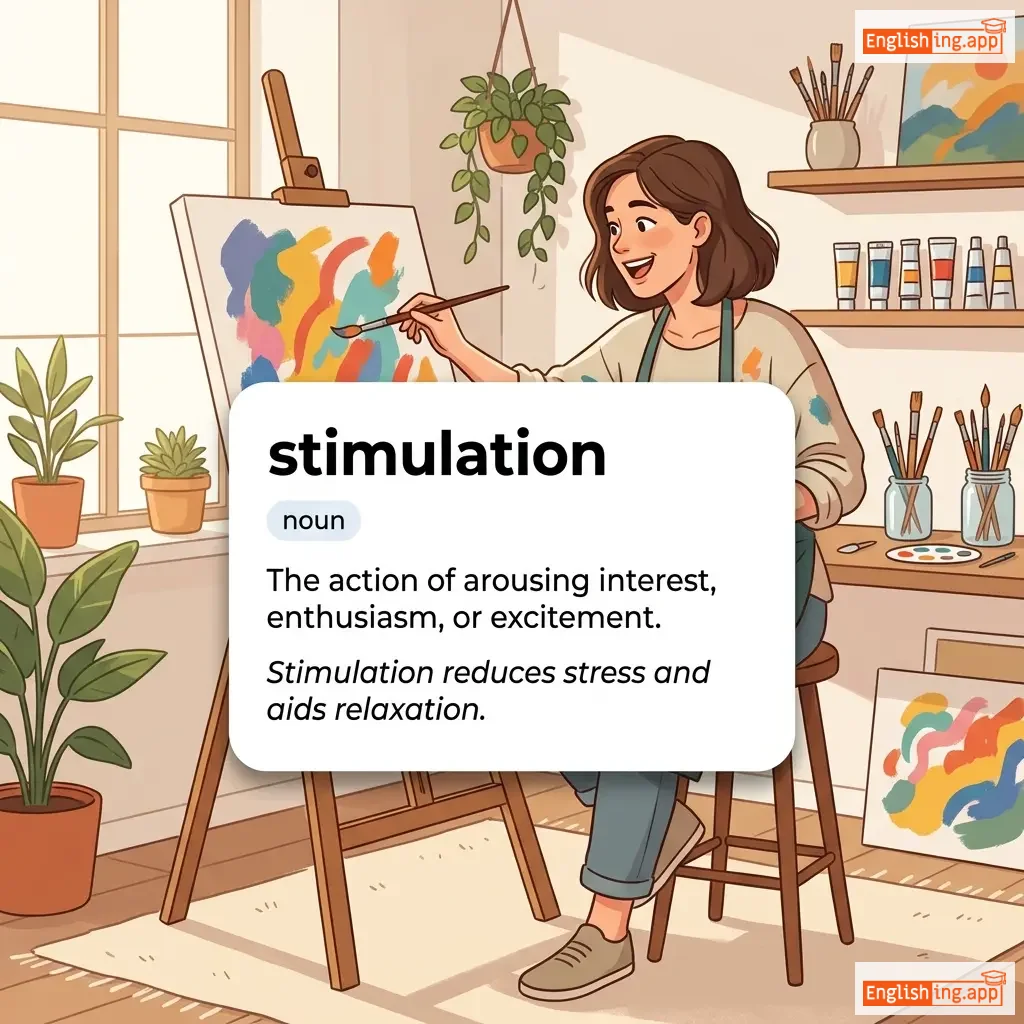
stimulation definition card — visual illustration of the meaning
noun
/ˌstɪm.jəˈleɪ.ʃən/
stimulation (stimulation)

The action of arousing interest, enthusiasm, or excitement.

"Stimulation reduces stress and aids relaxation."

"La stimulation réduit le stress et aide à la relaxation." (La stimulation réduit le stress et aide à la relaxation.)
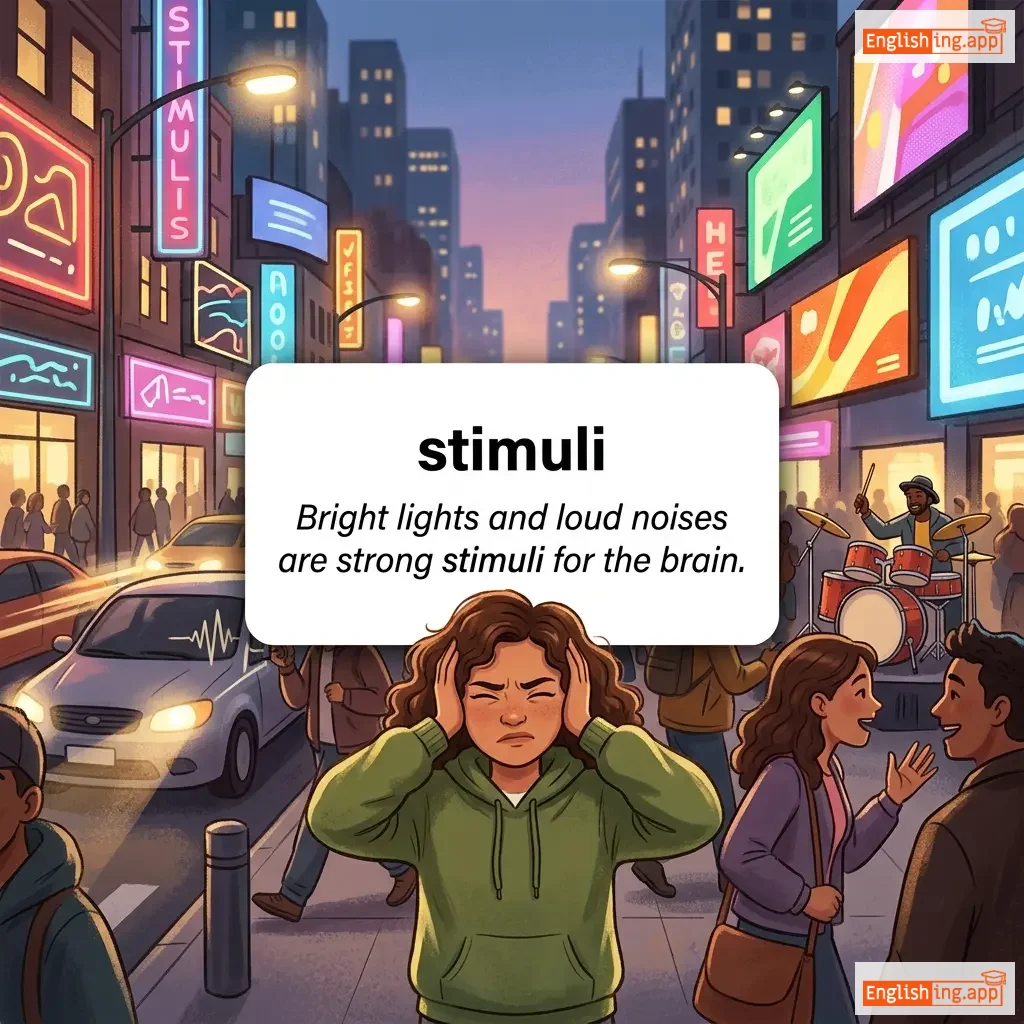
stimuli definition card — visual illustration of the meaning
noun (plural of stimulus)
/ˈstɪm.jʊ.laɪ/
stimulus (stimulus)

Things or events that evoke a specific functional reaction in an organ or tissue.

"Bright lights and loud noises are strong stimuli for the brain."

"Les lumières vives et les bruits forts sont des stimuli puissants pour le cerveau." (Les lumieres vives et les bruits forts sont des stimuli puissants pour le cerveau.)
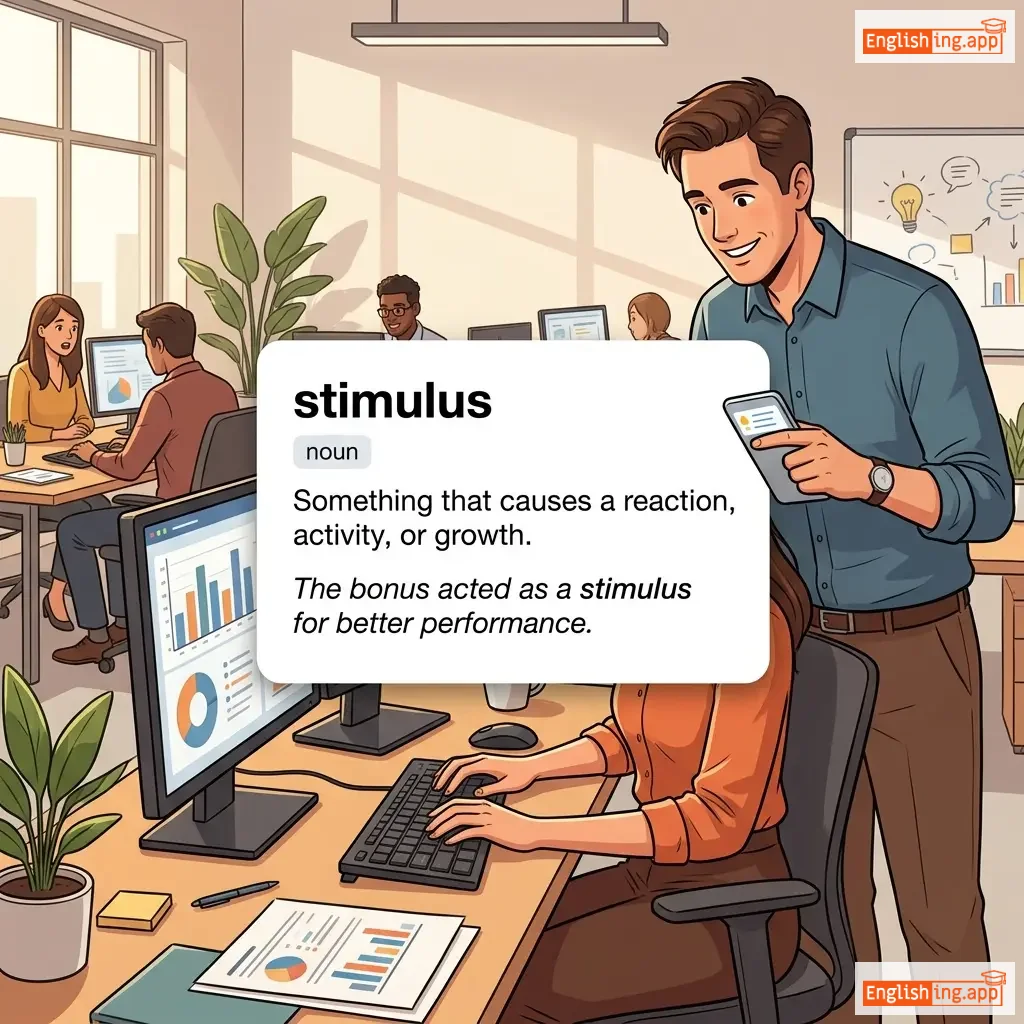
stimulus definition card — visual illustration of the meaning
noun
/ˈstɪmjʊləs/
élément qui provoque une réaction, un stimulus (element qui provoque une reaction, un stimulus)

Something that causes a reaction, activity, or growth.

"The bonus acted as a stimulus for better performance."

"Le bonus a agi comme un stimulus pour une meilleure performance." (Le bonus a agi comme un stimulus pour une meilleure performance.)
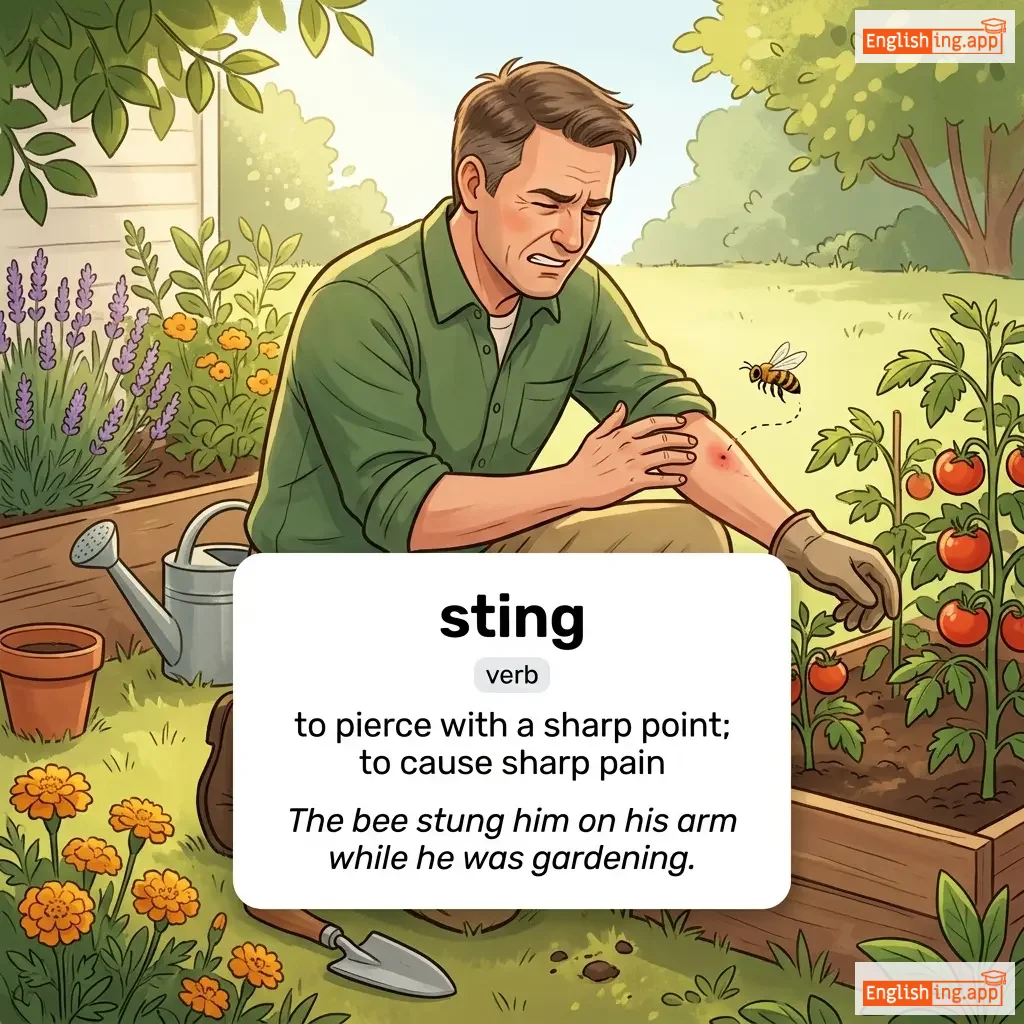
sting definition card — visual illustration of the meaning
verb
/stɪŋ/
piquer (piker)

to pierce with a sharp point; to cause sharp pain

"The bee stung him on his arm while he was gardening."

"L'abeille l'a piqué au bras pendant qu'il jardinait." (L'abeille l'a pique au bras pendant quil jardinait)
adjective
/ˈstɪndʒi/
avare (avare)

unwilling to spend or give; miserly

"He is too stingy to buy a gift for his friend."

"Il est trop avare pour acheter un cadeau pour son ami." (Il est trop avare pour acheter un cadeau pour son ami.)
verb
/stɪŋk/
sentir mauvais (sentir mauvais)

to smell very unpleasant

"The garbage bin stinks in the hot sun."

"La poubelle sent mauvais sous le soleil brûlant." (La poubelle sent mauvais sous le soleil brulant.)
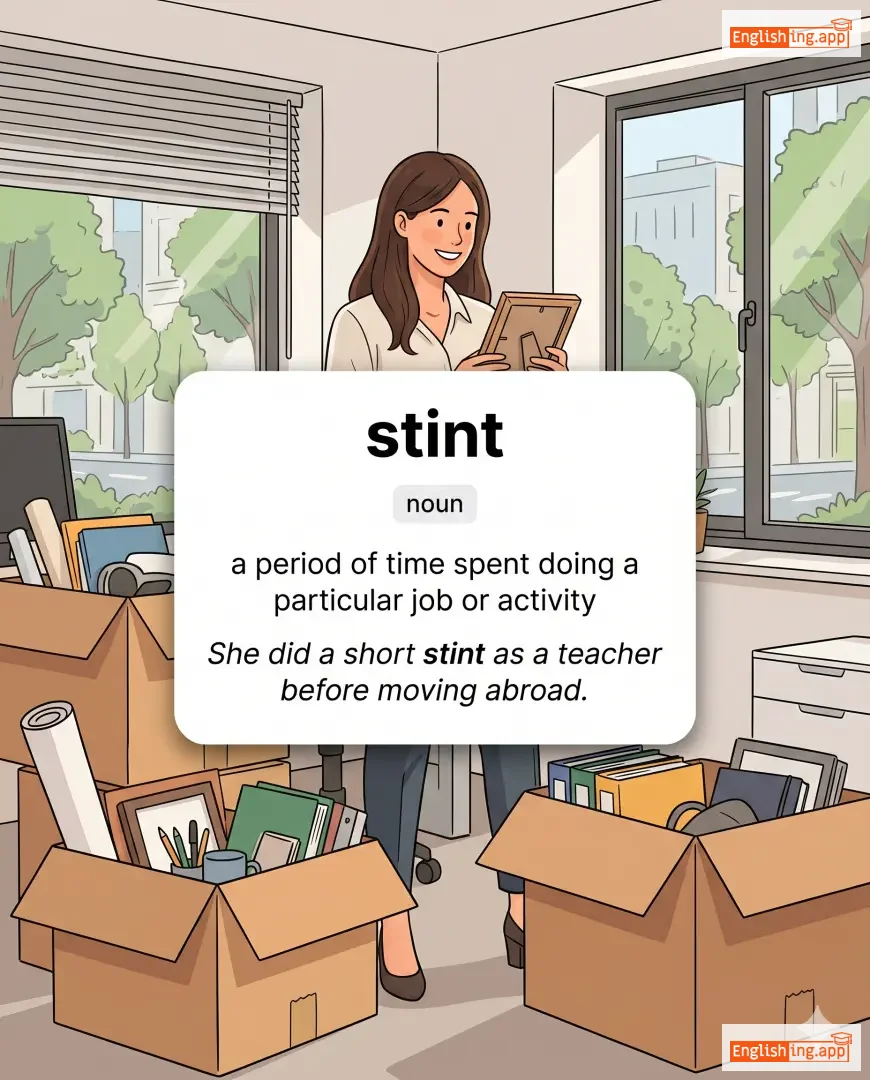
stint definition card — visual illustration of the meaning
noun
/stɪnt/
période temporaire (periode temporaire)

a period of time spent doing a particular job or activity

"She did a short stint as a teacher before moving abroad."

"Elle a fait un court passage en tant qu'enseignante avant de partir à l'étranger." (Elle a fait un court passage en tant qu'enseignante avant de partir à l'étranger.)
verb
/ˈstɪntɪŋ/
donner avec parcimonie (donner avec parcimonie)

to supply sparingly or with restrictions

"He never stinting his efforts to help the poor."

"Il ne fait jamais de restrictions dans ses efforts pour aider les pauvres." (Il ne fait jamais de restrictions dans ses efforts pour aider les pauvres.)
noun
/ˈstaɪpɛnd/
stipendie (stipendie)

a fixed regular payment, usually for services or to cover living expenses

"The university provides a monthly stipend to its research students."

"L'université fournit un stipend mensuel à ses étudiants en recherche." (L'université fournit un stipend mensuel à ses étudiants en recherche.)
verb
/ˈstɪp.əl/
couvrir de petits points (couvrir de petits points)

to cover a surface with numerous small dots or specks, often in drawing or painting

"The artist stippled the canvas to create a textured effect."

"L'artiste a couvert la toile de petits points pour créer un effet texturé." (L'artiste a couvert la toile de petits points pour créer un effet texturé.)
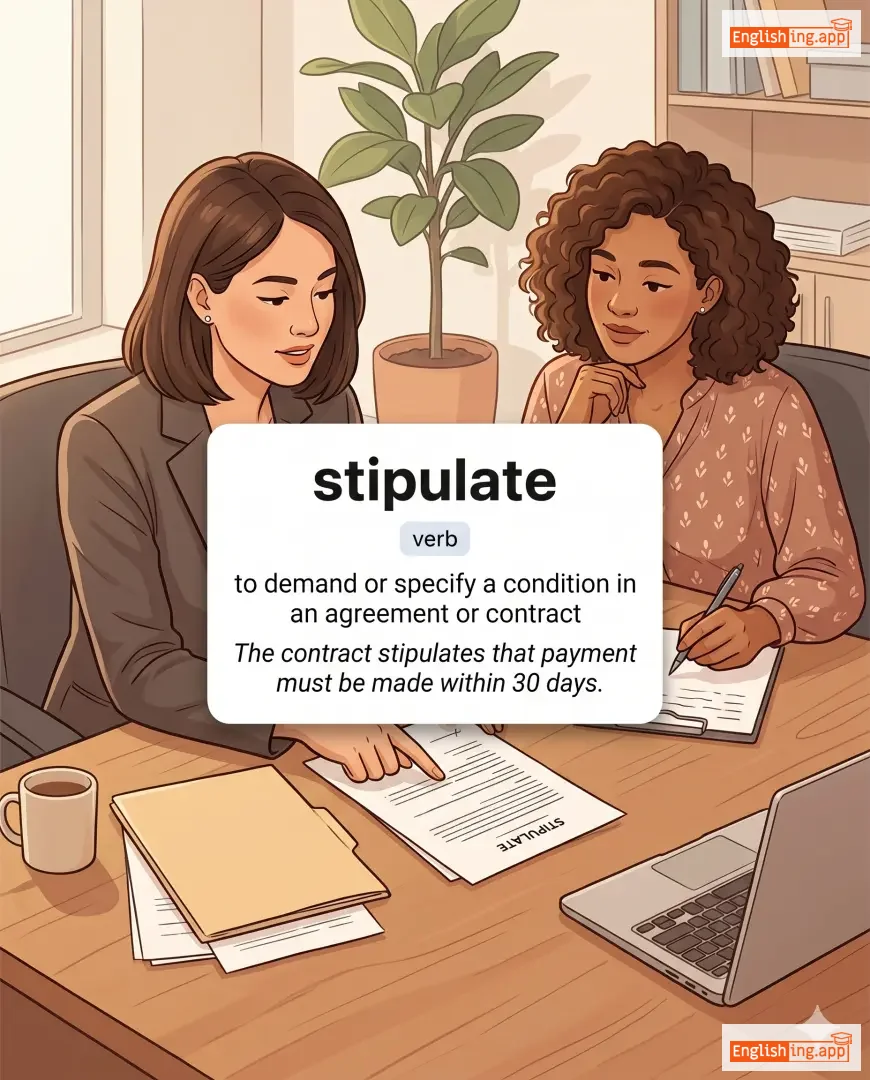
stipulate definition card — visual illustration of the meaning
verb
/ˈstɪp.jʊ.leɪt/
stipuler (stipuler)

to demand or specify a condition in an agreement or contract

"The contract stipulates that payment must be made within 30 days."

"Le contrat stipule que le paiement doit être effectué dans les 30 jours." (Le contrat stipule que le paiement doit être effectué dans les 30 jours.)
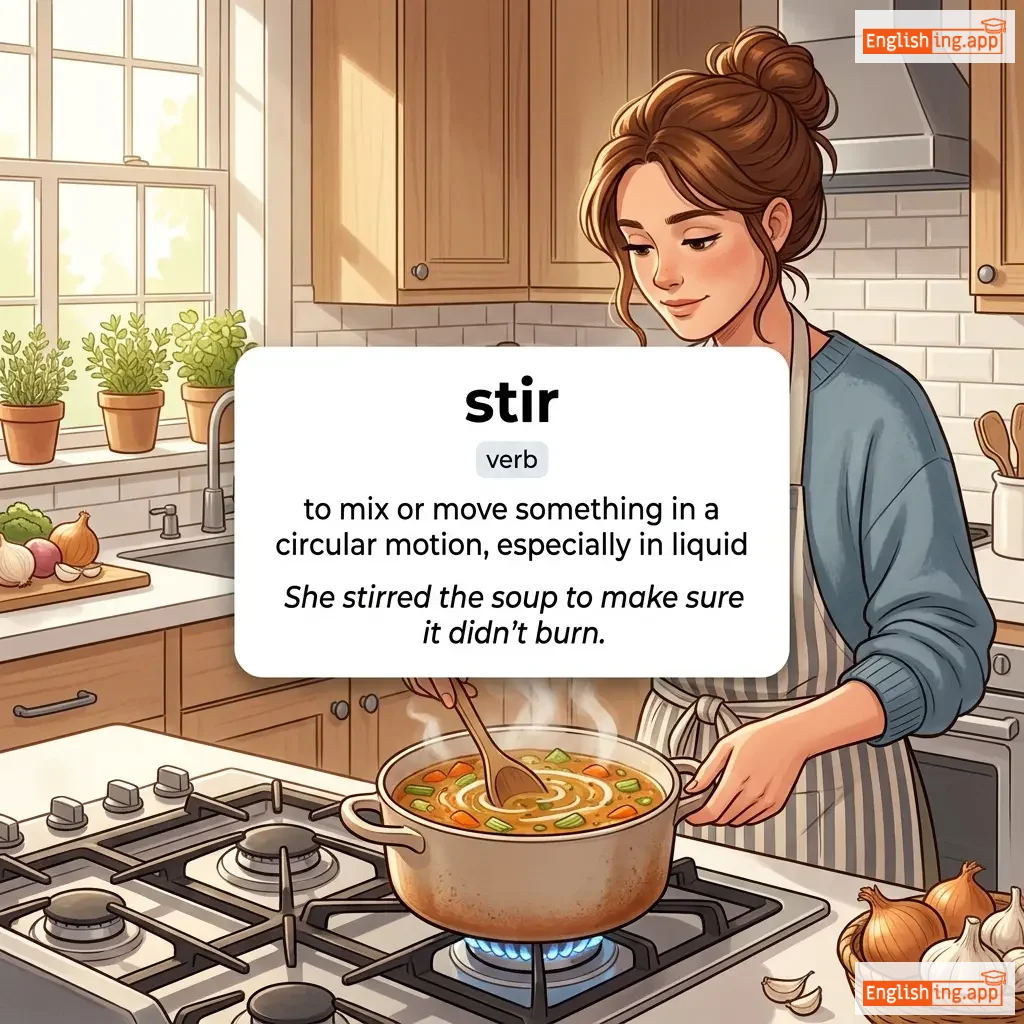
stir definition card — visual illustration of the meaning
verb
/stɜːr/
remuer (remuer)

to mix or move something in a circular motion, especially in liquid

"She stirred the soup to make sure it didn't burn."

"Elle a remué la soupe pour s'assurer qu'elle ne brûle pas." (Elle a remué la soupe pour s'assurer qu'elle ne brûle pas.)
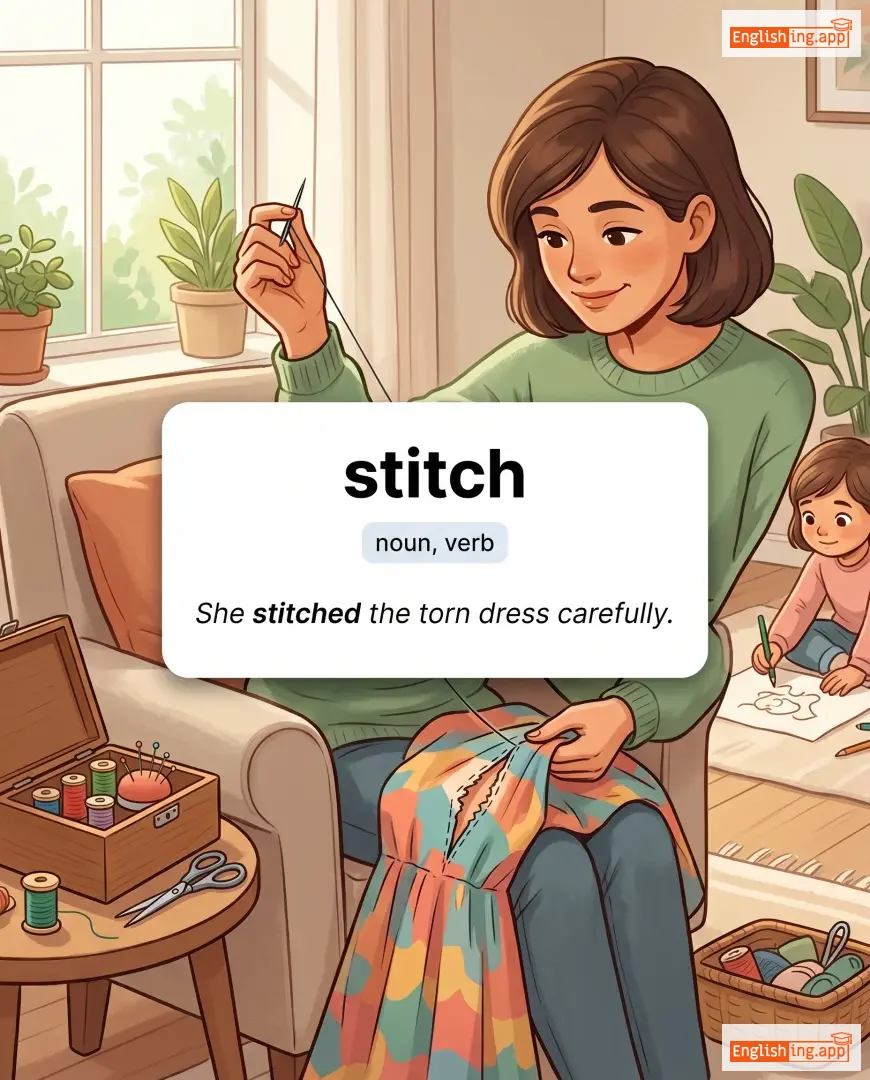
stitch definition card — visual illustration of the meaning
noun, verb
/stɪtʃ/
bonheur (bonheur)

to sew fabric together using a needle and thread; also a single loop of thread in sewing

"She stitched the torn dress carefully."

"Elle a soigneusement cousu la robe déchirée." (Elle a soigneusement cousu la robe déchirée.)
noun, verb
/stɒk/
inventaire (inventaire)

a supply of goods kept for sale or use; to keep or fill with goods

"The shop stocks a wide variety of products."

"Le magasin a un large assortiment de produits." (Le magasin a un large assortiment de produits.)
noun
/stɒˈkeɪd/
clôture en bois (cloture en bois)

a defensive barrier made of strong posts or timbers, often around a fort or prison

"The prisoners were kept inside the wooden stockade."

"Les prisonniers ont été gardés à l'intérieur de la clôture en bois." (Les prisonniers ont été gardés à l'intérieur de la clôture en bois.)
adjective
/ˈstɒdʒi/
lourd, vieilli (lourd, vieilli)

Dull, uninspired, or old-fashioned; also heavy and hard to digest when referring to food.

"The lecture was so stodgy that many students struggled to stay awake."

"La conférence était si lourde que de nombreux étudiants ont eu du mal à rester éveillés." (La conference etait si lourde que de nombreux etudiants ont eu du mal a rester eveilles.)
adjective
/ˈstoʊɪk/
stoïque, implacable (stoique, implacable)

Showing little or no emotion, even in difficult situations.

"She remained stoic during the crisis, never showing fear or panic."

"Elle est restée stoïque pendant la crise, sans montrer de peur ni de panique." (Elle est restée stoïque pendant la crise, sans montrer de peur ni de panique.)
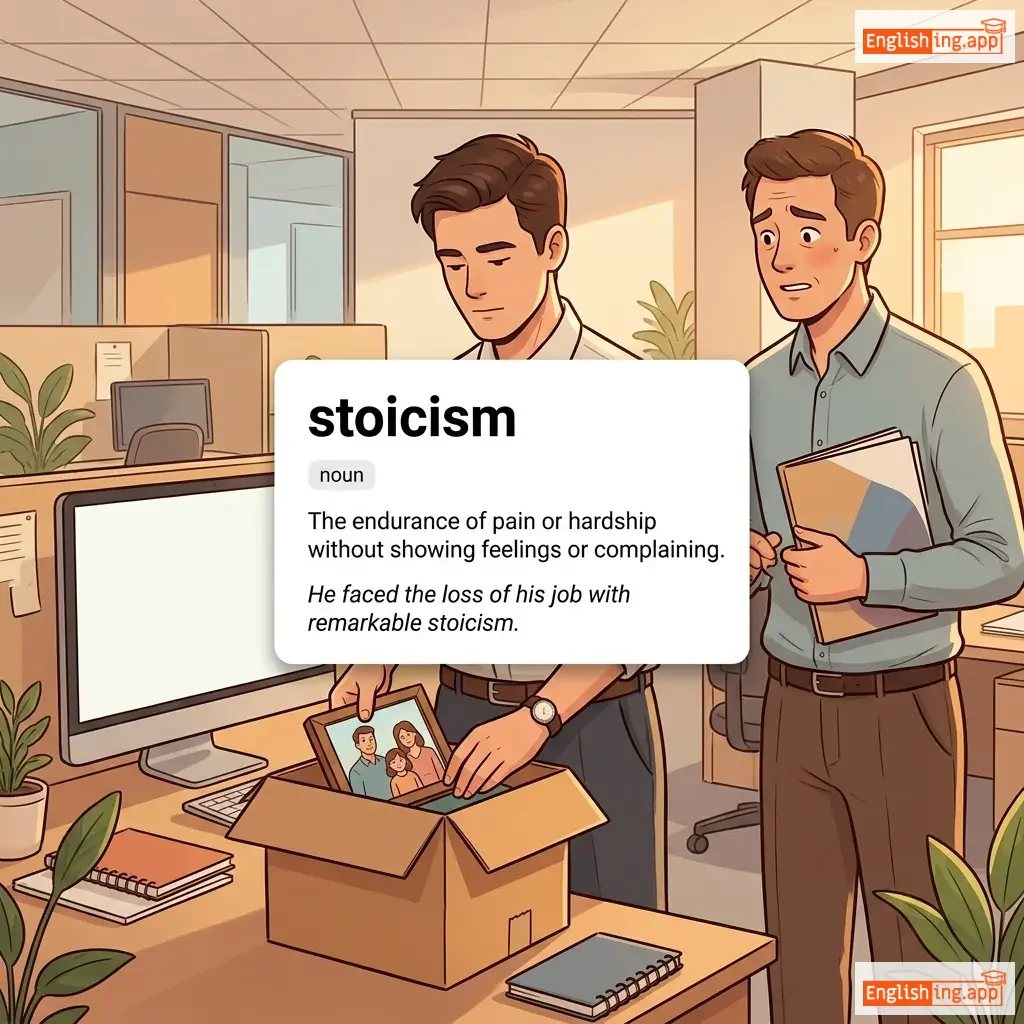
stoicism definition card — visual illustration of the meaning
noun
/ˈstoʊɪˌsɪzəm/
stoïcisme (stoicisme)

The endurance of pain or hardship without showing feelings or complaining.

"He faced the loss of his job with remarkable stoicism."

"Il a affronté la perte de son emploi avec un stoïcisme remarquable." (Il a affronté la perte de son emploi avec un stoïcisme remarquable.)
verb
/stoʊk/
attiser le feu; encourager ou augmenter un sentiment ou une activité forte (attiser le feu; encourager ou augmenter un sentiment ou une activité forte)

To add fuel to a fire; to encourage or increase a strong feeling or activity.

"The politician’s speech stoked anger among the crowd."

"Le discours du politicien a enflammé la colère parmi la foule." (Le discours du politicien a enflamme la colere parmi la foule.)
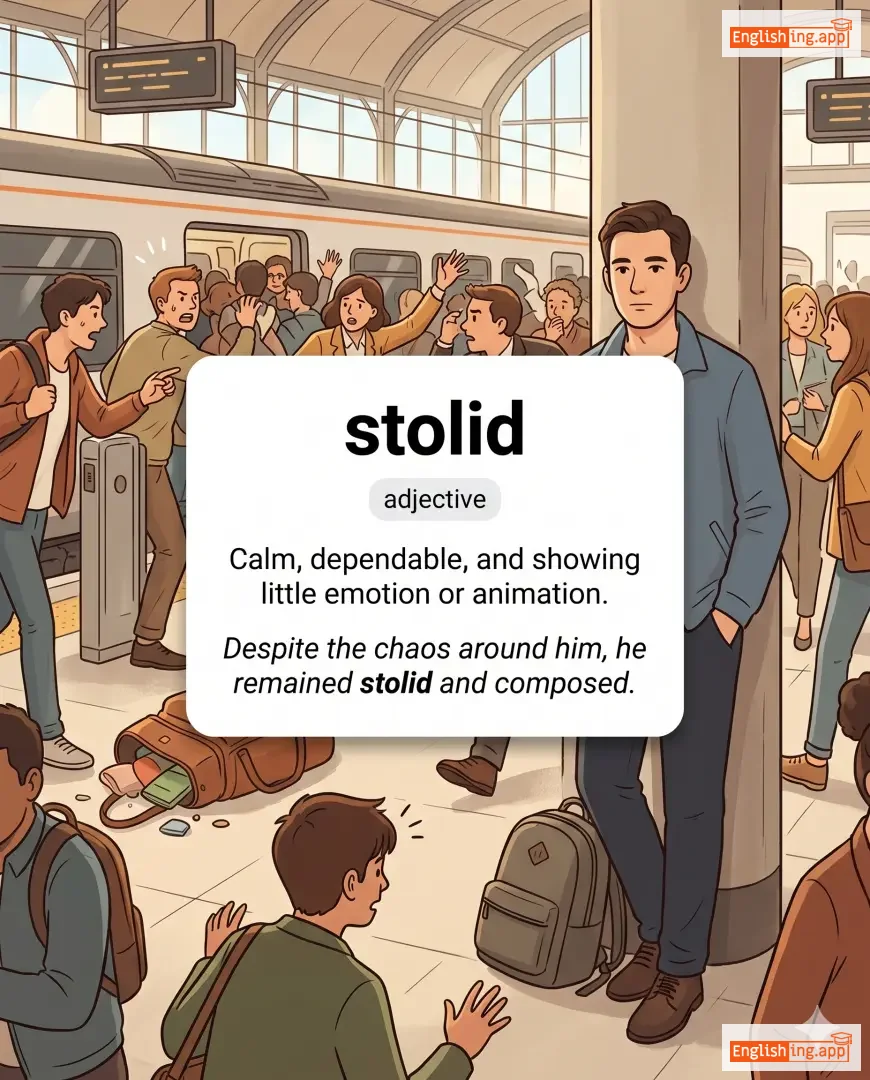
stolid definition card — visual illustration of the meaning
adjective
/ˈstɒlɪd/
impassible, stoïque (impassible, stoïque)

Calm, dependable, and showing little emotion or animation.

"Despite the chaos around him, he remained stolid and composed."

"Malgré le chaos autour de lui, il resta calme et posé." (Malgré le chaos autour de lui, il resta calme et posé.)
noun/verb
/ˈstʌmək/
estomac / supporter (estomac / supporter)

The internal organ in which food is digested; also to tolerate or endure something

"She couldn’t stomach the sight of violence."

"Elle ne pouvait pas supporter la vue de la violence." (Elle ne pouvait pas supporter la vue de la violence.)
noun
/ˈstʌmək eɪk/
mal de ventre (mal de ventre)

Pain in the stomach or abdominal area

"I have a stomach ache after eating too much."

"J'ai mal au ventre après avoir trop mangé." (J'ai mal au ventre apres avoir trop mange)
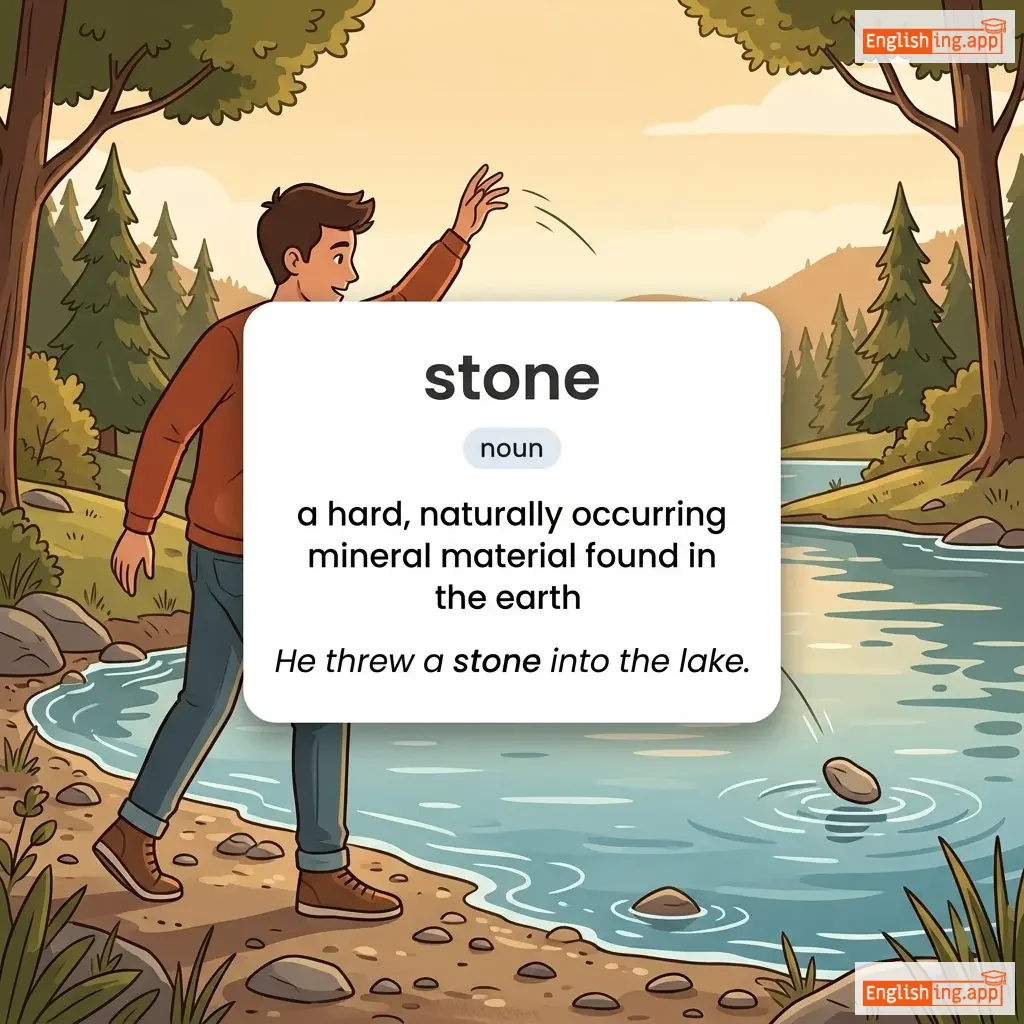
stone definition card — visual illustration of the meaning
noun
/stoʊn/
pierre (pierre)

a hard, naturally occurring mineral material found in the earth

"He threw a stone into the lake."

"Il a lancé une pierre dans le lac." (Il a lance une pierre dans le lac.)
verb
/ˈstoʊnwɔːl/
entraver (entraver)

To delay or block progress by refusing to cooperate or answer

"The witness tried to stonewall during the investigation."

"Le témoin a essayé de faire du stonewall lors de l'enquête." (Le témoin a essayé de faire du stonewall lors de l'enquête.)
verb/noun
/stuːp/
bonheur (bonheur)

To bend one's body forward and downward; also a small porch or staircase at the entrance of a house

"He had to stoop to pick up the coin."

"Elle n'a pas pu cacher son bonheur lorsqu'elle a reçu le prix." (Elle n'a pas pu cacher son bonheur lorsqu'elle a reçu le prix.)
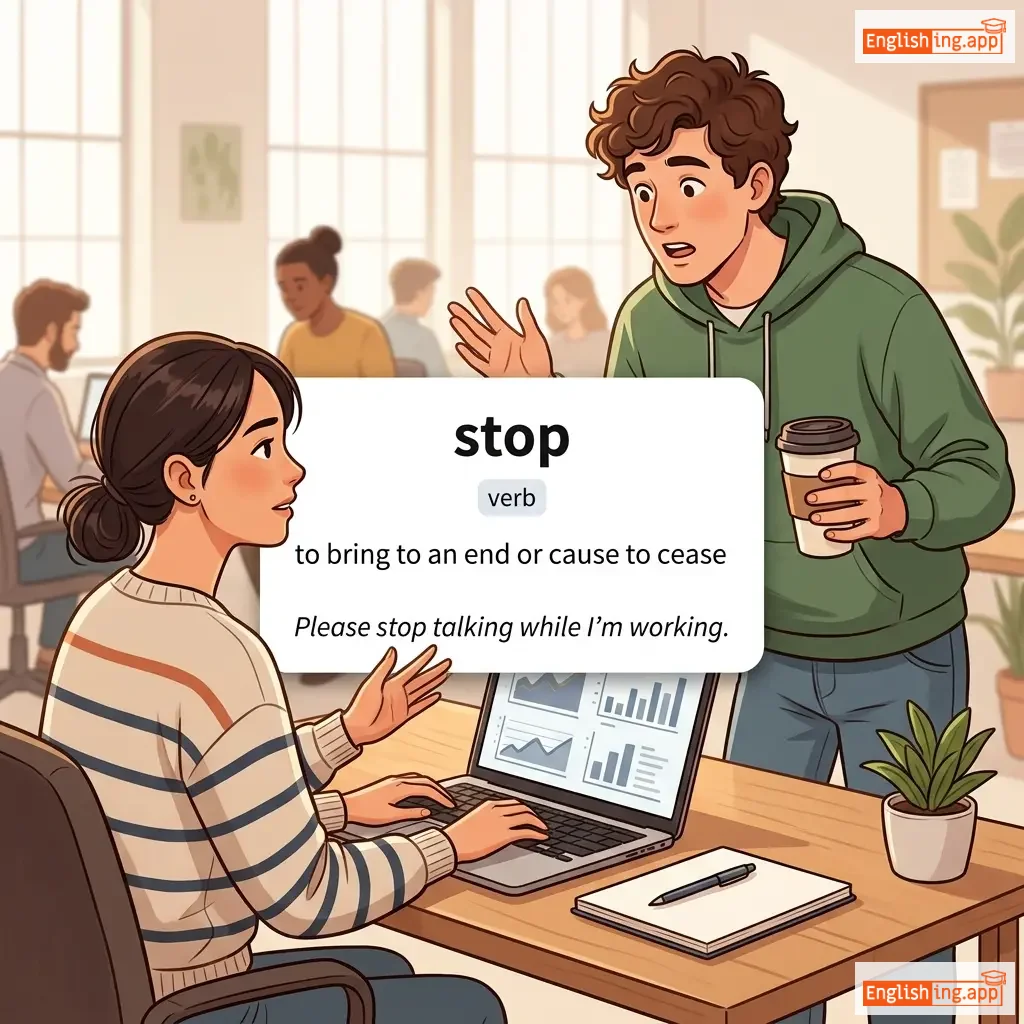
stop definition card — visual illustration of the meaning
verb
/stɑːp/
arrêter (arreter)

to bring to an end or cause to cease

"Please stop talking while I’m working."

"S'il vous plaît, arrêtez de parler pendant que je travaille." (S'il vous plaît, arrêtez de parler pendant que je travaille.)
noun
/ˈstɒpɪdʒ/
arrêt; interruption (arret; interruption)

The act of stopping or ceasing; a halt in operation or activity

"The sudden stoppage of the train caused delays for all passengers."

"L'arrêt soudain du train a provoqué des retards pour tous les passagers." (L'arret soudain du train a provoque des retards pour tous les passagers.)
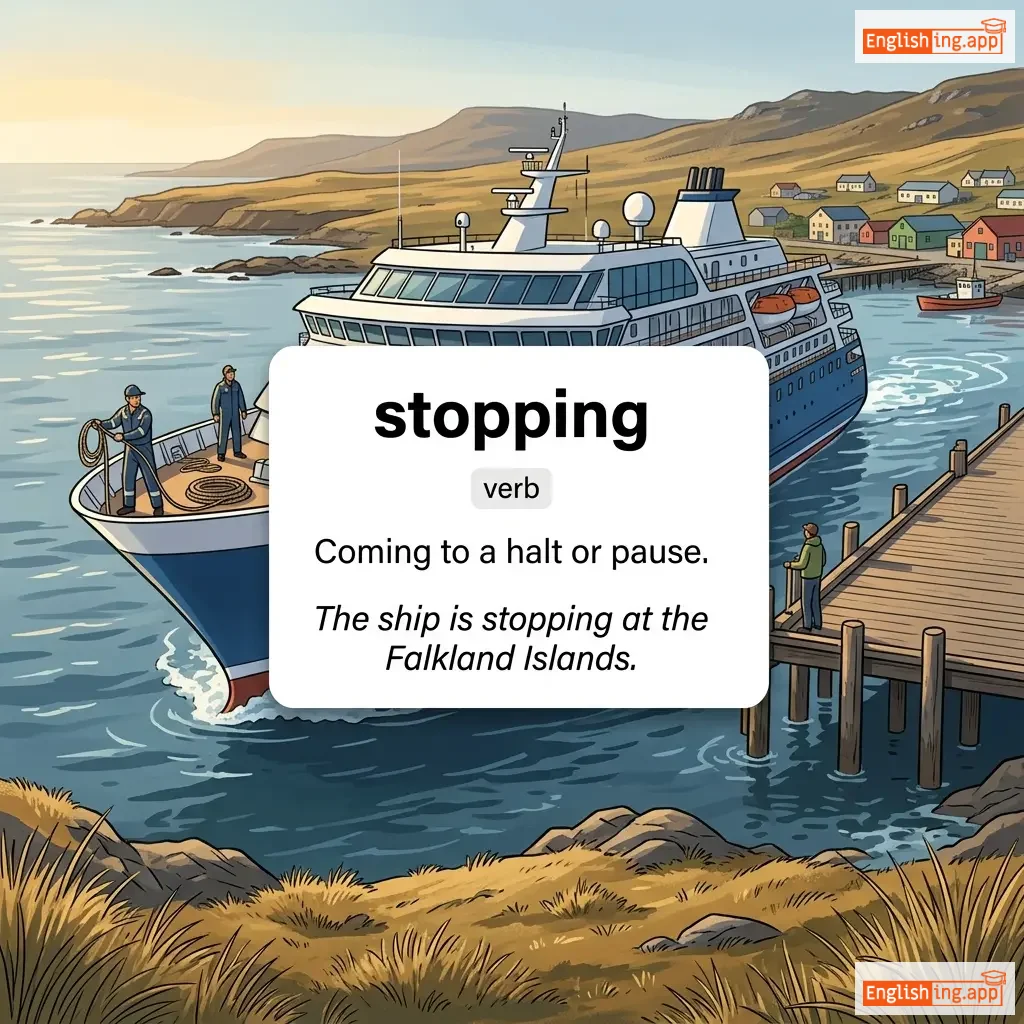
stopping definition card — visual illustration of the meaning
verb
/ˈstɒpɪŋ/
arrêt (arret)

Coming to a halt or pause.

"The ship is stopping at the Falkland Islands."

"Le navire s'arrête aux îles Malouines." (Le navire s'arrête aux îles Malouines.)
noun
/ˈstɔːrɪdʒ/
stockage (stockage)

the action or method of storing something for future use

"The warehouse offers plenty of storage space."

"L'entrepôt offre beaucoup d'espace de stockage." (L'entrepôt offre beaucoup d'espace de stockage.)
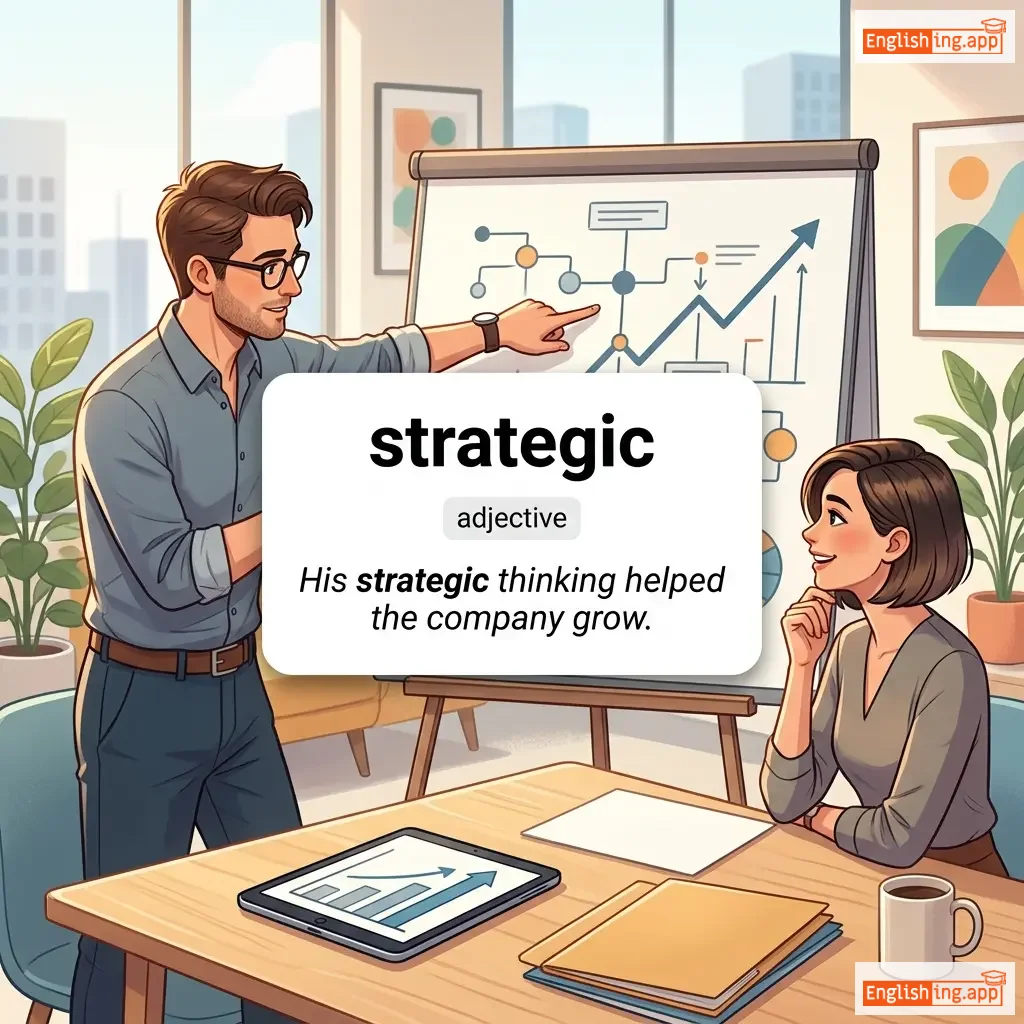
strategic definition card — visual illustration of the meaning
adjective
/strəˈtiːdʒɪk/
stratégique (strategique)

relating to the identification of long-term or overall aims and interests and the means of achieving them

"His strategic thinking helped the company grow."

"Sa pensée stratégique a aidé l'entreprise à se développer." (Sa pensee strategique a aide l'entreprise a se developper.)
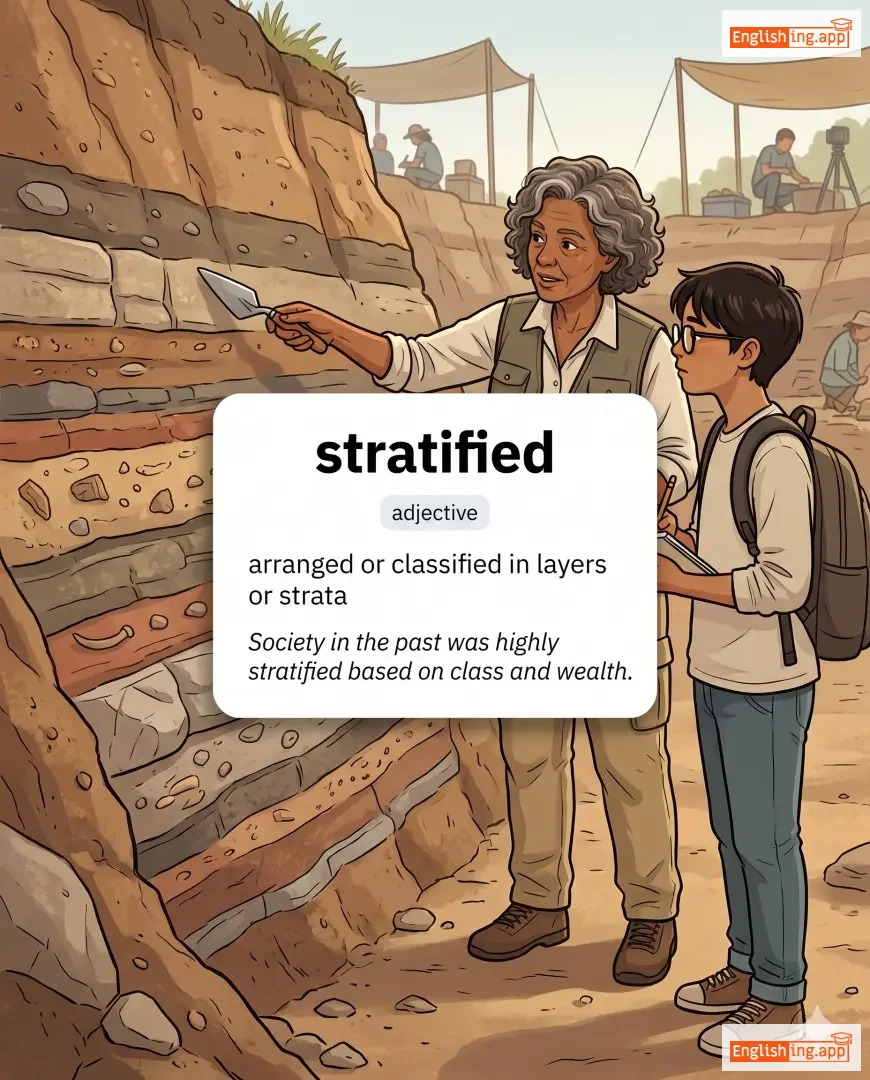
stratified definition card — visual illustration of the meaning
adjective
/ˈstrætɪfaɪd/
stratifié / stratifiée (stratifide)

arranged or classified in layers or strata

"Society in the past was highly stratified based on class and wealth."

"La société du passé était fortement stratifiée en fonction de la classe et de la richesse." (La societe du passe etait fortement stratifiee en fonction de la classe et de la richesse.)
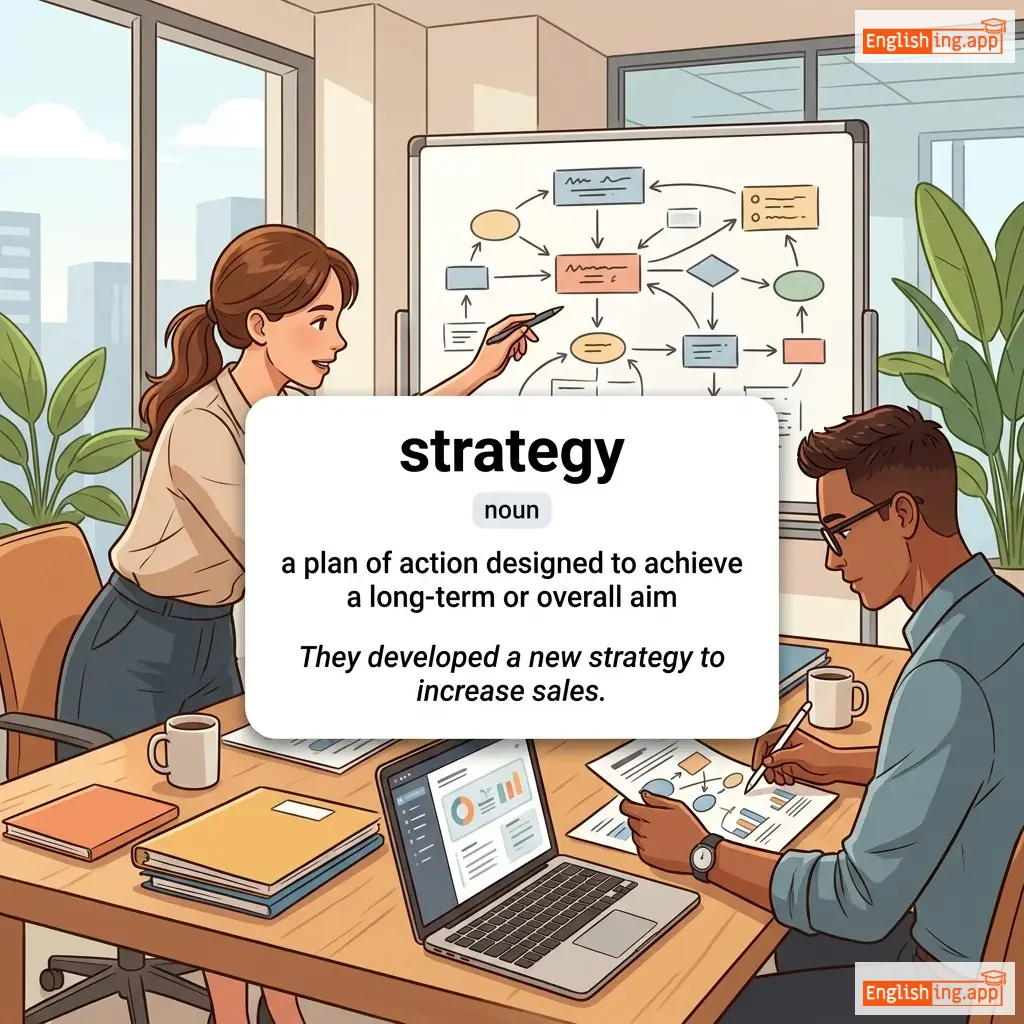
strategy definition card — visual illustration of the meaning
noun
/ˈstrætədʒi/
stratégie (strategie)

a plan of action designed to achieve a long-term or overall aim

"They developed a new strategy to increase sales."

"Ils ont développé une nouvelle stratégie pour augmenter les ventes." (Ilz ont dévélopé une nouvelle stratégie pour augmenter les ventes.)
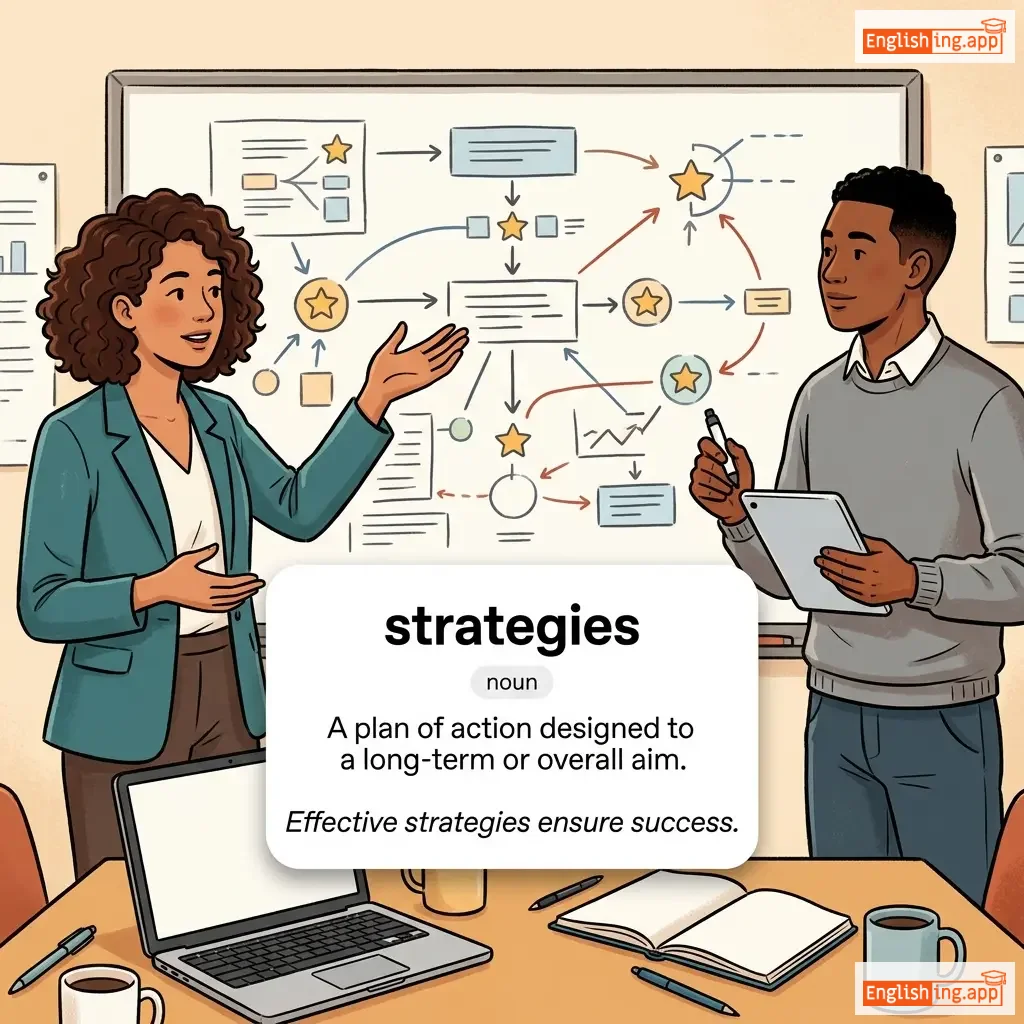
strategies definition card — visual illustration of the meaning
noun
ˈstræt.ə.dʒiz
stratégies (strategies)

A plan of action designed to achieve a long-term or overall aim.

"Effective strategies ensure success."

"Des stratégies efficaces assurent le succès." (Des strategies efficaces assurent le succes.)
strategic insights definition card — visual illustration of the meaning
noun
/strəˈtiː.dʒɪk ˈɪn.saɪts/
perspectives stratégiques (perspectives strategiques)

Deep understanding and wisdom gained through careful analysis for planning purposes.

"Strategic insights guide policymaking."

"Les perspectives stratégiques guident la prise de décision politique." (Les perspectives stratégiques guident la prise de décision politique.)
verb
/ˈstræŋɡəl/
étrangler (etrangler)

to kill or stop someone or something by squeezing the throat or restricting flow

"The villain tried to strangle his opponent in the dark alley."

"Le méchant a essayé d'étrangler son adversaire dans la ruelle sombre." (Le méchant a essayé d'étrangler son adversaire dans la ruelle sombre.)
adjective
/streɪndʒ/
étrange (etrange)

unusual or not normal

"It was strange to see him at the party after so long."

"C'était étrange de le voir à la fête après tout ce temps." (C'etait etrange de le voir a la fete apres tout ce temps.)