Vocabulaires

Découvrez, apprenez et maîtrisez le vocabulaire anglais

noun
/ˈstrɑːtəm/
strate (strat)

a layer or level of material, or a social class in society

"The upper stratum of society enjoyed privileges not available to others."

"La couche supérieure de la société profitait de privilèges non disponibles pour les autres." (La couche supérieure de la société profitait de privilèges non disponibles pour les autres.)
noun
/strɔː/
paille ou tige (paille ou tige)

a thin tube for sucking up liquids; dried stalks of grain plants

"She drank the juice through a straw."

"Elle a bu le jus à travers une paille." (Elle a bu le jus à travers une paille.)
noun
/ˈstrɔːbəri/
fraise (fraise)

a small red heart-shaped fruit with tiny seeds on the surface and sweet taste

"I love eating fresh strawberries with cream during summer."

"J'adore manger des fraises fraîches avec de la crème pendant l'été." (J'adore manger des fraises fraîches avec de la crème pendant l'été.)
verb, noun, adjective
/streɪ/
égarer (égarer)

to move away from the correct path or go off course; a person or animal that has wandered off; something that is not where it belongs

"The dog strayed from the yard and got lost."

"Le chien s'est égaré du jardin et s'est perdu." (Le chien s'est égaré du jardin et s'est perdu.)
noun, verb
/striːk/
trace ou ligne; se déplacer très rapidement dans une direction spécifiée (trace ou ligne; se deplacer tres rapidement dans une direction specifiee)

a long, thin line or mark; to move very quickly in a specified direction

"Lightning streaked across the night sky."

"Un éclair a traversé le ciel nocturne." (Un eclair a traverse le ciel nocturne.)
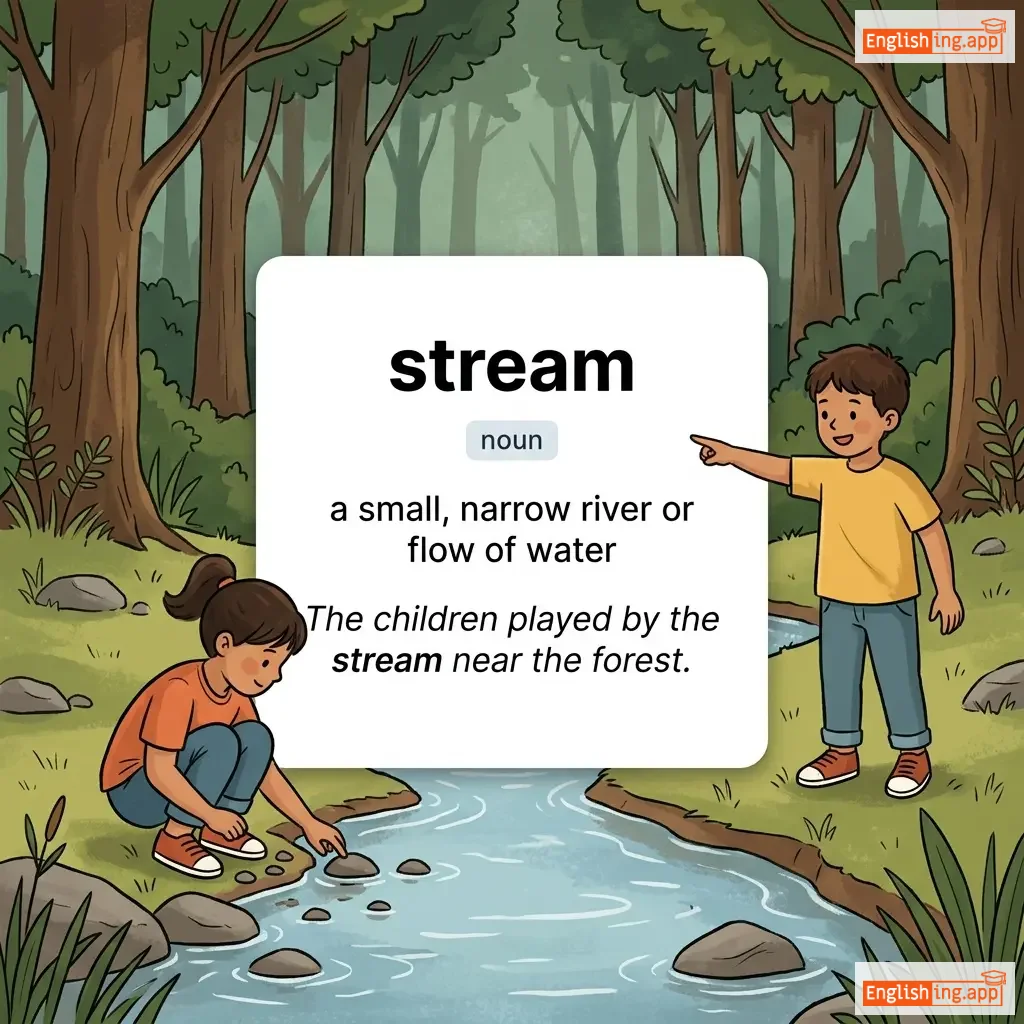
stream definition card — visual illustration of the meaning
noun
/striːm/
ruisseau (ruisseau)

a small, narrow river or flow of water

"The children played by the stream near the forest."

"Les enfants jouaient près du ruisseau près de la forêt." (Les enfants jouaient pres du ruisseau pres de la foret.)
noun
/ˈstriːmlɪt/
ruisseau (ruisseau)

a small stream; a tiny brook or rivulet

"A streamlet flowed through the meadow."

"Un ruisseau coulait à travers la prairie." (Un ruisseau coulait à travers la prairie.)
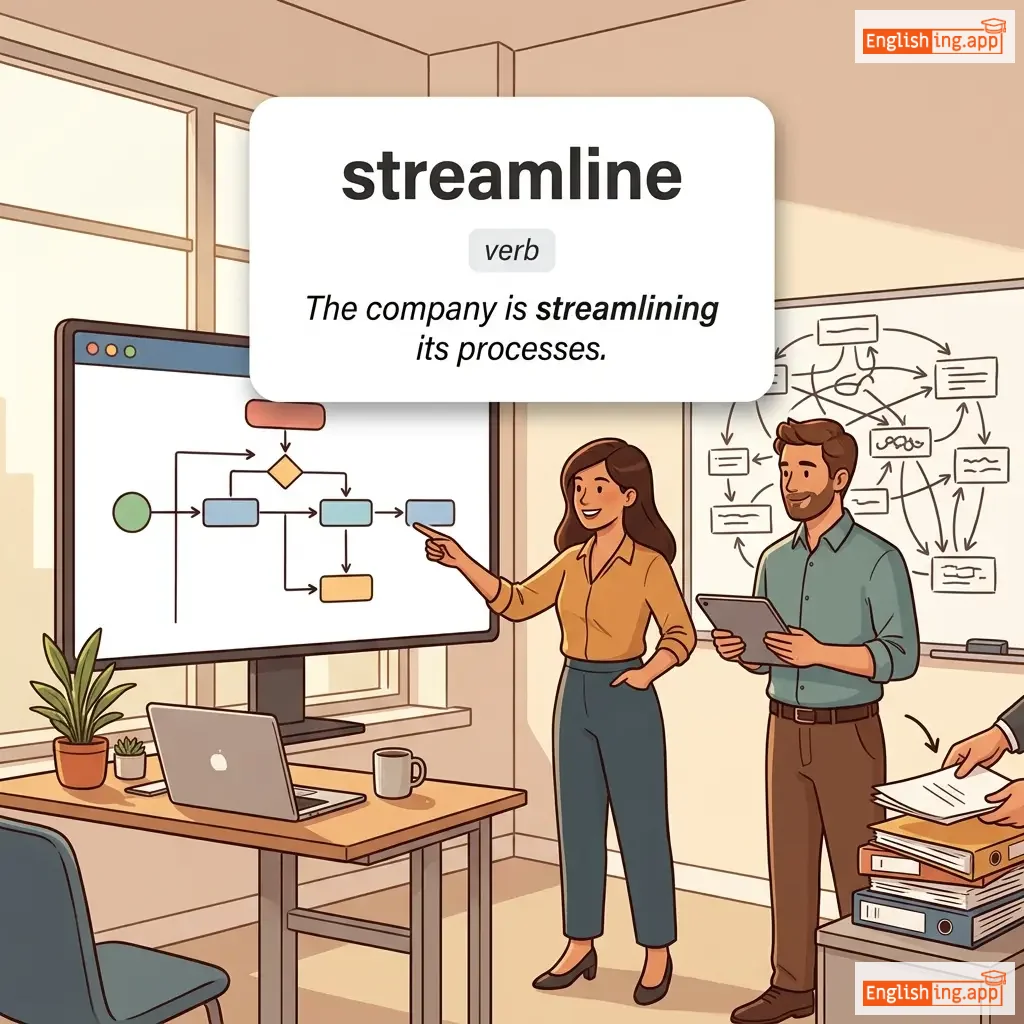
streamline definition card — visual illustration of the meaning
verb
/ˈstriːm.laɪn/
rationaliser (rationaliser)

To make something more efficient by simplifying or eliminating unnecessary steps.

"The company is streamlining its processes."

"L'entreprise rationalise ses processus." (L'entreprise rationalise ses processus.)
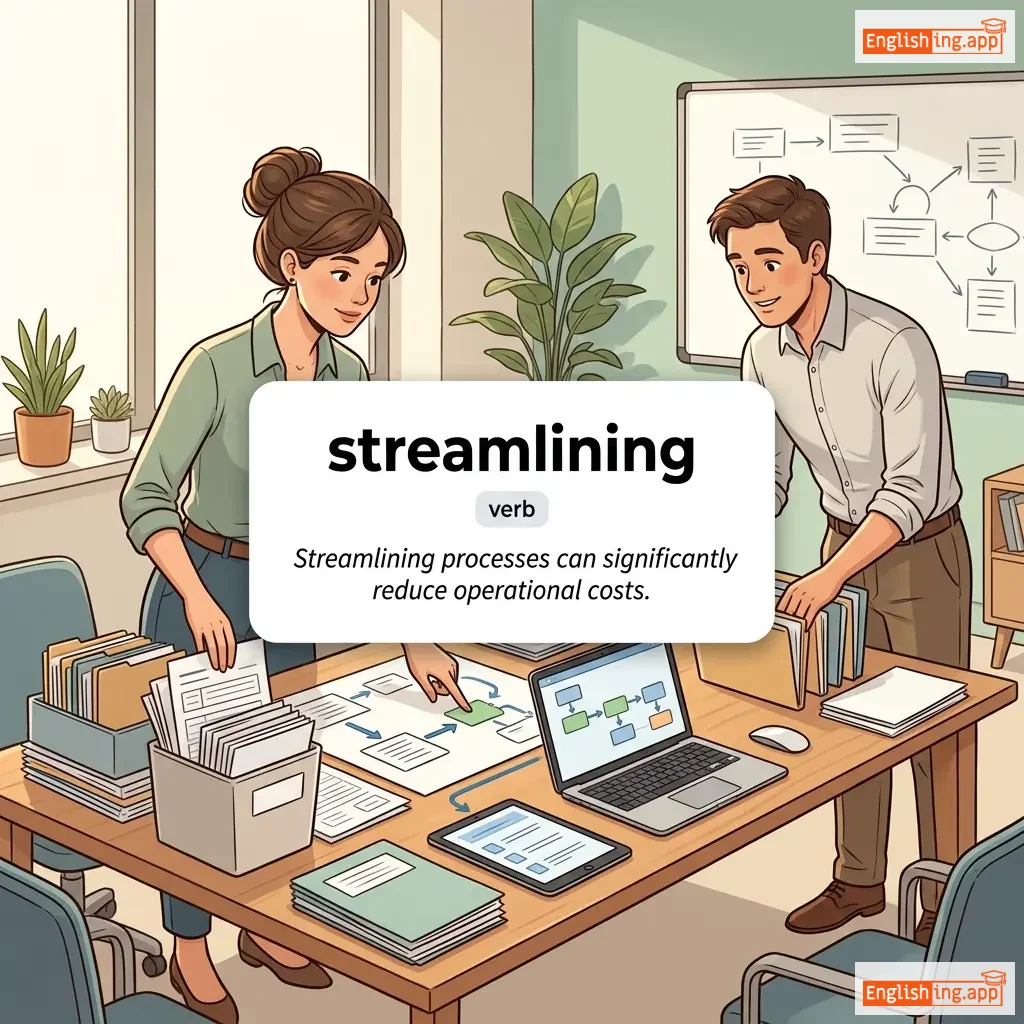
streamlining definition card — visual illustration of the meaning
verb
/ˈstriːmlaɪnɪŋ/
rationalisation (rationalisation)

The process of making an organization or system more efficient by simplifying or eliminating unnecessary steps

"Streamlining processes can significantly reduce operational costs."

"La rationalisation des processus peut réduire considérablement les coûts opérationnels." (La rationalisation des processus peut réduire considérablement les coûts opérationnels.)
verb
/sʌbˈtɛnd/
sous-tendre (sous-tendre)

To extend across or form an angle at a particular point, often used in geometry.

"The arc subtends a 60-degree angle at the center of the circle."

"L'arc sous-tend un angle de 60 degrés au centre du cercle." (L'arc sous-tend un angle de 60 degres au centre du cercle.)
verb
/ˈsʌblɪmeɪt/
transformer en activités supérieures (transformer en activités supérieures)

to redirect strong emotions or desires into socially acceptable activities or channels

"She sublimated her anger into painting beautiful landscapes."

"Elle a sublimé sa colère en peignant de beaux paysages." (Elle a sublimé sa colère en peignant de beaux paysages.)
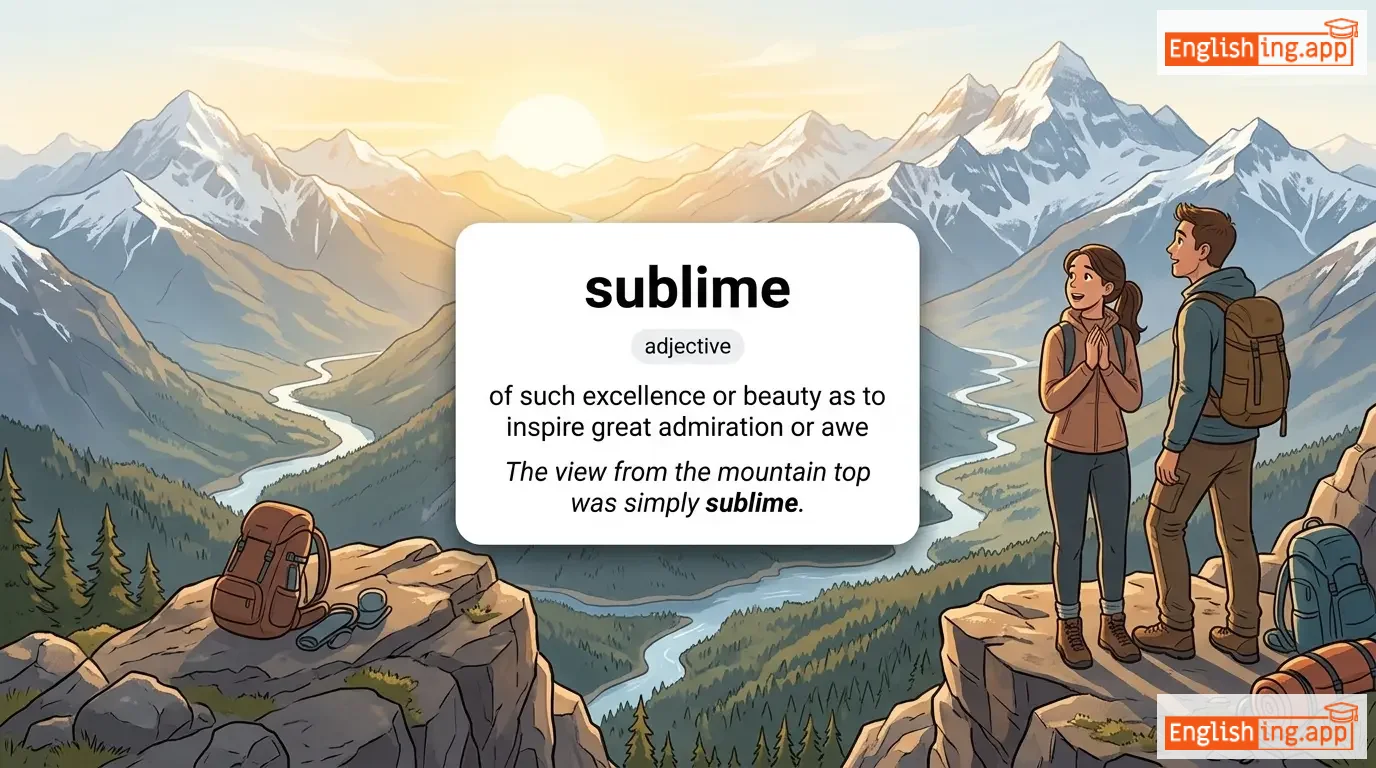
sublime definition card — visual illustration of the meaning
adjective
/səˈblaɪm/
sublime (sublime)

of such excellence or beauty as to inspire great admiration or awe

"The view from the mountain top was simply sublime."

"La vue depuis le sommet de la montagne était tout simplement sublime." (La vue depuis le sommet de la montagne était tout simplement sublime.)
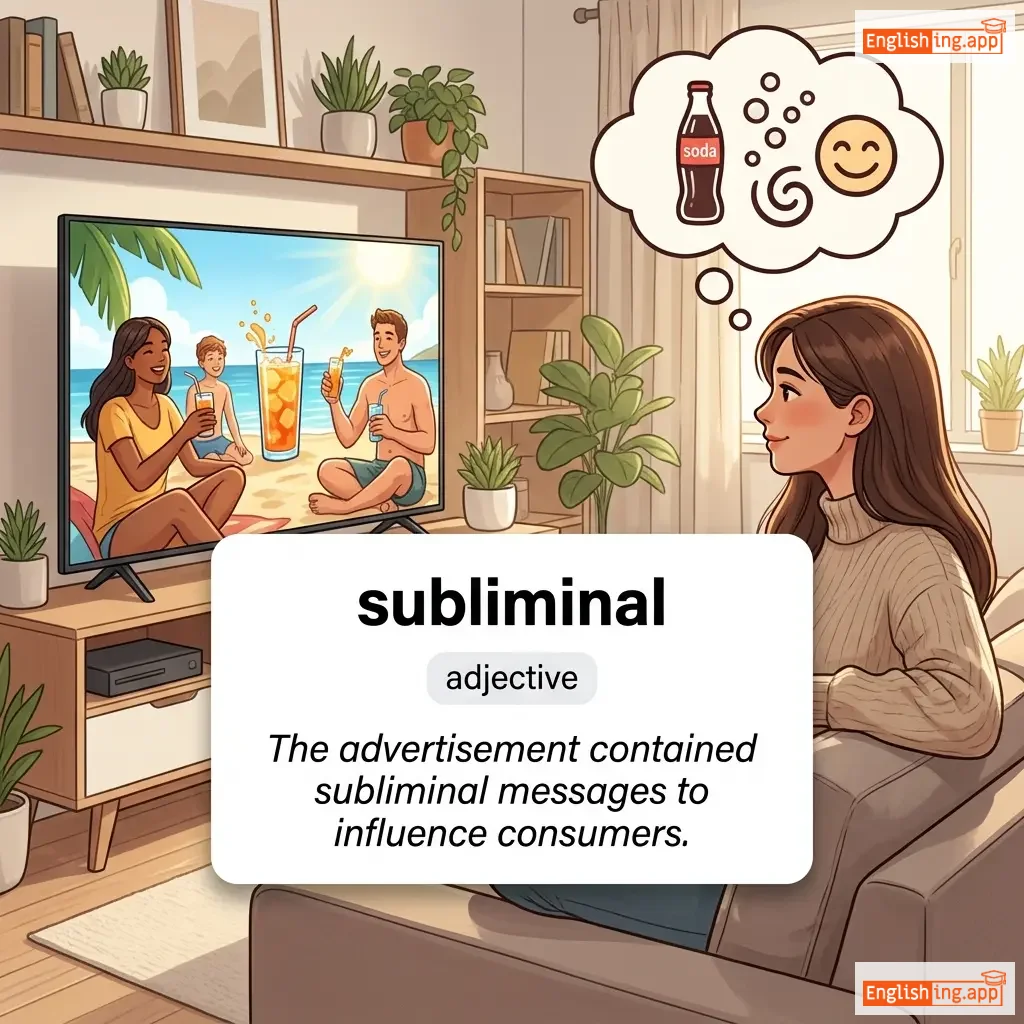
subliminal definition card — visual illustration of the meaning
adjective
/sʌbˈlɪmɪnəl/
subliminal (subliminal)

below the threshold of conscious perception but still influencing behavior or feelings

"The advertisement contained subliminal messages to influence consumers."

"La publicité contenait des messages subliminaux pour influencer les consommateurs." (La publicité contenait des messages subliminaux pour influencer les consommateurs.)
adjective
/sʌbˈlɪŋɡwəl/
sublingual (sublingual)

situated or applied under the tongue

"The doctor prescribed a sublingual tablet for faster absorption."

"Le médecin a prescrit un comprimé sublingual pour une absorption plus rapide." (Le médecin a prescrit un comprimé sublingual pour une absorption plus rapide.)
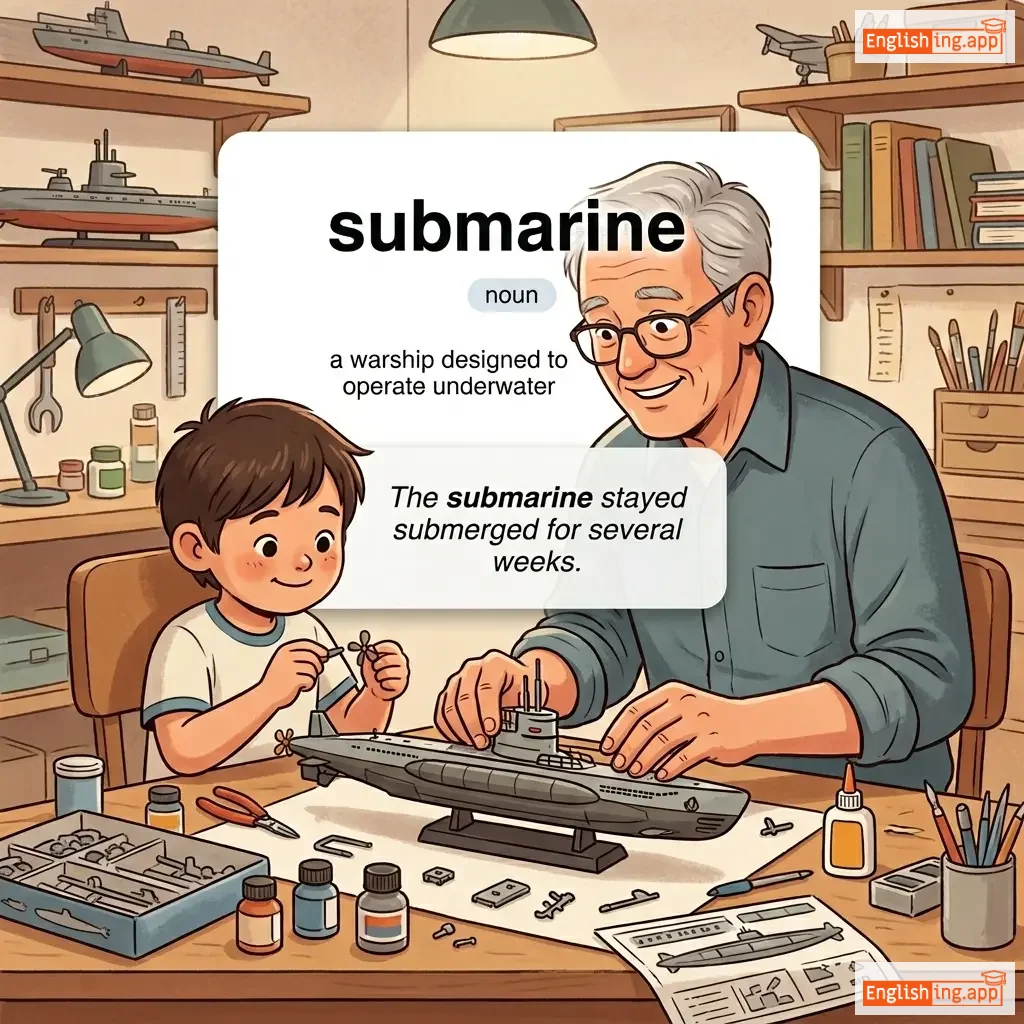
submarine definition card — visual illustration of the meaning
noun
/ˈsʌbməriːn/
sous-marin (sous-marin)

a warship designed to operate underwater

"The submarine stayed submerged for several weeks."

"Le sous-marin est resté immergé pendant plusieurs semaines." (Le sous-marin est resté immergé pendant plusieurs semaines.)
verb
/səbˈmɜːrdʒ/
submerger (submerger)

to put under water or cover with liquid

"The floodwaters threatened to submerge the village."

"Les eaux de l'inondation menaçaient de submerger le village." (Les eaux de l'inondation menaçaient de submerger le village.)
noun
/səbˈmɜːrdʒəns/
immersion (immersion)

the act or process of being submerged or going underwater

"The submergence of coastal areas is a major concern due to rising sea levels."

"L'immersion des zones côtières est une préoccupation majeure en raison de l'élévation du niveau de la mer." (L'immersion des zones cotières est une préoccupation majeure en raison de l'élévation du niveau de la mer.)
adjective, noun
/səbˈmɜːrsəbl/
submersible (submersible)

capable of being submerged; a small underwater craft

"The scientists explored the deep ocean using a submersible."

"Les scientifiques ont exploré l'océan profond à l'aide d'un submersible." (Les scientifiques ont exploré l'océan profond à l'aide d'un submersible.)
noun
/səbˈmɜːrʒən/
submersion (submersion)

the state of being under water

"The submersion of the fields lasted for several days after the heavy rain."

"La submersion des champs a duré plusieurs jours après la forte pluie." (La submersion des champs a dure plusieurs jours apres la forte pluie.)
noun
/səbˈmɪʃən/
soumission, présentation (soumission, presentation)

the act of yielding to authority or presenting something for consideration

"Her submission of the report was appreciated by the manager."

"Sa soumission du rapport a été appréciée par le responsable." (Sa soumission du rapport a ete appreciee par le responsable.)
adjective
/səbˈmɪsɪv/
soumis (soumis)

ready to conform to the authority or will of others; meekly obedient or passive

"She was too submissive to challenge her boss's unfair decision."

"Elle était trop soumise pour contester la décision injuste de son patron." (Elle etait trop soumise pour contester la decision injuste de son patron.)
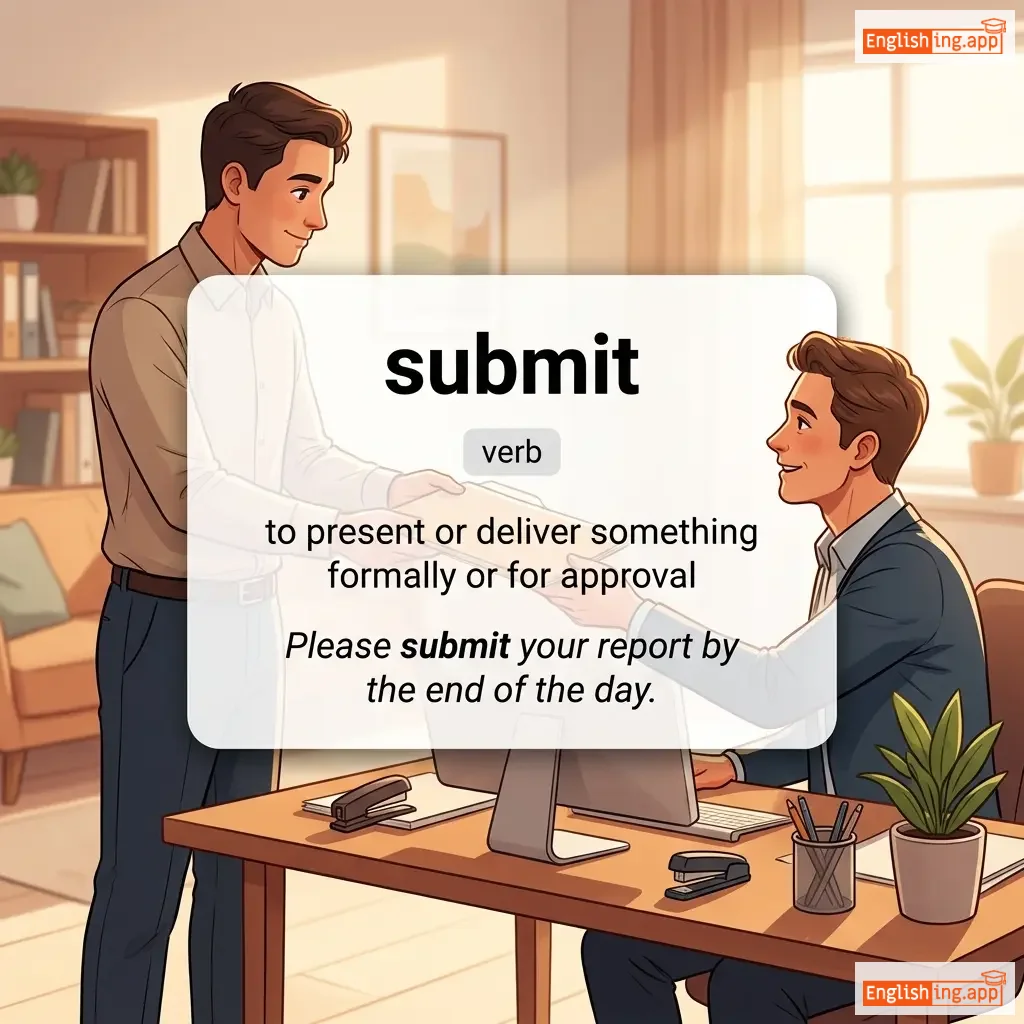
submit definition card — visual illustration of the meaning
verb
/səbˈmɪt/
soumettre (soumettre)

to present or deliver something formally or for approval

"Please submit your report by the end of the day."

"Veuillez soumettre votre rapport d'ici la fin de la journée." (Veuillez soumettre votre rapport d'ici la fin de la journee.)
noun
/səbˈmɪtəl/
soumission (soumission)

the act of submitting something, especially a document for consideration or approval

"The contractor sent the submittal to the client for approval."

"L'entrepreneur a envoyé la soumission au client pour approbation." (L'entrepreneur a envoyé la soumission au client pour approbation.)
noun, adjective, verb
/səˈbɔːrdənət/ (noun/adjective), /səˈbɔːrdəˌneɪt/ (verb)
subordonné (subordonne)

lower in rank or position; to treat as less important

"He manages ten subordinates in his department."

"Il gère dix subordonnés dans son département." (Il gere dix subordonnes dans son departement.)
verb
/səˈbɔːrn/
suborner (suborner)

to bribe or induce someone unlawfully to perform an act, especially to commit perjury

"The lawyer was accused of trying to suborn a witness."

"L'avocat a été accusé d'avoir tenté de suborner un témoin." (L'avocat a été accusé d'avoir tenté de suborner un témoin.)
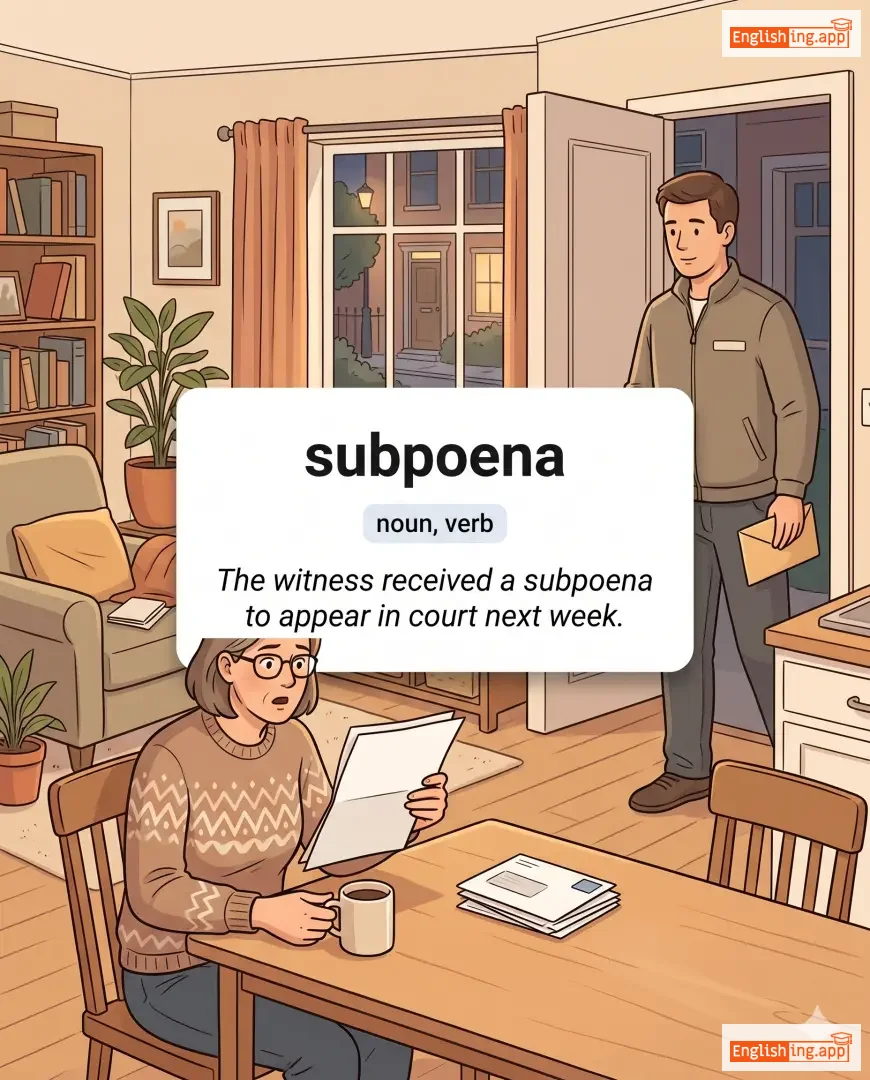
subpoena definition card — visual illustration of the meaning
noun, verb
/səˈpiːnə/
citation judiciaire (citation judiciaire)

a legal document ordering someone to attend court; to summon someone with such a document

"The witness received a subpoena to appear in court next week."

"Le témoin a reçu une citation judiciaire pour comparaître au tribunal la semaine prochaine." (Le témoin a reçu une citation judiciaire pour comparaître au tribunal la semaine prochaine.)
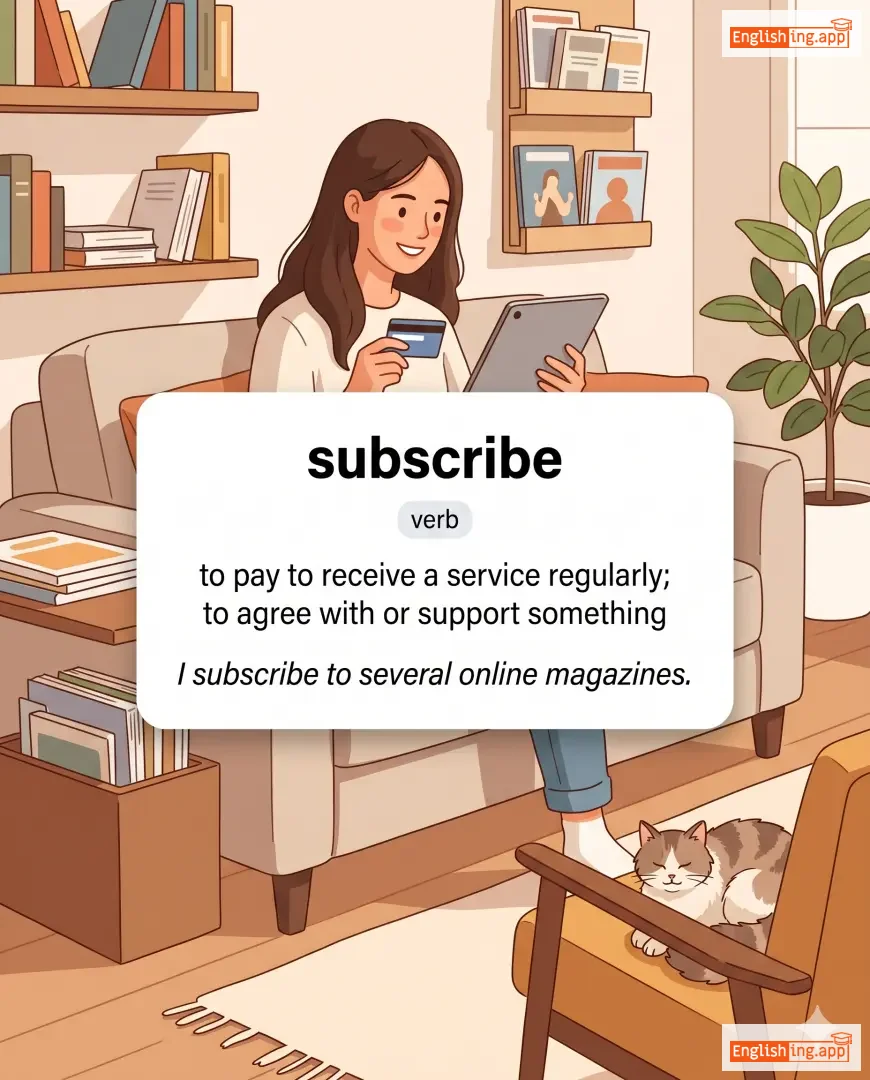
subscribe definition card — visual illustration of the meaning
verb
/səbˈskraɪb/
s'abonner (s'abonner)

to pay to receive a service regularly; to agree with or support something

"I subscribe to several online magazines."

"Je m'abonne à plusieurs magazines en ligne." (Je m'abonne à plusieurs magazines en ligne.)
noun
/səbˈskraɪbər/
abonné (abonne)

a person who receives or subscribes to a service, magazine, or service

"She is a subscriber to the monthly magazine."

"Elle est abonnée à la revue mensuelle." (Elle est abonnée à la revue mensuelle.)
noun
/səbˈskrɪpʃən/
abonnement (abonmã)

the action of subscribing to something

"I paid for a subscription to the online learning platform."

"J'ai payé pour un abonnement à la plateforme d'apprentissage en ligne." (J'ai payé pour un abonnement à la plateforme d'apprentissage en ligne.)
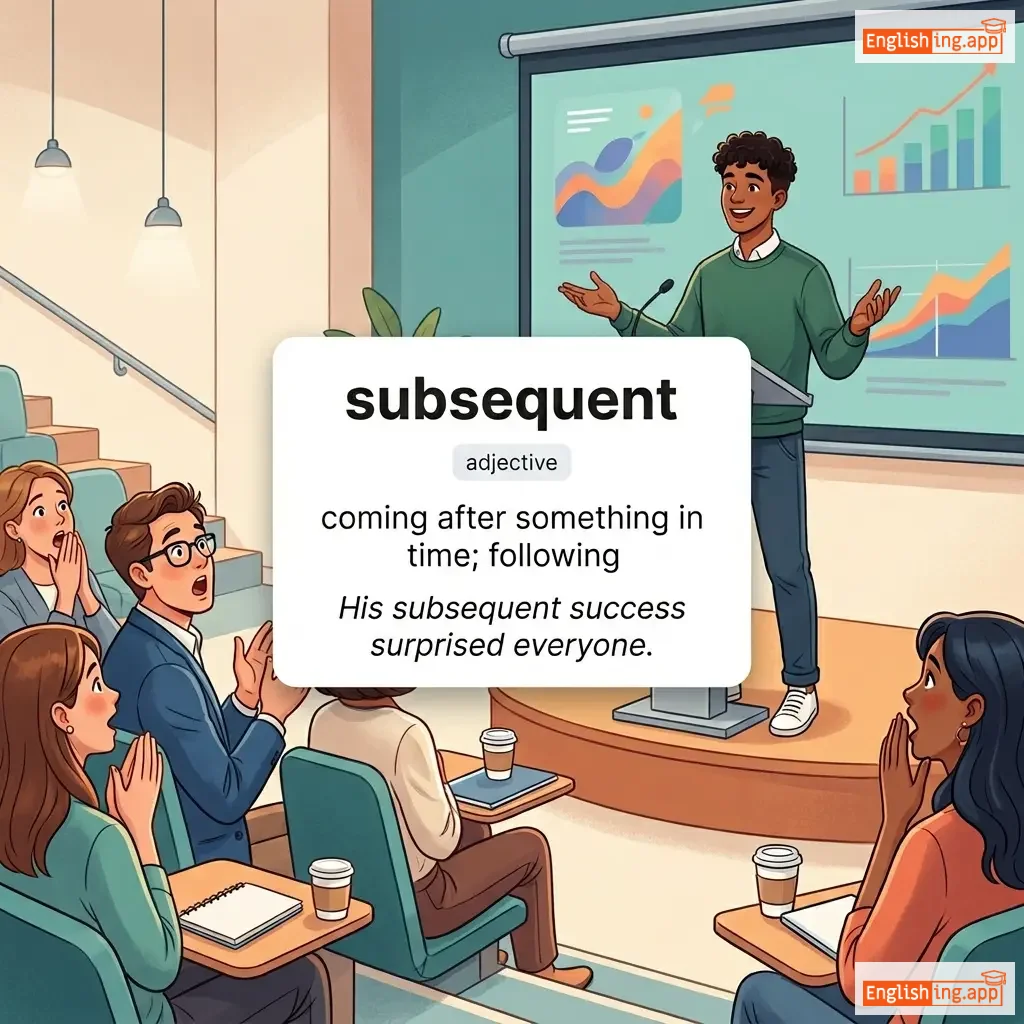
subsequent definition card — visual illustration of the meaning
adjective
/ˈsʌbsɪkwənt/
subséquent (subsekuãt)

coming after something in time; following

"His subsequent success surprised everyone."

"Son succès subséquent a surpris tout le monde." (Son succès subséquent a surpris tout le monde.)
adverb
/ˈsʌbsɪkwəntli/
ensuite (ensuite)

at a later time; afterward

"He failed his exam and subsequently had to retake it."

"Il a échoué à son examen et a ensuite dû le repasser." (Il a echoué à son examen et a ensuite dû le repasser.)
noun
/səbˈsɜːviəns/
servilité (servilite)

the condition of being too willing to obey or serve others

"His subservience to authority annoyed his colleagues."

"Sa servilité envers l'autorité agaçait ses collègues." (Sa servilite envers l'autorite agacait ses collegues.)
adjective
/səbˈsɜːviənt/
soumis / soumise (soomee)

prepared to obey others unquestioningly; less important than something else

"She was too subservient to challenge his decision."

"Elle etait trop soumise pour contester sa decision." (Elle etait trop soumise pour contester sa decision)
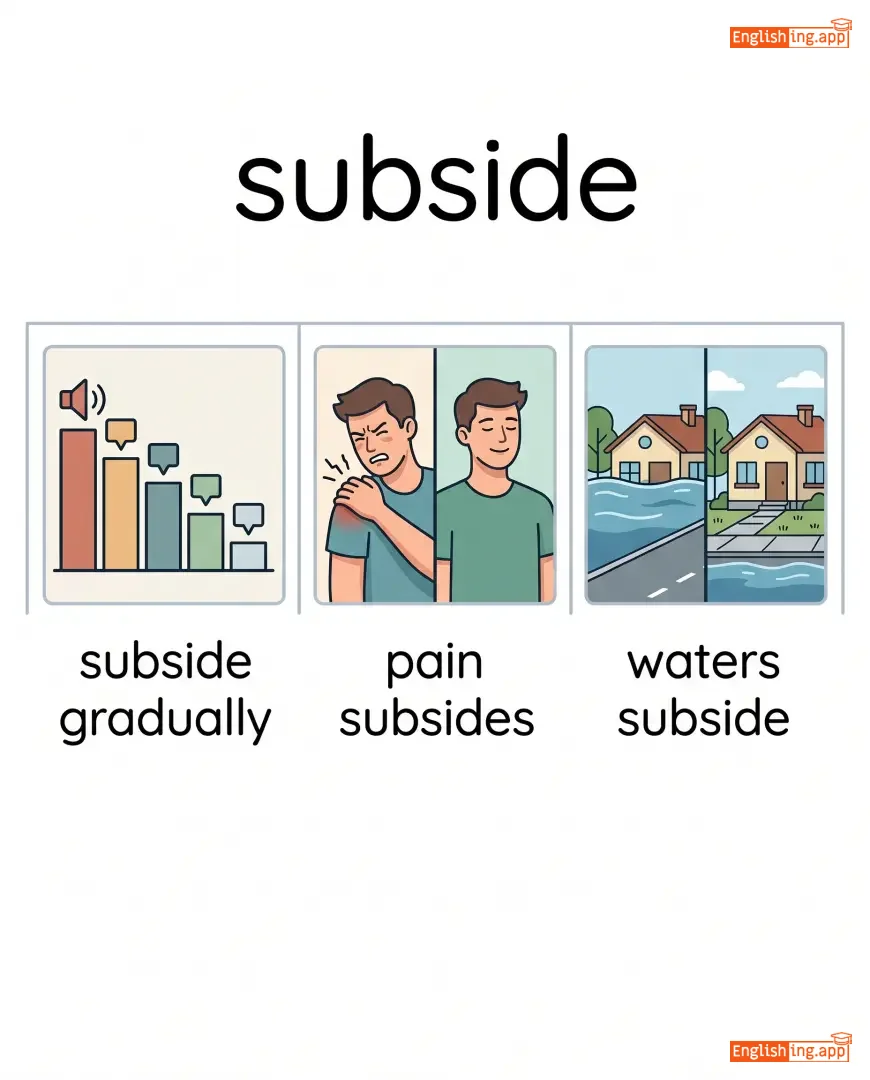
subside definition card — visual illustration of the meaning
verb
/səbˈsaɪd/
diminuer (diminuer)

to become less intense, violent, or severe; to sink or fall to a lower level

"After the storm, the floodwaters began to subside."

"Après la tempête, les eaux de l'inondation ont commencé à diminuer." (après la tempête, les eaux de l'inondation ont commencé à diminuer.)
noun, adjective
/səbˈsɪdiˌɛri/
filiale (filiale)

a company controlled by a larger company; serving to assist or supplement something

"The multinational owns a subsidiary in Bangladesh."

"La multinationale possède une filiale au Bangladesh." (La multinationale possède une filiale au Bangladesh.)
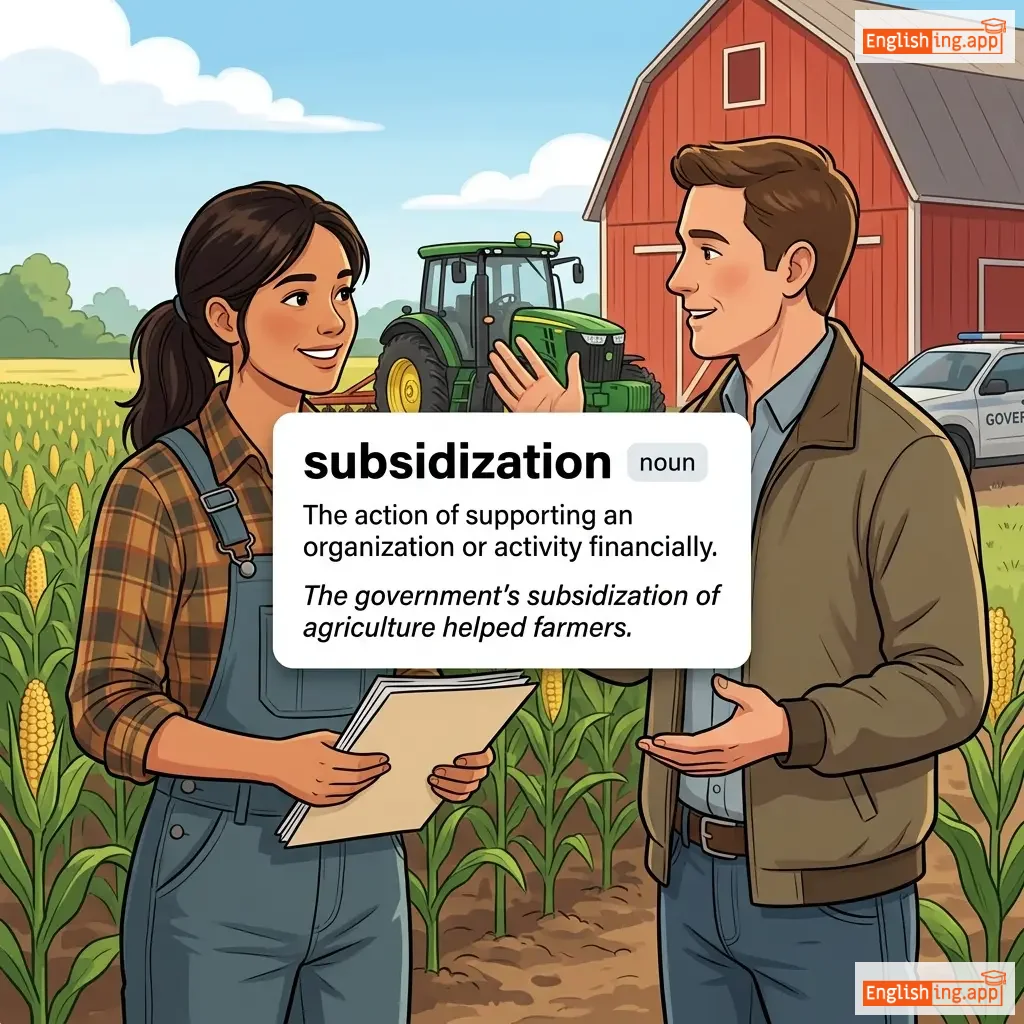
subsidization definition card — visual illustration of the meaning
noun
/ˌsʌbsɪdaɪˈzeɪʃən/
subvention (subvention)

The action of supporting an organization or activity financially.

"The government's subsidization of agriculture helped farmers."

"La subvention de l'agriculture par le gouvernement a aidé les agriculteurs." (La subvention de l'agriculture par le gouvernement a aide les agriculteurs.)
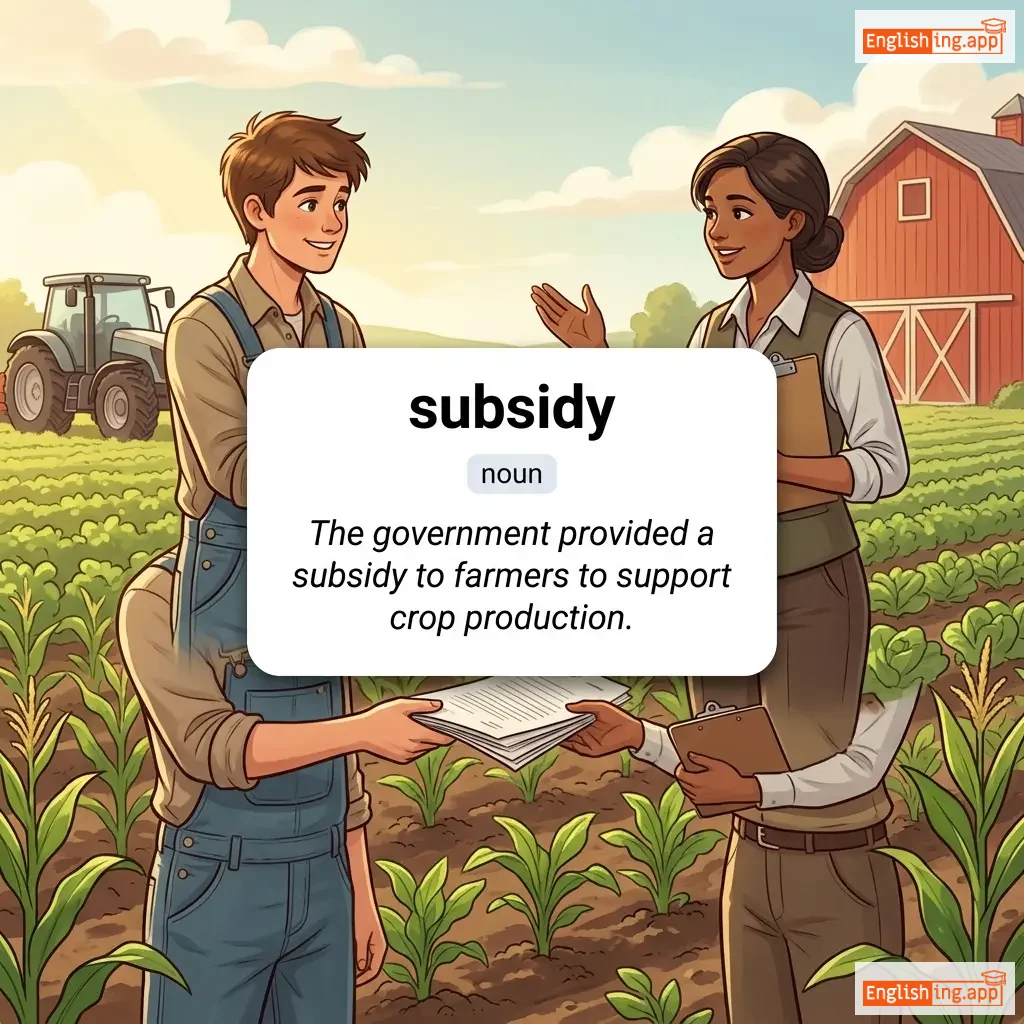
subsidy definition card — visual illustration of the meaning
noun
/ˈsʌbsɪdi/
subvention (subvention)

A sum of money granted by the government or a public body to help support an industry or reduce the cost of goods or services.

"The government provided a subsidy to farmers to support crop production."

"Le gouvernement a fourni une subvention aux agriculteurs pour soutenir la production de cultures." (Le gouvernement a fourni une subvention aux agriculteurs pour soutenir la production de cultures.)
verb
/səbˈsɪst/
subsister (subsister)

To maintain or support oneself, especially at a minimal level.

"Many villagers still subsist on fishing and farming."

"Beaucoup de villageois subsistent encore grâce à la pêche et à l'agriculture." (Beaucoup de villageois subsistent encore grâce à la pêche et à l'agriculture.)
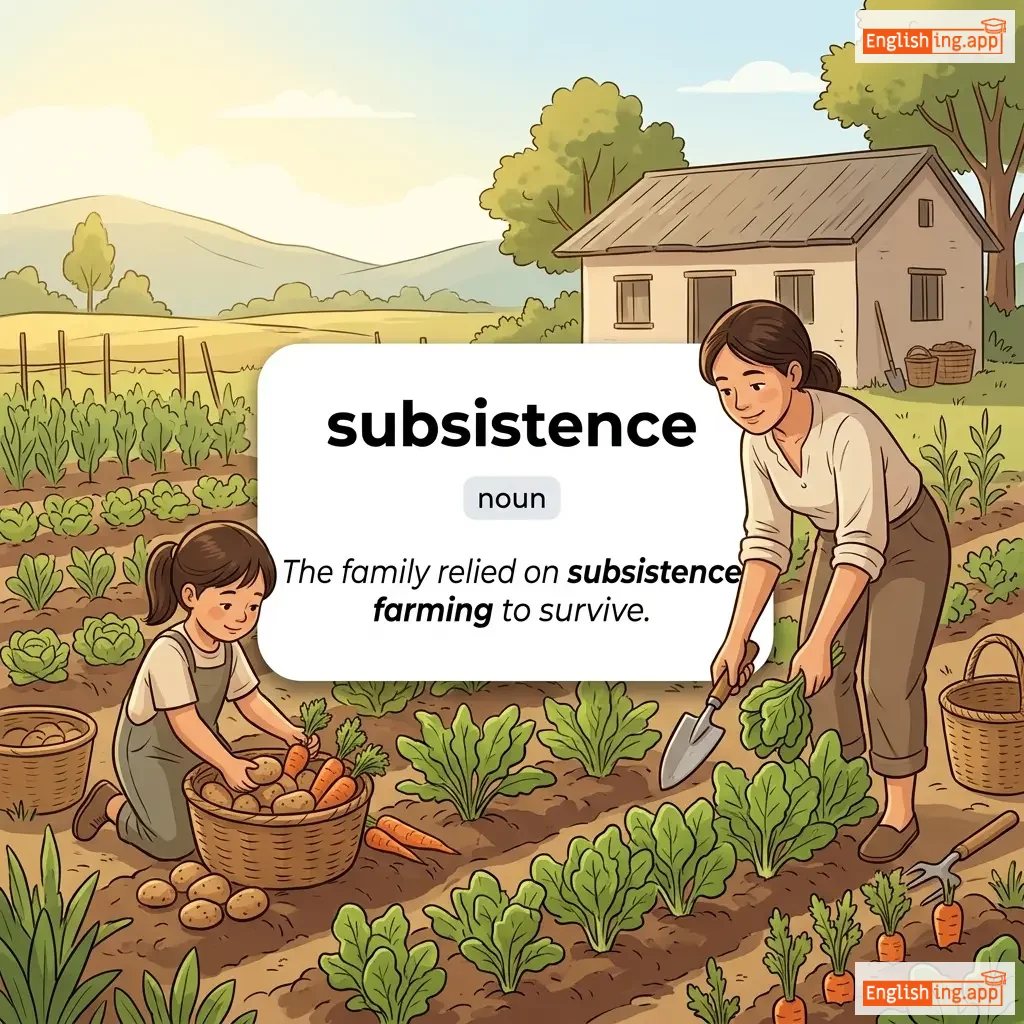
subsistence definition card — visual illustration of the meaning
noun
/səbˈsɪstəns/
subsistance (subsistance)

The action or fact of maintaining or supporting oneself, especially at a minimal level.

"The family relied on subsistence farming to survive."

"La famille dépendait de l'agriculture de subsistance pour survivre." (La famille dépendait de l'agriculture de subsistance pour survivre.)
noun
/ˈsʌbstəns/
substance (substance)

a particular kind of matter with uniform properties

"The substance of the matter was highly controversial."

"La substance de la question était très controversée." (La substance de la question était très controversée.)
adjective
/səbˈstænʃl/
substantiel (substantiel)

Of considerable importance, size, or worth.

"She received a substantial raise after the successful project."

"Elle a reçu une augmentation substantielle après le projet réussi." (Elle a reçu une augmentation substantielle après le projet réussi.)
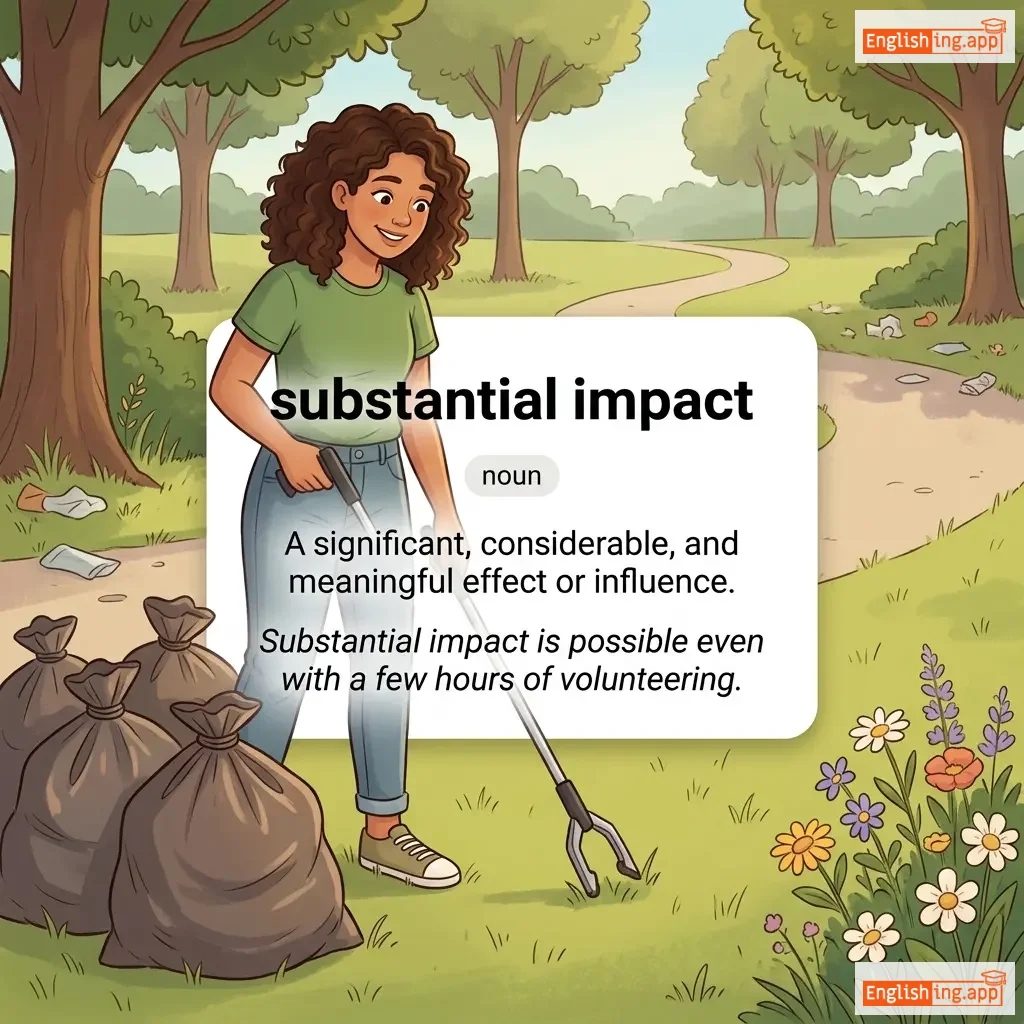
substantial impact definition card — visual illustration of the meaning
noun
səbˈstænʃəl ˈɪmpækt
impact substantiel (impact substantiel)

A significant, considerable, and meaningful effect or influence.

"Substantial impact is possible even with a few hours of volunteering."

"Un impact substantiel est possible même avec quelques heures de bénévolat." (Un impact substantiel est possible même avec quelques heures de bénévolat.)
adverb
/səbˈstænʃəli/
considérablement (considérablement)

to a great extent or degree

"The new policy has substantially improved working conditions."

"La nouvelle politique a considérablement amélioré les conditions de travail." (La nouvelle politique a considérablement amélioré les conditions de travail.)
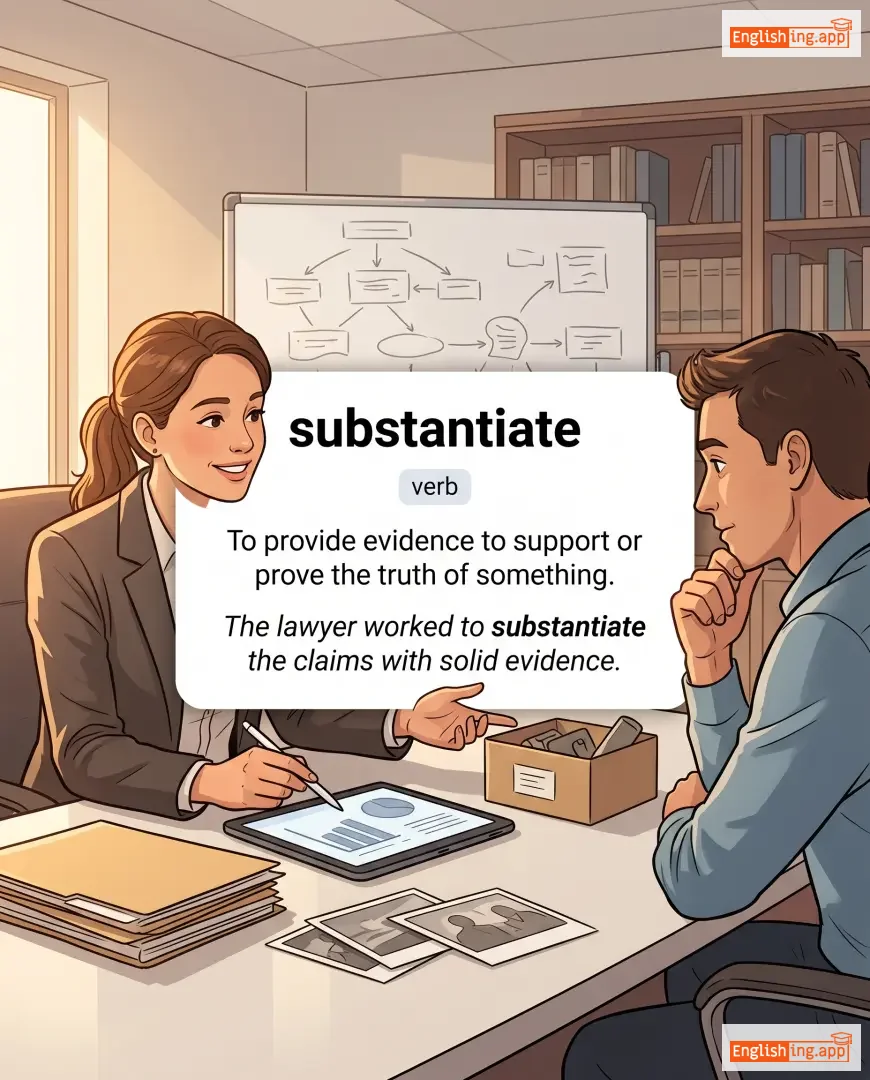
substantiate definition card — visual illustration of the meaning
verb
/səbˈstænʃieɪt/
substantier (substantier)

To provide evidence to support or prove the truth of something.

"The lawyer worked to substantiate the claims with solid evidence."

"L'avocat a travaillé pour substancier les affirmations avec des preuves solides." (L'avocat a travaillé pour substancier les affirmations avec des preuves solides.)
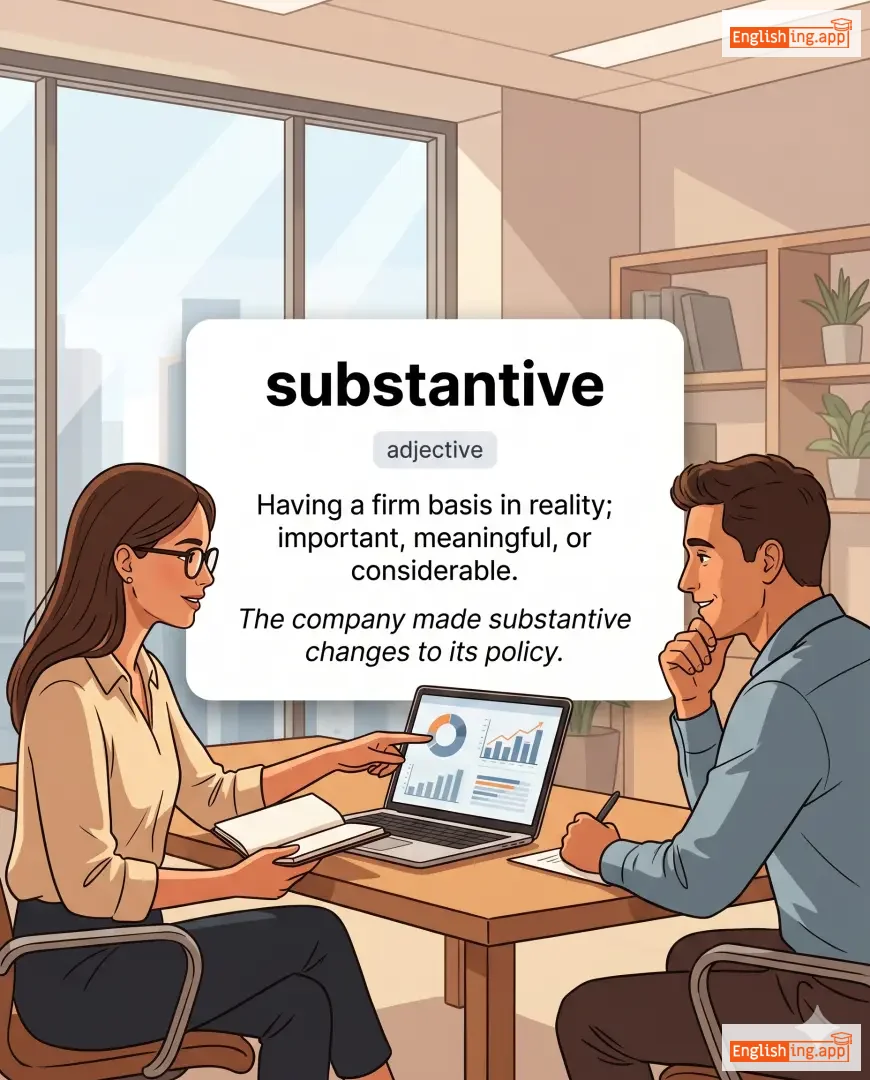
substantive definition card — visual illustration of the meaning
adjective
/ˈsʌbstəntɪv/
important (important)

Having a firm basis in reality; important, meaningful, or considerable.

"The company made substantive changes to its policy."

"L'entreprise a apporté des changements importants à sa politique." (L'entreprise a apporté des changements importants à sa politique.)
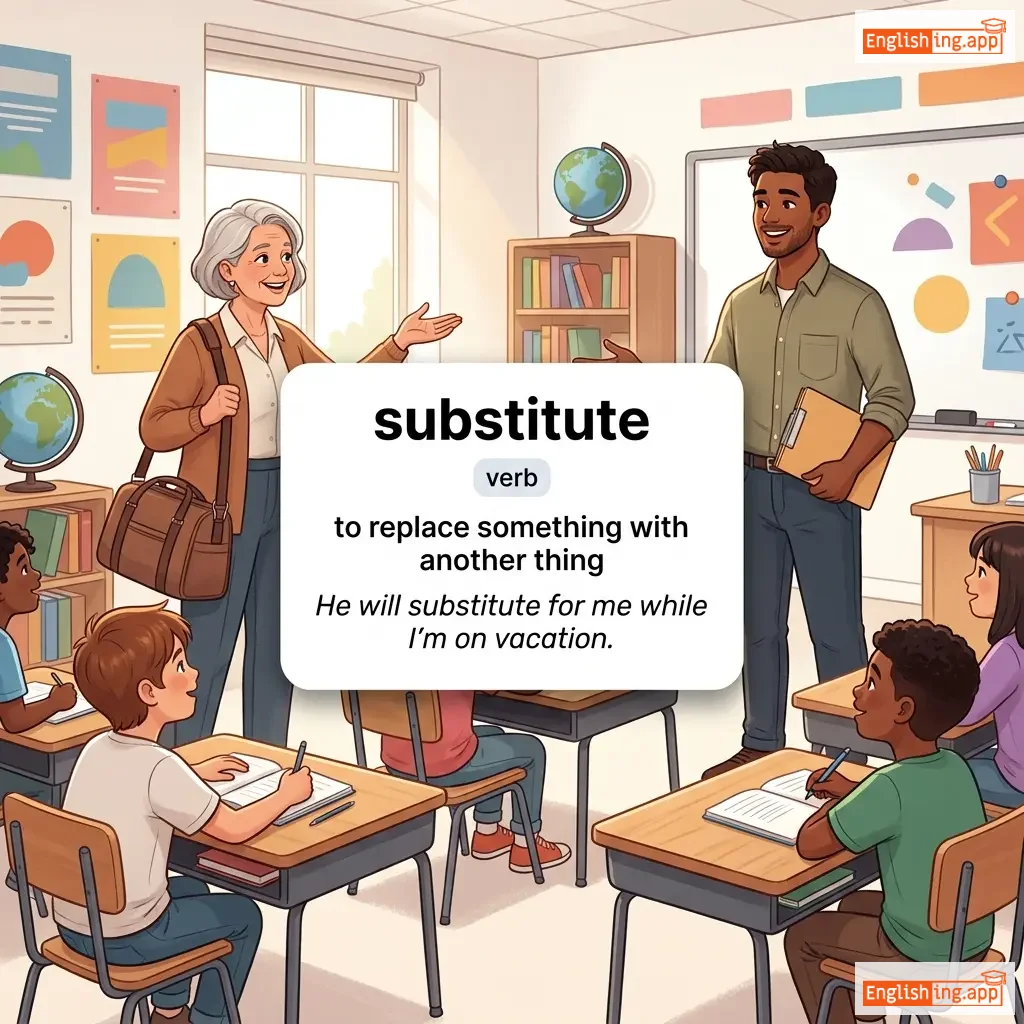
substitute definition card — visual illustration of the meaning
verb
/ˈsʌb.stɪ.tjuːt/
substituer (substituer)

to replace something with another thing

"He will substitute for me while I'm on vacation."

"il remplacera pour moi pendant que je suis en vacances" (il remplacera pour moi pendant que je suis en vacances.)
noun
/ˌsʌb.stɪˈtjuː.ʃən/
substitution (substitution)

the action of replacing someone or something with another

"The substitution of the old system with the new one was difficult."

"La substitution de l'ancien système par le nouveau a été difficile." (La substitution de l'ancien système par le nouveau a été difficile.)
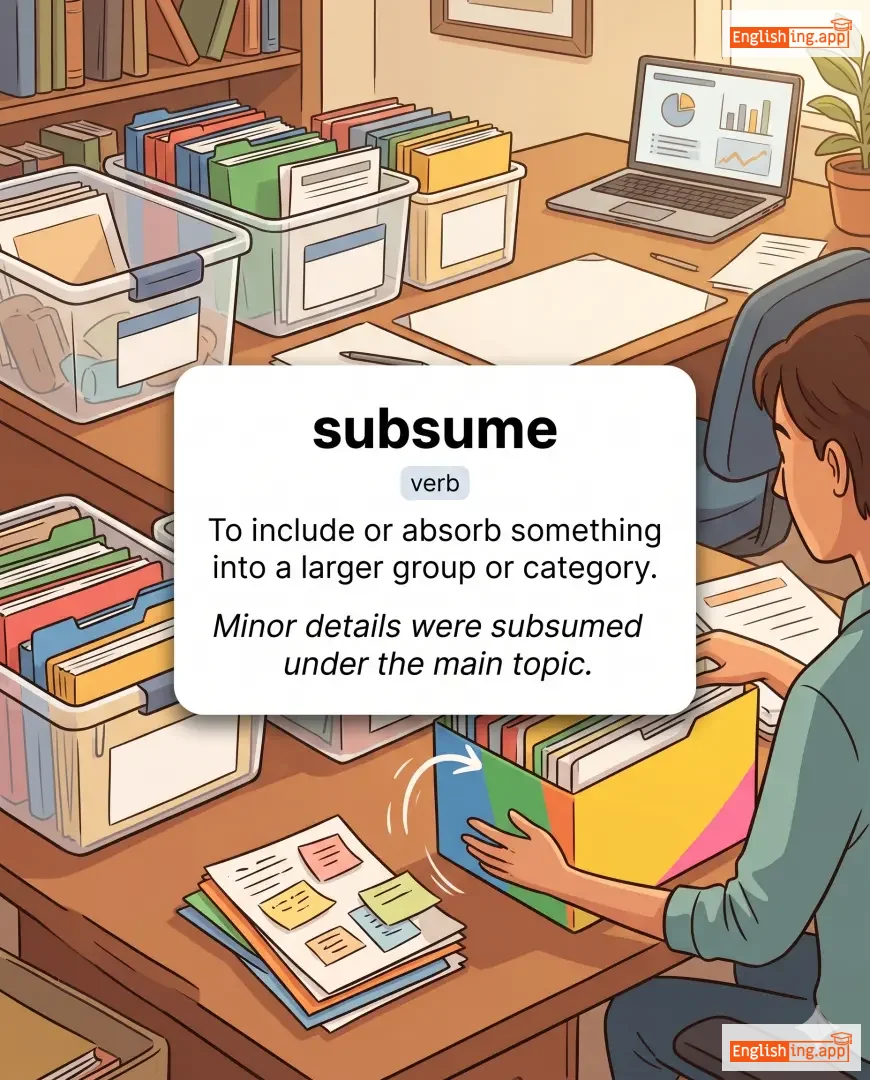
subsume definition card — visual illustration of the meaning
verb
/səbˈsjuːm/
inclure (inclure)

To include or absorb something into a larger group or category.

"Minor details were subsumed under the main topic."

"Les détails mineurs ont été subsumés sous le sujet principal." (Les détails mineurs ont été subsumés sous le sujet principal.)
determiner
/sʌtʃ/
tel (tel)

of the type previously mentioned or specified

"I have never seen such a beautiful painting."

"Je n'ai jamais vu une telle peinture magnifique." (Je n'ai jamais vu une telle peinture magnifique.)
adjective/noun
/ˈsʌkjələnt/
juteux (juteux)

Juicy or full of juice; also refers to a plant with thick, fleshy leaves adapted to storing water.

"The steak was so succulent that everyone enjoyed it."

"Le steak était tellement juteux que tout le monde l'a apprécié." (Le steak était tellement juteux que tout le monde l'a apprécié.)