語彙集

英単語辞書 | 単語の意味、定義、例文

noun
/ˈstrɑːtəm/
(sō)

a layer or level of material, or a social class in society

"The upper stratum of society enjoyed privileges not available to others."

"社会の上層部は他の人々が手に入れられない特権を享受していました。" (Shakai no jōsōbu wa hoka no hitobito ga te ni irarenai tokken o kyōju shite imashita.)
noun
/strɔː/
ストローまたは茎 (sutorō mata wa kuki)

a thin tube for sucking up liquids; dried stalks of grain plants

"She drank the juice through a straw."

"彼女はストローでジュースを飲んだ。" (Kanojo wa sutorō de jūsu o nonda.)
noun
/ˈstrɔːbəri/
いちご (ichigo)

a small red heart-shaped fruit with tiny seeds on the surface and sweet taste

"I love eating fresh strawberries with cream during summer."

"夏にクリームを添えた新鮮ないちごを食べるのが大好きです。" (Natsu ni kuriimu wo soeta shinsen na ichigo wo taberu no ga daisuki desu.)
verb, noun, adjective
/streɪ/
迷子になる (maigo ni naru)

to move away from the correct path or go off course; a person or animal that has wandered off; something that is not where it belongs

"The dog strayed from the yard and got lost."

"その犬は庭から外れ、迷子になった。" (Sono inu wa niwa kara hazure, maigo ni natta.)
noun, verb
/striːk/
線または筋; 指定された方向に非常に速く移動する (sen mata wa suji; shiteisareta hōkō ni hijō ni hayaku idō suru)

a long, thin line or mark; to move very quickly in a specified direction

"Lightning streaked across the night sky."
"稲妻が夜空を横切った。" (Inazuma ga yozora o yokogitta.)
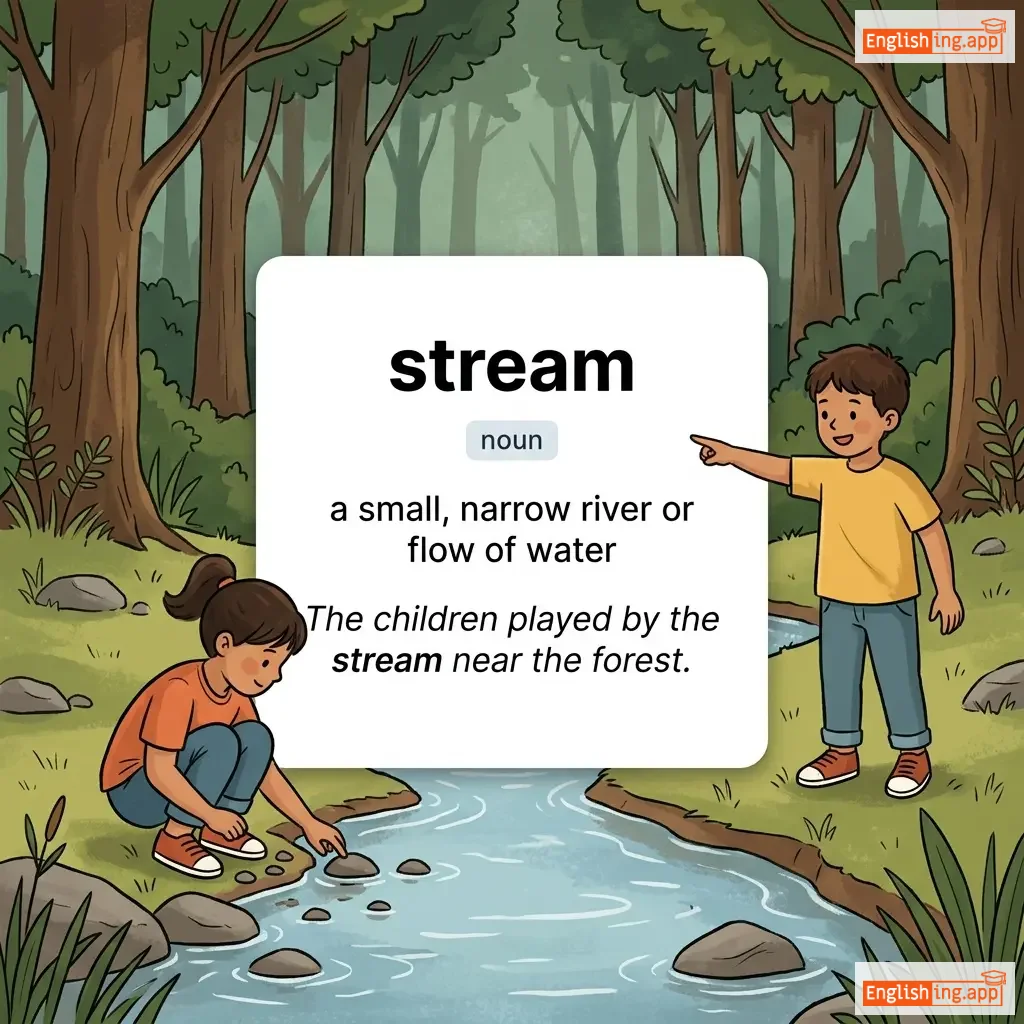
stream definition card — visual illustration of the meaning
noun
/striːm/
小川 (ogawa)

a small, narrow river or flow of water

"The children played by the stream near the forest."

"子供たちは森の近くの小川で遊んでいました。" (Kodomotachi wa mori no chikaku no ogawa de asondeimashita.)
noun
/ˈstriːmlɪt/
小川 (ogawa)

a small stream; a tiny brook or rivulet

"A streamlet flowed through the meadow."
"小川が草地を流れていました。" (Ogawa ga kusachi wo nagarete imashita.)
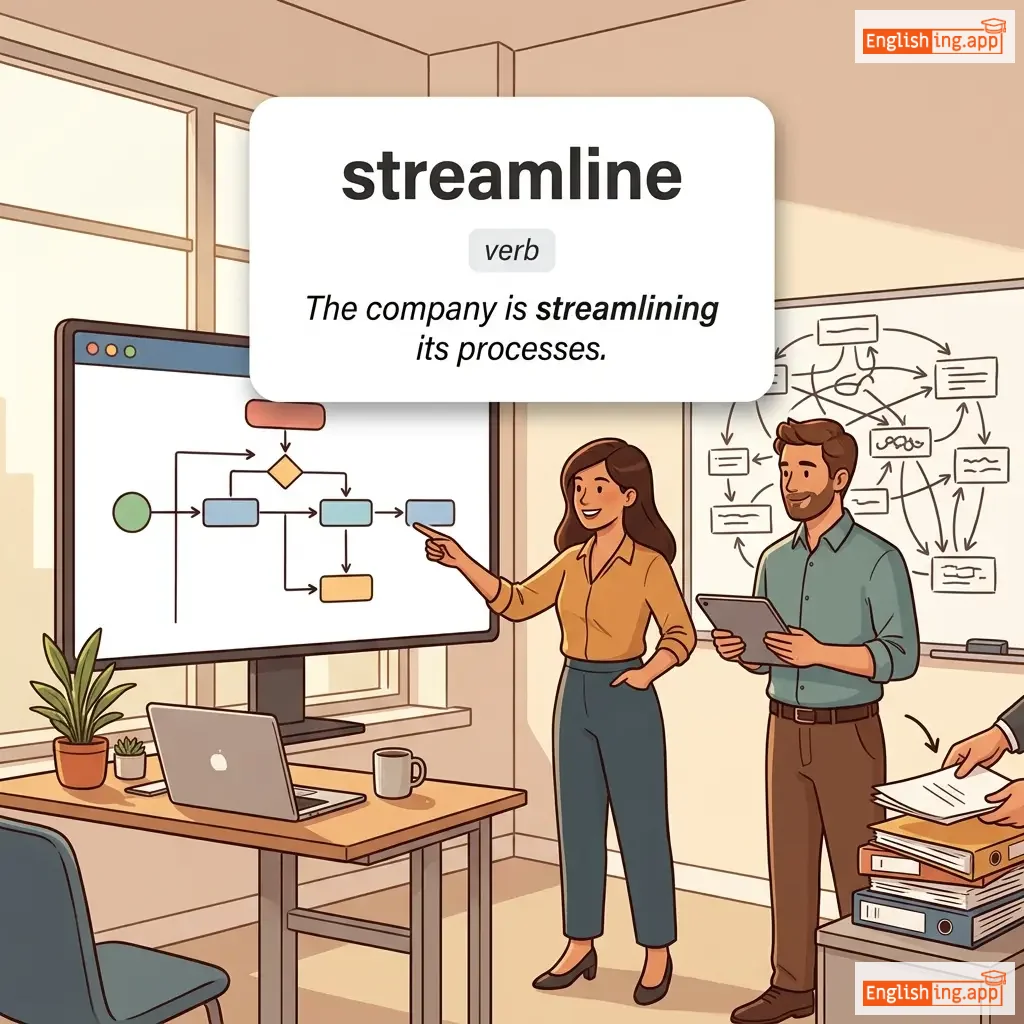
streamline definition card — visual illustration of the meaning
verb
/ˈstriːm.laɪn/
簡素化 (kansoka)

To make something more efficient by simplifying or eliminating unnecessary steps.

"The company is streamlining its processes."
"会社はプロセスを簡素化しています。" (Kaisha wa purosesu o kansoka shiteimasu.)
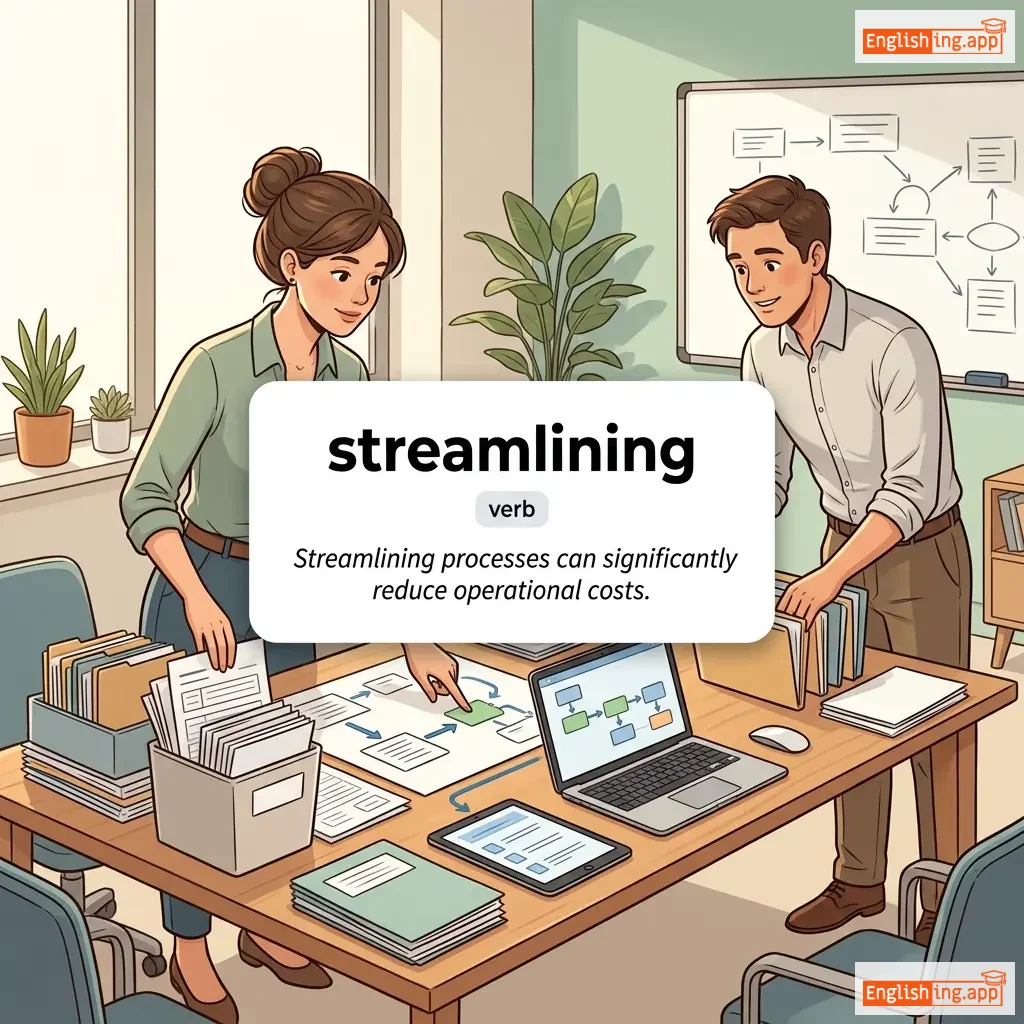
streamlining definition card — visual illustration of the meaning
verb
/ˈstriːmlaɪnɪŋ/
簡素化 (kansokuka)

The process of making an organization or system more efficient by simplifying or eliminating unnecessary steps

"Streamlining processes can significantly reduce operational costs."

"プロセスの簡素化は、運用コストを大幅に削減することができます。" (Purosesu no kansoka wa, un'yō kosuto o ōhaba ni sakugen suru koto ga dekimasu.)
verb
/sʌbˈtɛnd/
角度を作る (kakudo o tsukuru)

To extend across or form an angle at a particular point, often used in geometry.

"The arc subtends a 60-degree angle at the center of the circle."

"アークは円の中心で60度の角度を作ります。" (Aaku wa en no chuushin de 60 do no kakudo o tsukurimasu.)
verb
/ˈsʌblɪmeɪt/
より高い活動に変換する (yori takai katsudō ni henkan suru)

to redirect strong emotions or desires into socially acceptable activities or channels

"She sublimated her anger into painting beautiful landscapes."
"彼女は美しい風景を描くことで怒りをサブリメートしました。" (Kanojo wa utsukushī fūkei o kaku koto de ikari o saburimēto shimashita.)
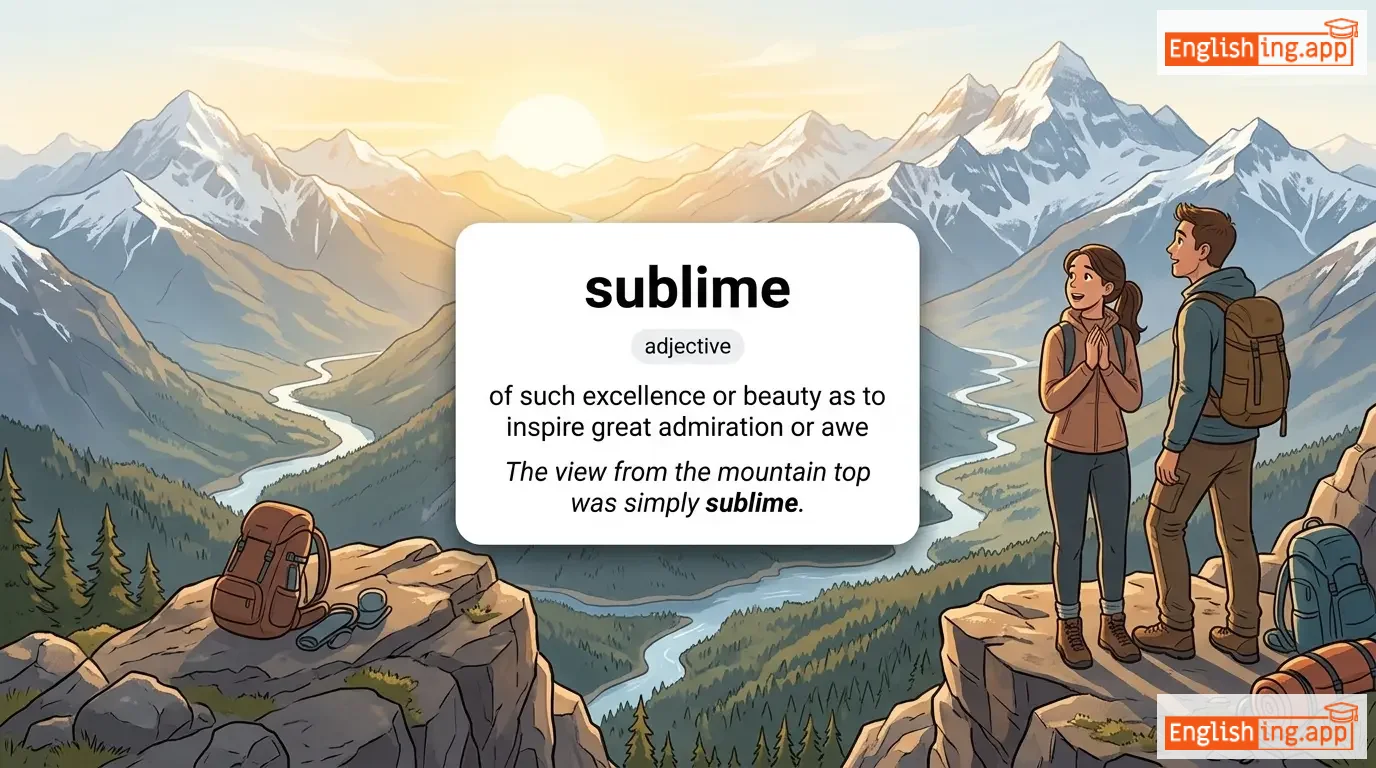
sublime definition card — visual illustration of the meaning
adjective
/səˈblaɪm/
崇高 (sūkō)

of such excellence or beauty as to inspire great admiration or awe

"The view from the mountain top was simply sublime."
"山頂からの景色は本当に崇高でした。" (Sanchō kara no keshiki wa hontōni sūkō deshita.)
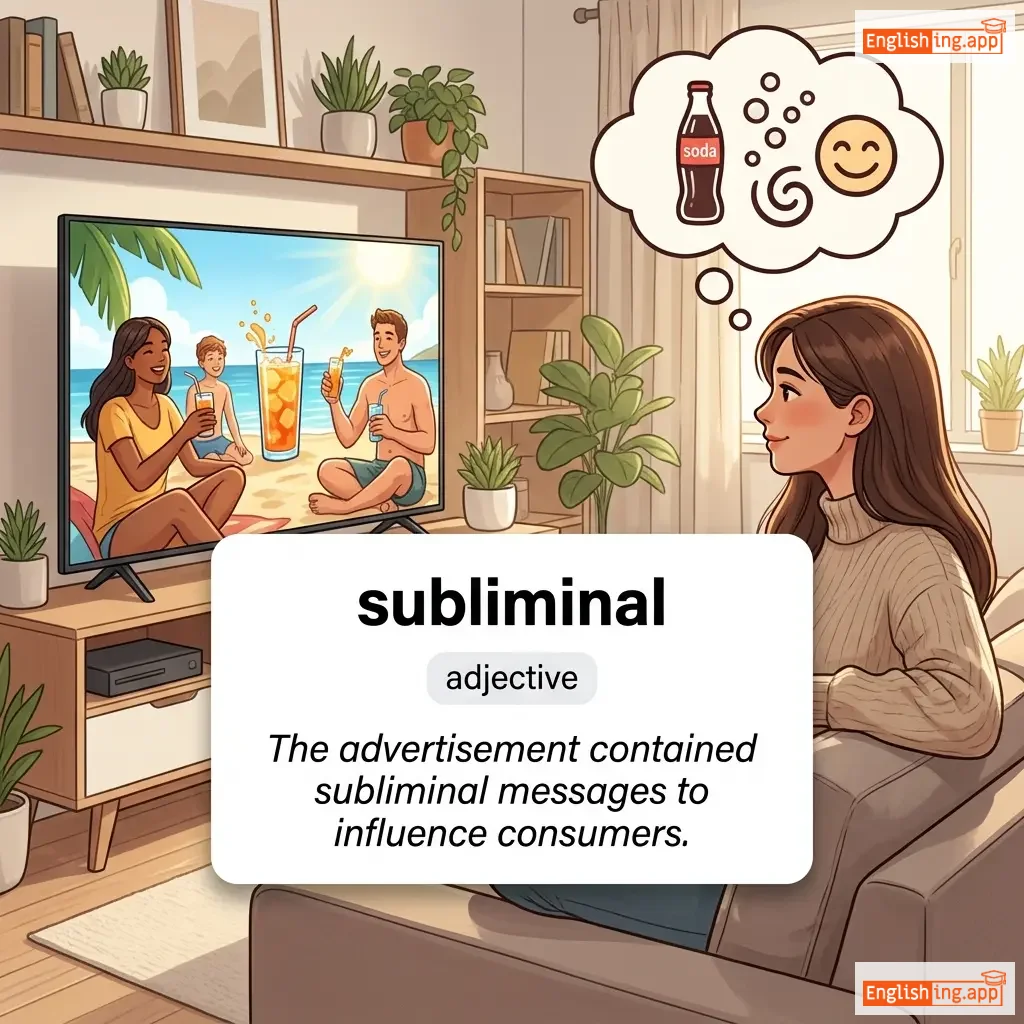
subliminal definition card — visual illustration of the meaning
adjective
/sʌbˈlɪmɪnəl/
潜在意識 (senzai ishiki)

below the threshold of conscious perception but still influencing behavior or feelings

"The advertisement contained subliminal messages to influence consumers."

"広告には消費者に影響を与えるための潜在意識メッセージが含まれていた。" (Koukoku ni wa shouhisha ni eikyou wo ataeru tame no senzai ishiki messeeji ga fukumarete ita.)
adjective
/sʌbˈlɪŋɡwəl/
舌下 (zetsuka)

situated or applied under the tongue

"The doctor prescribed a sublingual tablet for faster absorption."
"医師は吸収を早めるために舌下錠を処方しました。" (Ishi wa kyūshū o hayameru tame ni zetsuka jō o shohō shimashita.)
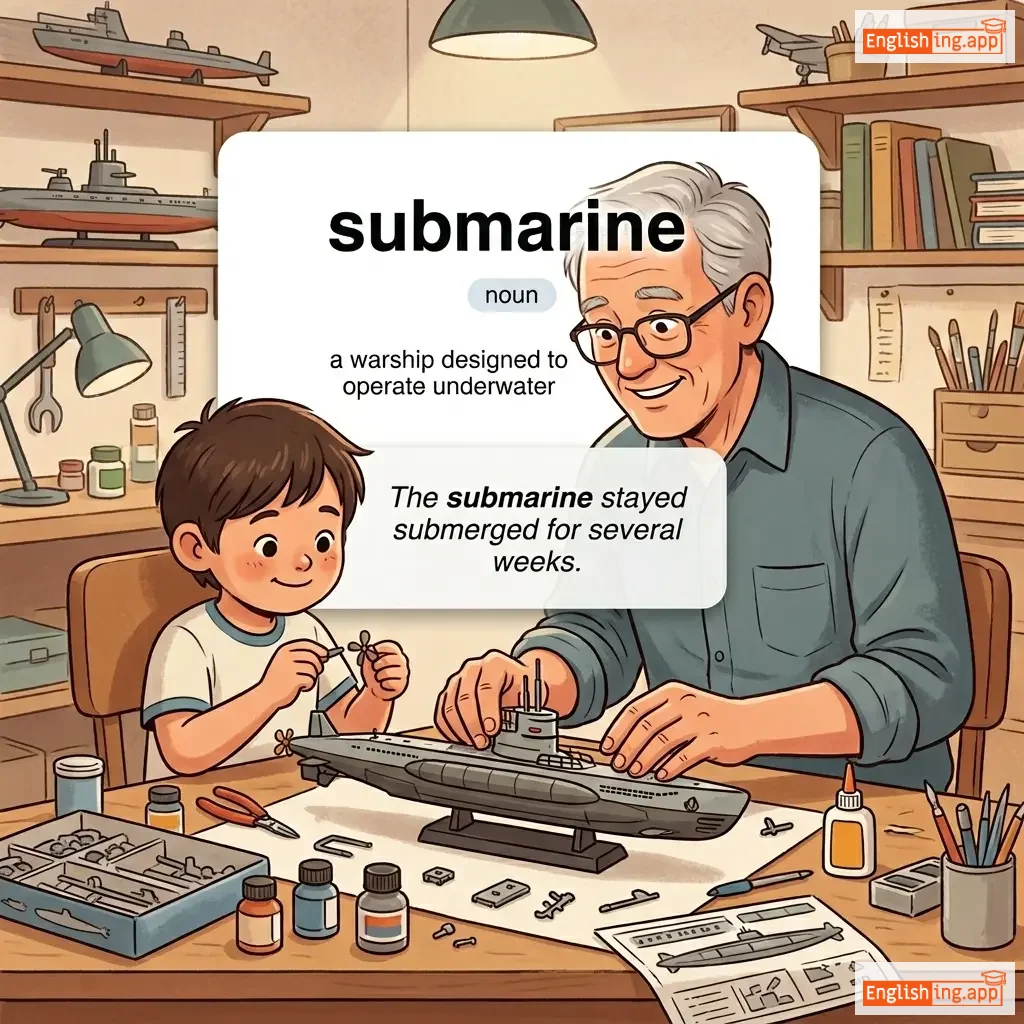
submarine definition card — visual illustration of the meaning
noun
/ˈsʌbməriːn/
潜水艦 (sensuikan)

a warship designed to operate underwater

"The submarine stayed submerged for several weeks."

"潜水艦は数週間水中に留まっていました。" (Sensuikan wa suū shūkan suichū ni todomatte imashita.)
verb
/səbˈmɜːrdʒ/
沈める (shizumeru)

to put under water or cover with liquid

"The floodwaters threatened to submerge the village."

"洪水の水が村を沈めると脅かしていました。" (kōzui no mizu ga mura o shizumeru to odokashite imashita.)
noun
/səbˈmɜːrdʒəns/
水没 (suibotsu)

the act or process of being submerged or going underwater

"The submergence of coastal areas is a major concern due to rising sea levels."

"海面上昇による沿岸地域の水没は重大な懸念事項です。" (Kaimen joushou ni yoru engan chiiki no suibotsu wa juudaina ken'en jikou desu.)
adjective, noun
/səbˈmɜːrsəbl/
潜水艇 (sensuitei)

capable of being submerged; a small underwater craft

"The scientists explored the deep ocean using a submersible."

"科学者たちは潜水艇を使って深海を探査した。" (Kagakusha-tachi wa sensuitei o tsukatte shinkai o tansa shita.)
noun
/səbˈmɜːrʒən/
沈没 (chinmotsu)

the state of being under water

"The submersion of the fields lasted for several days after the heavy rain."

"激しい雨の後、畑の沈没は数日間続いた。" (Hageshii ame no ato, hatake no chinmotsu wa suujitsukan tsuzita.)
noun
/səbˈmɪʃən/
提出, 服従 (teishutsu, fukujū)

the act of yielding to authority or presenting something for consideration

"Her submission of the report was appreciated by the manager."

"彼女の報告書の提出は、マネージャーに評価されました。" (Kanojo no hōkokusho no teishutsu wa, manējā ni hyōka saremashita.)
adjective
/səbˈmɪsɪv/
従順な (jūjun na)

ready to conform to the authority or will of others; meekly obedient or passive

"She was too submissive to challenge her boss's unfair decision."

"彼女は上司の不公平な決定に挑戦するには従順すぎた。" (Kanojo wa jōshi no fukōhei na kettei ni chōsen suru ni wa jūjun sugita.)
submit definition card — visual illustration of the meaning
verb
/səbˈmɪt/
提出する (teishutsu suru)

to present or deliver something formally or for approval

"Please submit your report by the end of the day."

"レポートをその日の終わりまでに提出してください。" (Repōto o sono hi no owari made ni teishutsu shite kudasai.)
noun
/səbˈmɪtəl/
提出 (teishutsu)

the act of submitting something, especially a document for consideration or approval

"The contractor sent the submittal to the client for approval."

"請負業者は承認のために提出物を顧客に送信しました。" (Keiyaku gyōsha wa shōnin no tame ni teishutsumono o kokyaku ni sōshin shimashita.)
noun, adjective, verb
/səˈbɔːrdənət/ (noun/adjective), /səˈbɔːrdəˌneɪt/ (verb)
部下 (buka)

lower in rank or position; to treat as less important

"He manages ten subordinates in his department."

"彼は自分の部署で10人の部下を管理しています。" (Kare wa jibun no busho de juunin no buka o kanri shiteimasu.)
verb
/səˈbɔːrn/
買収する (baishū suru)

to bribe or induce someone unlawfully to perform an act, especially to commit perjury

"The lawyer was accused of trying to suborn a witness."
"弁護士は証人を買収しようとしたと非難された。" (Bengoshi wa shōnin o baishū shiyō to shita to hinan sareta.)
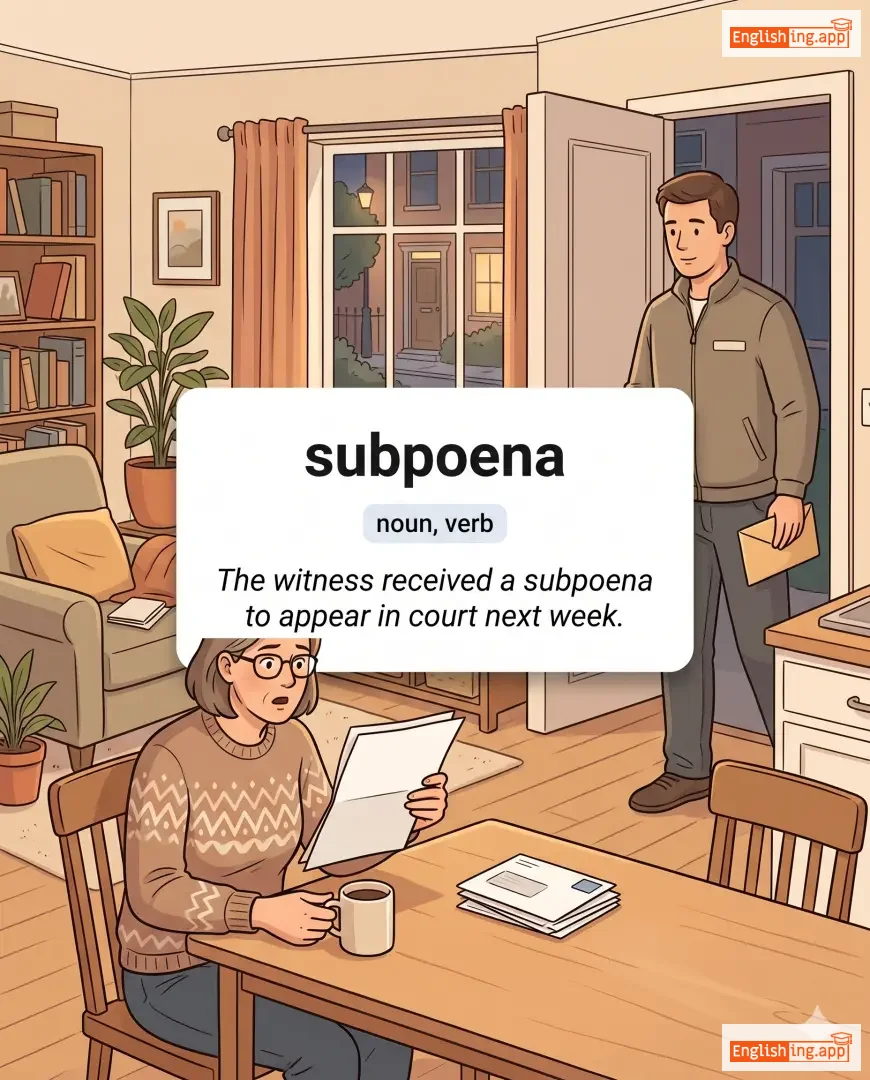
subpoena definition card — visual illustration of the meaning
noun, verb
/səˈpiːnə/
召喚状 (shokanjo)

a legal document ordering someone to attend court; to summon someone with such a document

"The witness received a subpoena to appear in court next week."
"証人は来週法廷に出廷するための召喚状を受け取った。" (Shōnin wa raishū hōtei ni shuttei suru tame no shōkanjō o uketotta.)
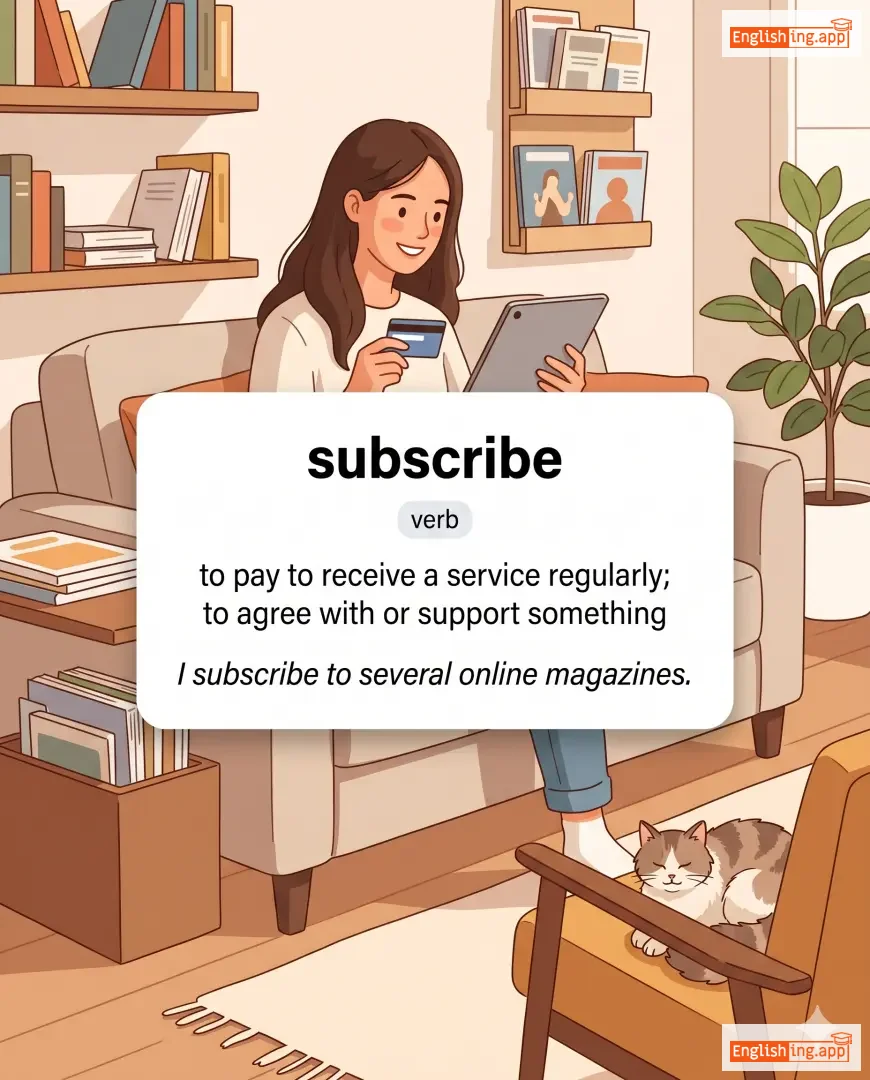
subscribe definition card — visual illustration of the meaning
verb
/səbˈskraɪb/
購読する (kōdoku suru)

to pay to receive a service regularly; to agree with or support something

"I subscribe to several online magazines."

"私はいくつかのオンライン雑誌を購読しています。" (Watashi wa ikutsuka no onrain zasshi o kōdoku shiteimasu.)
noun
/səbˈskraɪbər/
サブスクライバー (sabusukuraibā)

a person who receives or subscribes to a service, magazine, or service

"She is a subscriber to the monthly magazine."

"彼女は月刊誌のサブスクライバーです。" (Kanojo wa gekkanshi no sabusukuraibā desu.)
noun
/səbˈskrɪpʃən/
サブスクリプション (sabascripshon)

the action of subscribing to something

"I paid for a subscription to the online learning platform."
"私はオンライン学習プラットフォームのサブスクリプションを購入しました。" (Watashi wa onrain gakushū purattofōmu no sabascripshon o kōnyū shimashita.)
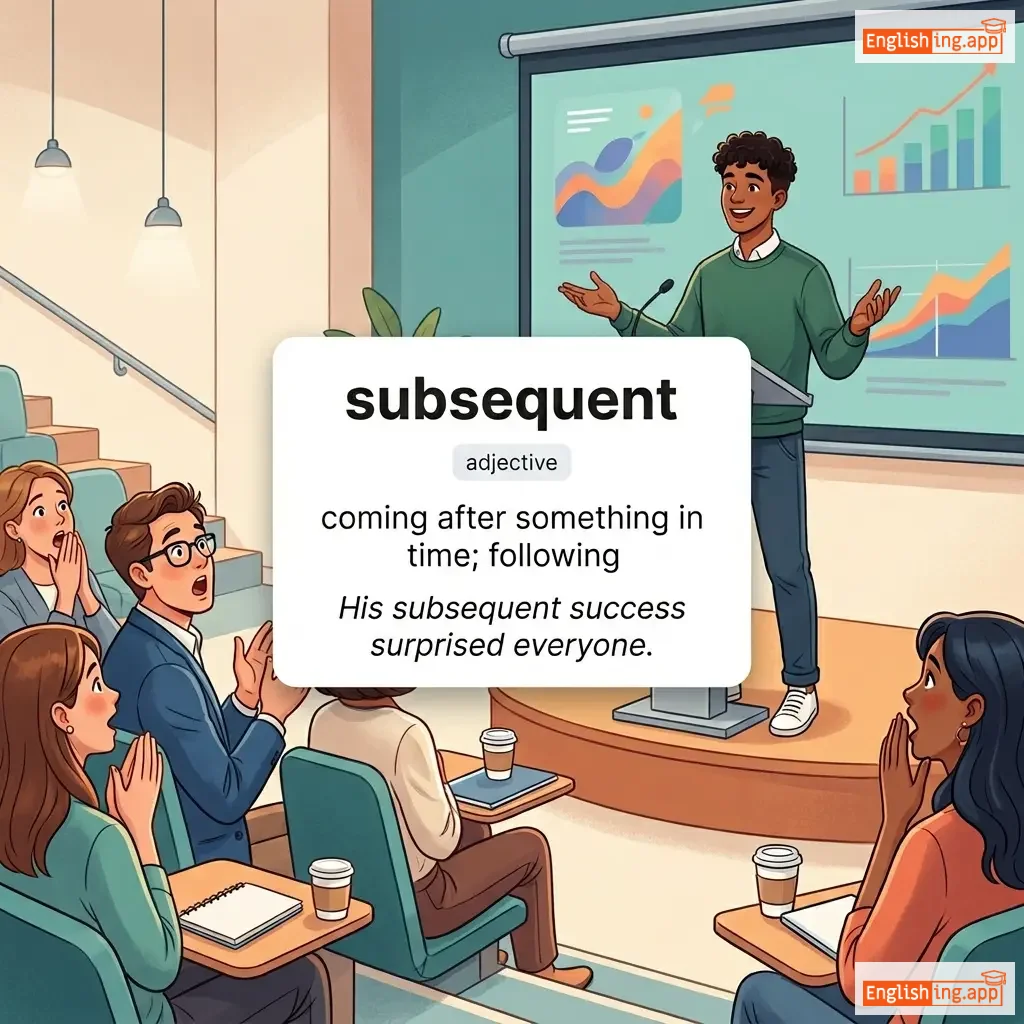
subsequent definition card — visual illustration of the meaning
adjective
/ˈsʌbsɪkwənt/
その後の (sono ato no)

coming after something in time; following

"His subsequent success surprised everyone."

"彼のその後の成功は、皆を驚かせました。" (Kare no sono ato no seikou wa, mina o odoro kasemashita.)
adverb
/ˈsʌbsɪkwəntli/
その後 (sono ato)

at a later time; afterward

"He failed his exam and subsequently had to retake it."

"彼は試験に失敗し、その後再試験を受けなければならなかった。" (Kare wa shiken ni shippai shi, sono ato saishiken wo ukenakereba naranakatta.)
noun
/səbˈsɜːviəns/
従順 (juujun)

the condition of being too willing to obey or serve others

"His subservience to authority annoyed his colleagues."

"権威への従順さが同僚たちを苛立たせた。" (Ken'i e no juujun-sa ga douryou-tachi o iradataseta.)
adjective
/səbˈsɜːviənt/

prepared to obey others unquestioningly; less important than something else

"She was too subservient to challenge his decision."
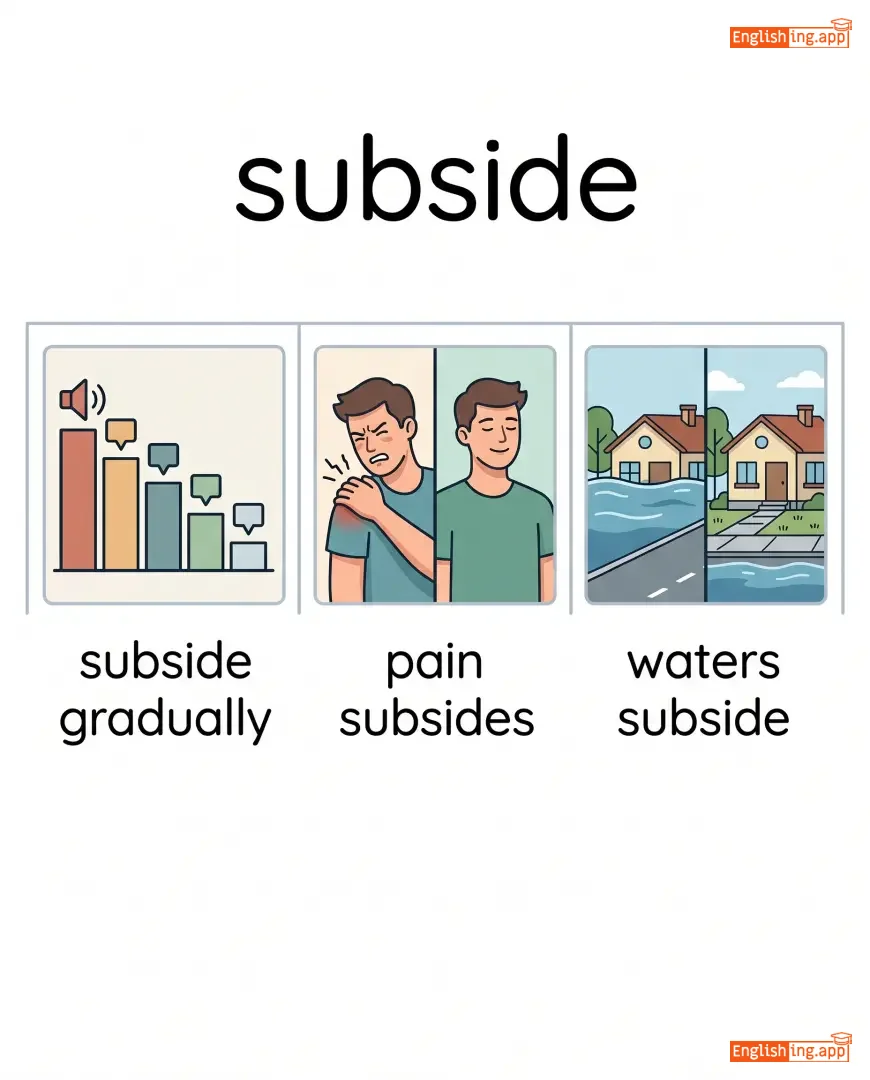
subside definition card — visual illustration of the meaning
verb
/səbˈsaɪd/
収束する (shūsoku suru)

to become less intense, violent, or severe; to sink or fall to a lower level

"After the storm, the floodwaters began to subside."

"嵐の後、洪水は収束し始めました。" (arashi no ato, kōzui wa shūsoku shi hajimemashita.)
noun, adjective
/səbˈsɪdiˌɛri/
子会社 (kogaisya)

a company controlled by a larger company; serving to assist or supplement something

"The multinational owns a subsidiary in Bangladesh."
"多国籍企業はバングラデシュに子会社を所有しています。" (Takokuseki kigyō wa Banguradeshū ni kogaisya o shoyū shiteimasu.)
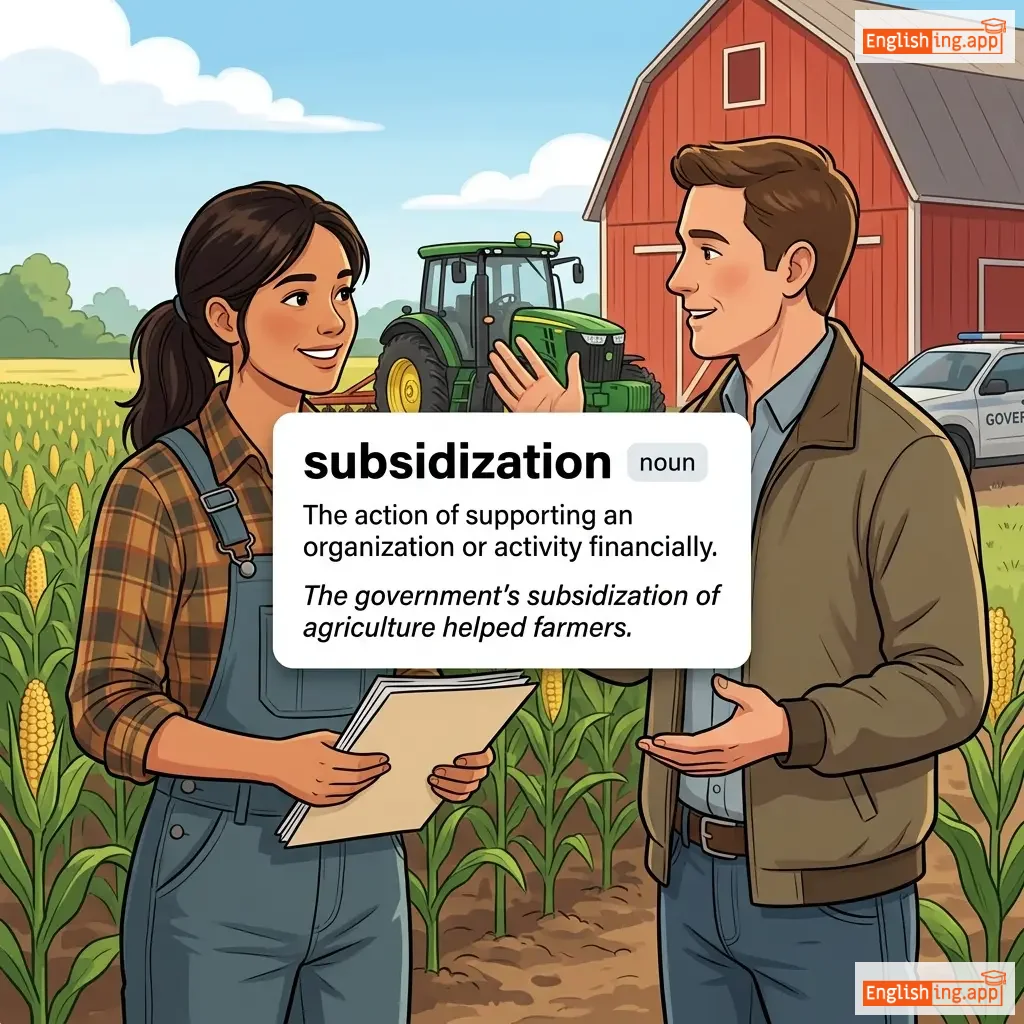
subsidization definition card — visual illustration of the meaning
noun
/ˌsʌbsɪdaɪˈzeɪʃən/
補助金 (hojokin)

The action of supporting an organization or activity financially.

"The government's subsidization of agriculture helped farmers."
"政府の農業への補助金は農家を助けました。" (Seifu no nōgyō e no hojokin wa nōka o tasukemashita.)
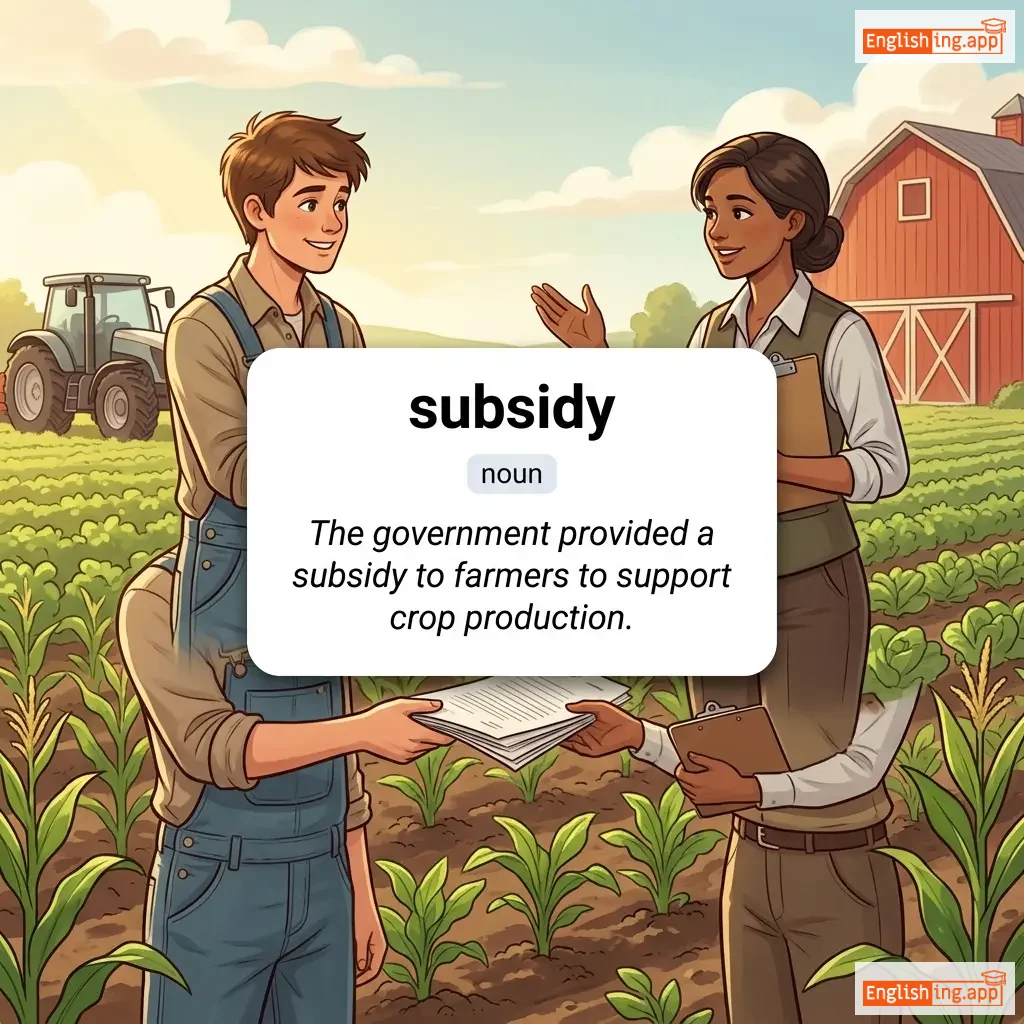
subsidy definition card — visual illustration of the meaning
noun
/ˈsʌbsɪdi/
助成金 (joseikin)

A sum of money granted by the government or a public body to help support an industry or reduce the cost of goods or services.

"The government provided a subsidy to farmers to support crop production."

"政府は作物生産を支援するために農民に助成金を提供しました。" (Seifu wa sakumotsu seisan o shien suru tame ni nōmin ni joseikin o teikyō shimashita.)
verb
/səbˈsɪst/
生き延びる (ikinobiru)

To maintain or support oneself, especially at a minimal level.

"Many villagers still subsist on fishing and farming."
"多くの村人は今でも漁業と農業で生計を立てています。" (Ooku no murabito wa imademo gyogyou to nougyou de sekei o tateteimasu.)
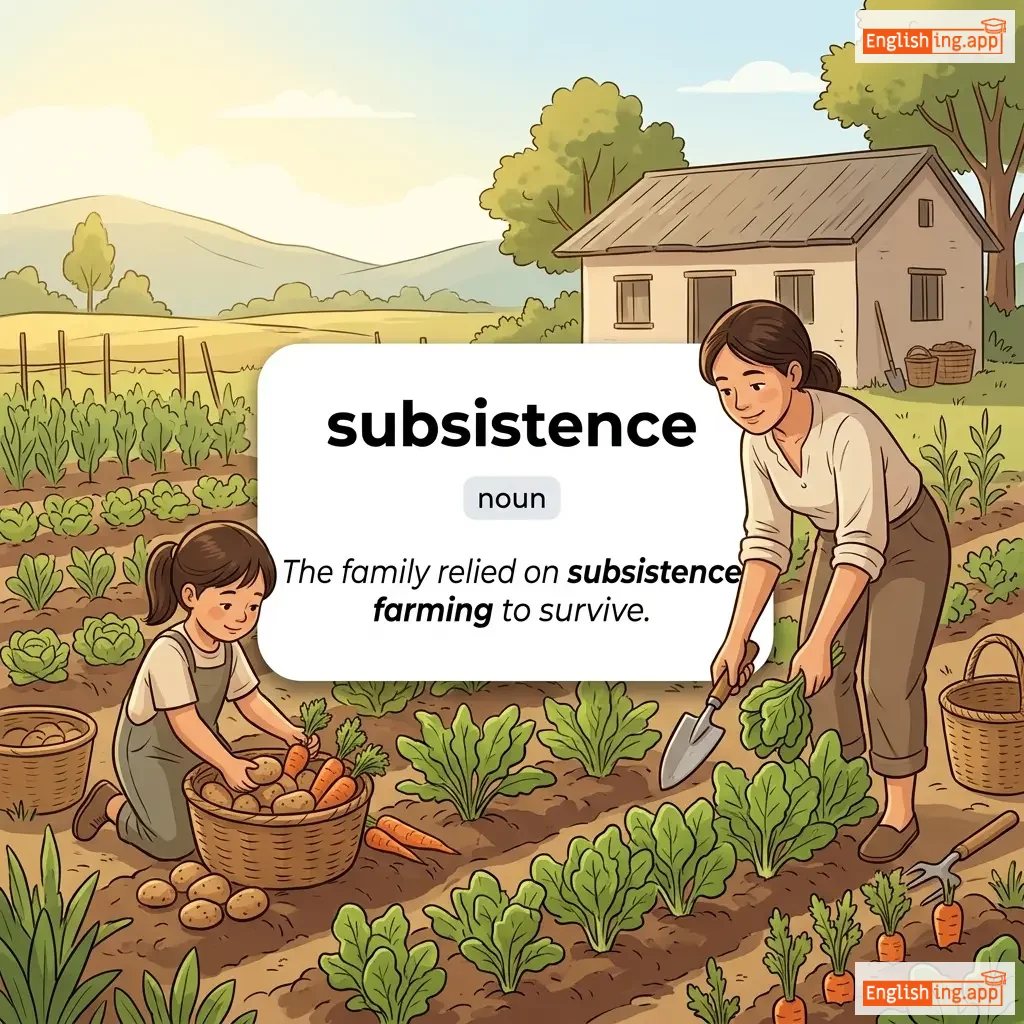
subsistence definition card — visual illustration of the meaning
noun
/səbˈsɪstəns/
生計 (seikei)

The action or fact of maintaining or supporting oneself, especially at a minimal level.

"The family relied on subsistence farming to survive."

"その家族は生計農業に依存して生きていました。" (Sono kazoku wa seikei nōgyō ni izon shite ikiteimashita.)
noun
/ˈsʌbstəns/
物質 (busshitsu)

a particular kind of matter with uniform properties

"The substance of the matter was highly controversial."

"その問題の物質は非常に物議を醸していました。" (Sono mondai no busshitsu wa hijō ni butsu gi o kamoshite imashita.)
adjective
/səbˈstænʃl/
実質的な (jisshitsuteki na)

Of considerable importance, size, or worth.

"She received a substantial raise after the successful project."
"彼女は成功したプロジェクト後にかなりの昇給を受けました。" (Kanojo wa seikō shita purojekuto go ni kanari no shōkyū o ukemashita.)
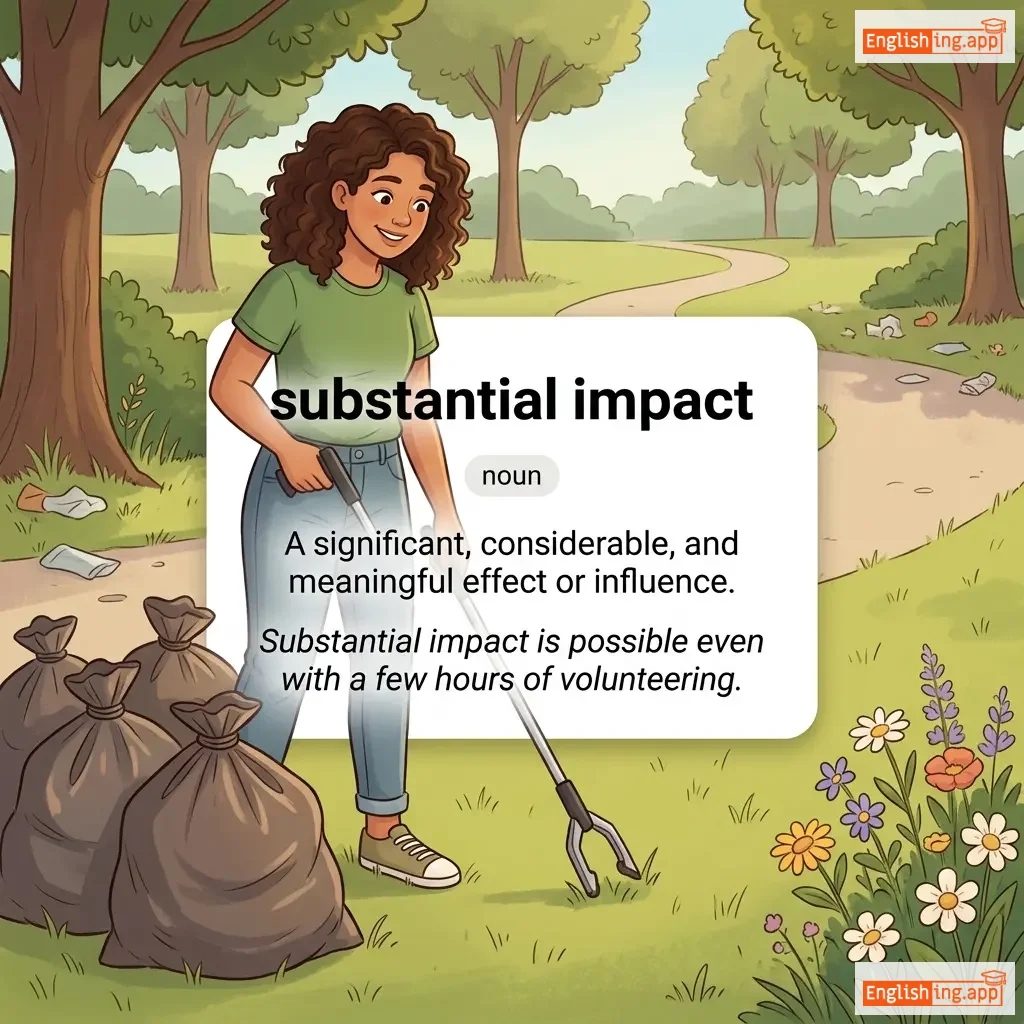
substantial impact definition card — visual illustration of the meaning
noun
səbˈstænʃəl ˈɪmpækt
重大な影響 (jūdaina eikyō)

A significant, considerable, and meaningful effect or influence.

"Substantial impact is possible even with a few hours of volunteering."

"少しの時間のボランティア活動でも重大な影響を与えることができます。" (Sukoshi no jikan no borantia katsudō demo jūdaina eikyō o ataeru koto ga dekimasu.)
adverb
/səbˈstænʃəli/
大幅に (ōhaba ni)

to a great extent or degree

"The new policy has substantially improved working conditions."
"新しい政策は労働条件を大幅に改善しました。" (Atarashī seisaku wa rōdō jōken o ōhaba ni kaizen shimashita.)
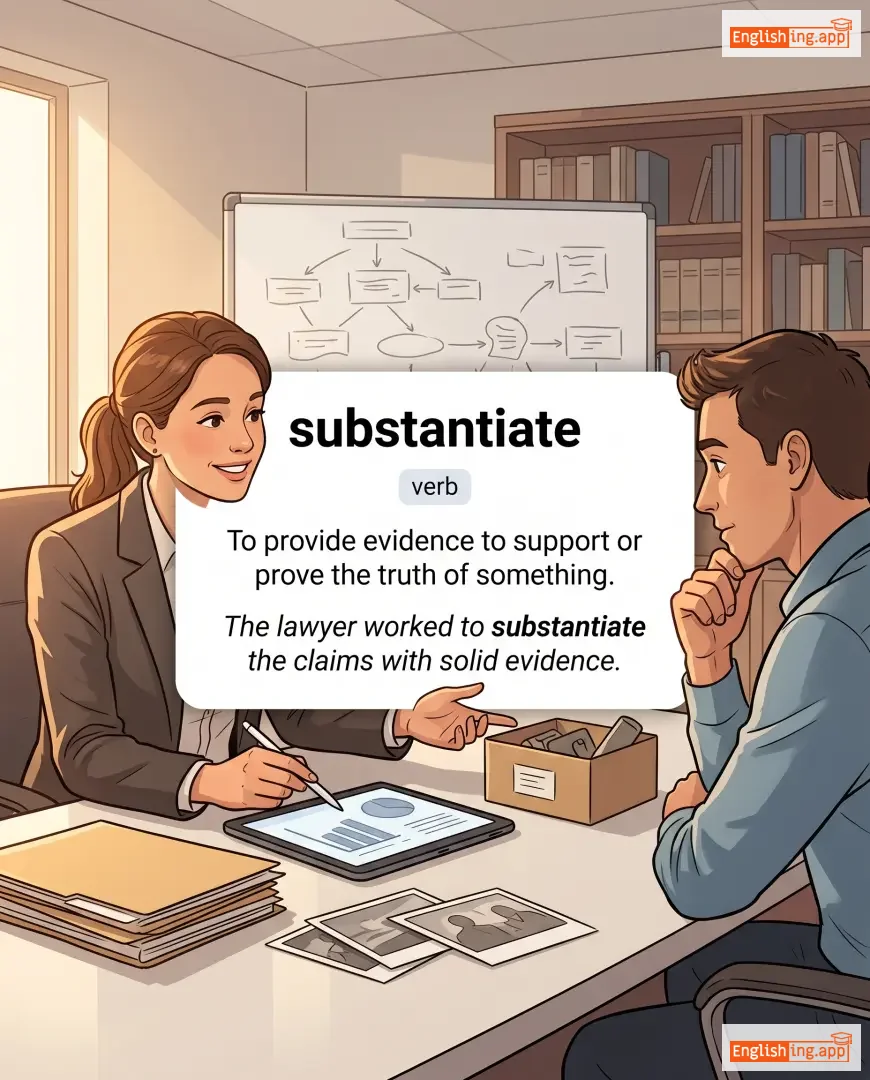
substantiate definition card — visual illustration of the meaning
verb
/səbˈstænʃieɪt/
立証する (ricchou suru)

To provide evidence to support or prove the truth of something.

"The lawyer worked to substantiate the claims with solid evidence."

"弁護士は確かな証拠でその主張を立証しようとしました。" (Bengoshi wa tashikana shōko de sono shuchō o risshō shiyou to shimashita.)
substantive definition card — visual illustration of the meaning
adjective
/ˈsʌbstəntɪv/
重要 (jūyō)

Having a firm basis in reality; important, meaningful, or considerable.

"The company made substantive changes to its policy."
"会社はその方針に重要な変更を加えました。" (Kaisha wa sono hōshin ni jūyō na henkō o kuwaemashita.)
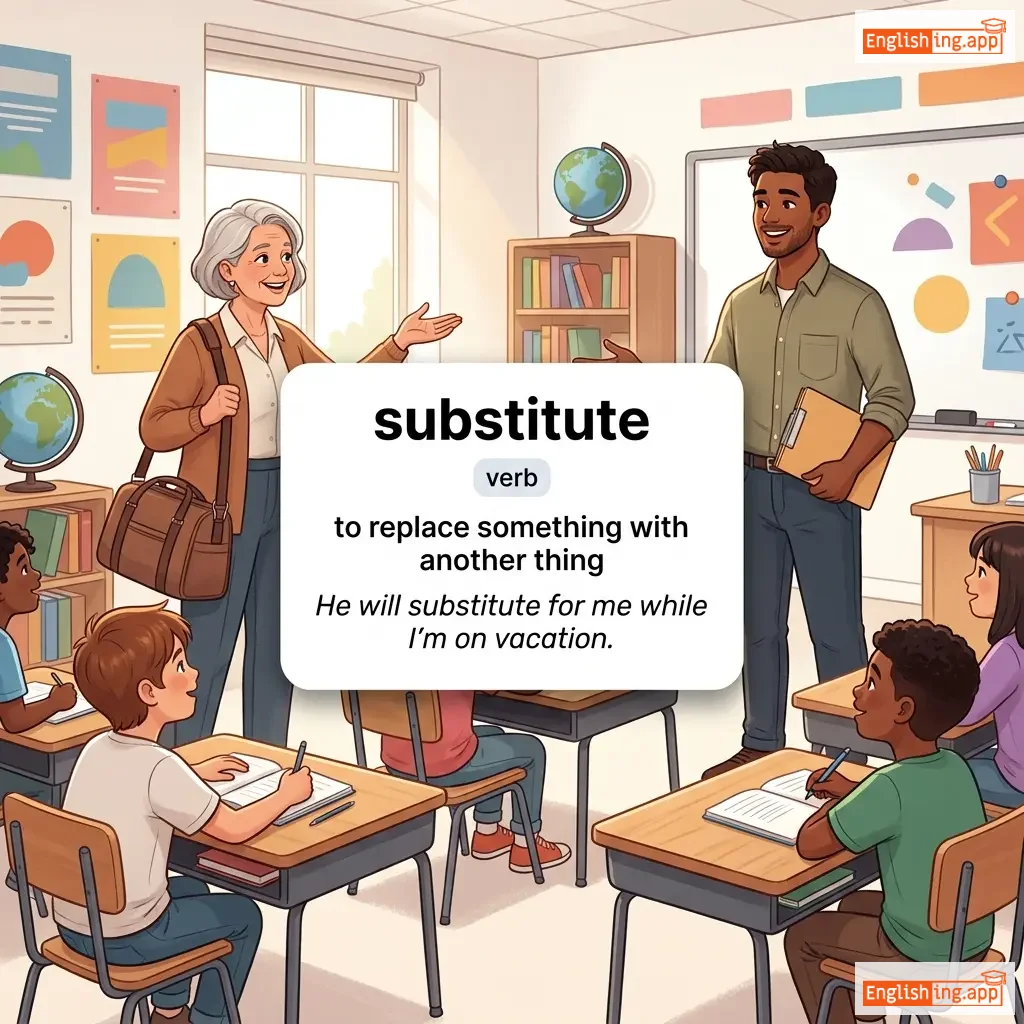
substitute definition card — visual illustration of the meaning
verb
/ˈsʌb.stɪ.tjuːt/
代替する (daitai suru)

to replace something with another thing

"He will substitute for me while I'm on vacation."

"彼は私が休暇中に代わりに働きます。" (Kare wa watashi ga kyūka-chū ni kawari ni hatarakimasu.)
noun
/ˌsʌb.stɪˈtjuː.ʃən/
交換 (koukan)

the action of replacing someone or something with another

"The substitution of the old system with the new one was difficult."
"古いシステムを新しいシステムに置き換えることは難しかった。" (Furui shisutemu o atarashī shisutemu ni okikaeru koto wa muzukashikatta.)
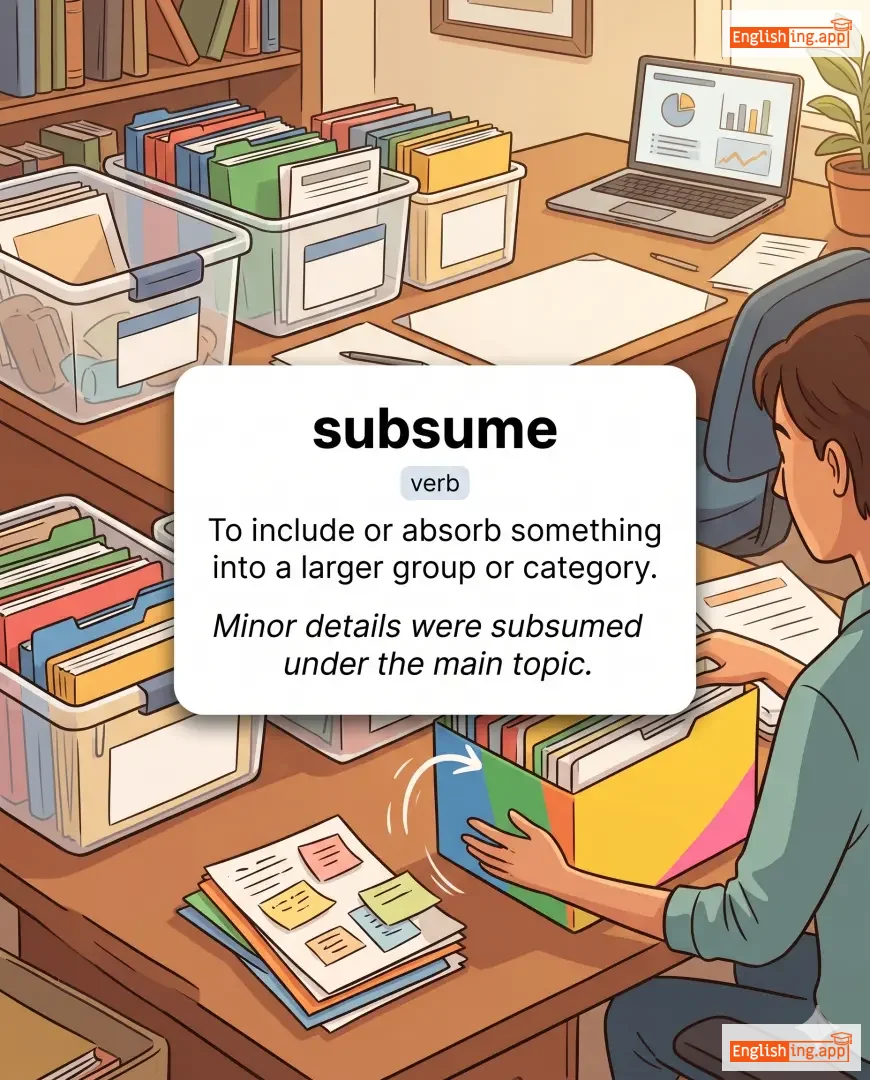
subsume definition card — visual illustration of the meaning
verb
/səbˈsjuːm/
含む (fukumu)

To include or absorb something into a larger group or category.

"Minor details were subsumed under the main topic."

"マイナーな詳細は主要なトピックに含まれました。" (Mainā na shōsai wa shuyō na topikku ni fukamaremashita.)
determiner
/sʌtʃ/
そんな (sonna)

of the type previously mentioned or specified

"I have never seen such a beautiful painting."

"私はこんな美しい絵を見たことがありません。" (Watashi wa konna utsukushii e o mita koto ga arimasen.)
adjective/noun
/ˈsʌkjələnt/
ジューシーな (juushii na)

Juicy or full of juice; also refers to a plant with thick, fleshy leaves adapted to storing water.

"The steak was so succulent that everyone enjoyed it."

"ステーキはとてもジューシーで、皆が楽しんで食べました。" (Sutēki wa totemo juushii de, mina ga tanoshinde tabemashita.)