語彙集

英単語辞書 | 単語の意味、定義、例文

noun
/stɑːˈveɪ.ʃən/
飢餓 (kiga)

suffering or death caused by lack of food; extreme hunger

"Many people died of starvation during the famine."

"多くの人々は飢饉の間に飢え死にしました。" (ōku no hitobito wa kikin no aida ni ue-shini shimashita.)
verb
/stɑːv/
飢え死に (ueshini)

to suffer or die from lack of food

"He was left to starve in the desert."

"彼は砂漠で飢え死にするために放置された。" (Kare wa sabaku de uesini suru tame ni hōchi sareta.)
noun
/ˈsteɪsɪs/ or /ˈstæsɪs/
停滞 (teitai)

A state of inactivity or equilibrium; a situation where nothing changes.

"The negotiations reached a state of stasis with no progress made."
"交渉は停滞状態に達し、進展はありませんでした。" (Kōshō wa teitai jōtai ni tasshi, shinten wa arimasen deshita.)
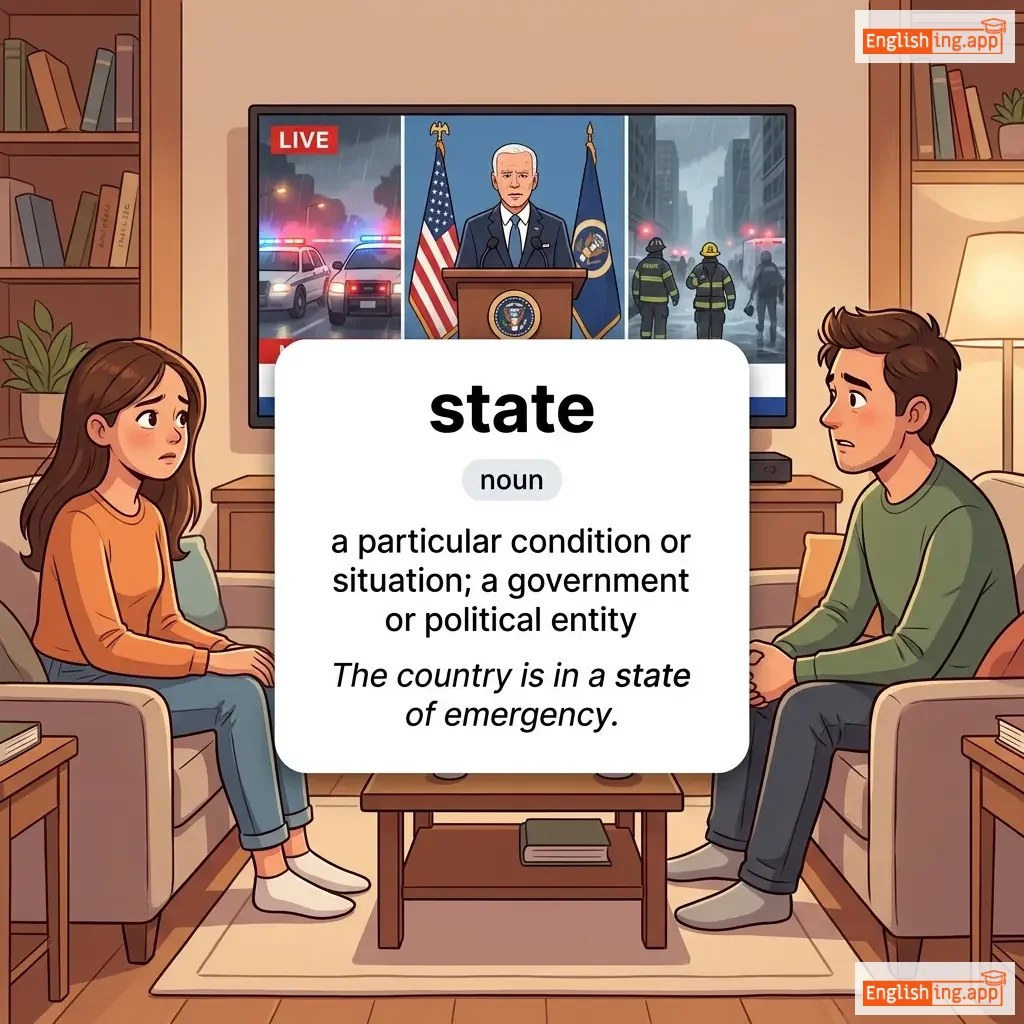
state definition card — visual illustration of the meaning
noun
/steɪt/
状態 (joutai)

a particular condition or situation; a government or political entity

"The country is in a state of emergency."

"その国は非常事態にあります。" (Sono kuni wa hijoujitai ni arimasu.)
noun
/ˈsteɪtkraft/
国政術 (kokusetsu)

The art of governing and managing state affairs effectively.

"The leader was praised for his exceptional statecraft in handling international relations."

"リーダーは国際関係を扱う際の卓越した国政術に対して称賛されました。" (Rīdā wa kokusai kankei o atsukau sai no takuetsu shita kokusetsu ni taishite shōsan saremashita.)
adjective
/ˈsteɪtli/
威厳と壮大 (igen to soudai)

Having a dignified, majestic, and impressive appearance or manner.

"The stately mansion stood at the end of the long driveway."

"その威厳ある邸宅は長いドライブウェイの終わりに立っていました。" (Sono igen aru teitaku wa nagai doraibuwei no owari ni tatte imashita.)
noun
/ˈsteɪtmənt/
声明 (seimei)

a clear expression of something in speech or writing

"She made a statement about the company's new policies."
"彼女は会社の新しい方針について声明を発表しました。" (Kanojo wa kaisha no atarashii houshin ni tsuite seimei o happyou shimashita.)
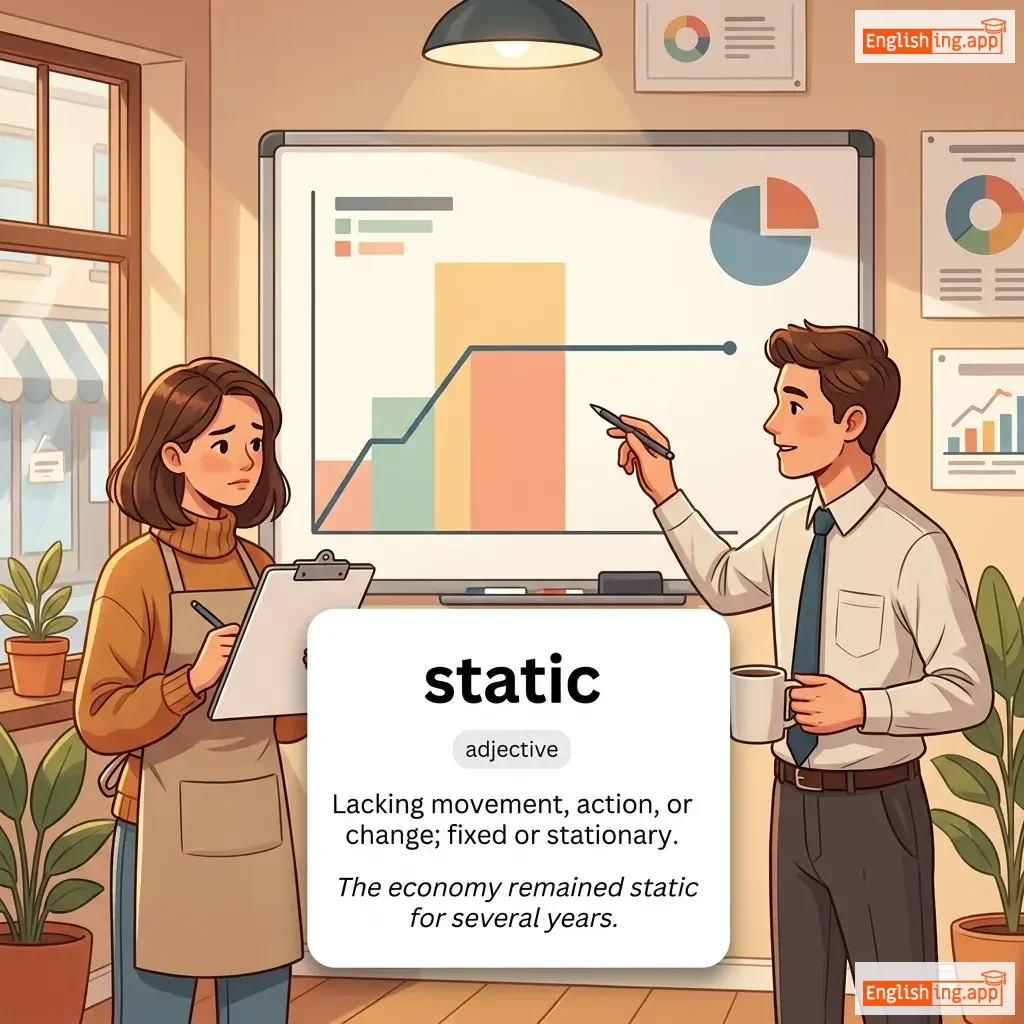
static definition card — visual illustration of the meaning
adjective
/ˈstætɪk/
静的 (seiteki)

Lacking movement, action, or change; fixed or stationary.

"The economy remained static for several years."

"経済は数年間静的でした。" (Keizai wa suunenkan seiteki deshita.)
noun
/ˈstætɪks/
静力学 (seiryokugaku)

The branch of mechanics dealing with bodies at rest and forces in equilibrium.

"She is studying statics as part of her engineering course."

"彼女は工学のコースの一環として静力学を学んでいます。" (Kanojo wa kōgaku no kōsu no ikkan toshite seiryokugaku o manandeimasu.)
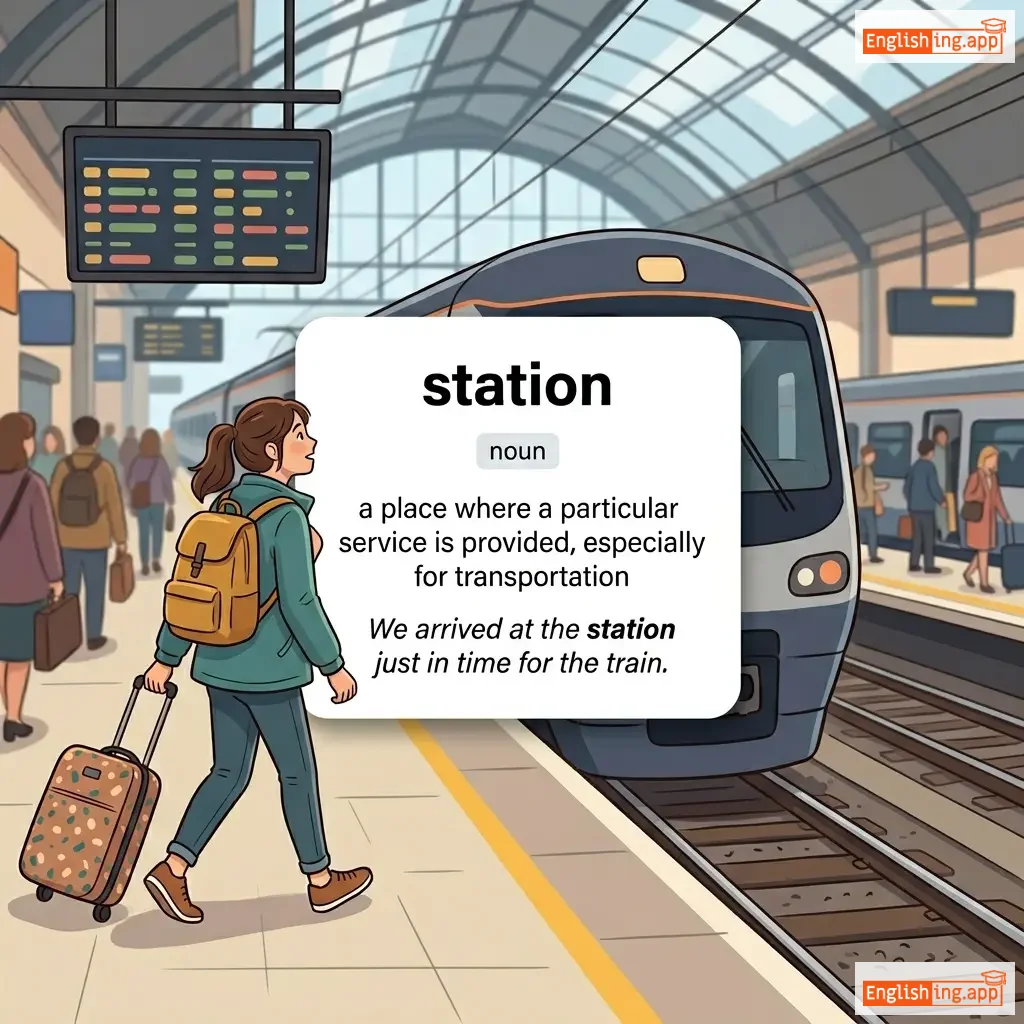
station definition card — visual illustration of the meaning
noun
/ˈsteɪʃən/

a place where a particular service is provided, especially for transportation

"We arrived at the station just in time for the train."

adjective
/ˈsteɪʃəˌneri/
静止 (seishi)

Not moving or not intended to be moved.

"The car remained stationary at the red light."

"車は赤信号で静止したままでした。" (Kuruma wa akashingou de seishi shita mamade shita.)
noun
/ˈsteɪ.ʃən.ər/
文房具店 (bunbouguten)

a person who sells paper, pens, pencils, and other office supplies

"The stationer recommended the best pens for writing exams."

"文房具屋は試験のための最適なペンを推薦しました。" (Bunbouguten wa shiken no tame no saiteki na pen wo suisen shimashita.)
adjective
/stəˈtɪstɪkəl/
統計的 (tokeiteki)

relating to the use or analysis of numerical data

"The report provides statistical data about population growth."

"報告書は人口増加に関する統計データを提供しています。" (Hōkokusho wa jinkō zōka ni kansuru tōkei dēta o teikyō shiteimasu.)
noun
/ˌstætɪˈstɪʃən/
統計学者 (tōkeigakusha)

A person who specializes in collecting, analyzing, and interpreting numerical data.

"The statistician presented the survey results with great clarity."

"統計学者は調査結果を明確に示しました。" (Tōkeigakusha wa chōsa kekka o meikaku ni shimeshimashita.)
noun
/stəˈtɪstɪks/
統計 (tōkei)

the practice or science of collecting and analyzing numerical data

"The statistics showed an increase in the number of users last year."

"統計は昨年のユーザー数の増加を示しました。" (Tōkei wa sakunen no yūzā-sū no zōka o shimeshimashita.)
noun
/ˈstætʃuː/
(zō)

a carved or cast figure of a person or animal, especially one that is life-size or larger

"They built a statue of the national hero in the city square."

"彼らは都市広場に国民的英雄の像を建てました。" (Karera wa toshi kōba ni kokumin-teki eiyū no zō o tatemashita.)
adjective
/ˌstætʃuˈɛsk/
彫像のような (chouza no youna)

Having the grace, beauty, or dignity of a statue; tall and attractively proportioned.

"She had a statuesque figure that turned heads wherever she went."

"彼女は彫像のような体型をしていて、どこに行っても人々の視線を引きつけていた。" (Kanojo wa chouza no youna taikei o shite ite, doko ni itte mo hitobito no shisen o hikitsukete ita.)
noun
/ˌstætʃuˈɛt/
小さな像 (chiisana zou)

A small statue, usually decorative or artistic.

"The artist won a gold statuette for his work."

"アーティストは彼の作品で金の小さな像を受賞しました。" (Aatisuto wa kare no sakuhin de kin no chiisana zou wo jushou shimashita.)
noun
/ˈstætʃər/
名声、身長 (meisei, shinchou)

A person's natural height or their reputation and importance.

"Her intellectual stature made her a respected figure in academia."

"彼女の知的名声は、彼女を学界で尊敬される人物にしました。" (kanojo no chiteki meisei wa, kanojo o gakkai de sonkei sareru jinbutsu ni shimashita.)
noun
/ˈsteɪtəs/
地位 (chii)

the social or professional position or condition of someone or something

"His social status improved after the promotion."

"昇進後、彼の社会的地位は向上しました。" (Shoushingo, kare no shakaiteki chii wa koujou shimashita.)
noun
/ˈsteɪtəs kwoʊ/
現状 (genjō)

The existing state of affairs, especially regarding social or political issues.

"The government decided to maintain the status quo until further review."

"政府はさらなるレビューまで現状を維持することを決定しました。" (seifu wa sarana ru byū made genjō o iji suru koto o kettei shimashita.)
noun
/stɛntʃ/
悪臭 (akushu)

A very strong and unpleasant smell.

"The stench of garbage filled the alley."

"ゴミの臭いが路地を満たした。" (Gomi no nioi ga roji o mitashita.)
adjective
/ˈstɪki/
べたつく (betatsuku)

having the quality of adhering or clinging; difficult to remove or deal with

"The candy is too sticky to eat with your hands."

"キャンディは手で食べるにはあまりにもべたつくです。" (kyandi wa te de taberu ni wa amari ni mo betatsuku desu.)
noun
/ˈstɪklər/
規則にうるさい人 (kisoku ni urusai hito)

a person who insists on a certain quality or standard of behavior

"He is a stickler for punctuality and never tolerates delays."

"彼は時間にうるさく、遅れを許しません。" (Kare wa jikan ni urusaku, okure o yurushimasen.)
verb
/stɪk/
くっつく (kuttsuku)

to adhere or attach something to a surface

"The glue will stick to the paper."

"グルーは紙にくっつくでしょう。" (Guru wa kami ni kuttsuku deshou.)
abbreviation (noun/pronoun)
/ˈsʌmθɪŋ/
何か (nanika)

abbreviation for 'something'

"Can you give me sth. to write with?"

"書くために何かをくれますか?" (Kaku tame ni nanika o kuremasu ka?)
noun
/ˈstiː.vəˌdɔːr/
荷役作業員 (niyaku sagyouin)

A person employed to load and unload cargo from ships.

"The stevedores worked tirelessly to unload the cargo before dawn."

"荷役作業員たちは夜明け前に貨物を下ろすために疲れ知らずに働いた。" (Niyaku sagyouin-tachi wa yoake mae ni kamotsu o orosu tame ni tsukare shirazu ni hataraita.)
adjective
/ˈstɜːr.tər.əs/
重いいびき (omoi ibiki)

Characterized by heavy snoring or breathing.

"The patient’s stertorous breathing alarmed the nurses."

"患者のステルトラスな呼吸は看護師たちを驚かせました。" (Kanja no sutetorasuna kokyū wa kangoshitachi o odorokasemashita.)
adjective/noun
/stɜːrn/
厳格な / 船の後部 (genkaku na / fune no koubu)

Serious and strict in manner or attitude; the back part of a ship.

"The teacher gave the students a stern warning before the exam."

"教師は試験前に生徒に厳しい警告をしました。" (Kyoushi wa shiken mae ni seito ni kibishii keikoku wo shimashita.)
noun/adjective
/ˈstɜː.lɪŋ/
英国通貨 / 優れた (eikoku tōka / sugureta)

British money, especially pounds; of excellent quality.

"She was praised for her sterling work on the project."

"プロジェクトでの優れた仕事が称賛されました。" (Purojekuto de no sugureta shigoto ga shōsan saremashita.)
adjective
/ˈstɛr.aɪl/
無菌 (mukin)

Free from bacteria or other living microorganisms; incapable of producing offspring.

"The surgeon worked in a sterile environment to avoid infection."
"外科医は感染を防ぐために無菌環境で働いた。" (Ge-kai wa kansen wo fusegu tame ni mukin kankyō de hataraita.)
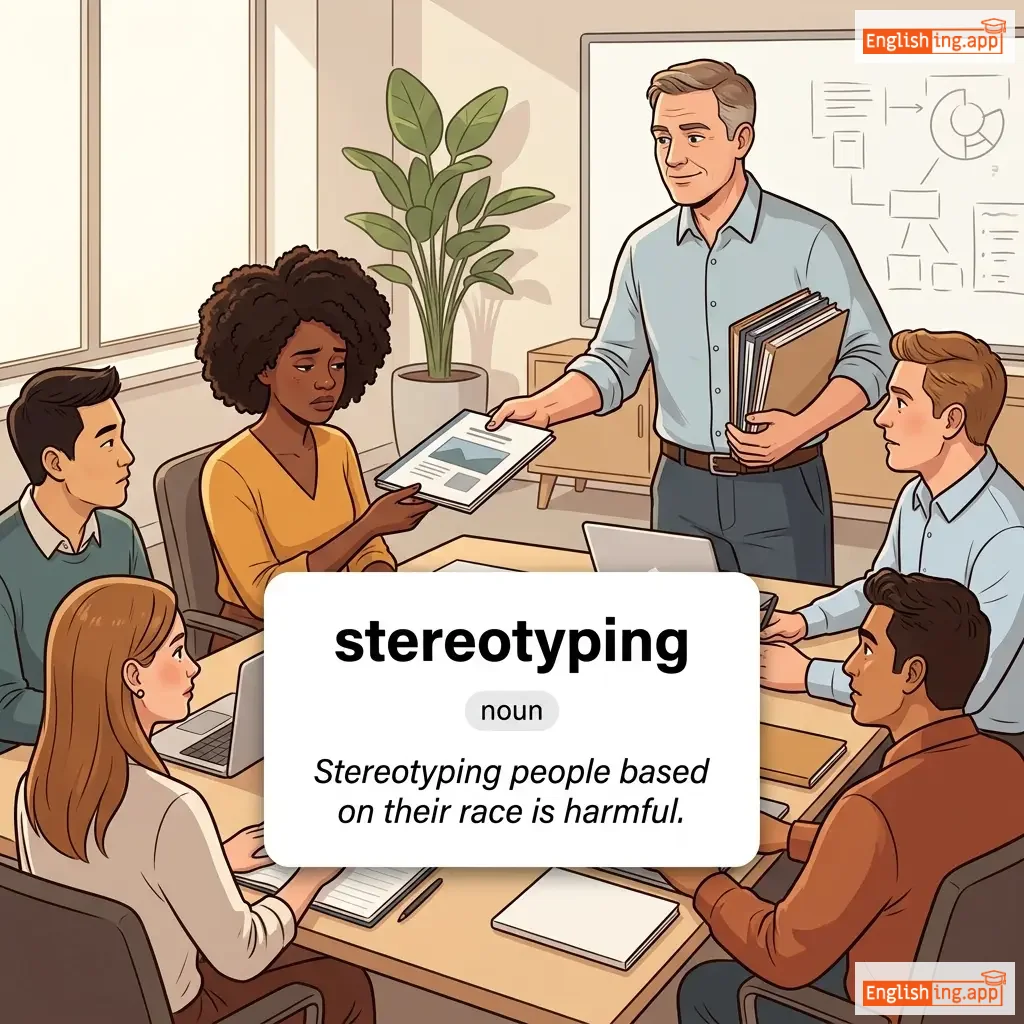
stereotyping definition card — visual illustration of the meaning
noun
/ˈstɛə.rɪ.əʊˌtaɪ.pɪŋ/
ステレオタイプ (sutereotaipu)

A widely held but fixed and oversimplified image or idea of a particular type of person or thing.

"Stereotyping people based on their race is harmful."

"人種に基づいたステレオタイプは有害です。" (Jinshu ni motozuita sutereotaipu wa yūgai desu.)
adjective
/ˈstɛriəˌtaɪpt/
固定観念的な (kotei kannen teki na)

Conforming to a fixed or oversimplified idea of what someone or something is like.

"His stereotyped jokes failed to impress the audience."

"彼の固定観念的なジョークは観客を感動させられなかった。" (kare no kotei kannen teki na jooku wa kankyaku o kandou saserarenakatta.)
noun
/ˈstɛriəˌtaɪp/
ステレオタイプ (sutereotaipu)

A widely held but oversimplified and fixed idea of a particular type of person or thing.

"It is a stereotype that all gamers are antisocial."
"すべてのゲーマーが反社会的だというのはステレオタイプです。" (Subete no geemaa ga hanshakai-teki da to iu no wa sutereotaipu desu.)
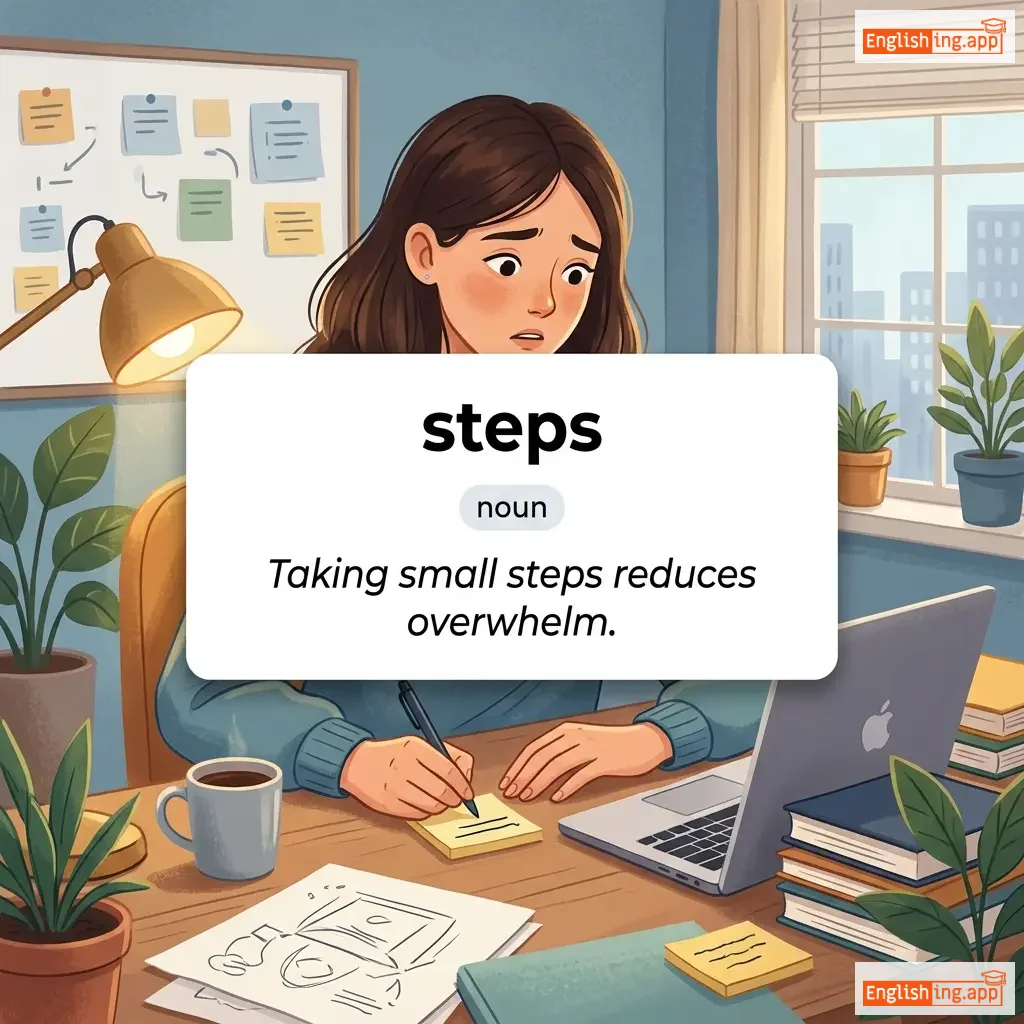
steps definition card — visual illustration of the meaning
noun
/stɛps/
ステップ (suteppu)

A measure or action, especially one of a series taken in order to deal with or achieve a particular thing.

"Taking small steps reduces overwhelm."

"小さなステップを踏むことで圧倒的なプレッシャーが減少します。" (Chīsana suteppu o fumu koto de attō-teki na puresshā ga genshō shimasu.)
noun
/stɛp/
ステップ (suteppu)

A large flat area of unforested grassland, especially in southeastern Europe or Siberia.

"The nomads traveled across the vast steppe with their herds."
"遊牧民は自分の家畜を連れて広大なステップを渡っていた。" (Yūbokumin wa jibun no kachiku o tsurete kōdaina suteppu o watatte ita.)
👣

step

noun
/stɛp/

a movement made by lifting one foot and putting it down in a new position

"She took a step towards the door."

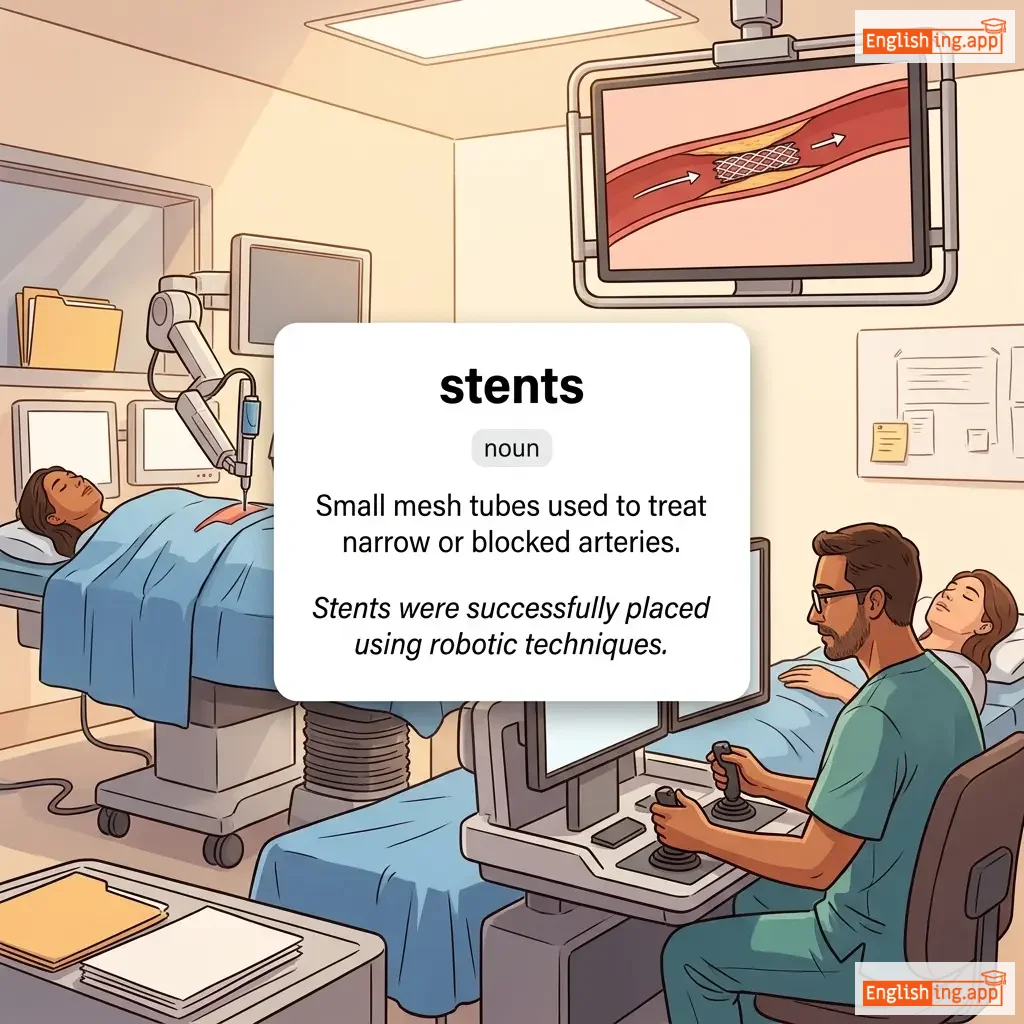
stents definition card — visual illustration of the meaning
noun
/stents/
ステント (sutento)

Small mesh tubes used to treat narrow or blocked arteries.

"Stents were successfully placed using robotic techniques."
"ステントはロボット技術を使って成功裏に配置されました。" (Sutento wa robotto gijutsu o tsukatte seikōri ni haichi saremashita.)
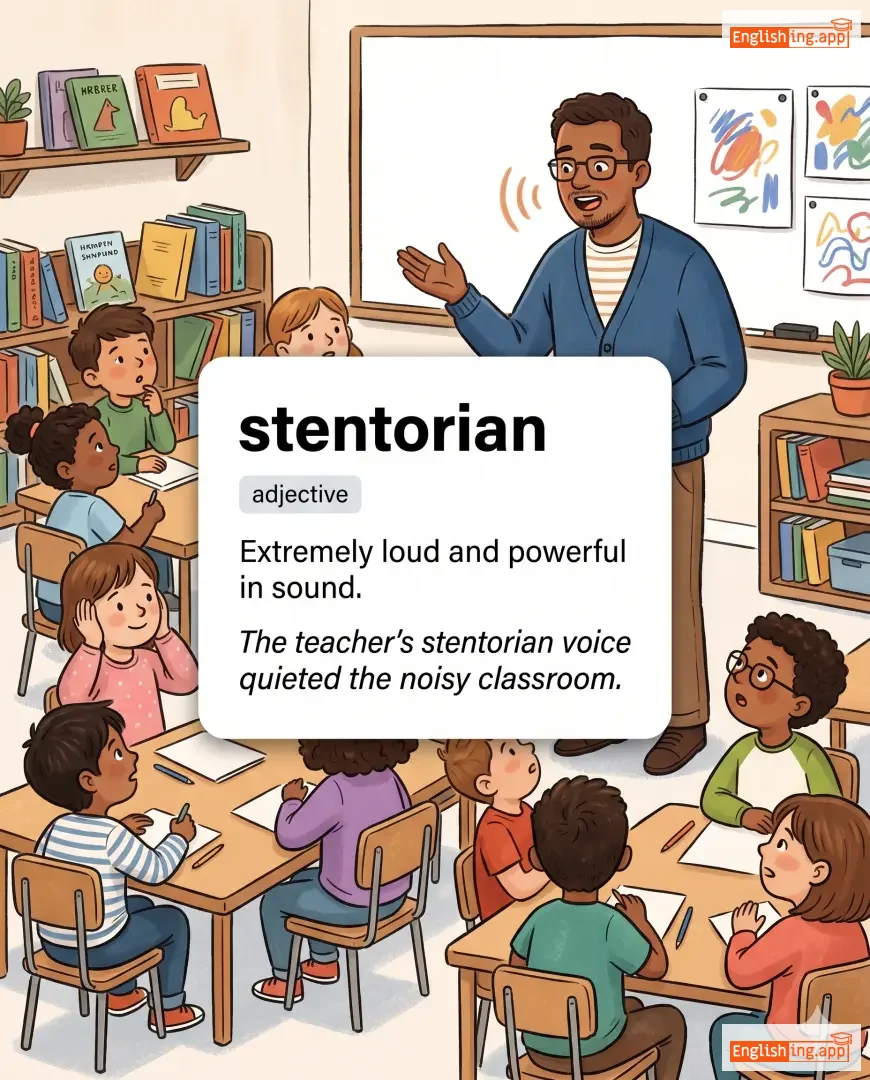
stentorian definition card — visual illustration of the meaning
adjective
/stɛnˈtɔːriən/
雷鳴のような (raimei no yōna)

Extremely loud and powerful in sound.

"The teacher’s stentorian voice quieted the noisy classroom."

"教師の雷鳴のような声が騒々しい教室を静めた。" (Kyōshi no raimei no yōna koe ga sōzōshī kyōshitsu o shizumeta.)
noun
/ˈstɛnsəl/
型抜き (katenuki)

A thin sheet of material with a design cut out, used to produce the design on the surface below by applying paint or ink through the cut-out holes.

"The artist used a stencil to paint identical stars on the wall."

"アーティストは壁に同じ星を描くために型抜きを使用しました。" (Ātisuto wa kabe ni onaji hoshi o kaku tame ni katenuki o shiyō shimashita.)
adverb
/ˈstɛdɪli/
着実に (chakujitsu ni)

in a regular and continuous way; without stopping or changing

"The company's profits have been increasing steadily."

"会社の利益は着実に増加しています。" (Kaisha no rieki wa chakujitsu ni zōka shiteimasu.)
noun
/stɛlθ/
隠密、静かに動く (onmitsu, shizukani ugoku)

The act of moving, doing, or achieving something quietly and secretly.

"The cat moved with stealth towards its prey."

"猫は静かに獲物に向かって動いた。" (Neko wa shizukani emono ni mukatte ugoita.)
steal definition card — visual illustration of the meaning
🕵️‍♂️

steal (スティール)

verb
/stiːl/
盗む (nusumu)

to take something without permission or right

"He tried to steal my wallet while I wasn't looking."

"彼は私が見ていない間に財布を盗もうとしました。" (Kare wa watashi ga mite inai aida ni saifu o nusumou to shimashita.)
noun
/steɪk/
ステーキ (suteeki)

a thick slice of meat, typically beef, cooked by grilling or frying

"He ordered a grilled steak with vegetables."

"彼は野菜と一緒にグリルされたステーキを注文しました。" (Kare wa yasai to issho ni guriru sareta suteeki wo chuumon shimashita.)
adjective
/ˈstɛdi/
安定 (antei)

firm, stable, and not likely to change suddenly

"He kept his hand steady while painting the picture."

"彼は絵を描いている間、手を安定させていました。" (Kare wa e o kaite iru aida, te o antei sasete imashita.)
stay definition card — visual illustration of the meaning
verb
/steɪ/
滞在する (taizai suru)

to remain in a particular place or state

"We decided to stay at home during the storm."

"私たちは嵐の間、家にいることに決めました。" (Watashitachi wa arashi no aida, ie ni iru koto ni kimemashita.)
adjective
/ˈstætʃətɔːri/
法定 (hōtei)

Required, permitted, or enacted by law.

"The company must comply with all statutory regulations."

"会社はすべての法定規制に従わなければならない。" (Kaisha wa subete no hōtei kisei ni shitagawanakereba naranai.)
adjective
/stɔːntʃ/
堅固な, 忠実な (kengona, chuujitsuna)

Loyal, committed, and firm in support.

"She is a staunch supporter of environmental protection."

"彼女は環境保護の強固な支持者です。" (Kanojo wa kankyō hogo no kyōko na shijisha desu.)
noun, verb
/stiːm/
蒸気 (jouki)

the vapor into which water is converted when heated; to emit or treat with steam

"The kettle was steaming on the stove."

"ケトルはストーブで蒸気を発生させていた。" (Kettoru wa sutoobu de jouki wo hasse sasete ita.)
adjective
/ˈstɛdfæst/
不動の, 忠実な (fudō no, chūjitsuna)

Firm, loyal, and unwavering in purpose or support.

"He remained steadfast in his determination to succeed."

"彼は成功への決意において不動のままでした。" (Kare wa seikou e no ketsui ni oite fudou no mamadeshita.)