語彙集

英単語辞書 | 単語の意味、定義、例文

verb
/straɪd/
長い決定的な歩幅で歩く;進展する (nagai ketteiteki na aruku; shinten suru)

to walk with long, decisive steps; to make progress

"She strode confidently across the stage."

"彼女は自信を持ってステージを歩いた。" (Kanojo wa jishin o motte suteeji o aruita.)
adjective
/ˈstraɪ.dənt/
耳障りな, うるさい (mimi-zawari na, urusai)

loud and harsh; presenting a point of view in a forceful way

"His strident voice made the debate uncomfortable."

"彼の耳障りな声は議論を不快にした。" (Kare no mimi-zawari na koe wa giron o fukai ni shita.)
noun
/straɪf/
争い、闘争 (arasoi, toso)

angry or violent conflict; struggle or discord

"The region has been torn apart by political strife."

"その地域は政治的な争いで引き裂かれました。" (Sono chiiki wa seijiteki na arasoi de hikisakaremashita.)
verb
/straɪk/
ストライキ / 打つ (sutoraiki / utsu)

to hit forcibly or attack; also to stop work as a form of protest

"The workers decided to strike for better wages."

"労働者たちはより良い賃金を求めてストライキを決定した。" (Rōdōshatachi wa yori yoi chingin o motomete sutoraiki o kettei shita.)
adjective
/ˈstraɪkɪŋ/
印象的な (inshouteki na)

very noticeable or impressive in appearance or effect

"Her striking beauty caught everyone's attention."

"彼女の印象的な美しさは皆の注目を集めました。" (Kanojo no inshouteki na utsukushisa wa mina no chuumoku o atsumemashita.)
noun, verb
/strɪŋ/
ひも (himo)

a thin piece of cord or thread; to tie or fasten with a string

"She tied the package with a string."

"彼女はパッケージを糸で結びました。" (Kanojo wa pakke-ji wo ito de musubimashita.)
noun
/ˈstrɪndʒənsi/
厳格さ (genkaku-sa)

the quality of being strict, precise, or severe

"The stringency of the new rules surprised everyone."

"新しい規則の厳格さはみんなを驚かせました。" (Atarashī kisoku no genkaku-sa wa minna o odorokasemashita.)
adjective
/ˈstrɪndʒənt/
厳格 (genkaku)

strict, precise, and exacting

"The government imposed stringent measures during the crisis."

"政府は危機の間に厳しい措置を課しました。" (Seifu wa kiki no aida ni genkaku na sochi o kashimashita.)
verb
/strɪp/
剥がす / 脱ぐ (hagasu / nugu)

to remove coverings or layers from something; to undress

"He had to strip the old paint from the wall."

"彼は壁から古いペンキを剥がさなければならなかった。" (Kare wa kabe kara furui penki wo hagasanakereba naranakatta.)
noun
/ˈstrɪplɪŋ/
若者 (wakamono)

a young man who is not yet fully grown

"The stripling dreamed of becoming a brave knight."

"その若者は勇敢な騎士になることを夢見ていた。" (Sono wakamono wa yuukan na kishi ni naru koto o yumemite ita.)
verb
/straɪv/
努力する (doryoku suru)

To make great efforts to achieve or obtain something.

"She strives to be the best student in her class."
"彼女はクラスで最も優れた生徒になるよう努めている。" (Kanojo wa kurasu de mottomo sugureta seito ni naru yō tsutomete iru.)
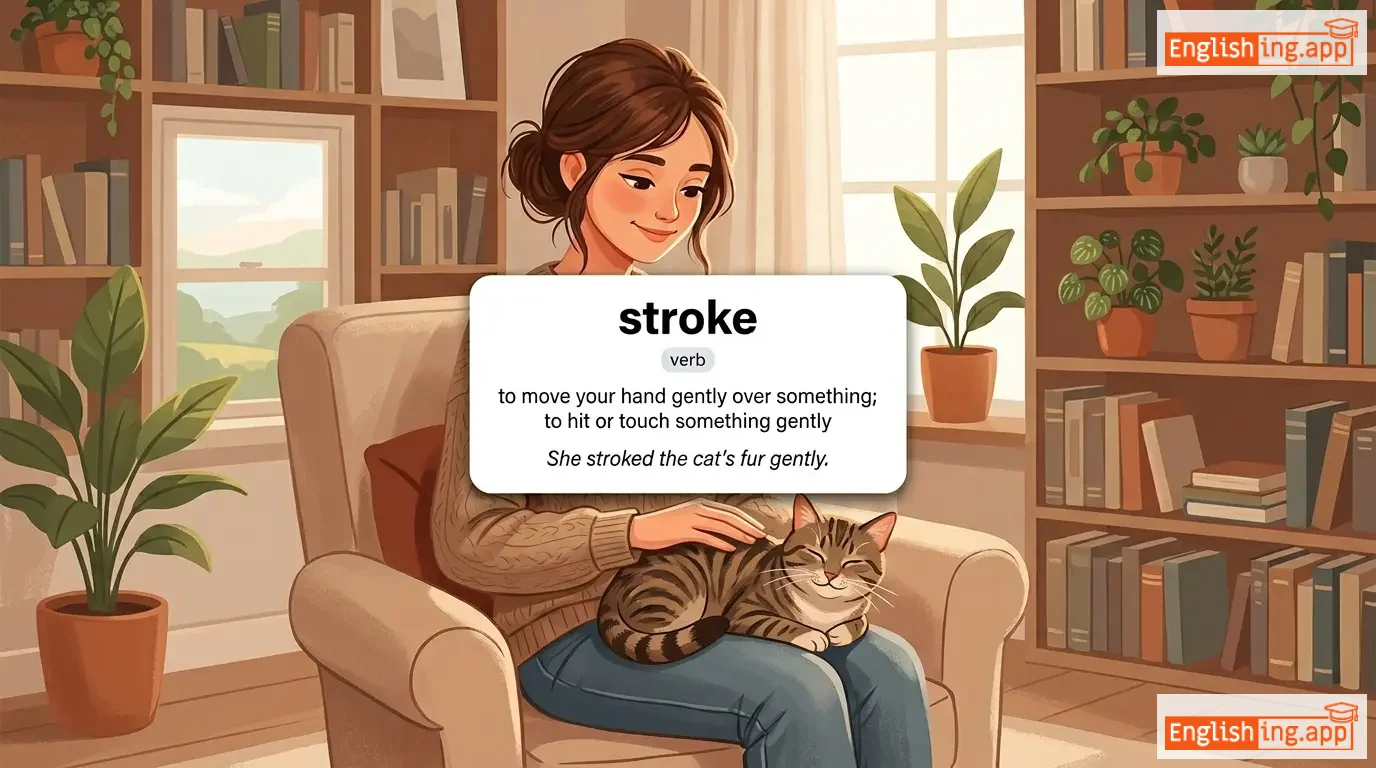
stroke definition card — visual illustration of the meaning
noun
/strəʊk/
脳卒中 (nōsotchū)

a sudden attack or event, typically of a medical or physical nature

"He suffered a stroke while working at his desk."
"彼はデスクで働いているときに脳卒中を起こしました。" (Kare wa desuku de hataraite iru toki ni nōsotchū o okoshimashita.)
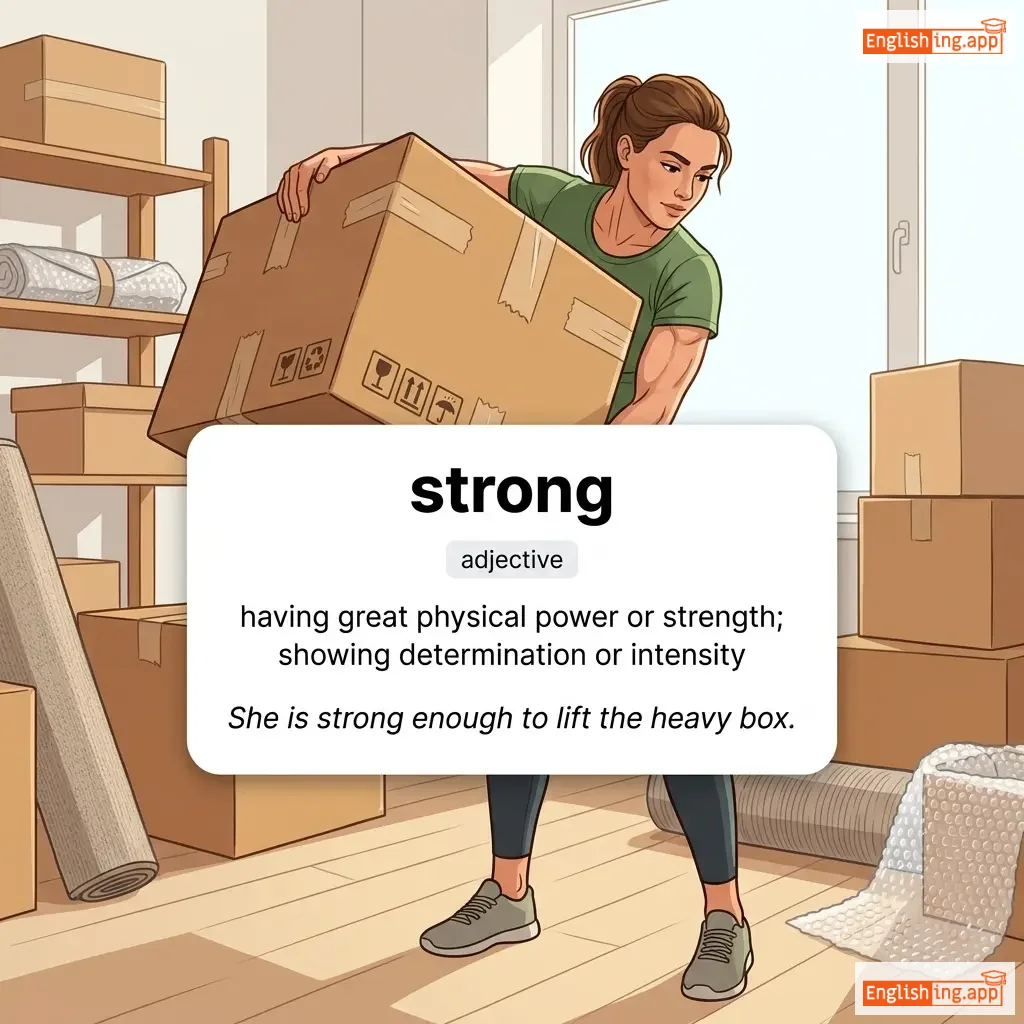
strong definition card — visual illustration of the meaning
adjective
/strɔːŋ/
強い (tsuyoi)

having great physical power or strength; showing determination or intensity

"She is strong enough to lift the heavy box."

"彼女は重い箱を持ち上げるのに十分強い。" (Kanojo wa omoi hako o mochiageru no ni jūbun tsuyoi.)
adverb
/ˈstrɒŋɡli/
強く (tsuyoku)

in a strong manner or to a great extent

"She strongly believes in the power of positive thinking."
"彼女はポジティブな思考の力を強く信じています。" (Kanojo wa pojitibu na shikō no chikara o tsuyoku shinjiteimasu.)
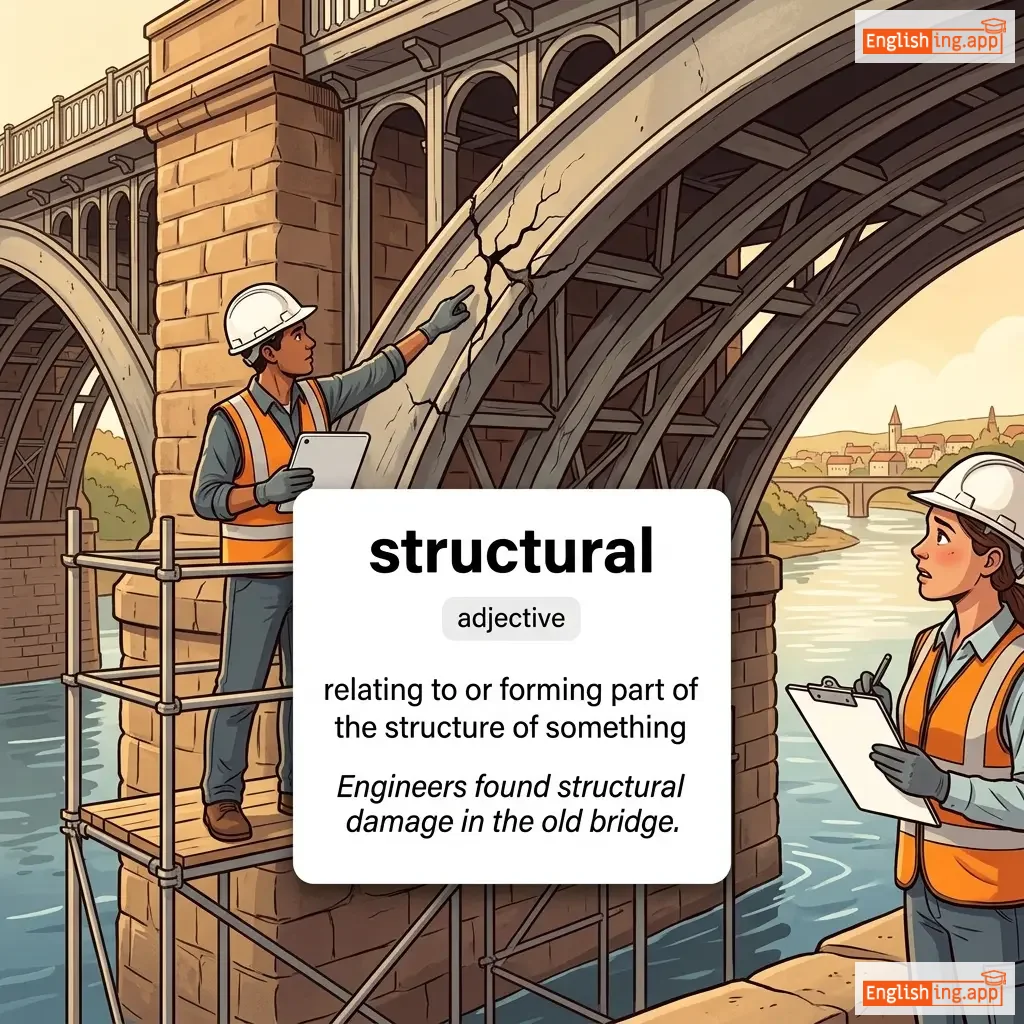
structural definition card — visual illustration of the meaning
🏗️

structural

adjective
/ˈstrʌktʃərəl/

relating to or forming part of the structure of something

"Engineers found structural damage in the old bridge."
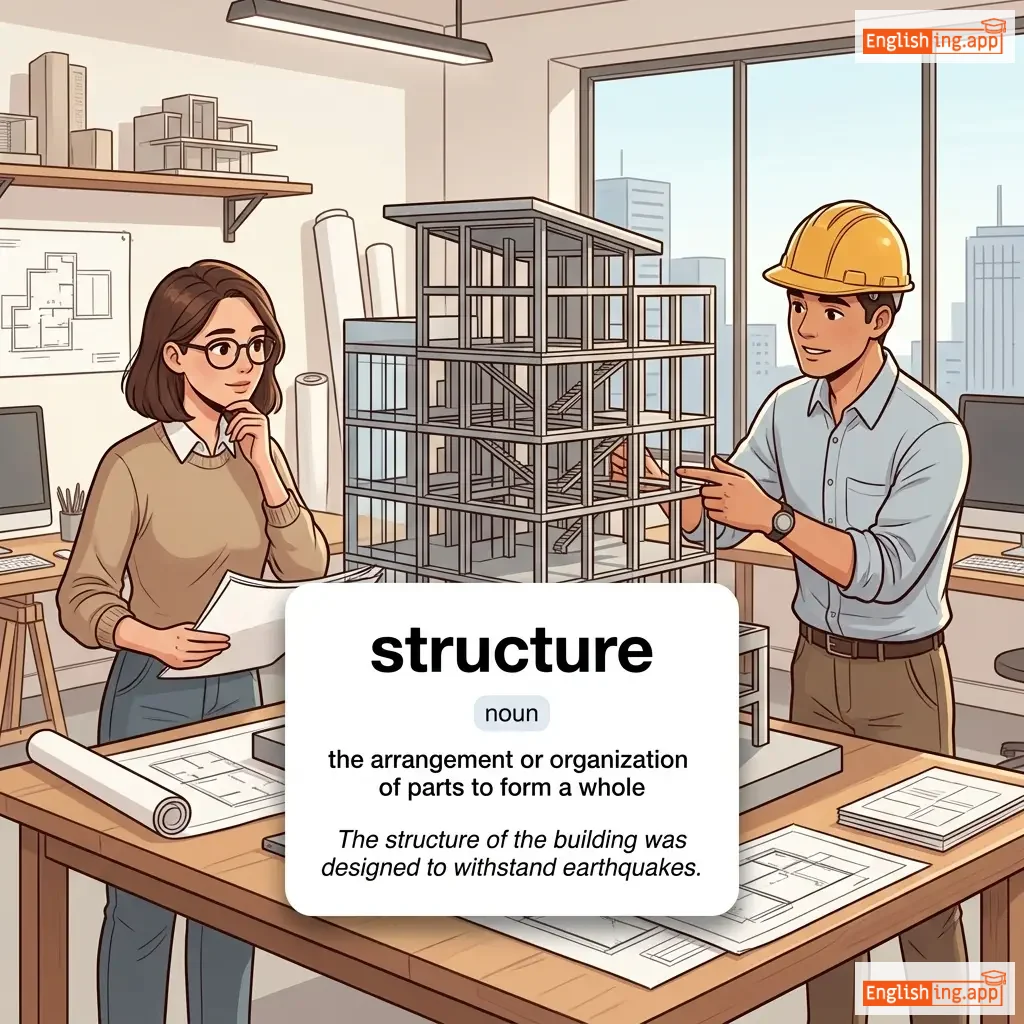
structure definition card — visual illustration of the meaning
noun
/ˈstrʌktʃər/
構造 (kouzou)

the arrangement or organization of parts to form a whole

"The structure of the building was designed to withstand earthquakes."
"建物の構造は地震に耐えるように設計されていました。" (Tatemono no kouzou wa jishin ni taeru you ni sekkei sarete imashita.)
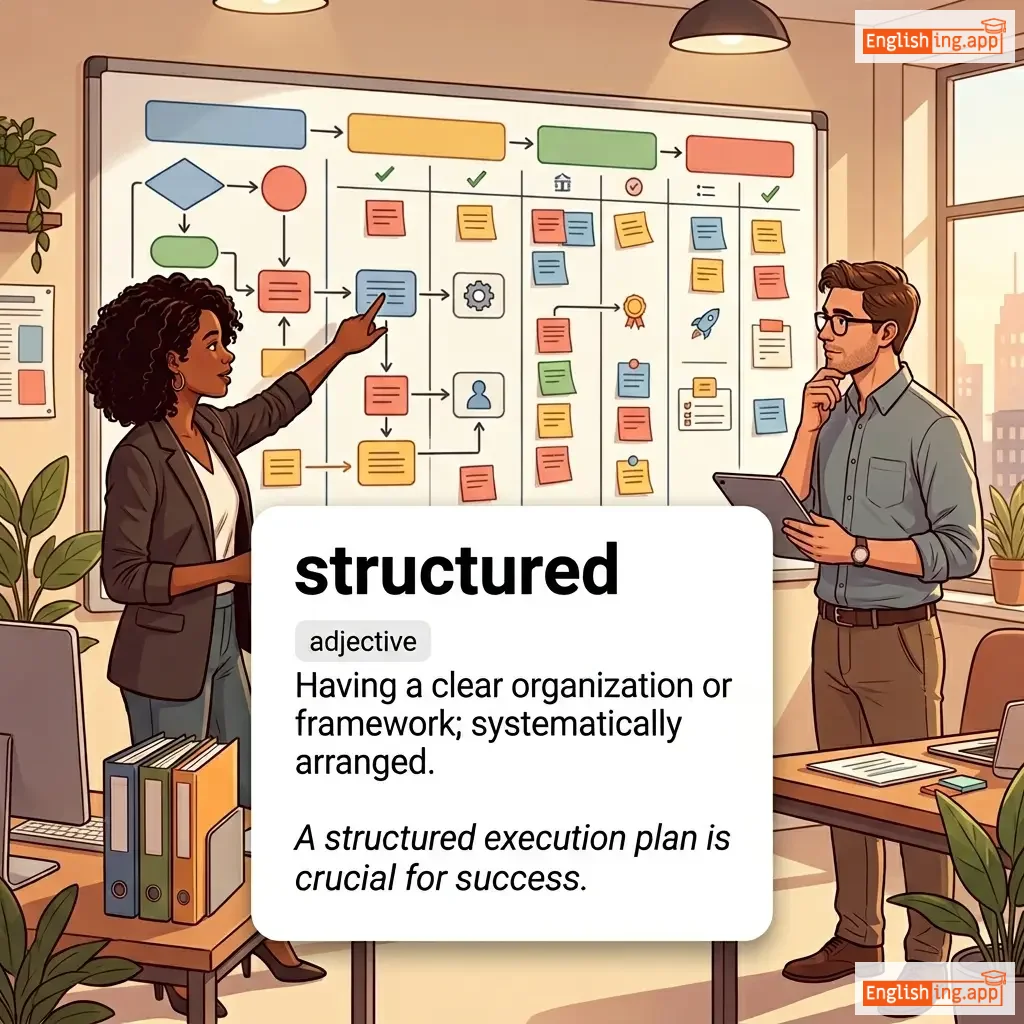
structured definition card — visual illustration of the meaning
adjective
ˈstrʌktʃərd
構造化 (kōzōka)

Having a clear organization or framework; systematically arranged.

"A structured execution plan is crucial for success."
"構造化された実行計画は成功にとって重要です。" (Kōzōka sareta jikkō keikaku wa seikō ni totte jūyō desu.)
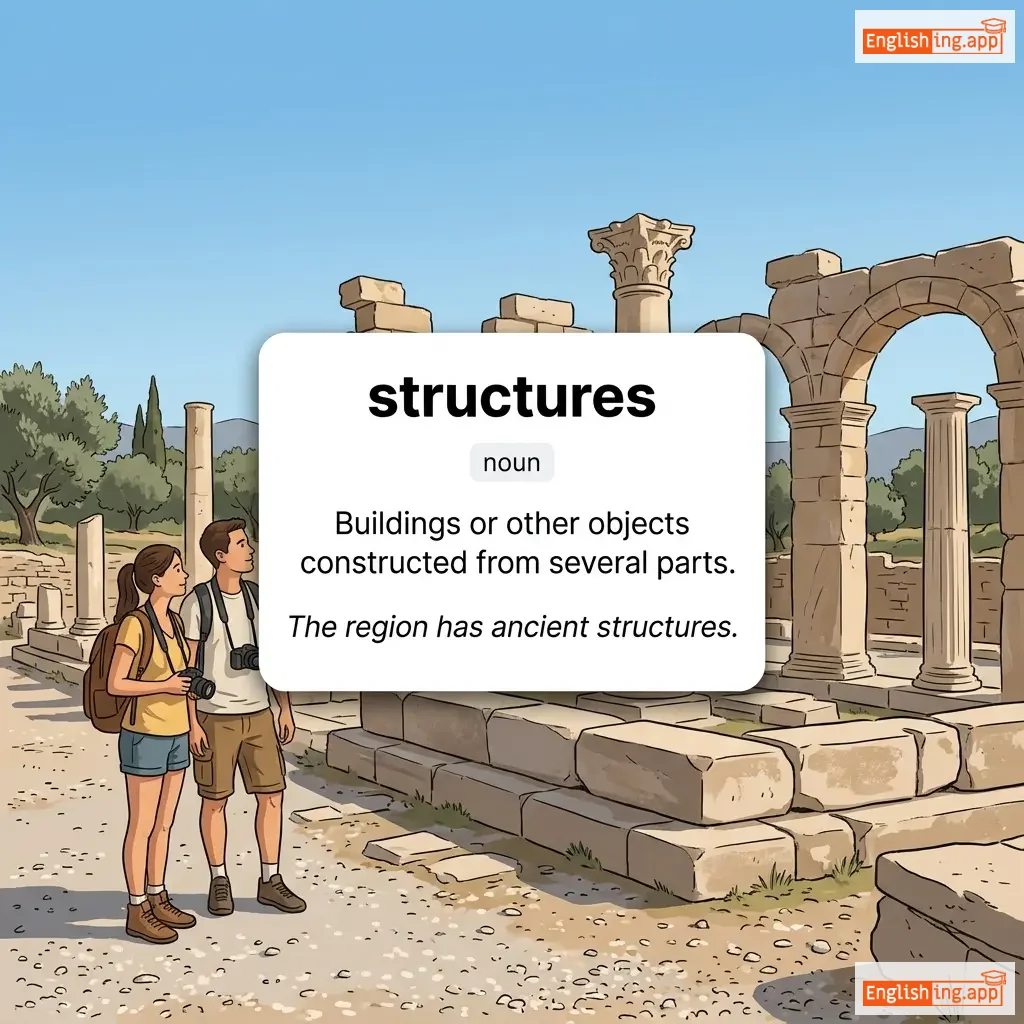
structures definition card — visual illustration of the meaning
noun
/ˈstrʌk.tʃərz/
構造物 (kōzōbutsu)

Buildings or other objects constructed from several parts.

"The region has ancient structures."
"その地域には古代の構造物があります。" (Sono chiiki ni wa kodai no kōzōbutsu ga arimasu.)
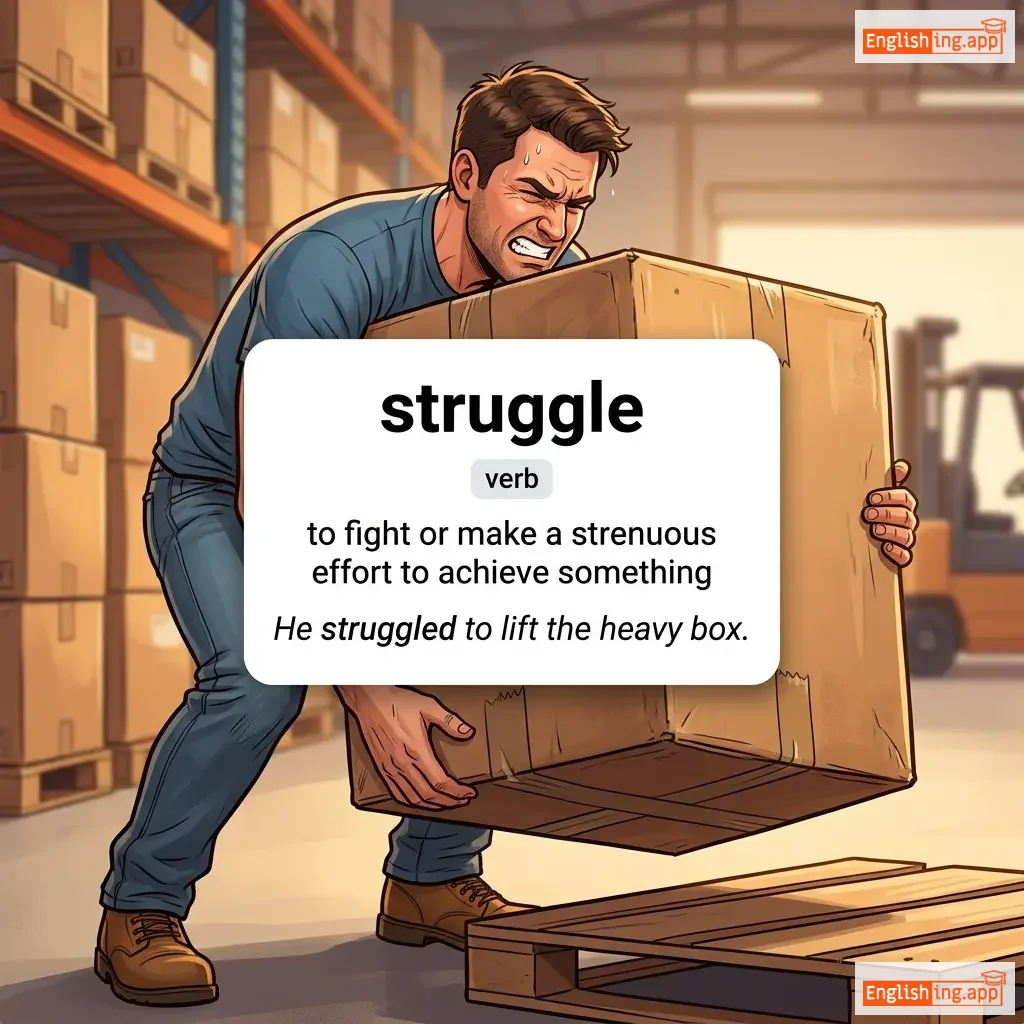
struggle definition card — visual illustration of the meaning
verb
/ˈstrʌɡl/
闘い (tatakai)

to fight or make a strenuous effort to achieve something

"He struggled to lift the heavy box."

"彼は重い箱を持ち上げるために苦闘していました。" (Kare wa omoi hako o mochiageru tame ni kutou shite imashita.)
struggling definition card — visual illustration of the meaning
verb
/ˈstrʌɡlɪŋ/
格闘する (kakuto suru)

Making forceful or violent efforts to get free of restraint or constriction; having difficulty achieving something.

"Many regions are struggling with economic recovery."

"多くの地域が経済回復に苦しんでいます。" (Ōku no chiiki ga keizai kaifuku ni kurushindeimasu.)
strut definition card — visual illustration of the meaning
verb
/strʌt/
堂々と歩く (dōdō to aruku)

to walk with a stiff, proud, and confident gait, often to show off

"He strutted across the stage after winning the award."

"彼は賞を受賞後、誇らしげにステージを歩いた。" (Kare wa shō o jushōgo, hokorashige ni sutēji o aruita.)
adjective
/ˈstʌb.ərn/
頑固な; しつこい; 強情な (ganko na, shitsukoi, gojin na)

refusing to change opinion or course of action; persistent; obstinate

"The stubborn child refused to eat his vegetables."
"その頑固な子供は野菜を食べるのを拒否した。" (Sono ganko na kodomo wa yasai o taberu no o kyohi shita.)
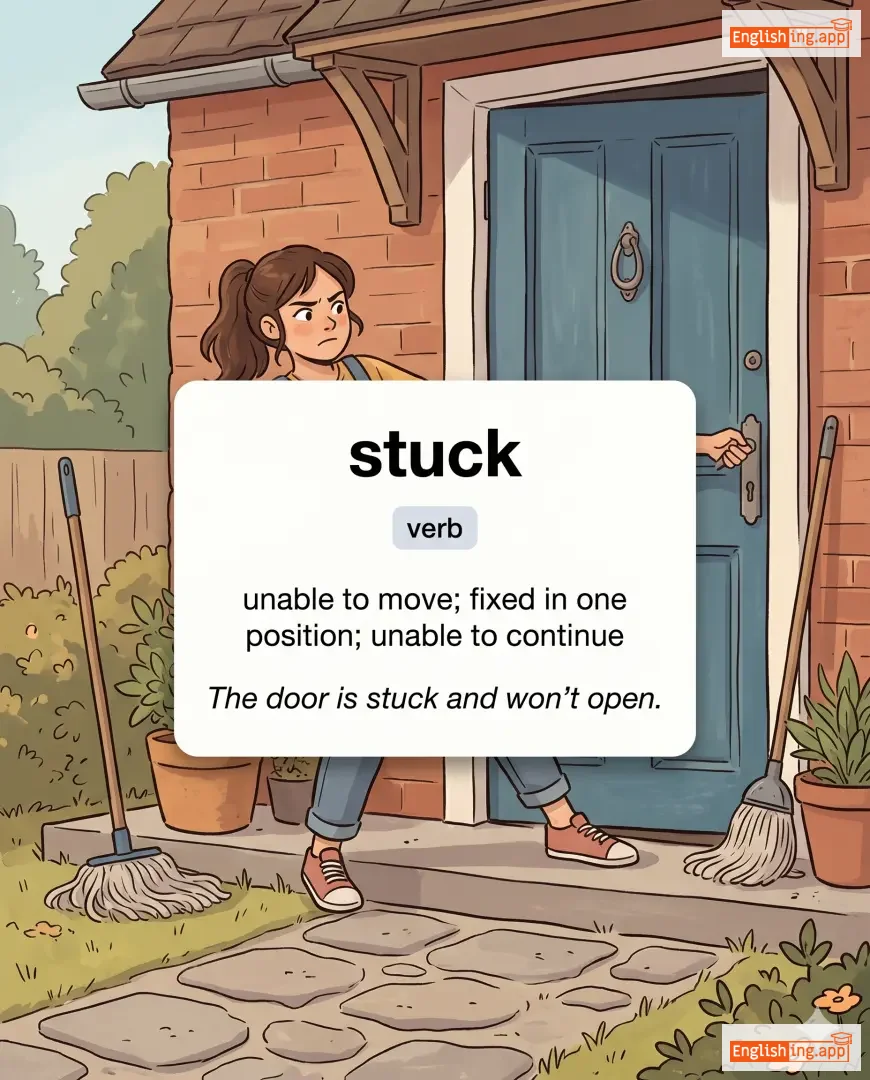
stuck definition card — visual illustration of the meaning
verb
/stʌk/
詰まった (tsumatta)

unable to move; fixed in one position; unable to continue

"The door is stuck and won't open."

"ドアが詰まっていて、開きません。" (Doa ga tsumatte ite, hirakimasen)
student definition card — visual illustration of the meaning
noun
/ˈstjuːdənt/
学生 (gakusei)

a person who is learning at an educational institution

"The student was studying for the final exam."

"学生は期末試験のために勉強していました。" (Gakusei wa kimatsu shiken no tame ni benkyou shiteimashita.)
adjective
/ˈstʌdid/
慎重な (shinchou na)

carefully considered, deliberate, or planned

"Her response was calm and studied, not impulsive."
"彼女の返答は冷静で慎重であり、衝動的ではなかった。" (Kanojo no hento wa reisei de shinchou de ari, shoudou-teki de wa nakatta.)
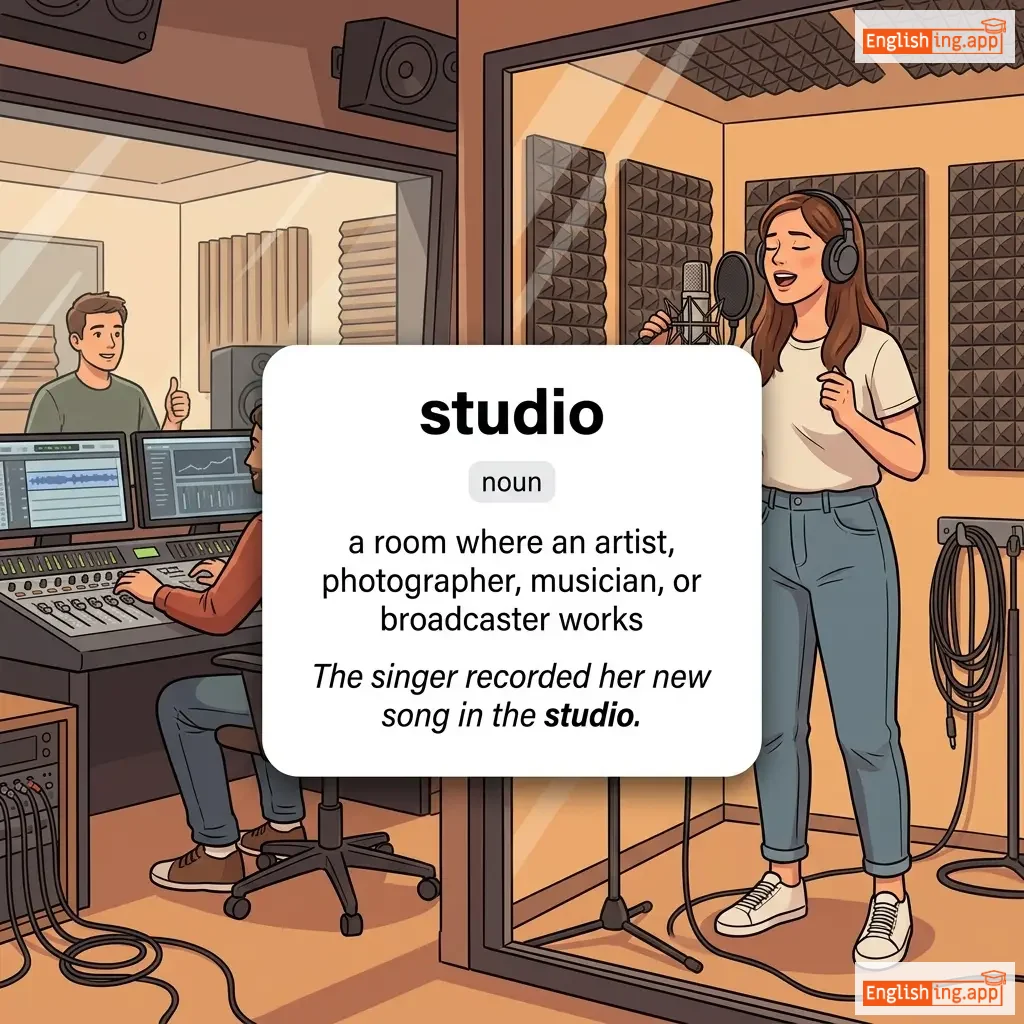
studio definition card — visual illustration of the meaning
noun
/ˈstjuːdiəʊ/
スタジオ (sutajio)

a room where an artist, photographer, musician, or broadcaster works

"The singer recorded her new song in the studio."
"歌手はスタジオで新しい曲を録音しました。" (Kashu wa sutajio de atarashī kyoku o rokuon shimashita.)
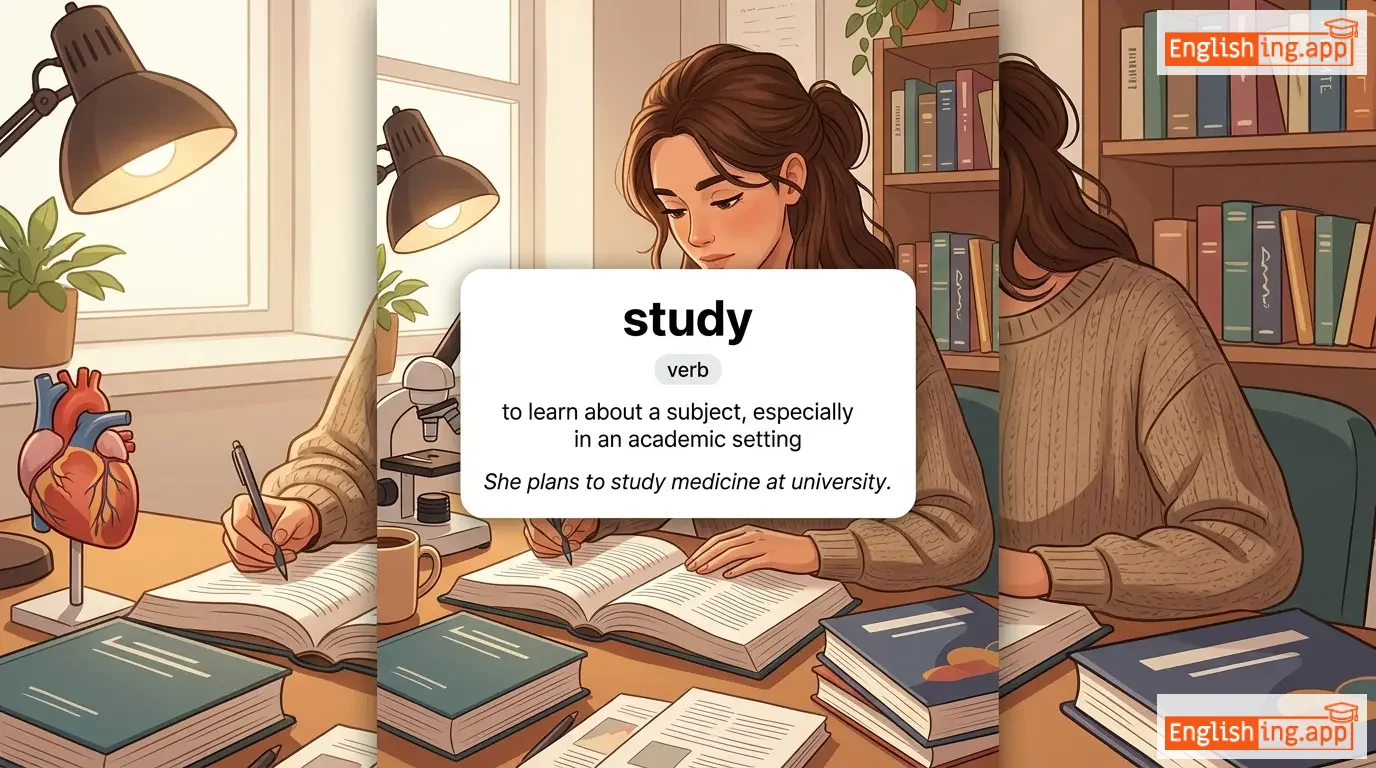
study definition card — visual illustration of the meaning
verb
/ˈstʌdi/
勉強する (benkyou suru)

to learn about a subject, especially in an academic setting

"She plans to study medicine at university."

"彼女は大学で医学を学ぶ予定です。" (Kanojo wa daigaku de igaku o manabu yotei desu.)
adjective
/ˈstjuːdiəs/
勉強家 (benkyōka)

spending a lot of time studying or reading; very dedicated to learning

"She is a studious girl who spends hours in the library."

"彼女は図書館で何時間も過ごす勉強家の女の子です。" (Kanojo wa toshokan de nanjikan mo sugosu benkyōka no onnanoko desu.)
adjective
/səbˈdʒɛktɪv/
主観的 (shukanteki)

based on personal feelings, tastes, or opinions rather than facts

"Beauty is often considered a subjective concept."

"美しさはしばしば主観的な概念と見なされます。" (Utsukushisa wa shibashiba shukanteki na gainen to minasaremasu.)
noun
/səbˈdʒɛkʃən/
服従 (fukujū)

the act of bringing someone or something under control or domination

"The people suffered under the subjection of a cruel ruler."

"人々は残虐な支配者の下で苦しんでいた。" (Hitobito wa zangyaku na shihaisha no moto de kurushinde ita.)
noun/verb/adjective
/ˈsʌbdʒɪkt/ (noun), /səbˈdʒɛkt/ (verb)
科目 (kamoku)

noun: a topic or theme; verb: to cause to undergo; adjective: dependent or under authority

"The teacher introduced a new subject in class."

"先生はクラスで新しい科目を紹介しました。" (Sensei wa kurasu de atarashī kamoku o shōkai shimashita.)
adjective
/sʌbˈdʒeɪsənt/
下層の (kasō no)

lying immediately beneath; underlying

"The geological survey revealed subjacent layers of rock."
"地質調査は下層の岩層を明らかにした。" (Chishitsu chōsa wa kasō no gansō o akiraka ni shita.)
⚔️

subdue

verb
/səbˈdjuː/

To bring under control, especially by force; to overcome or quiet.

"The army was able to subdue the rebellion quickly."

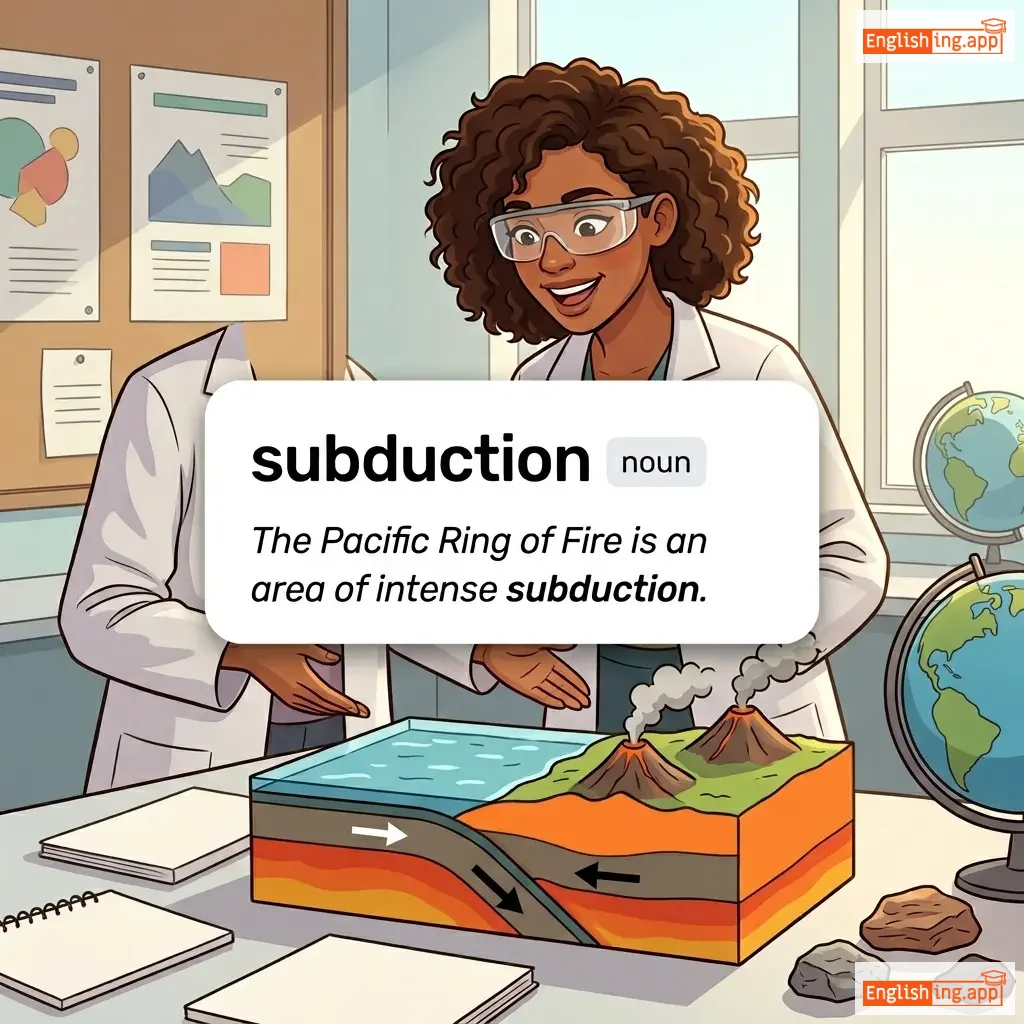
subduction definition card — visual illustration of the meaning
noun
/səbˈdʌk.ʃən/
地殻の一層が別の層の下に移動すること。 (Chikaku no issō ga betsu no sō no shita ni idō suru koto.)

The lateral and downward movement of the edge of a plate of the earth's crust into the mantle beneath another plate.

"The Pacific Ring of Fire is an area of intense subduction."
"太平洋の火の輪は激しいサブダクションの領域です。" (Taiheiyō no hi no wa wa hageshī sabudakushon no ryōiki desu.)
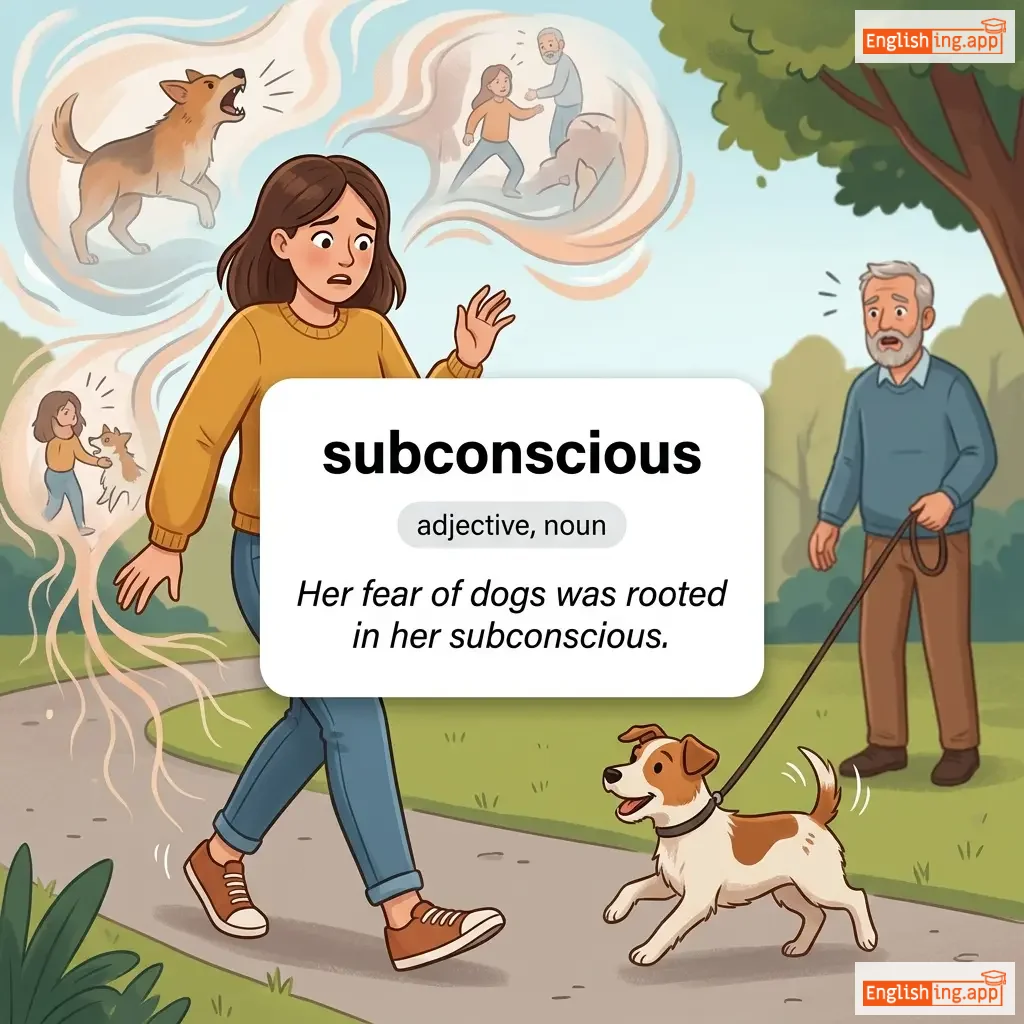
subconscious definition card — visual illustration of the meaning
adjective, noun
/ˌsʌbˈkɒn.ʃəs/
潜在意識 (senzai ishiki)

Relating to the part of the mind that influences thoughts and actions without full awareness.

"Her fear of dogs was rooted in her subconscious."

"彼女の犬に対する恐怖は彼女の潜在意識に根ざしていた。" (Kanojo no inu ni taisuru kyoufu wa kanojo no senzai ishiki ni nezashite ita.)
adjective
/ˌsʌb.əˈkwɒt.ɪk/
水中 (suichū)

Existing, living, or located under water.

"Divers explored the subaquatic cave system filled with rare fish."

"ダイバーたちは珍しい魚でいっぱいの水中洞窟システムを探査しました。" (Daibā-tachi wa mezurashī sakana de ippai no suichū dōkutsu shisutemu o tansa shimashita.)
noun
/sʌbˈɔːl.tən/
下級の立場にある人;軍隊では、若い将校 (sabornā)

A person holding a subordinate position; in the military, a junior officer.

"The subaltern was responsible for leading a small platoon of soldiers."

"サブオルターナは小さな小隊を指揮する責任がありました。" (Sabornā wa chīsana shōtai o shiki suru sekinin ga arimashita.)
adjective
/ˈsʌb.æs.ɪd/
やや酸っぱい (yaya suppai)

Slightly sour or acidic in taste or nature.

"The fruit had a subacid flavor that was refreshing on a hot day."

"その果物はやや酸っぱい味がして、暑い日にさっぱりとした味わいだった。" (Sono kudamono wa yaya suppai aji ga shite, atsui hi ni sappari to shita ajiwai datta.)
adverb
/ˌsʌb ˈroʊzə/
秘密裏に (himitsuri ni)

secretly, in confidence, or in private

"The deal was made sub rosa to avoid public scrutiny."

"取引はサブ ローザで行われ、公衆の監視を避けるためでした。" (Torihiki wa sub rosa de okonaware, kōshū no kanshi o sake ru tame deshita.)
noun
/ˈsʌb.mə.riːn/
潜水艦 (sensuikan)

a warship with a streamlined hull designed to operate completely submerged in the sea

"The submarine dived deep into the ocean to avoid detection."

"潜水艦は海中深く潜水して、発見を避けました。" (Sensuikan wa kaichū fukaku sensui shite, hakken o sake mashita.)
noun
/ˈswɑːvɪti/
優雅さと魅力 (yūgasa to miryoku)

smoothness and charm in manner

"His suavity made him popular in social gatherings."

"彼の優雅さと魅力は社交の場で彼を人気者にした。" (Kare no yūgasa to miryoku wa shakō no ba de kare o ninkimono ni shita.)
adjective
/swɑːv/
魅力的で洗練された (miryokuteki de senren sareta)

charming, confident, and elegant, often in a smooth or polished way

"He was a suave gentleman who impressed everyone at the party."

"彼はパーティーで全員に感銘を与えた洗練された紳士だった。" (Kare wa pātii de zen'in ni kanmei o ataeta senren sareta shinshi datta.)
noun
/ˈsweɪʒən/
説得 (settoku)

the act of persuading or influencing someone

"The leader used gentle suasion to win support for the plan."

"リーダーは計画への支援を得るために穏やかな説得を使用しました。" (Rīdā wa keikaku e no shien o eru tame ni odayakana settoku o shiyō shimashita.)
verb
/ˈstaɪmi/
妨げる (samatageru)

to prevent or hinder the progress of something

"The new regulations could stymie small businesses."

"新しい規制は小規模なビジネスに障害をもたらす可能性があります。" (Atarashī kisei wa shōkibō na bijinesu ni shōgai o motarasu kanōsei ga arimasu.)
noun
/ˈstaɪləs/
スタイラス (sutairasu)

a small tool used for writing, drawing, or touching screens

"She used a stylus to draw on her tablet."

"彼女はタブレットで絵を描くためにスタイラスを使用しました。" (Kanojo wa taburetto de e o kaku tame ni sutairasu o shiyō shimashita.)
verb
/stʌn/
驚かす, 気絶させる (odorokasu, kizetsu saseru)

to shock or surprise someone greatly; to knock someone unconscious or dazed

"The news of her sudden resignation stunned everyone."

"彼女の突然の辞任のニュースは皆を驚かせた。" (Kanojo no totsuzen no jin'in no nyūsu wa mina o odorokaseta.)
noun/verb
/stʌmp/
木の切り株、困惑させる (ki no kirikabu, konwaku saseru)

the base of a tree left after the trunk is cut down; to puzzle or confuse

"The question completely stumped the students."

"その質問は学生たちを完全に困らせました。" (Sono shitsumon wa gakusei-tachi wo kanzen ni komarasemashita.)
adjective
/ˈstʌm.pi/
短くて太い (mijikakute futoi)

short and thick; having a short, thick appearance

"The stumpy little dog wagged its tail enthusiastically."

"その短くて太い小さな犬は、興奮して尾を振っていました。" (Sono mijikakute futoi chiisana inu wa, kōfun shite o o futte imashita.)
verb
/ˈstʌmbəl/
つまずく (tsumazuku)

to trip or lose balance while walking or running; to make a mistake or falter

"He stumbled on the uneven pavement."

"彼はでこぼこな歩道でつまずいた。" (Kare wa dekoboka na hodō de tsumazuita.)
adjective
/ˈstʌnɪŋ/
驚くべき (odorokubeki)

extremely impressive or attractive

"The view from the top of the mountain was absolutely stunning."

"山の頂上からの景色は本当に驚くべきものでした。" (Yama no chōjō kara no keshiki wa hontōni odorokubeki mono deshita.)