Vocabularios

Descubra, aprenda y domine el vocabulario en inglés

🚶‍♂️

stride (estraid)

verb
/straɪd/
caminar con pasos largos y decisivos; hacer progresos (caminar con pasos largos y decisivos; hacer progresos)

to walk with long, decisive steps; to make progress

"She strode confidently across the stage."

"Ella caminó con confianza por el escenario." (Ella camino con confianza por el escenario.)
adjective
/ˈstraɪ.dənt/
estridente, ruidoso (estridente, ruidoso)

loud and harsh; presenting a point of view in a forceful way

"His strident voice made the debate uncomfortable."

"Su voz estridente hizo que el debate fuera incómodo." (Su voz estridente hizo que el debate fuera incomodo.)
noun
/straɪf/
conflicto, lucha (conflicto, lucha)

angry or violent conflict; struggle or discord

"The region has been torn apart by political strife."

"La región ha sido desgarrada por el conflicto político." (La region ha sido desgarrada por el conflicto politico.)
verb
/straɪk/
huelga / golpear (huelga / golpear)

to hit forcibly or attack; also to stop work as a form of protest

"The workers decided to strike for better wages."

"Los trabajadores decidieron hacer huelga por mejores salarios." (Los trabajadores decidieron hacer huelga por mejores salarios.)
adjective
/ˈstraɪkɪŋ/
impactante (impactante)

very noticeable or impressive in appearance or effect

"Her striking beauty caught everyone's attention."

"Su belleza impactante atrajo la atención de todos." (Su belleza impactante atrajo la atención de todos.)
noun, verb
/strɪŋ/
hilo (hilo)

a thin piece of cord or thread; to tie or fasten with a string

"She tied the package with a string."

"Ella ató el paquete con un hilo." (Ella ato el paquete con un hilo.)
noun
/ˈstrɪndʒənsi/
rigidez (rigidez)

the quality of being strict, precise, or severe

"The stringency of the new rules surprised everyone."

"La rigidez de las nuevas reglas sorprendió a todos." (La rigidez de las nuevas reglas sorprendió a todos.)
adjective
/ˈstrɪndʒənt/
estricto (estricto)

strict, precise, and exacting

"The government imposed stringent measures during the crisis."

"El gobierno impuso medidas estrictas durante la crisis." (El gobierno impuso medidas estrictas durante la crisis.)
verb
/strɪp/
despojar / quitar (despojar / quitar)

to remove coverings or layers from something; to undress

"He had to strip the old paint from the wall."

"Tuvo que quitar la pintura vieja de la pared." (Tuvo que quitar la pintura vieja de la pared.)
noun
/ˈstrɪplɪŋ/
joven (joven)

a young man who is not yet fully grown

"The stripling dreamed of becoming a brave knight."

"El joven soñaba con convertirse en un valiente caballero." (El joven sonaba con convertirse en un valiente caballero.)
verb
/straɪv/
esforzarse (esforzarse)

To make great efforts to achieve or obtain something.

"She strives to be the best student in her class."

"Ella se esfuerza por ser la mejor estudiante en su clase." (Ella se esfuerza por ser la mejor estudiante en su clase.)
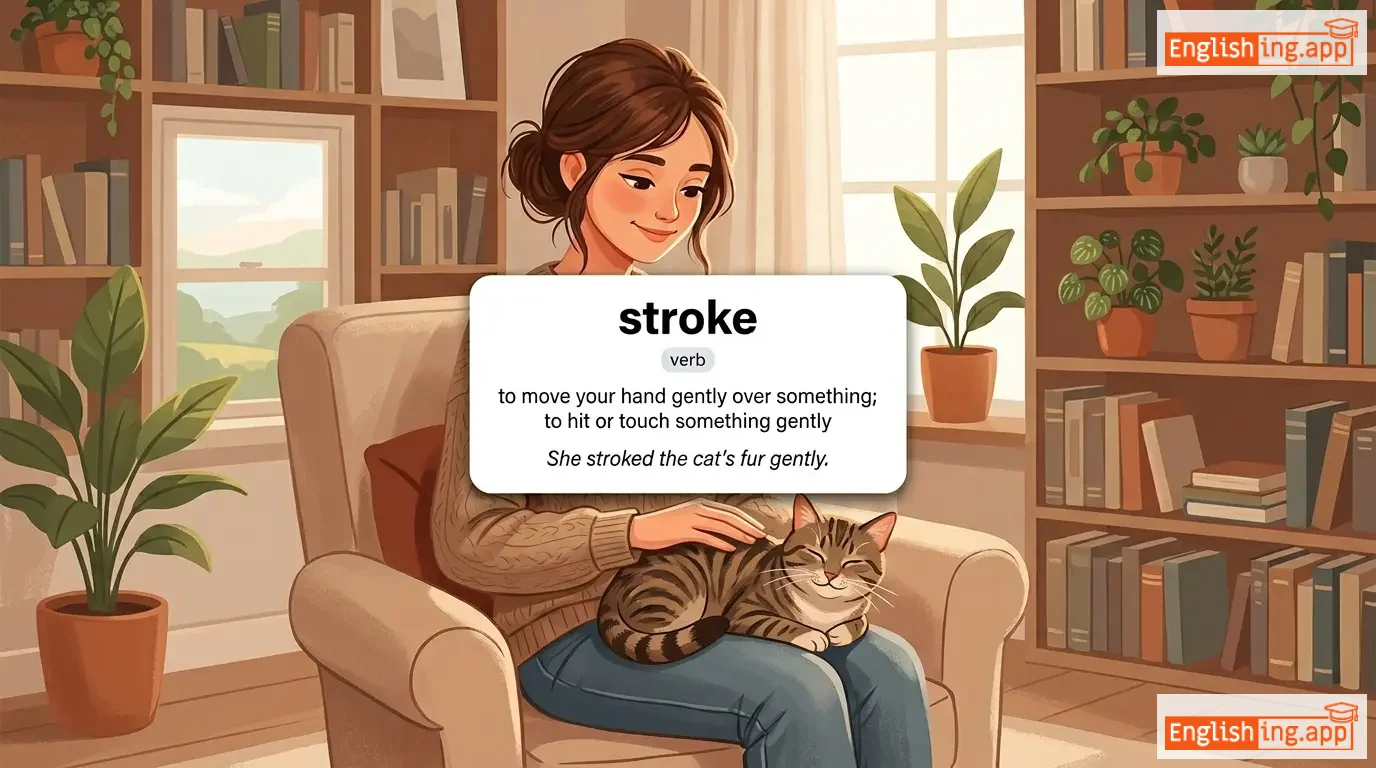
stroke definition card — visual illustration of the meaning
noun
/strəʊk/
derrame cerebral (derrame cerebral)

a sudden attack or event, typically of a medical or physical nature

"He suffered a stroke while working at his desk."

"Él sufrió un derrame cerebral mientras trabajaba en su escritorio." (Él sufrió un derrame cerebral mientras trabajaba en su escritorio.)
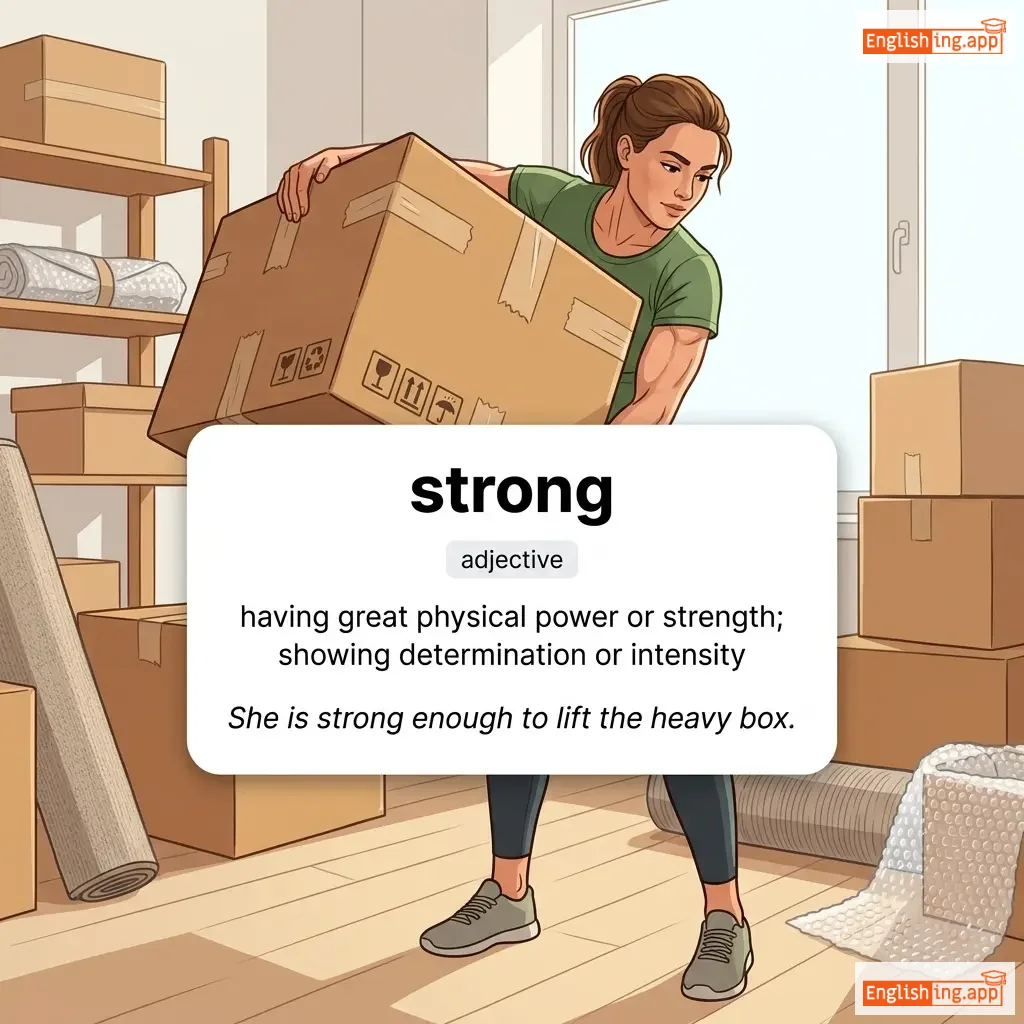
strong definition card — visual illustration of the meaning
adjective
/strɔːŋ/
fuerte (fuerte)

having great physical power or strength; showing determination or intensity

"She is strong enough to lift the heavy box."

"Ella es lo suficientemente fuerte como para levantar la caja pesada." (Ella es lo suficientemente fuerte como para levantar la caja pesada.)
adverb
/ˈstrɒŋɡli/
fuerte (fuerte)

in a strong manner or to a great extent

"She strongly believes in the power of positive thinking."

"Ella cree firmemente en el poder del pensamiento positivo." (Ella cree firmemente en el poder del pensamiento positivo.)
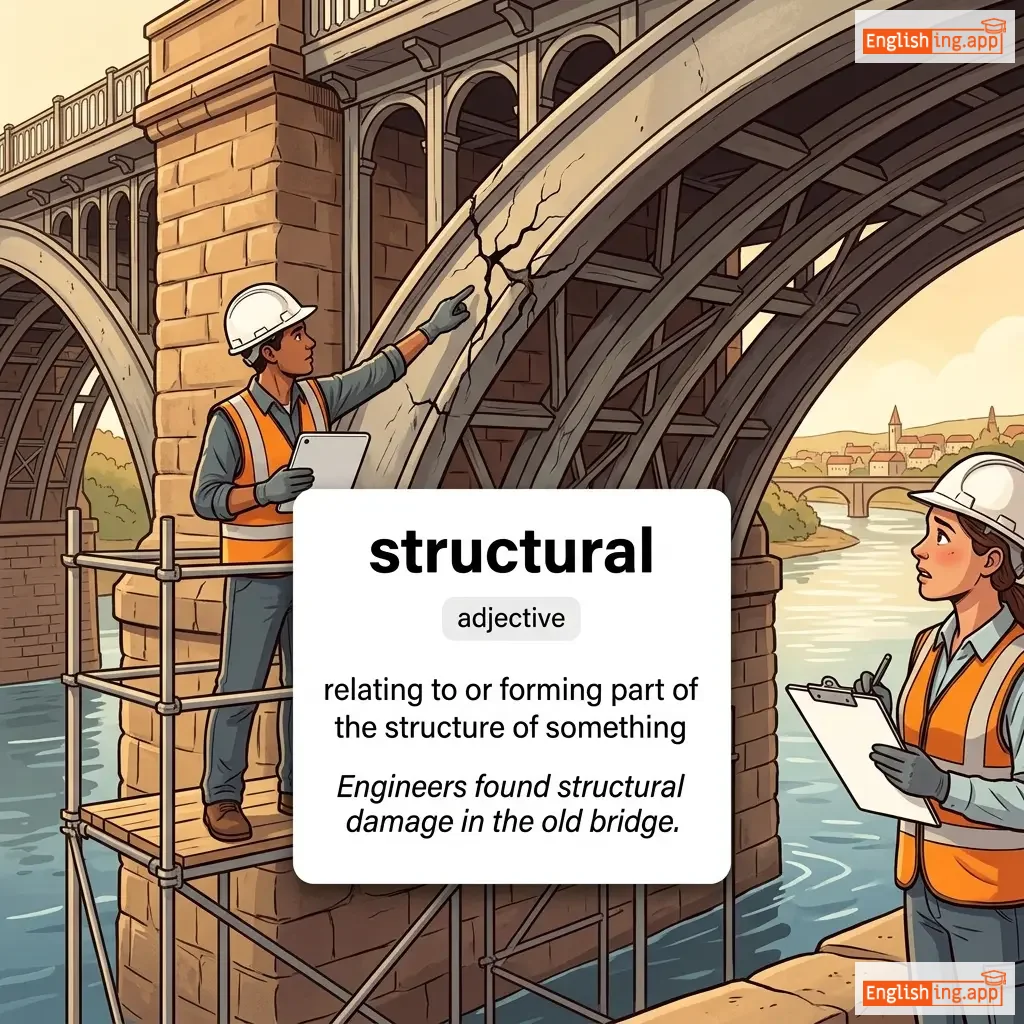
structural definition card — visual illustration of the meaning
adjective
/ˈstrʌktʃərəl/
estructural (estruktural)

relating to or forming part of the structure of something

"Engineers found structural damage in the old bridge."

"Los ingenieros encontraron daños estructurales en el viejo puente." (Los ingenieros encontraron danos estructurales en el viejo puente.)
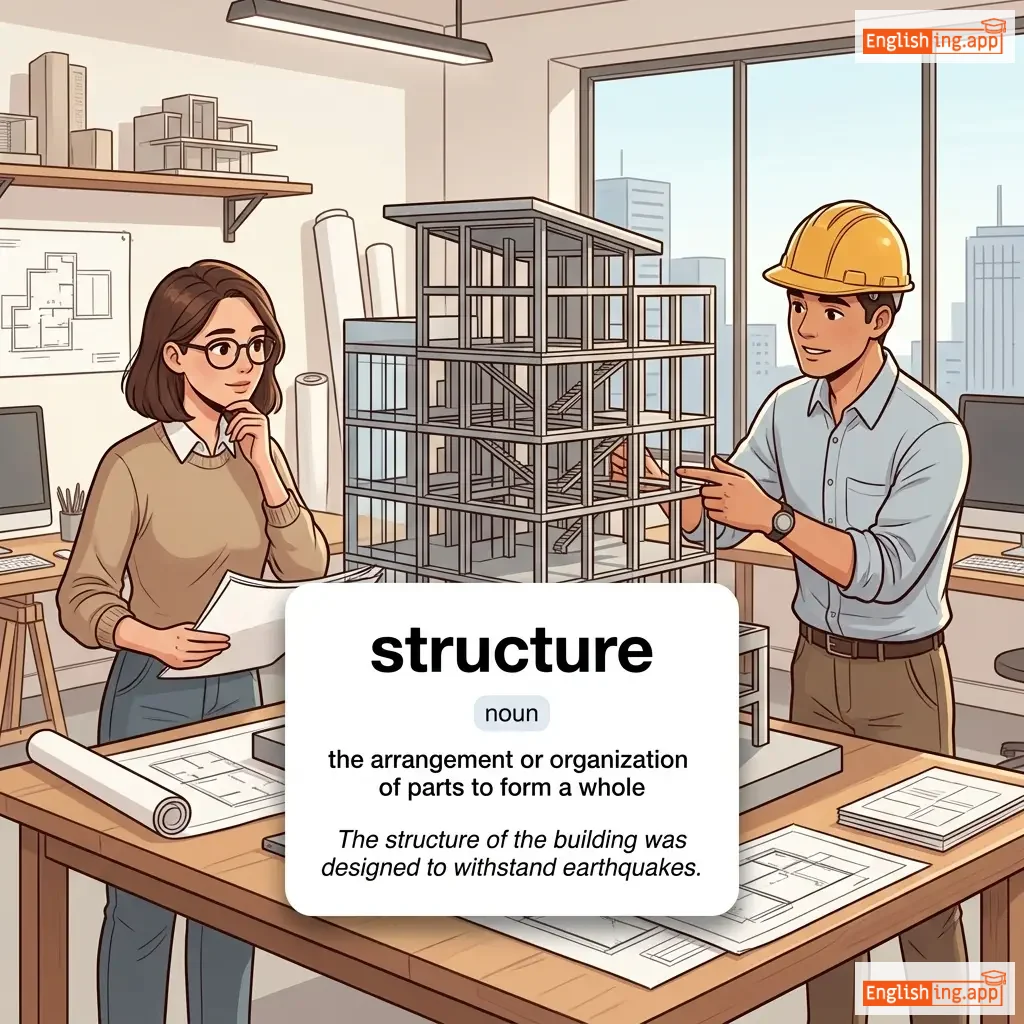
structure definition card — visual illustration of the meaning
noun
/ˈstrʌktʃər/
estructura (estructura)

the arrangement or organization of parts to form a whole

"The structure of the building was designed to withstand earthquakes."

"La estructura del edificio fue diseñada para resistir terremotos." (La estructura del edificio fue disenyada para resistir terremotos.)
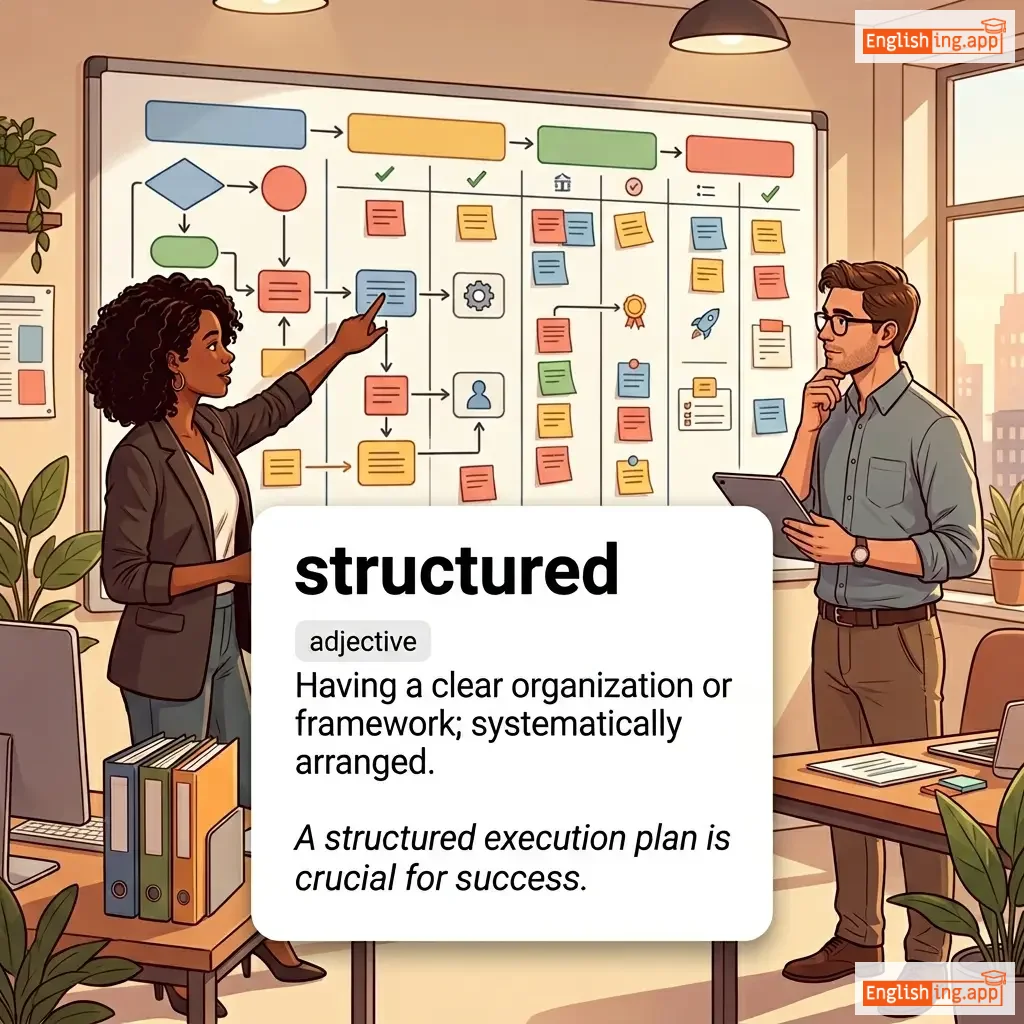
structured definition card — visual illustration of the meaning
adjective
ˈstrʌktʃərd
estructurado (estructurado)

Having a clear organization or framework; systematically arranged.

"A structured execution plan is crucial for success."

"Un plan de ejecución estructurado es crucial para el éxito." (Un plan de ejecucion estructurado es crucial para el exito.)
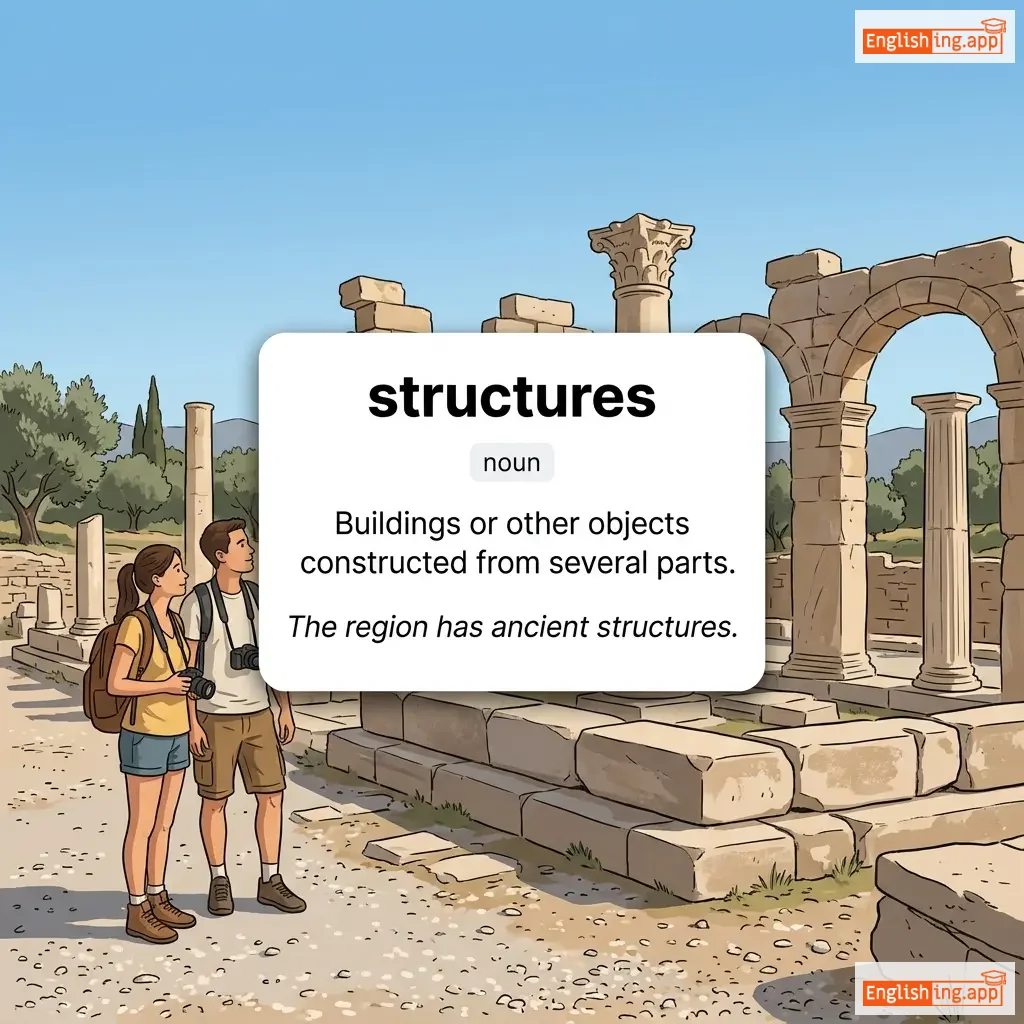
structures definition card — visual illustration of the meaning
noun
/ˈstrʌk.tʃərz/
estructuras (estructuras)

Buildings or other objects constructed from several parts.

"The region has ancient structures."

"La región tiene estructuras antiguas." (La región tiene estructuras antiguas.)
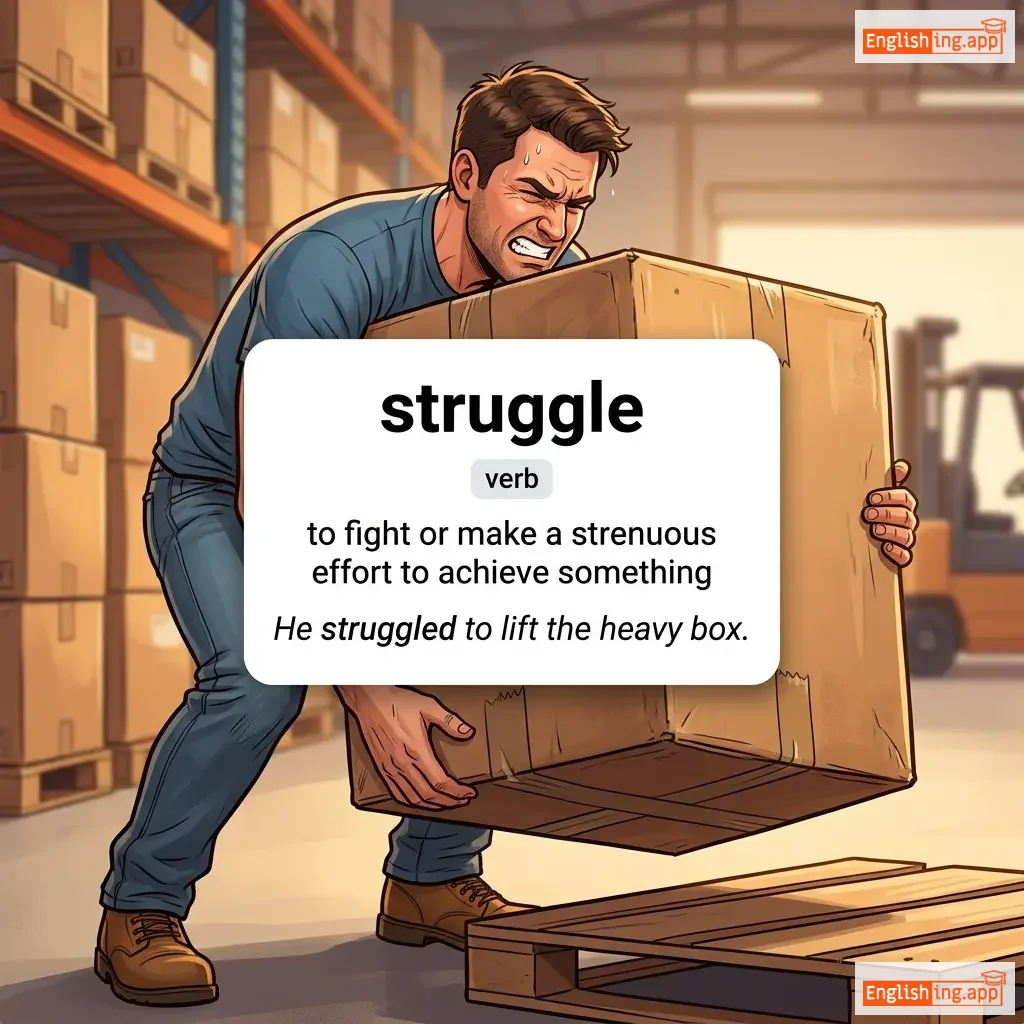
struggle definition card — visual illustration of the meaning
verb
/ˈstrʌɡl/
lucha (lucha)

to fight or make a strenuous effort to achieve something

"He struggled to lift the heavy box."

"Él luchó por levantar la caja pesada." (Él luchó por levantar la caja pesada.)
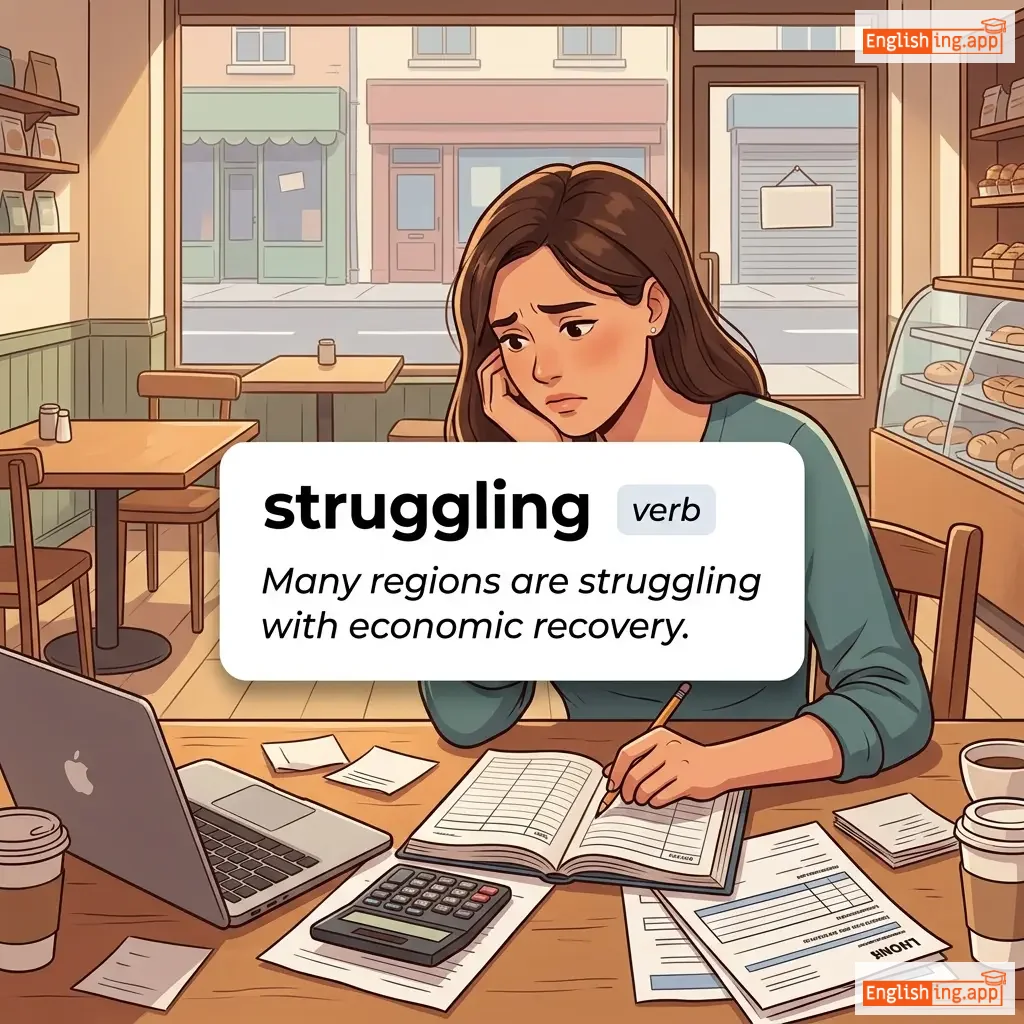
struggling definition card — visual illustration of the meaning
verb
/ˈstrʌɡlɪŋ/
luchar (luchar)

Making forceful or violent efforts to get free of restraint or constriction; having difficulty achieving something.

"Many regions are struggling with economic recovery."

"Muchas regiones están luchando con la recuperación económica." (Muchas regiones están luchando con la recuperación económica.)
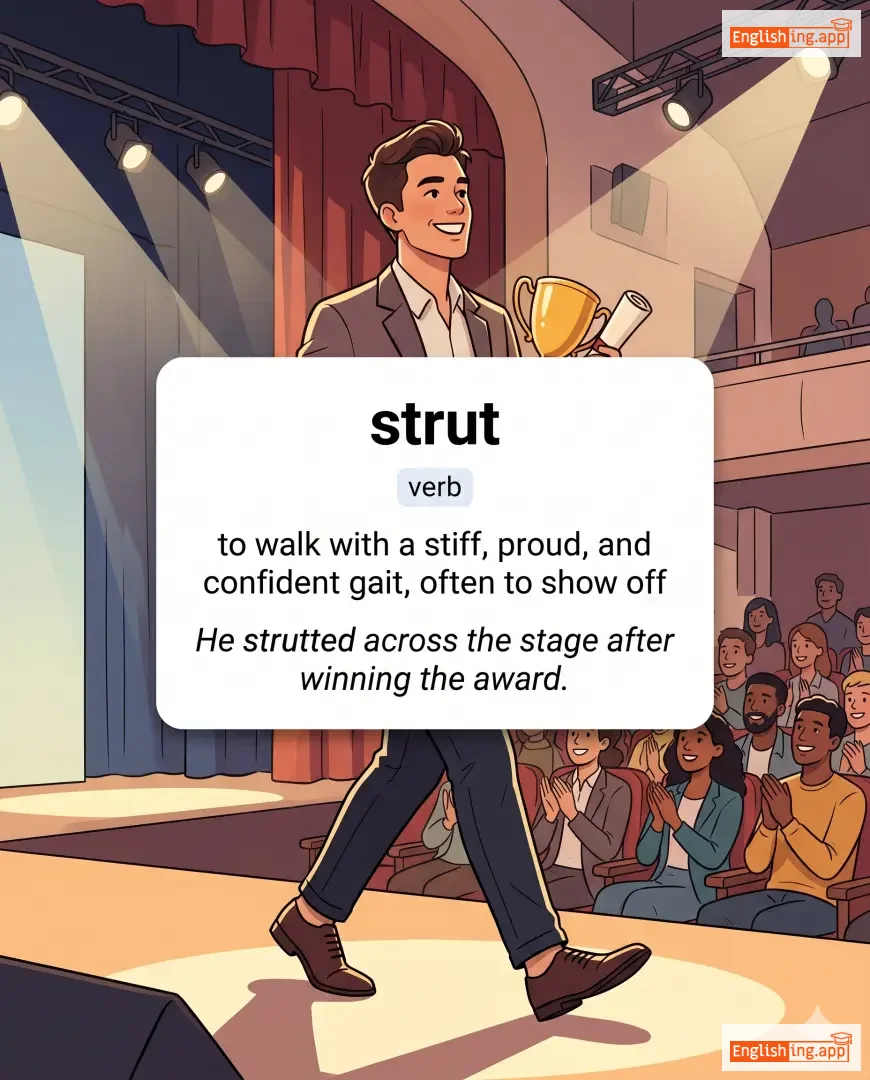
strut definition card — visual illustration of the meaning
🚶‍♂️

strut (estrat)

verb
/strʌt/
caminar con arrogancia (caminar con arrogancia)

to walk with a stiff, proud, and confident gait, often to show off

"He strutted across the stage after winning the award."

"Él caminó por el escenario después de ganar el premio." (El caminado por el escenario después de ganar el premio.)
adjective
/ˈstʌb.ərn/
terco; obstinado; testarudo (terco, obstinado, testarudo)

refusing to change opinion or course of action; persistent; obstinate

"The stubborn child refused to eat his vegetables."

"El niño terco se negó a comer sus verduras." (El nino terco se nego a comer sus verduras.)
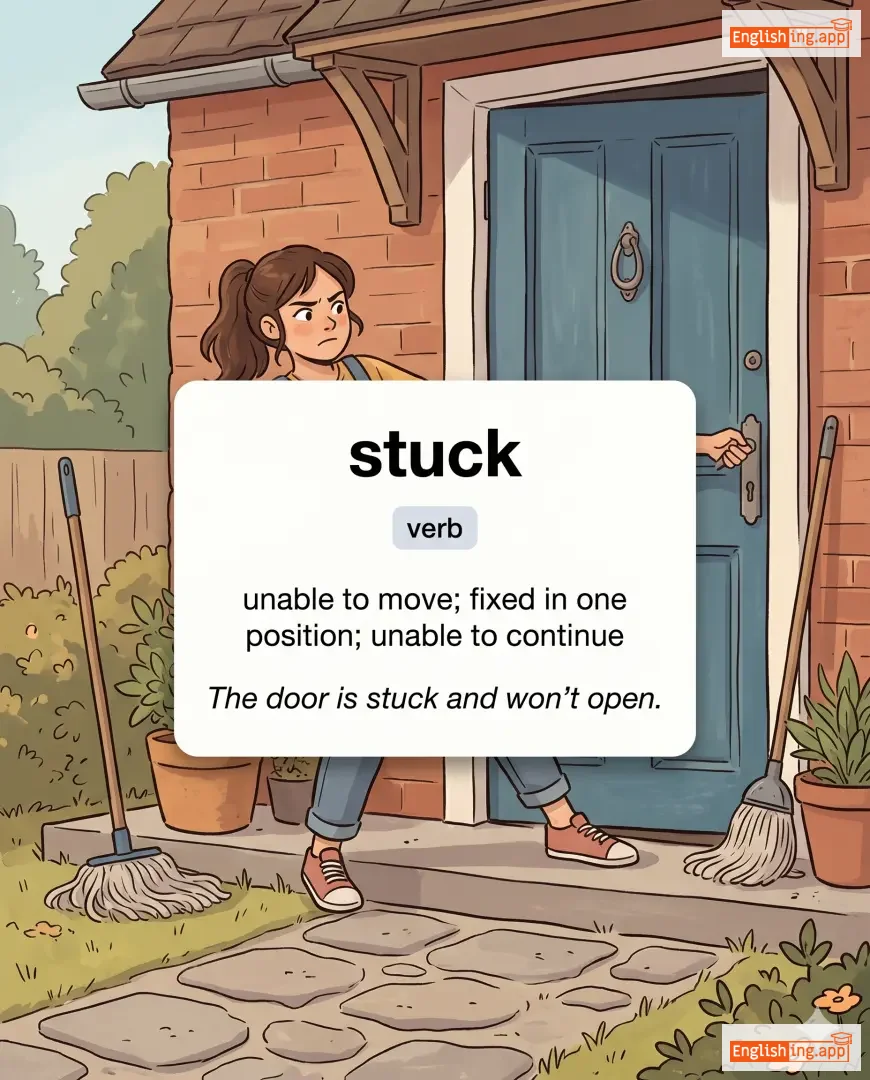
stuck definition card — visual illustration of the meaning
verb
/stʌk/
atascado (atascado)

unable to move; fixed in one position; unable to continue

"The door is stuck and won't open."

"La puerta está atascada y no se abrirá." (La puerta esta atascada y no se abrira)
student definition card — visual illustration of the meaning
noun
/ˈstjuːdənt/
estudiante (estudiante)

a person who is learning at an educational institution

"The student was studying for the final exam."

"El estudiante estaba estudiando para el examen final." (El estudiante estaba estudiando para el examen final.)
adjective
/ˈstʌdid/
estudiado (estudiado)

carefully considered, deliberate, or planned

"Her response was calm and studied, not impulsive."

"Su respuesta fue calmada y estudiada, no impulsiva." (Su respuesta fue calmada y estudiada, no impulsiva.)
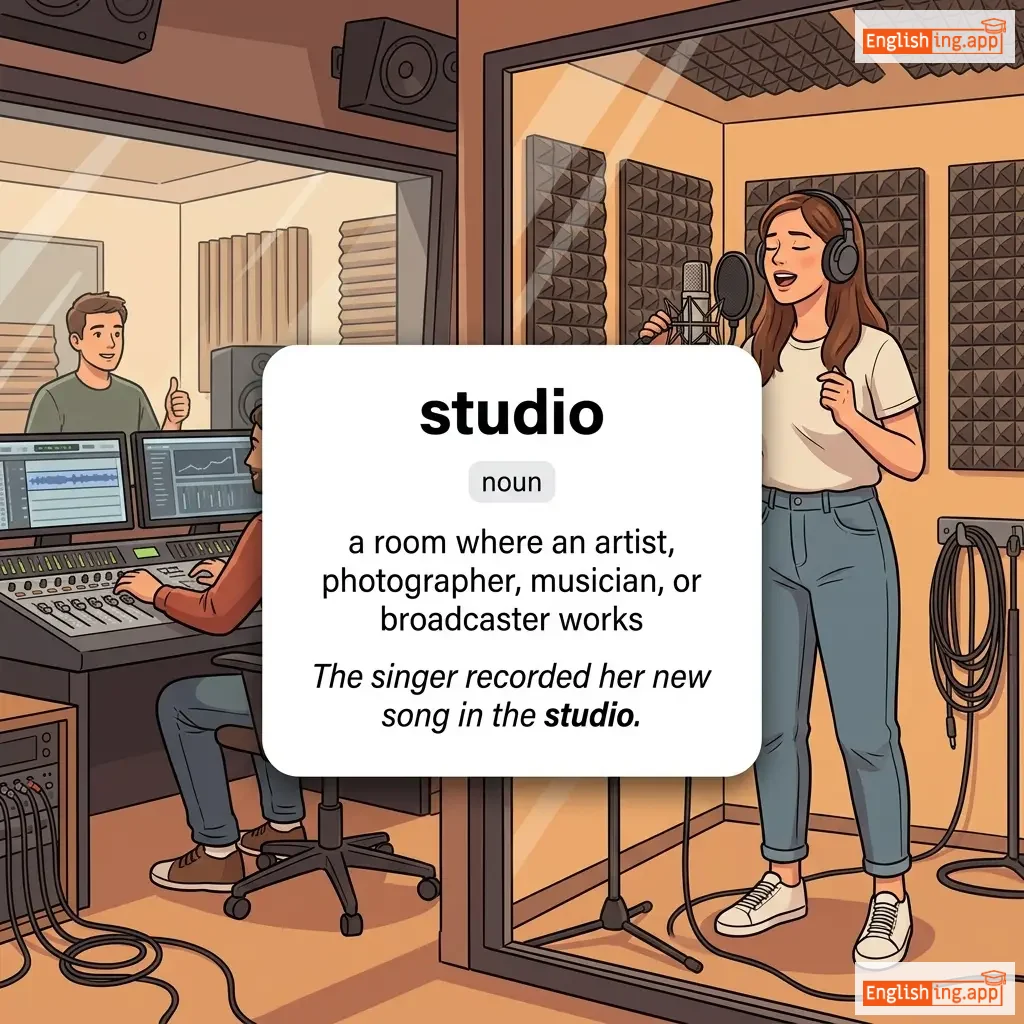
studio definition card — visual illustration of the meaning
noun
/ˈstjuːdiəʊ/
estudio (estudio)

a room where an artist, photographer, musician, or broadcaster works

"The singer recorded her new song in the studio."

"La cantante grabó su nueva canción en el estudio." (La cantante grabo su nueva cancion en el estudio.)
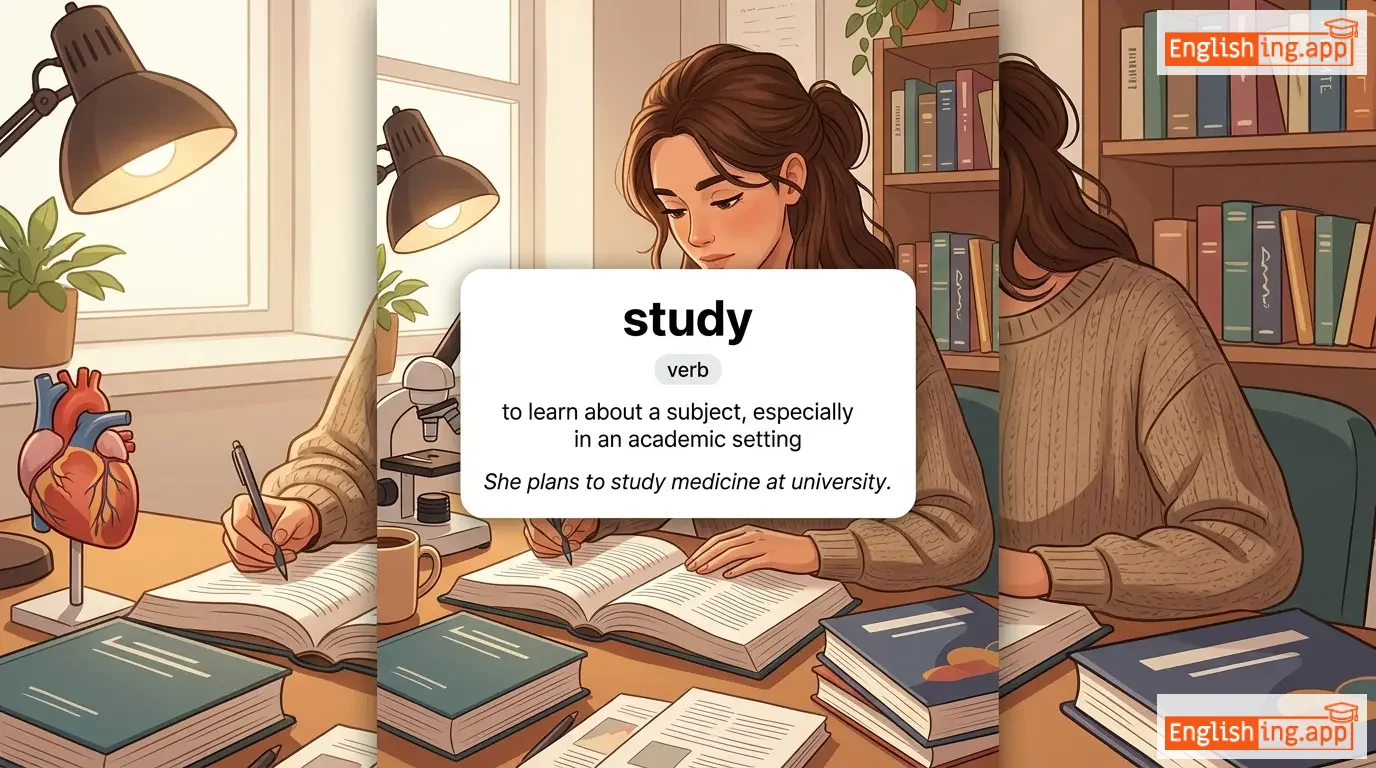
study definition card — visual illustration of the meaning
verb
/ˈstʌdi/
estudiar (estudiar)

to learn about a subject, especially in an academic setting

"She plans to study medicine at university."

"Ella planea estudiar medicina en la universidad." (Ella planea estudiar medicina en la universidad.)
adjective
/ˈstjuːdiəs/
estudioso (estudioso)

spending a lot of time studying or reading; very dedicated to learning

"She is a studious girl who spends hours in the library."

"Ella es una chica estudiosa que pasa horas en la biblioteca." (Ella es una chica estudiosa que pasa horas en la biblioteca.)
adjective
/səbˈdʒɛktɪv/
subjetivo (subjetivo)

based on personal feelings, tastes, or opinions rather than facts

"Beauty is often considered a subjective concept."

"La belleza a menudo se considera un concepto subjetivo." (La belleza a menudo se considera un concepto subjetivo.)
noun
/səbˈdʒɛkʃən/
subyugación (subyugacion)

the act of bringing someone or something under control or domination

"The people suffered under the subjection of a cruel ruler."

"El pueblo sufrió bajo la subyugación de un gobernante cruel." (El pueblo sufrió bajo la subyugación de un gobernante cruel.)
noun/verb/adjective
/ˈsʌbdʒɪkt/ (noun), /səbˈdʒɛkt/ (verb)
tema (tema)

noun: a topic or theme; verb: to cause to undergo; adjective: dependent or under authority

"The teacher introduced a new subject in class."

"El maestro presentó una nueva asignatura en la clase." (El maestro presentó una nueva asignatura en la clase.)
adjective
/sʌbˈdʒeɪsənt/
subyacente (subyacente)

lying immediately beneath; underlying

"The geological survey revealed subjacent layers of rock."

"La encuesta geológica reveló capas subyacentes de roca." (La encuesta geológica reveló capas subyacentes de roca.)
verb
/səbˈdjuː/
someter (someter)

To bring under control, especially by force; to overcome or quiet.

"The army was able to subdue the rebellion quickly."

"El ejército pudo someter la rebelión rápidamente." (El ejército pudo someter la rebelión rápidamente.)
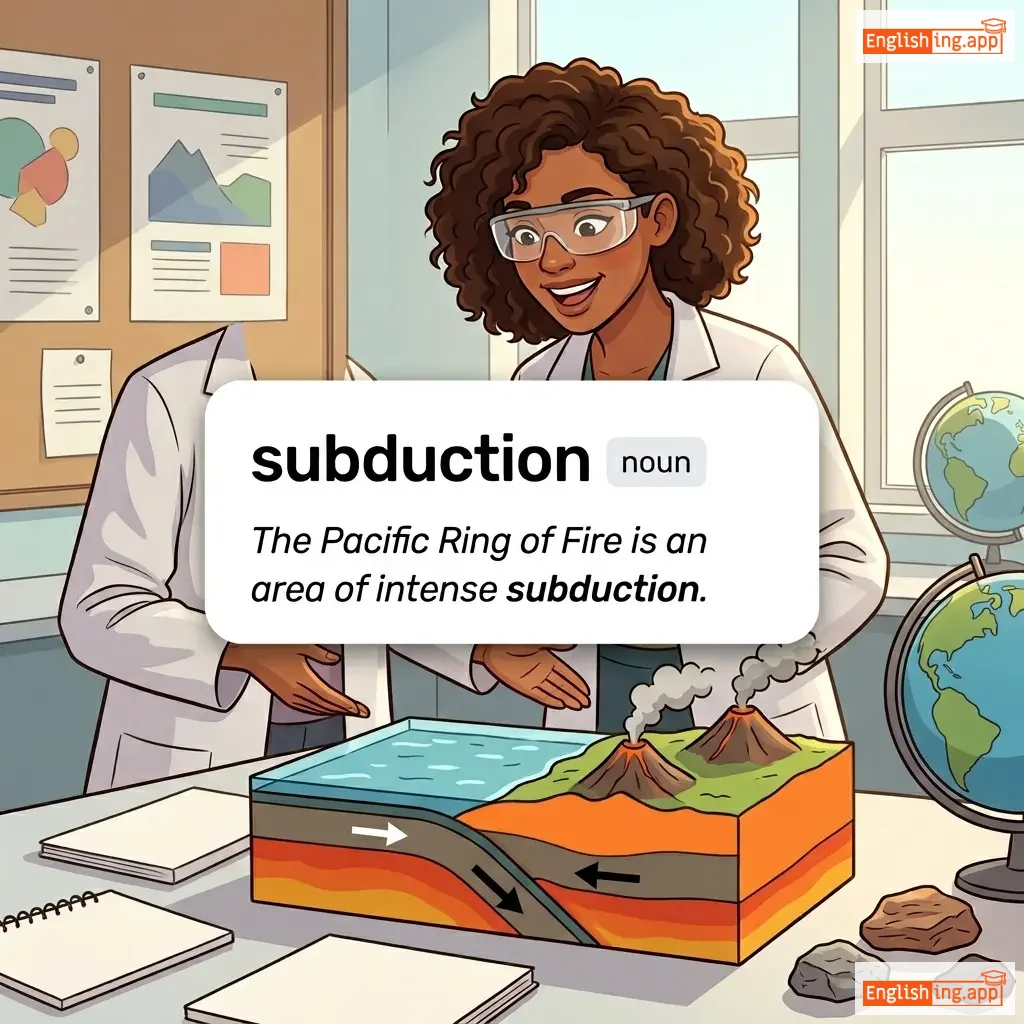
subduction definition card — visual illustration of the meaning
noun
/səbˈdʌk.ʃən/
El movimiento lateral y hacia abajo de una capa de la corteza terrestre hacia el manto debajo de otra capa. (El movimiento lateral y hacia abajo de una capa de la corteza terrestre hacia el manto debajo de otra capa.)

The lateral and downward movement of the edge of a plate of the earth's crust into the mantle beneath another plate.

"The Pacific Ring of Fire is an area of intense subduction."

"El anillo de fuego del Pacífico es un área de intensa subducción." (El anillo de fuego del Pacífico es un área de intensa subducción.)
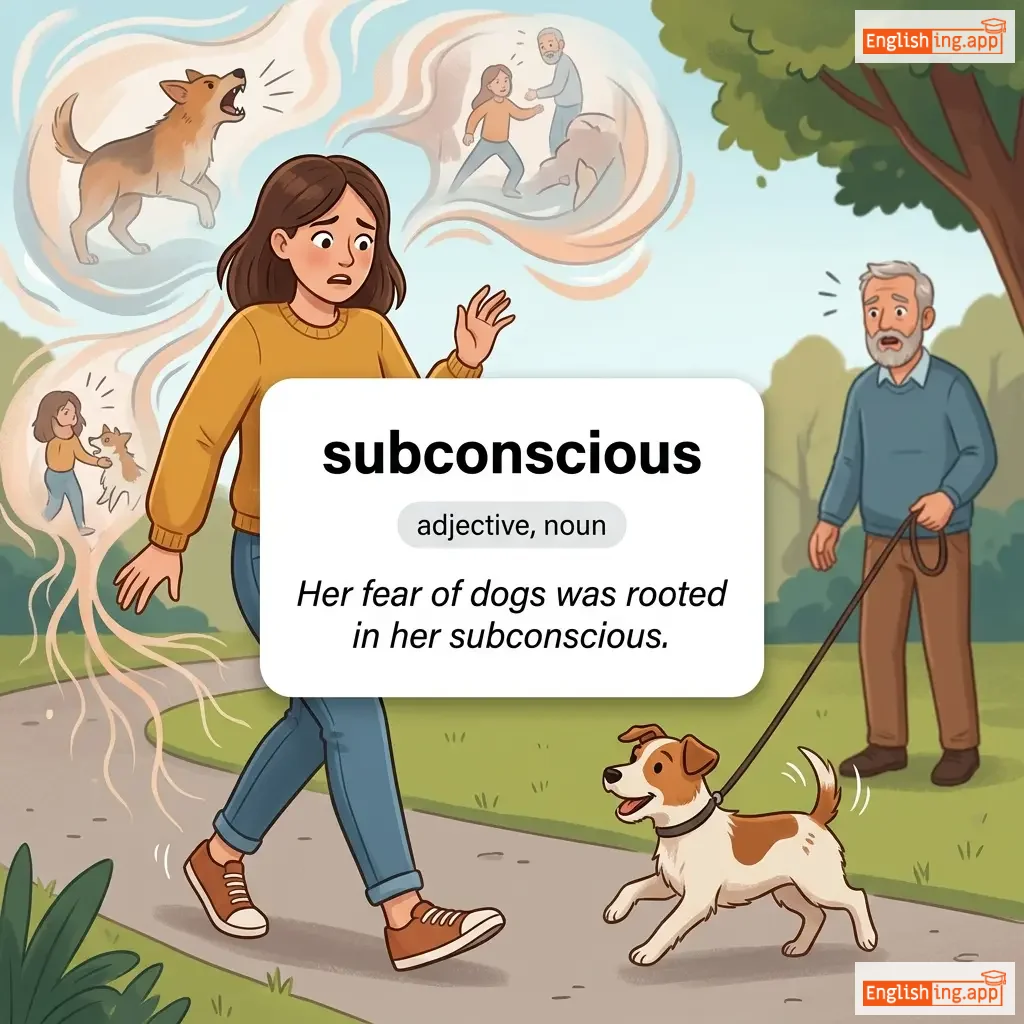
subconscious definition card — visual illustration of the meaning
adjective, noun
/ˌsʌbˈkɒn.ʃəs/
subconsciente (subkonsiente)

Relating to the part of the mind that influences thoughts and actions without full awareness.

"Her fear of dogs was rooted in her subconscious."

"Su miedo a los perros estaba arraigado en su subconsciente." (Su miedo a los perros estaba arraigado en su subconsciente.)
adjective
/ˌsʌb.əˈkwɒt.ɪk/
subacuático (subacuatico)

Existing, living, or located under water.

"Divers explored the subaquatic cave system filled with rare fish."

"Los buzos exploraron el sistema de cavernas subacuáticas llenas de peces raros." (Los buzos exploraron el sistema de cavernas subacuáticas llenas de peces raros.)
noun
/sʌbˈɔːl.tən/
persona en una posición subordinada; en el ejército, un oficial joven (subaltern)

A person holding a subordinate position; in the military, a junior officer.

"The subaltern was responsible for leading a small platoon of soldiers."

"El subalterno era responsable de dirigir un pequeño pelotón de soldados." (El subalterno era responsable de dirigir un pequeño pelotón de soldados.)
adjective
/ˈsʌb.æs.ɪd/
ligeramente ácido (ligeramente acido)

Slightly sour or acidic in taste or nature.

"The fruit had a subacid flavor that was refreshing on a hot day."

"La fruta tenía un sabor ligeramente ácido que era refrescante en un día caluroso." (La fruta tenía un sabor ligeramente ácido que era refrescante en un día caluroso.)
adverb
/ˌsʌb ˈroʊzə/
en secreto (en secreto)

secretly, in confidence, or in private

"The deal was made sub rosa to avoid public scrutiny."

"El trato se hizo sub rosa para evitar el escrutinio público." (El trato se hizo sub rosa para evitar el escrutinio público.)
noun
/ˈsʌb.mə.riːn/
submarino (submarino)

a warship with a streamlined hull designed to operate completely submerged in the sea

"The submarine dived deep into the ocean to avoid detection."

"El submarino se sumergió profundamente en el océano para evitar ser detectado." (El submarino se sumergió profundamente en el océano para evitar ser detectado.)
noun
/ˈswɑːvɪti/
suavidad y encanto (suavidad y encanto)

smoothness and charm in manner

"His suavity made him popular in social gatherings."

"Su suavidad lo hizo popular en reuniones sociales." (Su suavidad lo hizo popular en reuniones sociales.)
adjective
/swɑːv/
atractivo y refinado (atractivo y refinado)

charming, confident, and elegant, often in a smooth or polished way

"He was a suave gentleman who impressed everyone at the party."

"Era un caballero refinado que impresionó a todos en la fiesta." (Era un caballero refinado que impresionó a todos en la fiesta.)
noun
/ˈsweɪʒən/
persuasión (persuasion)

the act of persuading or influencing someone

"The leader used gentle suasion to win support for the plan."

"El líder usó una suave persuasión para ganar apoyo para el plan." (El líder usó una suave persuasión para ganar apoyo para el plan.)
verb
/ˈstaɪmi/
obstruir (obstruir)

to prevent or hinder the progress of something

"The new regulations could stymie small businesses."

"Las nuevas regulaciones podrían obstaculizar a las pequeñas empresas." (Las nuevas regulaciones podrían obstaculizar a las pequeñas empresas.)
noun
/ˈstaɪləs/
estilógrafo (estilografo)

a small tool used for writing, drawing, or touching screens

"She used a stylus to draw on her tablet."

"Usó un estilógrafo para dibujar en su tableta." (Uso un estilografo para dibujar en su tableta.)
verb
/stʌn/
atónito, desconcertado (atonito, desconcertado)

to shock or surprise someone greatly; to knock someone unconscious or dazed

"The news of her sudden resignation stunned everyone."

"La noticia de su renuncia repentina dejó a todos atónitos." (La noticia de su renuncia repentina dejo a todos atonitos.)
noun/verb
/stʌmp/
tronco de árbol, desconcertar (tronco de arbol, desconcertar)

the base of a tree left after the trunk is cut down; to puzzle or confuse

"The question completely stumped the students."

"La pregunta desconcertó completamente a los estudiantes." (La pregunta desconcertó completamente a los estudiantes.)
adjective
/ˈstʌm.pi/
bajo y grueso (bajo y grueso)

short and thick; having a short, thick appearance

"The stumpy little dog wagged its tail enthusiastically."

"El perrito bajo y grueso movió su cola con entusiasmo." (El perrito bajo y grueso movió su cola con entusiasmo.)
verb
/ˈstʌmbəl/
tropezar (tropezar)

to trip or lose balance while walking or running; to make a mistake or falter

"He stumbled on the uneven pavement."

"Él tropezó en el pavimento desigual." (Él tropezó en el pavimento desigual.)
adjective
/ˈstʌnɪŋ/
impresionante (impresionante)

extremely impressive or attractive

"The view from the top of the mountain was absolutely stunning."

"La vista desde la cima de la montaña era absolutamente impresionante." (La vista desde la cima de la montaña era absolutamente impresionante.)