वोकैबुलरीज

इंग्लिश वोकैबुलरी डिस्कवर, लर्न और मास्टर करें

verb
/straɪd/
लंबे, निर्णायक कदमों से चलना; प्रगति करना (lambe, nirnayak kadamon se chalna; pragati karna)

to walk with long, decisive steps; to make progress

"She strode confidently across the stage."

"वह आत्मविश्वास से मंच के पार चल रही थी।" (Vah atmbishwas se manch ke paar chal rahi thi.)
adjective
/ˈstraɪ.dənt/
कर्कश, तेज़ आवाज़ (karkash, tez awaaz)

loud and harsh; presenting a point of view in a forceful way

"His strident voice made the debate uncomfortable."

"उसकी कर्कश आवाज़ ने बहस को असहज बना दिया।" (Uski karkash awaaz ne bahas ko asahaj bana diya.)
noun
/straɪf/
संघर्ष, कलह (sangharsh, kalah)

angry or violent conflict; struggle or discord

"The region has been torn apart by political strife."

"क्षेत्र राजनीतिक संघर्ष से फटा हुआ है।" (kshetra rajneetik sangharsh se fata hua hai.)
verb
/straɪk/
हड़ताल / मारना (hadtal / marna)

to hit forcibly or attack; also to stop work as a form of protest

"The workers decided to strike for better wages."

"मजदूरों ने बेहतर वेतन के लिए हड़ताल करने का निर्णय लिया।" (Mazdooron ne behtar vetan ke liye hadtal karne ka nirnay liya.)
adjective
/ˈstraɪkɪŋ/
आकर्षक (aakarshak)

very noticeable or impressive in appearance or effect

"Her striking beauty caught everyone's attention."

"उसकी आकर्षक सुंदरता ने सभी का ध्यान खींच लिया।" (Uski aakarshak sundarta ne sabhi ka dhyan kheench liya.)
noun, verb
/strɪŋ/
धागा (dhaga)

a thin piece of cord or thread; to tie or fasten with a string

"She tied the package with a string."

"उसने पैकेज को एक स्ट्रिंग से बांधा।" (Usne package ko ek string se bandha.)
noun
/ˈstrɪndʒənsi/
कठोरता (kathorata)

the quality of being strict, precise, or severe

"The stringency of the new rules surprised everyone."

"नए नियमों की कठोरता ने सभी को हैरान कर दिया।" (Naye niyamon ki kathorata ne sabhi ko hairan kar diya.)
adjective
/ˈstrɪndʒənt/
कठोर (kathor)

strict, precise, and exacting

"The government imposed stringent measures during the crisis."

"सरकार ने संकट के दौरान कठोर उपाय लागू किए।" (Sarkar ne sankat ke dauran kathor upay lagu kiye.)
verb
/strɪp/
उतारना / खोलना (utarna / kholna)

to remove coverings or layers from something; to undress

"He had to strip the old paint from the wall."

"उसे दीवार से पुराना पेंट हटाना पड़ा।" (Use deewar se purana paint hatana pada.)
noun
/ˈstrɪplɪŋ/
युवक (yuvak)

a young man who is not yet fully grown

"The stripling dreamed of becoming a brave knight."

"युवक ने एक बहादुर नाइट बनने का सपना देखा।" (Yuvak ne ek bahadur knight banne ka sapna dekha.)
verb
/straɪv/
प्रयास करना (prayas karna)

To make great efforts to achieve or obtain something.

"She strives to be the best student in her class."

"वह अपनी कक्षा में सबसे अच्छा छात्र बनने की कोशिश करती है।" (vah apni kaksha mein sabse accha chhatra banne ki koshish karti hai.)
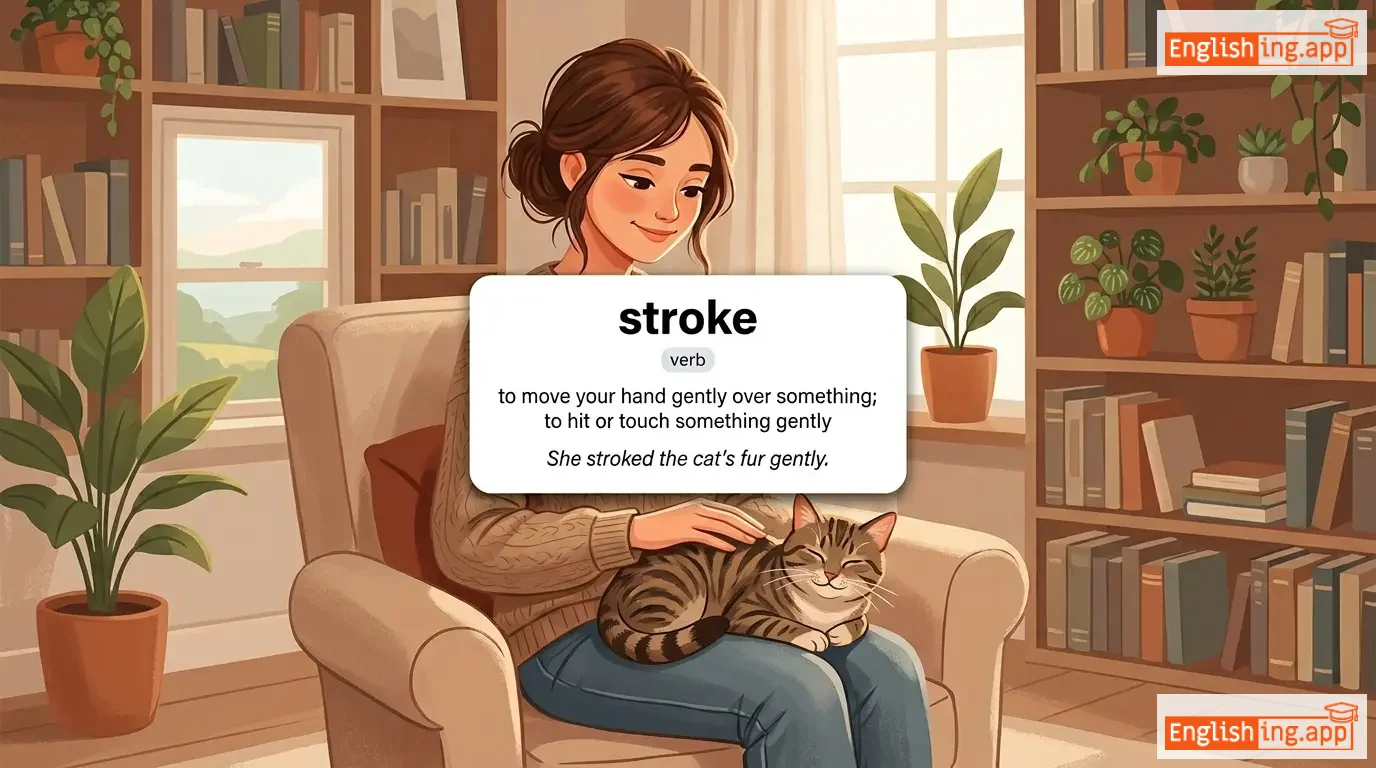
stroke definition card — visual illustration of the meaning
noun
/strəʊk/
स्ट्रोक (stroke)

a sudden attack or event, typically of a medical or physical nature

"He suffered a stroke while working at his desk."

"उसने अपने डेस्क पर काम करते हुए स्ट्रोक का सामना किया।" (Usne apne desk par kaam karte hue stroke ka samna kiya.)
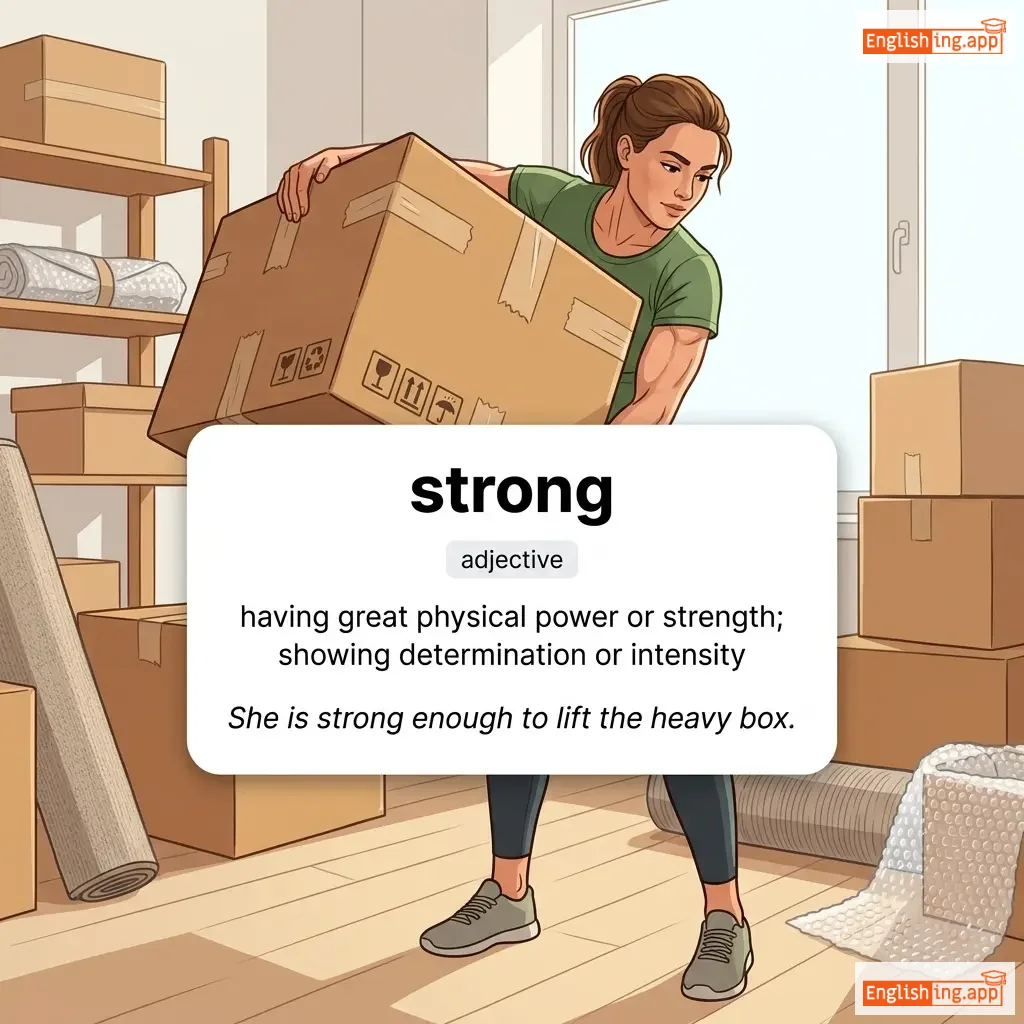
strong definition card — visual illustration of the meaning
adjective
/strɔːŋ/
मजबूत (mazboot)

having great physical power or strength; showing determination or intensity

"She is strong enough to lift the heavy box."

"वह भारी बॉक्स उठाने के लिए काफी मजबूत है।" (Vah bhaari box uthane ke liye kaafi mazboot hai.)
adverb
/ˈstrɒŋɡli/
मजबूती से (majbooti se)

in a strong manner or to a great extent

"She strongly believes in the power of positive thinking."

"वह सकारात्मक सोच की ताकत में मजबूती से विश्वास करती है।" (Wah sakaratmak soch ki taqat mein majbooti se vishwas karti hai.)
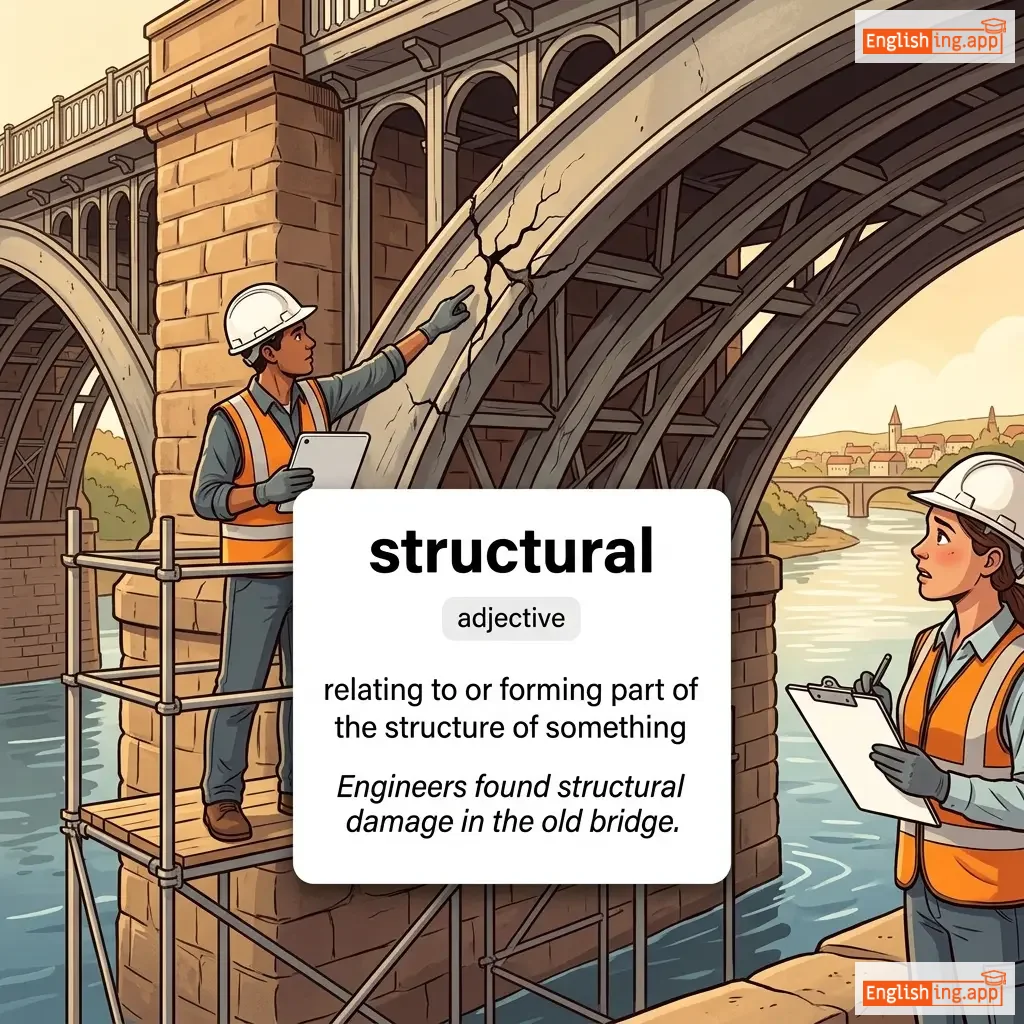
structural definition card — visual illustration of the meaning
adjective
/ˈstrʌktʃərəl/
संरचनात्मक (strukcharal)

relating to or forming part of the structure of something

"Engineers found structural damage in the old bridge."

"इंजीनियरों ने पुराने पुल में संरचनात्मक नुकसान पाया।" (Injiniyars ne purane pul me sanrachnaatmak nuksan paaya.)
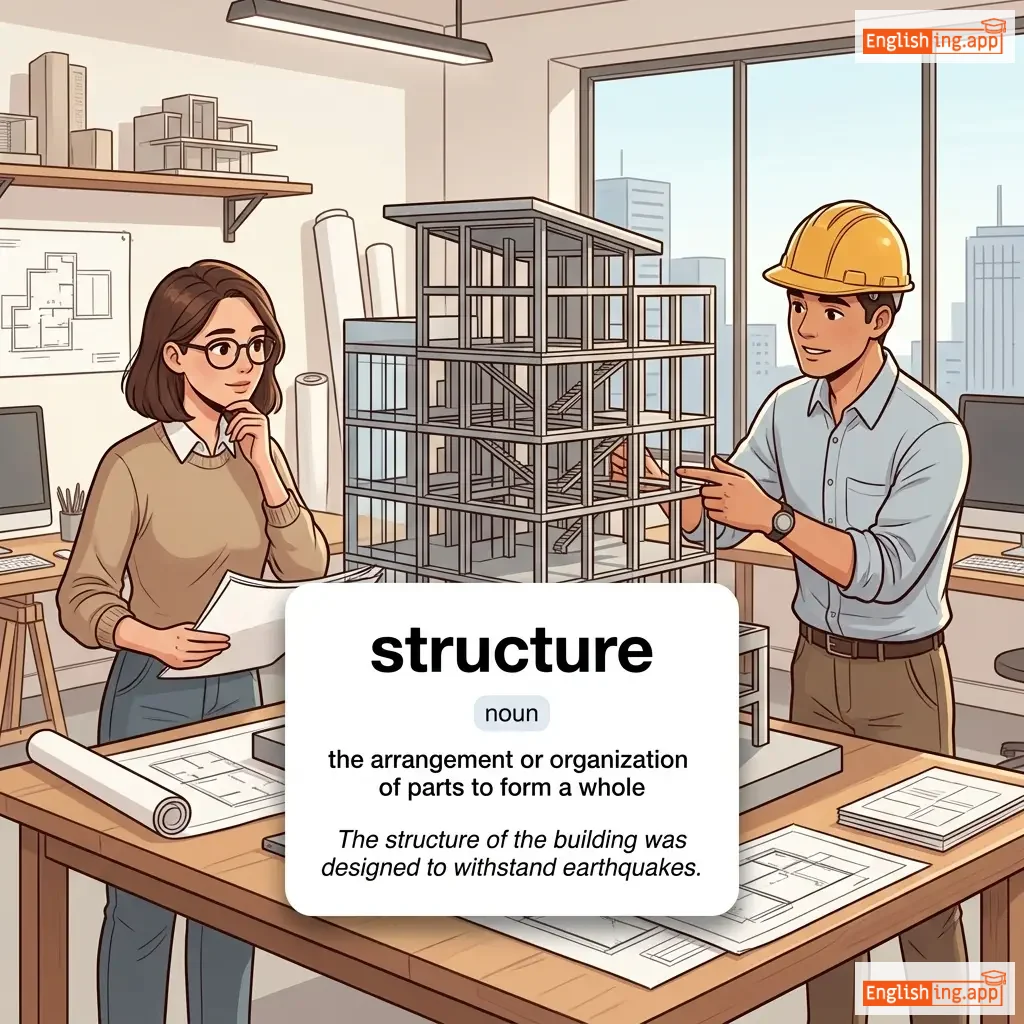
structure definition card — visual illustration of the meaning
noun
/ˈstrʌktʃər/
संरचना (sanrachna)

the arrangement or organization of parts to form a whole

"The structure of the building was designed to withstand earthquakes."

"भवन की संरचना को भूकंप का सामना करने के लिए डिज़ाइन किया गया था।" (Bhavan ki sanrachna ko bhookamp ka samna karne ke liye design kiya gaya tha.)
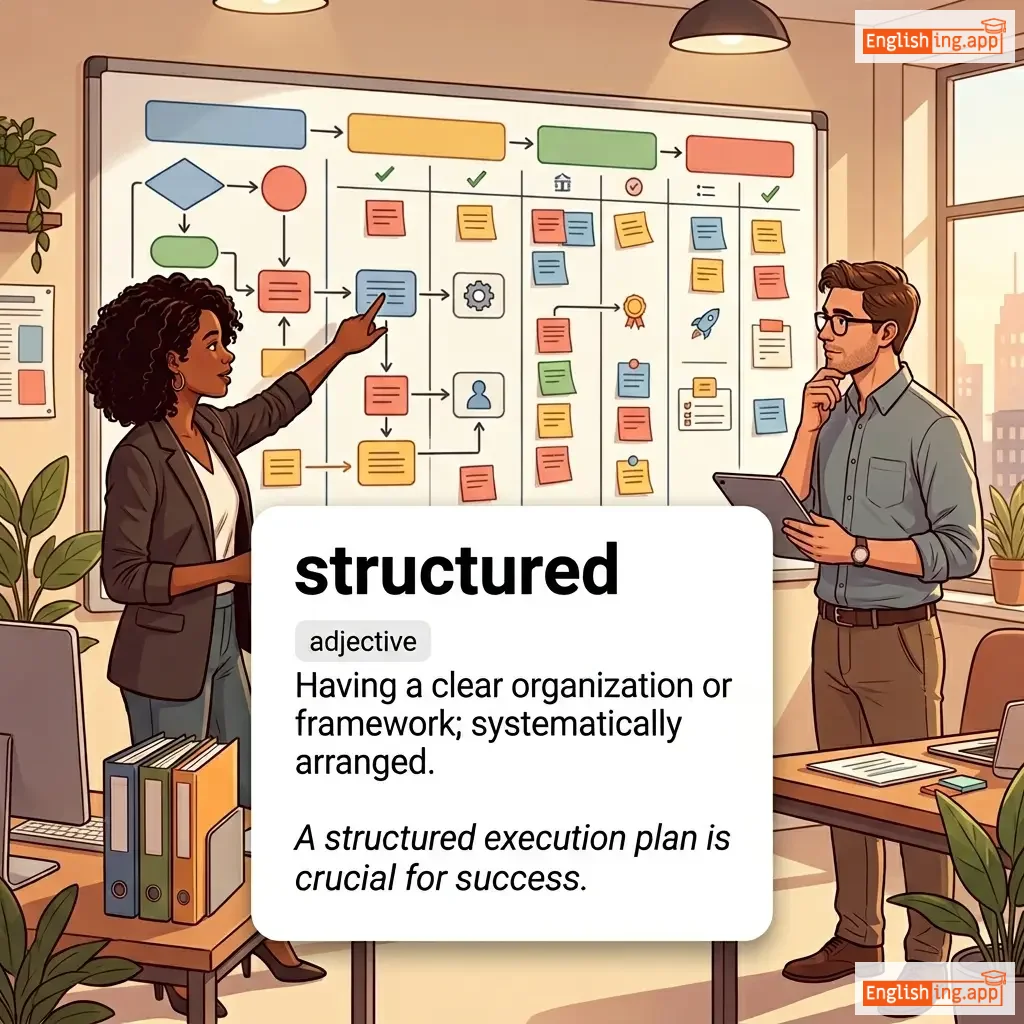
structured definition card — visual illustration of the meaning
adjective
ˈstrʌktʃərd
संरचित (sanrachit)

Having a clear organization or framework; systematically arranged.

"A structured execution plan is crucial for success."

"एक संरचित कार्यान्वयन योजना सफलता के लिए महत्वपूर्ण है।" (Ek sanrachit karyanvayan yojna safalta ke liye mahatvapurn hai.)
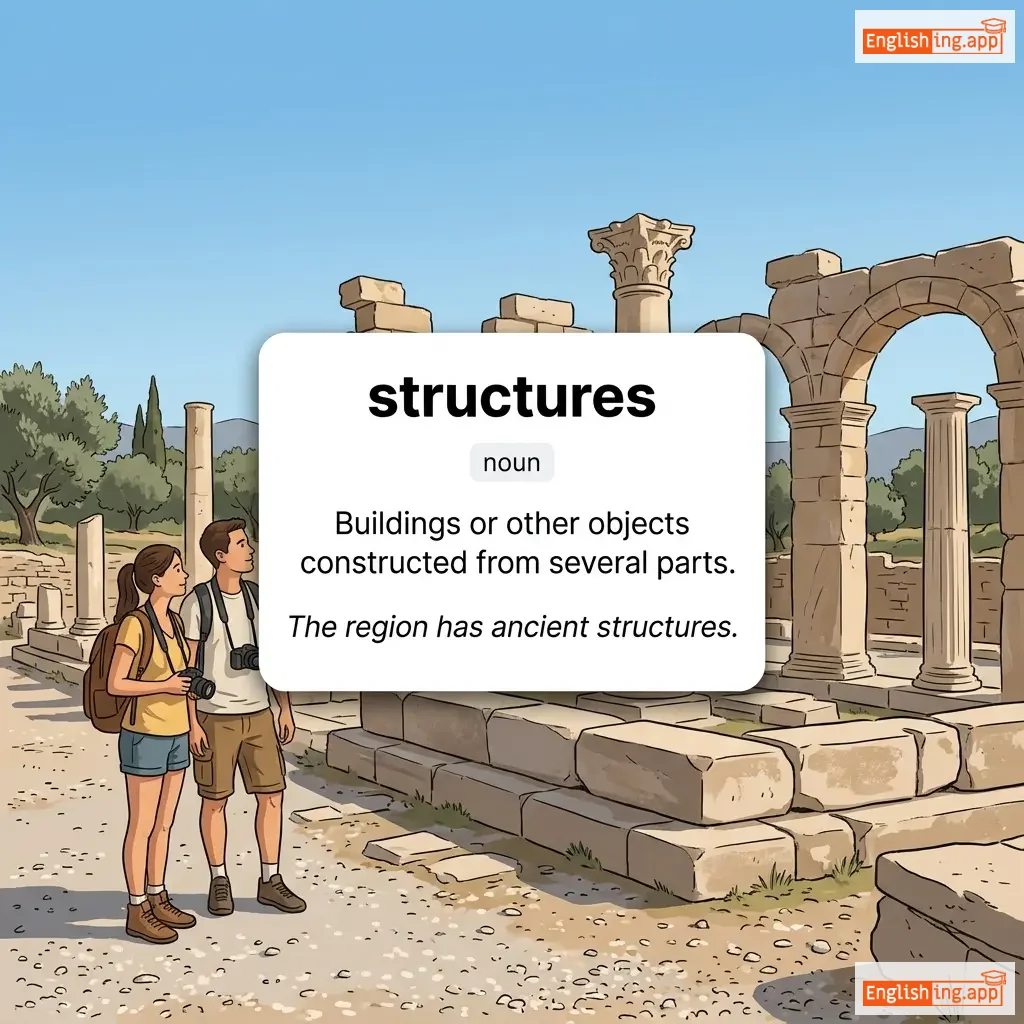
structures definition card — visual illustration of the meaning
noun
/ˈstrʌk.tʃərz/
संरचनाएँ (sanrachnaen)

Buildings or other objects constructed from several parts.

"The region has ancient structures."

"क्षेत्र में प्राचीन संरचनाएँ हैं।" (Kshetra mein prachin sanrachnaen hain.)
struggle definition card — visual illustration of the meaning
verb
/ˈstrʌɡl/
संघर्ष (sangharsh)

to fight or make a strenuous effort to achieve something

"He struggled to lift the heavy box."

"वह भारी बक्से को उठाने के लिए संघर्ष कर रहा था।" (Vah bhaari bakse ko uthane ke liye sangharsh kar raha tha.)
struggling definition card — visual illustration of the meaning
verb
/ˈstrʌɡlɪŋ/
संघर्ष करना (sangharsh karna)

Making forceful or violent efforts to get free of restraint or constriction; having difficulty achieving something.

"Many regions are struggling with economic recovery."

"कई क्षेत्रों को आर्थिक पुनरुद्धार में संघर्ष करना पड़ रहा है।" (Kai kshetron ko aarthik punaruddhar mein sangharsh karna pad raha hai.)
strut definition card — visual illustration of the meaning
verb
/strʌt/
गर्व से चलना (garv se chalna)

to walk with a stiff, proud, and confident gait, often to show off

"He strutted across the stage after winning the award."

"वह पुरस्कार जीतने के बाद मंच पर गर्व से चल रहा था।" (Woh puraskaar jeetne ke baad manch par garv se chal raha tha.)
adjective
/ˈstʌb.ərn/
अड़ियल; जिद्दी; हठी (adiyal, ziddi, hathi)

refusing to change opinion or course of action; persistent; obstinate

"The stubborn child refused to eat his vegetables."

"अड़ियल बच्चे ने अपने सब्ज़ी खाने से मना कर दिया।" (Adiyal bachche ne apne sabzi khane se mana kar diya.)
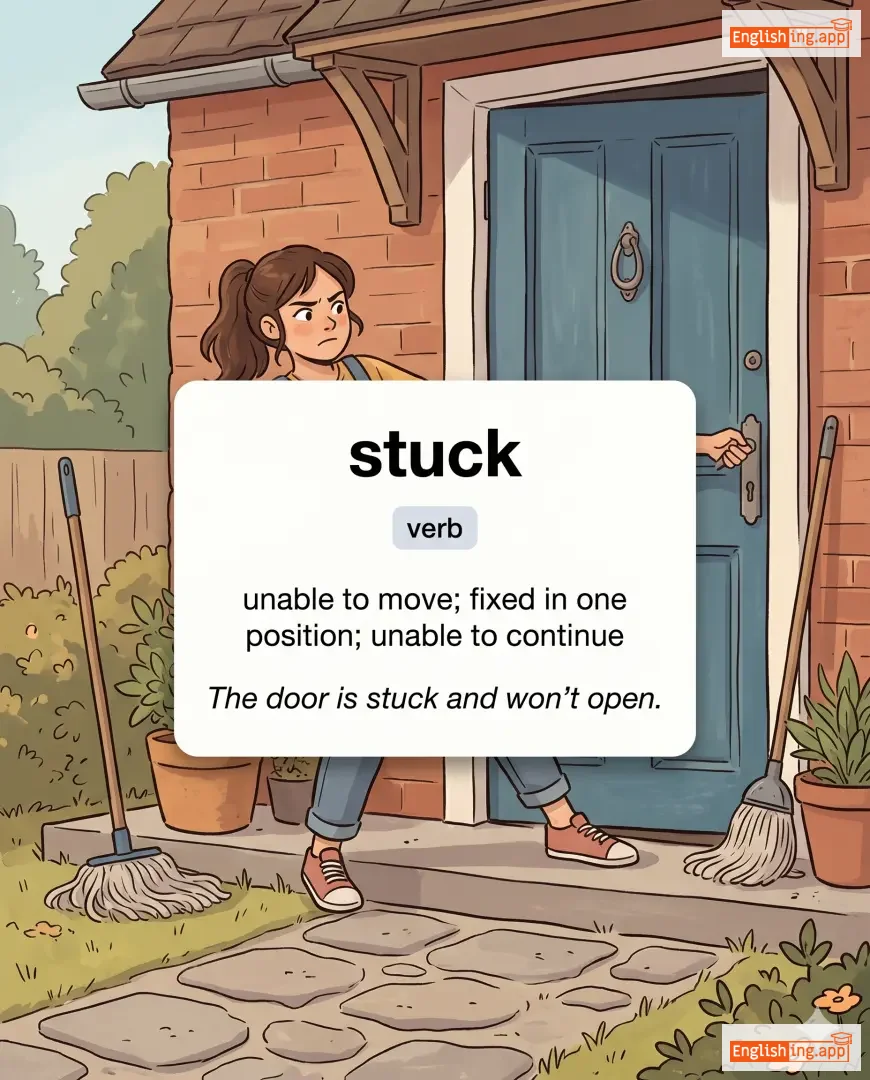
stuck definition card — visual illustration of the meaning
verb
/stʌk/
अटका हुआ (atka hua)

unable to move; fixed in one position; unable to continue

"The door is stuck and won't open."

"द्वार फंसा हुआ है और नहीं खुलेगा।" (Dwaar fansa hua hai aur nahi khulega)
student definition card — visual illustration of the meaning
noun
/ˈstjuːdənt/
छात्र (chhatra)

a person who is learning at an educational institution

"The student was studying for the final exam."

"छात्र अंतिम परीक्षा के लिए पढ़ाई कर रहा था।" (Chhatra antim pariksha ke liye padhai kar raha tha.)
adjective
/ˈstʌdid/
विचारशील (vicharshil)

carefully considered, deliberate, or planned

"Her response was calm and studied, not impulsive."

"उसकी प्रतिक्रिया शांत और विचारशील थी, न कि आवेगपूर्ण।" (Uski pratikriya shant aur vicharshil thi, na ki aavhegpoorn.)
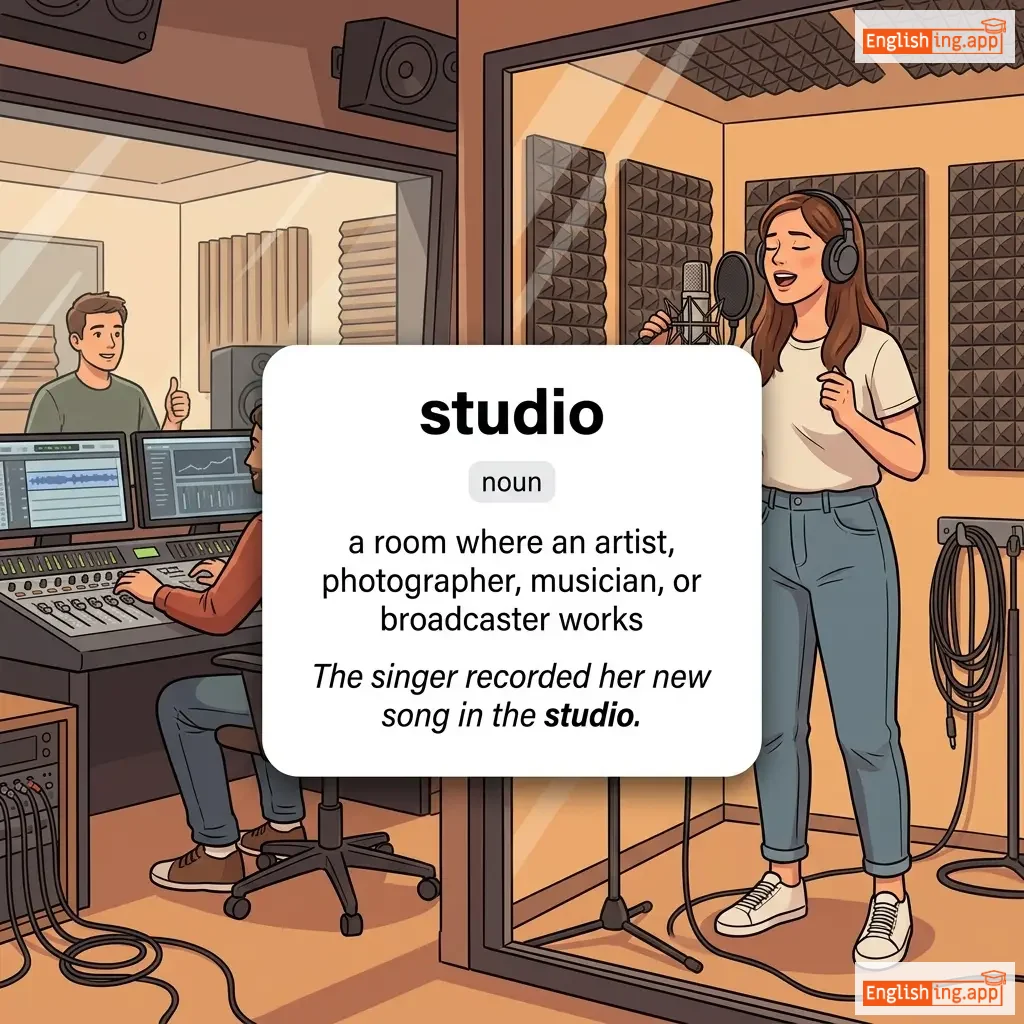
studio definition card — visual illustration of the meaning
noun
/ˈstjuːdiəʊ/
स्टूडियो (studio)

a room where an artist, photographer, musician, or broadcaster works

"The singer recorded her new song in the studio."

"गायक ने अपना नया गीत स्टूडियो में रिकॉर्ड किया।" (Gaayak ne apna naya geet studio mein record kiya.)
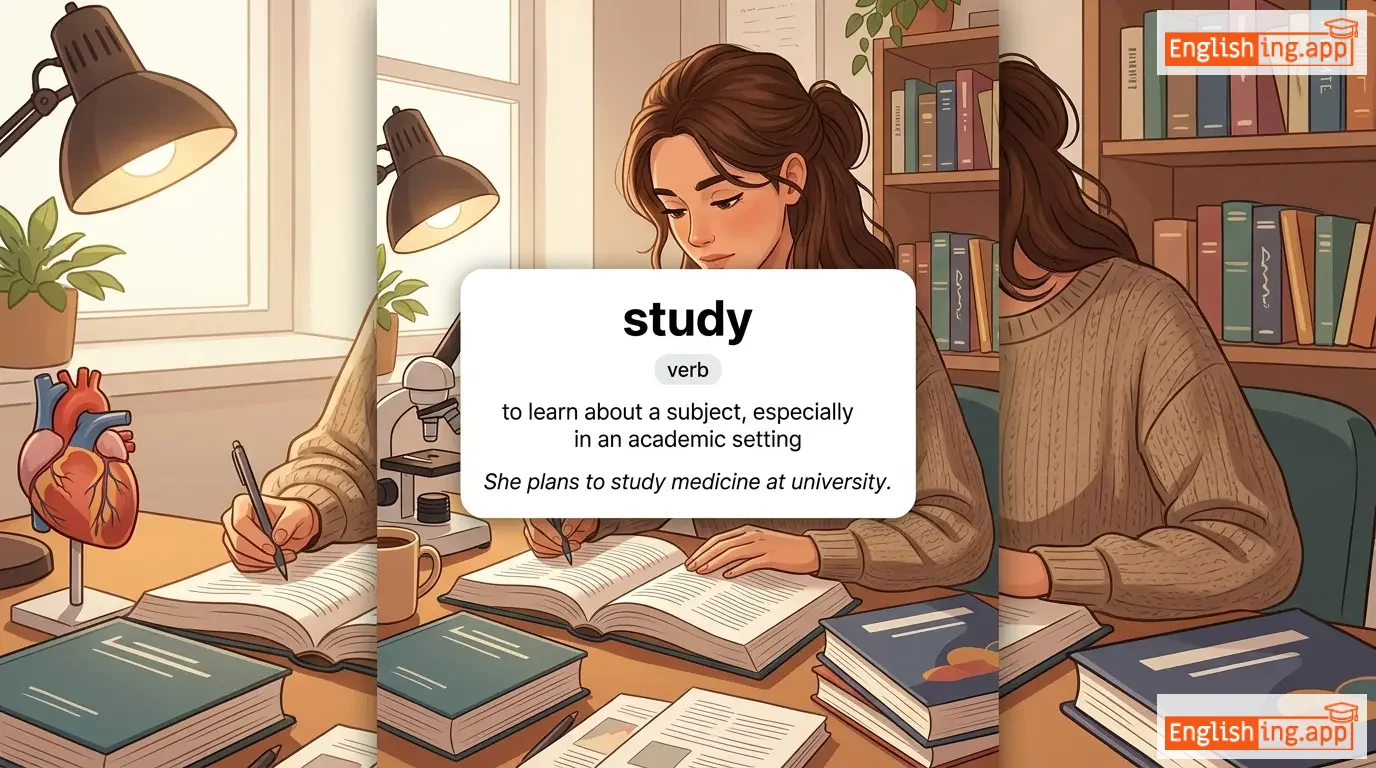
study definition card — visual illustration of the meaning
verb
/ˈstʌdi/
अध्यान करना (adhyan karna)

to learn about a subject, especially in an academic setting

"She plans to study medicine at university."

"वह विश्वविद्यालय में चिकित्सा अध्ययन करने की योजना बनाती है।" (Vah vishwavidyalaya mein chikitsa adhyan karne ki yojana banati hai.)
adjective
/ˈstjuːdiəs/
अध्ययनीय (adhyayanīya)

spending a lot of time studying or reading; very dedicated to learning

"She is a studious girl who spends hours in the library."

"वह एक अध्ययनीय लड़की है जो पुस्तकालय में घंटों बिता देती है।" (Vah ek adhyayanīya ladki hai jo pustakalay mein ghanton bita deti hai.)
adjective
/səbˈdʒɛktɪv/
व्यक्तिगत (vyaktigat)

based on personal feelings, tastes, or opinions rather than facts

"Beauty is often considered a subjective concept."

"सौंदर्य को अक्सर एक व्यक्तिगत अवधारणा के रूप में माना जाता है।" (Soundarya ko aksar ek vyaktigat avdharna ke roop mein maana jaata hai.)
noun
/səbˈdʒɛkʃən/
आधीनता (aadhinata)

the act of bringing someone or something under control or domination

"The people suffered under the subjection of a cruel ruler."

"लोग एक क्रूर शासक के अधीनता में कष्ट भोग रहे थे।" (Log ek kroor shasak ke adhinata mein kasht bhog rahe the.)
noun/verb/adjective
/ˈsʌbdʒɪkt/ (noun), /səbˈdʒɛkt/ (verb)
विषय (vishay)

noun: a topic or theme; verb: to cause to undergo; adjective: dependent or under authority

"The teacher introduced a new subject in class."

"शिक्षक ने क्लास में एक नया विषय पेश किया।" (Shikshak ne class mein ek naya vishay pesh kiya.)
adjective
/sʌbˈdʒeɪsənt/
नीचे स्थित (neeche sthit)

lying immediately beneath; underlying

"The geological survey revealed subjacent layers of rock."

"भूतत्वीय सर्वेक्षण ने नीचे स्थित चट्टानों की परतें प्रकट कीं।" (Bhootatviy survey ne neeche sthit chattanon ki paratein prakat ki.)
verb
/səbˈdjuː/
दबाना (dabaana)

To bring under control, especially by force; to overcome or quiet.

"The army was able to subdue the rebellion quickly."

"सेना जल्दी ही विद्रोह को दबाने में सक्षम हो गई।" (sena jaldi hi vidroh ko dabaane mein saksham ho gayi.)
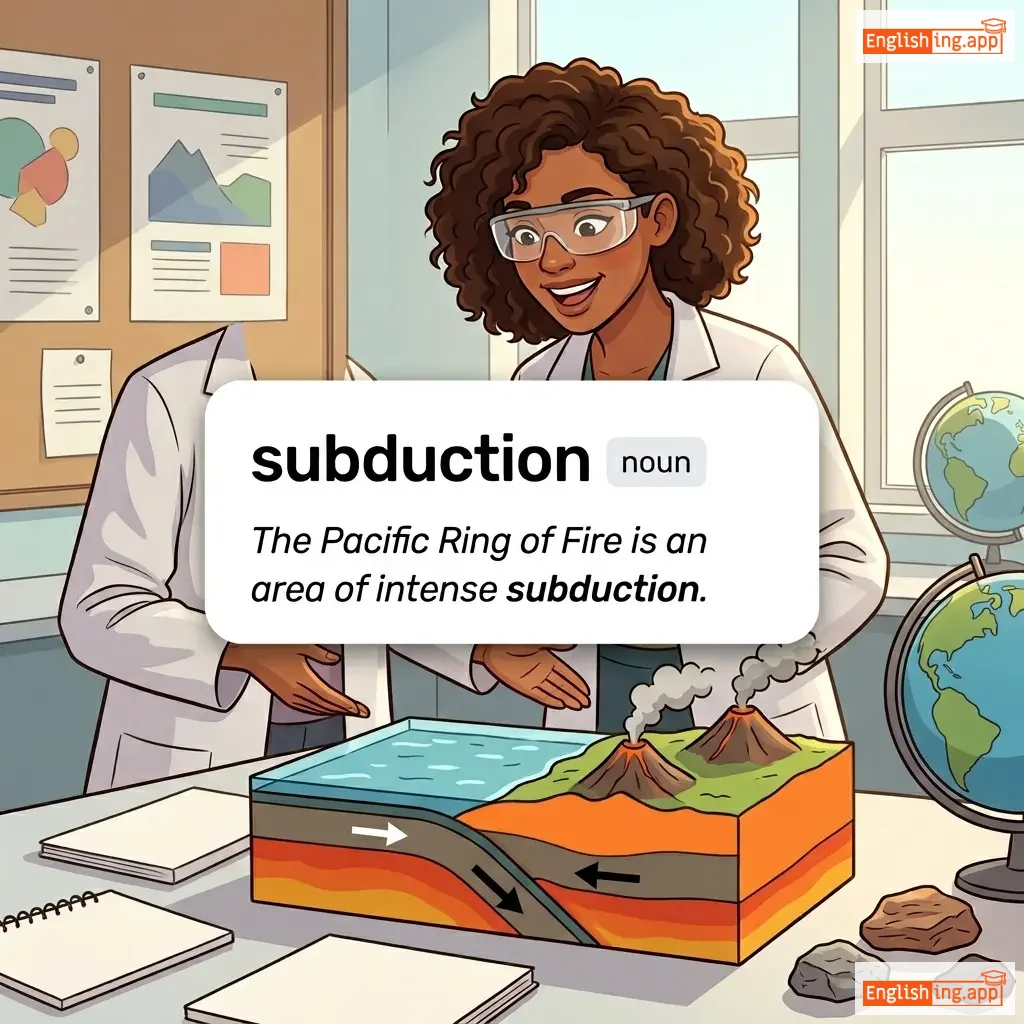
subduction definition card — visual illustration of the meaning
noun
/səbˈdʌk.ʃən/
पृथ्वी की सतह की एक परत का दूसरी परत के नीचे जाना (prithvi ki sathah ki ek parat ka doosri parat ke neeche jana)

The lateral and downward movement of the edge of a plate of the earth's crust into the mantle beneath another plate.

"The Pacific Ring of Fire is an area of intense subduction."

"पैसिफिक रिंग ऑफ फायर एक क्षेत्र है जहाँ गहरी सबडक्शन होती है।" (Pacific ring of fire ek kshetra hai jahan gehri subduction hoti hai.)
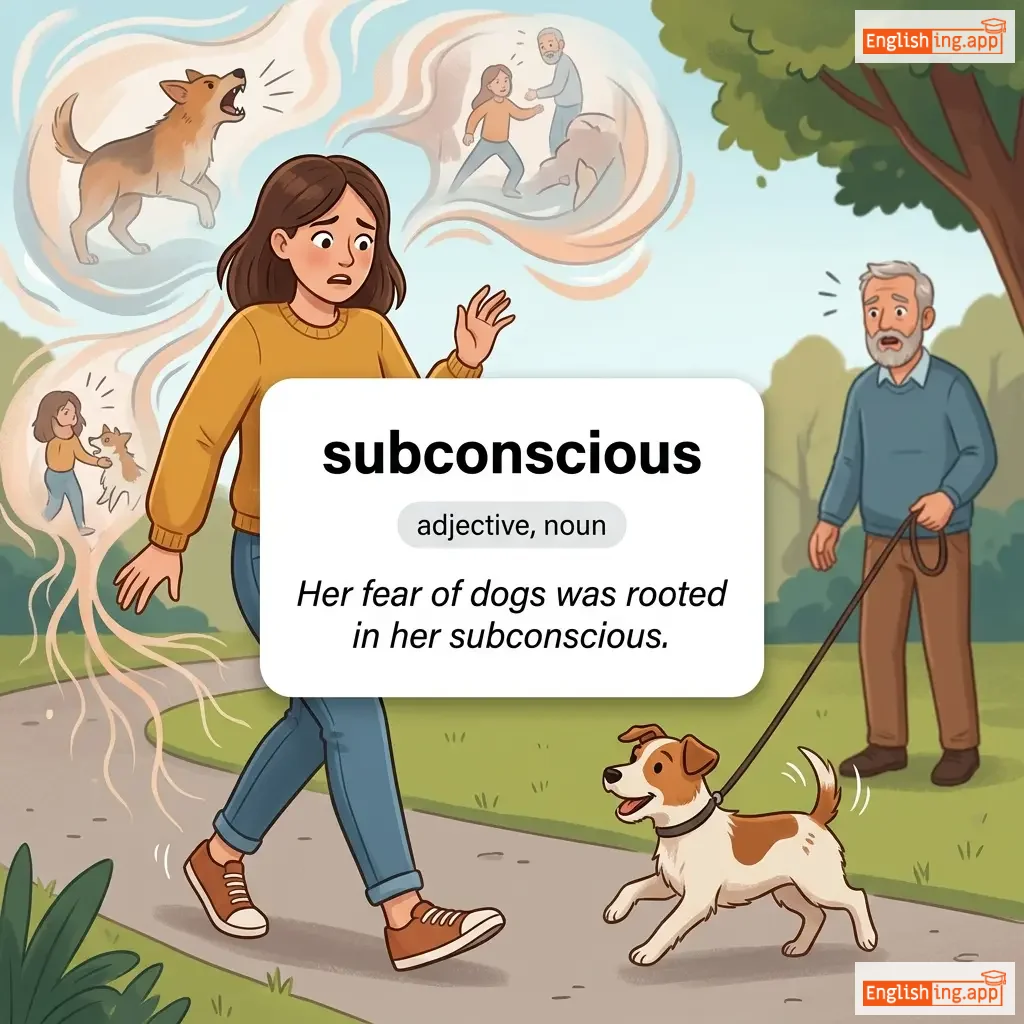
subconscious definition card — visual illustration of the meaning
adjective, noun
/ˌsʌbˈkɒn.ʃəs/
अवचेतन (avchetan)

Relating to the part of the mind that influences thoughts and actions without full awareness.

"Her fear of dogs was rooted in her subconscious."

"उसका कुत्तों से डर उसके अवचेतन में छिपा हुआ था।" (uska kutto se dar uske avchetan mein chhupa hua tha.)
adjective
/ˌsʌb.əˈkwɒt.ɪk/
जलमग्न (jalmagn)

Existing, living, or located under water.

"Divers explored the subaquatic cave system filled with rare fish."

"डाइवर्स ने दुर्लभ मछलियों से भरे जलमग्न गुफा प्रणाली का अन्वेषण किया।" (divers ne durlabh machhliyon se bhare jalmagn gufha pranali ka anvshan kiya.)
noun
/sʌbˈɔːl.tən/
किसी व्यक्ति जो अधीनस्थ स्थिति में हो; सैन्य में, एक जूनियर अधिकारी (subaltern)

A person holding a subordinate position; in the military, a junior officer.

"The subaltern was responsible for leading a small platoon of soldiers."

"सबऑल्टर्न छोटे सैनिकों के एक प्लाटून का नेतृत्व करने के लिए जिम्मेदार था।" (subaltern chhote sainikon ke ek platoon ka netritva karne ke liye zimmedar tha.)
adjective
/ˈsʌb.æs.ɪd/
हल्का खट्टा (halka khatta)

Slightly sour or acidic in taste or nature.

"The fruit had a subacid flavor that was refreshing on a hot day."

"फलों का हल्का खट्टा स्वाद था जो गर्मी के दिन में ताजगी प्रदान करता था।" (phalon ka halka khatta swad tha jo garmi ke din mein tajgi pradan karta tha.)
adverb
/ˌsʌb ˈroʊzə/
गोपनीय रूप से (gopneeya roop se)

secretly, in confidence, or in private

"The deal was made sub rosa to avoid public scrutiny."

"सौदा सब रोसा किया गया था ताकि सार्वजनिक जांच से बचा जा सके।" (Sauda sab rosa kiya gaya tha taki saarvajanik jaanch se bacha ja sake.)
noun
/ˈsʌb.mə.riːn/
पनडुब्बी (pandubbi)

a warship with a streamlined hull designed to operate completely submerged in the sea

"The submarine dived deep into the ocean to avoid detection."

"संदेह से बचने के लिए पनडुब्बी समुद्र की गहराई में डूब गई।" (sandeh se bachne ke liye pandubbi samudr ki gehraai mein doob gayi.)
noun
/ˈswɑːvɪti/
मृदुता और आकर्षण (mriduta aur aakarshan)

smoothness and charm in manner

"His suavity made him popular in social gatherings."

"उसकी मृदुता और आकर्षण ने उसे सामाजिक आयोजनों में लोकप्रिय बना दिया।" (Uski mriduta aur aakarshan ne use samajik aayojan mein lokpriya bana diya.)
adjective
/swɑːv/
आकर्षक और सुरुचिपूर्ण (aakarshak aur suruchipurn)

charming, confident, and elegant, often in a smooth or polished way

"He was a suave gentleman who impressed everyone at the party."

"वह एक सुरुचिपूर्ण सज्जन था जिसने पार्टी में सबको प्रभावित किया।" (Vah ek suruchipurn sajjan tha jismein party mein sabko prabhavit kiya.)
noun
/ˈsweɪʒən/
प्रेरणा (prerna)

the act of persuading or influencing someone

"The leader used gentle suasion to win support for the plan."

"नेता ने योजना के लिए समर्थन प्राप्त करने के लिए कोमल प्रेरणा का उपयोग किया।" (Neta ne yojana ke liye samarthan prapt karne ke liye komal prerna ka upyog kiya.)
verb
/ˈstaɪmi/
रोकना (rokna)

to prevent or hinder the progress of something

"The new regulations could stymie small businesses."

"नए नियम छोटे व्यवसायों को रोक सकते हैं।" (Naye niyam chhote vyavsayon ko rok sakte hain.)
noun
/ˈstaɪləs/
स्टाइलस (stylus)

a small tool used for writing, drawing, or touching screens

"She used a stylus to draw on her tablet."

"उसने अपनी टैबलेट पर चित्र बनाने के लिए स्टाइलस का इस्तेमाल किया।" (Usne apni tablet par chitra banane ke liye stylus ka istemal kiya.)
verb
/stʌn/
चौंकाना, हैरान करना (chaunkaana, hairaan karna)

to shock or surprise someone greatly; to knock someone unconscious or dazed

"The news of her sudden resignation stunned everyone."

"उसकी अचानक इस्तीफे की खबर ने सभी को चौंका दिया।" (Uski achanak isteefe ki khabar ne sabhi ko chaunka diya.)
noun/verb
/stʌmp/
वृक्ष का ठूंठ, भ्रमित करना (vriksh ka thoonth, bhramit karna)

the base of a tree left after the trunk is cut down; to puzzle or confuse

"The question completely stumped the students."

"प्रश्न ने छात्रों को पूरी तरह से स्तब्ध कर दिया।" (Prashn ne chhatron ko poori tarah se stabbdh kar diya.)
adjective
/ˈstʌm.pi/
मुंह चपटा और मोटा (munh chapta aur mota)

short and thick; having a short, thick appearance

"The stumpy little dog wagged its tail enthusiastically."

"वो छोटा सा मोटा कुत्ता खुशी से अपनी पूंछ हिला रहा था।" (vo chhota sa mota kutta khushi se apni poonch hila raha tha)
verb
/ˈstʌmbəl/
ठोकर खाना (thokar khana)

to trip or lose balance while walking or running; to make a mistake or falter

"He stumbled on the uneven pavement."

"वह असमान सड़क पर ठोकर खा गया।" (Woh asamaan sadak par thokar khaa gaya.)
adjective
/ˈstʌnɪŋ/
अद्भुत (adbhut)

extremely impressive or attractive

"The view from the top of the mountain was absolutely stunning."

"पहाड़ के शिखर से दृश्य बिल्कुल अद्भुत था।" (Pahad ke shikhar se drishya bilkul adbhut tha.)