Словари

Словарь английского языка | Значения слов, определения и примеры

verb
/straɪd/
идти с длинными, решительными шагами; делать успехи (idti s dlinnyimi, reshitiel'nymi shagami; delat' uspekhi)

to walk with long, decisive steps; to make progress

"She strode confidently across the stage."

"Она уверенно прошла по сцене." (Ona uverienno proshla po stsienie.)
adjective
/ˈstraɪ.dənt/
резкий, громкий (rezkiy, gromkiy)

loud and harsh; presenting a point of view in a forceful way

"His strident voice made the debate uncomfortable."

"Его резкий голос сделал дебаты неудобными." (Ego rezkiy golos sdelal debaty neudobnymi.)
noun
/straɪf/
конфликт, раздоры (konflikt, razdory)

angry or violent conflict; struggle or discord

"The region has been torn apart by political strife."

"Регион был разорван политическими конфликтами." (Region byl razorvan politicheskimi konfliktami.)
verb
/straɪk/
забастовка / ударить (zabastovka / udarit)

to hit forcibly or attack; also to stop work as a form of protest

"The workers decided to strike for better wages."

"Рабочие решили устроить забастовку за повышение зарплаты." (Rabochie reshilі ustroit’ zabastovku za povishenie zarplaty.)
adjective
/ˈstraɪkɪŋ/
поразительный (porazitelny)

very noticeable or impressive in appearance or effect

"Her striking beauty caught everyone's attention."

"Ее поразительная красота привлекла внимание всех." (Eyo porazitel'naya krasota privlekla vnimanie vsekh.)
noun, verb
/strɪŋ/
шнур (shnur)

a thin piece of cord or thread; to tie or fasten with a string

"She tied the package with a string."

"Она завязала пакет шнурком." (Ona zavyazala paket shnurkoy.)
noun
/ˈstrɪndʒənsi/
строгость (strohost)

the quality of being strict, precise, or severe

"The stringency of the new rules surprised everyone."

"Строгость новых правил удивила всех." (Strohost' novyh pravil udivila vsekh.)
adjective
/ˈstrɪndʒənt/
строгий (strogy)

strict, precise, and exacting

"The government imposed stringent measures during the crisis."

"Правительство ввело строгие меры в период кризиса." (Pravitel'stvo vvelo strogie mery v period krizisa.)
verb
/strɪp/
снимать / раздеваться (snimat' / razdevat'sya)

to remove coverings or layers from something; to undress

"He had to strip the old paint from the wall."

"Ему нужно было снять старую краску со стены." (Emu nuzhno bylo snjat' staruju krasku so steny.)
noun
/ˈstrɪplɪŋ/
юноша (yunosha)

a young man who is not yet fully grown

"The stripling dreamed of becoming a brave knight."

"Юноша мечтал стать смелым рыцарем." (Yunosha mechtal stat' smelym rytsarem.)
verb
/straɪv/
стремиться (stremit'sya)

To make great efforts to achieve or obtain something.

"She strives to be the best student in her class."
"Она стремится быть лучшей ученицей в своем классе." (Ona stremitsya byt' luchshey uchenitsey v svoyem klasse.)
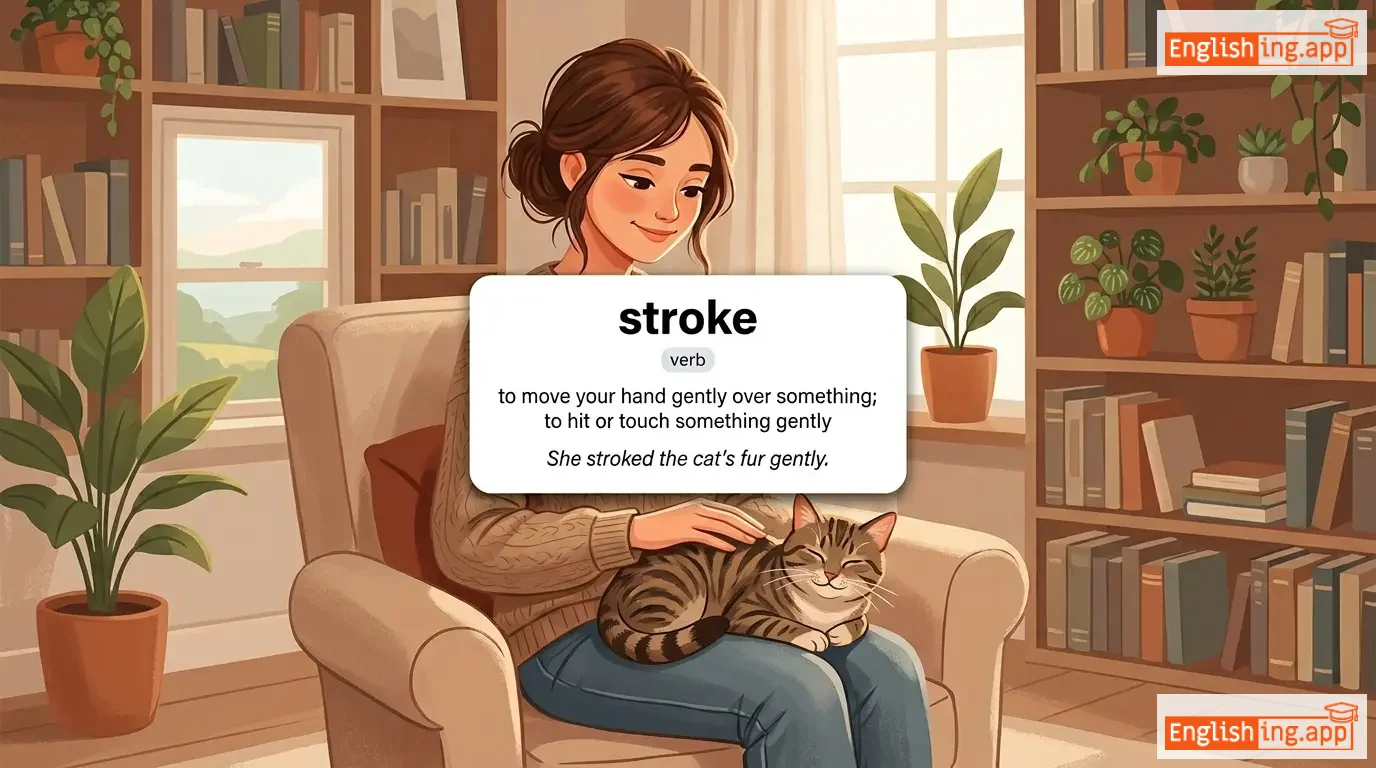
stroke definition card — visual illustration of the meaning
noun
/strəʊk/
инсульт (insult)

a sudden attack or event, typically of a medical or physical nature

"He suffered a stroke while working at his desk."
"Он перенёс инсульт, работая за своим столом." (On perenyos insult, rabotaya za svoim stolom.)
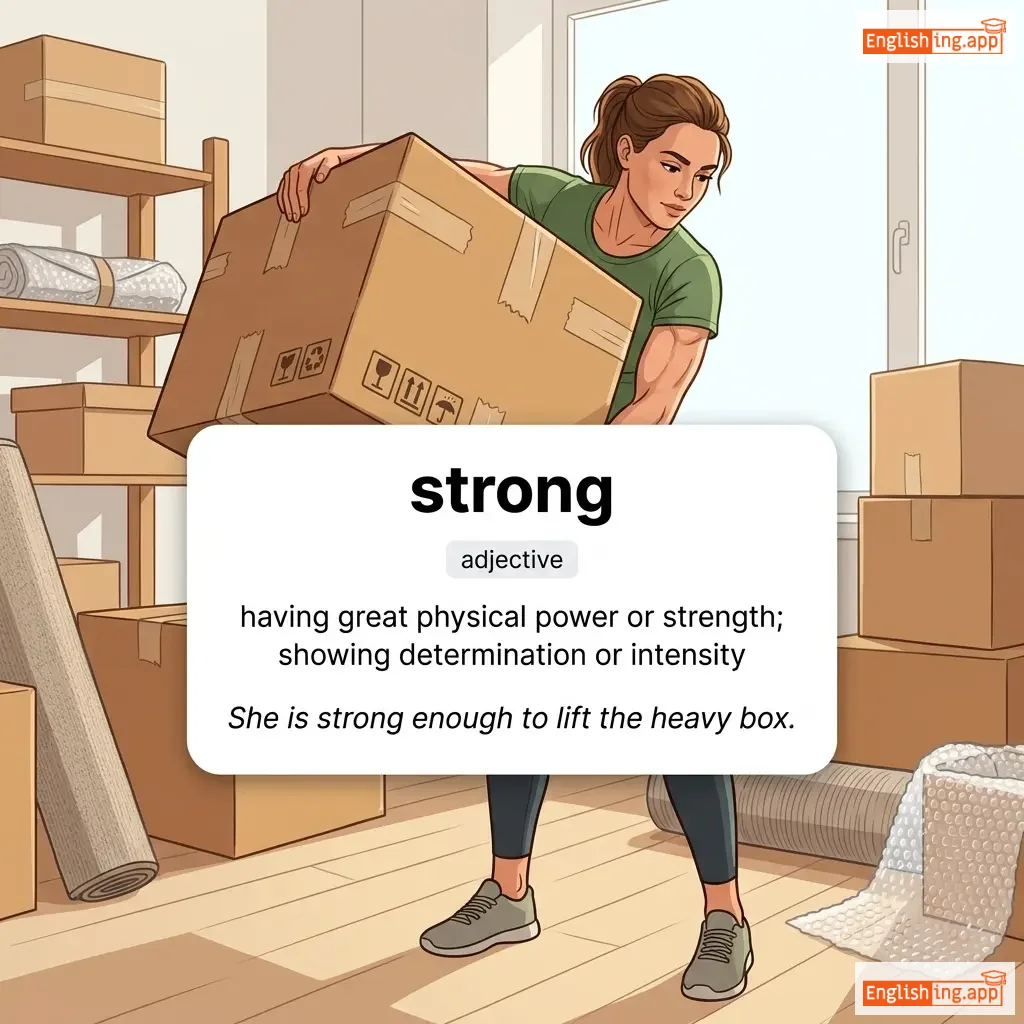
strong definition card — visual illustration of the meaning
adjective
/strɔːŋ/
сильный (silny)

having great physical power or strength; showing determination or intensity

"She is strong enough to lift the heavy box."

"Она достаточно сильна, чтобы поднять тяжелую коробку." (Ona dostatochno sil'na, chtoby podnyat' tyazholuyu korobku.)
adverb
/ˈstrɒŋɡli/
сильно (sil'no)

in a strong manner or to a great extent

"She strongly believes in the power of positive thinking."
"Она сильно верит в силу позитивного мышления." (Ona sil'no verit v silu pozitivnogo myshleniya.)
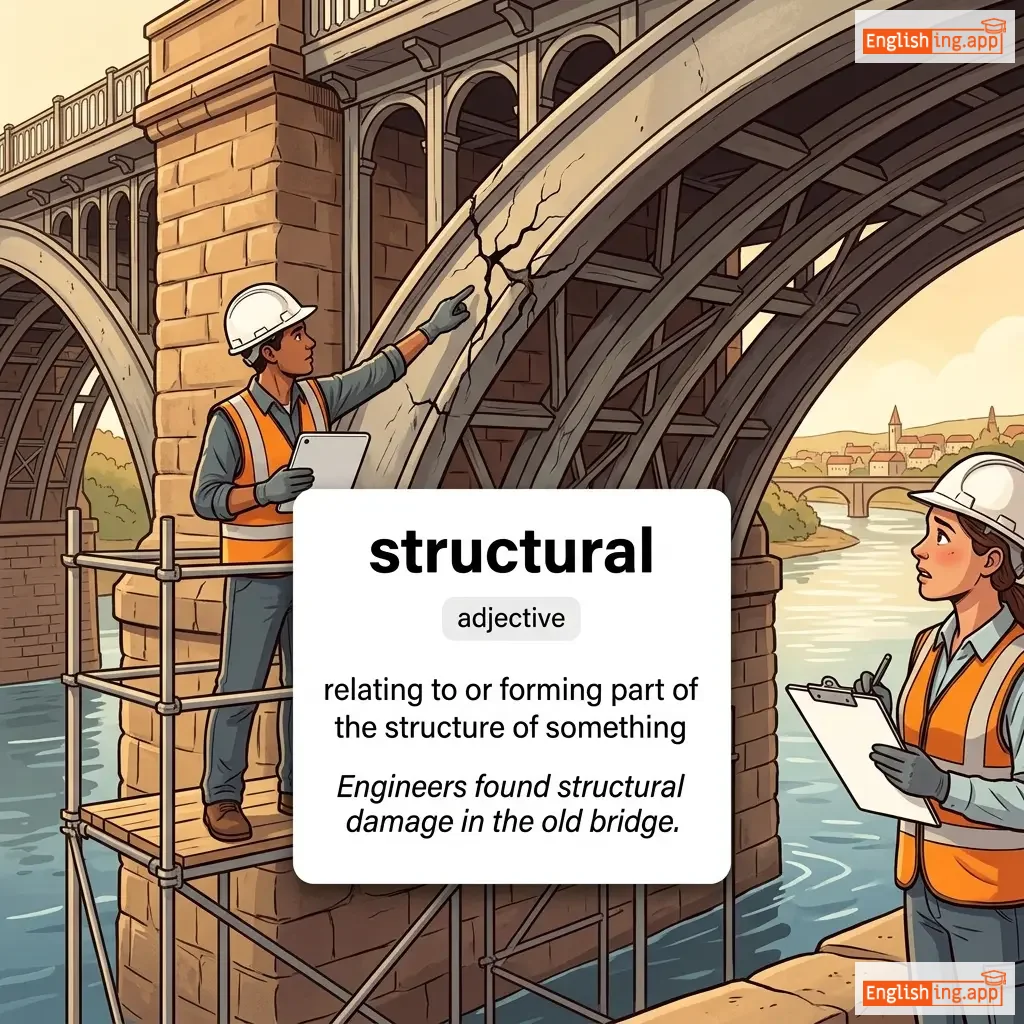
structural definition card — visual illustration of the meaning
🏗️

structural

adjective
/ˈstrʌktʃərəl/

relating to or forming part of the structure of something

"Engineers found structural damage in the old bridge."
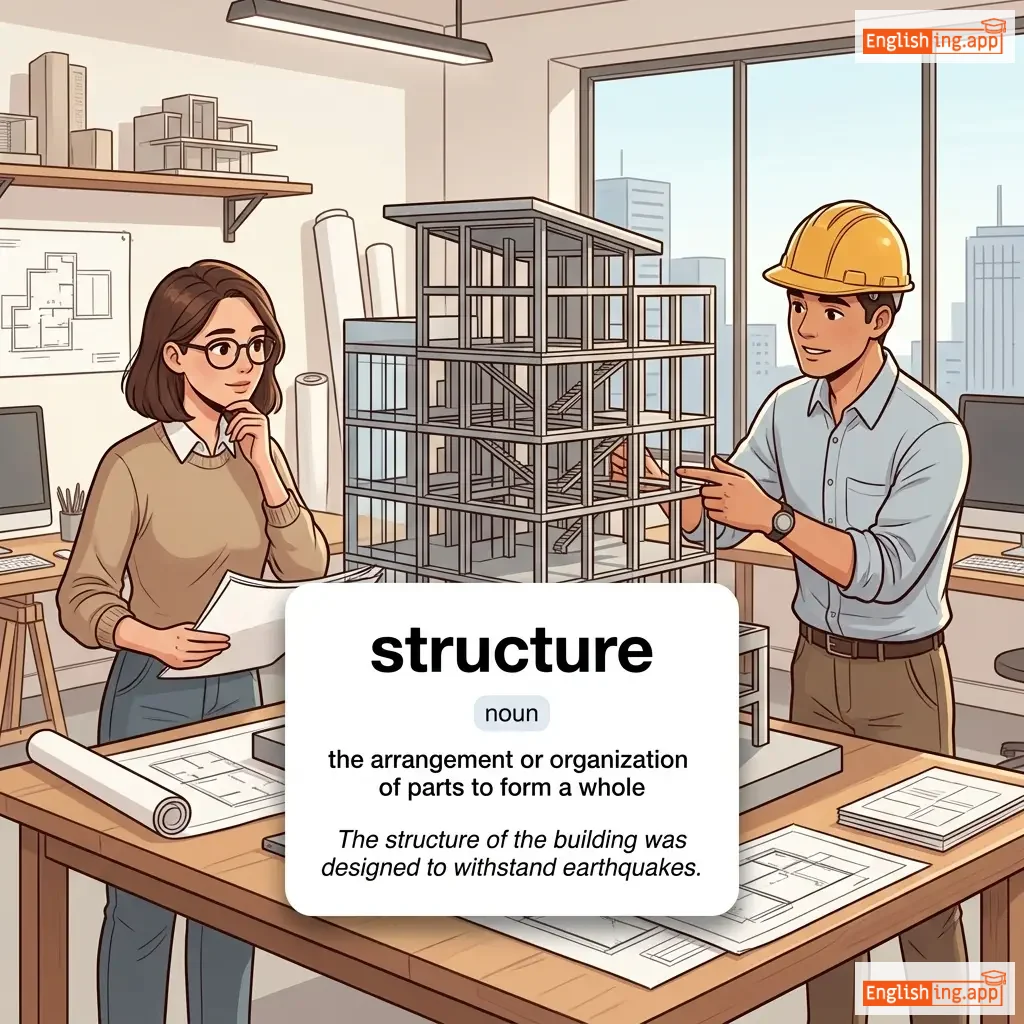
structure definition card — visual illustration of the meaning
noun
/ˈstrʌktʃər/
структура (struktura)

the arrangement or organization of parts to form a whole

"The structure of the building was designed to withstand earthquakes."

"Структура здания была спроектирована так, чтобы выдерживать землетрясения." (Struktura zdaniya byla sproyektirovana tak, chtoby vydurzhivat' zemletryaseniya.)
structured definition card — visual illustration of the meaning
adjective
ˈstrʌktʃərd
структурированный (struktuirovannyi)

Having a clear organization or framework; systematically arranged.

"A structured execution plan is crucial for success."
"Структурированный план выполнения критичен для успеха." (Struktuirovannyi plan vypolneniya kritichen dlya uspekha.)
structures definition card — visual illustration of the meaning
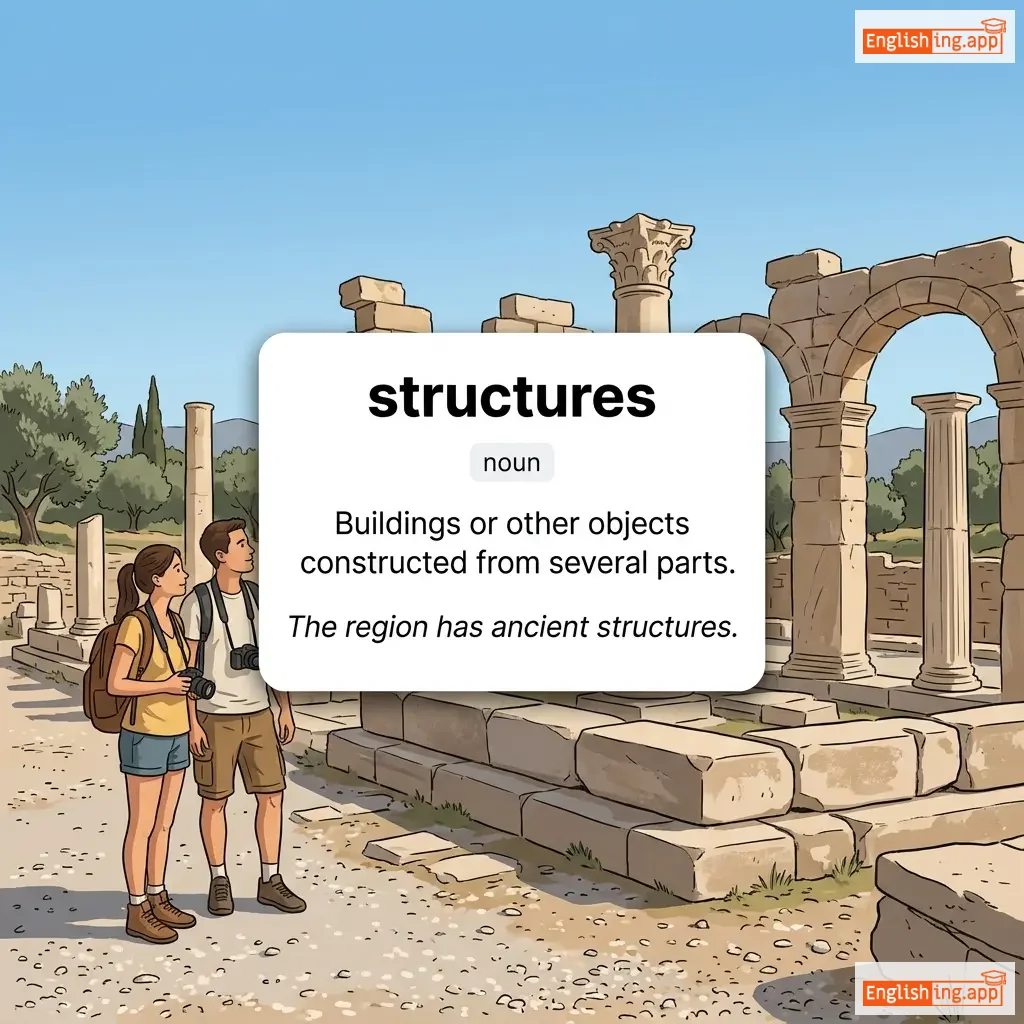
noun
/ˈstrʌk.tʃərz/
структуры (struktury)

Buildings or other objects constructed from several parts.

"The region has ancient structures."

"Этот регион имеет древние структуры." (Etot region imeet drevnie struktury.)
struggle definition card — visual illustration of the meaning
verb
/ˈstrʌɡl/
борьба (borba)

to fight or make a strenuous effort to achieve something

"He struggled to lift the heavy box."

"Он боролся, чтобы поднять тяжелую коробку." (On borolsya, chtoby podnyat' tyazholuyu korobku.)
struggling definition card — visual illustration of the meaning
verb
/ˈstrʌɡlɪŋ/
бороться (borot'sya)

Making forceful or violent efforts to get free of restraint or constriction; having difficulty achieving something.

"Many regions are struggling with economic recovery."
"Многие регионы борются с экономическим восстановлением." (Mnogiye regiony boryutsya s ekonomicheskim vosstanovleniem.)
strut definition card — visual illustration of the meaning
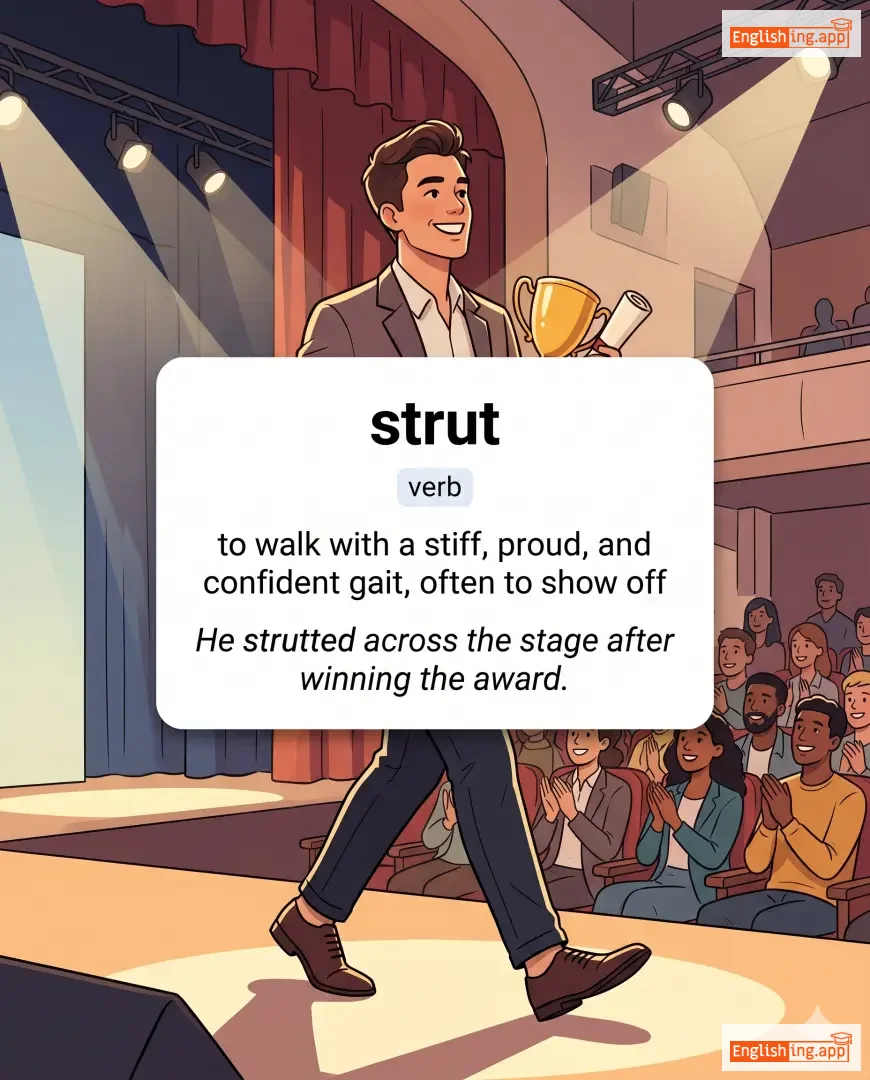
🚶‍♂️

strut (strat)

verb
/strʌt/
идти с гордостью (idti s gordostyu)

to walk with a stiff, proud, and confident gait, often to show off

"He strutted across the stage after winning the award."

"Он гордо прошел по сцене после того, как выиграл награду." (On gordo proshel po stsene posle togo, kak viigral nagradu.)
adjective
/ˈstʌb.ərn/
упрямый; настойчивый; упорный (upryamy, nastoychivy, uporni)

refusing to change opinion or course of action; persistent; obstinate

"The stubborn child refused to eat his vegetables."
"Упрямый ребенок отказался есть свои овощи." (Upryamy rebenok otkazalsya yest' svoi ovoshchi.)
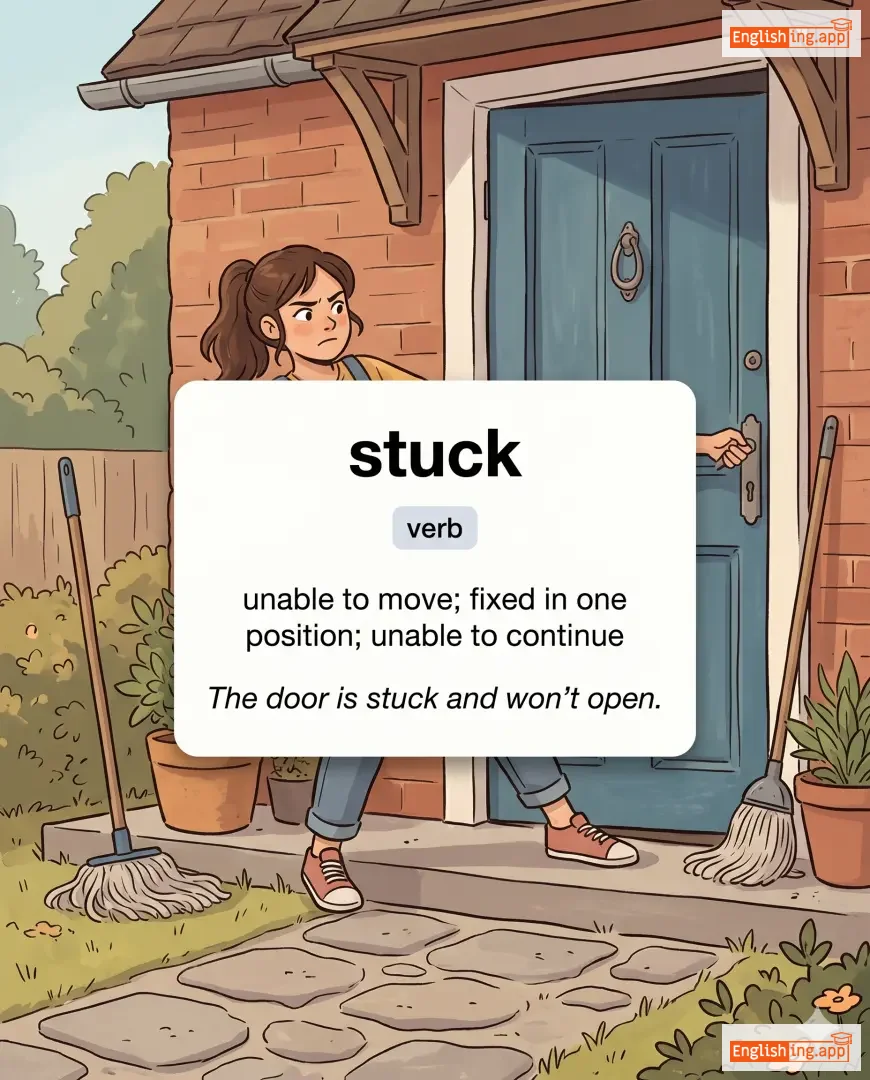
stuck definition card — visual illustration of the meaning
verb
/stʌk/
застрявший (zastryavshiy)

unable to move; fixed in one position; unable to continue

"The door is stuck and won't open."

"Дверь застряла и не откроется." (Dver' zastrayala i ne otkroetsya)
student definition card — visual illustration of the meaning
noun
/ˈstjuːdənt/
студент (student)

a person who is learning at an educational institution

"The student was studying for the final exam."

"Студент учился к финальному экзамену." (Student uchilsya k final'nomu ekzameny.)
adjective
/ˈstʌdid/
обдуманный (obdumannyy)

carefully considered, deliberate, or planned

"Her response was calm and studied, not impulsive."
"Её ответ был спокойным и обдуманным, не импульсивным." (Yeyo otvet byl spokoynym i obdumannym, ne impulsivnym.)
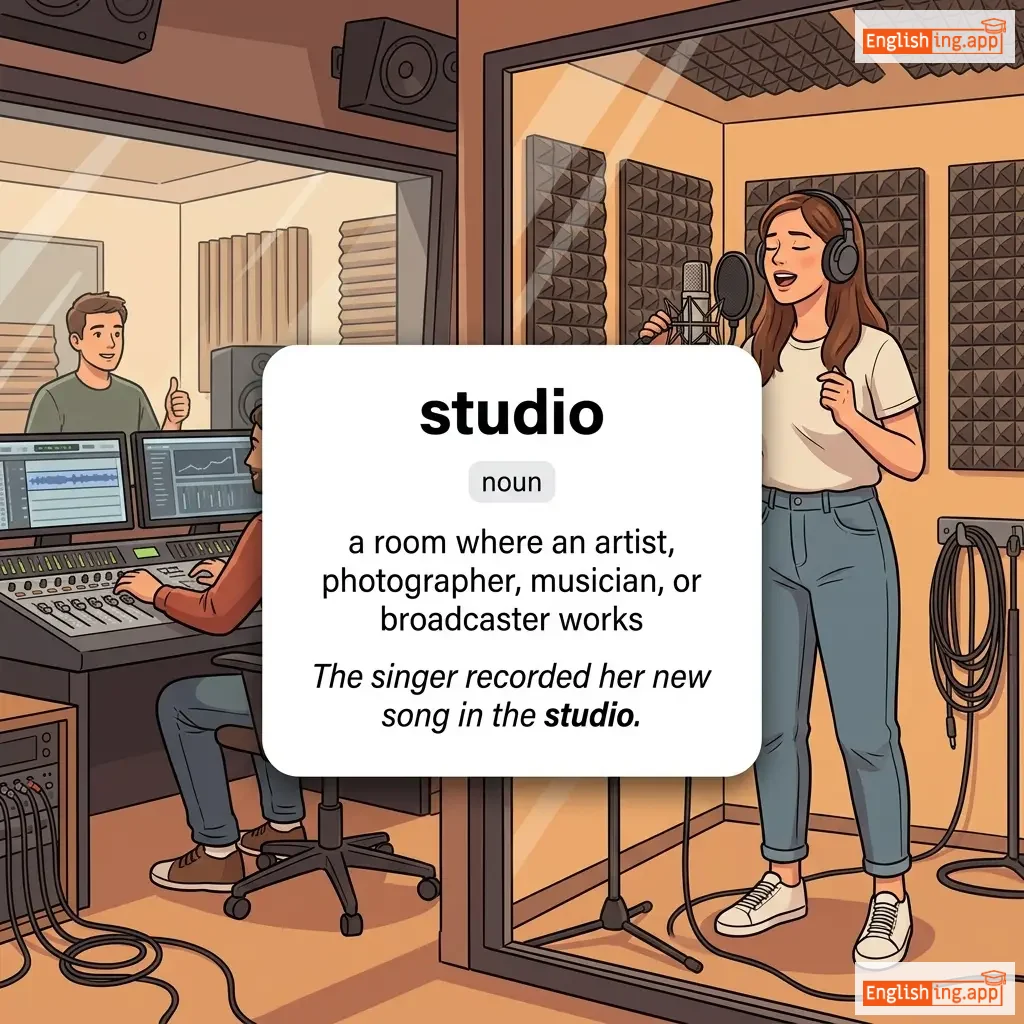
studio definition card — visual illustration of the meaning
noun
/ˈstjuːdiəʊ/
студия (studiya)

a room where an artist, photographer, musician, or broadcaster works

"The singer recorded her new song in the studio."
"Певица записала свою новую песню в студии." (Pevitsa zapisana svoyu novuyu pesnyu v studii.)
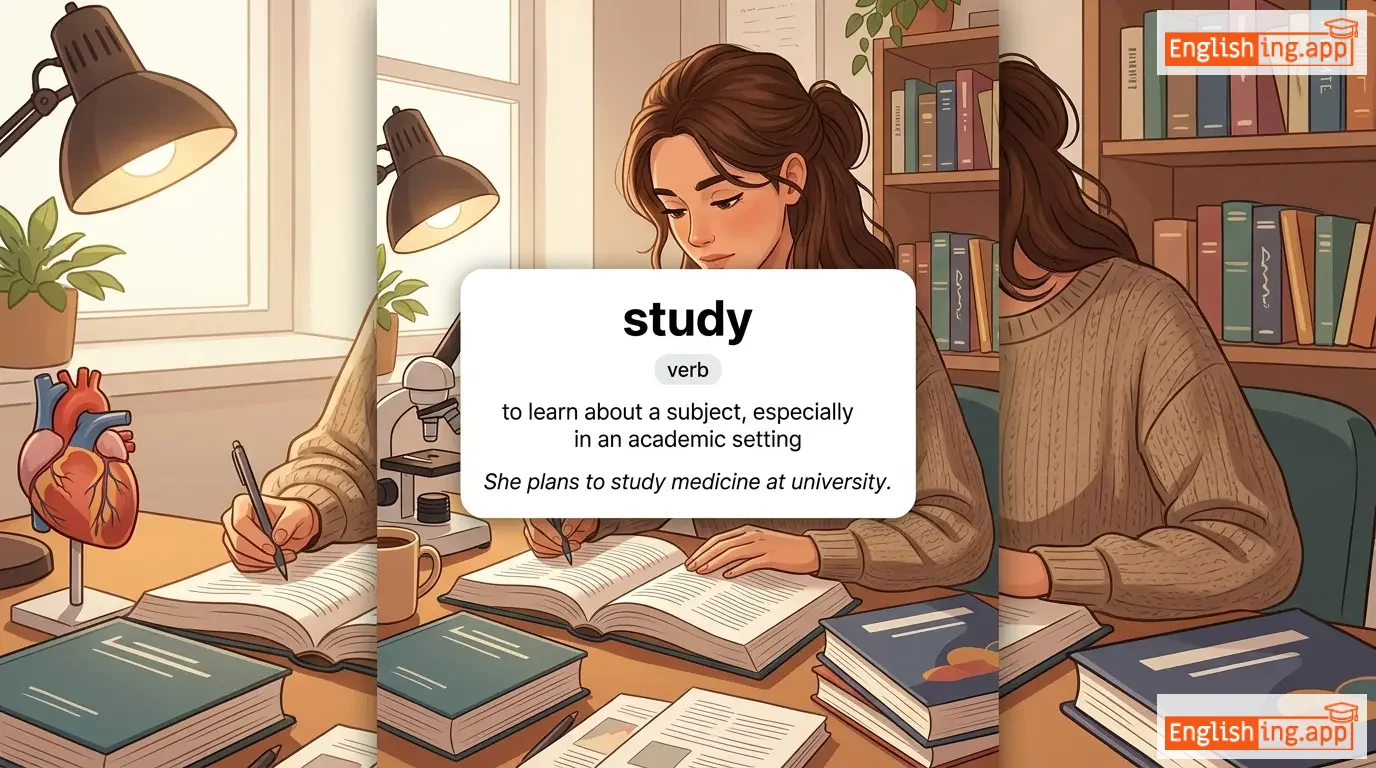
study definition card — visual illustration of the meaning
verb
/ˈstʌdi/
изучать (izuchat)

to learn about a subject, especially in an academic setting

"She plans to study medicine at university."

"Она планирует изучать медицину в университете." (Ona planiruet izuchat' meditsinu v universitete.)
adjective
/ˈstjuːdiəs/
усердный ученик (userdnyy uchenik)

spending a lot of time studying or reading; very dedicated to learning

"She is a studious girl who spends hours in the library."

"Она усердная ученица, которая проводит часы в библиотеке." (Ona userdnaya uchenitsa, kotoraya provodit chasy v biblioteke.)
adjective
/səbˈdʒɛktɪv/
субъективный (sub'yektivnyy)

based on personal feelings, tastes, or opinions rather than facts

"Beauty is often considered a subjective concept."

"Красоту часто считают субъективным понятием." (Krasotu chasto schitayut sub'yektivnym ponyatiem.)
noun
/səbˈdʒɛkʃən/
порабощение (poraboschhenie)

the act of bringing someone or something under control or domination

"The people suffered under the subjection of a cruel ruler."

"Люди страдали под владычеством жестокого правителя." (Lyudi stradali pod vladychestvom zhestokogo pravitelya.)
noun/verb/adjective
/ˈsʌbdʒɪkt/ (noun), /səbˈdʒɛkt/ (verb)
предмет (predmet)

noun: a topic or theme; verb: to cause to undergo; adjective: dependent or under authority

"The teacher introduced a new subject in class."

"Учитель ввел новый предмет в классе." (Uchitel' vvedel novyy predmet v klasse.)
adjective
/sʌbˈdʒeɪsənt/
подлежащий (podlezhaschij)

lying immediately beneath; underlying

"The geological survey revealed subjacent layers of rock."

"Геологическое исследование выявило подлежащие слои горных пород." (Geologicheskoe issledovanie vyyavilo podlezhaschie sloi gornykh porod.)
⚔️

subdue

verb
/səbˈdjuː/

To bring under control, especially by force; to overcome or quiet.

"The army was able to subdue the rebellion quickly."
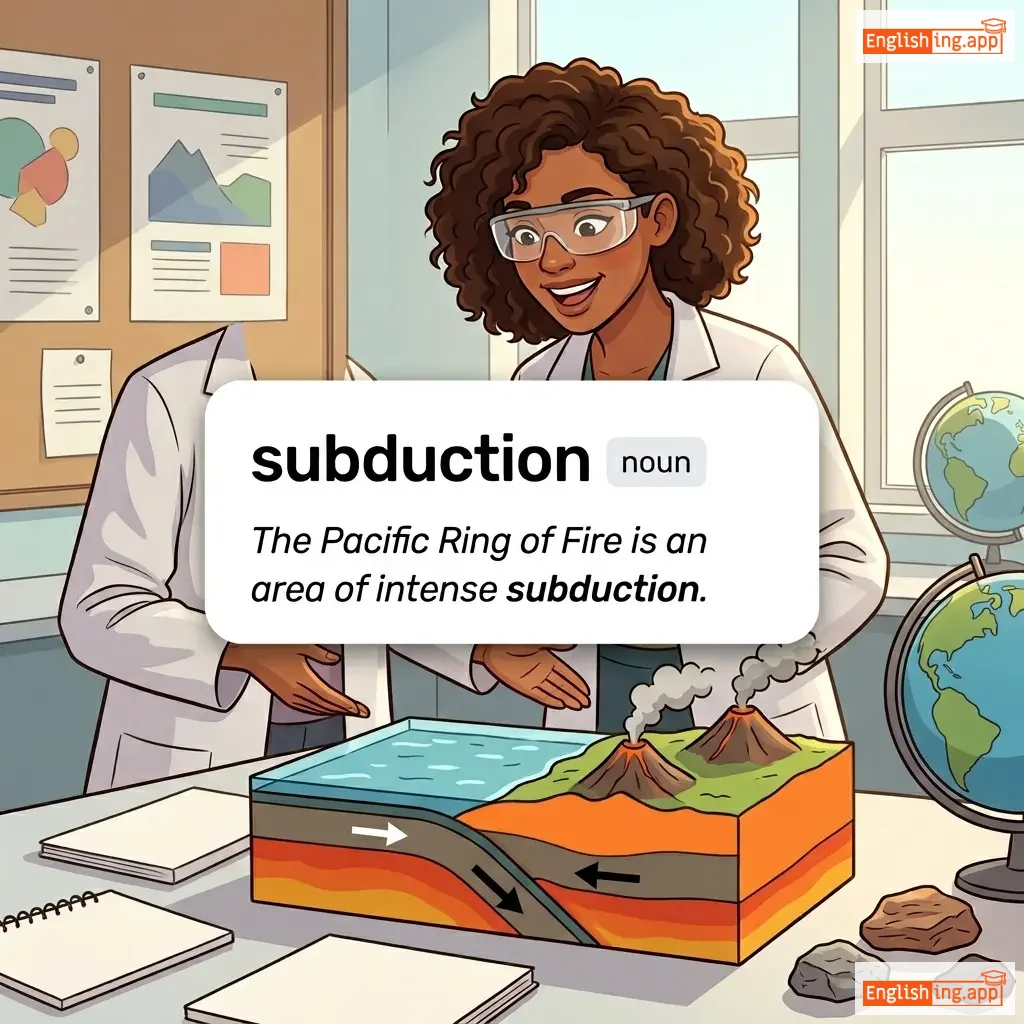
subduction definition card — visual illustration of the meaning
noun
/səbˈdʌk.ʃən/
Боковое и вниз движение слоя земной коры в мантии под другим слоем. (Bokovoye i vnyz dvizhēniye sloya zemnoy kory v mantii pod drugim sloem.)

The lateral and downward movement of the edge of a plate of the earth's crust into the mantle beneath another plate.

"The Pacific Ring of Fire is an area of intense subduction."
"Тихоокеанское кольцо огня - это зона интенсивной субдукции." (Tikhookeanskoye kol'tso ognya - eto zona intensivnoy subduktsii.)
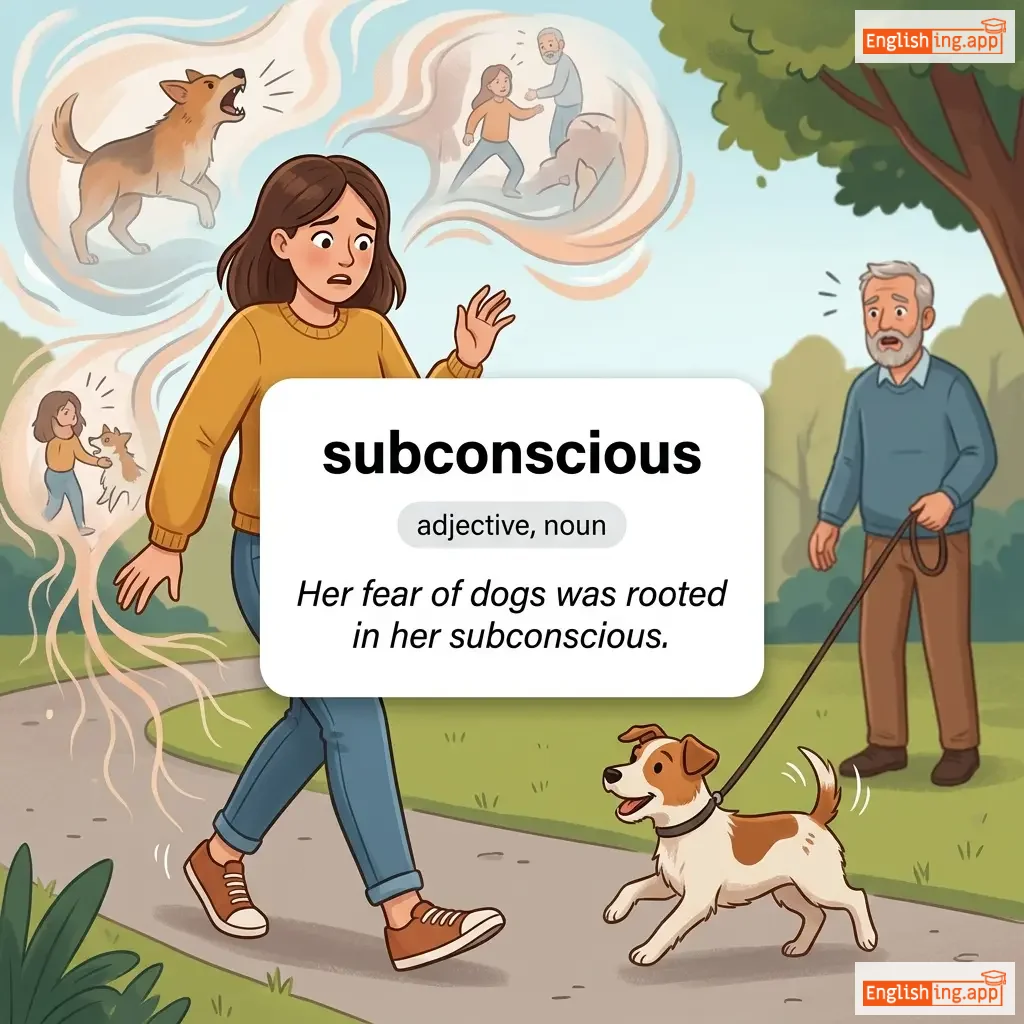
subconscious definition card — visual illustration of the meaning
adjective, noun
/ˌsʌbˈkɒn.ʃəs/
подсознание (podsoznanie)

Relating to the part of the mind that influences thoughts and actions without full awareness.

"Her fear of dogs was rooted in her subconscious."

"Ее страх перед собаками был укоренен в ее подсознании." (Eyo strakh pered sobakami byl ukorenen v eyo podsoznanii.)
adjective
/ˌsʌb.əˈkwɒt.ɪk/
подводный (podvodny)

Existing, living, or located under water.

"Divers explored the subaquatic cave system filled with rare fish."

"Дайверы исследовали подводную пещерную систему, заполненную редкими рыбами." (Dajvery issledovali podvodnuyu peshchernuyu sistemy, zapolnennuyu redkimi rybami.)
noun
/sʌbˈɔːl.tən/
человек, занимающий подчинённое положение; в армии, младший офицер (subaltern)

A person holding a subordinate position; in the military, a junior officer.

"The subaltern was responsible for leading a small platoon of soldiers."

"Сабальтерн был ответственен за руководство небольшим отрядом солдат." (Sabaltern byl otvetstvenen za rukovodstvo nebol'shim otryadom soldat.)
adjective
/ˈsʌb.æs.ɪd/
слегка кислый (slegka kisly)

Slightly sour or acidic in taste or nature.

"The fruit had a subacid flavor that was refreshing on a hot day."

"Фрукт имел слегка кислый вкус, который был освежающим в жаркий день." (Frukt imel slegka kislyy vkus, kotoryy byl osvezhayushchim v zharkiy den.)
adverb
/ˌsʌb ˈroʊzə/
в секрете (v sekrete)

secretly, in confidence, or in private

"The deal was made sub rosa to avoid public scrutiny."

"Сделка была заключена суб роза, чтобы избежать публичного контроля." (Sdelka byla zaklyuchena sub rosa, chtoby izbezhat' publichnogo kontrolya.)
noun
/ˈsʌb.mə.riːn/
подводная лодка (podvodnaya lodka)

a warship with a streamlined hull designed to operate completely submerged in the sea

"The submarine dived deep into the ocean to avoid detection."

"Субмарина нырнула глубоко в океан, чтобы избежать обнаружения." (Submarina nyrnula gluboko v okean, chtoby izbezhat' obnaruzheniya.)
noun
/ˈswɑːvɪti/
грация и обаяние (gratsiya i obayanie)

smoothness and charm in manner

"His suavity made him popular in social gatherings."

"Его грация и обаяние сделали его популярным на социальных собраниях." (Yego gratsiya i obayanie sdelali ego populyarnym na sotsial'nykh sobran'yyakh.)
adjective
/swɑːv/
обаятельный и изысканный (obayatiel'nyi i izyskannyi)

charming, confident, and elegant, often in a smooth or polished way

"He was a suave gentleman who impressed everyone at the party."

"Он был изысканным джентльменом, который впечатлил всех на вечеринке." (On byl izyskannym djentl'menom, kotoryi vpechatlil vsekh na vecherinke.)
noun
/ˈsweɪʒən/
убеждение (ubezhdenie)

the act of persuading or influencing someone

"The leader used gentle suasion to win support for the plan."

"Лидер использовал мягкое убеждение, чтобы получить поддержку для плана." (Lider ispol'zoval myagkoe ubezhdenie, chtoby poluchit' podderzhku dlya plana.)
verb
/ˈstaɪmi/
помешать (pomeshat)

to prevent or hinder the progress of something

"The new regulations could stymie small businesses."

"Новые правила могут помешать малым бизнесам." (Novye pravila mogut pomeshat' malym biznesam.)
noun
/ˈstaɪləs/
стилус (stilus)

a small tool used for writing, drawing, or touching screens

"She used a stylus to draw on her tablet."

"Она использовала стилус, чтобы рисовать на своем планшете." (Ona ispol'zovala stilus, chtoby risovat' na svoyem planshete.)
verb
/stʌn/
ошеломить, потрясти (oshelomit, potryasit)

to shock or surprise someone greatly; to knock someone unconscious or dazed

"The news of her sudden resignation stunned everyone."

"Новость о её внезапной отставке ошеломила всех." (Novost' o ee vnezapnoi otstavke oshelomila vsekh.)
noun/verb
/stʌmp/
пень дерева, озадачить (pen' dereva, ozadachit')

the base of a tree left after the trunk is cut down; to puzzle or confuse

"The question completely stumped the students."

"Этот вопрос совершенно озадачил студентов." (Etot vopros sovershenno ozadachil studentov.)
adjective
/ˈstʌm.pi/
короткий и толстый (korotkiy i tolstyy)

short and thick; having a short, thick appearance

"The stumpy little dog wagged its tail enthusiastically."

"Короткая толстая собачка радостно виляла хвостом." (Korotkaya tolstaya sobachka radostno vilyala khvostom.)
verb
/ˈstʌmbəl/
споткнуться (spotknutsya)

to trip or lose balance while walking or running; to make a mistake or falter

"He stumbled on the uneven pavement."

"Он споткнулся на неровном тротуаре." (On spotknulsya na neryvnom trotuare.)
adjective
/ˈstʌnɪŋ/
потрясающий (potryasayushchiy)

extremely impressive or attractive

"The view from the top of the mountain was absolutely stunning."

"Вид с вершины горы был абсолютно потрясающим." (Vid s vershiny gory byl absolutely potryasayushchym.)