词汇表

英语词汇词典 | 单词含义、定义和示例

verb
/straɪd/
大步走;取得进展 (dà bù zǒu; qǔdé jìnzhǎn)

to walk with long, decisive steps; to make progress

"She strode confidently across the stage."

"她自信地走过舞台。" (Tā zìxìn de zǒu guò wǔtái.)
adjective
/ˈstraɪ.dənt/
刺耳的, 嘈杂的 (cì ěr de, cáo zá de)

loud and harsh; presenting a point of view in a forceful way

"His strident voice made the debate uncomfortable."

"他刺耳的声音让辩论变得不舒服。" (Tā cì ěr de shēng yīn ràng biàn lùn biàn dé bù shū fu.)
noun
/straɪf/
冲突, 争斗 (chongtu, zhengdou)

angry or violent conflict; struggle or discord

"The region has been torn apart by political strife."

"该地区已被政治冲突撕裂。" (Gai diqu yi bei zhengzhi chongtu sile.)
verb
/straɪk/
罢工 / 打击 (bàgōng / dǎjí)

to hit forcibly or attack; also to stop work as a form of protest

"The workers decided to strike for better wages."

"工人们决定为了更好的工资而罢工。" (Gōngrénmen juédìng wèile gèng hǎo de gōngzī ér bàgōng.)
adjective
/ˈstraɪkɪŋ/
引人注目 (yin ren zhu mu)

very noticeable or impressive in appearance or effect

"Her striking beauty caught everyone's attention."

"她那引人注目的美丽吸引了所有人的注意。" (Ta na yin ren zhu mu de mei li xi yin le suo you ren de zhu yi.)
noun, verb
/strɪŋ/
线 (xian)

a thin piece of cord or thread; to tie or fasten with a string

"She tied the package with a string."

"她用一根线绑了包裹。" (Ta yong yi gen xian bang le baoguo.)
noun
/ˈstrɪndʒənsi/
严格 (yángé)

the quality of being strict, precise, or severe

"The stringency of the new rules surprised everyone."

"新规则的严格性让所有人都感到惊讶。" (Xīn guīzé de yángé xìng ràng suǒyǒu rén dōu gǎndào jīngyà.)
adjective
/ˈstrɪndʒənt/
严格 (yángé)

strict, precise, and exacting

"The government imposed stringent measures during the crisis."

"政府在危机期间实施了严格的措施。" (Zhèngfǔ zài wéijī qījiān shíshī le yángé de cuòshī.)
verb
/strɪp/
剥去 / 去除 (bo qu / qu chu)

to remove coverings or layers from something; to undress

"He had to strip the old paint from the wall."

"他必须从墙上去掉旧漆。" (Ta bixu cong qiang shang qu diao jiu qi.)
noun
/ˈstrɪplɪŋ/
年轻人 (niánqīngrén)

a young man who is not yet fully grown

"The stripling dreamed of becoming a brave knight."

"那个年轻人梦想成为一个勇敢的骑士。" (Nàgè niánqīngrén mèngxiǎng chéngwéi yīgè yǒnggǎn de qíshì.)
verb
/straɪv/
奋斗 (fèndòu)

To make great efforts to achieve or obtain something.

"She strives to be the best student in her class."

"她努力成为班里最好的学生。" (Tā nǔlì chéngwéi bān lǐ zuì hǎo de xuéshēng.)
stroke definition card — visual illustration of the meaning
noun
/strəʊk/
中风 (zhongfeng)

a sudden attack or event, typically of a medical or physical nature

"He suffered a stroke while working at his desk."
"他在桌子前工作时中风。" (Tā zài zhuōzi qián gōngzuò shí zhòngfēng.)
strong definition card — visual illustration of the meaning
adjective
/strɔːŋ/
强壮 (qiángzhuàng)

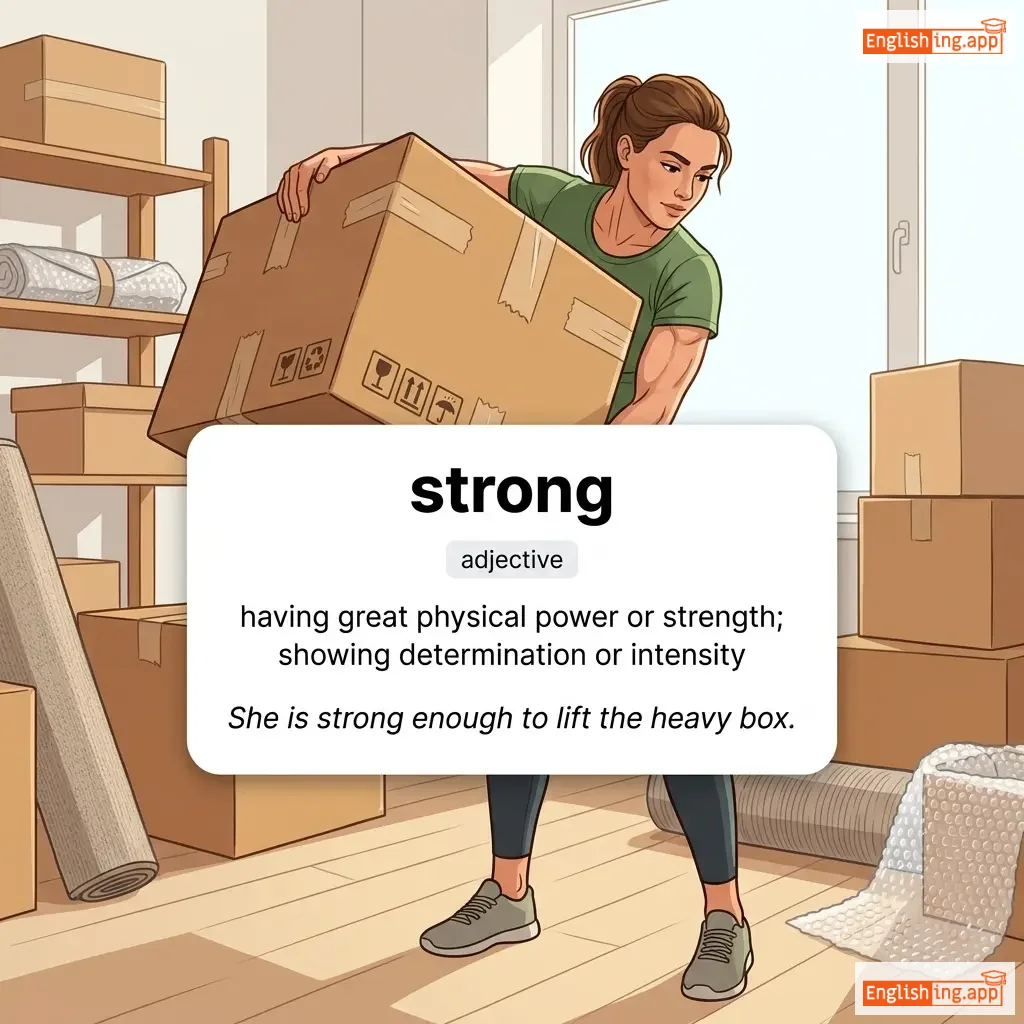
having great physical power or strength; showing determination or intensity

"She is strong enough to lift the heavy box."

"她足够强壮,能够举起重箱子。" (Tā zúgòu qiángzhuàng, nénggòu jǔqǐ zhòng xiāngzi.)
adverb
/ˈstrɒŋɡli/
强烈地 (qiángliè de)

in a strong manner or to a great extent

"She strongly believes in the power of positive thinking."

"她坚信积极思考的力量。" (Tā jiānxìn jījí sīkǎo de lìliàng.)
structural definition card — visual illustration of the meaning
🏗️

structural

adjective
/ˈstrʌktʃərəl/

relating to or forming part of the structure of something

"Engineers found structural damage in the old bridge."

structure definition card — visual illustration of the meaning
noun
/ˈstrʌktʃər/
结构 (jiegou)

the arrangement or organization of parts to form a whole

"The structure of the building was designed to withstand earthquakes."

"建筑的结构被设计成能够抵御地震。" (Jiànzhù de jiégòu bèi shèjì chéng nénggòu dǐyù dìzhèn.)
structured definition card — visual illustration of the meaning
adjective
ˈstrʌktʃərd
结构化 (jiegouhua)

Having a clear organization or framework; systematically arranged.

"A structured execution plan is crucial for success."
"一个结构化的执行计划对于成功至关重要。" (Yi ge jiegouhua de zhixing jihua dui yu chenggong zhiguang zhongyao.)
structures definition card — visual illustration of the meaning
noun
/ˈstrʌk.tʃərz/
结构 (jiegou)

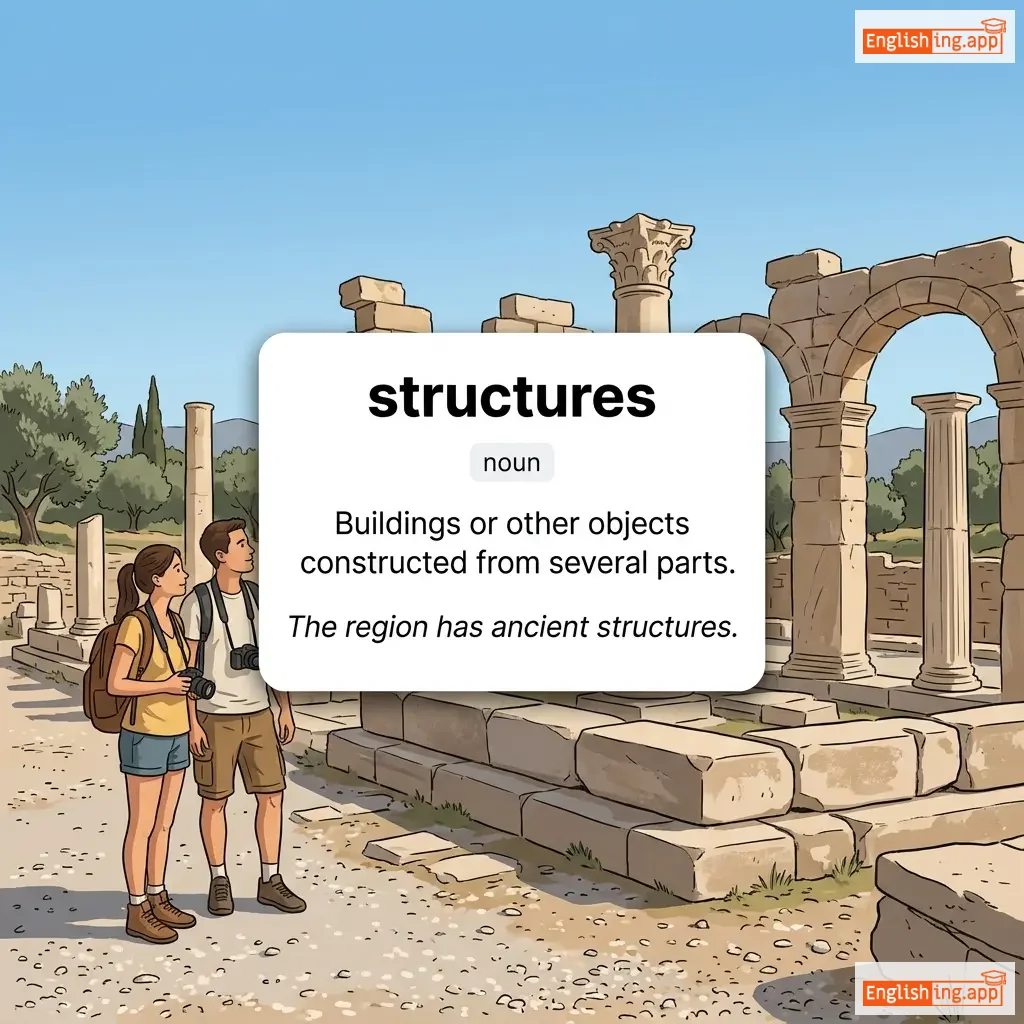
Buildings or other objects constructed from several parts.

"The region has ancient structures."

"这个地区有古老的结构。" (Zhège dìqū yǒu gǔlǎo de jiégòu.)
struggle definition card — visual illustration of the meaning
verb
/ˈstrʌɡl/
斗争 (douzheng)

to fight or make a strenuous effort to achieve something

"He struggled to lift the heavy box."

"他在努力举起重箱子。" (Ta zai nuli juqi zhong xiangzi.)
struggling definition card — visual illustration of the meaning
verb
/ˈstrʌɡlɪŋ/
挣扎 (zhengzha)

Making forceful or violent efforts to get free of restraint or constriction; having difficulty achieving something.

"Many regions are struggling with economic recovery."

"许多地区在经济复苏中挣扎。" (Xuduo diqu zai jingji fusu zhong zhengzha.)
strut definition card — visual illustration of the meaning
verb
/strʌt/
昂首阔步 (áng shǒu kuò bù)

to walk with a stiff, proud, and confident gait, often to show off

"He strutted across the stage after winning the award."

"他赢得奖项后自信地走上了舞台。" (Tā yíng dé jiǎng xiàng hòu zì xìn de zǒu shàng le wǔ tái.)
adjective
/ˈstʌb.ərn/
固执; 顽固; 倔强 (guzhi, wangu, juexiang)

refusing to change opinion or course of action; persistent; obstinate

"The stubborn child refused to eat his vegetables."

"那个固执的孩子拒绝吃蔬菜。" (Na ge guzhi de haizi jujue chi shucai.)
stuck definition card — visual illustration of the meaning
verb
/stʌk/
卡住 (kǎ zhù)

unable to move; fixed in one position; unable to continue

"The door is stuck and won't open."

"门被卡住了,打不开。" (Mén bèi kǎ zhù le, dǎ bù kāi)
student definition card — visual illustration of the meaning
👩‍🎓

student (学生)

noun
/ˈstjuːdənt/
学生 (xuesheng)

a person who is learning at an educational institution

"The student was studying for the final exam."

"学生正在为期末考试而学习。" (Xuesheng zhengzai wei qimou kao shi er xuexi.)
adjective
/ˈstʌdid/
深思熟虑 (shen si shu lv)

carefully considered, deliberate, or planned

"Her response was calm and studied, not impulsive."

"她的回答冷静而深思熟虑,非冲动。" (Tā de huídá lěngjìng ér shēnsī shúlǜ, fēi chōngdòng.)
studio definition card — visual illustration of the meaning
noun
/ˈstjuːdiəʊ/
工作室 (gongzuoshi)

a room where an artist, photographer, musician, or broadcaster works

"The singer recorded her new song in the studio."
"歌手在工作室录制了她的新歌。" (Geshou zai gongzuoshi luozhi le ta de xin ge.)
study definition card — visual illustration of the meaning
verb
/ˈstʌdi/
学习 (xuexi)

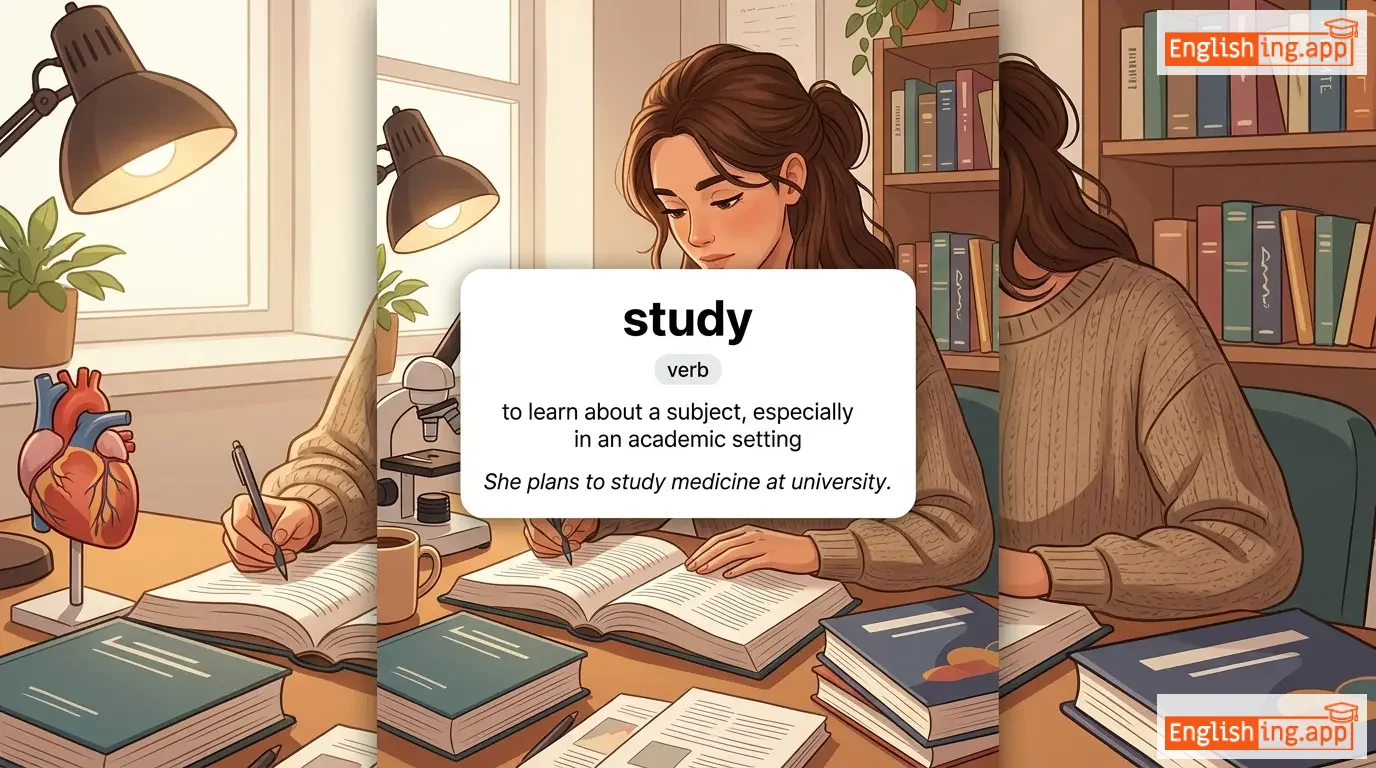
to learn about a subject, especially in an academic setting

"She plans to study medicine at university."

"她计划在大学学习医学。" (Ta jihua zai daxue xuexi yixue.)
adjective
/ˈstjuːdiəs/
用功的学生 (yònggōng de xuéshēng)

spending a lot of time studying or reading; very dedicated to learning

"She is a studious girl who spends hours in the library."

"她是一个用功的女孩,在图书馆里待了几个小时。" (Tā shì yīgè yònggōng de nǚhái, zài túshūguǎn lǐ dàile jǐ gè xiǎoshí.)
adjective
/səbˈdʒɛktɪv/
主观的 (zhǔguān de)

based on personal feelings, tastes, or opinions rather than facts

"Beauty is often considered a subjective concept."

"美丽通常被视为一个主观的概念。" (Měilì tōngcháng bèi shì wéi yīgè zhǔguān de gàiniàn.)
noun
/səbˈdʒɛkʃən/
征服 (zhēngfú)

the act of bringing someone or something under control or domination

"The people suffered under the subjection of a cruel ruler."

"人民在一个残暴统治者的征服下受苦。" (Rénmín zài yīgè cánbào tǒngzhì zhě de zhēngfú xià shòukǔ.)
noun/verb/adjective
/ˈsʌbdʒɪkt/ (noun), /səbˈdʒɛkt/ (verb)
主题 (zhuti)

noun: a topic or theme; verb: to cause to undergo; adjective: dependent or under authority

"The teacher introduced a new subject in class."

"老师在课堂上介绍了一个新主题。" (Lǎoshī zài kètáng shàng jièshào le yīgè xīn zhǔtí.)
adjective
/sʌbˈdʒeɪsənt/
下层的 (xià céng de)

lying immediately beneath; underlying

"The geological survey revealed subjacent layers of rock."
"地质调查揭示了下层的岩层。" (Dìzhì diàochá jiēshìle xià céng de yáncéng.)
⚔️

subdue

verb
/səbˈdjuː/

To bring under control, especially by force; to overcome or quiet.

"The army was able to subdue the rebellion quickly."

subduction definition card — visual illustration of the meaning
noun
/səbˈdʌk.ʃən/
地壳的一个层次向下移动,进入下方的地幔。 (Dìqiào de yīgè céngcì xiàng xià yídòng, jìnrù xiàfāng de dìmàn.)

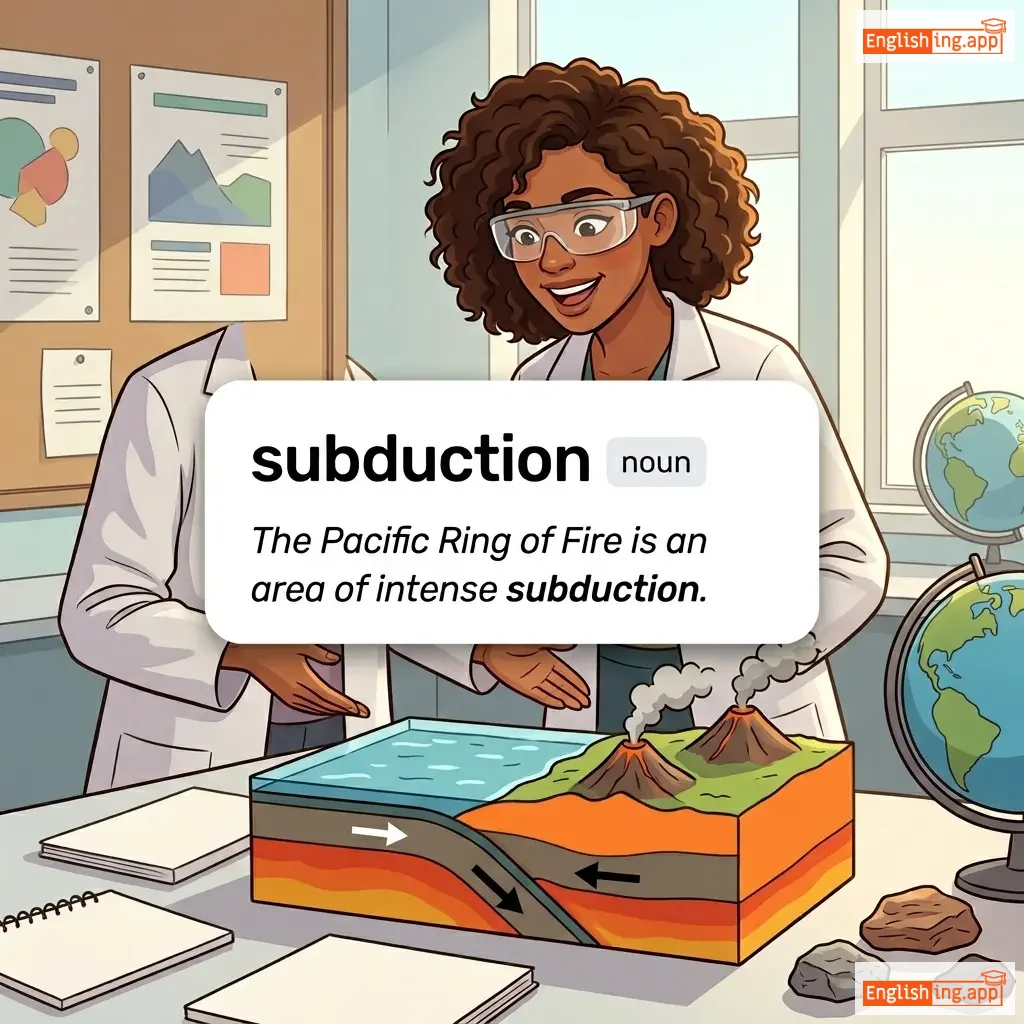
The lateral and downward movement of the edge of a plate of the earth's crust into the mantle beneath another plate.

"The Pacific Ring of Fire is an area of intense subduction."

"太平洋火环是一个强烈的俯冲区域。" (Tàipíngyáng huǒ huán shì yīgè qiángliè de fǔchōng qūyù.)
subconscious definition card — visual illustration of the meaning
adjective, noun
/ˌsʌbˈkɒn.ʃəs/
潜意识 (qian yishi)

Relating to the part of the mind that influences thoughts and actions without full awareness.

"Her fear of dogs was rooted in her subconscious."

"她对狗的恐惧根植于她的潜意识。" (Ta dui gou de kongju genzhi yu ta de qian yishi.)
adjective
/ˌsʌb.əˈkwɒt.ɪk/
水下的 (shuǐ xià de)

Existing, living, or located under water.

"Divers explored the subaquatic cave system filled with rare fish."

"潜水员探索了充满稀有鱼类的水下洞穴系统。" (Qiánshuǐyuán tàn suǒ le chōngmǎn xīyǒu yúlèi de shuǐ xià dòngxué xìtǒng.)
noun
/sʌbˈɔːl.tən/
处于下级职位的人;在军队中,初级军官 (xià jí jūn guān)

A person holding a subordinate position; in the military, a junior officer.

"The subaltern was responsible for leading a small platoon of soldiers."

"下级军官负责指挥一个小型士兵排。" (Xià jí jūn guān fùzé zhǐhuī yīgè xiǎoxíng shìbīng pái.)
adjective
/ˈsʌb.æs.ɪd/
轻微酸 (qingwei suan)

Slightly sour or acidic in taste or nature.

"The fruit had a subacid flavor that was refreshing on a hot day."

"这种水果有一种轻微酸的味道,在炎热的日子里非常清爽。" (Zhezhong shuiguo you yizhong qingwei suan de weidao, zai yanre de rizi li feichang qingshuang.)
adverb
/ˌsʌb ˈroʊzə/
秘密地 (mìmì de)

secretly, in confidence, or in private

"The deal was made sub rosa to avoid public scrutiny."

"交易是在秘密地进行的,以避免公众审查。" (Jiāoyì shì zài mìmì de jìnxíng de, yǐ bìmiǎn gōngzhòng shěnchá.)
noun
/ˈsʌb.mə.riːn/
潜艇 (qiántǐng)

a warship with a streamlined hull designed to operate completely submerged in the sea

"The submarine dived deep into the ocean to avoid detection."

"潜水艇潜入海洋深处以避免被发现。" (Qiánshuǐtǐng qián rù hǎiyáng shēnchù yǐ bìmiǎn bèi fāxiàn.)
noun
/ˈswɑːvɪti/
优雅与魅力 (yōuyǎ yǔ mèilì)

smoothness and charm in manner

"His suavity made him popular in social gatherings."

"他的优雅与魅力使他在社交聚会中很受欢迎。" (Tā de yōuyǎ yǔ mèilì shǐ tā zài shèjiāo jùhuì zhōng hěn shòu huānyíng.)
adjective
/swɑːv/
迷人且优雅 (mírén qiě yōuyǎ)

charming, confident, and elegant, often in a smooth or polished way

"He was a suave gentleman who impressed everyone at the party."

"他是一个优雅的绅士,在派对上给大家留下了深刻的印象。" (Tā shì yīgè yōuyǎ de shēnshì, zài pàiduì shàng gěi dàjiā liúxiàle shēnkè de yìnxiàng.)
noun
/ˈsweɪʒən/
劝说 (quanshuo)

the act of persuading or influencing someone

"The leader used gentle suasion to win support for the plan."

"领导者使用温和的劝说来赢得对计划的支持。" (Lǐngdǎo zhě shǐyòng wēnhé de quànshuō lái yíngdé duì jìhuà de zhīchí.)
verb
/ˈstaɪmi/
妨碍 (fáng'ài)

to prevent or hinder the progress of something

"The new regulations could stymie small businesses."

"新规章可能会阻碍小型企业的发展。" (Xīn guīzhāng kěnéng huì zǔ'ài xiǎoxíng qǐyè de fāzhǎn.)
noun
/ˈstaɪləs/
触控笔 (chùkòng bǐ)

a small tool used for writing, drawing, or touching screens

"She used a stylus to draw on her tablet."

"她使用触控笔在平板电脑上绘画。" (Tā shǐyòng chùkòng bǐ zài píngbǎn diànnǎo shàng huìhuà.)
verb
/stʌn/
震惊, 使昏迷 (zhenjing, shi hunmi)

to shock or surprise someone greatly; to knock someone unconscious or dazed

"The news of her sudden resignation stunned everyone."

"她突然辞职的消息让大家都震惊了。" (Tā túrán cízhí de xiāoxī ràng dàjiā dōu zhènjīng le.)
noun/verb
/stʌmp/
树桩,困惑 (shù zhuāng, kùnhuò)

the base of a tree left after the trunk is cut down; to puzzle or confuse

"The question completely stumped the students."

"这个问题完全困扰了学生。" (zhège wèntí wánquán kùnrǎo le xuéshēng.)
adjective
/ˈstʌm.pi/
矮胖 (ǎi pàng)

short and thick; having a short, thick appearance

"The stumpy little dog wagged its tail enthusiastically."

"那只矮胖的小狗兴奋地摇着尾巴。" (Nà zhī ǎi pàng de xiǎo gǒu xīngfèn de yáo zhe wěibā.)
verb
/ˈstʌmbəl/
绊倒 (bàndǎo)

to trip or lose balance while walking or running; to make a mistake or falter

"He stumbled on the uneven pavement."

"他在人行道上绊倒了。" (Tā zài rénxíngdào shàng bàndǎo le.)
adjective
/ˈstʌnɪŋ/
令人惊叹 (ling ren jing tan)

extremely impressive or attractive

"The view from the top of the mountain was absolutely stunning."

"从山顶看到的景色简直令人惊叹。" (Cong shanding kan dao de jingse jianzhi ling ren jing tan.)