词汇表

英语词汇词典 | 单词含义、定义和示例

noun
/ˈsʌb.mə.riːn/
潜艇 (qiántǐng)

a warship with a streamlined hull designed to operate completely submerged in the sea

"The submarine dived deep into the ocean to avoid detection."

"潜水艇潜入海洋深处以避免被发现。" (Qiánshuǐtǐng qián rù hǎiyáng shēnchù yǐ bìmiǎn bèi fāxiàn.)
adverb
/ˌsʌb ˈroʊzə/
秘密地 (mìmì de)

secretly, in confidence, or in private

"The deal was made sub rosa to avoid public scrutiny."

"交易是在秘密地进行的,以避免公众审查。" (Jiāoyì shì zài mìmì de jìnxíng de, yǐ bìmiǎn gōngzhòng shěnchá.)
adjective
/ˈsʌb.æs.ɪd/
轻微酸 (qingwei suan)

Slightly sour or acidic in taste or nature.

"The fruit had a subacid flavor that was refreshing on a hot day."

"这种水果有一种轻微酸的味道,在炎热的日子里非常清爽。" (Zhezhong shuiguo you yizhong qingwei suan de weidao, zai yanre de rizi li feichang qingshuang.)
noun
/sʌbˈɔːl.tən/
处于下级职位的人;在军队中,初级军官 (xià jí jūn guān)

A person holding a subordinate position; in the military, a junior officer.

"The subaltern was responsible for leading a small platoon of soldiers."

"下级军官负责指挥一个小型士兵排。" (Xià jí jūn guān fùzé zhǐhuī yīgè xiǎoxíng shìbīng pái.)
adjective
/ˌsʌb.əˈkwɒt.ɪk/
水下的 (shuǐ xià de)

Existing, living, or located under water.

"Divers explored the subaquatic cave system filled with rare fish."

"潜水员探索了充满稀有鱼类的水下洞穴系统。" (Qiánshuǐyuán tàn suǒ le chōngmǎn xīyǒu yúlèi de shuǐ xià dòngxué xìtǒng.)
subconscious definition card — visual illustration of the meaning
adjective, noun
/ˌsʌbˈkɒn.ʃəs/
潜意识 (qian yishi)

Relating to the part of the mind that influences thoughts and actions without full awareness.

"Her fear of dogs was rooted in her subconscious."

"她对狗的恐惧根植于她的潜意识。" (Ta dui gou de kongju genzhi yu ta de qian yishi.)
subduction definition card — visual illustration of the meaning
noun
/səbˈdʌk.ʃən/
地壳的一个层次向下移动,进入下方的地幔。 (Dìqiào de yīgè céngcì xiàng xià yídòng, jìnrù xiàfāng de dìmàn.)

The lateral and downward movement of the edge of a plate of the earth's crust into the mantle beneath another plate.

"The Pacific Ring of Fire is an area of intense subduction."

"太平洋火环是一个强烈的俯冲区域。" (Tàipíngyáng huǒ huán shì yīgè qiángliè de fǔchōng qūyù.)
⚔️

subdue

verb
/səbˈdjuː/

To bring under control, especially by force; to overcome or quiet.

"The army was able to subdue the rebellion quickly."

adjective
/sʌbˈdʒeɪsənt/
下层的 (xià céng de)

lying immediately beneath; underlying

"The geological survey revealed subjacent layers of rock."

"地质调查揭示了下层的岩层。" (Dìzhì diàochá jiēshìle xià céng de yáncéng.)
noun/verb/adjective
/ˈsʌbdʒɪkt/ (noun), /səbˈdʒɛkt/ (verb)
主题 (zhuti)

noun: a topic or theme; verb: to cause to undergo; adjective: dependent or under authority

"The teacher introduced a new subject in class."

"老师在课堂上介绍了一个新主题。" (Lǎoshī zài kètáng shàng jièshào le yīgè xīn zhǔtí.)
noun
/səbˈdʒɛkʃən/
征服 (zhēngfú)

the act of bringing someone or something under control or domination

"The people suffered under the subjection of a cruel ruler."

"人民在一个残暴统治者的征服下受苦。" (Rénmín zài yīgè cánbào tǒngzhì zhě de zhēngfú xià shòukǔ.)
adjective
/səbˈdʒɛktɪv/
主观的 (zhǔguān de)

based on personal feelings, tastes, or opinions rather than facts

"Beauty is often considered a subjective concept."

"美丽通常被视为一个主观的概念。" (Měilì tōngcháng bèi shì wéi yīgè zhǔguān de gàiniàn.)
adjective
/ˈstjuːdiəs/
用功的学生 (yònggōng de xuéshēng)

spending a lot of time studying or reading; very dedicated to learning

"She is a studious girl who spends hours in the library."
"她是一个用功的女孩,在图书馆里待了几个小时。" (Tā shì yīgè yònggōng de nǚhái, zài túshūguǎn lǐ dàile jǐ gè xiǎoshí.)
Soon definition card — visual illustration of the meaning
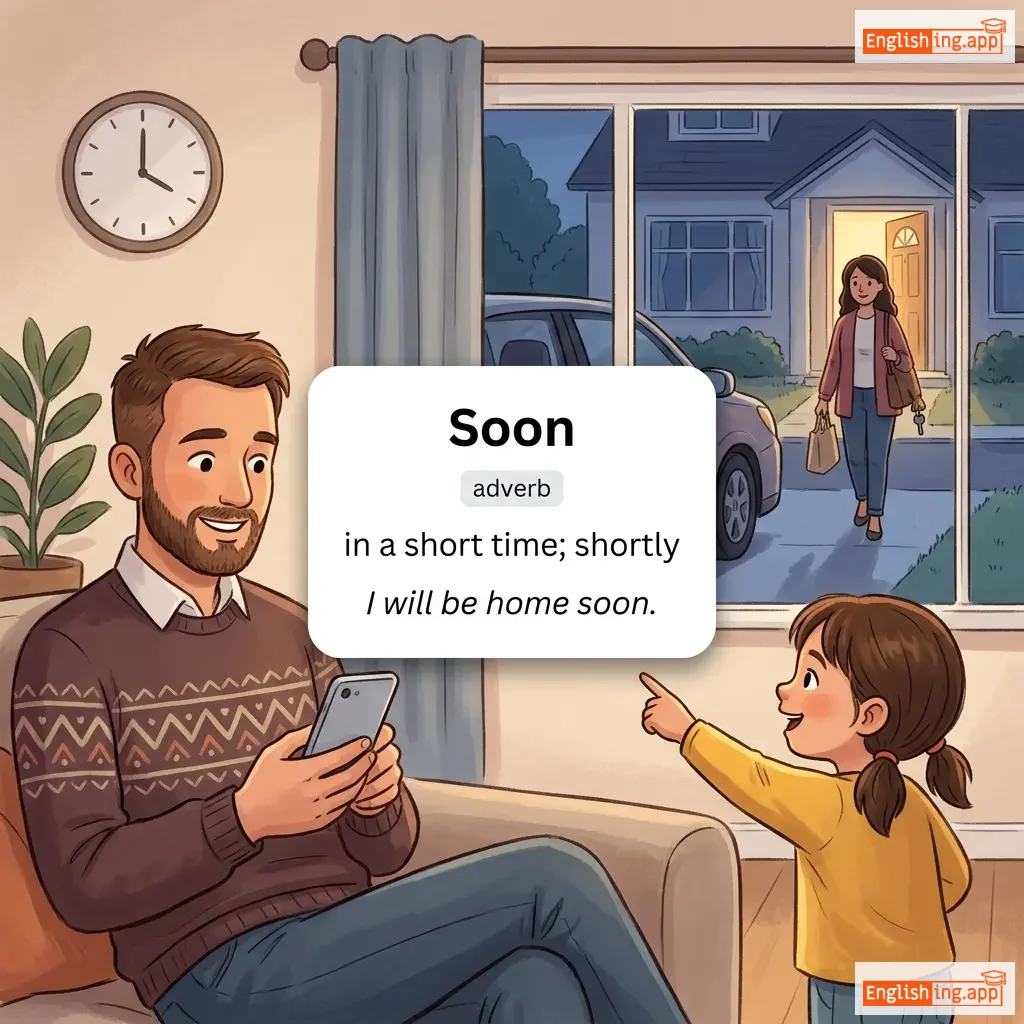
adverb
/suːn/
很快 (hen kuai)

in a short time; shortly

"I will be home soon."

"我很快就到家了。" (Wo hen kuai jiu dao jia le.)
adjective
/səˈnɔːrəs/
深沉的声音 (shencheng de shengyin)

Deep, full, and rich in sound.

"The actor's sonorous voice filled the entire theater."

"演员那深沉的声音充满了整个剧院。" (Yǎnyuán nà shēnchén de shēngyīn chōngmǎnle zhěnggè jùyuàn.)
noun
/ˈsɒnɪt/
十四行诗 (shísì háng shī)

A poem of 14 lines using formal rhyme schemes, often about love.

"Shakespeare wrote many famous sonnets about love and beauty."

"莎士比亚写了许多关于爱情与美丽的著名十四行诗。" (Shāshìbǐyà xiěle xǔduō guānyú àiqíng yǔ měilì de zhùmíng shísì háng shī.)
adjective
/ˈsɒnɪk/
音速的 (yīnsù de)

Relating to or involving sound waves or speed of sound.

"The jet created a loud boom when it broke the sonic barrier."
"喷气机突破声速壁垒时发出了巨大的爆炸声。" (Pēnqìjī tūpò shēngsù bìlěi shí fāchūle jùdà de bàozhà shēng.)
songs definition card — visual illustration of the meaning
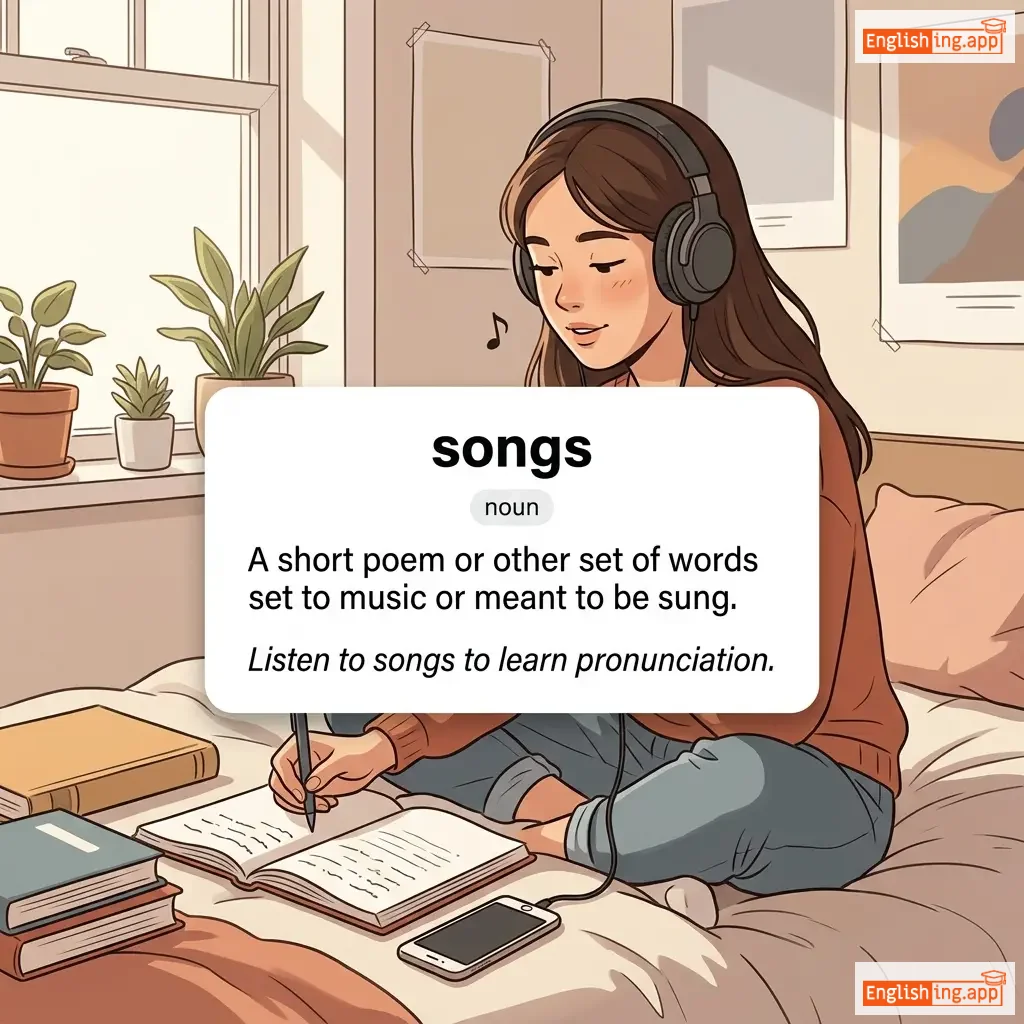
noun
sɔːŋz
歌曲 (gequ)

A short poem or other set of words set to music or meant to be sung.

"Listen to songs to learn pronunciation."

"听歌曲来学习发音。" (Tīng gēqǔ lái xuéxí fāyīn.)
song definition card — visual illustration of the meaning
noun
/sɔːŋ/
歌曲 (gequ)

a short piece of music with words that are sung

"She sang a beautiful song at the concert."

"她在音乐会上唱了一首美丽的歌曲。" (Ta zai yinyuehui shang chang le yi shou mei li de gequ.)
noun
/səˈnɑːtə/
音乐作品 (奏鸣曲) (yīn yuè zuò pǐn (zòu míng qǔ))

A musical composition for one or more instruments, typically in several movements.

"She performed a beautiful Beethoven sonata on the piano."

"她在钢琴上演奏了贝多芬的美丽奏鸣曲。" (Tā zài gāngqín shàng yǎnzòu le bèiduōfēn de měilì zòumíngqǔ.)
noun
/sʌn/
儿子 (er zi)

a male child of a parent

"His son is very talented in music."

"他的儿子在音乐方面非常有才华。" (Tā de érzi zài yīnyuè fāngmiàn fēicháng yǒu cáihuá.)
adjective
/ˈsɒmnələnt/
昏昏欲睡 (hūnhūn yù shuì)

Sleepy or drowsy; causing a desire to sleep.

"The somnolent lecture made half the class fall asleep."

"那堂昏昏欲睡的讲座让一半的班级都睡着了。" (Nà táng hūnhūn yù shuì de jiǎngzuò ràng yībàn de bānjí dōu shuìzhe le.)
somnolence definition card — visual illustration of the meaning
noun
/ˈsɒmnələns/
嗜睡 (shishui)

A strong desire for sleep or drowsiness.

"After the heavy meal, he felt a wave of somnolence."

"在丰盛的晚餐后,他感到一阵困倦。" (Zai fengsheng de wancan hou, ta gandao yizhen kunjuan.)
adjective
/sɒmˈnɪfərəs/
催眠的 (cuīmián de)

Tending to induce sleep; soporific.

"The professor's somniferous lecture put half the class to sleep."

"教授的催眠讲座让一半的学生睡着了。" (Jiàoshòu de cuīmián jiǎngzuò ràng yíbàn de xuéshēng shuìzhe le.)
noun
/sɒmˈnæmbjʊlɪst/
嗣眠者 (simian zhe)

A person who sleepwalks.

"The somnambulist wandered out of the house at night."

"嗣眠者晚上走出屋外。" (Simian zhe wanshang zou chu wuwai.)
adverb
/ˈsʌmˌwɛr/
某个地方 (mǒu gè dìfāng)

in, at, or to a place that is not known or specified

"Somewhere in the city, there is a hidden café."

"在城市的某个地方,有一家隐藏的咖啡馆。" (Zài chéngshì de mǒu gè dìfāng, yǒu yījiā yǐncáng de kāfēi guǎn.)
adverb
/ˈsʌmˌwʌt/
稍微 (shaowei)

to a small degree or extent

"The new policy is somewhat better than the previous one."

"新政策比以前的好一点。" (Xin zhengce bi yiqian de hao yidian.)
adverb
/ˈsʌmˌtaɪmz/
有时 (yǒu shí)

at certain times, but not always

"Sometimes I wonder what life would have been like if I had made different choices."

"有时我会想,如果我做出了不同的选择,生活会是什么样子。" (Yǒu shí wǒ huì xiǎng, rúguǒ wǒ zuò chūle bùtóng de xuǎnzé, shēnghuó huì shì shénme yàngzi.)
adverb
/ˈsʌm.taɪm/
某个时候 (mǒu gè shíhòu)

at a time that is not known or stated; occasionally

"Let's meet for coffee sometime next week."

"我们下周某个时候见面喝咖啡吧。" (Wǒmen xià zhōu mǒu gè shíhòu jiànmiàn hē kāfēi ba.)
pronoun
/ˈsʌmθɪŋ/
某事 (mou shi)

an unspecified or unknown thing

"I think something is wrong with my phone."

"我觉得我的手机有些问题。" (Wo juede wode shouji youxie wenti.)
pronoun
/ˈsʌmwʌn/
某人 (mǒu rén)

a person, but not specifically known or named

"Someone left their umbrella in the hallway."

"某人把他们的伞忘在了走廊里。" (Mǒu rén bǎ tāmen de sǎn wàng zài le zǒuláng lǐ.)
adverb
/ˈsʌmˌhaʊ/
以某种方式 (yi mou zhong fang shi)

in some way, but not exactly known or specified

"Somehow, they managed to finish the project on time."

"以某种方式,他们按时完成了项目。" (Yi mou zhong fang shi, tamen an shi wancheng le xiangmu.)
adverb
/ˈsʌm.deɪ/
某天 (mǒu tiān)

at some time in the future

"Someday, I want to travel the world."

"某天,我想环游世界。" (Mǒu tiān, wǒ xiǎng huán yóu shìjiè.)
pronoun
/ˈsʌmbədi/
有人 (you ren)

an unspecified person

"Somebody is knocking at the door."

"有人在敲门。" (You ren zai qiao men.)
adjective
/ˈsoʊloʊ/
独奏 (du zou)

performed by one person alone; a single performance

"She decided to perform a solo dance at the talent show."

"她决定在才艺表演中做独舞表演。" (Ta jue ding zai cai yi biao yan zhong zuo du wu biao yan.)
verb
/səˈlɪsɪt/
请求 (qingqiu)

to ask for or try to obtain something from someone

"The charity is soliciting donations for flood victims."

"慈善机构正在为洪水灾民募捐。" (Cishan jigou zhengzai wei hongshui zaimin mujuan.)
noun
/səˈlɪsɪtər/
律师 (lǜ shī)

A type of lawyer who gives legal advice and prepares legal documents, often representing clients in lower courts.

"She consulted a solicitor before signing the contract."
"她在签署合同之前咨询了律师。" (Tā zài qiānshǔ hé tóng zhīqián zīxúnle lǜshī.)
solicitous definition card — visual illustration of the meaning
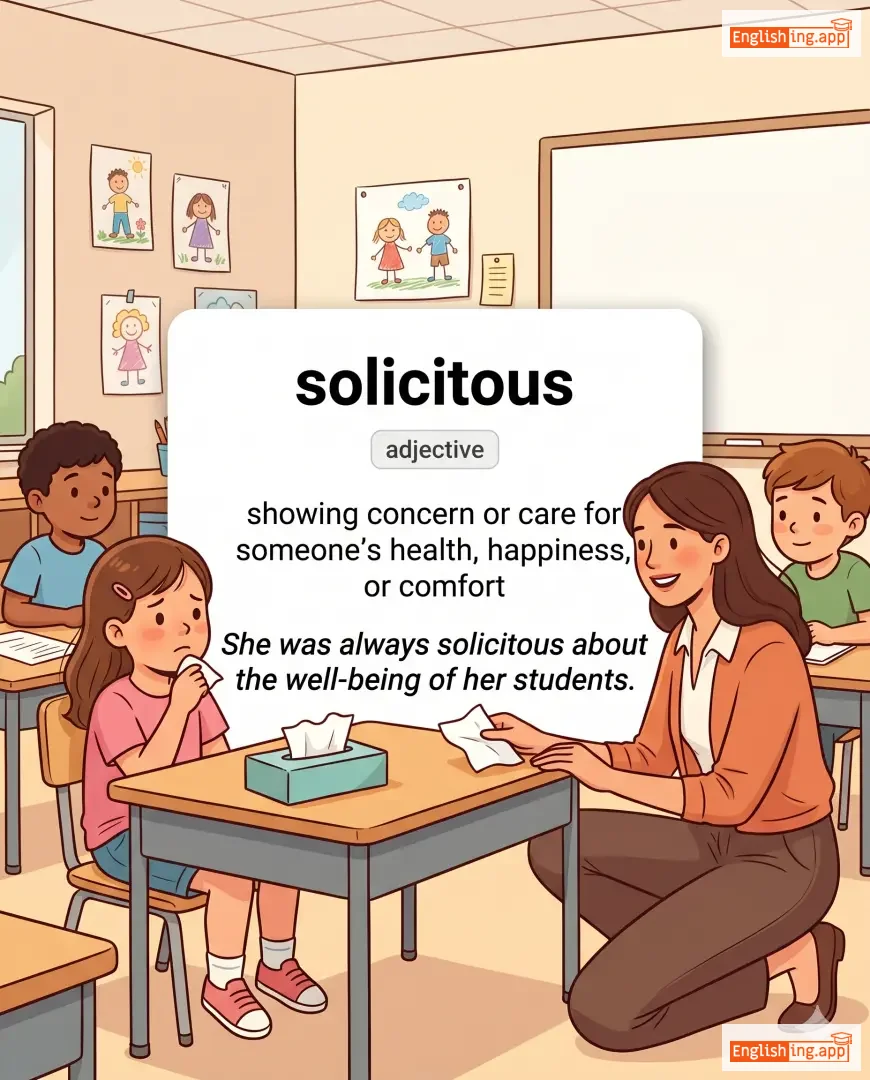
adjective
/səˈlɪsɪtəs/
关心 (guānxīn)

showing concern or care for someone's health, happiness, or comfort

"She was always solicitous about the well-being of her students."

"她总是关心学生们的福祉。" (Tā zǒng shì guānxīn xuéshēngmen de fúzhǐ.)
noun
/səˈlɪsɪˌtuːd/
关心, 照顾 (guanxin, zhaogu)

Care or concern for someone or something.

"His mother showed great solicitude for his safety."
"他的母亲对他的安全表现出极大的关心。" (Tā de mǔqīn duì tā de ānquán biǎoxiàn chū jí dà de guānxīn.)
solid definition card — visual illustration of the meaning
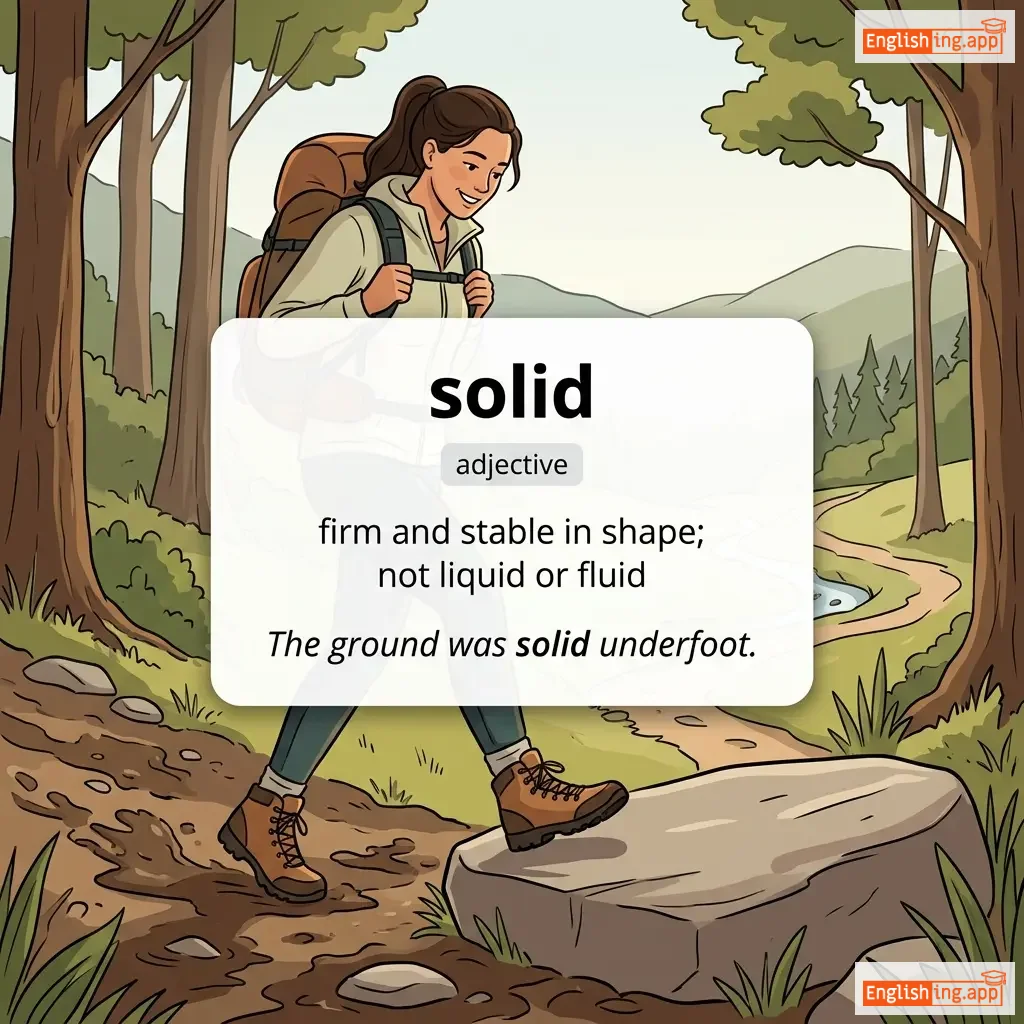
adjective
/ˈsɒlɪd/
坚固 (jiangu)

firm and stable in shape; not liquid or fluid

"The ground was solid underfoot."
"地面在脚下是坚固的。" (Dimian zai jiao xia shi jiangu de.)
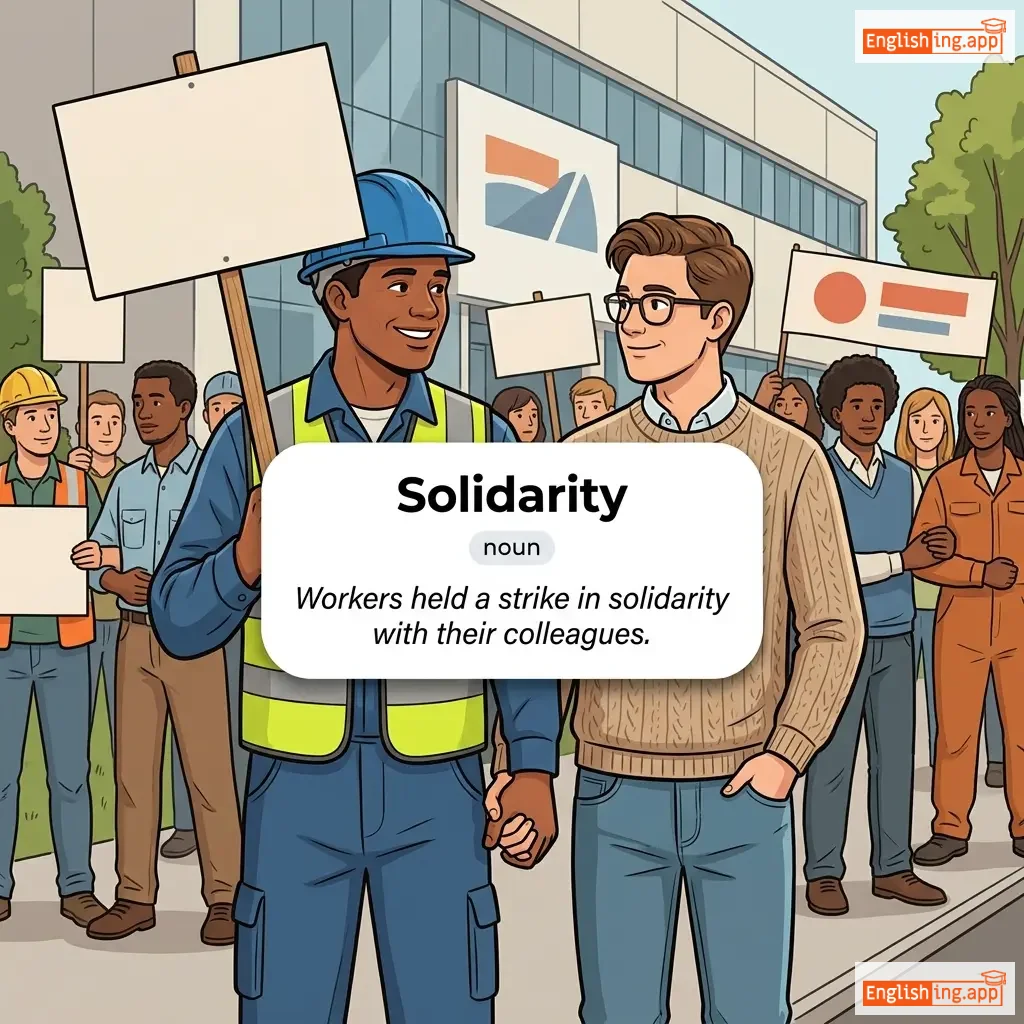
Solidarity definition card — visual illustration of the meaning
noun
/ˌsɒlɪˈdærɪti/
团结 (tuánjié)

Unity or agreement of feeling or action, especially among individuals with a common interest.

"Workers held a strike in solidarity with their colleagues."

"工人们在与同事们的团结下举行了罢工。" (Gōngrén men zài yǔ tóngshì men de tuánjié xià jǔxíngle bàgōng.)
verb
/səˈlɪdəˌfaɪ/
巩固 (gonggu)

To make something firm, strong, or more certain.

"The company solidified its position in the market."

"公司巩固了其在市场中的地位。" (Gongsi gonggu le qi zai shichang zhong de diwei.)
soliloquy definition card — visual illustration of the meaning
noun
/səˈlɪləkwi/
独白 (dúbái)

a speech in which a character talks to themselves, often used in drama to reveal inner thoughts

"Hamlet's soliloquy is one of the most famous passages in Shakespearean drama."

"哈姆雷特的独白是莎士比亚戏剧中最著名的段落之一。" (Hāmǔléitè de dúbái shì Shāshìbǐyà xìjù zhōng zuì zhùmíng de duànluò zhī yī.)
adjective
/ˈsɒl.ɪ.ter.i/
孤独; 隔离; 单独 (gūdú; gélí; dāndú)

alone; without companions; single; isolated

"He lived a solitary life in the mountains."
"他在山中过着孤独的生活。" (Tā zài shān zhōng guòzhe gūdú de shēnghuó.)
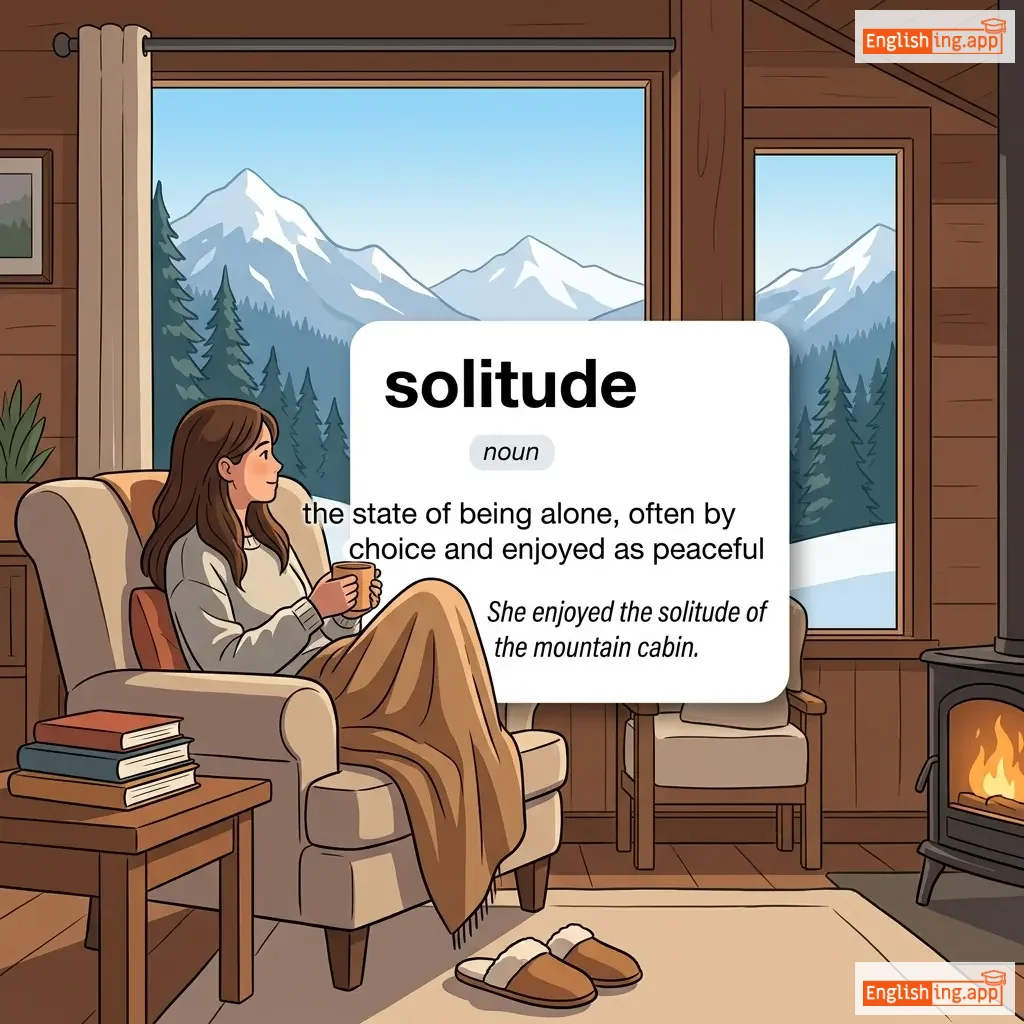
solitude definition card — visual illustration of the meaning
noun
/ˈsɒlɪtjuːd/
孤独 (gudou)

the state of being alone, often by choice and enjoyed as peaceful

"She enjoyed the solitude of the mountain cabin."
"她在山间小屋里享受孤独。" (Tā zài shān jiān xiǎowū lǐ xiǎngshòu gūdú.)
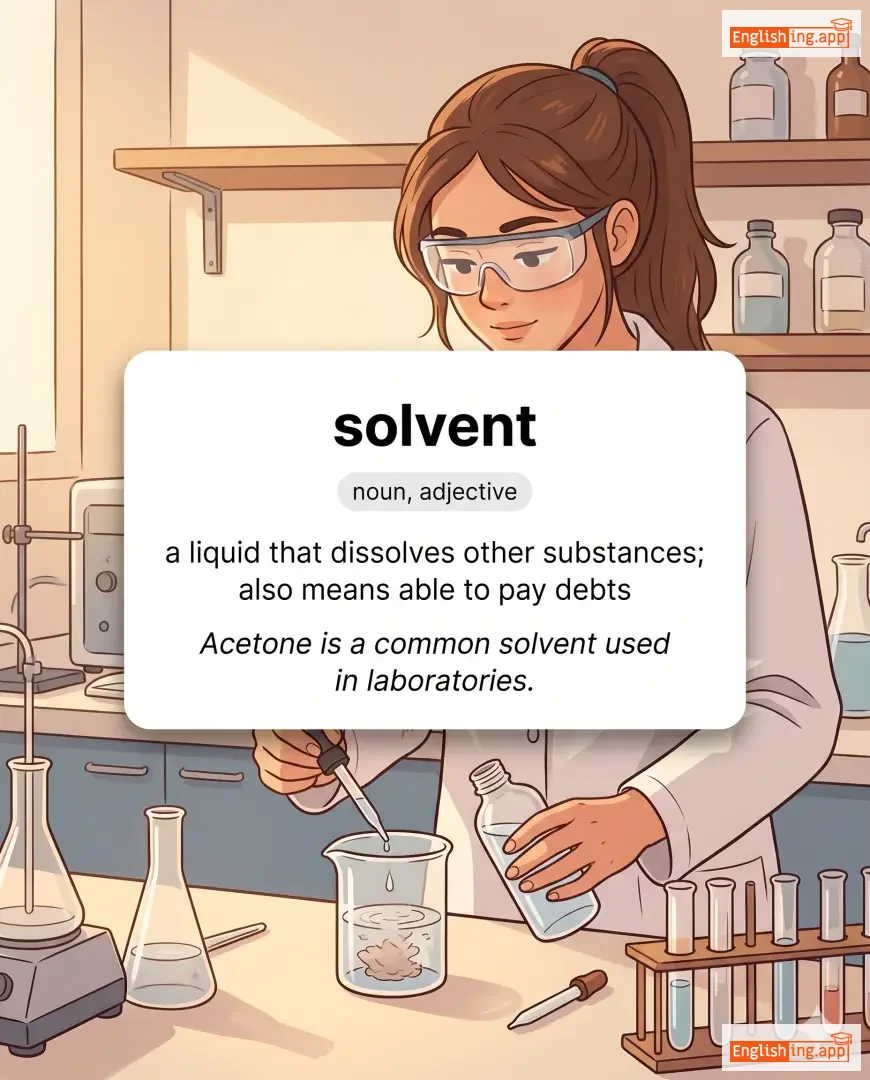
solvent definition card — visual illustration of the meaning
noun, adjective
/ˈsɒlvənt/
溶剂, 还债能力 (rongji, huan zhai nengli)

a liquid that dissolves other substances; also means able to pay debts

"Acetone is a common solvent used in laboratories."

"丙酮是实验室中常用的溶剂。" (Bingtong shi shiyan shi zhong changyong de rongji.)
solve definition card — visual illustration of the meaning
verb
/sɒlv/
解决 (jie jue)

to find an answer or explanation for a problem or question

"She solved the mystery in no time."

"她很快解决了谜题。" (Tā hěn kuài jiějuéle míti.)
solvency definition card — visual illustration of the meaning
noun
/ˈsɒl.vən.si/
拥有超过负债的资产;偿还债务的能力 (yōngyǒu chāoguò fùzhài de zīchǎn; chánghuán zhàiwù de nénglì)

The possession of assets in excess of liabilities; ability to pay debts.

"The company's solvency determines its financial health."
"公司的偿付能力决定了其财务健康状况。" (Gōngsī de chángfù nénglì juédìngle qí cáiwù jiànkāng zhuàngkuàng.)
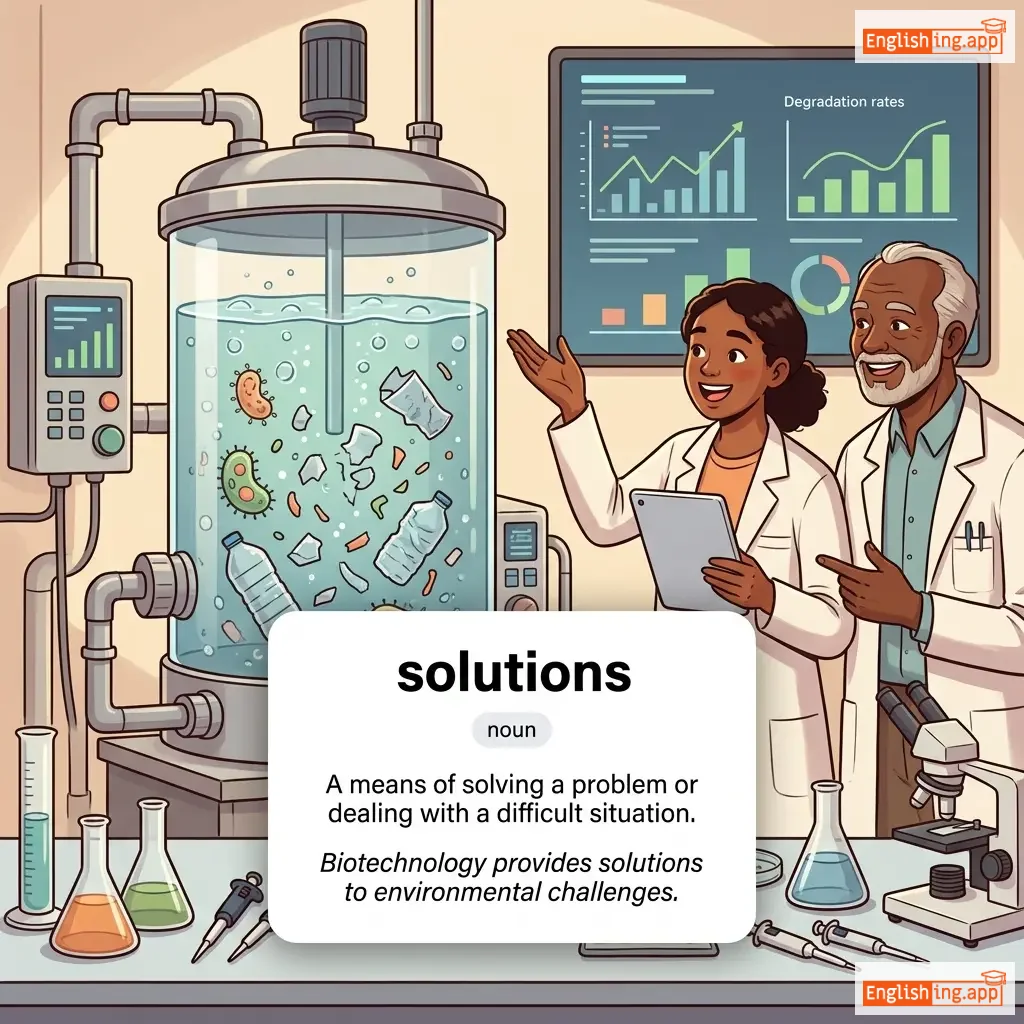
solutions definition card — visual illustration of the meaning
noun
səˈluː.ʃənz
解决方案 (jiejue fang'an)

A means of solving a problem or dealing with a difficult situation.

"Biotechnology provides solutions to environmental challenges."
"生物技术为环境问题提供解决方案。" (Shengwu jishu wei huanjing wenti tigong jiejue fang'an.)
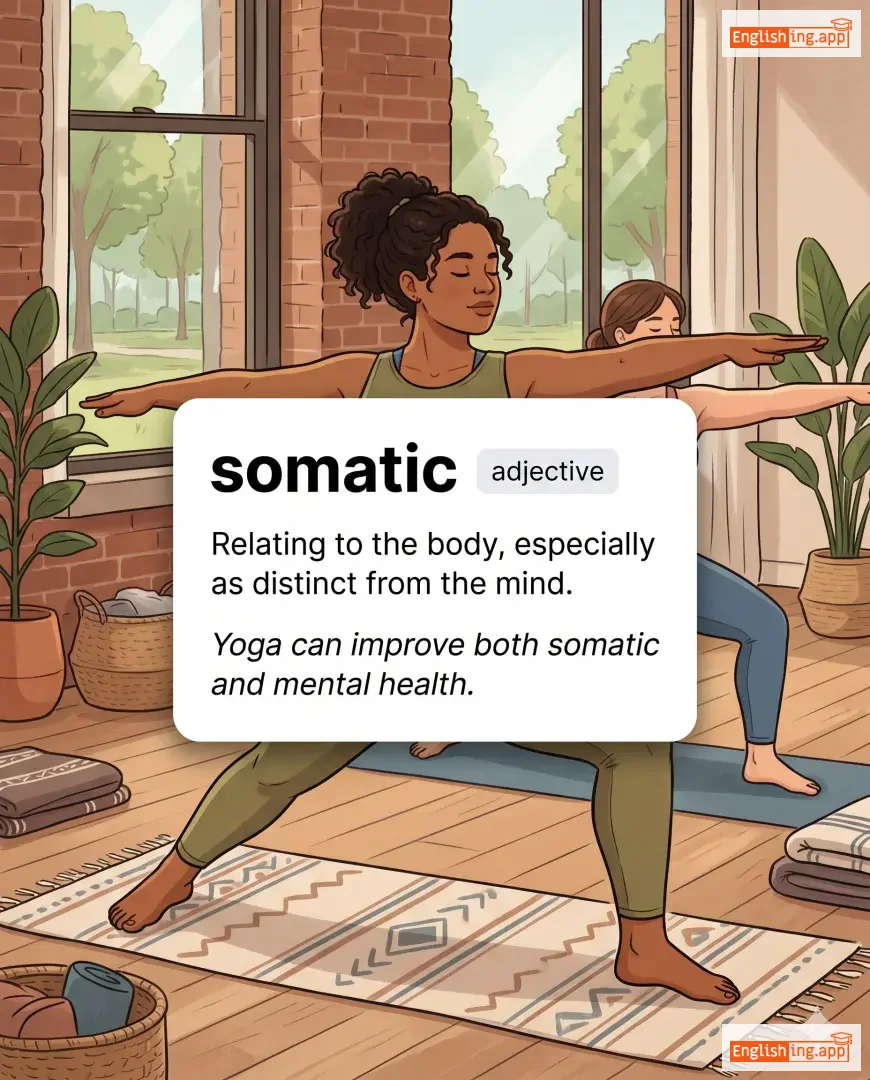
somatic definition card — visual illustration of the meaning
adjective
/səˈmætɪk/
身体的 (shen ti de)

Relating to the body, especially as distinct from the mind.

"Yoga can improve both somatic and mental health."

"瑜伽可以改善身体和心理健康。" (Yujia keyi gaishan shenti he xinli jiankang.)