词汇表

英语词汇词典 | 单词含义、定义和示例

noun
/ˌsʌb.stɪˈtjuː.ʃən/
替换 (tìhuàn)

the action of replacing someone or something with another

"The substitution of the old system with the new one was difficult."
"将旧系统替换为新系统是困难的。" (Jiāng jiù xìtǒng tìhuàn wèi xīn xìtǒng shì kùnnán de.)
substitute definition card — visual illustration of the meaning
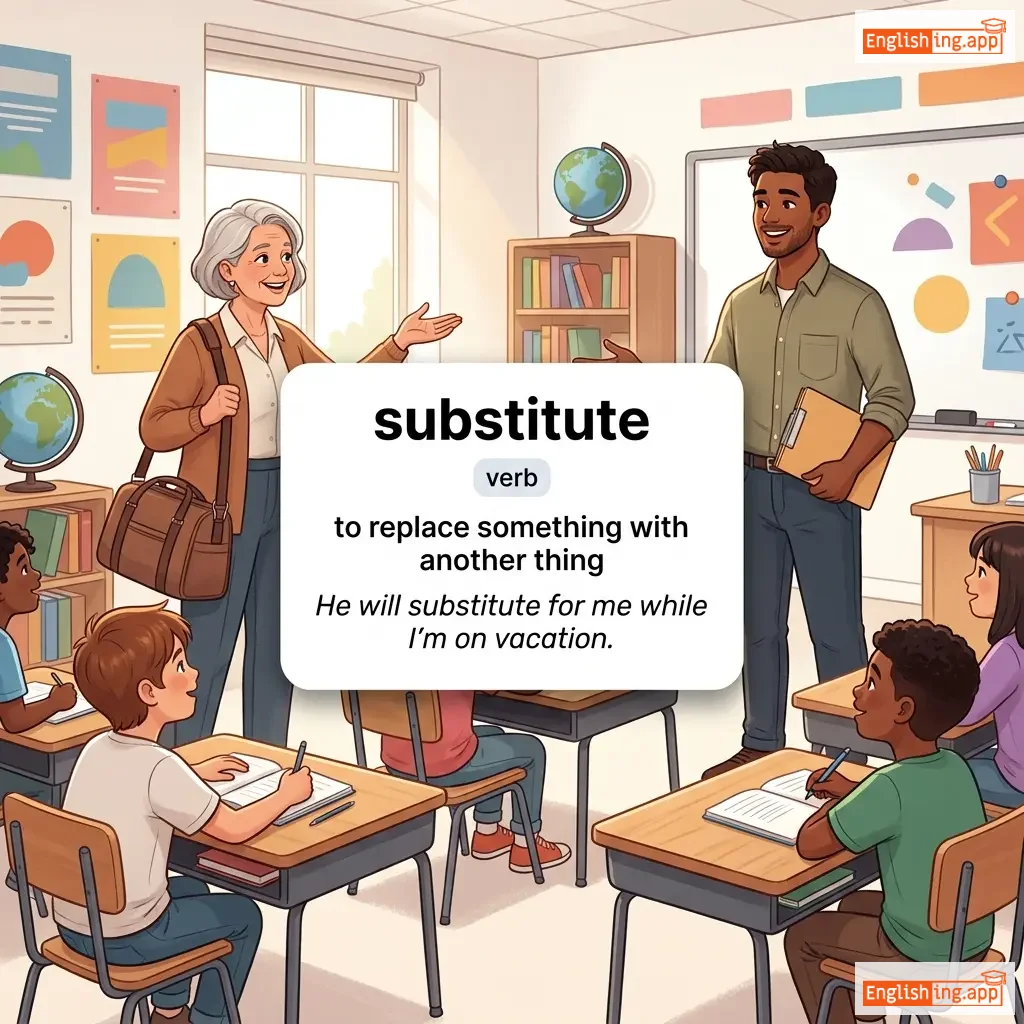
verb
/ˈsʌb.stɪ.tjuːt/
替代 (tìdài)

to replace something with another thing

"He will substitute for me while I'm on vacation."

"他将替我工作,直到我度假回来。" (Tā jiāng tì wǒ gōngzuò, zhídào wǒ dùjià huílái.)
substantive definition card — visual illustration of the meaning
adjective
/ˈsʌbstəntɪv/
重要 (zhòng yào)

Having a firm basis in reality; important, meaningful, or considerable.

"The company made substantive changes to its policy."

"公司对其政策进行了重要更改。" (Gōngsī duì qí zhèngcè jìnxíngle zhòngyào gēnggǎi.)
substantiate definition card — visual illustration of the meaning
verb
/səbˈstænʃieɪt/
证实 (zhèngshí)

To provide evidence to support or prove the truth of something.

"The lawyer worked to substantiate the claims with solid evidence."

"律师努力通过确凿证据来证实这些主张。" (Lǚshī nǔlì tōngguò quèzuò zhèngjù lái zhèngshí zhèxiē zhǔzhāng.)
adverb
/səbˈstænʃəli/
显著 (xian zhu)

to a great extent or degree

"The new policy has substantially improved working conditions."
"新政策显著改善了工作条件。" (Xin zhengce xian zhu gaishan le gongzuo tiaojian.)
substantial impact definition card — visual illustration of the meaning
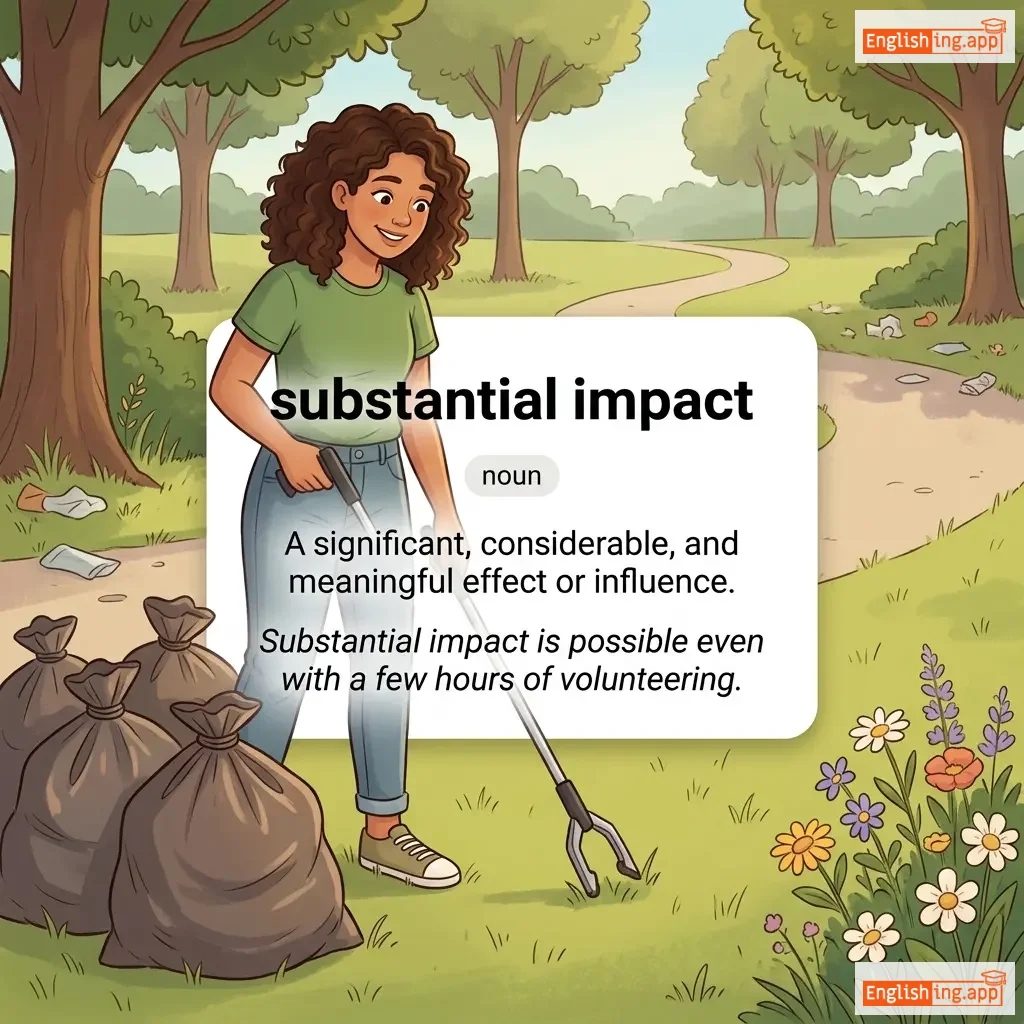
noun
səbˈstænʃəl ˈɪmpækt
重大影响 (zhòngdà yǐngxiǎng)

A significant, considerable, and meaningful effect or influence.

"Substantial impact is possible even with a few hours of volunteering."

"即使是几个小时的志愿者工作,也能产生重大影响。" (Jíshǐ shì jǐ gè xiǎoshí de zhìyuànzhě gōngzuò, yě néng chǎnshēng zhòngdà yǐngxiǎng.)
adjective
/səbˈstænʃl/
实质性的 (shízhìxìng de)

Of considerable importance, size, or worth.

"She received a substantial raise after the successful project."

"她在成功的项目之后获得了可观的加薪。" (Tā zài chénggōng de xiàngmù zhīhòu huòde le kěguān de jiāxīn.)
noun
/ˈsʌbstəns/
物质 (wuzhi)

a particular kind of matter with uniform properties

"The substance of the matter was highly controversial."
"这个问题的物质非常有争议。" (Zhege wenti de wuzhi feichang you zhengyi.)
subsistence definition card — visual illustration of the meaning
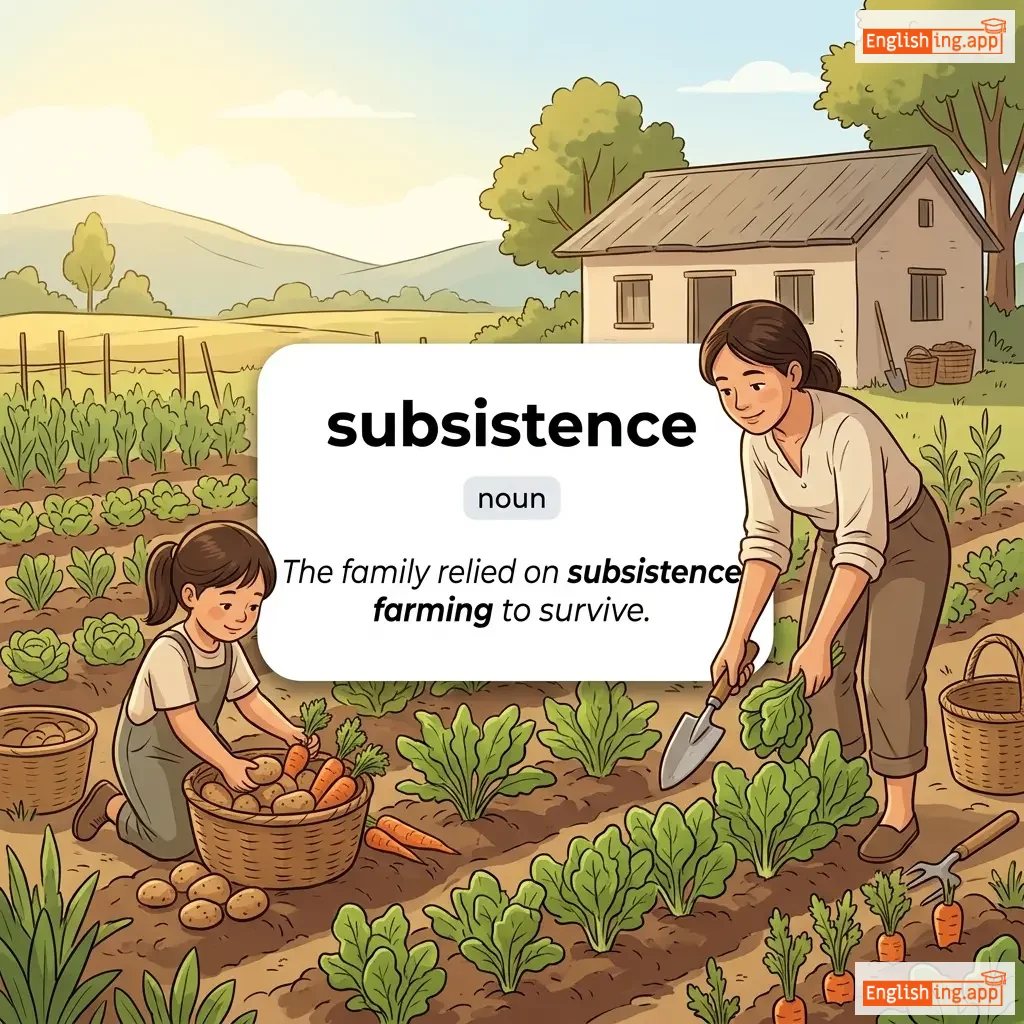
noun
/səbˈsɪstəns/
生计 (shengji)

The action or fact of maintaining or supporting oneself, especially at a minimal level.

"The family relied on subsistence farming to survive."

"这个家庭依赖生计农业来生存。" (Zhege jiating yilai shengji nongye lai shengcun.)
verb
/səbˈsɪst/
生存 (shengcun)

To maintain or support oneself, especially at a minimal level.

"Many villagers still subsist on fishing and farming."

"许多村民仍然依靠捕鱼和农业为生。" (Xuduo cunmin rengran yikao chiyu he nongye weisheng.)
subsidy definition card — visual illustration of the meaning
noun
/ˈsʌbsɪdi/
补贴 (butie)

A sum of money granted by the government or a public body to help support an industry or reduce the cost of goods or services.

"The government provided a subsidy to farmers to support crop production."

"政府为农民提供了补贴,以支持作物生产。" (Zhengfu wei nongmin tigongle butie, yi zhichi zuowu shengchan.)
subsidization definition card — visual illustration of the meaning
noun
/ˌsʌbsɪdaɪˈzeɪʃən/
补贴 (butie)

The action of supporting an organization or activity financially.

"The government's subsidization of agriculture helped farmers."

"政府对农业的补贴帮助了农民。" (Zhèngfǔ duì nóngyè de bǔtiē bāngzhùle nóngmín.)
noun, adjective
/səbˈsɪdiˌɛri/
子公司 (zǐ gōngsī)

a company controlled by a larger company; serving to assist or supplement something

"The multinational owns a subsidiary in Bangladesh."
"跨国公司在孟加拉国拥有一家子公司。" (Kuàguó gōngsī zài Mèngjiālāguó yǒngyǒu yījiā zǐ gōngsī.)
subside definition card — visual illustration of the meaning
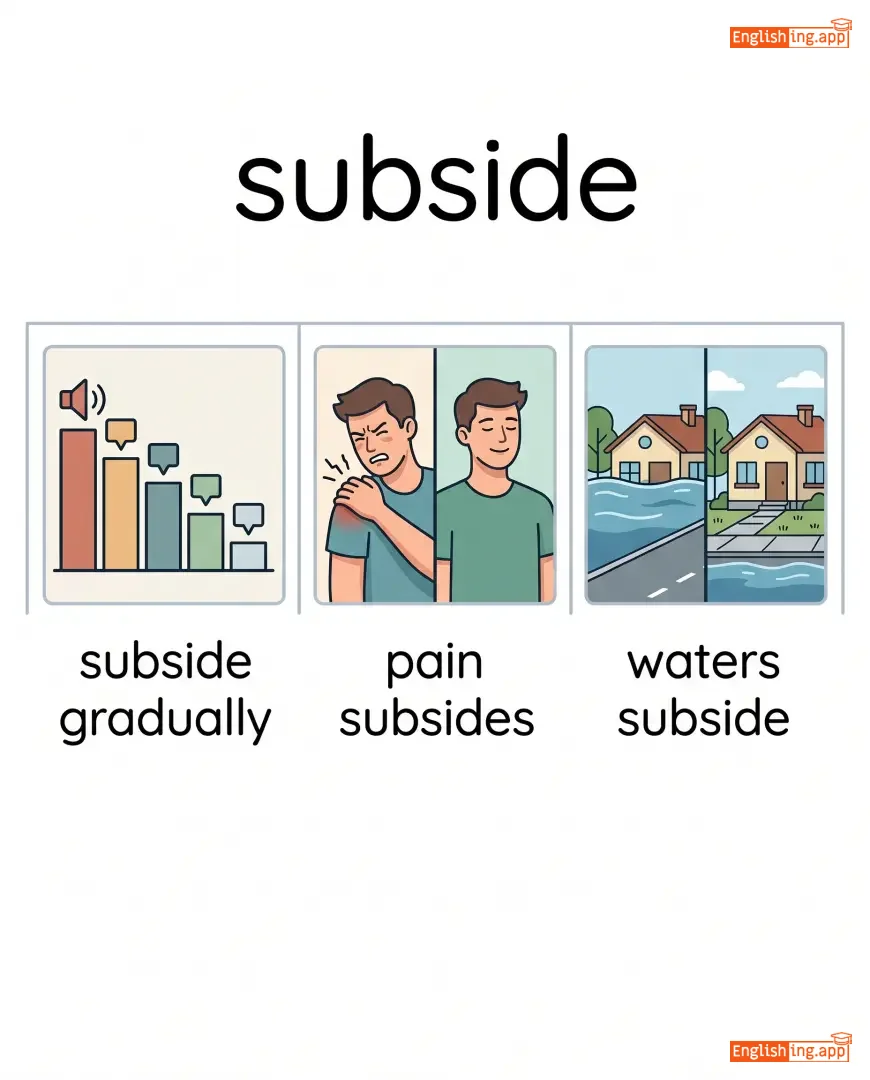
verb
/səbˈsaɪd/
减少 (jiǎnshǎo)

to become less intense, violent, or severe; to sink or fall to a lower level

"After the storm, the floodwaters began to subside."

"风暴过后,洪水开始退去。" (fēngbào guòhòu, hóngshuǐ kāishǐ tuìqù.)
adjective
/səbˈsɜːviənt/

prepared to obey others unquestioningly; less important than something else

"She was too subservient to challenge his decision."

noun
/səbˈsɜːviəns/
奴性 (nuxing)

the condition of being too willing to obey or serve others

"His subservience to authority annoyed his colleagues."

"他对权威的奴性让同事们感到烦恼。" (Ta dui quánwēi de núxìng ràng tóngshìmen gǎndào fánnǎo.)
adverb
/ˈsʌbsɪkwəntli/
随后 (suíhòu)

at a later time; afterward

"He failed his exam and subsequently had to retake it."

"他没有通过考试,随后不得不重考。" (Tā méiyǒu tōngguò kǎoshì, suíhòu bùdébù zhòngkǎo.)
subsequent definition card — visual illustration of the meaning
adjective
/ˈsʌbsɪkwənt/
随后的 (suíhòu de)

coming after something in time; following

"His subsequent success surprised everyone."

"他的随后的成功让所有人都感到惊讶。" (tā de suíhòu de chénggōng ràng suǒyǒu rén dōu gǎndào jīngyà.)
noun
/səbˈskrɪpʃən/
订阅 (dingyue)

the action of subscribing to something

"I paid for a subscription to the online learning platform."

"我为在线学习平台付费订阅了。" (Wo wei zaixian xuexi pingtai fufei dingyue le.)
noun
/səbˈskraɪbər/
订阅者 (dīngyuè zhě)

a person who receives or subscribes to a service, magazine, or service

"She is a subscriber to the monthly magazine."

"她是每月杂志的订阅者。" (Tā shì měi yuè zázhì de dìngyuè zhě.)
subscribe definition card — visual illustration of the meaning
verb
/səbˈskraɪb/
订阅 (dìngyuè)

to pay to receive a service regularly; to agree with or support something

"I subscribe to several online magazines."

"我订阅了几本在线杂志。" (Wǒ dìngyuèle jǐ běn zàixiàn zázhì.)
subpoena definition card — visual illustration of the meaning
noun, verb
/səˈpiːnə/
传票 (chuanpiao)

a legal document ordering someone to attend court; to summon someone with such a document

"The witness received a subpoena to appear in court next week."

"证人收到了传票,要求下周出庭。" (Zhengren shoudao le chuanpiao, yaoqiu xia zhou chuting.)
verb
/səˈbɔːrn/
贿赂 (huìlù)

to bribe or induce someone unlawfully to perform an act, especially to commit perjury

"The lawyer was accused of trying to suborn a witness."

"律师被指控试图贿赂一名证人。" (Lǜshī bèi zhǐkòng shìtú huìlù yī míng zhèngrén.)
noun, adjective, verb
/səˈbɔːrdənət/ (noun/adjective), /səˈbɔːrdəˌneɪt/ (verb)
下属 (xiàshǔ)

lower in rank or position; to treat as less important

"He manages ten subordinates in his department."

"他在他的部门里管理十个下属。" (Tā zài tā de bùmén lǐ guǎnlǐ shí gè xiàshǔ.)
noun
/səbˈmɪtəl/
提交 (tijiāo)

the act of submitting something, especially a document for consideration or approval

"The contractor sent the submittal to the client for approval."

"承包商将提交给客户以供批准。" (Chéngbāo shāng jiāng tijiāo gěi kèhù yǐ gōng pīzhǔn.)
submit definition card — visual illustration of the meaning
verb
/səbˈmɪt/
提交 (tíjiāo)

to present or deliver something formally or for approval

"Please submit your report by the end of the day."

"请在当天结束前提交报告。" (Qing zai dangtian jieshu qian tijiāo bàogào.)
adjective
/səbˈmɪsɪv/
顺从的 (shùncóng de)

ready to conform to the authority or will of others; meekly obedient or passive

"She was too submissive to challenge her boss's unfair decision."

"她太顺从了,无法挑战老板的不公决策。" (Tā tài shùncóng le, wúfǎ tiǎozhàn lǎobǎn de bùgōng juécè.)
noun
/səbˈmɪʃən/
提交, 顺从 (tiji, shuncong)

the act of yielding to authority or presenting something for consideration

"Her submission of the report was appreciated by the manager."

"她提交的报告受到了经理的赞赏。" (Tā tiji de bàogào shòudàole jīnglǐ de zànshǎng.)
noun
/səbˈmɜːrʒən/
沉没 (chenmo)

the state of being under water

"The submersion of the fields lasted for several days after the heavy rain."

"在大雨之后,田地的沉没持续了几天。" (Zài dàyǔ zhīhòu, tiándì de chénmò chíxùle jǐ tiān.)
adjective, noun
/səbˈmɜːrsəbl/
潜水器 (qiánshuǐ qì)

capable of being submerged; a small underwater craft

"The scientists explored the deep ocean using a submersible."

"科学家们使用潜水器探索了深海。" (kēxuéjiāmen shǐyòng qiánshuǐ qì tànsuǒle shēnhǎi.)
noun
/səbˈmɜːrdʒəns/
沉没 (chenmo)

the act or process of being submerged or going underwater

"The submergence of coastal areas is a major concern due to rising sea levels."

"由于海平面上升,沿海地区的沉没成为一个重大问题。" (Yinyu haipingmian shangsheng, yanhai diqu de chenmo chengwei yi ge zhongda wenti.)
verb
/səbˈmɜːrdʒ/
淹没 (yānmò)

to put under water or cover with liquid

"The floodwaters threatened to submerge the village."
"洪水威胁要淹没整个村庄。" (hóng shuǐ wēixié yào yānmò zhěnggè cūnzhuāng.)
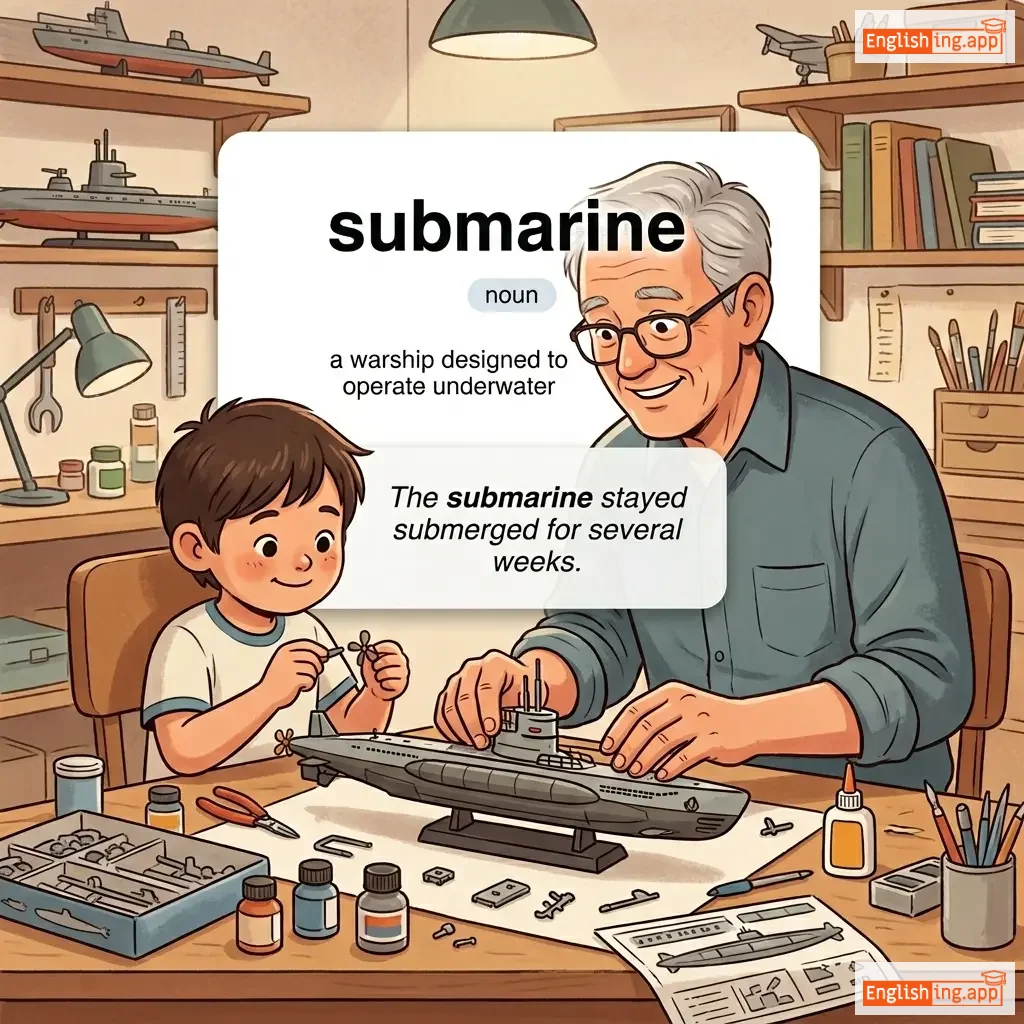
submarine definition card — visual illustration of the meaning
noun
/ˈsʌbməriːn/
潜水艇 (qián shuǐ tǐng)

a warship designed to operate underwater

"The submarine stayed submerged for several weeks."

"潜水艇在水下停留了好几周。" (qián shuǐ tǐng zài shuǐ xià tíng liú le hǎo jǐ zhōu)
adjective
/sʌbˈlɪŋɡwəl/
舌下 (shéxià)

situated or applied under the tongue

"The doctor prescribed a sublingual tablet for faster absorption."

"医生为更快的吸收开了舌下药片。" (Yīshēng wèi gèng kuài de xīshōu kāile shéxià yàopiàn.)
subliminal definition card — visual illustration of the meaning
adjective
/sʌbˈlɪmɪnəl/
潜意识 (qiǎn yì shí)

below the threshold of conscious perception but still influencing behavior or feelings

"The advertisement contained subliminal messages to influence consumers."

"广告包含了潜在的信息来影响消费者。" (Guǎng gào bāo hán le qián yì shí de xìn xī lái yǐng xiǎng xiāo fèi zhě.)
sublime definition card — visual illustration of the meaning
adjective
/səˈblaɪm/
崇高 (chónggāo)

of such excellence or beauty as to inspire great admiration or awe

"The view from the mountain top was simply sublime."

"从山顶看到的景色简直是崇高的。" (Cóng shāndǐng kàn dào de jǐngsè jiǎnzhí shì chónggāo de.)
verb
/ˈsʌblɪmeɪt/
转化为更高的活动 (zhuǎnhuà wéi gèng gāo de huódòng)

to redirect strong emotions or desires into socially acceptable activities or channels

"She sublimated her anger into painting beautiful landscapes."

"她将愤怒转化为美丽的风景画。" (Tā jiāng fènnù zhuǎnhuà wéi měilì de fēngjǐng huà.)
structured definition card — visual illustration of the meaning
adjective
ˈstrʌktʃərd
结构化 (jiegouhua)

Having a clear organization or framework; systematically arranged.

"A structured execution plan is crucial for success."

"一个结构化的执行计划对于成功至关重要。" (Yi ge jiegouhua de zhixing jihua dui yu chenggong zhiguang zhongyao.)
adjective
/ˈstrɪndʒənt/
严格 (yángé)

strict, precise, and exacting

"The government imposed stringent measures during the crisis."

"政府在危机期间实施了严格的措施。" (Zhèngfǔ zài wéijī qījiān shíshī le yángé de cuòshī.)
verb
/strɪp/
剥去 / 去除 (bo qu / qu chu)

to remove coverings or layers from something; to undress

"He had to strip the old paint from the wall."

"他必须从墙上去掉旧漆。" (Ta bixu cong qiang shang qu diao jiu qi.)
noun
/ˈstrɪplɪŋ/
年轻人 (niánqīngrén)

a young man who is not yet fully grown

"The stripling dreamed of becoming a brave knight."

"那个年轻人梦想成为一个勇敢的骑士。" (Nàgè niánqīngrén mèngxiǎng chéngwéi yīgè yǒnggǎn de qíshì.)
verb
/straɪv/
奋斗 (fèndòu)

To make great efforts to achieve or obtain something.

"She strives to be the best student in her class."

"她努力成为班里最好的学生。" (Tā nǔlì chéngwéi bān lǐ zuì hǎo de xuéshēng.)
stroke definition card — visual illustration of the meaning
noun
/strəʊk/
中风 (zhongfeng)

a sudden attack or event, typically of a medical or physical nature

"He suffered a stroke while working at his desk."
"他在桌子前工作时中风。" (Tā zài zhuōzi qián gōngzuò shí zhòngfēng.)
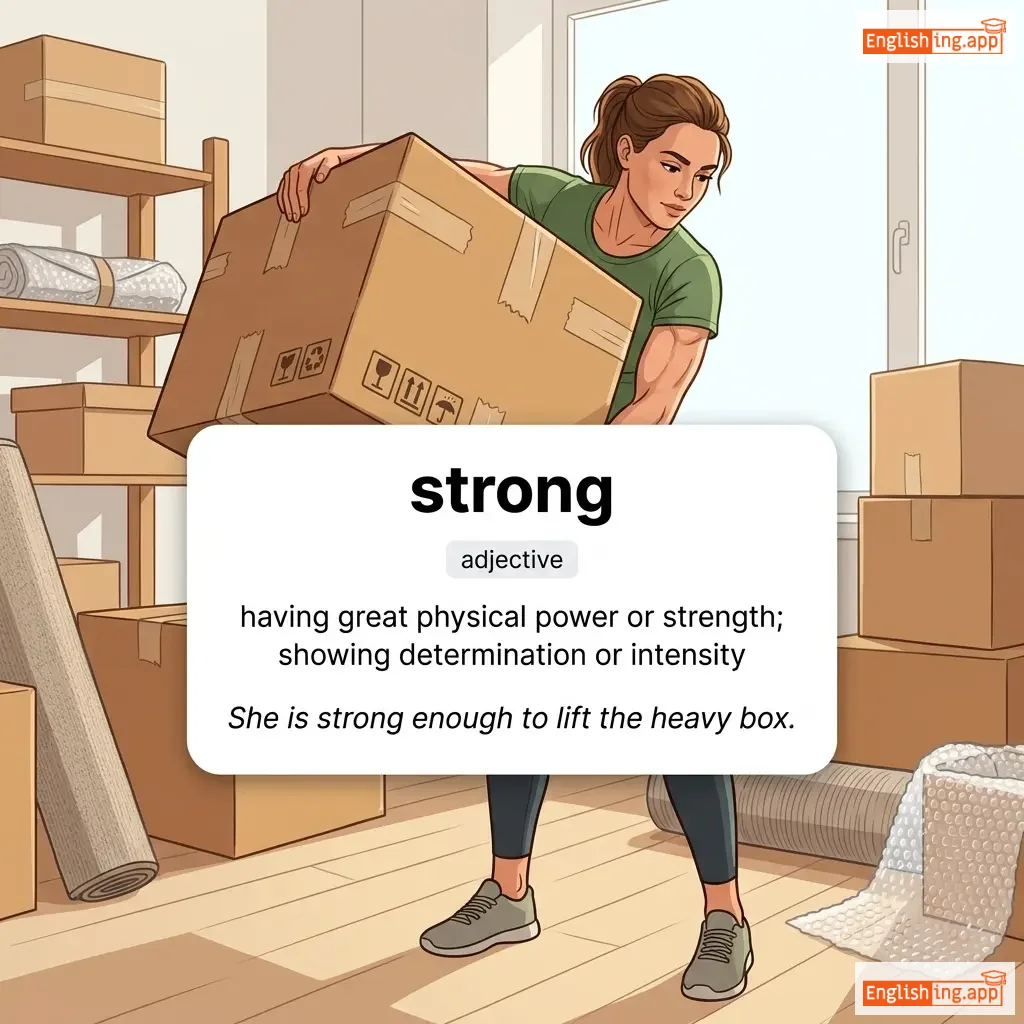
strong definition card — visual illustration of the meaning
adjective
/strɔːŋ/
强壮 (qiángzhuàng)

having great physical power or strength; showing determination or intensity

"She is strong enough to lift the heavy box."

"她足够强壮,能够举起重箱子。" (Tā zúgòu qiángzhuàng, nénggòu jǔqǐ zhòng xiāngzi.)
adverb
/ˈstrɒŋɡli/
强烈地 (qiángliè de)

in a strong manner or to a great extent

"She strongly believes in the power of positive thinking."

"她坚信积极思考的力量。" (Tā jiānxìn jījí sīkǎo de lìliàng.)
structural definition card — visual illustration of the meaning
🏗️

structural

adjective
/ˈstrʌktʃərəl/

relating to or forming part of the structure of something

"Engineers found structural damage in the old bridge."

structure definition card — visual illustration of the meaning
noun
/ˈstrʌktʃər/
结构 (jiegou)

the arrangement or organization of parts to form a whole

"The structure of the building was designed to withstand earthquakes."

"建筑的结构被设计成能够抵御地震。" (Jiànzhù de jiégòu bèi shèjì chéng nénggòu dǐyù dìzhèn.)
adjective
/ˈstʌdid/
深思熟虑 (shen si shu lv)

carefully considered, deliberate, or planned

"Her response was calm and studied, not impulsive."

"她的回答冷静而深思熟虑,非冲动。" (Tā de huídá lěngjìng ér shēnsī shúlǜ, fēi chōngdòng.)
stuck definition card — visual illustration of the meaning
verb
/stʌk/
卡住 (kǎ zhù)

unable to move; fixed in one position; unable to continue

"The door is stuck and won't open."

"门被卡住了,打不开。" (Mén bèi kǎ zhù le, dǎ bù kāi)
student definition card — visual illustration of the meaning
👩‍🎓

student (学生)

noun
/ˈstjuːdənt/
学生 (xuesheng)

a person who is learning at an educational institution

"The student was studying for the final exam."

"学生正在为期末考试而学习。" (Xuesheng zhengzai wei qimou kao shi er xuexi.)