词汇表

英语词汇词典 | 单词含义、定义和示例

stone definition card — visual illustration of the meaning
noun
/stoʊn/
石头 (shítou)

a hard, naturally occurring mineral material found in the earth

"He threw a stone into the lake."

"他把一块石头扔进湖里。" (Tā bǎ yī kuài shítou rēng jìn hú lǐ.)
noun
/ˈstʌmək eɪk/
胃痛 (weitong)

Pain in the stomach or abdominal area

"I have a stomach ache after eating too much."

"我吃得太多后感到胃痛。" (Wo chi de tai duo hou gandao weitong)
noun/verb
/ˈstʌmək/
胃 / 忍耐 (wèi / rěnnài)

The internal organ in which food is digested; also to tolerate or endure something

"She couldn’t stomach the sight of violence."
"她无法忍受暴力的场景。" (Tā wúfǎ rěnshòu bàolì de chǎngjǐng.)
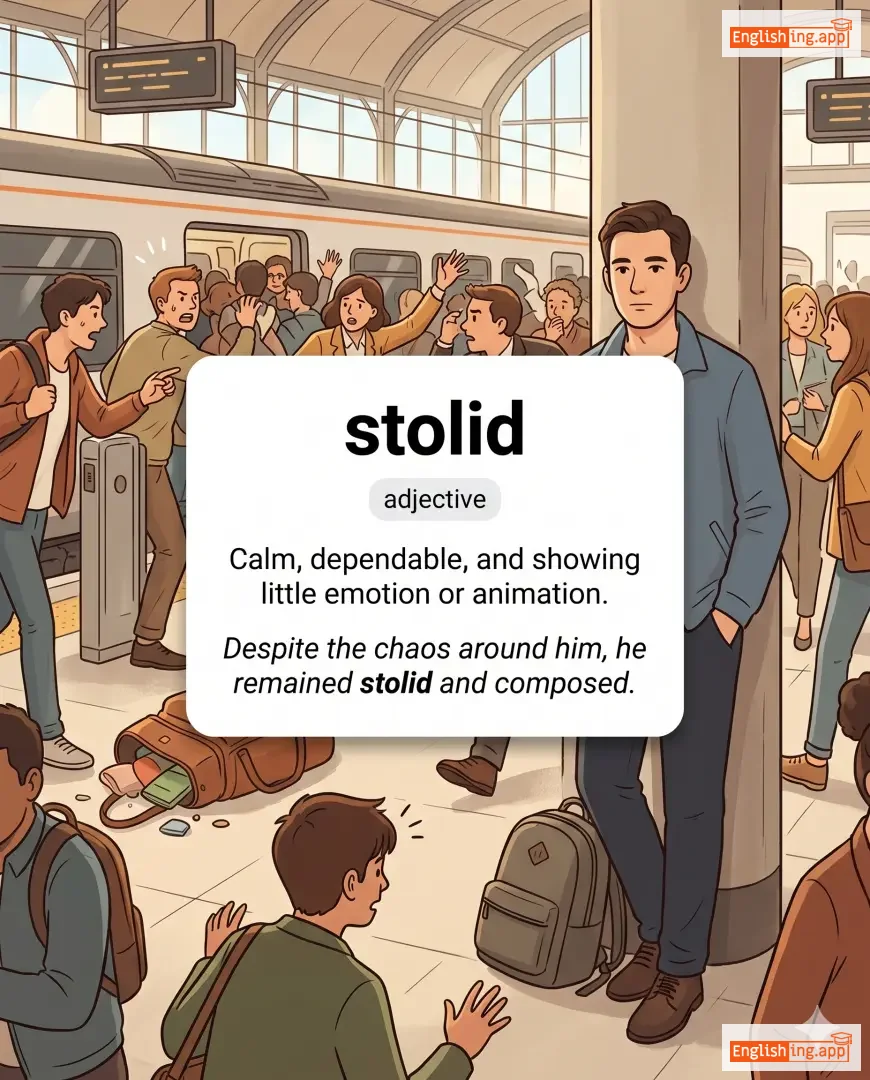
stolid definition card — visual illustration of the meaning
adjective
/ˈstɒlɪd/
冷静的,沉默的 (lěngjìng de, chénmò de)

Calm, dependable, and showing little emotion or animation.

"Despite the chaos around him, he remained stolid and composed."

"尽管周围混乱,他依然冷静沉着。" (Jǐnguǎn zhōuwéi hùnluàn, tā yīrán lěngjìng chénzhuó.)
🔥

stoke

verb
/stoʊk/

To add fuel to a fire; to encourage or increase a strong feeling or activity.

"The politician’s speech stoked anger among the crowd."

stoicism definition card — visual illustration of the meaning
noun
/ˈstoʊɪˌsɪzəm/
坚忍主义 (jiānrěn zhǔyì)

The endurance of pain or hardship without showing feelings or complaining.

"He faced the loss of his job with remarkable stoicism."

"他以非凡的坚忍主义面对失业的痛苦。" (Tā yǐ fēifán de jiānrěn zhǔyì miànduì shīyè de tòngkǔ.)
adjective
/ˈstoʊɪk/
冷静的, 无动于衷的 (lěngjìng de, wú dòng yú zhōng de)

Showing little or no emotion, even in difficult situations.

"She remained stoic during the crisis, never showing fear or panic."

"她在危机中保持冷静,毫无恐惧或恐慌。" (Tā zài wēijī zhōng bǎochí lěngjìng, háo wú kǒngjù huò kǒnghuāng.)
adjective
/ˈstɒdʒi/
沉闷的,老式的 (chénmèn de, lǎoshì de)

Dull, uninspired, or old-fashioned; also heavy and hard to digest when referring to food.

"The lecture was so stodgy that many students struggled to stay awake."

"讲座太沉闷了,以至于许多学生难以保持清醒。" (Jiǎngzuò tài chénmèn le, yǐzhì yú xǔduō xuéshēng nán yǐ bǎochí qīngxǐng.)
noun
/stɒˈkeɪd/
木栅栏 (mù zhàlán)

a defensive barrier made of strong posts or timbers, often around a fort or prison

"The prisoners were kept inside the wooden stockade."

"囚犯被关在木栅栏内。" (Qiúfàn bèi guān zài mù zhàlán nèi.)
noun, verb
/stɒk/
库存 (kù cún)

a supply of goods kept for sale or use; to keep or fill with goods

"The shop stocks a wide variety of products."
"商店储存大量的商品。" (Shāng diàn chǔ cún dà liàng de shāng pǐn.)
stitch definition card — visual illustration of the meaning
noun, verb
/stɪtʃ/

to sew fabric together using a needle and thread; also a single loop of thread in sewing

"She stitched the torn dress carefully."

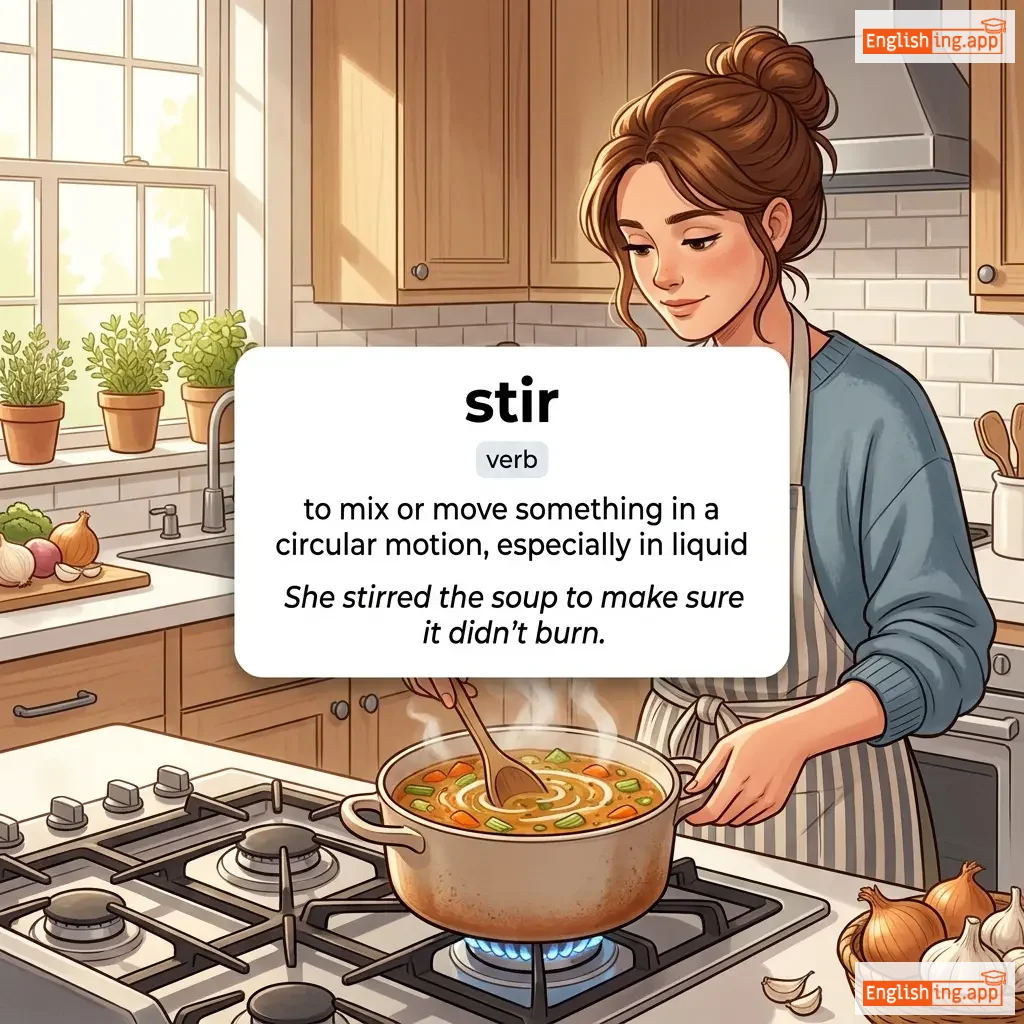
stir definition card — visual illustration of the meaning
verb
/stɜːr/
搅拌 (jiaoban)

to mix or move something in a circular motion, especially in liquid

"She stirred the soup to make sure it didn't burn."

"她搅拌汤,以确保它不会烧焦。" (Ta jiaoban tang, yi quebao ta buhui shaojiao.)
stipulate definition card — visual illustration of the meaning
verb
/ˈstɪp.jʊ.leɪt/
规定 (guīdìng)

to demand or specify a condition in an agreement or contract

"The contract stipulates that payment must be made within 30 days."

"合同规定付款必须在30天内完成。" (Hetong guīdìng fùkuǎn bìxū zài 30 tiān nèi wánchéng.)
verb
/ˈstɪp.əl/
用小点覆盖 (yòng xiǎo diǎn fùgài)

to cover a surface with numerous small dots or specks, often in drawing or painting

"The artist stippled the canvas to create a textured effect."

"艺术家在画布上用小点覆盖,创造了一个纹理效果。" (Yìshùjiā zài huàbù shàng yòng xiǎo diǎn fùgài, chuàngzàole yīgè wénlǐ xiàoguǒ.)
noun
/ˈstaɪpɛnd/
津贴 (jintie)

a fixed regular payment, usually for services or to cover living expenses

"The university provides a monthly stipend to its research students."

"大学为其研究生提供每月津贴。" (Dàxué wèi qí yánjiūshēng tígōng měi yuè jīntiē.)
verb
/ˈstɪntɪŋ/
吝啬地给 (lìn sè de gěi)

to supply sparingly or with restrictions

"He never stinting his efforts to help the poor."
"他从不吝啬自己的努力来帮助穷人。" (Tā cóng bù lìnsè zìjǐ de nǔlì lái bāngzhù qióngrén.)
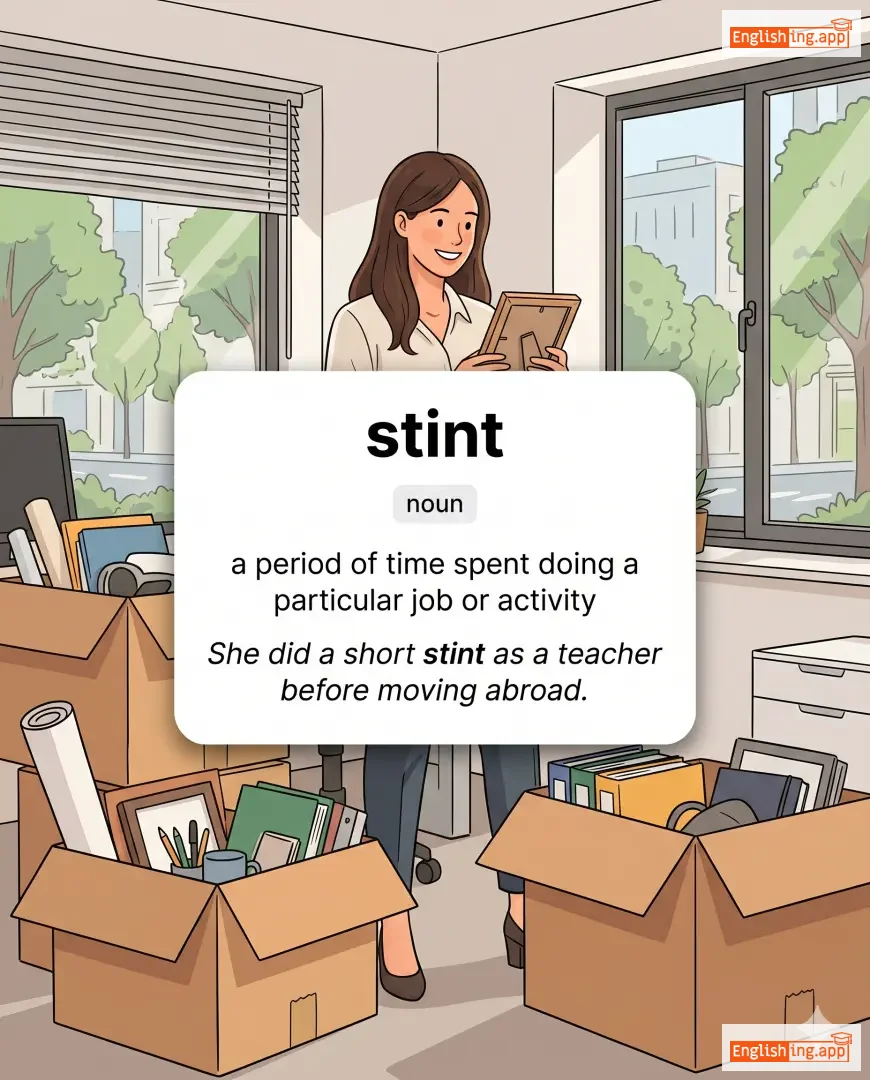
stint definition card — visual illustration of the meaning
noun
/stɪnt/
短期工作 (duǎnqī gōngzuò)

a period of time spent doing a particular job or activity

"She did a short stint as a teacher before moving abroad."

"她在搬到国外之前做了一段短时间的教师工作。" (Tā zài bān dào guówài zhīqián zuòle yī duàn duǎn shíjiān de jiàoshī gōngzuò.)
verb
/stɪŋk/
发臭 (fa chou)

to smell very unpleasant

"The garbage bin stinks in the hot sun."

"垃圾桶在烈日下发臭。" (La ji tong zai lie ri xia fa chou.)
adjective
/ˈstɪndʒi/
吝啬 (lìn sè)

unwilling to spend or give; miserly

"He is too stingy to buy a gift for his friend."
"他太吝啬了,连给朋友买礼物都不愿意。" (Tā tài lìnsè le, lián gěi péngyǒu mǎi lǐwù dōu bù yuànyì.)
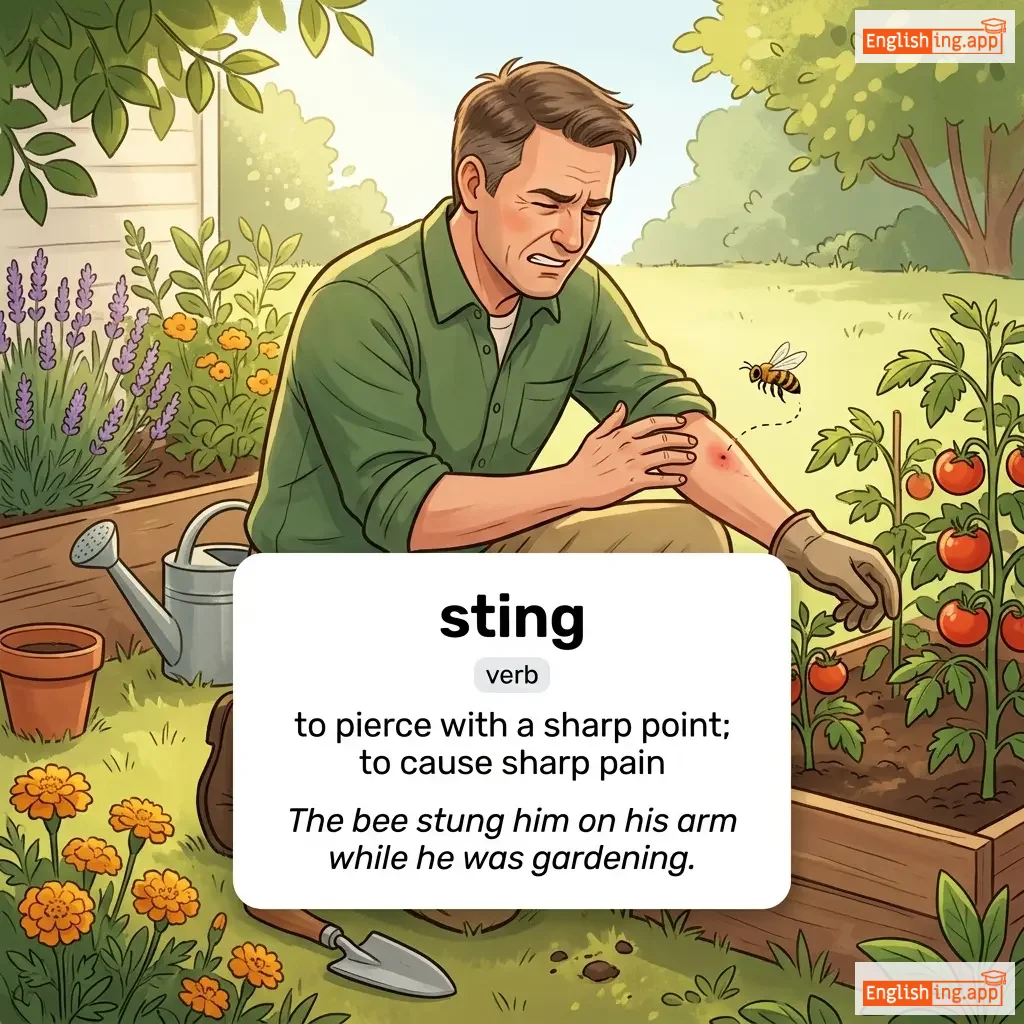
sting definition card — visual illustration of the meaning
verb
/stɪŋ/
刺痛 (cì tòng)

to pierce with a sharp point; to cause sharp pain

"The bee stung him on his arm while he was gardening."
"蜜蜂在他园艺时刺伤了他的手臂。" (Mìfēng zài tā yuányì shí cì shāng le tā de shǒubì)
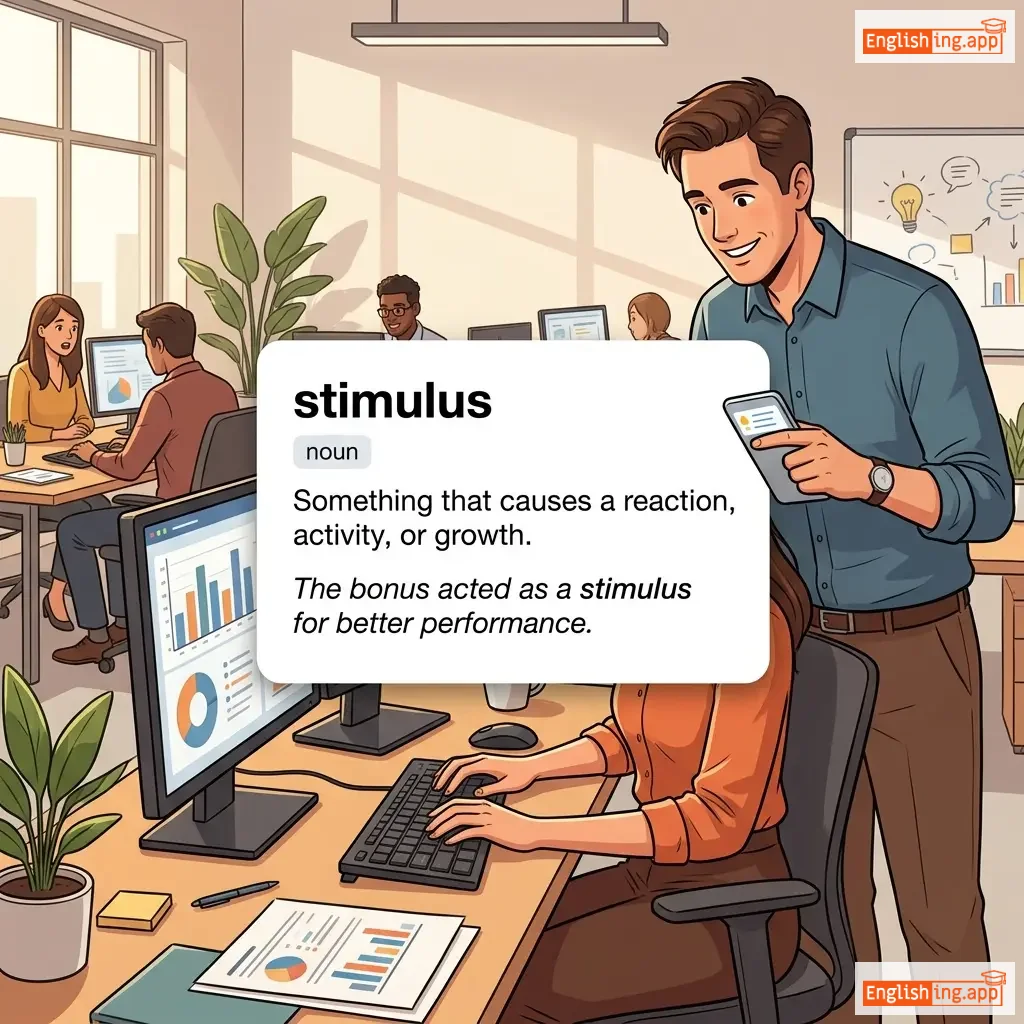
stimulus definition card — visual illustration of the meaning
noun
/ˈstɪmjʊləs/
引起反应、活动或增长的事物,刺激 (yǐnqǐ fǎnyìng, huódòng huò zēngzhǎng de shìwù, cìjī)

Something that causes a reaction, activity, or growth.

"The bonus acted as a stimulus for better performance."
"奖金成为了促进更好表现的刺激。" (Jiǎngjīn chéngwéi le cùjìn gèng hǎo biǎoxiàn de cìjī.)
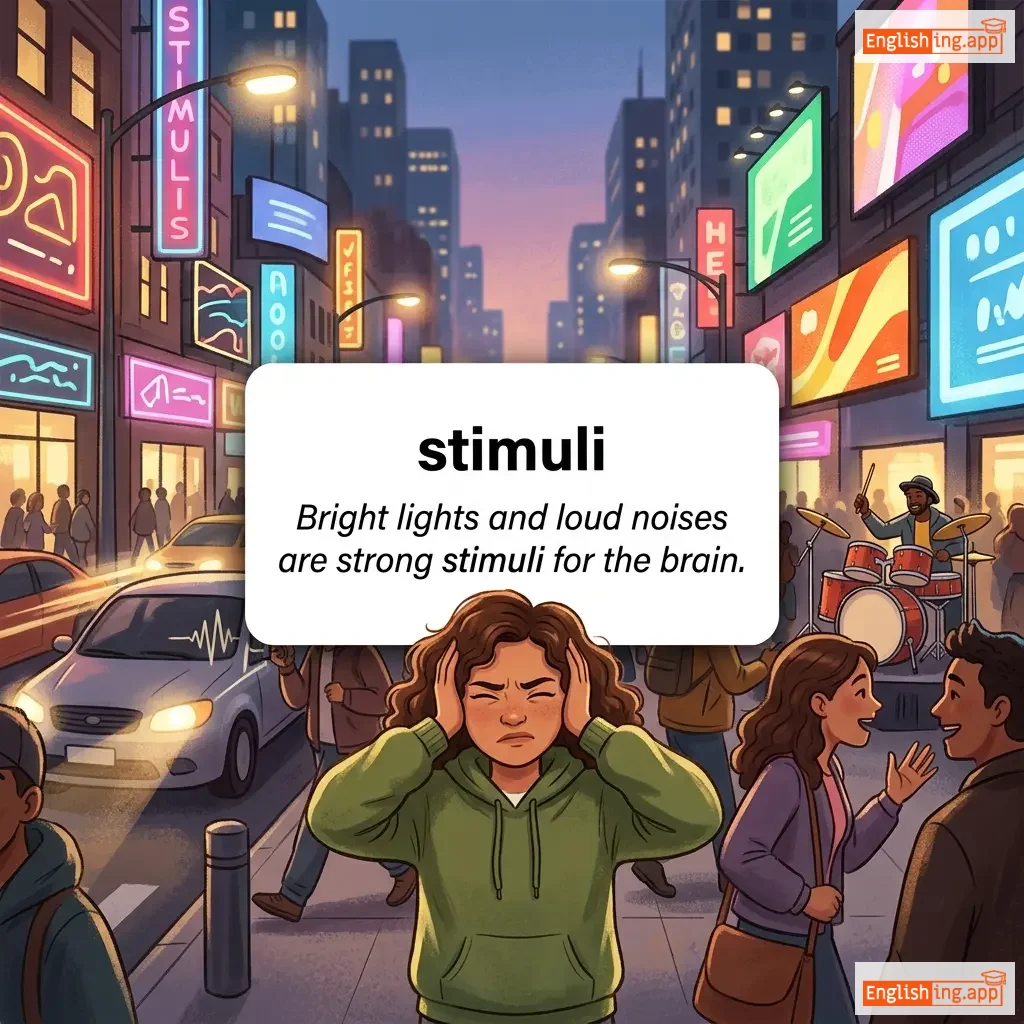
stimuli definition card — visual illustration of the meaning
noun (plural of stimulus)
/ˈstɪm.jʊ.laɪ/
刺激 (cìjī)

Things or events that evoke a specific functional reaction in an organ or tissue.

"Bright lights and loud noises are strong stimuli for the brain."
"明亮的光线和响亮的噪音是对大脑的强烈刺激。" (Míngliàng de guāngxiàn hé xiǎngliàng de zàoyīn shì duì dànǎo de qiángliè cìjī.)
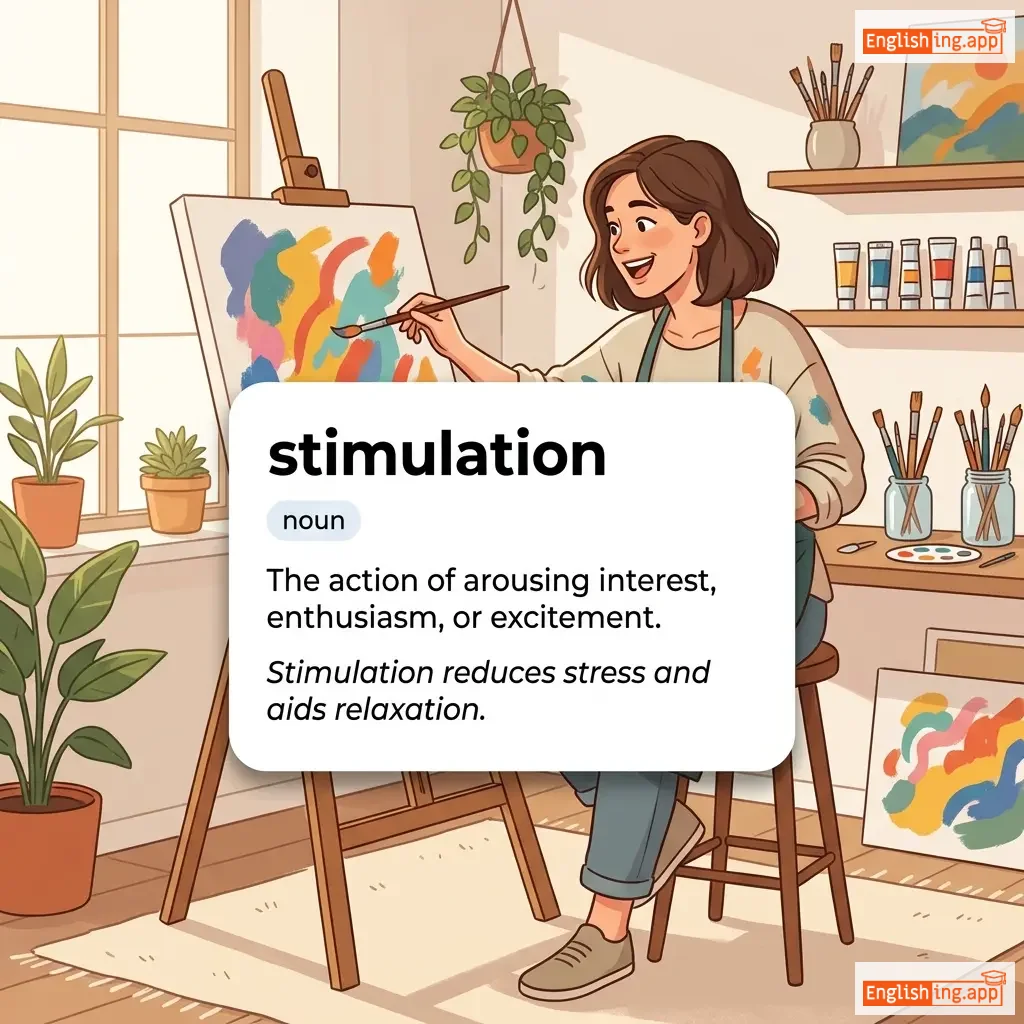
stimulation definition card — visual illustration of the meaning
noun
/ˌstɪm.jəˈleɪ.ʃən/
刺激 (cìjī)

The action of arousing interest, enthusiasm, or excitement.

"Stimulation reduces stress and aids relaxation."
"刺激减少压力并有助于放松。" (Cìjī jiǎnshǎo yālì bìng yǒuzhù yú fàngsōng.)
stimulate definition card — visual illustration of the meaning
verb
/ˈstɪmjʊˌleɪt/
刺激, 激励 (cìjī, jīlì)

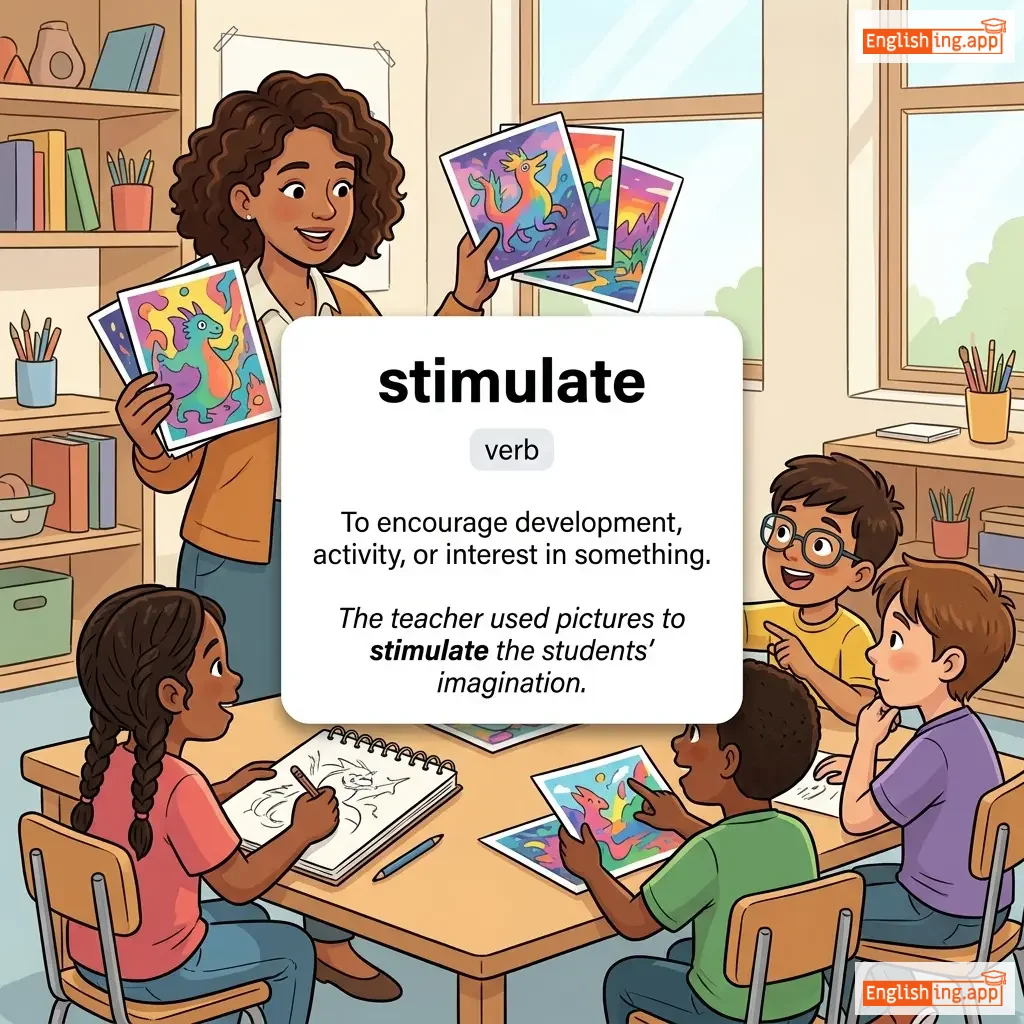
To encourage development, activity, or interest in something.

"The teacher used pictures to stimulate the students' imagination."

"老师用图片刺激了学生的想象力。" (Lǎoshī yòng túpiàn cìjīle xuéshēng de xiǎngxiànglì.)
noun
/ˈstɪmjʊlənt/
兴奋剂 (xīngfèn jì)

A substance that raises levels of physiological or nervous activity in the body.

"Coffee is a common stimulant that helps people stay awake."

"咖啡是一种常见的兴奋剂,帮助人们保持清醒" (Kāfēi shì yī zhǒng chángjiàn de xīngfèn jì, bāngzhù rénmen bǎochí qīngxǐng)
adjective
/ˈstɪltɪd/
做作的, 不自然的 (zuòzuò de, bù zìrán de)

Speech or writing that is stiff, unnatural, or overly formal.

"His speech sounded stilted and rehearsed."

"他的演讲听起来做作且预先排练过。" (Tā de yǎnjiǎng tīng qǐlái zuòzuò qiě yùxiān páiliàn guò.)
adjective
/stɪl/
静止 (jingzhi)

not moving or making a sound

"The water was still, reflecting the sky."

"水面静止,反射着天空。" (Shuǐmiàn jìngzhǐ, fǎnshè zhe tiānkōng.)
noun
/stɪˈlɛtoʊ/
细高跟鞋 / 匕首 (xì gāo gēn xié / bǐ shǒu)

A small, thin, high-heeled shoe or a dagger with a slender blade.

"She wore elegant stiletto heels to the party."

"她穿着优雅的细高跟鞋去参加派对。" (Tā chuānzhuó yōuyǎ de xì gāo gēn xié qù cānjiā pàiduì.)
verb
/ˈstɪɡmətaɪz/
污名化 (wūmíng huà)

to describe or regard someone as worthy of disgrace or disapproval

"People with certain illnesses are often unfairly stigmatized."

"患有某些疾病的人常常被不公正地污名化。" (Huàn yǒu mǒu xiē jíbìng de rén chángcháng bèi bù gōngzhèng de wūmíng huà.)
stigma definition card — visual illustration of the meaning
noun
/ˈstɪɡmə/
污名 (wūmíng)

a mark of shame or disgrace associated with a particular circumstance or quality

"There is still a stigma around mental health issues in many societies."

"许多社会中,心理健康问题仍然存在污名化现象。" (Xǔduō shèhuì zhōng, xīnlǐ jiànkāng wèntí réngrán cúnzài wūmínghuà xiànxiàng.)
verb
/ˈstaɪfəld/
压制 (yazhì)

to suppress, hold back, or prevent something from happening

"He stifled a laugh during the serious meeting."

"他在严肃的会议中压制了笑声。" (Tā zài yánsù de huìyì zhōng yāzhìle xiàoshēng.)
verb
/ˈstaɪfl/
抑制 (yìzhì)

to prevent or restrain an action, idea, or emotion; to suffocate

"She tried to stifle a laugh during the serious meeting."

"她试图在严肃的会议中抑制笑声。" (Tā shìtú zài yánsù de huìyì zhōng yìzhì xiàoshēng.)
noun
/ˈsteɪ.ʃən.ər/
文具商 (wenjushang)

a person who sells paper, pens, pencils, and other office supplies

"The stationer recommended the best pens for writing exams."

"文具商推荐了最适合考试的钢笔。" (Wénjù shāng tuījiànle zuì shìhé kǎoshì de gāngbǐ.)
noun
/ˈsteɪsɪs/ or /ˈstæsɪs/
停滯 (tíngzhì)

A state of inactivity or equilibrium; a situation where nothing changes.

"The negotiations reached a state of stasis with no progress made."
"谈判达到了停滞状态,没有取得进展。" (Tánpàn dádàole tíngzhì zhuàngtài, méiyǒu qǔdé jìnzhǎn.)
state definition card — visual illustration of the meaning
noun
/steɪt/
状态 (zhuangtai)

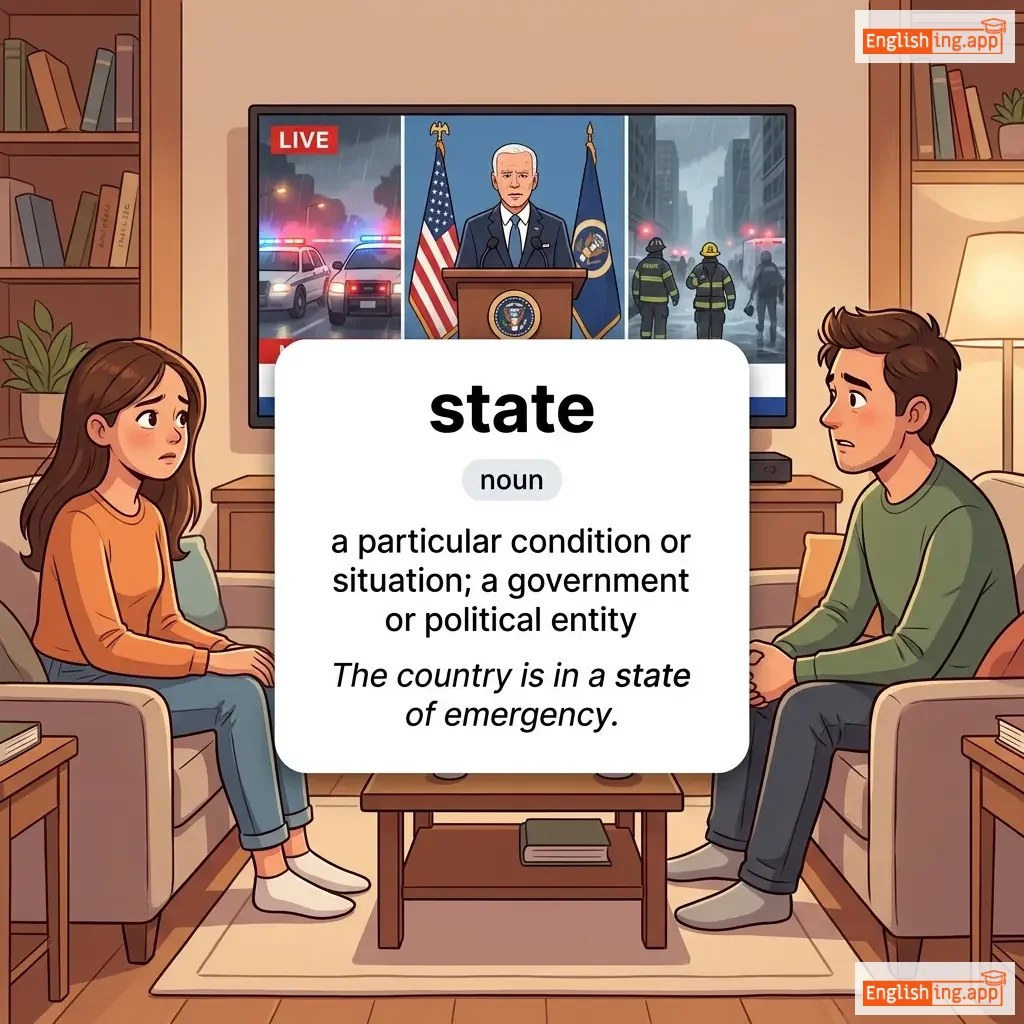
a particular condition or situation; a government or political entity

"The country is in a state of emergency."

"这个国家处于紧急状态。" (Zhege guojia chuyu jinji zhuangtai.)
noun
/ˈsteɪtkraft/
治国艺术 (zhìguó yìshù)

The art of governing and managing state affairs effectively.

"The leader was praised for his exceptional statecraft in handling international relations."

"领导因其在处理国际关系方面的卓越治国艺术而受到赞扬。" (Lǐngdǎo yīn qí zài chǔlǐ guójì guānxì fāngmiàn de zhuóyuè zhìguó yìshù ér shòudào zànyáng.)
adjective
/ˈsteɪtli/
庄严和宏伟 (zhuangyan he hongwei)

Having a dignified, majestic, and impressive appearance or manner.

"The stately mansion stood at the end of the long driveway."

"那座庄严的豪宅位于长长的车道尽头。" (Na zuo zhuangyan de haozhai weiyu changchang de chedao jintou.)
noun
/ˈsteɪtmənt/
声明 (shengming)

a clear expression of something in speech or writing

"She made a statement about the company's new policies."
"她就公司新的政策发表了声明。" (Ta jiu gongsi xinde zhengce fabiao le shengming.)
static definition card — visual illustration of the meaning
adjective
/ˈstætɪk/
静态 (jingtai)

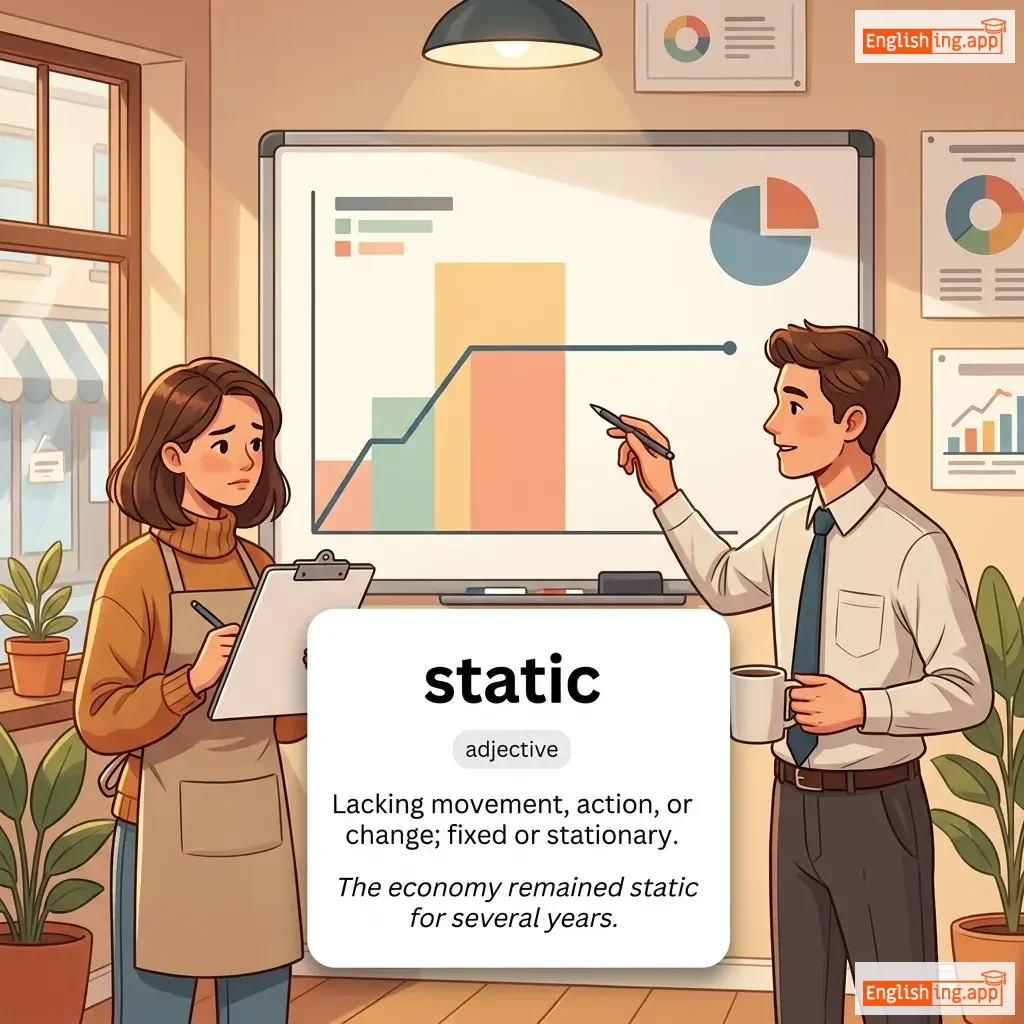
Lacking movement, action, or change; fixed or stationary.

"The economy remained static for several years."

"经济在几年内保持静态。" (Jingji zai jinnian nei baochi jingtai.)
noun
/ˈstætɪks/
静力学 (jìnglìxué)

The branch of mechanics dealing with bodies at rest and forces in equilibrium.

"She is studying statics as part of her engineering course."

"她正在学习静力学,作为她工程课程的一部分。" (Tā zhèngzài xuéxí jìnglìxué, zuòwéi tā gōngchéng kèchéng de yībùfèn.)
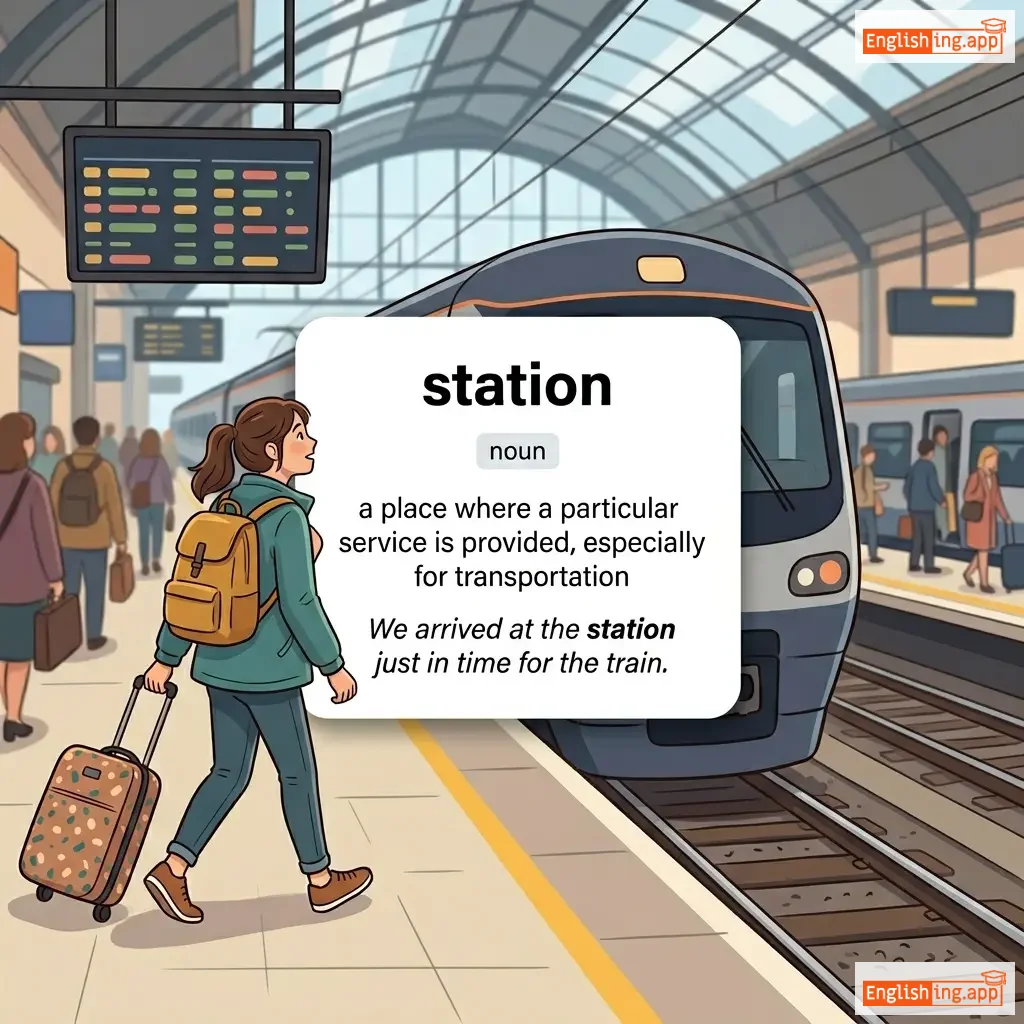
station definition card — visual illustration of the meaning
noun
/ˈsteɪʃən/

a place where a particular service is provided, especially for transportation

"We arrived at the station just in time for the train."

adjective
/ˈsteɪʃəˌneri/
静止 (jingzhi)

Not moving or not intended to be moved.

"The car remained stationary at the red light."

"汽车在红灯前保持静止。" (Qiche zai hongdeng qian baochi jingzhi.)
adjective
/ˌstætʃuˈɛsk/
雕像般的 (diaoxiang ban de)

Having the grace, beauty, or dignity of a statue; tall and attractively proportioned.

"She had a statuesque figure that turned heads wherever she went."

"她有着雕像般的身形,每走到哪里都会吸引视线。" (Ta youzhe diaoxiang ban de shenxing, mei zou dao nali dou hui xiyin shixian.)
noun
/ˈsteɪtəs kwoʊ/
现状 (xiàn zhuàng)

The existing state of affairs, especially regarding social or political issues.

"The government decided to maintain the status quo until further review."

"政府决定在进一步审查之前保持现状。" (zhèngfǔ juédìng zài jìnyībù shěnchá zhīqián bǎochí xiànzhuàng.)
noun
/ˈsteɪtəs/
状态 (zhuangtai)

the social or professional position or condition of someone or something

"His social status improved after the promotion."

"他的社会地位在晋升后得到了改善。" (Tā de shèhuì dìwèi zài jìnshēng hòu dédàole gǎishàn.)
noun
/ˈstætʃər/
声望,身材 (shengwang, shencai)

A person's natural height or their reputation and importance.

"Her intellectual stature made her a respected figure in academia."

"她的智力声望使她在学术界成为了受人尊敬的人物。" (tade zhili shengwang shi ta zai xueshujie chengweile shouren zun jing de renwu.)
noun
/ˌstætʃuˈɛt/
小雕像 (xiao diaoxiang)

A small statue, usually decorative or artistic.

"The artist won a gold statuette for his work."

"艺术家因其作品获得了一座金色小雕像。" (Yishujia yin qi zuopin huodele yi zuo jinse xiao diaoxiang.)
noun
/stəˈtɪstɪks/
统计 (tǒngjì)

the practice or science of collecting and analyzing numerical data

"The statistics showed an increase in the number of users last year."

"统计数据显示,去年用户数量有所增加。" (Tǒngjì xiǎnshì, qùnián yònghù shùliàng yǒu suǒ zēngjiā.)
adjective
/stəˈtɪstɪkəl/
统计的 (tongji de)

relating to the use or analysis of numerical data

"The report provides statistical data about population growth."

"报告提供了有关人口增长的统计数据。" (Baogao tigong le youguan renkou zengzhang de tongji shuju.)
noun
/ˌstætɪˈstɪʃən/
统计学家 (tǒng jì xué jiā)

A person who specializes in collecting, analyzing, and interpreting numerical data.

"The statistician presented the survey results with great clarity."

"统计学家以极大的清晰度展示了调查结果。" (Tǒng jì xué jiā yǐ jí dà de qīng xī dù zhǎn shì le diào chá jié guǒ.)