Словари

Словарь английского языка | Значения слов, определения и примеры
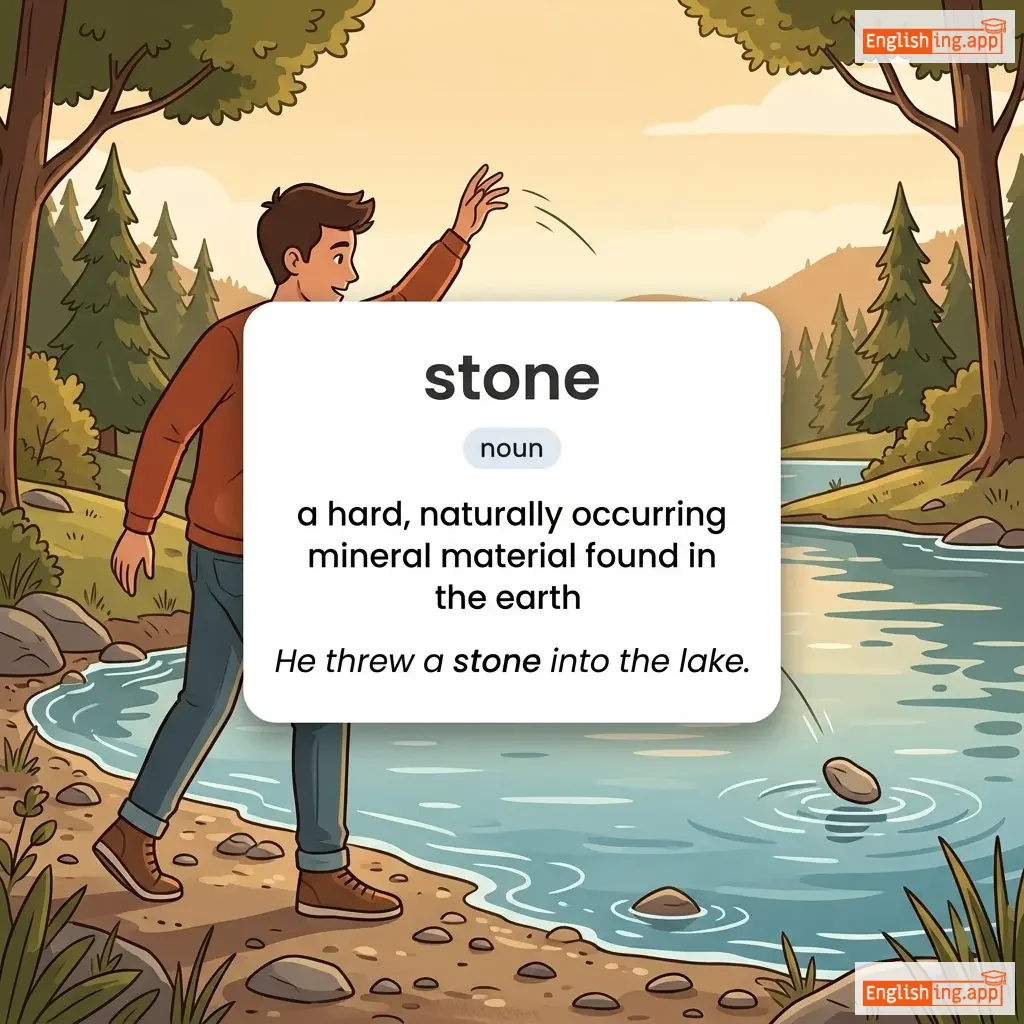
stone definition card — visual illustration of the meaning
noun
/stoʊn/
камень (kamen)

a hard, naturally occurring mineral material found in the earth

"He threw a stone into the lake."

"Он бросил камень в озеро." (On brosil kamen' v ozero.)
noun
/ˈstʌmək eɪk/
боль в животе (bol v zhivote)

Pain in the stomach or abdominal area

"I have a stomach ache after eating too much."

"У меня болит живот после того, как я переел." (U menya bolit zhivot posle togo, kak ya pereel)
noun/verb
/ˈstʌmək/
желудок / терпеть (zheludok / terpet)

The internal organ in which food is digested; also to tolerate or endure something

"She couldn’t stomach the sight of violence."
"Она не могла вынести вида насилия." (Ona ne mogla vynesti vida nasilija.)
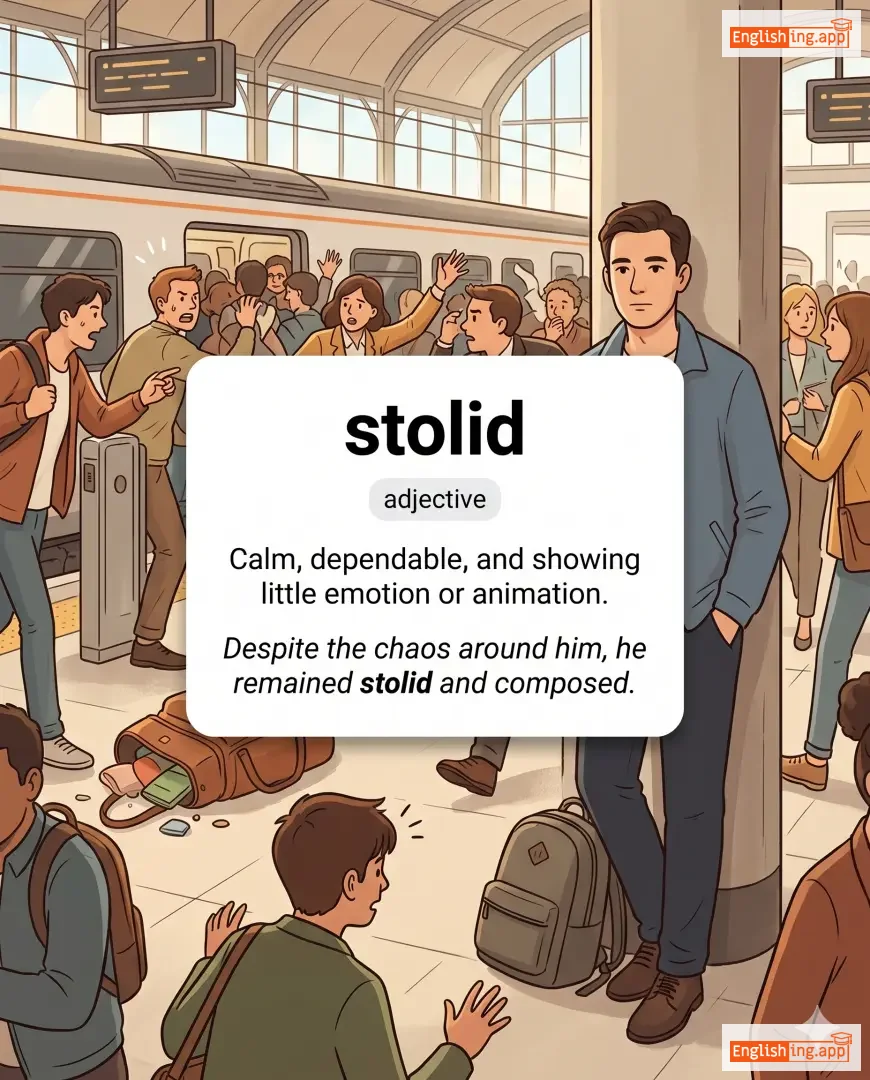
stolid definition card — visual illustration of the meaning
adjective
/ˈstɒlɪd/
невозмутимый, стойкий (nevozmutimyi, stoiki)

Calm, dependable, and showing little emotion or animation.

"Despite the chaos around him, he remained stolid and composed."

"Несмотря на хаос вокруг него, он оставался спокойным и собранным." (Nesmotrya na khaos vokrug nego, on ostavalsya spokoinym i sobrannym.)
verb
/stoʊk/
разжигать огонь; поощрять или усиливать сильное чувство или активность (razzhigat ogon; pooshcheryat ili usilivat' sil'noe chuvstvo ili aktivnost')

To add fuel to a fire; to encourage or increase a strong feeling or activity.

"The politician’s speech stoked anger among the crowd."

"Речь политика разожгла гнев среди толпы." (Rech' politika razozhglá gnev sredi tolpy.)
stoicism definition card — visual illustration of the meaning
noun
/ˈstoʊɪˌsɪzəm/
стоицизм (stoitsizm)

The endurance of pain or hardship without showing feelings or complaining.

"He faced the loss of his job with remarkable stoicism."

"Он столкнулся с потерей работы с замечательным стоицизмом." (On stolknulsya s poterey raboty s zamechatel'nym stoitsizmom.)
adjective
/ˈstoʊɪk/
стоический, невозмутимый (stoicheskiy, nevozmutimyy)

Showing little or no emotion, even in difficult situations.

"She remained stoic during the crisis, never showing fear or panic."

"Она оставалась стоической во время кризиса, не показывая страха или паники." (Ona ostavalas' stoicheskoj vo vremya krizisa, ne pokazyvaya strakha ili paniki.)
adjective
/ˈstɒdʒi/
тяжелый, старомодный (tyazhely, staromodny)

Dull, uninspired, or old-fashioned; also heavy and hard to digest when referring to food.

"The lecture was so stodgy that many students struggled to stay awake."

"Лекция была настолько тяжелой, что многим студентам было трудно оставаться бодрыми." (Lektsiya byla nastol'ko tyazhel'oy, chto mnogim studentam bylo trudno ostavatsya bodrymi.)
noun
/stɒˈkeɪd/
деревянный забор (derevyannyy zabor)

a defensive barrier made of strong posts or timbers, often around a fort or prison

"The prisoners were kept inside the wooden stockade."

"Заключенные были помещены внутрь деревянного забора." (Zaklyuchennyye byli pomeshcheny vnutr' derevyannogo zabora.)
noun, verb
/stɒk/
запас (zapas)

a supply of goods kept for sale or use; to keep or fill with goods

"The shop stocks a wide variety of products."
"Магазин имеет широкий ассортимент продуктов." (Magazin imeet shirokij assoriment produktov.)
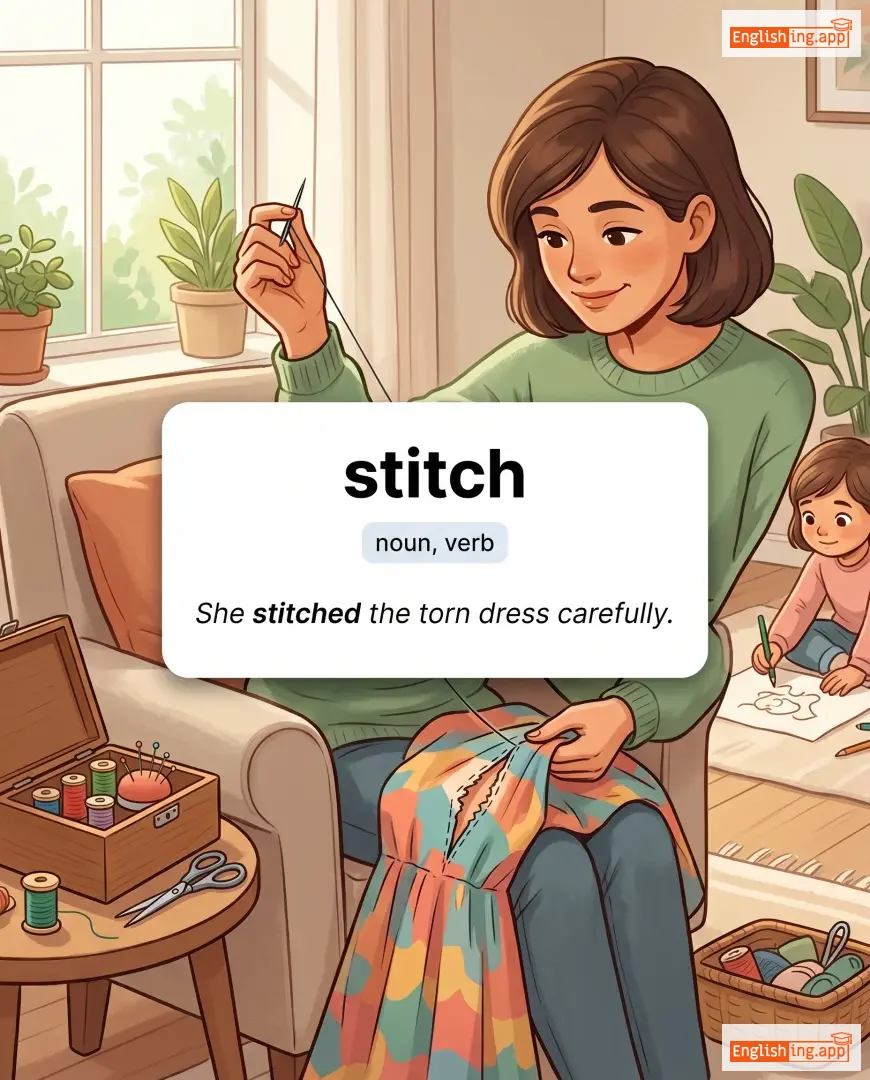
stitch definition card — visual illustration of the meaning
noun, verb
/stɪtʃ/

to sew fabric together using a needle and thread; also a single loop of thread in sewing

"She stitched the torn dress carefully."
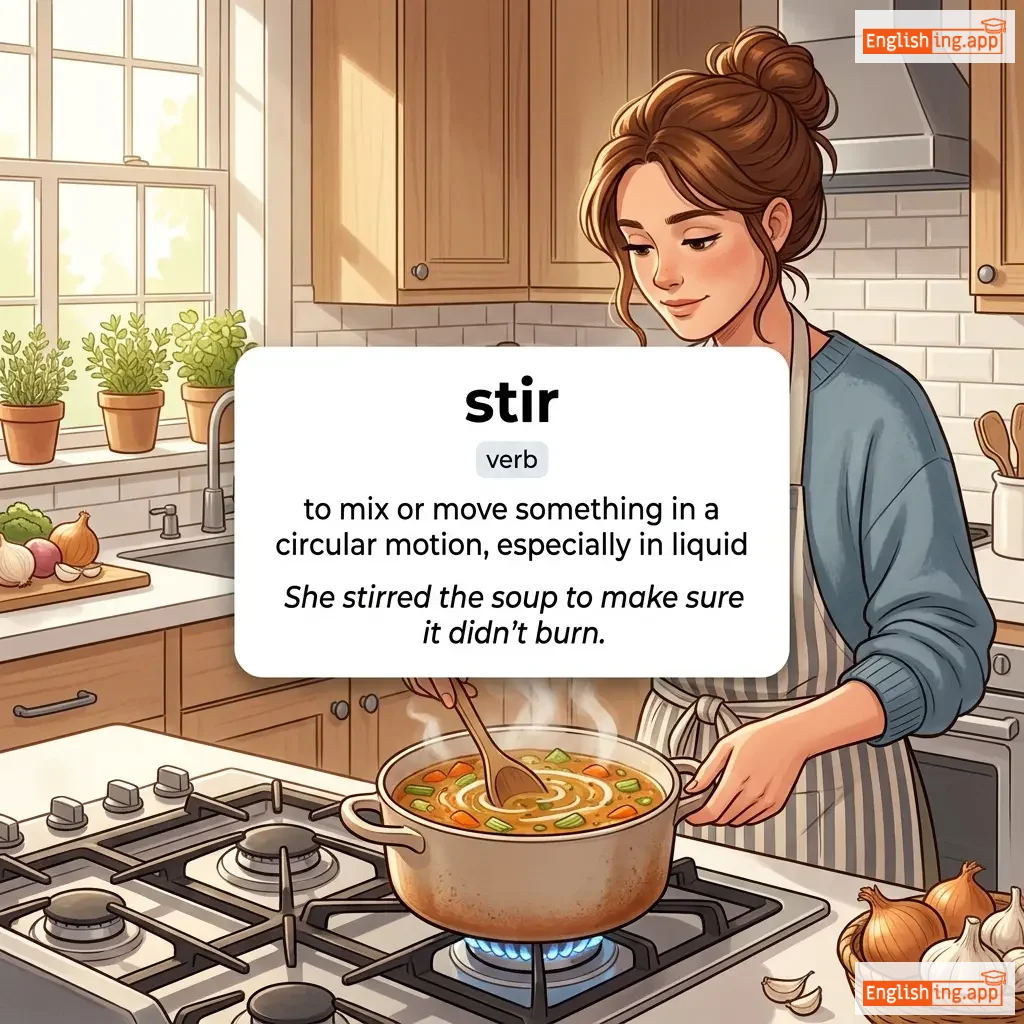
stir definition card — visual illustration of the meaning
verb
/stɜːr/
перемешивать (peremeshivat)

to mix or move something in a circular motion, especially in liquid

"She stirred the soup to make sure it didn't burn."
"Она перемешала суп, чтобы убедиться, что он не сгорит." (Ona peremeshala sup, chtoby ubeditsya, chto on ne sgorit.)
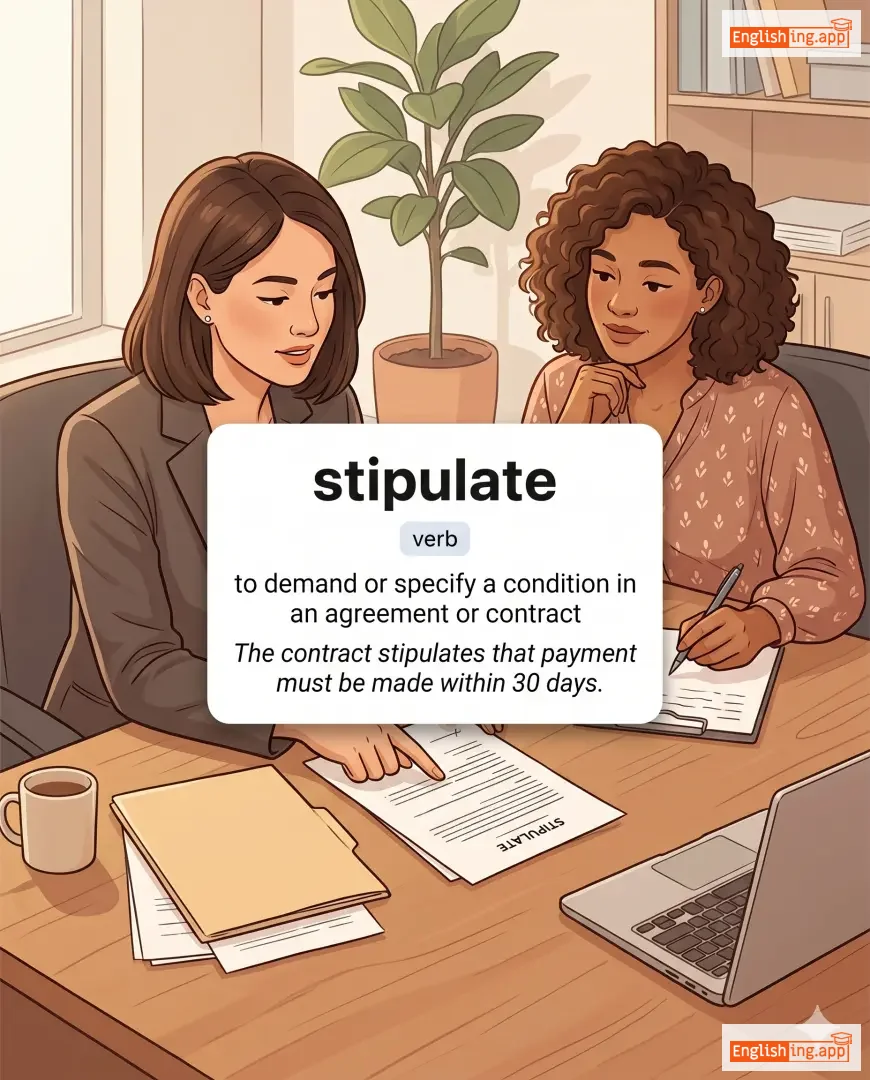
stipulate definition card — visual illustration of the meaning
verb
/ˈstɪp.jʊ.leɪt/
установить (ustanovit)

to demand or specify a condition in an agreement or contract

"The contract stipulates that payment must be made within 30 days."

"Контракт стыпулирует, что оплата должна быть произведена в течение 30 дней." (Kontrakt stypuliruet, chto oplata dolzhna byt' proizvedena v techeniye 30 dney.)
verb
/ˈstɪp.əl/
покрывать маленькими точками (pokryvat' malenkimi tochkami)

to cover a surface with numerous small dots or specks, often in drawing or painting

"The artist stippled the canvas to create a textured effect."

"Художник покрыл холст маленькими точками, чтобы создать текстурный эффект." (Khudozhnik pokryl kholst malenkimi tochkami, chtoby sozdats' teksturnyy effekt.)
noun
/ˈstaɪpɛnd/
стипендия (stipendiya)

a fixed regular payment, usually for services or to cover living expenses

"The university provides a monthly stipend to its research students."

"Университет предоставляет своим исследовательским студентам ежемесячную стипендию." (Universitet predostavlyaet svoim issledovatelskimi studentami ezhemesyachnuyu stipendiyu.)
verb
/ˈstɪntɪŋ/
давать скупо (davat' skupо)

to supply sparingly or with restrictions

"He never stinting his efforts to help the poor."
"Он никогда не скупится в своих усилиях помочь бедным." (On nikogda ne skupitsya v svoikh usiliyakh pomoch' bednym.)
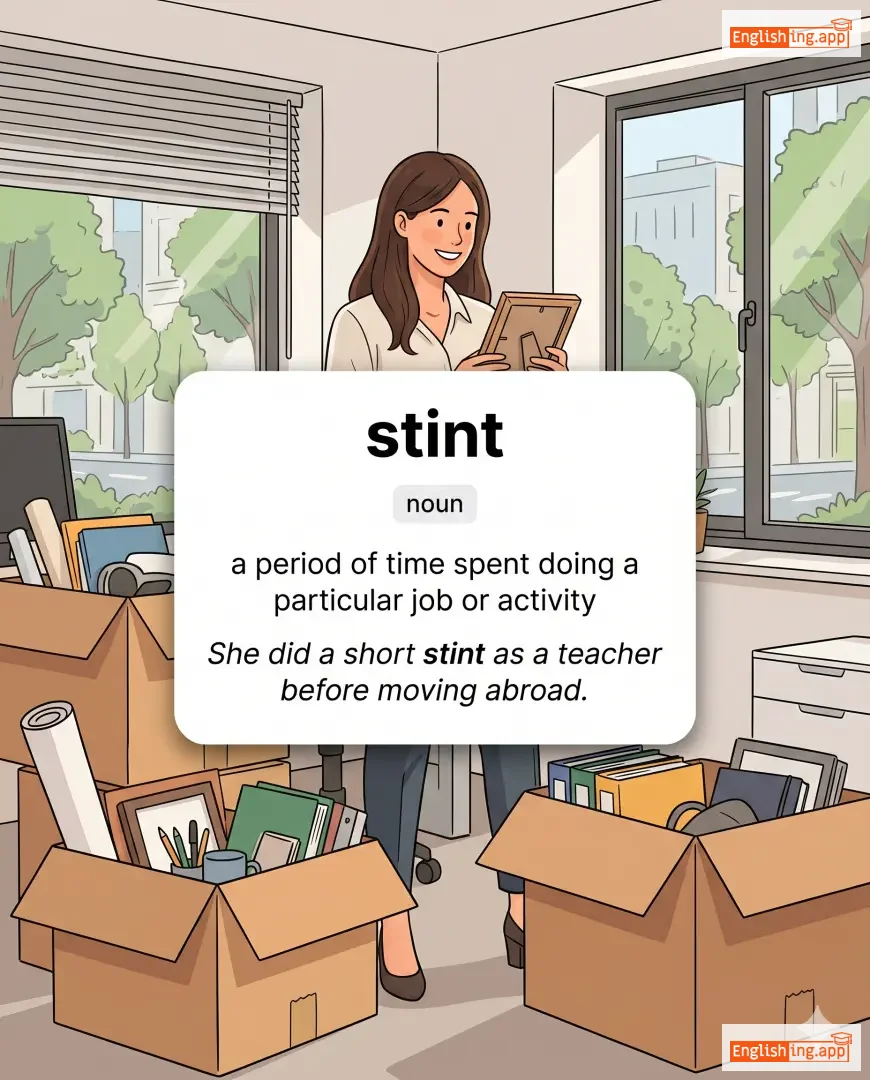
stint definition card — visual illustration of the meaning
noun
/stɪnt/
временная работа (vremennaya rabota)

a period of time spent doing a particular job or activity

"She did a short stint as a teacher before moving abroad."

"Она работала учителем в течение короткого времени, прежде чем уехать за границу." (Ona rabotala uchitelem v techeniye korotkogo vremeni, prezhde chem uezzhat' za granitsu.)
verb
/stɪŋk/
вонять (vonyat)

to smell very unpleasant

"The garbage bin stinks in the hot sun."

"Мусорное ведро воняет на жарком солнце." (Musornoe vedro vonyaet na zharkom solntse.)
adjective
/ˈstɪndʒi/
жадный (zhadnyy)

unwilling to spend or give; miserly

"He is too stingy to buy a gift for his friend."
"Он слишком жадный, чтобы купить подарок для своего друга." (On slishkom zhadnyy, chtoby kupit' podarok dlya svoego druga.)
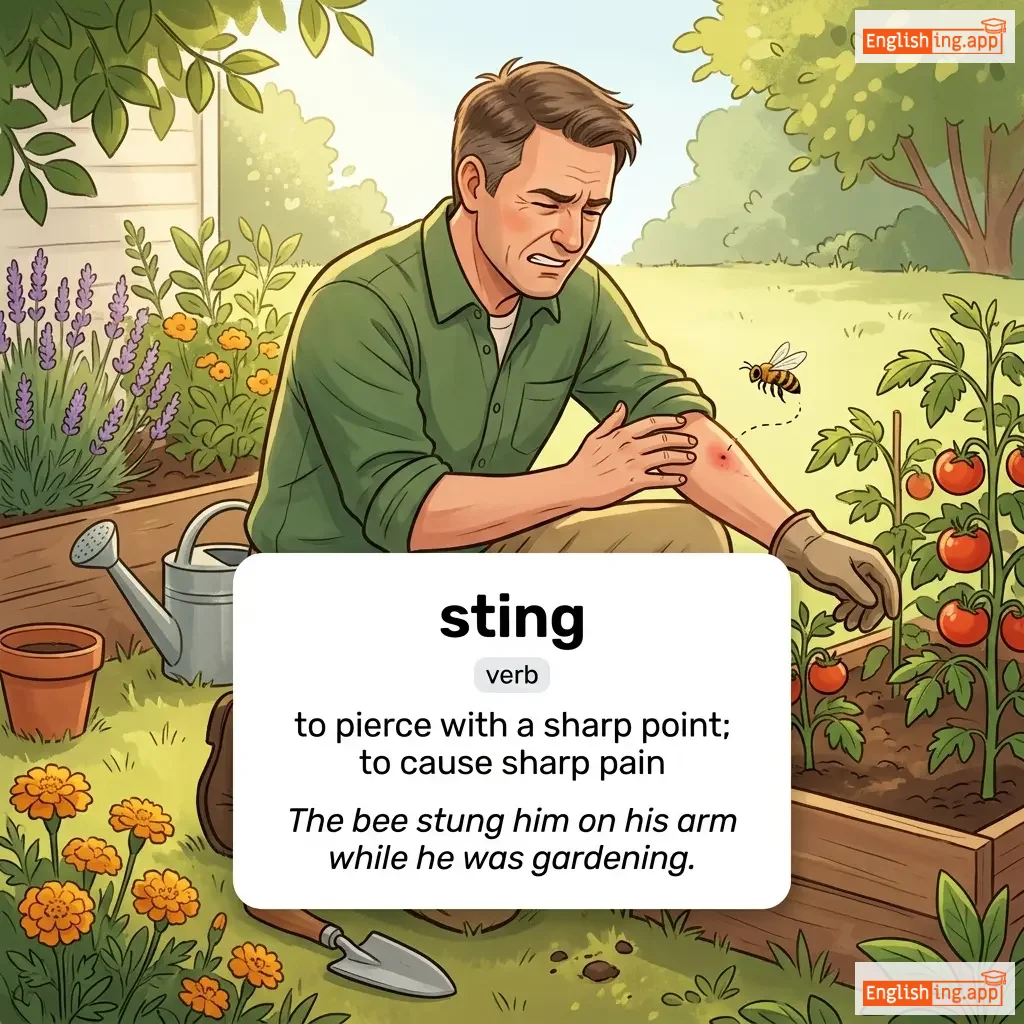
sting definition card — visual illustration of the meaning
verb
/stɪŋ/
ужалить (uzhalit)

to pierce with a sharp point; to cause sharp pain

"The bee stung him on his arm while he was gardening."
"Пчела ужалила его в руку, пока он занимался садоводством." (Pchela uzhalila ego v ruku, poka on zanimalsya sadovodstvom)
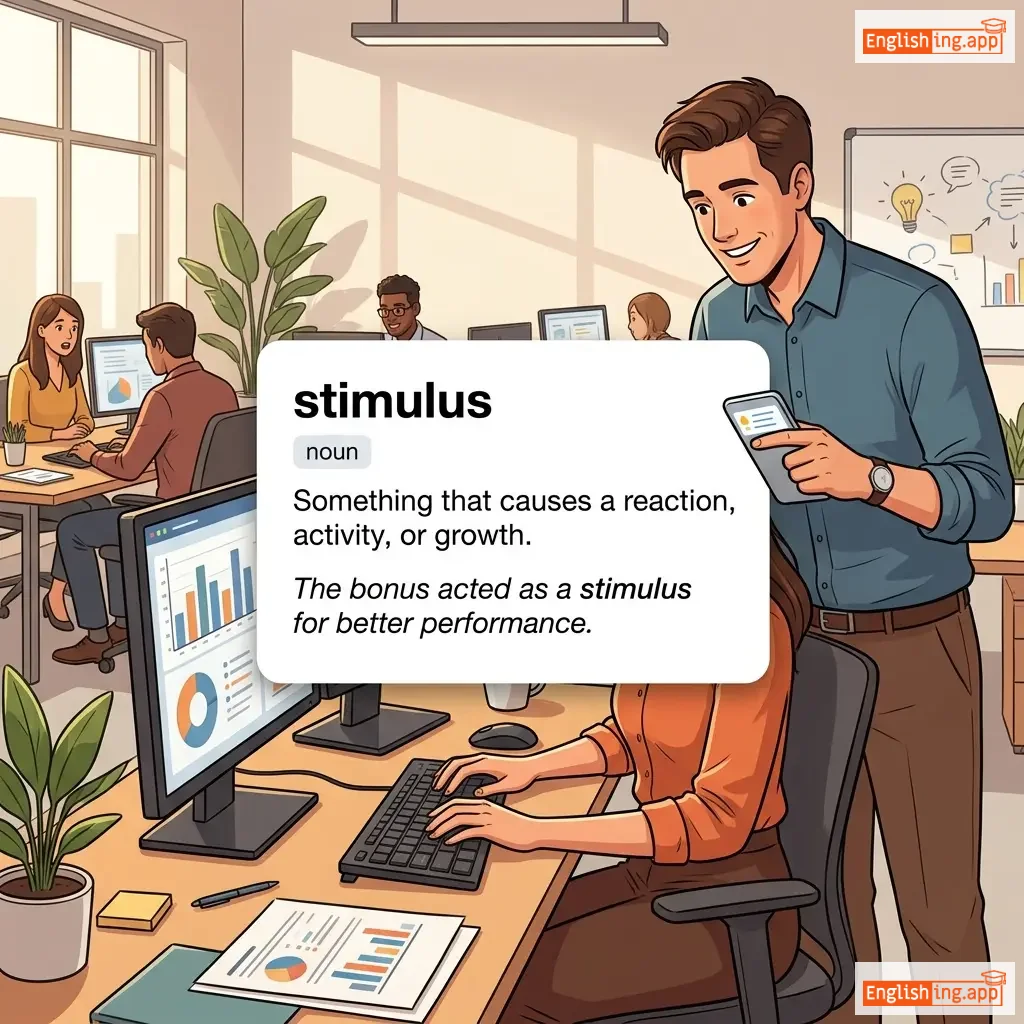
stimulus definition card — visual illustration of the meaning
noun
/ˈstɪmjʊləs/
что-то, вызывающее реакцию, стимул (chto-to, vyzyvayushchee reaktsiyu, stimul)

Something that causes a reaction, activity, or growth.

"The bonus acted as a stimulus for better performance."
"Бонус стал стимулом для лучшей производительности." (Bonus stal stimulom dlya luchshey proizvoditel'nosti.)
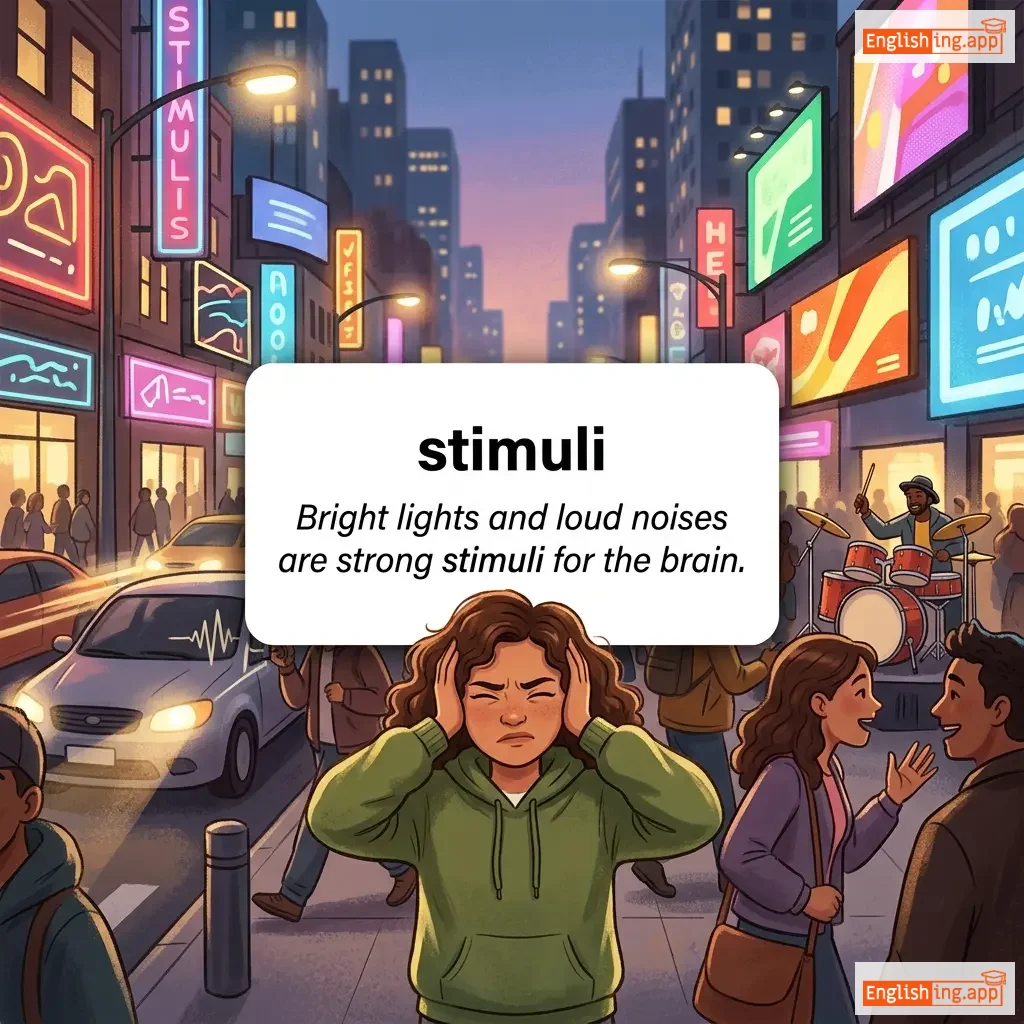
stimuli definition card — visual illustration of the meaning
noun (plural of stimulus)
/ˈstɪm.jʊ.laɪ/
стимул (stimul)

Things or events that evoke a specific functional reaction in an organ or tissue.

"Bright lights and loud noises are strong stimuli for the brain."
"Яркий свет и громкие звуки — сильные стимулы для мозга." (Yarkiy svet i gromkie zvuki — sil'nye stimuly dlya mozga.)
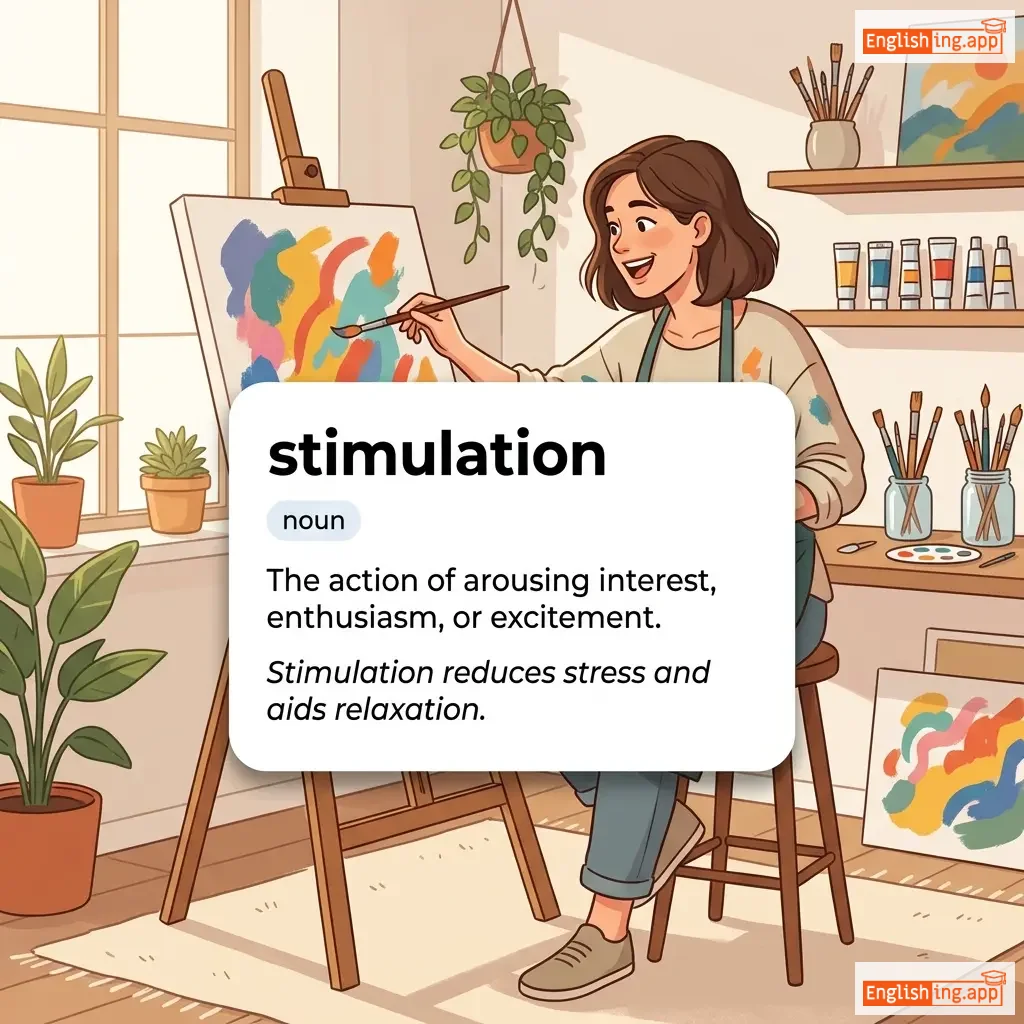
stimulation definition card — visual illustration of the meaning
noun
/ˌstɪm.jəˈleɪ.ʃən/
стимуляция (stimulatsiya)

The action of arousing interest, enthusiasm, or excitement.

"Stimulation reduces stress and aids relaxation."
"Стимуляция снижает стресс и способствует расслаблению." (Stimulatsiya snizhayet stress i sposobstvuet rasslablyeniyu.)
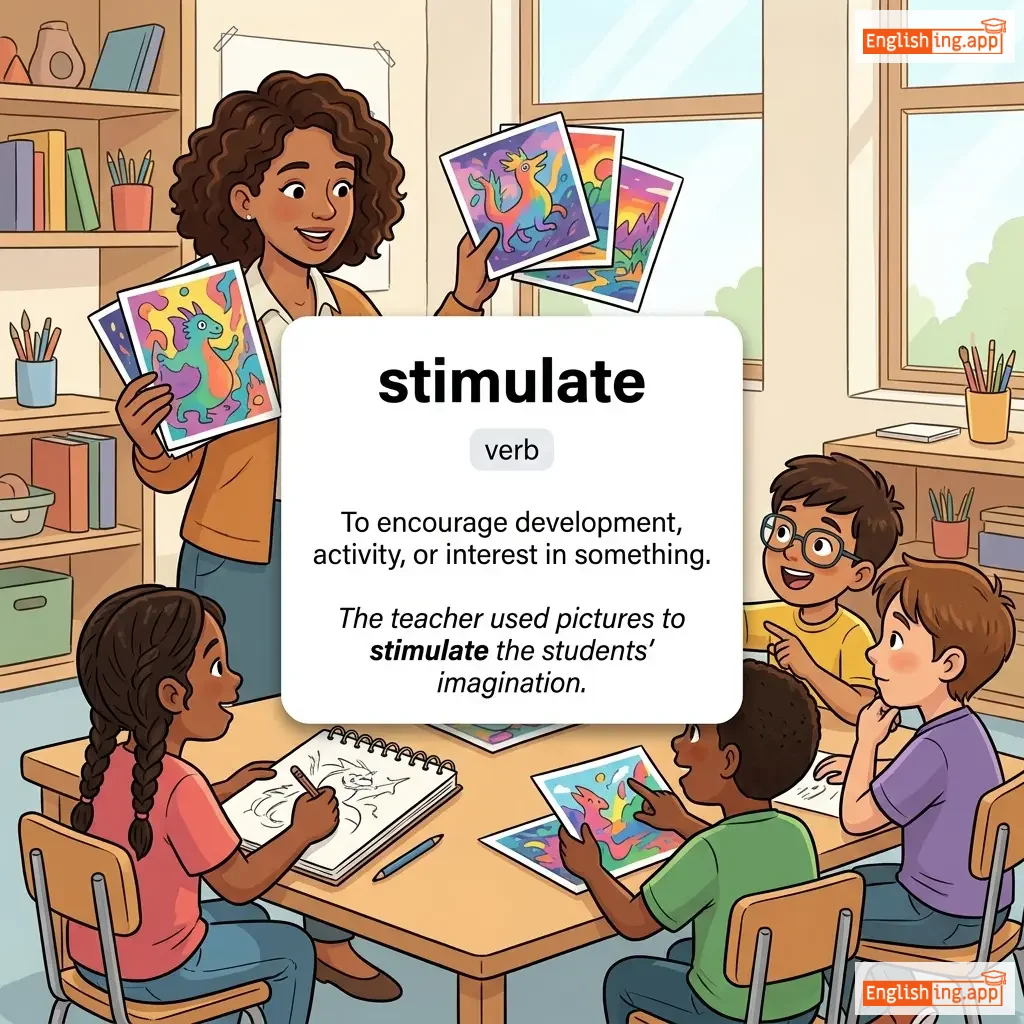
stimulate definition card — visual illustration of the meaning
verb
/ˈstɪmjʊˌleɪt/
стимулировать, побуждать (stimulirovat', pobuzhdat')

To encourage development, activity, or interest in something.

"The teacher used pictures to stimulate the students' imagination."

"Учитель использовал картинки, чтобы стимулировать воображение студентов." (Uchitel' ispol'zoval kartinki, chtoby stimulirovat' voobrazhenie studentov.)
noun
/ˈstɪmjʊlənt/
стимулянт (stimulant)

A substance that raises levels of physiological or nervous activity in the body.

"Coffee is a common stimulant that helps people stay awake."

"Кофе - это обычный стимулянт, который помогает людям оставаться бодрыми" (Kofe - eto obychny stimul', kotoryi pomogayet liudyam ostavatsya bodrymi)
adjective
/ˈstɪltɪd/
искусственный, натянутый (iskusstvennyy, natyazhennyy)

Speech or writing that is stiff, unnatural, or overly formal.

"His speech sounded stilted and rehearsed."

"Его речь звучала натянуто и заученно." (Ego rech' zvuchala natyazhennо i zauchennо.)
adjective
/stɪl/
тихий (tikhiy)

not moving or making a sound

"The water was still, reflecting the sky."

"Вода была тихой, отражая небо." (Voda byla tikhoi, otrazhaya nebo.)
noun
/stɪˈlɛtoʊ/
обувь на высоком тонком каблуке / кинжал (obuv' na vysokom tonkom kabluke / kinzhal)

A small, thin, high-heeled shoe or a dagger with a slender blade.

"She wore elegant stiletto heels to the party."

"Она носила элегантные туфли на каблуке-стилето на вечеринку." (Ona nosila elegantnye tufli na kabluke-stileto na vecherinku.)
verb
/ˈstɪɡmətaɪz/
стигматизировать (stigmatizirovat)

to describe or regard someone as worthy of disgrace or disapproval

"People with certain illnesses are often unfairly stigmatized."
"Люди с определенными заболеваниями часто несправедливо стигматизируются." (Lyudi s opredelennymi zabolevaniyami chasto nespravedlivo stigmatiziruyutsya.)
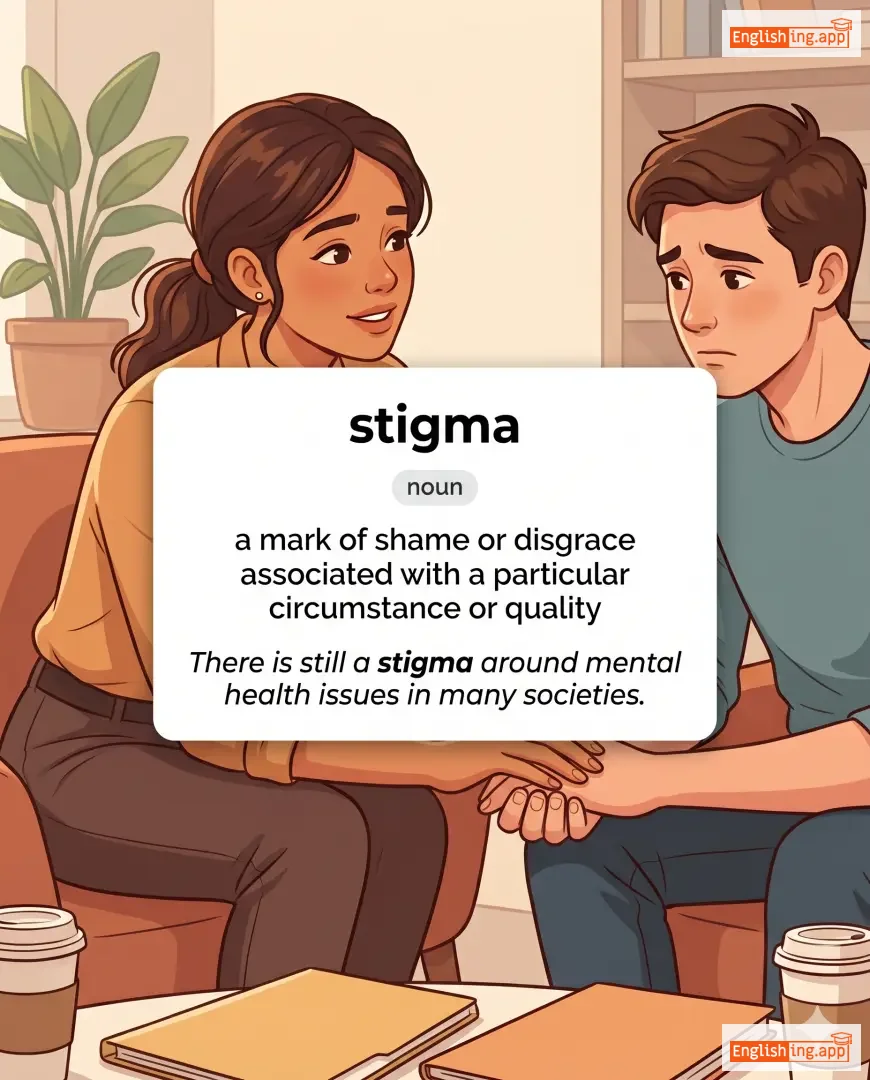
stigma definition card — visual illustration of the meaning
noun
/ˈstɪɡmə/
стигма (stigma)

a mark of shame or disgrace associated with a particular circumstance or quality

"There is still a stigma around mental health issues in many societies."

"В некоторых обществах до сих пор существует стигма, связанная с проблемами психического здоровья." (V nekotorykh obshchestvakh do sikh por sushchestvuet stigma, svyazannaya s problemami psikhicheskogo zdorov'ya.)
verb
/ˈstaɪfəld/
подавлять (podavlyat)

to suppress, hold back, or prevent something from happening

"He stifled a laugh during the serious meeting."

"Он подавил смех во время серьезной встречи." (On podavil smekh vo vremya seryoznoj vstrechi.)
verb
/ˈstaɪfl/
подавить (podavit)

to prevent or restrain an action, idea, or emotion; to suffocate

"She tried to stifle a laugh during the serious meeting."

"Она попыталась подавить смех во время серьезной встречи." (Ona popytalas podavit smekh vo vremya seryoznoj vstrechi.)
noun
/ˈsteɪ.ʃən.ər/
канцтовары (kantsovary)

a person who sells paper, pens, pencils, and other office supplies

"The stationer recommended the best pens for writing exams."

"Канцеляр рекомендовал лучшие ручки для экзаменов." (Kantselyar rekomendoval luchshiye ruchki dlya ekzamenov.)
noun
/ˈsteɪsɪs/ or /ˈstæsɪs/
стазис (stazis)

A state of inactivity or equilibrium; a situation where nothing changes.

"The negotiations reached a state of stasis with no progress made."
"Переговоры достигли состояния стазиса, без прогресса." (Peregovory dostigli sostoyaniya stazisa, bez progressa.)
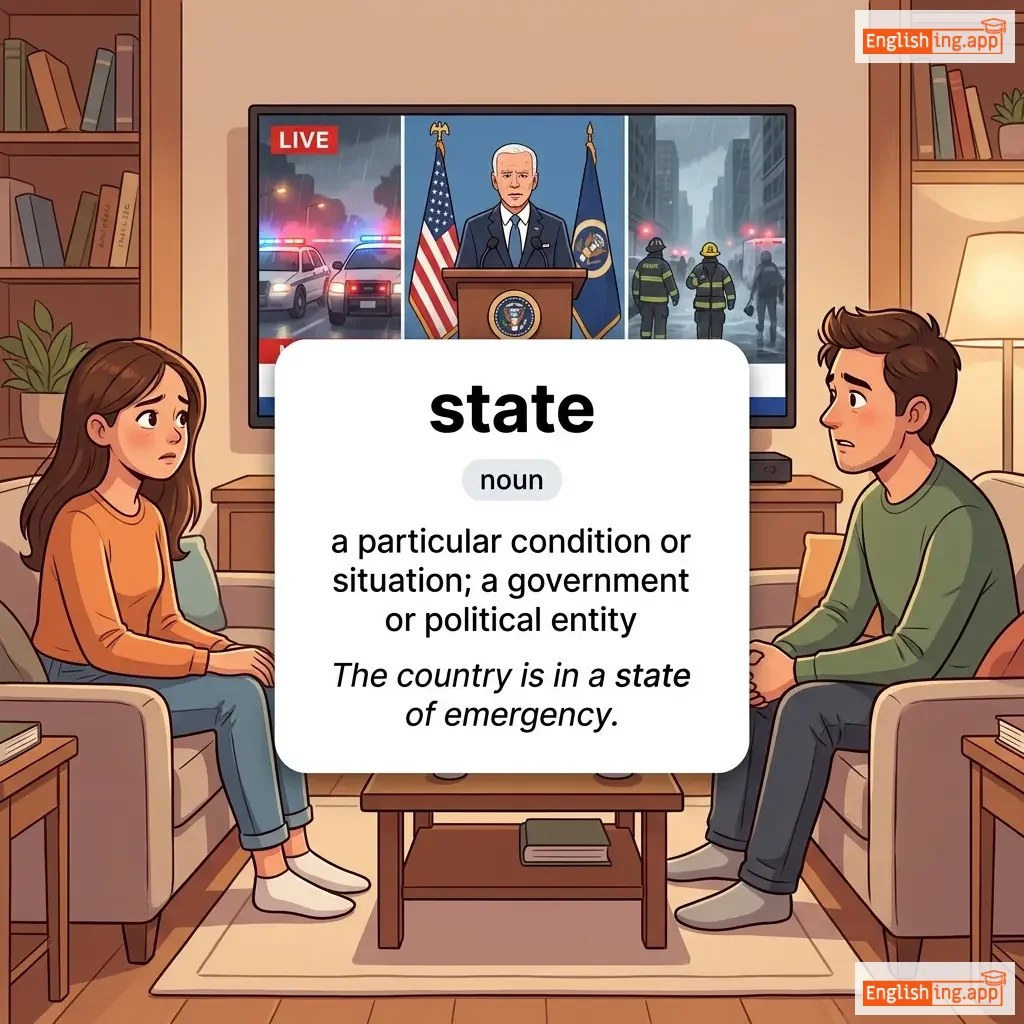
state definition card — visual illustration of the meaning
noun
/steɪt/
состояние (sostoyanie)

a particular condition or situation; a government or political entity

"The country is in a state of emergency."

"Страна находится в состоянии чрезвычайного положения." (Strana nakhoditsya v sostoyanii chrezvychaynogo polozheniya.)
noun
/ˈsteɪtkraft/
государственное управление (gosudarstvennoe upravlenie)

The art of governing and managing state affairs effectively.

"The leader was praised for his exceptional statecraft in handling international relations."

"Лидер был похвален за свое исключительное государственное управление в ведении международных отношений." (Lider byl pokhvalen za svoe iskluchitel'noe gosudarstvennoe upravlenie v vvedenii mezhdunarodnykh otnosheniy.)
adjective
/ˈsteɪtli/
величественный и достойный (velichestvennyy i dostoynyy)

Having a dignified, majestic, and impressive appearance or manner.

"The stately mansion stood at the end of the long driveway."

"Величественный особняк стоял в конце длинной подъездной дороги." (Velichestvennyy osobodnyak stoyal v kontse dlinnoi pod'yezdnoi dorogi.)
noun
/ˈsteɪtmənt/
заявление (zayavlenie)

a clear expression of something in speech or writing

"She made a statement about the company's new policies."
"Она сделала заявление о новых политике компании." (Ona sdelala zayavlenie o novykh politike kompanii.)
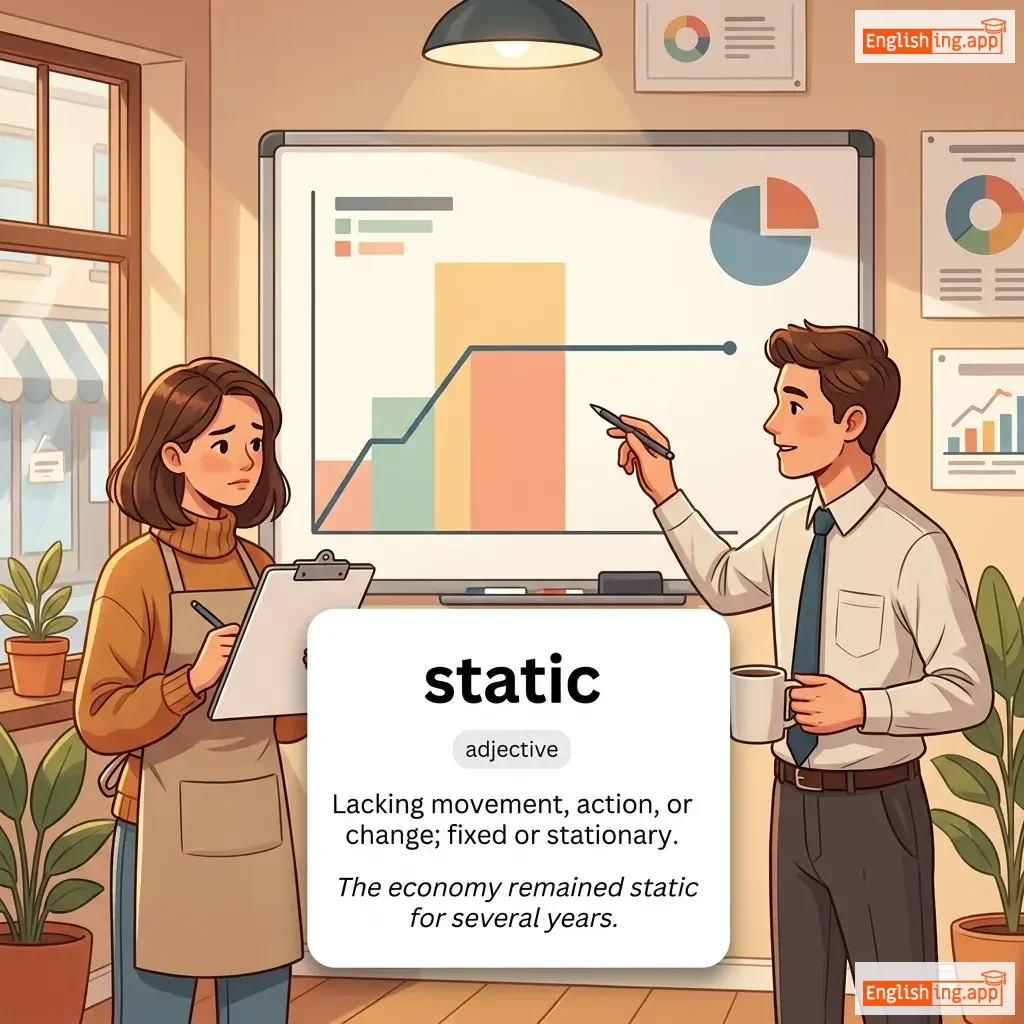
static definition card — visual illustration of the meaning
adjective
/ˈstætɪk/
статичный (statichny)

Lacking movement, action, or change; fixed or stationary.

"The economy remained static for several years."

"Экономика оставалась статичной на протяжении нескольких лет." (Ekonomika ostavalas statichnoy na protyazhenii neskol'kikh let.)
noun
/ˈstætɪks/
статика (statika)

The branch of mechanics dealing with bodies at rest and forces in equilibrium.

"She is studying statics as part of her engineering course."
"Она изучает статику в рамках своего инженерного курса." (Ona izuchayet statiku v ramkakh svoego inzhenernogo kursa.)
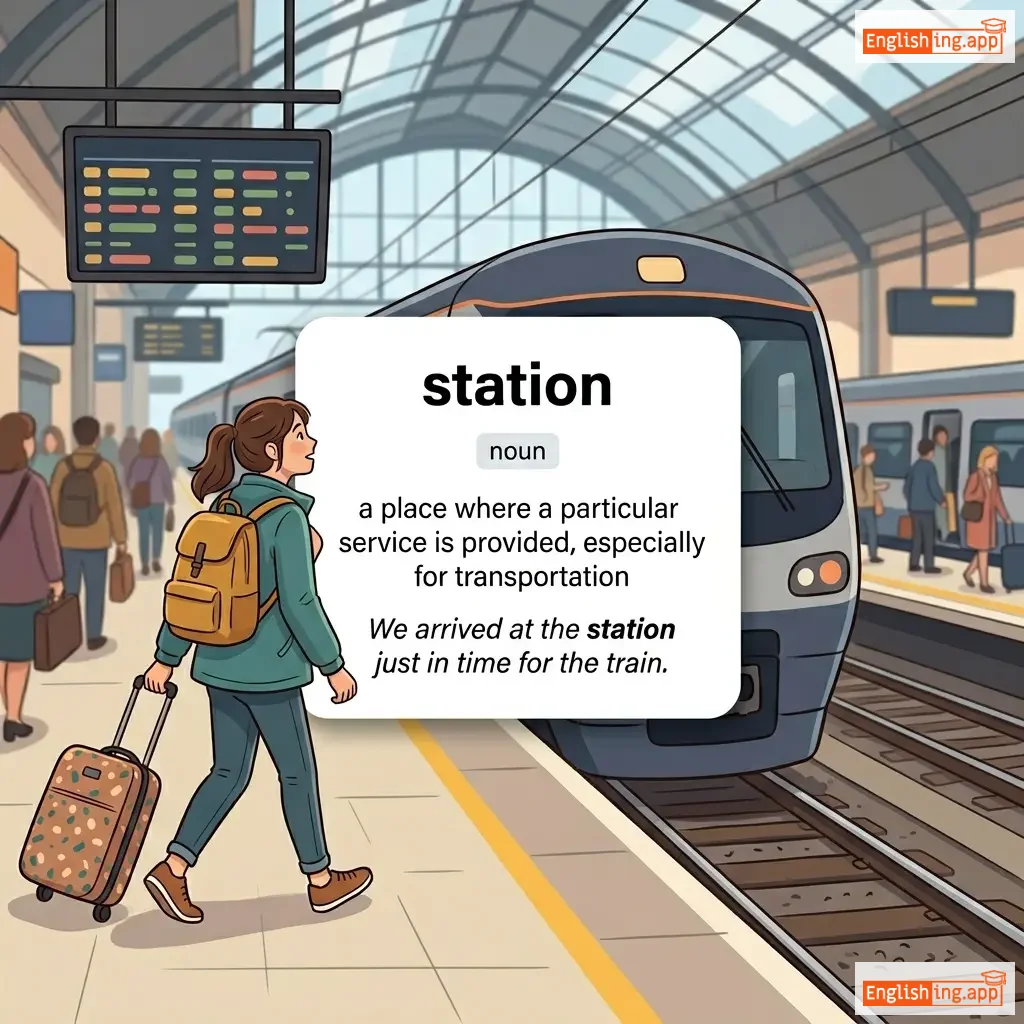
station definition card — visual illustration of the meaning
noun
/ˈsteɪʃən/
станция (steyshun)

a place where a particular service is provided, especially for transportation

"We arrived at the station just in time for the train."

"Мы прибыли на станцию как раз к поезду." (My pribyli na stantsiyu kak raz k poezdu.)
adjective
/ˈsteɪʃəˌneri/
неподвижный (nepodvizhnyy)

Not moving or not intended to be moved.

"The car remained stationary at the red light."

"Машина осталась неподвижной на красном свете." (Mashina ostalas' nepodvizhnoy na krasnom svete.)
adjective
/ˌstætʃuˈɛsk/
статуиобразный (statuioobrazny)

Having the grace, beauty, or dignity of a statue; tall and attractively proportioned.

"She had a statuesque figure that turned heads wherever she went."

"У нее была статуиобразная фигура, которая привлекала взгляды, куда бы она ни шла." (U nee byla statuiobraznaya figura, kotoraya privlekala vzglyady, kuda by ona ni shla.)
noun
/ˈsteɪtəs kwoʊ/
статус кво (status kvo)

The existing state of affairs, especially regarding social or political issues.

"The government decided to maintain the status quo until further review."

"Правительство решило сохранить статус кво до дальнейшего рассмотрения." (Pravitel'stvo reshilo sokhranit' status kvo do dal'neyshego rassmotreniya.)
noun
/ˈsteɪtəs/
статус (status)

the social or professional position or condition of someone or something

"His social status improved after the promotion."

"Его социальный статус улучшился после повышения." (Yego sotsial'nyy status uluchshilsya posle povysheniya.)
noun
/ˈstætʃər/
рост, статус (rost, status)

A person's natural height or their reputation and importance.

"Her intellectual stature made her a respected figure in academia."

"Ее интеллектуальный статус сделал ее уважаемой фигурой в академических кругах." (Eyo intellektualnyi status sdelal yeye uvazhaemoi figuroi v akademicheskikh krugakh.)
noun
/ˌstætʃuˈɛt/
маленькая статуэтка (malenkaya statuëtka)

A small statue, usually decorative or artistic.

"The artist won a gold statuette for his work."

"Художник выиграл золотую маленькую статуэтку за свою работу." (Khudozhnik viigral zolotuyu malen'kuyu statuëtku za svoyu rabotu.)
noun
/stəˈtɪstɪks/
статистика (statistika)

the practice or science of collecting and analyzing numerical data

"The statistics showed an increase in the number of users last year."

"Статистика показала увеличение числа пользователей в прошлом году." (Statistika pokazala uvelichenie chisla pol'zovateley v proshlom godu.)
adjective
/stəˈtɪstɪkəl/
статистический (statisticheskiy)

relating to the use or analysis of numerical data

"The report provides statistical data about population growth."

"Отчет предоставляет статистические данные о росте населения." (Otchet predostavlyaet statisticheskie dannye o roste naseleniya.)
noun
/ˌstætɪˈstɪʃən/
статистик (statistik)

A person who specializes in collecting, analyzing, and interpreting numerical data.

"The statistician presented the survey results with great clarity."

"Статистик представил результаты опроса с большой ясностью." (Statistik predstavил rezul'taty opros s bol'shoy yasnost'yu.)