Vocabulaires

Découvrez, apprenez et maîtrisez le vocabulaire anglais

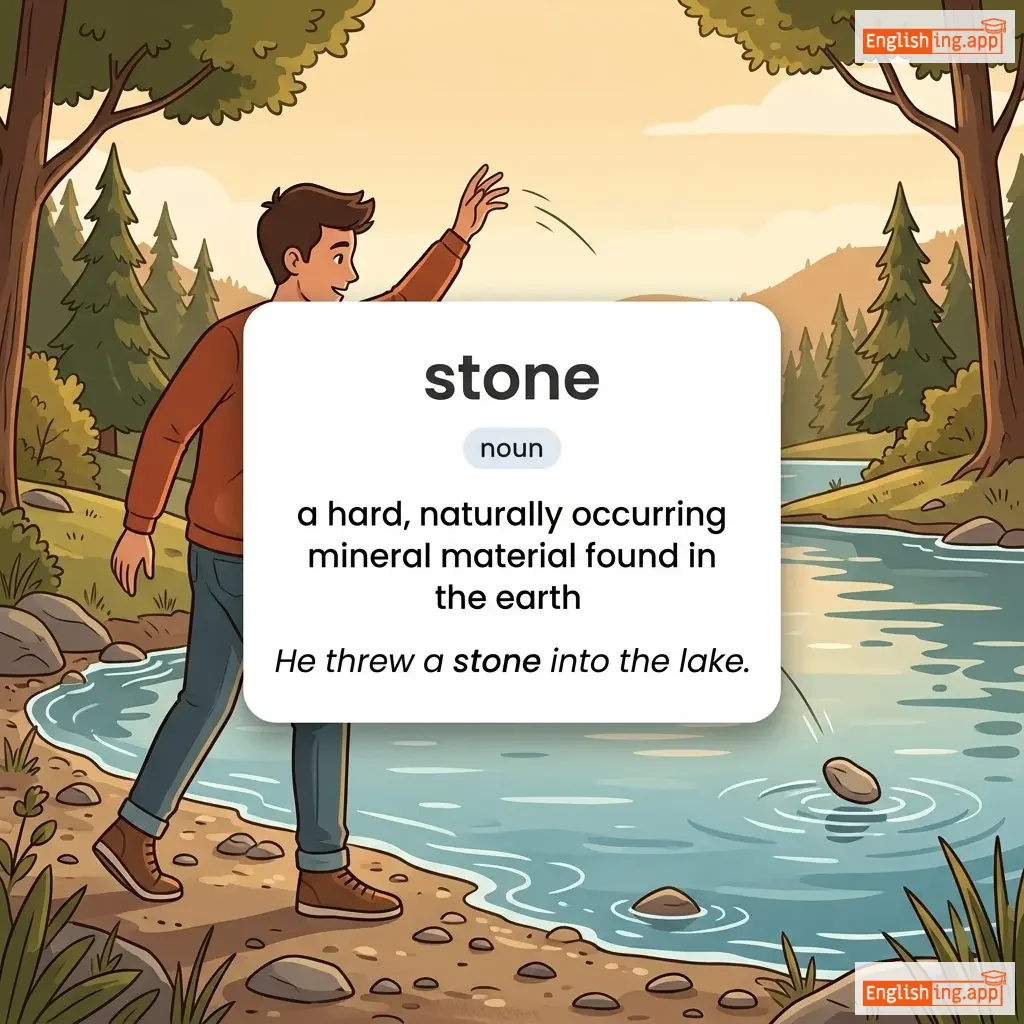
stone definition card — visual illustration of the meaning
noun
/stoʊn/
pierre (pierre)

a hard, naturally occurring mineral material found in the earth

"He threw a stone into the lake."

"Il a lancé une pierre dans le lac." (Il a lance une pierre dans le lac.)
noun
/ˈstʌmək eɪk/
mal de ventre (mal de ventre)

Pain in the stomach or abdominal area

"I have a stomach ache after eating too much."

"J'ai mal au ventre après avoir trop mangé." (J'ai mal au ventre apres avoir trop mange)
noun/verb
/ˈstʌmək/
estomac / supporter (estomac / supporter)

The internal organ in which food is digested; also to tolerate or endure something

"She couldn’t stomach the sight of violence."

"Elle ne pouvait pas supporter la vue de la violence." (Elle ne pouvait pas supporter la vue de la violence.)
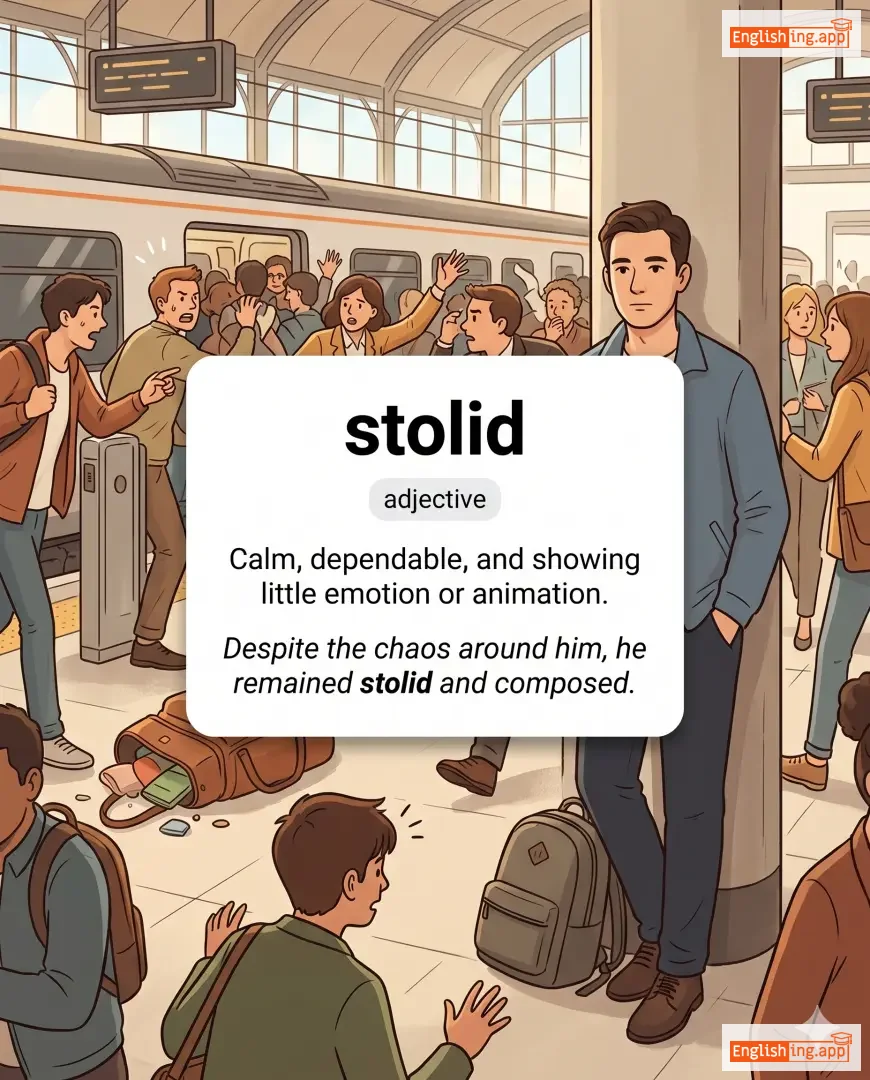
stolid definition card — visual illustration of the meaning
adjective
/ˈstɒlɪd/
impassible, stoïque (impassible, stoïque)

Calm, dependable, and showing little emotion or animation.

"Despite the chaos around him, he remained stolid and composed."

"Malgré le chaos autour de lui, il resta calme et posé." (Malgré le chaos autour de lui, il resta calme et posé.)
verb
/stoʊk/
attiser le feu; encourager ou augmenter un sentiment ou une activité forte (attiser le feu; encourager ou augmenter un sentiment ou une activité forte)

To add fuel to a fire; to encourage or increase a strong feeling or activity.

"The politician’s speech stoked anger among the crowd."

"Le discours du politicien a enflammé la colère parmi la foule." (Le discours du politicien a enflamme la colere parmi la foule.)
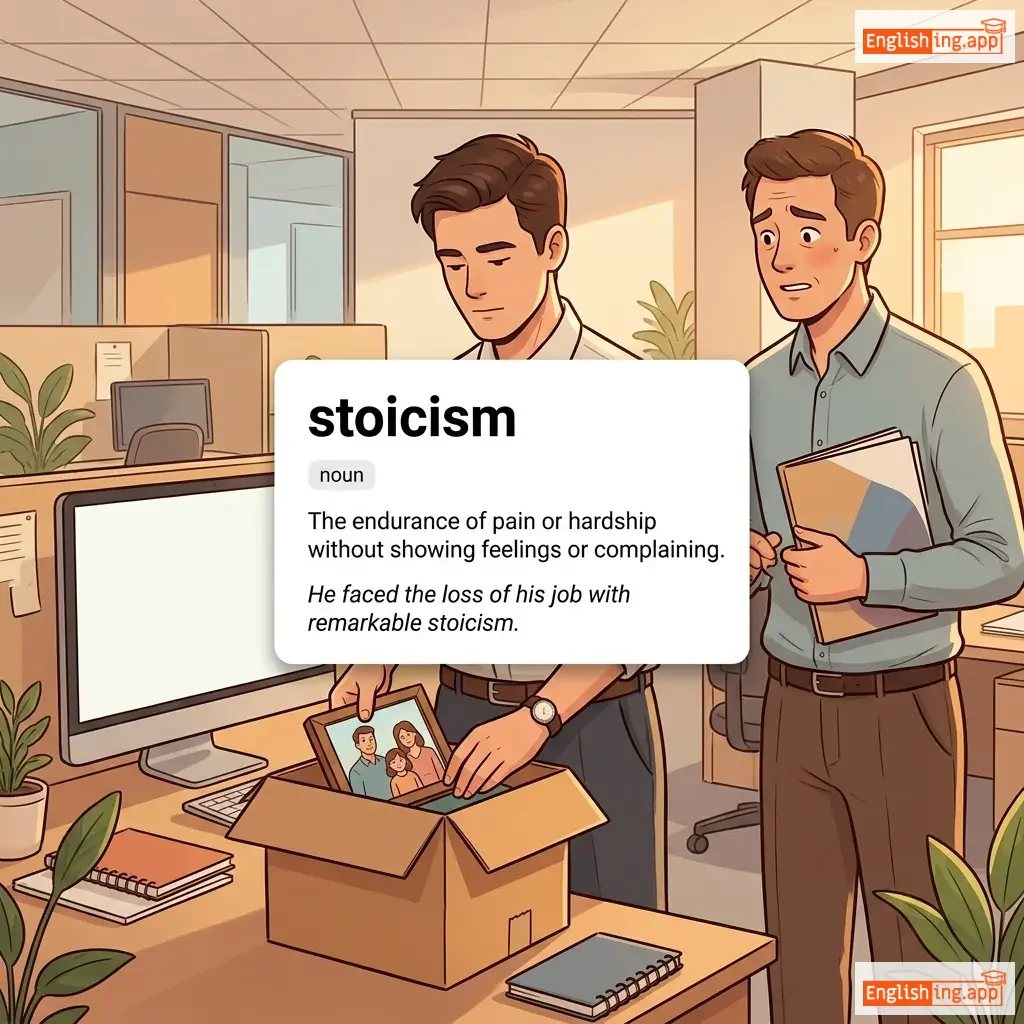
stoicism definition card — visual illustration of the meaning
noun
/ˈstoʊɪˌsɪzəm/
stoïcisme (stoicisme)

The endurance of pain or hardship without showing feelings or complaining.

"He faced the loss of his job with remarkable stoicism."

"Il a affronté la perte de son emploi avec un stoïcisme remarquable." (Il a affronté la perte de son emploi avec un stoïcisme remarquable.)
adjective
/ˈstoʊɪk/
stoïque, implacable (stoique, implacable)

Showing little or no emotion, even in difficult situations.

"She remained stoic during the crisis, never showing fear or panic."

"Elle est restée stoïque pendant la crise, sans montrer de peur ni de panique." (Elle est restée stoïque pendant la crise, sans montrer de peur ni de panique.)
adjective
/ˈstɒdʒi/
lourd, vieilli (lourd, vieilli)

Dull, uninspired, or old-fashioned; also heavy and hard to digest when referring to food.

"The lecture was so stodgy that many students struggled to stay awake."

"La conférence était si lourde que de nombreux étudiants ont eu du mal à rester éveillés." (La conference etait si lourde que de nombreux etudiants ont eu du mal a rester eveilles.)
noun
/stɒˈkeɪd/
clôture en bois (cloture en bois)

a defensive barrier made of strong posts or timbers, often around a fort or prison

"The prisoners were kept inside the wooden stockade."

"Les prisonniers ont été gardés à l'intérieur de la clôture en bois." (Les prisonniers ont été gardés à l'intérieur de la clôture en bois.)
noun, verb
/stɒk/
inventaire (inventaire)

a supply of goods kept for sale or use; to keep or fill with goods

"The shop stocks a wide variety of products."

"Le magasin a un large assortiment de produits." (Le magasin a un large assortiment de produits.)
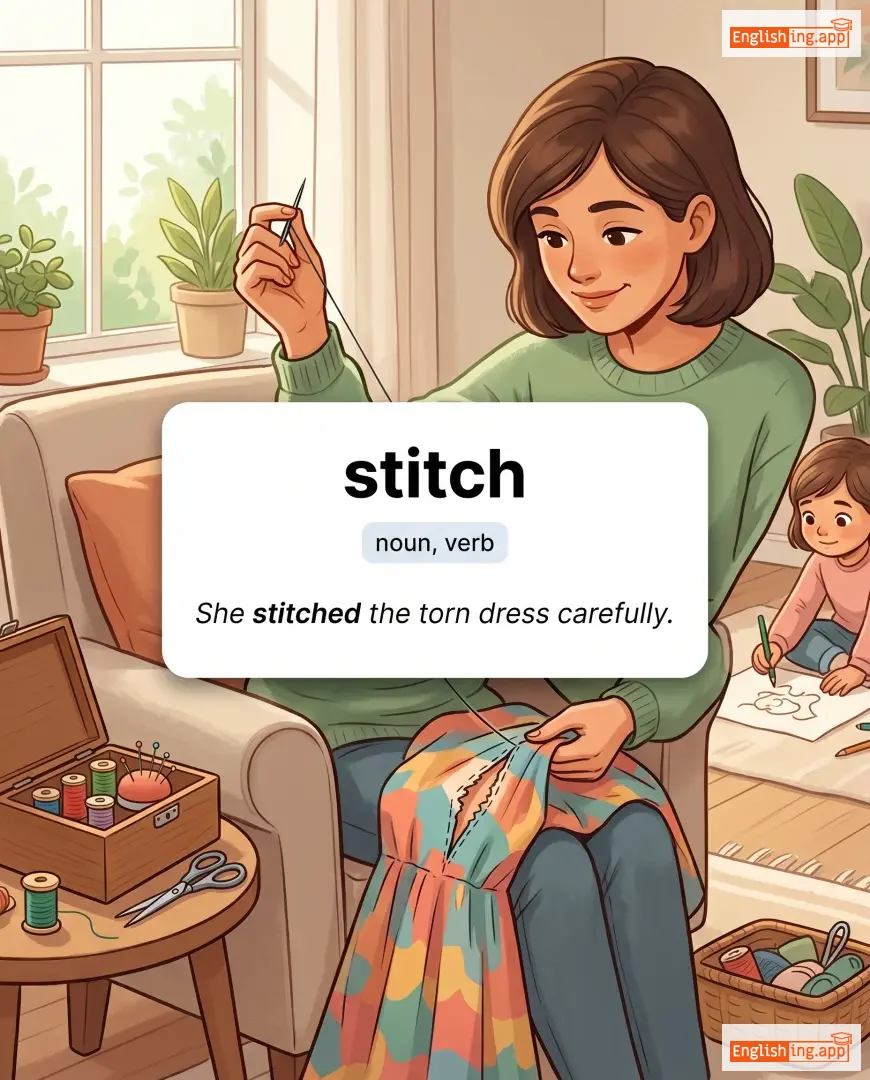
stitch definition card — visual illustration of the meaning
noun, verb
/stɪtʃ/
bonheur (bonheur)

to sew fabric together using a needle and thread; also a single loop of thread in sewing

"She stitched the torn dress carefully."

"Elle a soigneusement cousu la robe déchirée." (Elle a soigneusement cousu la robe déchirée.)
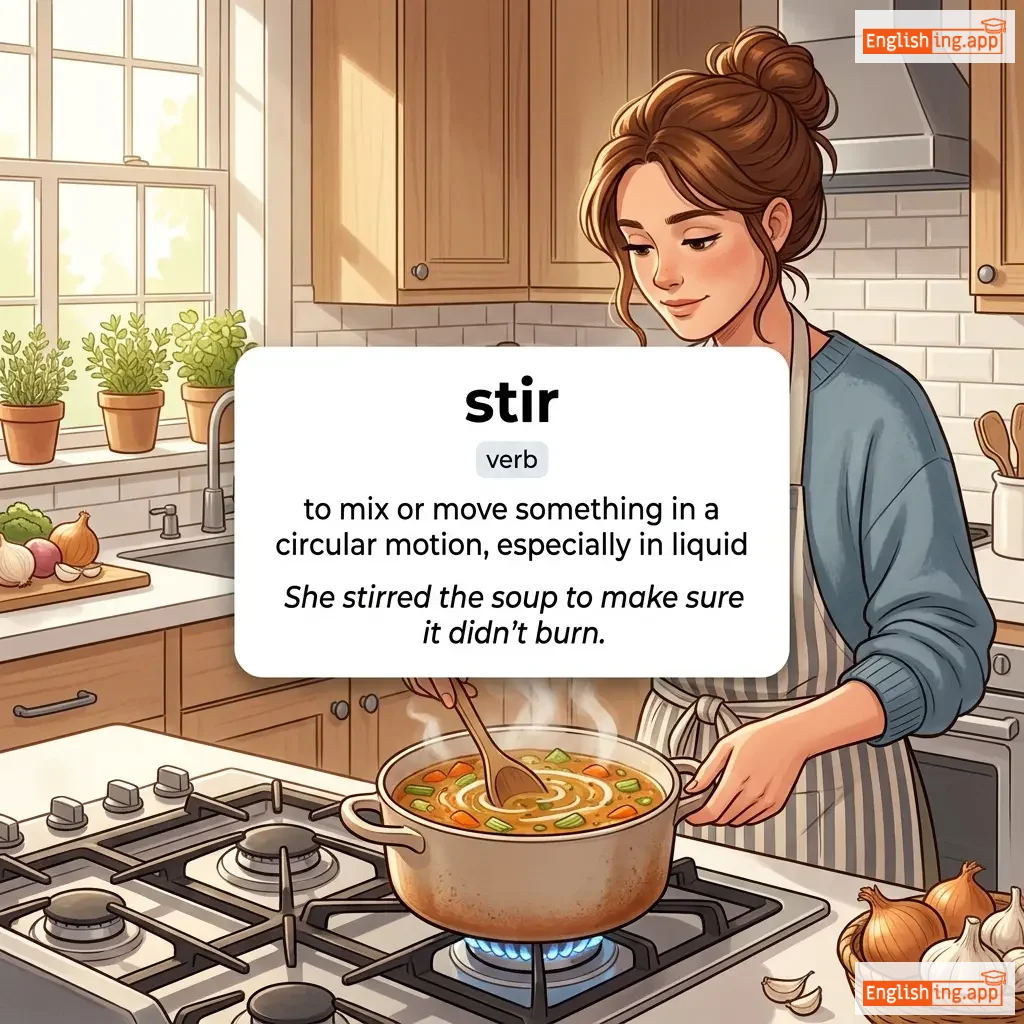
stir definition card — visual illustration of the meaning
verb
/stɜːr/
remuer (remuer)

to mix or move something in a circular motion, especially in liquid

"She stirred the soup to make sure it didn't burn."

"Elle a remué la soupe pour s'assurer qu'elle ne brûle pas." (Elle a remué la soupe pour s'assurer qu'elle ne brûle pas.)
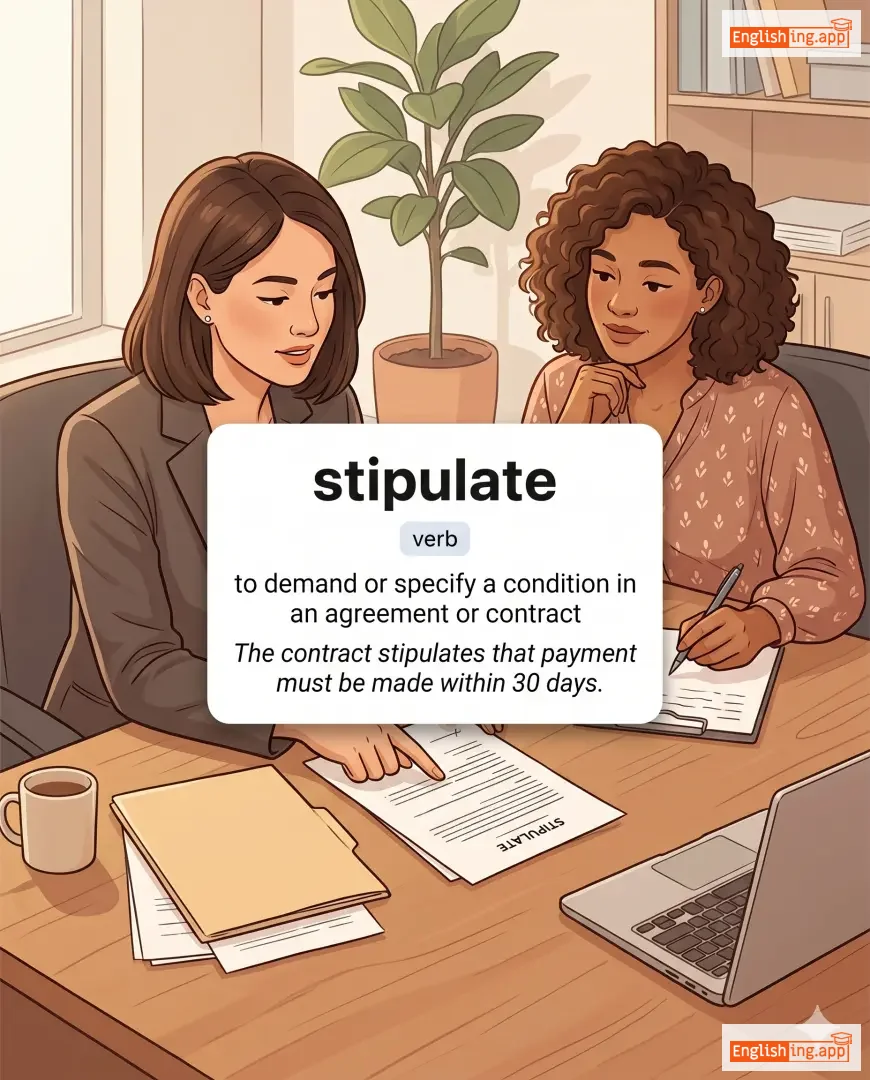
stipulate definition card — visual illustration of the meaning
verb
/ˈstɪp.jʊ.leɪt/
stipuler (stipuler)

to demand or specify a condition in an agreement or contract

"The contract stipulates that payment must be made within 30 days."

"Le contrat stipule que le paiement doit être effectué dans les 30 jours." (Le contrat stipule que le paiement doit être effectué dans les 30 jours.)
verb
/ˈstɪp.əl/
couvrir de petits points (couvrir de petits points)

to cover a surface with numerous small dots or specks, often in drawing or painting

"The artist stippled the canvas to create a textured effect."

"L'artiste a couvert la toile de petits points pour créer un effet texturé." (L'artiste a couvert la toile de petits points pour créer un effet texturé.)
noun
/ˈstaɪpɛnd/
stipendie (stipendie)

a fixed regular payment, usually for services or to cover living expenses

"The university provides a monthly stipend to its research students."

"L'université fournit un stipend mensuel à ses étudiants en recherche." (L'université fournit un stipend mensuel à ses étudiants en recherche.)
verb
/ˈstɪntɪŋ/
donner avec parcimonie (donner avec parcimonie)

to supply sparingly or with restrictions

"He never stinting his efforts to help the poor."

"Il ne fait jamais de restrictions dans ses efforts pour aider les pauvres." (Il ne fait jamais de restrictions dans ses efforts pour aider les pauvres.)
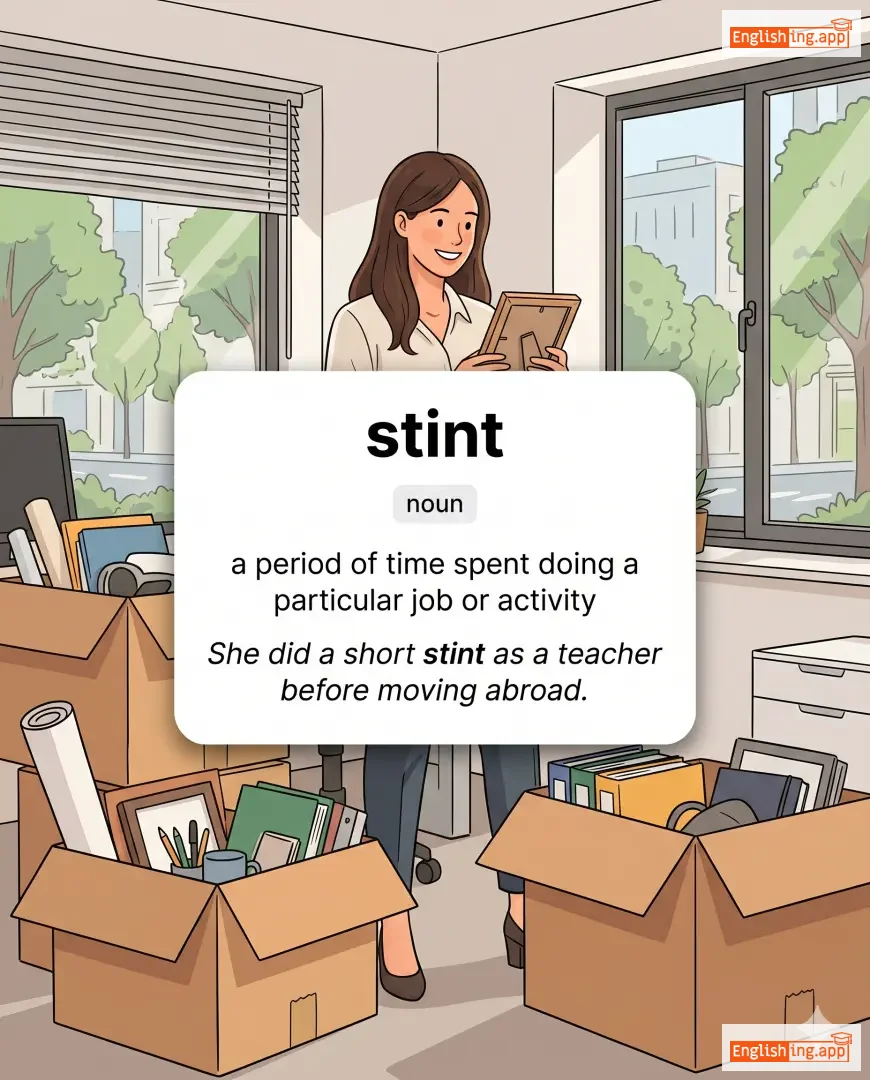
stint definition card — visual illustration of the meaning
noun
/stɪnt/
période temporaire (periode temporaire)

a period of time spent doing a particular job or activity

"She did a short stint as a teacher before moving abroad."

"Elle a fait un court passage en tant qu'enseignante avant de partir à l'étranger." (Elle a fait un court passage en tant qu'enseignante avant de partir à l'étranger.)
verb
/stɪŋk/
sentir mauvais (sentir mauvais)

to smell very unpleasant

"The garbage bin stinks in the hot sun."

"La poubelle sent mauvais sous le soleil brûlant." (La poubelle sent mauvais sous le soleil brulant.)
adjective
/ˈstɪndʒi/
avare (avare)

unwilling to spend or give; miserly

"He is too stingy to buy a gift for his friend."

"Il est trop avare pour acheter un cadeau pour son ami." (Il est trop avare pour acheter un cadeau pour son ami.)
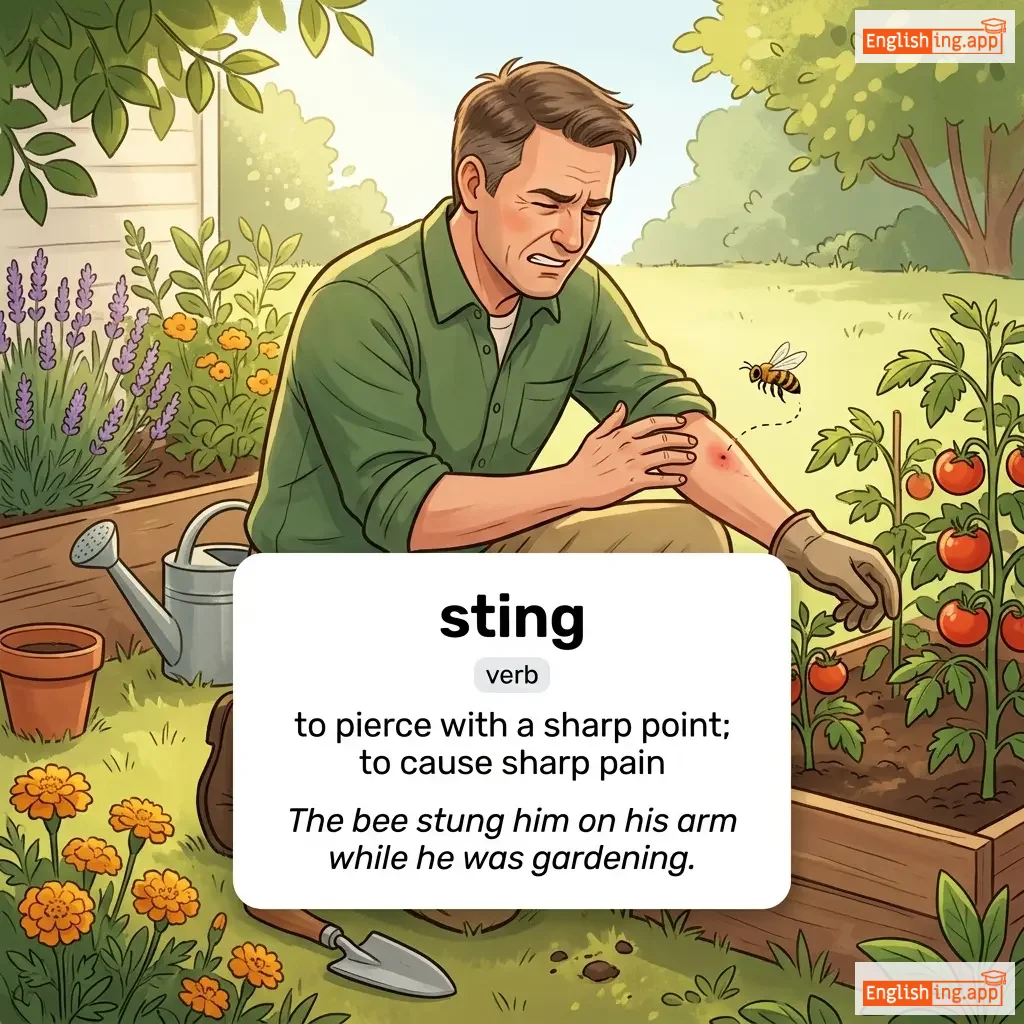
sting definition card — visual illustration of the meaning
verb
/stɪŋ/
piquer (piker)

to pierce with a sharp point; to cause sharp pain

"The bee stung him on his arm while he was gardening."

"L'abeille l'a piqué au bras pendant qu'il jardinait." (L'abeille l'a pique au bras pendant quil jardinait)
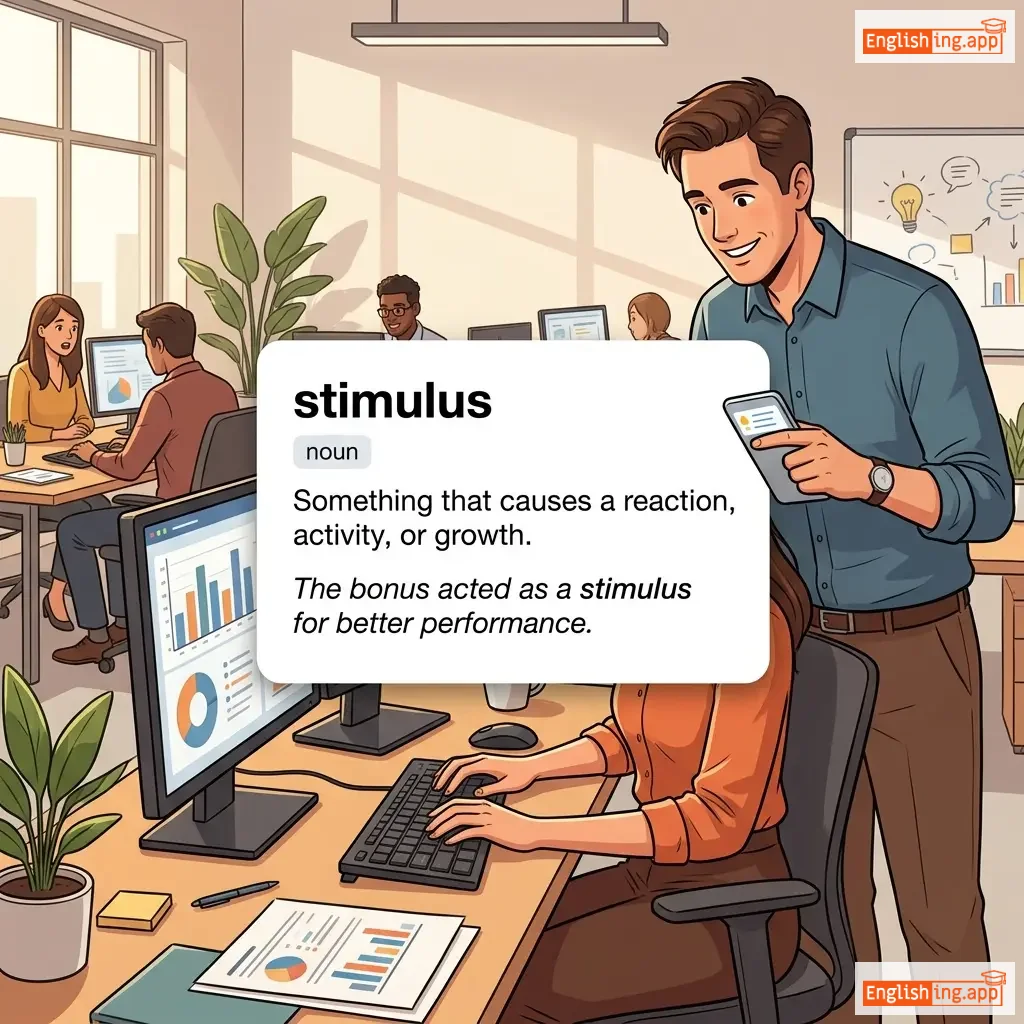
stimulus definition card — visual illustration of the meaning
noun
/ˈstɪmjʊləs/
élément qui provoque une réaction, un stimulus (element qui provoque une reaction, un stimulus)

Something that causes a reaction, activity, or growth.

"The bonus acted as a stimulus for better performance."

"Le bonus a agi comme un stimulus pour une meilleure performance." (Le bonus a agi comme un stimulus pour une meilleure performance.)
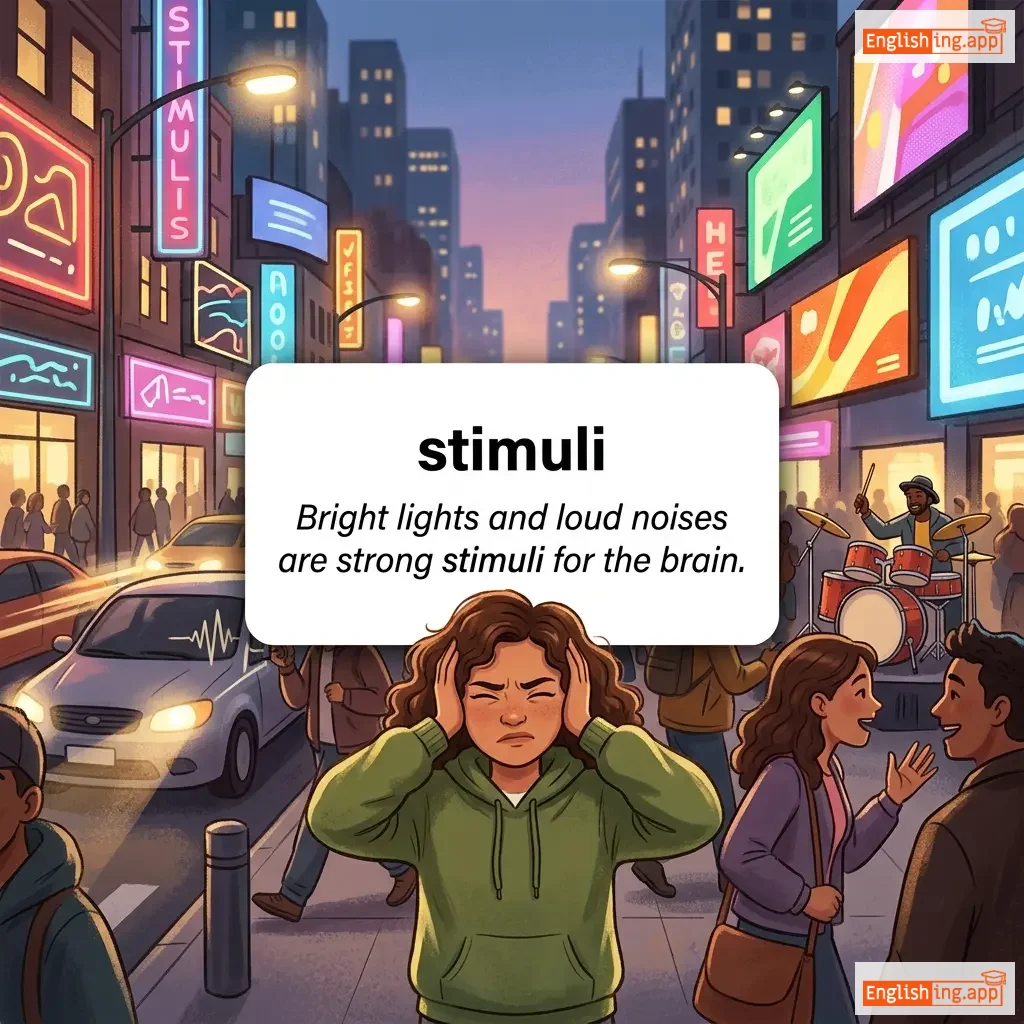
stimuli definition card — visual illustration of the meaning
noun (plural of stimulus)
/ˈstɪm.jʊ.laɪ/
stimulus (stimulus)

Things or events that evoke a specific functional reaction in an organ or tissue.

"Bright lights and loud noises are strong stimuli for the brain."

"Les lumières vives et les bruits forts sont des stimuli puissants pour le cerveau." (Les lumieres vives et les bruits forts sont des stimuli puissants pour le cerveau.)
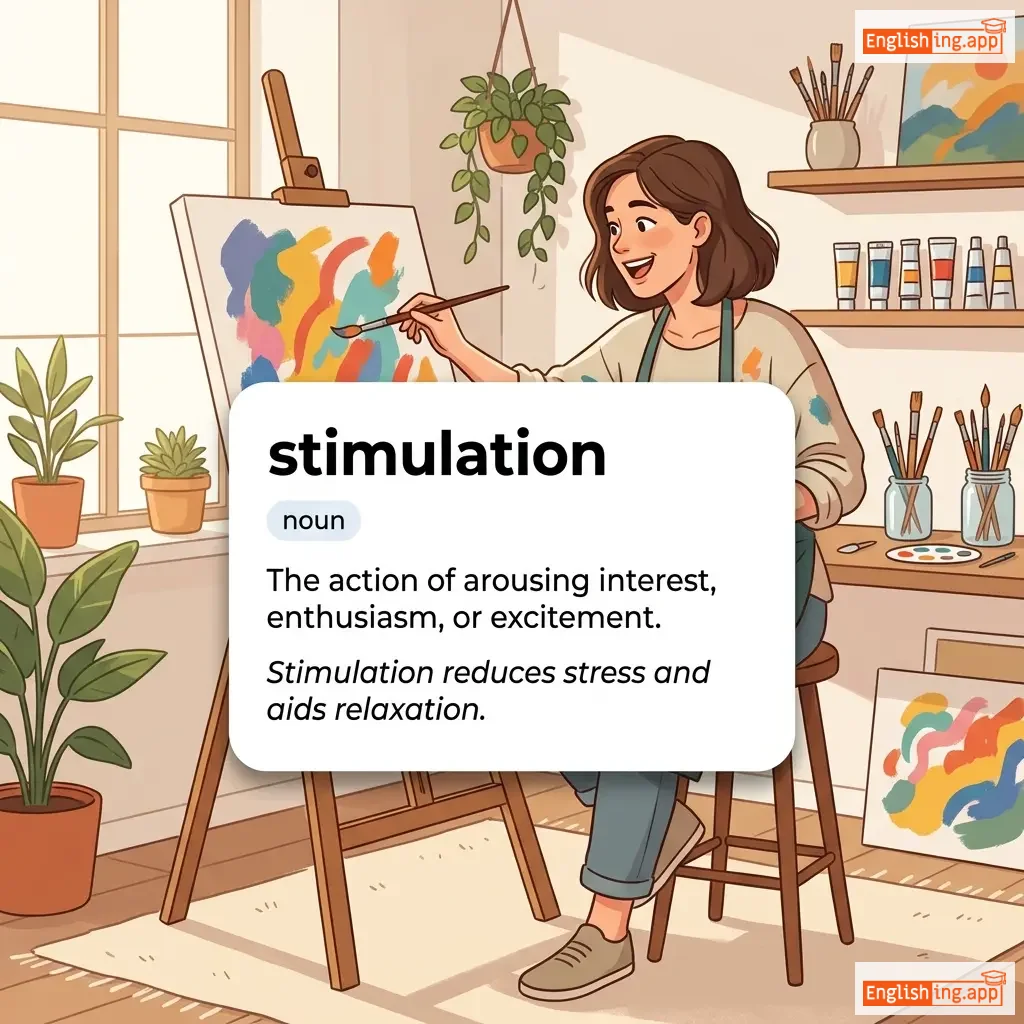
stimulation definition card — visual illustration of the meaning
noun
/ˌstɪm.jəˈleɪ.ʃən/
stimulation (stimulation)

The action of arousing interest, enthusiasm, or excitement.

"Stimulation reduces stress and aids relaxation."

"La stimulation réduit le stress et aide à la relaxation." (La stimulation réduit le stress et aide à la relaxation.)
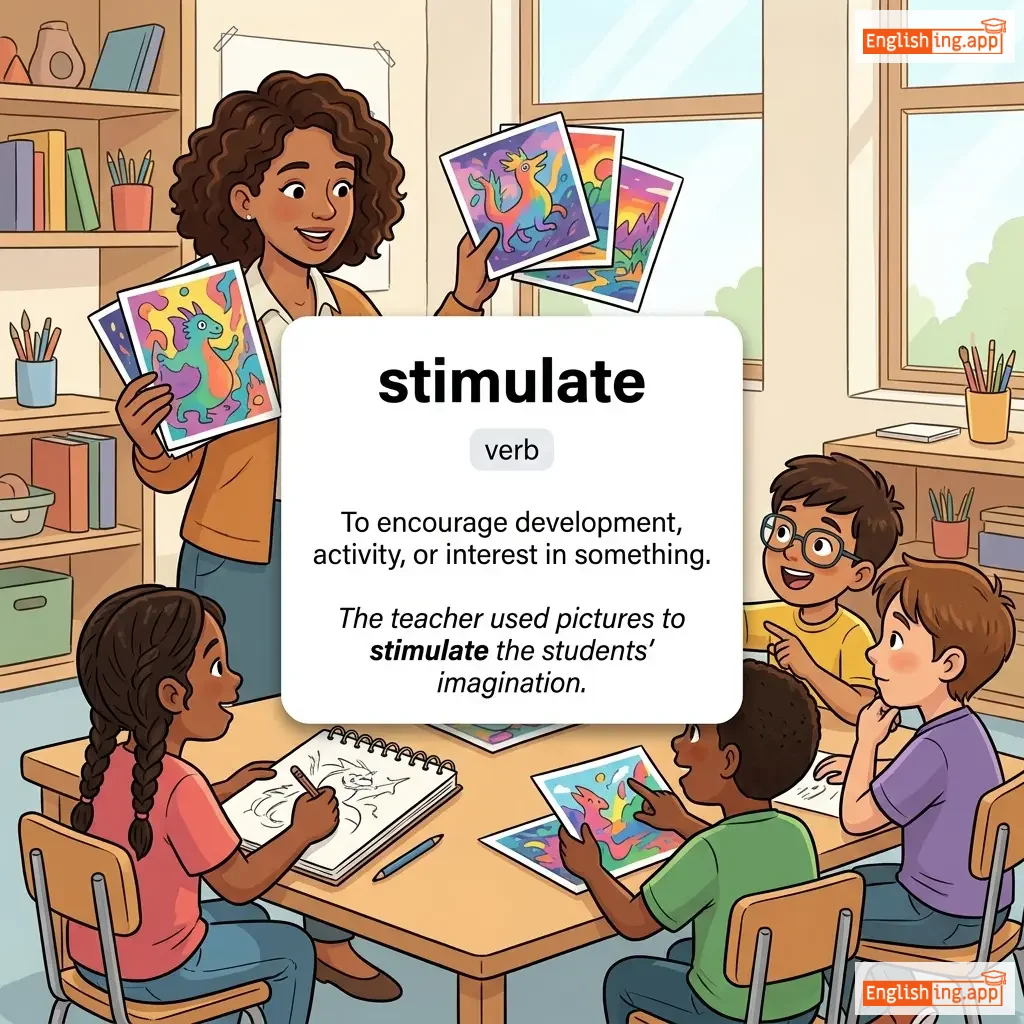
stimulate definition card — visual illustration of the meaning
verb
/ˈstɪmjʊˌleɪt/
stimuler, encourager (stimuler, encourager)

To encourage development, activity, or interest in something.

"The teacher used pictures to stimulate the students' imagination."

"Le professeur a utilisé des images pour stimuler l'imagination des élèves." (Le professeur a utilisé des images pour stimuler l'imagination des élèves.)
noun
/ˈstɪmjʊlənt/
stimulant (stimulant)

A substance that raises levels of physiological or nervous activity in the body.

"Coffee is a common stimulant that helps people stay awake."

"Le café est un stimulant courant qui aide les gens à rester éveillés" (Le café est un stimulant courant qui aide les gens à rester éveillés)
adjective
/ˈstɪltɪd/
artificiel, forcé (artificiel, force)

Speech or writing that is stiff, unnatural, or overly formal.

"His speech sounded stilted and rehearsed."

"Son discours semblait forcé et préparé." (Son discours semblait forcé et préparé.)
adjective
/stɪl/
calme (calme)

not moving or making a sound

"The water was still, reflecting the sky."

"L'eau était calme, reflétant le ciel." (L'eau était calme, reflétant le ciel.)
noun
/stɪˈlɛtoʊ/
chaussure à talon aigu / poignard (chaussure a talon aigu / poignard)

A small, thin, high-heeled shoe or a dagger with a slender blade.

"She wore elegant stiletto heels to the party."

"Elle portait des talons stiletto élégants à la fête." (Elle portait des talons stiletto élégants à la fête.)
verb
/ˈstɪɡmətaɪz/
stigmatiser (stigmatiser)

to describe or regard someone as worthy of disgrace or disapproval

"People with certain illnesses are often unfairly stigmatized."

"Les personnes atteintes de certaines maladies sont souvent stigmatisées de manière injuste." (Les personnes atteintes de certaines maladies sont souvent stigmatisées de manière injuste.)
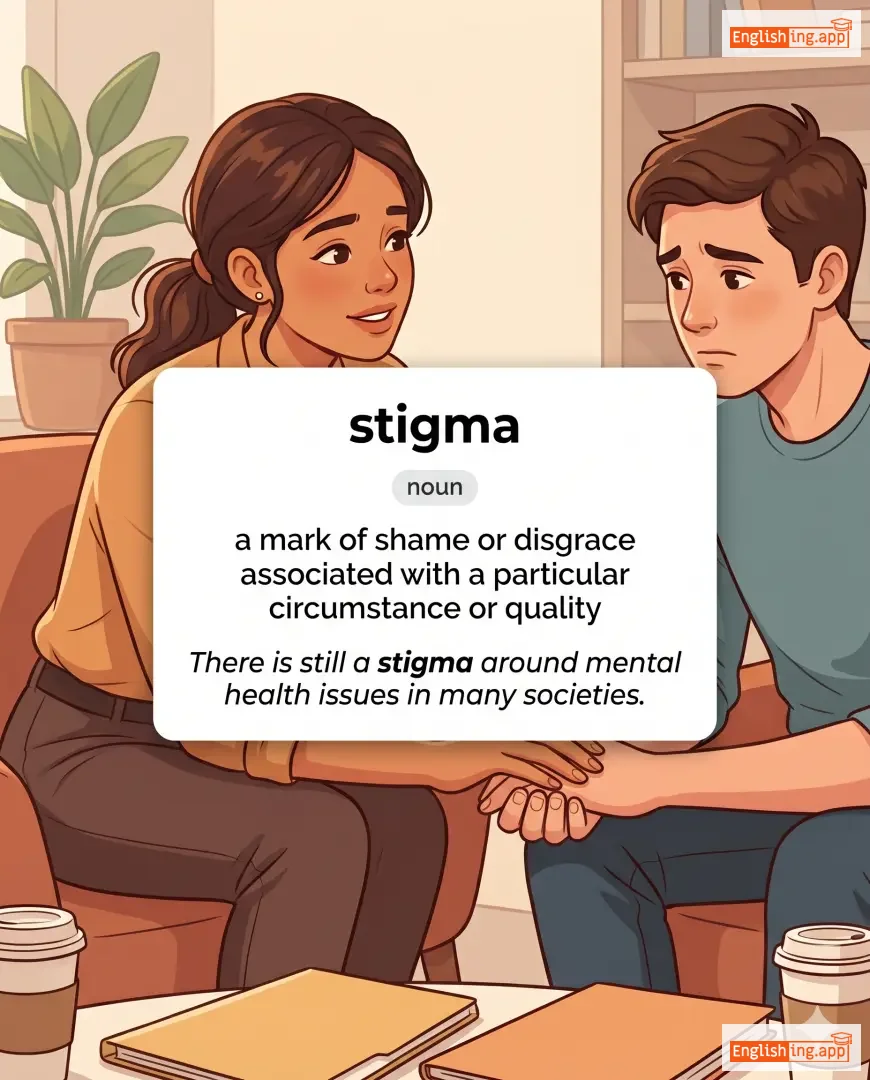
stigma definition card — visual illustration of the meaning
noun
/ˈstɪɡmə/
stigmatisme (stigmatisme)

a mark of shame or disgrace associated with a particular circumstance or quality

"There is still a stigma around mental health issues in many societies."

"Il existe encore un stigmate autour des problèmes de santé mentale dans de nombreuses sociétés." (Il existe encore un stigmate autour des problemes de sante mentale dans de nombreuses societes.)
verb
/ˈstaɪfəld/
étouffer (etouffer)

to suppress, hold back, or prevent something from happening

"He stifled a laugh during the serious meeting."

"Il a étouffé un rire pendant la réunion sérieuse." (Il a étouffé un rire pendant la réunion sérieuse.)
verb
/ˈstaɪfl/
réprimer (reprimer)

to prevent or restrain an action, idea, or emotion; to suffocate

"She tried to stifle a laugh during the serious meeting."

"Elle a essayé de réprimer un rire pendant la réunion sérieuse." (Elle a essaye de reprimier un rire pendant la reunion serieuse.)
noun
/ˈsteɪ.ʃən.ər/
papetier (papetier)

a person who sells paper, pens, pencils, and other office supplies

"The stationer recommended the best pens for writing exams."

"Le stationnaire a recommandé les meilleurs stylos pour les examens." (Le stationnaire a recommandé les meilleurs stylos pour les examens.)
noun
/ˈsteɪsɪs/ or /ˈstæsɪs/
stase (stase)

A state of inactivity or equilibrium; a situation where nothing changes.

"The negotiations reached a state of stasis with no progress made."

"Les négociations ont atteint un état de stase sans progrès." (Les négociations ont atteint un état de stase sans progrès.)
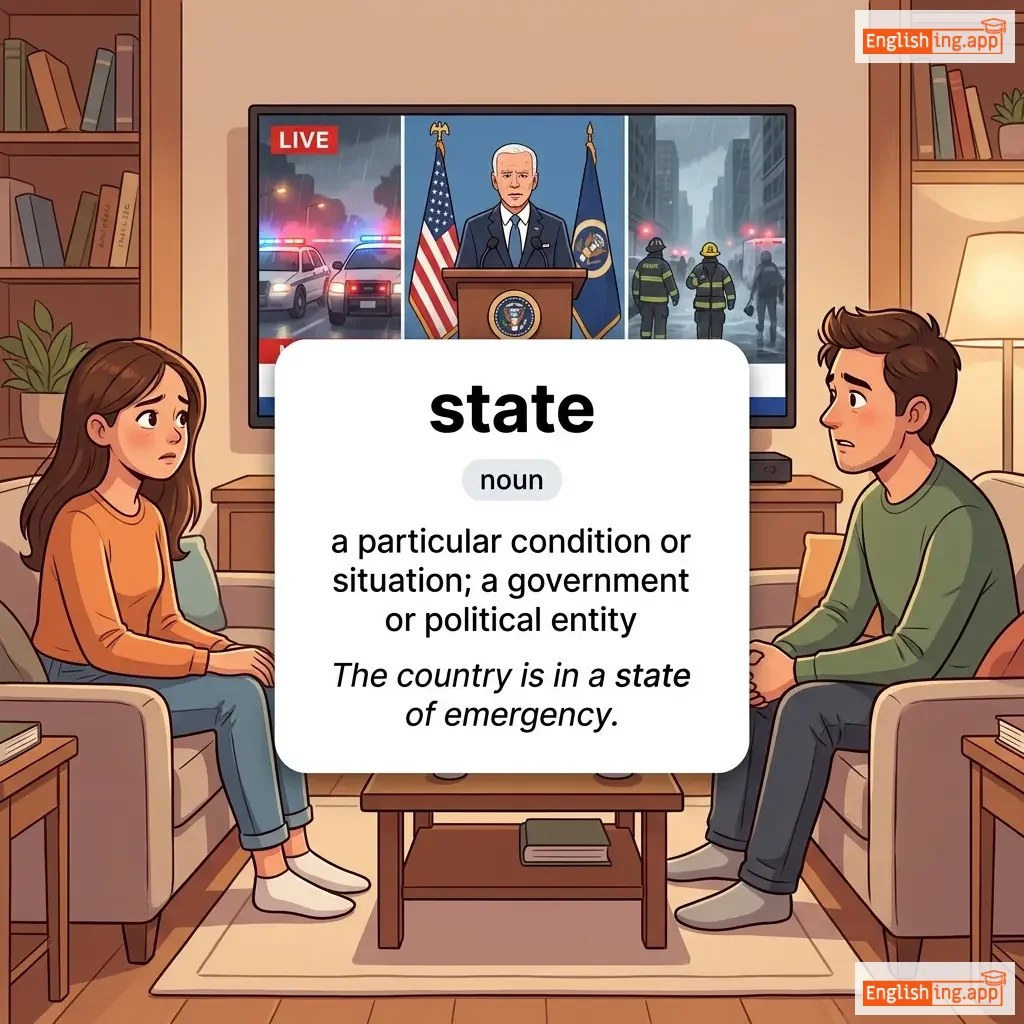
state definition card — visual illustration of the meaning
noun
/steɪt/
état (etat)

a particular condition or situation; a government or political entity

"The country is in a state of emergency."

"Le pays est en état d'urgence." (Le pays est en etat d'urgence.)
noun
/ˈsteɪtkraft/
art de gouverner (art de gouverner)

The art of governing and managing state affairs effectively.

"The leader was praised for his exceptional statecraft in handling international relations."

"Le leader a été félicité pour son art de gouverner exceptionnel dans la gestion des relations internationales." (Le leader a été félicité pour son art de gouverner exceptionnel dans la gestion des relations internationales.)
adjective
/ˈsteɪtli/
majestueux et digne (majestueux et digne)

Having a dignified, majestic, and impressive appearance or manner.

"The stately mansion stood at the end of the long driveway."

"Le manoir majestueux se tenait à l'extrémité de l'allée." (Le manoir majestueux se tenait à l'extrémité de l'allée.)
noun
/ˈsteɪtmənt/
déclaration (declaration)

a clear expression of something in speech or writing

"She made a statement about the company's new policies."

"Elle a fait une déclaration sur les nouvelles politiques de l'entreprise." (Elle a fait une declaration sur les nouvelles politiques de l'entreprise.)
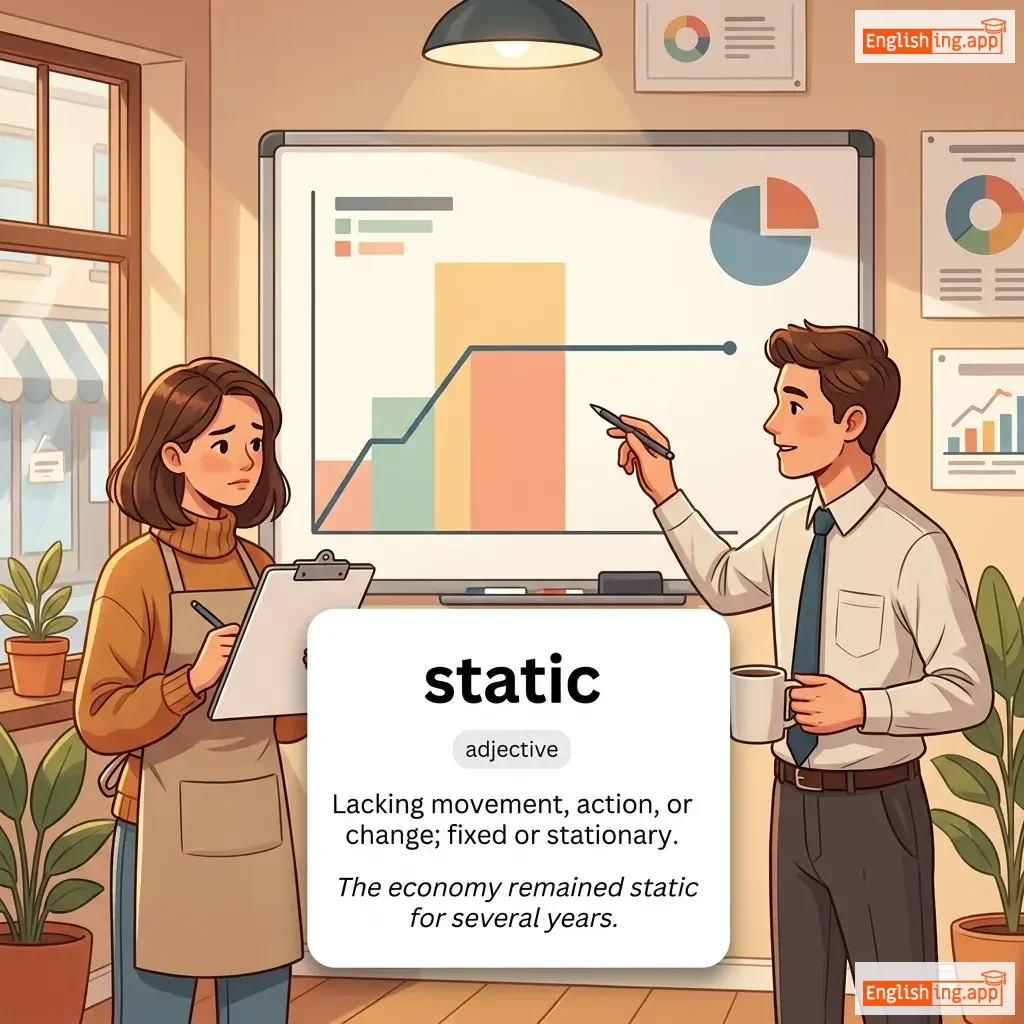
static definition card — visual illustration of the meaning
adjective
/ˈstætɪk/
statique (statik)

Lacking movement, action, or change; fixed or stationary.

"The economy remained static for several years."

"L'économie est restée statique pendant plusieurs années." (L'economie est restee statique pendant plusieurs annees.)
noun
/ˈstætɪks/
statique (statique)

The branch of mechanics dealing with bodies at rest and forces in equilibrium.

"She is studying statics as part of her engineering course."

"Elle étudie la statique dans le cadre de son cours d'ingénierie." (Elle étudie la statique dans le cadre de son cours d'ingénierie.)
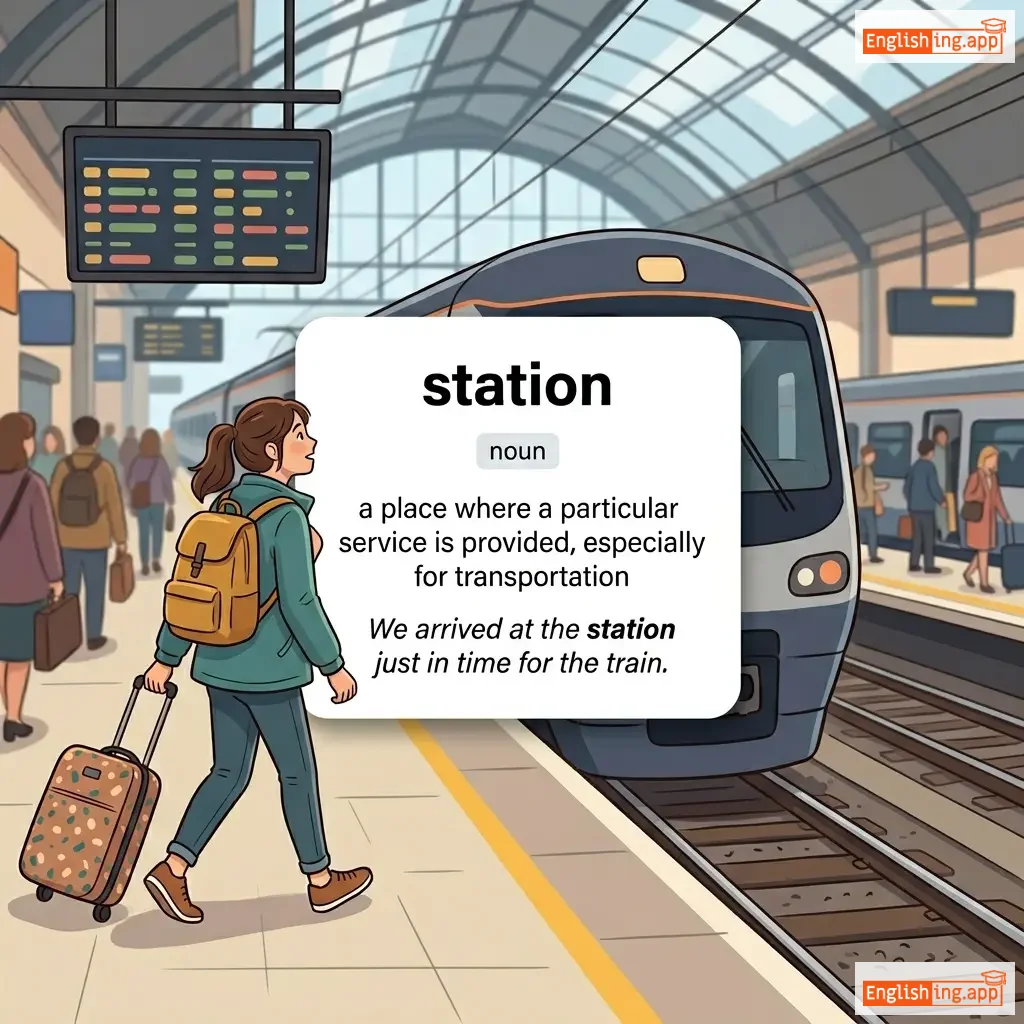
station definition card — visual illustration of the meaning
noun
/ˈsteɪʃən/
gare (gare)

a place where a particular service is provided, especially for transportation

"We arrived at the station just in time for the train."

"Nous sommes arrivés à la gare juste à temps pour le train." (Nous sommes arrives a la gare juste a temps pour le train.)
adjective
/ˈsteɪʃəˌneri/
immobile (immobile)

Not moving or not intended to be moved.

"The car remained stationary at the red light."

"La voiture est restée immobile au feu rouge." (La voiture est restée immobile au feu rouge.)
adjective
/ˌstætʃuˈɛsk/
statuesque (statuesque)

Having the grace, beauty, or dignity of a statue; tall and attractively proportioned.

"She had a statuesque figure that turned heads wherever she went."

"Elle avait une silhouette statuaire qui attirait les regards partout où elle allait." (Elle avait une silhouette statuaire qui attirait les regards partout où elle allait.)
noun
/ˈsteɪtəs kwoʊ/
statu quo (statu quo)

The existing state of affairs, especially regarding social or political issues.

"The government decided to maintain the status quo until further review."

"Le gouvernement a décidé de maintenir le statu quo jusqu'à un examen ultérieur." (Le gouvernement a décidé de maintenir le statu quo jusqu'à un examen ultérieur.)
noun
/ˈsteɪtəs/
statut (statut)

the social or professional position or condition of someone or something

"His social status improved after the promotion."

"Son statut social s'est amélioré après la promotion." (Son statut social s'est amélioré après la promotion.)
noun
/ˈstætʃər/
stature, prestige (stature, prestige)

A person's natural height or their reputation and importance.

"Her intellectual stature made her a respected figure in academia."

"Sa stature intellectuelle a fait d'elle une figure respectée dans le monde académique." (Sa stature intellectuelle a fait delle une figure respectee dans le monde academique.)
noun
/ˌstætʃuˈɛt/
statuette (statuette)

A small statue, usually decorative or artistic.

"The artist won a gold statuette for his work."

"L'artiste a gagné une petite statuette en or pour son travail." (L'artiste a gagne une petite statuette en or pour son travail.)
noun
/stəˈtɪstɪks/
statistiques (statistiques)

the practice or science of collecting and analyzing numerical data

"The statistics showed an increase in the number of users last year."

"Les statistiques ont montré une augmentation du nombre d'utilisateurs l'année dernière." (Les statistiques ont montré une augmentation du nombre d'utilisateurs l'année dernière.)
adjective
/stəˈtɪstɪkəl/
statistique (statistique)

relating to the use or analysis of numerical data

"The report provides statistical data about population growth."

"Le rapport fournit des données statistiques sur la croissance de la population." (Le rapport fournit des donnees statistiques sur la croissance de la population.)
noun
/ˌstætɪˈstɪʃən/
statisticien (statisticien)

A person who specializes in collecting, analyzing, and interpreting numerical data.

"The statistician presented the survey results with great clarity."

"Le statisticien a présenté les résultats du sondage avec grande clarté." (Le statisticien a presente les resultats du sondage avec grande clarte.)