ভোকাবুলারিসমূহ

ইংরেজি শব্দের বাংলা অর্থ | English to Bangla Word Meaning Dictionary

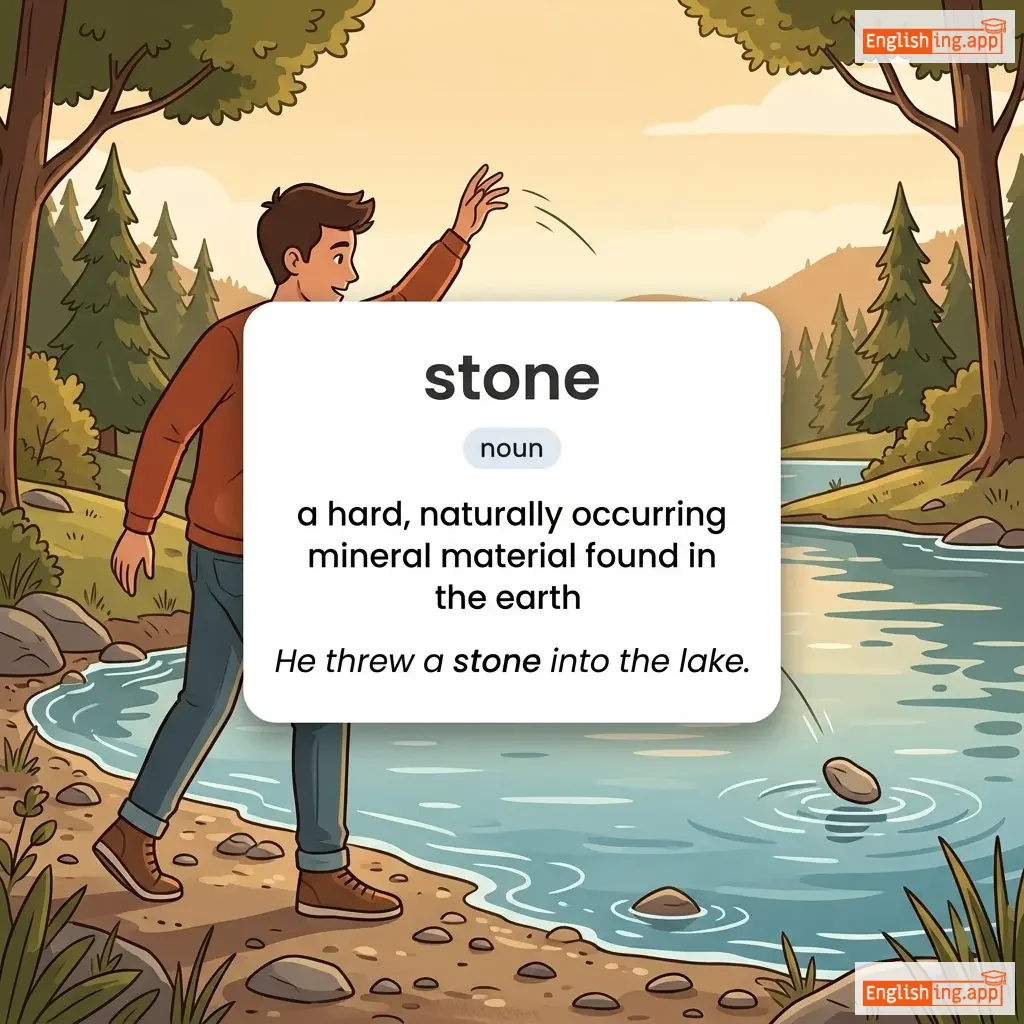
stone definition card — visual illustration of the meaning
noun
/stoʊn/
পাথর (pathor)

a hard, naturally occurring mineral material found in the earth

"He threw a stone into the lake."

"সে একটি পাথর হ্রদে ছুঁড়ে ফেলল।" (Se ekta pathor hride chhure phello.)
noun
/ˈstʌmək eɪk/
পেটের ব্যথা (peter byatha)

Pain in the stomach or abdominal area

"I have a stomach ache after eating too much."

"আমি অতিরিক্ত খাওয়ার পর পেটের ব্যথা অনুভব করছি।" (ami otirikto khawar por peter byatha onuvob korchi)
noun/verb
/ˈstʌmək/
পেট / সহ্য করা (pet / sohojjo kora)

The internal organ in which food is digested; also to tolerate or endure something

"She couldn’t stomach the sight of violence."

"সে সহিংসতার দৃশ্য সহ্য করতে পারেনি।" (Se sohingshotar drishsho sohojjo korte pareni.)
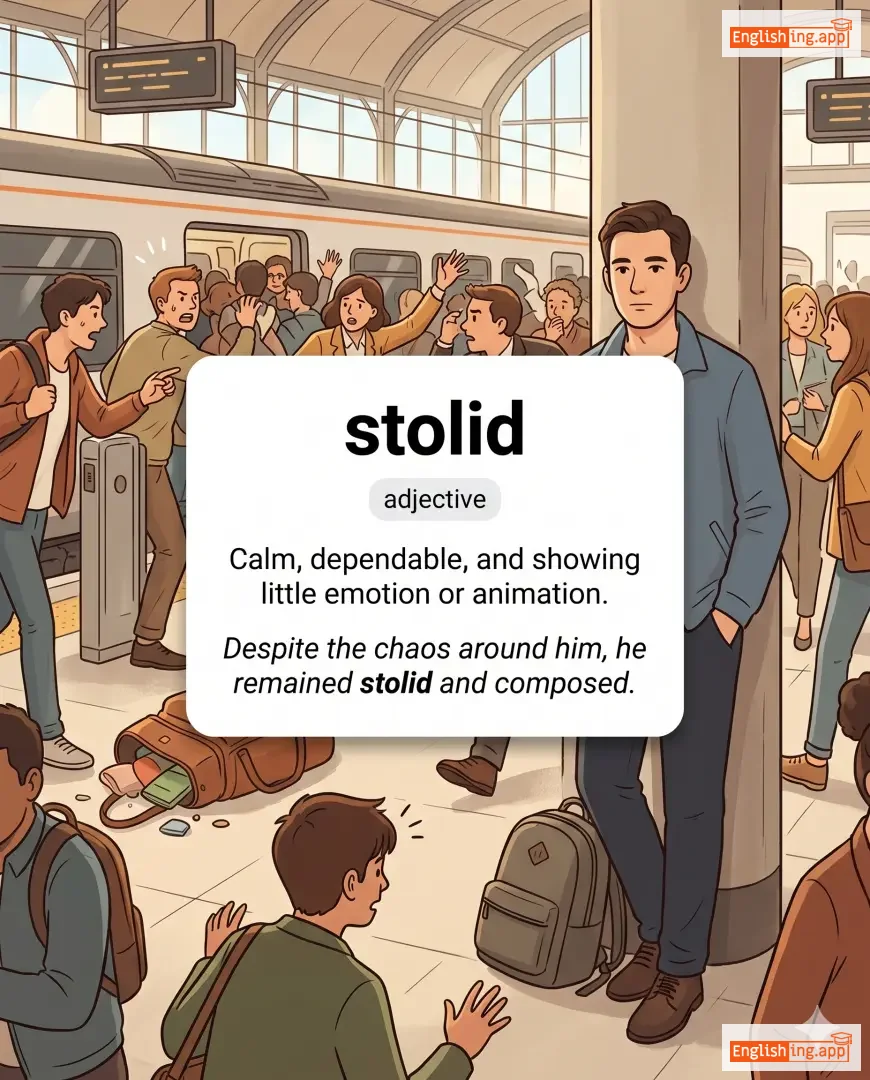
stolid definition card — visual illustration of the meaning
adjective
/ˈstɒlɪd/
শান্ত, আবেগহীন (shanto, abeg-hin)

Calm, dependable, and showing little emotion or animation.

"Despite the chaos around him, he remained stolid and composed."

"চারপাশের বিশৃঙ্খলার মাঝেও সে শান্ত ও স্থির ছিল।" (Charpash-er bishrinkhalar majheo se shanto o sthir chilo.)
verb
/stoʊk/
আগুন জ্বালানো, উস্কে দেওয়া (agun jwalano, uske dewa)

To add fuel to a fire; to encourage or increase a strong feeling or activity.

"The politician’s speech stoked anger among the crowd."

"রাজনীতিবিদের বক্তৃতা জনতার মধ্যে রাগ উস্কে দিয়েছিল।" (Rajniti-bider boktrita jontar moddhe rag uske diyechhilo.)
stoicism definition card — visual illustration of the meaning
noun
/ˈstoʊɪˌsɪzəm/
ধৈর্য, সহিষ্ণুতা (dhorjo, sohisnota)

The endurance of pain or hardship without showing feelings or complaining.

"He faced the loss of his job with remarkable stoicism."

"সে তার চাকরি হারানো ধৈর্যের সাথে মেনে নিয়েছিল।" (Se tar chakri harano dhorjer sathe mene niechhilo.)
adjective
/ˈstoʊɪk/
ধীরস্থির, আবেগহীন (dhirshtir, abeg-hin)

Showing little or no emotion, even in difficult situations.

"She remained stoic during the crisis, never showing fear or panic."

"সে সংকটের সময় ধীরস্থির ছিল, ভয় বা আতঙ্ক প্রকাশ করেনি।" (Se songkot-er somoy dhirshtir chilo, voy ba atonk prokash koreni.)
adjective
/ˈstɒdʒi/
বিরক্তিকর, সেকেলে (biraktikor, sekle)

Dull, uninspired, or old-fashioned; also heavy and hard to digest when referring to food.

"The lecture was so stodgy that many students struggled to stay awake."

"লেকচারটি এতটাই বিরক্তিকর ছিল যে অনেক ছাত্র জেগে থাকতে লড়াই করছিল।" (Lekcharti etotai biraktikor chilo je onek chatro jege thakte lorai korchilo.)
noun
/stɒˈkeɪd/
কাঠের ঘেরা প্রাচীর (kather ghera prachir)

a defensive barrier made of strong posts or timbers, often around a fort or prison

"The prisoners were kept inside the wooden stockade."

"কাঠের ঘেরা প্রাচীরের ভেতরে বন্দিদের রাখা হয়েছিল।" (Kather ghera prachirer vetore bondider rakha hoyechhilo.)
noun, verb
/stɒk/
মজুত (mojut)

a supply of goods kept for sale or use; to keep or fill with goods

"The shop stocks a wide variety of products."

"দোকানে নানারকম পণ্যের মজুত রয়েছে।" (Dokane nanarokom ponner mojut royeche.)
stitch definition card — visual illustration of the meaning
noun, verb
/stɪtʃ/
সেলাই করা (selai kora)

to sew fabric together using a needle and thread; also a single loop of thread in sewing

"She stitched the torn dress carefully."

"সে সাবধানে ছেঁড়া জামাটি সেলাই করল।" (Se sabdhane chhera jamati selai korlo.)
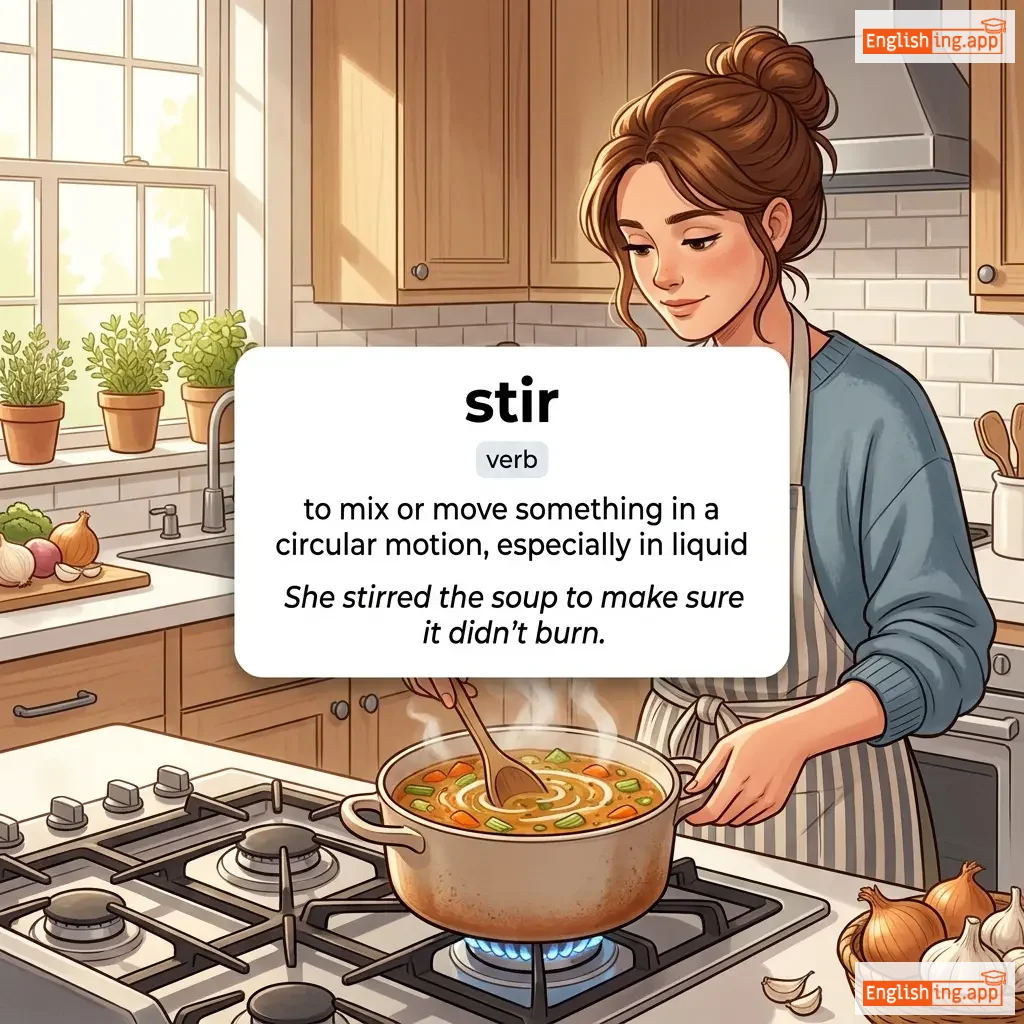
stir definition card — visual illustration of the meaning
verb
/stɜːr/
ঝাঁকানো (jhankano)

to mix or move something in a circular motion, especially in liquid

"She stirred the soup to make sure it didn't burn."

"সে স্যুপটি না পুড়ে যায় সেজন্য ঝাঁকানো করল।" (She soup-ti na pure jay sejonno jhankano korlo.)
stipulate definition card — visual illustration of the meaning
verb
/ˈstɪp.jʊ.leɪt/
শর্ত নির্ধারণ করা (shorto nirdharon kora)

to demand or specify a condition in an agreement or contract

"The contract stipulates that payment must be made within 30 days."

"চুক্তিতে বলা আছে যে ৩০ দিনের মধ্যে অর্থ প্রদান করতে হবে।" (Chuktite bola ache je 30 diner moddhe ortho prodan korte hobe.)
verb
/ˈstɪp.əl/
ছোট ছোট দাগে ভরা (chhoto chhoto dage vora)

to cover a surface with numerous small dots or specks, often in drawing or painting

"The artist stippled the canvas to create a textured effect."

"শিল্পী টেক্সচার তৈরির জন্য ক্যানভাসে ছোট ছোট দাগ দিয়েছিলেন।" (Shilpi texture toirir jonno canvas e chhoto chhoto dag diyechhilen.)
noun
/ˈstaɪpɛnd/
ভাতা (vata)

a fixed regular payment, usually for services or to cover living expenses

"The university provides a monthly stipend to its research students."

"বিশ্ববিদ্যালয় তার গবেষণা ছাত্রদের মাসিক ভাতা দেয়।" (Bishwobidyaloy tar gobeshona chatrader masik vata dey.)
verb
/ˈstɪntɪŋ/
কৃপণভাবে দেওয়া (kriponbhabe dewa)

to supply sparingly or with restrictions

"He never stinting his efforts to help the poor."

"সে গরিবদের সাহায্য করতে তার প্রচেষ্টা কখনো সীমিত করেনি।" (Se goribder sahajyo korte tar prochesta kokhono shimit koreni.)
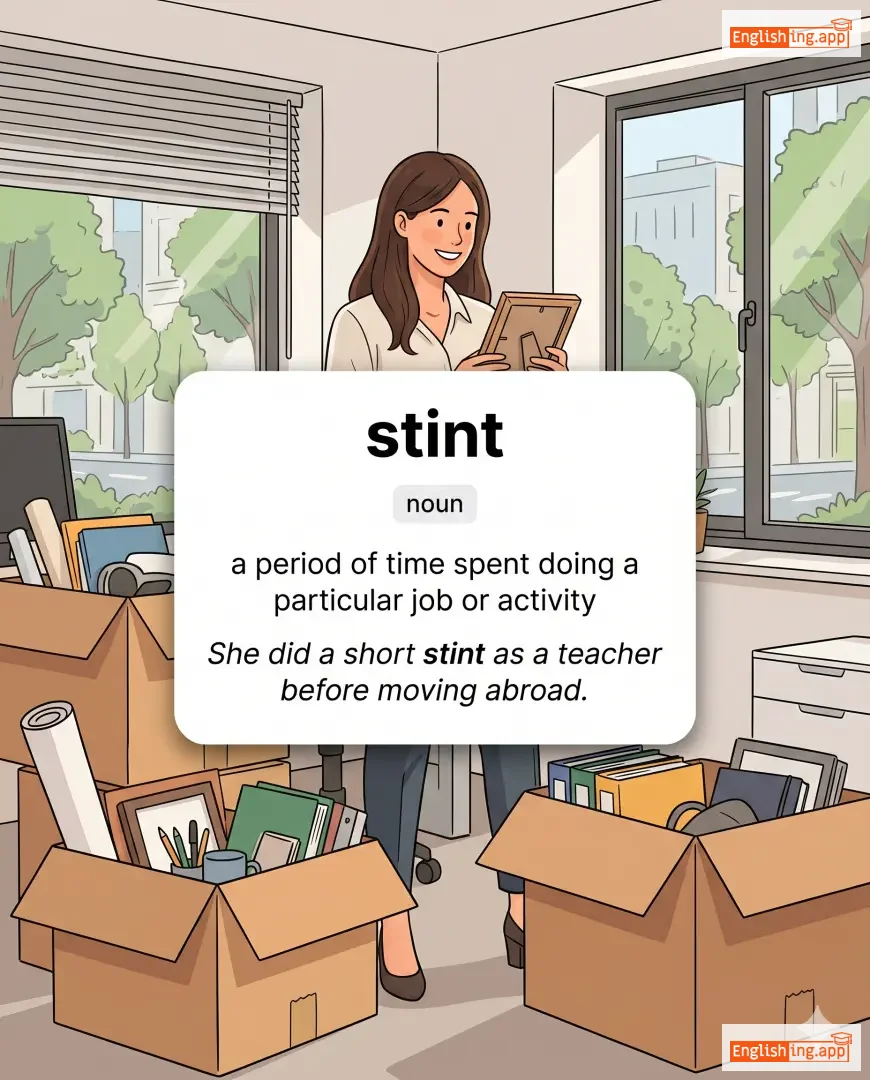
stint definition card — visual illustration of the meaning
noun
/stɪnt/
সংক্ষিপ্ত সময়কাল (songkhipto shomoykal)

a period of time spent doing a particular job or activity

"She did a short stint as a teacher before moving abroad."

"বিদেশ যাওয়ার আগে সে শিক্ষক হিসেবে একটি সংক্ষিপ্ত সময় কাজ করেছিল।" (Bidesh jawar age se shikkhok hisebe ekti songkhipto shomoy kaj korechhilo.)
verb
/stɪŋk/
দুর্গন্ধ ছড়ানো (durgondho charano)

to smell very unpleasant

"The garbage bin stinks in the hot sun."

"গরম রোদে ডাস্টবিন থেকে ভীষণ দুর্গন্ধ ছড়াচ্ছে।" (Gorom rode dustbin theke bhishon durgondho charachhe.)
adjective
/ˈstɪndʒi/
কৃপণ (kripon)

unwilling to spend or give; miserly

"He is too stingy to buy a gift for his friend."

"সে তার বন্ধুর জন্য উপহার কিনতে খুব কৃপণ।" (Se tar bondhur jonno upohar kinte khub kripon.)
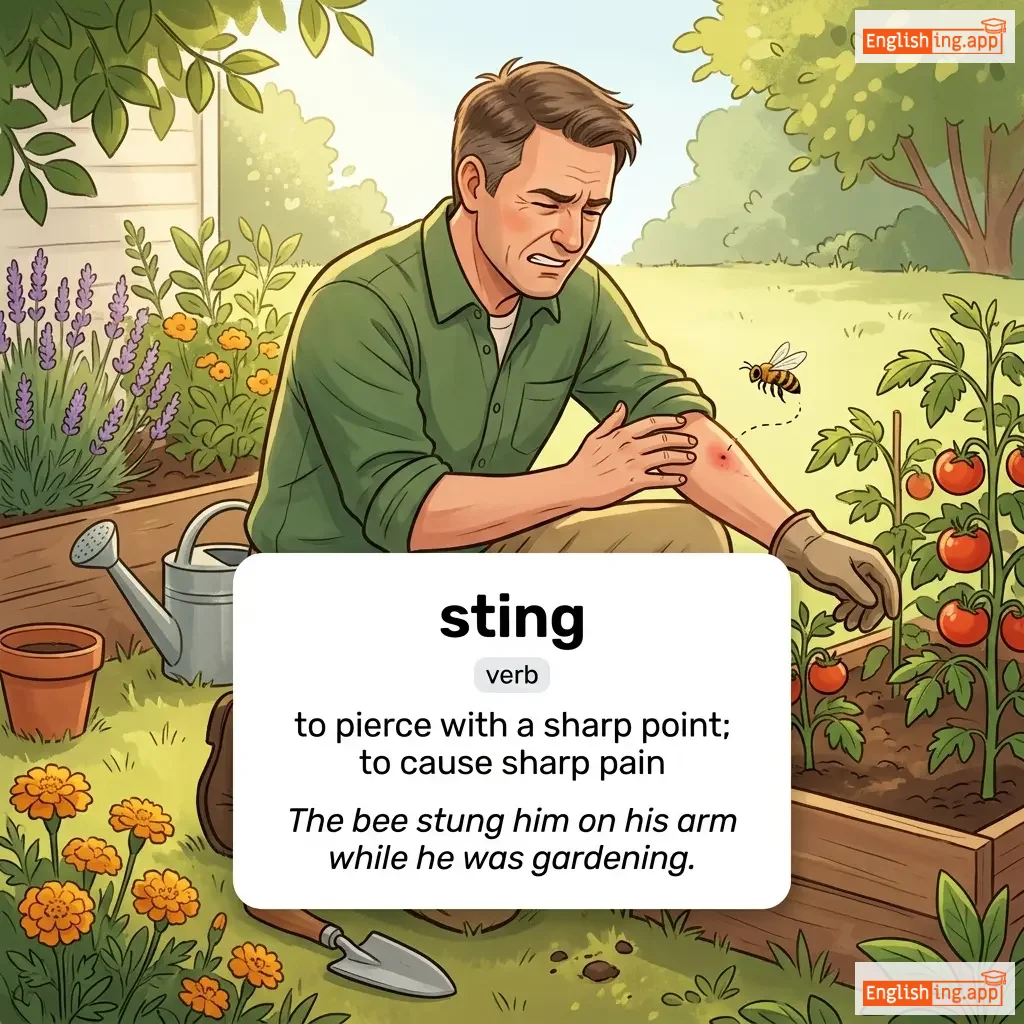
sting definition card — visual illustration of the meaning
verb
/stɪŋ/
হুল ফোটানো (hul photano)

to pierce with a sharp point; to cause sharp pain

"The bee stung him on his arm while he was gardening."

"তিনি বাগান করার সময় মৌমাছি তার হাতে হুল ফুটিয়েছিল।" (Tini bagan korar shomoy moumachi tar hate hul phutiyechilo)
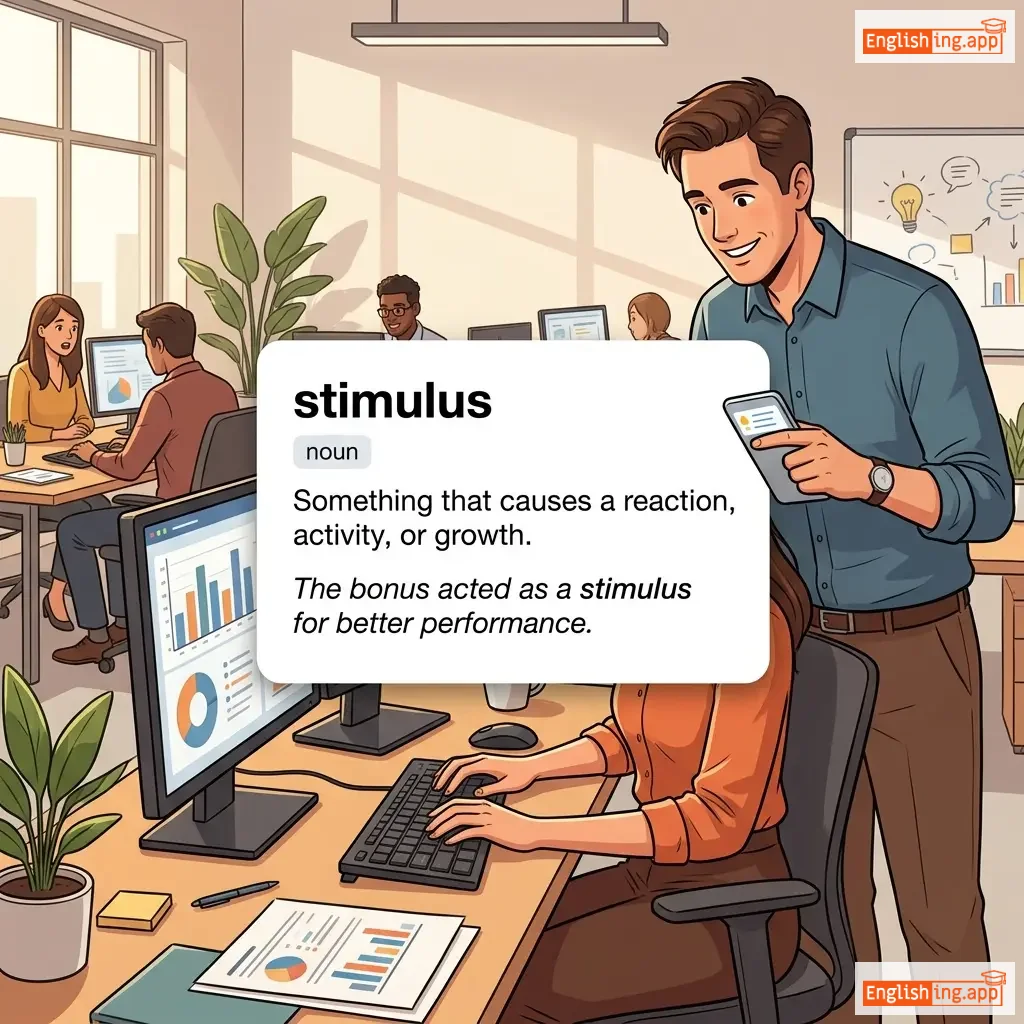
stimulus definition card — visual illustration of the meaning
noun
/ˈstɪmjʊləs/
উত্তেজক কারণ, প্রেরণা (uttejak karon, prerona)

Something that causes a reaction, activity, or growth.

"The bonus acted as a stimulus for better performance."

"বোনাসটি ভালো পারফরম্যান্সের জন্য একটি প্রেরণা হিসেবে কাজ করেছিল।" (Bonus ti bhalo performance er jonyo ekti prerona hisebe kaj korechhilo.)
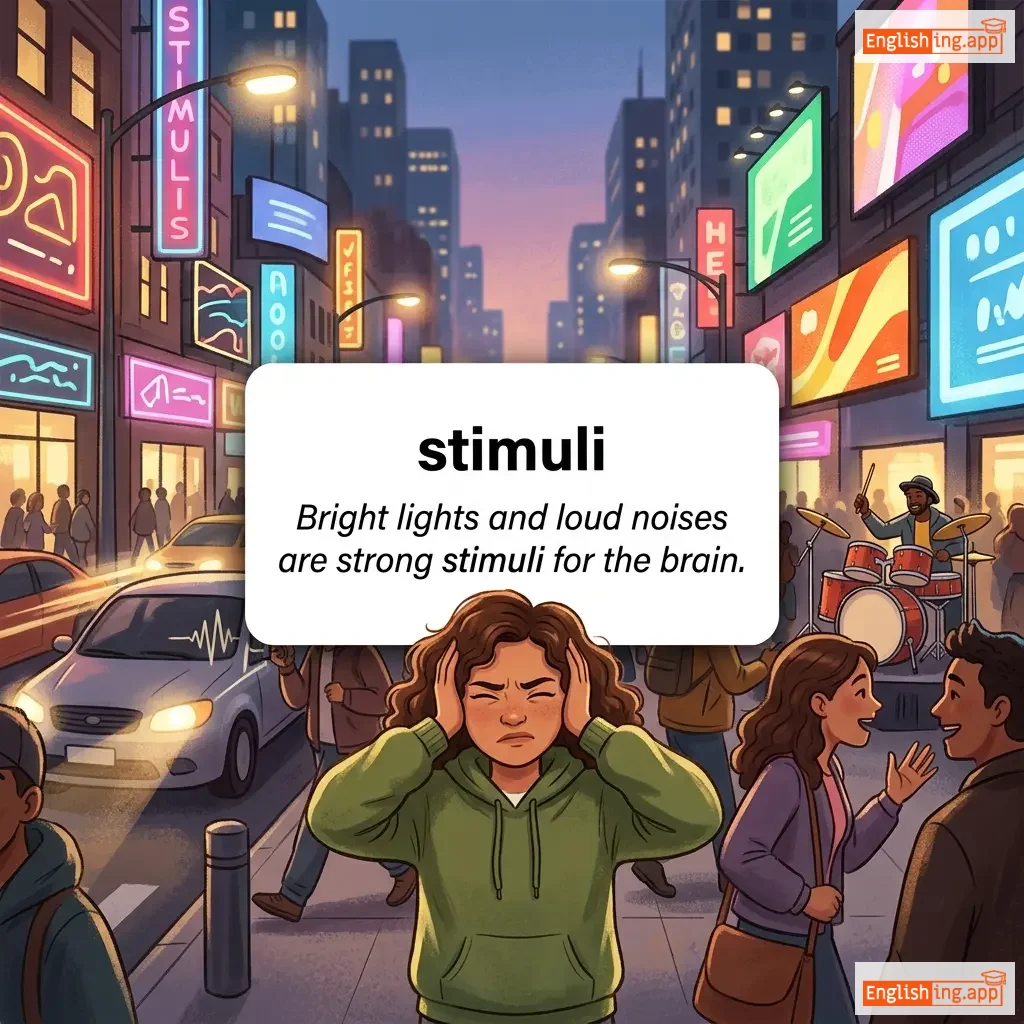
stimuli definition card — visual illustration of the meaning
noun (plural of stimulus)
/ˈstɪm.jʊ.laɪ/
উদ্দীপনা বা প্রভাবক (uddipona ba prohavok)

Things or events that evoke a specific functional reaction in an organ or tissue.

"Bright lights and loud noises are strong stimuli for the brain."

"উজ্জ্বল আলো এবং উচ্চ শব্দ মস্তিষ্কের জন্য শক্তিশালী উদ্দীপনা।" (Ujjal alo ebong uchcho shobdo mostishker jonno shokrishali uddipona.)
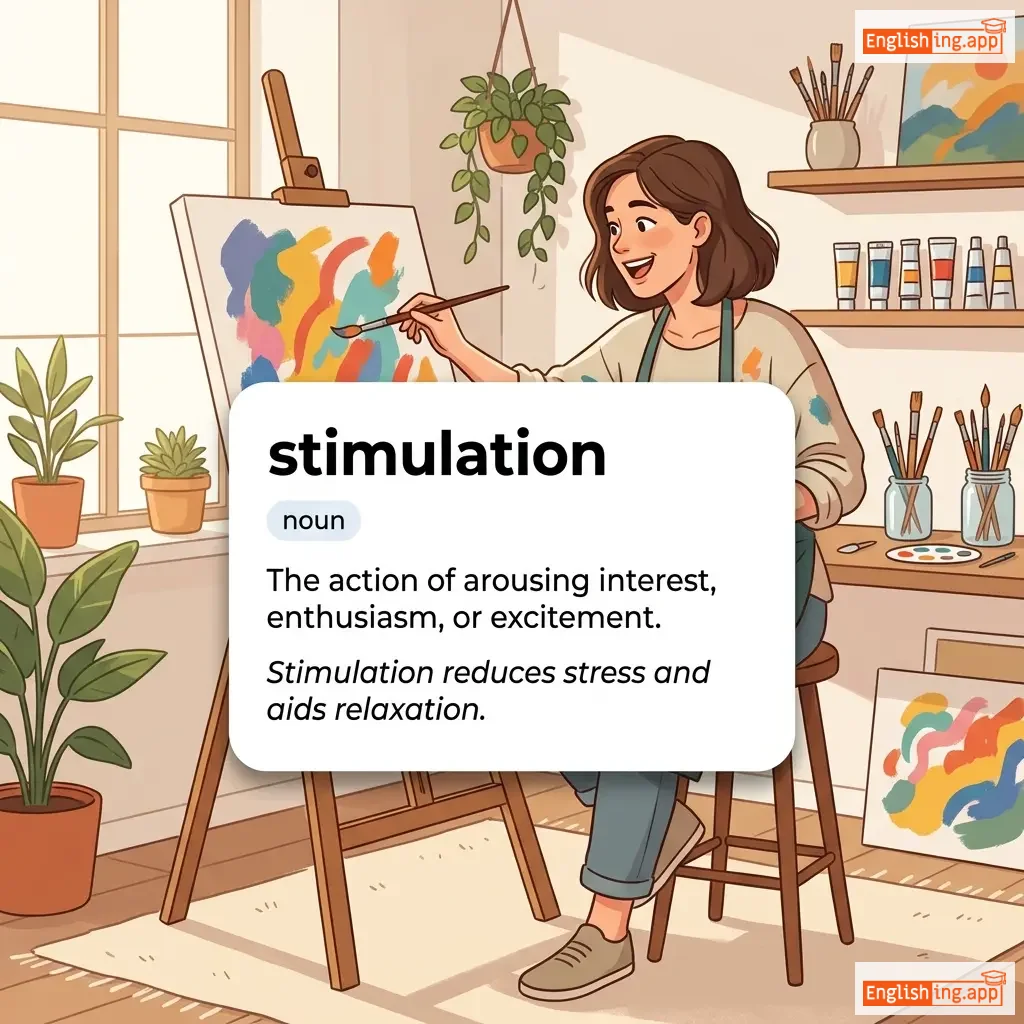
stimulation definition card — visual illustration of the meaning
noun
/ˌstɪm.jəˈleɪ.ʃən/
উদ্দীপনা (uddipona)

The action of arousing interest, enthusiasm, or excitement.

"Stimulation reduces stress and aids relaxation."

"উদ্দীপনা মানসিক চাপ কমায় এবং শিথিল করতে সাহায্য করে।" (Uddipona manoshik chap komay ebong shithil korte sahajjo kore.)
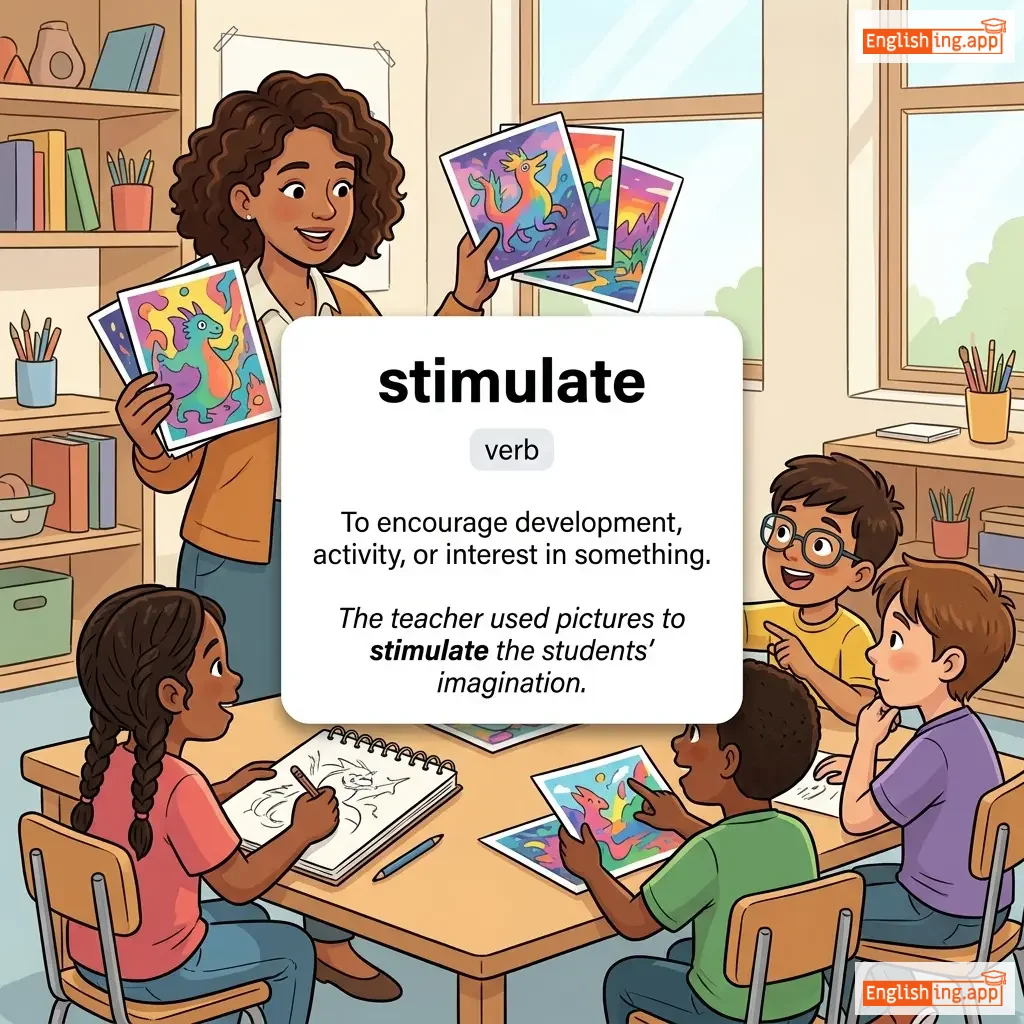
stimulate definition card — visual illustration of the meaning
verb
/ˈstɪmjʊˌleɪt/
উত্তেজিত করা, উদ্দীপিত করা (uttejit kora, uddipito kora)

To encourage development, activity, or interest in something.

"The teacher used pictures to stimulate the students' imagination."

"শিক্ষক ছবির মাধ্যমে শিক্ষার্থীদের কল্পনা উদ্দীপিত করেছিলেন।" (Shikkhok chobir maddhome shikharthider kolpona uddipito korechhilen.)
noun
/ˈstɪmjʊlənt/
উত্তেজক পদার্থ (uttejak podartho)

A substance that raises levels of physiological or nervous activity in the body.

"Coffee is a common stimulant that helps people stay awake."

"কফি একটি সাধারণ উত্তেজক পদার্থ যা মানুষকে জাগিয়ে রাখে।" (Coffee ekti shadharon uttejak podartho ja manushke jagiye rakhe.)
adjective
/ˈstɪltɪd/
কৃত্রিম, অস্বাভাবিক (kritrim, oshabhavik)

Speech or writing that is stiff, unnatural, or overly formal.

"His speech sounded stilted and rehearsed."

"তার বক্তৃতা কৃত্রিম এবং মুখস্থ লাগছিল।" (Tar boktrita kritrim ebong mukhosto lagchhilo.)
adjective
/stɪl/
নিরব (nirab)

not moving or making a sound

"The water was still, reflecting the sky."

"পানি ছিল স্থির, আকাশের প্রতিফলন দেখাচ্ছিল।" (Pani chhilo sthir, akasher protifolon dekhachhilo.)
noun
/stɪˈlɛtoʊ/
পাতলা হিল জুতো / ছোট ছুরি (patla hil juto / choto chhuri)

A small, thin, high-heeled shoe or a dagger with a slender blade.

"She wore elegant stiletto heels to the party."

"সে পার্টিতে চমৎকার স্টিলেটো হিল পরেছিল।" (Se party te chomotkar stiletto hil porechhilo.)
verb
/ˈstɪɡmətaɪz/
কলঙ্কিত করা (kolonkito kora)

to describe or regard someone as worthy of disgrace or disapproval

"People with certain illnesses are often unfairly stigmatized."

"নির্দিষ্ট কিছু রোগে আক্রান্ত মানুষদের প্রায়ই অন্যায়ভাবে কলঙ্কিত করা হয়।" (Nirdisto kichu roge akranto manusher prayi onnyaybhabe kolonkito kora hoy.)
stigma definition card — visual illustration of the meaning
noun
/ˈstɪɡmə/
কলঙ্ক (kolonko)

a mark of shame or disgrace associated with a particular circumstance or quality

"There is still a stigma around mental health issues in many societies."

"অনেক সমাজে এখনো মানসিক স্বাস্থ্য সমস্যার চারপাশে কলঙ্ক রয়েছে।" (Onek somaje ekhono manoshik shastho shomossar charpashe kolonko royeche.)
verb
/ˈstaɪfəld/
রুদ্ধ করা (rudhho kora)

to suppress, hold back, or prevent something from happening

"He stifled a laugh during the serious meeting."

"গুরুত্বপূর্ণ সভার সময় সে হাসি চেপে রেখেছিল।" (Guruttopurno shobar somoy se hashi chepe rekhechhilo.)
verb
/ˈstaɪfl/
দমন করা (domon kora)

to prevent or restrain an action, idea, or emotion; to suffocate

"She tried to stifle a laugh during the serious meeting."

"গুরুত্বপূর্ণ সভার সময় সে হাসি দমন করার চেষ্টা করছিল।" (Guruttopurno shobar somoy se hasi domon korar cheshta korchhilo.)
noun
/ˈsteɪ.ʃən.ər/
স্টেশনারি বিক্রেতা (stationery bikreta)

a person who sells paper, pens, pencils, and other office supplies

"The stationer recommended the best pens for writing exams."

"স্টেশনারি বিক্রেতা পরীক্ষার জন্য সবচেয়ে ভালো কলম সুপারিশ করেছিল।" (stationery bikreta poriksha-r jonno shobcheye bhalo kolom suparish korechilo)
noun
/ˈsteɪsɪs/ or /ˈstæsɪs/
অচলাবস্থা (ocholabostha)

A state of inactivity or equilibrium; a situation where nothing changes.

"The negotiations reached a state of stasis with no progress made."

"আলোচনা অচলাবস্থায় পৌঁছেছিল, কোনো অগ্রগতি হয়নি।" (Alochona ocholabosthay pouchhchhilo, kono ogrogoti hoyni.)
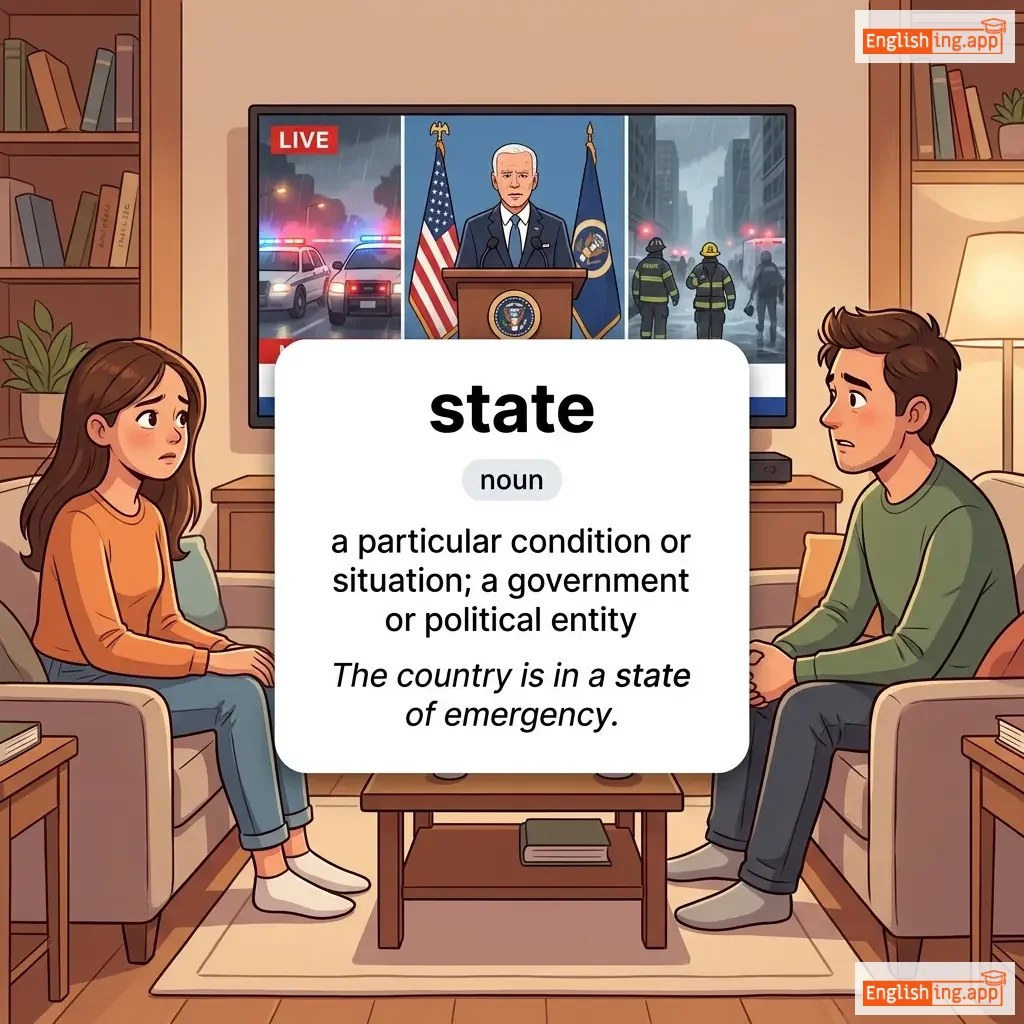
state definition card — visual illustration of the meaning
noun
/steɪt/
রাষ্ট্র (rāṣṭrō)

a particular condition or situation; a government or political entity

"The country is in a state of emergency."

"দেশটি জরুরি অবস্থায় রয়েছে।" (Deśṭi joruri obosthay royeche.)
noun
/ˈsteɪtkraft/
রাষ্ট্রপরিচালনার দক্ষতা (rashtraporialonar dokkhota)

The art of governing and managing state affairs effectively.

"The leader was praised for his exceptional statecraft in handling international relations."

"আন্তর্জাতিক সম্পর্ক পরিচালনায় তার অসাধারণ রাষ্ট্রপরিচালনার দক্ষতার জন্য নেতাকে প্রশংসা করা হয়েছিল।" (Antorjatik somporko porichalonay tar osadharon rashtraporialonar dokkhotar jonno netake proshongsha kora hoyechhilo.)
adjective
/ˈsteɪtli/
গম্ভীর ও মহিমান্বিত (gombhir o mohimanbito)

Having a dignified, majestic, and impressive appearance or manner.

"The stately mansion stood at the end of the long driveway."

"গম্ভীর প্রাসাদটি লম্বা ড্রাইভওয়ের শেষে দাঁড়িয়ে ছিল।" (Gombhir prasadti lomba drivewayr sheshe darie chhilo.)
noun
/ˈsteɪtmənt/
বক্তব্য (baktabyo)

a clear expression of something in speech or writing

"She made a statement about the company's new policies."

"সে কোম্পানির নতুন নীতিমালার বিষয়ে একটি বক্তব্য দিয়েছে।" (Se companyr notun nitimalar bishoye ekta baktabyo diyechhe.)
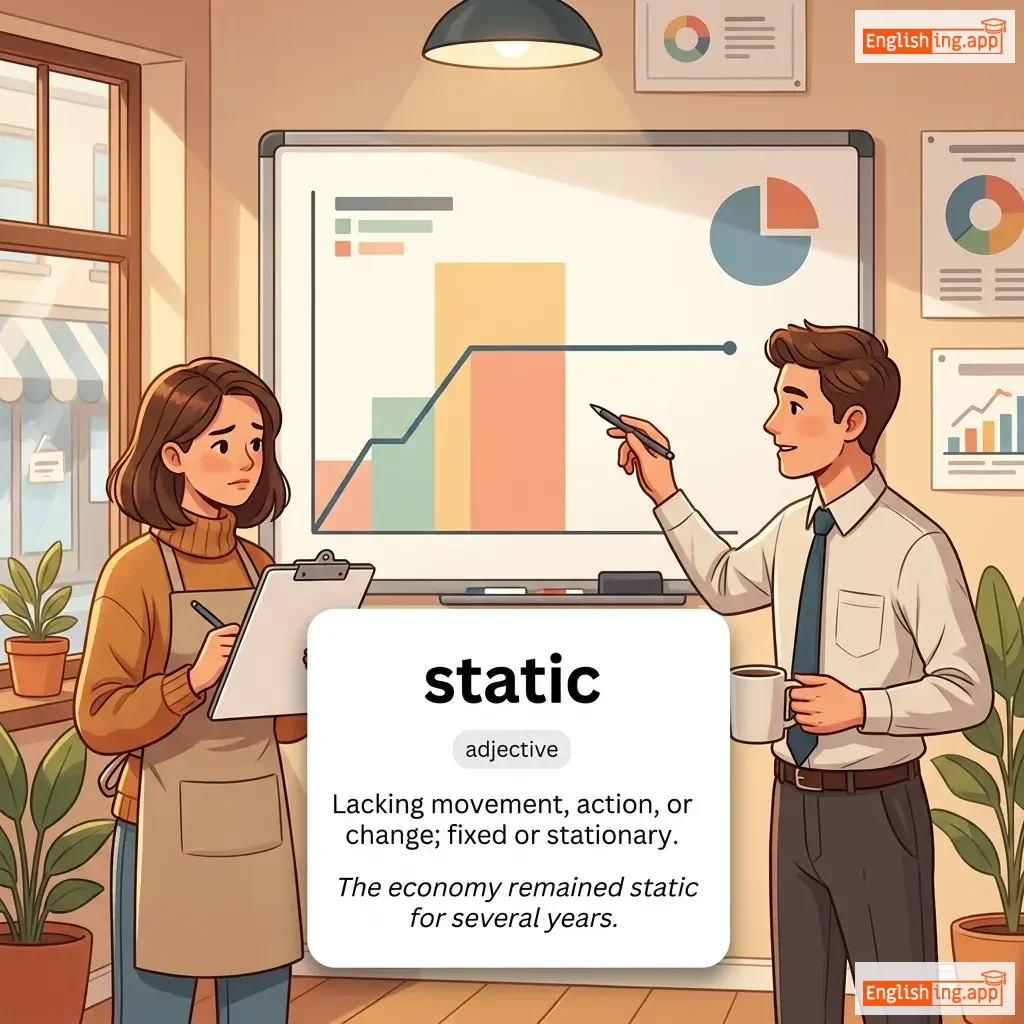
static definition card — visual illustration of the meaning
adjective
/ˈstætɪk/
স্থির (sthir)

Lacking movement, action, or change; fixed or stationary.

"The economy remained static for several years."

"অর্থনীতি কয়েক বছর ধরে স্থির ছিল।" (Arthonomi koyek bochor dhore sthir chhilo.)
noun
/ˈstætɪks/
স্থিরবিজ্ঞান (sthirbiggan)

The branch of mechanics dealing with bodies at rest and forces in equilibrium.

"She is studying statics as part of her engineering course."

"সে তার ইঞ্জিনিয়ারিং কোর্সের অংশ হিসেবে স্থিরবিজ্ঞান পড়ছে।" (Se tar engineering course er angsho hisebe sthirbiggan porchhe.)
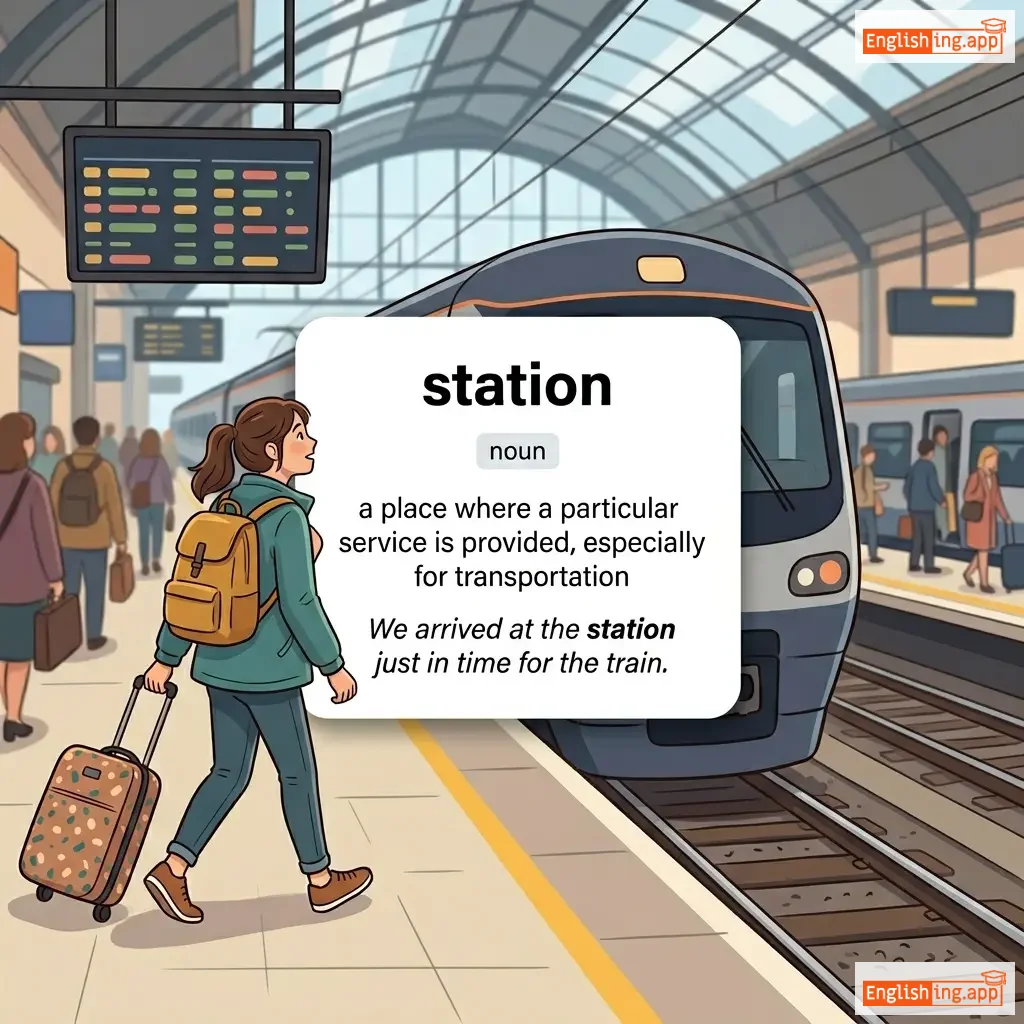
station definition card — visual illustration of the meaning
noun
/ˈsteɪʃən/
স্টেশন (sṭeśan)

a place where a particular service is provided, especially for transportation

"We arrived at the station just in time for the train."

"আমরা ট্রেন ধরার জন্য স্টেশনে সময়মতো পৌঁছেছিলাম।" (Amra train dhorar jonno sṭeśane samaymoto pouchhechhilam.)
adjective
/ˈsteɪʃəˌneri/
স্থির (sthir)

Not moving or not intended to be moved.

"The car remained stationary at the red light."

"গাড়িটি লাল বাতিতে স্থির ছিল।" (Gariti lal batite sthir chhilo.)
adjective
/ˌstætʃuˈɛsk/
ভাস্কর্যসদৃশ (bhaskarjo sadrish)

Having the grace, beauty, or dignity of a statue; tall and attractively proportioned.

"She had a statuesque figure that turned heads wherever she went."

"তার ভাস্কর্যসদৃশ দেহযশ সবাইকে মুগ্ধ করেছিল।" (tar bhaskarjo sadrish dehojosh sobaike mugdho korechhilo.)
noun
/ˈsteɪtəs kwoʊ/
বর্তমান অবস্থা (bortoman obostha)

The existing state of affairs, especially regarding social or political issues.

"The government decided to maintain the status quo until further review."

"সরকার সিদ্ধান্ত নিয়েছে পরবর্তী পর্যালোচনা পর্যন্ত বর্তমান অবস্থা বজায় রাখা হবে।" (sorkar siddhanto niyechhe poroborti porjalochona porjonto bortoman obostha bojay rakha hobe.)
noun
/ˈsteɪtəs/
অবস্থা (obostha)

the social or professional position or condition of someone or something

"His social status improved after the promotion."

"তার সামাজিক অবস্থা পদোন্নতির পর উন্নতি করেছে।" (Tar samajik obostha podonnotir por unnati korechhe.)
noun
/ˈstætʃər/
খ্যাতি, মর্যাদা (khyati, moryada)

A person's natural height or their reputation and importance.

"Her intellectual stature made her a respected figure in academia."

"তাঁর বুদ্ধিবৃত্তিক মর্যাদা তাঁকে একাডেমিয়ায় সম্মানিত করেছে।" (tar buddhibrttik moryada take akademiay sommanito koreche.)
noun
/ˌstætʃuˈɛt/
ক্ষুদ্র মূর্তি (khudro murti)

A small statue, usually decorative or artistic.

"The artist won a gold statuette for his work."

"শিল্পী তাঁর কাজের জন্য একটি সোনার ক্ষুদ্র মূর্তি জিতেছিলেন।" (shilpi tar kajer jonno ekti sonar khudro murti jitichhilen.)
noun
/stəˈtɪstɪks/
পরিসংখ্যান (porisonkhyān)

the practice or science of collecting and analyzing numerical data

"The statistics showed an increase in the number of users last year."

"স্ট্যাটিস্টিক্সগুলি গত বছরে ব্যবহারকারীদের সংখ্যা বৃদ্ধি দেখিয়েছে।" (Sṭeṭisṭikxguli gotobochore byaboharkarider songkha briddhi dekhiyechhe.)
adjective
/stəˈtɪstɪkəl/
পরিসংখ্যানগত (porisonkhyanogoto)

relating to the use or analysis of numerical data

"The report provides statistical data about population growth."

"রিপোর্টটি জনসংখ্যা বৃদ্ধির পরিসংখ্যানগত তথ্য প্রদান করে।" (Reportti jonoshonkha bridhar porisonkhyanogoto tothyo prodan kore.)
noun
/ˌstætɪˈstɪʃən/
পরিসংখ্যানবিদ (porisongkhanbid)

A person who specializes in collecting, analyzing, and interpreting numerical data.

"The statistician presented the survey results with great clarity."

"পরিসংখ্যানবিদ জরিপের ফলাফল স্পষ্টভাবে উপস্থাপন করেছিলেন।" (Porisongkhanbid joriper folafol sposthobabe uposthapon korechhilen.)