Словари

Словарь английского языка | Значения слов, определения и примеры

noun
/stɑːˈveɪ.ʃən/
голод (golod)

suffering or death caused by lack of food; extreme hunger

"Many people died of starvation during the famine."

"Многие люди погибли от голода во время голодомора." (Mnogiye lyudi pogibli ot goloda vo vremya golodomora.)
verb
/stɑːv/
умереть от голода (umeret' ot goloda)

to suffer or die from lack of food

"He was left to starve in the desert."

"Его оставили умирать от голода в пустыне." (Ego ostavili umirat' ot goloda v pustyne.)
noun
/ˈsteɪsɪs/ or /ˈstæsɪs/
стазис (stazis)

A state of inactivity or equilibrium; a situation where nothing changes.

"The negotiations reached a state of stasis with no progress made."
"Переговоры достигли состояния стазиса, без прогресса." (Peregovory dostigli sostoyaniya stazisa, bez progressa.)
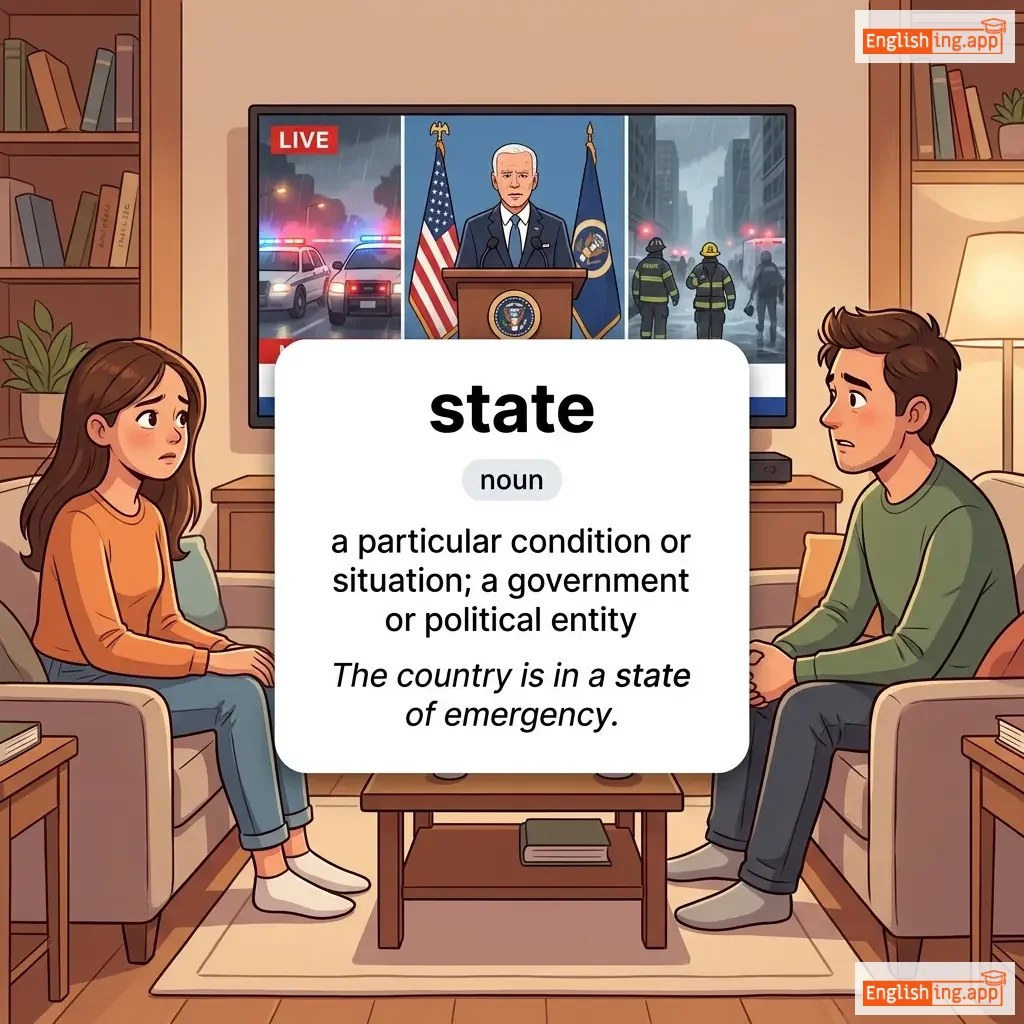
state definition card — visual illustration of the meaning
noun
/steɪt/
состояние (sostoyanie)

a particular condition or situation; a government or political entity

"The country is in a state of emergency."

"Страна находится в состоянии чрезвычайного положения." (Strana nakhoditsya v sostoyanii chrezvychaynogo polozheniya.)
noun
/ˈsteɪtkraft/
государственное управление (gosudarstvennoe upravlenie)

The art of governing and managing state affairs effectively.

"The leader was praised for his exceptional statecraft in handling international relations."

"Лидер был похвален за свое исключительное государственное управление в ведении международных отношений." (Lider byl pokhvalen za svoe iskluchitel'noe gosudarstvennoe upravlenie v vvedenii mezhdunarodnykh otnosheniy.)
adjective
/ˈsteɪtli/
величественный и достойный (velichestvennyy i dostoynyy)

Having a dignified, majestic, and impressive appearance or manner.

"The stately mansion stood at the end of the long driveway."

"Величественный особняк стоял в конце длинной подъездной дороги." (Velichestvennyy osobodnyak stoyal v kontse dlinnoi pod'yezdnoi dorogi.)
noun
/ˈsteɪtmənt/
заявление (zayavlenie)

a clear expression of something in speech or writing

"She made a statement about the company's new policies."
"Она сделала заявление о новых политике компании." (Ona sdelala zayavlenie o novykh politike kompanii.)
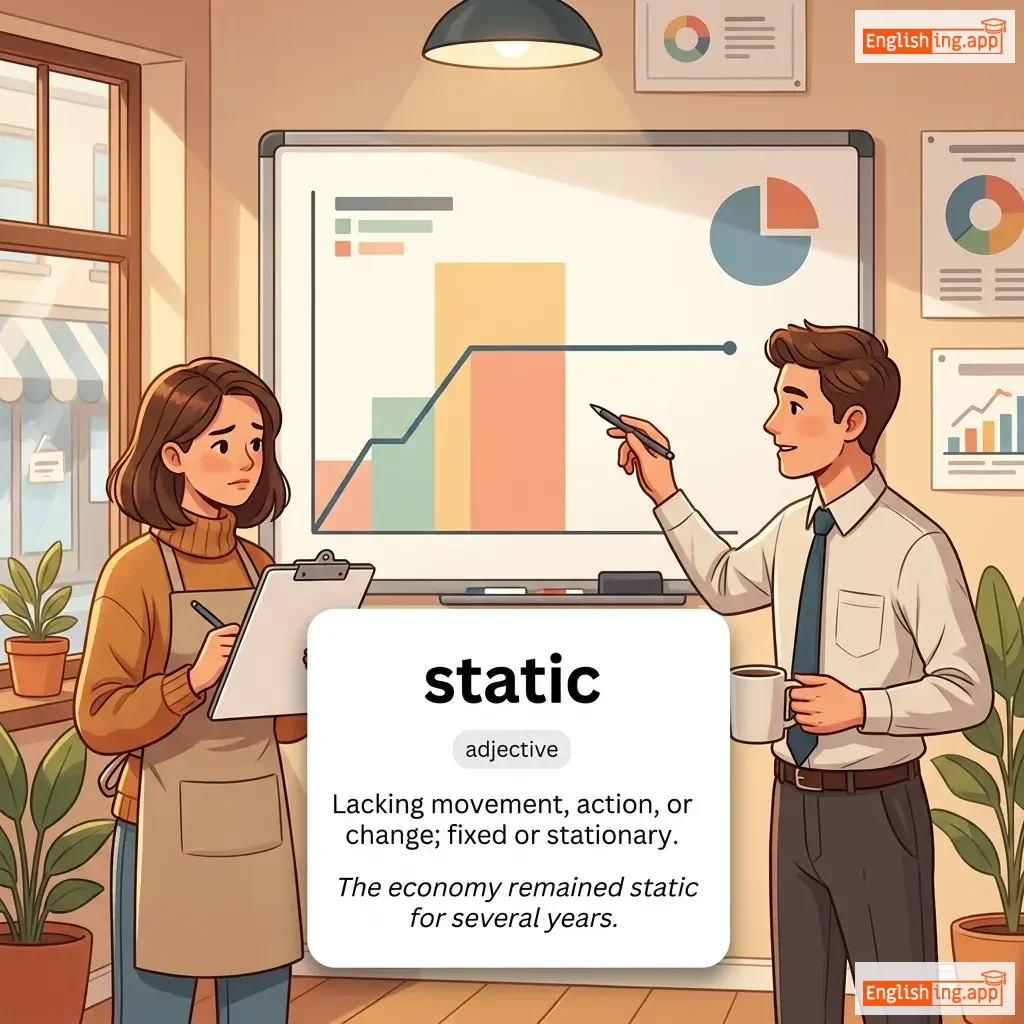
static definition card — visual illustration of the meaning
adjective
/ˈstætɪk/
статичный (statichny)

Lacking movement, action, or change; fixed or stationary.

"The economy remained static for several years."

"Экономика оставалась статичной на протяжении нескольких лет." (Ekonomika ostavalas statichnoy na protyazhenii neskol'kikh let.)
noun
/ˈstætɪks/
статика (statika)

The branch of mechanics dealing with bodies at rest and forces in equilibrium.

"She is studying statics as part of her engineering course."
"Она изучает статику в рамках своего инженерного курса." (Ona izuchayet statiku v ramkakh svoego inzhenernogo kursa.)
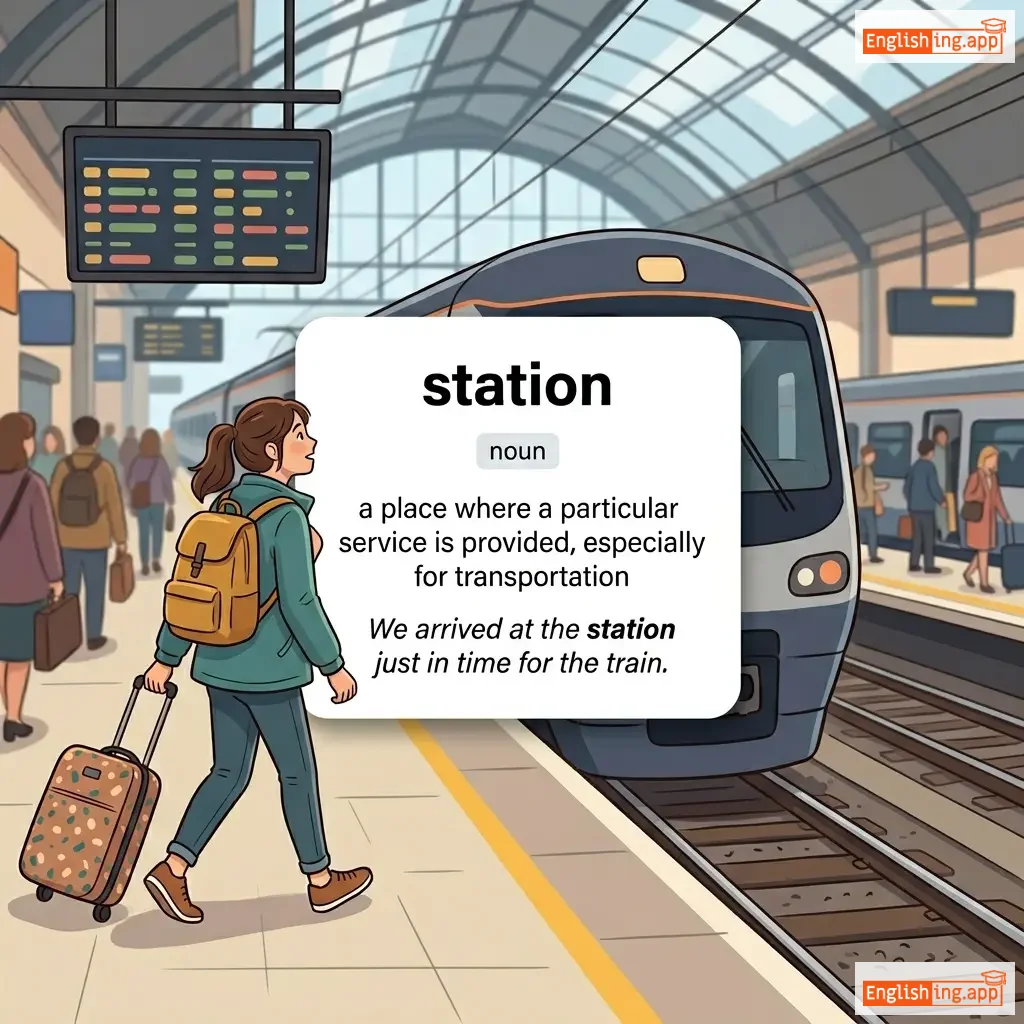
station definition card — visual illustration of the meaning
noun
/ˈsteɪʃən/
станция (steyshun)

a place where a particular service is provided, especially for transportation

"We arrived at the station just in time for the train."

"Мы прибыли на станцию как раз к поезду." (My pribyli na stantsiyu kak raz k poezdu.)
adjective
/ˈsteɪʃəˌneri/
неподвижный (nepodvizhnyy)

Not moving or not intended to be moved.

"The car remained stationary at the red light."

"Машина осталась неподвижной на красном свете." (Mashina ostalas' nepodvizhnoy na krasnom svete.)
noun
/ˈsteɪ.ʃən.ər/
канцтовары (kantsovary)

a person who sells paper, pens, pencils, and other office supplies

"The stationer recommended the best pens for writing exams."

"Канцеляр рекомендовал лучшие ручки для экзаменов." (Kantselyar rekomendoval luchshiye ruchki dlya ekzamenov.)
adjective
/stəˈtɪstɪkəl/
статистический (statisticheskiy)

relating to the use or analysis of numerical data

"The report provides statistical data about population growth."

"Отчет предоставляет статистические данные о росте населения." (Otchet predostavlyaet statisticheskie dannye o roste naseleniya.)
noun
/ˌstætɪˈstɪʃən/
статистик (statistik)

A person who specializes in collecting, analyzing, and interpreting numerical data.

"The statistician presented the survey results with great clarity."

"Статистик представил результаты опроса с большой ясностью." (Statistik predstavил rezul'taty opros s bol'shoy yasnost'yu.)
noun
/stəˈtɪstɪks/
статистика (statistika)

the practice or science of collecting and analyzing numerical data

"The statistics showed an increase in the number of users last year."

"Статистика показала увеличение числа пользователей в прошлом году." (Statistika pokazala uvelichenie chisla pol'zovateley v proshlom godu.)
noun
/ˈstætʃuː/
статуя (statya)

a carved or cast figure of a person or animal, especially one that is life-size or larger

"They built a statue of the national hero in the city square."

"Они построили статую национального героя на городской площади." (Oni postroili statuyu natsional'nogo geroya na gorodskoj ploshchadi.)
adjective
/ˌstætʃuˈɛsk/
статуиобразный (statuioobrazny)

Having the grace, beauty, or dignity of a statue; tall and attractively proportioned.

"She had a statuesque figure that turned heads wherever she went."

"У нее была статуиобразная фигура, которая привлекала взгляды, куда бы она ни шла." (U nee byla statuiobraznaya figura, kotoraya privlekala vzglyady, kuda by ona ni shla.)
noun
/ˌstætʃuˈɛt/
маленькая статуэтка (malenkaya statuëtka)

A small statue, usually decorative or artistic.

"The artist won a gold statuette for his work."

"Художник выиграл золотую маленькую статуэтку за свою работу." (Khudozhnik viigral zolotuyu malen'kuyu statuëtku za svoyu rabotu.)
noun
/ˈstætʃər/
рост, статус (rost, status)

A person's natural height or their reputation and importance.

"Her intellectual stature made her a respected figure in academia."

"Ее интеллектуальный статус сделал ее уважаемой фигурой в академических кругах." (Eyo intellektualnyi status sdelal yeye uvazhaemoi figuroi v akademicheskikh krugakh.)
noun
/ˈsteɪtəs/
статус (status)

the social or professional position or condition of someone or something

"His social status improved after the promotion."

"Его социальный статус улучшился после повышения." (Yego sotsial'nyy status uluchshilsya posle povysheniya.)
noun
/ˈsteɪtəs kwoʊ/
статус кво (status kvo)

The existing state of affairs, especially regarding social or political issues.

"The government decided to maintain the status quo until further review."

"Правительство решило сохранить статус кво до дальнейшего рассмотрения." (Pravitel'stvo reshilo sokhranit' status kvo do dal'neyshego rassmotreniya.)
noun
/stɛntʃ/
вонь (von')

A very strong and unpleasant smell.

"The stench of garbage filled the alley."

"Запах мусора заполнил переулок." (Zapakh musora zapolnil pereulok.)
adjective
/ˈstɪki/
липкий (lipkiy)

having the quality of adhering or clinging; difficult to remove or deal with

"The candy is too sticky to eat with your hands."

"Конфета слишком липкая, чтобы есть руками." (Konfeta slishkom lipkaya, chtoby yest' rukami.)
noun
/ˈstɪklər/
строгий человек по отношению к правилам (strogiy chelovek po otnosheniyu k pravilam)

a person who insists on a certain quality or standard of behavior

"He is a stickler for punctuality and never tolerates delays."

"Он очень строг к пунктуальности и не терпит задержек." (On ochen' strog k punktual'nosti i ne terpit zaderzhek.)
verb
/stɪk/
приклеивать (prikleivat)

to adhere or attach something to a surface

"The glue will stick to the paper."

"Клей приклеится к бумаге." (Kley prikleyitsya k bumage.)
abbreviation (noun/pronoun)
/ˈsʌmθɪŋ/
что-то (chto-to)

abbreviation for 'something'

"Can you give me sth. to write with?"

"Можешь ли ты дать мне что-то для письма?" (Mozhesh' li ty dat' mne chto-to dlya pis'ma?)
noun
/ˈstiː.vəˌdɔːr/
докер (doker)

A person employed to load and unload cargo from ships.

"The stevedores worked tirelessly to unload the cargo before dawn."

"Докеры работали без усталости, чтобы разгрузить груз до рассвета." (Dokery rabotali bez ustalosti, chtoby razgruzit' gruz do rassveta.)
adjective
/ˈstɜːr.tər.əs/
громкое храпанье (gromkoe khrapanye)

Characterized by heavy snoring or breathing.

"The patient’s stertorous breathing alarmed the nurses."

"Стерторозное дыхание пациента напугало медсестер." (Stertoroznoe dykhanie patsiyenta napugalo medsestr.)
adjective/noun
/stɜːrn/
строгий / задняя часть корабля (stroghiy / zadnyaya chast' korablya)

Serious and strict in manner or attitude; the back part of a ship.

"The teacher gave the students a stern warning before the exam."

"Учитель дал ученикам строгое предупреждение перед экзаменом." (Uchitel' dal uchenikam strogoe preduprezhdenie pered ekzamenom.)
noun/adjective
/ˈstɜː.lɪŋ/
британская валюта / отличного качества (britanskaya valyuta / otlichnogo kachestva)

British money, especially pounds; of excellent quality.

"She was praised for her sterling work on the project."

"Ее похвалили за отличную работу над проектом." (Eyo pokhvalili za otlichnuyu rabotu nad proyektom.)
adjective
/ˈstɛr.aɪl/
стерильный (steril'nyy)

Free from bacteria or other living microorganisms; incapable of producing offspring.

"The surgeon worked in a sterile environment to avoid infection."
"Хирург работал в стерильной обстановке, чтобы избежать инфекции." (Khirurg rabotal v steril'noy obstanovke, chtoby izbezhat' infektsii.)
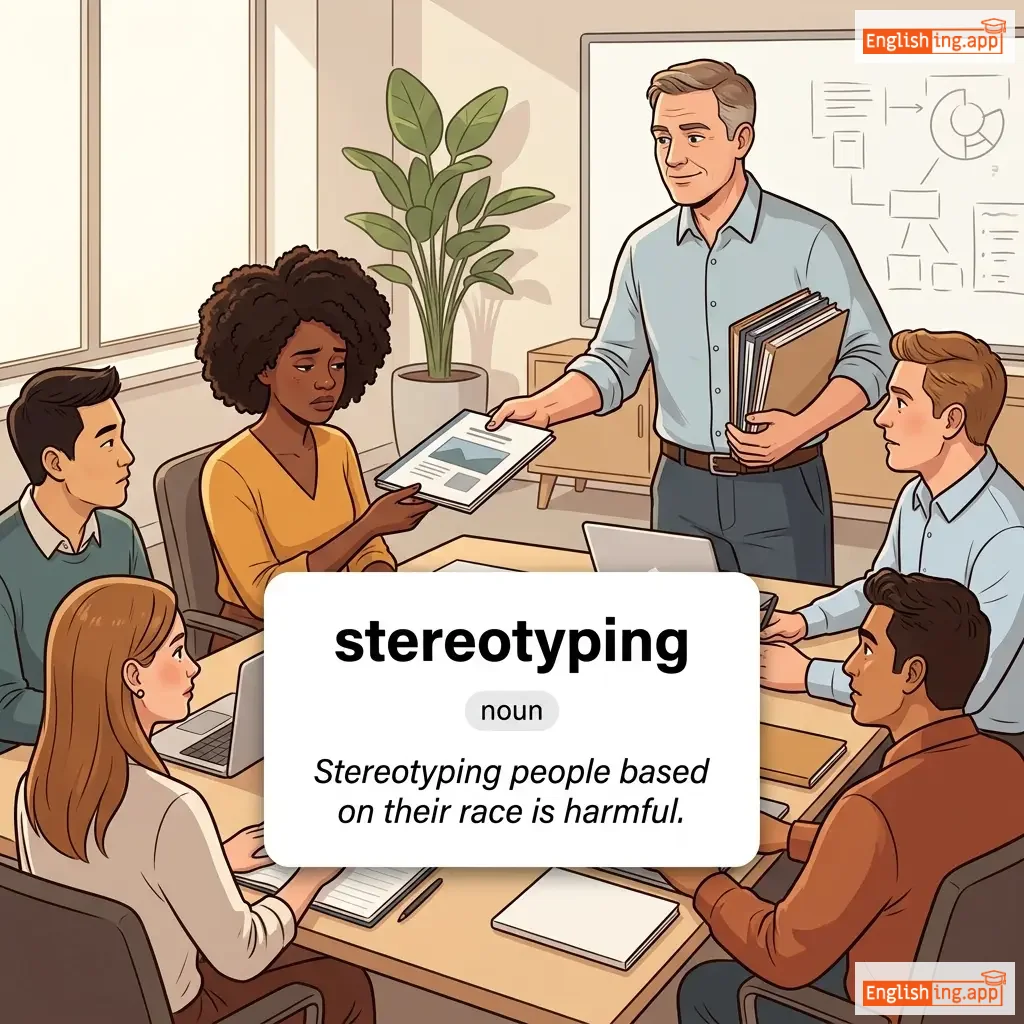
stereotyping definition card — visual illustration of the meaning
noun
/ˈstɛə.rɪ.əʊˌtaɪ.pɪŋ/
стереотипирование (stereotipirovanie)

A widely held but fixed and oversimplified image or idea of a particular type of person or thing.

"Stereotyping people based on their race is harmful."

"Стереотипирование людей на основе их расы вредно." (Stereotipirovanie lyudey na osnove ikh rasy vreden.)
adjective
/ˈstɛriəˌtaɪpt/
стереотипный (stereotipnyi)

Conforming to a fixed or oversimplified idea of what someone or something is like.

"His stereotyped jokes failed to impress the audience."

"Его стереотипные шутки не впечатлили публику." (Ego stereotipnye shutki ne vpechatlili publiku.)
noun
/ˈstɛriəˌtaɪp/
стереотип (stereotip)

A widely held but oversimplified and fixed idea of a particular type of person or thing.

"It is a stereotype that all gamers are antisocial."

"Это стереотип, что все геймеры асоциальны." (Eto stereotip, chto vse geimery asotsial'ny.)
steps definition card — visual illustration of the meaning
noun
/stɛps/
шаги (shagi)

A measure or action, especially one of a series taken in order to deal with or achieve a particular thing.

"Taking small steps reduces overwhelm."

"Маленькие шаги снижают перегрузку." (Malen'kiye shagi snizhayut peregruzku.)
noun
/stɛp/
степь (step')

A large flat area of unforested grassland, especially in southeastern Europe or Siberia.

"The nomads traveled across the vast steppe with their herds."

"Кочевники путешествовали по обширной степи со своими стадами." (Kochevniki puteshestvovali po obshirnoy stepi so svoimi stadami.)
👣

step

noun
/stɛp/

a movement made by lifting one foot and putting it down in a new position

"She took a step towards the door."
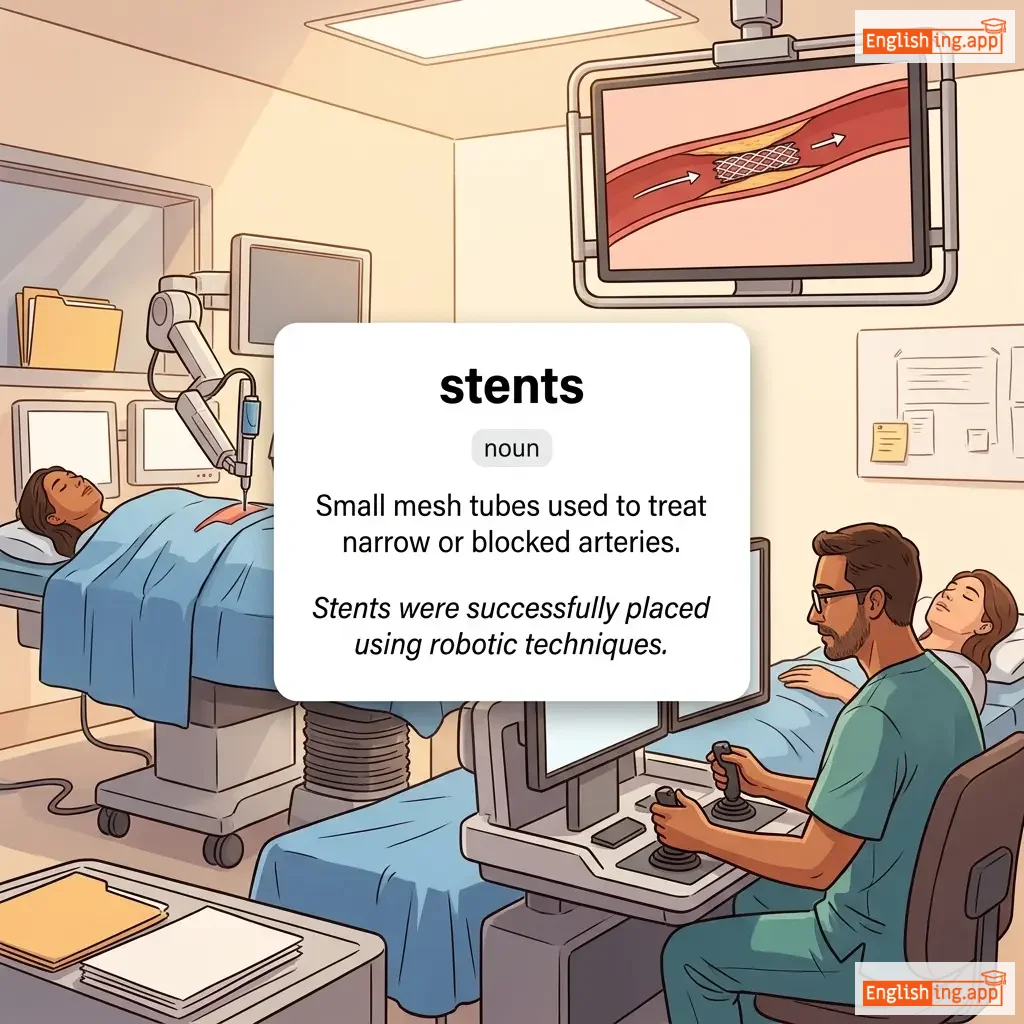
stents definition card — visual illustration of the meaning
noun
/stents/
стенты (stenty)

Small mesh tubes used to treat narrow or blocked arteries.

"Stents were successfully placed using robotic techniques."
"Стенты были успешно установлены с использованием роботизированных технологий." (Stenty byli uspeshno ustanovleny s ispol'zovaniem robotizirovannykh tekhnologiy.)
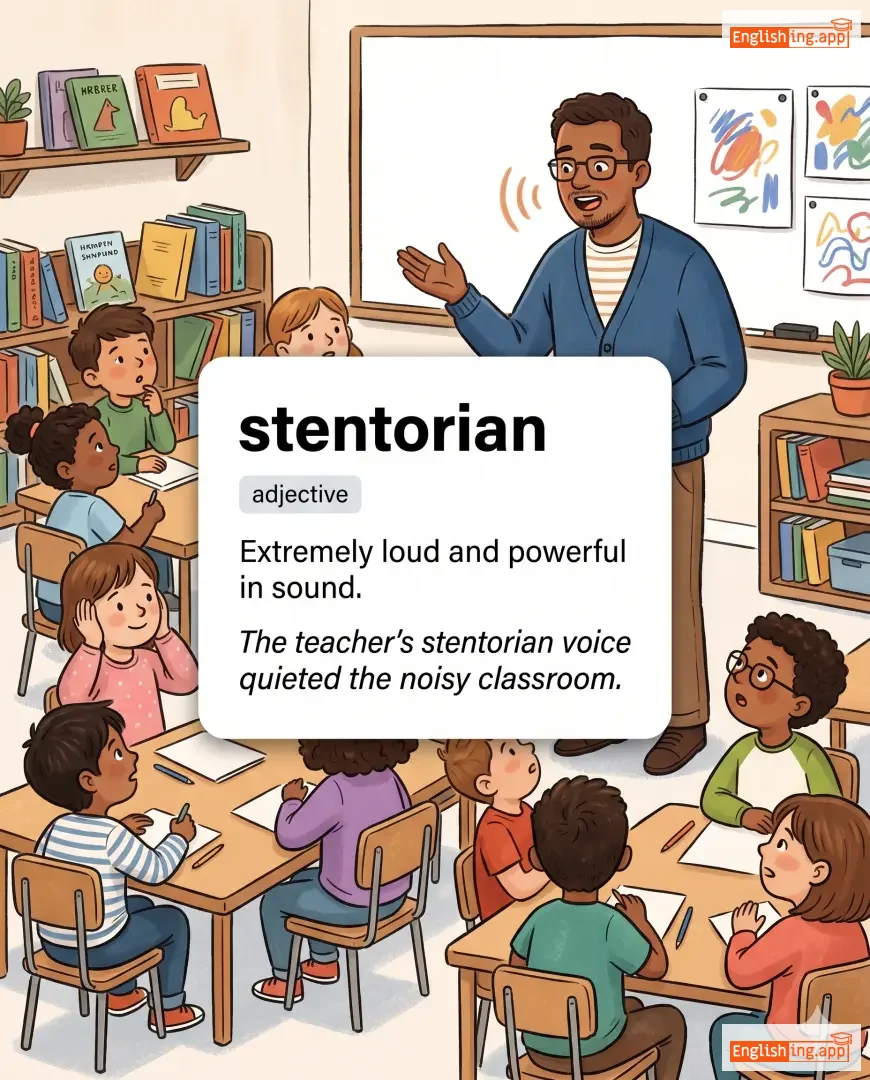
stentorian definition card — visual illustration of the meaning
adjective
/stɛnˈtɔːriən/
оглушающий (oglushayushchiy)

Extremely loud and powerful in sound.

"The teacher’s stentorian voice quieted the noisy classroom."

"Стенториозный голос учителя заглушил шумный класс." (Stentorizhnyy golos uchitelya zaglushil shumnyy klass.)
noun
/ˈstɛnsəl/
трафарет (trafaret)

A thin sheet of material with a design cut out, used to produce the design on the surface below by applying paint or ink through the cut-out holes.

"The artist used a stencil to paint identical stars on the wall."

"Художник использовал трафарет, чтобы нарисовать одинаковые звезды на стене." (Khudozhnik ispol'zoval trafaret, chtoby narisovat' odinakovyye zvezdy na stene.)
adverb
/ˈstɛdɪli/
постоянно (postoyanno)

in a regular and continuous way; without stopping or changing

"The company's profits have been increasing steadily."

"Прибыль компании постоянно растет." (Pribyl' kompanii postoyanno rastet.)
noun
/stɛlθ/
скрытность, тихое движение (skrytnoct', tikhoye dviženiye)

The act of moving, doing, or achieving something quietly and secretly.

"The cat moved with stealth towards its prey."

"Кошка двигалась скрытно к своей добыче." (Koška dvižilas' skrytno k svoej dobyče.)
steal definition card — visual illustration of the meaning
🕵️‍♂️

steal (stil)

verb
/stiːl/
красть (krast)

to take something without permission or right

"He tried to steal my wallet while I wasn't looking."

"Он пытался украсть мой кошелек, когда я не смотрел." (On pytalsya ukrast' moy koshelek, kogda ya ne smotrel.)
noun
/steɪk/
стейк (steyk)

a thick slice of meat, typically beef, cooked by grilling or frying

"He ordered a grilled steak with vegetables."

"Он заказал стейк на гриле с овощами." (On zakazal steyk na grile s ovoshchami.)
adjective
/ˈstɛdi/
стабильный (stabil'nyj)

firm, stable, and not likely to change suddenly

"He kept his hand steady while painting the picture."

"Он держал свою руку стабильно, рисуя картину." (On derzhal svoyu ruku stabil'no, risuya kartinu.)
stay definition card — visual illustration of the meaning
verb
/steɪ/
остаться (ostatsya)

to remain in a particular place or state

"We decided to stay at home during the storm."

"Мы решили остаться дома во время шторма." (My reshili ostatsya doma vo vremya shtorma.)
adjective
/ˈstætʃətɔːri/
обязательный по закону (obyazatel'nyy po zakonu)

Required, permitted, or enacted by law.

"The company must comply with all statutory regulations."

"Компания должна соблюдать все обязательные по закону правила." (Kompaniya dolzhna soblyudat' vse obyazatel'nye po zakonu pravila.)
adjective
/stɔːntʃ/
стойкий, верный (stoykiy, vernyy)

Loyal, committed, and firm in support.

"She is a staunch supporter of environmental protection."

"Она стойкий сторонник защиты окружающей среды." (Ona stoykiy storonnik zashchity okruzhayushchey sredy.)
noun, verb
/stiːm/
пар (par)

the vapor into which water is converted when heated; to emit or treat with steam

"The kettle was steaming on the stove."

"Чайник парил на плите." (Chaynik paril na plite.)
adjective
/ˈstɛdfæst/
непоколебимый, верный (nepokolebimyj, vernyj)

Firm, loyal, and unwavering in purpose or support.

"He remained steadfast in his determination to succeed."

"Он оставался непоколебимым в своем стремлении к успеху." (On ostavalsya nepokolebimyj v svoem stremlenii k uspekhu.)