वोकैबुलरीज

इंग्लिश वोकैबुलरी डिस्कवर, लर्न और मास्टर करें

noun
/stɑːˈveɪ.ʃən/
भूखमरी (bhookhmari)

suffering or death caused by lack of food; extreme hunger

"Many people died of starvation during the famine."

"बहुत से लोग अकाल के दौरान भूख से मर गए।" (bahut se log akaal ke dauran bhukh se mar gaye.)
verb
/stɑːv/
भूख से मरना (bhukh se marna)

to suffer or die from lack of food

"He was left to starve in the desert."

"उसे रेगिस्तान में भूख से मरने के लिए छोड़ दिया गया था।" (Use registan mein bhukh se marne ke liye chhod diya gaya tha.)
noun
/ˈsteɪsɪs/ or /ˈstæsɪs/
स्थिरता (sthirata)

A state of inactivity or equilibrium; a situation where nothing changes.

"The negotiations reached a state of stasis with no progress made."

"सहमति की स्थिति में कोई प्रगति नहीं हुई।" (Sahamati ki sthiti mein koi pragati nahi hui.)
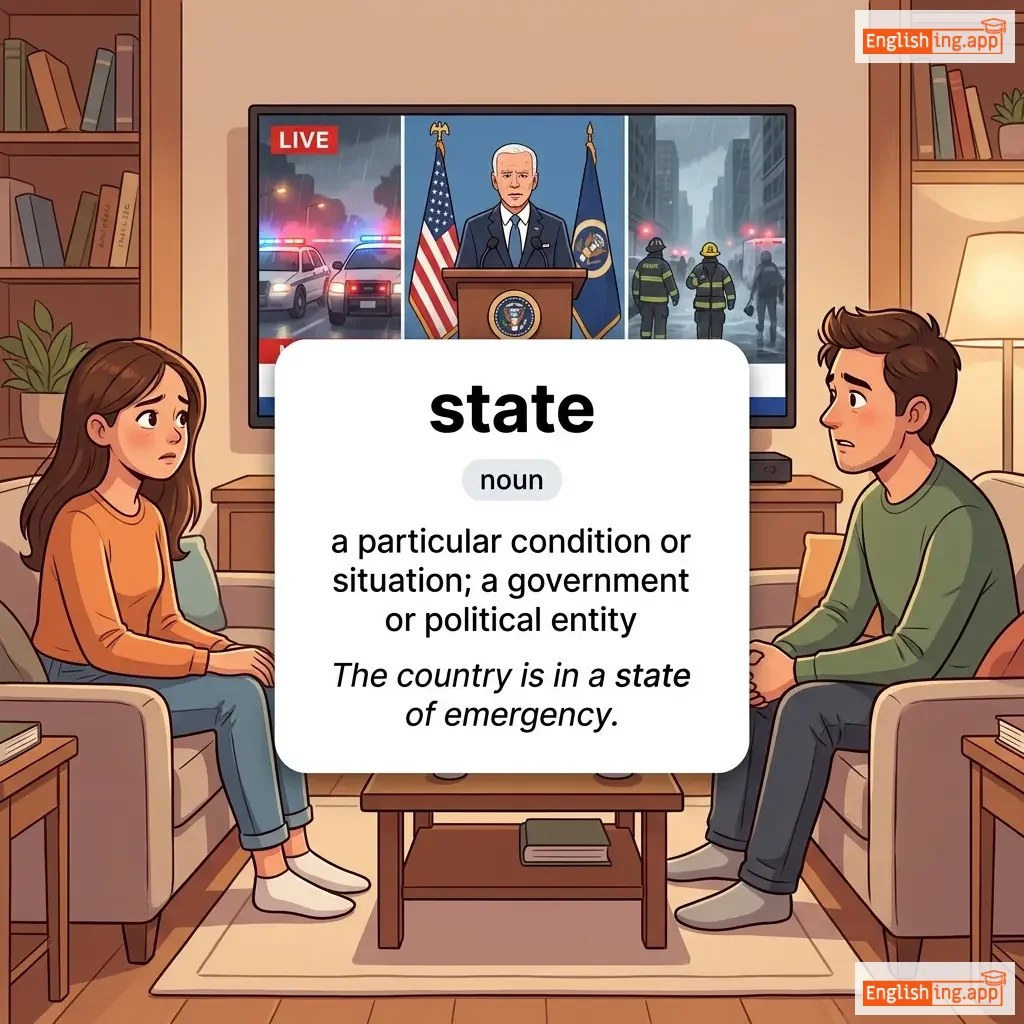
state definition card — visual illustration of the meaning
noun
/steɪt/
राज्य (rājya)

a particular condition or situation; a government or political entity

"The country is in a state of emergency."

"देश आपातकाल की स्थिति में है।" (Deś āpātakāl kī sthiti meṁ hai.)
noun
/ˈsteɪtkraft/
राज्यशास्त्र (rajyashastra)

The art of governing and managing state affairs effectively.

"The leader was praised for his exceptional statecraft in handling international relations."

"नेता को अंतरराष्ट्रीय संबंधों को संभालने में अपनी असाधारण राज्यशास्त्र के लिए सराहा गया।" (Neta ko antarraashtreey sambandhon ko sambhalne mein apni asaadharan rajyashastra ke liye saraha gaya.)
adjective
/ˈsteɪtli/
गंभीर और भव्य (gambhir aur bhavya)

Having a dignified, majestic, and impressive appearance or manner.

"The stately mansion stood at the end of the long driveway."

"गंभीर हवेली लंबी ड्राइववे के अंत में खड़ी थी।" (Gambhir haveli lambi driveway ke ant mein khadi thi.)
noun
/ˈsteɪtmənt/
बयान (bayan)

a clear expression of something in speech or writing

"She made a statement about the company's new policies."

"उसने कंपनी की नई नीतियों के बारे में एक बयान दिया।" (Usne company ki nai neetiyon ke baare mein ek bayan diya.)
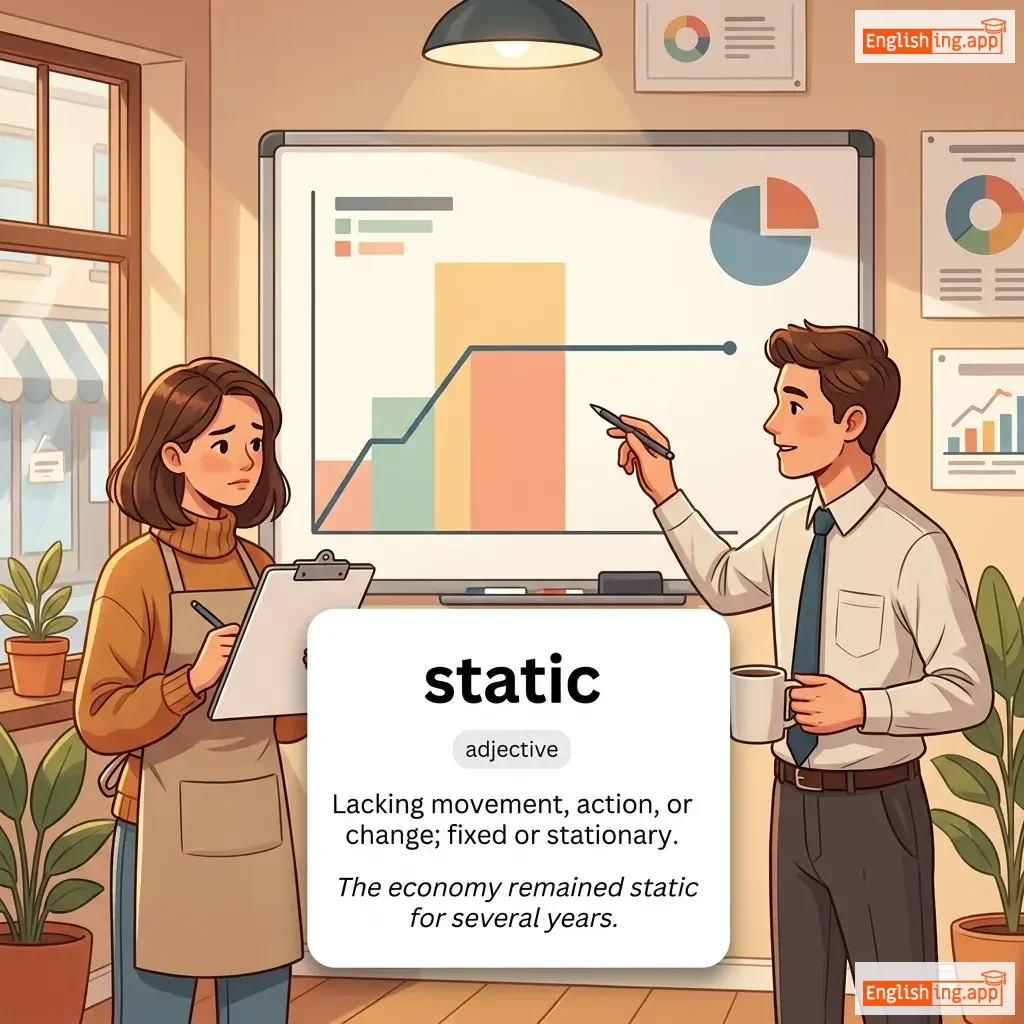
static definition card — visual illustration of the meaning
adjective
/ˈstætɪk/
स्थिर (sthir)

Lacking movement, action, or change; fixed or stationary.

"The economy remained static for several years."

"अर्थव्यवस्था कई वर्षों तक स्थिर रही।" (Arthvyavastha kai varsho tak sthir rahi.)
noun
/ˈstætɪks/
स्थैतिकी (sthaetikī)

The branch of mechanics dealing with bodies at rest and forces in equilibrium.

"She is studying statics as part of her engineering course."

"वह अपने इंजीनियरिंग पाठ्यक्रम का हिस्सा के रूप में स्थैतिकी पढ़ रही है।" (vah apne injiniyaring pathyakram kā hissa ke rūp mein sthāetiki paṛh rahī hai.)
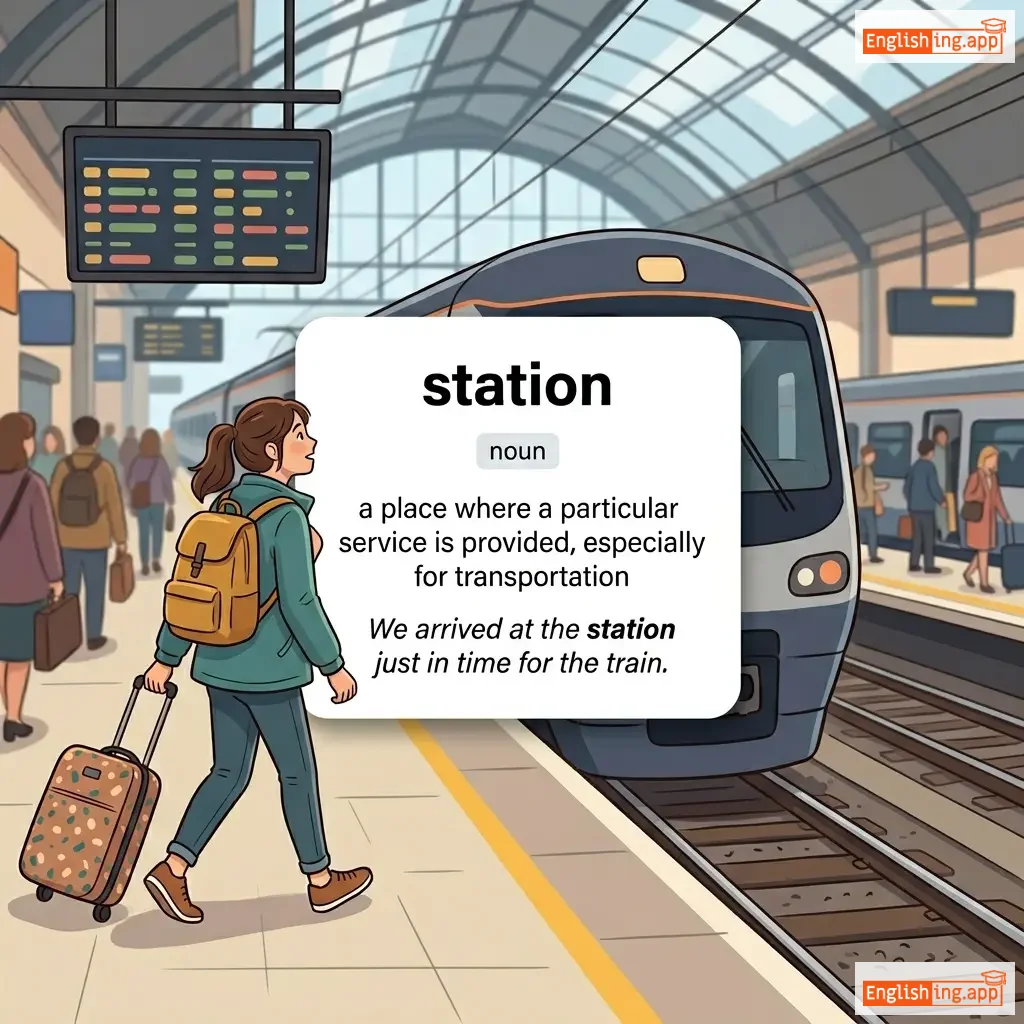
station definition card — visual illustration of the meaning
noun
/ˈsteɪʃən/
स्टेशन (station)

a place where a particular service is provided, especially for transportation

"We arrived at the station just in time for the train."

"हम ट्रेन के लिए स्टेशन ठीक समय पर पहुँच गए।" (ham train ke liye steshan theek samay par pahunch gaye)
adjective
/ˈsteɪʃəˌneri/
स्थिर (sthir)

Not moving or not intended to be moved.

"The car remained stationary at the red light."

"कार लाल बत्ती पर स्थिर रही।" (kaar laal batti par sthir rahi.)
noun
/ˈsteɪ.ʃən.ər/
स्टेशनरी विक्रेता (stationery vikreta)

a person who sells paper, pens, pencils, and other office supplies

"The stationer recommended the best pens for writing exams."

"द स्टेशनर ने परीक्षा के लिए सबसे अच्छे पेन की सिफारिश की।" (d stationer ne pariksha ke liye sabse achhe pen ki sifaarish ki)
adjective
/stəˈtɪstɪkəl/
सांख्यिकीय (sankhyikiya)

relating to the use or analysis of numerical data

"The report provides statistical data about population growth."

"रिपोर्ट में जनसंख्या वृद्धि के बारे में सांख्यिकीय डेटा प्रदान किया गया है।" (Report mein jansankhya vruddhi ke baare mein sankhyikiya data pradan kiya gaya hai.)
noun
/ˌstætɪˈstɪʃən/
सांख्यिकी विशेषज्ञ (sankhyiki visheshagya)

A person who specializes in collecting, analyzing, and interpreting numerical data.

"The statistician presented the survey results with great clarity."

"सांख्यिकी विशेषज्ञ ने सर्वेक्षण के परिणामों को स्पष्टता से प्रस्तुत किया।" (Sankhyiki visheshagya ne survey ke parinaamon ko spashtata se prastut kiya.)
noun
/stəˈtɪstɪks/
सांख्यिकी (sāṅkhyikī)

the practice or science of collecting and analyzing numerical data

"The statistics showed an increase in the number of users last year."

"आखिरी साल में उपयोगकर्ताओं की संख्या में वृद्धि को दिखाने वाले आँकड़े।" (Ākhirī sāl meṁ upayogkartāoṁ kī sankhyā meṁ vr̥ddhi ko dikhāne vāle āṅkṛe.)
noun
/ˈstætʃuː/
प्रतिमा (pratima)

a carved or cast figure of a person or animal, especially one that is life-size or larger

"They built a statue of the national hero in the city square."

"उन्होंने शहर के चौक में राष्ट्रीय नायक की एक प्रतिमा बनाई।" (Unhone shahar ke chauk mein rashtriya nayak ki ek pratima banayi.)
adjective
/ˌstætʃuˈɛsk/
प्रतिमा जैसी (pratima jaisi)

Having the grace, beauty, or dignity of a statue; tall and attractively proportioned.

"She had a statuesque figure that turned heads wherever she went."

"उसका प्रतिमा जैसी शरीर था जो हर जगह सिर घुमा देता था।" (uska pratima jaisi sharir tha jo har jagah sir ghuma deta tha.)
noun
/ˌstætʃuˈɛt/
छोटी मूर्ति (chhoti moorti)

A small statue, usually decorative or artistic.

"The artist won a gold statuette for his work."

"कलाकार ने अपने काम के लिए एक स्वर्णिम छोटी मूर्ति जीती।" (kalakaar ne apne kaam ke liye ek swarnim chhoti moorti jeeti.)
noun
/ˈstætʃər/
प्रतिष्ठा, कद (pratishtha, kad)

A person's natural height or their reputation and importance.

"Her intellectual stature made her a respected figure in academia."

"उनकी बौद्धिक प्रतिष्ठा ने उन्हें शिक्षा जगत में सम्मानित व्यक्तित्व बनाया।" (unki bauddhik pratishtha ne unhe shiksha jagat mein sammannit vyaktitv banaya.)
noun
/ˈsteɪtəs/
स्थिति (stithi)

the social or professional position or condition of someone or something

"His social status improved after the promotion."

"उसकी सामाजिक स्थिति पदोन्नति के बाद सुधरी।" (Uski samajik sthiti padonnati ke baad sudhri.)
noun
/ˈsteɪtəs kwoʊ/
स्थिति quo (stithi quo)

The existing state of affairs, especially regarding social or political issues.

"The government decided to maintain the status quo until further review."

"सरकार ने आगे की समीक्षा तक स्थिति quo बनाए रखने का निर्णय लिया।" (sarkar ne aage ki samiksha tak sthiti quo banaye rakhne ka nirnay liya.)
noun
/stɛntʃ/
दुर्गंध (durgandh)

A very strong and unpleasant smell.

"The stench of garbage filled the alley."

"कचरे की दुर्गंध ने गली को भर दिया।" (kachre ki durgandh ne gali ko bhar diya.)
adjective
/ˈstɪki/
चिपचिपा (chipchipa)

having the quality of adhering or clinging; difficult to remove or deal with

"The candy is too sticky to eat with your hands."

"कैंडी खाने के लिए बहुत चिपचिपा है।" (kendi khane ke liye bahut chipchipa hai.)
noun
/ˈstɪklər/
नियमों के प्रति कठोर व्यक्ति (niyamon ke prati kathor vyakti)

a person who insists on a certain quality or standard of behavior

"He is a stickler for punctuality and never tolerates delays."

"वह समय की पाबंदी के लिए बहुत सख्त हैं और देरी को बर्दाश्त नहीं करते।" (vah samay ki pabandi ke liye bahut sakht hain aur deri ko bardaasht nahin karte)
verb
/stɪk/
चिपकना (chipakna)

to adhere or attach something to a surface

"The glue will stick to the paper."

"गोंद कागज पर चिपक जाएगा।" (Gond kagaz par chipak jayega.)
abbreviation (noun/pronoun)
/ˈsʌmθɪŋ/
कुछ (kuch)

abbreviation for 'something'

"Can you give me sth. to write with?"

"क्या आप मुझे लिखने के लिए कुछ दे सकते हैं?" (Kya aap mujhe likhne ke liye kuch de sakte hain?)
noun
/ˈstiː.vəˌdɔːr/
स्टिवेडोर (stivedor)

A person employed to load and unload cargo from ships.

"The stevedores worked tirelessly to unload the cargo before dawn."

"स्टीवेडोरों ने सूर्योदय से पहले माल उतारने के लिए बिना थके काम किया।" (Stevedoroon ne suryoday se pehle maal utarne ke liye bina thake kaam kiya.)
adjective
/ˈstɜːr.tər.əs/
गहरी नाक की आवाज़ (gehri nak ki awaaz)

Characterized by heavy snoring or breathing.

"The patient’s stertorous breathing alarmed the nurses."

"रोगी की गहरी नाक की आवाज़ ने नर्सों को घबराया।" (Rogi ki gehri nak ki awaaz ne narson ko ghabraya.)
adjective/noun
/stɜːrn/
कठोर / जहाज का पिछला भाग (kathor / jahaz ka pichla bhag)

Serious and strict in manner or attitude; the back part of a ship.

"The teacher gave the students a stern warning before the exam."

"शिक्षक ने परीक्षा से पहले छात्रों को एक कड़ी चेतावनी दी।" (Shikshak ne pariksha se pehle chhatron ko ek kathor chetavani di.)
noun/adjective
/ˈstɜː.lɪŋ/
ब्रिटिश मुद्रा / उत्कृष्ट (british mudra / utkṛṣṭ)

British money, especially pounds; of excellent quality.

"She was praised for her sterling work on the project."

"उसकी परियोजना पर उत्कृष्ट काम के लिए उसे सराहा गया।" (Uski pariyojana par utkṛṣṭ kām ke liye use sarāhā gayā.)
adjective
/ˈstɛr.aɪl/
निर्विष (nirvish)

Free from bacteria or other living microorganisms; incapable of producing offspring.

"The surgeon worked in a sterile environment to avoid infection."

"सर्जन ने संक्रमण से बचने के लिए एक निर्बिष वातावरण में काम किया।" (Sarjan ne sankraman se bachne ke liye ek nirvish vatavaran mein kaam kiya.)
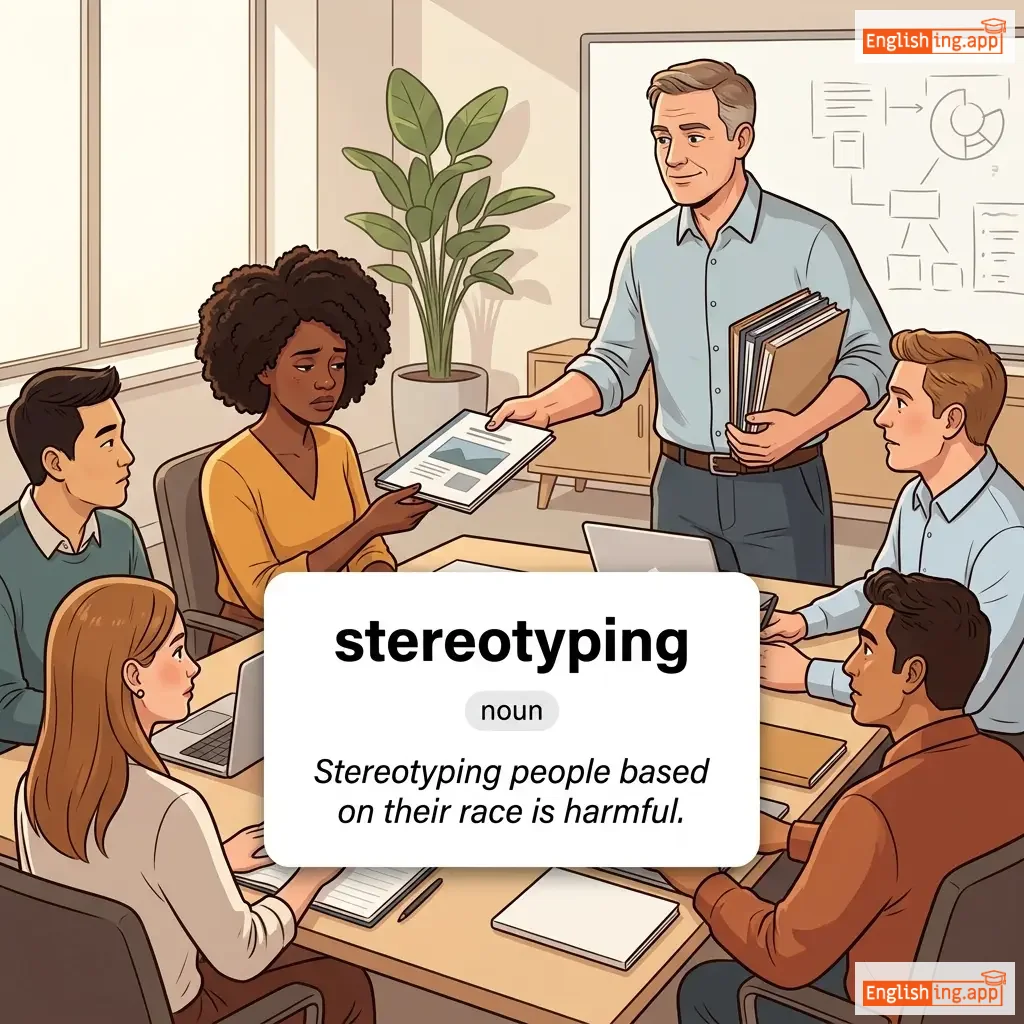
stereotyping definition card — visual illustration of the meaning
noun
/ˈstɛə.rɪ.əʊˌtaɪ.pɪŋ/
सामान्यीकरण (samanikaran)

A widely held but fixed and oversimplified image or idea of a particular type of person or thing.

"Stereotyping people based on their race is harmful."

"लोगों को उनके नस्ल के आधार पर सामान्यीकरण करना हानिकारक है।" (Logon ko unke nasl ke aadhar par samanikaran karna hanikarak hai.)
adjective
/ˈstɛriəˌtaɪpt/
स्थिर धारणाओं वाला (sthir dharanayon wala)

Conforming to a fixed or oversimplified idea of what someone or something is like.

"His stereotyped jokes failed to impress the audience."

"उसके स्थिर धारणाओं वाले चुटकुले दर्शकों को प्रभावित करने में विफल रहे।" (Uske sthir dharanayon wale chutkule darshakon ko prabhavit karne mein vefal rahe.)
noun
/ˈstɛriəˌtaɪp/
रूढ़िवादी विचार (rudhivaadi vichar)

A widely held but oversimplified and fixed idea of a particular type of person or thing.

"It is a stereotype that all gamers are antisocial."

"यह एक रूढ़िवादी विचार है कि सभी गेमर्स असामाजिक होते हैं।" (Yeh ek rudhivaadi vichar hai ki sabhi gamers asamaajik hote hain.)
steps definition card — visual illustration of the meaning
noun
/stɛps/
कदम (kadam)

A measure or action, especially one of a series taken in order to deal with or achieve a particular thing.

"Taking small steps reduces overwhelm."

"छोटे कदम उठाने से अत्यधिक दबाव कम होता है।" (Chhote kadam uthane se atyadhik dabav kam hota hai.)
noun
/stɛp/
सवाना (savanaa)

A large flat area of unforested grassland, especially in southeastern Europe or Siberia.

"The nomads traveled across the vast steppe with their herds."

"यात्री अपने झुंड के साथ विशाल सवाना के पार यात्रा कर रहे थे।" (Yaatri apne jhund ke saath vishaal savanaa ke paar yatra kar rahe the.)
noun
/stɛp/
कदम (kadam)

a movement made by lifting one foot and putting it down in a new position

"She took a step towards the door."

"उसने दरवाज़े की ओर एक कदम बढ़ाया।" (Usne darvaaze ki or ek kadam badhaaya.)
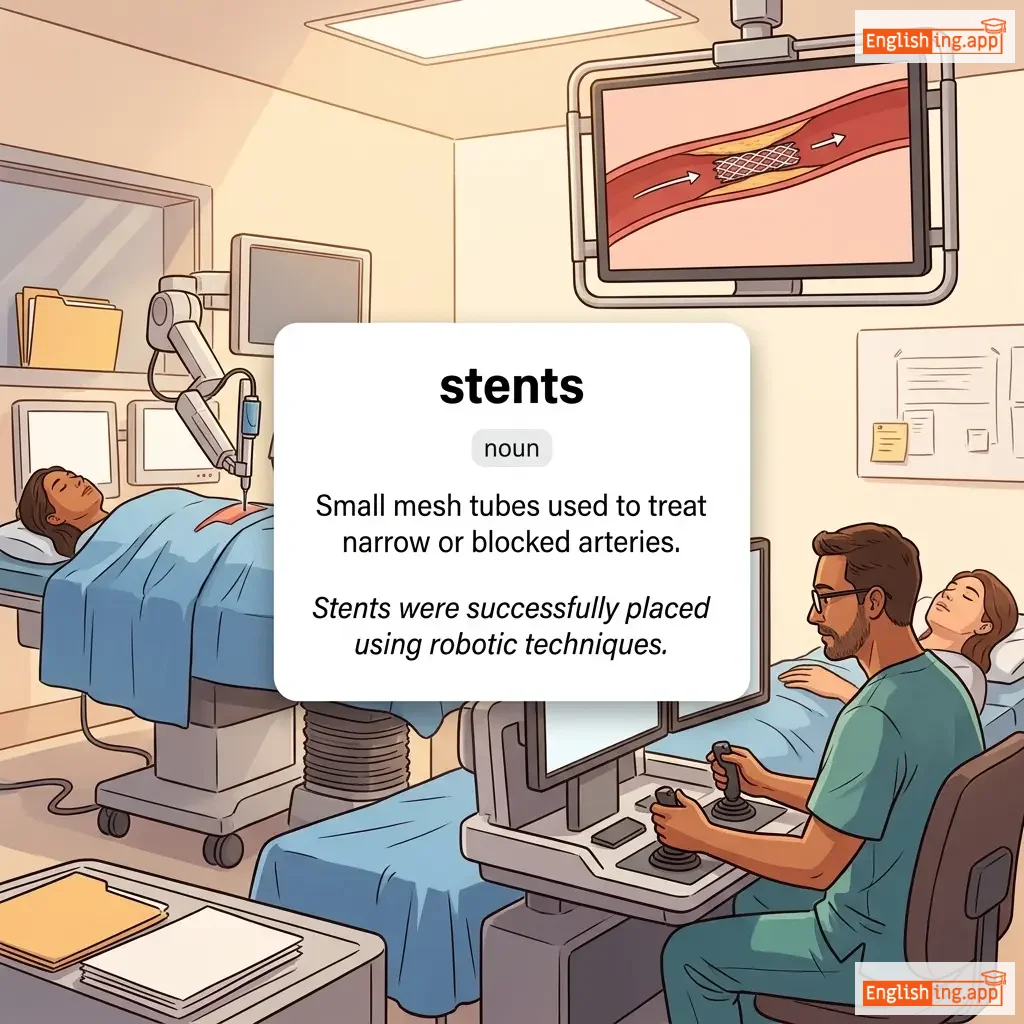
stents definition card — visual illustration of the meaning
noun
/stents/
स्टेंट्स (stents)

Small mesh tubes used to treat narrow or blocked arteries.

"Stents were successfully placed using robotic techniques."

"स्टेंट्स को रोबोटिक तकनीकों का उपयोग करके सफलतापूर्वक रखा गया।" (stents ko robotic takneekon ka upyog karke safaltapoorvak rakha gaya.)
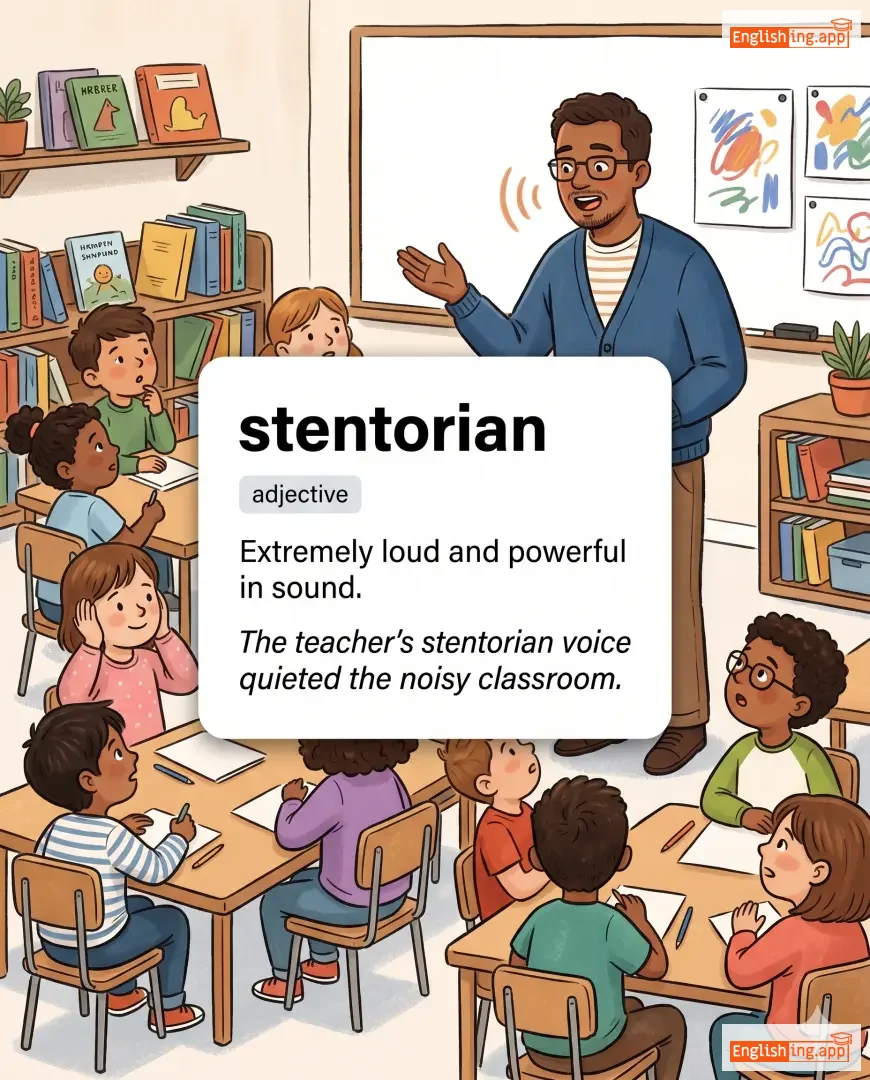
stentorian definition card — visual illustration of the meaning
adjective
/stɛnˈtɔːriən/
गर्जनपूर्ण (garjanpoorn)

Extremely loud and powerful in sound.

"The teacher’s stentorian voice quieted the noisy classroom."

"शिक्षक की गर्जनपूर्ण आवाज़ ने शोर-शराबे वाले कमरे को शांत कर दिया।" (Shikshak ki garjanpoorn awaaz ne shor-sharabe wale kamre ko shaant kar diya.)
noun
/ˈstɛnsəl/
स्टेंसिल (stencil)

A thin sheet of material with a design cut out, used to produce the design on the surface below by applying paint or ink through the cut-out holes.

"The artist used a stencil to paint identical stars on the wall."

"कलाकार ने दीवार पर समान सितारे बनाने के लिए एक स्टेंसिल का उपयोग किया।" (Kalakar ne deewaar par samaan sitaare banane ke liye ek stencil ka upyog kiya.)
adverb
/ˈstɛdɪli/
नियमित रूप से (niyamit roop se)

in a regular and continuous way; without stopping or changing

"The company's profits have been increasing steadily."

"कंपनी का मुनाफा लगातार बढ़ रहा है।" (Company ka munafa lagatar badh raha hai.)
noun
/stɛlθ/
गोपनीयता, चुपचाप करना (gopniyata, chupchaap karna)

The act of moving, doing, or achieving something quietly and secretly.

"The cat moved with stealth towards its prey."

"बिल्ली शिकार की ओर चुपचाप बढ़ी।" (Billi shikar ki aur chupchaap badhi.)
steal definition card — visual illustration of the meaning
🕵️‍♂️

steal (स्टील)

verb
/stiːl/
चोरी करना (chori karna)

to take something without permission or right

"He tried to steal my wallet while I wasn't looking."

"उसने मेरा बटुआ चोरी करने की कोशिश की जब मैं नहीं देख रहा था।" (Usne mera batua chori karne ki koshish ki jab main nahi dekh raha tha.)
noun
/steɪk/
स्टीक (steak)

a thick slice of meat, typically beef, cooked by grilling or frying

"He ordered a grilled steak with vegetables."

"उसने सब्जियों के साथ ग्रिल किया हुआ स्टीक ऑर्डर किया था।" (Usne sabziyon ke saath grill kiya hua steak order kiya tha.)
adjective
/ˈstɛdi/
स्थिर (sthir)

firm, stable, and not likely to change suddenly

"He kept his hand steady while painting the picture."

"उसने चित्र बनाते समय अपने हाथ को स्थिर रखा।" (Usne chitra banate samay apne haath ko sthir rakha.)
stay definition card — visual illustration of the meaning
verb
/steɪ/
रहना (rahna)

to remain in a particular place or state

"We decided to stay at home during the storm."

"हमने तूफान के दौरान घर पर रहने का फैसला किया।" (Hamne toofan ke dauran ghar par rehne ka faisla kiya.)
adjective
/ˈstætʃətɔːri/
कानूनी (kanuni)

Required, permitted, or enacted by law.

"The company must comply with all statutory regulations."

"कंपनी को सभी कानूनी नियमों का पालन करना चाहिए।" (Kampani ko sabhi kanuni niyamon ka paalan karna chahiye.)
adjective
/stɔːntʃ/
स्थिर, वफादार (sthir, vafaadaar)

Loyal, committed, and firm in support.

"She is a staunch supporter of environmental protection."

"वह पर्यावरण संरक्षण की एक मजबूत समर्थक है।" (Woh paryavaran sanrakshan ki ek majboot samarthak hai.)
noun, verb
/stiːm/
वाष्प (vashp)

the vapor into which water is converted when heated; to emit or treat with steam

"The kettle was steaming on the stove."

"चाय का केटल स्टोव पर स्टीमिंग कर रहा था।" (Chai ka kettle stove par steaming kar raha tha.)
adjective
/ˈstɛdfæst/
अडिग, दृढ़ (adig, dridh)

Firm, loyal, and unwavering in purpose or support.

"He remained steadfast in his determination to succeed."

"वह सफलता पाने के अपने संकल्प में अडिग रहा।" (Vah safalta pane ke apne sankalp mein adig raha.)