词汇表

英语词汇词典 | 单词含义、定义和示例

noun
/stɑːˈveɪ.ʃən/
饥饿 (jī'è)

suffering or death caused by lack of food; extreme hunger

"Many people died of starvation during the famine."

"许多人在饥荒期间死于饥饿。" (xǔduō rén zài jīhuāng qījiān sǐ yú jī'è.)
verb
/stɑːv/
饿死 (èsǐ)

to suffer or die from lack of food

"He was left to starve in the desert."

"他被丢在沙漠里饿死。" (Tā bèi diū zài shāmò lǐ è sǐ.)
noun
/ˈsteɪsɪs/ or /ˈstæsɪs/
停滯 (tíngzhì)

A state of inactivity or equilibrium; a situation where nothing changes.

"The negotiations reached a state of stasis with no progress made."
"谈判达到了停滞状态,没有取得进展。" (Tánpàn dádàole tíngzhì zhuàngtài, méiyǒu qǔdé jìnzhǎn.)
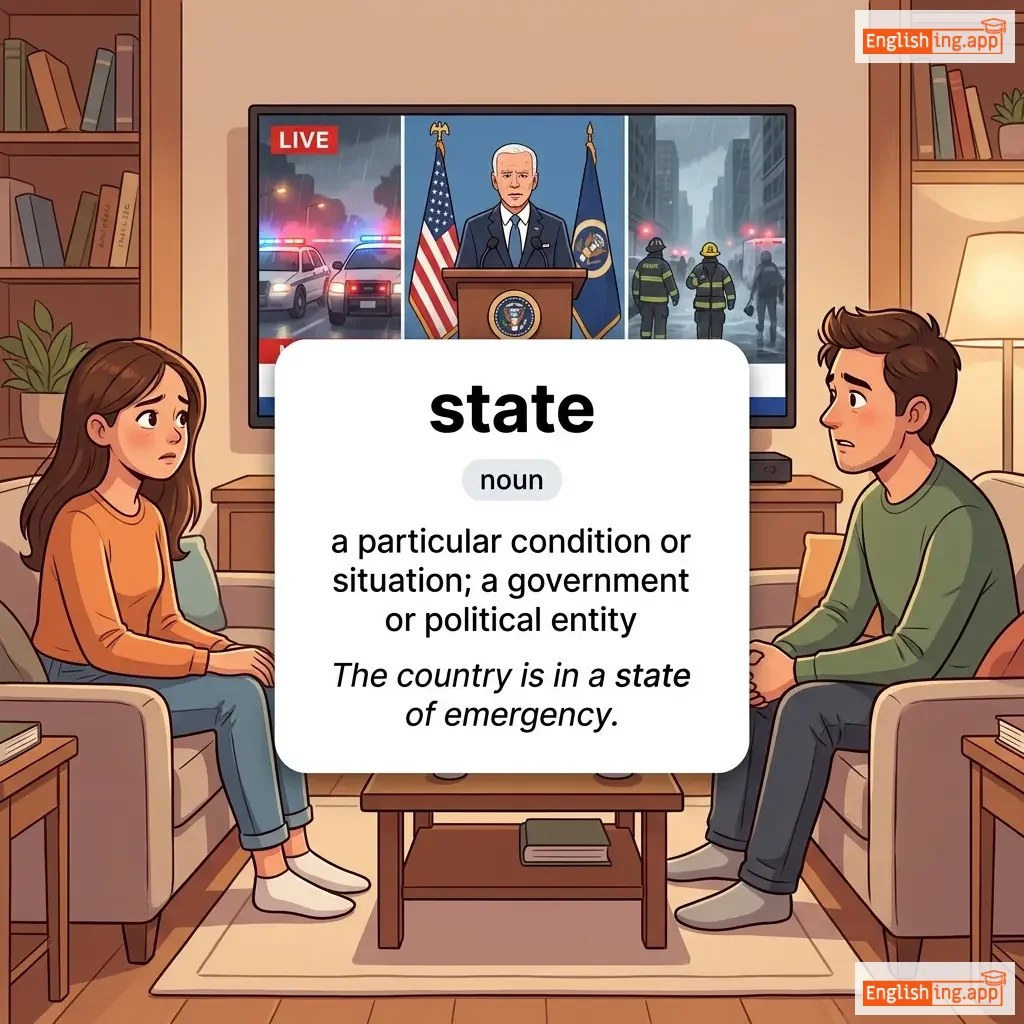
state definition card — visual illustration of the meaning
noun
/steɪt/
状态 (zhuangtai)

a particular condition or situation; a government or political entity

"The country is in a state of emergency."

"这个国家处于紧急状态。" (Zhege guojia chuyu jinji zhuangtai.)
noun
/ˈsteɪtkraft/
治国艺术 (zhìguó yìshù)

The art of governing and managing state affairs effectively.

"The leader was praised for his exceptional statecraft in handling international relations."

"领导因其在处理国际关系方面的卓越治国艺术而受到赞扬。" (Lǐngdǎo yīn qí zài chǔlǐ guójì guānxì fāngmiàn de zhuóyuè zhìguó yìshù ér shòudào zànyáng.)
adjective
/ˈsteɪtli/
庄严和宏伟 (zhuangyan he hongwei)

Having a dignified, majestic, and impressive appearance or manner.

"The stately mansion stood at the end of the long driveway."

"那座庄严的豪宅位于长长的车道尽头。" (Na zuo zhuangyan de haozhai weiyu changchang de chedao jintou.)
noun
/ˈsteɪtmənt/
声明 (shengming)

a clear expression of something in speech or writing

"She made a statement about the company's new policies."
"她就公司新的政策发表了声明。" (Ta jiu gongsi xinde zhengce fabiao le shengming.)
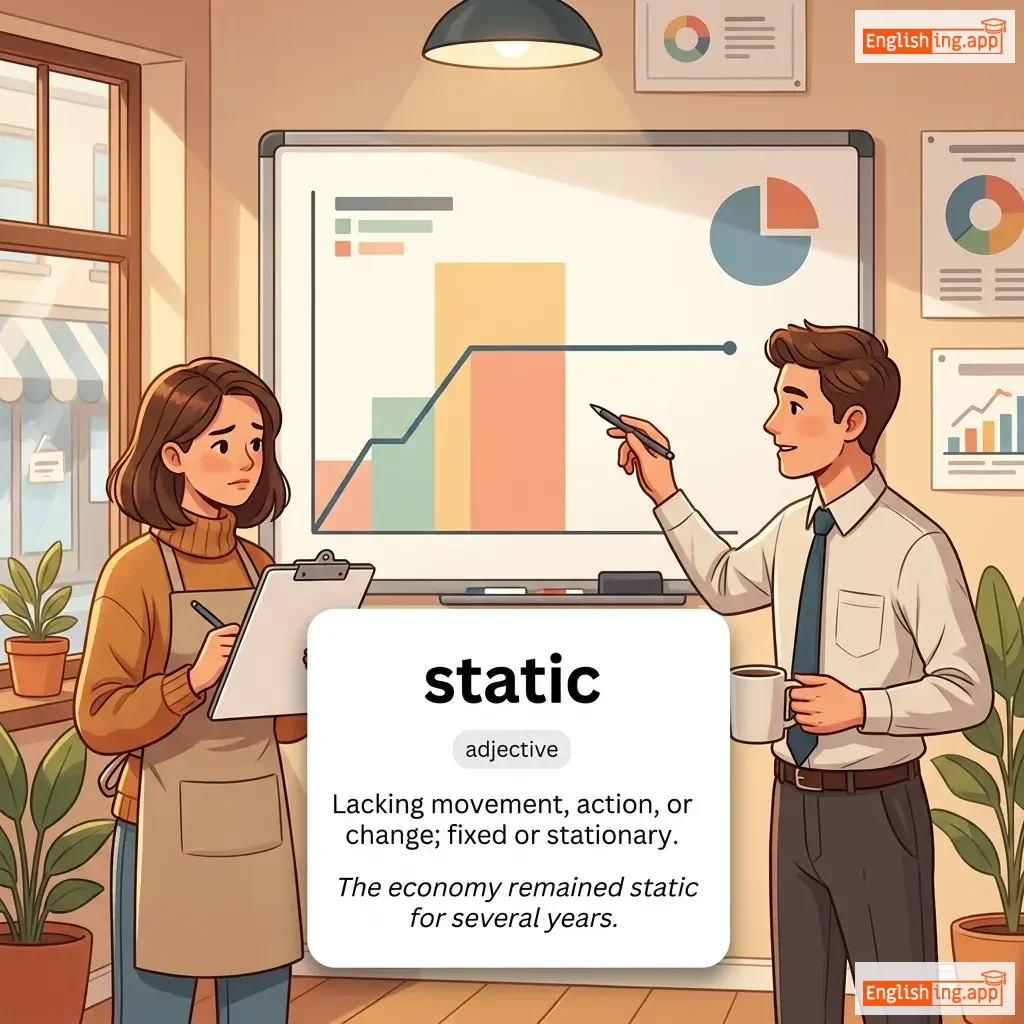
static definition card — visual illustration of the meaning
adjective
/ˈstætɪk/
静态 (jingtai)

Lacking movement, action, or change; fixed or stationary.

"The economy remained static for several years."

"经济在几年内保持静态。" (Jingji zai jinnian nei baochi jingtai.)
noun
/ˈstætɪks/
静力学 (jìnglìxué)

The branch of mechanics dealing with bodies at rest and forces in equilibrium.

"She is studying statics as part of her engineering course."

"她正在学习静力学,作为她工程课程的一部分。" (Tā zhèngzài xuéxí jìnglìxué, zuòwéi tā gōngchéng kèchéng de yībùfèn.)
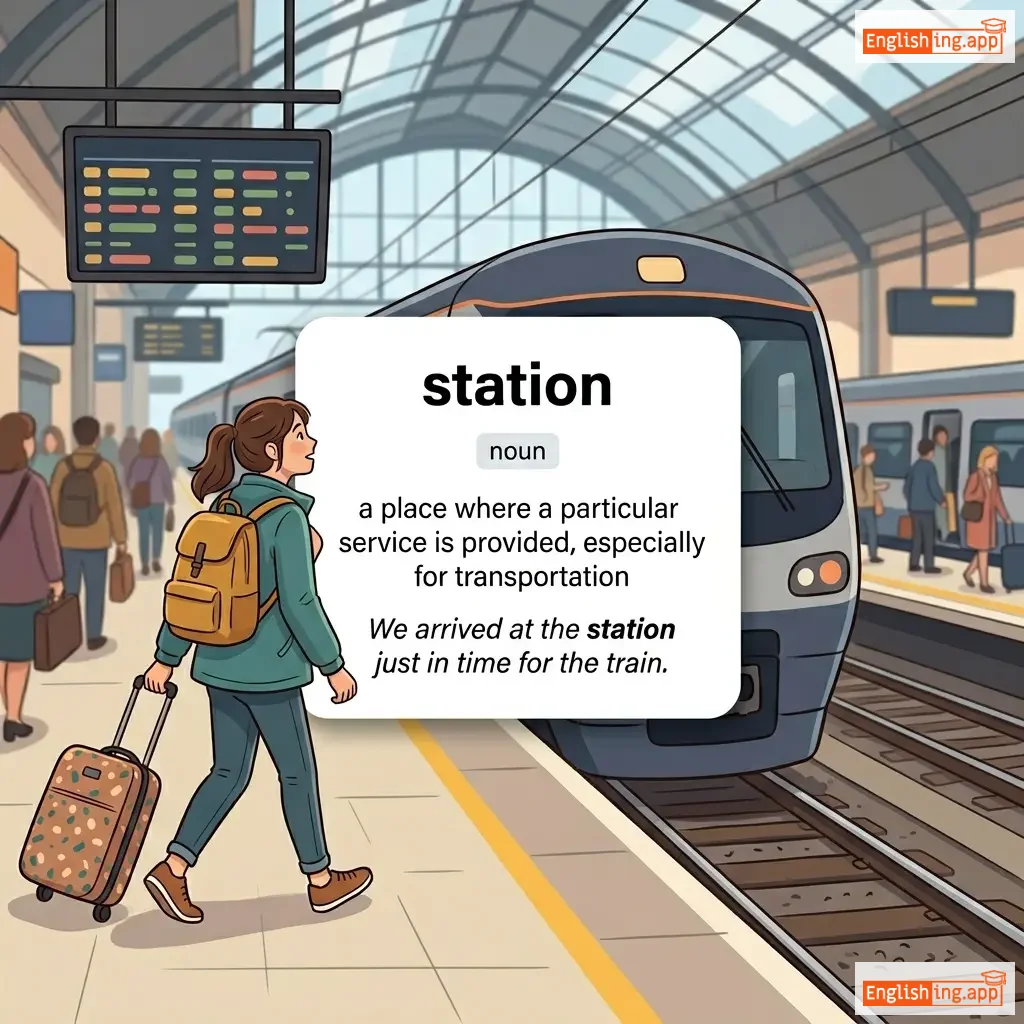
station definition card — visual illustration of the meaning
noun
/ˈsteɪʃən/

a place where a particular service is provided, especially for transportation

"We arrived at the station just in time for the train."

adjective
/ˈsteɪʃəˌneri/
静止 (jingzhi)

Not moving or not intended to be moved.

"The car remained stationary at the red light."

"汽车在红灯前保持静止。" (Qiche zai hongdeng qian baochi jingzhi.)
noun
/ˈsteɪ.ʃən.ər/
文具商 (wenjushang)

a person who sells paper, pens, pencils, and other office supplies

"The stationer recommended the best pens for writing exams."

"文具商推荐了最适合考试的钢笔。" (Wénjù shāng tuījiànle zuì shìhé kǎoshì de gāngbǐ.)
adjective
/stəˈtɪstɪkəl/
统计的 (tongji de)

relating to the use or analysis of numerical data

"The report provides statistical data about population growth."

"报告提供了有关人口增长的统计数据。" (Baogao tigong le youguan renkou zengzhang de tongji shuju.)
noun
/ˌstætɪˈstɪʃən/
统计学家 (tǒng jì xué jiā)

A person who specializes in collecting, analyzing, and interpreting numerical data.

"The statistician presented the survey results with great clarity."

"统计学家以极大的清晰度展示了调查结果。" (Tǒng jì xué jiā yǐ jí dà de qīng xī dù zhǎn shì le diào chá jié guǒ.)
noun
/stəˈtɪstɪks/
统计 (tǒngjì)

the practice or science of collecting and analyzing numerical data

"The statistics showed an increase in the number of users last year."

"统计数据显示,去年用户数量有所增加。" (Tǒngjì xiǎnshì, qùnián yònghù shùliàng yǒu suǒ zēngjiā.)
noun
/ˈstætʃuː/
雕像 (diaoxiang)

a carved or cast figure of a person or animal, especially one that is life-size or larger

"They built a statue of the national hero in the city square."

"他们在城市广场上建造了国家英雄的雕像。" (Tamen zai chengshi guangchang shang jianzhao le guojia yingxiong de diaoxiang.)
adjective
/ˌstætʃuˈɛsk/
雕像般的 (diaoxiang ban de)

Having the grace, beauty, or dignity of a statue; tall and attractively proportioned.

"She had a statuesque figure that turned heads wherever she went."

"她有着雕像般的身形,每走到哪里都会吸引视线。" (Ta youzhe diaoxiang ban de shenxing, mei zou dao nali dou hui xiyin shixian.)
noun
/ˌstætʃuˈɛt/
小雕像 (xiao diaoxiang)

A small statue, usually decorative or artistic.

"The artist won a gold statuette for his work."

"艺术家因其作品获得了一座金色小雕像。" (Yishujia yin qi zuopin huodele yi zuo jinse xiao diaoxiang.)
noun
/ˈstætʃər/
声望,身材 (shengwang, shencai)

A person's natural height or their reputation and importance.

"Her intellectual stature made her a respected figure in academia."

"她的智力声望使她在学术界成为了受人尊敬的人物。" (tade zhili shengwang shi ta zai xueshujie chengweile shouren zun jing de renwu.)
noun
/ˈsteɪtəs/
状态 (zhuangtai)

the social or professional position or condition of someone or something

"His social status improved after the promotion."

"他的社会地位在晋升后得到了改善。" (Tā de shèhuì dìwèi zài jìnshēng hòu dédàole gǎishàn.)
noun
/ˈsteɪtəs kwoʊ/
现状 (xiàn zhuàng)

The existing state of affairs, especially regarding social or political issues.

"The government decided to maintain the status quo until further review."

"政府决定在进一步审查之前保持现状。" (zhèngfǔ juédìng zài jìnyībù shěnchá zhīqián bǎochí xiànzhuàng.)
noun
/stɛntʃ/
臭味 (chòuwèi)

A very strong and unpleasant smell.

"The stench of garbage filled the alley."

"垃圾的臭味充满了小巷。" (Lājī de chòuwèi chōngmǎnle xiǎo xiàng.)
adjective
/ˈstɪki/
粘的 (zhan de)

having the quality of adhering or clinging; difficult to remove or deal with

"The candy is too sticky to eat with your hands."

"糖果太粘了,不能用手吃。" (tang guo tai nian le, bu neng yong shou chi.)
noun
/ˈstɪklər/
对规则严格的人 (duì guīzé yángé de rén)

a person who insists on a certain quality or standard of behavior

"He is a stickler for punctuality and never tolerates delays."

"他非常严格地要求准时,从不容忍迟到。" (Tā fēicháng yángé de yāoqiú zhǔnshí, cóng bù róngrěn chídào.)
verb
/stɪk/
粘贴 (zhantui)

to adhere or attach something to a surface

"The glue will stick to the paper."

"胶水会粘在纸上。" (Jiaoshui hui zhan zai zhi shang.)
abbreviation (noun/pronoun)
/ˈsʌmθɪŋ/
某事 (mǒu shì)

abbreviation for 'something'

"Can you give me sth. to write with?"

"你能给我写字的东西吗?" (Nǐ néng gěi wǒ xiě zì de dōngxi ma?)
noun
/ˈstiː.vəˌdɔːr/
装卸工 (zhuangxiegong)

A person employed to load and unload cargo from ships.

"The stevedores worked tirelessly to unload the cargo before dawn."

"装卸工们不知疲倦地工作,直到黎明前卸下货物。" (Zhuangxiegong men buzhi pijuande gongzuo, zhidao liming qian xiexia huowu.)
adjective
/ˈstɜːr.tər.əs/
重呼吸声 (zhong huxi sheng)

Characterized by heavy snoring or breathing.

"The patient’s stertorous breathing alarmed the nurses."

"病人的重呼吸声让护士们感到惊讶。" (Bingren de zhong huxi sheng rang hushi men gandao jingya.)
adjective/noun
/stɜːrn/
严厉的 / 船的后部 (yanli de / chuan de houbu)

Serious and strict in manner or attitude; the back part of a ship.

"The teacher gave the students a stern warning before the exam."

"老师在考试前给学生们一个严厉的警告。" (Lǎoshī zài kǎoshì qián gěi xuéshēngmen yīgè yánlì de jǐnggào.)
noun/adjective
/ˈstɜː.lɪŋ/
英国货币 / 优秀 (yīngguó huòbì / yōuxiù)

British money, especially pounds; of excellent quality.

"She was praised for her sterling work on the project."

"她因在项目中的出色工作而受到表扬。" (Tā yīn zài xiàngmù zhōng de chū sè gōngzuò ér shòudào biǎoyáng.)
adjective
/ˈstɛr.aɪl/
无菌 (wújùn)

Free from bacteria or other living microorganisms; incapable of producing offspring.

"The surgeon worked in a sterile environment to avoid infection."
"外科医生在无菌环境下工作以避免感染。" (wàikē yīshēng zài wújùn huánjìng xià gōngzuò yǐ bìmiǎn gǎnrǎn.)
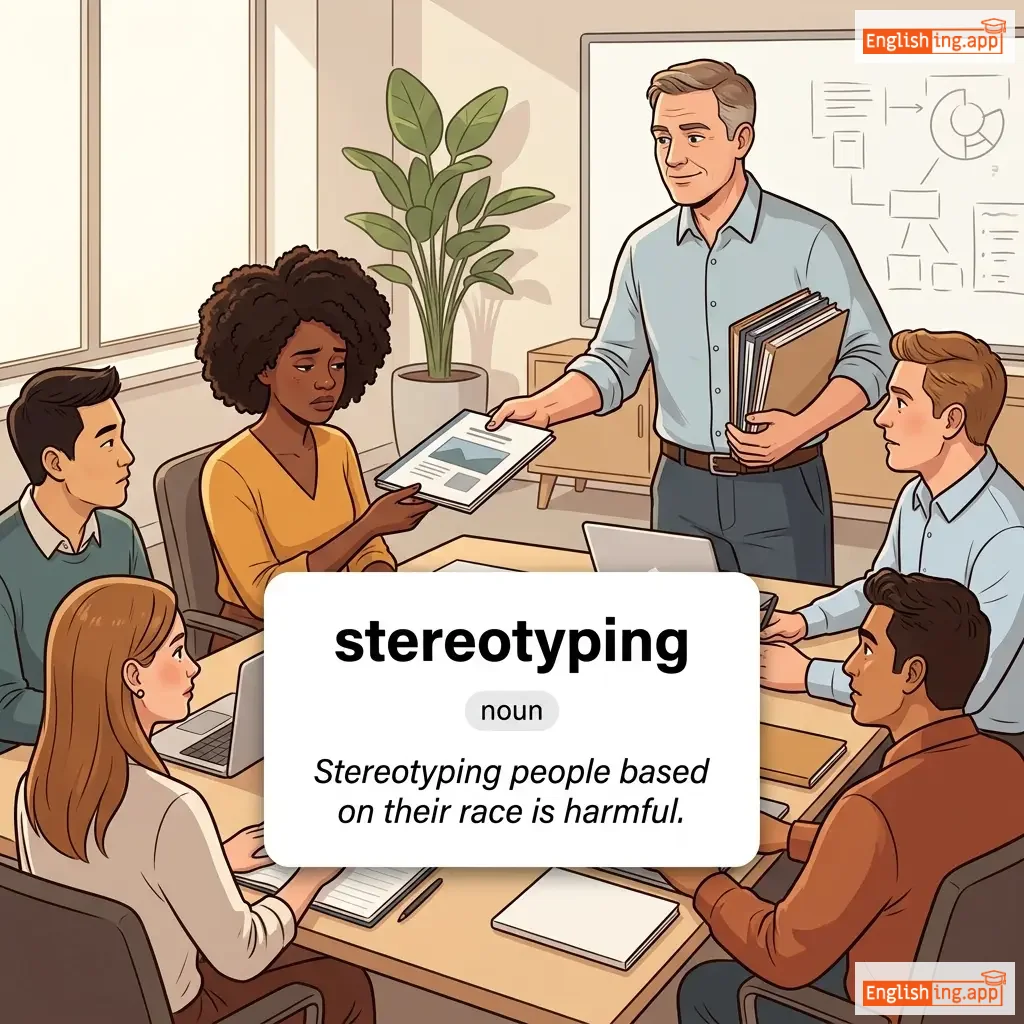
stereotyping definition card — visual illustration of the meaning
noun
/ˈstɛə.rɪ.əʊˌtaɪ.pɪŋ/
刻板印象 (kèbǎn yìnxiàng)

A widely held but fixed and oversimplified image or idea of a particular type of person or thing.

"Stereotyping people based on their race is harmful."

"基于种族的刻板印象是有害的。" (Jīyú zhǒngzú de kèbǎn yìnxiàng shì yǒuhài de.)
adjective
/ˈstɛriəˌtaɪpt/
刻板的 (kebande)

Conforming to a fixed or oversimplified idea of what someone or something is like.

"His stereotyped jokes failed to impress the audience."

"他的刻板笑话未能给观众留下深刻印象。" (tade keban xiaohua weineng gei guanzhong liuxia shenke yinxiang.)
noun
/ˈstɛriəˌtaɪp/
刻板印象 (kèbǎn yìnxiàng)

A widely held but oversimplified and fixed idea of a particular type of person or thing.

"It is a stereotype that all gamers are antisocial."

"所有玩家都是反社会的,这是一种刻板印象。" (Suǒyǒu wánjiā dōu shì fǎn shèhuì de, zhè shì yī zhǒng kèbǎn yìnxiàng.)
steps definition card — visual illustration of the meaning
noun
/stɛps/
步骤 (bùzhòu)

A measure or action, especially one of a series taken in order to deal with or achieve a particular thing.

"Taking small steps reduces overwhelm."

"采取小步骤减少了过度压力。" (Cǎiqǔ xiǎo bùzhòu jiǎnshǎo le guòdù yālì.)
noun
/stɛp/
草原 (caoyuan)

A large flat area of unforested grassland, especially in southeastern Europe or Siberia.

"The nomads traveled across the vast steppe with their herds."
"游牧民族带着他们的牲畜穿越辽阔的草原。" (Yóumù mínzú dàizhe tāmen de shēngchù chuānyuè liáokuò de cǎoyuán.)
👣

step

noun
/stɛp/

a movement made by lifting one foot and putting it down in a new position

"She took a step towards the door."

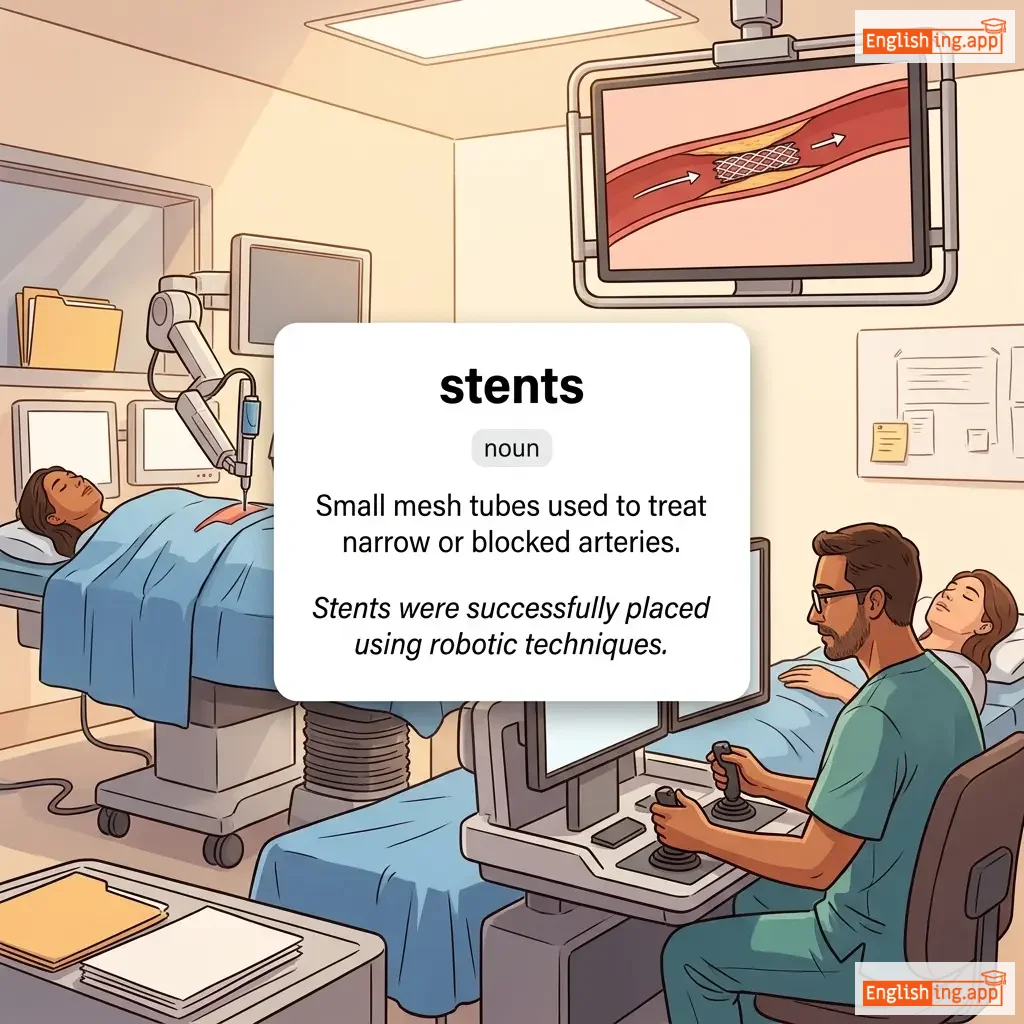
stents definition card — visual illustration of the meaning
noun
/stents/
支架 (zhī jià)

Small mesh tubes used to treat narrow or blocked arteries.

"Stents were successfully placed using robotic techniques."
"支架通过机器人技术成功放置。" (Zhī jià tōngguò jīqìrén jìshù chénggōng fàngzhì.)
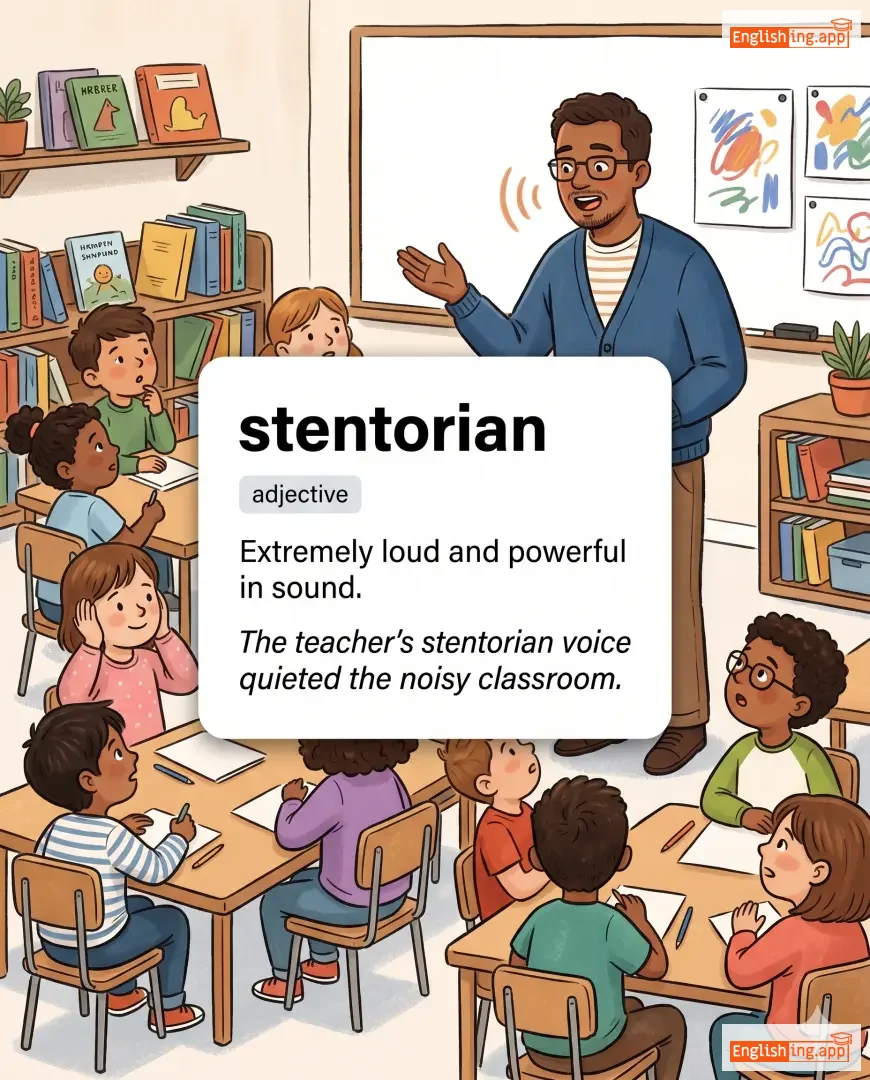
stentorian definition card — visual illustration of the meaning
adjective
/stɛnˈtɔːriən/
震耳欲聋 (zhèn ěr yù lóng)

Extremely loud and powerful in sound.

"The teacher’s stentorian voice quieted the noisy classroom."

"老师那震耳欲聋的声音让嘈杂的教室安静了下来。" (Lǎoshī nà zhèn ěr yù lóng de shēngyīn ràng cáozá de jiàoshì ānjìngle xiàlái.)
noun
/ˈstɛnsəl/
模板 (muban)

A thin sheet of material with a design cut out, used to produce the design on the surface below by applying paint or ink through the cut-out holes.

"The artist used a stencil to paint identical stars on the wall."

"艺术家使用模板在墙上画出相同的星星。" (Yishujia shiyong muban zai qiang shang huachu xiangtong de xingxing.)
adverb
/ˈstɛdɪli/
稳定地 (wěn dì de)

in a regular and continuous way; without stopping or changing

"The company's profits have been increasing steadily."

"公司的利润稳定增长。" (Gōngsī de lìrùn wěn dì zēngzhǎng.)
noun
/stɛlθ/
隐秘, 安静地移动 (yǐnmì, ānjìng de yídòng)

The act of moving, doing, or achieving something quietly and secretly.

"The cat moved with stealth towards its prey."

"猫悄悄地向它的猎物走去。" (Māo qiāoqiāo de xiàng tā de lièwù zǒu qù.)
steal definition card — visual illustration of the meaning
🕵️‍♂️

steal (斯蒂尔)

verb
/stiːl/
偷窃 (touqie)

to take something without permission or right

"He tried to steal my wallet while I wasn't looking."

"他试图在我不看时偷走我的钱包。" (Ta shitu zai wo bu kan shi touzou wode qianbao.)
noun
/steɪk/
牛排 (niúpái)

a thick slice of meat, typically beef, cooked by grilling or frying

"He ordered a grilled steak with vegetables."

"他点了一块配蔬菜的烤牛排。" (Tā diǎnle yī kuài pèi shūcài de kǎo niúpái.)
adjective
/ˈstɛdi/
稳定 (wending)

firm, stable, and not likely to change suddenly

"He kept his hand steady while painting the picture."

"他在画画时保持手稳定。" (Tā zài huàhuà shí bǎochí shǒu wending.)
stay definition card — visual illustration of the meaning
verb
/steɪ/
(dai)

to remain in a particular place or state

"We decided to stay at home during the storm."

"我们决定在暴风雨期间待在家里。" (Wo men jue ding zai bao feng yu qi jian dai zai jia li.)
adjective
/ˈstætʃətɔːri/
法定的 (fǎ dìng de)

Required, permitted, or enacted by law.

"The company must comply with all statutory regulations."

"公司必须遵守所有法定规定。" (Gōngsī bìxū zūnshǒu suǒyǒu fǎ dìng guīdìng.)
adjective
/stɔːntʃ/
坚定的, 忠诚的 (jiān dìng de, zhōng chéng de)

Loyal, committed, and firm in support.

"She is a staunch supporter of environmental protection."

"她是环境保护的坚定支持者。" (Tā shì huánjìng bǎohù de jiāndìng zhīchí zhě.)
noun, verb
/stiːm/
蒸汽 (zhengqi)

the vapor into which water is converted when heated; to emit or treat with steam

"The kettle was steaming on the stove."

"茶壶在炉子上冒蒸汽。" (Chahu zai luzi shang mao zhengqi.)
adjective
/ˈstɛdfæst/
坚定的, 忠诚的 (jianding de, zhongcheng de)

Firm, loyal, and unwavering in purpose or support.

"He remained steadfast in his determination to succeed."

"他在成功的决心中保持坚定。" (Ta zai chenggong de juexin zhong baochi jianding.)