वोकैबुलरीज

इंग्लिश वोकैबुलरी डिस्कवर, लर्न और मास्टर करें

noun
/ˈsʌb.mə.riːn/
पनडुब्बी (pandubbi)

a warship with a streamlined hull designed to operate completely submerged in the sea

"The submarine dived deep into the ocean to avoid detection."

"संदेह से बचने के लिए पनडुब्बी समुद्र की गहराई में डूब गई।" (sandeh se bachne ke liye pandubbi samudr ki gehraai mein doob gayi.)
adverb
/ˌsʌb ˈroʊzə/
गोपनीय रूप से (gopneeya roop se)

secretly, in confidence, or in private

"The deal was made sub rosa to avoid public scrutiny."

"सौदा सब रोसा किया गया था ताकि सार्वजनिक जांच से बचा जा सके।" (Sauda sab rosa kiya gaya tha taki saarvajanik jaanch se bacha ja sake.)
adjective
/ˈsʌb.æs.ɪd/
हल्का खट्टा (halka khatta)

Slightly sour or acidic in taste or nature.

"The fruit had a subacid flavor that was refreshing on a hot day."

"फलों का हल्का खट्टा स्वाद था जो गर्मी के दिन में ताजगी प्रदान करता था।" (phalon ka halka khatta swad tha jo garmi ke din mein tajgi pradan karta tha.)
noun
/sʌbˈɔːl.tən/
किसी व्यक्ति जो अधीनस्थ स्थिति में हो; सैन्य में, एक जूनियर अधिकारी (subaltern)

A person holding a subordinate position; in the military, a junior officer.

"The subaltern was responsible for leading a small platoon of soldiers."

"सबऑल्टर्न छोटे सैनिकों के एक प्लाटून का नेतृत्व करने के लिए जिम्मेदार था।" (subaltern chhote sainikon ke ek platoon ka netritva karne ke liye zimmedar tha.)
adjective
/ˌsʌb.əˈkwɒt.ɪk/
जलमग्न (jalmagn)

Existing, living, or located under water.

"Divers explored the subaquatic cave system filled with rare fish."

"डाइवर्स ने दुर्लभ मछलियों से भरे जलमग्न गुफा प्रणाली का अन्वेषण किया।" (divers ne durlabh machhliyon se bhare jalmagn gufha pranali ka anvshan kiya.)
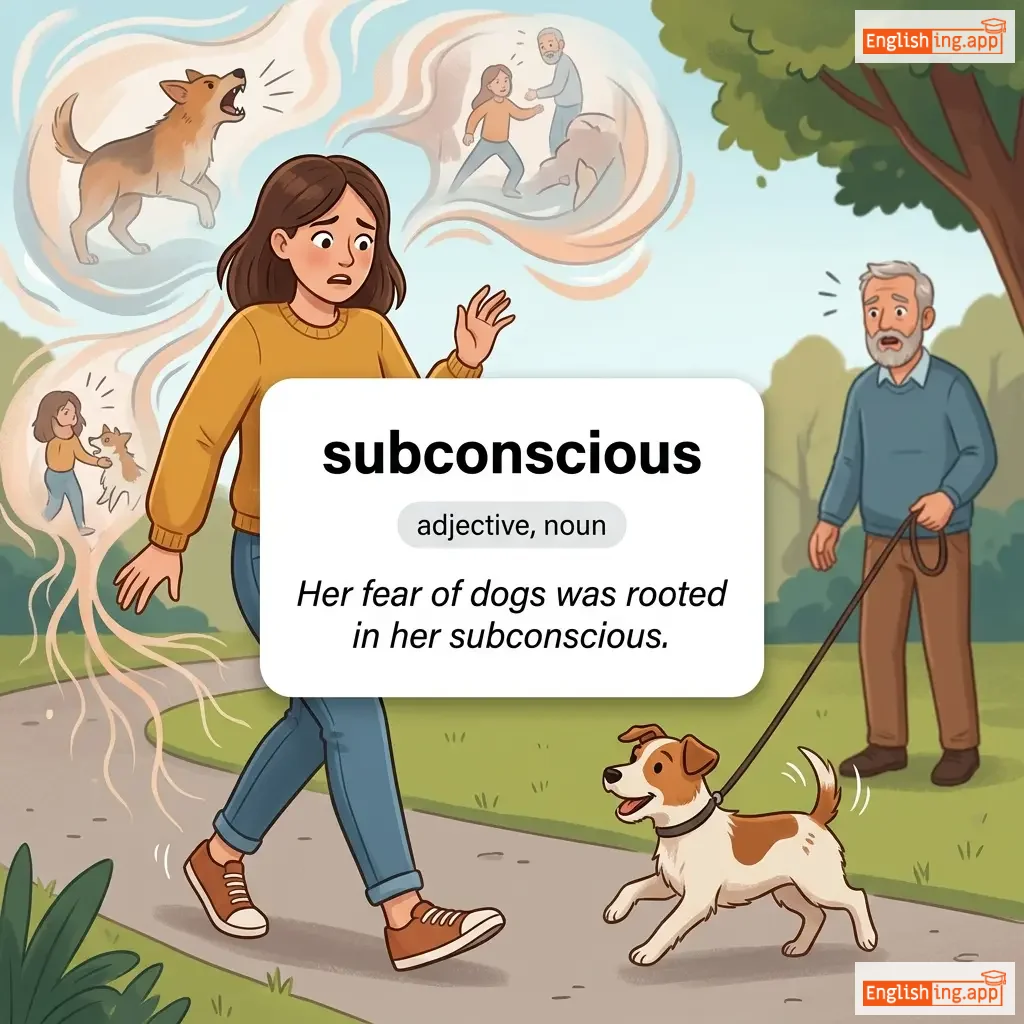
subconscious definition card — visual illustration of the meaning
adjective, noun
/ˌsʌbˈkɒn.ʃəs/
अवचेतन (avchetan)

Relating to the part of the mind that influences thoughts and actions without full awareness.

"Her fear of dogs was rooted in her subconscious."

"उसका कुत्तों से डर उसके अवचेतन में छिपा हुआ था।" (uska kutto se dar uske avchetan mein chhupa hua tha.)
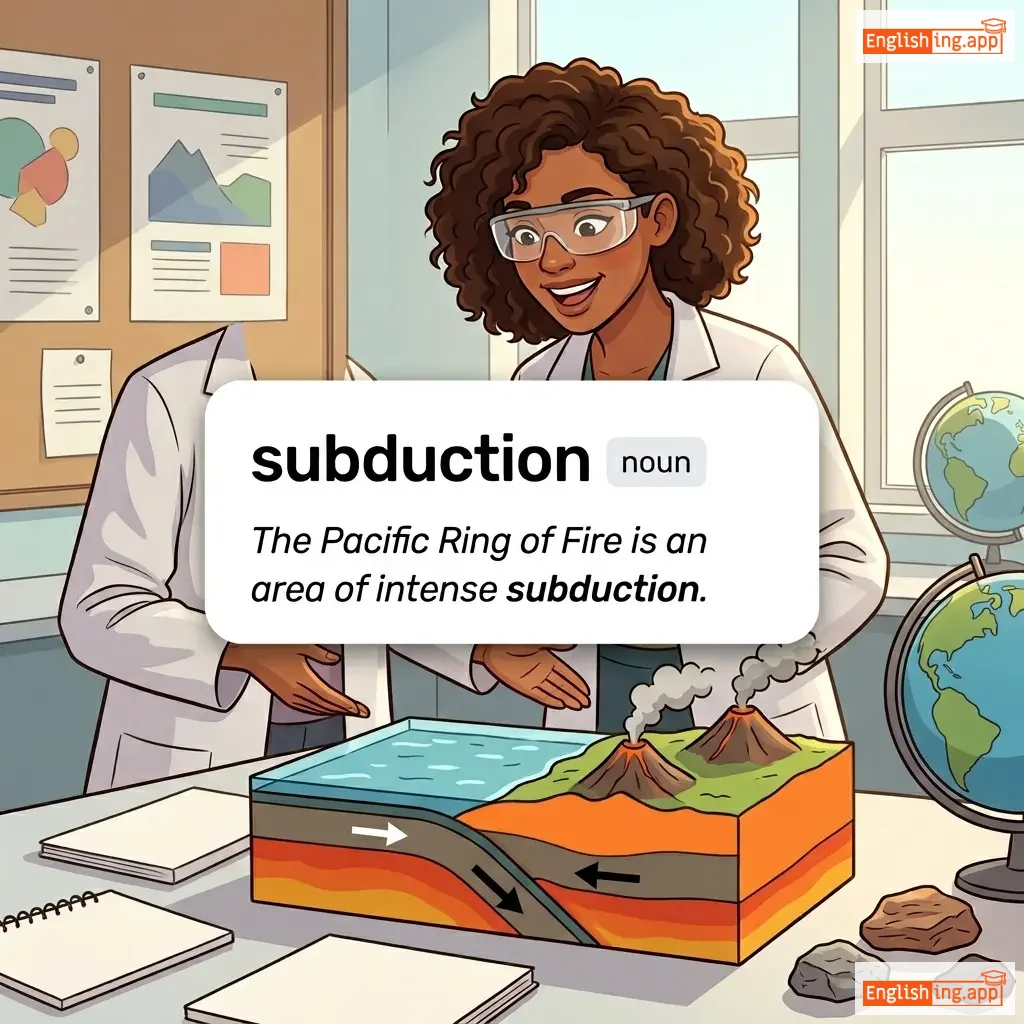
subduction definition card — visual illustration of the meaning
noun
/səbˈdʌk.ʃən/
पृथ्वी की सतह की एक परत का दूसरी परत के नीचे जाना (prithvi ki sathah ki ek parat ka doosri parat ke neeche jana)

The lateral and downward movement of the edge of a plate of the earth's crust into the mantle beneath another plate.

"The Pacific Ring of Fire is an area of intense subduction."

"पैसिफिक रिंग ऑफ फायर एक क्षेत्र है जहाँ गहरी सबडक्शन होती है।" (Pacific ring of fire ek kshetra hai jahan gehri subduction hoti hai.)
verb
/səbˈdjuː/
दबाना (dabaana)

To bring under control, especially by force; to overcome or quiet.

"The army was able to subdue the rebellion quickly."

"सेना जल्दी ही विद्रोह को दबाने में सक्षम हो गई।" (sena jaldi hi vidroh ko dabaane mein saksham ho gayi.)
adjective
/sʌbˈdʒeɪsənt/
नीचे स्थित (neeche sthit)

lying immediately beneath; underlying

"The geological survey revealed subjacent layers of rock."

"भूतत्वीय सर्वेक्षण ने नीचे स्थित चट्टानों की परतें प्रकट कीं।" (Bhootatviy survey ne neeche sthit chattanon ki paratein prakat ki.)
noun/verb/adjective
/ˈsʌbdʒɪkt/ (noun), /səbˈdʒɛkt/ (verb)
विषय (vishay)

noun: a topic or theme; verb: to cause to undergo; adjective: dependent or under authority

"The teacher introduced a new subject in class."

"शिक्षक ने क्लास में एक नया विषय पेश किया।" (Shikshak ne class mein ek naya vishay pesh kiya.)
noun
/səbˈdʒɛkʃən/
आधीनता (aadhinata)

the act of bringing someone or something under control or domination

"The people suffered under the subjection of a cruel ruler."

"लोग एक क्रूर शासक के अधीनता में कष्ट भोग रहे थे।" (Log ek kroor shasak ke adhinata mein kasht bhog rahe the.)
adjective
/səbˈdʒɛktɪv/
व्यक्तिगत (vyaktigat)

based on personal feelings, tastes, or opinions rather than facts

"Beauty is often considered a subjective concept."

"सौंदर्य को अक्सर एक व्यक्तिगत अवधारणा के रूप में माना जाता है।" (Soundarya ko aksar ek vyaktigat avdharna ke roop mein maana jaata hai.)
adjective
/ˈstjuːdiəs/
अध्ययनीय (adhyayanīya)

spending a lot of time studying or reading; very dedicated to learning

"She is a studious girl who spends hours in the library."

"वह एक अध्ययनीय लड़की है जो पुस्तकालय में घंटों बिता देती है।" (Vah ek adhyayanīya ladki hai jo pustakalay mein ghanton bita deti hai.)
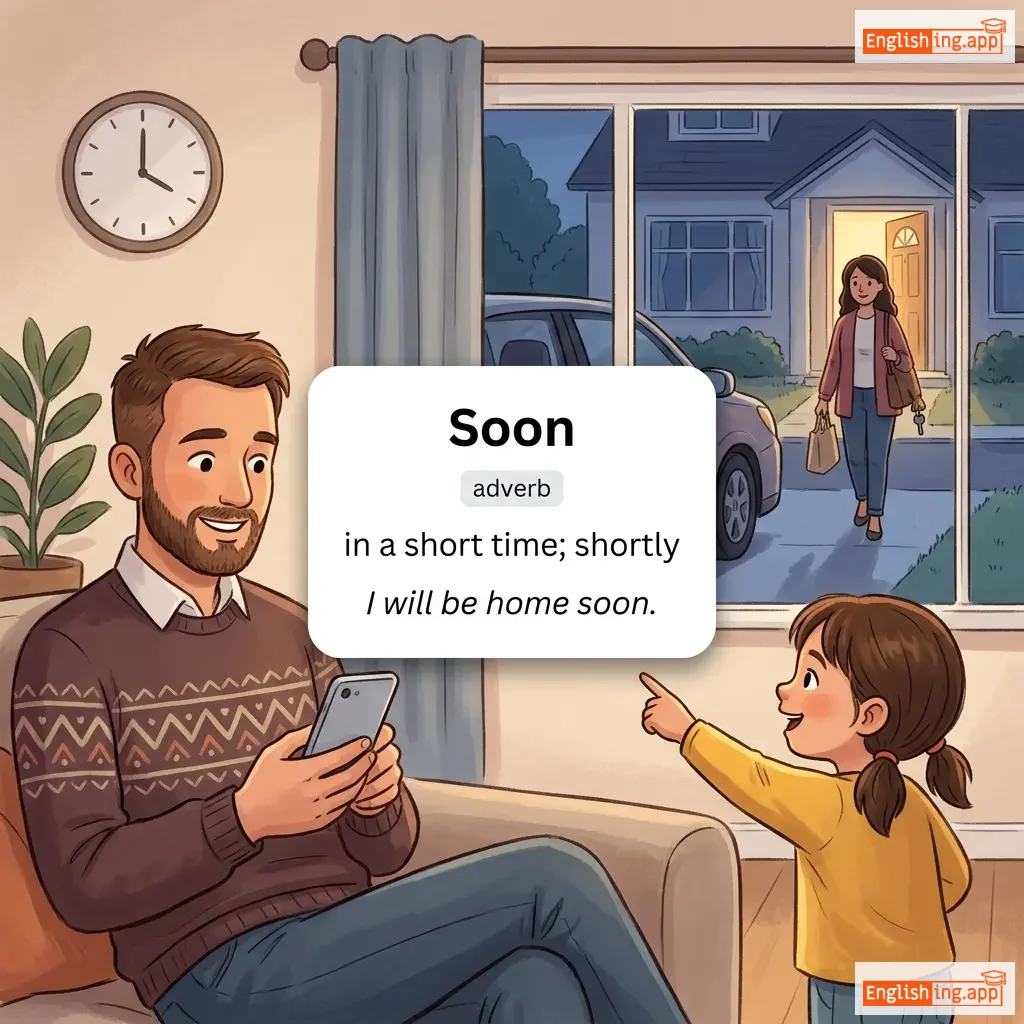
Soon definition card — visual illustration of the meaning
adverb
/suːn/
जल्द (jald)

in a short time; shortly

"I will be home soon."

"मैं जल्दी घर पहुँच जाऊँगा।" (Main jald ghar pahunch jaunga.)
adjective
/səˈnɔːrəs/
गम्भीर ध्वनि (gambheer dhvani)

Deep, full, and rich in sound.

"The actor's sonorous voice filled the entire theater."

"अभिनेता की गम्भीर आवाज़ ने पूरे थिएटर को भर दिया।" (Abhineta ki gambheer awaaz ne poore theater ko bhar diya.)
noun
/ˈsɒnɪt/
सोननेट (sonnet)

A poem of 14 lines using formal rhyme schemes, often about love.

"Shakespeare wrote many famous sonnets about love and beauty."

"शेक्सपियर ने प्रेम और सुंदरता के बारे में कई प्रसिद्ध सोननेट लिखे।" (Shakespeare ne prem aur sundarta ke baare mein kai prasiddh sonnet likhe.)
adjective
/ˈsɒnɪk/
ध्वनिक (dhvanik)

Relating to or involving sound waves or speed of sound.

"The jet created a loud boom when it broke the sonic barrier."

"जब जेट ने सॉनिक बैरियर को तोड़ा, तो एक जोरदार आवाज़ आई।" (Jab jet ne sonic barrier ko toda, to ek jordar awaaz aayi.)
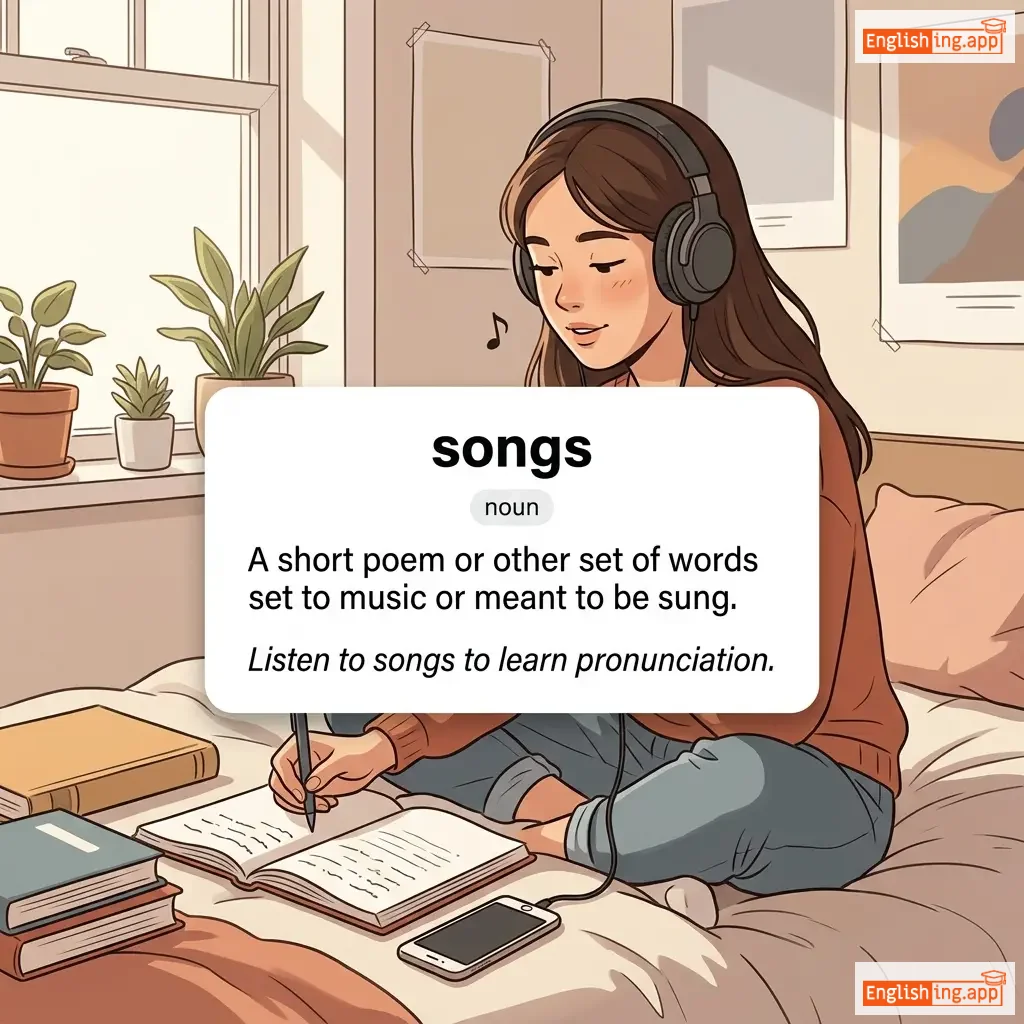
songs definition card — visual illustration of the meaning
noun
sɔːŋz
गाने (gaane)

A short poem or other set of words set to music or meant to be sung.

"Listen to songs to learn pronunciation."

"उच्चारण सीखने के लिए गाने सुनें।" (Ucchaaran seekhne ke liye gaane sunen.)
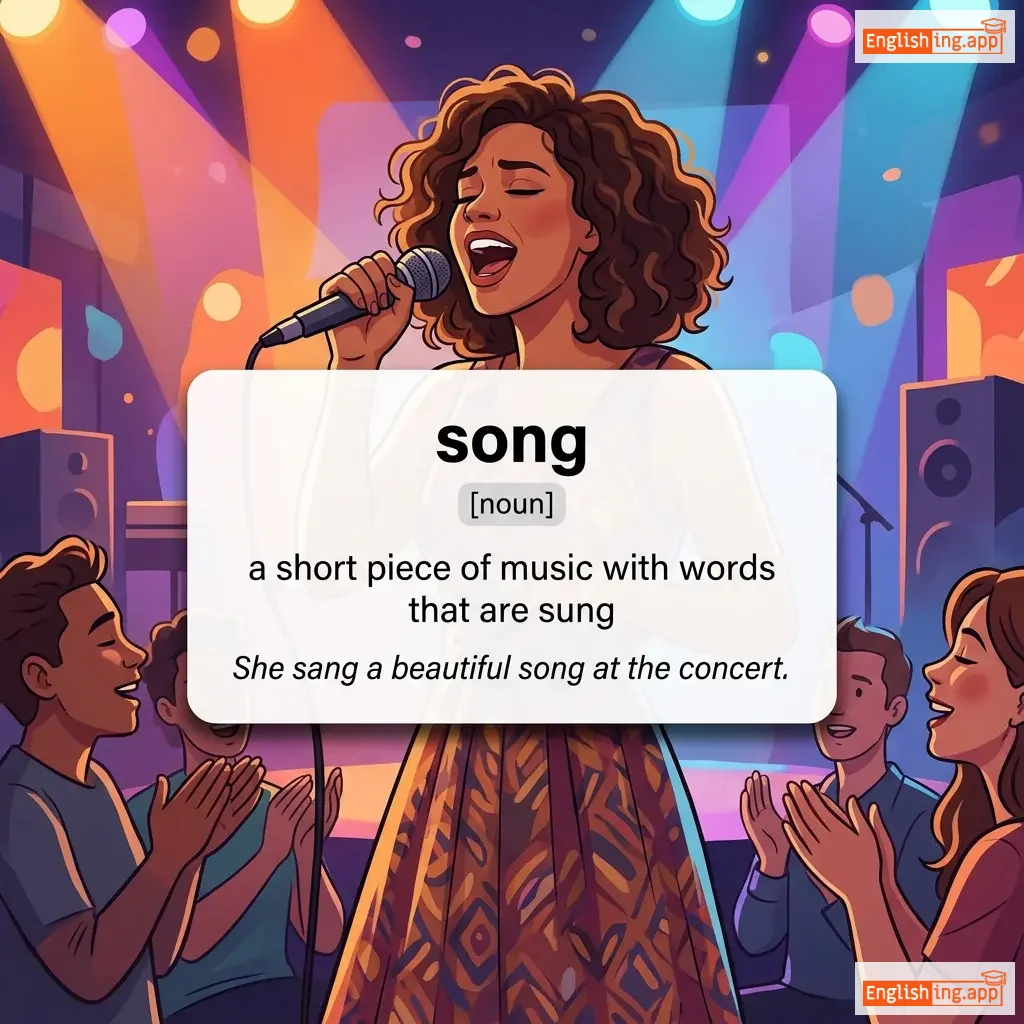
song definition card — visual illustration of the meaning
noun
/sɔːŋ/
गाना (gana)

a short piece of music with words that are sung

"She sang a beautiful song at the concert."

"उसने कन्सर्ट में एक सुंदर गाना गाया।" (Usne concert mein ek sundar gana gaya.)
noun
/səˈnɑːtə/
संगीत रचना (सोनेटा) (sangeet rachna (sonata))

A musical composition for one or more instruments, typically in several movements.

"She performed a beautiful Beethoven sonata on the piano."

"उसने पियानो पर एक सुंदर बीथोवेन सोनेटा प्रस्तुत किया।" (Usne piyano par ek sundar Beethoven sonata prastut kiya.)
noun
/sʌn/
पुत्र (putra)

a male child of a parent

"His son is very talented in music."

"उसका पुत्र संगीत में बहुत प्रतिभाशाली है।" (Uska putra sangeet mein bahut pratibhashali hai.)
adjective
/ˈsɒmnələnt/
नींद भरा (neend bhara)

Sleepy or drowsy; causing a desire to sleep.

"The somnolent lecture made half the class fall asleep."

"सोम्नोलेंट व्याख्यान ने आधी कक्षा को सोने पर मजबूर कर दिया।" (Somnolent vyakhyan ne aadhi kaksha ko sone par majboor kar diya.)
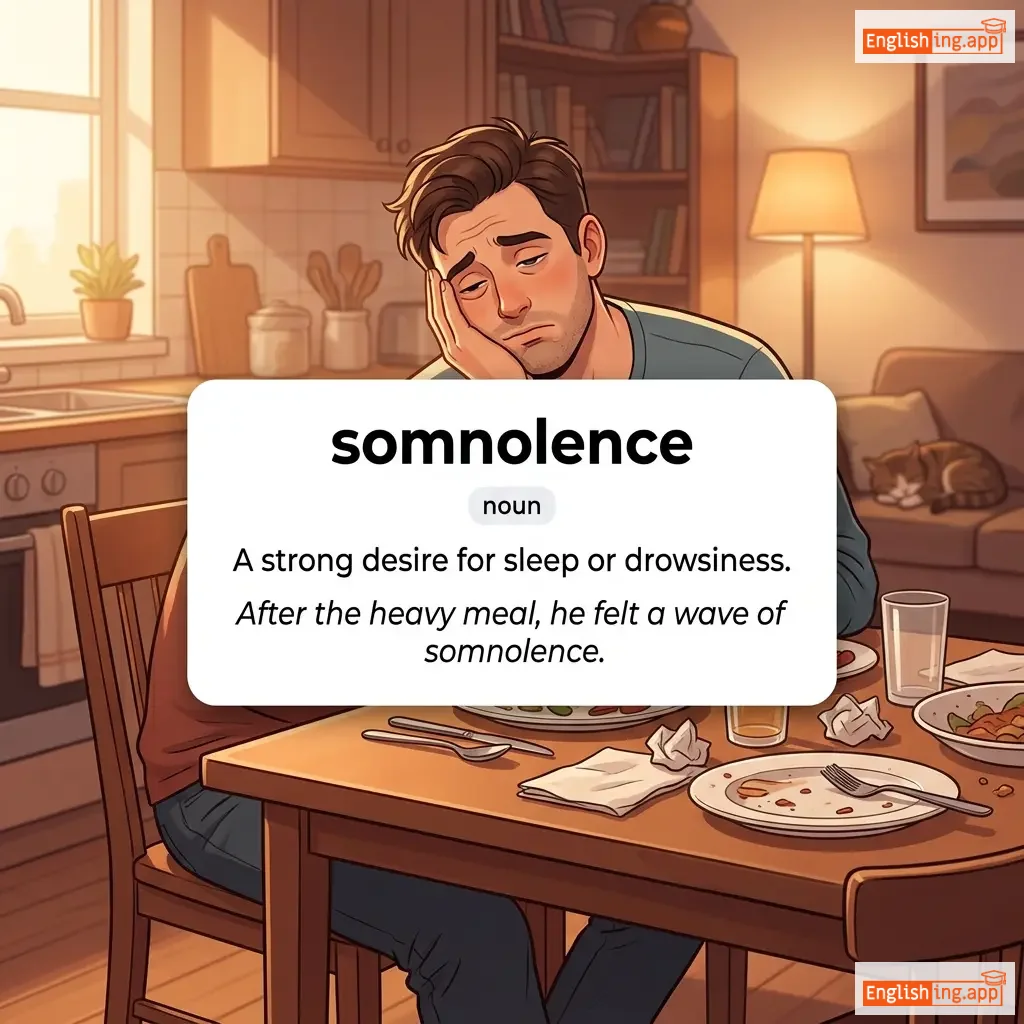
somnolence definition card — visual illustration of the meaning
noun
/ˈsɒmnələns/
निंद्रालुता (nindraluta)

A strong desire for sleep or drowsiness.

"After the heavy meal, he felt a wave of somnolence."

"भारी भोजन के बाद, उसे निंद्रालुता का अहसास हुआ।" (Bhaari bhojan ke baad, use nindraluta ka ahsaas hua.)
adjective
/sɒmˈnɪfərəs/
नींद लाने वाला (neend lane wala)

Tending to induce sleep; soporific.

"The professor's somniferous lecture put half the class to sleep."

"प्रोफेसर का सोम्निफेरस व्याख्यान आधे क्लास को सोने में डाल दिया।" (Professor ka somniferous vyakhyan aadhe class ko sone mein daal diya.)
noun
/sɒmˈnæmbjʊlɪst/
सोमनाम्ब्युलिस्ट (somnambulist)

A person who sleepwalks.

"The somnambulist wandered out of the house at night."

"सोमनाम्ब्युलिस्ट रात को घर से बाहर चला गया।" (Somnambulist raat ko ghar se bahar chala gaya.)
adverb
/ˈsʌmˌwɛr/
कहीं (kahin)

in, at, or to a place that is not known or specified

"Somewhere in the city, there is a hidden café."

"शहर में कहीं, एक छिपा हुआ कैफे है।" (Shahar mein kahin, ek chhupa hua cafe hai.)
adverb
/ˈsʌmˌwʌt/
थोड़ा (thoda)

to a small degree or extent

"The new policy is somewhat better than the previous one."

"नई नीति पिछली नीति से कुछ बेहतर है।" (Nayi niti pichhli niti se kuch behatar hai.)
adverb
/ˈsʌmˌtaɪmz/
कभी कभी (kabhi kabhi)

at certain times, but not always

"Sometimes I wonder what life would have been like if I had made different choices."

"कभी कभी मुझे यह सोचने पर मजबूर करता है कि अगर मैंने अलग-अलग विकल्प लिए होते तो जीवन कैसा होता।" (Kabhi kabhi mujhe yeh sochne par majboor karta hai ki agar maine alag-alag vikalpon liye hote to jeevan kaisa hota.)
adverb
/ˈsʌm.taɪm/
कभी न कभी (kabhi na kabhi)

at a time that is not known or stated; occasionally

"Let's meet for coffee sometime next week."

"चलो अगले हफ्ते कभी न कभी कॉफी के लिए मिलते हैं।" (Chalo agle hafte kabhi na kabhi coffee ke liye milte hain.)
pronoun
/ˈsʌmθɪŋ/
कुछ (kuch)

an unspecified or unknown thing

"I think something is wrong with my phone."

"मुझे लगता है कि मेरे फोन में कुछ गड़बड़ है।" (Mujhe lagta hai ki mere phone mein kuch gadbad hai.)
pronoun
/ˈsʌmwʌn/
कोई (koi)

a person, but not specifically known or named

"Someone left their umbrella in the hallway."

"कोई अपना छाता हॉलवे में छोड़ गया।" (Koi apna chata hallway mein chhod gaya.)
adverb
/ˈsʌmˌhaʊ/
किसी तरह (kisi tarah)

in some way, but not exactly known or specified

"Somehow, they managed to finish the project on time."

"किसी तरह, वे परियोजना को समय पर समाप्त करने में सफल हो गए।" (Kisi tarah, ve pariyojna ko samay par samaapt karne mein safal ho gaye.)
adverb
/ˈsʌm.deɪ/
कभी न कभी (kabhi na kabhi)

at some time in the future

"Someday, I want to travel the world."

"कभी न कभी, मैं दुनिया भर में यात्रा करना चाहता हूँ।" (Kabhi na kabhi, main duniya bhar mein yatra karna chahta hoon.)
pronoun
/ˈsʌmbədi/
कोई (koi)

an unspecified person

"Somebody is knocking at the door."

"कोई दरवाजे पर दस्तक दे रहा है।" (Koi darwaje par dastak de raha hai.)
adjective
/ˈsoʊloʊ/
एकल (ekal)

performed by one person alone; a single performance

"She decided to perform a solo dance at the talent show."

"उसने टैलेंट शो में एकल नृत्य प्रदर्शन करने का निर्णय लिया।" (Usne talent show mein ekal nritya pradarshan karne ka nirnay liya.)
verb
/səˈlɪsɪt/
अनुरोध करना (anurodh karna)

to ask for or try to obtain something from someone

"The charity is soliciting donations for flood victims."

"चैरिटी बाढ़ पीड़ितों के लिए दान माँग रही है।" (Charity baadh peediton ke liye daan maang rahi hai.)
noun
/səˈlɪsɪtər/
वकील (vakil)

A type of lawyer who gives legal advice and prepares legal documents, often representing clients in lower courts.

"She consulted a solicitor before signing the contract."

"उसने समझौते पर हस्ताक्षर करने से पहले एक वकील से परामर्श किया।" (Usne samjhaute par hastakshar karne se pehle ek vakil se paramarsh kiya.)
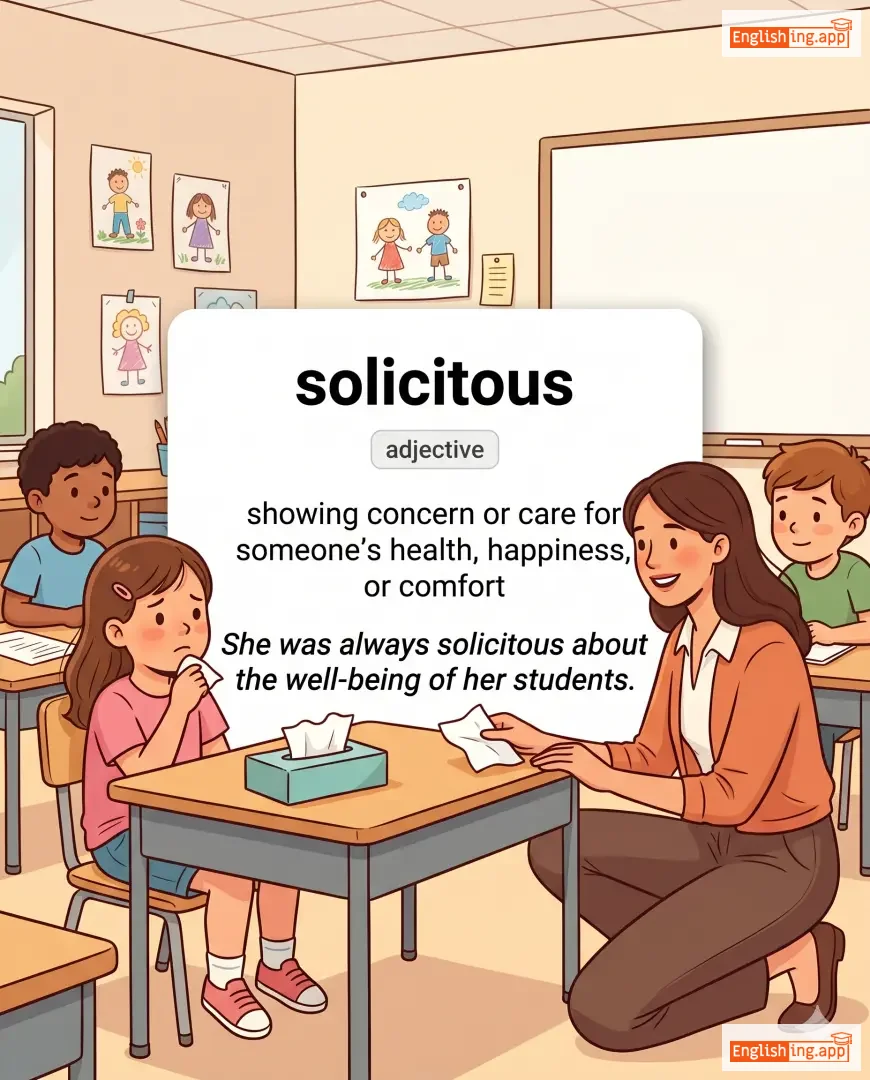
solicitous definition card — visual illustration of the meaning
adjective
/səˈlɪsɪtəs/
सहानुभूतिपूर्ण (sahanubhootipoorn)

showing concern or care for someone's health, happiness, or comfort

"She was always solicitous about the well-being of her students."

"वह हमेशा अपने छात्रों की भलाई के बारे में सहानुभूतिपूर्ण थी।" (Wah hamesha apne chhatron ki bhalaai ke baare mein sahanubhootipoorn thi.)
noun
/səˈlɪsɪˌtuːd/
चिंता, देखभाल (chinta, dekhbhal)

Care or concern for someone or something.

"His mother showed great solicitude for his safety."

"उसकी माँ ने उसकी सुरक्षा के लिए गहरी चिंता दिखाई।" (Uski maa ne uski suraksha ke liye gahri chinta dikhayi.)
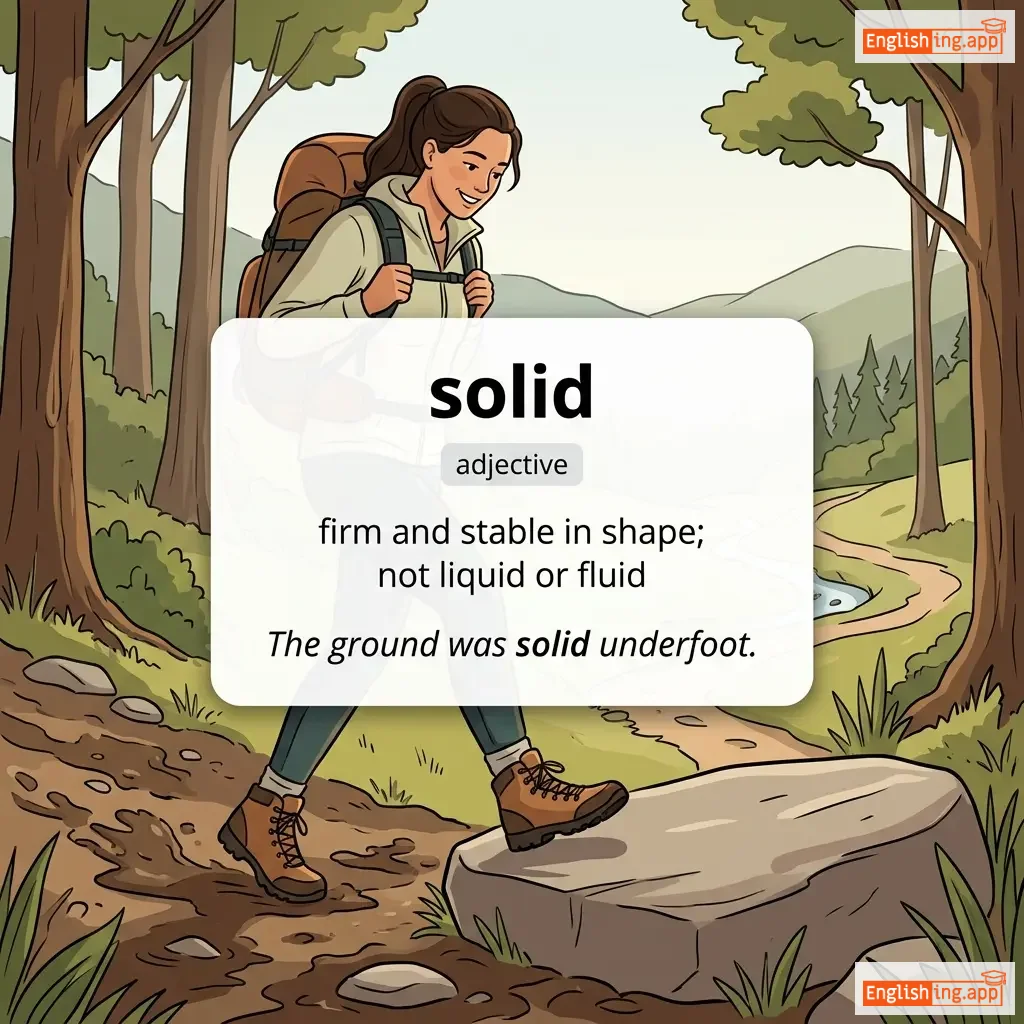
solid definition card — visual illustration of the meaning
adjective
/ˈsɒlɪd/
ठोस (thos)

firm and stable in shape; not liquid or fluid

"The ground was solid underfoot."

"जमीन नीचे ठोस थी।" (Zameen neeche thos thi.)
Solidarity definition card — visual illustration of the meaning
noun
/ˌsɒlɪˈdærɪti/
एकता (ekta)

Unity or agreement of feeling or action, especially among individuals with a common interest.

"Workers held a strike in solidarity with their colleagues."

"कर्मचारियों ने अपने साथियों के साथ एकजुट होकर हड़ताल की।" (Karmachariyon ne apne saathiyon ke saath ekjut hokar hadtal ki.)
verb
/səˈlɪdəˌfaɪ/
मजबूत करना (majboot karna)

To make something firm, strong, or more certain.

"The company solidified its position in the market."

"कंपनी ने बाजार में अपनी स्थिति मजबूत की।" (Company ne bazar mein apni sthiti majboot ki.)
soliloquy definition card — visual illustration of the meaning
noun
/səˈlɪləkwi/
एकालाप (ekalap)

a speech in which a character talks to themselves, often used in drama to reveal inner thoughts

"Hamlet's soliloquy is one of the most famous passages in Shakespearean drama."

"हैमलेट का एकालाप शेक्सपियर के नाटक में सबसे प्रसिद्ध अंशों में से एक है।" (Hamlet ka ekalap Shakespeare ke natak mein sabse prasiddh anshon mein se ek hai.)
adjective
/ˈsɒl.ɪ.ter.i/
एकाकी; निर्जन; अकेला; अलग (ekaki; nirjan; akela; alag)

alone; without companions; single; isolated

"He lived a solitary life in the mountains."

"उसने पहाड़ों में एकांत जीवन जीया।" (Usne pahaadon mein ekaant jeevan jiya.)
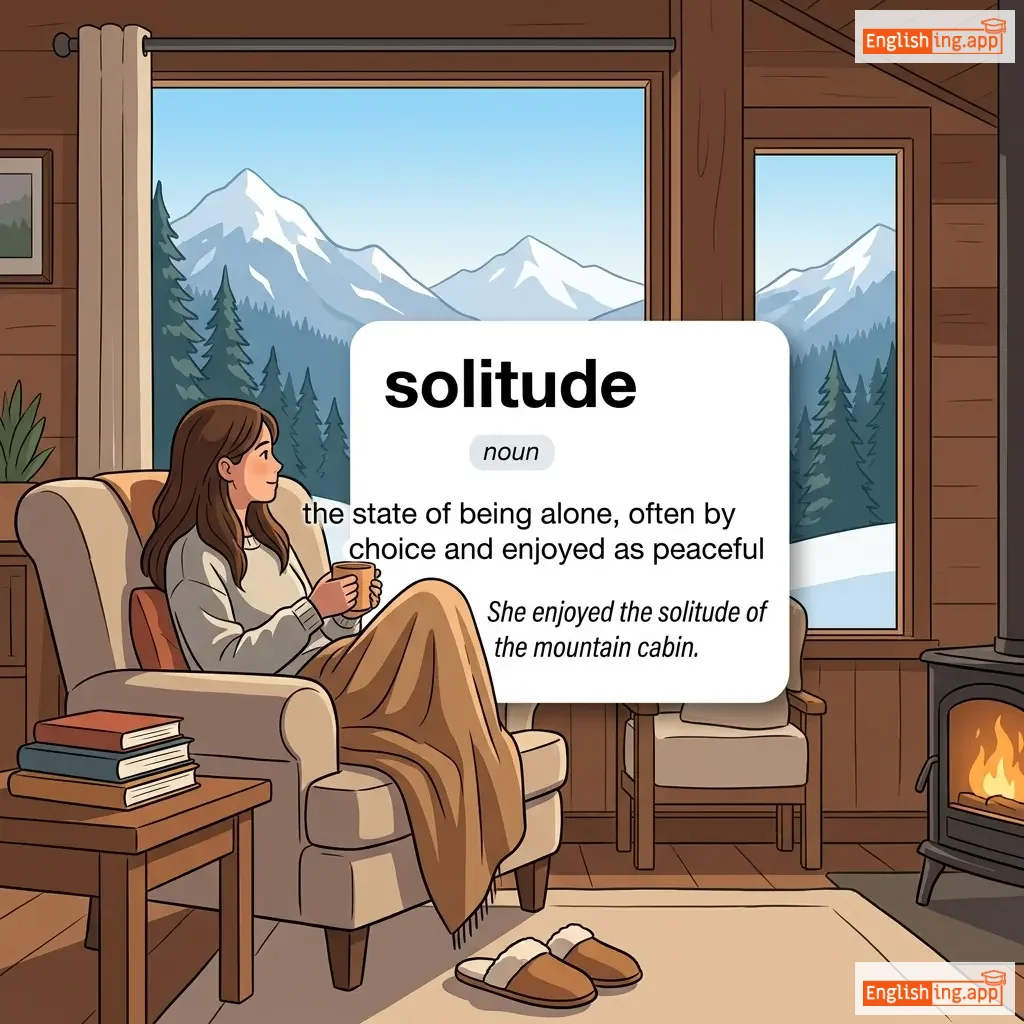
solitude definition card — visual illustration of the meaning
noun
/ˈsɒlɪtjuːd/
अकेलापन (akelapan)

the state of being alone, often by choice and enjoyed as peaceful

"She enjoyed the solitude of the mountain cabin."

"उसने पर्वत की झोपड़ी में अकेलेपन का आनंद लिया।" (Usne parvat ki jhopdi mein akelapan ka anand liya.)
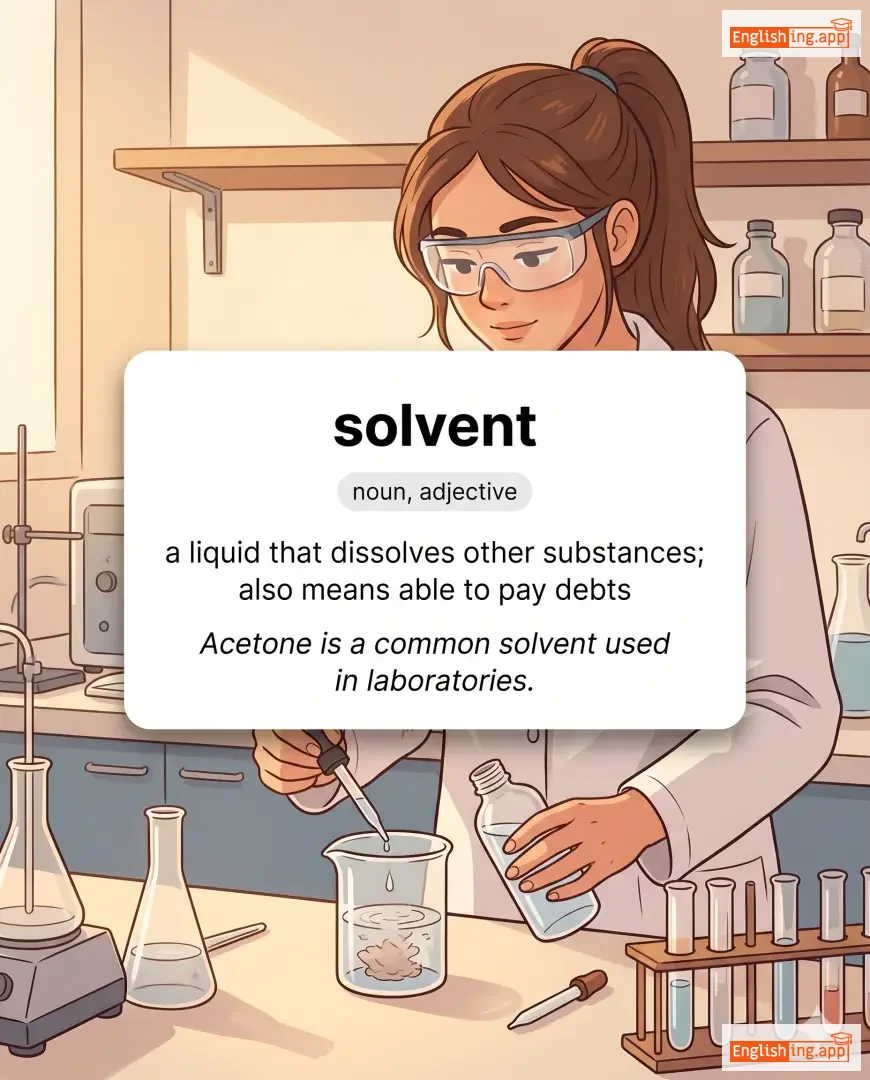
solvent definition card — visual illustration of the meaning
noun, adjective
/ˈsɒlvənt/
द्रावक, ऋण चुकता करने में सक्षम (dravak, rin chukta karne mein saksham)

a liquid that dissolves other substances; also means able to pay debts

"Acetone is a common solvent used in laboratories."

"एसीटोन एक सामान्य द्रावक है जो प्रयोगशालाओं में उपयोग किया जाता है।" (Acetone ek shadharan dravak hai jo prayogshalaon mein upyog kiya jata hai.)
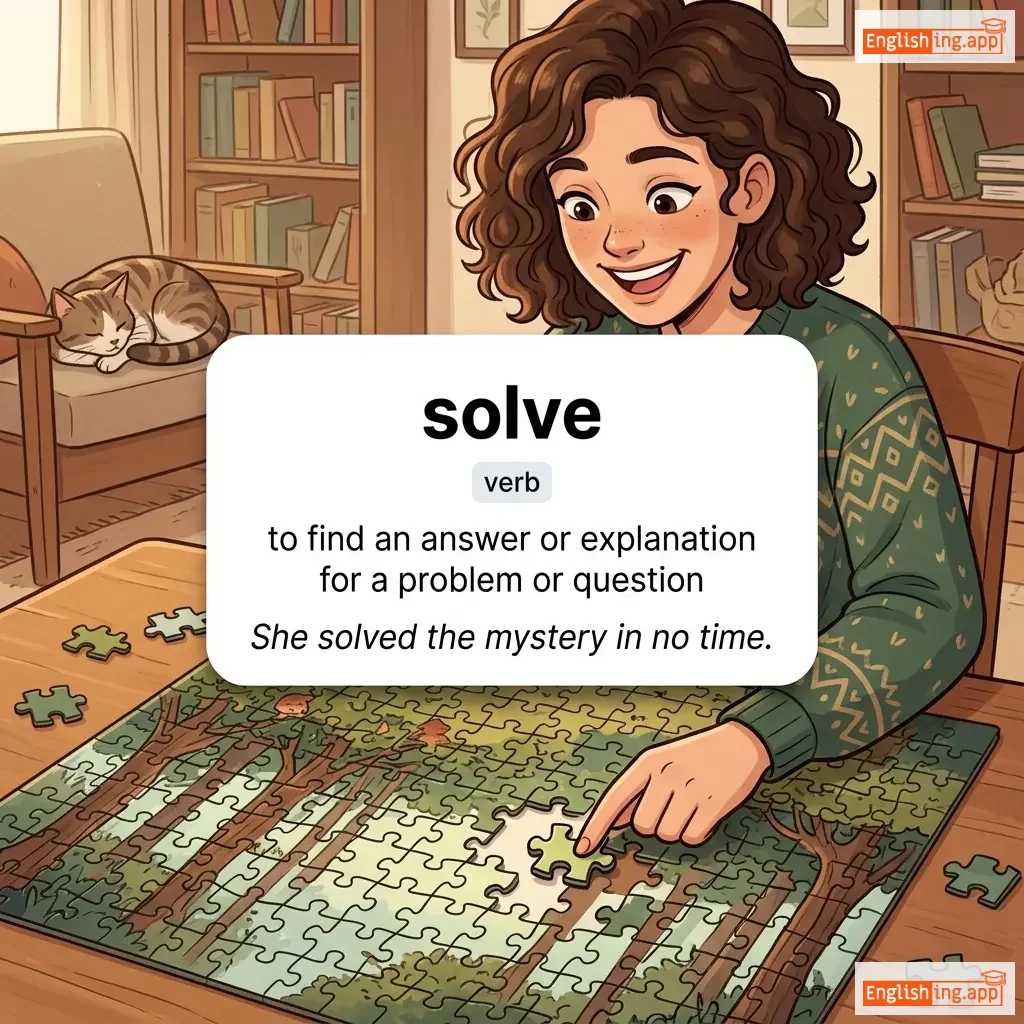
solve definition card — visual illustration of the meaning
verb
/sɒlv/
हल करना (hal karna)

to find an answer or explanation for a problem or question

"She solved the mystery in no time."

"उसने बहुत जल्दी रहस्य हल किया।" (Usne bahut jaldi rahasya hal kiya.)
solvency definition card — visual illustration of the meaning
noun
/ˈsɒl.vən.si/
दायित्वों से अधिक संपत्तियों का स्वामित्व; ऋण चुकाने की क्षमता (daayitvon se adhik sampattiyon ka swamitva; rin chukane ki kshamata)

The possession of assets in excess of liabilities; ability to pay debts.

"The company's solvency determines its financial health."

"कंपनी की सॉल्वेंसी उसके वित्तीय स्वास्थ्य का निर्धारण करती है।" (Kampani ki solvency uske vittiya swasthya ka nirdharan karti hai.)
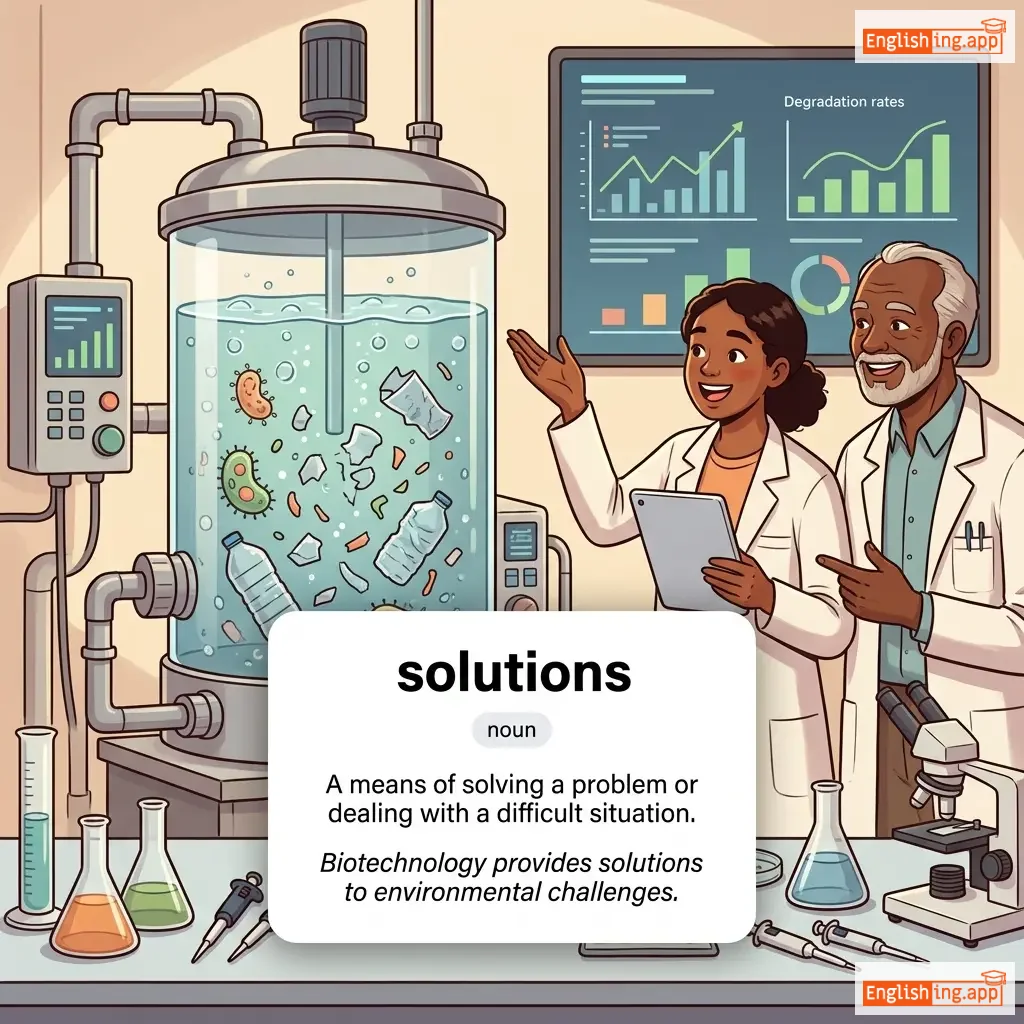
solutions definition card — visual illustration of the meaning
noun
səˈluː.ʃənz
समाधान (samadhan)

A means of solving a problem or dealing with a difficult situation.

"Biotechnology provides solutions to environmental challenges."

"बायोटेक्नोलॉजी पर्यावरणीय समस्याओं के समाधान प्रदान करती है।" (Biotechnology paryavaranik samasyaon ke samadhan pradan karti hai.)
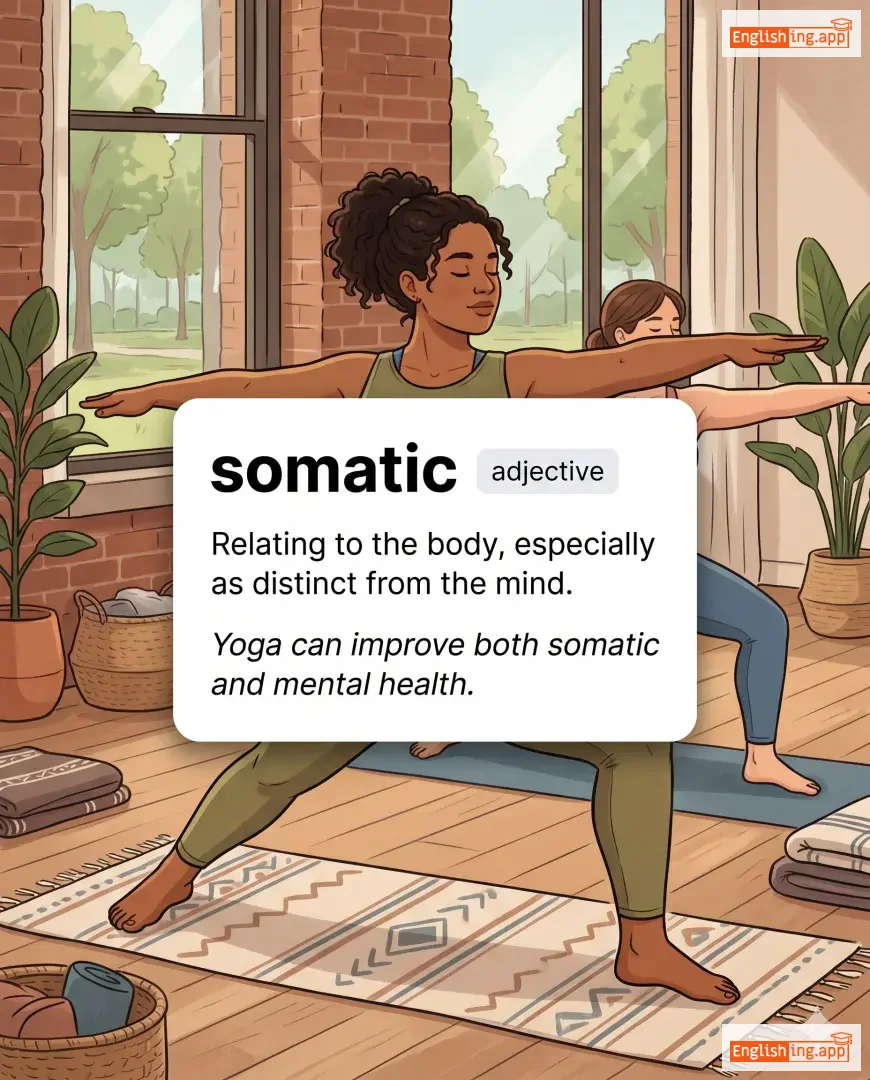
somatic definition card — visual illustration of the meaning
adjective
/səˈmætɪk/
शारीरिक (sharirik)

Relating to the body, especially as distinct from the mind.

"Yoga can improve both somatic and mental health."

"योग शारीरिक और मानसिक स्वास्थ्य दोनों को सुधार सकता है।" (Yoga sharirik aur maansik swaasthya dono ko sudhaar sakta hai.)