वोकैबुलरीज

इंग्लिश वोकैबुलरी डिस्कवर, लर्न और मास्टर करें

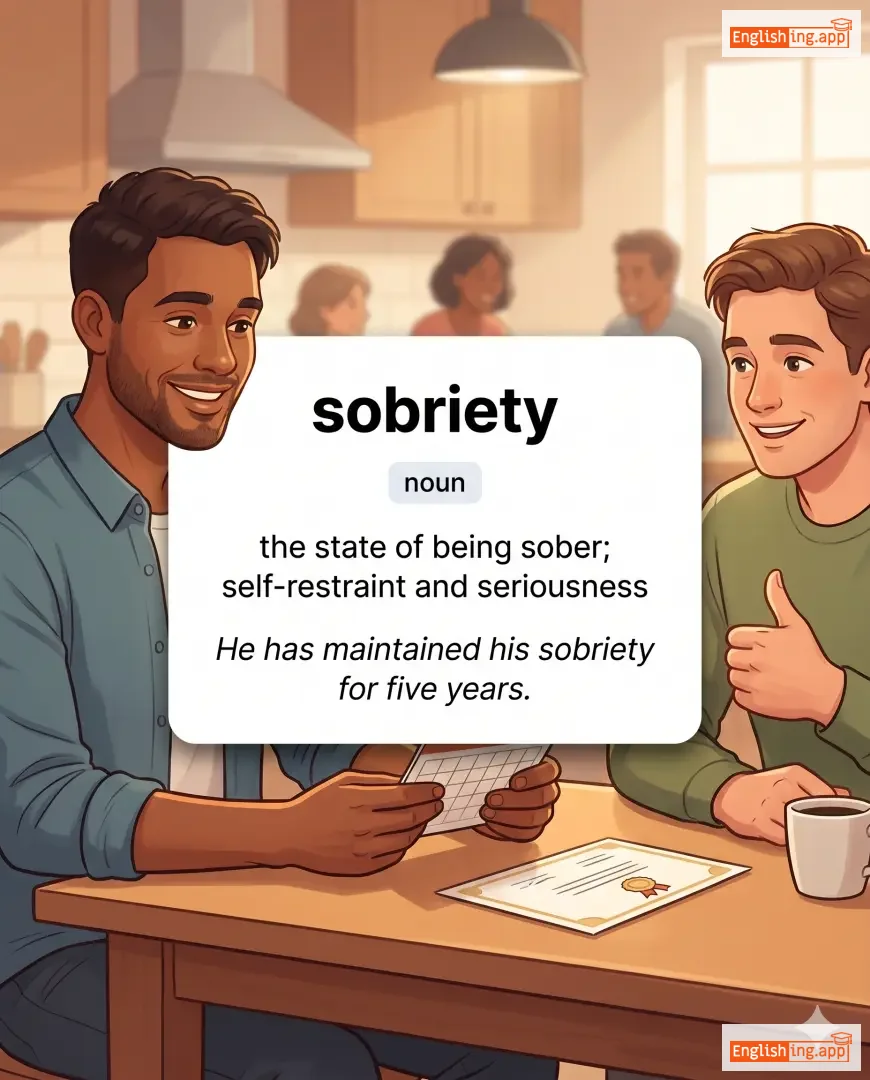
sobriety definition card — visual illustration of the meaning
noun
/səˈbraɪəti/
संयम (sanyam)

the state of being sober; self-restraint and seriousness

"He has maintained his sobriety for five years."

"उसने पांच साल तक अपनी संयम बनाए रखा है।" (Usne paanch saal tak apni sanyam banaye rakha hai.)
verb, noun
/stæb/
छुरा मारना (chhura marna)

to pierce or wound with a pointed weapon or object

"He was stabbed in the back during the altercation."

"उसे झगड़े के दौरान पीठ में छुरा मारा गया।" (Use jhagde ke dauran peeth mein chhura maara gaya.)
verb
/smɪr/
मालिश करना / बदनाम करना (malish karna / badnaam karna)

to spread or apply a substance messily; to damage someone's reputation with false or unfair words

"The child smeared paint across the wall."

"बच्चे ने दीवार पर रंग फैला दिया।" (Bachche ne deewar par rang phaila diya.)
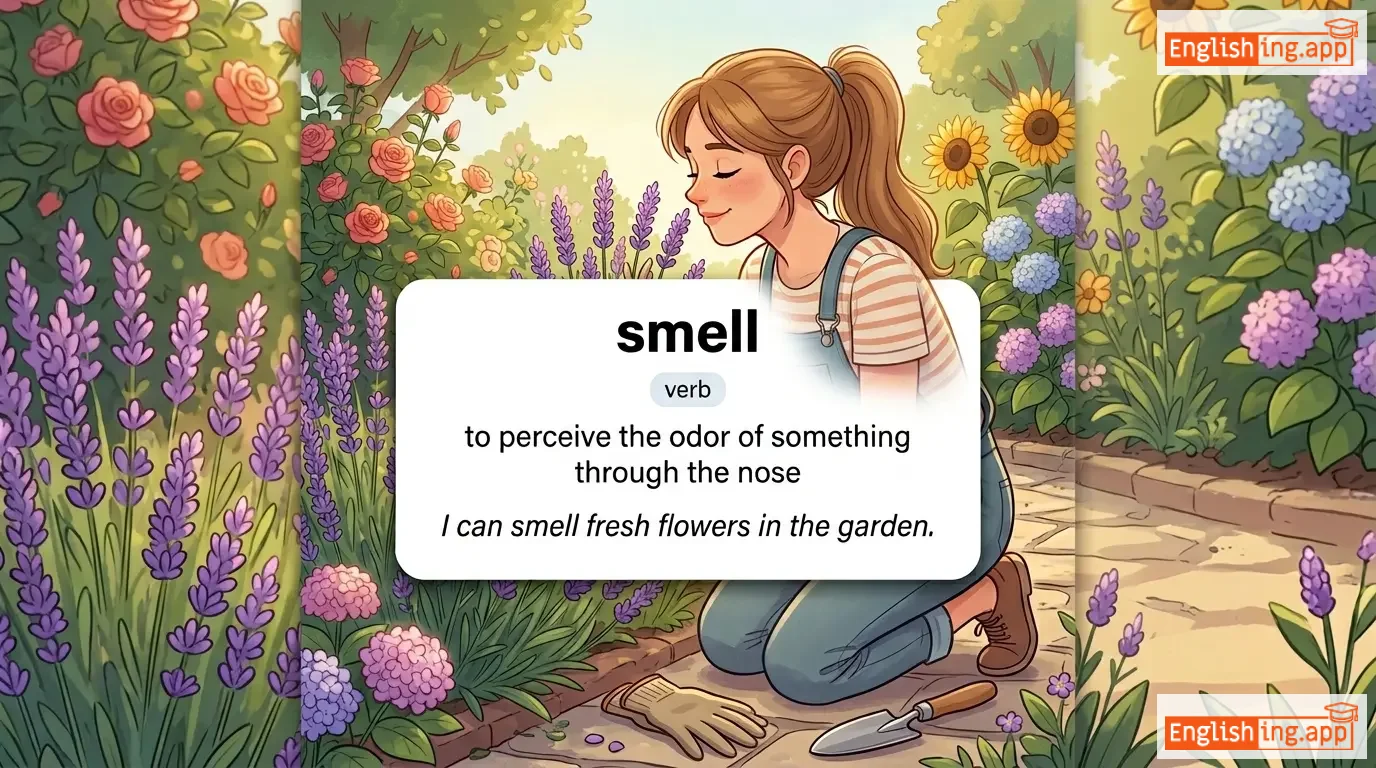
smell definition card — visual illustration of the meaning
verb
/smɛl/
गंध लेना (gandh lena)

to perceive the odor of something through the nose

"I can smell fresh flowers in the garden."

"मैं बग़ीचे में ताजे फूलों की ख़ुशबू महसूस कर सकता हूँ।" (Main bagiche mein taze phoolon ki khushboo mehsoos kar sakta hoon.)
verb
/smɛlt/
गलाना (galana)

to extract metal from its ore by heating and melting

"The workers smelt iron from its ore in the factory."

"कर्मचारी फैक्ट्री में अयस्क से लोहे को पिघलाकर निकालते हैं।" (Karmachari factory mein ayask se lohe ko pighalakar nikaalte hain.)
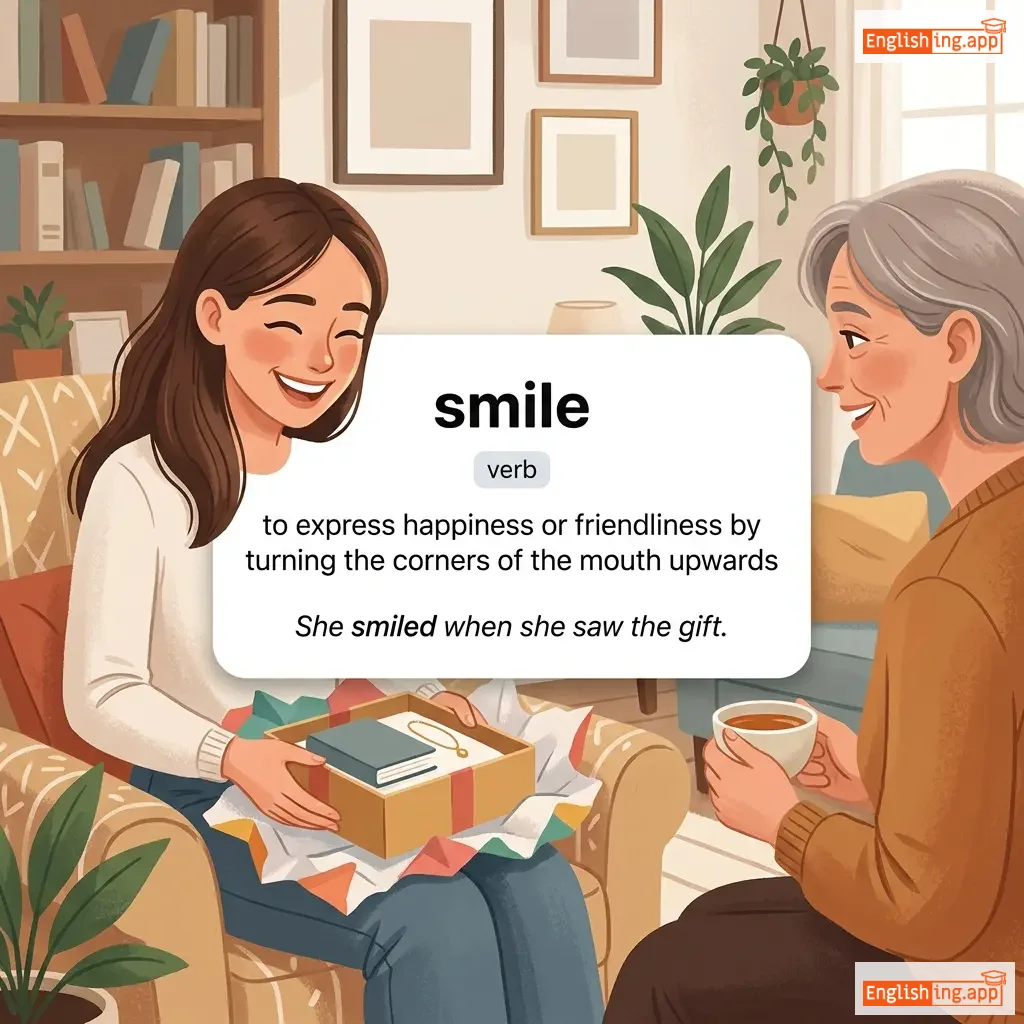
smile definition card — visual illustration of the meaning
verb
/smaɪl/
मुस्कान (muskaan)

to express happiness or friendliness by turning the corners of the mouth upwards

"She smiled when she saw the gift."

"वह उपहार देखकर मुस्काई।" (Vah uphaar dekhkar muskaayi.)
verb
/smɜrk/
उद्धत मुस्कान (uddhat muskaan)

to smile in a self-satisfied, smug, or silly way

"He smirked when he won the argument."

"वह तर्क जीतने के बाद मुस्कराया।" (Woh tark jeetne ke baad muskuraya.)
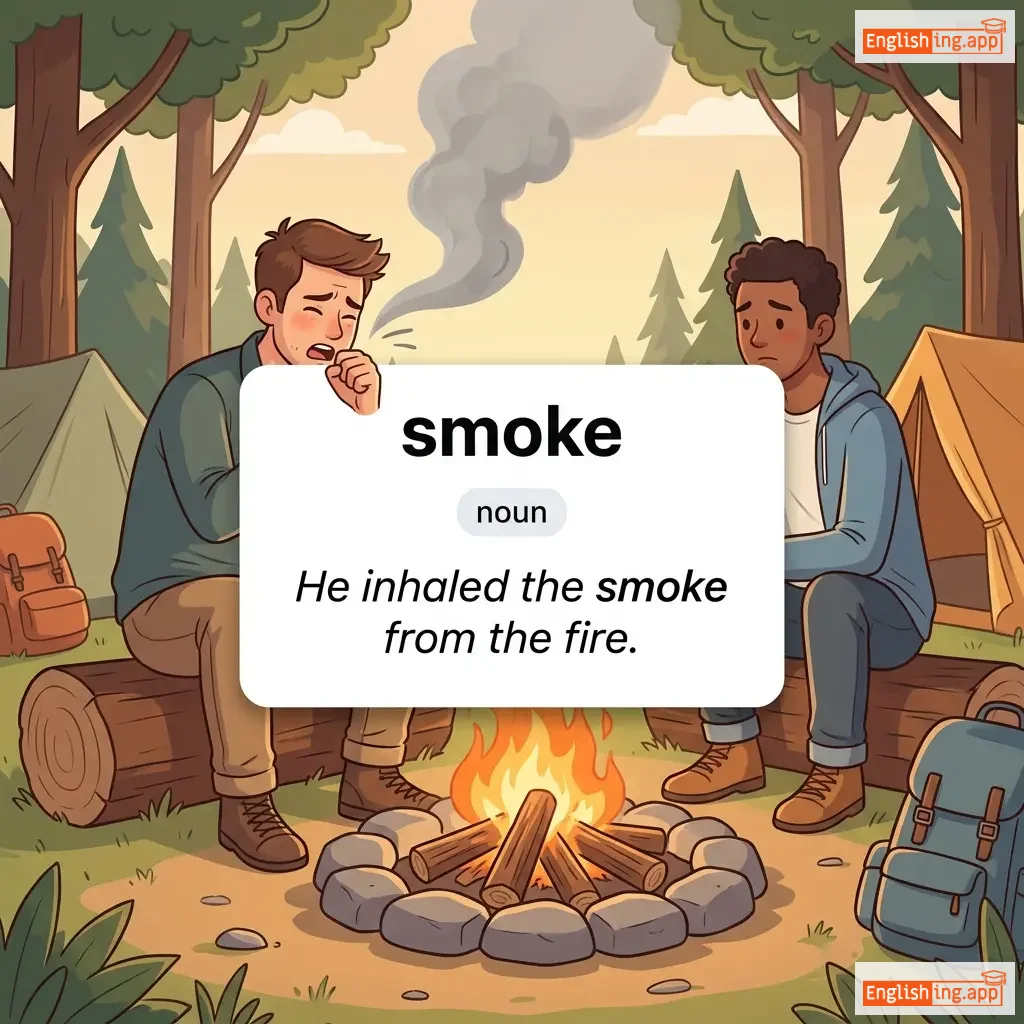
smoke definition card — visual illustration of the meaning
noun
/smoʊk/
धुआँ (dhuaan)

a visible suspension of fine particles of matter in the air, typically produced by combustion

"He inhaled the smoke from the fire."

"उसने आग से धुआँ साँस में लिया।" (Usne aag se dhuaan saans mein liya.)
noun
/ˈsmoʊkər/
धूम्रपान करने वाला (dhumrapan karne wala)

A person who smokes tobacco or other substances

"He is a heavy smoker and tries to quit every year."

"वह एक भारी धूम्रपान करने वाला है और हर साल छोड़ने की कोशिश करता है।" (Vah ek bhari dhumrapan karne wala hai aur har saal chhodne ki koshish karta hai.)
noun/adjective
/ˈsmoʊ.kɪŋ/
धूम्रपान (dhumrapan)

The act of inhaling and exhaling the smoke of tobacco or other substances; wearing a tuxedo (adjective, formal context).

"Smoking is prohibited inside the building."

"भवन के अंदर धूम्रपान निषेध है।" (bhavan ke andar dhumrapan nishedh hai.)
verb
/ˈsmoʊldər/
धीरे-धीरे जलना (dheere-dheere jalna)

to burn slowly with smoke but no flame; to show suppressed anger or emotion

"The fire smoldered for hours before it went out."

"आग कुछ घंटों तक धीरे-धीरे जलती रही।" (Aag kuch ghanton tak dheere-dheere jalti rahi.)
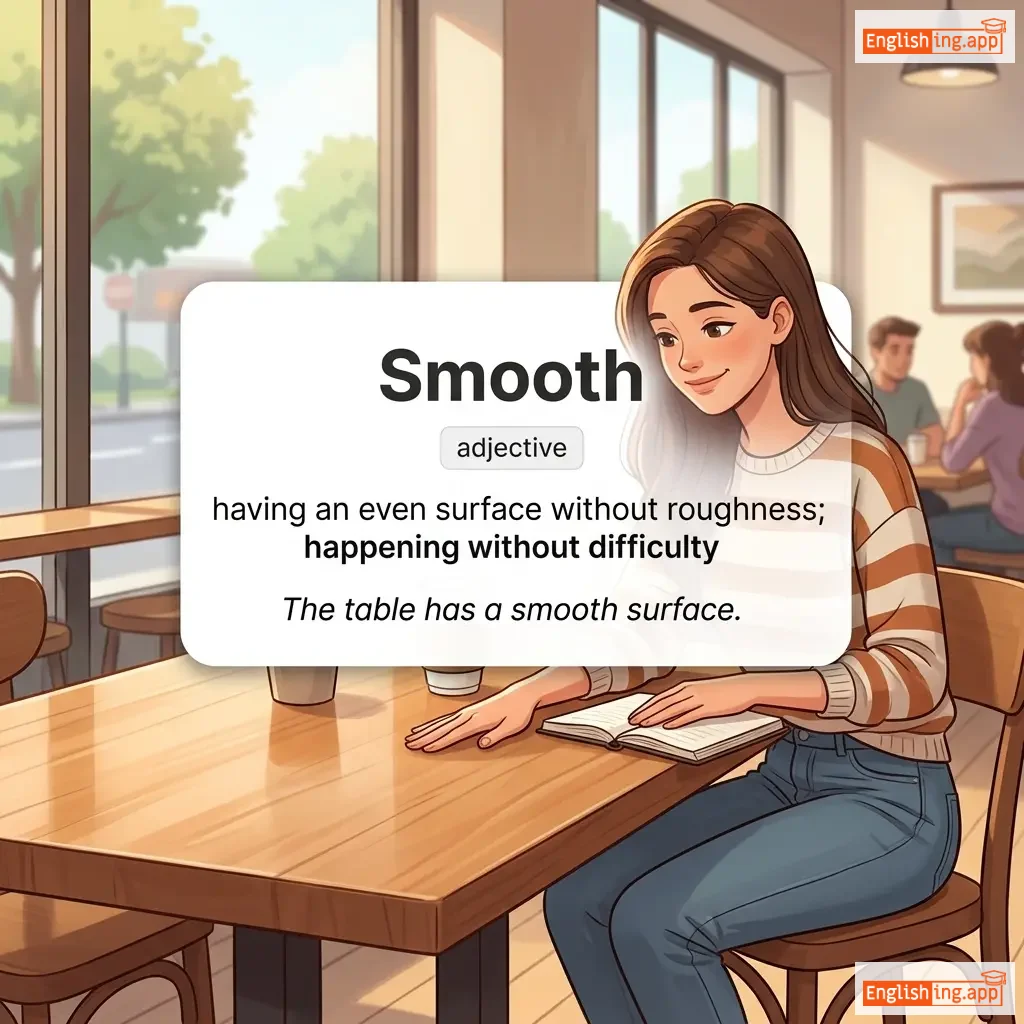
Smooth definition card — visual illustration of the meaning
adjective
/smuːð/
मुलायम (mulayam)

having an even surface without roughness; happening without difficulty

"The table has a smooth surface."

"टेबल की सतह मुलायम है।" (Tebal ki sath mulayam hai.)
adverb
/ˈsmuːð.li/
स्मूथली; बिना किसी कठिनाई के (smoothly; bina kisi kathinai ke)

without problems or difficulties; in an even and regular way

"The car runs smoothly on the new highway."

"गाड़ी नई हाईवे पर स्मूथली चलती है।" (gaadi nayee highway par smoothly chalti hai.)
verb
/ˈsmʌðər/
स्मोथर करना / दम घोंटना (smother karna / dam ghotna)

to kill someone by covering their nose and mouth to prevent breathing; to cover something completely; to overwhelm with excessive attention or affection

"She smothered the fire with a blanket."

"उसने कंबल से आग को ढक दिया।" (Usne kambal se aag ko dhak diya.)
noun/verb
/smʌdʒ/
धब्बा, गंदा निशान (dhabba, ganda nishan)

a dirty mark or smear; to make something dirty or unclear by rubbing or touching

"She accidentally smudged her lipstick on the napkin."

"वह गलती से नैपकिन पर अपना लिपस्टिक फैला बैठी।" (Wah galti se napkin par apna lipstick phaila baithi.)
adjective
/smʌɡ/
अत्यधिक घमंडी (atyadhik ghamandi)

having or showing an excessive pride in oneself or one's achievements

"He wore a smug smile after winning the debate."

"वह बहस जीतने के बाद अत्यधिक घमंडी मुस्कान के साथ खड़ा था।" (Vah bahas jeetne ke baad atyadhik ghamandi muskaan ke saath khada tha.)
verb
/ˈsmʌɡəl/
चोरी करना (chori karna)

to move goods illegally into or out of a country

"The gang tried to smuggle gold across the border."

"गैंग ने बॉर्डर पार करने के लिए सोने की चोरी करने की कोशिश की।" (Gang ne border paar karne ke liye sone ki chori karne ki koshish ki.)
noun
/sneɪl/
घोंघा (ghongha)

a small soft creature with a shell on its back that moves very slowly

"The snail left a shiny trail as it crawled across the leaf."

"घोंघा पत्ते के ऊपर से रेंगते हुए एक चमकदार निशान छोड़ गया।" (ghongha patte ke upar se rengte hue ek chamakdar nishan chhod gaya)
noun
/sneɪk/
साँप (saap)

a long, legless reptile that moves by slithering

"A snake slithered across the garden path."

"एक साँप बगिया के रास्ते पर सरकता हुआ गया।" (ek saap bagiyaa ke raaste par sarkta hua gaya.)
noun
/sneɪk ɡɔːrd/
सांप लौकी (saamp laukee)

a long, curved vegetable that resembles a snake, commonly used in South Asian cuisine

"The snake gourd grows in a twisted, serpentine shape in the garden."

"सांप लौकी बग़ीचे में मुड़े हुए, साँप जैसी आकृति में बढ़ती है।" (saamp laukee bageeche mein mudhe hue, saanp jaisi aakriti mein briddhi karti hai.)
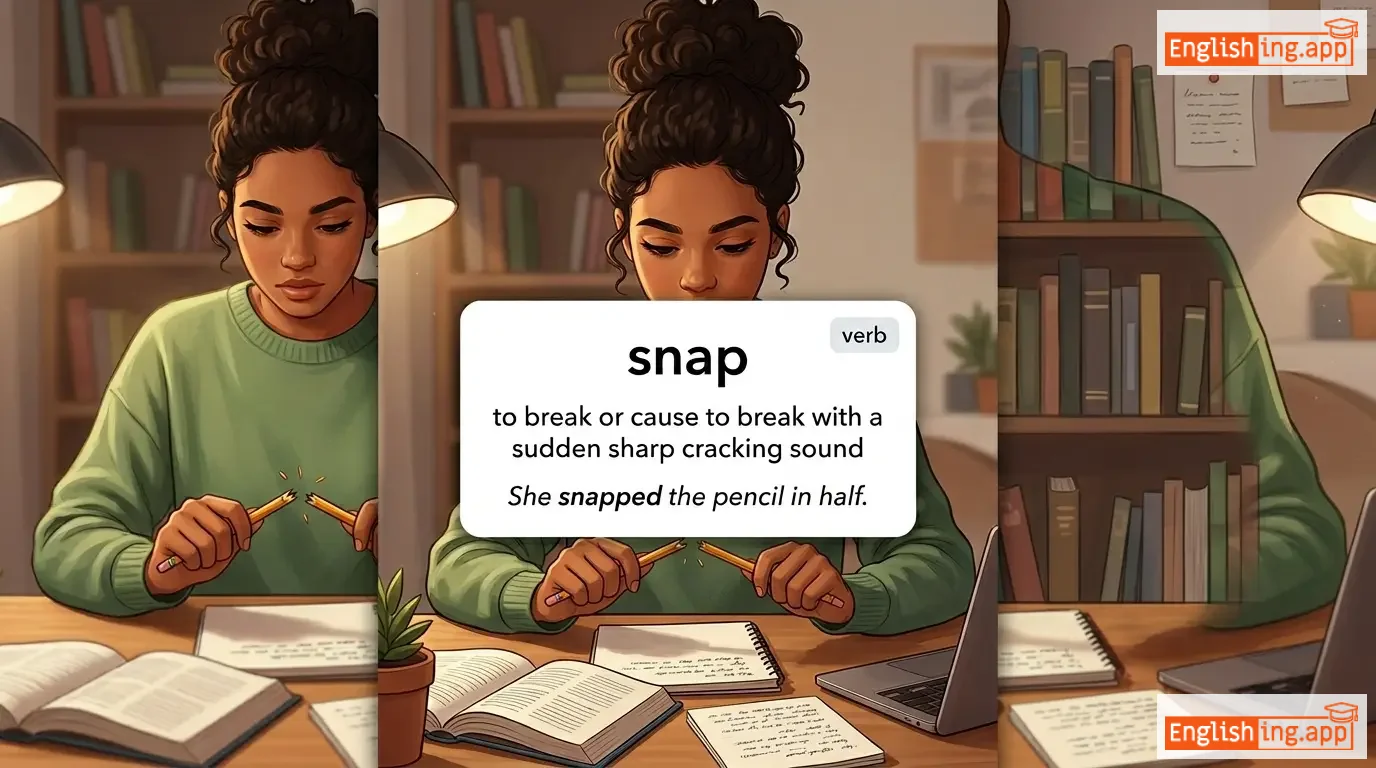
snap definition card — visual illustration of the meaning
verb
/snæp/
तोड़ना (toḍnā)

to break or cause to break with a sudden sharp cracking sound

"She snapped the pencil in half."

"उसने पेंसिल को आधे में तोड़ दिया।" (Usne pensil ko ādhē mēṁ tōṛ diyā.)
noun/verb
/snɛər/
जाल (jaal)

a trap for catching animals; to catch or trap

"The hunter set a snare to catch rabbits."

"शिकारी ने खरगोश पकड़ने के लिए एक जाल लगाया।" (Shikari ne khargosh pakadne ke liye ek jaal lagaya.)
verb/noun
/snɑːrl/
गर्जन, जट (garjan, jat)

to growl aggressively with bared teeth; a tangle or mess

"The dog snarled at the stranger near the gate."

"कुत्ता गेट के पास अजनबी पर गुर्राया।" (kutta get ke paas ajnabi par gurraya.)
verb
/sniːk/
चुपके से चलना (chupke se chalna)

to move quietly and secretly to avoid being noticed

"He tried to sneak into the house without waking anyone."

"उसने किसी को बिना जगाए घर में घुसने की कोशिश की।" (Usne kisi ko bina jagaaye ghar mein ghusne ki koshish ki.)
verb
/snɪər/
व्यंग्य करना (vyangya karna)

to smile or speak in a mocking or contemptuous way

"She sneered at his attempt to sing."

"वह उसके गाने की कोशिश पर उपहास करती थी।" (Vah uske gane ki koshish par upahass karti thi.)
verb, noun
/sniːz/
छींकना (chheenkna)

to expel air involuntarily from the nose and mouth due to irritation; the act of sneezing

"I had to sneeze during the meeting."

"मुझे मीटिंग के दौरान छींक आ गई।" (mujhe meeting ke dauran chheenk aa gai)
verb
/ˈsnɪkər/
चुपके से हंसना (chupke se hansna)

to laugh quietly in a disrespectful or mocking way

"The students snickered when the teacher made a mistake."

"जब शिक्षक ने गलती की तो छात्र चुपके से हंसी।" (Jab shikshak ne galti ki to chatra chupke se hansi.)
adjective
/snaɪd/
व्यंग्यात्मक (vyangyatmak)

mocking or insulting in an indirect way

"He couldn’t resist making a snide comment about her dress."

"वह अपनी पोशाक पर व्यंग्यात्मक टिप्पणी करने से खुद को रोक नहीं सका।" (Vah apni poshak par vyangyatmak tippani karne se khud ko rok nahi saka.)
verb
/snɪp/
काटना (kaatna)

to cut something quickly with scissors or a sharp tool

"She snipped the loose thread from her dress."

"उसने अपनी ड्रेस से ढीला धागा काट दिया।" (Usne apni dress se dheela dhaaga kaat diya.)
verb
/ˈsnɪvəl/
रोना या शिकायत करना एक कमजोर या चिढ़ाने वाले तरीके से (rona ya shikayat karna ek kamzor ya chidhane wale tareeke se)

to cry or complain in a weak or annoying way

"He began to snivel when he didn’t get his way."

"वह जब अपनी मनमानी नहीं कर सका तो वह स्निवेल करने लगा।" (Woh jab apni manmaani nahi kar saka to woh snivel karne laga.)
adjective
/ˈsnɒbɪʃ/
अहंकारी (ahankari)

having or showing the attitude of people who think they are better than others

"She seemed snobbish because she avoided talking to the waiters."

"वह अहंकारी लग रही थी क्योंकि उसने वेटरों से बात करना टाल दिया।" (Vah ahankari lag rahi thi kyonki usne waitron se baat karna taal diya.)
noun
/snoʊ/
हिमपात (himpaat)

frozen water vapor that falls from the sky as white flakes

"Children love to play in the snow."

"बच्चों को बर्फ में खेलना बहुत पसंद है।" (bachon ko barf mein khelna bahut pasand hai.)
noun
/ˈsnoʊ.fɔːl/
हिमपात (himpaat)

the process of snow falling from the sky; the amount of snow that falls

"The heavy snowfall blocked all the roads yesterday."

"भारी हिमपात ने कल सभी सड़कों को अवरुद्ध कर दिया।" (bhaari himpaat ne kal sabhi sadkon ko avaruddh kar diya)
verb
/snʌb/
अपमान करना (apmaan karna)

to insult or ignore someone by treating them rudely

"He felt hurt when his invitation was snubbed."

"वह महसूस करता था जब उसका निमंत्रण अपमानित कर दिया गया।" (Wah mehsoos karta tha jab uska nimantran apmaanit kar diya gaya.)
verb
/ˈsnʌfəl/
नाक से शोर कर के साँस लेना (nak se shor kar ke sans lena)

to breathe noisily through the nose, often because of crying or a cold

"The child began to snuffle after crying for a long time."

"लंबे समय तक रोने के बाद बच्चा नाक से शोर कर के साँस लेने लगा।" (Lambe samay tak rone ke baad bachcha nak se shor kar ke sans lene laga.)
adverb
/soʊ/
इतना (itnā)

to such a degree or extent

"She was so happy with the gift."

"वह उपहार से इतनी खुश थी।" (Vah upahār se itnī khush thī.)
adjective
/ˈsoʊ kɔːld/

referred to as or known by a particular name or title, often misleadingly

"The so-called expert couldn't answer the question."

verb
/soʊk/
भिगोना (bhigona)

to make something completely wet by immersing it in liquid

"She soaked the clothes in water before washing them."

"उसने कपड़े धोने से पहले उन्हें पानी में भिगो दिया।" (Usne kapde dhone se pehle unhe paani mein bhigo diya.)
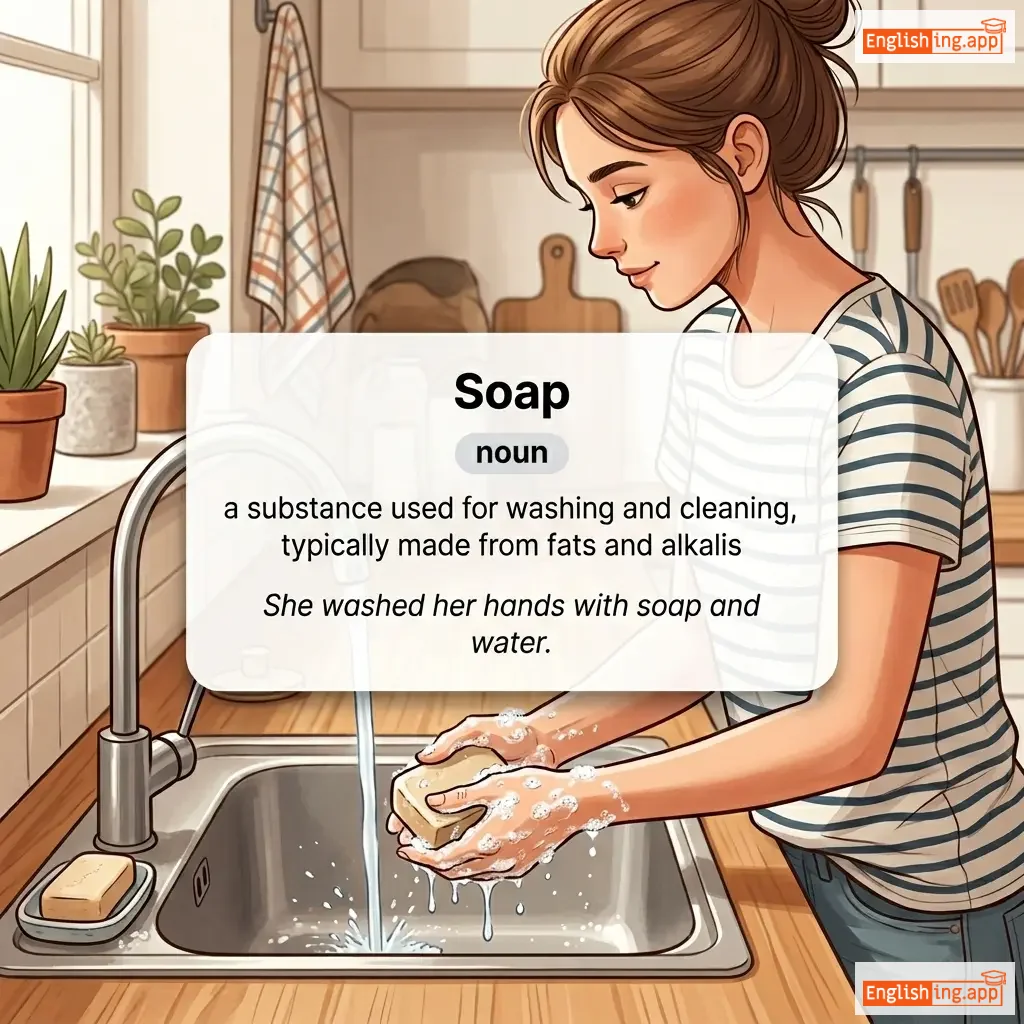
Soap definition card — visual illustration of the meaning
noun
/soʊp/
साबुन (sabun)

a substance used for washing and cleaning, typically made from fats and alkalis

"She washed her hands with soap and water."

"उसने साबुन और पानी से अपने हाथ धोए।" (Usne sabun aur paani se apne haath dhoye.)
noun
/soʊp keɪs/
साबुन का डिब्बा (saabun ka dibba)

a container used to store soap

"She bought a beautiful soap case for the bathroom."

"उसने बाथरूम के लिए एक खूबसूरत साबुन का डिब्बा खरीदा।" (Usne bathroom ke liye ek khoobsurat saabun ka dibba khareeda.)
adjective
/ˈsoʊpi/
साबुन से ढका हुआ; साबुन जैसा; झागदार (sabun se dhaka hua; sabun jaisa; jhagdaar)

covered with soap; having the characteristics of soap; foamy

"The dishes were still soapy after washing."

"प्लेट धोने के बाद अभी भी साबुन से ढकी हुई थीं।" (plet dhone ke baad abhi bhi sabun se dhaki hui thin.)
verb
/sɔːr/
उंचा उड़ना / तेजी से बढ़ना (uncha udna / tezi se badhna)

to fly or rise high in the air; to increase rapidly or dramatically

"The eagle soared high above the mountains."

"ईगल पहाड़ों के ऊपर ऊँचा उड़ रहा था।" (Eagle pahaadon ke upar uncha ud raha tha.)
verb
/sɑːb/
हिचकी लेकर जोर जोर से रोना (hichki lekar zor zor se rona)

to cry noisily while taking short breaths

"She began to sob uncontrollably after hearing the news."

"खबर सुनते ही वह जोर जोर से रोने लगी।" (Khobar sunte hi vah zor zor se rone lagi.)
adjective
/ˈsoʊbər/
नशे से मुक्त / गंभीर (nashe se mukt / gambhir)

not affected by alcohol; serious, sensible, and solemn

"He gave a sober speech about the challenges ahead."

"उसने आने वाली चुनौतियों पर गंभीर भाषण दिया।" (Usne aane wali chunautiyon par gambhir bhashan diya.)
noun/verb
/ˈsoʊdʒɜrn/
अस्थायी Aufenthalt (asthayi avasthaan)

A temporary stay at a place; to stay temporarily

"She enjoyed a brief sojourn in Paris during the summer."

"उसने गर्मियों के दौरान पेरिस में एक संक्षिप्त अस्थायी ठहराव का आनंद लिया।" (Usne garmiyon ke dauran Paris mein ek sankshipt asthayi thaharav ka anand liya.)
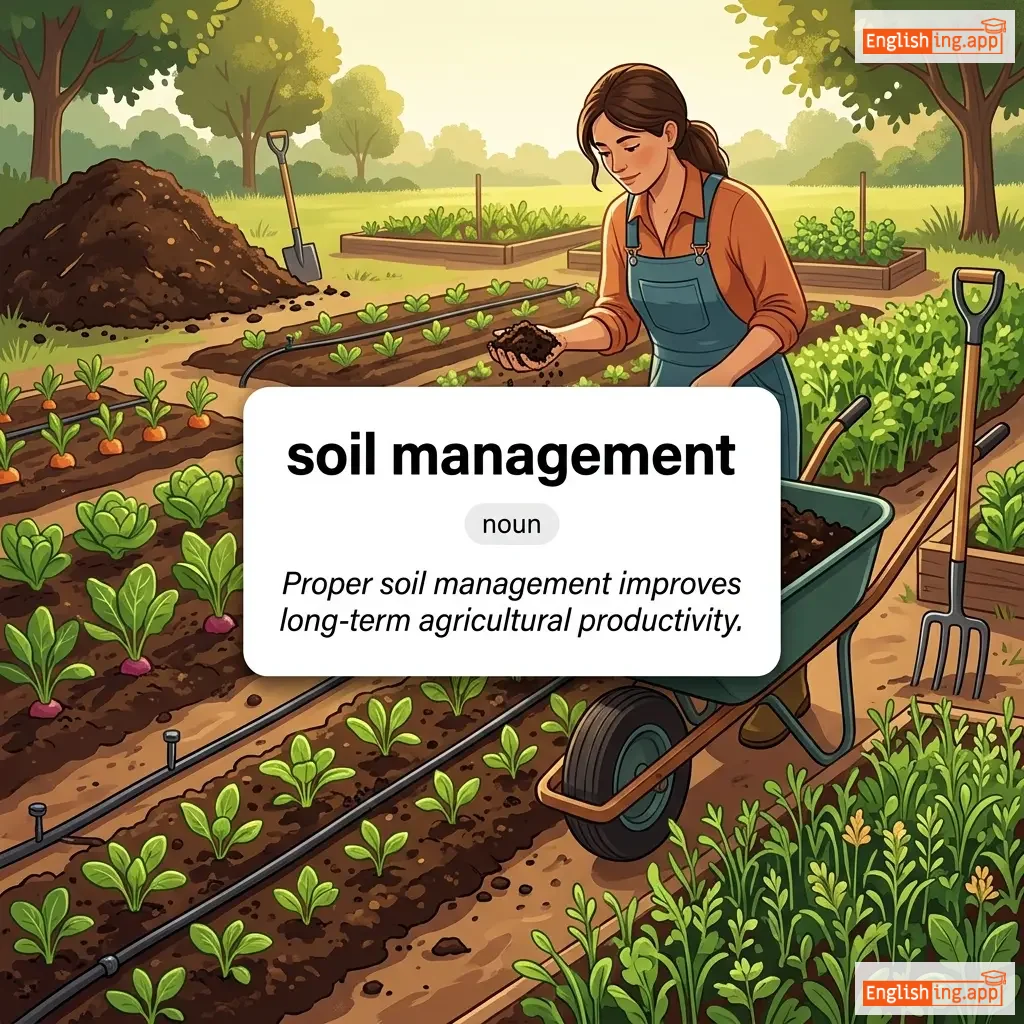
soil management definition card — visual illustration of the meaning
noun
/sɔɪl ˈmæn.ɪdʒ.mənt/
मिट्टी प्रबंधन (mitti prabandhan)

The application of operations, practices, and treatments to protect soil and enhance its performance.

"Proper soil management improves long-term agricultural productivity."

"सही मिट्टी प्रबंधन दीर्घकालिक कृषि उत्पादकता को सुधारता है।" (Sahi mitti prabandhan deerghkaalik krishi utpadakta ko sudhaarta hai.)
adjective
/sɔɪld/
गंदा (ganda)

dirty or stained; not clean

"His clothes were soiled after playing in the mud."

"कीचड़ में खेलने के बाद उसके कपड़े गंदे हो गए थे।" (Keechar mein khelne ke baad uske kapde gande ho gaye the.)
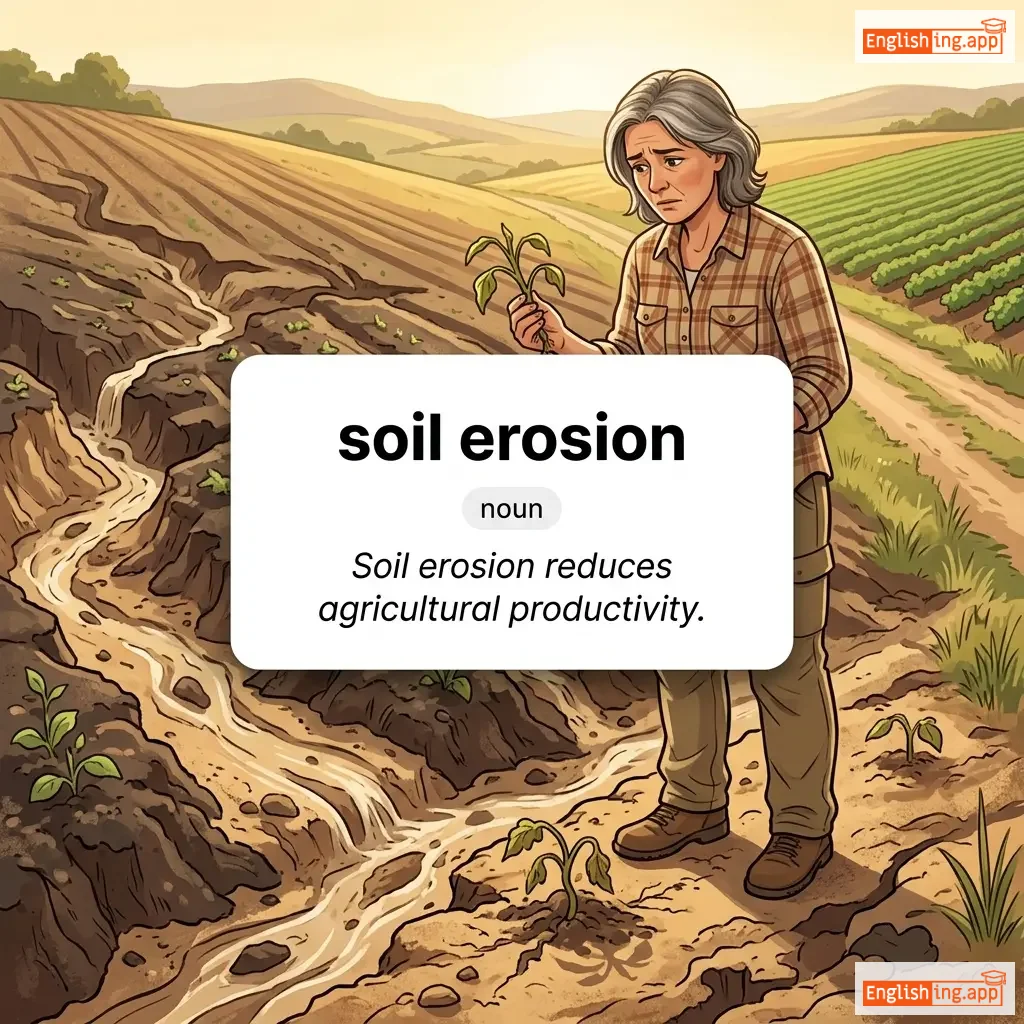
soil erosion definition card — visual illustration of the meaning
noun
sɔɪl ɪˈrəʊ.ʒən
खुशी (khushi)

The removal of topsoil by wind, water, or other natural forces, reducing agricultural productivity.

"Soil erosion reduces agricultural productivity."

"वह पुरस्कार प्राप्त करते समय अपनी खुशी को छुपा नहीं सकी।" (Wah puraskar prapt karte samay apni khushi ko chhupa nahi saki.)
noun
/sɒl/
सोल (संगीत के पांचवे स्वर) (sol (sangeet ke paanchve swar))

The fifth note of the sol-fa musical scale (do, re, mi, fa, sol, la, ti); also the Latin word for sun

"The choir practiced singing the note sol during rehearsal."

"कोइर रिहर्सल के दौरान सोल स्वर को गाने का अभ्यास किया था।" (Choir rehearsal ke dauran sol swar ko gane ka abhyas kiya tha.)
noun/verb
/ˈsɒləs/
सांत्वना (santvna)

Comfort or consolation in a time of distress or sadness

"She found solace in music after the loss of her father."

"वह अपने पिता की मृत्यु के बाद संगीत में सांत्वना पाई।" (Woh apne pita ki mrityu ke baad sangeet mein santvna pai.)