Vocabulaires

Découvrez, apprenez et maîtrisez le vocabulaire anglais

🚶‍♂️

stride (straïd)

verb
/straɪd/
marcher avec de longs pas décisifs ; faire des progrès (marcher avec de longs pas décisifs ; faire des progrès)

to walk with long, decisive steps; to make progress

"She strode confidently across the stage."

"Elle marcha avec confiance sur la scène." (Elle marcha avec confiance sur la scène.)
adjective
/ˈstraɪ.dənt/
strident, bruyant (strident, bruyant)

loud and harsh; presenting a point of view in a forceful way

"His strident voice made the debate uncomfortable."

"Sa voix stridente rendait le débat inconfortable." (Sa voix stridente rendait le debat inconfortable.)
noun
/straɪf/
conflit, lutte (conflit, lutte)

angry or violent conflict; struggle or discord

"The region has been torn apart by political strife."

"La région a été déchirée par des conflits politiques." (La region a ete dechiree par des conflits politiques.)
verb
/straɪk/
grève / frapper (greve / frapper)

to hit forcibly or attack; also to stop work as a form of protest

"The workers decided to strike for better wages."

"Les travailleurs ont décidé de faire grève pour de meilleurs salaires." (Les travailleurs ont décidé de faire grève pour de meilleurs salaires.)
adjective
/ˈstraɪkɪŋ/
frappant (frappant)

very noticeable or impressive in appearance or effect

"Her striking beauty caught everyone's attention."

"Sa beauté frappante a attiré l'attention de tout le monde." (Sa beaute frappante a attire l'attention de tout le monde.)
noun, verb
/strɪŋ/
ficelle (ficelle)

a thin piece of cord or thread; to tie or fasten with a string

"She tied the package with a string."

"Elle a attaché le paquet avec une ficelle." (Elle a attaché le paquet avec une ficelle.)
noun
/ˈstrɪndʒənsi/
rigueur (rigueur)

the quality of being strict, precise, or severe

"The stringency of the new rules surprised everyone."

"La rigueur des nouvelles règles a surpris tout le monde." (La rigueur des nouvelles règles a surpris tout le monde.)
adjective
/ˈstrɪndʒənt/
strict (strict)

strict, precise, and exacting

"The government imposed stringent measures during the crisis."

"Le gouvernement a imposé des mesures strictes pendant la crise." (Le gouvernement a imposé des mesures strictes pendant la crise.)
verb
/strɪp/
dépouiller / enlever (depouiller / enlever)

to remove coverings or layers from something; to undress

"He had to strip the old paint from the wall."

"Il a dû enlever la vieille peinture du mur." (Il a dû enlever la vieille peinture du mur.)
noun
/ˈstrɪplɪŋ/
jeune homme (jeune homme)

a young man who is not yet fully grown

"The stripling dreamed of becoming a brave knight."

"Le jeune homme rêvait de devenir un chevalier courageux." (Le jeune homme revait de devenir un chevalier courageux.)
verb
/straɪv/
s'efforcer (s'efforcer)

To make great efforts to achieve or obtain something.

"She strives to be the best student in her class."

"Elle s'efforce d'être la meilleure élève de sa classe." (Elle s'efforce d'être la meilleure élève de sa classe.)
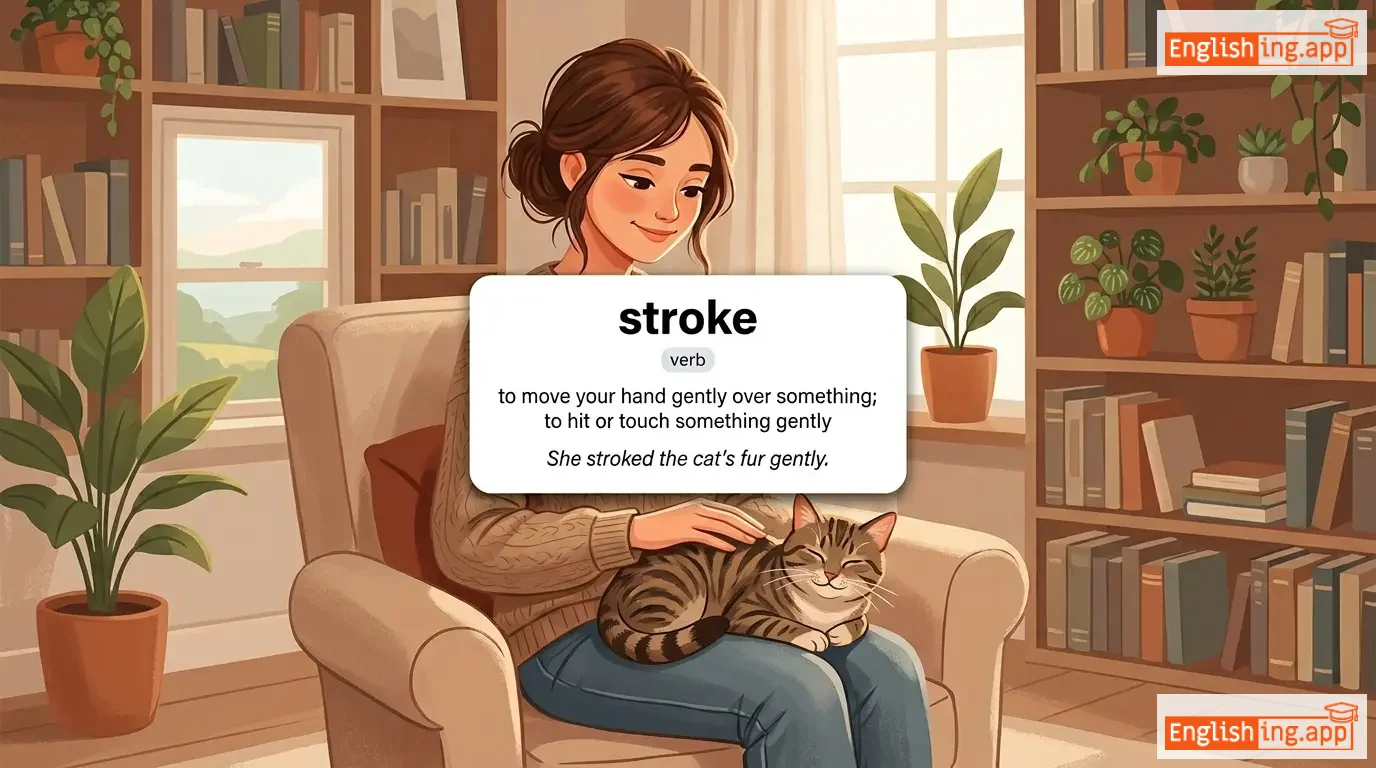
stroke definition card — visual illustration of the meaning
noun
/strəʊk/
AVC (AVC)

a sudden attack or event, typically of a medical or physical nature

"He suffered a stroke while working at his desk."

"Il a eu un AVC en travaillant à son bureau." (Il a eu un AVC en travaillant à son bureau.)
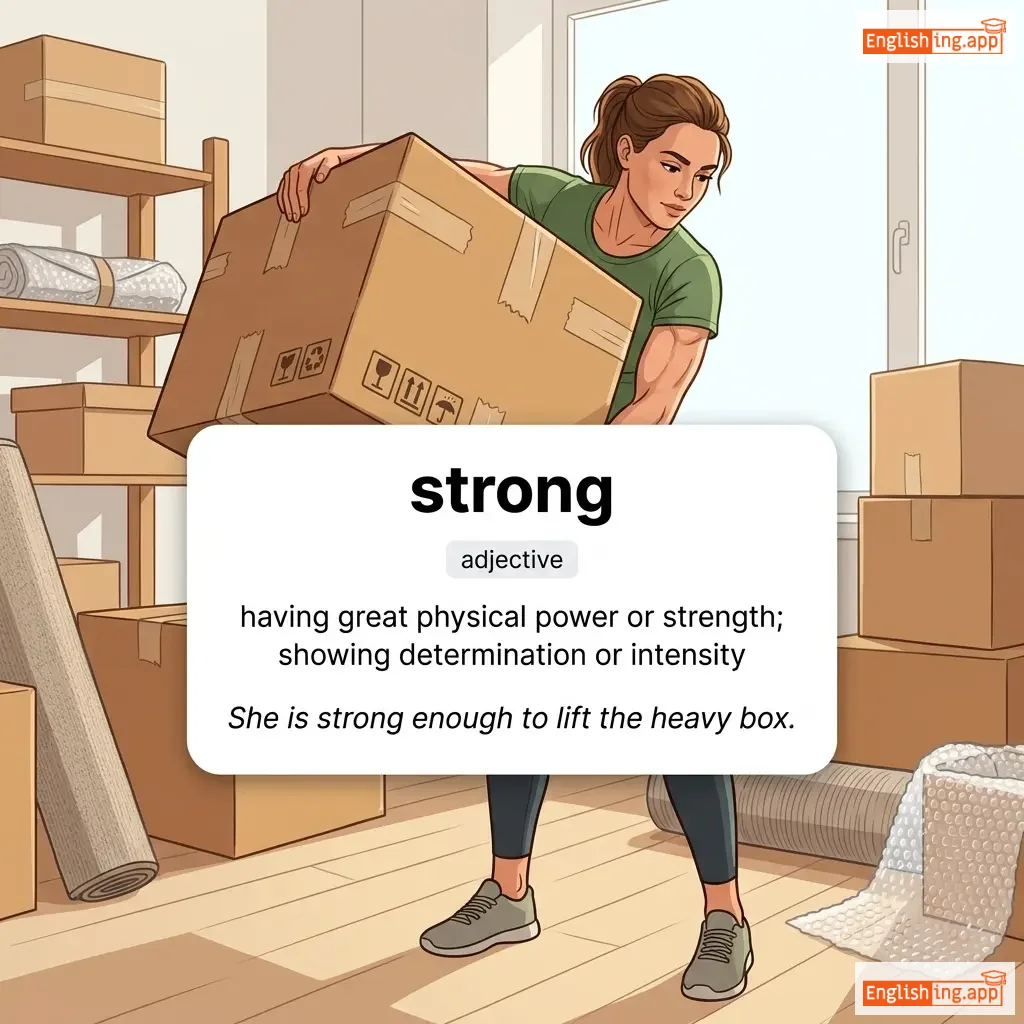
strong definition card — visual illustration of the meaning
adjective
/strɔːŋ/
fort (fort)

having great physical power or strength; showing determination or intensity

"She is strong enough to lift the heavy box."

"Elle est assez forte pour soulever la boîte lourde." (Elle est assez forte pour soulever la boîte lourde.)
adverb
/ˈstrɒŋɡli/
fortement (fortement)

in a strong manner or to a great extent

"She strongly believes in the power of positive thinking."

"Elle croit fortement au pouvoir de la pensée positive." (Elle croit fortement au pouvoir de la pensée positive.)
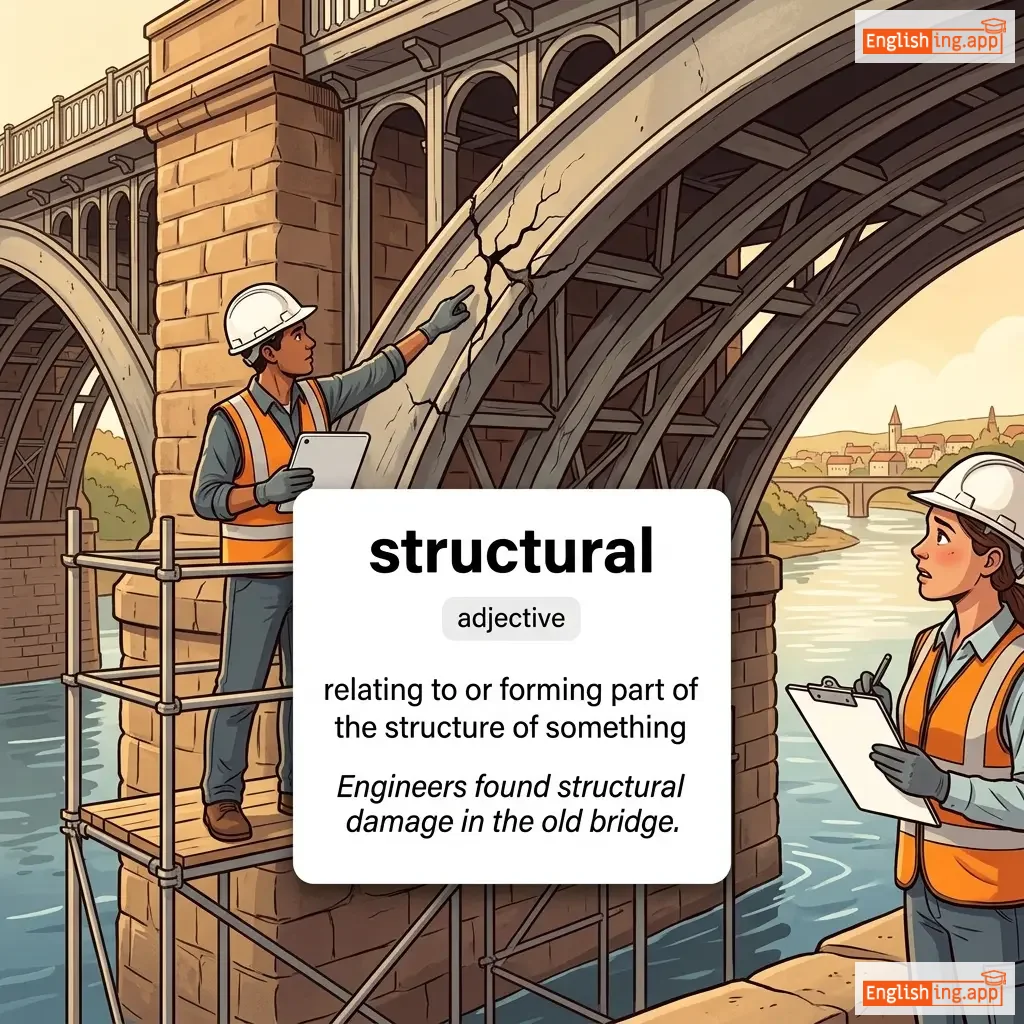
structural definition card — visual illustration of the meaning
adjective
/ˈstrʌktʃərəl/
structurel (structurel)

relating to or forming part of the structure of something

"Engineers found structural damage in the old bridge."

"Des ingénieurs ont constaté des dommages structurels sur le vieux pont." (Des ingenieurs ont constate des dommages structurels sur le vieux pont)
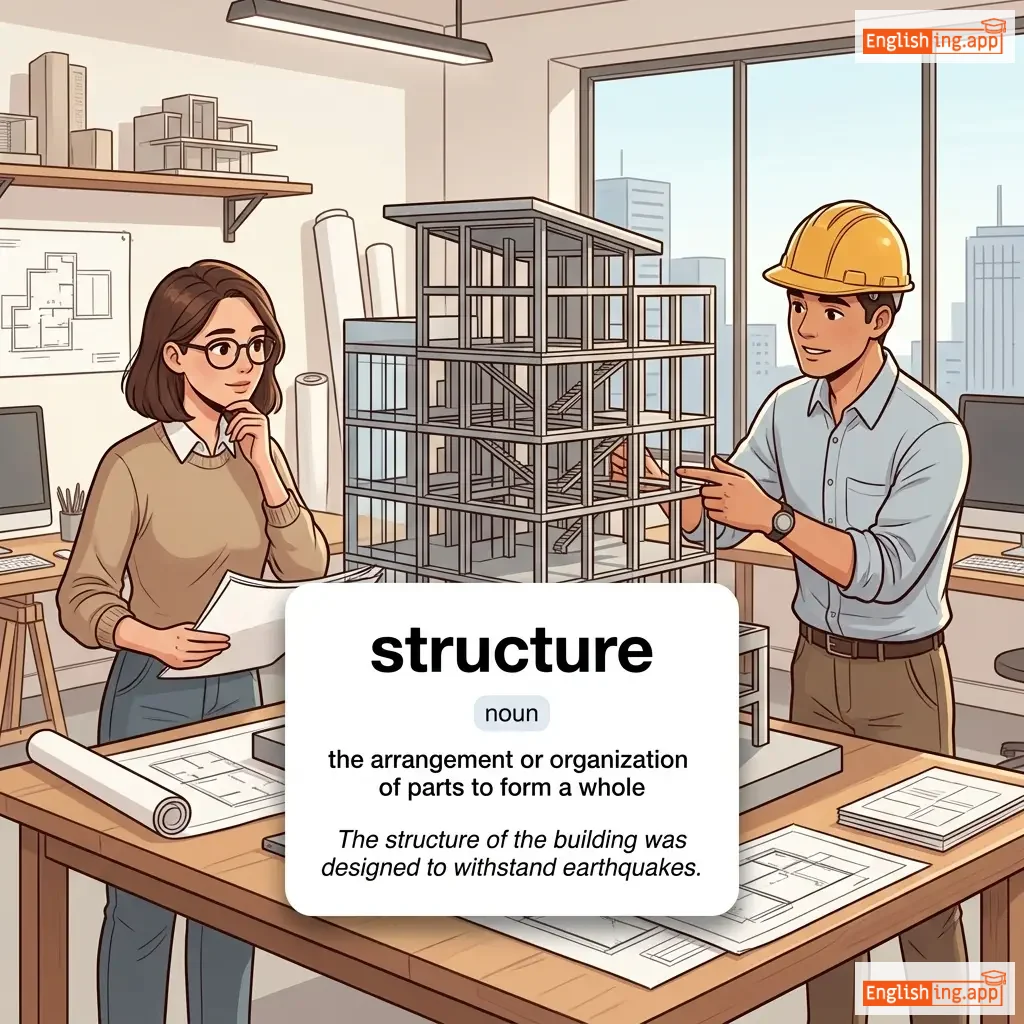
structure definition card — visual illustration of the meaning
noun
/ˈstrʌktʃər/
structure (structure)

the arrangement or organization of parts to form a whole

"The structure of the building was designed to withstand earthquakes."

"La structure du bâtiment a été conçue pour résister aux tremblements de terre." (La structure du batiment a ete concue pour resister aux tremblements de terre.)
structured definition card — visual illustration of the meaning
adjective
ˈstrʌktʃərd
structuré (structure)

Having a clear organization or framework; systematically arranged.

"A structured execution plan is crucial for success."

"Un plan d'exécution structuré est crucial pour le succès." (Un plan d'execution structure est crucial pour le succes.)
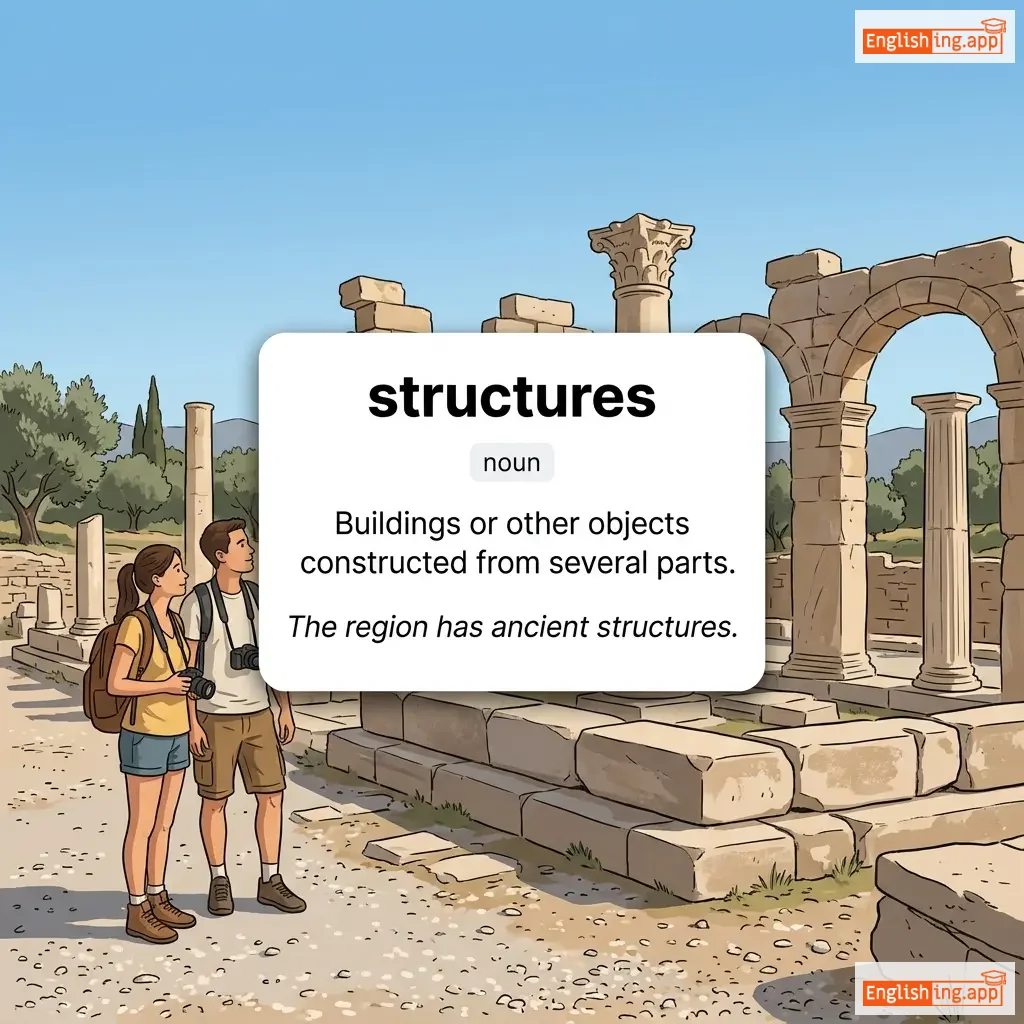
structures definition card — visual illustration of the meaning
noun
/ˈstrʌk.tʃərz/
structures (structures)

Buildings or other objects constructed from several parts.

"The region has ancient structures."

"La région possède des structures anciennes." (La région possède des structures anciennes.)
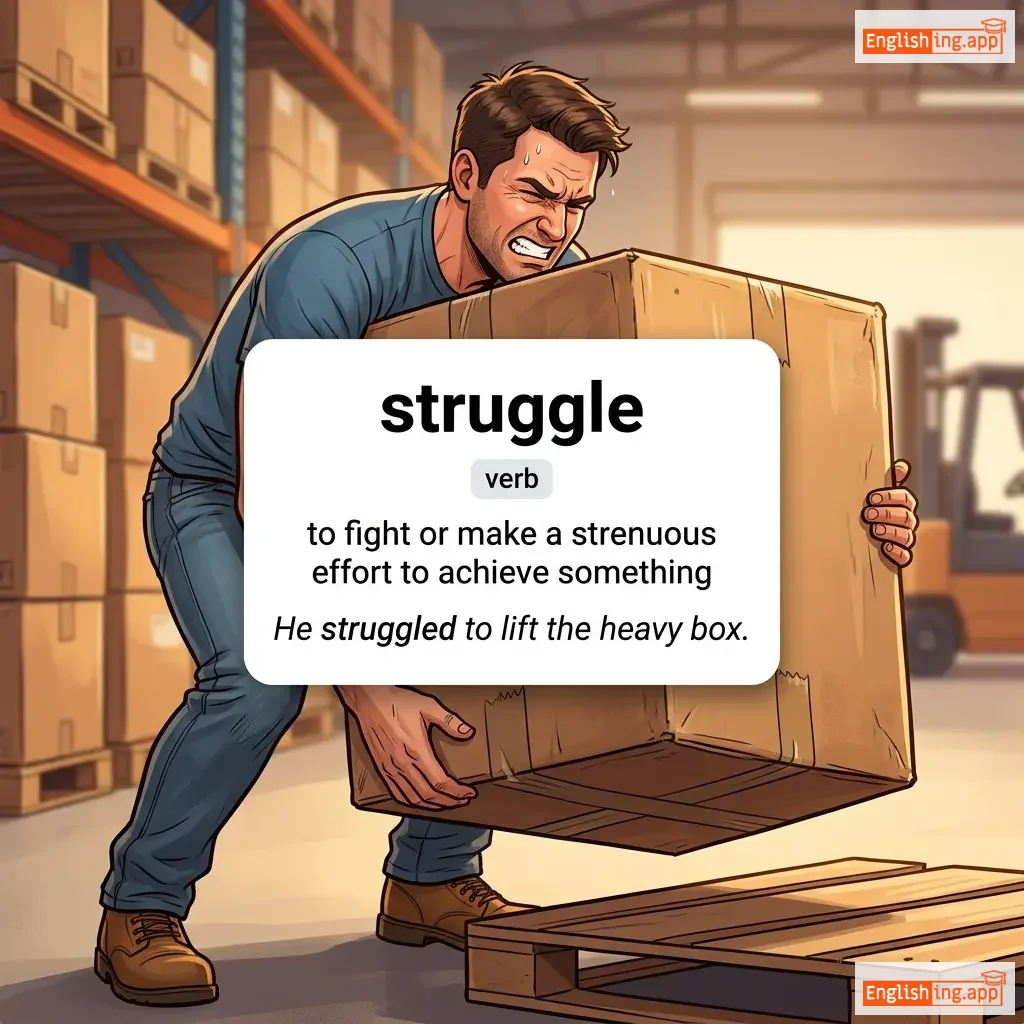
struggle definition card — visual illustration of the meaning
verb
/ˈstrʌɡl/
lutte (lutte)

to fight or make a strenuous effort to achieve something

"He struggled to lift the heavy box."

"Il a lutté pour soulever la boîte lourde." (Il a lutté pour soulever la boîte lourde.)
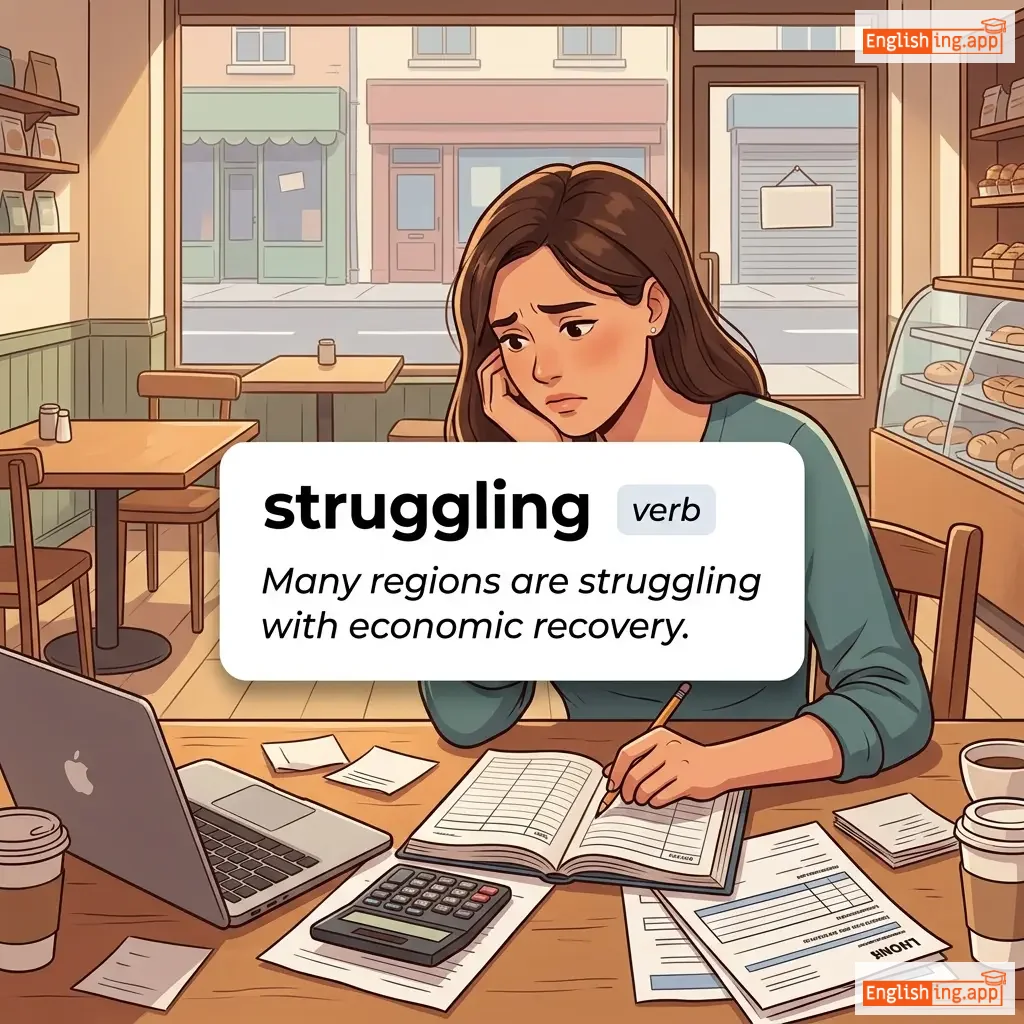
struggling definition card — visual illustration of the meaning
verb
/ˈstrʌɡlɪŋ/
lutter (lutter)

Making forceful or violent efforts to get free of restraint or constriction; having difficulty achieving something.

"Many regions are struggling with economic recovery."

"De nombreuses régions luttent pour se remettre de la crise économique." (De nombreuses régions luttent pour se remettre de la crise économique.)
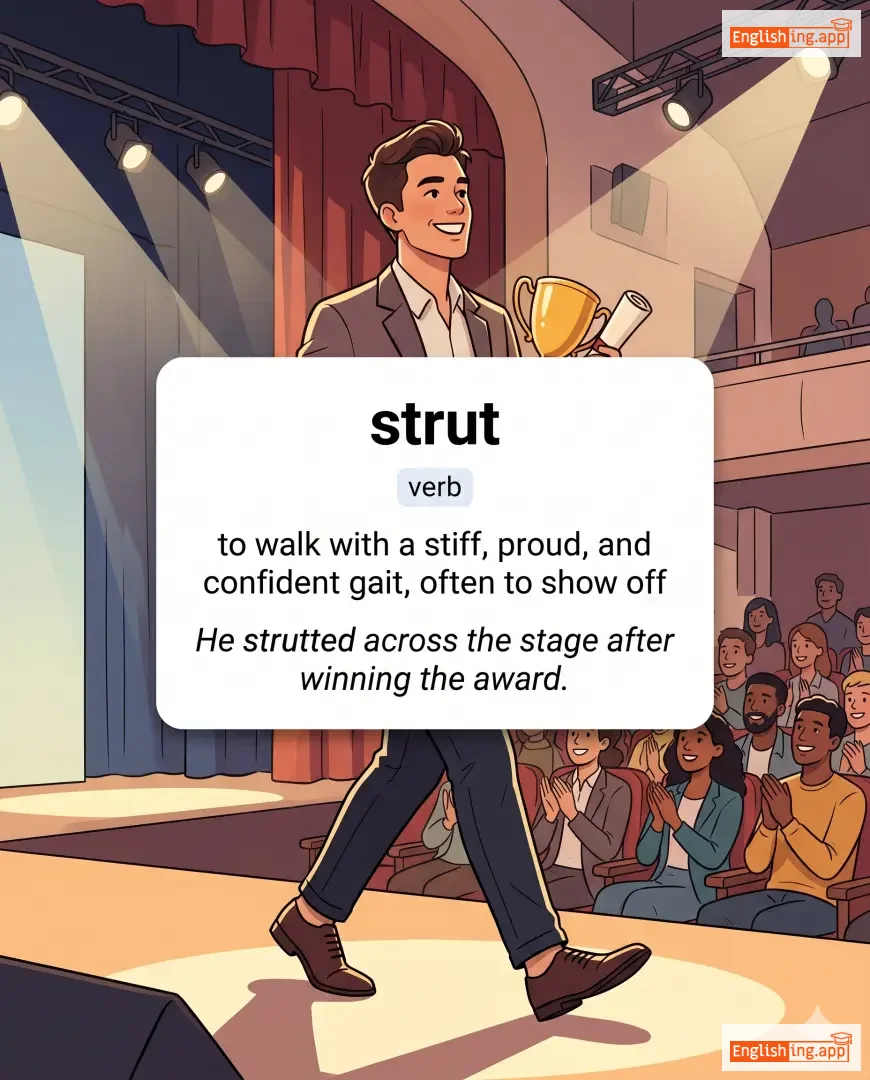
strut definition card — visual illustration of the meaning
🚶‍♂️

strut (strut)

verb
/strʌt/
marcher avec fierté (marcher avec fierte)

to walk with a stiff, proud, and confident gait, often to show off

"He strutted across the stage after winning the award."

"Il a marché fièrement sur scène après avoir gagné le prix." (Il a marche fierement sur scene apres avoir gagne le prix.)
adjective
/ˈstʌb.ərn/
têtu; obstiné; entêté (tetu, obstine, entete)

refusing to change opinion or course of action; persistent; obstinate

"The stubborn child refused to eat his vegetables."

"L'enfant têtu a refusé de manger ses légumes." (L'enfant tetu a refuse de manger ses legumes.)
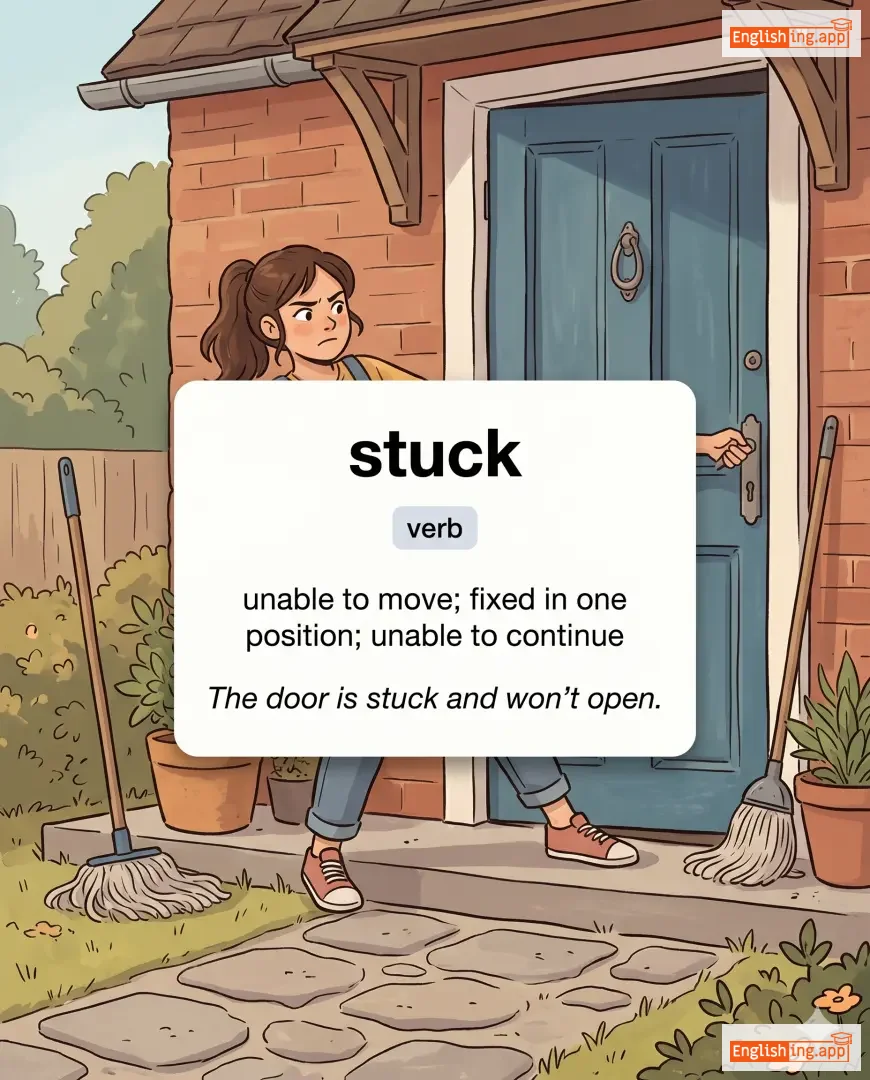
stuck definition card — visual illustration of the meaning
verb
/stʌk/
coincé (coince)

unable to move; fixed in one position; unable to continue

"The door is stuck and won't open."

"La porte est coincée et ne s'ouvrira pas." (La porte est coincee et ne s'ouvrira pas)
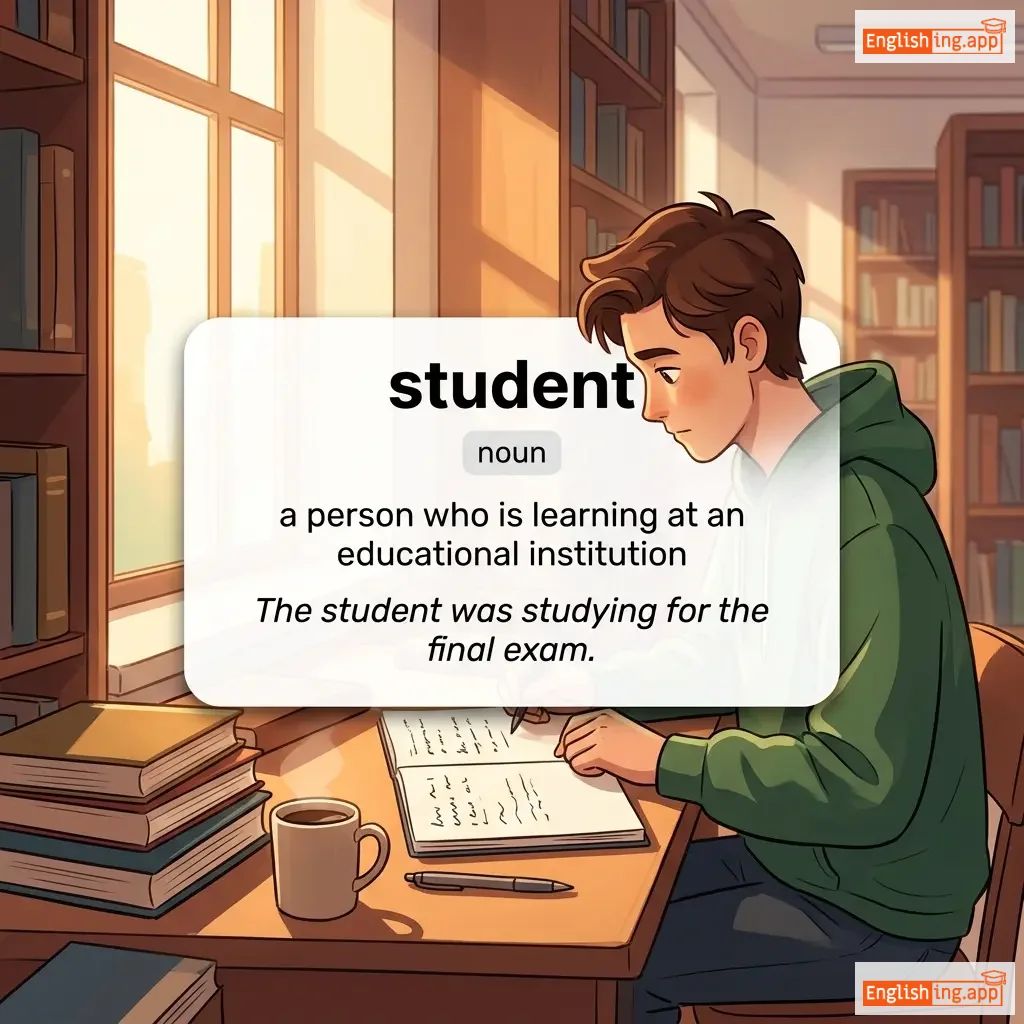
student definition card — visual illustration of the meaning
noun
/ˈstjuːdənt/
étudiant (etudiant)

a person who is learning at an educational institution

"The student was studying for the final exam."

"L'étudiant étudiait pour l'examen final." (L'etudiant etudiait pour l'examen final.)
adjective
/ˈstʌdid/
réfléchi (reflechi)

carefully considered, deliberate, or planned

"Her response was calm and studied, not impulsive."

"Sa réponse était calme et réfléchie, pas impulsive." (Sa réponse était calme et réfléchie, pas impulsive.)
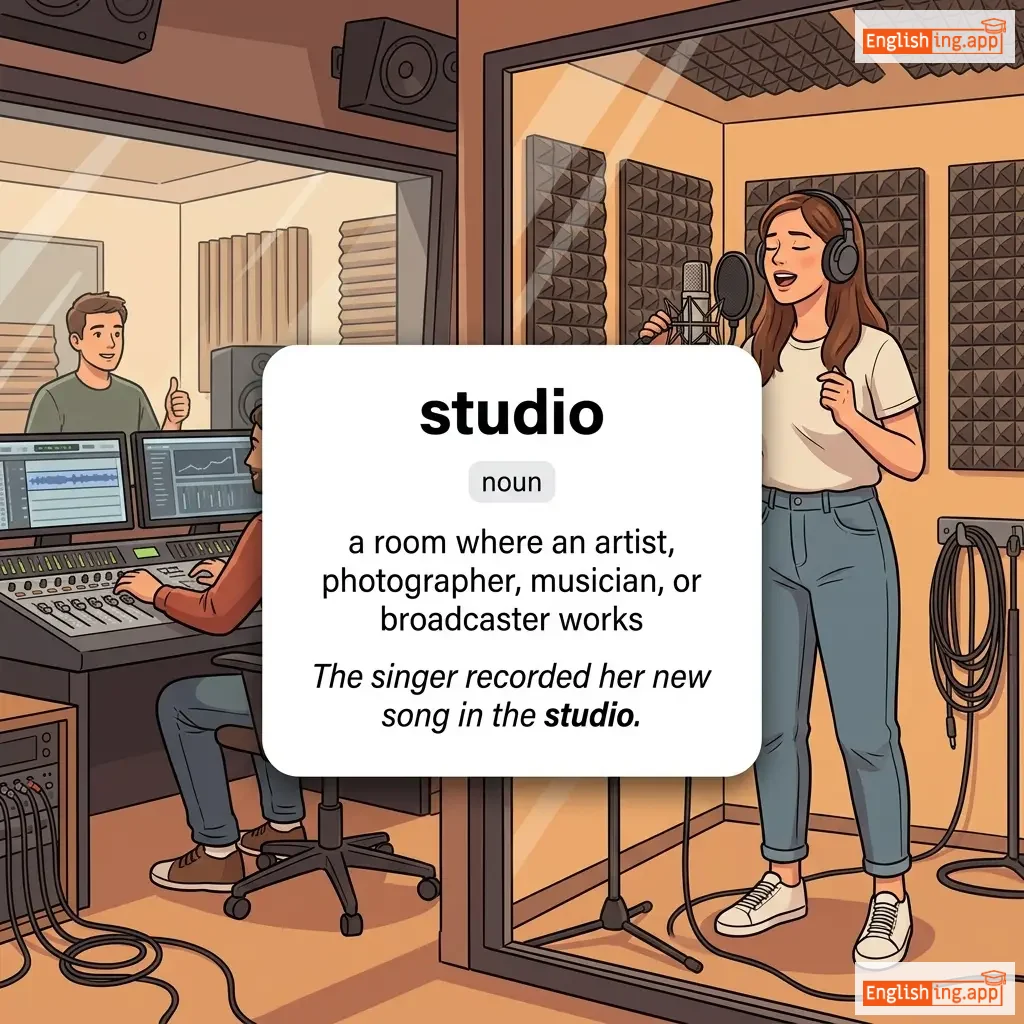
studio definition card — visual illustration of the meaning
noun
/ˈstjuːdiəʊ/
studio (studio)

a room where an artist, photographer, musician, or broadcaster works

"The singer recorded her new song in the studio."

"La chanteuse a enregistré sa nouvelle chanson dans le studio." (La chanteuse a enregistre sa nouvelle chanson dans le studio.)
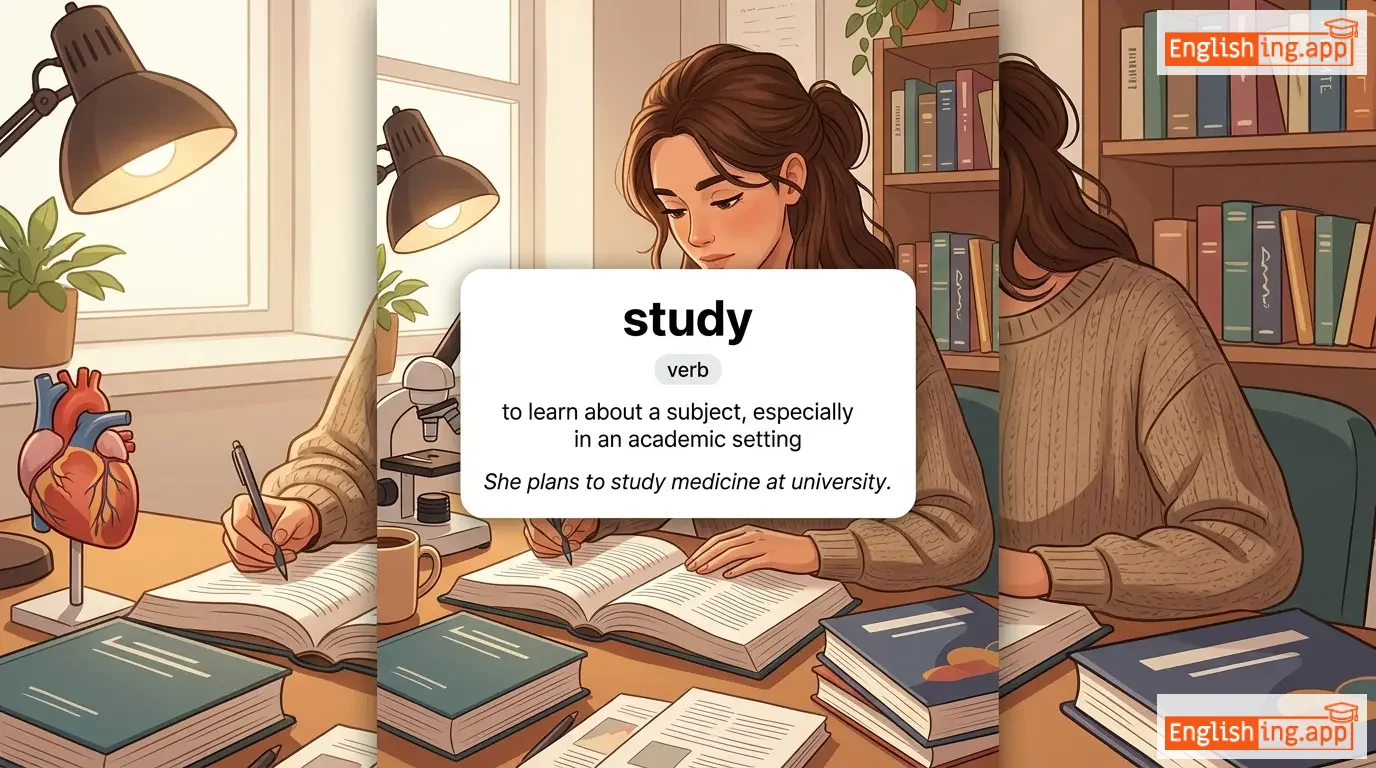
study definition card — visual illustration of the meaning
verb
/ˈstʌdi/
étudier (etudier)

to learn about a subject, especially in an academic setting

"She plans to study medicine at university."

"Elle prévoit d'étudier la médecine à l'université." (Elle prévoit d'étudier la médecine à l'université.)
adjective
/ˈstjuːdiəs/
étudiant assidu (etudiant assidu)

spending a lot of time studying or reading; very dedicated to learning

"She is a studious girl who spends hours in the library."

"Elle est une fille studieuse qui passe des heures à la bibliothèque." (Elle est une fille studieuse qui passe des heures a la bibliotheque.)
adjective
/səbˈdʒɛktɪv/
subjectif (subjectif)

based on personal feelings, tastes, or opinions rather than facts

"Beauty is often considered a subjective concept."

"La beauté est souvent considérée comme un concept subjectif." (La beaute est souvent considere comme un concept subjectif.)
noun
/səbˈdʒɛkʃən/
soumission (soumission)

the act of bringing someone or something under control or domination

"The people suffered under the subjection of a cruel ruler."

"Le peuple a souffert sous la soumission d'un dirigeant cruel." (Le peuple a souffert sous la soumission d'un dirigeant cruel.)
noun/verb/adjective
/ˈsʌbdʒɪkt/ (noun), /səbˈdʒɛkt/ (verb)
sujet (sujet)

noun: a topic or theme; verb: to cause to undergo; adjective: dependent or under authority

"The teacher introduced a new subject in class."

"Le professeur a introduit un nouveau sujet en classe." (Le professeur a introduit un nouveau sujet en classe.)
adjective
/sʌbˈdʒeɪsənt/
sous-jacent (sous-jacent)

lying immediately beneath; underlying

"The geological survey revealed subjacent layers of rock."

"L'enquête géologique a révélé des couches sous-jacentes de roche." (L'enquête géologique a révélé des couches sous-jacentes de roche.)
verb
/səbˈdjuː/
soumettre (soumettre)

To bring under control, especially by force; to overcome or quiet.

"The army was able to subdue the rebellion quickly."

"L'armée a pu soumettre la rébellion rapidement." (L'armée a pu soumettre la rébellion rapidement.)
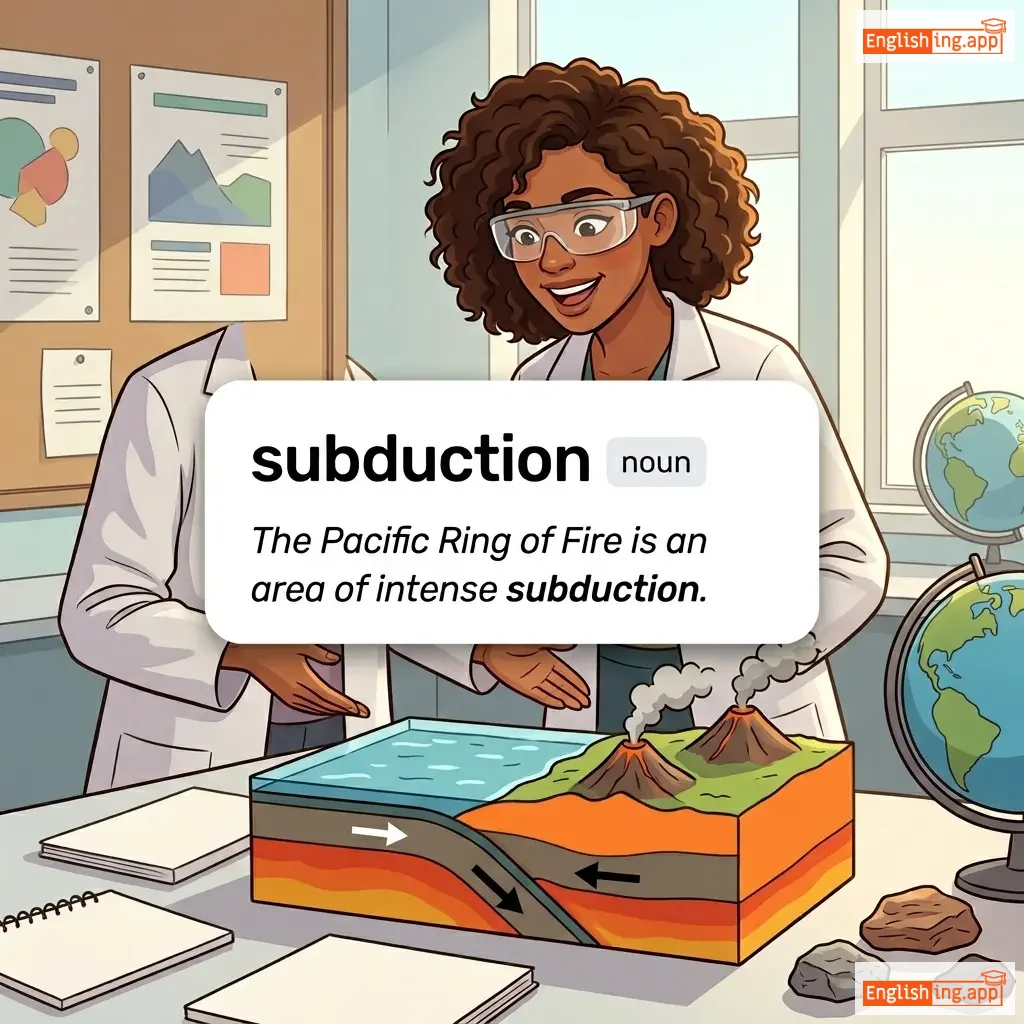
subduction definition card — visual illustration of the meaning
noun
/səbˈdʌk.ʃən/
Le mouvement latéral et vers le bas d'une couche de la croûte terrestre dans le manteau sous une autre plaque. (Le mouvement lateral et vers le bas d'une couche de la croûte terrestre dans le manteau sous une autre plaque.)

The lateral and downward movement of the edge of a plate of the earth's crust into the mantle beneath another plate.

"The Pacific Ring of Fire is an area of intense subduction."

"La ceinture de feu du Pacifique est une zone de subduction intense." (La ceinture de feu du Pacifique est une zone de subduction intense.)
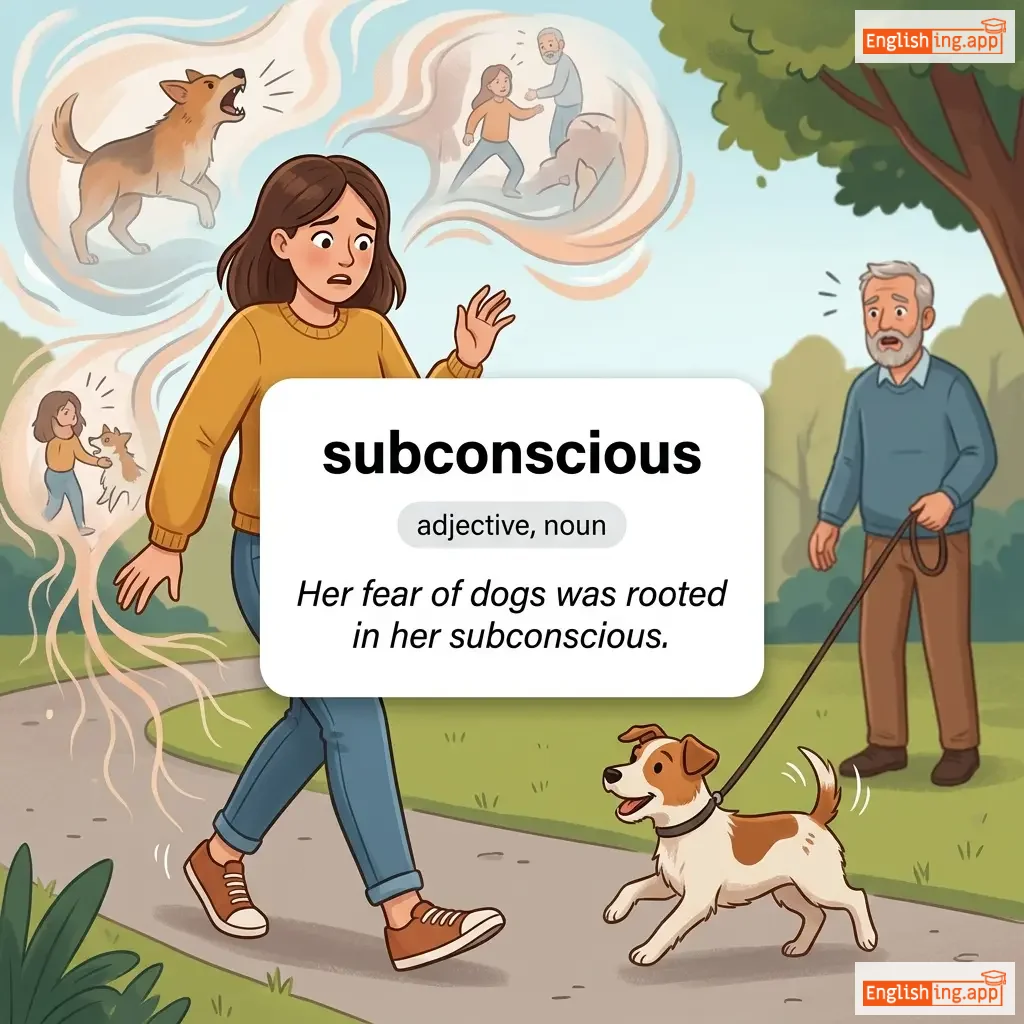
subconscious definition card — visual illustration of the meaning
adjective, noun
/ˌsʌbˈkɒn.ʃəs/
subconscient (subkonsyan)

Relating to the part of the mind that influences thoughts and actions without full awareness.

"Her fear of dogs was rooted in her subconscious."

"Sa peur des chiens était enracinée dans son subconscient." (Sa peur des chiens était enracinée dans son subconscient.)
adjective
/ˌsʌb.əˈkwɒt.ɪk/
subaquatique (subaquatique)

Existing, living, or located under water.

"Divers explored the subaquatic cave system filled with rare fish."

"Les plongeurs ont exploré le système de grottes subaquatiques remplies de poissons rares." (Les plongeurs ont exploré le système de grottes subaquatiques remplies de poissons rares.)
noun
/sʌbˈɔːl.tən/
une personne occupant une position subordonnée; dans l'armée, un officier subalterne (subalterne)

A person holding a subordinate position; in the military, a junior officer.

"The subaltern was responsible for leading a small platoon of soldiers."

"Le subalterne était responsable de la direction d'un petit peloton de soldats." (Le subalterne était responsable de la direction d'un petit peloton de soldats.)
adjective
/ˈsʌb.æs.ɪd/
légèrement acide (legerement acide)

Slightly sour or acidic in taste or nature.

"The fruit had a subacid flavor that was refreshing on a hot day."

"Le fruit avait une saveur légèrement acide qui était rafraîchissante lors d'une journée chaude." (Le fruit avait une saveur légèrement acide qui était rafraîchissante lors d'une journée chaude.)
adverb
/ˌsʌb ˈroʊzə/
en secret (en secret)

secretly, in confidence, or in private

"The deal was made sub rosa to avoid public scrutiny."

"L'accord a été fait sub rosa pour éviter le contrôle public." (L'accord a été fait sub rosa pour éviter le contrôle public.)
noun
/ˈsʌb.mə.riːn/
sous-marin (sou-marin)

a warship with a streamlined hull designed to operate completely submerged in the sea

"The submarine dived deep into the ocean to avoid detection."

"Le sous-marin a plongé profondément dans l'océan pour éviter la détection." (Le sous-marin a plongé profondément dans l'océan pour éviter la détection.)
noun
/ˈswɑːvɪti/
douceur et charme (douceur et charme)

smoothness and charm in manner

"His suavity made him popular in social gatherings."

"Sa douceur et son charme le rendaient populaire dans les rassemblements sociaux." (Sa douceur et son charme le rendaient populaire dans les rassemblements sociaux.)
adjective
/swɑːv/
charmant et raffiné (charmant et raffiné)

charming, confident, and elegant, often in a smooth or polished way

"He was a suave gentleman who impressed everyone at the party."

"Il était un homme raffiné qui a impressionné tout le monde à la fête." (Il était un homme raffiné qui a impressionné tout le monde à la fête.)
noun
/ˈsweɪʒən/
persuasion (persuasion)

the act of persuading or influencing someone

"The leader used gentle suasion to win support for the plan."

"Le leader a utilisé une suasion douce pour obtenir le soutien pour le plan." (Le leader a utilisé une suasion douce pour obtenir le soutien pour le plan.)
verb
/ˈstaɪmi/
entraver (entraver)

to prevent or hinder the progress of something

"The new regulations could stymie small businesses."

"Les nouvelles régulations pourraient freiner les petites entreprises." (Les nouvelles régulations pourraient freiner les petites entreprises.)
noun
/ˈstaɪləs/
stylet (stylet)

a small tool used for writing, drawing, or touching screens

"She used a stylus to draw on her tablet."

"Elle a utilisé un stylet pour dessiner sur sa tablette." (Elle a utilise un stylet pour dessiner sur sa tablette.)
verb
/stʌn/
stupeur, étourdir (stuper, etourdir)

to shock or surprise someone greatly; to knock someone unconscious or dazed

"The news of her sudden resignation stunned everyone."

"La nouvelle de sa démission soudaine a stupéfié tout le monde." (La nouvelle de sa démission soudaine a stupéfié tout le monde.)
noun/verb
/stʌmp/
souche d'arbre, déconcerté (souche d'arbre, deconcerter)

the base of a tree left after the trunk is cut down; to puzzle or confuse

"The question completely stumped the students."

"La question a complètement déconcerté les étudiants." (La question a completement deconcerte les etudiants.)
adjective
/ˈstʌm.pi/
court et épais (court et epais)

short and thick; having a short, thick appearance

"The stumpy little dog wagged its tail enthusiastically."

"Le petit chien court et épais a agité sa queue avec enthousiasme." (Le petit chien court et épais a agité sa queue avec enthousiasme.)
verb
/ˈstʌmbəl/
trébucher (trébucher)

to trip or lose balance while walking or running; to make a mistake or falter

"He stumbled on the uneven pavement."

"Il a trébuché sur le pavé inégal." (Il a trébuché sur le pavé inégal.)
adjective
/ˈstʌnɪŋ/
éblouissant (eblouisant)

extremely impressive or attractive

"The view from the top of the mountain was absolutely stunning."

"La vue du sommet de la montagne était absolument éblouissante." (La vue du sommet de la montagne était absolument éblouissante.)